
Dan Craven is taking our call from the Onguza factory office in Omaruru, Namibia. On the wall hangs a bike frame next to a notice board covered in numbered lists. A wooden cabinet and shelves complete the scene; all bearing the usual paraphernalia of a busy workshop environment. Wearing his hair long and with his signature specs, Dan is as eloquent as ever and still prone to conversational tangents that weave in and around my prepared questions. Everything is as it should be and little has changed since we last spoke just shy of two years ago.
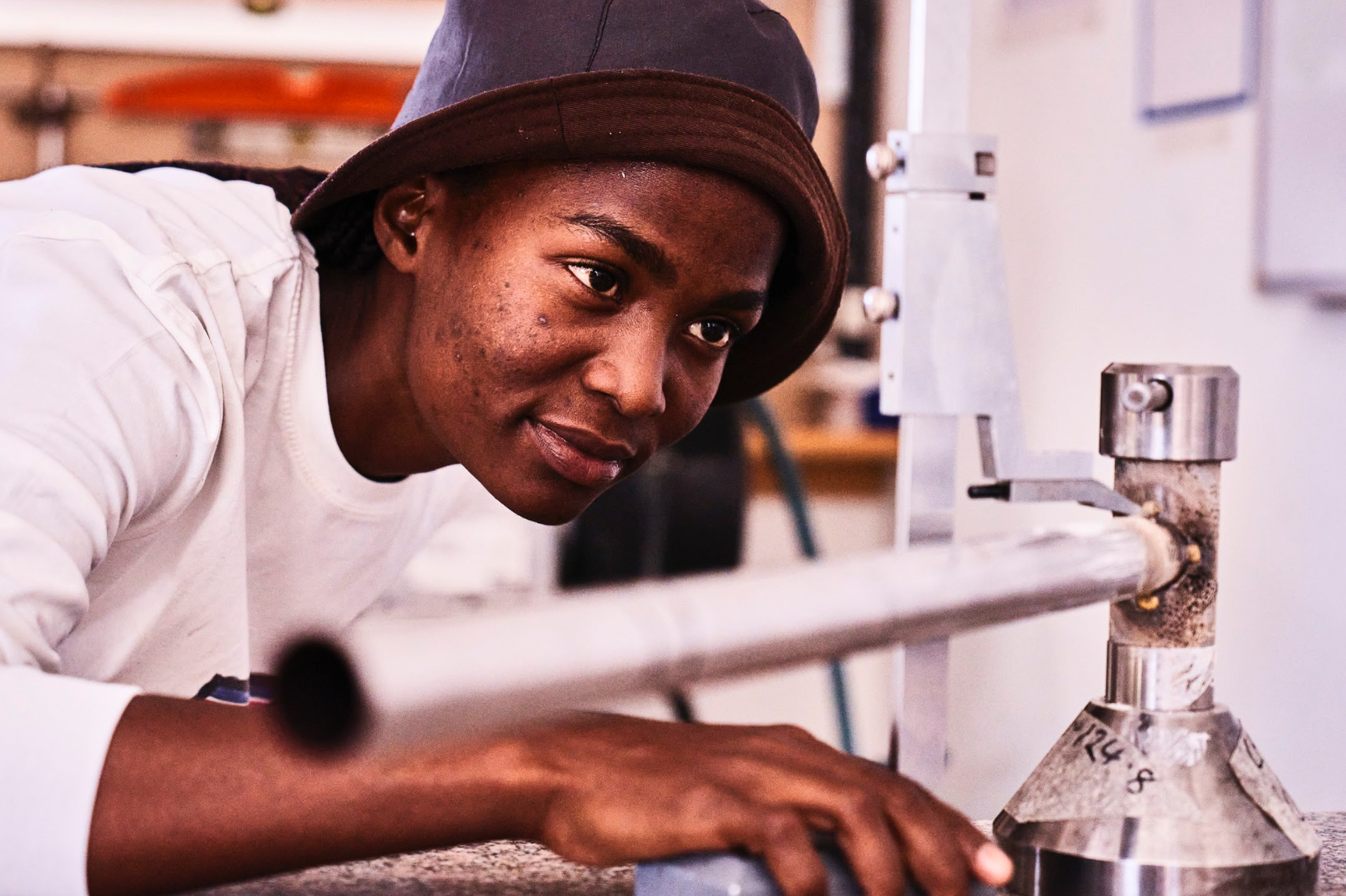
Dan, however, has been busy. His fabrication team that originally comprised Petrus Mufenge and Sakaria Nkolo—now senior builders with equity in the company—has grown to embrace Sakeus Mufenge and Tilomwene Mundjele. The factory’s newly constructed in-house paint booth is presided over by Elvis Presley Sageus [yes, you read that right] and the Onguza range now boasts a hardtail to complement gravel and road-plus framesets.
Describing these hard-won successes in his softly spoken fashion—and with a nod to some of the struggles—Dan takes us on a journey that embraces family life and his own memories from childhood, the design decisions that have him grinning from ear to ear, and why, ultimately, sharing stories lies at the heart of his own journey with Onguza.
cyclespeak
This is a very different view from the last time we spoke. You were sitting on your living room floor and your little boy came in and was staring at the camera.
Dan
We’ve moved twice since then. First just across the road and then to a different town by the coast. Basically the factory reached a point where I wasn’t needed to be present five days a week. So now I commute the 250 kilometres, spend a couple of nights here at the factory, and then go back to the family where I can continue my office work and things like that.

Click image to enlarge
cyclespeak
Since the pandemic, lots of people seem to have adopted a hybrid way of working.
Dan
You know, you’re probably right. It’s a very modern way of doing things. But it also suits our lifestyles. The kids are settled in school, my wife Collyn is happier, so it was just this resounding yes.
cyclespeak
And you get to focus fully on being both the founder of a bike brand and a hands-on dad?
Dan
Last night I shut down at five o’clock. Today, I’m going to keep on working until all hours with zero interruptions. So, yes, there are efficiencies. I’m not going to be distracted by little footsteps. Which would be fun but not exactly conducive to getting everything done.
cyclespeak
Have you noticed any similarities between how your children are growing up and your own memories from childhood?
Dan
I don’t think we would have moved back to Namibia and undertaken this life if my wife and I didn’t have children. Because it’s such an amazing place for a child to grow up. And it’s funny that whenever we visit Girona and go to a playground, my kids immediately take off their shoes. All of the Spanish parents are super polite but I can see how puzzled they are. Whereas here in Namibia, my kids will go to the supermarket barefoot. In the West that might come across as a sign of poverty; here it’s more of a laid-back lifestyle. There’s no sense of shock and horror when you see it.
cyclespeak
Are you also more connected to wildlife?
Dan
I believe that Mongolia is the only country in the world that’s more sparsely inhabited than Namibia. And you certainly grow up with nature. You know, bugs and snakes are commonplace. And then you drive out of town and see antelope. Drive a bit further and you see elephants and rhino. And not like in a zoo; just absolutely open and wild. So yes, there’s a connection with nature which when you’re a teenager is absolutely boring. I remember [laughs]. But luckily I’ve grown to value the sense of freedom we now enjoy.

cyclespeak
So you’re at the factory but it all sounds very quiet?
Dan
The factory team start early and then finish their day at 4:00 in the afternoon.
cyclespeak
Because you’ve been busy since we last spoke. You were still in the process of developing a hardtail to add to your range of bikes but it wasn’t a reality. But now it is.
Dan
You have to start by asking, what do you want to make? And, yes, it would be amazing to one day offer a full suspension mountain bike but you’ve got to factor in all the time and effort it would take to design and get the linkages right. It’s not that we can’t build a full suspension mountain bike but a hardtail is a bike we all love, that we can do really well immediately, and our crew is one hundred percent in command of.
cyclespeak
I’m reminded of your website’s home page where it states: ‘We know what bikes need to do, we’ve got lions’.
Dan
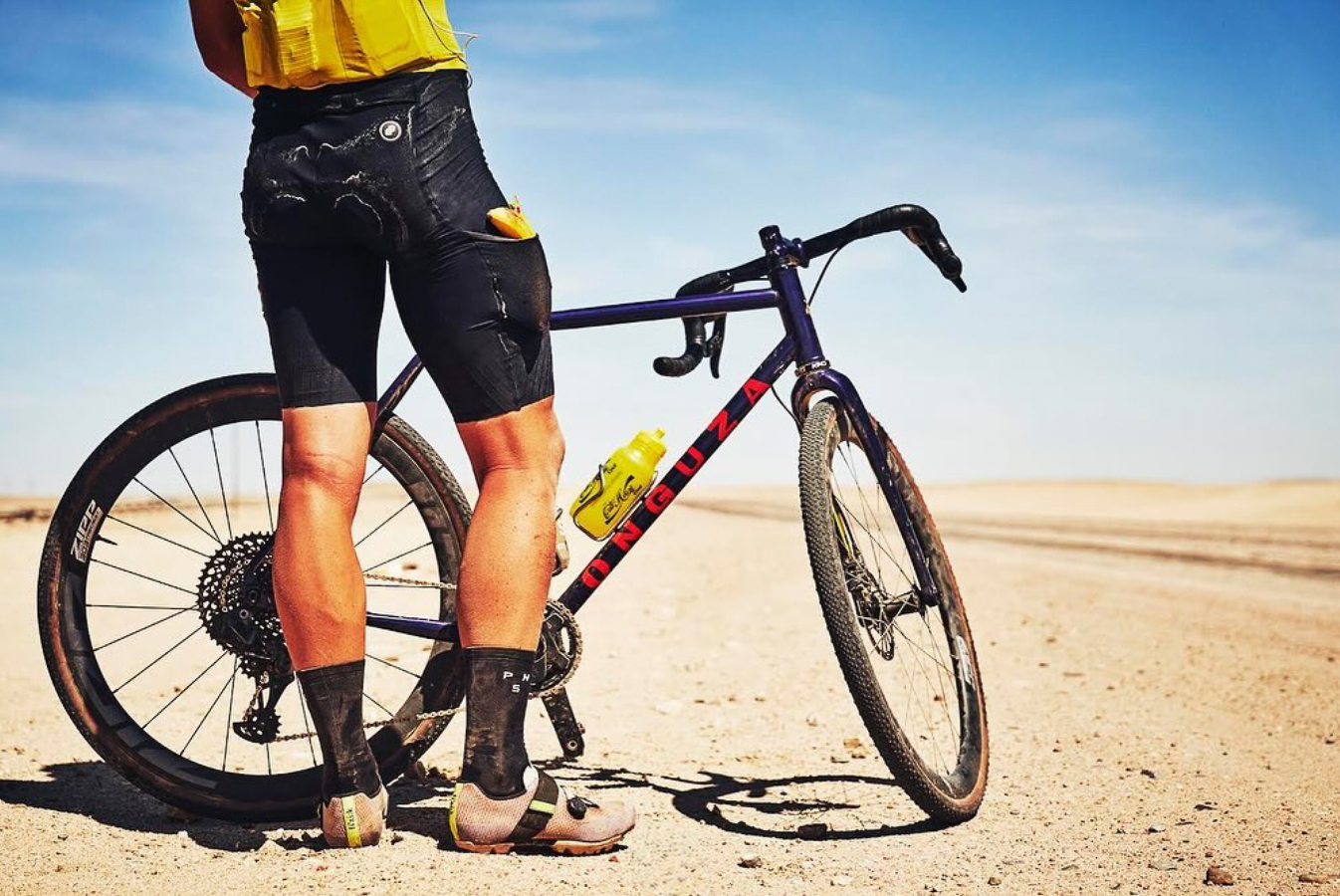
I guess you could say that the bikes we offer reflect not only where we are as a company but also where we are geographically. Our Holy Fire frameset, for example, is designed as a road-plus bike because the last thing I want to do is go out on super skinny tyres. I want all-day comfort with the option of taking that little gravel detour if the mood takes me.
cyclespeak
And you combine all that with a dialled-in fit?
Dan
The beauty of building a bike where every frame is custom geometry—which is what we do—is that we’re designing around what the customer wants and what the customer needs. My initial take was that everyone in the World Tour rides a stock geometry bike; that was my path and past experience. And I understand that 99% of our customers would also fit on a standard geometry bike. But how many of them would have three centimetres of spacers underneath the stem, or their saddle slammed all the way forward or all the way back. Granted, not major things, but we’re operating within a niche of a niche of a niche and want everything to be just so.


Click image to enlarge
cyclespeak
I remember you talking about staring down this supply chain where whatever you ordered—tubing, wheels, components—needed to travel thousands of miles to reach you in Namibia. And I was wondering whether these concerns have eased or are they still keeping you awake at night?
Dan
It’s a weird mix. Still sort of keeping me awake at night but if I think back to two years ago, my goodness, we have come a long way.
cyclespeak
So what’s changed?
Dan
The vast majority of my peers in the frame building world buy their parts from local suppliers. And they might only order the parts for one or two bikes because that’s all they need and that helps to manage their cash flow. Whereas for us, if we were to order one or two bikes at a time, the shipping on that would kill us.
cyclespeak
How are you getting around this?
Dan
Our relatively tiny company is acting like a much bigger company and going direct to the manufacturers and buying the smallest version of a bulk order that you can actually classify as a bulk order. Yes, it’s a little stressful when we pay for that shipment but then we don’t have to think about it again for a handful of months.

cyclespeak
I like that. It’s kind of scrappy. Just getting it done?
Dan
I guess it comes down to our mindset. A lot of people, looking to purchase a new bicycle, are probably not going to even think about us. But if you yearn for something that’s handmade, that’s custom, that has a real story to it; then I truly believe that what we offer is really quite special.
cyclespeak
I find this fascinating, and if you’ll allow me, I’m going to address the fact that your frames are not inexpensive. And there is, I think, maybe a certain level of unconscious bias regarding the story of Onguza and how Petrus and Sakaria were working on the farm before they were trained in bicycle frame fabrication and some people can’t get beyond that. Whereas I see all those things as positives and a reason to connect with your brand?
Dan
So, I love the question and the answer is that fundamentally it depends on what’s important to you. Because our frames, from a price point, are generally in line with a Specialized S-Works. And anything in that price range, you need people to say, “I want that.”
cyclespeak
And can you categorise what that is?
Dan
Every year, the big brands bring out a new model that’s lighter, stiffer and more aerodynamic. And for some people, all those numbers are really important and the reason why they change their bikes every year or so. And that’s absolutely fine because sometimes I want the new flashy thing.
cyclespeak
So where does Onguza sit?
Dan
Well, there’s a certain type of individual who wants a bicycle to mean something on an emotional level, a bicycle they are really proud of and gives them a vested interest in keeping it long term. A bicycle that in three, five, ten years from now, is not going to look outdated because fashions have changed. I think it’s a subtle but very different mindset. Because, yes, our bikes weigh a little bit more than a corresponding carbon model. And if that’s your most important metric, then a steel bicycle is not for you. But if you want a bicycle that will probably be more comfortable, definitely more durable, and have a story that resonates in ways that no bicycle has ever resonated with you before, then I see that as a good basis for us sitting down and starting a conversation.


Click image to enlarge
cyclespeak
Is paint an important part of this process?
Dan
Pretty important considering we built up our own paint booth at the beginning of the year which is where our painter, Elvis Presley Sageus, works his magic. So moving forward, every one of our frames gets painted in-house under our watchful eye.
cyclespeak
You launched Onguza with some pretty iconic visual designs.
Dan
Those were bold, eye-catching statements that were designed to stand out. And we’re now onto our third edition colour schemes which are a little more sleek and I would go so far as to say timeless, while still maintaining the funky cow look integrated into the design. And what’s so special about all these parts of the build process, is that when I’m showing someone one of our bikes, there’s a serial number underneath with the initials of the guys who actually made it. And you know that the guy who painted the bike is called Elvis Presley.
cyclespeak
So there’s this connection with the bike you’re riding and its provenance?
Dan
I just think it’s something that we should be doing more of. Buying fewer but better quality, longer lasting things, that mean more to us.
cyclespeak
A case of buy well, buy once?
Dan
Yes, exactly.

cyclespeak
Can I ask how many of your customers enquire about collecting their frame or bike directly from the factory?
Dan
It’s interesting that you ask because we recently had a visit from five gentlemen who had travelled all the way down to Namibia from Spain. One of them was collecting his new bike, two of them rented Onguzas, and the remaining two brought bikes of their own. And we made a lovely little film of the whole experience.
cyclespeak
So it’s a possibility?
Dan
It most definitely is and why we’ve just announced that from 2025 we’ll be hosting bespoke cycling adventures that offer a truly once-in-a-lifetime experience. So say someone wants to buy a bicycle and bring their friends along on the trip to collect it, we can arrange a wonderful tour for them to enjoy.
cyclespeak
We’ve already explored the reasons that people want to buy into your brand. But can I suggest that you, yourself, are as much a part of that decision process as the beautiful bikes you build? That you are a part of their story?
Dan
It’s interesting you mention stories because when I was a professional bike racer, I was quite prolific on Instagram. I knew who I was, I had a voice, and posting on Instagram was fun and interesting because I had a very different perspective to all of my peers. And then I retired and I lost my voice. I still enjoyed riding my bicycle, I still enjoyed all of those adventures, but I wasn’t a professional anymore and my online voice disappeared because I didn’t know who I was in the world.
cyclespeak
And now?
Dan
My wife has basically kicked me so many times to try to get me to use my voice again. And I do feel like it’s coming.

Click image to enlarge
cyclespeak
Can you pinpoint what was stopping you?
Dan
I suppose I stepped into this new thing where there was so much to learn and I was overwhelmed. Which you could argue is a little surprising as there are so many stories to tell—being a Namibian who is building bicycles in Africa—but I had this insecurity that made me not want to post. Which is me completely and utterly overthinking things because there’s so much to share and celebrate.
cyclespeak
So is your current sense of who you are now defined by your journey with Onguza and the community you’re building?
Dan
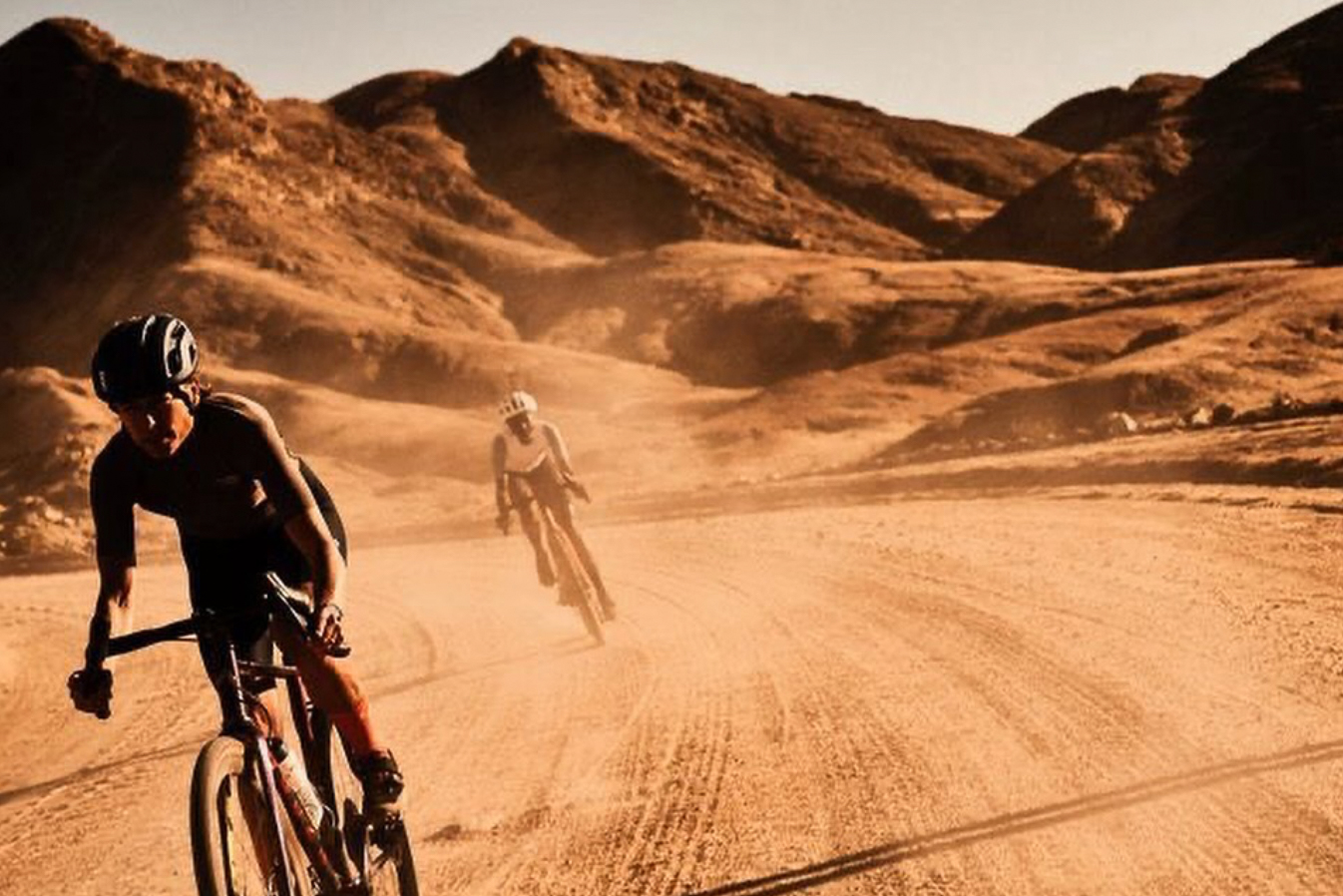
Community is key to what we’re doing here with Onguza. Not only the highly skilled jobs we’re providing—which is obviously quite wonderful—but in events like the Loskop Local which we host in July. We all gather on Friday night for an amazing meal and then, on Saturday morning, we start at the factory and cycle out of town into the bush. Climbing steadily, you get this amazing view down to the valley before stopping for a cup of coffee from Two Beards, the best coffee roasters in Namibia. Then there’s a choice of four loops to ride—the longest loop taking possibly an hour—with surprises on the trails to make things interesting.
cyclespeak
Surprises?
Dan
A bathtub beer stop? A church choir in full song?
cyclespeak
Yes, that would certainly surprise me [smiles].
Dan
And then later, when you’re back to town, you have another amazing meal followed by my wife’s handmade ice cream and live music that goes on into the evening.

cyclespeak
Picturing all this reminds me of the beautiful film Ben Ingham directed that combines scenes in your factory with shots of the local people and the most breathtaking scenery. Does the film’s title ‘Made Out Here’ offer a clue to the way you do things with Onguza?
Dan
Let me use this as one tiny example.
[Dan reaches for a small cardboard box and takes out a shiny piece of metal]
We have a guy in California who’s helped us design dropouts which are now being machined in Namibia. We imported the previous version but these are our design and our design only and another step forward in our way of making things. Perhaps a small detail but does it make the bike more of an Onguza…
cyclespeak
And give the bicycle more character?
Dan
Yes, one hundred percent.
cyclespeak
This journey you describe in growing Onguza, have you learnt anything about yourself that’s surprised you or caught you off guard?
Dan
There was a sports conference in Omaruru last week with people from the Sports Ministry and other assorted guests. I’d been invited to speak and planned to talk about the longevity of an athlete. The what-comes-next when you retire from competition. I’d been thinking about what to say for ages and then on the morning of the event I had this sort of epiphany.
cyclespeak
Which was?
Dan
If you think about it, I was more of a mountain climber trying to do the first ascent of a peak than I was a professional cyclist.
cyclespeak
You’ll need to explain that a little more [smiles].
Dan
A professional cyclist is supposed to eat, sleep, race, train, rest and repeat. There’s a sort of monotonous aspect to it. Whereas I came from this little town on the edge of the desert in Namibia where the cycling community in my capital city was really, really small and disconnected from the wider world.

Click image to enlarge
cyclespeak
And then?
Dan
Then I went to race overseas and for four years I was living in the backyard of a scrap metal yard. We’d be eating dinner on the second floor and a big crane would literally pass to and fro in front of our window. Even so, I was living the dream because we’d go to the races and the previous winners would be Damiano Cunego, Gilberto Simoni and Mario Cipollini. Heaven!
cyclespeak
I’m sensing a but.
Dan
I was surrounded by a support system that wasn’t a support system. And what do I mean by this? Well, there was a Polish rider and myself who were leaps and bounds better than the third best rider on the team. But I was the seventh best paid rider. And why was that, you may ask? Because all of the Swiss and Italian guys had their parents, their coaches, their clubs, looking after them. Me? I was on my own.
cyclespeak
Wish I guess was frustrating and I imagine a little lonely?
Dan
Exactly. And from there I went to the UK and I was in Manchester where it rained every day. I was doing races with one man and his dog watching but I was surrounded by people and culture and as a human being I flourished. But by the time I got to the World Tour riding for Europcar, I was having too many injury issues and never really got to properly show what I could do. So, returning to my mountain analogy, professionally speaking I was always climbing over rocks, jumping across crevices, and finding a new path to the peak. Which is obviously athletic and very arduous and I think part of my personality now. And isn’t starting a bicycle company in a small town with no pre-existing cycling community something a mountain climber would do?
cyclespeak
Taking all of these themes—work, family, living in a land that has such a hold on you—what at the moment is making your heart sing?
Dan
We finally got around to building my wife a gravel bike and together we rode up Table Mountain. We were looking out over the bay when my wife turned to me and said: “This bike is amazing.” And it just hit me, that here we were, having this incredible time, on bikes that our little company on the edge of the desert had built. And it was like, oh, that is pretty amazing.
All photography by Ben Ingham with kind permission of Dan Craven and Onguza Bicycles
 cyclespeak