
Kicking off with Lachlan Morton’s win at Unbound, the Life Time Grand Prix three years in, and the realities of campaigning a privateer gravel calendar, Pete Stetina then gets down to business with a fascinating look back at his first tilt at the TRAKA 360—arguably Europe’s premier gravel event.
Despite a series of mechanical mishaps and a race route ripped apart by a week of heavy rain, his refusal to throw in the towel saw him push through for the win. A truly remarkable result that Pete describes, blow-by-blow, before squaring up to decide which race takes the title of biggest, baddest, hardest of all.
cyclespeak
You’re calling from California?
Pete
I am. Back home in Santa Rosa.
cyclespeak
After racing Unbound last weekend?
Pete
My result was a little bit of a disappointment but nothing really went wrong that I can point to. I made the right moves at the right moments and was in the group with Mattia de Marchi chasing after Lachlan—we got to within a minute at 60km to go—when my stomach flipped upside down, the lights went out like never before, and I just had to nurse it home. But that’s bike racing for you and my friend Lachlan is such a worthy winner.
cyclespeak
I did note your time for this year’s race. 9:22:57. A few years back, that would have seen you finishing in first place with time to spare?
Pete
That’s the same story for every race on the calendar. Winning times are tumbling by huge margins. I guess you can factor in better fuelling and equipment but the conditions at this year’s Unbound were also nigh on perfect. There was a little rain in the days leading up to the start—everyone, myself included, freaking out about the chance of mud—but then it dried up just enough to make the going super fast.
cyclespeak
The whole world seemed to cheer when Lachlan crossed the finish line. And I was reminded of the post he made leading up to Unbound when he mentioned being more focused on enjoyment and not getting caught up with what everyone else was doing. Does that resonate with how you yourself prepare for a big race?
Pete
It’s how I try to do a lot of it now. Guys like myself and Lachy have been racing professionally for a long time and understand that the best road to success is to play it our way. The way that Lachlan raced Unbound was perfect for him. It’s not like everyone else can go out and replicate those moves. He had to go from a long way out because he’s such a diesel these days and maybe doesn’t have the same sprint as a Keegan or a Van Avermaet. So he played to his strengths and did it on his terms.
Click image to enlarge
cyclespeak
Last time we chatted it was very early in 2022 and the inaugural year for the Life Time Grand Prix. Now that the series is firmly established, what’s your take on how it’s continuing to influence professional gravel racing?
Pete
I feel the US still leads the way in the world of gravel—where it’s most prolific and you can enjoy the best career financially—and the Life Time series is the pre-eminent representation of this way of racing. Saying that, if a European rider goes to their sponsor and says they want to race the Grand Prix, I do wonder how much that sponsor particularly cares? I know the pro road mentality—it’s what I did for 10 years—and the World Tour only really cares about the World Tour.
cyclespeak
We did see UCI Gravel Champion and current World Tour pro Matej Mohoric race Unbound this year?
Pete
Gravel as a whole is gaining more respect but that’s still race by race. Unbound is Unbound and that’s where everyone wants to come, so you do have this influx of people. But does the global community care as much about Chequamegon or Crusher in the Tushar?
cyclespeak
Fast forward to 2024 and you took an early season win at BWR* Utah; a race series in which you’ve enjoyed considerable success over the past few years with multiple victories. Can you put your finger on what it is about BWR that drives this winning streak?
*Belgian Waffle Ride
Pete
That’s a good question.
[pauses]
I guess it plays out a little differently to the Grand Prix and just suits how I like to ride. Maybe more road race tactics which is where I come from. And BWR is more of a hybrid in terms of surface. Yes, there’s single track but mixed in with a fair amount of pavement and the organiser always likes to throw in a climb towards the end that creates separation. But at the end of the day, it’s a case of good vibes and confidence.
cyclespeak
That’s a good mix.
Pete
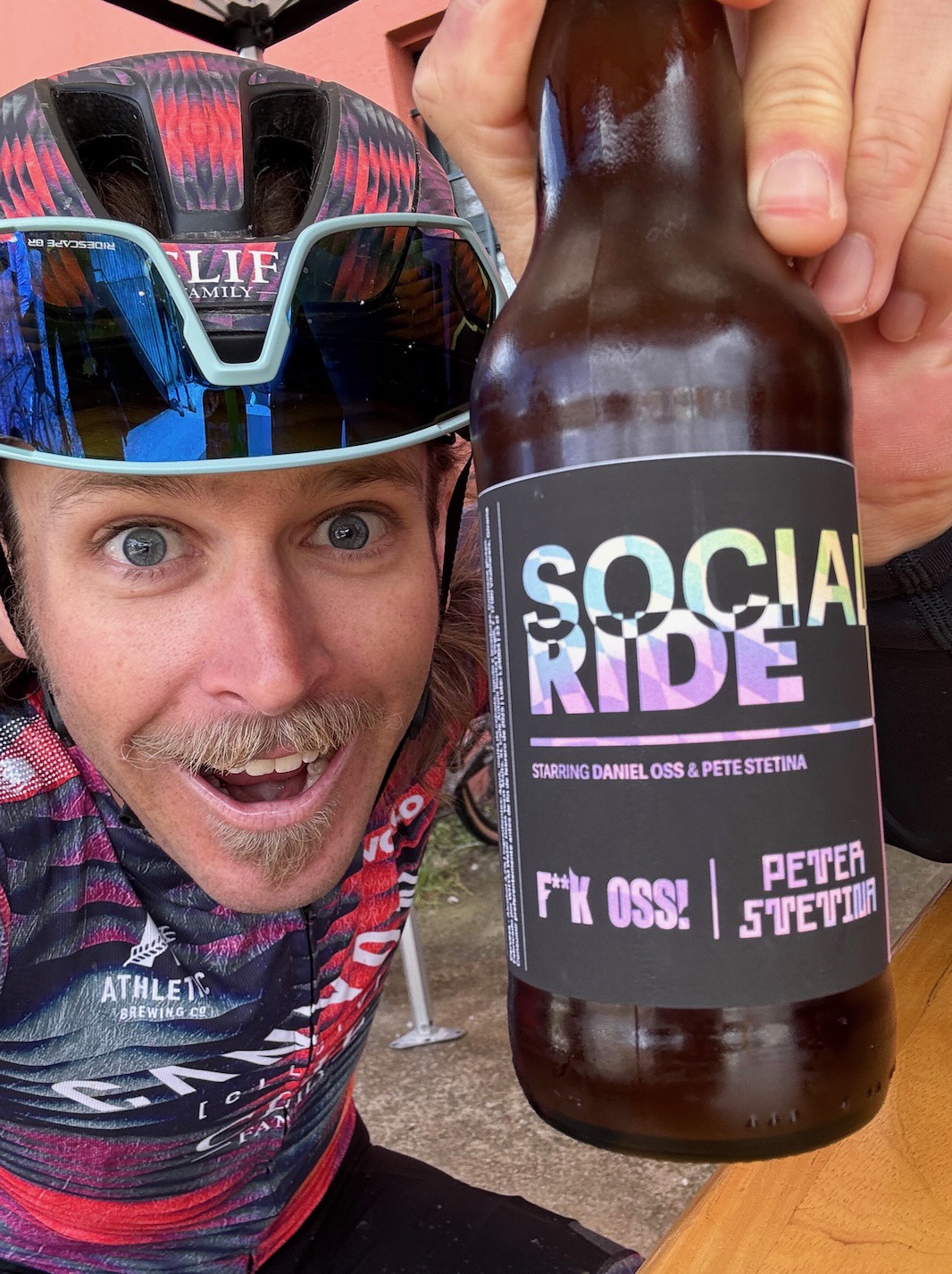
I’ve won three BWR Utah titles so I guess you could say I’ve got that one figured out.
Click image to enlarge
cyclespeak
I was scrolling through your 2019 results when you were riding in the World Tour with Trek-Segafredo—but still took second at Unbound—and it struck me that, according to procyclingstats, you had 80 race days that year compared to 12 in 2023. And maybe this is rather a simplistic comparison but which was the harder year?
Pete
I’m going to spin that question and start off by saying I raced almost 30 times in 2023. I guess procyclingstats is attempting to understand gravel but what qualifies as an official gravel race in their mind? Here in California we have the Grasshoppers but maybe they’re viewed as a regional series even though the field is deep.
cyclespeak
So how do you define a race?
Pete
Anytime I pin on a number. Because you know you’re going to go as deep as you can on that day. And going back to your question, you look at my schedule and there’s only 30 days of racing compared to the 80 I did in the World Tour. But it probably equates to the same amount of travel commitment. And that’s the metric, right? The hardest aspect we have to balance with our loved ones. Because now, I’m primarily a one-day racer and travelling almost every weekend.
cyclespeak
Maybe even travelling more than when you were racing the World Tour?
Pete
What I think you’re seeing, is that the riders with a road background are used to that. And maybe we use the smaller events to race into form? Whereas there are other riders who only roll up to the key races when they feel 100% prepared and primed.
cyclespeak
You’re racing gravel in the top tier, yet seem to relish the regional races just as much as Unbound or Leadville?
Pete
A couple of years back, I felt I was getting pulled back into that high performance, elite-only points chase. And what I was maybe forgetting, was the reason I left the World Tour was to pursue a more fulfilling, holistic race career. So I needed to take a step back and make the conscious decision for my own internal harmony to do it my way. A sentiment I feel Lachlan addressed really well in a recent interview where he contrasted the high octane, marginal gains of the gravel world to his own World Tour days.
cyclespeak
So what does your way look like?
Pete
I can’t do good vibes only and go out to the brewery on the evening before a big race—I still need to ride hard—but I can choose to balance key events like Unbound with the smaller races where I can enjoy the relaxed atmosphere and hang out with the community.
cyclespeak
I was chatting to Sarah Sturm recently and she was quite open about wanting to mix things up race-wise after finding the Grand Prix series a little repetitive. Are these considerations you yourself share? And did they play into your decision to cross the Atlantic to race the TRAKA?
Pete
I love the Grand Prix and what they’re doing for pro-racing in the US but they’re not the only show in town. You’ve got Mid South, Steamboat, BWR and TRAKA, to name but a few, that are all super relevant. So I can’t just give myself solely to the Grand Prix because there’s just too much cool shit going on and I want to do it all.
cyclespeak
This was your first time racing the TRAKA but you spent time living and training out of Girona during your World Tour days?
Pete
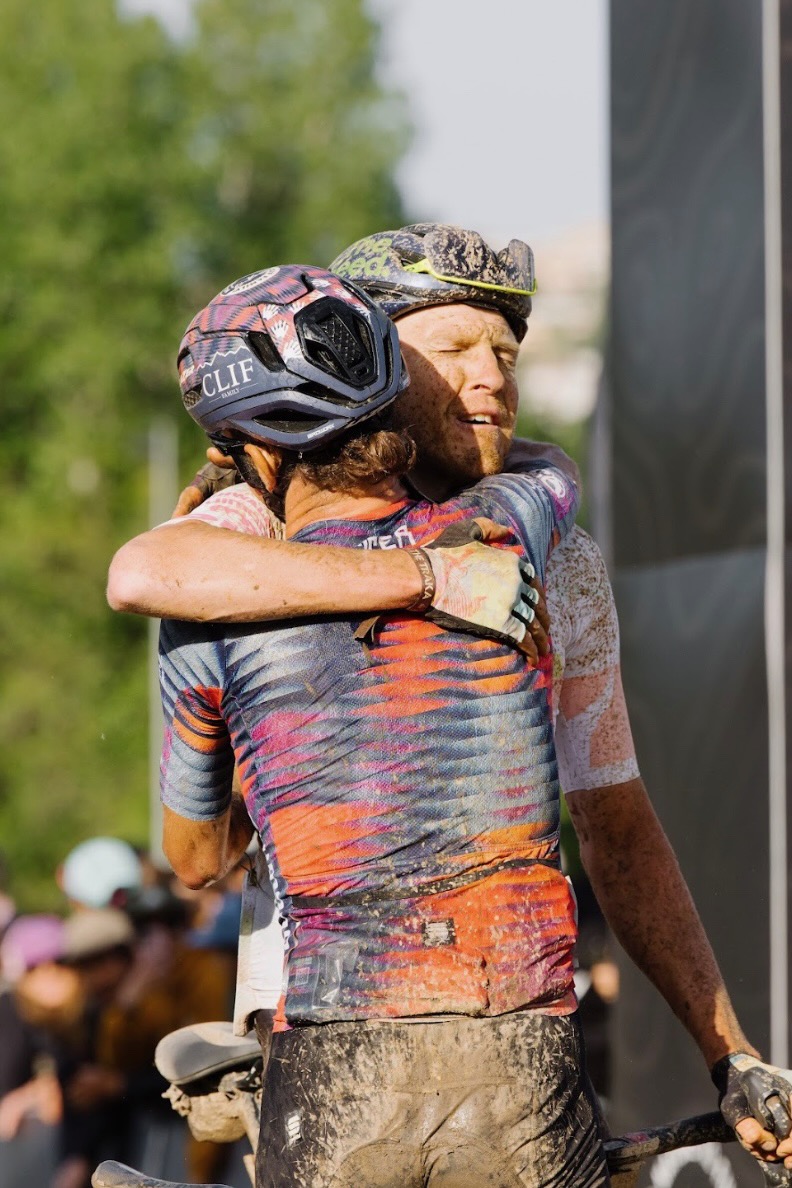
I lived in Girona way back in 2007 before it became such a cycling hotspot. So it was quite an eye-opening experience returning. The city is still beautiful and great for a week’s visit but I wouldn’t want to live there now.

Click image to enlarge
cyclespeak
No?
Pete
I love to ride and race but don’t want to be reminded of that 24/7. Saying that, it was really fun to return because I’d never really ridden dirt in Girona.
cyclespeak
I guess when you were living there, it never occurred to you to try it?
Pete
Gravel wasn’t even a thing, back then. So I guess you could say this was my return for the dirt. And to stay in the same hotel where I always used to crash was such good fun. The final third of my career—when I was constantly going back and forth between Europe and the States—I got rid of my apartment. So I literally had a suitcase waiting in the storage closet of the Hotel Historic that I would open up when I rolled into town. And that still feels like my Catalan family.
cyclespeak
You were down to race the 360km route which has 3700m of climbing and is notoriously super gnarly. Leaving aside for a moment the weather conditions, were there any changes in preparation you made compared to your US races?
Pete
Not really. I’m naturally a climber so tend to race better when it’s a harder, hillier course. The only change I made to my training was sprinkling in quite a few more seven to nine hour rides a couple of months out. Trying to normalise that long, long distance in the saddle.
cyclespeak
Girona had been suffering from a severe drought leading up to the TRAKA. But then during race week, the rain was monsoon-like leading to the organisers first delaying and then cancelling the XL race. Can you talk me through the days leading up to the start of your race? Were you able to recon much of the route and did the uncertainty upset your race preparation?
Pete
Honestly, I think you can draw a parallel between my TRAKA and Lachlan’s Unbound. In the sense that we both took our foot off the gas and tried not to stress over the small stuff.
cyclespeak
How so?
Pete
You have riders that know the TRAKA course super well and have raced it on multiple occasions. But then suddenly the weather is throwing a wrench into everyone’s race preparation. I show up and there’s no way I can recce 360km within three days and be rested for the race. So I decided to ride the final 120km with my friend and coach Dennis van Winden and call it good. As things played out, a blessing in disguise as that last section is so darn twisty that it helps to know the key turns.
cyclespeak
You knew you didn’t have extensive experience at riding dirt in this region. But, on the other hand, felt confident in your ability to do well in BWR style races. When you finally lined up at 6:00am on race day, did it cross your mind that you could take the win?
Pete
On paper I guess I was one of the contenders. And I heard some comments about how the Americans were finally coming over to race. But I was very aware that other riders were much better prepared for this particular race than I was. I’d raced BWR California a week before—that result sealing my Triple Crown—and then straight away hopped on an international flight without really having any time to rest and recover. So not having the perfect build-up—in any shape or form—if I’d have stressed about all the small stuff I would have just psyched myself out completely.
cyclespeak
I guess that comes with experience? The ability to take that mental step back. Because going by your posts after crossing the finish line, it’s safe to say you had quite an eventful day?
Pete
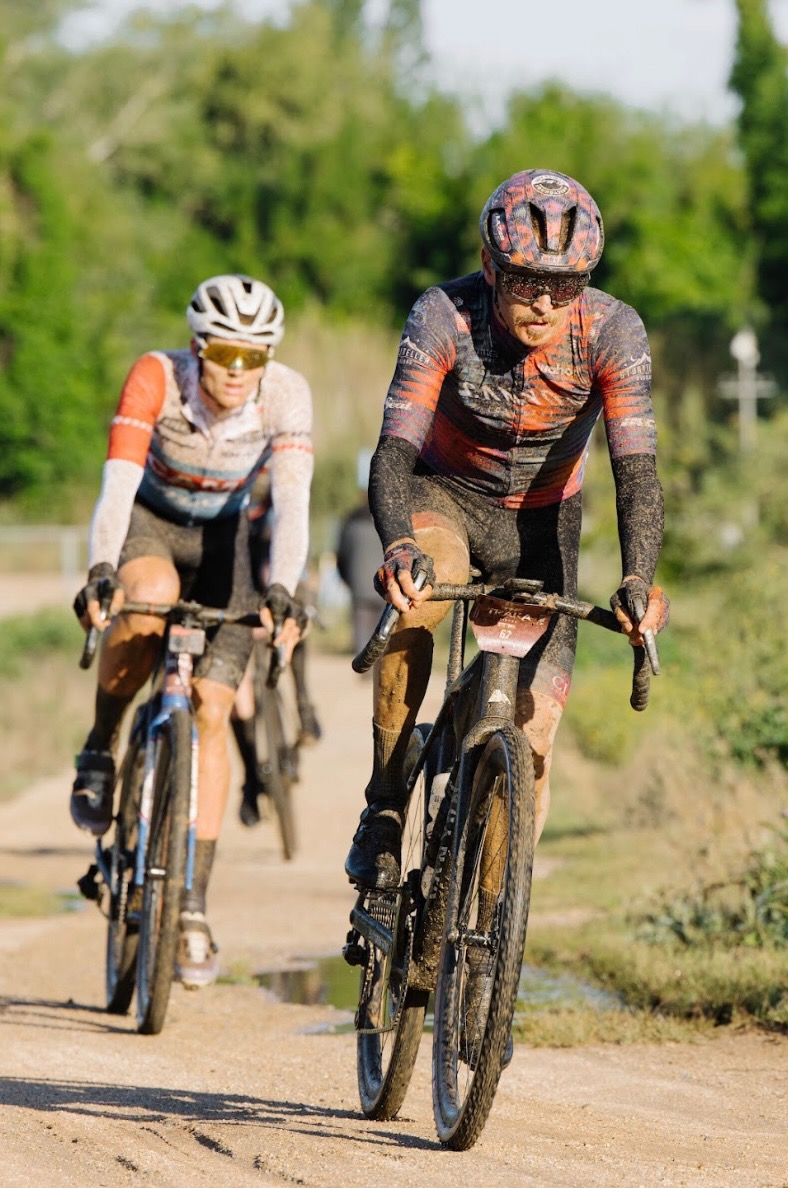
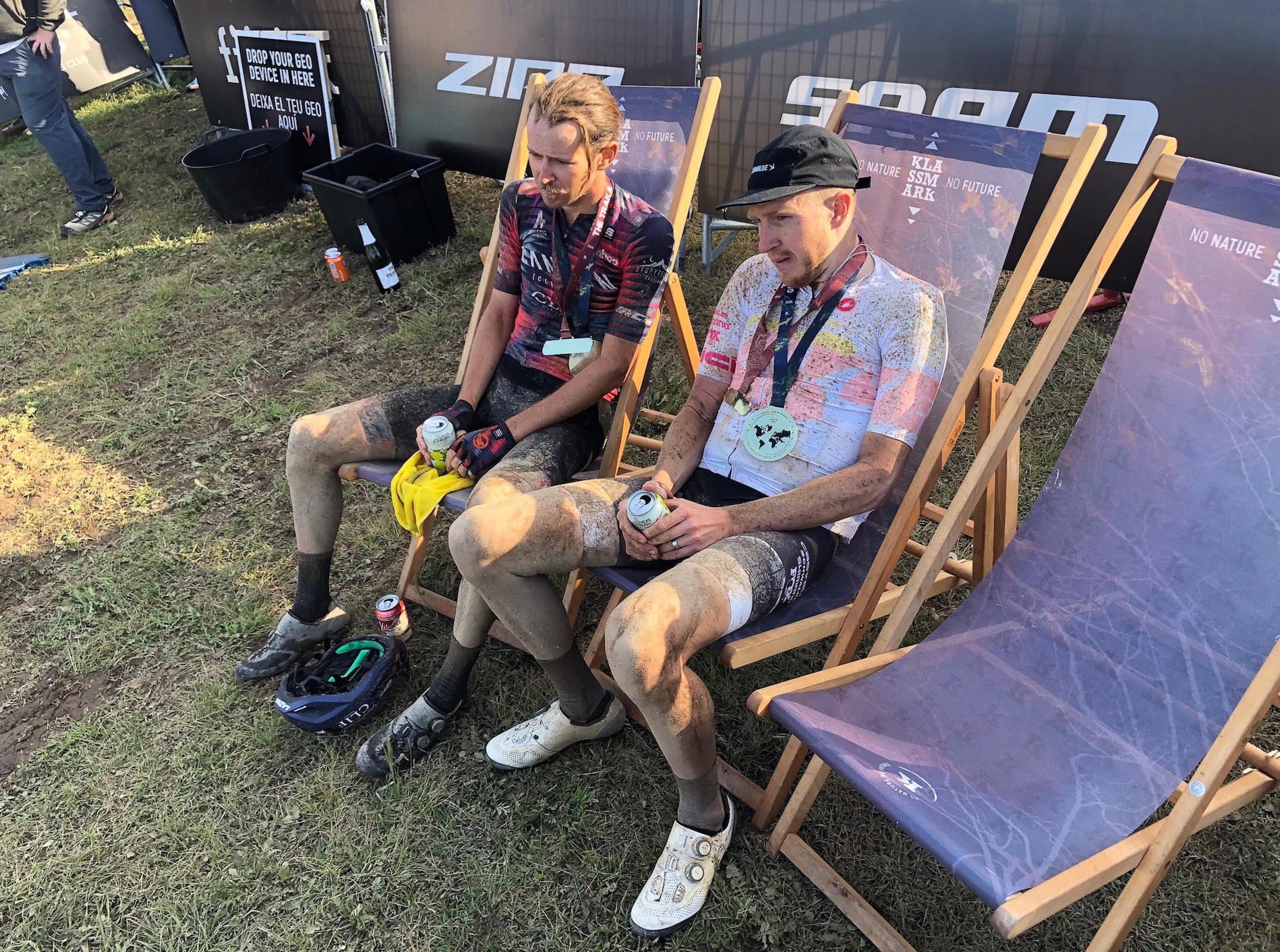
Starting out, the first 60km was honestly quite stressful. Thankfully it had stopped raining but the mud was insane. And the conditions were just compounded by all these young riders who were so hungry, they just charged through irrespective of following the best line. I couldn’t tell how deep the puddles were. Some were only a couple of centimetres but others were, quite literally, half a metre.
cyclespeak
That sounds super chaotic.
Pete
Those guys didn’t seem to worry if there was a hidden rock waiting to take out their wheel. Their mindset was, fuck it, I’m going to send through it. Taking insane risks and just destroying their bikes in the process. And I was getting so beat up in the scrum that eventually I just had to commit and follow. Until eventually the attrition whittled the group down to about 15 or so riders after two hours of racing.
Click image to enlarge
cyclespeak
Where was this in relation to the race route?
Pete
At this point we were crossing the flatlands heading north towards the first aid station. Everyone kind of called a truce so I decided that was a good moment to take a comfort break. But as I pushed on to catch up to the group, a rock sniped my rear wheel and the tyre went fully flat in an instant. I jumped off and tried to plug the thing but there was mud everywhere so I was struggling to even find the hole. After throwing in three plugs it still wasn’t sealing, my gear was strewn out all over the trail, and that’s when I noticed the rock had punctured the bead of the tyre at the rim.
cyclespeak
What happened next?
Pete
After throwing in another two plugs, the tyre was finally holding air and I set off to chase down the group. Glancing at my Wahoo, I could see that I was down by six minutes. So I’m thinking, crap, this is a problem.
cyclespeak
So you’re chasing on hard?
Pete
We were about 20km from the aid station and I was just hoping the pace of the group would stay steady. So I went all in, time-trialling, and finally reached the aid station where my friend and mechanic Big Tall Wayne checked over my rear wheel. It was still holding air so we decided to leave well alone. Rob Britton—who’d also punctured and was chasing back on—serendipitously was leaving the aid station at the same time. We go way back, there’s a lot of mutual respect, and we decided to work together to try and bridge up to the front group. I honestly thought it was a big ask but we’d both travelled over from North America and packing it in after three hours was never going to happen.
cyclespeak
I guess the effort it took to even get to the start line means you’re committed.
Pete
We were riding as a two-man team and sharing the load when, unfortunately, I had more problems with the mud. It was acting like a lubricant and causing my seat post to slip so I had to stop another two times to unpack a multi-tool and adjust my ride position. By all intents and purposes, it was turning into a complete mess of a day.
cyclespeak
But you managed to bridge up to Rob again?
Pete
I caught up with him right before the hike-a-bike section and I could see the lead group away in the distance. Self-timing the gap, I had them around eight minutes ahead. And it was here that we entered what I like to refer to as the doldrums. Heading south across the coastal plains into a block headwind: it was slow, it was hot, it was late in the day. And that’s where we kept passing the odd rider or two—absolutely destroyed—that had been shelled from the front. So beat up, they couldn’t even hang with me and Rob and take a pull.
cyclespeak
The chase was on.
Pete
But it was here that I really started to suffer. I’d been rationing water and was rapidly becoming dehydrated—still taking a turn but my lights were starting to flicker—whereas Rob was still strong. But about 20km from the second aid stop, we caught sight of the lead group and that gave me the lift I needed. That was never supposed to happen—chasing down an eight minute gap—but we were back in the race.
cyclespeak
And then after the aid stop?
Pete
We resupplied as fast as possible—boom, boom, boom—and charged out the other side as one group. Approaching the climbs after Corçà, Rob and I both knew this was the break point of the race. And sure enough, everyone dropped off leaving just three of us. Rob, myself and Mattia de Marchi; three time TRAKA winner.
cyclespeak
Exalted company.
Pete
Mattia attacked—as you’d expect—but only gained 15 or so seconds on the climb. I then took a few risks on the descent, caught up with Mattia but distanced Rob. And I just felt—after riding together for so long and so far—that it wasn’t fair to screw him over. Mattia races with such a sense of honour that we both eased up a little and allowed Rob to latch on. The fourth place rider was way back so we all knew that this was the podium. And then, as things sometimes have a way of playing out, a stick kicked up and ripped off Mattia’s rear derailleur. The worst luck in the shape of a total random act and his day was done.
cyclespeak
Which just left the two of you.
Pete
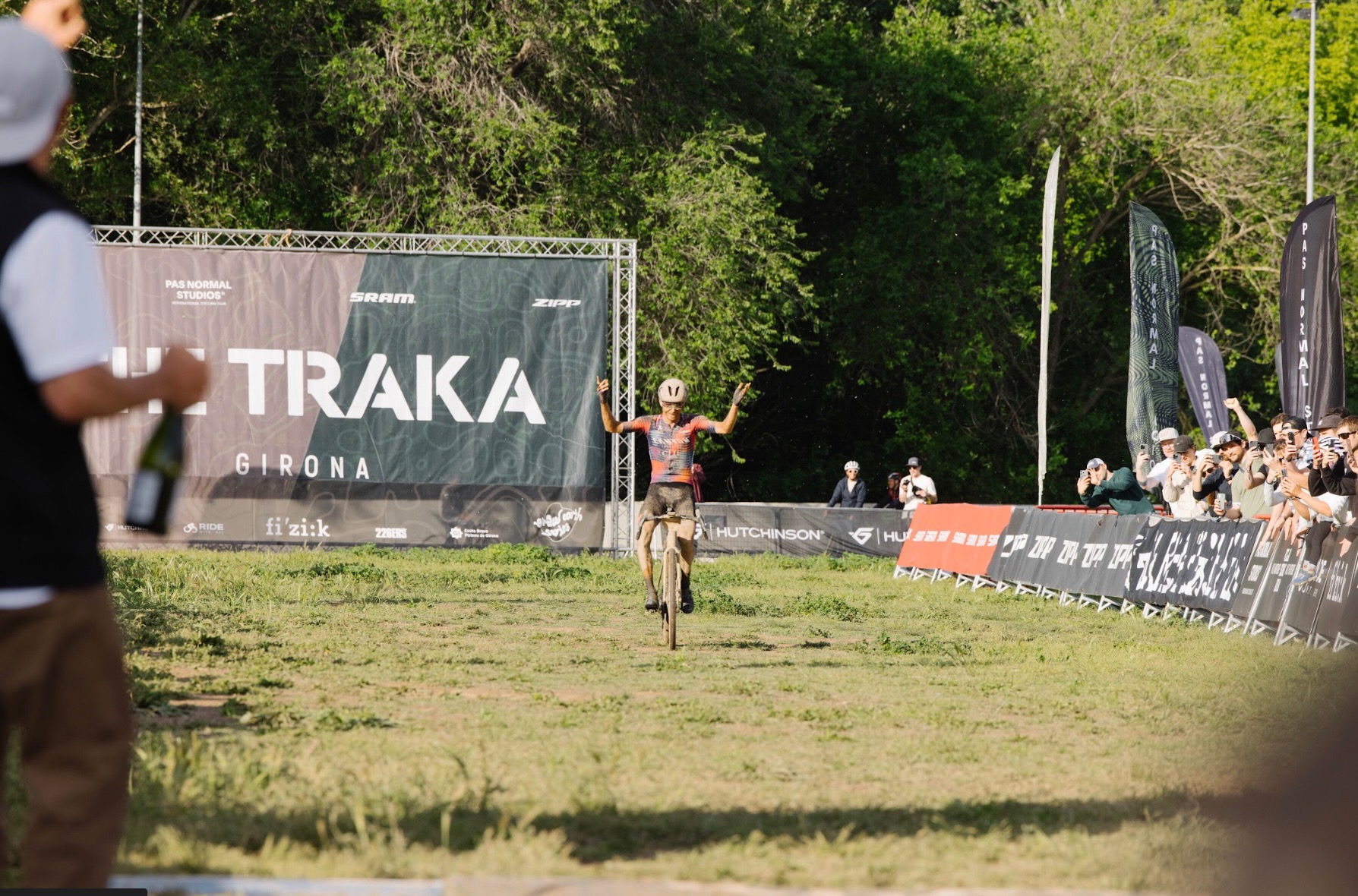
There was 60km to go and we both felt flabbergasted—completely dumbfounded—that we were sitting in first and second place. But as each of us tried to picture how it would play out, it gradually became evident that Rob’s bigger gears were starting to take a toll. We both knew the final move would be on the hill outside of Sant Gregori and that’s where I hit it with everything I had and was able to bring it home.

Click image to enlarge
cyclespeak
What a day!
Pete
Placing first was incredible but there were also all these other silver linings that made it feel equally special. Having my oldest Catalan friends helping out Big Tall Wayne as my pit crew and all of Canyon’s top brass waiting at the finish line. This weird set of circumstances that played out over three hundred plus kilometres.
cyclespeak
And then it was time to celebrate?
Pete
When you race that hard and for that long, your body is in full revolt. You can’t go out and party.
cyclespeak
Not even a little party?
Pete
We went to a bar, ate some good food, and that was me done. And I was still pretty wrecked the next day. Sleeping in until 11:00am before breakfasting on two espressos and a beer.
cyclespeak
The response must have been overwhelming?
Pete
Since the finish, I’ve received so many calls and messages. And I guess that’s when the enormity sets in. I knew TRAKA was a big race but kind of didn’t understand how big.
cyclespeak
‘The biggest, the baddest, the hardest of all.’ That was a comment you made in a podcast in reference to Unbound. Now that you’ve ridden, and won, the Traka 360, are you still sticking to that statement?
Pete
I still feel that Unbound is the biggest.
[pause]
But I don’t think it’s the baddest or the hardest.
cyclespeak
No?
Pete
Unbound is the OG. The granddaddy of this whole space. But now the collective professional field is so good at racing 200 miles of Kansas gravel that—setting aside my stomach issues—this edition was my easiest Unbound.
cyclespeak
And the TRAKA?
Pete
Let’s just say that I’ve done enough bike racing to question whether these fairytales ever happen for me. And even though I’ve enjoyed my fair share of success, nothing compares to how this race played out. So crossing the line, I knew something special had just happened.
Peter Stetina / peterstetina.com
Feature image by kind permission of Alex Roszko for Orange Seal / All other imagery individually credited




 cyclespeak