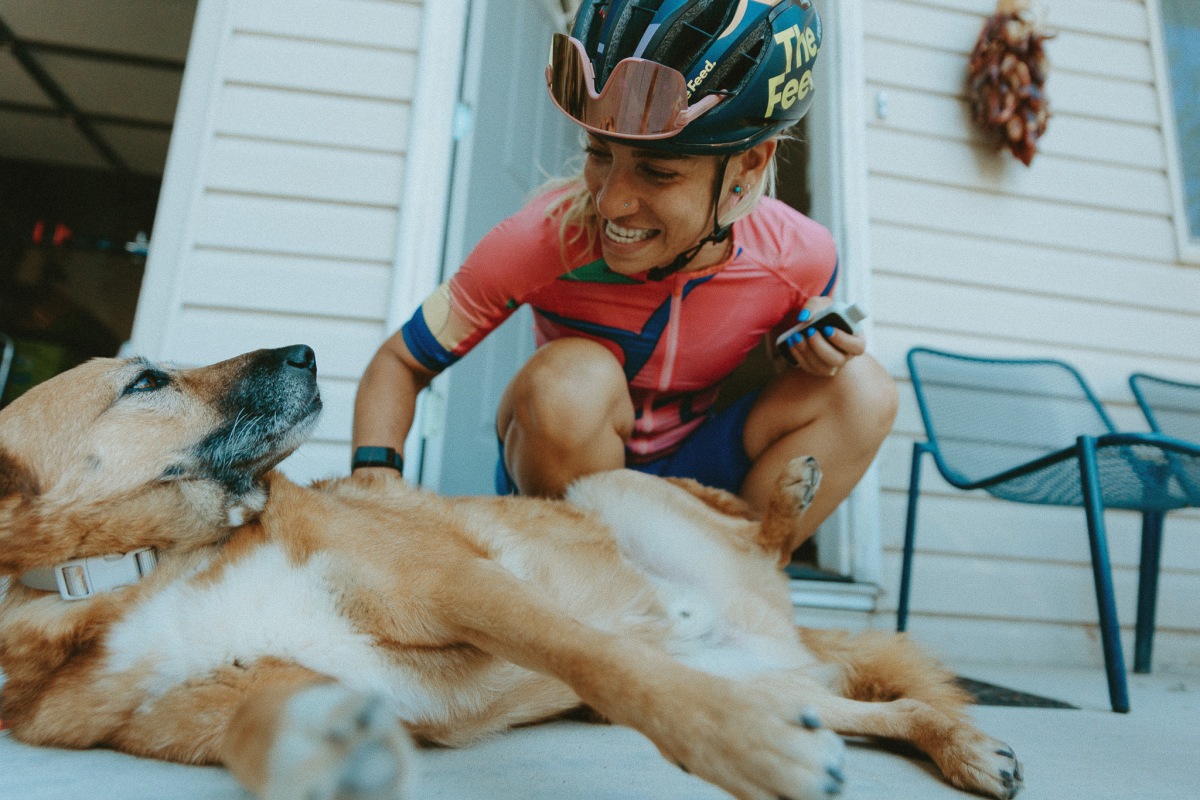
Instantly recognisable for her beaming smile, raucous laughter and even the occasional tear, off-road racer Sarah Sturm is a living, breathing embodiment of what-you-see-is-what-you-get. But dig a little deeper, and there’s an intriguing sense of quiet introspection that contrasts her doggedness and determination.
Talking over a call from her home in Colorado—Sarah’s dog Norman keeping her company—this complex and questioning performance athlete offers her unfiltered views on the highs and lows of the gravel world, the inherently selfish nature of the sport, and the way she balances the emotional strain of a life lived in public.
cyclespeak
You’re just back from the West Coast. It looked like an amazing trip but not without its moments?
Sarah
I was just talking with a friend about my norovirus experience. Equal parts shitty—quite literally—but also so, so funny. And my coach decided it was toughness training because I kept on riding [laughs].
cyclespeak
Because, initially, you suspected food poisoning?
Sarah
I really thought it was. But then on day three, my friend Maude also came down with the same symptoms. So we were trying to work out what just the two of us had done that was different to the rest of the group.
cyclespeak
Considering you were quite poorly, you got in some miles.
Sarah
California is a crazy place. Just insane. It’s got all these tech bros and rich people but it’s also really beautiful and I can totally understand why so many people want to live there.
cyclespeak
You were riding down the coast?
Sarah
Yep. From San Francisco to Santa Barbara and then I kept on to LA. I ate well on the first day but for the remainder of the trip, with my tummy troubles, I existed on a single banana and a PayDay bar.
cyclespeak
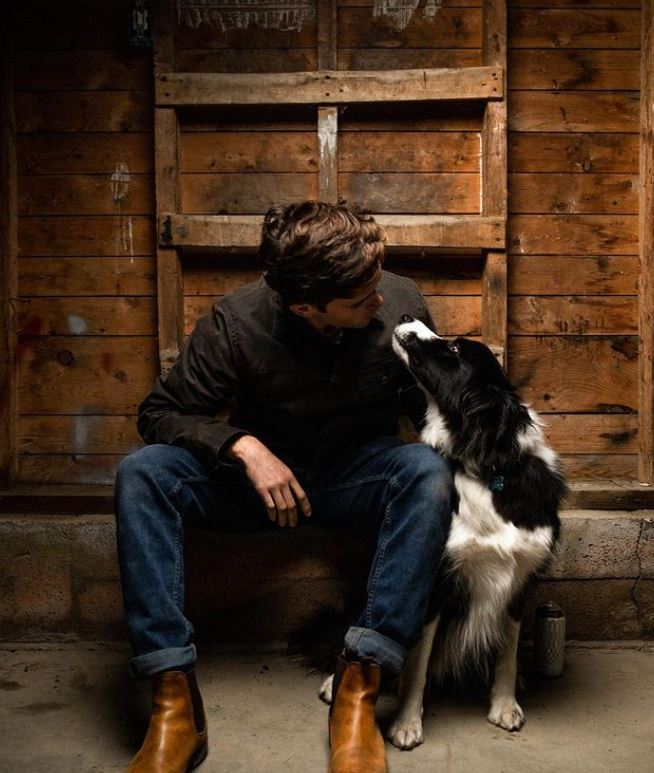
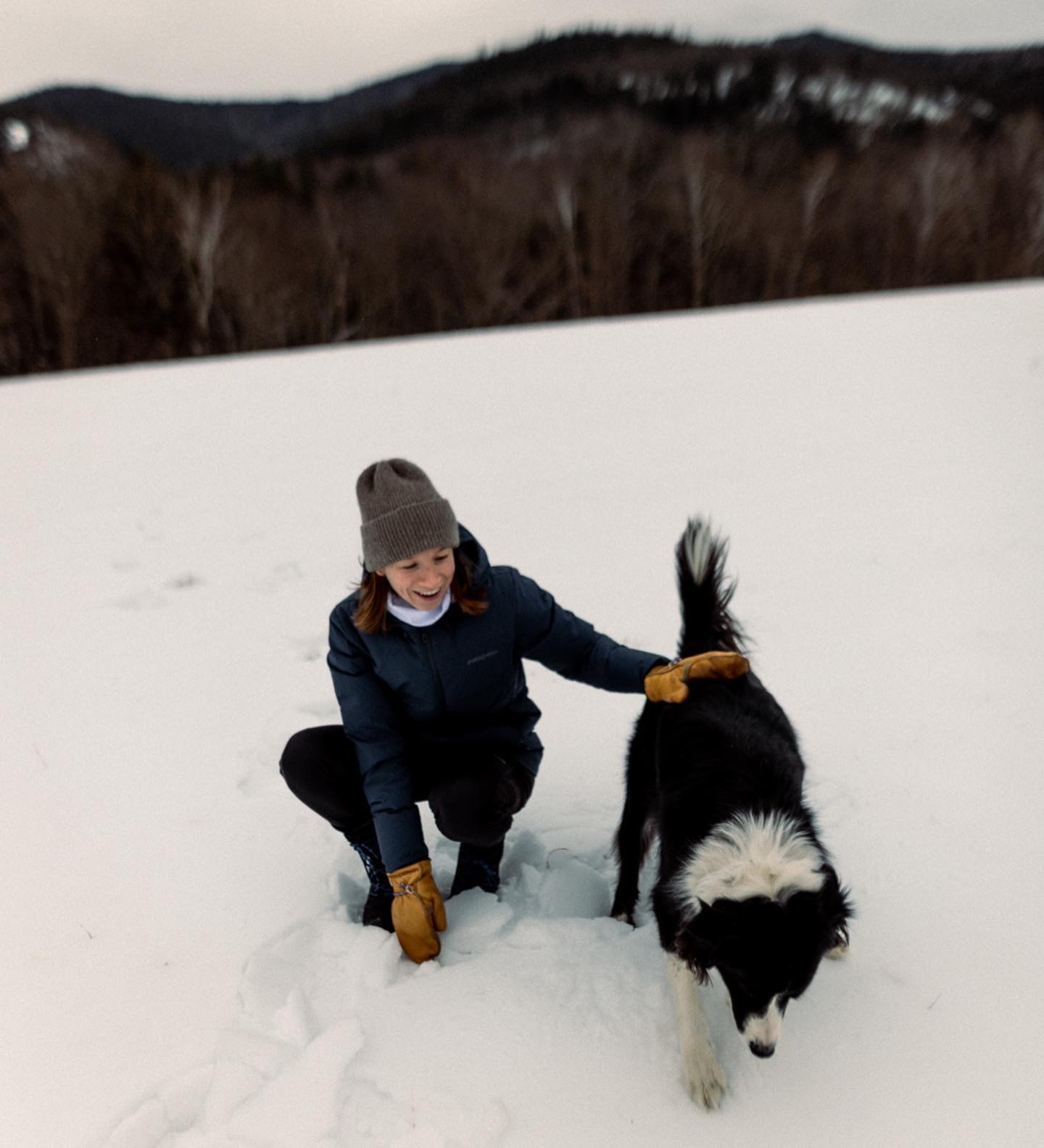
But you’ve made it back to Colorado in one piece. And I’m guessing Norm was pleased to see you. I can just see his ears poking up in the corner of your screen. Is he the sort of dog who likes to be near you?
Sarah
All the time. It’s why we hang out in an old school bus. Otherwise, I would drive my Honda to the races [laughs].
Click image to enlarge
cyclespeak
So you live in Durango?
Sarah
That’s right. I’m back for a bit before I pop down to Arizona where the winter weather is a little kinder. It’s very affordable to stay and, unlike LA, less like a Disneyland for adults.
cyclespeak
Talking about affordability, I was planning on visiting a friend in Boulder and was pricing up some accommodation. Seriously expensive.
Sarah
I’m only spending $800 for a month in Tucson. And you’re right. Boulder is insane. There’s no way I could afford to live there. Unless we park up in the bus [laughs].
cyclespeak
So, at home in Durango, are you a cycling gear all hung up in colour-coordinated rows, kind of person?
Sarah
I’m going to say yes but only because my fiancé Dylan is extremely organised in his role as my equipment manager. So his desire for neatness and efficiency is kind of forced upon me; for my remaining career and our future marriage.
cyclespeak
Have you set the date?
Sarah
We have. At the end of my season in November which is a funny time to get married in Colorado.
cyclespeak
A weather risk?
Sarah
Yes! You’ll need to be tough and bring a jacket.
cyclespeak
Because you first met Dylan when you were both studying design at college. But I believe your graphic design business is currently on hold whilst you focus 100% on racing?
Sarah
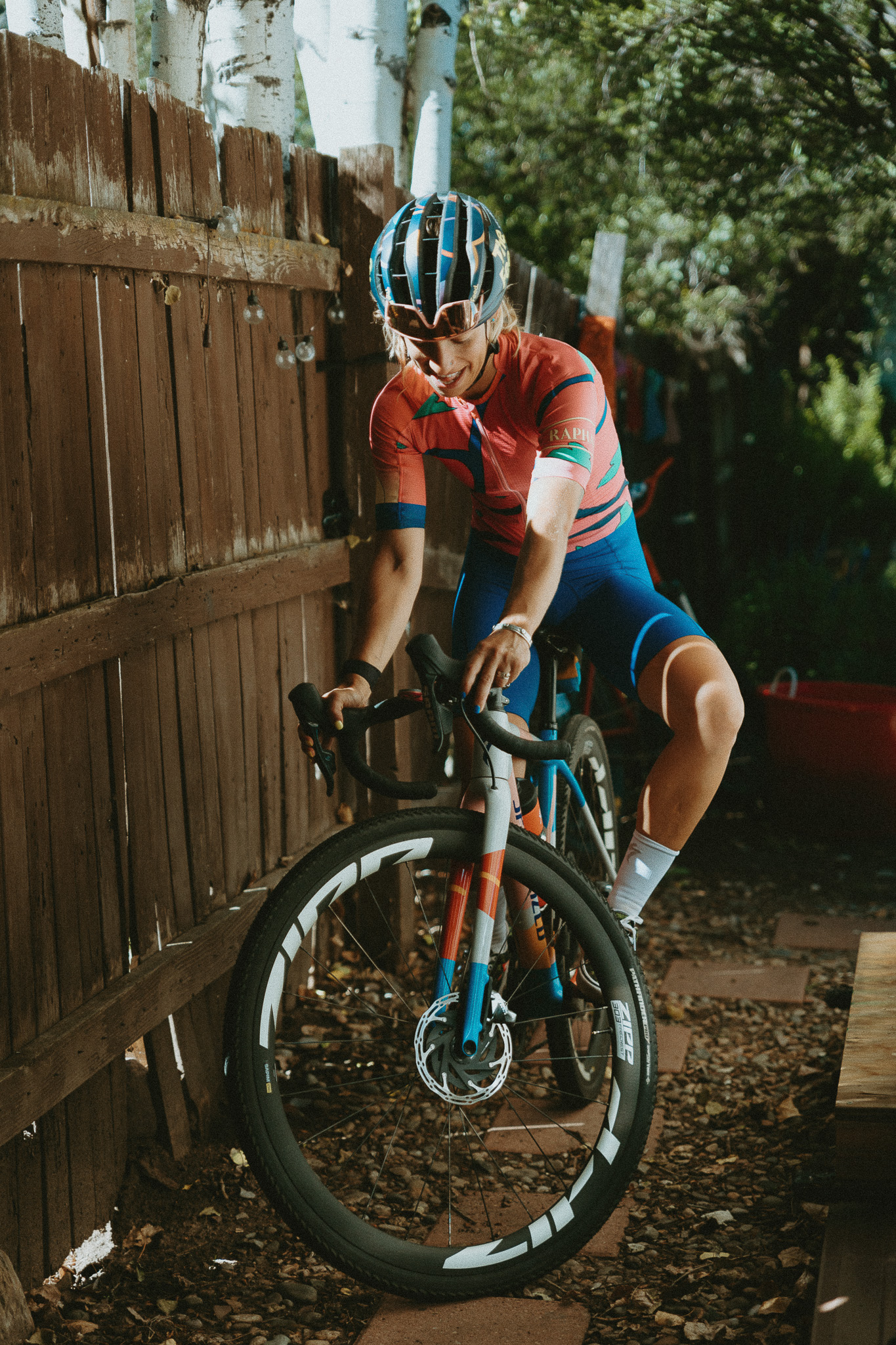
I was kind of phasing out of it, to be honest. I love being creative and I was already starting to make my cycling life into this creative space as opposed to working for clients. Part of being a freelance designer is listening to a client’s shitty ideas and then getting it done because you want and need money. But cycling has been my main source of income for the past six years. So—very fortunately—I was able to move on from that aspect of my life. But I still get to design my bike and helmet paint schemes.

Click image to enlarge
cyclespeak
Speaking of creativity, could you talk a little about the kiss-the-baby thing?
Sarah
I know [laughs]. It’s so weird. And you’re not missing out on anything.
cyclespeak
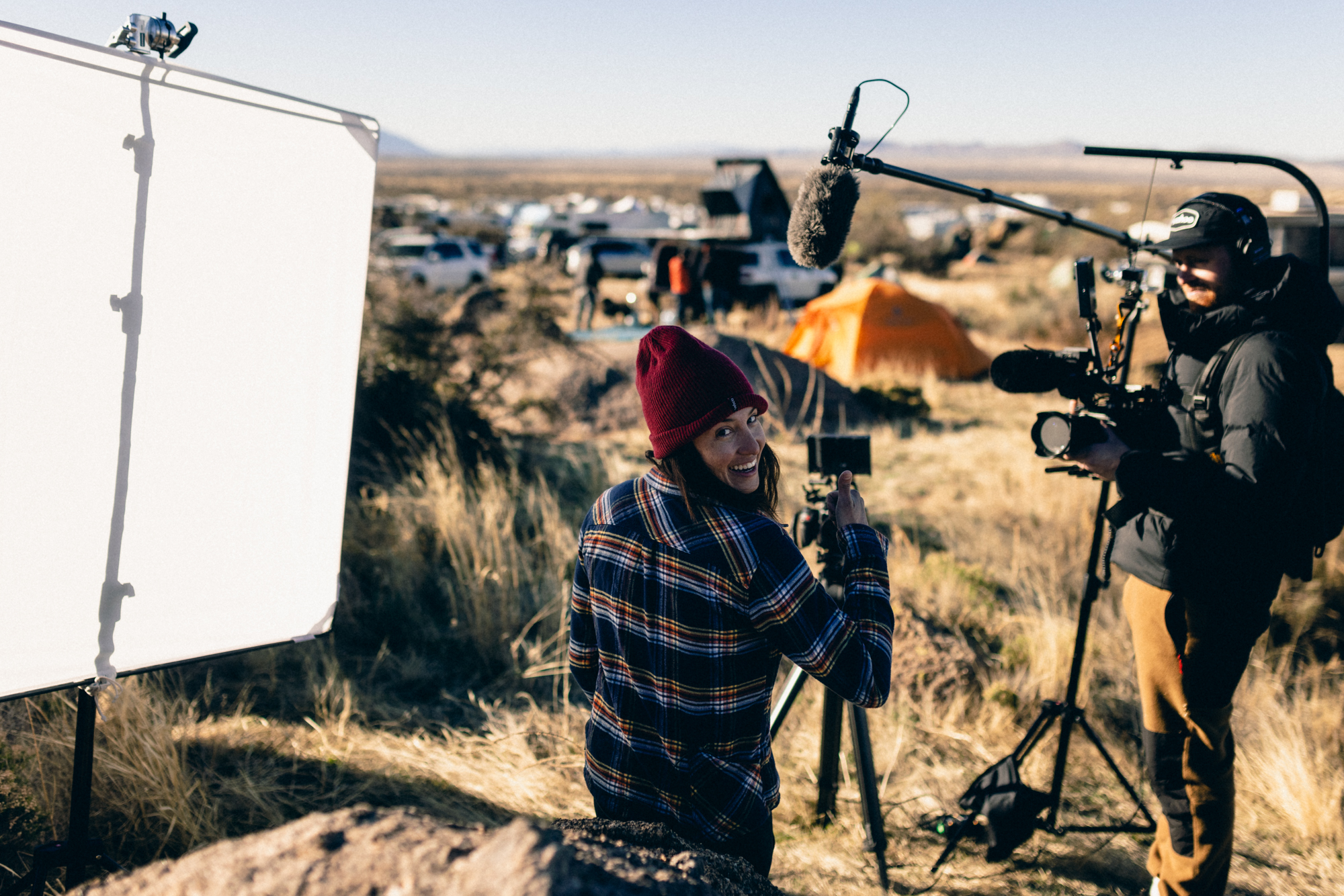
Because I saw your SSCXWC + Sarah Sturm video and loved it…
Sarah
That’s the venue we’re looking at for our wedding.
cyclespeak
But it’s basically a deserted hill top.
Sarah
Yep. It’s the mesa above Durango.
cyclespeak
With gopher holes.
Sarah
Norm loves it. But he’s never got a gopher. Anyways, back to kiss-the-baby. I began racing in cyclocross which I really loved.
cyclespeak
The races are a lot shorter in duration than the gravel scene?
Sarah
It’s shorter races, it’s not as much training, and it’s just so much fun. Then there’s the crowd which—outside the start / finish line—you don’t really get at a gravel event. Admittedly cyclocross is a little random and not always easy to explain when the person sitting next to you on a plane asks what you do.
cyclespeak
How do you answer?
Sarah
I just say it’s a better version of the Tour de France.
cyclespeak
That seems fair [laughs].


Click image to enlarge
Sarah
Anyway, I digress. The kiss-the-baby thing started at the US Single Speed Cross Nationals one year. They had this feature where we rode up a ramp and through this junk trailer packed with people throwing things at you. Trust me, it’s a disgusting, rambunctious, not-good-for-your-health experience of athleticism [laughs]. Someone in that trailer—almost certainly super hammered—had these old baby dolls and insisted on jamming them in our faces, yelling, “Kiss the baby,” before you could pass.
cyclespeak
Okay. That makes absolute sense [smiles].
Sarah
And then. And this is not exactly a great memory for me. Not particularly a shining moment. So, kids, don’t do this.
cyclespeak
That’s fair warning.
Sarah
So I was so super intoxicated after only eating a packet of oatmeal in the morning, finishing my race, and then cheering on the men whilst drinking shots, that I got hold of the dolls and started to yell, “Kiss the baby,” too. And now it returns to haunt me at every single race. Which is a very long way of explaining why I was glueing tiny dolls heads onto my race number in the video. Not a move that my bike sponsor Specialized saw coming [laughs].
cyclespeak
I’d love to be a fly on the wall at their brand liaison meeting.
Sarah
Oh my God, yes! And that’s after cutting so much from the final version of the film.
cyclespeak
We see glimpses of it in the video and I know people love to talk about your school bus but I’m a little confused by the terms you use in the States for these types of vehicles. It took five minutes talking to Alex Howes—admittedly a very enjoyable five minutes—to finally figure out that the travel trailer he was sleeping in at races was what we, in England, call a caravan.
Sarah
Oh, I get you. It’s totally confusing. It’s like when we say sprinter van—which should really only apply to a Mercedes—but we’re referencing a Ford or a Dodge.
cyclespeak
In England, we have what we call white-van man. Named because most commercial vehicles are painted white—the cheapest colour option—and are often driven terribly. So when you’re out in your school bus, do other drivers make assumptions and give you a wide berth?
[Sarah laughs]
Sarah
Because of the wrap—the design I did is very colourful—I do wonder whether people think we have children onboard. So that’s perhaps the reason they give us extra space? But then we drive past and they see all the bikes attached on the back and assume we’re just this bunch of hippies.
cyclespeak
It does have a little of that vibe. Maybe it’s the shape?
Sarah
Dylan saw it advertised on Facebook Marketplace and it was only an hour from here and affordable.

Click image to enlarge
cyclespeak
I read somewhere that you didn’t actually get the bus for bike racing?
Sarah
We bought it because of Norman. A portable camp, kitchen and bed with space for him to stretch out. It was never meant to be driven to Unbound. But as things turned out, we’ve driven it the length and breadth of the west side of the US. And let me just put this on the record; it is not a comfortable vehicle for that kind of journeying.
cyclespeak
No?
Sarah
It’s so loud—Dylan will sit up front wearing ear protectors—but somehow me and my 70-year-old mother drove straight across the country in it and she was listening to an audiobook on tape. Unbelievable [laughs].
cyclespeak
It certainly catches the eye.
Sarah
It has its quirks but I love it. And we’re currently in the process of getting a more race friendly, super-functional vehicle but every ad that I forward to Dylan looks really similar to the bus we already own.
cyclespeak
You use the term super-functional. Which leads me nicely onto the level of team support that seems required to be competitive in the gravel racing world nowadays? An inevitability of gravel’s popularity which should therefore be embraced? Or does it disenfranchise the privateer who has a limited budget and is balancing their racing with a full-time job?
Sarah
This is such a good question. And it was inevitable, right?
cyclespeak
Maybe because there’s more money being made available?
Sarah
I’m going to make a big statement here. But they’re my friends so I can say this.
cyclespeak
Go for it.
Sarah
Back in 2019 when I won BWR*, Keegan and Sofia were still racing mountain bikes and they would tease me by calling gravel a retirement sport. But now they’re both racing the Lifetime Grand Prix and are two of the most hardworking professionals I know. They’ve been racing since forever, bring with them all this experience, and have raised the bar to where we presently see gravel racing. And when someone ups the ante, others follow.
*Belgian Waffle Ride
cyclespeak
I guess a very different situation to when you first rolled up at that start line in 2019?
Sarah
It was just me and the bike that Specialized had given me to ride. There was no-one waiting in the feed zones for me, I had my pockets stuffed with sandwiches, and didn’t know shit about gravel. But now, everyone is at this insane level of training and prep, and that, in turn, means you need a crew and a mechanic.


Click image to enlarge
cyclespeak
For the past two years you’ve had your own little team with Ellen Campbell. And I understand that you both race independently but can you talk about the dynamic of how this all works in terms of your personalities?
Sarah
I used to coach Ellen when she was 14. And we work really well together because we’re super opposite. I’m a little more sporadic and Ellen is super organised and logical [laughs]. The gravel world is difficult to break into unless you have a huge result so me bringing Ellen onto our team was always with the goal of mentoring the privateer life. I want to leverage the connections I’ve made and introduce Ellen to these people.
cyclespeak
Sought of semi-seriously but does Norman give you a race edge?
Sarah
Hmmm. That’s an interesting question. And I do know I’m always incredibly excited to see Dylan and Norm at the end of an event. This year at Unbound specifically—which was an horrific experience—I remember riding the last 10 miles and just wanting to finish so I could give them a hug.
cyclespeak
There’s a great photograph taken at Unbound that captures the moment when you first realise you’ve finished in third place.
Sarah
Looking back at my athletic career, that was definitely one of the highlights. Because Unbound is basically our Tour de France, right? It’s a big event and it’s so hard to keep track of where you’re placing out on the course. So it was a lovely surprise.
cyclespeak
We’ve already mentioned your breakout win at BWR in 2019. Have you changed since then as a racer?
Sarah
I guess one way of putting it—and I’ve learnt a lot—is that I’ve had to adapt. Because the level that we’re now racing at has just gone…
cyclespeak
Stratospheric?
Sarah
Yes! Like when I got to line up at the UCI Gravel World Champs with the winner of last year’s Tour de France Femmes. Together with everyone who is anyone and that includes some seriously big names from the World Tour.
cyclespeak
Is it fair to say they’re coming to gravel from a different pathway?
Sarah
I’m racing against women who have been to the Olympics. They’ve raced mountain bikes and road at a super high level. Whereas I grew up playing soccer and doing martial arts and my race resume is pretty much gravel. So I’m actually quite proud of myself and the work I’ve put in. I’ve even hired a nutritionist because I realised how I was only eating half the carbs I needed to race at the front [laughs].

Click image to enlarge
cyclespeak
You placed fourth in the 2023 Lifetime Grand Prix and I’m conscious that—unlike the majority of people’s jobs—every single up and down happens under the full scrutiny of your sport and community. Does that bring with it a certain pressure to perform? And if so, how do you stay so smiley?
Sarah
Probably because I think sport is so silly [laughs]. Because at the end of the day, even if you’re the best athlete in the world, what are you actually contributing? What are you gifting to this existence we have as humans? Yes, I understand that it can be inspiring. But it’s also absolutely selfish. All these people wearing these ridiculous outfits, riding this outlandish piece of equipment, and one of them is the fastest and wins. And that’s an accomplishment?
cyclespeak
Can I suggest that many people would say, “Yes, it is.”
Sarah
Maybe you’re right. Because it’s not nihilism [laughs] but I do question what it’s all about. And I think that—because I like to have fun—people just assume I hop on my bike and casually ride around Durango in the off-season and just party and ski with my friends. But that is not the case. I have a training plan. I check in with my coach every single day. I lift heavy weights. I even put them back [laughs].
cyclespeak
Maybe, like many of us, you’re just searching for some answers?
Sarah
I go through extreme highs and very low lows. Last year’s Leadville, for example, was rough. And that’s so stupid. In the grand scheme of things, Leadville doesn’t really matter. But I allowed myself to feel so sad when I fell short of my self-imposed goal. And it’s not like I’m out there saving lives.
cyclespeak
So why put yourself through it?
Sarah
Because being an athlete is the coolest job ever but also one of the most stressful; in that it’s almost impossible to detangle your self-worth from a result. But I do wonder if that’s how we are wired. That even if we didn’t have the same level of scrutiny over our day jobs—if you took all the photos, videos and fandom out of it—we’d still be super competitive?
cyclespeak
You must need a certain something that drives you, to even contemplate rolling up to a start line?
Sarah
Or something wrong with you to keep pushing after you’ve peed in your pants [laughs].
cyclespeak
Really? It’s now so competitive that there’s no time to even stop for a comfort break?
Sarah
Yep. It’s crazy.

Click image to enlarge
cyclespeak
You’re perhaps questioning the positive impact from racing and I don’t want to disagree with you…
Sarah
Oh, please do [laughs].
cyclespeak
But scrolling through all the comments on your posts, it’s clear that you inspire countless people through your racing.
Sarah
I love that people take the time to comment on a post or say hi at the races. And it amazes me that people care what I do and how I do it.
cyclespeak
So who do you follow that inspires you?
Sarah
Demi Vollering springs to mind. Watching her win last year’s Tour de France Femmes was so inspiring.
cyclespeak
And then she got third at the UCI Gravel Champs.
Sarah
These women just have insane power. It’s unreal. But watching them, it did make me realise that I might not have the same cornering skills on the road, but get me on a sketchy, gravel descent and I can probably pass them [laughs].
cyclespeak
In your film for Wahoo—It’s supposed to be fun—you talk about some of the highs and lows of what is a long, long season. Sitting eating pre-race oatmeal in tears at four in the morning or shakedown rides with Ellen filled with chatter and laughter. Quite a range of emotions to contend with?
Sarah
I’m gradually learning to cope a lot better. And I probably had less pre-race nerves during my second year on the Grand Prix. The first year I was seriously questioning if I belonged and whether everyone would see what a fraud I was. So, yeah, looking back at that first Grand Prix year, I was in tears before Unbound and absolutely terrified. Which, as things turned out, was completely justified as the start was so scary. But in the second year, it was a different ballgame. Stiffer competition but I had a bit more confidence.
cyclespeak
You did mention in a recent interview that the Grand Prix series can get a little boring? I guess doing events like the Traka helps to keep things fresh?
Sarah
Totally. But I still want to do the Grand Prix again because this is my job and that’s where most of the media is centred. But the very nature of a race series is you end up repeating the same events. So there’s this context to deal with. In your head you know you finished in this position last year so if you do worse than that, you’re going to feel crummy.
cyclespeak
So the Traka…
Sarah
I just needed something new. A different level of pressure because I wasn’t counting points as I crossed the finish line. Not that I do my own mental maths because my Dad does it for me.

Click image to enlarge
cyclespeak
You came in a strong second at the Traka behind an on-fire Amity Rockwell. Riding 390 km of challenging parcours in 15 hours and 46 minutes. Which if you think about it, is kind of crazy?
Sarah
I know. And I’m doing it again this year [laughs].
cyclespeak
That route is so hard.
Sarah
And last year, I flew into Girona right after Sea Otter. I didn’t know the course because there wasn’t an opportunity to pre-ride. And I’d got it into my head that outside support wasn’t allowed; not realising that wasn’t the case until the day before the race. So we pivoted and Dylan was waiting for me at the feed stops. But I still managed to run out of water and I was nauseous for so much of that day.
cyclespeak
Your sponsor Osprey pulled together a brilliant film of your Traka experience—well worth a watch—which really conveyed how brutal the race was. And I recognised the garden of your hotel because that’s where I stay in Girona. You were building up your bike with Dylan next to the wooden pergola where I hang up my bib shorts to dry.
Sarah
I’m sure they love seeing all your laundry [laughs].
cyclespeak
An important question. Did you try the hotel buffet?
Sarah
I did!
cyclespeak
My friend—every time we stay there—tells me he’s going to go steady and not eat too much but then just can’t resist.
Sarah
That’s how I am with any buffet. Pre-race or not.
cyclespeak
Before the race, you joined Sami Sauri on one of her Women’s Collective rides. It looked like seriously good fun.
Sarah
Rather than worrying about my lack of race prep, I got to talk and ride with all these cool women. Something I never usually get to do. And I had such a great week in Girona. We ate out every night—which purely from a performance standpoint is less than ideal—but it’s cheap in Europe and I like going to dinner with my friends.


Click image to enlarge
cyclespeak
Is this engagement outside of racing something you find fulfilling? Because in your Wahoo film you talk about mentorship and you’ve already mentioned how you used to coach Ellen.
Sarah
Yes, is the short answer. And although I’m not exactly great at organising stuff, I love connecting with people authentically. But being a bike racer is so selfish—it has to be—so having a dog and prioritising my relationship with Dylan is about as much as I can handle at the moment. But moving forward, as my career progresses, it would be good to do some cool, fun things with other people.
cyclespeak
Speaking of cool, fun things—and returning once again to your SSCXWC film—I was wondering whether the UCI should decide grid positions for their Gravel World Championships with a tug of war, beer chug and Big Mac eating heats?
Sarah
Hell yeah!! Can you imagine? Because I guarantee that the women racers normally on the front would be way in the back. And people like me would shine [laughs].
cyclespeak
Let’s talk to the UCI and make it happen.
Sarah
Just so you know, I’m actually quite a slow chugger. But just watch me jam a Big Mac down my gullet.
cyclespeak
Before we say goodbye, I also asked this final question of your teammate Ellen. Because we’ve already talked about the full media glare of the race world where every decision you make can be dissected and commented on. So, bearing all that in mind, is it a simple thing to say why you race?
Sarah
Actually it is. And I’m not trying to be too profound. But it’s either in you or it’s not. The desire to have that sort of challenge and have it against other people. That’s something so specific and personal and deep and beautiful but also a bit dark. A primal exercise of competition and survival of the fittest
[Sarah pauses]
Or just something that us crazy people do [laughs].
All photography with kind permission of Ri Ganey
From corporate clients—think Fizik, Osprey and New Balance—to the madness and mayhem of Single Speed Worlds, Ri Ganey has built a body of work that combines beautifully observed storytelling with an innate sense of truthfulness.
“I want my subjects to feel seen and as comfortable as possible,” suggests Ri. “Photography that is real and authentic as if I’m folding myself into whatever is happening around me.”
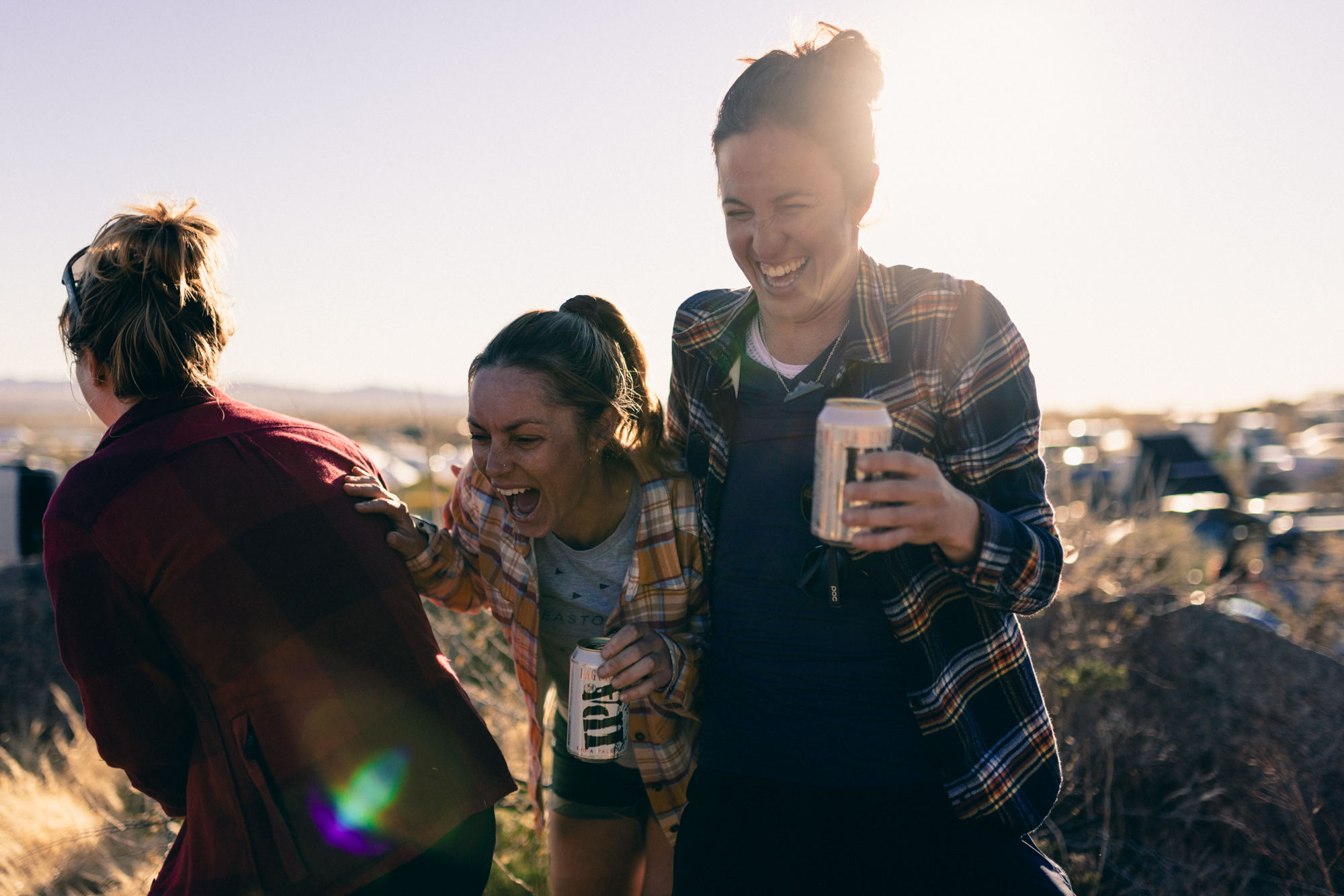
In her imagery of Sarah Sturm—coincidentally they share the same birthday—Ri’s playful personality is writ large. Her camera capturing a vibrancy of mood and movement that channels the inherent energy of her subject.
Visit wildchildmedia.co to commission Ri







 cyclespeak