
Now heading into her third season as a full-time professional and rostered to race the 2024 Lifetime Grand Prix, Ellen Campbell takes an intriguing look at the emotional challenges of rolling up to a start line, the self-healing benefits of kindness and compassion, and how fun and laughter with teammate Sarah Sturm help balance the pressure to perform.
cyclespeak
Hi Ellen. How’s Madeira working out for you?
Ellen
It’s a really cool little island. Our friend’s Mom bought a spot here to have as a rental and we were invited over for a month-long training camp to escape the winter. So here we are [smiles].
cyclespeak
Is it good road riding?
Ellen
Honestly? I’d say a mountain bike would probably be best. It’s super steep and the roads are kinda rough.
cyclespeak
So what does your off-season look like? I’ve seen you’ve been out skiing and hiking so is it a time to let loose?
Ellen
At this point, mid-January, I’m definitely back into structured training. After a rather turbulent start to my off-season. Normally I take one or two weeks off the bike and I’ll ski, climb or run. Whatever motivates me to get outside. But this year I was travelling more—maybe not getting the rest I needed—and my body was telling me to slow down and step back a little. So not exactly the smoothest transition into training.
cyclespeak
And now you’re back at it but in Madeira?
Ellen
Which is kind of challenging because there aren’t any easy spins [laughs].


Click image to enlarge
cyclespeak
You mentioned needing a couple of weeks to rest up. Are you able to accept that or is there a part of you frustrated at being inactive?
Ellen
I’m not super great at it. I tend to have this internal battle going on. Part of my brain is telling me that rest is good and I’m doing the right thing. But the other part sees everyone else on social media out training and there’s this feeling you’re missing out. So, yes, it can be hard but it’s really only a moment in time and there are so many more days in the year.
cyclespeak
I’ve heard you talk about riding with the Durango Devo* squad and you raced a lot before first chatting to Sarah at Leadville about going full-on professional. But what are your memories of bikes and riding from childhood?
*A community-centred development programme dedicated to sharing the love of riding mountain bikes based out of Durango, Colorado.
Ellen
I definitely had cycling in my life from a very young age. My Dad is a big road cyclist—maybe even a fanatic—so he was a massive influence. Not pushy but it was something that he enjoyed doing so we always had bikes around and there was talk of the Tour.
cyclespeak
And that, in turn, led to you riding with Devo?
Ellen
Which was a great environment to learn the ins and outs of racing in a team and having fun on the bike. At first I didn’t like it that much because it’s hard, going up hills. I remember not liking the feeling of being uncomfortable. So back then, I mostly rode to spend time with my friends. When you’re talking to each other, the hills don’t seem so bad [laughs].

Click image to enlarge
cyclespeak
You mention having fun on the bike and that reminds me of this quote from the tail-end of 2023: ‘We’re here for the giggles. And the fun. And the friendship. But mostly for the giggles.’ And I wanted to ask about those sentiments with respect to your team dynamic with Sarah?
Ellen
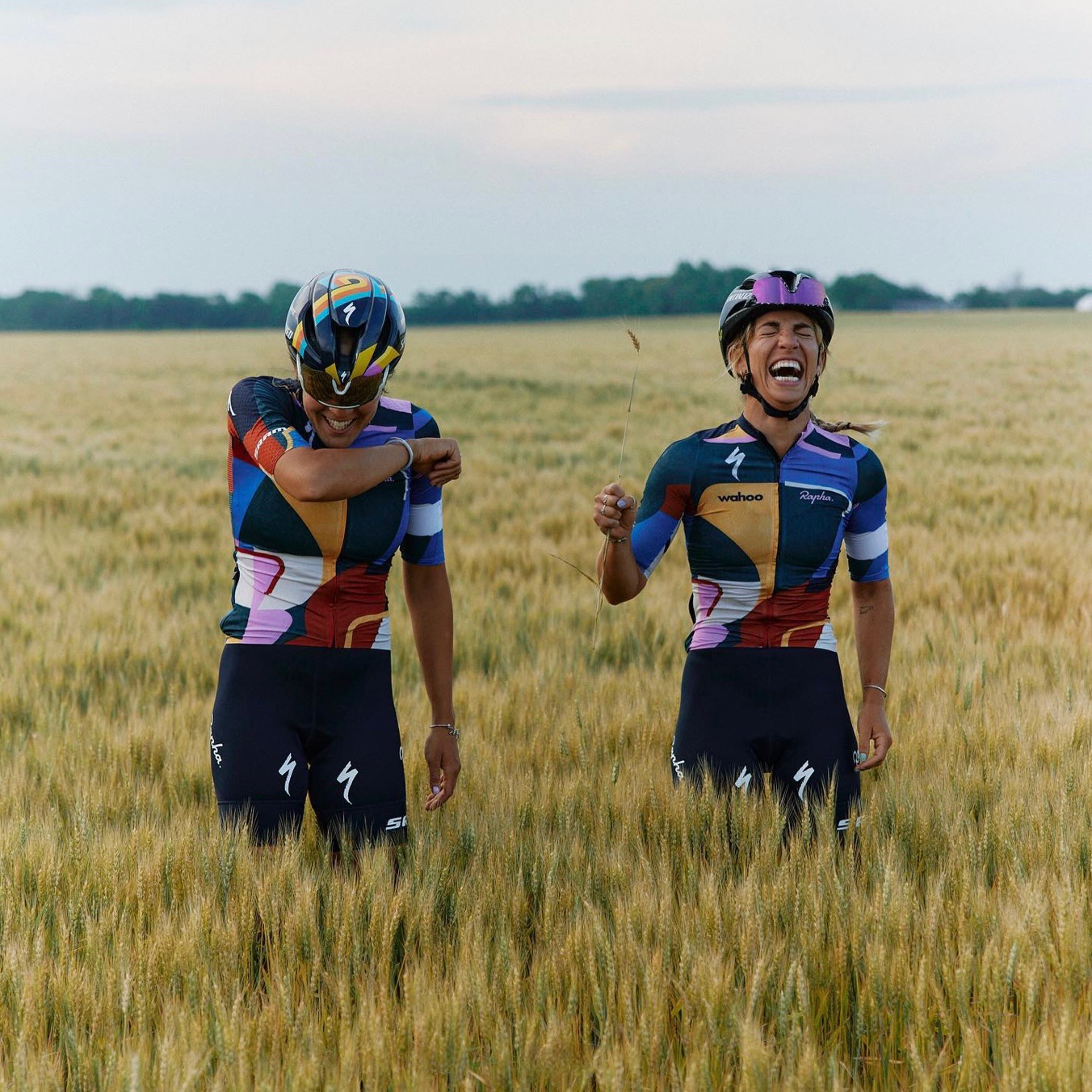
I remember writing that post because it was kind of a hard one. Because both me and Sarah are very serious cyclists but we never want to take ourselves too seriously. Cycling attracts a lot of Type A people and there can be a lot on the line if it’s your livelihood. So on the one hand there’s definitely this tension but then you have Sarah who’s so giggly. And it helps that we spend so much time together, travelling to a race, driving through the middle of nowhere. We have this good little crew: me and Sarah, my partner Howard, and Dylan, Sarah’s partner.
cyclespeak
And that team dynamic helps balance out the inevitable stresses of racing?
Ellen
One of Devo’s slogans was ‘Never forget the feeling’. A reminder to enjoy the sensation of flying down a hill or going hard when the mood takes you and not taking any of that for granted. So when I was writing that post, I was not only thinking about the racing but all the other special little pieces that come into play. Navigating Sarah’s school bus through a tiny, little town or yelling at Norm* to climb onboard after he’s stretched his legs. All the fun stuff that keeps you moving when you’re suffering over 200 miles of Kansas gravel.
*Sarah’s dog Norman
cyclespeak
Back in 2022, you referred to yourself as a newbie when you first became Sarah’s teammate. So what kind of learner are you?
Ellen
That’s not something I’ve ever really thought about [laughs]. But I have noticed that I’ll mimic other people that I think are good at something. I have a picture in my brain of what that looks like and I’ll try and copy it. So maybe you could say I’m an experiential learner?
cyclespeak
What were the biggest takeaways from your first full-time season?
Ellen
2022 was quite a whirlwind. So much newness coupled with this feeling of ‘Holy cow, I’m actually doing this.’ Because coming through the Durango Devo programme, I always knew that if I worked hard enough, then professional racing was a goal to which I could aspire. But when that finally becomes a reality, it’s as if your mind is playing catch up and there’s this nagging question of whether you’ve earned it.
cyclespeak
So how does riding as a team figure in a race situation? Does it give you both an edge?
Ellen
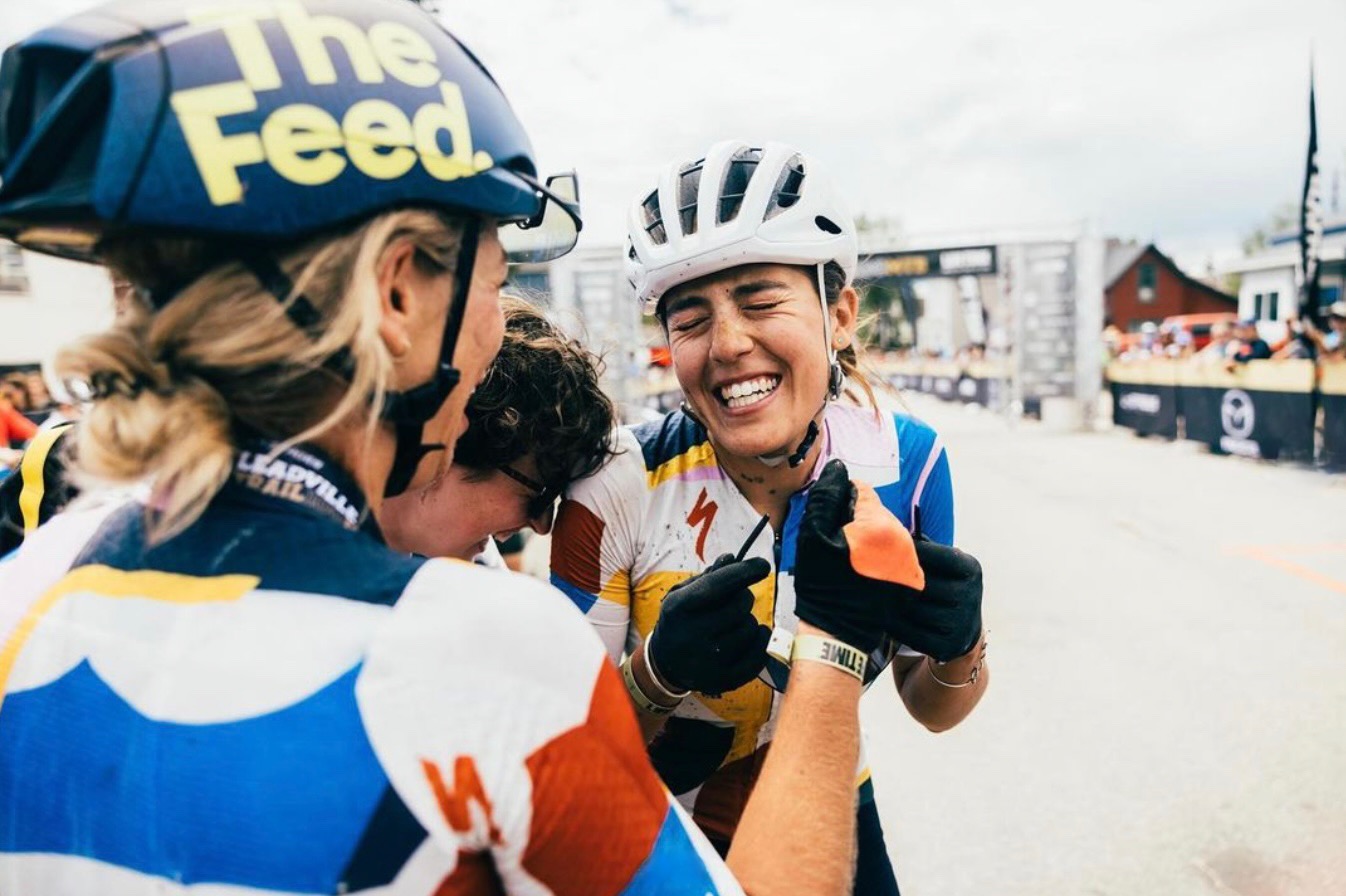
From the very beginning, Sarah and I decided to operate as a team everywhere except on the race course. We’re good friends and want to support each other, so we’ll talk during the race but I’m never riding for Sarah. If she flatted, I’d happily give her a CO2 cartridge or a spare tube; but in much the same way that I’d do that for a lot of people and not just Sarah.

Click image to enlarge
cyclespeak
What’s your take on the rise in professionalism on the gravel racing circuit? Large support crews, power washers, spare wheels etc. Is it inevitable as the scene explodes in popularity—and should therefore be embraced—or does it disenfranchise the privateer who has a limited budget and is balancing their racing with a full-time job?
Ellen
That’s a tricky line to walk as I do feel it’s very difficult to mandate levels of support. You’ll always have individuals with different resources regardless of whether they’re on a factory team or a privateer. And let’s not forget the thousands of competitors lining up to race these events without any outside support.
cyclespeak
I guess there are no simple answers?
Ellen
Maybe, as professional athletes, we need to focus on making the sport approachable; whether that’s our interactions on race day or in the posts we put out on social media? And then combine that with a cascading series of race distances so that individuals new to riding a bike can come along and join in the fun?
cyclespeak
Speaking of responsibilities and in a sport that seems to delight in finding contentious issues to argue over, have you always been comfortable in expressing an opinion and planting a flag for what you believe in?
Ellen
I wouldn’t say I’m always comfortable [laughs]. But there are moments when things can get a little silly. And I do try and see both sides of things because it’s easy to get worked up or offended. But there’s no one way to do bike racing and I will speak out when I feel someone is being too narrow-minded.
cyclespeak
In your recap from season closer Big Sugar you mention racing assertive and smart but then reference a death by a thousand cuts. And it struck me how very candid and upfront you are with your comments?
Ellen
Social media is a funny one for me. And I do feel it’s important to be as authentic and honest as I can.
cyclespeak
I guess what we often see is rather a filtered version of our best lives. So it’s refreshing when people share their difficulties and talk about the lows as well as the highs?
Ellen
It’s just my take on things but if someone else had a difficult day riding an event, then to see that I also suffered out on the course might help them to validate their own experience?


Click image to enlarge
cyclespeak
You placed 11th in last year’s Lifetime Grand Prix and you’re rostered to race in the series again this year. Is it a format that plays to your strengths, that you enjoy and enables you to have fun racing? Or does the success of the series bring with it a sense of pressure to perform?
Ellen
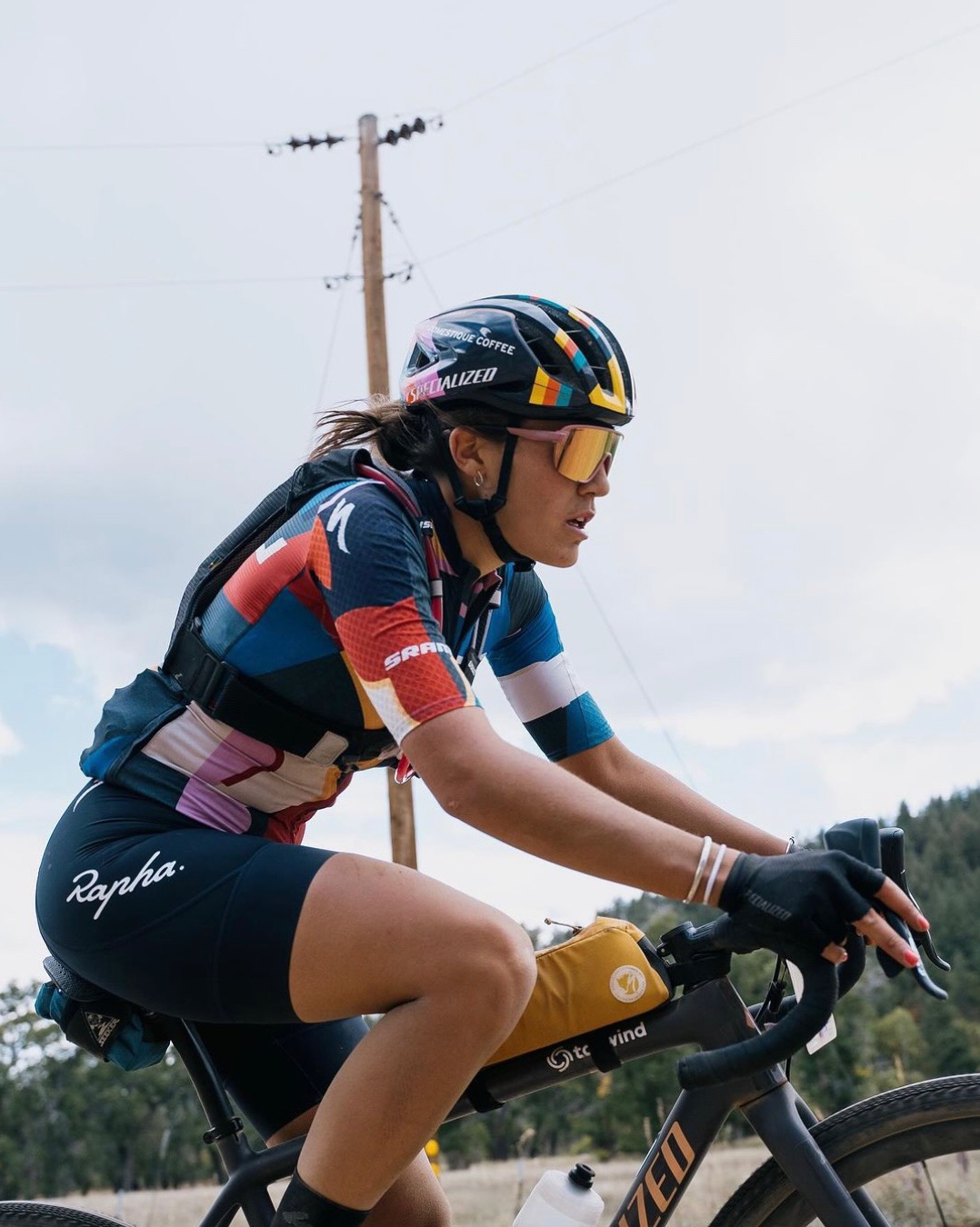
The length of the series is definitely a help as I tend to be a pretty consistent rider. So multiple races over a longer period of time is generally beneficial even though there are more opportunities to get hurt or sick. And if you look at it plain and simple, all you can do is line up, try and do your best, and hope that the stars align.
cyclespeak
On the one hand, you can define success with your Grand Prix race results. And then, on the other hand, you had 20 novice riders show up for your first RIDE DIRT workshop which is pretty awesome. So in a very broad sense, what are your metrics for a successful season?
Ellen
That’s a great question…
[Ellen pauses]
I guess I break it down between the competition side of things and the feelings I have about bike riding. And having those women show up for my workshop—putting their trust in me—was one of those great sensations.
cyclespeak
And that helps you find a sense of balance?
Ellen
Over a season there will always be things that don’t go to plan. So overall, I just want to feel good about my performance. I want a race to go right regardless of where I’m placing and for me to enjoy a good experience out there. But these same metrics can be applied to a skills workshop I’m leading or if someone I’m coaching gets a good result.
cyclespeak
So an emphasis on the right feelings?
Ellen
This year I had a rider I coach win a mountain bike national title. Which was pretty cool. So yes, good sensations are my metric for success [smiles].

Click image to enlarge
cyclespeak
Focusing in on your own racing style, in the MTB rounds of the Grand Prix when you’re racing on singletrack, are you a shouter—get the F out of my way—or more of a polite ‘can I pass’?
Ellen
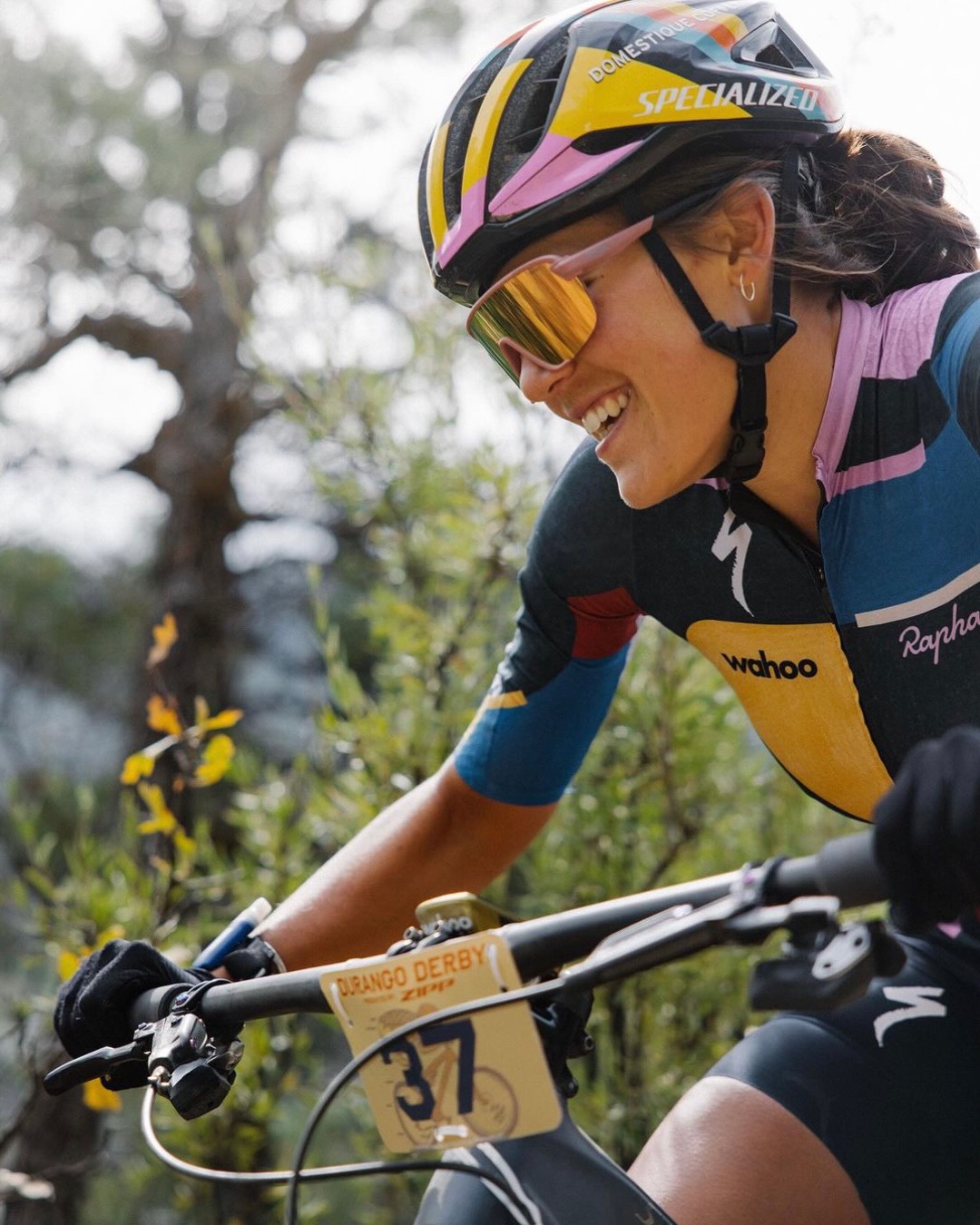
I’d describe myself as assertive but nice. Or nicely assertive. You take your pick [laughs].
cyclespeak
What does that look like in a race situation?
Ellen
A lot of my high school races included sections with limited opportunities to pass. And I was always taught—which is what I tell anyone I coach—that you have the right to pass but not to be mean. In terms of my personality, I don’t seek out conflict but I also want to get things done and get to where I’m going.
cyclespeak
You could argue that being a professional athlete brings with it certain pressures. And I was wondering whether there are ever days when a regular 9-5 job with riding at the weekend seems appealing? Or are you living the dream?
Ellen
Financially, a 9-5 job sometimes sounds appealing [laughs]. But no, I get to lead a relaxed life where I wake up, go for a ride, have lunch, maybe watch a movie or catch up with friends, before going to bed. Sometimes I’m not feeling particularly motivated to train but head out regardless. Or if I’m travelling, I might miss out on family occasions. But I wouldn’t swap what I do. And if I had a regular job, I wouldn’t be flying off to spend a month in Madeira.
cyclespeak
That would be an interesting conversation to have with your employer [smiles].
Ellen
I guess you could say I feel very privileged to live the life that I do. And want to soak up every opportunity for as long as I have it. I call it my vacation life [laughs].
cyclespeak
So as a disciplined professional, are you a ride-all-weathers athlete or is there a place for indoor training?
Ellen
Generally I try and get outside as much as possible but there are definitely times when it just doesn’t make sense. My coach—especially this time of year when the weather is so variable—will plan a combination of activities. I might go Nordic skiing for a couple of hours and then go on the indoor trainer.
cyclespeak
I’m an hour tops on my indoor trainer. After that I’m losing the will to live.


Click image to enlarge
Ellen
I’m right there with you. My max is probably an hour and a half and there has to be some structure. If I’m twiddling my thumbs, watching a movie, then it’s more likely 20 minutes [laughs].
cyclespeak
Your partner Howard* also races the Grand Prix series. So I’m guessing that makes logistics a little easier?
*Off-road professional racer Howard Grotts
Ellen
Travelling together is definitely a plus. Sarah, Howard and I all live in Durango, so that helps with booking flights or sharing a ride to the race. And another big benefit is Howard obviously understands what’s going on with my training and my goals for the season.
cyclespeak
When you’re out on the trails together, is there ever a sense of competition?
Ellen
Not so much. But we did have one little incident…
cyclespeak
Which was?
Ellen
We were living in Montana, returning from a ride, when Howard asked if I wanted to sprint home. I honestly wasn’t that keen but we started to accelerate before getting our bars locked up. Howard was okay, he didn’t go down, but I crashed and this happened right before mountain bike nationals which was kind of worrying. Luckily there was no permanent damage apart from a pretty spectacular bruise [laughs].
cyclespeak
Rather than post the usual year-end recap reel, you saw out 2023 with some intentions. The themes included having compassion for yourself, bringing more awareness to your body’s needs, making time for family and friendships. Are these set in stone or do they act as markers to guide you through the coming year?
Ellen
It was never intended to be a rigid plan. If something doesn’t feel right, then it will change and evolve as I learn and experience new things. But I did feel it was important to set some goals that would lead to success not only in bike racing but in life. Trying to be a professional athlete in any sport is hard so it’s important to be kind to yourself.
cyclespeak
I think it’s something that would be helpful for most people. Life can be very tricky. And intense.
Ellen
I feel it’s important to give yourself the space to acknowledge any negativity but know that it doesn’t define you or make you a bad person.

Click image to enlarge
cyclespeak
When you line up at the start of a race, every decision you make out on the course is open to scrutiny. But then I scroll through the comments on your Instagram posts and there’s so much good feeling and respect for what you’re setting out to do. This enormous groundswell of positive energy that combines with a sense that you inspire so many individuals. So is it tricky to balance this public persona with a need for privacy?
Ellen
That’s a good question and I think I need to remember this a bit more. Because I’m not the kind of person who will process alone. Often I feel the need to share and talk with others and I definitely lean on Howard and Sarah in this regard. But in terms of my public persona—when I’m at a race or an expo—I do consider how I carry myself because actions can speak louder than words. Yes, a certain result can be life changing but ultimately a race is just a race. And I always remember the distinct moments when people have been kind to me. And I also remember when people are mean. So I try really hard to be nice when I’m racing.
cyclespeak
Not many of us do our jobs under a media spotlight?
Ellen
It’s kind of crazy when you race. You’re under this magnifying glass with everyone watching you. And it’s not as if you’re looking your best. You’re properly suffering and you’ve got food all over your face [laughs]. But when people do have an outburst or say something unkind, then there’s a tendency for it to come back and bite them on the butt.
cyclespeak
Taking all these thoughts and detours into consideration, is it a simple thing to say why you race?
Ellen
I honestly don’t know if it is. Sometimes it’s not fun but then I think about the times we hang out after a race, the finish line hugs, the fun and laughter of travelling with Sarah, the cool places we get to see.
[Ellen pauses]
But why do I race? I guess the opportunity I get to push myself is pretty unique. Because you can push yourself in a whole lot of different ways: in your job or as a parent. But to do that in a physical sense and on a global stage? That’s really special and definitely not something I take for granted.
Feature image with kind permission of Alex Roszko / All other photography (credited individually) courtesy of Ellen Campbell.
 cyclespeak