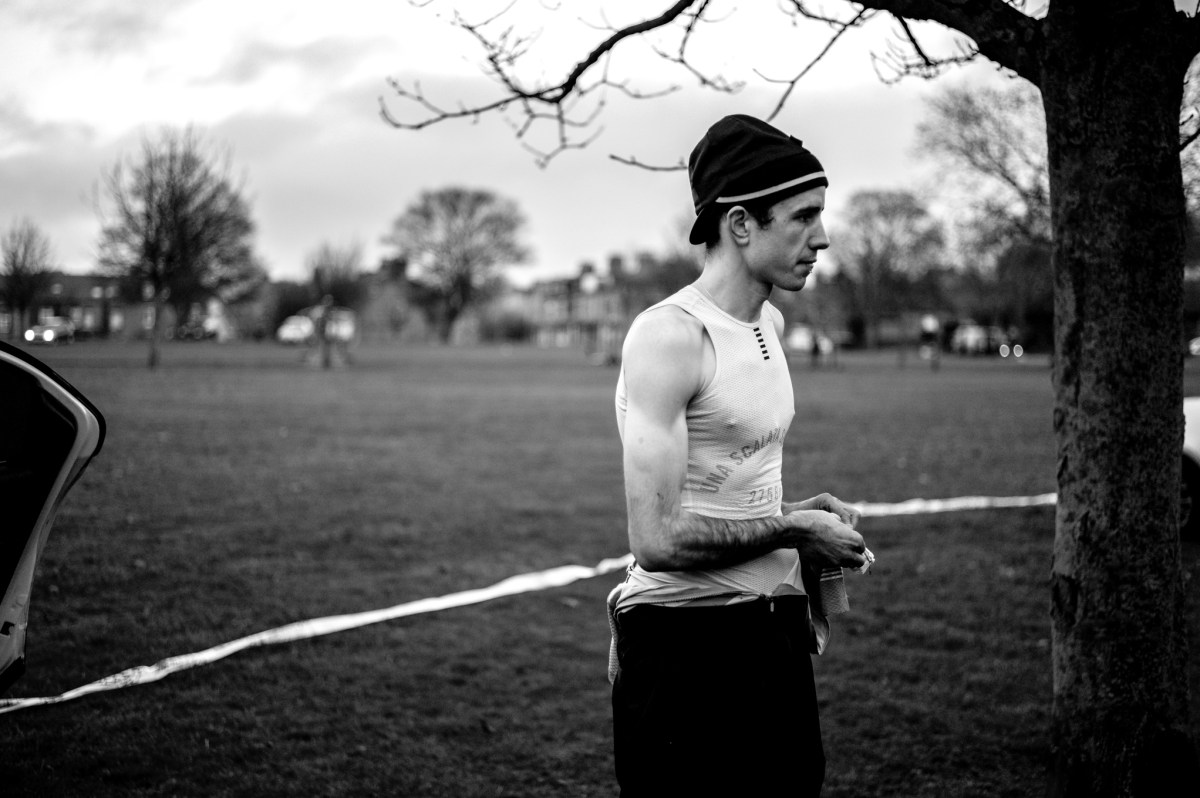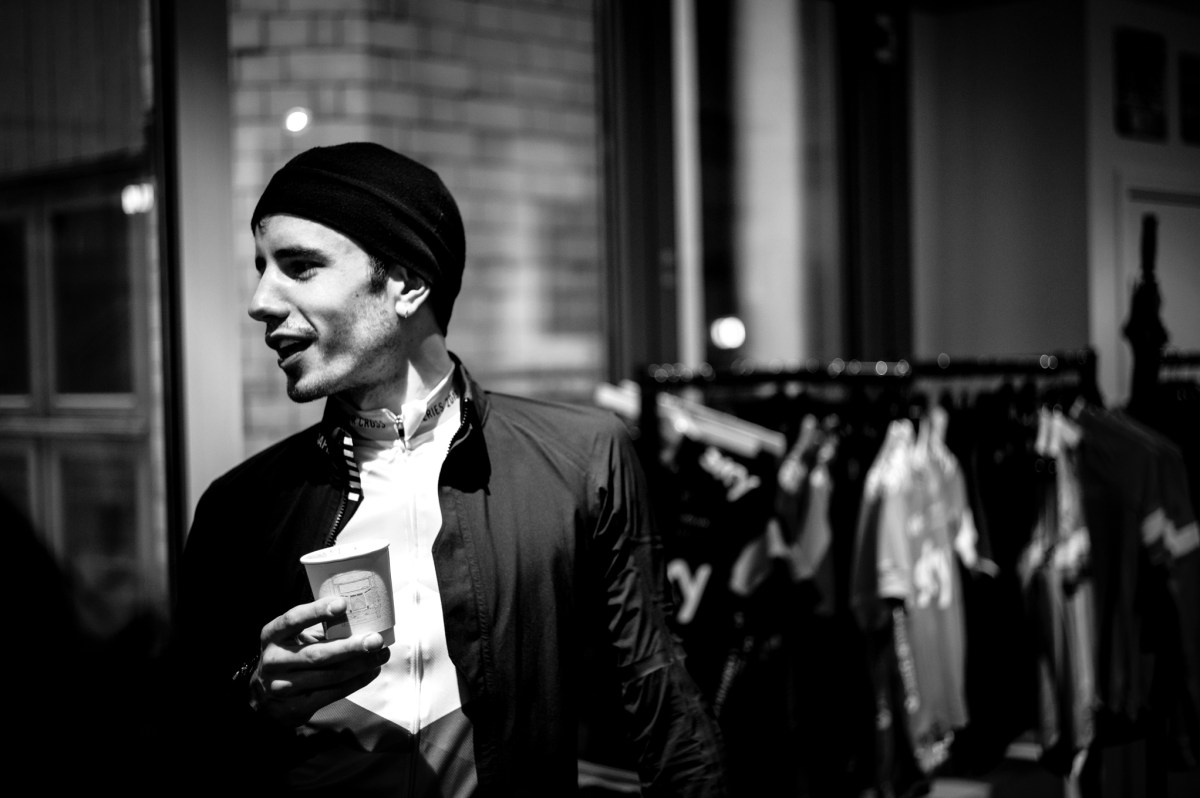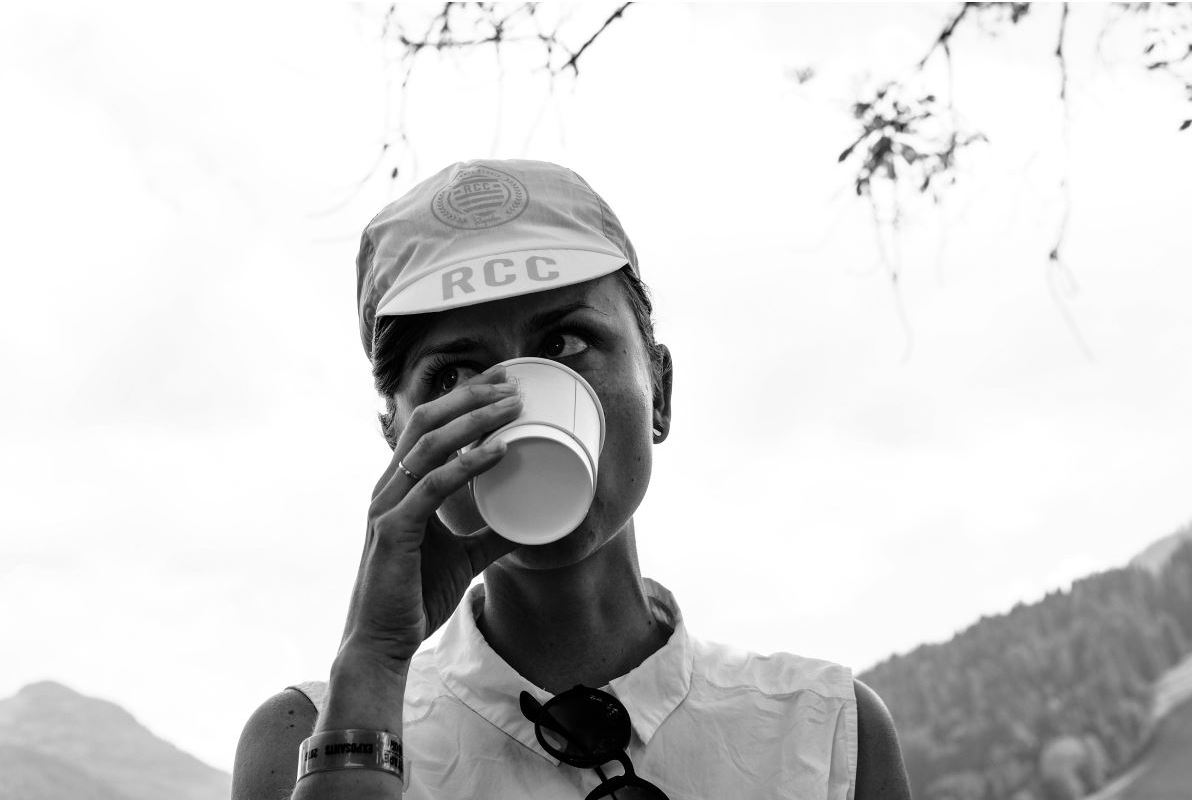
Portrait: Marta Gut

Leaning back in her chair, Marta Gut pauses to consider the question. ‘My role,’ she explains, ‘It’s all about communicating a lifestyle and a culture. Product will sell itself if people trust in your message. But you have to believe it yourself.’

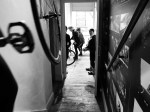
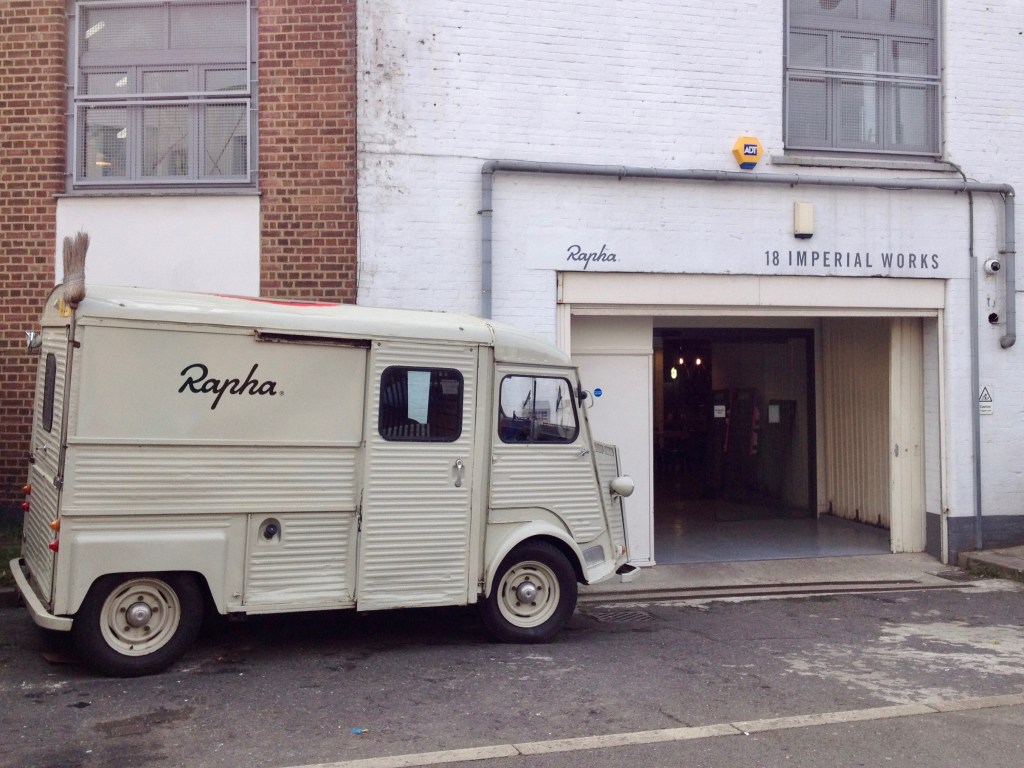
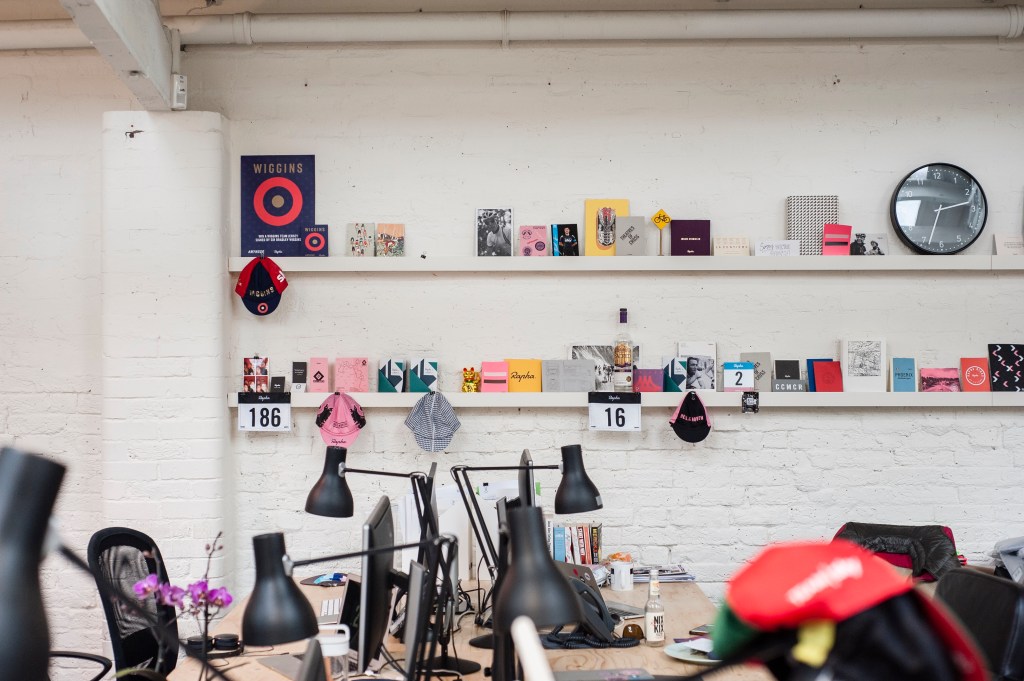
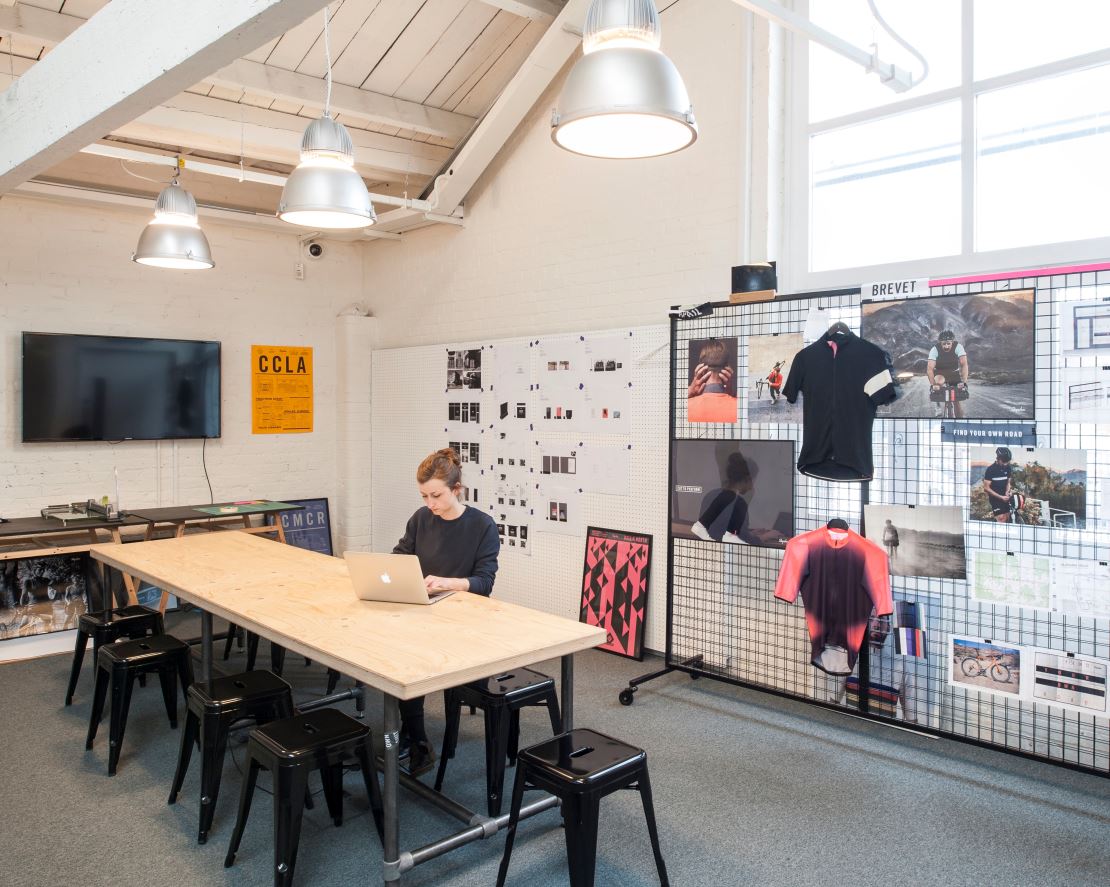
We’re sitting in the ‘Galibier’ meeting room in the considered, yet far from minimal Rapha HQ. Although an unassuming exterior – if you ignore the Citroen H Van parked conspicuously outside – the brand ethos is perfectly encapsulated in the entrance off Tileyard Road as employees ride their bikes directly into the building’s reception and the waiting bike storage and showers. Fronted by a seating area – used by company founder and CEO Simon Mottram to hold weekly staff meetings – a café completes the scene with a sizable queue already building when I first arrive. Not that surprising, I suppose. Coffee and bikes?

After passing a wall display showing the expanding international network of Rapha Clubhouses – even the string that physically links them to the London-based centre of operations is Rapha pink – stairs lead to an open plan mezzanine level. The atmosphere is surprisingly hushed for such a busy workspace with the sense of focus softened by the casual attire and degree of lycra that is evident.

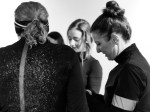
From her seat, Marta runs through the team demarcations – marketing, communications, design – punctuating her descriptions with an occasional glance towards the individuals clustered together in groups. Clearly at ease in this environment, her enthusiasm for the brand is unfeigned and infectious. As she points out early in our conversation, ‘I look forward to coming to work each morning.’
Version 2

Slight in build and with a dry sense of humour, Marta’s accent hints at her Polish background along with the occasional use of a word that confirms she isn’t a native English speaker. But this simply provides the first clue to the journey – both geographically and culturally – that she has undertaken and is still enjoying. Currently Rapha’s Press & Relationships Officer for UK & Ireland, Marta reflects on her decision to leave family and friends behind and move to the UK. ‘I was really good at maths – loved it so much that I took extra classes – but surprisingly didn’t enjoy the economics course I was studying back home in Poland. So I decided to come to the UK for a foundation year before researching other courses.’ The subsequent move met resistance with the exception of her grandfather. ‘He’s now sadly passed away but at the time he was really supportive,’ Marta explains before adding, ‘Every time I achieve something I always think of him.’

Speaking about her degree in photography from University of the Arts London, Marta acknowledges the opportunities it also provided for coordinating events and exhibitions. ‘I didn’t realise at the time but you learn so much about relationships, networking, visual culture. It changes the way you look at the world.’ Skills that would prove invaluable when she co-founded Spine Photographic immediately after leaving university before her first role with Rapha as a visual merchandising supervisor. With a nod towards her colleagues busily working outside our meeting room, Marta points out, ‘A lot of the people that work for Rapha have an art school background.’

Asked what first appealed about working for Rapha, Marta acknowledges that she’s had a love of cycling from a very early age when she would ride in the mountains near to where she grew up in Poland. ‘I remember following my dad up this steep climb on a heavy steel bike that was far too big for me and wearing my little pink helmet.’ These memories and the Rapha Continental films she later saw had a galvanising effect. ‘The images were so beautiful. I felt intrigued by the brand.’

Initially balancing working part-time at Rapha with paid commercial commissions through Spine, when an opportunity arose to take a full-time position with the marketing team, she decided to accept. ‘I did the Tempest Festival – running the Club there – and just stayed.’ Finding that she still relishes the creative culture and freedom that the job brings, it’s the common bond of a shared passion for cycling that Marta feels is a clue to such a productive and focused workforce. With another of her frequent smiles, she observes, ‘What other company encourages you to go for a ride on Wednesday mornings?’
AMAT-0121-0036

Asked about the most rewarding aspect of her role, she simply states, ‘There’s literally nothing better than someone bringing a paper to your desk to show you an article that you worked on.’ Challenges focus on breaking down perceptions in the fashion press that Rapha is purely a cycling brand. ‘The City range is proving very successful but people don’t always see it as a fashion line. Our goal is to change this perception by communicating the versatile nature of the designs.’ But these are questions of brand identity that Marta is happy to address and feels fully supported by Simon Mottram’s style of leadership. ‘That’s why Rapha is so successful,’ she explains, ‘The way he knows everyone’s name, the way he checks if you’re ok.’ A regular cyclist himself, Marta suggests with a wry smile that any non-cycling employees not initially sharing his enthusiasm almost inevitably take up the sport. Encouraged by quarterly ‘company’ rides and a perspex board attached to the bike racks where personal cycling goals are posted against staff numbers, Marta points out: ‘These individual targets needn’t be extreme. Whether it’s riding 10km to work or competing in a transcontinental race; the point is that we’re all enjoying the freedom and experiences that riding our bike brings.’

With a company ethos that’s so all-encompassing, I ask whether the line between home and work can become blurred? At this Marta pauses, taking a moment to consider her response: ‘I tend to be disciplined and go home at six but emails? I prioritise but I always check. At the weekend, I’ll ride with friends and enjoy some time away from the office. You need an opportunity to collect your thoughts.’

Currently enjoying living and working in London, Marta doesn’t rule out a subsequent move. ‘It’s perfect at the moment as my networks are all here but I’m not attached in the sense that I wouldn’t be able to move in the future.’ Commuting by bike is more challenging since recently relocating south of the river but at least this brings the benefit of being closer to the countryside that surrounds the capital: ‘When I lived in East London it could take over an hour to get out of the city for a ride.’

Organisation, Marta confirms, is the key to cycling in London. ‘Riding for pleasure is easy but you have to get up at five in the morning. Commuting is doable. On the way in, I plan in my head what I’m going to do that day. The evening ride is all about exploring. I don’t care if I get lost on the way home.’ Preferring climbing hills to a flat ride – the idea of Regent’s Park laps she describes as a nightmare – Marta currently rides an aluminium Condor Italia RC with another Condor – a steel-framed Fratello – a planned purchase. After flirting with carbon, she feels more of an affinity with steel frames and would choose a custom build – Saffron and Feather are both mentioned in conversation – as a dream bike.
HQ

Finding a release on her bike from the associated stresses of a busy work life, the 2014 Rapha Manchester to London ride proved to be particularly challenging. Already carrying an injury when she set off on the 220 miles to be covered in a single day, after struggling through the Peak District her knee finally gave way. ‘I was in so much pain they had to put me in the car,’ Marta reflects. ‘By the fourth checkpoint I’d recovered a little bit so even though it wasn’t easy I managed to ride the last 40 miles. But it’s still unfinished business.’

As for future plans, Marta again pauses as her gaze takes in our meeting room and the busy office space visible through the glass partition. Whilst remaining a practising artist having co-founded the photographic collective Skin&Blister in 2015 and happy to continue working with Rapha, she acknowledges that a move to expand her role would be welcomed. ‘It would be nice to grow with the company,’ she reflects before adding, ‘You’re encouraged to talk about what you want to do.’ And as we say our farewells I’m left with the impression that, for her, it’s all about the journey; the forward movement and the unexplored directions that her next bike ride or career move will bring. As she comments before returning to her desk and waiting emails: ‘I’d hate to think of myself as a closed book.’

Photo credits:

Feature image / Jochen Hoops

Imperial Works interior / Andy Matthews

Imperial Works exterior / Chris Hargreaves
Braver Than The Elements

Why we ride

There’s a moment, just before you draw back the curtains on the morning of a ride, when the day ahead is quite perfectly formed. The route is set, meeting points agreed and equipment readied. And even though we understand that the weather can be a capricious companion, there’s an innate optimism that can fly in the face of considered forecasts. We become experts at looking for that window of opportunity on the satellite maps we check with increasing frequency as our ride day nears.

All too often, however, the reality fails to meet these expectations. Any ride, at any time of the year, can fall foul of the weather gods. Especially in winter – after coffees are drunk and layers adjusted –  you notice an involuntary narrowing of the shoulders as riders roll out their bikes; elbows hugging sides as they struggle to maintain warmth before the effort of riding counteracts the bitter wind. When feet gradually numb, finger tips burn with the cold and you taste the grit spun up from the wheel in front; even the most hardened rouleur can question their commitment to ride.

So why venture out and forgo temperature controlled comfort? When cloud shrouded summits, ice paved roads and the water droplets that blur a Garmin’s passage only act to acknowledge a combative relationship with the weather. When what awaits is windswept moorland and muddy lanes; hard roads for hard riding.

In an effort not to be defeated by the weather’s unpredictable whims, we choose rather to deflect the disappointment of a rain-sodden route with humour and good companions. We ride forearmed with hopes that the wind will drop and the sky will clear.

We ride to escape the pressures of daily life; seeking adventure in an increasingly structured world as we simplify decisions down to the turn of a pedal. We ride for the laughter, the stories shared, the quiet words of concern. The waiting after a climb and the out-stretched arm. We brave the elements in the knowledge that the road is always there to welcome us.

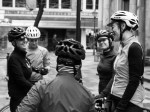
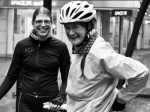
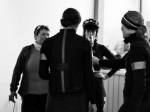
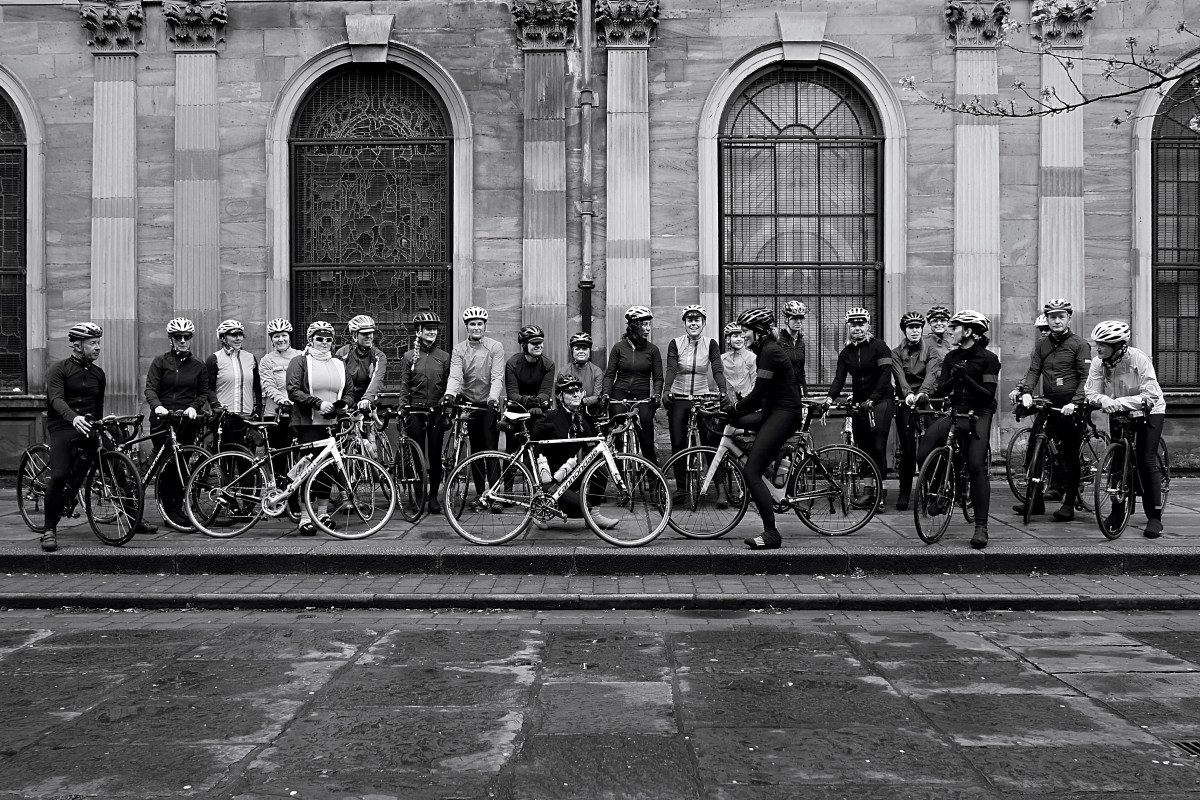
In defiance of the wind and driving rain, on Saturday 18th March two groups of women rolled out of the Rapha Clubhouse in Manchester. These words and pictures are dedicated to those who chose to ‘brave the elements’ with good humour and a shared sense of comradeship.

#BraverThanTheElements

Thanks to Dean for help with the photographs and the warm welcome back at CCMCR.

Portrait: Joe Cox

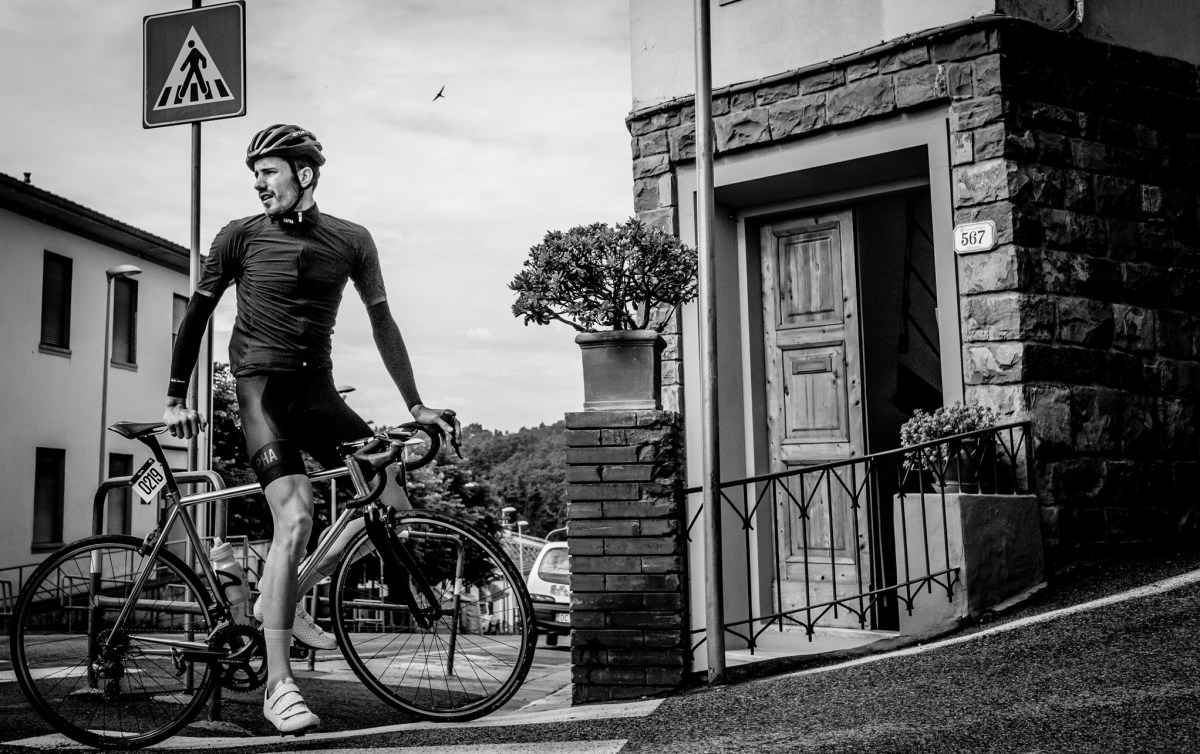
I first met Joe Cox on a Rapha Cycling Club (RCC) satellite ride to North Wales. The group had come to a halt at a crossroads and he was track-standing as we waited for the lights to change. One of the riders challenged Joe to unclip a shoe and use his foot as a brake and the unhurried confidence of this manoeuvre stuck in my memory.

In his role as ride co-ordinator for Manchester’s chapter of the RCC, Joe spends his working week planning and leading a broad range of events and activities on and off the bike. Launched in 2015, membership has grown rapidly with more clubhouses soon to open. ‘By the club’s second year, you kind of know what does and doesn’t work,’ Joe explains. ‘The third year is all about taking this forward. The social aspect is something I’m very keen to develop as you quickly realise we all have lots in common in addition to riding our bikes.’

Riding, however, still remains at the heart of the RCC and the clubhouse fills every Sunday morning for pre-ride coffees. With Cheshire lanes and Peak District climbs both within easy reach, Joe encourages members to lead their own rides to complement the routes he himself devises. ‘Rides such as our Tour of Flanders tribute, with all those cobbled climbs to the north of the city, have been a real success,’ he acknowledges before adding with a smile, ‘Who doesn’t want to be Ian Stannard for a day?’

Joe_Cox-4

Tall and athletically lean – with a single silver hoop piercing an ear – Joe is having to cope with a degree of good-natured banter since featuring in the promotional campaign for this year’s Rapha Winter Range. Greeting each member as they enter the clubhouse – cleats echoing on the stairs that climb from the ground floor bike storage – he sets to work on the coffee machine before bikes are readied outside the entrance in the shadow of St. Ann’s Church; the pre-ride briefing concluding with a tongue-in-cheek, ‘Any problems, just drop me a fax.’

Although clearly comfortable in this role – a calm demeanor testifying to an easy-going attitude to life in general – as Joe plans on taking a serious tilt at racing over the 2017 season, these goals and ambitions interestingly raise questions of identity. ‘What I find is that people tend to have their own views on who I am and what I do. Funnily, I sometimes don’t even think of myself as a cyclist.’

Perhaps a surprising observation considering he had his first taste of competition racing a trials bike at the age of 11 – ‘Basically hop over and don’t put your feet down’ – together with school cross-country successes that led to combining disciplines and a 10th place in the Salford Sprint Triathlon when Joe was 16. A place on the GB development squad followed with a 13th place in the 2008 Vancouver BG 16-19 Triathlon World Championships before he packed a rucksack and spent time overseas travelling.

Joe_Cox-6

Now paid to ride a bike in his role as RCC Co-ordinator, there’s a slight pause when I question if it ever becomes a chore. ‘For the past two years, working for Rapha, I always thought the answer would be no. But interestingly, now that I’ve set my mind to racing – with turbo sessions before and after work – because I’ve got to do it, it’s not always that easy.’

Discussing this role with the RCC, when asked to describe the breadth of his responsibilities Joe suggests, ‘In many ways it’s a traditional British cycling club but with a bit of Rapha sprinkled on top. In essence we ride our bikes but do this within a framework of events, the club kit, the trips and the backing of a global brand.’ Understanding the way cultural nuances influence how members of different international chapters view and interact within this structure is an aspect of the job that Joe finds particularly interesting. ‘Amsterdam, which isn’t that far away, ride very differently to us,’ he explains. ‘Often taking a train out of the city – they’ll all pile on board, no hassle at all because the trains are so easy – before riding 200km back to the clubhouse.’

Initially aware of Rapha through the marketing films he used to watch, Joe was taken by the stripped back nature of their content. ‘I kind of see myself as a little bit of a simpleton and – watching riders rolling along in North America on steel frames – it just looked amazing. I bought my current bike after watching one of those films.’ Referring to his stainless steel Starley hanging in the ground floor workshop of the Manchester clubhouse, although he also enjoys riding the Canyon bikes that Rapha have available to hire for their RCC members, he explains the reasoning behind choosing steel over carbon: ‘Even though it’s not the best of bikes in some ways, for me, there’s something special about it. A certain nod to the past. It can handle cobbles, climb hills and descend at speed. I did Hell of the North on it last year and I wouldn’t have done that on a carbon bike.’

Joe_Cox-8

Continuing with this theme of trends and acknowledging that social media has an increasingly integrated relationship with cycling – there’s that distinct lull in conversation when a group returns to the clubhouse as everyone checks their segments on Strava – Joe understands the attraction but imposes limits on how far he personally engages. ‘From my own point of view, I guess I have a rather backwards relationship with social media compared to the majority of people. I don’t fully like it to be honest. I always prefer, for example, to have a chat in person rather than using Skype. And if you take Instagram, it’s a pretty filtered view of your life. I’m a fairly happy bloke but it’s not always sunny, is it?’

A case in point when you consider both Joe and his father had serious accidents on their bikes during the past 18 months. As ride safety is often quoted as a major concern that prevents individuals from taking up cycling, Joe doesn’t shy away from accepting there is a certain element of risk when riding on UK roads. ‘I struggled to get back on my bike after getting knocked off. Which is weird because I can handle a bike and I can ride a bike fast. But I do think that in this country we have very busy roads and some very angry drivers and their approach to cyclists isn’t always what it is on the Continent.’ Asked to suggest ways in which the relationship between drivers and cyclists can be improved, he feels the more people that cycle the greater the awareness that both sets of road users will need to develop. ‘The cure to this problem,’ he emphasises, ‘is not to just stop riding your bike.’

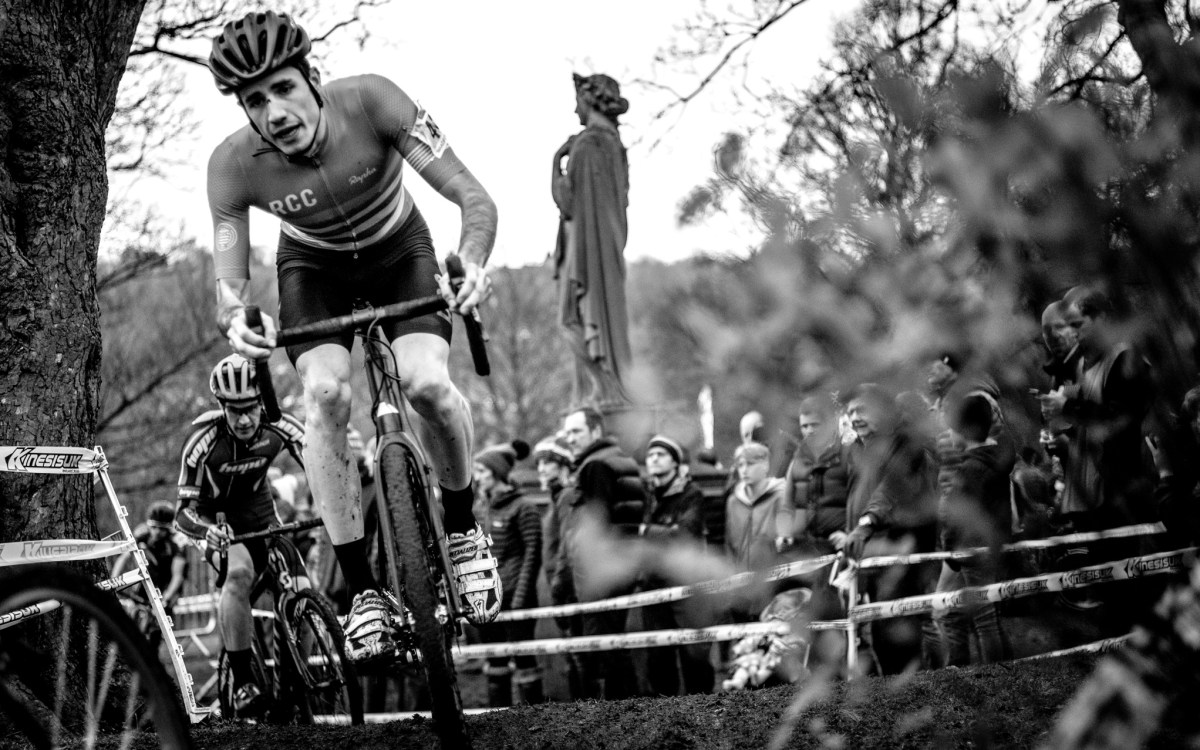
Listening to Joe describe his plans for racing over the coming year, it’s clear from the level of professionalism he expects of himself that this will inevitably influence his ambitions. ‘With my own work stuff,’ he explains, ‘if it’s anything to do with me, I like to know that it’s done to the best of my own ability. But from a competitive side, with my racing, I think there’s a lot of other people’s opinions which just make it worse.’ An interesting viewpoint perhaps best illustrated by a recent first attempt at cyclocross where he came a creditable 8th place on a borrowed bike. ‘The expectation was there even before the race. It’s tongue in cheek – with casual comments that I’ll breeze to a Top 10 placing – but for days beforehand the pressure builds.’

Joe_Cox-7

I suggest that finding a balance between the expectation of others and the reality of competing against other strong riders might possibly prove a bigger challenge than preparing physically for a season of road racing. At this, Joe pauses to consider his response. ‘In many ways I’m quite laid back. Whatever happens, happens. People might think I’ll do this or that but, in the end, it’s down to me. That’s something I’ve got to come to terms with and I’ll ride my own race. I’d rather finish last after going really hard than taking it all a little bit too cautious.’

With a goal of moving up to Cat 1 over the coming race season, Joe favours a race with at least one good hill in it. ‘The steeper the better,’ he says with a grin. ‘Within seconds it shakes up the field and, no matter who you are on a hill, you’re fighting something other than the rider next to you. I like to think that I can produce the power and just go.’

Fitting in training around work, Joe suggests, will be another challenge to overcome. Taking his friend and Madison Genesis team professional Matt Cronshaw as an example, he understands the limitations imposed on any ambitious racer balancing a full-time job with race preparation. ‘When Matt turned pro, he didn’t spend more time riding but he could quit his job. He doesn’t have to stand on his feet all day and that’s what separates the professional cyclist from the talented amateur. They have the time to recover.’

Joe_Cox-1

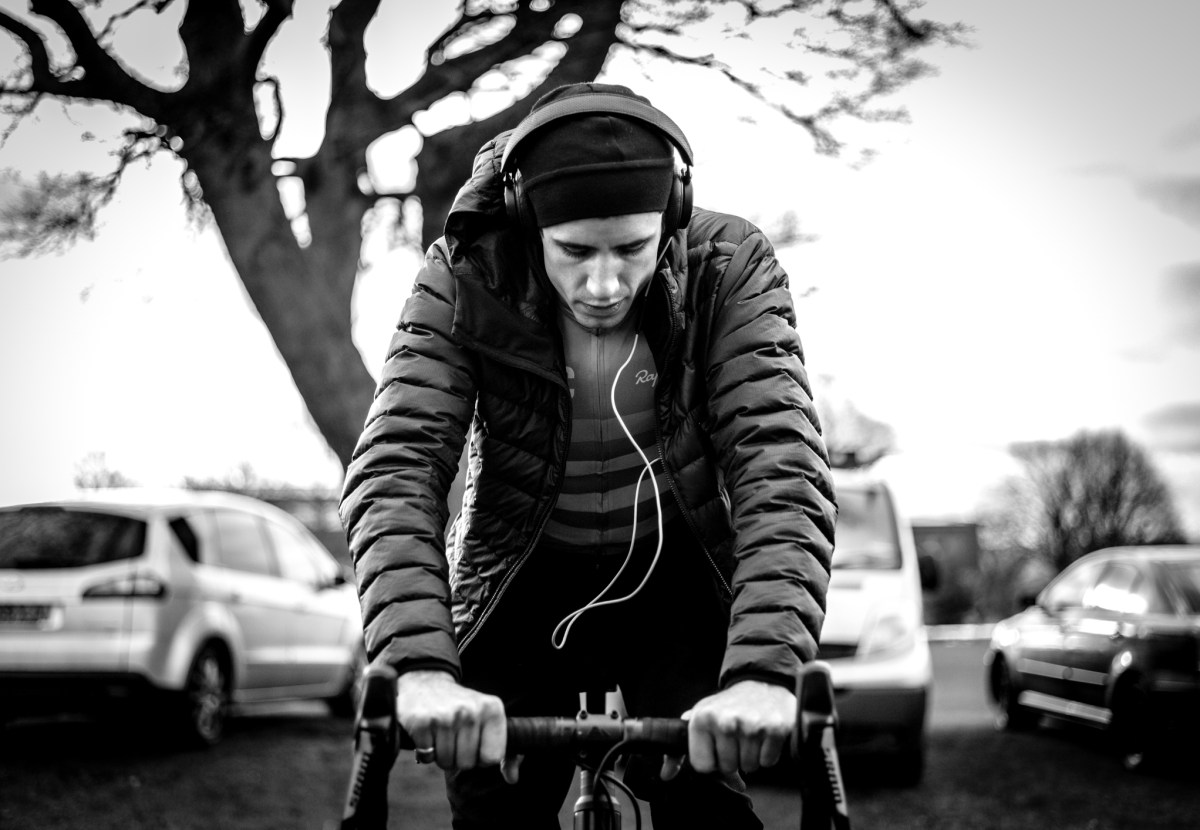
Accepting the discipline of a training programme – even though he might not particularly relish the turbo sessions that top and tail each day –  when the morning of a race arrives Joe prefers to quietly warm-up on his turbo, headphones in place. ‘It might come over as a bit rude but I need to get in the zone. A lot of people compete to have fun as well as race and that’s great. I want to enjoy it as an experience but, if I can, I’m also there to win.’

Questioning whether results come from preconceived plans or instinctive reactions, I ask if there are certain ‘tells’ from the other riders as the race unfolds. ‘It can be the right place, the right time,’ he explains. ‘But there are certain things. You can look at a person, see if they’re out of the saddle. Some ride a little bit smoother than others, a little bit more souplesse. And that can be a big indicator because you only get that from years and years of riding. With my friend Matt, you can tell that he rides a bike for a living. And if there’s a lot of people like that, then you know you’ve got your work cut out.’

Our coffees finished and the cafe about to close, I ask whether this focus on road racing is part of a bigger plan. If he has certain key goals mapped out? ‘Not really,’ he considers. ‘I don’t particularly aspire to having a nice car, a nice house. I’m not too bothered about the showy kind of things. If you’ve got to a certain age and you look back on your time, I think it’s the experiences you’ve enjoyed rather than all the stuff you’ve accumulated that really makes you happy.’ Pausing to gather his things, he continues: ‘It’s something I think about a lot. And having that bike crash caused me to question a lot of stuff that maybe I took for granted. Questions that you can’t always answer immediately. Stuff that you kind of battle through in life.’

As we say our goodbyes, I’m left with the impression of a young man – honest, open and committed – who through his racing is asking certain questions of himself. In some regards weighed down by the need to balance the expectations of others with seeing just how far he can go to satisfy his own ambitions, I’m in no doubt that he’ll find some of these answers on the road.

All images by kind permission of Matt Randall