Sami Sauri / Letting things happen

Sami Sauri has spent the past 18 months freelancing; most notably riding and producing the Outskirts film series alongside her partner Angus [Gus] Morton. Now based in Girona, we first meet on an uncharacteristically wet day; Sami’s demeanor mirroring the falling rain as she’s feeling a little under the weather since returning from a testing Dirty Kanza. Fortunately the morning of our arranged coffee dawns a beautifully sunny June day and Sami walks into Federal café with a broad smile. Seating ourselves at an upstairs table and to the distant accompaniment of a street musician playing Spanish guitar, what follows is an impromptu and candid conversation that takes in everything from behind-the-camera insights into the making of the Outskirts films to a way of living a life that embraces change and new opportunities.

You look really happy.

I’ve just been offered a position working for Komoot. Super exciting because I’ve been freelancing for a year and a half which is cool but I just need some stability.

So where will you be based?

Right here in Girona [laughs]. It’s remote. Komoot works with regional managers so I’ll be looking after Spain. Building a community and taking care of events which is kind of what I do anyway. It’s cool because it’s something you can combine with other projects.

That sounds exciting?

I’ve had two weeks off after racing Dirty Kanza with my body feeling weak and I was like, oh my God the stress. But then I got the message from Komoot.

That reminds me of something Gus said in Route 66. He talked about wanting a life of chaos…

And he’s got it. Totally [laughs].

But he also looks back to a time when life was much simpler. So for you, having a regular job brings with it a similar outlook?

Maybe it’s good to have a little bit of chaos but with some structure. Is that even possible [laughs]?

Gravel

Structure brings with it routine.

For me, that can be boring. But the thing with Komoot – working remotely – I can be in the south of Spain one week and then back in Girona.

So was it advertised or did Komoot approach you?

I was working for a communications company in Berlin – handling all their influencer programmes for the Netherlands, France, Italy and Spain – so I knew the role was coming up but went through the usual process just like everyone else. And it’s pretty much what I do anyway [smiles].

Is a varied work life important to you?

Since forever I grab opportunities as they come. I was head barista for Rapha in Berlin and then when Gus came into my life it totally opened up a completely new world. And having lots of different interests and projects is really cool because you keep things fresh.

So if you had one role – Monday to Friday – that maybe wouldn’t work?

I don’t know [laughs]? I worked regular hours in Berlin with Rapha but for the past 18 months I’ve been enjoying the freedom of not being stuck inside the same four walls. I see me with a job every day but just not working in the same place every day.

So how far ahead do you look? Or is it simply a matter of reacting to things as they happen?

I’d been living day to day but riding Dirty Kanza kind of changed all that. Because I went to the race totally unprepared and it was sooo tough and that taught me a very important lesson. So I’m considering maybe looking a little further ahead than the next weekend [laughs].

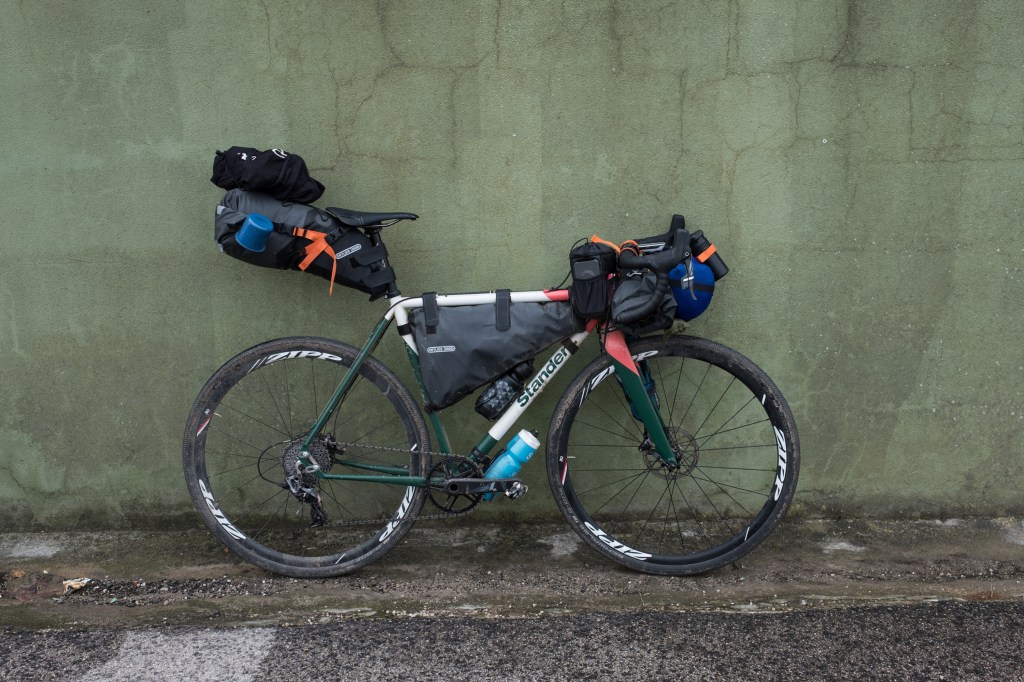
Sami x Standert

You mentioned that meeting Gus – having him in your life – opened up new possibilities. Is that in terms of attitudes or opportunities?

I think it’s both. With regards to work but also to life in general. Travelling to ride and shoot and then also produce on the Outskirts films; that came from him but then things start to happen organically and lead to other projects. And it’s not as if we’re always searching for these things. Sometimes they just come up and you need to be ready.

How does that way of working relate to a project such as Outskirts?

You take Route 66. I absolutely love it but that was the most unplanned film ever [laughs]. A full-on feature film made day by day; just letting things happen. All filmed hand-held without a camera crew. And we were just happy to go with it; to see where it flowed. Riding big distances on our bikes which dictated the rhythm of the way we worked. And even though my knee was hurting; to be part of that, it felt amazing.

Is that a way of travelling you enjoy?

I love it [smiles]. Whatever comes, it comes. Like when we’d finished filming Big Land we decided to keep on riding another 1500 km with Chaz and Nico; two fixed gear boys from Chicago and San Francisco.

Why the decision to continue?

Just to see if we could film totally unsupported. And at some point it will get released but we’re just taking our time. It’s one that we wanted to do for ourselves.

Were the mosquitoes as bad as they appeared in Big Land?

They were really bad. But then on the second part we didn’t have any [laughs]. It was amazing weather and insane roads but just nothing. Huge distances between towns and these were proper mining communities. For the last stretch we bought 16 sandwiches to eat on the road and slept under an abandoned mobile home.

Wrapped up

Very much a working environment?

You would never go there as a tourist. Our final stop was Fermont; a mining city that’s contained within a single building that’s more than a kilometre long. A school, hotel, shops; all inside this one building. But I get that because when we arrived there was a 60 km/h wind blowing and it’s easy to imagine what would happen if you combine that with heavy snowfall.

How is the knee now because it seemed to be really painful?

After Route 66 the pain went away which is kind of why I came back for Big Land but about 3 days in it returned. And then there was the gravel and some problems with Gus that made me just blow-up [smiles].

I find that interesting because in Big Land your personal life crossed into the film. In the final edit you allowed some aspects of those arguments to remain.

Oh there’s some that we had to take out [laughs].

But in the film you also talk about love. So was it an easy decision to include those particular scenes?

I think it’s important to understand why I was sitting in the car. Because that day there was a big fight; the boys being boys and still trying to go fast and I was struggling but Gus thought I was doing it on purpose so I just decided to climb off the bike. As it turned out, a good decision as the gnarliest parts were the next few days.
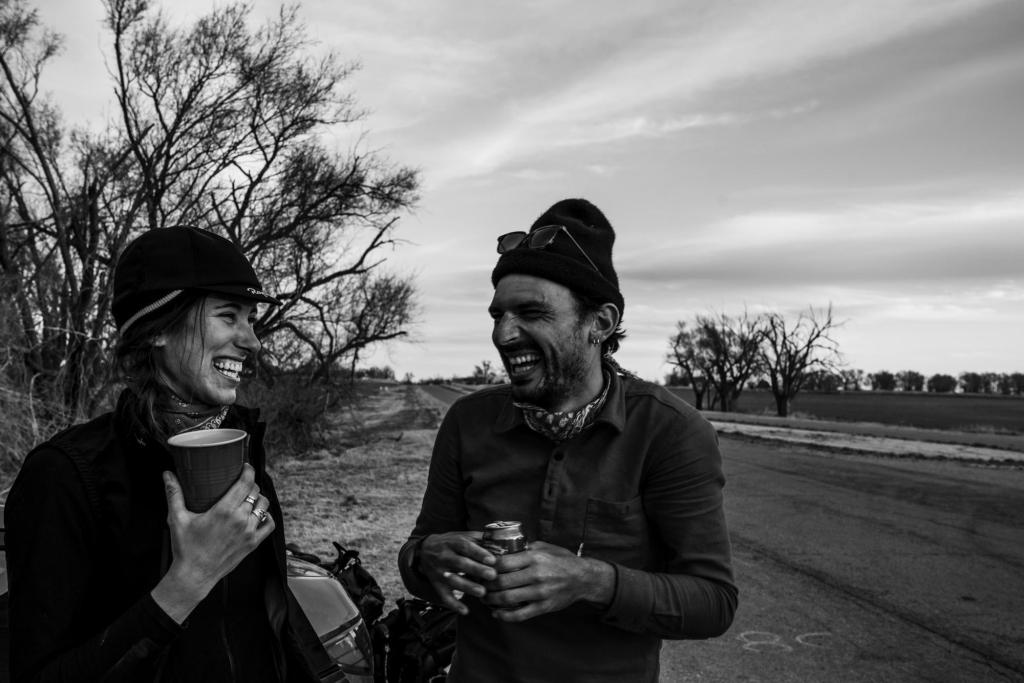
With Gus

And you were also there as the producer. What does this role actually entail?

Basically, you pre-plan everything; all the logistics. For Big Land and Shadow of the East – the ones that I really produced – I had to book all the flights and get everyone there at the same time. For Dan [Craven], that only happened two days before we started riding. We needed a fourth rider and originally Taylor Phinney was coming along but he had to race. I knew Dan through his wife and he’d just finished shooting with Rapha so it all came together at the last moment.

Does your personality lend itself to this role?

No, not really [laughs]. But I like the producer job because I get to meet loads of new people and take care of everything.

I assume if anything goes wrong, they immediately come to you?

That’s right. So I just hope there aren’t too many problems [laughs]. Like on Big Land when we arrived in that town after the night with all the mosquitoes and there was only one room for 6 people. Oh man, I was cooked; on the phone and checking the original booking until we finally managed to get another room.

And when the filming has finished?

During post-production I’m tying up any loose ends, figuring out whether we should do a screening, sending images to sponsors. Just taking care of every small detail and helping Gus with the editing to try and save some time. I mean, it’s a feature film. People take 4 years but we did 3 in one year [laughs]. It’s brutal; Gus caged up editing in that black room for such a long time.

You chose not to ride in Shadow of the East?

That was a different type of project. Beautifully shot, very filmic. And originally we didn’t want to have anybody else; not even me [laughs]. We set out to reference the first Thereabouts film when it was just Gus and Lachlan. But then the boys wanted Juan Antonio Flecha who I originally knew from surfing.
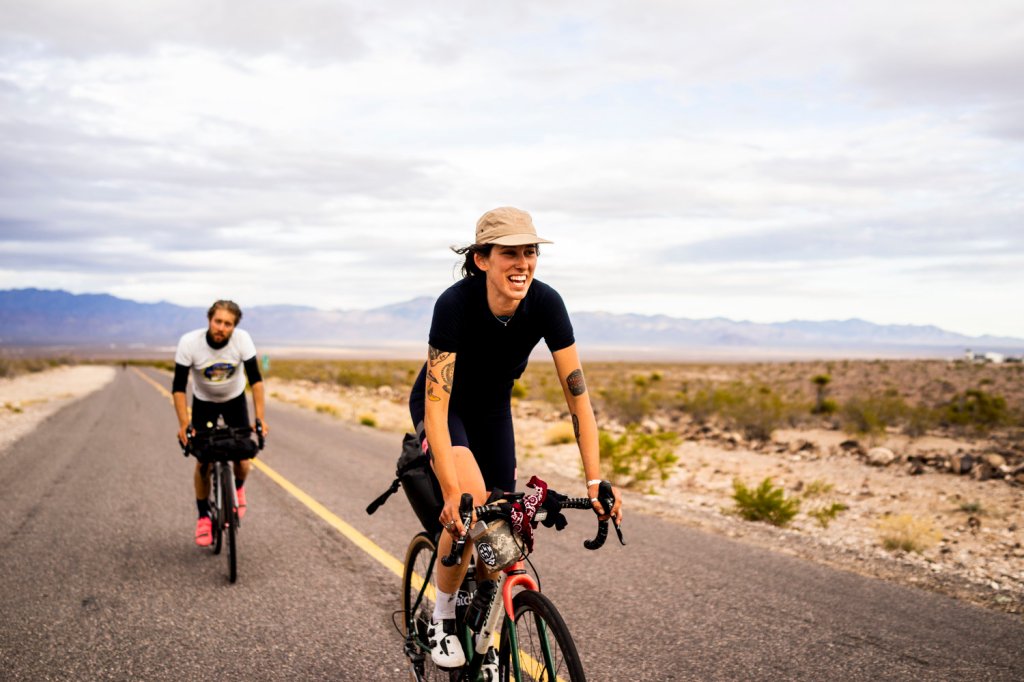
Smiling

Lachlan looked so cold in Shadows. Was it a challenging shoot?

Oh man. It was totally crazy. After we’d filmed that scene we started running downhill to try and get warm.

And then Juan Antonio got sick after eating the lamb.

I’d woken up and we were speaking Spanish and he was telling me that he’d had no sleep at all and that he wasn’t feeling great. He still wanted to ride and I was trying to reassure him that he’d be fine. But it turned out that everyone who’d had the lamb – not me because I don’t eat meat – had drank a shot of this digestif which kills everything. Everyone, that is, apart from Juan Antonio. And I was like, that’s it, you got it [smiles].

It really looked like he was suffering…

Juan had to stop a number of times – more than the couple we showed in the film – but we needed to keep moving. Lachlan was using the trip as training for the Tour Down Under and we had set distances for each day. So we were trying to encourage Juan to get in the car but he didn’t want to and it was just really funny.

You must be aware that there’s a recognised Outskirts look on the bike?

A lot of the time I manage the Thereabouts Instagram account and people tag us in when they post a picture riding and wearing a t-shirt. It’s all about being comfortable. Something made from merino; it just feels so good. When you’re going bike-packing, the clothes you wear on the bike are the clothes you’re going to wear when you climb off. And this concept just came into Gus’ head that when we were riding and filming we’d look normal and just fit in with the people we’d be meeting on the trip. And that made such a difference when we were talking to them on camera.

The images you take on the road and the portraits in particular; they have a kind of gentle intensity with the subjects appearing very comfortable and open. How do you achieve that?

There’s a few that came about simply by talking; just asking – super honestly – if I can take a picture. And then when I’m shooting Lachy [Lachlan Morton]; I just love him. He just doesn’t care which is what makes him such a good subject. Gus is the same; he can be so natural in front of the camera. There’s this image from the day I jumped in the car on Big Land and he was so pissed but I had to do that portrait [smiles].

Sami Big Land

What’s going through your head when you’re taking photographs?

It’s an immediate response. I have a little eye but I’ve never studied photography. And I don’t call myself a photographer. It started with Route 66 and when you’re in America it’s really easy to get good shots. The space and the colours. And I love doing photos because it’s something you can do anywhere and at anytime but then I kind of like the process that producing a film involves.

And there’s also your riding?

In Spanish we have a saying that roughly translates as ‘non-stop ass’. And that’s me! I’ve always been a little hyper-active from when I was very small. My mother took me to every single sport that was available to tire me out [smiles]. And I still can’t sit around doing nothing.

Being based in Girona must make it easy to get out on your bike?

It’s a little of everything. In winter I spent a lot of time bouldering which is a good fit with cycling in terms of building strength. And I like riding with friends but I’m just as happy going out alone. That way I can do whatever I want because I might start on a road but I always seem to end up finishing on gravel [smiles].

What’s it like being recognised? People knowing who you are?

Living in Girona it does happen. People don’t always approach me but I can hear them whispering. And then if Gus is with me, well [laughs]…it’s just crazy.

But do they expect you to behave in a certain way? Is there a sense of ownership by the public?

I’m a very open person and I don’t really care what people think. People do mention the arguments we had in Outskirts but I’m not shy in saying that, yes, sometimes we all have a bad day. And then thinking along those same lines, it doesn’t take much to make me happy. Like when we were in Norway recently riding this beautiful, insane, next-level gravel. I just couldn’t stop myself smiling [laughs].

Sami Sauri

samisauri.com

Photography: Thereabouts

Komoot

Rapha


Moments of movement / Girona bike-packing

‘I consider these to be Mediterranean bikes. Rooted in the soil and culture of this beautiful region where I ride. Combining a sense of movement through a changing landscape with a timelessness that nature represents.’

These words, spoken by Clementina Bicycles founder Pau Tena, are the reason I’m being met outside the arrivals hall of Girona Airport. Accompanied by photographer friend Ian Walton, we’ve planned a 4 day bike-packing trip to the north of the city and Pau is here to hand over a couple of newly-built bikes that he’s transported from his Barcelona workshop.

Although we’ve been regularly messaging since the idea for our trip was first mooted, this is the first time I’ve met Pau in person. Calm and measured in conversation, initial impressions suggest an individual with considered views on his craft; his passion for this region of Spain abundantly clear and translating into the custom frames that we’re fortunate enough to be riding.

2019-04-PirinexusBikePack_Bulk_06

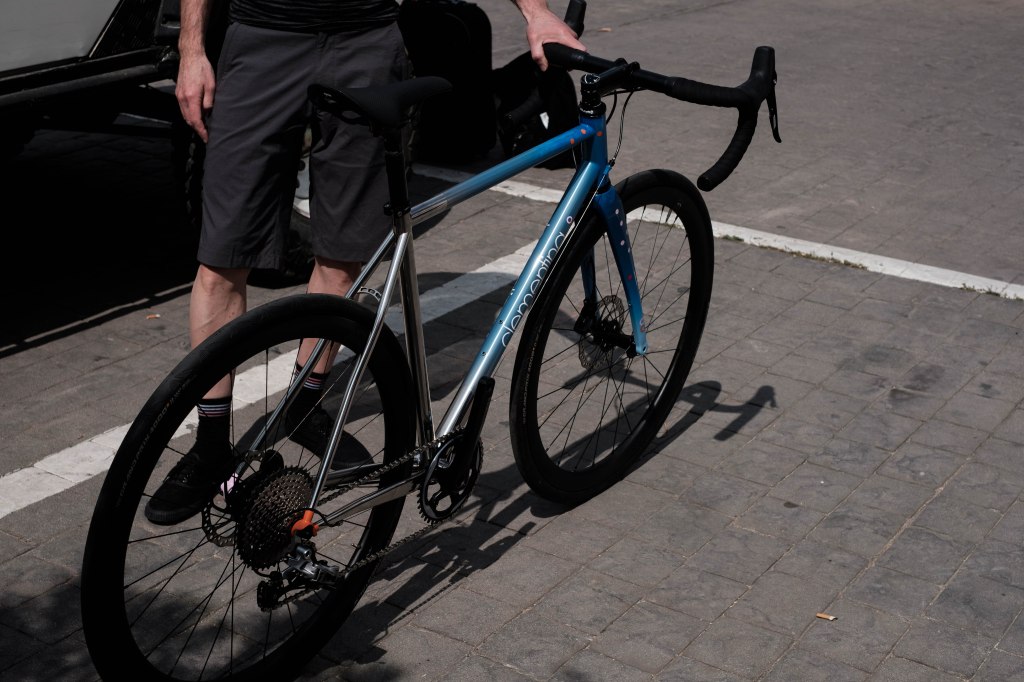
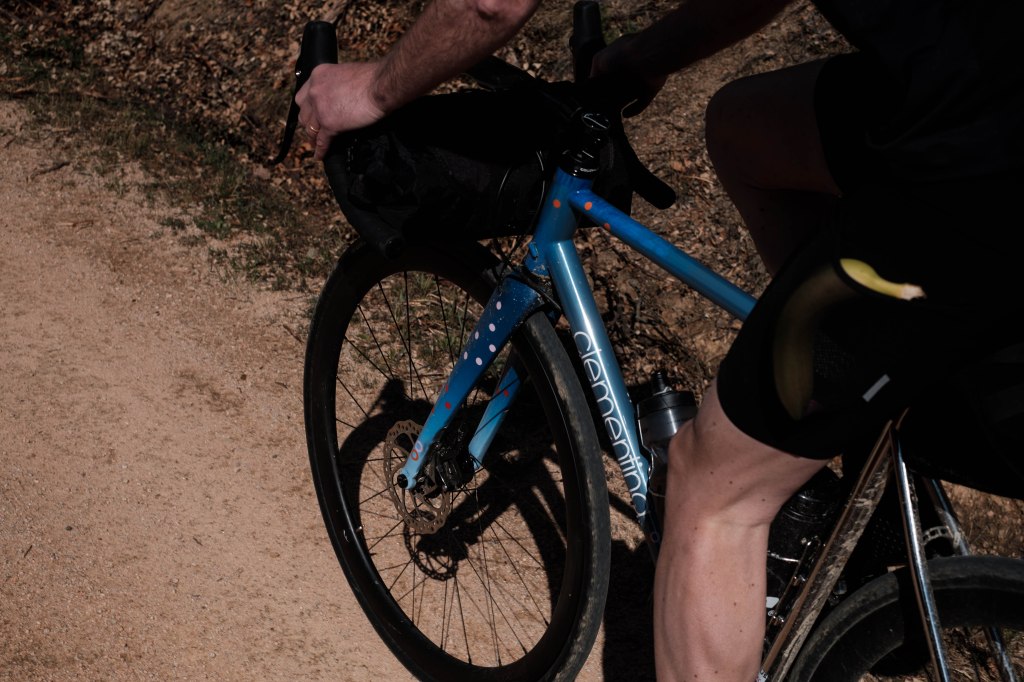
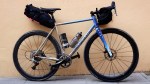
Both constructed from steel – Ian’s ride differing slightly in having a carbon fibre down tube – what’s first apparent is the flawless paintwork. One a deep, lustrous black with the Clementina brand name and a stylised crow’s eye picked out in gold. The other referencing blossom, fruit and wildflowers in the coloured dots that adorn the frame and fork; all set against a blue fade of the Mediterranean sky. Arranged – as Pau describes it – in their natural order.

With introductions out of the way, Pau kindly drops us off at our hotel where we complete a final kit check before finding somewhere to eat dinner and discuss our first day’s ride. Taking us north towards Camprodon and the foothills of the Pyrenees, our trip is loosely based on the Pirinexus 360; a circular route that crosses into France before looping back along the Costa Brava coastline. For the hardiest of riders this can be completed in a single day but we’ve decided on a more leisurely pace to allow us time to stop and enjoy the spectacular scenery.

2019-04-PirinexusBikePack_Bulk_29

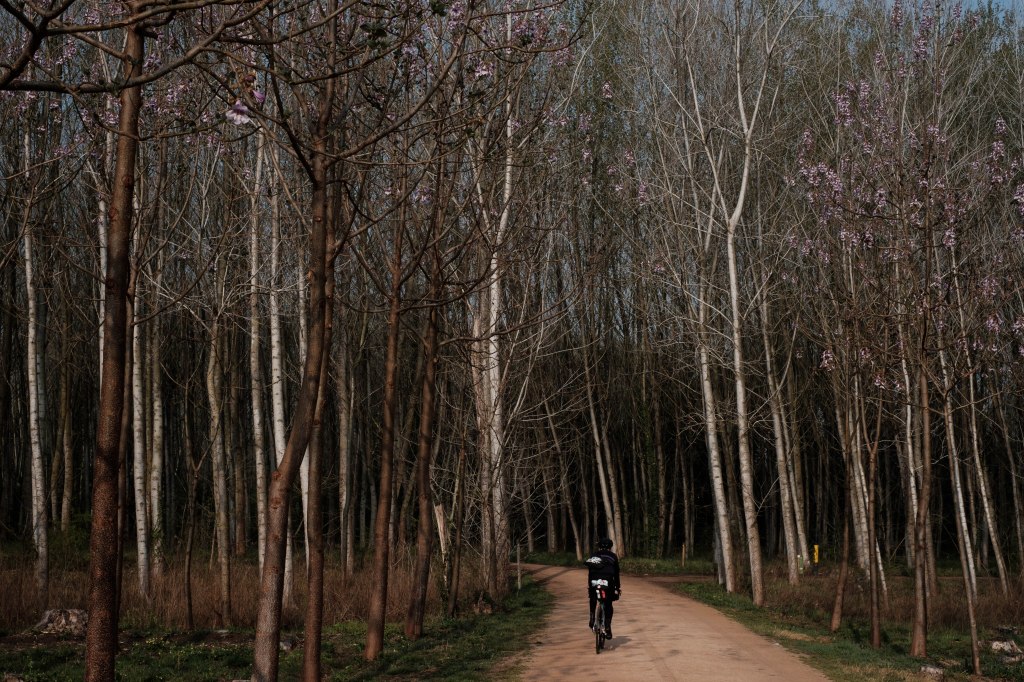
Waking to the promised leaden skies – we’ve tried a number of different weather apps yet none are offering much hope of bright sunshine – with our bikes loaded we head westwards out of Girona along the Via Verde. A greenway of compacted gravel that follows the original path of the Girona – Olot railway, this offers a quiet and car-free route out of the city centre that criss-crosses a patchwork of allotments and tree plantations. There’s a distinct feeling of spring in the air with blossom petals covering the track and birdsong softening the crunch of our tyres. Even the sun decides to make an appearance; prompting us to remove a layer next to grazing cattle far more interested in their morning feed than Ian’s exhortations to look towards his camera.

Staying close to the River Ter, we pass the towns of Bonmatí and Anglès before a steeper ramp rises into woodland; sheep and goats momentarily blocking our path until the shepherd and his dogs move the straggling flock further up the hillside. The collar bells of the grazing animals echoing across the valley until we crest the top of this first short climb and all is once again quiet.

2019-04-PirinexusBikePack_Bulk_180

At Amer the origins of this gravel trail are evident in the disused platform, station house and engine sheds; the latter now roofless with a covering of ivy and tree saplings taking root in the crumbling brickwork as nature gradually reclaims the man-made structures. As we take a moment to photograph the scene, an elderly gentleman approaches; introducing himself and questioning where we’re heading. One hand pointing north, Ian explains our route before asking the gentleman for his own thoughts on the day’s weather. Even with my limited Spanish I can understand the shrug of the shoulders with a nod towards the darkening sky.

Sure enough we feel the first spots of rain after pausing to fill our bidons at the natural spring adjacent to the Fonter bottling plant. Fortunately arriving later than forecast, the weather gods are feeling benevolent and we arrive in Olot only slightly damp but with one eye on the nearby mountains now disappearing from view as the cloud thickens. Deciding to abandon our lunch plans – refreshment now entails a shared bag of salted crisps and a Coke – we push on in the knowledge that the Coll de Coubet lies between us and our first overnight stop in Camprodon.

2019-04-PirinexusBikePack_Bulk_138

At a little over 10 km in length we begin to climb almost immediately after leaving the outskirts of Olot. Never too steep – averaging 5% – the road takes us up through wooded slopes offering breathtaking views to the valley below and cloud-shrouded mountains to the north and west. With our bikes’ unladen weight of 7.5 kg and the uniformly smooth surface, the kilometres pass easily; the number of vehicles countable on the fingers of one hand. Reaching the plateaued top we descend rapidly; rolling up outside our hotel as the clouds finally burst and the rain pours down. With a knowing look passing between us, we unpack the bikes and roll them into the basement garage before minutes later settling comfortably into our room with the radiators turned to max and our shoes drying.

The evening passes enjoyably in the company of Lucas; Camprodon resident and friend of Ian’s. Our only concern as we sit in a restaurant eating dinner being the increasingly sizeable snow flakes mixed in with the falling rain and the thought that we’ll be climbing to 1,500 m the following day. And sure enough, morning sees us pulling back our room’s curtains to discover clear skies but a few centimetres of snow covering the town’s roof tiles.

2019-04-PirinexusBikePack_Bulk_78

Retrieving the Clementinas from their overnight storage – a week earlier the garage was full of police motorbikes supporting La Volta a Catalunya – each now wears a reddish coat of sand and grit from the previous day’s gravel trails. A quick stop at a supermarket for ride provisions – the town is gradually waking to the sound of church bells and the scrape of snow being removed from car windscreens – and almost immediately we find ourselves climbing the Col d’Ares which will take us up and over the border into France.

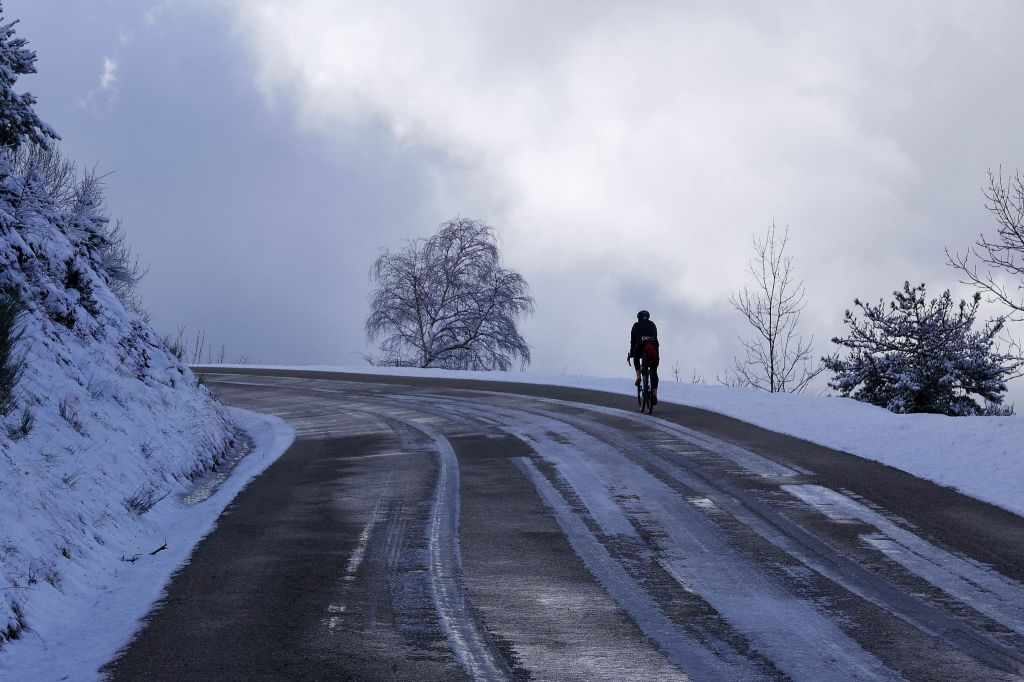
The overnight snow has settled along the tops of the road’s guard rails and the trees on the wooded slopes are each coated in a silvery layer that glitters when it catches the morning sun. It’s cold but not unpleasantly so and the climb helps to warm our hands as we follow the steadily rising contours. Only in the shadows is the road surface icy but the absence of traffic means we can pick our own path.

CcvcDtjr

Passing mountain villages and stone-built farm buildings we continue to rise; each bend in the road revealing a new vista with the tops of Pyrenean peaks stretching away into the distance. And again the sound of bells; this time from cattle, their breath condensing into clouds as they feed. Higher still a large bird of prey glides effortlessly on the thermals; the markings on the underside of its wings offering a contrast against the blue of the sky.

As the road finally flattens there’s little to delineate the border save a thick black line on our navigational devices and the signs changing from Spanish to French. We park our bikes in a snowbank before adding extra layers of clothing to combat the expected chill of the descent. With the road disappearing downhill into the northern lee of the mountain we’re in the shade for longer stretches and both of us are struggling to brake with cold fingers.

A3D1F7E9-D4E8-4BF2-A8AD-95B6AC5938E1

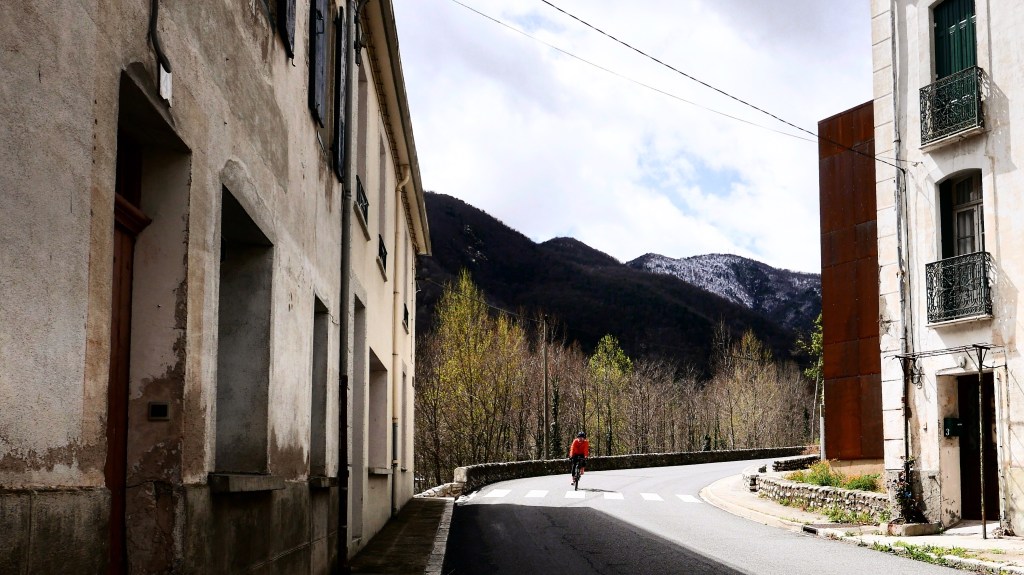
Entering the town of Prats-de-Mollo-la-Preste we immediately head to the nearest café; warming our hands on our coffee cups before continuing down the valley with the river at our sides. A steady gradient and the road’s sweeping curves make the descent a delight and the kilometres pass swiftly. Arriving at Céret we’re greeted by tree-lined streets with open channels on either side; each flowing with crystal clear melt water from the nearby mountains and adding a musical counterpoint to the sound of conversation from the pavement cafés.

With historical links to the art world, after storing our bikes and freshening up we decide to take a walk through the town. Quiet passageways radiate from the fortified centre; roadside reproductions of paintings depicting a particular viewpoint adding another interesting element to an already pleasant environment. An enjoyable interlude at the halfway point in our trip before we wake to another cold but sunny morning and prepare to cross the border once again.

2019-04-PirinexusBikePack_Bulk_153

Re-entering Spain at La Jonquera offers a very different experience to our previous crossing and is the only time in our trip where the number of vehicles on the road feels a little oppressive. Ian in particular dislikes the frontier feel to the sprawl of urbanisation but brightens up immediately when our route takes us on a rocky trail away from these busy roads. Here our Clementinas again prove their versatility as they climb and descend the loose surfaces with an easy confidence before we reach a sinuous stretch of road that twists and turns towards the sea between dry-stone walls and groves of olive trees. 

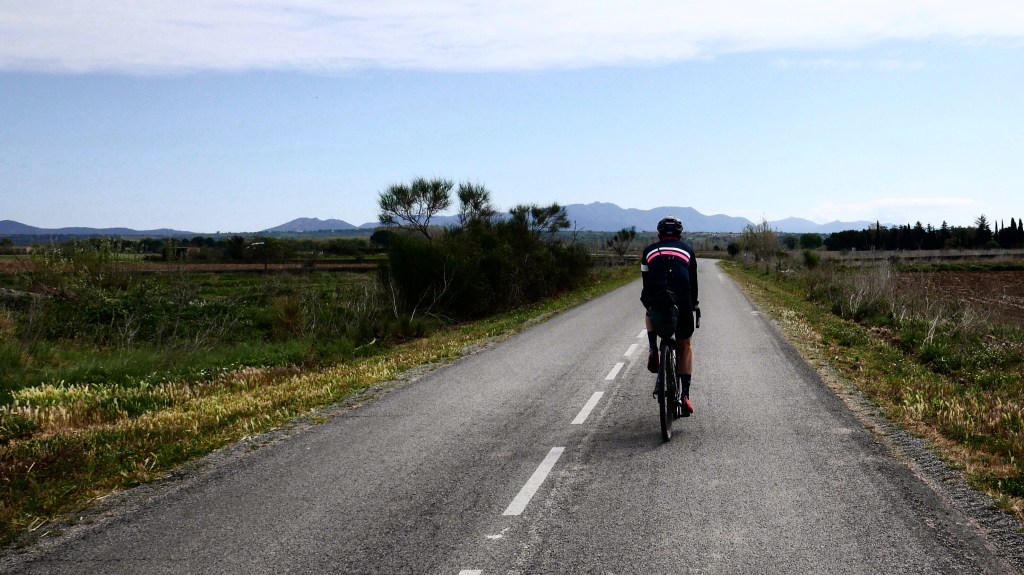
As the day warms and the terrain flattens, our route alternates between gravel farm tracks and quiet country roads edged with wild flowers. The fertile soil of freshly ploughed fields is a rich, dark brown and the hills that ring the coastal town of l’Escala gradually grow on the horizon.

237FD144-C52A-4ADA-B157-A4B6C88F6C57

Reaching the middle distance of this third day the wind begins to build and we each take a turn on the front. Passing the small working town of Sant Pere Pescador our thoughts turn to lunch and we decide to stop earlier than planned before pulling up outside a bar advertising a daily menu. Sitting at our window table we notice passers-by hunched over and leaning into the wind; promising some tough kilometres ahead but not until we pay due attention to our meal. Homemade soup, a meat course and dessert followed by coffee and it’s time to settle the bill and continue our ride.

The rest of the day is a war of attrition with the wind sapping our strength as we each take turns sheltering the other. The road signs count down the kilometres until we finally reach the outskirts of Palamos; approaching the town down another section of the Via Verde before arriving at the hotel and the promise of a hot shower. A wonderfully fresh Thai meal is followed by a peaceful evening in the hotel lounge. A converted farmhouse, the well-stocked library offers a choice of reading material as Fuji, the resident cat, takes turns to warm our laps.

961458FB-FBD6-4C2A-95AF-CC1DA83BC468

After waking during the night to the sound of heavy rainfall our final day dawns with the promise of clear skies and sunshine. Still feeling the morning chill as we ride across the seafront, the wind is blustery but should be behind us when we turn westwards towards Girona. Sunlight reflects off a sapphire blue sea as workmen busy themselves erecting the beachfront café bars in preparation for the start of the season. Our morning ritual of a supermarket shop complete, we ride inland on a gravel path; a short 50 km stretch through a mixture of farmland and forest that takes us first towards the towns of Llagostera and Quart before we reach the outskirts of Girona. Two friends – down for a week’s riding – our welcoming party as we lean our Clementinas against a wall and mark the occasion with a beer.

Journey complete and with time to reflect, highlights of the trip include the people we’ve met on the roadside and in the towns where we’ve stayed. Whether offering advice on locating the nearest fountain or strangers leaving the bar where we’re eating wishing us a casual bon profit; everyone has been friendly and happy to help. The landscapes too – from the mountains to the flat coastal plains and rolling wooded hillsides – have been as varied as they are stunning. Towns and villages rich in history yet still home to real communities where neighbours gather in tree-lined squares to pass the time of day. Our Clementina bikes have also been a revelation; light, responsive and taking all manner of surfaces and terrain in their sure-footed stride. What better confirmation of their quality than the daily excitement at loading up our packs before riding off on the next section of the route? Above all, however, this has been a trip made by two friends. Sharing the road with time to enjoy the beautiful scenery, conversations over dinner and quiet efforts climbing mountain roads. Appreciating – as Pau sees it – those moments of movement through a changing landscape. Decisions reduced to the turn of a pedal.


We owe Pau Tena of Clementina Bicycles a huge debt of thanks for making this trip possible. His bikes were never less than a joy to ride whether on gravel trails or climbing Pyrenean peaks.

To Far Ride Magazine for first publishing the story.

To Rapha for their excellent Explore clothing and luggage.

To Parcours for the wheels on my Clementina. Lightweight and beautifully understated; they smoothed away the kilometres.

To Lucas for his generous hospitality as the rain poured down.

And lastly to Ian – my bike-packing mentor – who took the vast majority of these images. I learnt and laughed in equal measures.

Jonas Klock / Accidental Journeys

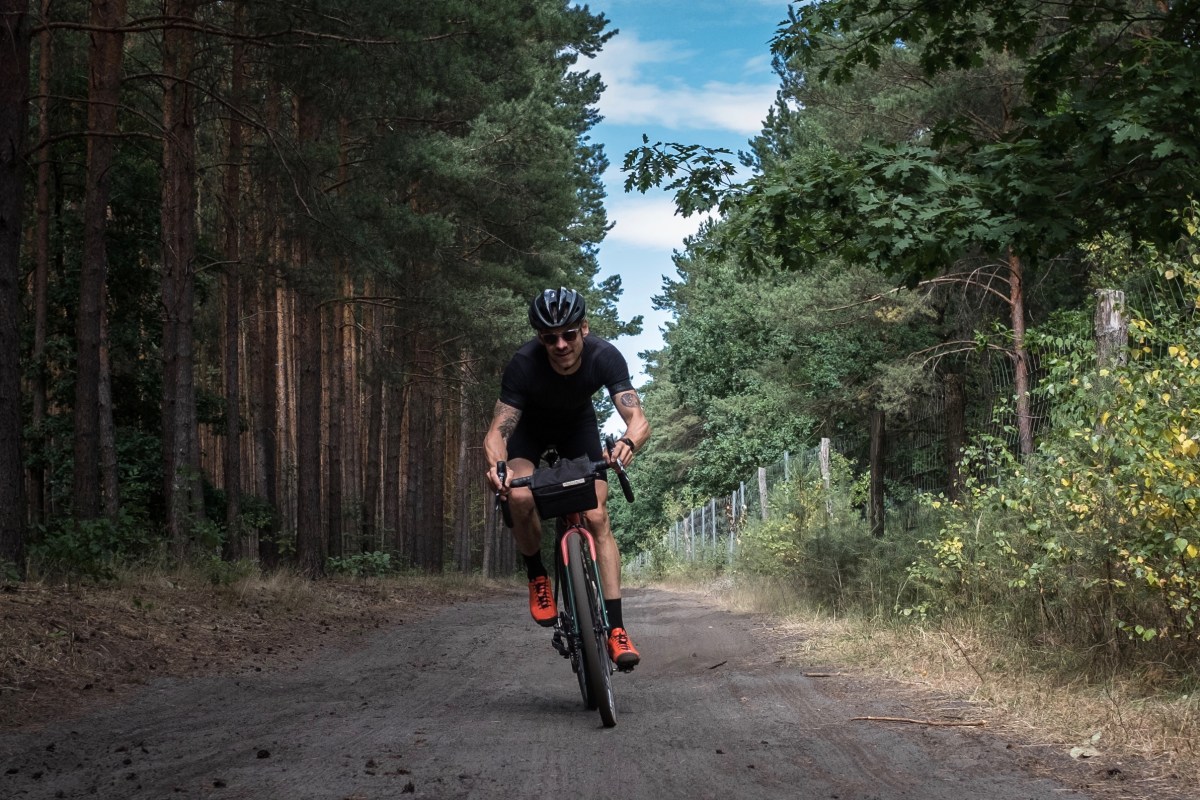
Woodland trails, loaded gravel bikes and coffee brewing over a camping stove. Images on Jonas Klock’s Instagram feed that perfectly illustrate his profile’s exhortation to get out and free your mind. But whether by design or accident, the journeys we make – in life or when out riding – can sometimes take a direction never previously imagined.

‘I get out to free my mind. Using cycling as a valve to bleed off the restrictions imposed by work and all the other stuff. While some people might go clubbing, I go riding. It helps me recharge and find new energy for functioning during the week.’

‘Going back to my teenage years,’ Jonas continues, ‘riding was always the main focus in life. Even to the extent that it set me back a little with my studies [smiles]. Racing at a very competitive level right through to my high school graduation before I got into partying and stuff like that. Normal teenage distractions.’

Distracted he may have been but this didn’t stop Jonas graduating from The University of Fine Arts in Berlin before working in Rotterdam for some of the biggest players in world architecture. In retrospect, an intense period that left little time for riding and also coincided with a growing disillusionment with the professional aspects of the sport.

‘I never got to the point where I fell out of love with cycling – I still commuted by bike – but the racing scene was unbelievably competitive with everyone striving to be noticed; to get the contract. And my architecture firm had these huge projects in the Far East aligned to the rapid economic growth which in turn meant I was working incredibly long hours. Struggling to fit in any exercise around work commitments and increasingly fed-up with 16 hour days.’

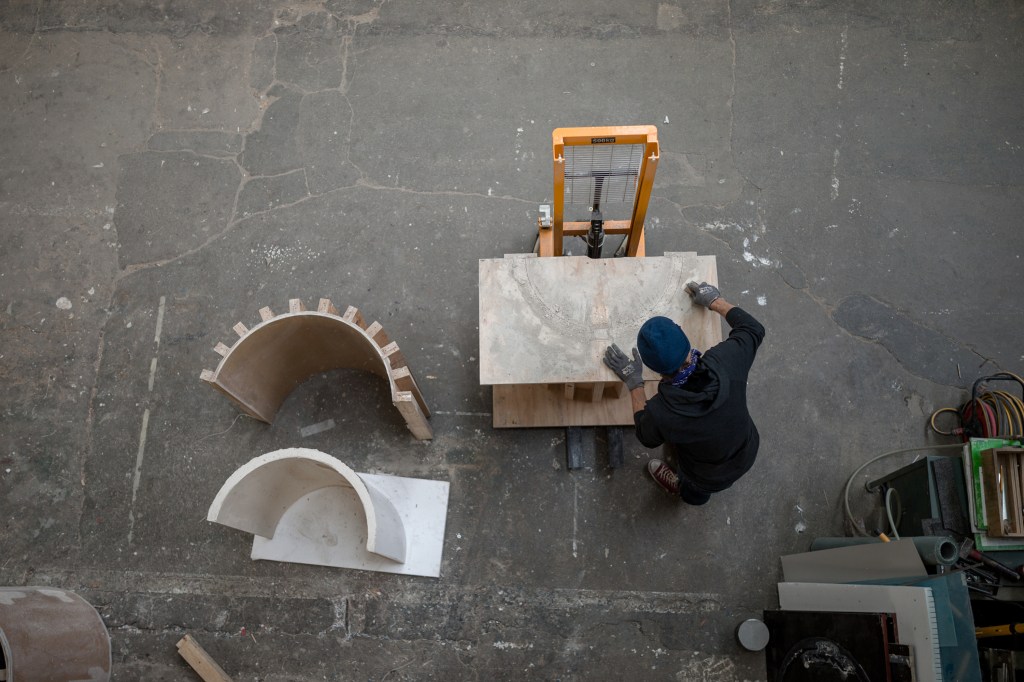
A move to a new architectural office back in Berlin only seemed to fuel these feelings of discontent; reaching a point where Jonas quit his job, put the computer aside and began experimenting. Making models and small concrete objects that slowly evolved from lamps into whole interiors and leading him to found his own design studio; Accidental Concrete.

‘The material itself was the tool I used to rediscover my roots; to help create my own language of design. And the term accidental was just something – a word between friends – from when I was making small objects and could never simply repeat the process in an exact fashion. With concrete there’s always something surprising that happens and before the name was even considered I’d say to somebody that it happened by accident and it just stuck. It’s got an element of irony and I like the sound of it. It doesn’t take itself too seriously. And I never wanted to turn into a manufacturer with an order book demanding a couple of thousand identical copies. I want each piece to be individual; unique.’

As all Jonas’ projects are by nature custom, the fact that he’s supported by a relatively small team means the whole process can be handled in-house from the first sketched design through to on-site construction. A flexibility to adapt that allows him to respond and manage any problems. Dotting the i’s as Jonas sees it.

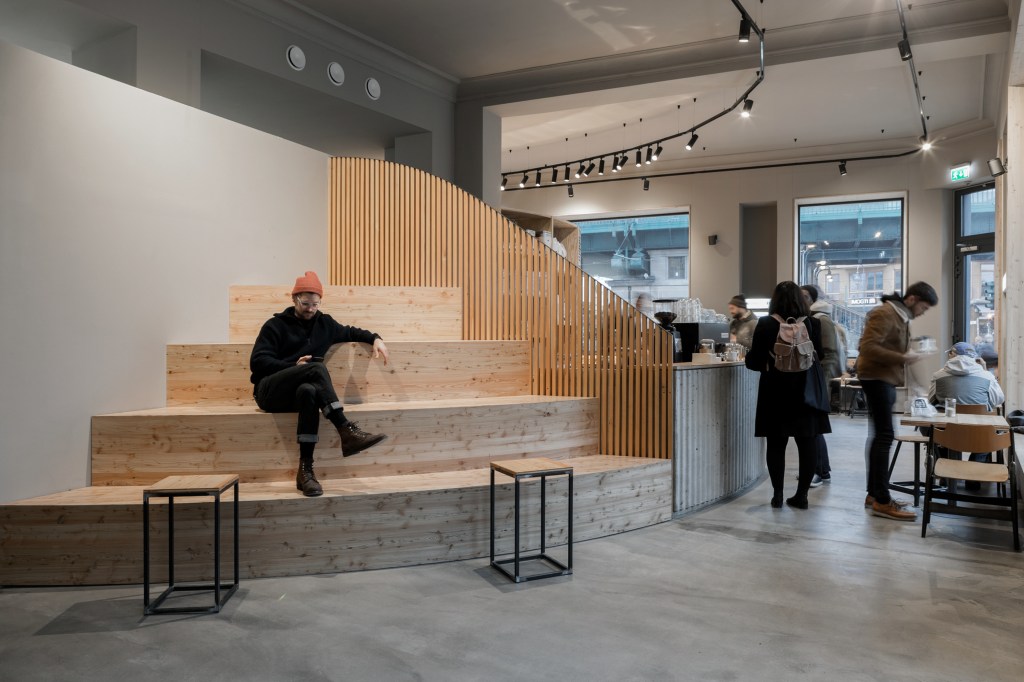
‘I’m trying to use materials that are very haptic. I like it when people interact with the objects or interiors we’ve designed. I don’t want to create spaces that feel untouchable; that feels wrong to me somehow. If you go into a coffee shop or a bakery you want to use it without the fear of making a wrong move. Sometimes I notice that people don’t always have a sense of their environment at all – wherever they are they treat it like a McDonald’s [laughs] – so it’s good when people see and appreciate my work.’

Constantin Gerlach_Zeit für Brot 03

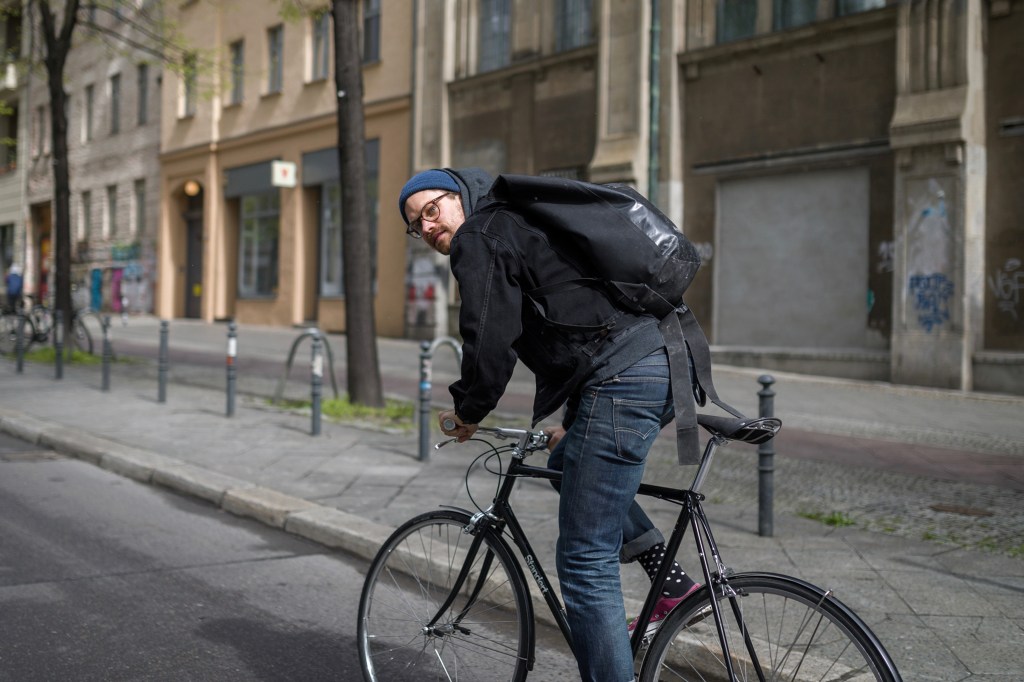
Busy as he is, Jonas now tries to stick to normal working hours. Something he admits to previously never managing and forcing him to consider whether maybe it’s a question of age. He gets up early to fit in some exercise in the morning – cycling, swimming, running or yoga – and especially in summer when the evenings are lighter he’ll go for a ride after finishing work. ‘Weekends,’ Jonas explains, ‘are spent riding in the forest. I need to refresh my mind away from the traffic and crowds of people.’

Forest riding that characterises Jonas’ Knetkommando circle of friends; a reference to the German language term for kneading dough but which can equally be applied to pushing really hard. Intense cyclocross sessions in Berlin’s Grunewald that are lots of fun but leave the muscles tired and aching.

‘I occasionally do the odd triathlon or cyclocross race but generally I ride with a cooker and an AeroPress. We find a lake and have a coffee outside. It’s all about being with friends and just having a laugh. Coming home feeling a little exhausted but satisfied. A way of riding that grew from the fixy scene and is now definitely more popular in Berlin. All about making the turn that you might have passed a hundred times on your road bike. About the range of possibilities gravel riding provides that make your cycling life so much richer.’

Weather-wise Jonas admits to not being a particular fan of riding in wet conditions but that in Berlin it’s impossible to avoid and a necessary evil if you want to ride regularly. A recent bike-packing trip through Portugal illustrating that you can be so wet it actually doesn’t matter anymore.

‘Once your shoes are soaked through and you can feel the water with every pedal stroke, as long as you’re warm then it’s OK. But it’s those moments in between that aren’t particularly pleasant [laughs]. And commuting all year by bike? If it’s raining I put a jacket on. I’m not a roller or home trainer kind of guy and I much prefer to be riding outside despite the weather than sweating in my living room.’

Constantin Gerlach_Urban Standert 03

‘Portugal was about taking time off from work with friends,’ he continues, ‘and I really enjoy the process of being outside on the road. Moving from place to place with your whole life strapped to a bike. A way of travelling that makes you appreciate your body and its ability to move you through the landscape.’ 

A viewpoint that last year prompted Jonas to ride from Berlin to Stockholm; the frequent flights he made visiting his girlfriend when she was based in Sweden causing him to question whether he actually understood what that distance represented.

‘You step onto a plane and two hours later you’ve arrived; the process of flying divorcing you from the landscape and the people that inhabit it. I wanted to work my way there; to feel those miles in my legs.’

Not that the process of separation always has negative connotations; Jonas noticing with every bike-packing trip he makes, the more items he actually leaves at home. Gradually reducing what he carries to absolute essentials; a process he finds interesting as he feels the older you get, the greater the temptation to own more things.

Jonas Klock_Portugal 03

‘I had a pretty interesting talk recently with a friend of mine who’d designed the Accidental Concrete logo. We were discussing how I’m fixed to Berlin professionally speaking. I have my network here, my workshop, my tools. I’m not flexible enough to work on the road. But I’d like to reach a certain point where I’m able to spend a couple of months working in California where my girlfriend is from. So maybe I need to consider going back to my roots and focusing more on architectural design. Concrete has been an important catalyst for professional growth but the closer I get to this new phase in my working life, the more I see it developing beyond simply a material. And I’m not afraid of transitioning again as there’s nothing worse than being stuck in a situation and not being able to move forward.’ 

‘Change always comes with a little bit of fear – stepping from the known to the unknown – but it can also be pretty rewarding. It’s the same with riding; if you move out of your comfort zone you’ll soon start to notice new things about yourself. Each step over the line – like the rings of a tree – creating a new layer of experience.’

Along with completing his first 300 km ride, Jonas is planning a bike-packing trip from Berlin to Amsterdam. Another journey he’s done countless times by plane but never taken the time to experience by bike.

‘We have a saying in German – Ich will mir die Distanz erarbeiten – that roughly translated means you want to work hard for something. And taking the time to ride a bike between two places – truly understanding how that distance feels – can be just as fulfilling as arriving at your eventual destination. And with cycling, it’s all about appreciating the journey.’


Jonas Klock

Accidental Concrete

Photography credits:

Feature image and Accidental Concrete content by Constantin Gerlach / Bike-packing and San Francisco by Jonas Klock / Rocacorba by Robert Wegner / Gravel Kings by Chris Hargreaves / Coffee by Mirko Merchiori