Crank! Communication / That last 10%

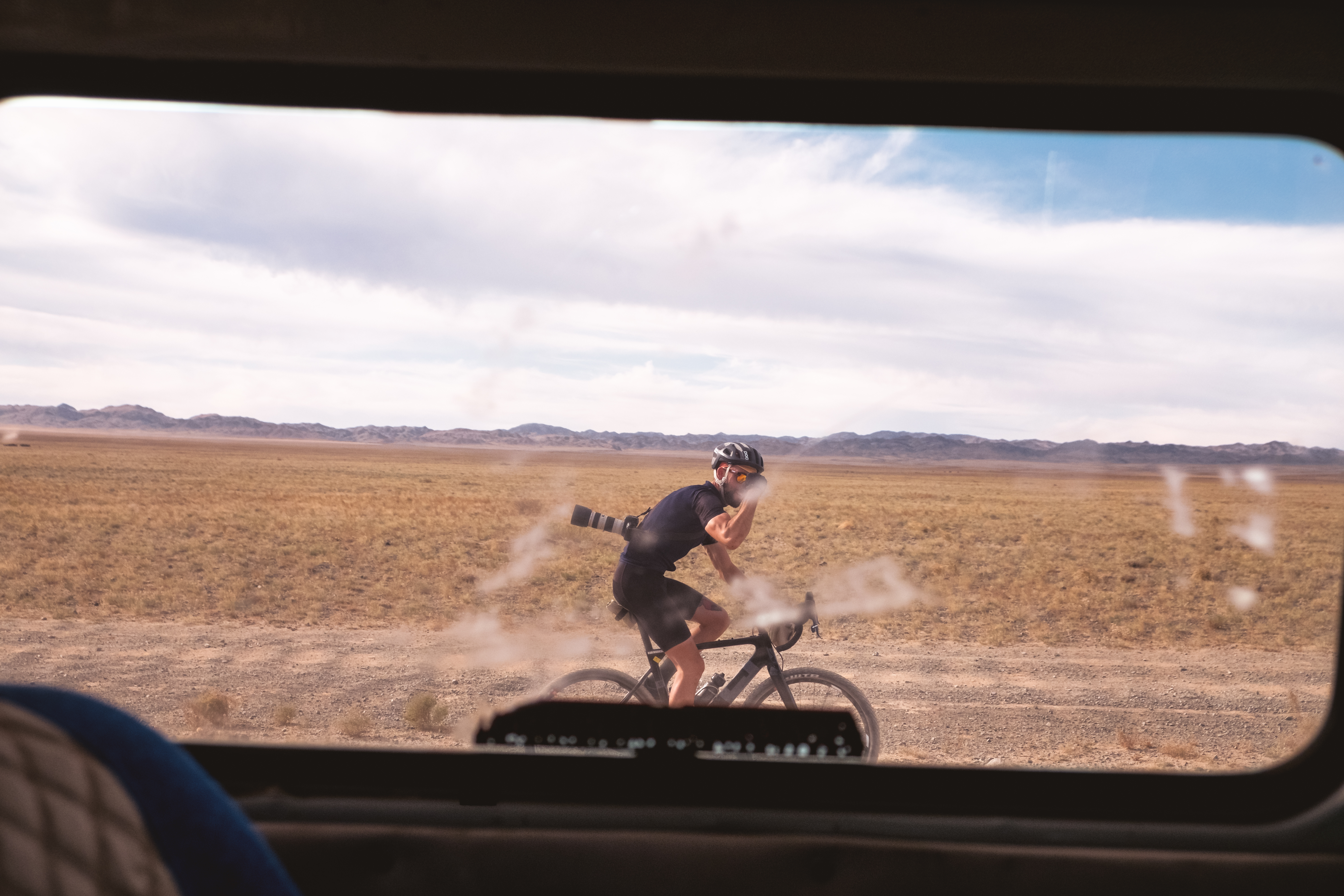
Founder of Crank Communication, Bregan Koenigseker, is recounting the time he was crossing what appeared to be a shallow creek only to discover the water came up above his waist. On face value an amusing anecdote – including the observation that another rider more familiar with the locale simply deviated to a handily placed bridge – but one that ended sadly when months later his steel frame cracked after this rust-inducing soaking.

Setting aside the loss of a cherished bike, what this story does illustrate is a passion for cycling that transcends purely professional responsibilities. And with such a driven individual heading up the Crank Communication team, the company is enjoying a period of sustained growth as new clients join an already established roster of brands. But what exactly does an international cycling content and PR agency do? And why do brands place a value on these services in an increasingly competitive market place?

Offering an insider’s perspective on industry processes, Bregan conversationally explores what Crank brings to the table. And why, ultimately, a love of cycling continues to fuel his creative journey.

cyclespeak
Could you set the scene by describing the origins of Crank Communication?

Bregan
I’m based in Berlin – I’ve lived in the city for over 20 years – but my weekends are now spent renovating an old farmhouse. After university I started working as a bike messenger and the company I was working for asked if I knew the people at Chrome because I had one of their bags. I had no idea who owned Chrome but said I did, ordered 50 of their bags and then subsequently made a deal with Chrome to start distributing across Europe.

cyclespeak
And that proved a good decision?

Bregan
Fast forward two years and I’d designed my own online shop, was sponsoring events and had built up a small dealer network. Alongside all this I was organising messenger races and Brooks England came onboard as a sponsor for the European Cycle Messenger Championships at Tempelhof Airport in Berlin. The event proved a success – we had over a thousand racers – and this led to Brooks asking if I’d like to start working full-time for them in a general sales and marketing capacity.

cyclespeak
That’s a pretty pivotal two year period.

Bregan
It was a miracle. Working at Brooks I got to plan social media strategies, handle their worldwide PR and was travelling everywhere and meeting everyone. On the advice of my mentor at Brooks, I then decided to start my own agency and so Crank came into being with Brooks as a very valued client.

cyclespeak
So what is Crank? And the reason I ask is that I was wondering whether there are any misconceptions about what you actually do?

Bregan
The support we offer can be very creative if we’re asked to work on a campaign. Other times it’s about helping a brand to understand how to market and sell a particular product. So maybe the misconception is that we just have this list of contacts and we charge brands to make a few phone calls—when what we’re really offering is a creative set of solutions that can be delivered in collaboration with in-house teams at the brand.


cyclespeak
So, in effect, a shared journey?

Bregan
Often brands come to us with really good ideas and we help in getting that last 10%. And that’s why I believe we have such long- standing relationships because we don’t just reel off a standard solution. Instead, we actually think about what our brands are trying to achieve.

cyclespeak
Do you have a favourite project that illustrates the typical creative process you follow?

Bregan
Recently we worked with Ass Savers from the very start of their Win Wing campaign. And what I like so much about this project is that it allowed us to showcase so many of our different talents. We helped develop the product name, taglines and slogans before working on the product story with a multi-channel approach. And rather than a traditional PR launch where the product is unveiled to great fanfare over the course of one or two days, we intentionally extended the launch over months so that it was buzzing the whole time.

cyclespeak
With obvious success?

Bregan
We had feedback from Ass Savers that not only did this particular product receive a real boost in awareness but general sales across the company’s online shop also saw a significant increase. Of course, we had a great product to work with and when you see a project like that coming towards you, you want to immediately jump on board.


cyclespeak
What changes have you witnessed in the creative tools, mechanisms and platforms that you use to communicate a brand’s message or vision?

Bregan
I started Crank in 2014 before social media was so ubiquitous. Back then you approached a magazine through your PR contacts or you took out an advertisement. But now we have so many options…

cyclespeak
Is that a good thing or a challenge?

Bregan
It can be a little of both [smiles]. So what you need is the relevant experience to choose the right path forward. 

cyclespeak
Can you see any differences in how Crank achieves this pre and post pandemic? Because the period in between saw enormous growth in cycling with people wanting to purchase bikes and components.

Bregan
Which increased competition between brands and resulted in our business growing in tandem with this expansion in the industry. But one difference I have noticed is that there’s a lot less enthusiasm about travel which has resulted in a huge increase in local events across Europe.

cyclespeak
For me, the lockdown restrictions encouraged me to start exploring routes from my own front door. And that still heavily influences how I ride.

Bregan
It’s very difficult for international events to attract sponsorship right now. When before, we wouldn’t even blink at the thought of flying a bunch of journalists in for a bike show. But times change and you’re right when you say there’s more focus on local rides and community. And that’s something our brands also understand.

cyclespeak
Do you ever turn down clients?

Bregan
Yes. Often.

cyclespeak
Can I ask why?

Bregan
Sometimes we’re approached by brands not really ready to use our services. And you don’t want to start a project that will end in sadness for everyone.

cyclespeak
Your business is ultimately driven by consumers buying products. And I wondered how you squared the environmental impact of a world with more stuff?

Bregan
Having worked with Brooks England on their PR for 14 years, it’s a theme that often comes up. And if you make good products, then people tend to respect that investment and look after what they’ve chosen to purchase. But there’s also the understanding that kit and components can lead a hard life and will need to be replaced at some point. So there is this balance between need and want but it’s usually the case that if you buy cheap, you buy twice.

cyclespeak
I’m guessing influencers have a valuable role in building an audience? And I was wondering how you match them up with the needs of a brand?

Bregan
The most amazing influencers are real people and not one-trick-ponies that just post the same picture again and again. We want to work with people that are consistently interesting and have the ability to take you on a journey with them. We’ve had the privilege of spending time with some super high profile influencers and do you want to know their secret? They are actually awesome people.

cyclespeak
Can I ask what strategies inform how you recruit and develop Crank Communication as a business?

Bregan
We’re very play-it-by-ear [laughs]. It starts out with people asking you to do things that you don’t have time for but want to do anyway. So then you look for people that can help and that’s how I’ve pretty much found everyone that’s worked for us.

cyclespeak
I gather a lot of your team work remotely?

Bregan
When I was offered the job at Brooks England, they wanted me to be based in Italy. But I didn’t want to move there—not because I don’t like Italy but because I have a family and didn’t want to uproot everyone. So we started to use all these remote working tools that we now take for granted but that was way back in 2009.

cyclespeak
And then the pandemic swept across the globe and it’s now something we’re all doing.

Bregan
It’s certainly a different way of working but totally possible with the technologies that are available. Sometimes it makes sense to sit down in person with someone but often it’s much easier to work things out over a video call.

cyclespeak
So is there such a thing as a typical working day?

Bregan
It’s not a job for someone who doesn’t want to work hard [smiles]. You have to keep a lot of balls in the air.

cyclespeak
So what keeps you motivated?

Bregan
I love it when we really nail slogans and communications. For me, probably the most satisfying aspect of the job. And it’s good to be part of the bike industry and be respected for the part we play. The media and brands understand our function and we, in turn, are proud to be a useful part of a great industry.

cyclespeak
How do bikes and your own riding fit in and inform your work with Crank?

Bregan
We actually don’t get to ride as much as people think. They assume we spend every day out on our bikes!

cyclespeak
No?

Bregan
Everyone else is cycling and we’re working [laughs].

cyclespeak
But riding is still at the heart of your business?

Bregan
Everyone cycles at our agency and we talk about cycling all the time. Something that I always hope can be a feature of Crank because it really helps us connect authentically with our clients. So it’s like I’m fond of saying—we speak bike [smiles].

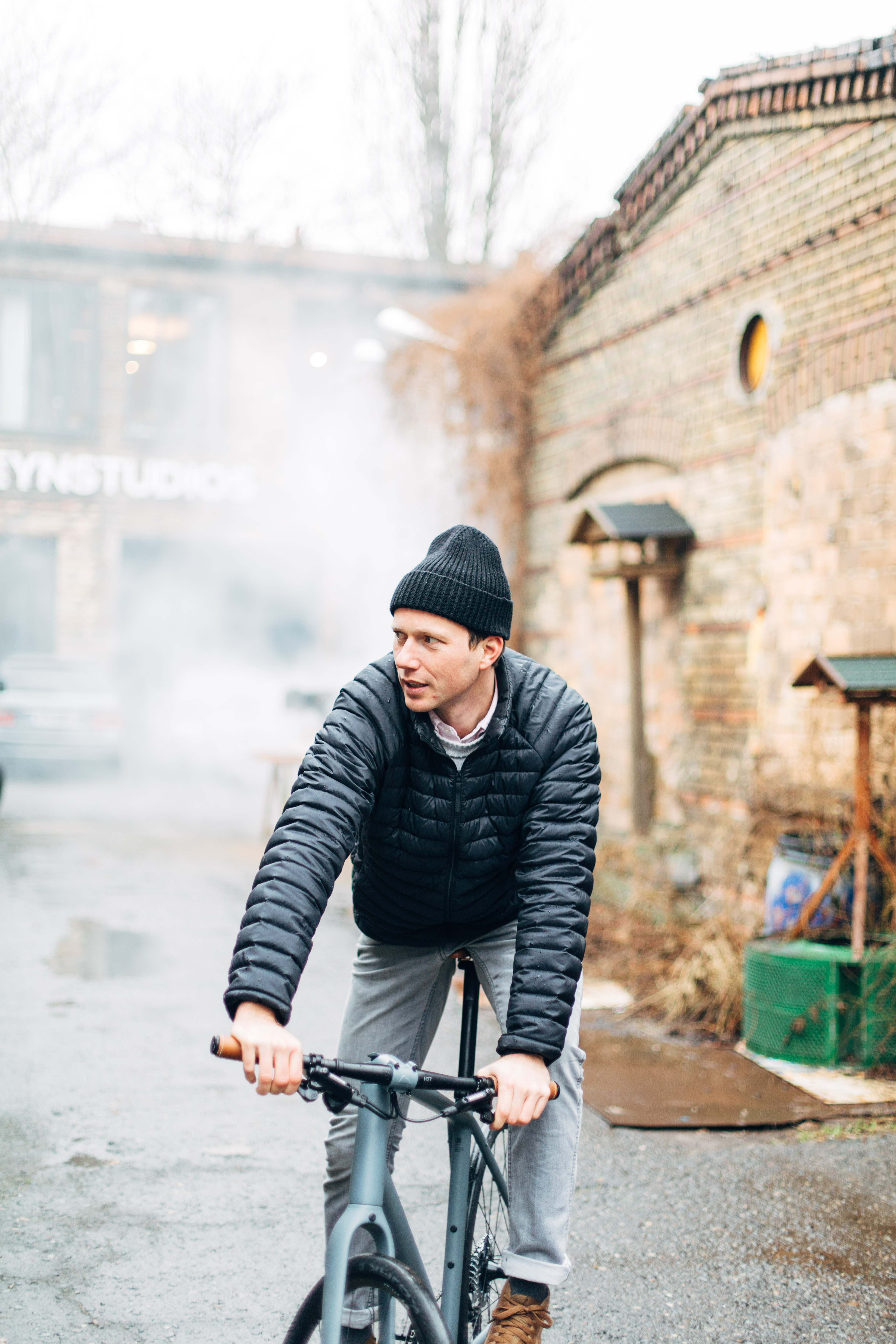
Bregan Koenigseker

Images with kind permission of Crank! Communication

Lauren Wiper / A Tale of Two Cities

Raised in Oregon, Lauren Wiper transferred to her company’s London office where she immersed herself in the city’s cycling scene. A subsequent move back to the US saw her build another cycling community amongst the tree-lined boulevards of East LA. A transatlantic tale of two cycling cities that she recounts in finely observed detail.


Lauren is taking our call from her kitchen table. Having recently returned from Girona where she rode the Traka, her partner John is nursing a case of Covid so their East LA apartment is temporarily zoned to allow for his quarantine. Brimming with good health herself and nicely tanned, Lauren smiles readily and is quick to laugh as she considers the idiosyncratic nature of both cycling and cyclists.

A youthful 32, Lauren grew up in Oregon before attending college in Colorado where she majored in Political Science and Spanish—a decision influenced by the time she spent studying abroad.

“I lived in the Spanish city of Santander, circumnavigated the world by boat and spent six months in Argentina. And then following graduation I took a job in the telecommunications industry. But as I’d finished my course in three rather than the usual four years, I entered the workforce aged 20. As the legal drinking age is 21, not something I would advise.”

Based post-college in Denver, Lauren had plenty of opportunities for outdoor activities—a nod to her self-described hyper athletic childhood when she enjoyed soccer, swimming and skiing.


“I rode a bike growing up in Oregon but never really saw it as a distinct sporting pursuit. And my first clear memory is of crashing. Growing up on a farm, our driveway was a good kilometre in length with the house perched up on a hill. I was riding this old school 90s mountain bike and decided to just send it before careering straight into one of our fields and giving myself a little scar to remember the occasion. Later, when my Dad was managing a ski resort, I would use the runs in summer for downhill mountain biking. Not particularly well, I should add, but those experiences still come in handy when I ride events like the Traka.” 

“But what I do remember was the bike as a means to explore—a way of pushing myself physically. The speed of cycling definitely works for me. Hiking is a little slow but riding a bike hits that sweet spot where you’re making progress but not so fast that you miss things.”

A road cycling Colorado co-worker did at least encourage Lauren to buy a bike—a Surly that she used for commuting and a few bike packing trips. But joining the Rapha Cycling Club was more about the coffee perk than any desire to engage with the cycling community.

“I was happy to just putz around but that all changed when I moved to London.”

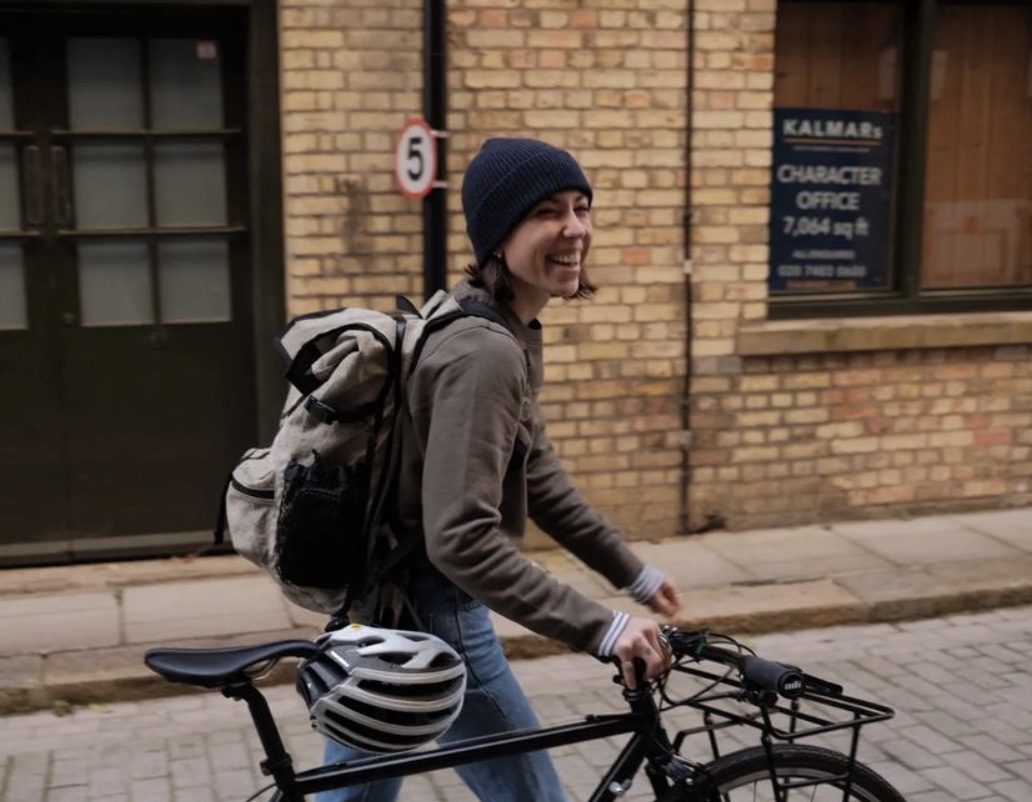
With an opening to oversee her company’s European graduate sales programme, Lauren decided to take the plunge and accept the new position. But moving to a new city meant leaving her established friends behind. So each morning she would call in at Rapha Spitalfields to pick up a coffee on her walk to work. Gradually getting to know the store staff, their gentle teasing about not riding encouraged Lauren to ship over her Surly and join the weekly Rapha rides.

As she reminisces, I ask her to describe the London cycling scene as she remembers it—Lauren suggesting the terms classic and heritage immediately spring to mind.

“People know about the sport and that’s reflected in this sense of belonging. And there’s a lot more opinions than I get from cyclists in LA. Everyone gets really excited over the Classics and the Grand Tours and then there’s Regent’s Park laps which are obviously an institution. Do you go on a Tuesday when people are really hammering it or on a Friday when it’s a little more casual. Do you go early, do you go late? Do you want to be seen? For better or worse, Regent’s is where it’s easiest to see all the different groups and cliques.”

Reflecting on this established cycling culture, Lauren feels that riding in London is to a certain extent rule driven—how there’s an expectation that you’ll point out potholes and be comfortable singling out if needed. Aspects of group riding, I suggest, that can be a little daunting for the beginner?

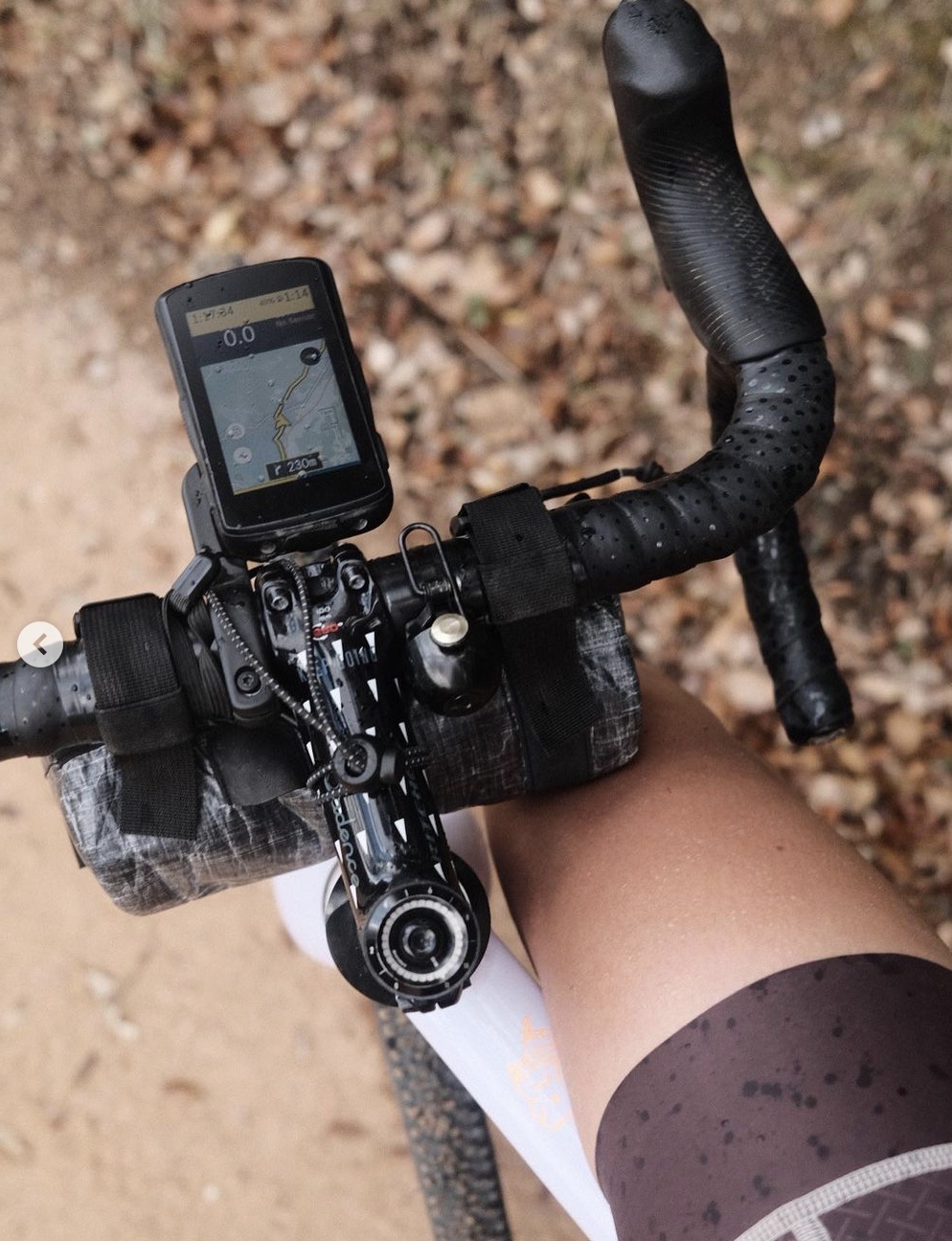
“I’m eternally haunted by this picture of me where I’m wearing short socks. It was taken in Wales on one of my first big rides and I thought I looked pretty good at the time. But years on, I look at that picture and realise that I knew nothing. Which I suppose goes back to that rule thing. The same way that people now comment on my bar bag which, by the way, is staying [laughs].” 


“But I still view London as the centre of my cycling world so it’s kind of difficult to separate that out. And while it’s very rooted in tradition, there’s also a sense that it’s continually evolving. Sitting somewhere between the classic European cycling traditions and the States where it’s still very youthful and scrappy.”

With John returning to the States to start a new job, Lauren decided to follow and handed in her notice. Initially spending three months travelling around Europe, she boarded a flight to LA before taking up a new position with the live auctions site Whatnot.

“Imagine eBay and Twitch running into each other. I work in luxury handbags for them.”

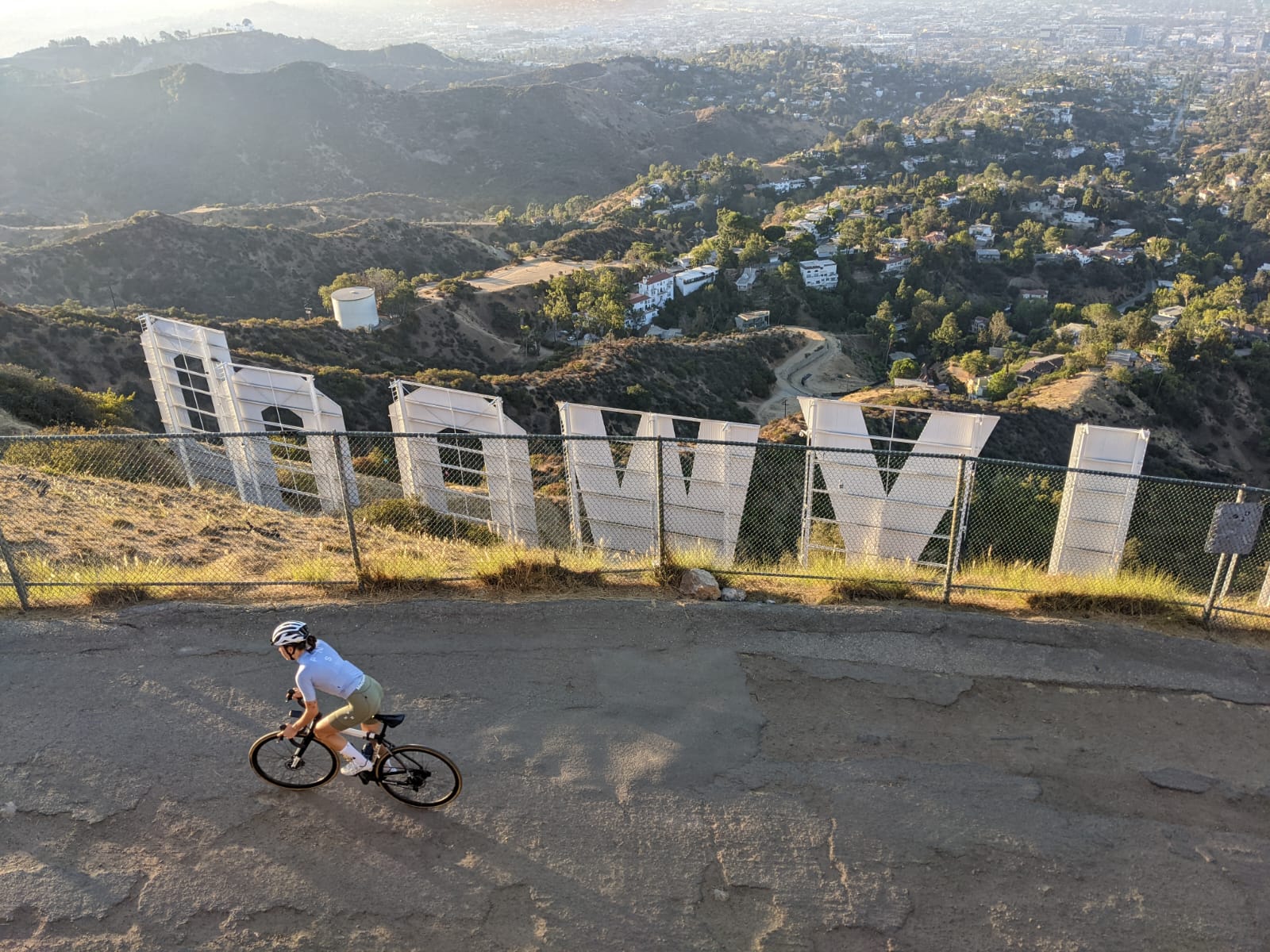
Once again needing a new ride community, Lauren rolled up for Panda’s Ponies—a hilly loop through Griffith Park that meets at 6:30am every Wednesday morning and a recognised fixture of the LA cycling scene.

“The first time I did this ride there were close to 70 other riders. But compared to London, ride numbers here can be huge in comparison. And where British cycling is rooted in tradition, LA has a counterculture, cool-kid vibe. It’s still quite a niche activity but the gravel scene is helping to encourage more participants. And this all means that it’s very open and welcoming—a come one, come all, come with whatever kit you have.”

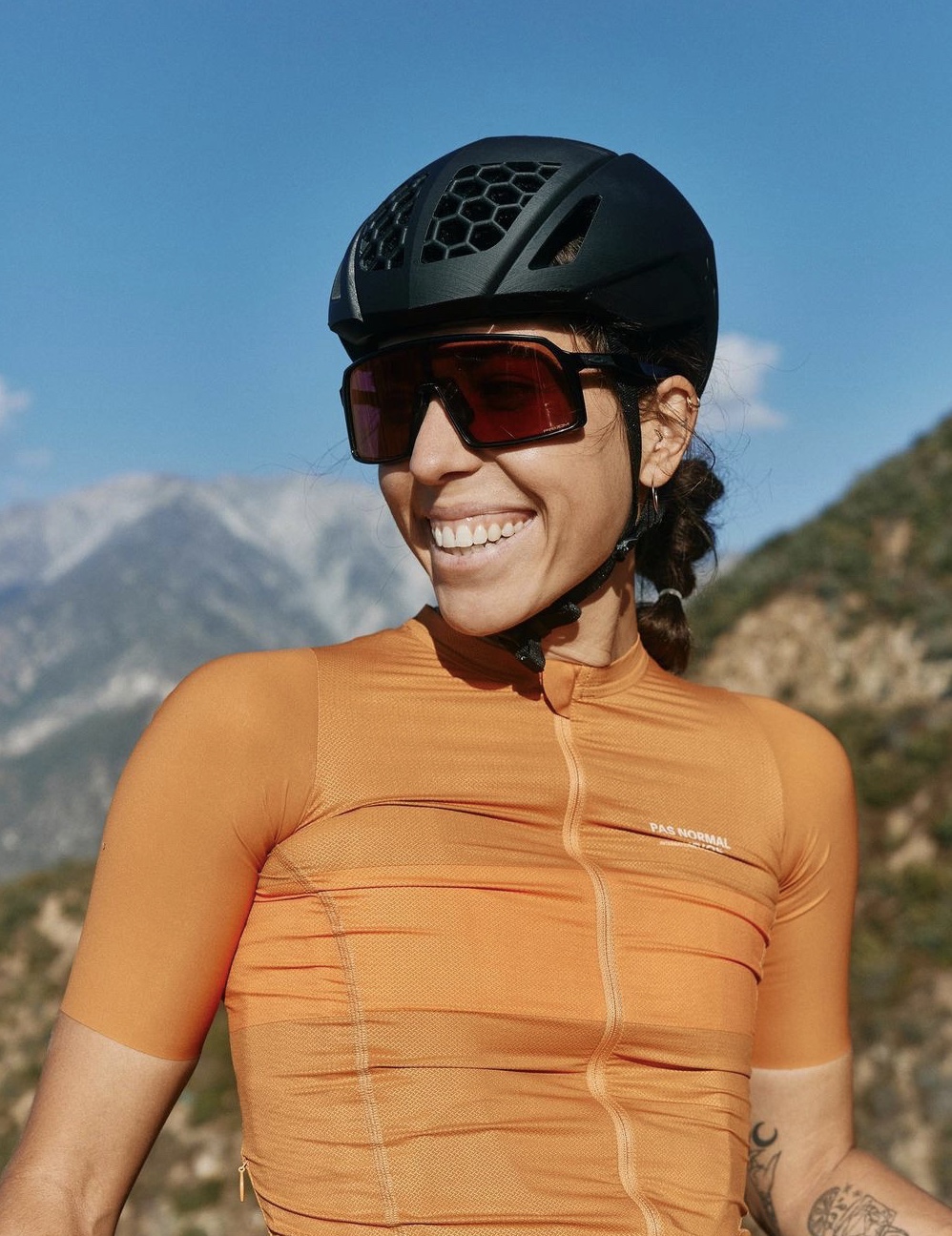
At this mention of kit, I ask if the move to LA is also subtly referenced in her ambassador role with Pas Normal Studios? Whether their colour palette works well set against a West Coast landscape?

“Even though the LA scene is kind of nuanced and counterculture, people have a clear sense of style—both on and off the bike. And for me, that means choosing colours that look absolutely awesome against the desert vibes of where I ride. Add in the Pas Normal chamois – class leading in my opinion – and you’ve got both aesthetics and comfort pretty much covered.”

As for Lauren’s observations on the bikes people ride, she suggests that in London it ranges from ultra-custom steel or titanium to the newest of new, sub-UCI carbon weight-weenie.

“In LA, people don’t seem to care as much. I went on a chilled coffee ride last weekend and saw a Ritchey Outback with 650B wheels alongside the latest S-Works Aethos. So maybe there’s more focus on showing your own personality than letting your kit do the talking for you. You could roll up with a pizza rack and no one would blink.”


“London definitely has the capacity to be as laid back as LA but it’s more predetermined. The groups that I knew in London tended to stop for coffee at the end of a ride. In LA, it’s not unusual to have an hour’s coffee stop before we even start riding. Which can sometimes leave me feeling a little angsty when I want to get going and beat the heat.”

Riding in such a car-centric city as LA, Lauren very rarely commutes to work by bike. And when she does, it can feel like she’s the only cyclist on the road, mixing it up with the morning traffic.

“In London, there are so many other cyclists that you feel this sense of kinship. And even though it rains more in London, there’s this critical mass of bikes. LA just doesn’t have a public transit culture so most people drive their cars to get around. People will ride their bikes on the weekend but they don’t use them as a means of transport. But when the weekend does come around, there’s such varied terrain within a reasonable range of the city. You can ride road or gravel, flat or hills. So the access to good riding in LA is pretty underrated.”

A little apprehensive of asking which city’s ride scene Lauren prefers, I suggest she doesn’t need to answer for fear of upsetting either or both of her cycling communities.

“That’s really hard so I’m going to cheat on the answer. I’ve made some dear, dear friends in LA – I love them to pieces – but LA doesn’t really have an equivalent of Regent’s Park and there’s also something special about the people that ride bikes in London. How they simultaneously have this sense of tradition whilst also being open to new ideas. But LA definitely has better riding.”

With this subject diplomatically squared away, I finish our conversation by asking Lauren why she herself rides. A question that initially causes her to pause as she mentally gathers the various strands of her thinking.

“I ask myself that all the time. Especially when I’m bonking and 200km from anywhere. I guess that riding in general serves that space that I don’t want to fill by continuing to climb the corporate ladder. I love that I have a vibrant, multifaceted lifestyle and that’s reflected in all the varied and eclectic facets of cycling. There’s the fashion and the friendships. The heritage and history. It’s got you cheering on pros that are way better than you. So the why behind it for me, is that it’s a deeply personal pursuit that’s framed within this strong sense of community. They know what it feels like to be on the trainer in the middle of winter when it’s shitty outside. And that’s super cool.”

Lauren

Pas Normal Studios

Feature image by John Wasserman. Other images credited individually.