
The last time I sat down to chat with Ian Boswell, he was fresh from winning his second-ever gravel race. That the race just happened to be Unbound made for a compelling story—retired professional road cyclist tries his hand at emerging gravel discipline and comes away with the sport’s biggest, most prestigious, prize.
A little over two years since this momentous result, Ian continues to combine his gravel racing with a role at Wahoo in athlete liaison, hosting his ‘Breakfast with Boz’ podcast and the newfound joys of becoming a first-time dad. And as we pick up from where we left off—discussing the balance he seeks between family life and career commitments—we dig down into the growing pains of the gravel scene, consider Ian’s motivation to carry on racing, and explore his shifting perspectives on competition and community.
Still bearing a close physical resemblance to his World Tour days—he cuts a slim and athletic figure—Ian’s taking our call from his farmhouse home in rural Vermont. With the region famed for its resplendent Fall foliage, I’m wondering whether his 10-acre smallholding is still a riot of colour?
“Vermont looks its best in late September, early October. Now it’s just dismal,” he responds with a smile.
“So has it transitioned to mud season?” I ask.
“It’s more like stick season with the trees all losing their leaves, and we’re all still waiting for the first proper snowfall.”

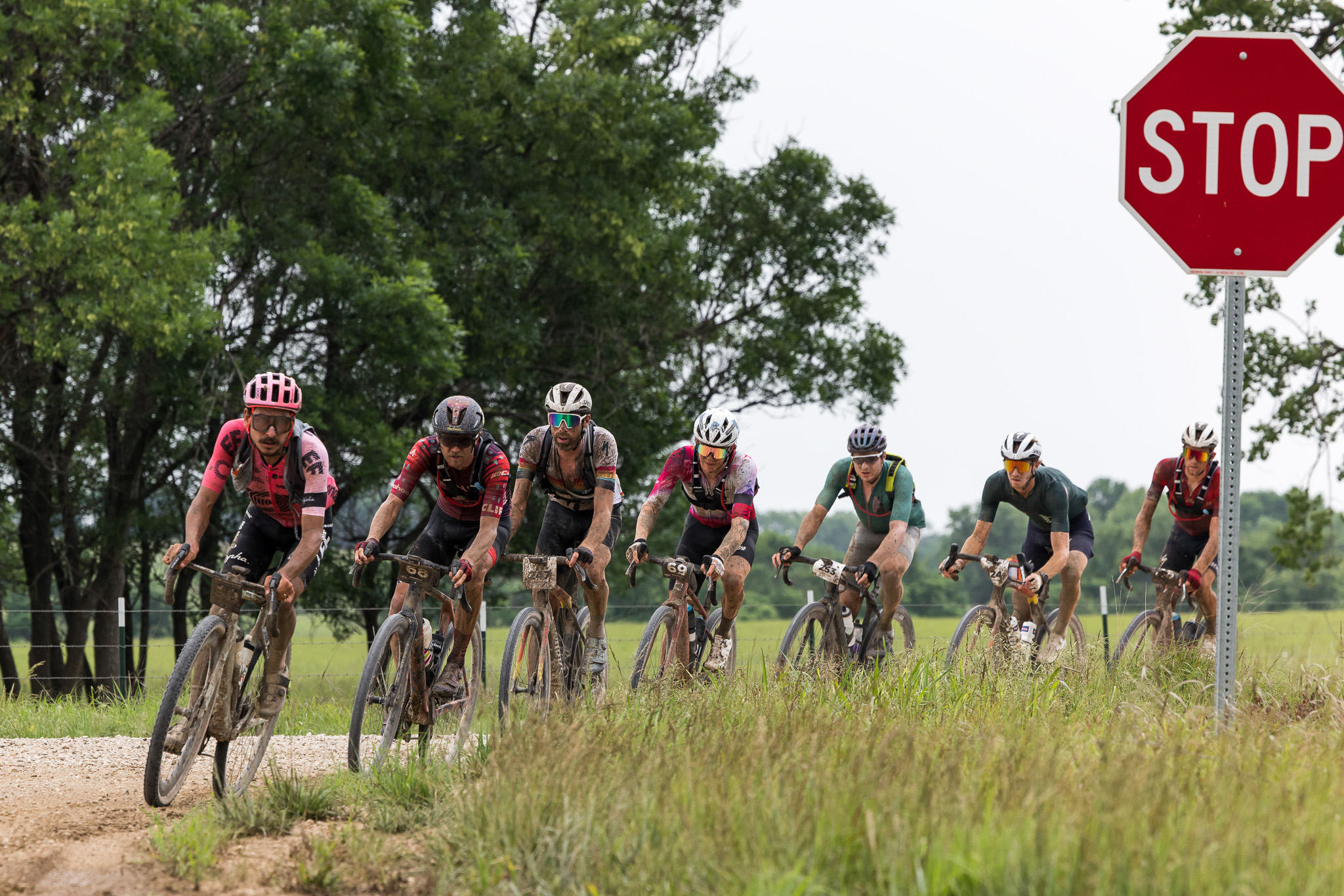
Referencing Ian’s much-documented dislike for mud, our talk turns to this year’s Unbound where overnight rain turned parts of the course into a quagmire. “Oh, goodness. I despise it with all my heart,” he admits. “But at least I was in the lead group ahead of the main field so we could take to the grass at the side of the road before that also got all beat up. It’s a hard enough event without having to contend with thick, gloopy mud. And it came so early that some people’s races were over after only 10 miles. Broken gearing and all other kinds of mayhem.”
As it’s been rumoured that a re-route was always an option for the event organisers, I’m curious to know Ian’s thoughts on the decision to leave in those muddy sections.
“My initial thoughts were perhaps not but that’s based on my own feelings concerning mud. If you look at the cost for people entering Unbound and the effort it takes in simply getting to Emporia, then to have your race ending after only a few miles must be incredibly disappointing. But to keep the route as planned was also a nice reminder of what this race started out as.”
“Which was?” I prompt.
“Back in the day the field was way smaller and it attracted a certain type of experienced cyclist,” Ian points out. “They knew how to break a chain and fix a flat. They knew not to shift if their derailleur was clogged. But now that gravel has really blown up, you hear people talking about rolling resistance and aerodynamics. Which is maybe a natural evolution of the sport but all that goes out the window when your wheels won’t turn.”
“And that’s a good thing?” I question.
“It’s a reminder that Unbound is still an adventure,” he suggests. “And that all those other skills are still incredibly important.”
Contrasting the previous two muddy editions of Unbound with the UCI World Gravel Championships held in Veneto, Italy, I question whether this illustrates two very different approaches to racing gravel.
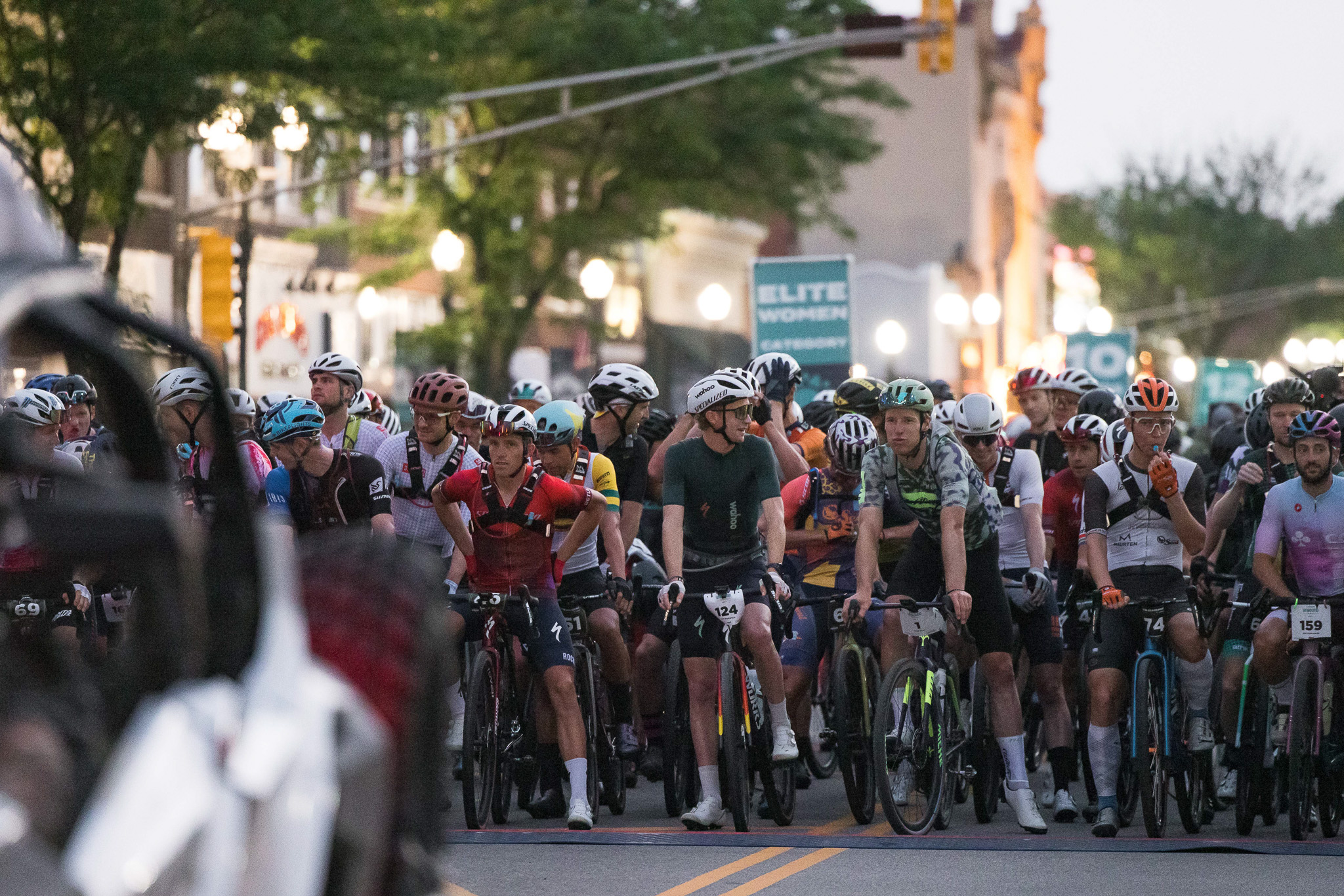
“In my opinion, it’s kind of cool because we’re not defining the sport to be one thing or another,” Ian replies. “In the eyes of the UCI, gravel looks like 160 km with 50% of the course on road. North American gravel races are all totally unique and defined by the geography of the locale.”

Click image to enlarge
This mention of Europe prompts me to ask Ian about a recent trip to Nice where he attended a friend’s wedding.
“It’s funny to go on vacation to somewhere you know really well. There’s no need to research where to eat or visit which is super relaxing. And it was also the first trip my wife and I have taken without our daughter.”
As Ian was also over in France earlier in the year covering the Tour de France, our conversation moves to the lifestyle of today’s professional cyclists compared to when Ian was racing the World Tour. “I think the biggest thing that’s changed is the psyche of the riders today. To get a rider of my generation to live the lifestyle that’s required of the modern pro—measuring your sleep, weighing in every day, not going out for a beer—would possibly be seen as too much of a sacrifice?”
“When I was training out of Nice with Chris Froome and Richie Porte,” Ian continues, “we’d always have a coffee stop. For the current generation, that’s all irrelevant as there’s no measurable benefit of a mid-ride coffee. For them, the perspective of what being a pro cyclist looks like has completely changed. And when we say that racing is now harder, that’s the normality for the young pros just entering the sport. When they join a team at age 16, they’re already living a life of sacrifice and discipline. They find comfort in measuring their training stress, glycogen levels, their sleep score. If I was living like the current crop of pro cyclists, I would have a very short career. But that’s not to say the same applies to them. It’s what they signed up for.”
Recalling the last time we spoke, Ian had just announced that he was going to be a first-time dad; a fact he inadvertently let slip filming the final scene of a Wahoo documentary. So after a two-year intervening period, I wonder how he’s coping with balancing professional commitments with fatherhood.
“Well, it’s not without its challenges,” he laughs. “Personally, I truly cannot imagine raising a child and still being in the World Tour, where your sleep and recovery are so super important. If our daughter is sick, I’m still going to give her a hug and a kiss. Whereas if you’re preparing for the Tour de France?”
“It’s funny how our priorities change,” I observe.
“She’s coming up on two years old and starting to talk. And you hear little footsteps around the house which is a joy. So it’s been one of the most amazing things in my life, but you definitely need to reevaluate your use of time. To the extent that we seriously question what we did before we had our daughter.”
This mention of time management—Ian fitting in his training around dad duties and a full-time job with Wahoo—and I can’t help but wonder if there’s any way having a child can make him a better gravel racer?
“My goal is always to do the best that I can and to finish each and every race safely. After an event, my daughter doesn’t care if I finished first or in last place, but maybe there’s a sense of increased purpose in what I’m trying to achieve?”
Maybe, I suggest, he could adopt a similar strategy to Vermont neighbour and fellow gravel racer Ted King who takes his wife and young family on the road for months on end; driving from one race to the next in an RV. “I understand the appeal,” Ian replies with a smile. “But our life here in Vermont is so labour intensive and the racing season is when you most want to be home on the farm. We love where we live and the summer is when the sun is shining and the garden needs our attention.”
With home and family obviously a priority, Ian still manages to contend a number of races throughout the year—the 2023 season getting underway with a trip to South Africa to ride Cape Epic alongside fellow ex-pro and podcaster Mitch Docker. With the pair signing up for the amateur category—Ian is quick to point out he would never describe himself as a professional mountain biker—to their surprise this was the first year that an amateur leader’s jersey was up for grabs and they subsequently came away with the win. A result, I suggest, that might make him consider entering next year’s Lifetime Grand Prix with its mix of gravel and mountain bike races?
“Let me put it this way. I’ve already spent a little over 10 years on the World Tour being told when and where to race.”
My immediate thought being that’s a no?
“But funnily enough,” Ian continues, “I did actually apply to race the Grand Prix back in 2022 but then a couple of days prior to them announcing who had a place, I emailed to ask if they’d withdraw my application.”
“What prompted you to change your mind?” I ask.
“I just got to thinking that I really didn’t want to take a spot away from some up-and-coming rider whose life could be so dramatically changed by participating in the series. And with the Grand Prix, you’re chasing points at every race. But if I get a flat at Unbound, I can choose to just cruise in and it doesn’t really matter. I can make that mental switch because my day isn’t ruined.”
Although Ian still enjoys racing, he clearly no longer has anything to prove; choosing to race on his own terms and not worry about the outcome of every race. Even to the extent of riding certain events on an e-bike from the back of the field as neutral support. “I spent the better part of my whole adult life chasing the performance end of cycling. Whereas this approach allows me to view the sport from a totally different perspective,” he explains.
Coming over as very grounded in what he does and doesn’t want to do, I wonder whether the fact he won Unbound—arguably gravel’s biggest race—takes away any perceived pressure to keep searching for the next result. Is it a case of, okay, I’ve done it, I’ve won the big one, and I don’t need to worry about anything anymore?
“I do question whether there’s a basic human desire for people to return to something they’ve already accomplished,” he suggests thoughtfully. “But I suppose the difference is that I can continue to race at Unbound without it compromising my life at home. I’m not away at altitude camp or moving us all over to Europe so I can train better. So within the parameters I set myself for our quality of life as a family, I’m still able to perform. If I was finishing Unbound in 80th place after a clean race, then maybe I’d be thinking it was time to hang up my racing wheels and go and do something else?”
A response that maybe skirts around the question of how it feels to win an event—and win it at his first attempt—that for many professionals is the gravel Holy Grail? But he nevertheless returned for the subsequent two editions and came away with a 3rd and 5th. Remarkably consistent, I suggest, for such a gnarly event?
“For the past two years, Unbound has come down to a bunch sprint and that’s after 200 miles of hard riding. So for me to be still contesting the race in that front group is fulfilment enough. Winning is great but at the same time, part of my personal journey is whether I can still trade blows with these other riders.”


Click image to enlarge
It’s at this point in our conversation that I mention Ian’s recent appearance at Steamboat dressed up as ‘gravel beef’ for the fancy dress hill climb. A tongue-in-cheek response, I presume, to the pushback he received on social media after expressing his opinions on riders taking turns and pulling through on a pace line.
“It all came back to my first experience at Unbound when we had a group of five, riding at the front and all taking a turn,” Ian explains. “There was no hiding and we raced in the knowledge that the strongest rider would take the win. Such a fair and equal battle with a level of respect and admiration for each other.”
“Are you suggesting that’s changing?” I ask.
“I come from the World Tour where if you win, you get more money and maybe a bigger team. But in gravel, we have this opportunity to redefine what success looks like. And what I find a little frustrating—and I should say that I’m enjoying the tail end of a racing career but my future isn’t defined by the results I now have—is that I’m trying to look out for the next generation of riders. With this increased focus on professionalism, we’re in danger of falling back into this default mode of what brands and the media see as racing success. And it doesn’t have to be that way. Gravel can be something totally new and different and nothing like the structure of road racing.”
It’s here I mention that at recent editions of Unbound, some riders had four or five people in their support crew—washing bikes, changing wheels, handing out nutrition—almost like an F1 pitstop. And I know that Ian, speaking on a podcast, suggested that each rider could have a crate into which they could add anything they might need but they, themselves, had to handle the stop and therefore level the playing field.
“That was one of the coolest things I felt about my first Unbound in 2021,” he reminisces. “That theoretically anyone could register, roll up, race and win—there was very little barrier to entry. You needed a bike, you needed to be at the start line and you could win the biggest gravel race in the world. Not incredibly likely but possible.”
“And now?”
“The more money gravel racing attracts, the more professionalism we see and the greater the barrier—not necessarily to entry—but to winning. Because there’s the argument that now you need a large support crew and a power washer in order to be competitive.”
Not wanting to dwell solely on seemingly negative aspects of a sport that has exploded in popularity over the past years, I suggest we flip it 180 and look at what gravel’s got right over the past year.
“I say credit to the UCI for closing the course,” Ian immediately fires back. “It’s incredibly safe for the racers.”
“But maybe not possible for a race like Unbound?” I suggest.
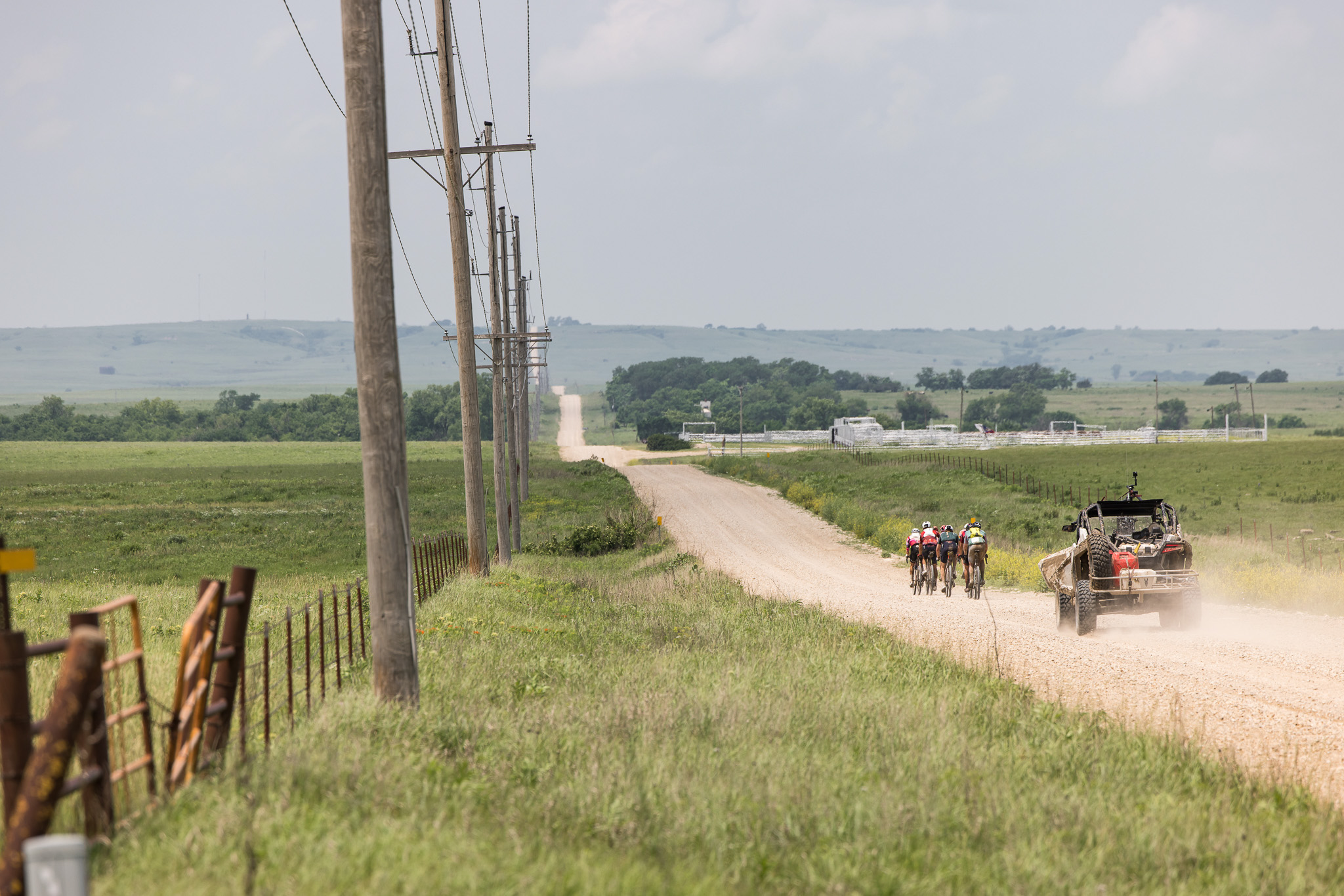
“You simply can’t close 200 miles of roads for 20 hours,” agrees Ian. “There’s a 10-hour gap between the fastest riders and people crossing the line after midnight. But as speeds get faster, the level of risk that people are prepared to take also gets higher because there’s more at stake. At the sharp end of any gravel field, racing is a job. There are bonuses if you win. And I’ve listened to so many safety speeches before races get underway that mention riding on open roads. But no one actually follows the rules of the road and it can be chaotic. Oddly part of the excitement but it can also lead to crashes. So, yes, safety needs to become a bigger concern.”
“Your day job is looking after athlete liaison for Wahoo,” I ask. “Have you seen any changes in this role over the past couple of years?”
“This isn’t particularly unique to Wahoo,” suggests Ian, “but the reasons brands now choose to work with athletes is changing. When I was racing the World Tour, the perceived wisdom was the better your results, the more money you made and the bigger sponsors you attracted. It was a well-recognised ladder to success.”
“But now?”
“That’s still largely the case but we have other perspectives on where you can get a return on your investment. Oftentimes a successful athlete is validating your product but is that quite a niche audience and maybe one that’s already highly engaged? So when you compare that approach to certain YouTubers who might have a far broader reach, you get brands putting a value on this grassroots engagement.”


Click image to enlarge
Sensing a shift in marketing strategy, I’m wondering how Ian himself views the need to keep pace with the demands of a world driven by social media. A career professional before building an audience on Instagram was viewed with the same level of scrutiny as an athlete’s power files, does he welcome this brave new world?
“I came up through this very clear structure of what it took to become a paid athlete,” he replies. “You do better, you train harder, you keep your head down and put the work in. But now? We live in a world where people can be influential irrespective of whether they cross the line in first place. They’ve grown a huge following and people really listen to what they have to say.”
“So your view of sport is changing?” I suggest.
“When I first came to this role, my thinking was we should sponsor the biggest teams and the best athletes. But I see people out there who are definitely not winning events but have an incredibly important role in building and representing their community. That might take the form of leading a weekly group ride in a small town in middle America; showing new riders how to clip in or explaining why you shouldn’t cross chain. And I’ve come to understand that these people are just as valuable to support as the athletes we see crossing the finish line in first place.”
Hearing the excitement in his voice, it’s clear Ian enjoys the challenges that change within the sport present. That what matters most is to see people succeed in their cycling goals, whether that’s finishing a race or simply connecting with friends.
“So often in sport,” he continues, “we focus solely on the elite. Which is why I really enjoyed riding Steamboat from the back and mixing it up with people on their first gravel event. Because there’s no one who shows up in the pro field at Unbound whose aim for the day is simply to finish. Whereas for the vast majority of riders, that’s their one goal for the event.”
“Which,” I presume, “is super inspiring?”
“For the longest time, my view of cycling was this very narrow window of, if they’re not doing it like me—if they’re not skinny and super fit—then why would they ride a bike? But now I have a much broader view of what cycling can be. Some people use a bicycle to connect with friends, others to commute or to grow a community. And what’s been so fascinating is to see how the bicycle can represent so many varied opportunities to different sorts of people.”
With this talk of community, I’m still smiling at the thought of the 2021 Unbound winner riding an e-bike and handing out gels to the back of the field at Steamboat Gravel.
“To be honest,” he laughs, “most of the people I met had no idea who I was.”
A typically self-deprecating response and just one more example of his refreshingly grounded sense of self. And perhaps going some way to explain how he answers my final question; whether he can offer an example of life’s simple pleasures that help him feel content and satisfied?
Without a moment’s hesitation, he quips back, “That’s easy. Mowing my lawn.”
“A simple pleasure?” I respond.
“So many aspects of my life have no finish line. You win Unbound and people ask if you can win it again. But when I’m sitting on my tractor, mowing the field, there’s a beginning and a defined end. When you’re done, you’re done. You can’t do anything more. And there’s a distinct comfort in that feeling.”
All photography by Alex Roszko for Specialized Bicycle Company
 cyclespeak