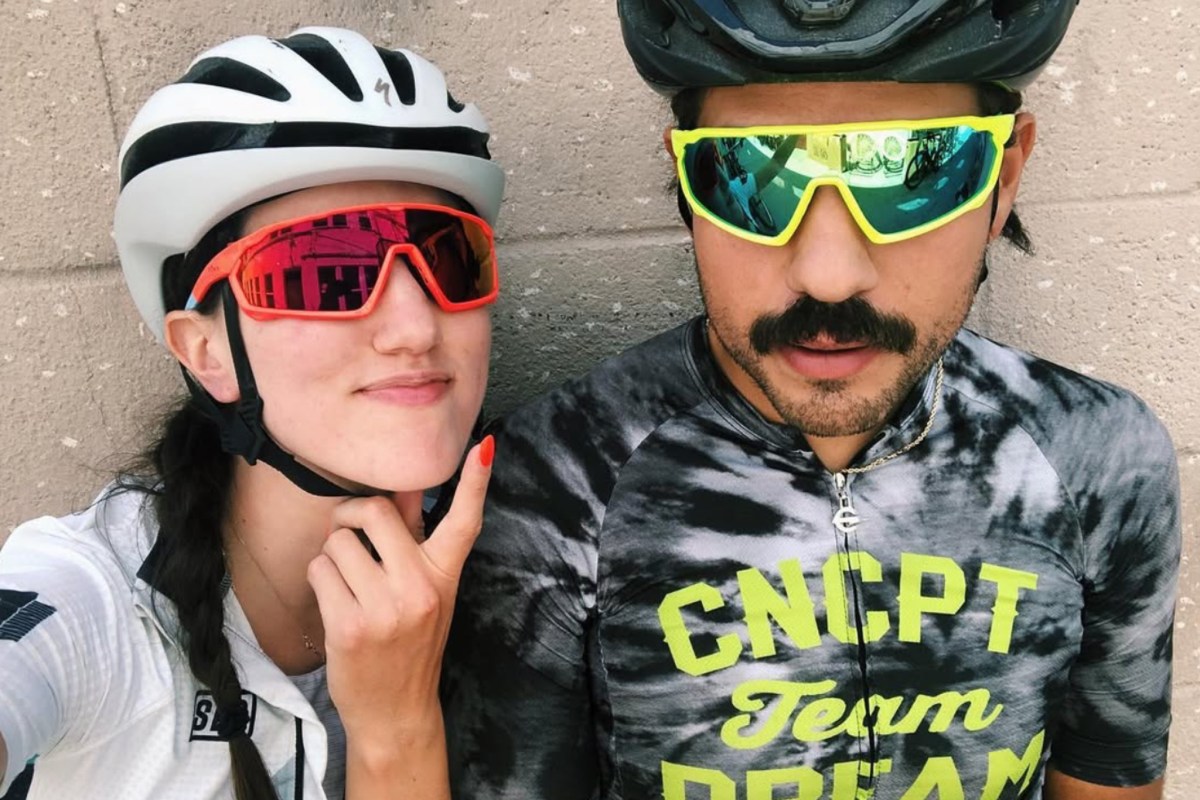
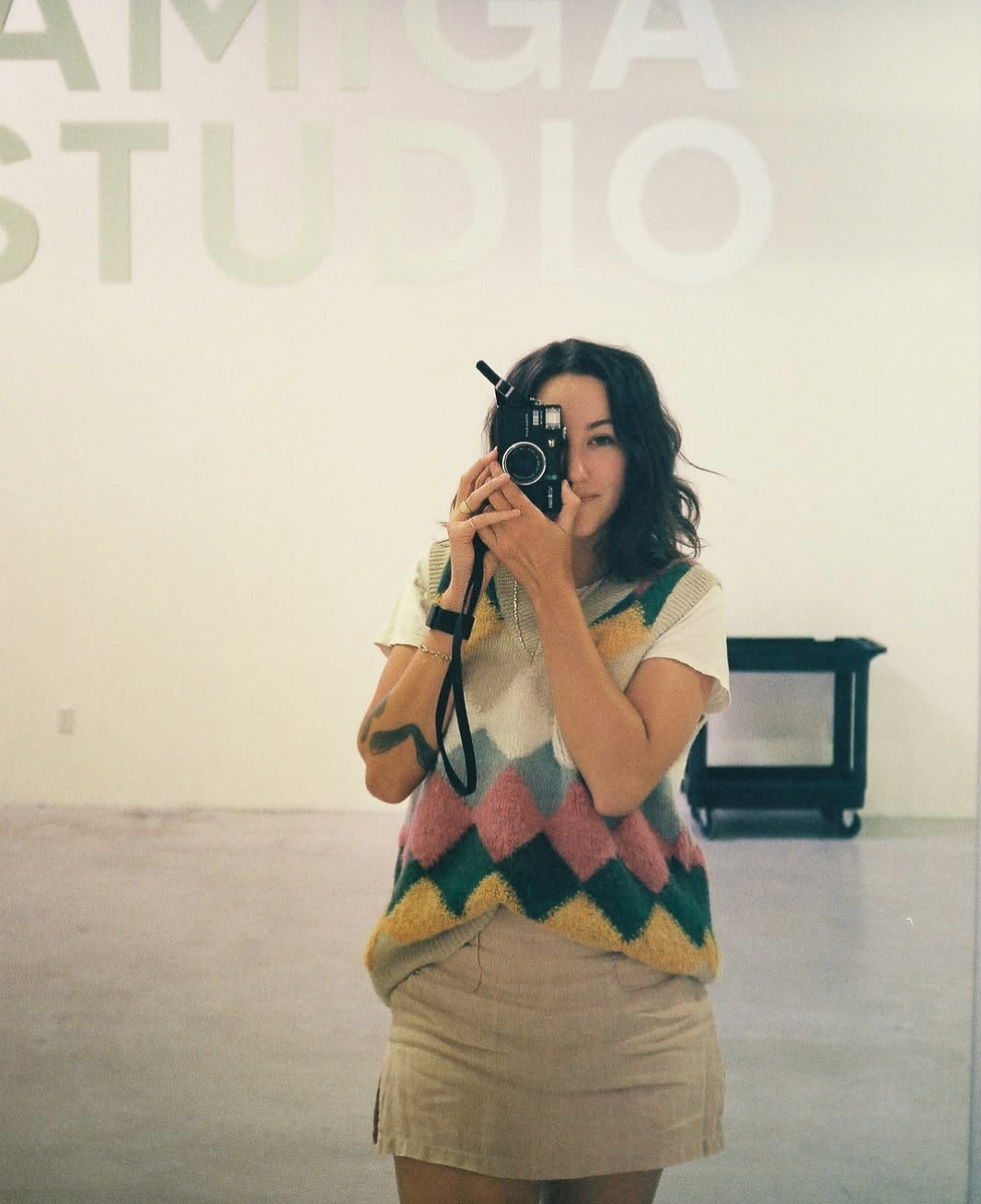
Ginger Boyd, freelance director and cofounder of Amiga Studio, is taking our call from the home office she shares with partner Alvin Escajeda (pictured together above). Wearing a black tee, oversized gold-rimmed glasses and with her dark hair pulled back tightly in a bun, Ginger proves engaging company over the course of our conversation.
“Alvin is usually sitting here beside me,” she quips with a smile, “but I asked him to work in the room next door so we can talk.”
And talk we do; starting with the provenance of her name.
“So my real name is Virginia—like the state—and I’m one of three or four in my family but all known as Ginger. Even my Mom has called me Ginger ever since I can remember.”
Growing up in Upstate New York before studying English Literature & Religious Studies at NYU, Ginger balanced these educational demands with running the café at the Rapha Clubhouse. A juggling act that I suspect made for memorable times?
“It was so crazy. And looking back, I don’t really know how I did it. I can remember—when I applied to work at Rapha—the guy hiring me did raise the question that I was still in school. But I just told him it was no problem; me taking a salaried position whilst also taking a double major and bartending at weekends. So yes, an insane time with very little sleep.”
With her then boyfriend introducing her to riding fixed, there’s an involuntary laugh-out-loud gasp as I listen to Ginger describing how her first experience of racing was the Red Hook Crit.
“That scene was so cool, so how could you not?” she suggests. “I’d watched it the year before as a spectator and then the following year was the first time they had a women’s field. But they were short on riders and that was the push I needed. Prior to that, the women raced with the men which would have been so scary.”
Because doing your first ever race at Red Hook Crit—albeit with a women-only field—isn’t scary at all? And leading me to wonder how she fared?
“Oh, I was pulled from the race when I got lapped,” Ginger fires back with a knowing smile.
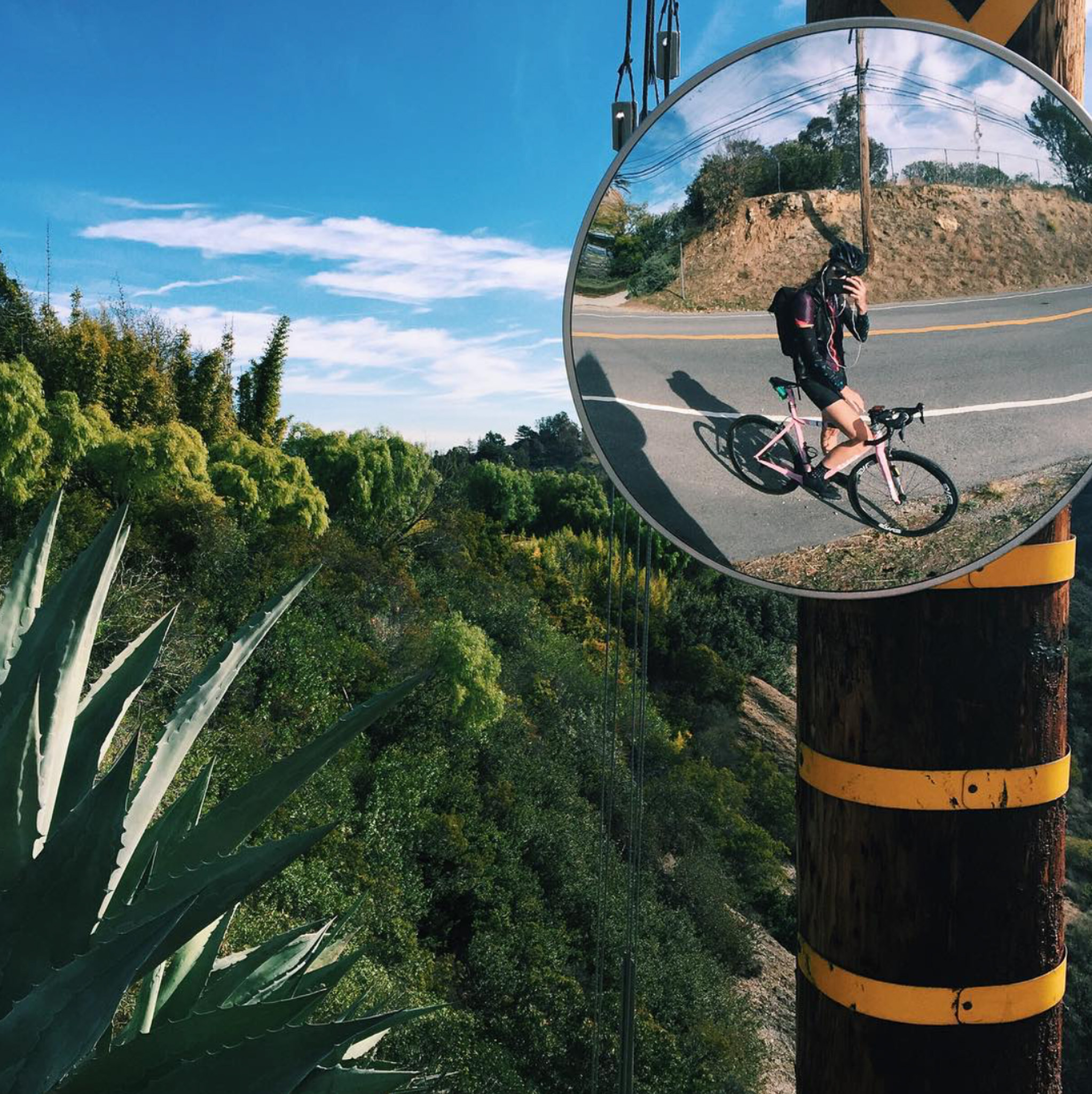


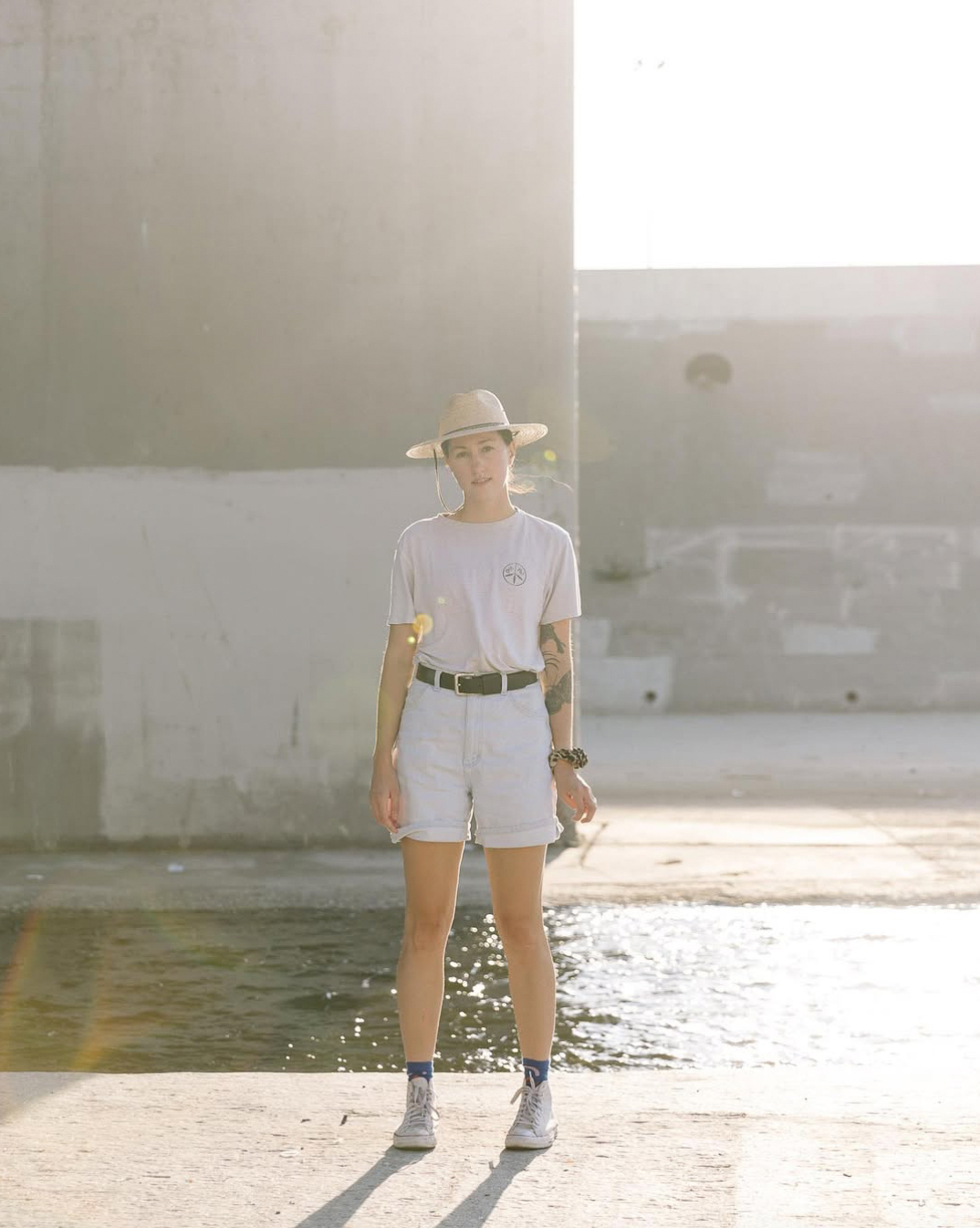
Click image to enlarge
Still owning the fixie—it now has a basket and is used to run errands around town—it’s nearly a decade since Ginger decided to switch coasts and move from New York to Los Angeles. Although not prompted by any concrete plans of a professional nature—rumour has it that a certain gentleman called Alvin might have been a contributing factor—only days before her departure, Ginger saw an advert for a position with women’s cycling apparel brand Machines for Freedom. Reaching out to founder Jenn Kriske to arrange an interview, she got hired and over the subsequent six years worked her way up to senior brand manager.
“I learnt so much because I was only 22 when I started at Machines and growing as a human at the same time. And what proved to be really important, was working with Tracy Chandler who was doing all our photography at that time. So there I was, handling all the social media and also featuring in the shoots because we didn’t have any money to hire models, and Tracy would start by asking me what I would like to see in the photoshoot and what kind of story I wanted to tell. Thoughts and ideas that had never really crossed my mind before.”
“Yes, I could write and communicate through words,” Ginger continues. “But I’d never really considered myself to be a visual person and I honestly wouldn’t be where I am today without her support and encouragement. Tracy just made everything seem possible.”
Gradually taking over the creative direction of all the shoots subsequently led to Ginger’s eventual decision to leave the brand.
“I wanted to do more of that and less of everything else. And I can remember asking myself whether I wanted to get another marketing position at a bigger brand. But they don’t usually give the kind of artistic freedom I had at Machines to a 29-year-old, which in reality would have seen me executing someone else’s decisions. And I just didn’t want to do that.”
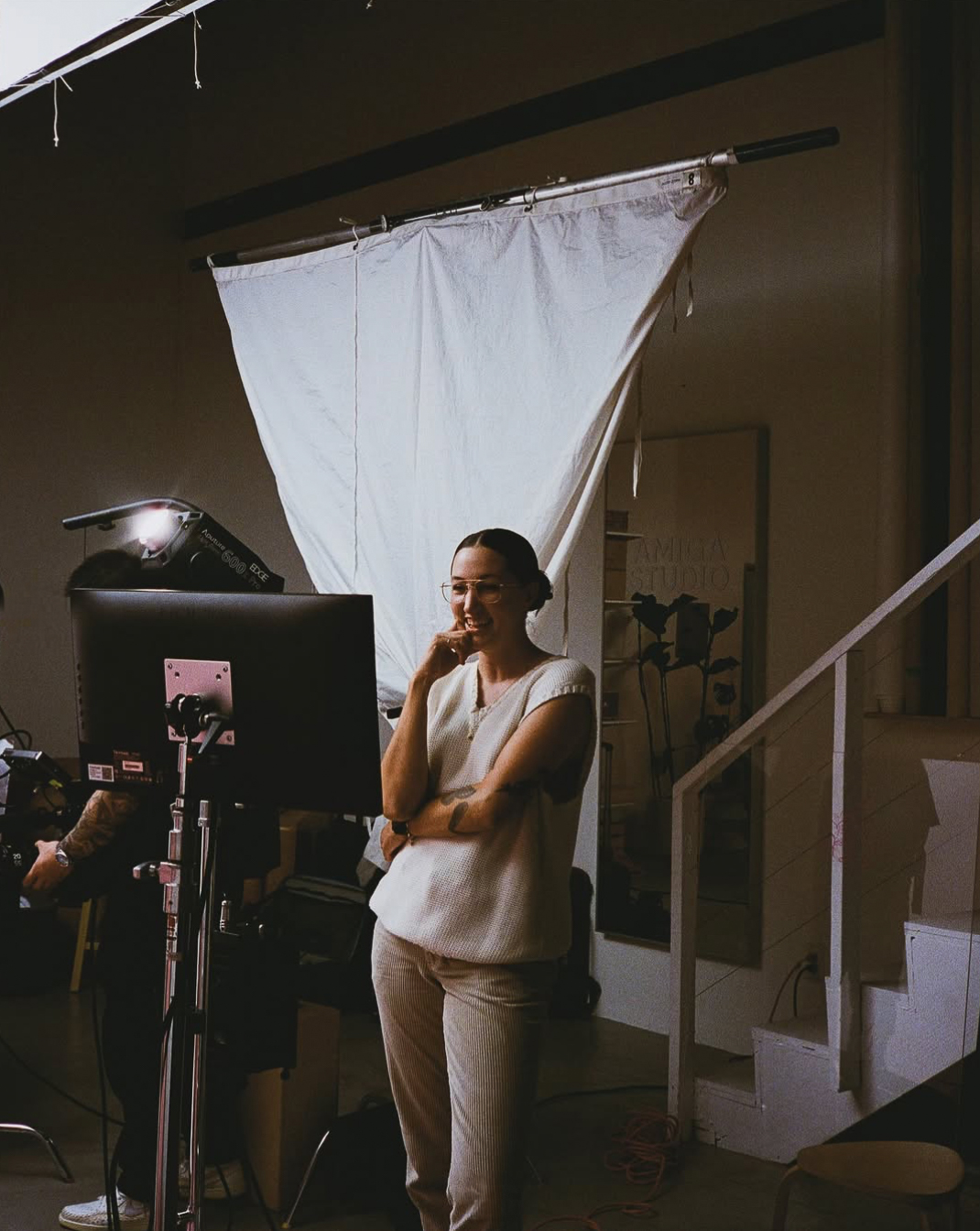
Handing in her notice—during the pandemic—Ginger chose instead to pursue a career as a freelance director / creative director and to found Amiga Studio with photographer Naohmi Monroe.
“My Mom always says that I’m a risk taker. Which is funny because I don’t see myself that way at all. But I think what she means is that I’ll move to LA and just figure it out or start my own business when I’ve never done that before. Which I guess is my way of looking for the next step to grow and welcoming change in order to do that. And even now, when I’m on a project, I’ve always got one eye on what’s next. That’s how I like to operate. But when it comes to decisions that only affect myself, I definitely have a tendency to overthink things. If you ask Alvin, he’d probably say that I’m not decisive at all.”
So ordering off a menu?
“I’m a small plates person. As opposed to ordering one main dish and risking the feeling that I’m missing out on anything.”


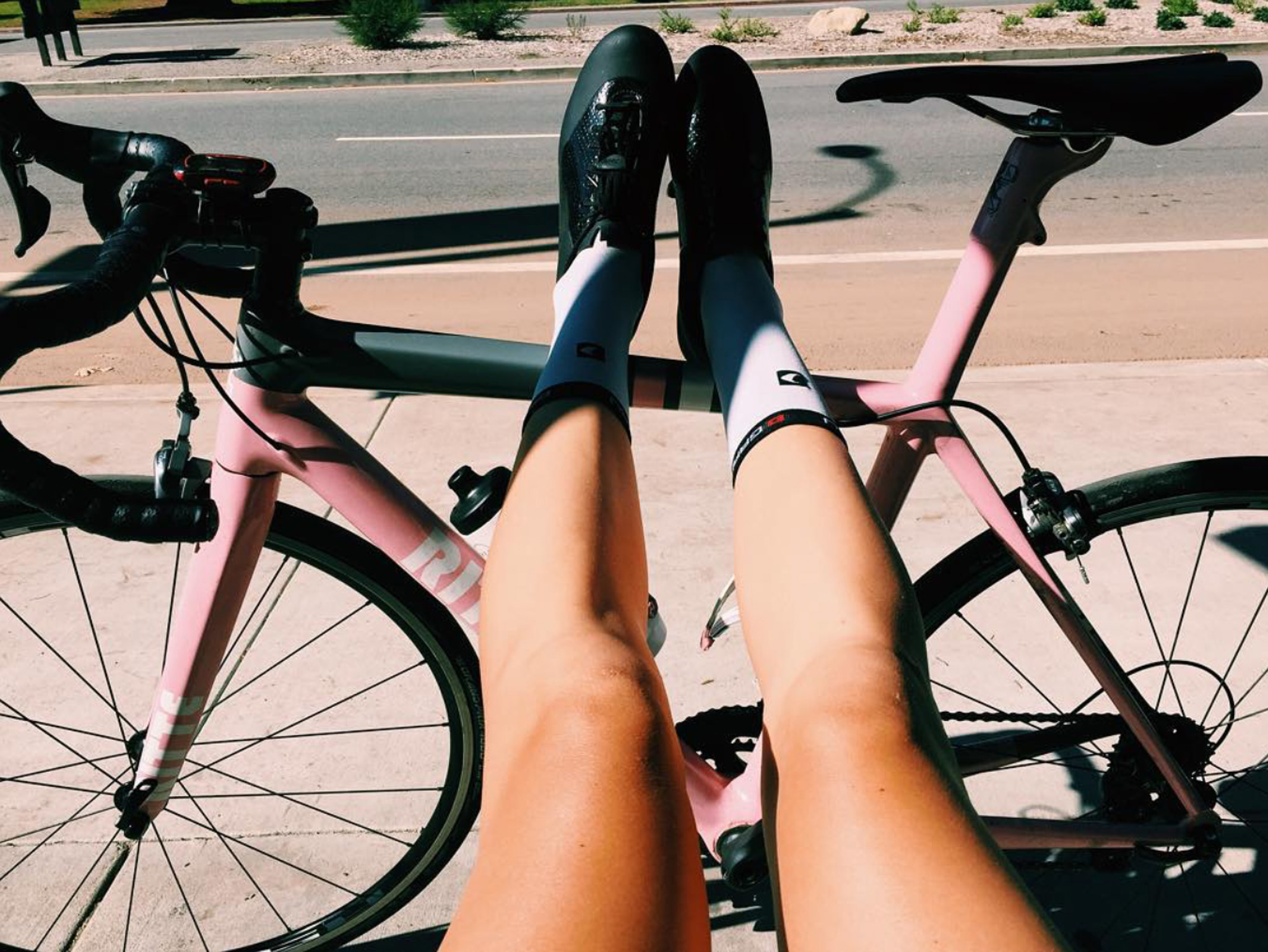

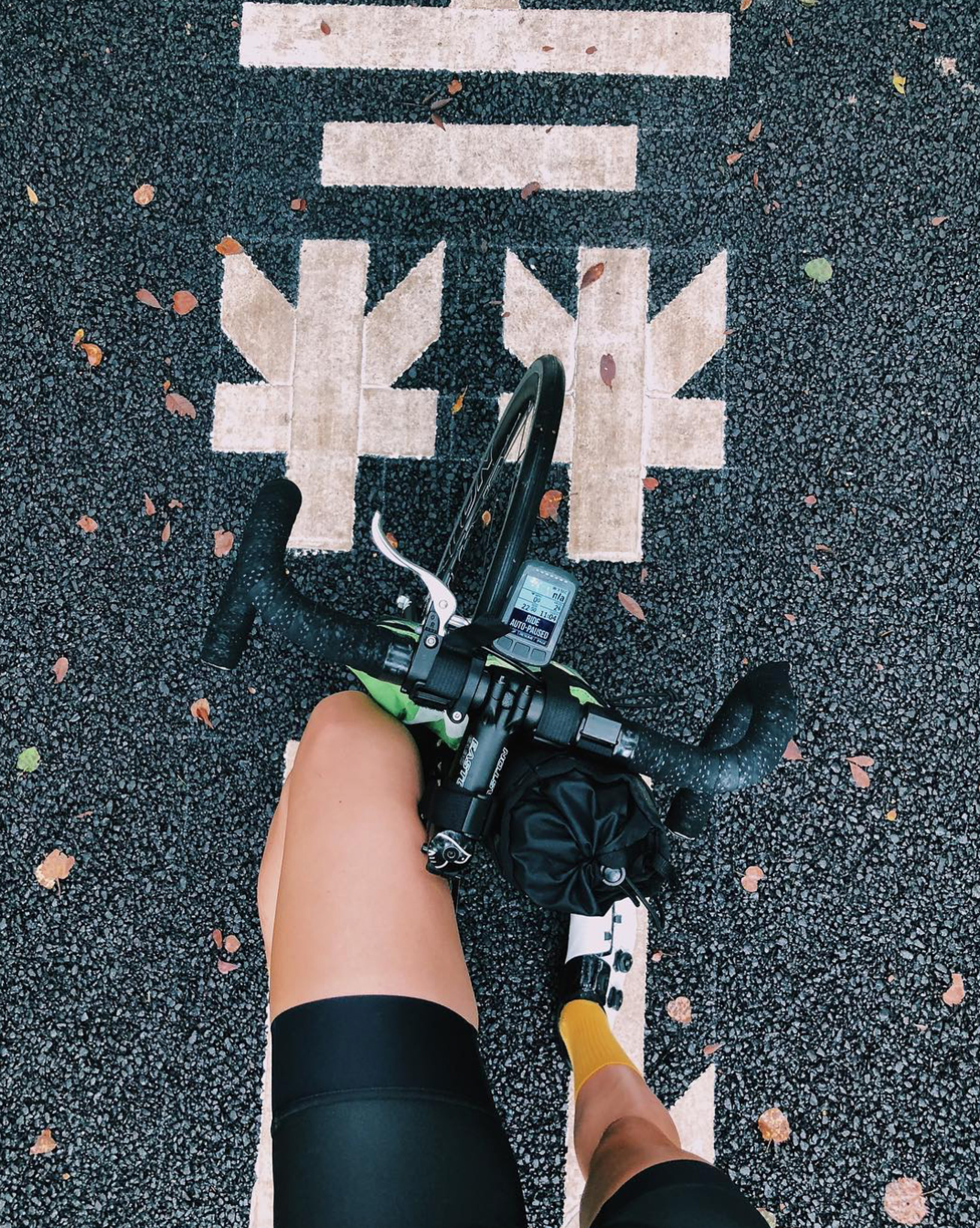
Click image to enlarge
With both Ginger and Naohmi sharing a similar work ethic and a belief in prioritising the needs of their clients, over time they’ve noticed how the proposals for projects and campaigns often fall into two distinct camps.
“I have a lot of calls—and I’m anxious to put this over very politely—where the client doesn’t really know what they want. Which is not necessarily a bad thing because we can start from scratch and figure it out together. On the flip side, sometimes brands come to me with a 10-page deck and very defined goals. Which is also not a bad thing because there’s a measure against which they feel the project or campaign has met with success.”
As for ever saying a polite no-thank-you to a client reaching out, this prompts an immediate shake of the head.
“I guess I’m at the point where I’m learning so much that I want as many opportunities to build on my skills as I can. Which is actually kind of exciting as I feel like a new person after every project.”
Having recently co-directed with Angus Morton, this reference to embracing new experiences seems opportune. A well-respected filmmaker who arguably revolutionised the way many cyclists rode their bikes with his Outskirts films for Rapha, I’m guessing that Ginger leapt at the chance of working with such an established media figure?
“I number Gus among those certain individuals I consider to be mentors. Because, for me, it’s a really big deal when someone brings you onto a project. And then to follow up that initial experience with a subsequent project, it suggests they have faith in what you can bring to the process. Which, in turn, pushes me to work even harder so I can keep up my end of the bargain. So, yes, that brings with it a certain sense of not wanting to fuck things up. But what I’ve also learned—in the sense of being hyper critical of the process—is that you can’t lead with that mentality. Because it’s human nature that the people on your team want to hear good job. So it’s better to internalise this commentary on what did and didn’t work out and lead the debrief with what went really well.”
Taking a lot of what inspires her creatively from social media, Ginger nevertheless acknowledges that subconsciously you run the risk of copying what’s already out there. Which is why she balances this approach with reading around a range of subjects and prioritising time spent riding her bike.
“When you’re not focusing specifically on finding solutions,” she suggests, “so often thoughts and ideas have a way of floating to the surface.”
One recent stand-out project requiring this problem-solving process was the Cracked campaign that featured Rapha’s hot weather jersey. With Ginger working with Angus Morton as co-director, the brand provided a brief that sketched out a story of two riders on an epic 100-mile crossing of the Mojave Desert.
“From this starting point, we discussed how we could expand that beyond just following the riders. Which, in turn, led to the idea that they would eventually crack and how that would feel. From there, we grew this to encompass how they would try and help each other to go that little bit further. Because suffering as a concept can appeal but kind of sucks if that’s where it simply ends. And what we wanted to show, is how sharing an extreme experience can not only make you stronger but also build friendships. That you’ll always have those stories to share and look back on.”
With these ideas fixed, it was then a matter of telling the story in a visual way.
“Ultra-wide lenses can give a sense of distortion and then Gus suggested we also get a heat-cam which proved to be totally sick. But what you also can’t just ignore, is that the riders would actually be riding 100 miles in temperatures approaching 50°C across challenging terrain. So we didn’t have the luxury of asking them to do multiple takes. The ride was real and our job as directors was to balance that reality with the commercial aspects of getting the look and feel that we wanted.”
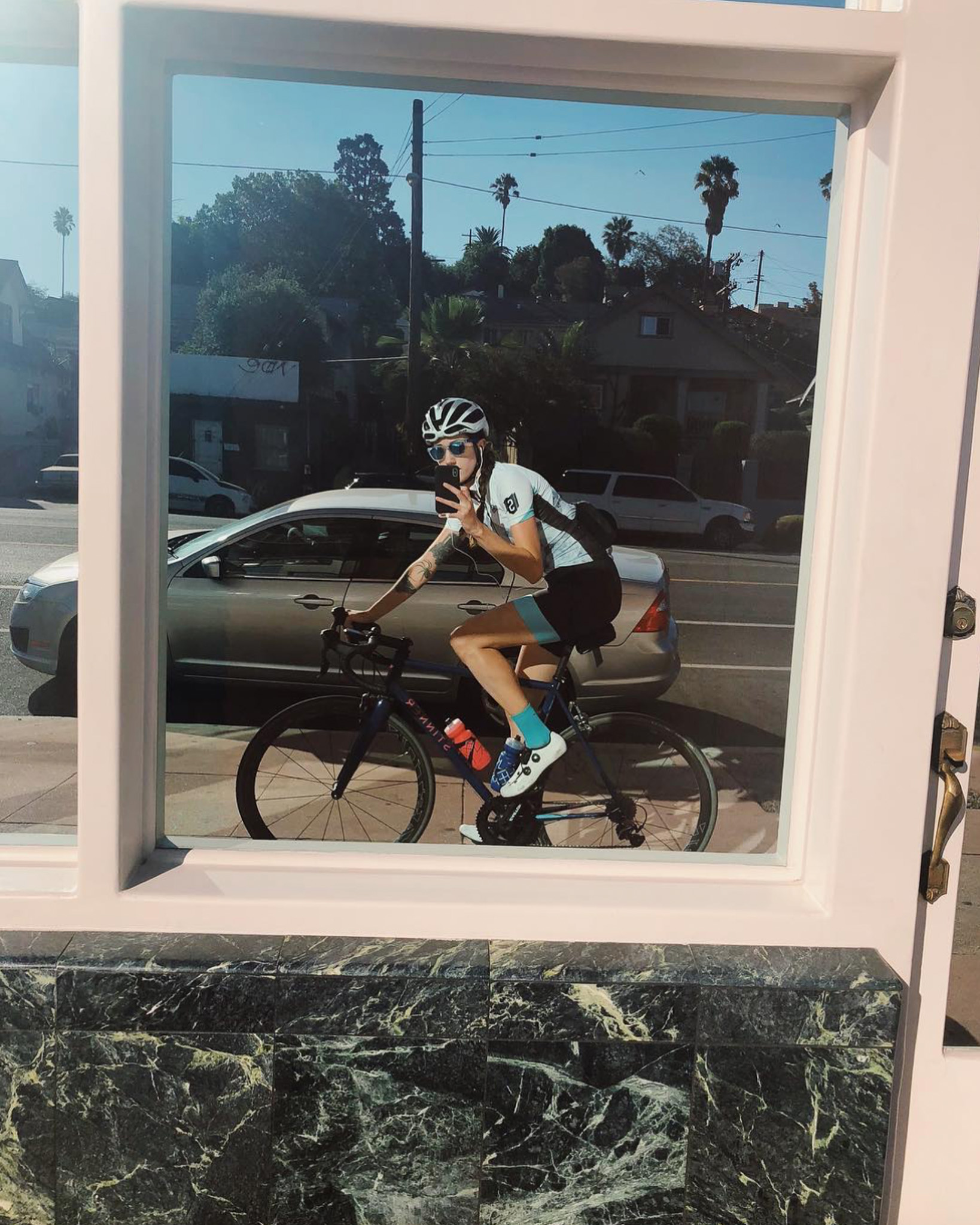


Click image to enlarge
No stranger to the notion of cracking herself, Ginger once climbed 22,000 ft over the course of 21 hours and 180 miles on an Everesting attempt before calling it a day due to the intense cold and wet conditions. A case of unfinished business I suggest?
“Absolutely not,” she responds but with a smile. “And what was kind of funny, was how I didn’t really feel any sense of disappointment. I was like, it’s okay, I’m so over that.”
Nevertheless, her reserves run deep and were most notably tested when filming The Speed Project LALV. An unsanctioned cycle race starting at Santa Monica Pier and finishing 600 desert miles later at the Welcome to Vegas sign, Ginger is quick to label this experience as the hardest shoot she’s ever done.
“I was directing but also filming B-cam and trying to navigate our truck to find the riders. Which, as it turned out, proved to be no mean feat. I had two phones—one open on Google Maps and the other on Find My Friends—whilst also editing the film clips on my laptop at the same time. And because it was a team relay, I underestimated just how fast the riders would be moving—consistently 30 mph on the flat sections—which meant that logistically, it wasn’t always that easy to film when you’re driving at those speeds on an open highway. I’ve filmed out of the back of a car maybe a hundred times over the past decade but never felt as on edge as I did on this shoot.”
Looking back over the body of work that she’s been busy building, I’m curious what metrics she herself uses to judge the success of each and every project. But at this question, Ginger is at first uncharacteristically reticent.
“My immediate response would be that I just want to make the best work possible. But it’s an interesting question and one that is all tied up with my own creative opinion. And that’s where it can get kind of toxic.”
There’s a slight pause—broken only by the background noises of suburban LA— before Ginger continues.
“The problem is when you start comparing your own projects to content you see online or on TV that had a $2 million budget and your budget was $50K. But it’s good to punch above your weight and I want my filmmaking to be as good, if not better, than whatever I see at any given time. But maybe what it really comes down to, is whether you’re making something that connects and moves an individual. Does a particular project speak to them in this attention saturated world in which we live?”
Conscious that many creatives are forever questioning their work and perhaps have a hard time apportioning self-approval, when I ask whether Ginger sees herself as her audience, this elicits a surprising response.
“I have a friend that is always asking whether I consider myself an artist or a creative. First of all, why do I have to answer, and second, I don’t like the question. Because the reason I bristle, is that I don’t see myself as an artist but does that mean that creative is below artist? I don’t necessarily wake up in the morning and write novels—although maybe that’s something I would like to do one day—but I do write and write fast in an inspired way when I have a project to focus on.”
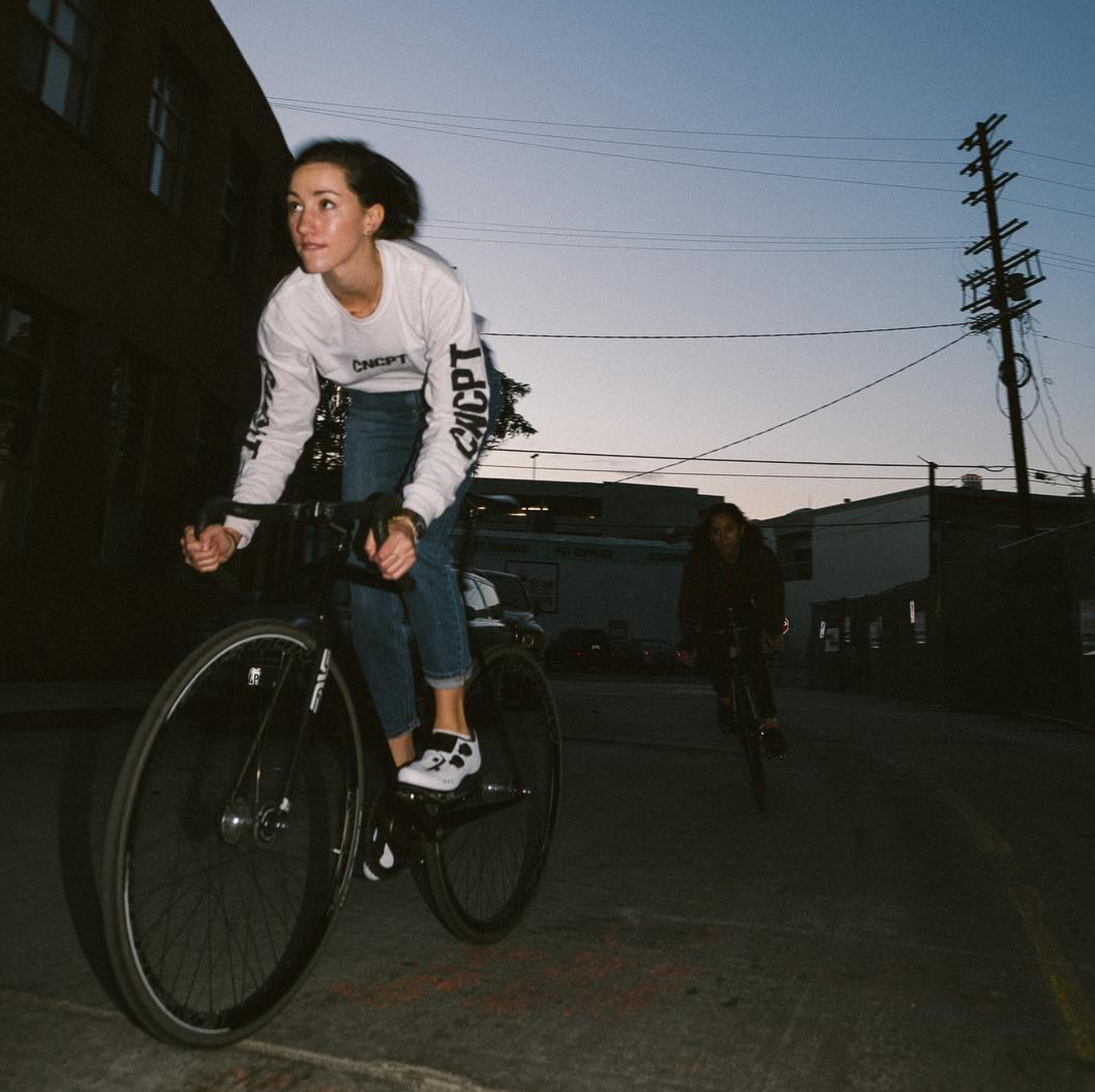



Click image to enlarge
With the ubiquitous nature of social media influencing the reasons brands commission a creative team, Ginger is very aware that the way people now consume media is completely intrinsic to how campaigns are created.
“Even being able to make a sixty* is a rare opportunity. Brands just want a thirty or even something shorter. Which was why making Cracked was such an amazing experience; knowing that it would be released as an eight-minute-long film. Not that I wasn’t very conscious that we’d also need to deliver fifteens for social ads. Which made for some interesting conversations with Gus—who I consider a superbly talented filmmaker—when I was questioning what our fifteen seconds were going to look like and he’d just look at me as if to say who cares.”
*Sixty second video clip
Here, I can’t resist asking whether Ginger would one day want to consider herself as a filmmaker?
“I don’t know. That’s like the artist question.”
So you’re bristling?
“A little maybe,” she responds with a laugh.
Moving our conversation back onto bikes and bike riding, I mention a comment she made on the WGTHO* podcast that referenced her move to LA and the difficulty she had in finding a ride community. And whether, 10 years later, she’s subsequently found one?
*We Got To Hang Out
“What I now have is friends. As opposed to when you first move somewhere and know no one. And what’s interesting is how LA has changed over the past decade. Back in 2015, the road racing scene was shrinking but that was the way I wanted to ride. So it’s perhaps no wonder that I struggled to find a community when all I ever wanted to do was ride intervals but no one else did. Whereas now, people are wearing full kit—there’s less of a shirt vibe which I will mention to Gus next time I see him—and everyone’s happy to ride really, really fast. And what’s hilarious, is that I’ve come full circle and now I’m more interested in riding to explore.”
Describing a recent overnighter in the desert with Alvin—her voice full of excitement when mentioning her new down pants and sleeping pad—when asked to suggest what a pretty perfect weekend would look like, Ginger immediately opts for a bike tour.
“But not crazy long, suffering days. That’s not my vibe right now.”
A relaxed attitude that is regularly referenced on her Instagram feed where she’s happy to say—not in a look-at-me way but very genuinely—how much she loves her life.
“I guess what I mean is, that maybe because in the past I’ve struggled with depression, it feels so different to wake up in the morning and feel motivated. And I equate the way I now see things to my love of travel. Because in the same way that you can’t pin everything on your next trip, each and every day should afford you some small sense of gratitude and contentment. And I feel very blessed that I now have the life that years ago I would have wanted. I’m doing my own creative work, I’m setting my own schedule—no one’s telling me what to do—and I can ride my bike whenever I want. Or not ride my bike if that’s how I feel.”
“Alvin and I have this little house in Glendale,” she concludes, “which is kind of small but comfortable. We have a garage for our bikes and a driveway so we don’t have to fight for parking on the street. Little things maybe but when they’re all added up together? Obviously there’s going to be ups and downs because that’s the way life works. But I’m covering my rent and paying my bills—and that’s in Los Angeles where a lot of people come and then leave—so how can I complain?”
All photography with kind permission of Ginger Boyd / gingerboyd.com / Amiga Studio
 cyclespeak