Izzy Weds / A complete one-eighty

“Do I see myself as an artist? Not really. Because I’m very methodical in how I work and have systems in my head that I follow. So I guess that makes me a designer at heart?”

It’s Easter break and Izzy Wedderburn has travelled back to Dorset to enjoy some home comforts. Close to completing her third and final year at UCA*, she’s been balancing her studies with carving out a career as a freelance illustrator and graphic designer. Which is how we arrive at Izzy Weds. A shortened form of her given name and the brand Izzy has built since heart won out over head in determining which future path to follow.

*University for the Creative Arts

“At school I was very much labelled as an academic. It’s what I knew but I was so unhappy because deep down it just wasn’t me. I was very creative as a child but all that got a little squished by the expectations of my parents—both doctors—and our education system. So after finishing my A-Levels, I did a complete one-eighty and enrolled on a foundation course in art and design at Arts University Bournemouth. But finding the unstructured nature of the curriculum a little overwhelming, I did another one-eighty to study Sport Science at The University of Bath, stayed for one term and dropped out.”

A period of significant change that was resolved when she joined her UCA graphic design course part way through the first year; rounding out this turbulent time with—as Izzy sees it—the best decision she’s ever made.

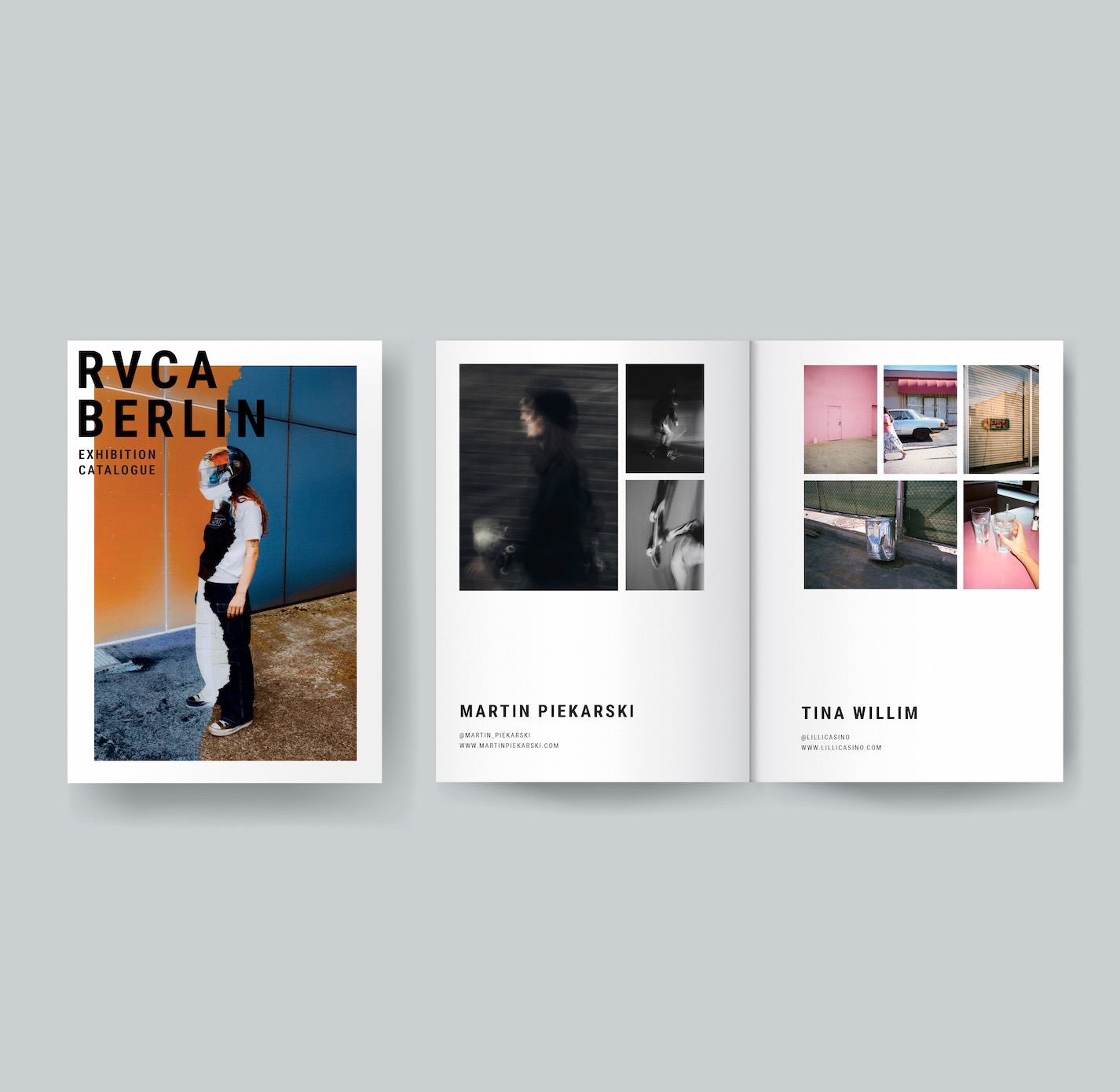
RVCA summer internship


Click image to enlarge

“The projects we work on are all very open-ended but you do need an outcome. And that’s been super helpful because I don’t think I’d be where I am today without this structured approach. From being someone who lacked a certain creative confidence, I’ve come out with this whole body of work and a sense of pride in what I’ve made.”

Looking back at her childhood, Izzy remembers her grandmother as a particular source of inspiration. An accomplished dressmaker who made all her own clothes from scratch, she encouraged Izzy to start sewing; the bags and pencil cases she made for her school friends earning her the tongue-in-cheek title of Stitch Queen.

“So much time spent making,” she muses, “but I’d stopped identifying myself as a creative person. Which is kind of crazy, if you think about it.”

With her brand now established—summer internships in London and Biarritz helping decide what she did and didn’t want career wise—Izzy is building a portfolio of projects that highlight her broad range of experience and attention to design details.

“I originally started with illustration. Those were my first commissions and what got the ball rolling in the creative world. But my work has evolved into a more multifaceted graphic design practice which I see as a fusion of very different disciplines. Illustration still plays an important role but there’s also my interest in photography and textiles that gets tipped into the pot.”

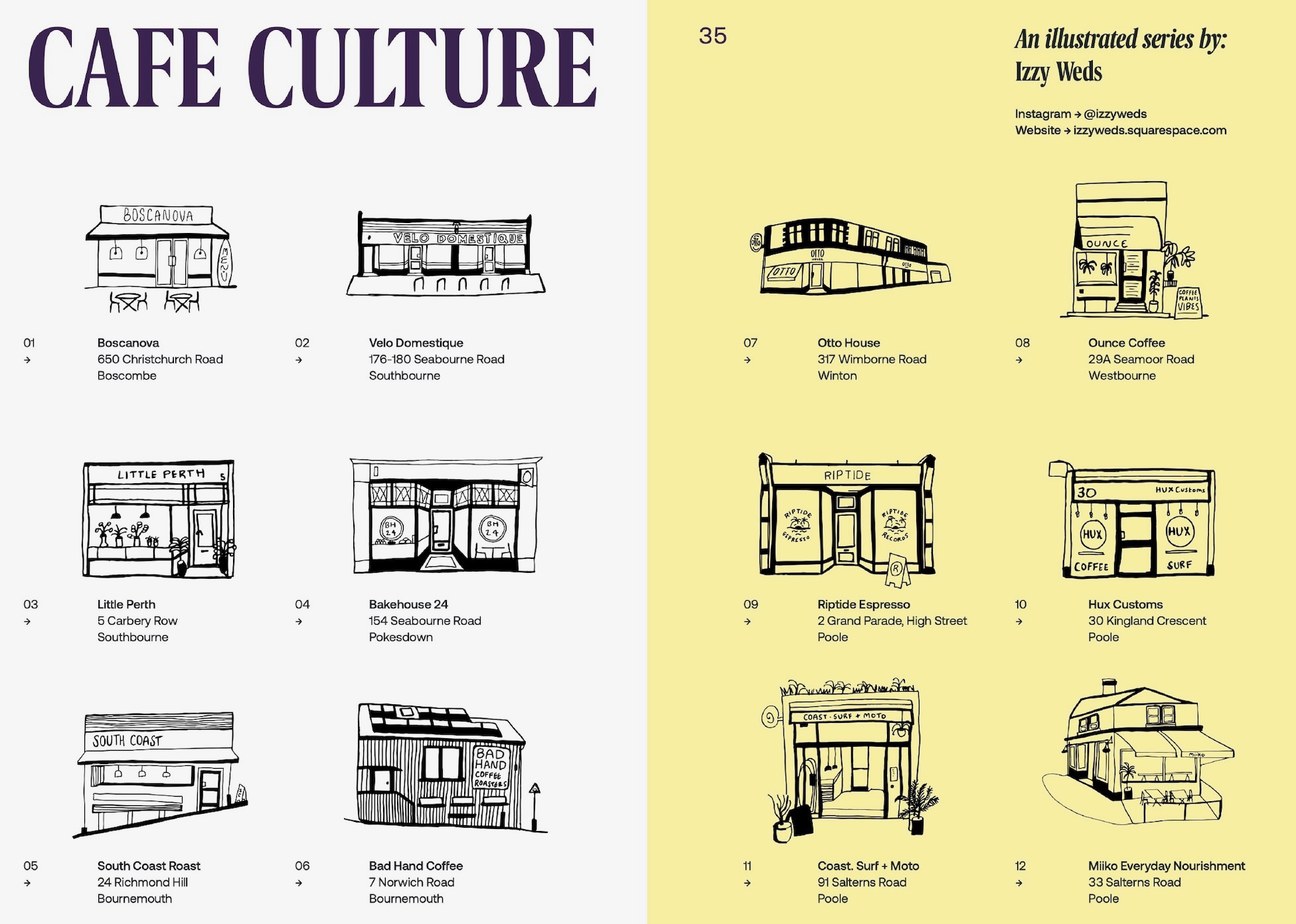
Illustration


Click image to enlarge

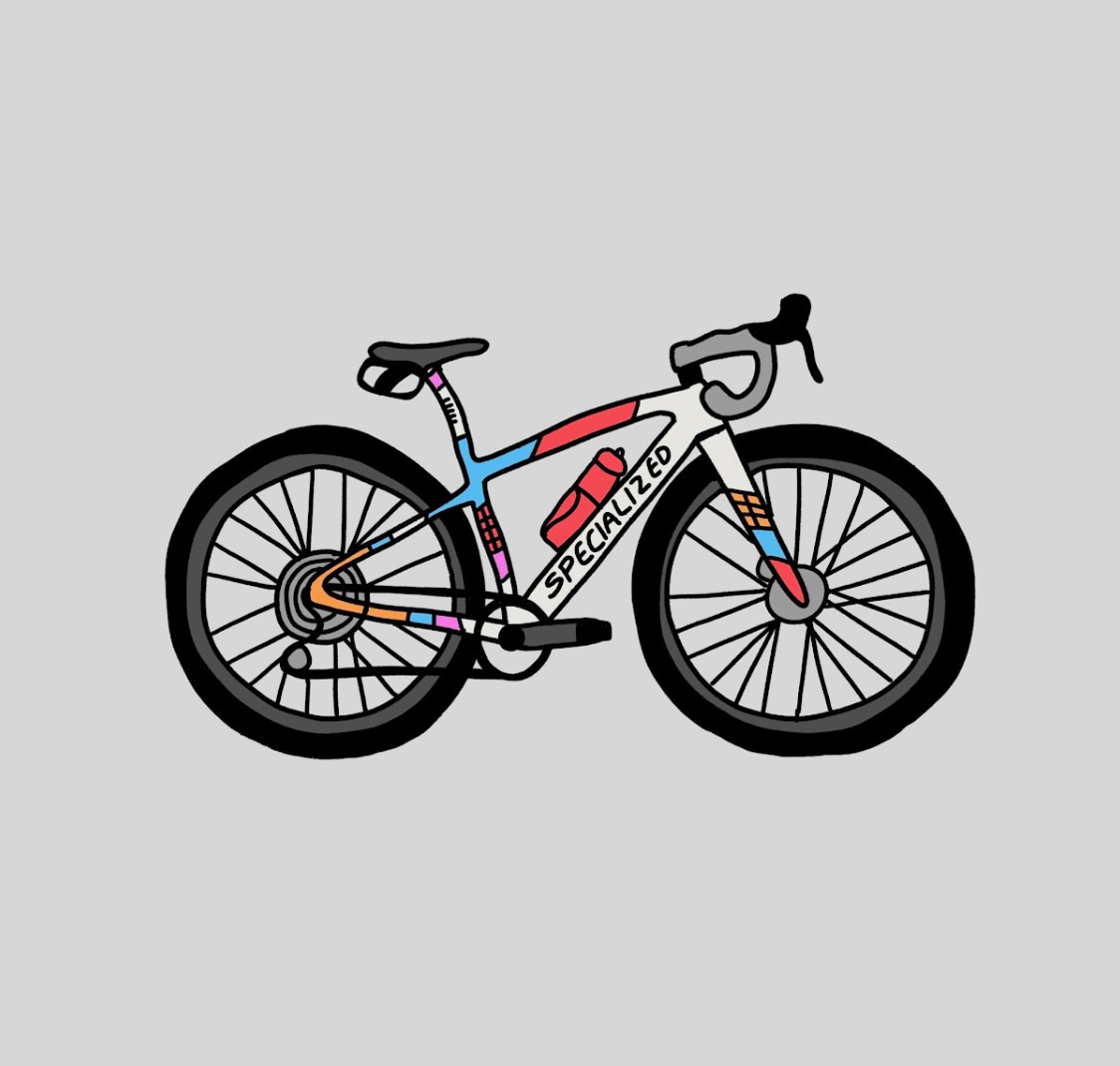
When it comes to recharging her own creative reserves, Izzy cites Magalleria—a magazine shop in nearby Bath—as a favoured destination for sourcing old copies of Les Others and Gestalten travel books. And her Instagram account—another popular source of inspiration for industry creatives—saw a follow from gravel racer and graphic designer Sarah Sturm after Izzy included her Specialized race bike in a series of illustrations.

“My subconscious is always ticking away. Sometimes to the extent that when I sit down to start a project, it’s almost as if I’ve already considered this or that approach. And I’m definitely a pen and paper girl. I’m not one of those people who make notes on their phone.”

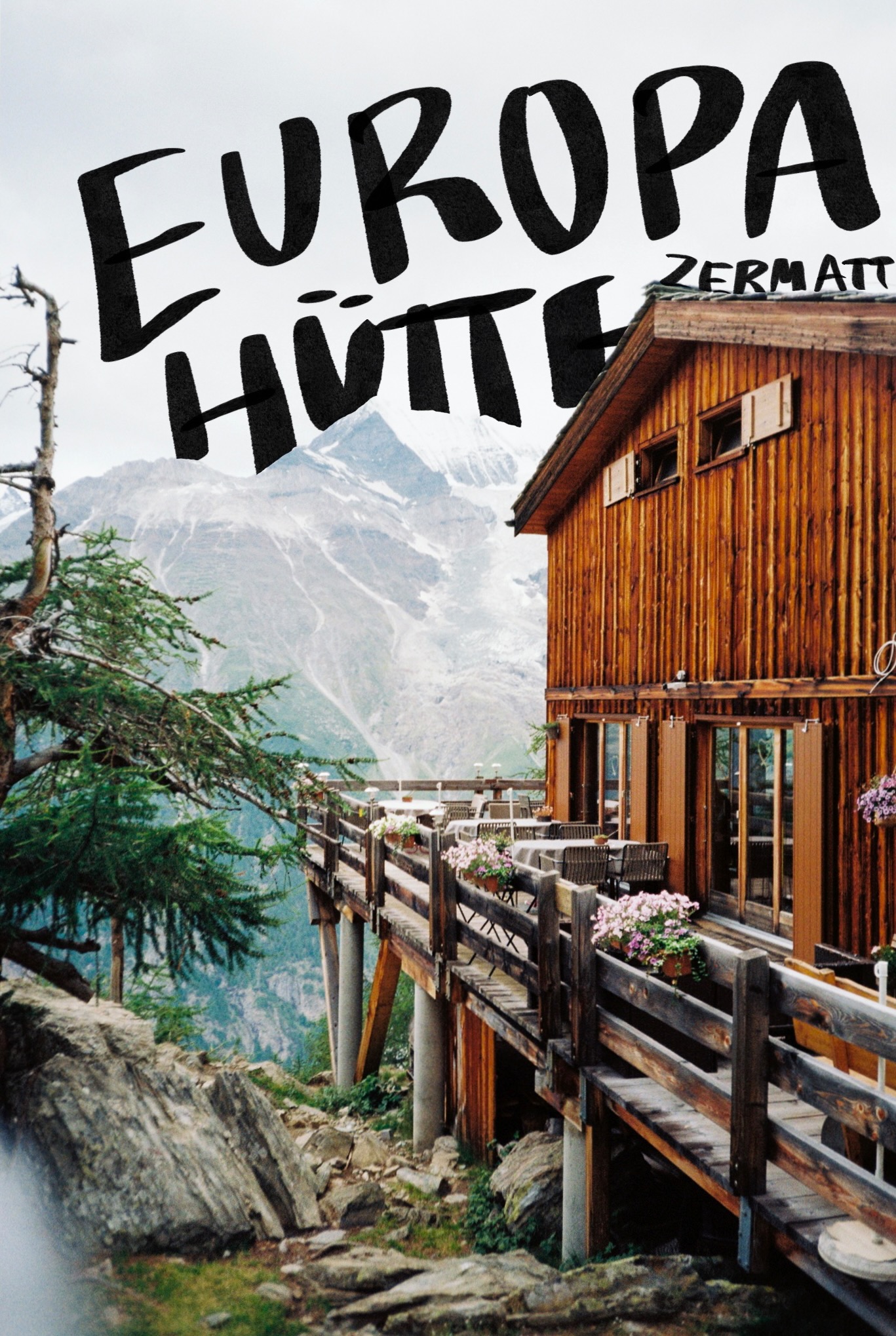
“My interest in photography is also increasingly prevalent in my design practice,” she continues. “And I’ve just started experimenting with taking analogue images which is enormous fun, very exploratory, but expensive!”

Still in the first phase of a career where she says yes to every commission, although the freelance nature of her profession often results in a solitary work experience, Izzy describes how she relishes the freedom to set her own deadlines and the positive impact her work can have on clients. A response that has me wondering what makes the perfect client?

“Not too needy? Not too much table tennis with the emails? No, I’m kidding. I guess it’s someone on the same wavelength, who’s equally excited about the project as I am.”

Film photography


Click image to enlarge

And the metrics she personally uses to define a project as a success?

“At the end of the day, it has to sit well with me. When I close down my laptop, the knowledge that I’ve given my all.”

Admittedly not good with super noisy environments, Izzy appreciates having enough space to spread out her sketches and source materials.

“By nature, I like to be grounded and have all my bits and bobs close to hand. Working from a café can be fun but that’s when I’m sorting out admin tasks as opposed to being creative. But if I was to design my own studio—as a flight of fancy—it would definitely be somewhere in the mountains. And not too big. Maybe three, four, five desks with a small team working on interesting, environmentally important projects that focus on the outdoors.”

With this mention of collaboration, our conversation turns to the limited-run magazine—Original Freedom—that Izzy self-published as part of her UCA dissertation module.

Original Freedom


Click image to enlarge

“It all started with me emailing my friends to ask if they’d been on any cool adventures or trips. Fortunately they were all super happy to get involved and sent me a variety of words and images that I could use. And the idea of Original Freedom bridges how we all enjoy the outdoors but in very different ways. Because maybe there’s this notion of adventure with a capital A—very remote, in far-flung places—that I wanted to question. Adventure for one person might very well mean a multi-day wilderness trip. But for the next it could be a hike through their local woods.”

Remembering the time she spent at home during the pandemic—travel restrictions encouraging her to explore from her doorstep—Izzy references the network of paths and trails that she still rides today and might otherwise have gone unnoticed.

“I explored everywhere close to home. And it was this same sense of adventure—in all its different forms—that made creating the magazine such a fun experience. A timely reminder that I’m happiest when outside; whether that’s walking the dog, going climbing or riding my bike.”

The bike in question is a Brother Cycles Kepler—painted, according to Izzy, in OG black—that she was gifted on her 18th birthday.

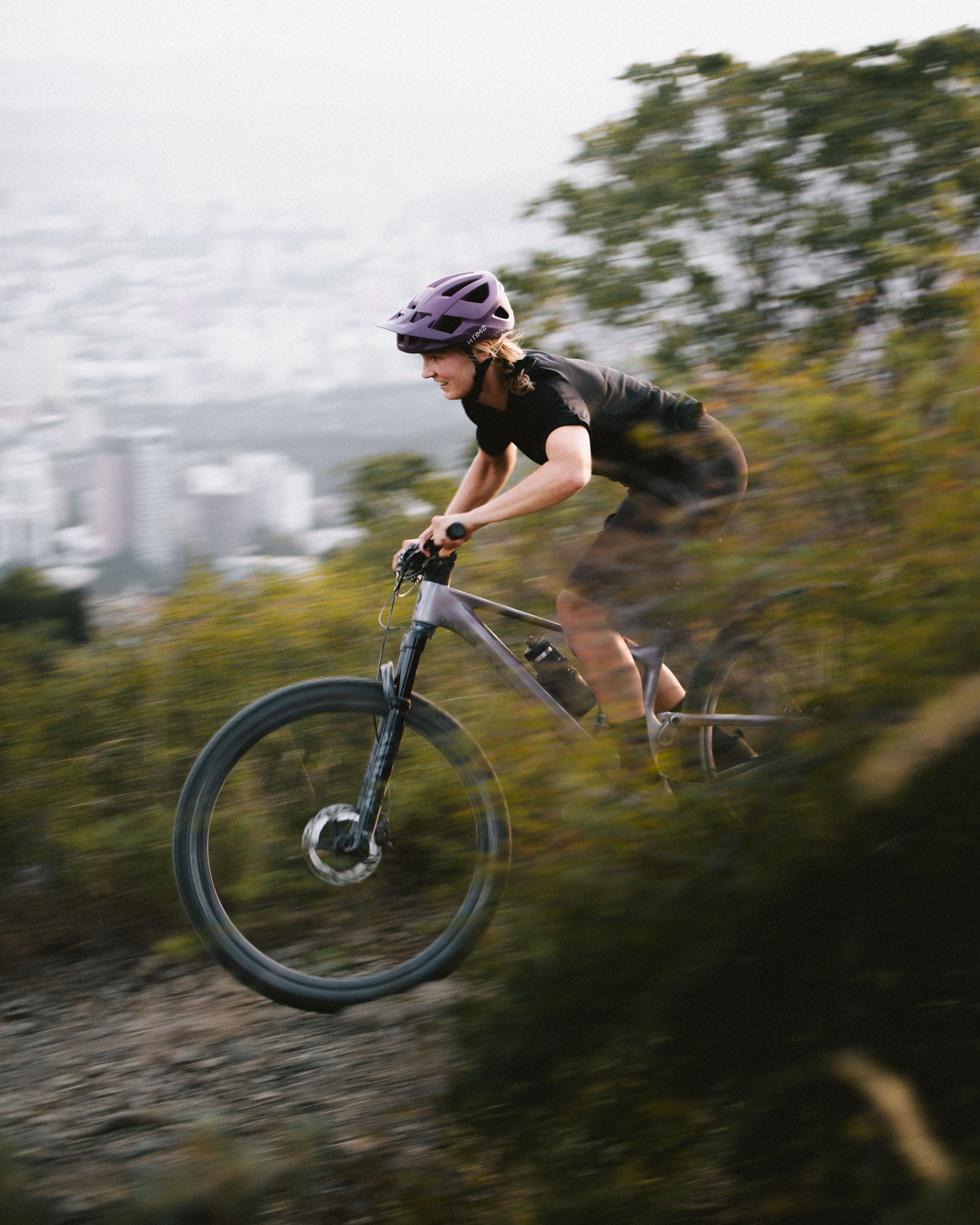
“I remember my Dad questioning whether I wanted a steel frame with riser bars but I stuck to my guns and it’s still my favourite bike to ride. But I’m not one for setting arbitrary targets such as riding this far or fast. I focus more on enjoying the freedom of moving through a landscape, taking a new path or trail, and seeing where it leads me.”

Les Portes du Soleil


Click image to enlarge

A relaxed approach to riding perhaps mirrored in Izzy’s design career to date? A professional journey she feels happened almost by accident as an about-face to the path prescribed for her.

“My Dad’s very traditional and sometimes I wonder if he would have been happier if I’d become a doctor. But it turns out that Mum very nearly dropped out of medicine to study an art foundation course; an interesting duality in the paths we did, and didn’t, take. Which perhaps explains why she’s really supportive and excited for me.”

“As to how I feel,” Izzy concludes, “I went to a very academic school and it was almost assumed that I’d follow a certain educational route. So it’s not always been easy but I’m far enough along my creative journey to feel confident enough to say: this is me, this is my work, this is what I’m passionate about. From not really knowing myself well enough to trust that I was making the right decision, I’ve grown to believe 100% that this is the right path.”

All photography and visual imagery with kind permission of Izzy Weds

izzyweds.com

Sarah Sturm / The coolest job ever

Instantly recognisable for her beaming smile, raucous laughter and even the occasional tear, off-road racer Sarah Sturm is a living, breathing embodiment of what-you-see-is-what-you-get. But dig a little deeper, and there’s an intriguing sense of quiet introspection that contrasts her doggedness and determination.

Talking over a call from her home in Colorado—Sarah’s dog Norman keeping her company—this complex and questioning performance athlete offers her unfiltered views on the highs and lows of the gravel world, the inherently selfish nature of the sport, and the way she balances the emotional strain of a life lived in public.


cyclespeak
You’re just back from the West Coast. It looked like an amazing trip but not without its moments?

Sarah
I was just talking with a friend about my norovirus experience. Equal parts shitty—quite literally—but also so, so funny. And my coach decided it was toughness training because I kept on riding [laughs].

cyclespeak
Because, initially, you suspected food poisoning?

Sarah
I really thought it was. But then on day three, my friend Maude also came down with the same symptoms. So we were trying to work out what just the two of us had done that was different to the rest of the group.

cyclespeak
Considering you were quite poorly, you got in some miles.

Sarah
California is a crazy place. Just insane. It’s got all these tech bros and rich people but it’s also really beautiful and I can totally understand why so many people want to live there.

cyclespeak
You were riding down the coast?

Sarah
Yep. From San Francisco to Santa Barbara and then I kept on to LA. I ate well on the first day but for the remainder of the trip, with my tummy troubles, I existed on a single banana and a PayDay bar.

cyclespeak
But you’ve made it back to Colorado in one piece. And I’m guessing Norm was pleased to see you. I can just see his ears poking up in the corner of your screen. Is he the sort of dog who likes to be near you?

Sarah
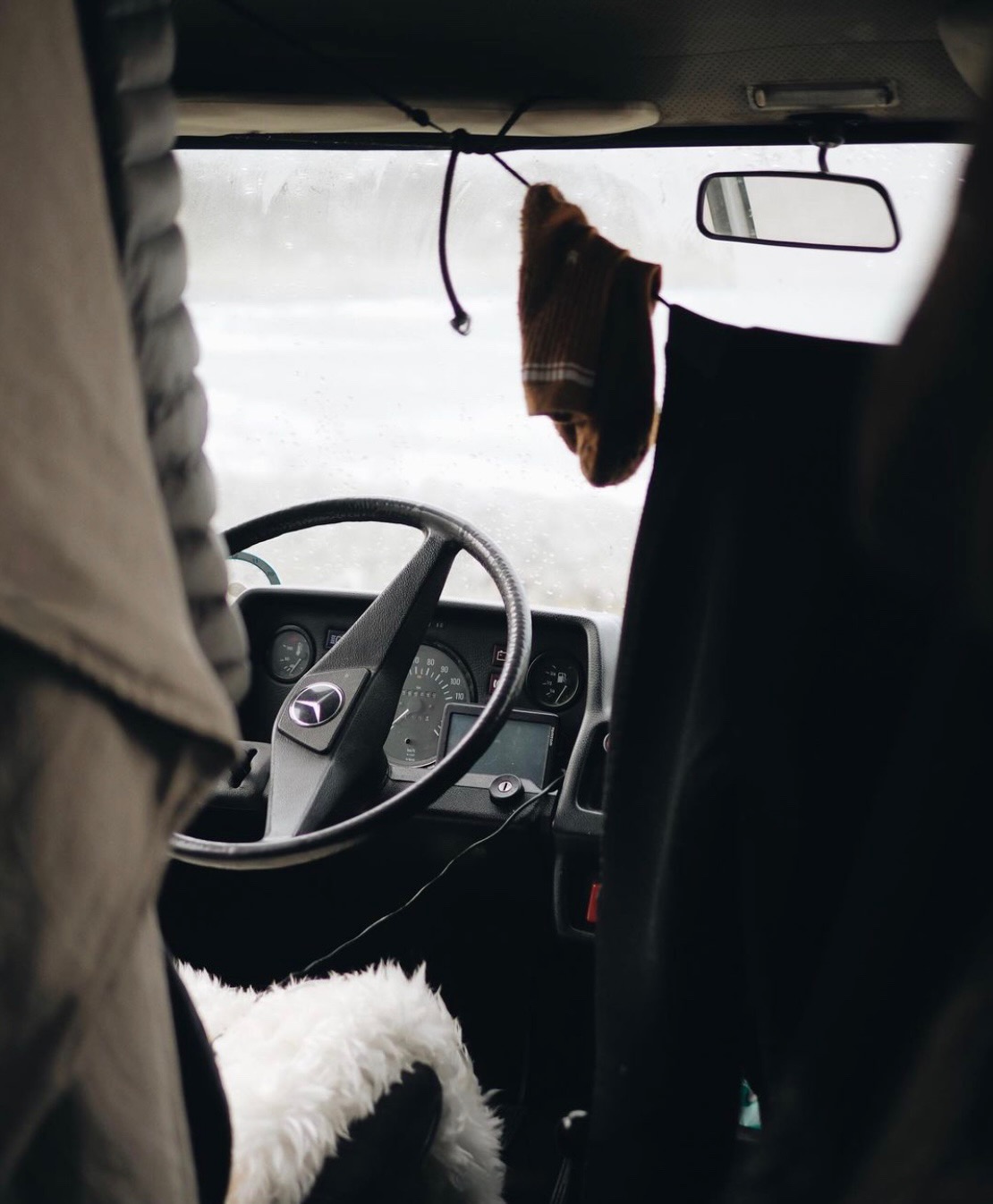
All the time. It’s why we hang out in an old school bus. Otherwise, I would drive my Honda to the races [laughs].

Click image to enlarge

cyclespeak
So you live in Durango?

Sarah
That’s right. I’m back for a bit before I pop down to Arizona where the winter weather is a little kinder. It’s very affordable to stay and, unlike LA, less like a Disneyland for adults.

cyclespeak
Talking about affordability, I was planning on visiting a friend in Boulder and was pricing up some accommodation. Seriously expensive.

Sarah
I’m only spending $800 for a month in Tucson. And you’re right. Boulder is insane. There’s no way I could afford to live there. Unless we park up in the bus [laughs].

cyclespeak
So, at home in Durango, are you a cycling gear all hung up in colour-coordinated rows, kind of person?

Sarah
I’m going to say yes but only because my fiancé Dylan is extremely organised in his role as my equipment manager. So his desire for neatness and efficiency is kind of forced upon me; for my remaining career and our future marriage.

cyclespeak
Have you set the date?

Sarah
We have. At the end of my season in November which is a funny time to get married in Colorado.

cyclespeak
A weather risk?

Sarah
Yes! You’ll need to be tough and bring a jacket.

cyclespeak
Because you first met Dylan when you were both studying design at college. But I believe your graphic design business is currently on hold whilst you focus 100% on racing?

Sarah
I was kind of phasing out of it, to be honest. I love being creative and I was already starting to make my cycling life into this creative space as opposed to working for clients. Part of being a freelance designer is listening to a client’s shitty ideas and then getting it done because you want and need money. But cycling has been my main source of income for the past six years. So—very fortunately—I was able to move on from that aspect of my life. But I still get to design my bike and helmet paint schemes.

Click image to enlarge

cyclespeak
Speaking of creativity, could you talk a little about the kiss-the-baby thing?

Sarah
I know [laughs]. It’s so weird. And you’re not missing out on anything.

cyclespeak
Because I saw your SSCXWC + Sarah Sturm video and loved it…

Sarah
That’s the venue we’re looking at for our wedding.

cyclespeak
But it’s basically a deserted hill top.

Sarah
Yep. It’s the mesa above Durango.

cyclespeak
With gopher holes.

Sarah
Norm loves it. But he’s never got a gopher. Anyways, back to kiss-the-baby. I began racing in cyclocross which I really loved.

cyclespeak
The races are a lot shorter in duration than the gravel scene?

Sarah
It’s shorter races, it’s not as much training, and it’s just so much fun. Then there’s the crowd which—outside the start / finish line—you don’t really get at a gravel event. Admittedly cyclocross is a little random and not always easy to explain when the person sitting next to you on a plane asks what you do.

cyclespeak
How do you answer?

Sarah
I just say it’s a better version of the Tour de France.

cyclespeak
That seems fair [laughs].

Click image to enlarge

Sarah
Anyway, I digress. The kiss-the-baby thing started at the US Single Speed Cross Nationals one year. They had this feature where we rode up a ramp and through this junk trailer packed with people throwing things at you. Trust me, it’s a disgusting, rambunctious, not-good-for-your-health experience of athleticism [laughs]. Someone in that trailer—almost certainly super hammered—had these old baby dolls and insisted on jamming them in our faces, yelling, “Kiss the baby,” before you could pass.

cyclespeak
Okay. That makes absolute sense [smiles].

Sarah
And then. And this is not exactly a great memory for me. Not particularly a shining moment. So, kids, don’t do this.

cyclespeak
That’s fair warning.

Sarah
So I was so super intoxicated after only eating a packet of oatmeal in the morning, finishing my race, and then cheering on the men whilst drinking shots, that I got hold of the dolls and started to yell, “Kiss the baby,” too. And now it returns to haunt me at every single race. Which is a very long way of explaining why I was glueing tiny dolls heads onto my race number in the video. Not a move that my bike sponsor Specialized saw coming [laughs].

cyclespeak
I’d love to be a fly on the wall at their brand liaison meeting.

Sarah
Oh my God, yes! And that’s after cutting so much from the final version of the film.

cyclespeak
We see glimpses of it in the video and I know people love to talk about your school bus but I’m a little confused by the terms you use in the States for these types of vehicles. It took five minutes talking to Alex Howes—admittedly a very enjoyable five minutes—to finally figure out that the travel trailer he was sleeping in at races was what we, in England, call a caravan.

Sarah
Oh, I get you. It’s totally confusing. It’s like when we say sprinter van—which should really only apply to a Mercedes—but we’re referencing a Ford or a Dodge.

cyclespeak
In England, we have what we call white-van man. Named because most commercial vehicles are painted white—the cheapest colour option—and are often driven terribly. So when you’re out in your school bus, do other drivers make assumptions and give you a wide berth?

[Sarah laughs]

Sarah
Because of the wrap—the design I did is very colourful—I do wonder whether people think we have children onboard. So that’s perhaps the reason they give us extra space? But then we drive past and they see all the bikes attached on the back and assume we’re just this bunch of hippies.

cyclespeak
It does have a little of that vibe. Maybe it’s the shape?

Sarah
Dylan saw it advertised on Facebook Marketplace and it was only an hour from here and affordable.

Click image to enlarge

cyclespeak
I read somewhere that you didn’t actually get the bus for bike racing?

Sarah
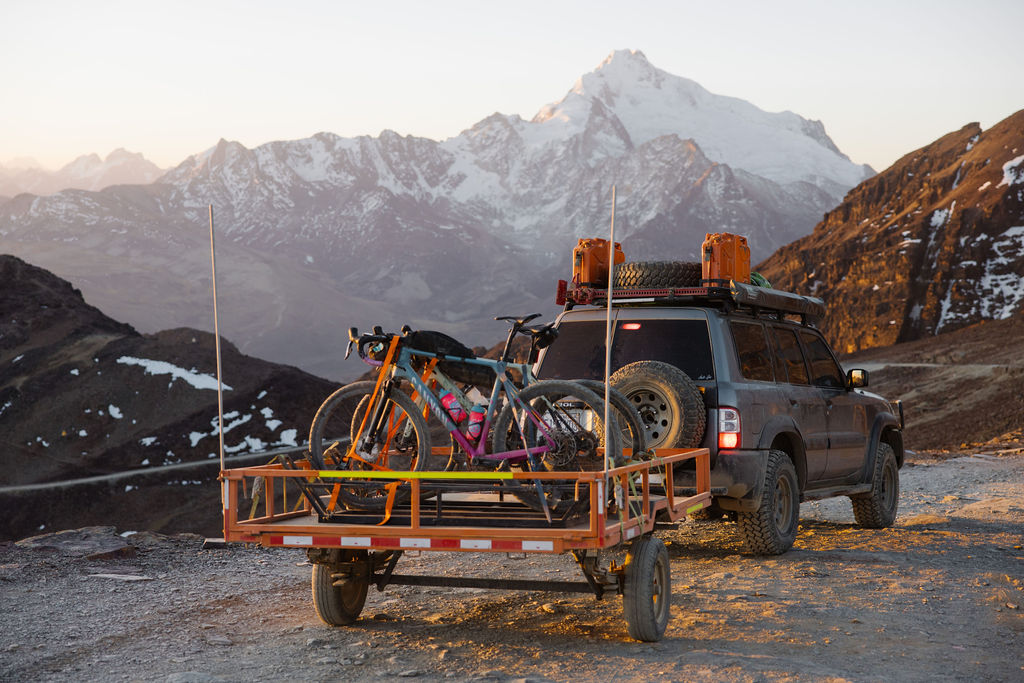
We bought it because of Norman. A portable camp, kitchen and bed with space for him to stretch out. It was never meant to be driven to Unbound. But as things turned out, we’ve driven it the length and breadth of the west side of the US. And let me just put this on the record; it is not a comfortable vehicle for that kind of journeying.

cyclespeak
No?

Sarah
It’s so loud—Dylan will sit up front wearing ear protectors—but somehow me and my 70-year-old mother drove straight across the country in it and she was listening to an audiobook on tape. Unbelievable [laughs].

cyclespeak
It certainly catches the eye.

Sarah
It has its quirks but I love it. And we’re currently in the process of getting a more race friendly, super-functional vehicle but every ad that I forward to Dylan looks really similar to the bus we already own.

cyclespeak
You use the term super-functional. Which leads me nicely onto the level of team support that seems required to be competitive in the gravel racing world nowadays? An inevitability of gravel’s popularity which should therefore be embraced? Or does it disenfranchise the privateer who has a limited budget and is balancing their racing with a full-time job?

Sarah
This is such a good question. And it was inevitable, right?

cyclespeak
Maybe because there’s more money being made available?

Sarah
I’m going to make a big statement here. But they’re my friends so I can say this.

cyclespeak
Go for it.

Sarah
Back in 2019 when I won BWR*, Keegan and Sofia were still racing mountain bikes and they would tease me by calling gravel a retirement sport. But now they’re both racing the Lifetime Grand Prix and are two of the most hardworking professionals I know. They’ve been racing since forever, bring with them all this experience, and have raised the bar to where we presently see gravel racing. And when someone ups the ante, others follow.

*Belgian Waffle Ride

cyclespeak
I guess a very different situation to when you first rolled up at that start line in 2019?

Sarah
It was just me and the bike that Specialized had given me to ride. There was no-one waiting in the feed zones for me, I had my pockets stuffed with sandwiches, and didn’t know shit about gravel. But now, everyone is at this insane level of training and prep, and that, in turn, means you need a crew and a mechanic.

Click image to enlarge

cyclespeak
For the past two years you’ve had your own little team with Ellen Campbell. And I understand that you both race independently but can you talk about the dynamic of how this all works in terms of your personalities?

Sarah
I used to coach Ellen when she was 14. And we work really well together because we’re super opposite. I’m a little more sporadic and Ellen is super organised and logical [laughs]. The gravel world is difficult to break into unless you have a huge result so me bringing Ellen onto our team was always with the goal of mentoring the privateer life. I want to leverage the connections I’ve made and introduce Ellen to these people.

cyclespeak
Sought of semi-seriously but does Norman give you a race edge?

Sarah
Hmmm. That’s an interesting question. And I do know I’m always incredibly excited to see Dylan and Norm at the end of an event. This year at Unbound specifically—which was an horrific experience—I remember riding the last 10 miles and just wanting to finish so I could give them a hug.

cyclespeak
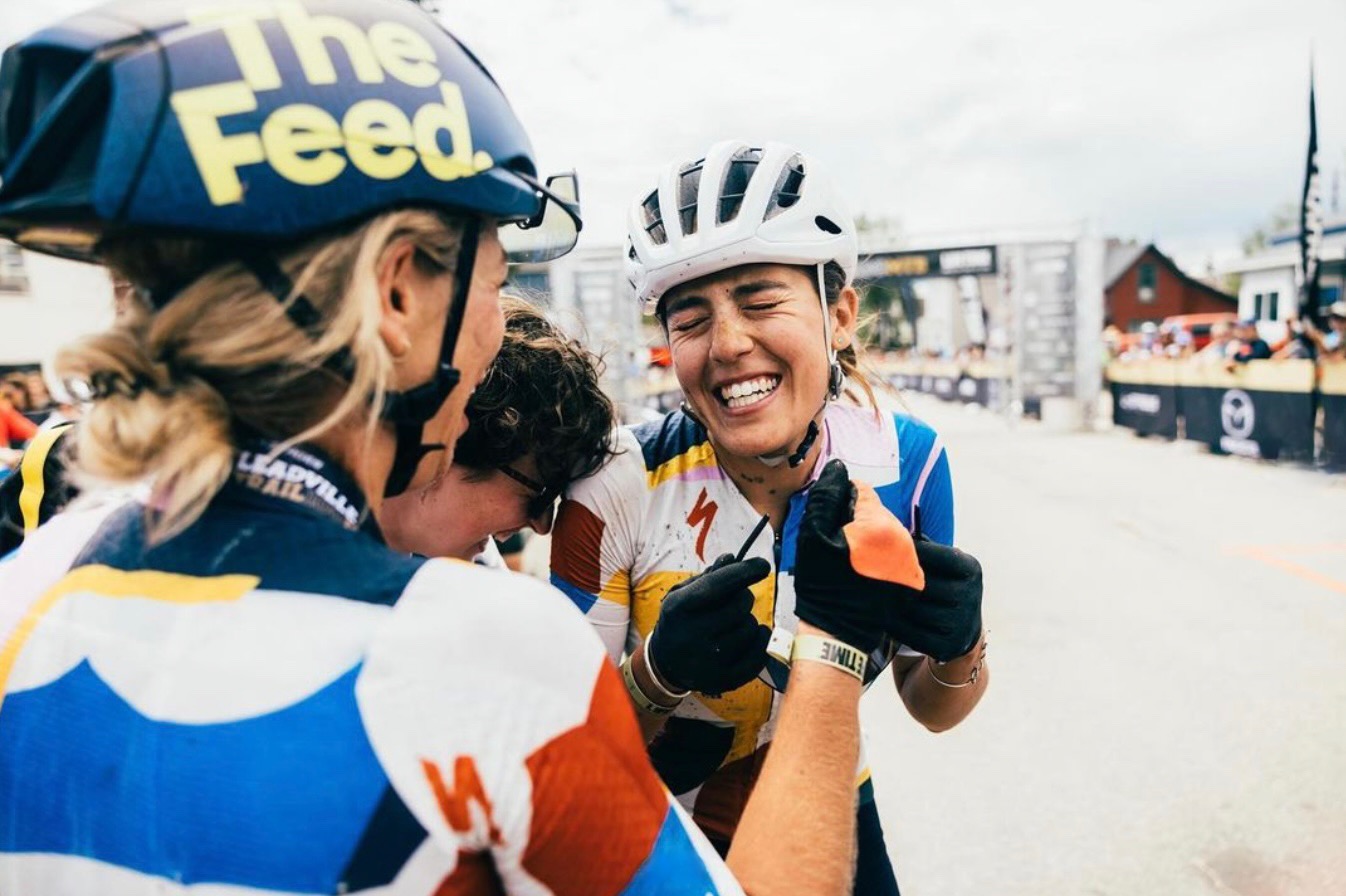
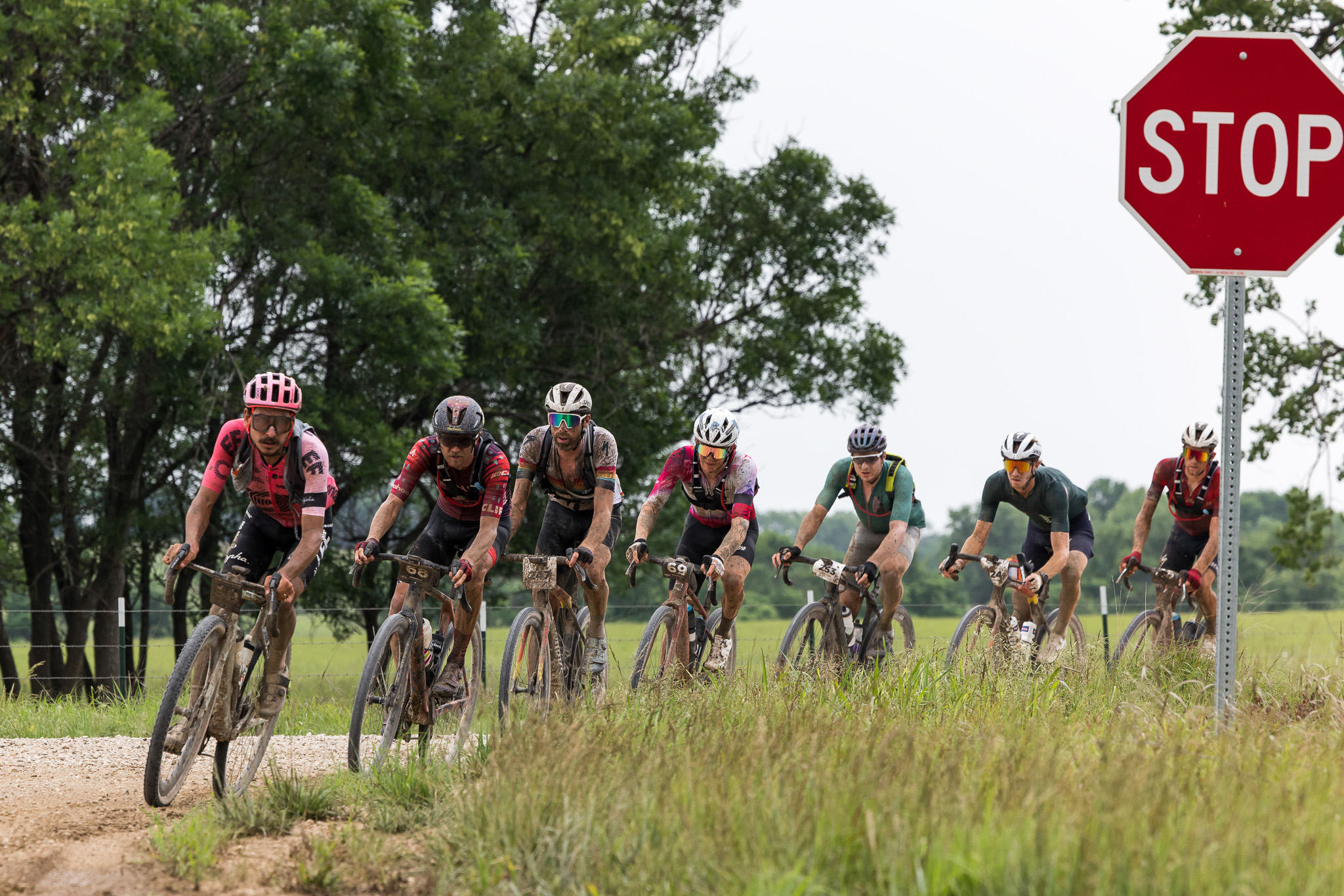
There’s a great photograph taken at Unbound that captures the moment when you first realise you’ve finished in third place.

Sarah
Looking back at my athletic career, that was definitely one of the highlights. Because Unbound is basically our Tour de France, right? It’s a big event and it’s so hard to keep track of where you’re placing out on the course. So it was a lovely surprise.

cyclespeak
We’ve already mentioned your breakout win at BWR in 2019. Have you changed since then as a racer?

Sarah
I guess one way of putting it—and I’ve learnt a lot—is that I’ve had to adapt. Because the level that we’re now racing at has just gone…

cyclespeak
Stratospheric?

Sarah
Yes! Like when I got to line up at the UCI Gravel World Champs with the winner of last year’s Tour de France Femmes. Together with everyone who is anyone and that includes some seriously big names from the World Tour.

cyclespeak
Is it fair to say they’re coming to gravel from a different pathway?

Sarah
I’m racing against women who have been to the Olympics. They’ve raced mountain bikes and road at a super high level. Whereas I grew up playing soccer and doing martial arts and my race resume is pretty much gravel. So I’m actually quite proud of myself and the work I’ve put in. I’ve even hired a nutritionist because I realised how I was only eating half the carbs I needed to race at the front [laughs].

Click image to enlarge

cyclespeak
You placed fourth in the 2023 Lifetime Grand Prix and I’m conscious that—unlike the majority of people’s jobs—every single up and down happens under the full scrutiny of your sport and community. Does that bring with it a certain pressure to perform? And if so, how do you stay so smiley?

Sarah
Probably because I think sport is so silly [laughs]. Because at the end of the day, even if you’re the best athlete in the world, what are you actually contributing? What are you gifting to this existence we have as humans? Yes, I understand that it can be inspiring. But it’s also absolutely selfish. All these people wearing these ridiculous outfits, riding this outlandish piece of equipment, and one of them is the fastest and wins. And that’s an accomplishment?

cyclespeak
Can I suggest that many people would say, “Yes, it is.”

Sarah
Maybe you’re right. Because it’s not nihilism [laughs] but I do question what it’s all about. And I think that—because I like to have fun—people just assume I hop on my bike and casually ride around Durango in the off-season and just party and ski with my friends. But that is not the case. I have a training plan. I check in with my coach every single day. I lift heavy weights. I even put them back [laughs].

cyclespeak
Maybe, like many of us, you’re just searching for some answers?

Sarah
I go through extreme highs and very low lows. Last year’s Leadville, for example, was rough. And that’s so stupid. In the grand scheme of things, Leadville doesn’t really matter. But I allowed myself to feel so sad when I fell short of my self-imposed goal. And it’s not like I’m out there saving lives.

cyclespeak
So why put yourself through it?

Sarah
Because being an athlete is the coolest job ever but also one of the most stressful; in that it’s almost impossible to detangle your self-worth from a result. But I do wonder if that’s how we are wired. That even if we didn’t have the same level of scrutiny over our day jobs—if you took all the photos, videos and fandom out of it—we’d still be super competitive?

cyclespeak
You must need a certain something that drives you, to even contemplate rolling up to a start line?

Sarah
Or something wrong with you to keep pushing after you’ve peed in your pants [laughs].

cyclespeak
Really? It’s now so competitive that there’s no time to even stop for a comfort break?

Sarah
Yep. It’s crazy.

Click image to enlarge

cyclespeak
You’re perhaps questioning the positive impact from racing and I don’t want to disagree with you…

Sarah
Oh, please do [laughs].

cyclespeak
But scrolling through all the comments on your posts, it’s clear that you inspire countless people through your racing.

Sarah
I love that people take the time to comment on a post or say hi at the races. And it amazes me that people care what I do and how I do it.

cyclespeak
So who do you follow that inspires you?

Sarah
Demi Vollering springs to mind. Watching her win last year’s Tour de France Femmes was so inspiring.

cyclespeak
And then she got third at the UCI Gravel Champs.

Sarah
These women just have insane power. It’s unreal. But watching them, it did make me realise that I might not have the same cornering skills on the road, but get me on a sketchy, gravel descent and I can probably pass them [laughs].

cyclespeak
In your film for Wahoo—It’s supposed to be fun—you talk about some of the highs and lows of what is a long, long season. Sitting eating pre-race oatmeal in tears at four in the morning or shakedown rides with Ellen filled with chatter and laughter. Quite a range of emotions to contend with?

Sarah
I’m gradually learning to cope a lot better. And I probably had less pre-race nerves during my second year on the Grand Prix. The first year I was seriously questioning if I belonged and whether everyone would see what a fraud I was. So, yeah, looking back at that first Grand Prix year, I was in tears before Unbound and absolutely terrified. Which, as things turned out, was completely justified as the start was so scary. But in the second year, it was a different ballgame. Stiffer competition but I had a bit more confidence.

cyclespeak
You did mention in a recent interview that the Grand Prix series can get a little boring? I guess doing events like the Traka helps to keep things fresh?

Sarah
Totally. But I still want to do the Grand Prix again because this is my job and that’s where most of the media is centred. But the very nature of a race series is you end up repeating the same events. So there’s this context to deal with. In your head you know you finished in this position last year so if you do worse than that, you’re going to feel crummy.

cyclespeak
So the Traka…

Sarah
I just needed something new. A different level of pressure because I wasn’t counting points as I crossed the finish line. Not that I do my own mental maths because my Dad does it for me.

Click image to enlarge

cyclespeak
You came in a strong second at the Traka behind an on-fire Amity Rockwell. Riding 390 km of challenging parcours in 15 hours and 46 minutes. Which if you think about it, is kind of crazy?

Sarah
I know. And I’m doing it again this year [laughs].

cyclespeak
That route is so hard.

Sarah
And last year, I flew into Girona right after Sea Otter. I didn’t know the course because there wasn’t an opportunity to pre-ride. And I’d got it into my head that outside support wasn’t allowed; not realising that wasn’t the case until the day before the race. So we pivoted and Dylan was waiting for me at the feed stops. But I still managed to run out of water and I was nauseous for so much of that day.

cyclespeak
Your sponsor Osprey pulled together a brilliant film of your Traka experience—well worth a watch—which really conveyed how brutal the race was. And I recognised the garden of your hotel because that’s where I stay in Girona. You were building up your bike with Dylan next to the wooden pergola where I hang up my bib shorts to dry.

Sarah
I’m sure they love seeing all your laundry [laughs].

cyclespeak
An important question. Did you try the hotel buffet?

Sarah
I did!

cyclespeak
My friend—every time we stay there—tells me he’s going to go steady and not eat too much but then just can’t resist.

Sarah
That’s how I am with any buffet. Pre-race or not.

cyclespeak
Before the race, you joined Sami Sauri on one of her Women’s Collective rides. It looked like seriously good fun.

Sarah
Rather than worrying about my lack of race prep, I got to talk and ride with all these cool women. Something I never usually get to do. And I had such a great week in Girona. We ate out every night—which purely from a performance standpoint is less than ideal—but it’s cheap in Europe and I like going to dinner with my friends.

Click image to enlarge

cyclespeak
Is this engagement outside of racing something you find fulfilling? Because in your Wahoo film you talk about mentorship and you’ve already mentioned how you used to coach Ellen.

Sarah
Yes, is the short answer. And although I’m not exactly great at organising stuff, I love connecting with people authentically. But being a bike racer is so selfish—it has to be—so having a dog and prioritising my relationship with Dylan is about as much as I can handle at the moment. But moving forward, as my career progresses, it would be good to do some cool, fun things with other people.

cyclespeak
Speaking of cool, fun things—and returning once again to your SSCXWC film—I was wondering whether the UCI should decide grid positions for their Gravel World Championships with a tug of war, beer chug and Big Mac eating heats?

Sarah
Hell yeah!! Can you imagine? Because I guarantee that the women racers normally on the front would be way in the back. And people like me would shine [laughs]. 

cyclespeak
Let’s talk to the UCI and make it happen.

Sarah
Just so you know, I’m actually quite a slow chugger. But just watch me jam a Big Mac down my gullet.

cyclespeak
Before we say goodbye, I also asked this final question of your teammate Ellen. Because we’ve already talked about the full media glare of the race world where every decision you make can be dissected and commented on. So, bearing all that in mind, is it a simple thing to say why you race?

Sarah
Actually it is. And I’m not trying to be too profound. But it’s either in you or it’s not. The desire to have that sort of challenge and have it against other people. That’s something so specific and personal and deep and beautiful but also a bit dark. A primal exercise of competition and survival of the fittest 

[Sarah pauses]

Or just something that us crazy people do [laughs].


Sarah Sturm

Ellen Campbell / Good sensations

Now heading into her third season as a full-time professional and rostered to race the 2024 Lifetime Grand Prix, Ellen Campbell takes an intriguing look at the emotional challenges of rolling up to a start line, the self-healing benefits of kindness and compassion, and how fun and laughter with teammate Sarah Sturm help balance the pressure to perform.


cyclespeak
Hi Ellen. How’s Madeira working out for you?

Ellen
It’s a really cool little island. Our friend’s Mom bought a spot here to have as a rental and we were invited over for a month-long training camp to escape the winter. So here we are [smiles].

cyclespeak
Is it good road riding?

Ellen
Honestly? I’d say a mountain bike would probably be best. It’s super steep and the roads are kinda rough.

cyclespeak
So what does your off-season look like? I’ve seen you’ve been out skiing and hiking so is it a time to let loose?

Ellen
At this point, mid-January, I’m definitely back into structured training. After a rather turbulent start to my off-season. Normally I take one or two weeks off the bike and I’ll ski, climb or run. Whatever motivates me to get outside. But this year I was travelling more—maybe not getting the rest I needed—and my body was telling me to slow down and step back a little. So not exactly the smoothest transition into training.

cyclespeak
And now you’re back at it but in Madeira?

Ellen
Which is kind of challenging because there aren’t any easy spins [laughs].

Click image to enlarge

cyclespeak
You mentioned needing a couple of weeks to rest up. Are you able to accept that or is there a part of you frustrated at being inactive?

Ellen
I’m not super great at it. I tend to have this internal battle going on. Part of my brain is telling me that rest is good and I’m doing the right thing. But the other part sees everyone else on social media out training and there’s this feeling you’re missing out. So, yes, it can be hard but it’s really only a moment in time and there are so many more days in the year.

cyclespeak
I’ve heard you talk about riding with the Durango Devo* squad and you raced a lot before first chatting to Sarah at Leadville about going full-on professional. But what are your memories of bikes and riding from childhood?

*A community-centred development programme dedicated to sharing the love of riding mountain bikes based out of Durango, Colorado.

Ellen
I definitely had cycling in my life from a very young age. My Dad is a big road cyclist—maybe even a fanatic—so he was a massive influence. Not pushy but it was something that he enjoyed doing so we always had bikes around and there was talk of the Tour.

cyclespeak
And that, in turn, led to you riding with Devo?

Ellen
Which was a great environment to learn the ins and outs of racing in a team and having fun on the bike. At first I didn’t like it that much because it’s hard, going up hills. I remember not liking the feeling of being uncomfortable. So back then, I mostly rode to spend time with my friends. When you’re talking to each other, the hills don’t seem so bad [laughs].

Click image to enlarge

cyclespeak
You mention having fun on the bike and that reminds me of this quote from the tail-end of 2023: ‘We’re here for the giggles. And the fun. And the friendship. But mostly for the giggles.’ And I wanted to ask about those sentiments with respect to your team dynamic with Sarah?

Ellen
I remember writing that post because it was kind of a hard one. Because both me and Sarah are very serious cyclists but we never want to take ourselves too seriously. Cycling attracts a lot of Type A people and there can be a lot on the line if it’s your livelihood. So on the one hand there’s definitely this tension but then you have Sarah who’s so giggly. And it helps that we spend so much time together, travelling to a race, driving through the middle of nowhere. We have this good little crew: me and Sarah, my partner Howard, and Dylan, Sarah’s partner.

cyclespeak
And that team dynamic helps balance out the inevitable stresses of racing?

Ellen
One of Devo’s slogans was ‘Never forget the feeling’. A reminder to enjoy the sensation of flying down a hill or going hard when the mood takes you and not taking any of that for granted. So when I was writing that post, I was not only thinking about the racing but all the other special little pieces that come into play. Navigating Sarah’s school bus through a tiny, little town or yelling at Norm* to climb onboard after he’s stretched his legs. All the fun stuff that keeps you moving when you’re suffering over 200 miles of Kansas gravel.

*Sarah’s dog Norman

cyclespeak
Back in 2022, you referred to yourself as a newbie when you first became Sarah’s teammate. So what kind of learner are you?

Ellen
That’s not something I’ve ever really thought about [laughs]. But I have noticed that I’ll mimic other people that I think are good at something. I have a picture in my brain of what that looks like and I’ll try and copy it. So maybe you could say I’m an experiential learner?

cyclespeak
What were the biggest takeaways from your first full-time season?

Ellen
2022 was quite a whirlwind. So much newness coupled with this feeling of ‘Holy cow, I’m actually doing this.’ Because coming through the Durango Devo programme, I always knew that if I worked hard enough, then professional racing was a goal to which I could aspire. But when that finally becomes a reality, it’s as if your mind is playing catch up and there’s this nagging question of whether you’ve earned it.

cyclespeak
So how does riding as a team figure in a race situation? Does it give you both an edge?

Ellen
From the very beginning, Sarah and I decided to operate as a team everywhere except on the race course. We’re good friends and want to support each other, so we’ll talk during the race but I’m never riding for Sarah. If she flatted, I’d happily give her a CO2 cartridge or a spare tube; but in much the same way that I’d do that for a lot of people and not just Sarah.

Click image to enlarge

cyclespeak
What’s your take on the rise in professionalism on the gravel racing circuit? Large support crews, power washers, spare wheels etc. Is it inevitable as the scene explodes in popularity—and should therefore be embraced—or does it disenfranchise the privateer who has a limited budget and is balancing their racing with a full-time job?

Ellen
That’s a tricky line to walk as I do feel it’s very difficult to mandate levels of support. You’ll always have individuals with different resources regardless of whether they’re on a factory team or a privateer. And let’s not forget the thousands of competitors lining up to race these events without any outside support.

cyclespeak
I guess there are no simple answers?

Ellen
Maybe, as professional athletes, we need to focus on making the sport approachable; whether that’s our interactions on race day or in the posts we put out on social media? And then combine that with a cascading series of race distances so that individuals new to riding a bike can come along and join in the fun?

cyclespeak
Speaking of responsibilities and in a sport that seems to delight in finding contentious issues to argue over, have you always been comfortable in expressing an opinion and planting a flag for what you believe in?

Ellen
I wouldn’t say I’m always comfortable [laughs]. But there are moments when things can get a little silly. And I do try and see both sides of things because it’s easy to get worked up or offended. But there’s no one way to do bike racing and I will speak out when I feel someone is being too narrow-minded.

cyclespeak
In your recap from season closer Big Sugar you mention racing assertive and smart but then reference a death by a thousand cuts. And it struck me how very candid and upfront you are with your comments?

Ellen
Social media is a funny one for me. And I do feel it’s important to be as authentic and honest as I can.

cyclespeak
I guess what we often see is rather a filtered version of our best lives. So it’s refreshing when people share their difficulties and talk about the lows as well as the highs?

Ellen
It’s just my take on things but if someone else had a difficult day riding an event, then to see that I also suffered out on the course might help them to validate their own experience?

Click image to enlarge

cyclespeak
You placed 11th in last year’s Lifetime Grand Prix and you’re rostered to race in the series again this year. Is it a format that plays to your strengths, that you enjoy and enables you to have fun racing? Or does the success of the series bring with it a sense of pressure to perform?

Ellen
The length of the series is definitely a help as I tend to be a pretty consistent rider. So multiple races over a longer period of time is generally beneficial even though there are more opportunities to get hurt or sick. And if you look at it plain and simple, all you can do is line up, try and do your best, and hope that the stars align.

cyclespeak
On the one hand, you can define success with your Grand Prix race results. And then, on the other hand, you had 20 novice riders show up for your first RIDE DIRT workshop which is pretty awesome. So in a very broad sense, what are your metrics for a successful season?

Ellen
That’s a great question…

[Ellen pauses]

I guess I break it down between the competition side of things and the feelings I have about bike riding. And having those women show up for my workshop—putting their trust in me—was one of those great sensations.

cyclespeak
And that helps you find a sense of balance?

Ellen
Over a season there will always be things that don’t go to plan. So overall, I just want to feel good about my performance. I want a race to go right regardless of where I’m placing and for me to enjoy a good experience out there. But these same metrics can be applied to a skills workshop I’m leading or if someone I’m coaching gets a good result.

cyclespeak
So an emphasis on the right feelings?

Ellen
This year I had a rider I coach win a mountain bike national title. Which was pretty cool. So yes, good sensations are my metric for success [smiles].

Click image to enlarge

cyclespeak
Focusing in on your own racing style, in the MTB rounds of the Grand Prix when you’re racing on singletrack, are you a shouter—get the F out of my way—or more of a polite ‘can I pass’?

Ellen
I’d describe myself as assertive but nice. Or nicely assertive. You take your pick [laughs].

cyclespeak
What does that look like in a race situation?

Ellen
A lot of my high school races included sections with limited opportunities to pass. And I was always taught—which is what I tell anyone I coach—that you have the right to pass but not to be mean. In terms of my personality, I don’t seek out conflict but I also want to get things done and get to where I’m going.

cyclespeak
You could argue that being a professional athlete brings with it certain pressures. And I was wondering whether there are ever days when a regular 9-5 job with riding at the weekend seems appealing? Or are you living the dream?

Ellen
Financially, a 9-5 job sometimes sounds appealing [laughs]. But no, I get to lead a relaxed life where I wake up, go for a ride, have lunch, maybe watch a movie or catch up with friends, before going to bed. Sometimes I’m not feeling particularly motivated to train but head out regardless. Or if I’m travelling, I might miss out on family occasions. But I wouldn’t swap what I do. And if I had a regular job, I wouldn’t be flying off to spend a month in Madeira.

cyclespeak
That would be an interesting conversation to have with your employer [smiles].

Ellen
I guess you could say I feel very privileged to live the life that I do. And want to soak up every opportunity for as long as I have it. I call it my vacation life [laughs].

cyclespeak
So as a disciplined professional, are you a ride-all-weathers athlete or is there a place for indoor training?

Ellen
Generally I try and get outside as much as possible but there are definitely times when it just doesn’t make sense. My coach—especially this time of year when the weather is so variable—will plan a combination of activities. I might go Nordic skiing for a couple of hours and then go on the indoor trainer.

cyclespeak
I’m an hour tops on my indoor trainer. After that I’m losing the will to live.

Click image to enlarge

Ellen
I’m right there with you. My max is probably an hour and a half and there has to be some structure. If I’m twiddling my thumbs, watching a movie, then it’s more likely 20 minutes [laughs].

cyclespeak
Your partner Howard* also races the Grand Prix series. So I’m guessing that makes logistics a little easier?

*Off-road professional racer Howard Grotts

Ellen
Travelling together is definitely a plus. Sarah, Howard and I all live in Durango, so that helps with booking flights or sharing a ride to the race. And another big benefit is Howard obviously understands what’s going on with my training and my goals for the season.

cyclespeak
When you’re out on the trails together, is there ever a sense of competition?

Ellen
Not so much. But we did have one little incident…

cyclespeak
Which was?

Ellen
We were living in Montana, returning from a ride, when Howard asked if I wanted to sprint home. I honestly wasn’t that keen but we started to accelerate before getting our bars locked up. Howard was okay, he didn’t go down, but I crashed and this happened right before mountain bike nationals which was kind of worrying. Luckily there was no permanent damage apart from a pretty spectacular bruise [laughs].

cyclespeak
Rather than post the usual year-end recap reel, you saw out 2023 with some intentions. The themes included having compassion for yourself, bringing more awareness to your body’s needs, making time for family and friendships. Are these set in stone or do they act as markers to guide you through the coming year?

Ellen
It was never intended to be a rigid plan. If something doesn’t feel right, then it will change and evolve as I learn and experience new things. But I did feel it was important to set some goals that would lead to success not only in bike racing but in life. Trying to be a professional athlete in any sport is hard so it’s important to be kind to yourself.

cyclespeak
I think it’s something that would be helpful for most people. Life can be very tricky. And intense.

Ellen
I feel it’s important to give yourself the space to acknowledge any negativity but know that it doesn’t define you or make you a bad person.

Click image to enlarge

cyclespeak
When you line up at the start of a race, every decision you make out on the course is open to scrutiny. But then I scroll through the comments on your Instagram posts and there’s so much good feeling and respect for what you’re setting out to do. This enormous groundswell of positive energy that combines with a sense that you inspire so many individuals. So is it tricky to balance this public persona with a need for privacy?

Ellen
That’s a good question and I think I need to remember this a bit more. Because I’m not the kind of person who will process alone. Often I feel the need to share and talk with others and I definitely lean on Howard and Sarah in this regard. But in terms of my public persona—when I’m at a race or an expo—I do consider how I carry myself because actions can speak louder than words. Yes, a certain result can be life changing but ultimately a race is just a race. And I always remember the distinct moments when people have been kind to me. And I also remember when people are mean. So I try really hard to be nice when I’m racing.

cyclespeak
Not many of us do our jobs under a media spotlight?

Ellen
It’s kind of crazy when you race. You’re under this magnifying glass with everyone watching you. And it’s not as if you’re looking your best. You’re properly suffering and you’ve got food all over your face [laughs]. But when people do have an outburst or say something unkind, then there’s a tendency for it to come back and bite them on the butt.

cyclespeak
Taking all these thoughts and detours into consideration, is it a simple thing to say why you race?

Ellen
I honestly don’t know if it is. Sometimes it’s not fun but then I think about the times we hang out after a race, the finish line hugs, the fun and laughter of travelling with Sarah, the cool places we get to see.

[Ellen pauses]

But why do I race? I guess the opportunity I get to push myself is pretty unique. Because you can push yourself in a whole lot of different ways: in your job or as a parent. But to do that in a physical sense and on a global stage? That’s really special and definitely not something I take for granted.

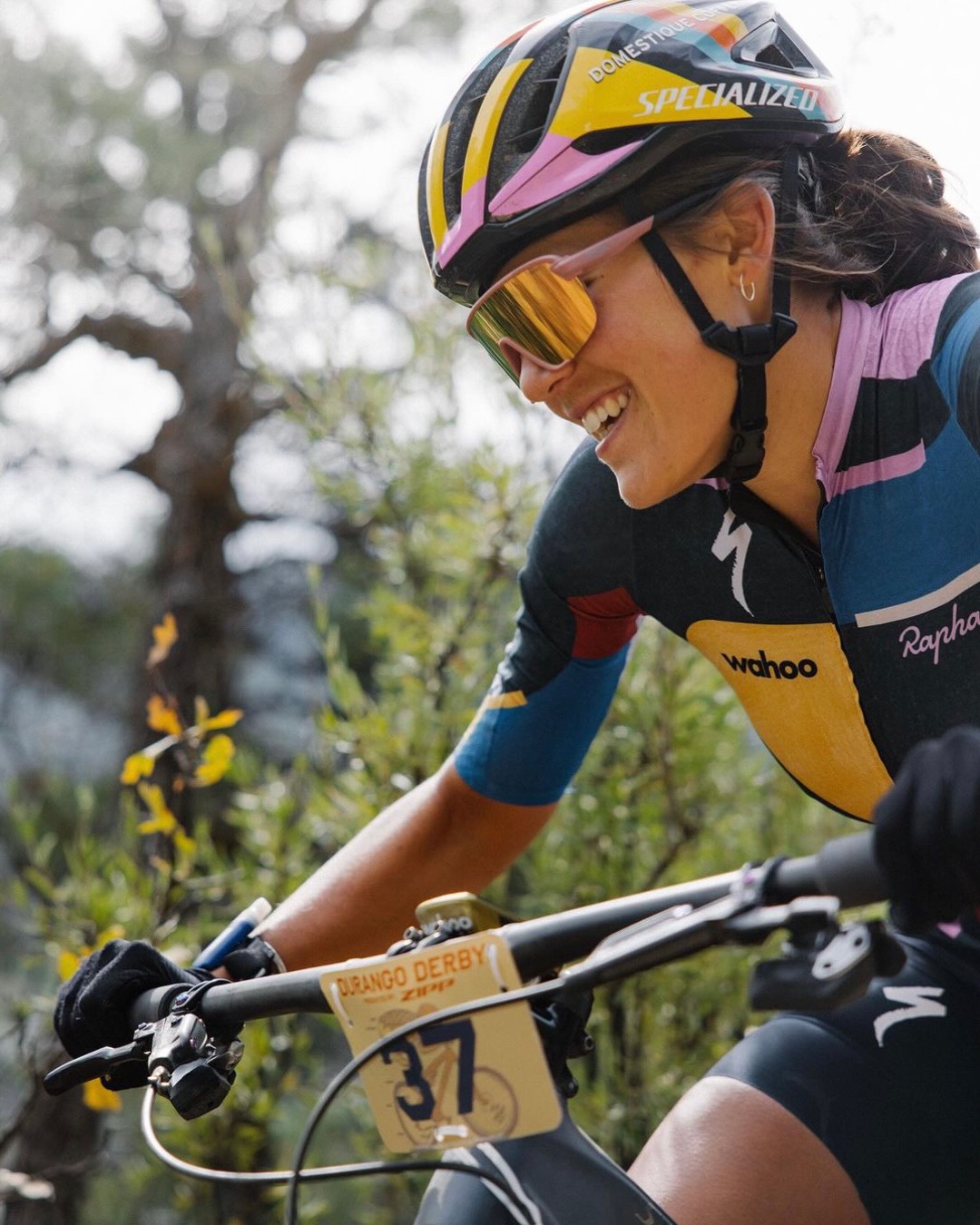
Feature image with kind permission of Alex Roszko / All other photography (credited individually) courtesy of Ellen Campbell.

Henna Palosaari / Outside

Growing up in the north of Finland, the weather was never something to complain about. If it was -20°C, Henna Palosaari simply put on more layers. A remarkable relationship with the outdoors that has continued into adulthood. Whether snowboarding in winter, bike packing through warmer months or surfing in between; Henna is a life adventurer happiest when outside.


Henna has just messaged to say she’ll be a little late for our call. Swapping her native Finnish slopes for a four-week snowboarding holiday on Japanese powder, when her video feed pings into life she explains how her evening meal was truly wonderful but took far longer than expected.

“We found this traditional Japanese restaurant run by a couple in their eighties. All very lovely but it took us over two hours to eat our dinner. And then I felt a little guilty that they were still working into their old age.”

After honing their craft over all that time, I suggest that maybe it’s more passion than profession. And then continue our food theme by admitting how the name of Henna’s cold weather clothing—Haglöfs—reminds me of an ice cream brand.

“Häagen-Dazs?” she responds with a laugh. “That’s funny. Maybe I should suggest they diversify.”

Click image to enlarge

Looking relaxed and warmly wrapped up in down jacket and wool beanie, I’m reminded that Henna studied accountancy at university but quit her job as an auditor to spend the winter in Innsbruck as—and I quote—a ski bum. So I’m naturally curious to learn what prompted such a major change in lifestyle?

“One big factor was the semester I spent abroad in New Zealand studying for my Masters. I hiked a lot and learnt to surf and then spent some time in Bali before returning home to Finland to take up a position with an accountancy firm. And I remember thinking whether this was how it was going to be for the next 20 or 30 years. So my best friend and I decided to try the European ski season and that’s how we ended up in Innsbruck.”

Fast forward to 2024 and Henna is now working for Bikeland.fi—the Finnish centre for cycling tourism—where she’s responsible for building and updating the website as well as coordinating the development and integration of cycle routes. 

“Back when I was working as an accountant,” Henna explains, “I didn’t ride a bike. That came later when, like a lot of other people, I started to ride during the pandemic. Initially it was just a way of getting some fresh air but then I began to go a little further. I bought a gravel bike and some bike packing bags and set off on a 4800 km trip around Finland. And the more I rode, the more cycling became a passion. So when I saw a job with Bikeland, I applied but didn’t get it. And then a little later, I applied for another position with them and didn’t get that one either. But then they called me about the job I do now and that’s how I got started.”

A good example, I’m thinking, of how it pays to be persistent, before our conversation turns to Ride To Ski; the recently released film that, as the title suggests, combines her love of cycling and snowboarding. Featuring friends Sami Sauri and Malva Björkman, Henna not only planned all the routes but also produced the film. So very much a passion project?

“Yes. For sure. It was an idea that I’d been mulling over for a couple of years before deciding that, this winter, we were going to make it happen.”

Click image to enlarge

Offering a plentitude of Alpine panoramas and loaded with smiles and laughter, certain emotive scenes show Malva coming to terms with a traumatic event she’d previously experienced when skiing. So I’m wondering whether the way the three friends were travelling and experiencing the outdoors helped unlock these inner thoughts and feelings?

“When you travel by bike,” suggests Henna, “there’s definitely more time to process your thoughts. And when you’re physically tired, emotions can get stirred up that maybe you’re subconsciously suppressing? So I guess for me, cycling is a kind of safe haven where I can think through what’s going on in my life.”

Not the first project Henna has shared with Sami Sauri, the pair initially met over Instagram before plans were put in place to ride the Arctic Post Road; the resultant film depicting back-to-back days crossing the Nordic wilderness.

“From my experience your funniest memories of a trip are when things don’t go according to plan. And our plans began to unravel when we’d just completed a super technical section and we found ourselves running a little behind schedule. It was getting late but we decided to push through to the next village that had accommodation. It was raining, starting to get cold and the mosquitoes were biting when we finally arrived at our destination. But there was no one around and the contact number we’d been given wasn’t answering. Then we noticed this guy approaching on a quad bike who told us the owner of the cabin had gone fishing and couldn’t be contacted.”

Laughing as she reminisces, I’m mentally putting myself in that same scenario and wondering what I would decide to do? With no accommodation available, the pair pitching their tent in the parking lot before cooking a meal of pasta. A good reminder that it helps to be self-sufficient and always carry what you need for those just-in-case situations.

“The most stressful aspect of our Ride To Ski trip was getting all the equipment sorted before setting off. Malva’s bike arrived by mail with a bent derailleur hanger so that was a last minute hassle. But because of all this rushing around, the actual trip felt relatively stress free.”

Click image to enlarge

I rather guiltily admit to Henna that I found myself smiling at the scene from the film which shows them riding up this incredibly steep road with Malva getting slower and slower until she eventually comes to a halt and tips over.

“That was on the first night and it was a 25% ramp,” laughs Henna. “And I later learnt that it was Malva’s first ever bike packing trip. And Sami—who cycles a lot—had only skied twice that season. So considering the circumstances, I think we managed pretty well.”

Keen to point out that she doesn’t consider herself to be a professional cyclist or snowboarder, Henna is visibly more comfortable when I suggest that she’s a storyteller.

“I’m conscious that we see a lot of professional athletes doing incredible things but that’s not always the most relatable content for someone considering riding a bike for the first time. So if I can bring my amateur adventures to life and share them in a way that inspires people to go exploring themselves, then maybe that will translate to amazing experiences when they spend time outdoors?”

Growing up in Finland, time spent outdoors meant biking to school all year round, whatever the weather. A willingness to contend with the vagaries of the seasons that Henna has carried through to adulthood.

“My Dad would spend time teaching us new skills like how to use a saw or light a fire. And I still find there’s a real sense of satisfaction from figuring out a problem. When I first embarked on my van Eldo’s renovation there was hour after hour of research on YouTube and Google—a van building bubble that took over my life for a few months. But now I get to enjoy the result of all that hard work and it’s what ties me and Eldo so closely together.”

Click image to enlarge

Clearly tenacious by nature and always willing to seek out a solution, my thoughts turn to another project that saw Henna experimenting with the concept of light packing; carrying everything she needed for an overnighter in a 14L backpack.

“I do get a certain sense of satisfaction in seeing how little I need to carry. And that’s another aspect that I love about travelling by bike. How once you’ve invested in a few essential pieces of equipment—a gas stove, a tent, a sleeping bag and mat—then you’re basically good to go.”

Is there a piece of kit that Henna’s never without, I wonder?

“I pretty much always carry an emergency blanket. Just in case,” she answers with a laugh. “And in the Nordics, whether it’s summer or winter, you always travel with a down jacket.”

So there’s never a time when Henna decides to stay inside, under her duvet?

“I do love sleeping. But usually I know that if I’ve planned something, then it will make me feel so much better. So that’s the motivation I need to get myself moving. And spending time outdoors is where I feel most relaxed. Our day-to-day lives can be quite frantic but when I’m riding my bike or out on the slopes, it’s as if time is standing still and I don’t feel in a rush. For me, a really important way of managing both my physical and mental wellbeing.”

Conscious that Henna is 10 hours ahead and needs to rest before once again hitting the slopes in the morning, I finish up our conversation with one final question but with the proviso that she doesn’t have to answer. But I can’t help feeling curious whether she sees herself as a snowboarder who cycles, or a cyclist who skis?

“That’s a tricky one! But we have made a film called Ride To Ski. So maybe the truth lies somewhere in the middle?”

Photography with kind permission of Henna Palosaari / Feature image by Emil Nyeng

Alex Roszko / Fast, fun and easy

It’s Thanksgiving Day and photographer Alex Roszko is taking our video call on his mobile phone as he strolls through a suburban neighbourhood in Austin, Texas. Jacket zipped up against the December chill, he’s visibly relaxed and happy to let our conversation wander.

Tracing his love of visual storytelling to when he was gifted his first cameraa Polaroid covered in Ninja Turtle stickerswhen the opportunity arose to swap his programming position with an engineering firm for the gravel trails of race events, he decided to make the leap.

A decision to pursue photography as a full-time career that he explores with an unwavering honesty; Alex offering an intriguing take on the challenges of being your own boss, and why it can be the smallest of details that make your heart sing.


Alex
Good morning. Or I guess afternoon for you?

cyclespeak
That’s time zones for you. But we managed to navigate the difference at our first attempt. You’re calling from Austin?

Alex
I am. But I usually only stay for a few weeks at a time. Which probably explains why the most common question I get asked is, “So, how long are you here?”

cyclespeak
Austin is enjoying something of a boom?

Alex
You can see it in the house prices. Tech is coming in. We’re the new San Francisco [laughs].

cyclespeak
The price of progress. And I remember a friend of mine mentioning that a lot of your dirt roads are being paved over?

Alex
You have to get pretty far out of town to find any good gravel.

Click image to enlarge

cyclespeak
Because you’ve just got back from Girona where there are endless trails to ride. And I was smiling at your Instagram story where you mentioned not being able to take your bike bag on the small train to Barcelona which meant an unexpected €200 trip by taxi.

Alex
To be fair, I’d taken this same train a couple of times without any problems. But this time, I just happened on the wrong person and it was a very definite ‘no’.

cyclespeak
I was looking at the ‘About’ section of your website where you mention that your first name is John.

Alex
But I go by my middle name, Alexander. Or Alex. But most people call me Roszko. Which is my last name. Which I can see is all kind of confusing [smiles].

cyclespeak
When I saw the spelling of Roszko, I immediately thought you might have some European heritage?

Alex
I believe my great grandparents came over from Poland in the 20s.

cyclespeak
Well, there you go. And looking back on your family life and childhood, do you remember it as being particularly creative?

Alex
Actually, my dream as a child was to be an artist. I was obsessed with drawing and I must have sketched the Titanic over a hundred times to try and get it perfect. But I’ve always been a visual learner rather than relying on memorising text.

cyclespeak
So what are your first memories of photography?

Alex
I got my first camera when I was seven or eight. So I’ve been looking through a lens for a long, long time.

Click image to enlarge

cyclespeak
Did your visual education continue at high school and college?

Alex
I went to high school in Houston. Initially still wanting to be an artist but that changed when I developed an interest in meteorology and geography. I was really enamoured with the physical world and our weather and how that all combines. But when I enrolled in community college, I discovered meteorology was out of the question because it required four years of physics or math; two subjects I’m just hopeless with. My brain just doesn’t bend in those ways [laughs].

cyclespeak
So what did you study instead?

Alex
I graduated from Texas State University with a degree in physical geography.

cyclespeak
Where did your photography fit in?

Alex
I’d skateboarded for twenty years by this point but got an injury so I picked up my camera to take some pictures of my friends. And that was the moment when photography re-entered my life and I started to scratch this creative itch.

cyclespeak
I’m guessing you didn’t immediately start earning a living as a photographer?

Alex
I remember in 2013 using my credit card to buy my first full-frame camera—which was terrifying—and the deal I made with myself was I had to pay it off with the income I made using the camera. At the time I was working for a local engineering firm so at weekends I would take high school portraits, graduations and engagements before trying my hand at weddings. That lasted for eight years. A 9-5 job during the week and photography on the weekends.

cyclespeak
So what happened to make photography a full-time gig?

Alex
Covid, actually. We were all working from home and my company sent out this email to ask for volunteers who wanted to quit.

cyclespeak
Voluntary severance?

Alex
That’s right. I thought about all the free time I would have and what I could do if I accepted their offer. So I volunteered.

cyclespeak
And said goodbye to the 9-5?

Click image to enlarge

Alex
Actually, no. Long-story-short, they denied my application but this idea was still stirring around inside my head so I reached out to some local bike shops and offered my photographic services on retainer. I’d arranged a meeting with one of these bike shops and told my boss that I was sick and had to finish early. But he told me I couldn’t because we had a meeting at noon that I needed to attend. So I rescheduled with the bike shop, turned up at this meeting, only to be told they were letting me go.

cyclespeak
How did that feel?

Alex
I was kind of happy, excited and also a little scared. But then I just drove down to the bike shop and negotiated my first retainer. So I was technically unemployed for about 30 minutes.

cyclespeak
Looking back at your photographic work since this pivotal moment, it’s been very varied and you’re definitely not pigeonholed with a bike in every shot.

Alex
Each brief is pretty unique. And I wear a lot of hats. I do a lot of product photography but even that allows a degree of creativity when there’s a message behind what I’m portraying. Other times it’s adventure photography where it’s more difficult to control the environment so there’s an element of spray-and-pray. And then there are times when I try a new creative angle.

cyclespeak
Keeping things fresh isn’t always easy?

Alex
It’s very hard and needs constant thought and application. Something I discuss with my videographer friends and their use of movement, edits and music. But a photo is a photo. One final product.

cyclespeak
Sometimes I think it’s the shots off the bike—sitting around a campfire making coffee or sheltering from a rainstorm—that afford you little moments of visual magic.

Alex
I completely agree. I definitely get more joy from the details. When I see someone capturing muddy eyelashes it just looks so cool.

cyclespeak
Your Instagram story from earlier today had a very nice shot of your partner’s wisps of hair escaping from her helmet and droplets of rain on her eyewear.

Alex
Capturing details like that is my personal motivation. You know, the little nuances of a moment like the hair wisp photo. I’m out with my partner—we’re in the mountains with the Fall colours on the trees—but I keep getting pulled in by the way her hair is catching the wind. Until eventually I snap out of it and realise I need a photo [laughs].

Click image to enlarge

cyclespeak
In your approach to a shoot, where does the balance lie between what you’ve previously planned to capture and your instinctual response to a subject and location?

Alex
I plan things pretty meticulously—a lot of scouting and Google Street View—but I do a lot of my shoots on the bike and I’ll always see something I didn’t expect. And those are the moments I typically like the most. The impromptu shots when you feel that spark of inspiration. I’d much rather be pulled in by a location than force the photo. Which is why I build in some spare time on a shoot and I always tell everyone that it’s going to be fast, fun and easy. As if we’re just on a bike ride and hanging out together.

cyclespeak
Are you conscious of using phrases like ‘just one more time’ or ‘can you ride that section again’?

Alex
Managing time and keeping everyone happy and engaged is one of the biggest challenges of any shoot. And it definitely helps that you sell yourself; so they’re onboard with what you’re trying to achieve. If you’re fun to work with and personable and you make people laugh, then you’re much more likely to forge a healthy relationship with a client and get a callback. The images are almost the easy part—that’s what I do, it’s my job—but what I’m also focusing on is my interaction with the subject or the client. That takes a lot of effort but I want it to look and feel effortless.

cyclespeak
The secret sauce?

Alex
A shoot can go great and you come away with some stunning images. But if the client or subjects are having a rotten time, then that almost feels like a failure.

cyclespeak
I’ve enjoyed talking to a wide range of creatives across a number of disciplines and they can be very hard on themselves—always focusing on how they could have done something better. And I was wondering where you sit on that spectrum?

Alex
I re-read my post about Big Sugar and it made me question whether I’m ever positive about my work [laughs]. I’m aware that sometimes my sharing can be a little woe-is-me, but I think it’s important to share both the wins and the losses. And it doesn’t help when my friends and co-workers are constantly churning out incredible work. A feeling encapsulated by probably my favourite quote, ‘comparison is the thief of joy’.

cyclespeak
I love that.

Alex
But I believe that you really do have to be critical of yourself in order to improve. Because if you thought that everything you did was bang on the money…

cyclespeak
You’d stand still?

Alex
Exactly. But, as in all things, there’s a balance to be found. And one thing that I have noticed in my creative community, is how welcoming and supportive they all are. To such a degree that I see them as co-workers rather than my competition. And I might leave an event in a self-critical frame of mind but then get lifted up by the positivity of what feels like a family.

Click image to enlarge

cyclespeak
With all this talk about doing a good job, can I ask if there’s such a thing as the perfect photograph? Does it exist and, if so, whether there’s a recipe to replicate perfection?

Alex
I wish I knew [smiles]. So I’m going to butcher a quote from a good friend of mine, the photographer Caleb Kerr, who suggests that every good photograph needs three things: an interesting subject, something happening that makes that particular moment unique, and good light. Because you can take a hundred great photos of someone smiling, but if you can capture that exact glance, at that exact time…

cyclespeak
A photographer friend of mine, Ian Walton, very often places the point of interest just outside of the frame…

Alex
Nice!

cyclespeak
So it encourages the viewer to seek the narrative.

Alex
I completely agree.

cyclespeak
Your own imagery is beautifully lit and full of captured motion. And you’ve mentioned that you like to shoot while on the bike. But are there times when it’s better to be slightly removed?

Alex
Sometimes when I’m close to the action, I do get lost in it. So I just have to take a step back and remind myself that I’m the photographer with a job to do. And that can be as simple as being dropped off at a distance to get that tracking shot of the riders crossing the landscape.

cyclespeak
Are you the type of person that can leave for an assignment at the drop of a hat?

Alex
It can vary. Sometimes I can be ready to go in 10 minutes. Sometimes it might take half a day. And I am pretty scatterbrained so I like to have everything I need physically arranged in front of me.

Click image to enlarge

cyclespeak
I’m guessing it’s also important to keep yourself fuelled on a long workday? Does a coffee help and, if so, what’s your order?

Alex
Now that I’m back from Spain, I’m a flat white kind of guy.

cyclespeak
Does a Texan flat white differ from the Spanish equivalent?

Alex
Inwardly I’m smiling when you order a flat white in Austin and they ask you, “What size?” And when it comes to food, I do have this pretty notorious streak for under-fuelling on race days.

cyclespeak
In the same way that Dominique Powers has her partner Ken handing her Snickers, you need someone to take charge of your fuelling.

Alex
If we’re working the same event, Dominique feeds me actually. She’ll produce a hummus sandwich or an extra Uncrustables.

cyclespeak
I’m guessing it’s a tool of your trade but what are your views on Instagram?

Alex
Just last night I thought, this is a soul-sucking waste of time. And then, other times, I view it as such an amazing networking tool. So maybe, as my Dad is fond of saying, everything in moderation. And because I manage social media for a few brands, it’s part of my job and I kind of need to know what’s going on.

cyclespeak
Inspiration comes from a rich variety of sources. Where do you look to fill up your creative reserves?

Alex
All kinds of places. I have friends that only use an iPhone and get amazing results that make me stop and think. And my colleagues blow my mind when we’re at the same event and they come away with a completely different image set.

cyclespeak
Is this a state of mind? Being open to visual stimuli?

Alex
I think of work all the time….

[Alex pauses]

…or am I just looking for inspiration? Because returning to this concept of the perfect photograph, it needs to strike me visually—give me goosebumps—but also include an emotional element. What is that person thinking and how does it make me feel? Which is pretty amazing for a flat format that you view on a screen or pin to the wall.

Click image to enlarge

cyclespeak
From the outside looking in, people might assume that it’s an enviable career but are there challenges of earning a living as a professional photographer?

Alex
It’s funny you ask because I’ve just posted an image on my Stories that asks what people think you do as a professional photographer. And it shows a pie chart with the smallest segment labelled as ‘taking photos’ and the largest as ‘having fun’.

cyclespeak
That sounds like the perfect job [laughs].

Alex
But there’s a second pie chart which shows what I actually do.

cyclespeak
Which is?

Alex
There’s the same-sized segment for taking photos but the rest is divided up into marketing, social media, budgeting, emails, planning, portfolio consolidation. Basically everything that consumes the vast majority of my time.

cyclespeak
That’s a lot of work.

Alex
I’m very fortunate to love what I do but at times it can be stressful and I’ve never worked harder in my life. And only recently when I was in Spain on holiday with my partner, she commented that I looked rather down. So I explained that I’d been up since four in the morning worrying about what I was going to do next year and whether this career was sustainable.

cyclespeak
I imagine you aren’t alone with those thoughts. And because you work for yourself, everything is down to you.

Alex
Which reminds me of another silly quote, ‘I didn’t want to work a 9-5 job so now I work 24/7.’

cyclespeak
Obviously travel is a necessary aspect of your profession. So I was wondering about your concept of home? Is it a place, people, belongings or something else?

Alex
When I’m away, it’s people. That’s what I miss the most. And I’ve had some changes in my living arrangements this year so I’m staying with a friend right now whilst I transition into my next phase.

cyclespeak
What might that look like?

Alex
It could be a van or even multiple locations; part-time here and there. So home for me is a little abstract at the moment.

Click image to enlarge

cyclespeak
As a photographer, your sight is crucial to the imagery you create. How do you tap into your other senses?

Alex
My music taste is pretty eclectic, but the last time I flew back from Spain, I spent the entire journey—upwards of 20 hours—listening to Brian Eno. Very musical and pure ambience. And I find that to be incredibly meditative as it helps me to stay calm and centre my thoughts.

cyclespeak
I like the image of you flying across the Atlantic together with Brian Eno.

Alex
And I’ve played drums for many years so whatever I’m listening to, I’ll concentrate on the rhythm and technique.

cyclespeak
What does a typical day in your life look like when you’re not carrying a camera? How do you unwind from the pressures of a busy work life?

Alex
I ride nearly every day. I wake up at seven and hopefully I’m out on the bike by eight. And I also like to plan fun things; it’s always nice to have something to look forward to. Maybe the next trip, tickets for a show, or checking out a few vans for sale as I’m in the market.

cyclespeak
Have you got a #vanlife wish list?

Alex
Basically a sprinter van. Room for a bed, storage for bikes. Water and solar. Composting toilet.

cyclespeak
Is the plan to convert it yourself?

Alex
Based on my work schedule, that’s unlikely. So I’ll probably go for one that ticks most of my boxes, try living with it for a while and then make any necessary modifications.

cyclespeak
You’re living the dream [smiles].

Alex
That’s an interesting phrase because I hear it a lot. And I never quite know how to respond.

cyclespeak
How so?

Alex
Don’t get me wrong, my life is rich and varied and I feel very fortunate to be earning a living this way. But there are aspects I still find a little scary. So I’m wary of people comparing a romanticised version of my life with theirs and feeling they come up short. Because I was there, working the 9-5, for a very long time, dreaming of becoming a photographer. And now that’s become a reality, I’m a little happier but there are also things that stress me out.

Click image to enlarge

cyclespeak
Is it fair to say that happiness as a state of being doesn’t really exist? That life has a way of balancing things out? And we live in a world where marketing and social media platforms drive sales through making you feel less of a person without this or that? So maybe, rather than shooting for happiness—or living the dream—it might be better to aim for contentment?

Alex
Only very recently, I was thinking something very similar when I was having a bad day in Spain. There I was, on holiday with my partner, riding my bike, eating great food, not worrying about money or health issues. Absolutely no reason that justified me feeling unhappy. But I was. And then the next day—when it was cold and nasty—I was in the best mood ever. So what’s going on? And that got me thinking about our perception of happiness. You definitely can’t buy it and it can be tricky to hang onto.

cyclespeak
I guess there’s always more. Always something bigger or better. And maybe we all occasionally struggle with knowing when enough is enough.

Alex
I guess so [smiles].

cyclespeak
So once again circling back to your photography, in an emotional sense can you describe how it feels to hold your camera and raise it to your eye?

Alex
It can be frantic. Get the shot, get the shot. The subject is moving, things are changing. Go, go, go.

cyclespeak
I guess that’s especially the case for an event or race situation?

Alex
But if you’re talking about pure emotion, when I’m holding a camera I definitely feel empowered and confident. And, in a sense, invisible. Which I guess is an odd thing to say when you consider I’m taking pictures. 

cyclespeak
In the sense that you’re divorced from what’s going on?

Alex
Absolutely. And maybe because it’s human nature for people to want to look natural. So they’ll play it cool. Which was exactly what happened yesterday when I was taking a shot from the inside of a coffee shop of some riders in the parking lot. Nobody took a blind bit of notice—or at least that’s the impression they gave—so I was invisible.

Click image to enlarge

cyclespeak
Do you think a lot about the future? Where you’ll be and what you’ll be doing?

Alex
I know we’ve talked about me getting a van and, long-term, I do think about a home and where it will be. But for now, I’m just trying to take advantage of my time and health by travelling and pushing my limits both physically and creatively. I’ve been very aware and thankful for my health over the past few years.

cyclespeak
One aspect of our lives that we sometimes take for granted?

Alex
Definitely. Everything is fleeting. And maybe that’s why I enjoyed photographing those hair wisps so much. Because, for me, they perfectly represent another one of my favourite quotes; ‘nuance is the spice of life’. I’m not sure where I first heard it but it’s been ringing around in my head a lot lately and it’s so true.

cyclespeak
The little details—so easy to overlook—that help define a situation or experience and its importance.

Alex
Because nuance is the best part of most things. It’s the part you can’t describe or easily explain.

cyclespeak
The things on the edge or outside of the frame?

Alex
There you go. Beautiful [laughs].

All photography by Alex Roszko / roszkophoto.com

Ian Boswell / Shifting perspectives

The last time I sat down to chat with Ian Boswell, he was fresh from winning his second-ever gravel race. That the race just happened to be Unbound made for a compelling story—retired professional road cyclist tries his hand at emerging gravel discipline and comes away with the sport’s biggest, most prestigious, prize.

A little over two years since this momentous result, Ian continues to combine his gravel racing with a role at Wahoo in athlete liaison, hosting his ‘Breakfast with Boz’ podcast and the newfound joys of becoming a first-time dad. And as we pick up from where we left off—discussing the balance he seeks between family life and career commitments—we dig down into the growing pains of the gravel scene, consider Ian’s motivation to carry on racing, and explore his shifting perspectives on competition and community.


Still bearing a close physical resemblance to his World Tour days—he cuts a slim and athletic figure—Ian’s taking our call from his farmhouse home in rural Vermont. With the region famed for its resplendent Fall foliage, I’m wondering whether his 10-acre smallholding is still a riot of colour?

“Vermont looks its best in late September, early October. Now it’s just dismal,” he responds with a smile. 

“So has it transitioned to mud season?” I ask.

“It’s more like stick season with the trees all losing their leaves, and we’re all still waiting for the first proper snowfall.”


Referencing Ian’s much-documented dislike for mud, our talk turns to this year’s Unbound where overnight rain turned parts of the course into a quagmire. “Oh, goodness. I despise it with all my heart,” he admits. “But at least I was in the lead group ahead of the main field so we could take to the grass at the side of the road before that also got all beat up. It’s a hard enough event without having to contend with thick, gloopy mud. And it came so early that some people’s races were over after only 10 miles. Broken gearing and all other kinds of mayhem.”

As it’s been rumoured that a re-route was always an option for the event organisers, I’m curious to know Ian’s thoughts on the decision to leave in those muddy sections.

“My initial thoughts were perhaps not but that’s based on my own feelings concerning mud. If you look at the cost for people entering Unbound and the effort it takes in simply getting to Emporia, then to have your race ending after only a few miles must be incredibly disappointing. But to keep the route as planned was also a nice reminder of what this race started out as.”

“Which was?” I prompt.

“Back in the day the field was way smaller and it attracted a certain type of experienced cyclist,” Ian points out. “They knew how to break a chain and fix a flat. They knew not to shift if their derailleur was clogged. But now that gravel has really blown up, you hear people talking about rolling resistance and aerodynamics. Which is maybe a natural evolution of the sport but all that goes out the window when your wheels won’t turn.”

“And that’s a good thing?” I question.

“It’s a reminder that Unbound is still an adventure,” he suggests. “And that all those other skills are still incredibly important.”

Contrasting the previous two muddy editions of Unbound with the UCI World Gravel Championships held in Veneto, Italy, I question whether this illustrates two very different approaches to racing gravel.

“In my opinion, it’s kind of cool because we’re not defining the sport to be one thing or another,” Ian replies. “In the eyes of the UCI, gravel looks like 160 km with 50% of the course on road. North American gravel races are all totally unique and defined by the geography of the locale.”

Click image to enlarge

This mention of Europe prompts me to ask Ian about a recent trip to Nice where he attended a friend’s wedding.

“It’s funny to go on vacation to somewhere you know really well. There’s no need to research where to eat or visit which is super relaxing. And it was also the first trip my wife and I have taken without our daughter.”

As Ian was also over in France earlier in the year covering the Tour de France, our conversation moves to the lifestyle of today’s professional cyclists compared to when Ian was racing the World Tour. “I think the biggest thing that’s changed is the psyche of the riders today. To get a rider of my generation to live the lifestyle that’s required of the modern pro—measuring your sleep, weighing in every day, not going out for a beer—would possibly be seen as too much of a sacrifice?”

“When I was training out of Nice with Chris Froome and Richie Porte,” Ian continues, “we’d always have a coffee stop. For the current generation, that’s all irrelevant as there’s no measurable benefit of a mid-ride coffee. For them, the perspective of what being a pro cyclist looks like has completely changed. And when we say that racing is now harder, that’s the normality for the young pros just entering the sport. When they join a team at age 16, they’re already living a life of sacrifice and discipline. They find comfort in measuring their training stress, glycogen levels, their sleep score. If I was living like the current crop of pro cyclists, I would have a very short career. But that’s not to say the same applies to them. It’s what they signed up for.”

Recalling the last time we spoke, Ian had just announced that he was going to be a first-time dad; a fact he inadvertently let slip filming the final scene of a Wahoo documentary. So after a two-year intervening period, I wonder how he’s coping with balancing professional commitments with fatherhood.

“Well, it’s not without its challenges,” he laughs. “Personally, I truly cannot imagine raising a child and still being in the World Tour, where your sleep and recovery are so super important. If our daughter is sick, I’m still going to give her a hug and a kiss. Whereas if you’re preparing for the Tour de France?”

“It’s funny how our priorities change,” I observe.

“She’s coming up on two years old and starting to talk. And you hear little footsteps around the house which is a joy. So it’s been one of the most amazing things in my life, but you definitely need to reevaluate your use of time. To the extent that we seriously question what we did before we had our daughter.”


This mention of time management—Ian fitting in his training around dad duties and a full-time job with Wahoo—and I can’t help but wonder if there’s any way having a child can make him a better gravel racer?

“My goal is always to do the best that I can and to finish each and every race safely. After an event, my daughter doesn’t care if I finished first or in last place, but maybe there’s a sense of increased purpose in what I’m trying to achieve?”

Maybe, I suggest, he could adopt a similar strategy to Vermont neighbour and fellow gravel racer Ted King who takes his wife and young family on the road for months on end; driving from one race to the next in an RV. “I understand the appeal,” Ian replies with a smile. “But our life here in Vermont is so labour intensive and the racing season is when you most want to be home on the farm. We love where we live and the summer is when the sun is shining and the garden needs our attention.”

With home and family obviously a priority, Ian still manages to contend a number of races throughout the year—the 2023 season getting underway with a trip to South Africa to ride Cape Epic alongside fellow ex-pro and podcaster Mitch Docker. With the pair signing up for the amateur category—Ian is quick to point out he would never describe himself as a professional mountain biker—to their surprise this was the first year that an amateur leader’s jersey was up for grabs and they subsequently came away with the win. A result, I suggest, that might make him consider entering next year’s Lifetime Grand Prix with its mix of gravel and mountain bike races?

“Let me put it this way. I’ve already spent a little over 10 years on the World Tour being told when and where to race.”

My immediate thought being that’s a no?

“But funnily enough,” Ian continues, “I did actually apply to race the Grand Prix back in 2022 but then a couple of days prior to them announcing who had a place, I emailed to ask if they’d withdraw my application.”

“What prompted you to change your mind?” I ask.

“I just got to thinking that I really didn’t want to take a spot away from some up-and-coming rider whose life could be so dramatically changed by participating in the series. And with the Grand Prix, you’re chasing points at every race. But if I get a flat at Unbound, I can choose to just cruise in and it doesn’t really matter. I can make that mental switch because my day isn’t ruined.”

Although Ian still enjoys racing, he clearly no longer has anything to prove; choosing to race on his own terms and not worry about the outcome of every race. Even to the extent of riding certain events on an e-bike from the back of the field as neutral support. “I spent the better part of my whole adult life chasing the performance end of cycling. Whereas this approach allows me to view the sport from a totally different perspective,” he explains.

Coming over as very grounded in what he does and doesn’t want to do, I wonder whether the fact he won Unbound—arguably gravel’s biggest race—takes away any perceived pressure to keep searching for the next result. Is it a case of, okay, I’ve done it, I’ve won the big one, and I don’t need to worry about anything anymore?

“I do question whether there’s a basic human desire for people to return to something they’ve already accomplished,” he suggests thoughtfully. “But I suppose the difference is that I can continue to race at Unbound without it compromising my life at home. I’m not away at altitude camp or moving us all over to Europe so I can train better. So within the parameters I set myself for our quality of life as a family, I’m still able to perform. If I was finishing Unbound in 80th place after a clean race, then maybe I’d be thinking it was time to hang up my racing wheels and go and do something else?”

A response that maybe skirts around the question of how it feels to win an event—and win it at his first attempt—that for many professionals is the gravel Holy Grail? But he nevertheless returned for the subsequent two editions and came away with a 3rd and 5th. Remarkably consistent, I suggest, for such a gnarly event?

“For the past two years, Unbound has come down to a bunch sprint and that’s after 200 miles of hard riding. So for me to be still contesting the race in that front group is fulfilment enough. Winning is great but at the same time, part of my personal journey is whether I can still trade blows with these other riders.”

Click image to enlarge

It’s at this point in our conversation that I mention Ian’s recent appearance at Steamboat dressed up as ‘gravel beef’ for the fancy dress hill climb. A tongue-in-cheek response, I presume, to the pushback he received on social media after expressing his opinions on riders taking turns and pulling through on a pace line.

“It all came back to my first experience at Unbound when we had a group of five, riding at the front and all taking a turn,” Ian explains. “There was no hiding and we raced in the knowledge that the strongest rider would take the win. Such a fair and equal battle with a level of respect and admiration for each other.”

“Are you suggesting that’s changing?” I ask.

“I come from the World Tour where if you win, you get more money and maybe a bigger team. But in gravel, we have this opportunity to redefine what success looks like. And what I find a little frustrating—and I should say that I’m enjoying the tail end of a racing career but my future isn’t defined by the results I now have—is that I’m trying to look out for the next generation of riders. With this increased focus on professionalism, we’re in danger of falling back into this default mode of what brands and the media see as racing success. And it doesn’t have to be that way. Gravel can be something totally new and different and nothing like the structure of road racing.”

It’s here I mention that at recent editions of Unbound, some riders had four or five people in their support crew—washing bikes, changing wheels, handing out nutrition—almost like an F1 pitstop. And I know that Ian, speaking on a podcast, suggested that each rider could have a crate into which they could add anything they might need but they, themselves, had to handle the stop and therefore level the playing field.

“That was one of the coolest things I felt about my first Unbound in 2021,” he reminisces. “That theoretically anyone could register, roll up, race and win—there was very little barrier to entry. You needed a bike, you needed to be at the start line and you could win the biggest gravel race in the world. Not incredibly likely but possible.”

“And now?”

“The more money gravel racing attracts, the more professionalism we see and the greater the barrier—not necessarily to entry—but to winning. Because there’s the argument that now you need a large support crew and a power washer in order to be competitive.”


Not wanting to dwell solely on seemingly negative aspects of a sport that has exploded in popularity over the past years, I suggest we flip it 180 and look at what gravel’s got right over the past year.

“I say credit to the UCI for closing the course,” Ian immediately fires back. “It’s incredibly safe for the racers.”

“But maybe not possible for a race like Unbound?” I suggest.

“You simply can’t close 200 miles of roads for 20 hours,” agrees Ian. “There’s a 10-hour gap between the fastest riders and people crossing the line after midnight. But as speeds get faster, the level of risk that people are prepared to take also gets higher because there’s more at stake. At the sharp end of any gravel field, racing is a job. There are bonuses if you win. And I’ve listened to so many safety speeches before races get underway that mention riding on open roads. But no one actually follows the rules of the road and it can be chaotic. Oddly part of the excitement but it can also lead to crashes. So, yes, safety needs to become a bigger concern.”

“Your day job is looking after athlete liaison for Wahoo,” I ask. “Have you seen any changes in this role over the past couple of years?”

“This isn’t particularly unique to Wahoo,” suggests Ian, “but the reasons brands now choose to work with athletes is changing. When I was racing the World Tour, the perceived wisdom was the better your results, the more money you made and the bigger sponsors you attracted. It was a well-recognised ladder to success.”

“But now?”

“That’s still largely the case but we have other perspectives on where you can get a return on your investment. Oftentimes a successful athlete is validating your product but is that quite a niche audience and maybe one that’s already highly engaged? So when you compare that approach to certain YouTubers who might have a far broader reach, you get brands putting a value on this grassroots engagement.”

Click image to enlarge

Sensing a shift in marketing strategy, I’m wondering how Ian himself views the need to keep pace with the demands of a world driven by social media. A career professional before building an audience on Instagram was viewed with the same level of scrutiny as an athlete’s power files, does he welcome this brave new world?

“I came up through this very clear structure of what it took to become a paid athlete,” he replies. “You do better, you train harder, you keep your head down and put the work in. But now? We live in a world where people can be influential irrespective of whether they cross the line in first place. They’ve grown a huge following and people really listen to what they have to say.”

“So your view of sport is changing?” I suggest.

“When I first came to this role, my thinking was we should sponsor the biggest teams and the best athletes. But I see people out there who are definitely not winning events but have an incredibly important role in building and representing their community. That might take the form of leading a weekly group ride in a small town in middle America; showing new riders how to clip in or explaining why you shouldn’t cross chain. And I’ve come to understand that these people are just as valuable to support as the athletes we see crossing the finish line in first place.”

Hearing the excitement in his voice, it’s clear Ian enjoys the challenges that change within the sport present. That what matters most is to see people succeed in their cycling goals, whether that’s finishing a race or simply connecting with friends.

“So often in sport,” he continues, “we focus solely on the elite. Which is why I really enjoyed riding Steamboat from the back and mixing it up with people on their first gravel event. Because there’s no one who shows up in the pro field at Unbound whose aim for the day is simply to finish. Whereas for the vast majority of riders, that’s their one goal for the event.”

“Which,” I presume, “is super inspiring?”

“For the longest time, my view of cycling was this very narrow window of, if they’re not doing it like me—if they’re not skinny and super fit—then why would they ride a bike? But now I have a much broader view of what cycling can be. Some people use a bicycle to connect with friends, others to commute or to grow a community. And what’s been so fascinating is to see how the bicycle can represent so many varied opportunities to different sorts of people.”

With this talk of community, I’m still smiling at the thought of the 2021 Unbound winner riding an e-bike and handing out gels to the back of the field at Steamboat Gravel.

“To be honest,” he laughs, “most of the people I met had no idea who I was.”

A typically self-deprecating response and just one more example of his refreshingly grounded sense of self. And perhaps going some way to explain how he answers my final question; whether he can offer an example of life’s simple pleasures that help him feel content and satisfied?

Without a moment’s hesitation, he quips back, “That’s easy. Mowing my lawn.”

“A simple pleasure?” I respond.

“So many aspects of my life have no finish line. You win Unbound and people ask if you can win it again. But when I’m sitting on my tractor, mowing the field, there’s a beginning and a defined end. When you’re done, you’re done. You can’t do anything more. And there’s a distinct comfort in that feeling.”

Ian Boswell

All photography by Alex Roszko for Specialized Bicycle Company

Sami Sauri / Mountain high

In a year that saw life explorer Sami Sauri swap city living in Girona for a new home in the French Alps, we once again sat down to chat over the thrills—and some spills—of snow buried bikes, baking bread in Arabia and a wild ride by ambulance through Kenya’s Maasai Mara.

Honest, heartfelt and never shying away from life’s complexities, Sami weighs up the uncertainties of her profession, how she sought solitude but then needed to embrace the silence, and why there’s always time to stop and smell the flowers.


cyclespeak
Your hair looks very long, Sami. Though, to be fair, it’s quite often hidden under your bike helmet.

Sami
I’m trying to grow the fringe out after I cut it. I was very disappointed [laughs].

cyclespeak
You cut it yourself?

Sami
Why spend the money to go to a hairdresser?

cyclespeak
When you can do it yourself and then be disappointed.

Sami
Exactly [laughs].

cyclespeak
You’re calling from Morzine?

Sami
My new home in the French Alps.

cyclespeak
I picture you halfway up a mountain in a wooden chalet.

Sami
It’s a typical little village towards the top of a col. So every time I finish my training I have this steep, steep climb back home.

cyclespeak
How’s your French?

Sami
I knew French before so that was a big advantage.

cyclespeak
So that’s Spanish, obviously, and Catalan?

Sami
Yes.

cyclespeak
And also French and English.

Sami
And Italian [laughs].

cyclespeak
Is there no end to your talents?

Sami
I’m also trying to learn some Arabic. I feel it will open doors and allow me to speak to the women I meet in their own language.

cyclespeak
I’m really looking forward to hearing all about your new home but can we start with your recent adventures in Turkey? Judging by your posts and stories, it looked like some kind of Hollywood screenplay.

Sami
The plan was to ride in the northeast of Turkey where few people speak English and there’s very little information available about cycling or hiking.

cyclespeak
It sounds relatively unexplored in bike packing terms?

Sami
Every time I was working on the route, I just kept on finding more and more epic stuff. It’s such a big country and I just wanted to go and discover it for myself.

Click image to enlarge

cyclespeak
So what happened on that fateful day?

Sami
I woke up with my partner Nick to a lovely sunny sunrise. We’d pitched our tent at about 2,000 m and the wind had been a little gusty during the night but nothing that would give rise to concerns. So we had no idea that it was all going to go shitfaced [laughs].

cyclespeak
So it was a beautiful day…

Sami
And we started hiking up, carrying our bikes, all our gear and enough food for two days. My hip was starting to hurt so Nick was going back and forth to carry the two bikes towards the pass that would take us over into the next valley.

cyclespeak
He’s an ultra runner so I’m guessing feels super comfortable in the mountains.

Sami
The higher we climbed, the more snow was on the ground and it was getting quite foggy. And then as we reached 3000 m, the wind was getting really strong and drifting snow over our bikes. It was at this point that I knew we had to quickly make a decision.

cyclespeak
At altitude, the weather can change so suddenly.

Sami
Nick couldn’t feel his feet, I was wearing everything I had and visibility was down to a few metres. So we decided to abandon the bikes and get down to where we could pitch our tent and wait out the storm.

cyclespeak
With snow on the ground, that must make navigation difficult?

Sami
Earlier in the day we’d passed a shepherd’s barn. The path was covered but we eventually reached this shelter—feeling pretty panicky—and pitched our tent inside. We got a fire going and heated up some noodles and then I managed to get phone reception through the SIM card I’d left at home. So I sent a message to my friends Ben and Gaby in France with the Instagram profile name of this guy we’d met earlier in the day before the weather went crazy. He’d invited us for a cup of chai at the house he was renovating and we’d noticed he was driving a 4×4.

cyclespeak
That sounds very fortuitous.

Sami
So Ben and Gaby reached out with our coordinates and asked if he could possibly pick us up in the morning at the barn where we were sheltering. But a couple of hours later—Nick was asleep in the tent—I heard a car pull up outside. I was shaking Nick to wake him and he was like, “Stop dreaming. Nobody is going to drive up a mountain in a snowstorm.” But the headlights were shining through the cracks in the barn door and I jumped up, still inside my sleeping bag, and started shouting. The guy had brought us hot soup and tea and then took us down to this pension hotel.

cyclespeak
That’s so kind.

Sami
They wouldn’t even let us pay for our stay. Amazing.

cyclespeak
And your bikes? Because they were still buried under a snow drift at 3000 m.

Sami
We took a couple of days to recuperate before renting a car—another adventure because everything was in Turkish—and driving to the other side of the pass where we could trek up to collect our bikes.

cyclespeak
You make this all sound very simple but they were covered in snow on the side of a mountain.

Sami
First, we live in a technological world where we can record everything. And we had our Suunto watches so we had the coordinates and we’d left them by a quite distinctive rock.

cyclespeak
I enjoyed your Instagram story where you scrape away at the snow to reveal a wheel which you then bend over and kiss.

Sami
We’d abandoned everything in such a hurry that it was a relief to find our bikes as we’d left them.

Click image to enlarge

cyclespeak
It’s good that it all ended well. And taking our conversation to warmer climes, late last year you took a trip to Socotra where you spent some time with a group of teenage girls?

Sami
I was invited to visit them at home. They smiled and I smiled back and then I watched as they prepared some flatbreads. One of them was wearing curcuma on her face—this yellow henna made from turmeric—and I was trying to communicate how pretty it looked. Well, five minutes later they came out with a bowl and started pouring curcuma all over my body.

cyclespeak
I’m guessing there’s not much you can do as a guest in their house?

Sami
Exactly. I didn’t want to be disrespectful and it was nice that the girls wanted to share a little of their culture with me. But I was so yellow I looked like a character from the Simpsons.

Click image to enlarge

cyclespeak
We live and learn.

Sami
I actually went back to the same family the next time I visited Socotra and took them some notebooks and crayons for school but also some black henna and asked if they would paint designs on my hands and feet.

cyclespeak
A little after your time in Socotra you had another adventure but this time in the high mountains on a ski / bike trip.

Sami
That was amazing. The fact that you’re travelling under your own power and able to reach places that you couldn’t get to by car. Physically tough as we had eight back-to-back days.

Click image to enlarge

cyclespeak
I’m guessing you burn lots of calories and I saw an Instagram story where you were enjoying a fondue. Is there a forfeit if your chunk of bread falls off into the melted cheese?

Sami
Yes [laughs]!

cyclespeak
There is?

Sami
I always say, if you drop the bread, you pay for the fondue.

cyclespeak
The start of the year also saw you launch your W Collective and I was wondering what inspiration lay behind the original idea?

Sami
It all started from a conversation I had with a friend from Dubai. One day she asked me how I went cycling with a period. And I was like, well, I just use a tampon and that’s it. And when she explained that she couldn’t do that, it left me feeling like I didn’t have any answers. So that got me thinking about all the other women out there who may have questions on a whole range of subjects and maybe we need to create a safe space where ideas, advice and experiences can be shared.

cyclespeak
You led a W ride out from La Comuna in Girona in the days leading up to the Traka. What did it feel like to see all those women coming together under a banner that you’d created?

Sami
I honestly couldn’t believe it. I’d advertised the ride but you sometimes have this fear of failure? Where the only ones who show up will be your usual four friends. So when 40 women turned up it was amazing and a little scary because I was the only one leading [laughs]. Luckily my friend Maya—she’s the community manager in Spain for Komoot—was able to help out. 

cyclespeak
So after coffee, off you all went?

Sami
I’d chosen quite a hilly route and when we re-grouped after this longer climb everyone was chatting away—cheep, cheep, cheep—and when I said, “Okay, let’s roll,” no one followed me. They were all too busy getting to know each other [laughs].

cyclespeak
It sounds like a proper social ride. And I saw one of your W Collective stickers on the coffee counter at La Comuna. Am I right in thinking Sarah Sturm did the design for you?

Click image to enlarge

Sami
Sarah was super generous and referenced the ride in her Traka film. So cool!

cyclespeak
You rode your YT-Industries gravel bike in the Traka. How’s it working out for you?

Sami
I really love that bike.

cyclespeak
It’s fitted with a short travel suspension fork. Does that make a big difference?

Sami
It does for me because I love going downhill fast. Shredding properly and seeking out gnarly trails and rocky paths. But even on smoother gravel it will make a difference over a long day. On the Traka 360, everyone was knackered. Hands and arms on fire. Me? Zero, nothing. And on the downhill sections I was able to pass people with ease.

cyclespeak
In the summer, you took a blue and white colourway of the YT bike to Kenya for the Safari Gravel and Migration Gravel races. It looked like you enjoyed a very warm welcome?

Click image to enlarge

Sami
I didn’t want to feel rushed so arrived a week and a half before the first race was due to start. I visited the Team AMANI House and the new pump track—a wonderful project that will soon be finished—and then I led another woman’s ride.

cyclespeak
I saw lots of zebras in your posts.

Sami
And giraffes and elephants [laughs].

cyclespeak
Very unfortunately you crashed out during the Migration Gravel race?

Sami
My first big injury from racing and I was in the middle of the Maasai Mara in Kenya. I don’t remember the crash but immediately afterwards I thought I’d broken my back. It turns out it was my sacrum which is connected to your pelvis.

cyclespeak
That sounds super painful.

Sami
It was also my first time in an ambulance. Five hours on a very bumpy road and when we were nearly back at the camp we were stuck in a traffic jam because the riders were coming through. A complete shit show with the truck carrying all the race baggage stuck in the mud and my ambulance the only vehicle with a winch. It was 30°C, I’d just had an injection of Tramadol because the pain was so bad and when the winch cable took the strain, I was close to being catapulted out of the rear doors.

cyclespeak
What happened when you finally got to camp?

Sami
The doctor checked me over and asked if I wanted to fly by helicopter to Nairobi? But I really wanted to do the safari we had planned so decided to stay in the camp, get some sleep and cope as best as I could with the pain. And then I spent three days travelling all over Kenya with a cushion under my ass.

cyclespeak
Did you get checked out when you got home?

Sami
They just confirmed it was broken and told me to rest for six weeks. No speedy recovery.

Click image to enlarge

cyclespeak
Speaking of this setback, earlier in the year you posted—in your typical unfiltered fashion—about how you define yourself professionally and whether people sometimes have assumptions that life is easy for you. Are these difficult thoughts to navigate?

Sami
100%. I’m constantly struggling to make sense of it all. Because you need to plan each year in advance and sell ideas and projects to brands and sponsors so that you can continue to be a full-time cyclist. And this time of the year—September and October—can be a little uncertain because you don’t always know who’s in and who’s out.

cyclespeak
I guess it’s the not knowing that can be stressful?

Sami
I put a calendar up and marked next year’s racing but everything costs so much money. You need to pay the entry fee, your hotel and travel. My last race of the year is Across Andes in Chile and that’s a super expensive trip. I get a sponsor salary but that doesn’t always cover all this extra stuff that I’m choosing to do. So sometimes I’m a little conflicted. Do I focus on my bike packing trips and creating routes like I did in Turkey? Or do I keep racing for a few more years whilst my body is still strong?

Click image to enlarge

cyclespeak
It sounds like there’s an inherent amount of uncertainty in this model of making a living. But could you ever see yourself doing a regular job?

Sami
For the security, maybe. And sometimes I do think it would be nice going back to when I made coffee, got a monthly paycheck and still had time to ride my bike. But that would mean working for somebody, instead of being my own boss. And there’s also the fact that I have zero family back-up, so if I have a problem I better have some savings which means managing things really carefully between submitting invoices and paying my taxes.

cyclespeak
I’ll admit to being very biased—in the hope that you carry on being you and having these amazing adventures. Because what you do is super inspirational and that encourages people to get out on their own bikes. But I don’t for one second think it’s easy. So that being said, let’s come full circle back to the mountains and your move from Girona. What prompted you to relocate in the first place?

Sami
Girona is amazing but it’s also a bubble with the same things happening and I’d lived there for four years. So I just needed a change both personally and professionally.

cyclespeak
And does Morzine live up to your expectations?

Sami
When I open my front door in the morning the view takes your breath away. The only problem is it helps to have a car and I don’t have a car licence. But the guys at Cake Bike very kindly loaned me one for a year and basically saved my ass. But most days, now that I can ride again, I’m out training.

Click image to enlarge

cyclespeak
Looking back to when we talked this time last year, are you the same Sami or have you changed in some ways?

Sami
That’s a very good question.

[pause]

I guess I’ve had to learn how to be alone. Because when I lived in Girona, I’d just go for a coffee and there was always someone I knew to talk to. But here, there’s solitude and silence. Which I’ve grown to love but at the start was a little more challenging.

cyclespeak
So what’s exciting you, motivating you at the moment?

Sami
I want to pivot more into longer distance events. Gravel races now are going the way of road and it’s just full gas from the off. And I’m more of a one pace and go forever which is what appeals about the Across Andes event. It’s my first ever ultra that is more than 500 km. Because I did a 450 km race before but you can do that in a day.

cyclespeak
I remember you did that race with no specific training and you were still first woman home.

Sami
Yes. But it was only 450.

cyclespeak
Only [laughs].

Sami
In Chile it’s 1000 km. And that’s no joke. Or one day [laughs].

cyclespeak
It sounds like the perfect event to see out your year.

Sami
I’m going to give it a try to see if I like it. I’ve always been somebody who prefers long distances because I love stopping to chat with people, to try nice food, to look at flowers. And I want to see what my mind can cope with. Not my body. My body is whatever. But my brain? That’s the hardest part [laughs].

Click image to play film

Thanks to Sami for the stories and smiles

Feature image by Nick Cusseneers / ‘Eat pasta, ride fasta’ film by Jean-Baptiste Delorme / All other photography credited individually

samisauri.com / The W Collective / YT Industries

Alex Howes / Fast forward

In 2019—the same year he won the US National Road Race Championship—Alex Howes rolled up to the start line of Dirty Kanza. Ahead lay 200 miles of farm tracks and flint hills in a gravel race now known as Unbound. Riding with friend and teammate Lachlan Morton in the colours of Education First, their race was documented in what would become a series of inspirational films capturing the highs and lows of this alternative racing calendar.

Recently retired from the World Tour but still working with Team Education First as a cycling coach, Alex is now forging a new career as a gravel racer—a professional pivot that he discusses over a transatlantic call from his home in Nederland, Colorado.

A freewheeling and candid conversation that takes in everything from family road trips to bears, bugs and beards, Alex turns the page from World Tour to Tour Divide and what it takes to ride 2,963 offroad miles in a little over 19 days.


cyclespeak
Hey, Alex. How’s it going?

Alex
It’s going alright. Yourself?

cyclespeak
Good, thanks. It’s breakfast time on your side of the world and I can see you’ve already got a coffee on the go.

Alex
We had a huge storm last night so we were up a fair bit. Right on top of us—I couldn’t believe how loud it was. I’m not usually afraid of lightning but that was something else.

cyclespeak
In the media we’ve seen some pretty extreme weather over in the States. Or are these storms the norm for you at this time of year?

Alex
It can happen, for sure. A lot of people living up here have double surge protectors on their houses. And we occasionally get this dry, static air that makes for some super intense lightning.

cyclespeak
How remote are you? Where’s your nearest store if you want a pint of milk?

Alex
We’re not way out there but that’s kind of by design. When I was racing in the World Tour I needed to be able to get to Europe relatively quickly. So we’re 30 minutes up the canyon from Boulder in a little town called Nederland. There’s a local store where you can pretty much buy everything you need. And I can be out the door here and over to Frankfurt in 12 hours.

cyclespeak
I saw a lovely post of you and your little girl at a local cycling event. May I ask how you’ve taken to fatherhood? From my own experience, it’s rather a rollercoaster ride.

Alex
I think that’s the right way to describe it [laughs]. And I was not so long ago thinking how bike racing and fatherhood are one and the same. Birds of a similar feather.

cyclespeak
I can’t resist asking you to elaborate on that.

Alex
You have these moments of extreme joy when you wouldn’t swap it for anything in the world. And then you get moments where you’re like, what have I done [laughs].

cyclespeak
I don’t think anyone is quite prepared for it. And maybe if we did understand how challenging it can be, we’d think again. But then you have people wanting to do it all over again. I remember my wife saying to me that she wanted another baby and I’m thinking really.

Alex
That’s where we’re at now. We’ve got this pretty good kid who’s also a big handful.

cyclespeak
If it’s any help, I’ve got two boys and from experience it isn’t like having one plus one. It’s more like one and two thirds because a lot of the decisions you faced the first time around you’ve already made. So I probably enjoyed the process more with our second child which I guess sounds a little strange.

Alex
But you survived and they’re society’s problem now [smiles].


cyclespeak
Not as a strict rule but children do tend to flourish with a sense of routine. Does that sit well with you or do you prefer things to be a little more haphazard?

Alex
I don’t know if it’s a preference but I guess that haphazard best describes how I’ve lived my life for the last 35 years. But I do agree with the idea of routine and we definitely pay for it when our daughter goes to bed late. And this year we’ve been cruising around in a travel trailer to a bunch of races.

cyclespeak
Say you’ve got a race weekend and it’s just you. How does that compare to when the family is travelling with you? I’m guessing it’s a very different experience?

Alex
The solo mission is definitely lower stress [laughs].

cyclespeak
You can focus solely on you and your race?

Alex
With the little one, dinner’s at 6:30 whether or not you need to be doing something else. And if we don’t keep to that schedule we’re screwed for the next day.

cyclespeak
Consequences [smiles].

Alex
There’s a little give and take but it’s also been fun and we’ve visited some really cool places as a family.

cyclespeak
We’ve already mentioned that you live in Colorado and I was watching your Fat Pursuit* series of Instagram stories where every film clip shows longer and longer icicles hanging from your beard. And I was wondering whether you relish difficult ride and race conditions or does the professional in you just get the job done?

[*a winter race ridden on fat bikes]

Alex
I actually didn’t view the Fat Pursuit as particularly difficult…

cyclespeak
You didn’t [laughs]…

Alex
The event itself was hard but I had the right equipment. And with the conditions, they are what they are. It’s a dry cold which is very different to your winters in the UK where you’re just soaked to the bone.

cyclespeak
Tell me about it [laughs].

Alex
I couldn’t do that. Well, I could because the professional in me would just get on with it but would I want to? Whereas over here, the wind can kick your butt but the snow stays snow for the most part and you just need to manage your layers. Other than that, the only thing that’s cold is your nose [laughs].


cyclespeak
You enjoyed a ten year World Tour career riding at the pinnacle of professional road cycling. A little bit of a clichéd question but is there anything about that lifestyle that you miss?

Alex
Honestly, it’s the team aspect that I miss the most. I’m now having a lot of fun, doing my own thing, but at the same time that camaraderie between the riders and support staff— all working towards a common goal—it’s cool. It was fun sitting on the bus, knowing exactly what you’re doing that day. High pressure but with high reward.

cyclespeak
And now?

Alex
If I wake up and don’t want to do something, I generally don’t do it [smiles].

cyclespeak
Looking at the age of the GC riders now winning Grand Tours, in your opinion are long, established World Tour careers a thing of the past?

Alex
That’s a good question. The races are definitely more intense—a lot more explosive. Everyone’s going faster and in order to make that happen that’s reflected in the amount of dedication required in the riders. It’s always been said that cycling at this level is a 24/7, 365 type of job. And I look at how hard some of these young men and women are training and it’s pretty incredible. So maybe you will see shorter careers but I’m not sure whether that’s necessarily a bad thing. There’s a lot of living left to do after you finish racing.

cyclespeak
I can remember hearing the results of the 2019 National Road Race Championships when you finally got that jersey after a number of attempts. I’m guessing the feeling as you crossed the line was one of euphoria but was there also a sense of writing your name in the cycling history books? An achievement no one can ever take away from you?

Alex
It was pretty special but I think I’d already realised that it almost doesn’t matter what you do in cycling. It’s very fleeting. You take Jonas Vingegaard as an example. He wins this year’s Tour de France and for a few days his name and face are featured on every media platform but the focus soon shifts to who will do well at the Vuelta. And that clock doesn’t stop and there’s a new champion every year. And whilst it’s fun and special to have your name on that list—in years to come you can scroll back and say, yep, I’m still there—it’s not a bronze statue in the centre of town.

cyclespeak
So what was the motivation as you rolled up at the start line?

Alex
The big shift was being diagnosed with hyperthyroidism in 2018 and the subsequent concern that my racing career was over. And then coming back hard in 2019 with the feeling that anything I achieved was for me. Not for the headlines, not for the history books. And, looking back, I think that shift in mentality was a major contributing factor to winning that year.

cyclespeak
It sounds to me like there was less pressure?

Alex
Going into it, I was on the radar but I don’t think anybody had me down as the favourite. At that point, people weren’t sure whether I was still a bike racer.

cyclespeak
But you took the win and in the subsequent couple of years combined a road programme with gravel and mountain biking. And I was chatting with Pete Stetina and he was contrasting his World Tour days when he had a team to do everything for him and now he’s putting in super long weeks organising everything that goes with being a gravel privateer. So I was wondering whether you’ve also seen this shift?

Alex
It’s interesting because I will admit that organisation and routine are not my particular strengths. And now that everything comes down to me—for better or worse—what that looks like is I’ll do an event like the Tour Divide, have a great time but only reply to a handful of emails in a month. Then I get back home—totally shattered—but need to put in 80 hour weeks getting my life back on track. So it comes in big waves and surges with fatherhood and training also needing to fit into the equation.

cyclespeak
You’ve got it coming at you from every direction.

Alex
I’d be lying if I said I always keep track of it all. So I just try and do my best [laughs].


cyclespeak
I’ve lost track of the number of times I’ve watched you and Lachlan [Morton] in the Dirty Kanza and Leadville films for Rapha. Was there a sense that you were a crucial part of something really special in cycling?

Alex
That whole time with EF Gone Racing was fun. I know it was something Lachlan always wanted to do and we were both sort of dabbling in it anyways. We both genuinely love to race and there’s a big difference in the emotional and physical toll of a race like Leadville that’s literally on my doorstep, two hours from home. Especially when the alternative is getting on a plane and flying to Europe to spend three months cranking out a bunch of World Tour races. To be able to do a backyard brawl, that’s good fun for us.

cyclespeak
And then they decided to make the films?

Alex
It was a pretty unique situation to have both EF and Rapha talking about off-road racing. And we’re like, yeah, we’re already doing that. Bring your camera [smiles].

cyclespeak
And the films proved a huge success.

Alex
It quickly became apparent the impact it was having. The number of times that people have come up to both of us and said it was the reason they’d started riding a bike. I remember I had one guy who told me he’d lost 70 lbs after watching those films and was going to ride the 200 at Unbound.

cyclespeak
How does that make you feel? When people tell you they’re now healthier and happier because they watched a bunch of films featuring you and Lachlan riding your bikes on dirt?

Alex
On the one hand it’s special—super cool—because the more people on bikes the better in my opinion. And I’ve personally seen it change so many people for the better. They calm down and slim up [laughs].

cyclespeak
I sense there’s a but?

Alex
Myself and Lachlan, we’re not anything particularly special and sometimes it feels like people put us on a pedestal or look to us for answers. And I’m just a dude on a bike too. They just happened to bring a camera along.

cyclespeak
Personally I think there’s a lot more to it than that and there’s obviously something really special in these films that connects with people. But let’s fast forward a few years and look at how gravel racing seems to be going through some growing pains—kind of difficult teenage years—as it transitions from a no rules, race-what-you-brung sport to the ongoing concerns over winning at all cost and team tactics. As you come over as never taking things too seriously, do these issues have any impact on the way you race?

Alex
I get frustrated because most of these issues are just details that may or may not need addressing. And if you want to deal with it as a rider, just say something during the race.

cyclespeak
Is that something you’ve done?

Alex [pausing as he gathers his thoughts]
I can get pretty heated in a race situation. I still have that in me. In my mind, that’s what the race is for. That’s our arena. That’s where you do it. You can say whatever you want during the race—get properly wound up—and then you cross the finish line. I don’t understand why people throw stuff up on social media or start screaming at each other in the parking lot. The race is over. Let’s put all that away and get on with our lives.

cyclespeak
How does this all compare to the years you spent road racing?

Alex
In the World Tour, it’s probably a lot more common than people realise. It’s super dangerous, riders are taking big risks, you have a director in your ear telling you to get this or that team out of the way. It’s messy out there but then you get done, get out of your race kit and life goes on.


cyclespeak
You scored a top ten finish in last year’s Lifetime Grand Prix series. Was that a race format that suited your riding style? Did you enjoy it?

Alex
I do like the Grand Prix. I think it casts a spotlight on off-road racing and that’s a net positive for the sport. But does it suit me? Not necessarily [laughs].

cyclespeak
Because it’s both mountain biking and gravel?

Alex
It’s two disciplines but I think it’s the style of racing that isn’t the best fit for me. I was always more of a punchier rider—hitting really high short power numbers repeatedly throughout a day—whereas gravel and mountain biking are a bit more diesel if that makes any sense? Hard on the pedals without ever going too hard. The average power is high but the spikes are low. But that doesn’t mean I don’t try [smiles].

cyclespeak
And you’ve just recently got off the Tour Divide. A big daddy of an ultra distance event. You prepped the ride with a fully sussed Cannondale Topstone but I was wondering how you work on your head game for such an epic undertaking?

Alex
Honestly, I’m very fortunate that I have 20 plus years riding bikes under my belt.

cyclespeak
And you have ridden all three Grand Tours.

Alex
I guess you could say I’ve been around the block a couple of times [smiles].

cyclespeak
So mentally, you were dialled in?

Alex
The hard part about Divide—but also the nice thing—is that it’s basically an individual event. So you never have to go any harder than you can. Whereas with World Tour racing—this will sound silly because you can’t give 110%—but the number of times in any given race that you’re absolutely on your limit but you somehow have to figure out how to continue just so you can hold a wheel. And sometimes you can’t figure it out and you get dropped and you’re out the back and you have to sell your soul to make the time cutoff. 

cyclespeak
And riding the Tour Divide?

Alex
You might mess up but you can always decide to call it for the day and climb into your sleeping bag. You get to make those choices [laughs].

cyclespeak
I was slightly concerned because you were clean shaven at the start. Was that at the risk of removing your bearded super powers?

Alex
I figured I’d be scruffy enough by the end [laughs]. And in hindsight, I do wish I’d left a bit of beard on there because of the bugs. Every time I had a mechanical—which happened a few times—I was just swarmed. I lost a lot of blood to mosquitoes, let’s put it that way.

cyclespeak
Inspired by your Tour Divide video diaries, I’ve gleaned a few topics of conversation. The first being bears and other animal activity. Any close calls?

Alex
Luckily none for me but some people saw a number of bears.

cyclespeak
Lael Wilcox encountered a mountain lion during a past Tour Divide attempt.

Alex
Mountain lions are certainly a feature of that neck of the woods. But it’s the grizzlies up north that scare me [laughs].


cyclespeak
You also had some problems with your wheels? [Alex fashioned a replacement wheel spoke from a piece of rope]

Alex
That was unfortunate. I thought I’d done my homework but I think I’d underestimated how much weight I was carrying. And then you’re tired and smashing into stuff in the dark. So making spokes out of rope was definitely a first for me. It took some thinking to get that done.

cyclespeak
It looked like a fascinating fix.

Alex
It’s a good example of what you can figure out when you have time and no other options. I was pretty shit out of luck so just took everything I had and spread it out on the ground.

cyclespeak
Kitwise, you seemed pretty impressed with your Velocio raincoat?

Alex
Oh man. That thing’s insane. It was so good having that big pocket on the front so I could fully kangaroo stuff. I’d even told Ted King—we’re both sponsored by Velocio—that he should get one. With the hood, you can get fully sealed up in there and he messaged me after I’d finished to let me know that he was equally impressed with how it performed.

cyclespeak
The weather wasn’t kind?

Alex
Some years it’s off-on with the rain but this time, that first week was grim.

cyclespeak
It did look pretty gnarly—wet and windy.

Alex
The only complaint about that jacket was the side zip. For whatever reason I’d lost a bunch of strength in my left hand. It’s slowly coming back—don’t worry, I’m seeing somebody [laughs]—but it was difficult to work that zip. So user error rather than any fault in the jacket.

cyclespeak
What was your record for the number of coffees in a single day?

Alex
Funnily enough Divide was a bit of a detox in terms of caffeine. A lot of that is just logistical. You’re way out there with only so many places you can get one. Some riders like to carry one of those canned coffees which they’ll drink at 9:00pm before riding into the night. I’d drink it first thing in the morning to try and maintain some sanity.

cyclespeak
Do you lose weight riding a race like the Tour Divide?

Alex
I think I’m the only person that didn’t [laughs].

cyclespeak
Really?

Alex
I’ve got a pretty strong stomach. Probably a good thing because my general plan was to just eat everything. So my weight didn’t change but maybe my body composition did? I gained a little in my upper body from muscling around a 50 lb bike.


cyclespeak
Is there any public bathroom etiquette for washing, sleeping, shelter?

Alex
After the first couple of days, people are pretty spread out. But saying that, the toilets are kind of a hot commodity. One reason being they’re free, there’s a nice flat surface to sleep on and minimal bugs inside. And up in grizzly country you can lock the door. But honestly, I was trying to get a hotel whenever it made sense. So it probably broke down to roughly 50:50.

cyclespeak
The benefits of a hot shower and a bed to sleep in?

Alex
I wasn’t consciously thinking of hygiene as a performance boost but you soon come to the realisation that if you don’t take care of yourself, you can’t sit down [laughs]. My butt hurt way more if I slept in a bivvy bag and especially during that first week when everything was soaking wet.

cyclespeak
Was staying dry an almost impossible task?

Alex
I’d packed two pairs of bib shorts but they’d both be wet. So you just need somewhere to get properly dry. And a hotel is really the only option.

cyclespeak
That makes sense.

Alex
Not that it’s a plan that always works out. Because my bibs had those utility pockets on each side and what I’d forgotten was the foil wrapper that I’d stuffed inside. So I was in a hotel and decided to dry them out in a microwave.

cyclespeak
What could possibly go wrong [laughs]?

Alex
Well, they caught fire and I burnt a hole in the bibs. Which really bummed me out because they had the most amazing chamois. But anyways, I still wore them for the rest of the race.

cyclespeak
In terms of other equipment, did you take the right bike?

Alex
Definitely the right bike but there were a few times when slightly bigger tyres would have helped.

cyclespeak
What size were you running?

Alex
45 mm and pretty rugged. They rolled nice and quick on the faster stuff. So it was only when the surface got a little broken up that I wanted anything wider.


cyclespeak
You rode flared gravel bars?

Alex
There was no way I could ride the Divide with a flat bar.

cyclespeak
Not enough hand positions?

Alex
It breaks up the day when you can switch between the hoods and the drops.

cyclespeak
Which I guess is important as you rode 2692.9 challenging miles over 19 days, 14 hours and 46 minutes. What were your emotions on completing this awesome achievement?

Alex
The finish for Divide is kind of anticlimactic—just a wire mesh fence on the Mexico border. But I got lucky because an old friend and his wife have a house down in Silver City and it just so happened that they were staying there at that time. So he picked me up and gave me some clean clothes. The alternative is you arrive in Antelope Wells, on your own, most probably in the middle of the night. It’s definitely not like finishing the Tour de France on the Champs-Élysées. 

cyclespeak
Now you’ve had time to process your experience racing the Tour Divide, is it something you can see yourself doing again?

Alex
Honestly, I don’t know. Firstly I’ve got to see how this left hand comes back. I’m kind of attached to it and the Tour Divide doesn’t mean enough to me to risk permanent damage.

cyclespeak
And you completed it, so it’s not exactly unfinished business.

Alex
And I’m so happy that I decided to ride it. Most people that attempt it, for whatever reason they have this idea of finishing in 20 days. And if you think about it, that’s like trying to ride Lachlan’s Alt Tour in the same amount of time…

cyclespeak
But on way more challenging surfaces and with the possibility of bumping into a grizzly bear [smiles]…

Alex
And there’s also the sleep aspect. I kept relatively well rested and I’m fortunate to have this off switch that certainly helps. When our little one was born, we pulled an all-nighter and then the next night only got three hours of sleep because we were still in the hospital. So when we got home, the baby’s right there in the bassinet and my poor wife is up and down all night feeding her. And me—no eye mask or ear plugs—I’m dead to the world.

cyclespeak
Have you any idea how irritating that is for the person that’s up [laughs]?

Alex
I thought she was going to kill me.

cyclespeak
Even so, that’s a pretty special skill. And useful on ultra-distance events?

Alex
It is. Assuming you don’t sleep through your alarms like I was doing on Divide [laughs].

cyclespeak
So what gets you up and out of bed with a spring in your step now that Tour Divide is done and dusted?

Alex
Right now, I’m having fun getting back to racing. Divide was—not so much a vacation—but a bit of a detour. I wanted to do it, I did it and I had fun with it. Now it’s a case of seeing whether it broke the motor. Maybe I’m more diesel now? So to answer that question, I’ll be cruising around with the family to a bunch of gravel races I’ve got lined up to finish out the season. With a three year old in tow [laughs]. That’s not scary at all, right?

Thanks to Alex Howes

Feature photography by Chris Milliman with kind permission of Velocio

Second ‘family album’ image by Gretchen Powers

Tokuhiko ‘Tok’ Kise / Tools for everyday life

Halfway along a quiet side street in the Japanese city of Osaka is a stand of trees shading the corner of two buildings. To the left, the showroom and workshop of TRUCK Furniture, and on the right, an offshoot of the brand in the shape of Bird cafe. The vision of Tokuhiko ‘Tok’ Kise and his wife Hiromi Karatsu, TRUCK was founded in 1997 with Bird following in 2009 after the original design studio was moved to its present location.

With every item of furniture expertly handcrafted onsite, Tok views these individual pieces as tools for everyday life—a design philosophy that extends to his lifelong appreciation of the bicycle. A quietly passionate pursuit of two-wheeled adventure that reflects a boundless appetite for life and living and an innate respect for materials in all their forms and function.

Illustrated by Lee Basford’s beautifully observed photography, Tok explores the connection between his love of the outdoors and the choices he made as a teenager, why he amasses objects but doesn’t consider himself to be a collector, and how, ultimately, his relationship with the bicycle is at its very simplest when he’s outside having fun.


A youthful 55 years old and quick to smile, Tok is reminiscing about his earliest memories of riding a bike. Perhaps hinting at his future profession crafting bespoke items of furniture, he can remember modifying a bicycle his parents had bought him—Tok swapping out the seat and bars so that it looked like a chopper. Just one example of a childhood quest for bicycle-based fun that he describes with obvious delight.

“In Japan there is a type of shopping bike we call a mamachari. This means ‘Mom’s bike’ and quite often they have a basket on the front. Yes, they are heavy but if there was any sand or gravel I would drift around the corners, jump over obstacles and practise my track stands. So, as a child growing up, the type of bike didn’t make any difference. I just enjoyed riding.”


The youngest of four siblings, Tok recalls a comic book belonging to his brother that depicted a story about two young boys cycling all over Japan with their camping gear. Immediately inspired, Tok purchased a randonneur bike manufactured by Japanese brand Bridgestone that was styled as a European grand tourer with drop bars.

“I rode that randonneur for eight or nine months—enjoying long trips up into the mountains. But then one day I saw a picture of a mountain bike in a Japanese camping magazine and just knew I had to have one. So I immediately placed a ‘for sale’ advertisement for my randonneur in the back of the magazine—there was no internet back then to help me do this—before buying a Japanese-made mountain bike in Tokyo.”

A classic hardtail with chromoly steel frame and cantilever brakes, mountain bikes were still a rarity in Japan and Tok remembers the surprised looks from passing hikers as he descended downhill paths and trails.
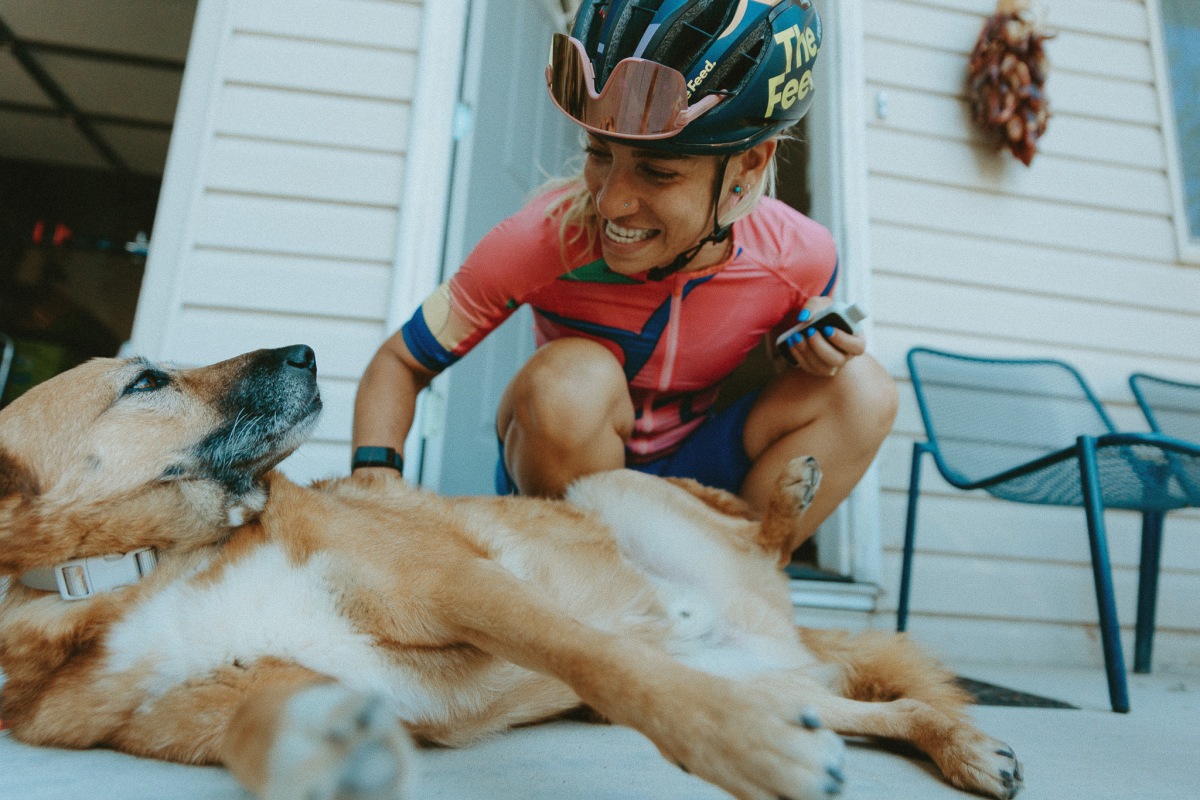
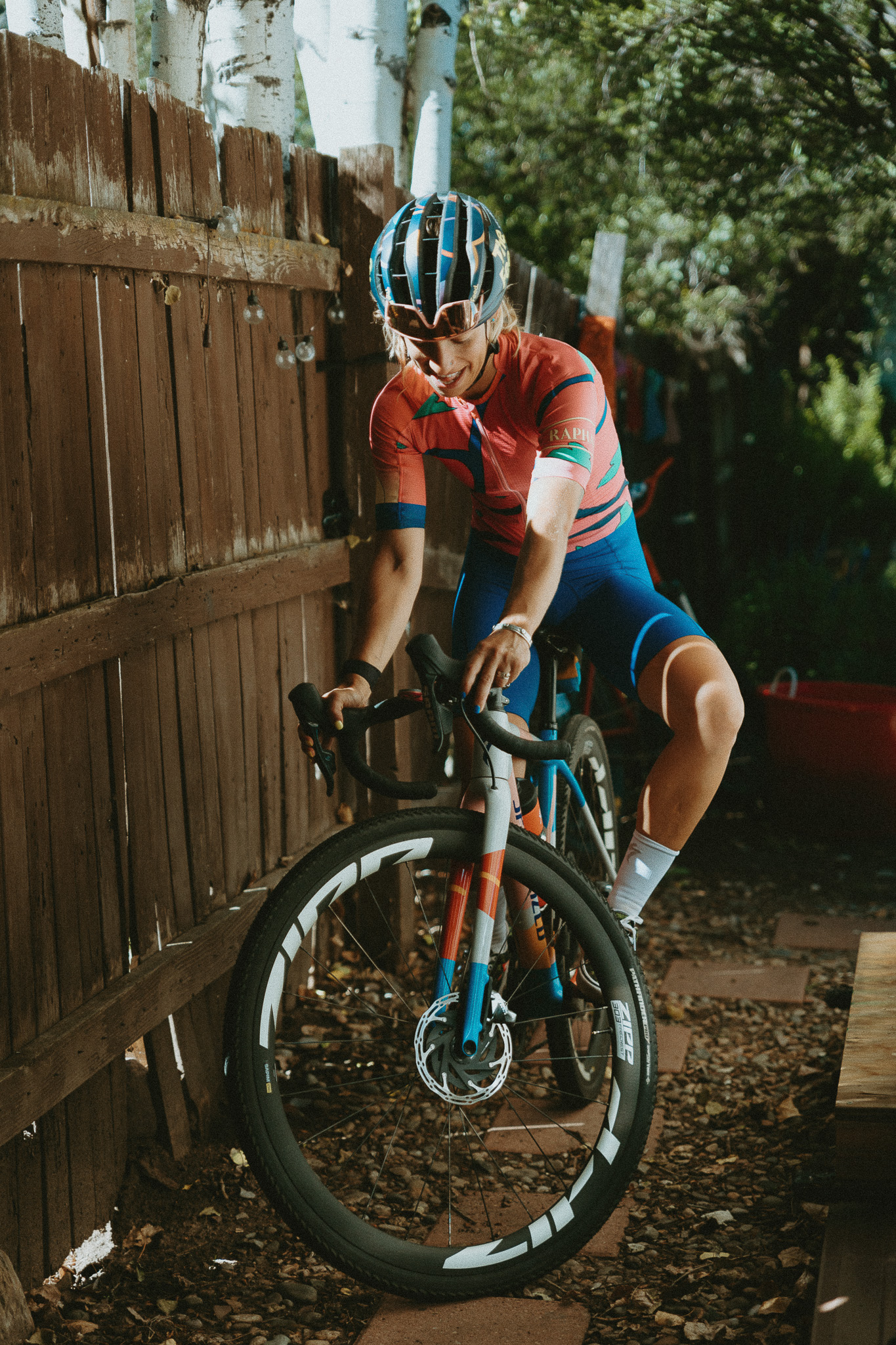
“They would stop me and ask if I was going to go down this or that trail on my bike. And I would just smile and answer—‘Yes, of course’—before disappearing into the forest.”

With teenage years giving way to adulthood—Tok initially working for a company manufacturing chairs before starting his own business TRUCK—as a young man forging a new career as a furniture maker he was determined to follow his own path.

“It was the same with my bicycle. If I wanted to ride, I would ride. If I wanted to surf, I would go surfing. Even when I got married and we had our daughter, I could still find some time to do these things. I can remember when my daughter was eight years old, she would sit on the saddle of my mountain bike—with me standing behind her—and we would ride down some gentle paths.”


As the furniture Tok designs and manufactures is all handmade, his appreciation for the physicality of materials also extends to the bikes he chooses to ride.

“My taste is for a frame made from thin, round tubing which I feel looks very classic. And I never buy a bike because of the brand name. It’s more that I respect beautiful workmanship when the proportions are just so. It’s happier than bad work.”

Enter his garage and you are met with a veritable Aladdin’s Cave of tools, motorbikes and bicycles—a layered representation of Tok’s ongoing fascination for engineered products and artefacts. On the floor sits a barrel of wooden mallets alongside a bench supporting multiple pairs of leather work shoes. And above, a row of near identical brushes that frame a vintage Evel Knievel poster taped to the door. 

“I’m not a collector but I know my taste and can decide instantly if I like something or not. It’s rather that the objects find me.”

With a wood-turning lathe set against one wall and assorted drill bits and screwdrivers arranged neatly nearby, he expounds on how he views the individual items of TRUCK furniture as tools for everyday life—Tok wanting his customers to enjoy them without feeling the need to be too precious about their use.
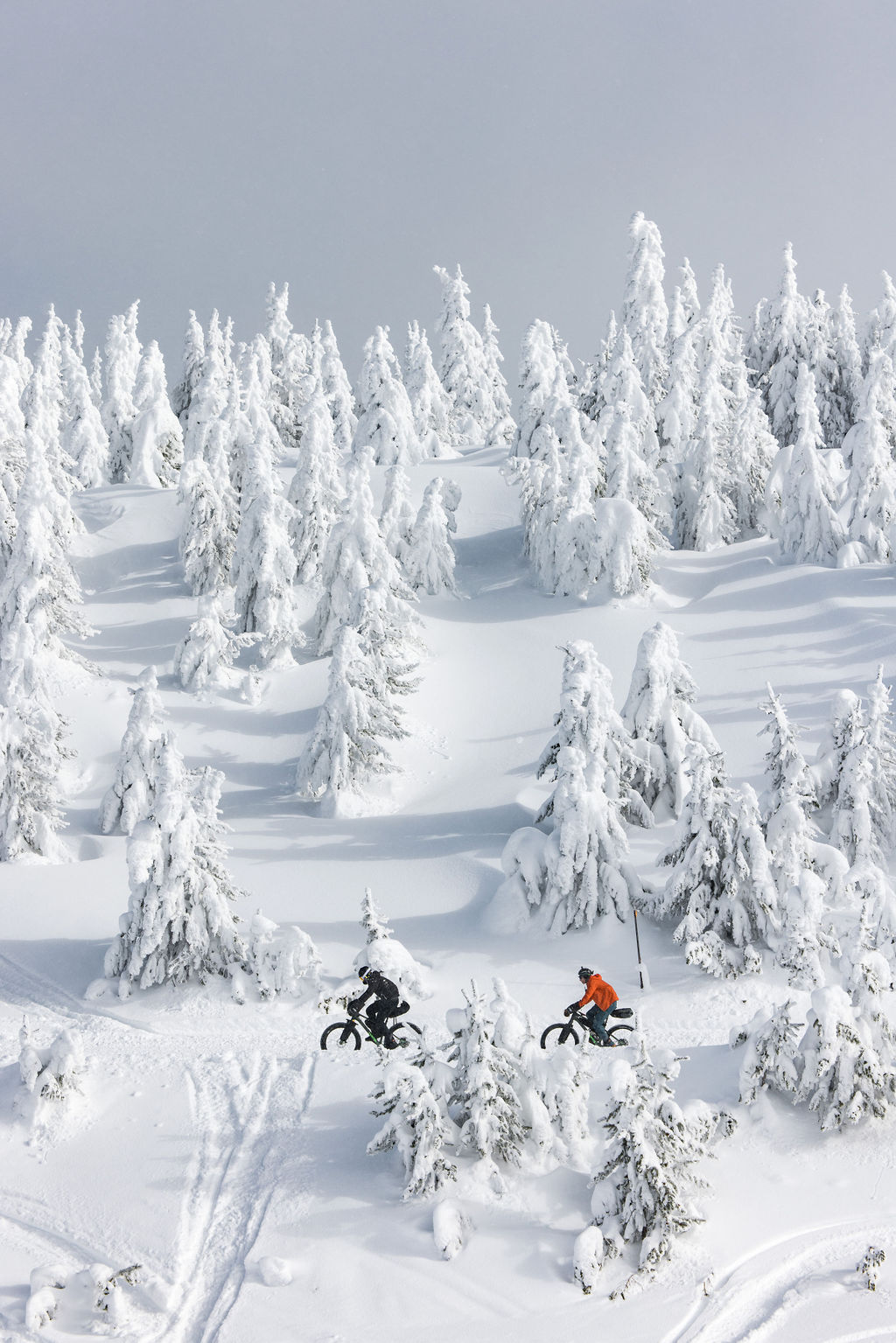

“Sometimes this means you might make a mark with your can of beer or coffee cup. But that is the life of the object and I welcome the patina as it ages. And it’s the same for a bicycle. It isn’t an art piece to be left on the shelf. A bicycle is for riding and having fun.”

As an object, the bicycle has many functions,” he continues. “It can be beautiful standing still but if you push the pedals you move without the need for gasoline. If you drive a car, you don’t feel the wind or smell the pine trees. You can’t hear the birds sing. And because the speed of a bicycle is slower, you can see more.”

Preferring to ride alone or with a small group of friends, his location in Osaka is a short, half hour drive to the mountains—convenient for loading up his bike and enjoying a morning ride with 360° views back down to the city. Choosing instead to ride from home, one favourite local loop takes riverside trails to the Long Walk coffee shop and their collection of vinyl jazz records.

“I just enjoy riding my bike. Whether that’s on the sidewalk in front of TRUCK or up high in the mountains. And that’s something I’ve done ever since I was a young child. Riding out on my mountain bike when I was 13 years old with some biscuits and a small stove that I would use to make myself a coffee.”

This lifelong love of cycling is nowhere better illustrated then in his choice of career. With his high school friends all heading for university, Tok read an article in an outdoor magazine that mentioned a furniture making class in the Nagano Prefecture. Deciding to enrol, he studied for one year and then returned to Osaka where he built his own workshop before founding TRUCK with his wife Hiromi.

“This all happened because I enjoyed mountain biking and spending time outside—the reason I picked up that magazine in the first place. So ever since I turned 18, my professional life has been furniture making. And my riding threads through this journey. When I was a child, I would customise my bike and I still do that today. Little things like some nice tan-wall tyres, the leather from my workshop wrapping the bars or using the stopper from a bottle of single malt whiskey as a bar end. I enjoy making the bike look and function according to my taste. And it’s the same story with my furniture. I make what pleases me.

Tokuhiko ‘Tok’ Kise / TRUCK Furniture

All photography by Lee Basford with kind permission of Rapha / leebasford.com / Humankind

Read more about Lee’s story and his stunning photography here

Luft Los Angeles / BlackHeart Bike Co

I’m on a call with Zach Lambert—partner in Luft Los Angeles and founder of the BlackHeart Bike Company. Looking suitably West Coast casual in a shop tee, he’s recounting the time he first moved up to Lake Tahoe only to discover a bear was living under his house. Not a brown or grizzly he points out with a smile—choosing instead to compare his black bear (and roomy) to a large dog with a penchant for mischief making.

Growing up in New Hampshire – there are black bears there too – a mountain bike was his chosen ride. But when Zach moved to Los Angeles in 2008 he decided to give road biking a go. Researching local cycling clubs, he remembers calling in at the Rapha clubhouse in Santa Monica and what a great space it was. But he was left wondering whether there was this perceived notion that you needed to ride in their kit.

“LA is very big,” Zach suggests, “and that’s encouraged the cycling scene to grow and become more inclusive—lots of interesting characters from a range of backgrounds which, in turn, means there’s more diversity. And then there’s gravel which has helped out a huge amount. Instead of feeling that you’re not wearing the right thing, there’s almost a sense that anything goes and you can create your own unique style. A case of celebrating rather than chastising the differences.”


With the opening of Luft – more on this a little later – rather than any slavish adherence to the so-called rules of cycling, a focus on individuality extends to the items the store carries—a curated range of products based on what Zach and his colleagues actually like and use themselves.

“In much the same way that there’s no right or wrong why to say Luft – we have a wall of cycling caps to help us explain the concept – we’re trying to evolve cycling culture away from one that is elitist and has all these unspoken rules regarding sock height and how to wear your glasses. We’re more, let’s have a coffee and hang out.”

“It’s almost like people discount themselves when they say they’re not a cyclist,” continues Zach. “When maybe they just don’t race or ride thousands of miles a year. So at Luft, we strive to make cycling magnetic and inviting in all its different forms.”


Regular shop rides provide one popular mechanism for achieving these goals. Ranging from large events with riders numbering in their hundreds, after-hours photo walks and a running club help attract a diverse crowd of participants.

“It’s always good fun to finish a ride at the shop for pizza and a few beers,” says Zach with a smile. “And when we hook up with the Venice Photo Club, people show up on bikes and scooters – even roller-skates – before cruising through the neighbourhood with their cameras.”

With a relatively small footprint, the store’s central 10ft long bar inevitably acts as a fulcrum around which people rub shoulders—free cups of coffee encouraging the eclectic mix of customers to hang out and interact.


“Cultural nuances are what makes LA society so interesting,” Zach observes. “It’s not uncommon, if you’re eating out in New York, to have perfect strangers sitting at their own table, six inches to either side of you. In LA it’s the opposite—the tables are all spaced out. In fact, pretty much everything is spaced out. And these norms also dictate behaviour when I’m out riding. Where I grew up on the East Coast, everybody speaks to everybody. Here it’s not as common but I still wave and say hi regardless.”

This riding that Zach describes – and more specifically a search for the right bike – proved the catalyst for starting his own bike brand. A story he tells with a wry sense of humour when referring to certain cycling industry clichés. 

“The bike I wanted didn’t exist—a combination of titanium aesthetic and performance but at an affordable price. And I also came across this sense of seriousness in the bike world. Claims that this bottom bracket is 13% stiffer and saves you 3 watts at an average of 40 kph over 40 km. I mean, who do they think they’re talking to? Because for the vast majority of cyclists, none of that matters.”


“I was looking for a good quality product along the lines of a high end watch. Something with a sense of class and inherent longevity. And it was my girlfriend Kristen that came up with the name—along the lines of having a BlackHeart for all this marketing BS that was coming out from the big players.”

Work started on BlackHeart in 2017 before the brand was launched in January 2020. Zach initially running the business out of a storage unit in Venice Beach which gave a real insider feel to the operation—awareness limited to people Zach knew, their associates and the local cycling scene.

“Pretty cool but not exactly scalable so I started looking for a proper commercial space, got talking to Kristen and our friend Cody, before deciding that we’d open a bike shop instead.”


Looking around at what cycling retail infrastructure already existed on the West Side, Zach counted a handful of high end shops that covered bike sales. But apart from Rapha, there wasn’t really a place where you could simply go and hang out. So talks were instigated with a few brands Zach felt would be a good fit to partner with for the launch and Luft opened its doors in April 2021.

With BlackHeart bikes framed by the store’s street-facing windows, there exists a kind of symbiotic relationship with each venture serving the other in different but complementary ways. Luft builds a sense of community and encourages foot fall—the bikes on display just beg to be ridden.

“If you’re competitively road racing, our titanium Allroad is not for you. It’s also not the kind of gravel bike that just ploughs over ridiculous rocks and roots. But what if you want one bike that will perform on road and gravel really competently—sharp and nimble on the smooth stuff but with 40 mm tyre clearance? And we have the exact same frame design for our aluminium model so you get to enjoy the sweet ride but at a more accessible price point. I would even argue that our aluminium BlackHeart performs way better than low end carbon bikes. Like they say, you can make a great – or terrible – bike out of any material.”

The option to choose a painted fork adds an element of customisation to the build process—a reasoned response to Zach believing it’s “kind of lame” to spend upwards of $10,000 on a mass-produced bike only to find someone riding the exact same colour scheme when you pull up at a stop sign. This thoughtful approach to growing the BlackHeart model range accounting for the flat bar version of the aluminium Allroad that uses an Enve fork for bigger tyre clearance.


“As yet not a model all on its own,” explains Zach, “but something that’s fun with a capital F and puts a smile on your face when you ride it. There’s a bunch of trails near my house that on a mountain bike would feel far too tame. On this bike, you feel like a kid again but without risking life and limb sending it down some technical single track. Maybe a niche product but one that speaks to the idea of placing ride experience front and centre. And whenever I have that flat bar locked up outside Luft – sandwiched between Pinarellos and S-Works – I’ll notice people stopping and taking pictures of it with their phones.”

As our transatlantic time is drawing to a close, I’m curious to know that when looking at Luft – the community, the café, the shop – how it all makes Zach feel? Whether he still gets the same thrill when a shop ride returns for a slice of pizza or a BlackHeart bike is taken out for a test ride?

“I still respond to all our email queries and even the website’s instant message function—these all come through on my phone. And for the first two years all of this traffic was the result of personal interactions, speaking to people at the shop, doing test rides. But over the past year, it’s becoming more and more common that an order will come through from a person that I don’t actually know. And I’m surprised and humbled every time that happens because they obviously must like what we’re doing.”

If the cap fits, I suggest?

Zach smiles as I picture him mentally reviewing his journey so far.

“There’s been a lot of steps,” he concludes, “and there’s still a lot more to come. But we’re all having fun and just taking it one day at a time.”

Zach / Kristen / Cody

Unless individually credited, all imagery with kind permission of Luft Los Angeles / BlackHeart Bike Co

Dan Craven / Onguza Bicycles

Our name comes from an old Namibian word ‘okuti-onguza’ meaning, “the great expanse of desert out there.”

Perhaps the cowboy hat helped but ripples of global interest greeted Onguza Bicycles’ first posting on social media. Featuring a brightly coloured frame – casually slung over the shoulder of a Namibian cyclist – and set against the rocky backdrop of the world’s oldest desert, there was an immediate sense of exciting things to come. At the time a fledgling new brand founded by ex-professional road cyclist Dan Craven, a year later and the first batch of gravel bikes was unveiled at the handmade bicycle show Bespoked.

Over a call from his home in Namibia, Dan took a look back over the past 18 months and beyond—an eloquent and fascinating commentary on his own experiences with frame building, how the Onguza dream finally became a reality, and why this next chapter is firmly rooted in the land of his birth.

cyclespeak
So you’re at home in Namibia?

Dan
That’s right. It’s a beautiful morning here in Omaruru.

cyclespeak
It’s good to finally sit down and talk.

Dan
Even if I got here late [laughs].

cyclespeak
Could you set the scene? Are you living on the farm?

Dan
I wish [smiles]. I did grow up on a farm just outside of town but my family and I are now living on the main street. I’ve been coming and going but they’ve all just arrived, so this is more a launch pad for our life in Namibia.

cyclespeak
That’s quite a big change for everybody?

Dan
Considering my wife is American, went to university in Montreal, lived in London for 13 years and now lives in a town that even Namibians consider small—then yes, you could say that. But Omaruru does have many things going for it. If you ask any Namibian to name an artistic town, this is basically it.

cyclespeak
But I’m right in thinking you were born in Otjiwarongo?

Dan
That’s the town next door. But in Namibian terms, next door can be 140 km away.


cyclespeak
I put Otjiwarongo into Google Maps and it looks like an interesting place. There’s a fashion museum and a crocodile farm.

Dan
The crocodile farm, yes. But a fashion museum?

cyclespeak
The Museum of Namibian Fashion. According to Google.

[Dan entering a search on his laptop]

Dan
Wow. Now you’re teaching me stuff. Because that’s the town where I was born and went to school but I never knew about the museum.

cyclespeak
I changed the setting on Google Maps to satellite and zoomed out. There’s a lot of empty space in Namibia.

Dan
Namibia used to be the second least populated country in the world in terms of people per square kilometre. I think we’re now third so when we say we have wide-open spaces, we really mean wide-open. If we drive from where we live in Omaruru to the country’s capital, Windhoek, that’s a journey of 240 km and you go past two towns.

cyclespeak
Can I ask – and I’m conscious this might be a cliché – but Namibia appears to be a rather rugged – possibly extreme – physical environment?

Dan
That’s a pretty fair assessment.

cyclespeak
And you’re very softly spoken.

Dan
No one has ever put those two statements together before.

[pause while Dan is thinking]

So, yes, Namibia has got the oldest desert in the world. Namibia is rugged and dry. We like to say we’re built a bit different to live here. But, interestingly, the people are super friendly because of it.

cyclespeak
Because life is so hard?

Dan
I’m being playful but there’s a certain European country not known for its friendliness. But if you look at that country, it’s full of farming and wine and abundance. In Namibia, we have an abundance of sand. So if you want to get by, you have to smile and be happy.

cyclespeak
Is that what you remember from your childhood?

Dan
One of my parents’ friends that I knew when I was growing up – a chap called Garth Owen Smith who’s unfortunately now passed away – he won awards from the British Royal Family for his work in saving the rhino. He was this super tall man who lived out in the desert and drove Land Rovers—a real gentleman, very softly spoken and he thought about every word he was saying. So maybe some of these traits rubbed off on me?


cyclespeak
If we cast our minds back to March 2021 when you posted that first picture of an Onguza frame, I clearly remember the excitement it prompted across social media platforms. But I believe you had the initial idea for Onguza bikes way back in 2010 when you were still racing professionally.

Dan
Oh yes.

cyclespeak
And the notion that there’s no such thing as overnight success – that it comes from a long process of chasing ideas – made me wonder what planted the seed?

Dan
I was racing on a steel Condor at the time but didn’t really know anything about steel bikes. And then Rapha approached a few frame builders to fabricate one-off bikes for their Rapha Continental series. One of them was built by this American chap called Ira Ryan and it just blew me away. So I did some research – expecting to learn how this guy was a mechanical engineer and could build rocket ships – but it turned out he had no such background. And then I discovered he’d only been building bikes for five years. So here’s this chap with no formal engineering education and only fabricating frames for a handful of years, and he’s collaborating with Rapha. Which, at the time, was one of the highest compliments a builder could receive.

cyclespeak
It was a very well-respected build series.

Dan
These ideas kind of hung around in the back of my mind until a couple of years later when I grabbed the opportunity to attend the Bicycle Academy on a five day frame building course.

cyclespeak
That sounds like fantastic fun.

Dan
It just blew my mind that I could walk into this workshop and five days later I’d walk out with my own bike frame. So off I went and then two weeks later I went to a different workshop belonging to a friend of mine and built another frame in five days. I returned to Namibia with this second bike and promptly won a race on it.


cyclespeak
Can I ask what kind of race?

Dan
It was 350 km through the desert that I won on a bike I’d built 10 days beforehand. So that was a ‘wow, I can do this’ moment. But…

cyclespeak
But?

Dan
The big takeaway that I haven’t alluded to yet is that I’m a privileged, white man with a beard [laughs]. And does the world really need another white man with a beard building bicycles?

cyclespeak
And this got you thinking?

Dan
It did. Because what about the people in Namibia? By necessity, it’s a country of makers. When you have very little, you take that and turn it into something. So what happens when you give someone a bit more? Some beautiful steel tubes that come all the way from Italy and the necessary training to combine these into an amazing bike frame.

cyclespeak
And Onguza was born.

Dan
We have these two gentlemen – Petrus and Sakaria – that have worked for my family for 20 years as farm labourers. And I can remember countless times when something was broken on the farm and the next day they would have figured out how to fix it. So if I can build a bike frame in five days, what can these guys do? And that’s where the whole idea originated.

cyclespeak
So what happened next?

Dan
Fast forward to 2017 and I invited the frame builder Robin Mather to visit Namibia. He stayed with us for a month to help teach Petrus and Sakaria. And to be honest I was a little apprehensive because I’d spent a fair amount of money arranging Robin’s trip and what if he thought I was wasting my time with these two chaps?

cyclespeak
I suppose it was a meeting of two very different worlds?

Dan
Robin had been working at the Bicycle Academy teaching student after student. And when it came to Petrus and Sakaria, he immediately recognised how they lacked a formal education in terms of mathematics but their innate understanding of making simply blew him away.

cyclespeak
A sense of relief for you?

Dan
It was amazing—and a massive validation. But then I had to catch a flight for a race in Canada and things once again kind of petered out and came to a halt. Which was really painful because every time there was a speed bump, everything would stop. And considering we’re sitting all the way out in Africa, speed bumps happen pretty frequently.


cyclespeak
So what happened to change this situation?

Dan
My career finally ended and I was faced with that classic question—what am I going to do with the rest of my life? I did have the luxury of a number of paths to follow but looking back at this pivotal time, I really only had one option because all the others were meh. They had certain advantages but they weren’t worth leaving my young family for.

cyclespeak
Are these internal monologues something every professional cyclist experiences as they approach retirement?

Dan
Which monologue are you referring to? As there can be multiple [laughs].

cyclespeak
The what next.

Dan
I personally said for many years that the moment I knew what I’d be doing after racing, would be the moment I stopped racing. And my career was more interesting than it was good. I wasn’t making tons of money from cycling but I was doing better than surviving and having loads of fun. But when injuries finally ended my career, I spent the next four years just floating around looking for this next step. By then I was married and didn’t really want to come back to Namibia because it’s such a big place but also such a small place if you know what I mean?

cyclespeak
But you did come back?

Dan
I did. Because I had this nagging thought that I couldn’t put aside—that returning to Namibia was what I needed to do.

cyclespeak
When you say you knew you had to come back, was that to start building bicycles?

Dan
If it wasn’t for Onguza, I wouldn’t be here now.

cyclespeak
I suppose it’s a certain state of mind? When you’re visiting somewhere on holiday, mentally you engage but only on a certain level. Now you’re building a business but also a sense of place with your family?

Dan
Yes. But…

[Dan pauses]

We lived for a while in London and my wife thought she was going to live there forever. And then we lived in Spain and then California and then back to Spain and had similar thoughts. And every time we arrived at wherever, we’d decide to go hard and build a connection. Now we’re here in Namibia and all I can say is that after a difficult couple of months we’re beginning to feel at home. And you have to factor in that for me, as I’m Namibian, making friends is relatively straightforward. For my wife who’s American, it’s a bit different. On one level this land is all about sand dunes and elephants and cheetahs. But she’s really creative and interesting and she’s now discovering this group of people that reflect those characteristics back. And, interestingly, everyone we really get on with seems to be a maker in some fashion. Our best friend in town, as an example, is a carpenter.


cyclespeak
You became a maker yourself when you built your bicycle frames. And now you’ve returned home to Namibia to continue that journey with Petrus and Sakaria. And what interests me, is that you raced professionally on the road for 15 years but your first Onguza bike is for gravel. What determined that design decision?

Dan
For the very simple reason that a gravel bike suits me really well. I live in a town that has one tar road that goes north to south. If I want to ride to the next intersection with another tar road, then I would need to travel 65 km south or 140 km north. Needless to say, as tar roads are in relatively short supply, the number of trucks and other cars is absolutely insane. And when I was a professional cyclist, if I was spending time in Namibia, I didn’t want to train on a mountain bike because the geometry is so different. But a gravel bike was pretty close, so that’s what I rode and still do. In fact I built myself a steel gravel bike back in 2016—only then the term gravel bike hadn’t become a thing. We called them monster cross and if you Google my name with that term you’ll find an article with some pictures of the bike I built with Matthew Sowter at his Saffron Frameworks.

[I did and you can]

Dan
It’s always made sense to ride a gravel bike in Namibia but, that said, the second Onguza frame we’re going to build is a road-plus bike. And then our third bike is either going to be a mountain bike or a different take on gravel.

cyclespeak
Which would be?

Dan
Imagine a 1980s road bike with a lugged fork that can take mountain bike wheels. Very thin tubing balanced with deep section wheels and electronic shifting.

cyclespeak
I do like a classic frame silhouette with round tubes but dressed up with carbon wheels. To me, that just looks cool.

Dan
Exactly. The thin tubes will flex just enough when you’re riding over rutted roads or trails to add comfort but without being too skinny so the thing is a noodle.

cyclespeak
Exciting plans.

Dan
That’s another reason why we came back here. In the sense that the world doesn’t really need another bike brand but Omaruru needs this one. And Namibia needs this one.

cyclespeak
Petrus and Sakaria, they’re shareholders in the business? So both are invested in your long term goals?

Dan
I’ve got a desk in my office and if there are any problems I’m happy to help. But I’m not building these bicycles. Petrus and Sakaria are the frame builders.


cyclespeak
Can I ask why? Because you’ve built frames before.

Dan
Many reasons and it’s not because I can’t. But running a company – and running a company from Namibia – there’s just so much to do. Getting export permits, trade agreements, ordering parts and looking after my babies because there’s no daycare in a small town like Omaruru. So, as you can see, spare time is in short supply but I was never planning on being a frame builder. One of Onguza’s objectives has always been to put a spotlight on African engineering and making. If I’m in the workshop, people might make the assumption that Petrus and Sakaria are merely assistants. No, no, no, no. I assist them if they need an extra pair of hands. These guys, they’re masters of their own destiny.

cyclespeak
You’ve documented how launching Onguza and getting to the point of delivering the first batch of bikes has not been without its challenges. And I imagine you’ve had days racing your bike that pushed you to the limit of your endurance. Are you by nature persistent and goal orientated?

Dan
When I really want something, other things can fade into the background. I’m very obsessive when I get a bee in my bonnet.

cyclespeak
Can you relate that to your cycling career?

Dan
Becoming a professional athlete, you have to be obsessive. Moving your family to a tiny little town in Africa, you’ve got to be pretty obsessive [laughs].

cyclespeak
And speaking of challenges, one scene of the rather lovely promotional film that can be viewed on your website features your blooded nose?

Dan
Basically, I was having too much fun. The scene that follows shows us swimming at the bottom of a mine shaft which was all the way down this steep, rocky slope. I was descending too quickly, hit a rut and got taken out. But I laughed it off in the knowledge that if you roll with the punches, it makes for entertaining TV.

cyclespeak
It certainly does.

Dan
We found the music, my wife provided the storyline but we left it to the director to decide what would be included or left out. At the time, I was just concerned that I wouldn’t be able to film the scene of me racing the horse the next day.


cyclespeak
But you did. And the film certainly gives an impression of the Namibian landscape which, as we’ve already mentioned, is pretty rugged. Which reminds me of a post you made featuring a Land Rover you’d just purchased. How is it working out?

Dan
It’s very, very lonely.

cyclespeak
How so?

Dan
Because we only have the one. It’s a very big problem [laughs]. But I actually found another for sale earlier today [Dan holds up his phone with the online advert].

Collyn [Dan’s wife talking from the next room]
You’re actually talking to a journalist about Land Rovers?

Dan
He asked [laughing].

cyclespeak
That’s true. I did.

[Collyn enters the room to look at the image on Dan’s phone]

Collyn
He’s actually sort of joking and sort of not.

cyclespeak
In another scene from the film, you’re pictured with a bottle of beer. Is that the Namibian equivalent to the European coffee and cake ride?

Dan
In the capital and on the coast, we order a coffee. In Omaruru we go for a ride and come back for a beer. It’s so hot that beer is almost an electrolyte drink.

cyclespeak
I imagine it’s not without its challenges but life sounds pretty good?

Dan
With the boys being small, we have a family tradition of waking early and starting off each day all together with coffee in bed. And we’re now settled in a place that I never thought I’d come back to—to do something that I’d rather do more than anything else in the world. What more amazing thing is there? And my wife who’s from the other side of the world believes in this journey so much that she packed up the kids and cats and brought them all here to build a home with me.

cyclespeak
And here you all are.

Dan
As much as there are so many hurdles ahead of us, we’re doing something that we personally feel needs to happen. And if no-one else is doing it, then why not us? We’re on this crazy adventure and it’s like a dream.

cyclespeak
I’m guessing it was a particularly poignant moment, unveiling your first batch of frames at Bespoked?

Dan
I catch myself watching Petrus and Sakaria in the workshop and when I think back to where we started five years ago, it’s just mind-blowing to see how confident they are. And then I pick up one of the frames and I’m thinking, look at this. Look at how far we’ve come together. And that’s just…

cyclespeak
Priceless?

Dan
Yes. Priceless.

[pause]

If you believe that Africa has potential – that Africa can make beautiful, handcrafted things – then our bicycles can speak for themselves.

Dan Craven / Visit onguza.com to order a frame or complete build

Photography by Ross Garrett with kind permission of Onguza Bicycles