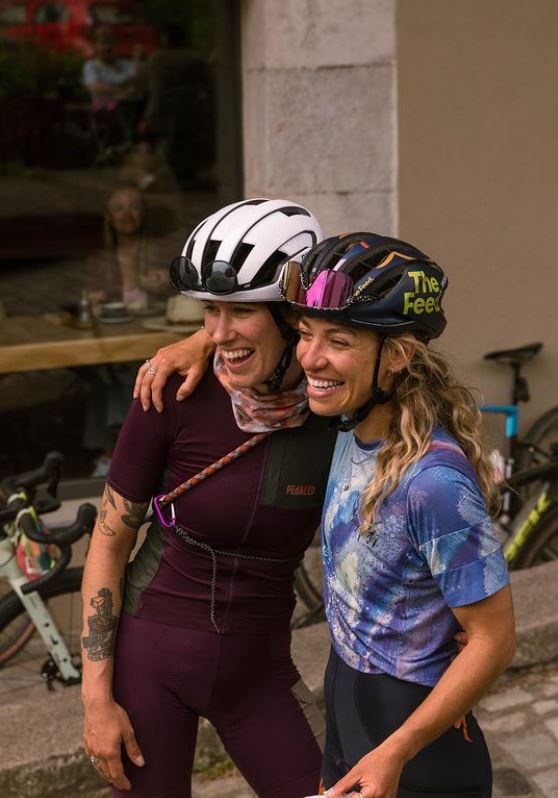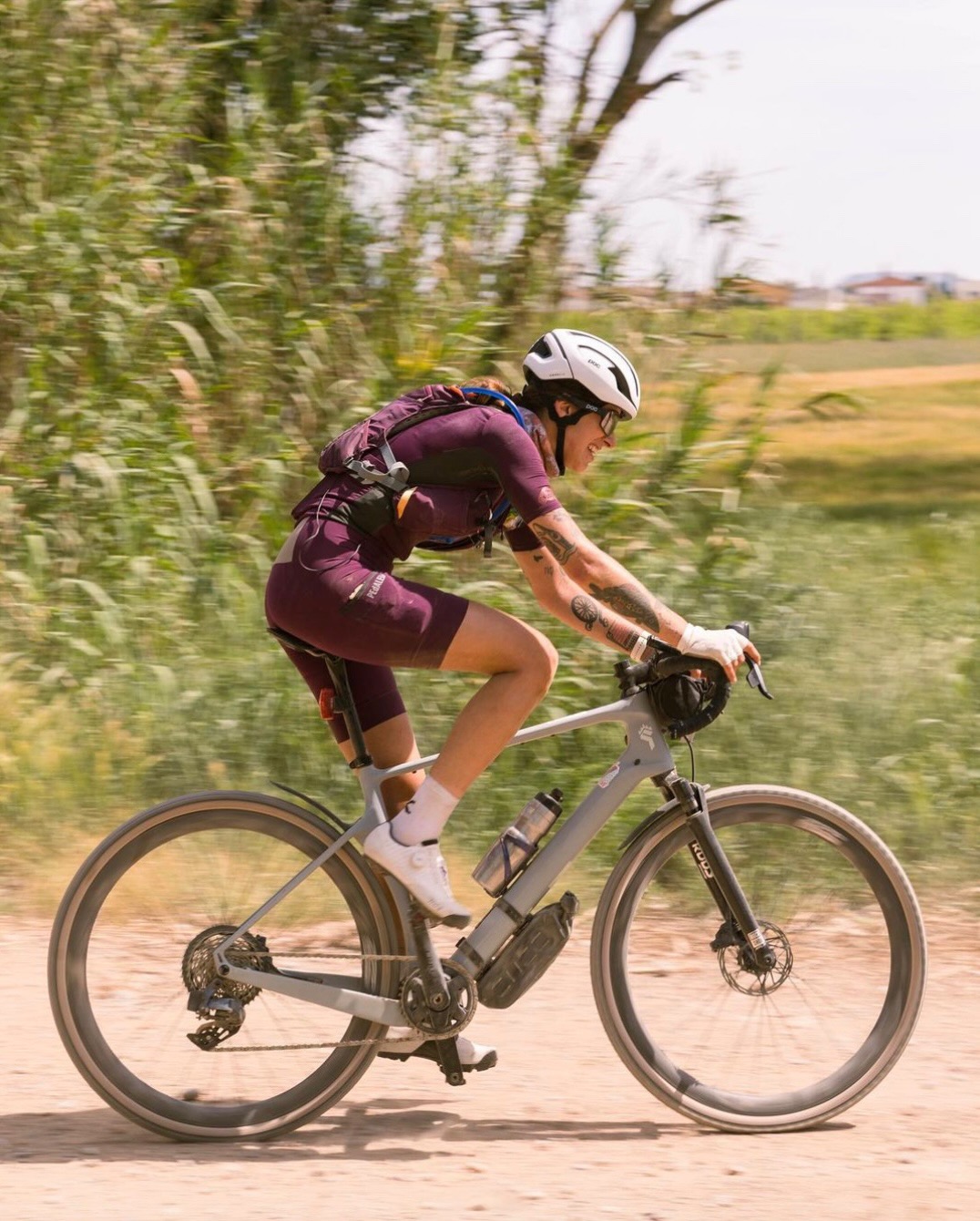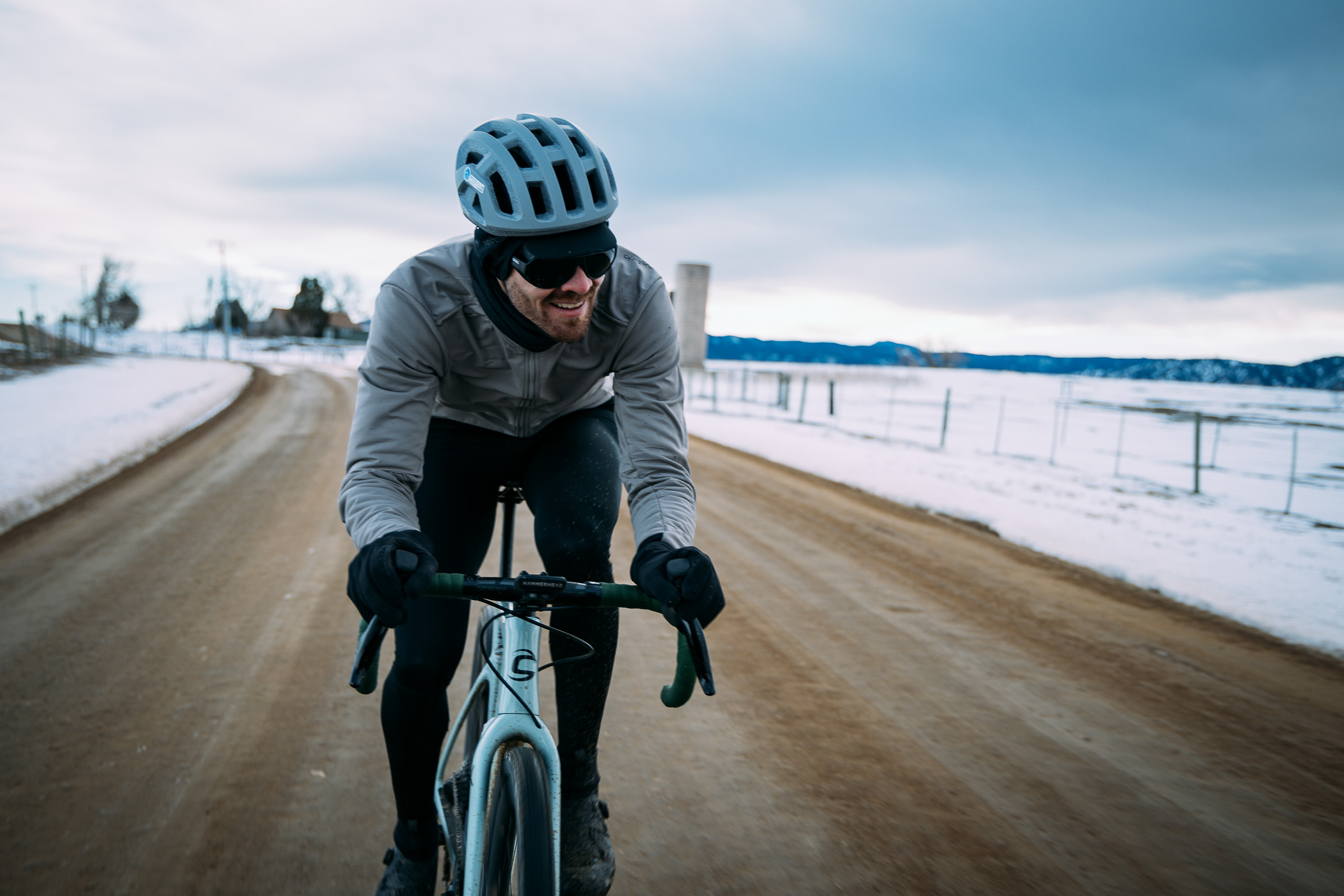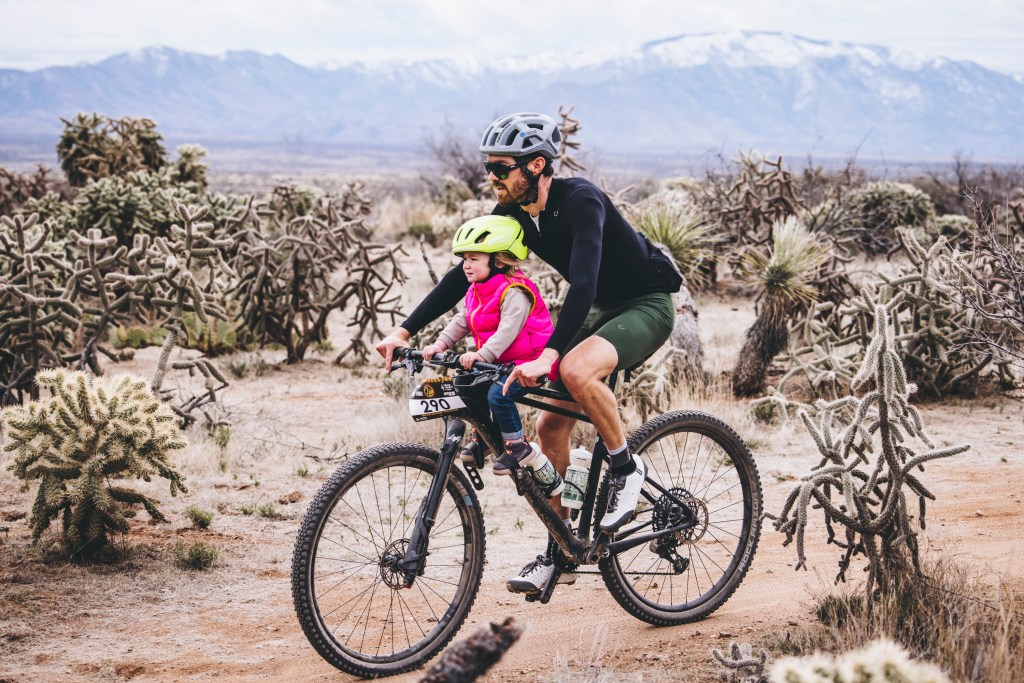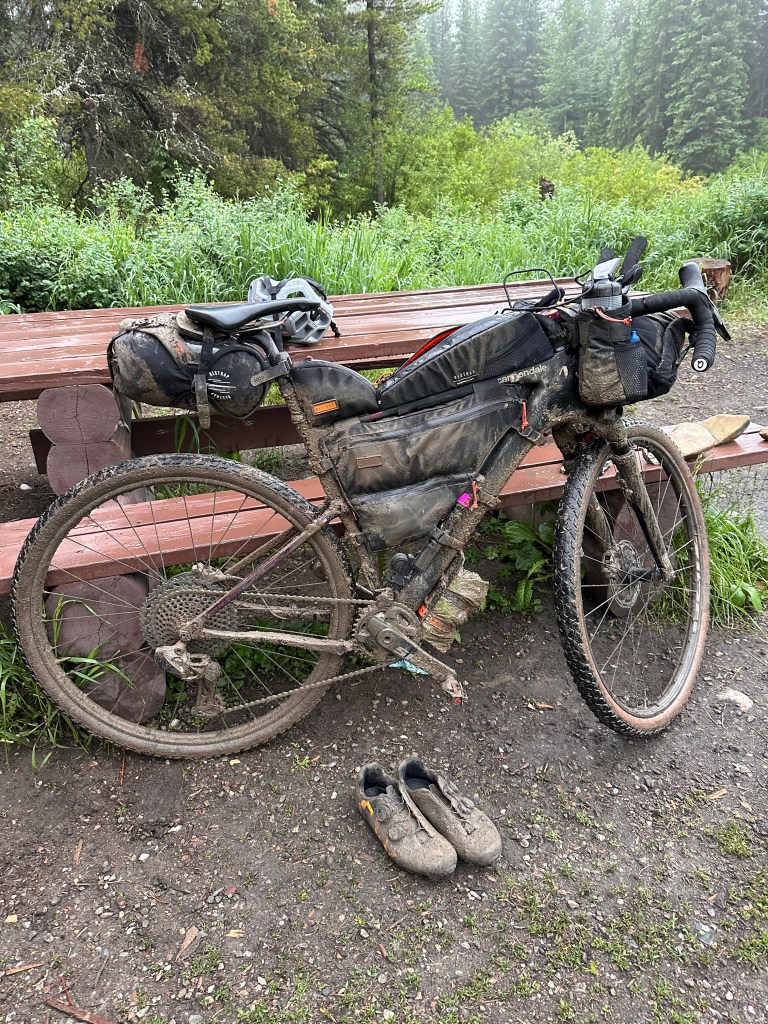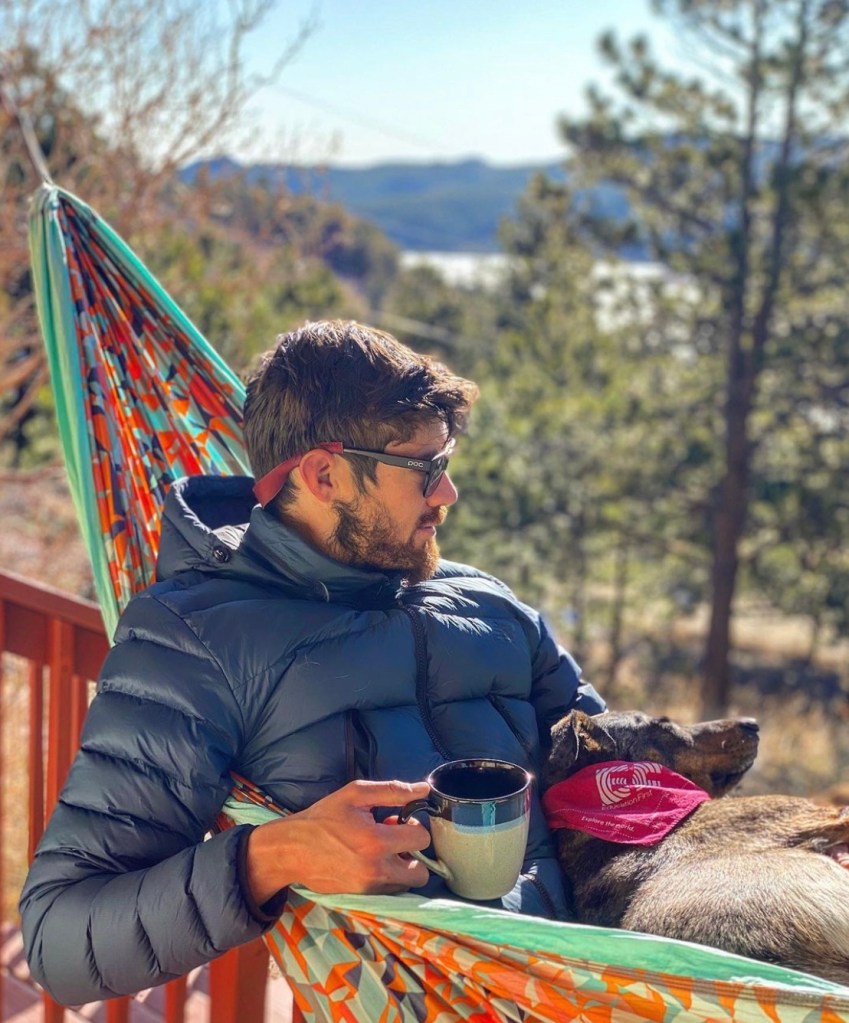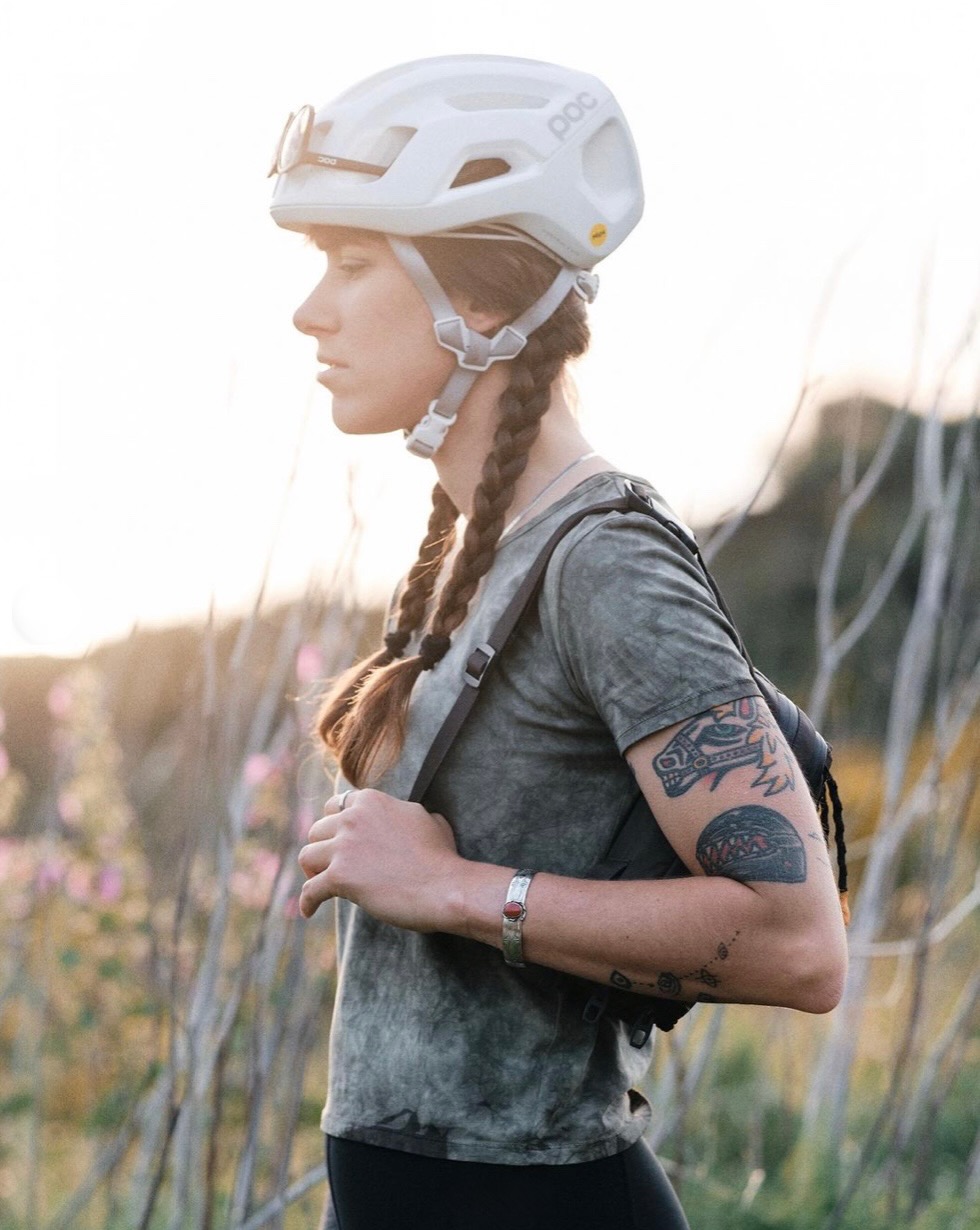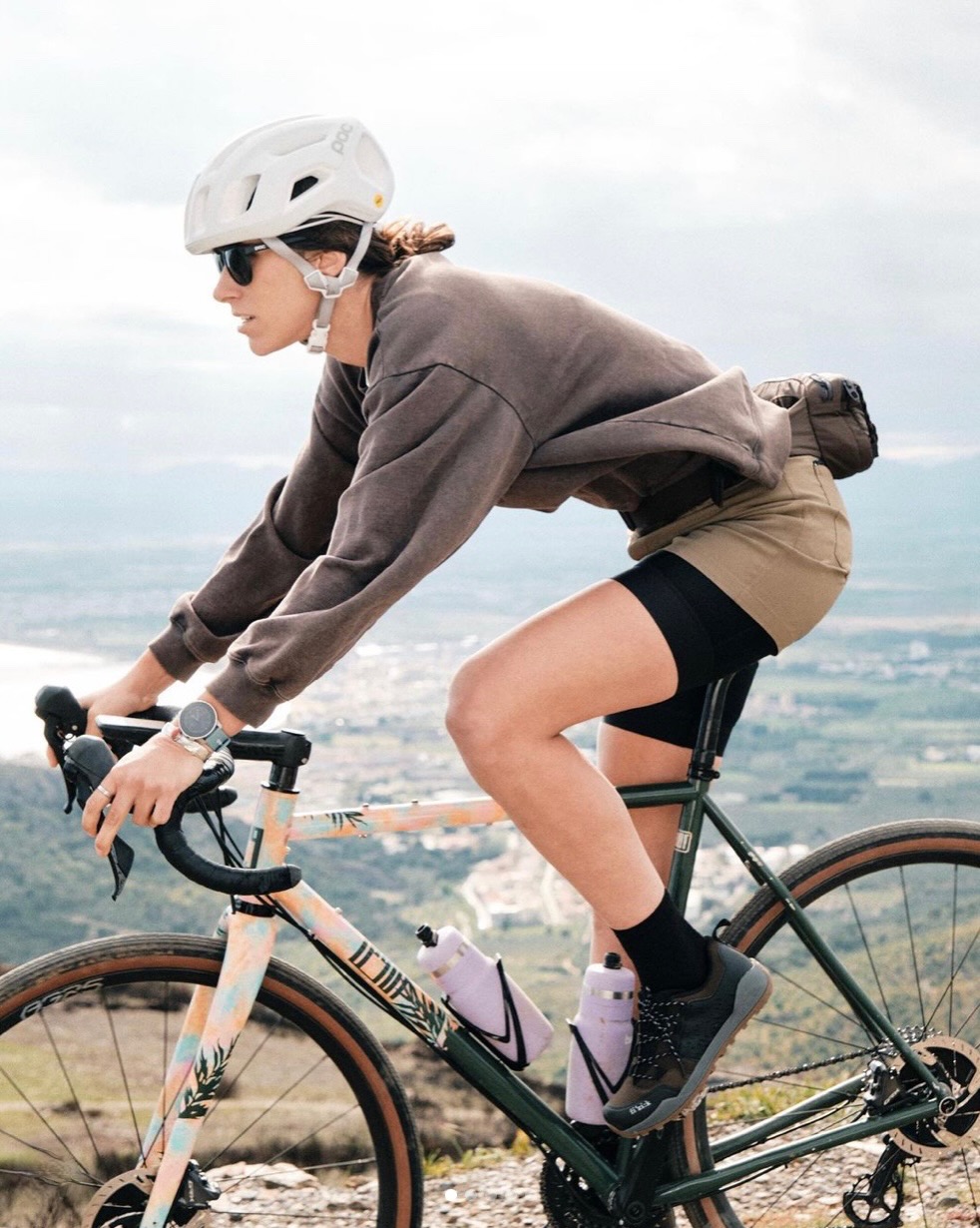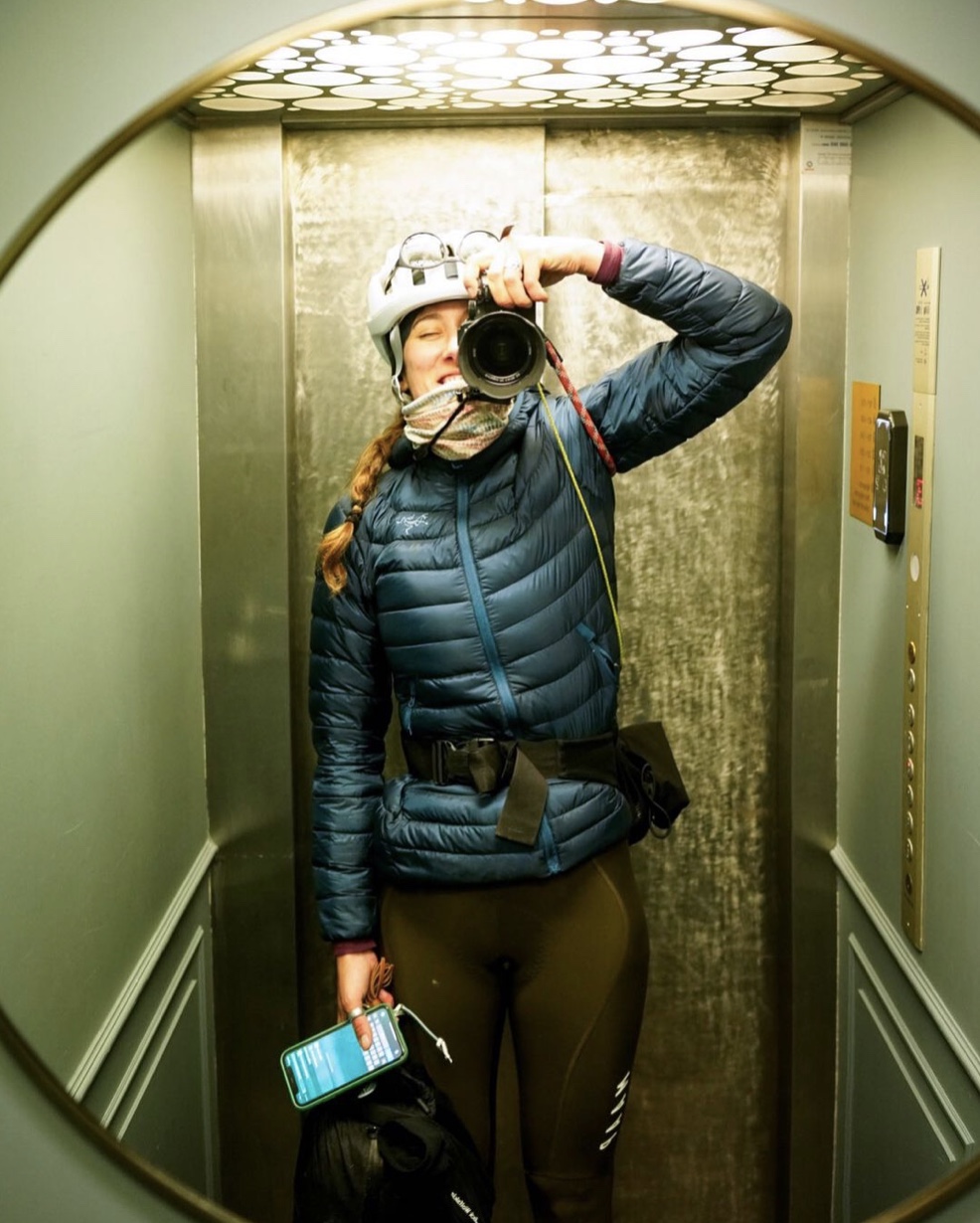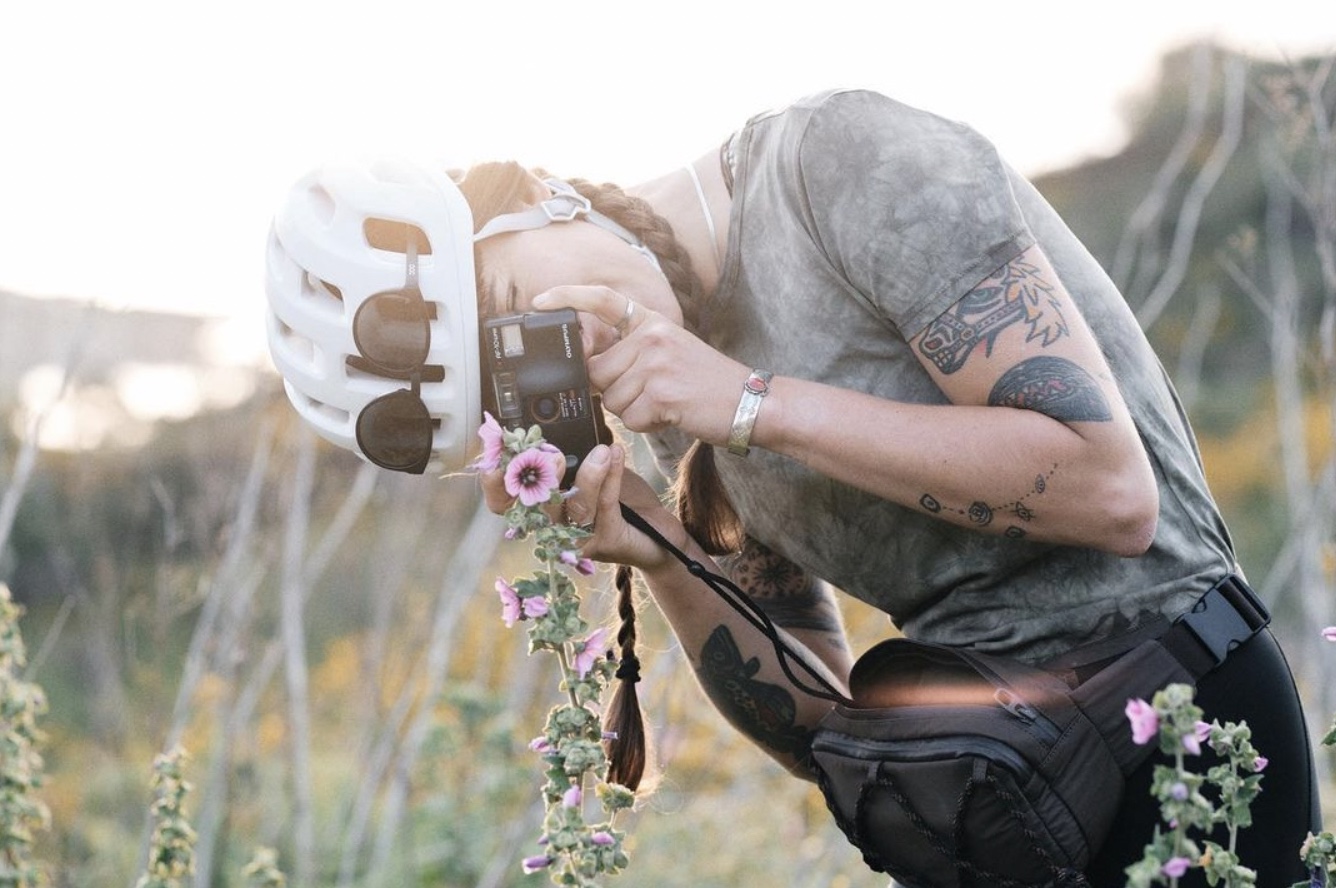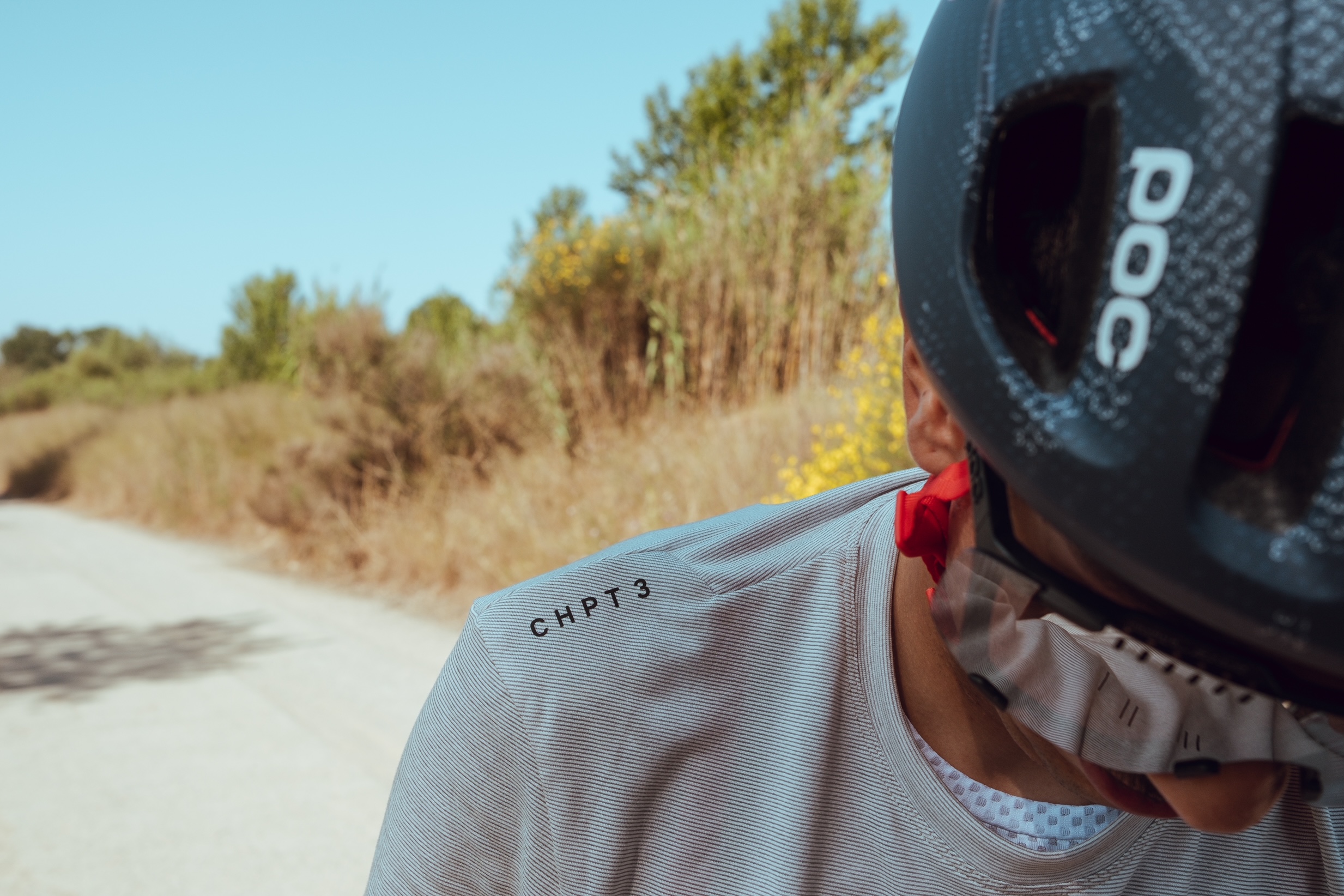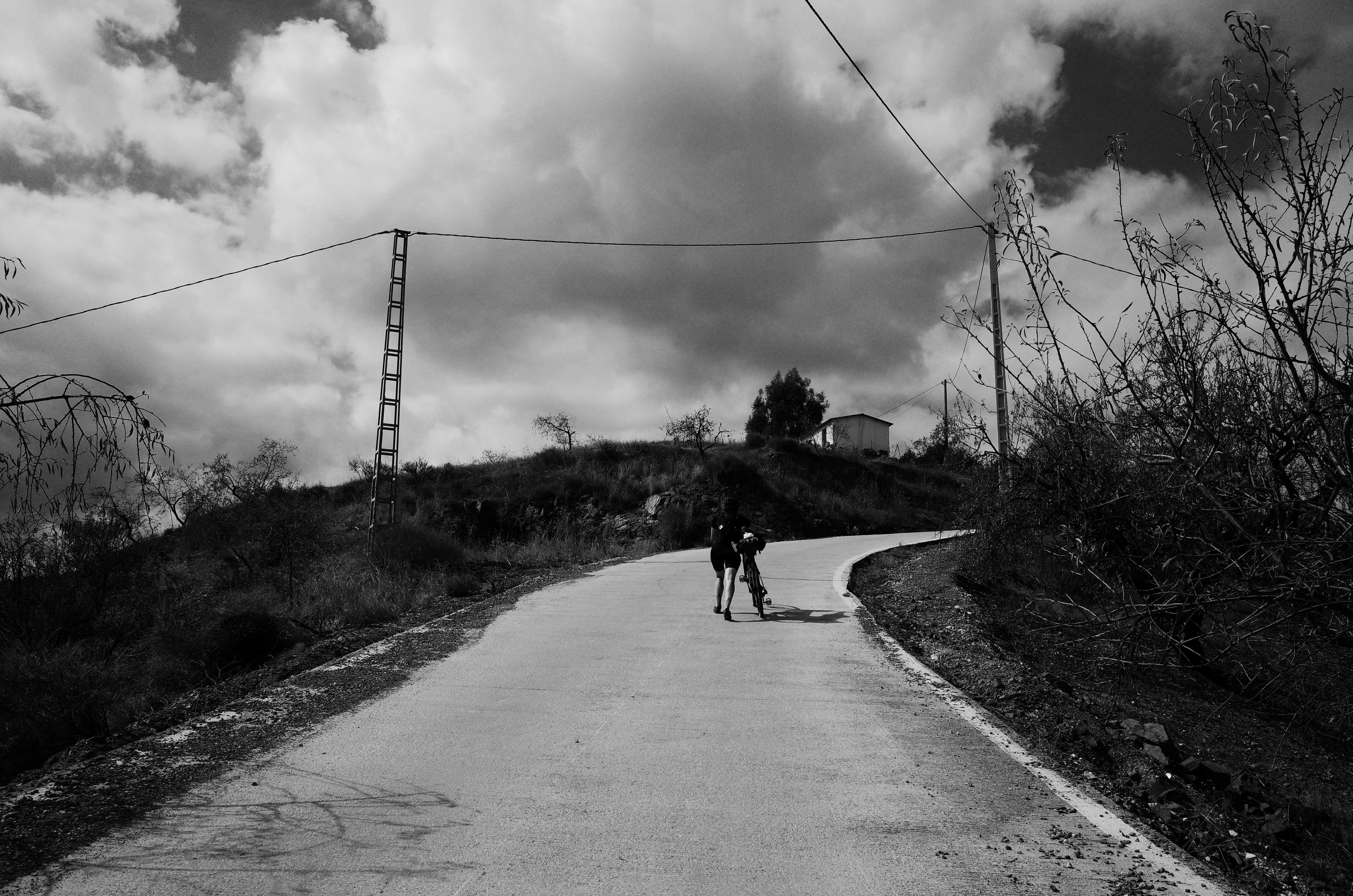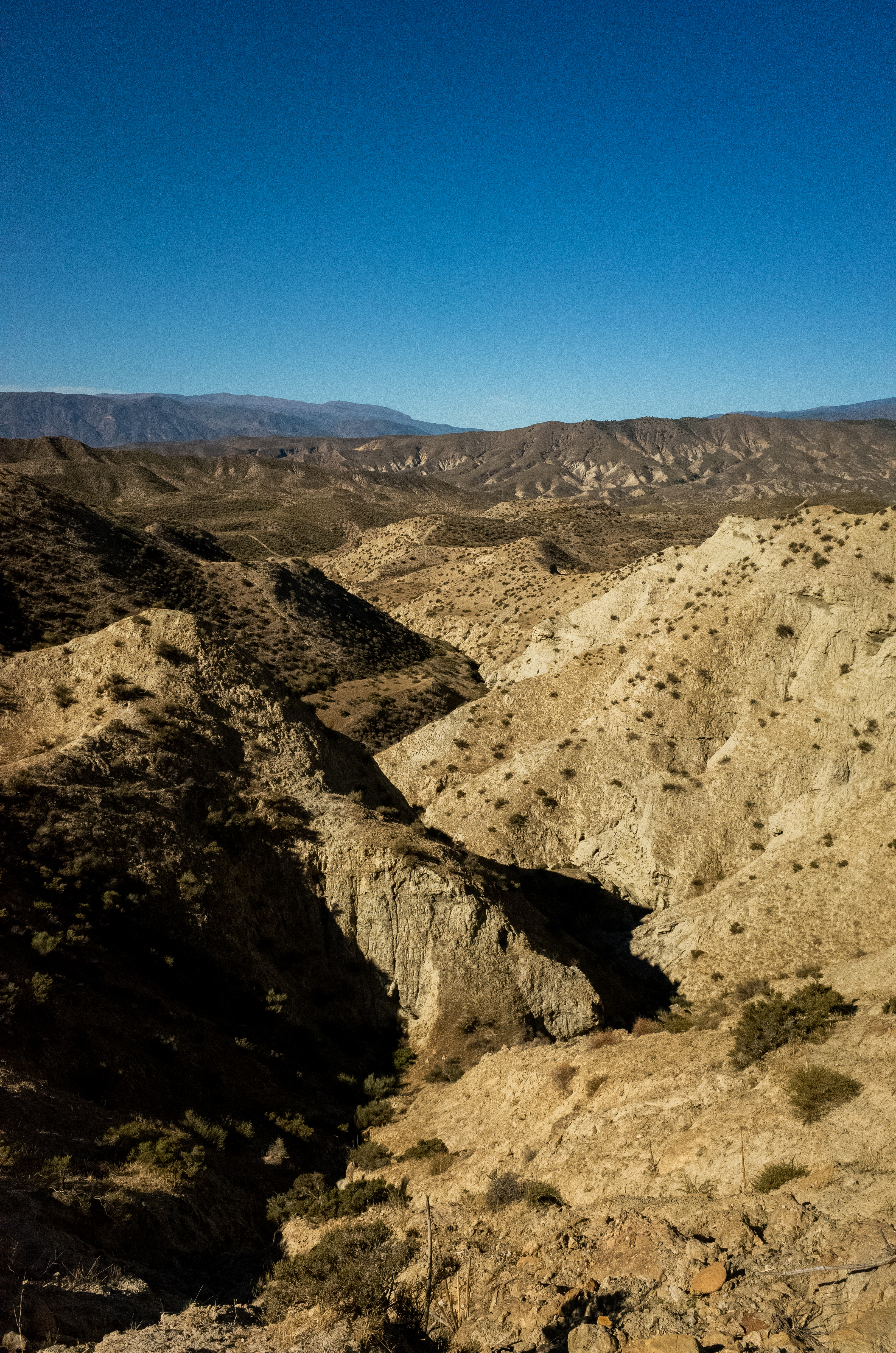
Sami Sauri / Mountain high

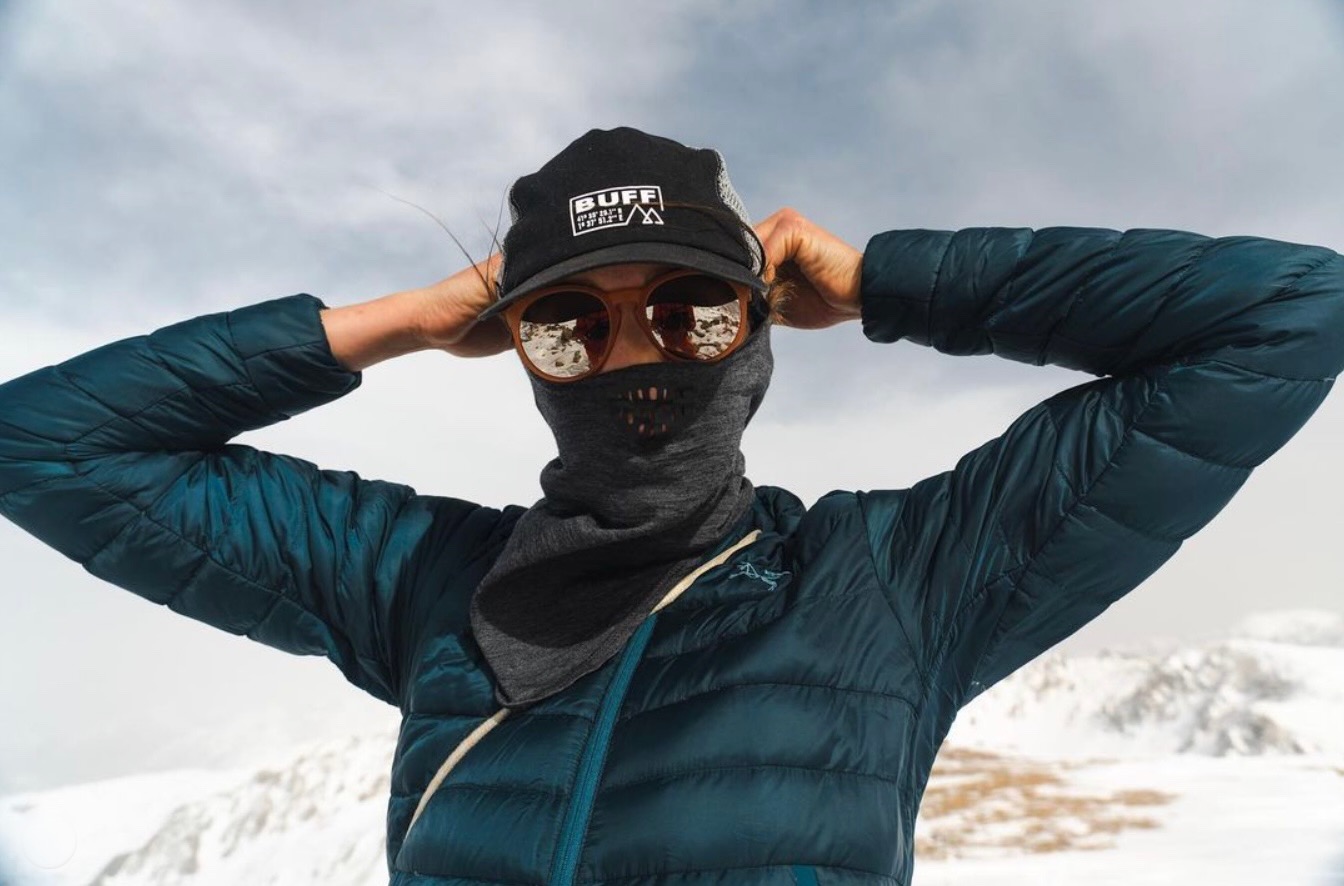
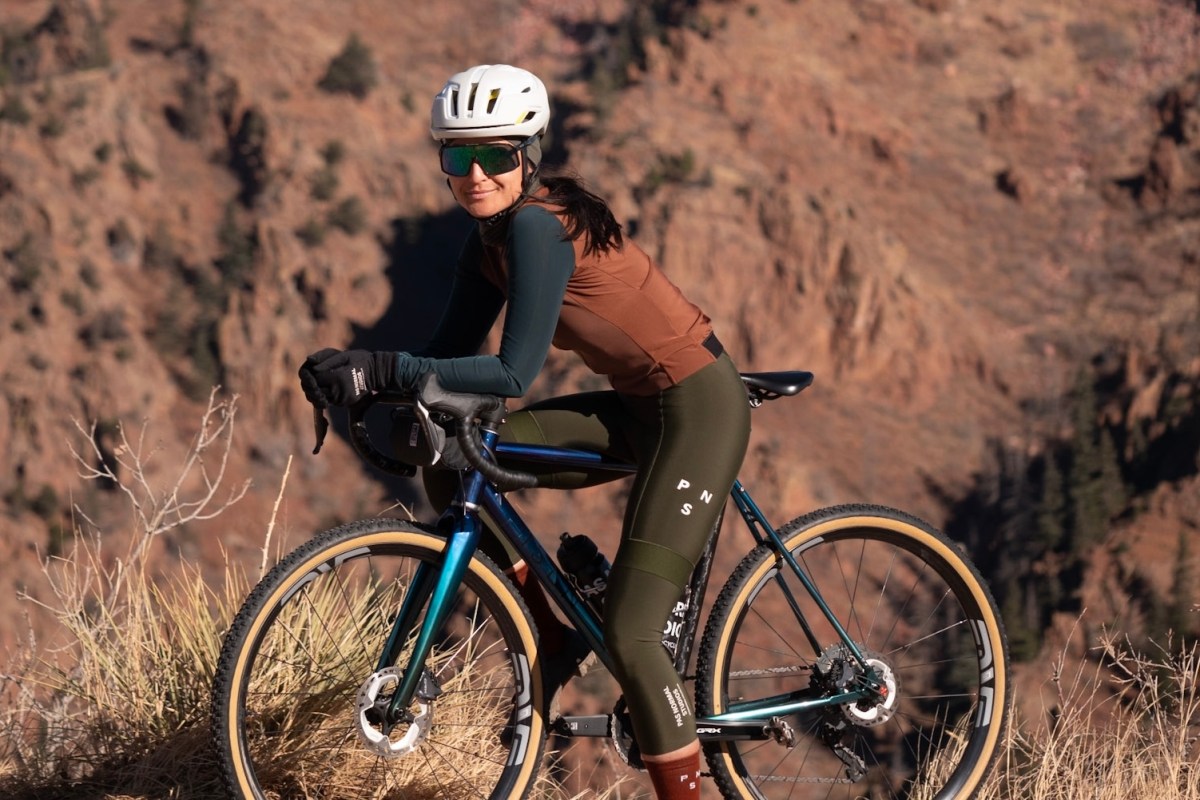
In a year that saw life explorer Sami Sauri swap city living in Girona for a new home in the French Alps, we once again sat down to chat over the thrills—and some spills—of snow buried bikes, baking bread in Arabia and a wild ride by ambulance through Kenya’s Maasai Mara.

Honest, heartfelt and never shying away from life’s complexities, Sami weighs up the uncertainties of her profession, how she sought solitude but then needed to embrace the silence, and why there’s always time to stop and smell the flowers.


cyclespeak
Your hair looks very long, Sami. Though, to be fair, it’s quite often hidden under your bike helmet.

Sami
I’m trying to grow the fringe out after I cut it. I was very disappointed [laughs].

cyclespeak
You cut it yourself?

Sami
Why spend the money to go to a hairdresser?

cyclespeak
When you can do it yourself and then be disappointed.

Sami
Exactly [laughs].

cyclespeak
You’re calling from Morzine?

Sami
My new home in the French Alps.

cyclespeak
I picture you halfway up a mountain in a wooden chalet.

Sami
It’s a typical little village towards the top of a col. So every time I finish my training I have this steep, steep climb back home.

cyclespeak
How’s your French?

Sami
I knew French before so that was a big advantage.

cyclespeak
So that’s Spanish, obviously, and Catalan?

Sami
Yes.

cyclespeak
And also French and English.

Sami
And Italian [laughs].

cyclespeak
Is there no end to your talents?

Sami
I’m also trying to learn some Arabic. I feel it will open doors and allow me to speak to the women I meet in their own language.

cyclespeak
I’m really looking forward to hearing all about your new home but can we start with your recent adventures in Turkey? Judging by your posts and stories, it looked like some kind of Hollywood screenplay.

Sami
The plan was to ride in the northeast of Turkey where few people speak English and there’s very little information available about cycling or hiking.

cyclespeak
It sounds relatively unexplored in bike packing terms?

Sami
Every time I was working on the route, I just kept on finding more and more epic stuff. It’s such a big country and I just wanted to go and discover it for myself.

Click image to enlarge

cyclespeak
So what happened on that fateful day?

Sami
I woke up with my partner Nick to a lovely sunny sunrise. We’d pitched our tent at about 2,000 m and the wind had been a little gusty during the night but nothing that would give rise to concerns. So we had no idea that it was all going to go shitfaced [laughs].

cyclespeak
So it was a beautiful day…

Sami
And we started hiking up, carrying our bikes, all our gear and enough food for two days. My hip was starting to hurt so Nick was going back and forth to carry the two bikes towards the pass that would take us over into the next valley.

cyclespeak
He’s an ultra runner so I’m guessing feels super comfortable in the mountains.

Sami
The higher we climbed, the more snow was on the ground and it was getting quite foggy. And then as we reached 3000 m, the wind was getting really strong and drifting snow over our bikes. It was at this point that I knew we had to quickly make a decision.

cyclespeak
At altitude, the weather can change so suddenly.

Sami
Nick couldn’t feel his feet, I was wearing everything I had and visibility was down to a few metres. So we decided to abandon the bikes and get down to where we could pitch our tent and wait out the storm.

cyclespeak
With snow on the ground, that must make navigation difficult?

Sami
Earlier in the day we’d passed a shepherd’s barn. The path was covered but we eventually reached this shelter—feeling pretty panicky—and pitched our tent inside. We got a fire going and heated up some noodles and then I managed to get phone reception through the SIM card I’d left at home. So I sent a message to my friends Ben and Gaby in France with the Instagram profile name of this guy we’d met earlier in the day before the weather went crazy. He’d invited us for a cup of chai at the house he was renovating and we’d noticed he was driving a 4×4.

cyclespeak
That sounds very fortuitous.

Sami
So Ben and Gaby reached out with our coordinates and asked if he could possibly pick us up in the morning at the barn where we were sheltering. But a couple of hours later—Nick was asleep in the tent—I heard a car pull up outside. I was shaking Nick to wake him and he was like, “Stop dreaming. Nobody is going to drive up a mountain in a snowstorm.” But the headlights were shining through the cracks in the barn door and I jumped up, still inside my sleeping bag, and started shouting. The guy had brought us hot soup and tea and then took us down to this pension hotel.

cyclespeak
That’s so kind.

Sami
They wouldn’t even let us pay for our stay. Amazing.

cyclespeak
And your bikes? Because they were still buried under a snow drift at 3000 m.

Sami
We took a couple of days to recuperate before renting a car—another adventure because everything was in Turkish—and driving to the other side of the pass where we could trek up to collect our bikes.

cyclespeak
You make this all sound very simple but they were covered in snow on the side of a mountain.

Sami
First, we live in a technological world where we can record everything. And we had our Suunto watches so we had the coordinates and we’d left them by a quite distinctive rock.

cyclespeak
I enjoyed your Instagram story where you scrape away at the snow to reveal a wheel which you then bend over and kiss.

Sami
We’d abandoned everything in such a hurry that it was a relief to find our bikes as we’d left them.

Click image to enlarge

cyclespeak
It’s good that it all ended well. And taking our conversation to warmer climes, late last year you took a trip to Socotra where you spent some time with a group of teenage girls?

Sami
I was invited to visit them at home. They smiled and I smiled back and then I watched as they prepared some flatbreads. One of them was wearing curcuma on her face—this yellow henna made from turmeric—and I was trying to communicate how pretty it looked. Well, five minutes later they came out with a bowl and started pouring curcuma all over my body.

cyclespeak
I’m guessing there’s not much you can do as a guest in their house?

Sami
Exactly. I didn’t want to be disrespectful and it was nice that the girls wanted to share a little of their culture with me. But I was so yellow I looked like a character from the Simpsons.

Click image to enlarge

cyclespeak
We live and learn.

Sami
I actually went back to the same family the next time I visited Socotra and took them some notebooks and crayons for school but also some black henna and asked if they would paint designs on my hands and feet.

cyclespeak
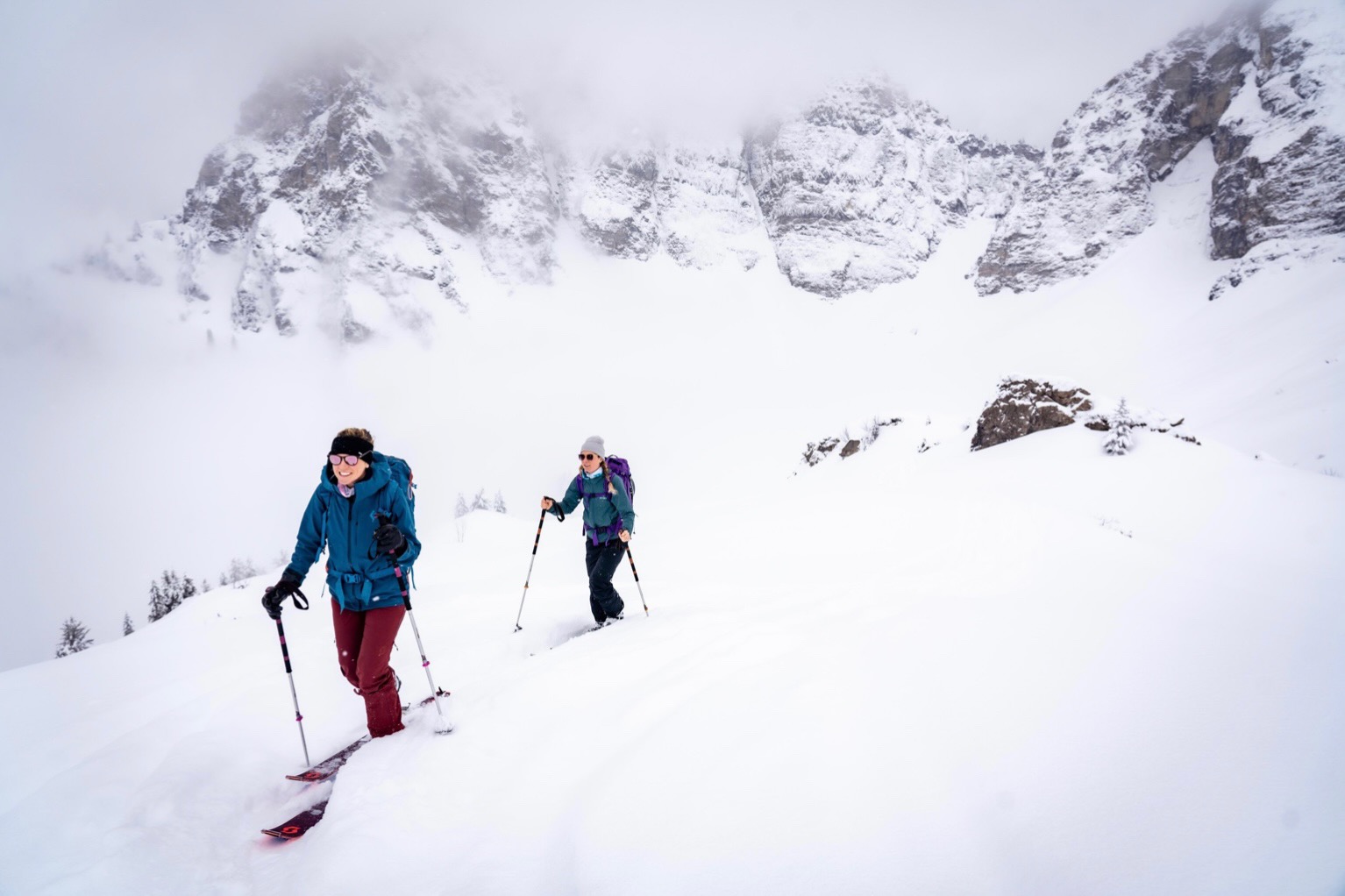
A little after your time in Socotra you had another adventure but this time in the high mountains on a ski / bike trip.

Sami
That was amazing. The fact that you’re travelling under your own power and able to reach places that you couldn’t get to by car. Physically tough as we had eight back-to-back days.

Click image to enlarge

cyclespeak
I’m guessing you burn lots of calories and I saw an Instagram story where you were enjoying a fondue. Is there a forfeit if your chunk of bread falls off into the melted cheese?

Sami
Yes [laughs]!

cyclespeak
There is?

Sami
I always say, if you drop the bread, you pay for the fondue.

cyclespeak
The start of the year also saw you launch your W Collective and I was wondering what inspiration lay behind the original idea?

Sami
It all started from a conversation I had with a friend from Dubai. One day she asked me how I went cycling with a period. And I was like, well, I just use a tampon and that’s it. And when she explained that she couldn’t do that, it left me feeling like I didn’t have any answers. So that got me thinking about all the other women out there who may have questions on a whole range of subjects and maybe we need to create a safe space where ideas, advice and experiences can be shared.

cyclespeak
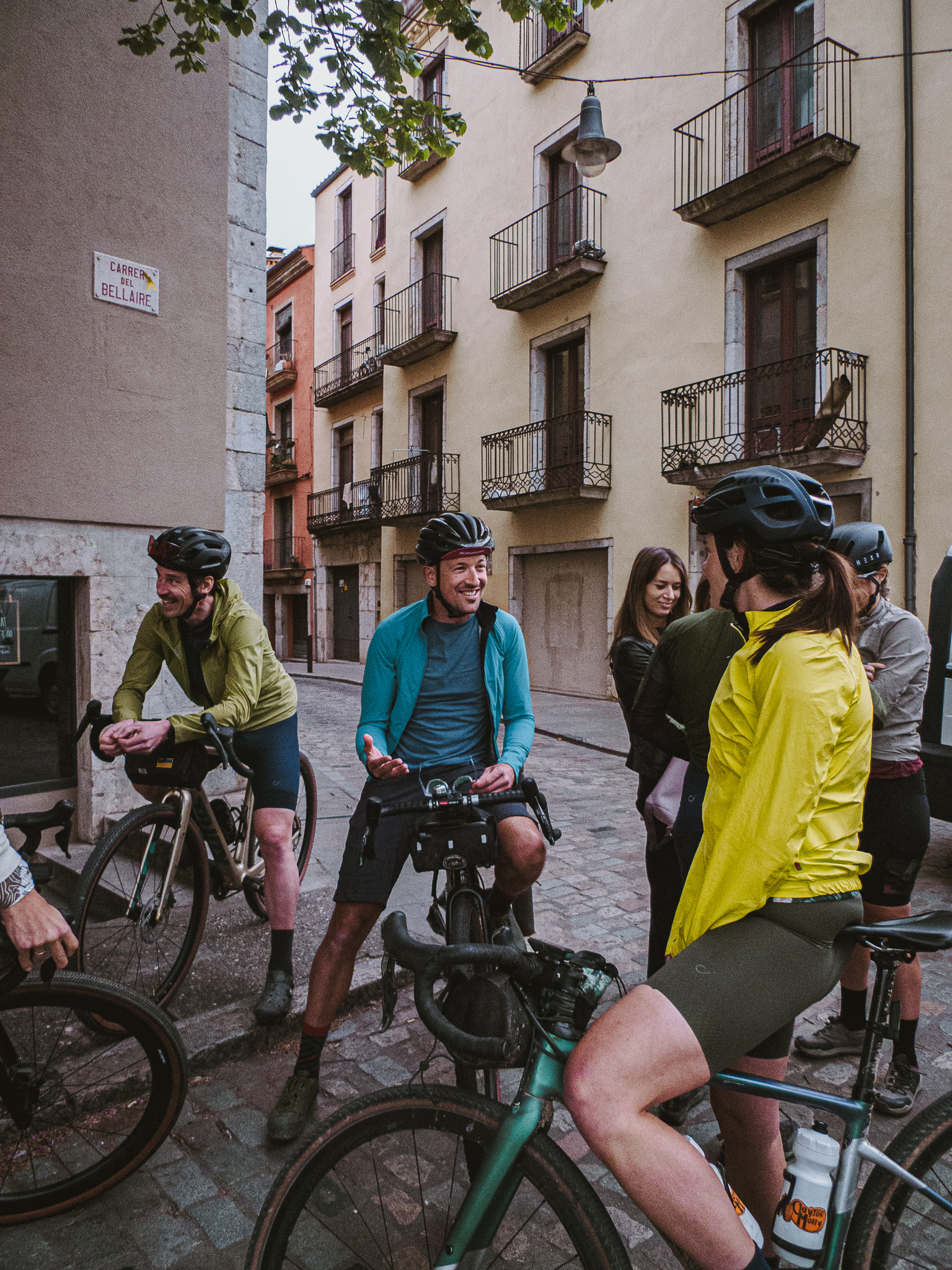
You led a W ride out from La Comuna in Girona in the days leading up to the Traka. What did it feel like to see all those women coming together under a banner that you’d created?

Sami
I honestly couldn’t believe it. I’d advertised the ride but you sometimes have this fear of failure? Where the only ones who show up will be your usual four friends. So when 40 women turned up it was amazing and a little scary because I was the only one leading [laughs]. Luckily my friend Maya—she’s the community manager in Spain for Komoot—was able to help out. 

cyclespeak
So after coffee, off you all went?

Sami
I’d chosen quite a hilly route and when we re-grouped after this longer climb everyone was chatting away—cheep, cheep, cheep—and when I said, “Okay, let’s roll,” no one followed me. They were all too busy getting to know each other [laughs].

cyclespeak
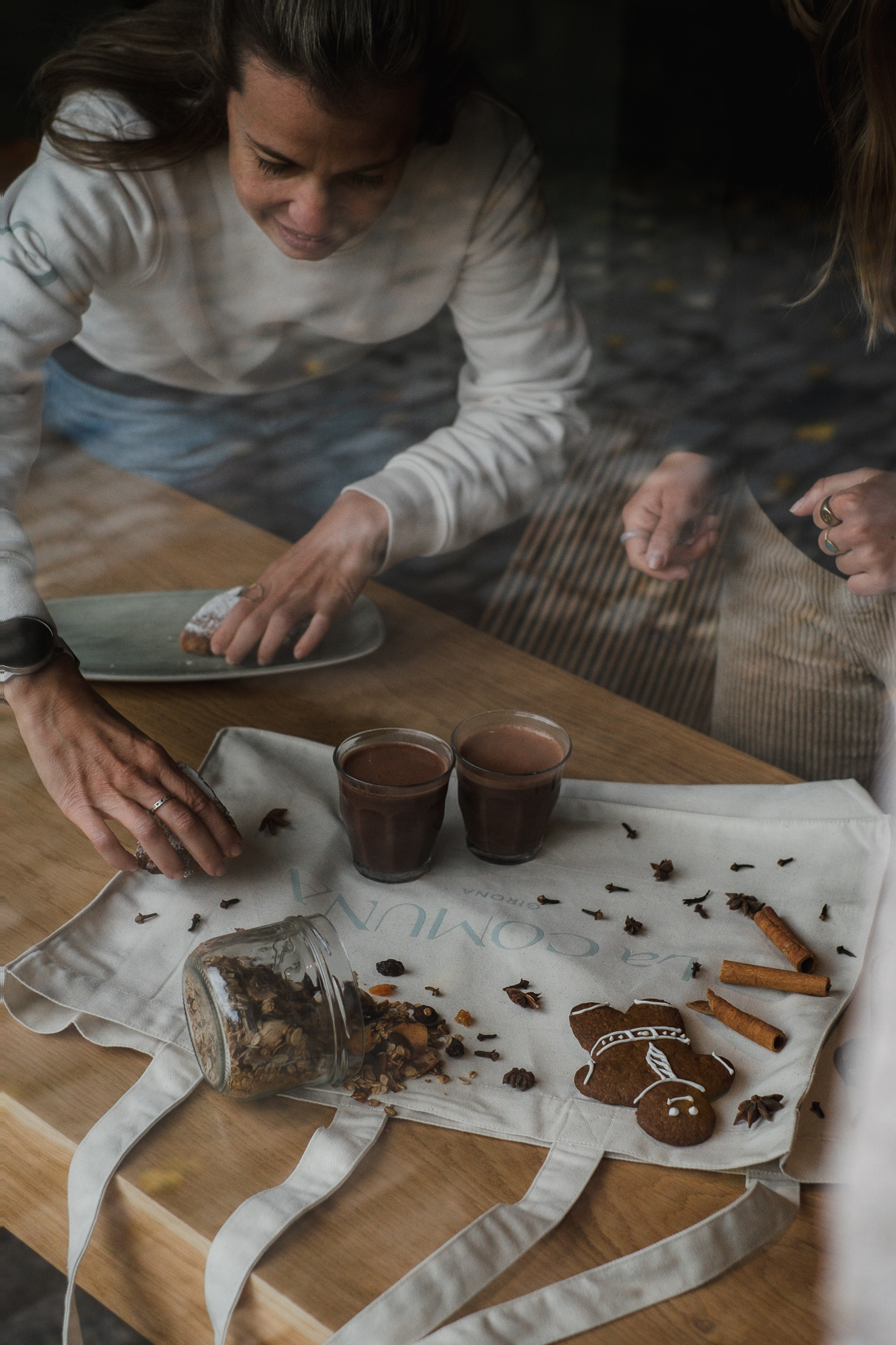
It sounds like a proper social ride. And I saw one of your W Collective stickers on the coffee counter at La Comuna. Am I right in thinking Sarah Sturm did the design for you?

Click image to enlarge

Sami
Sarah was super generous and referenced the ride in her Traka film. So cool!

cyclespeak
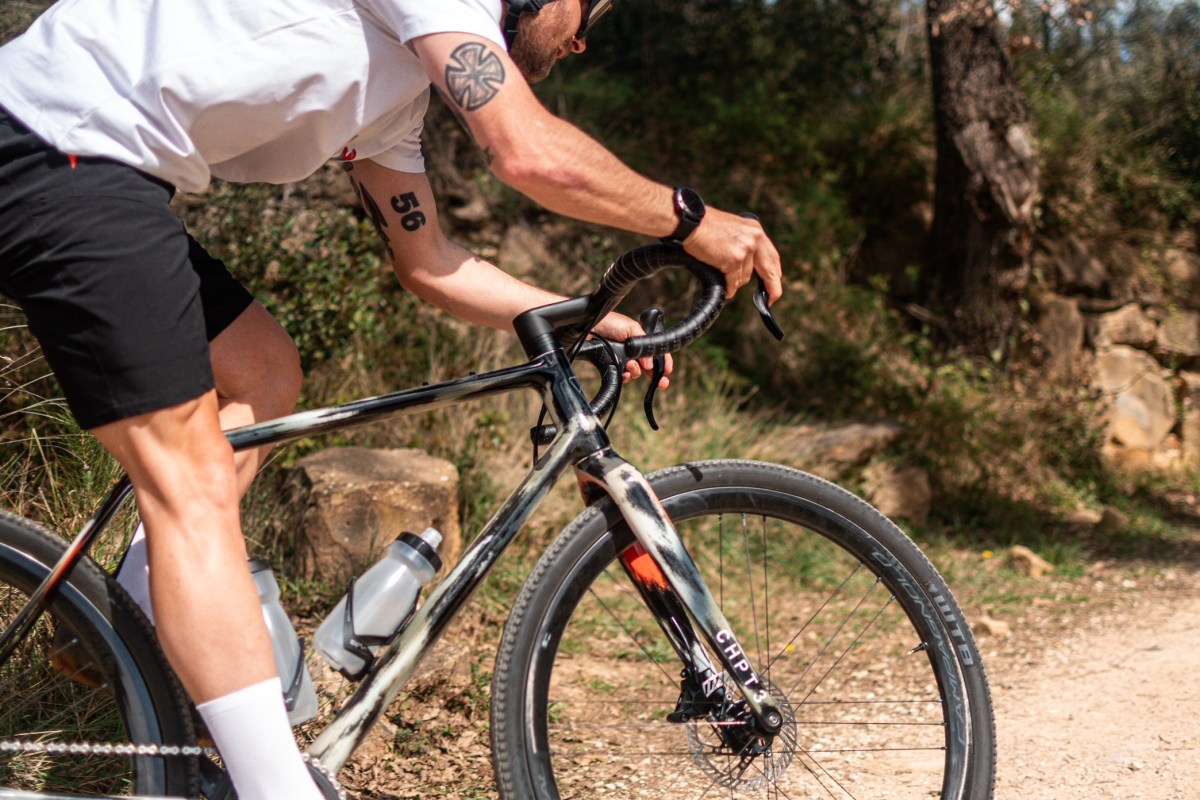
You rode your YT-Industries gravel bike in the Traka. How’s it working out for you?

Sami
I really love that bike.

cyclespeak
It’s fitted with a short travel suspension fork. Does that make a big difference?

Sami
It does for me because I love going downhill fast. Shredding properly and seeking out gnarly trails and rocky paths. But even on smoother gravel it will make a difference over a long day. On the Traka 360, everyone was knackered. Hands and arms on fire. Me? Zero, nothing. And on the downhill sections I was able to pass people with ease.

cyclespeak
In the summer, you took a blue and white colourway of the YT bike to Kenya for the Safari Gravel and Migration Gravel races. It looked like you enjoyed a very warm welcome?

Click image to enlarge

Sami
I didn’t want to feel rushed so arrived a week and a half before the first race was due to start. I visited the Team AMANI House and the new pump track—a wonderful project that will soon be finished—and then I led another woman’s ride.

cyclespeak
I saw lots of zebras in your posts.

Sami
And giraffes and elephants [laughs].

cyclespeak
Very unfortunately you crashed out during the Migration Gravel race?

Sami
My first big injury from racing and I was in the middle of the Maasai Mara in Kenya. I don’t remember the crash but immediately afterwards I thought I’d broken my back. It turns out it was my sacrum which is connected to your pelvis.

cyclespeak
That sounds super painful.

Sami
It was also my first time in an ambulance. Five hours on a very bumpy road and when we were nearly back at the camp we were stuck in a traffic jam because the riders were coming through. A complete shit show with the truck carrying all the race baggage stuck in the mud and my ambulance the only vehicle with a winch. It was 30°C, I’d just had an injection of Tramadol because the pain was so bad and when the winch cable took the strain, I was close to being catapulted out of the rear doors.

cyclespeak
What happened when you finally got to camp?

Sami
The doctor checked me over and asked if I wanted to fly by helicopter to Nairobi? But I really wanted to do the safari we had planned so decided to stay in the camp, get some sleep and cope as best as I could with the pain. And then I spent three days travelling all over Kenya with a cushion under my ass.

cyclespeak
Did you get checked out when you got home?

Sami
They just confirmed it was broken and told me to rest for six weeks. No speedy recovery.

Click image to enlarge

cyclespeak
Speaking of this setback, earlier in the year you posted—in your typical unfiltered fashion—about how you define yourself professionally and whether people sometimes have assumptions that life is easy for you. Are these difficult thoughts to navigate?

Sami
100%. I’m constantly struggling to make sense of it all. Because you need to plan each year in advance and sell ideas and projects to brands and sponsors so that you can continue to be a full-time cyclist. And this time of the year—September and October—can be a little uncertain because you don’t always know who’s in and who’s out.

cyclespeak
I guess it’s the not knowing that can be stressful?

Sami
I put a calendar up and marked next year’s racing but everything costs so much money. You need to pay the entry fee, your hotel and travel. My last race of the year is Across Andes in Chile and that’s a super expensive trip. I get a sponsor salary but that doesn’t always cover all this extra stuff that I’m choosing to do. So sometimes I’m a little conflicted. Do I focus on my bike packing trips and creating routes like I did in Turkey? Or do I keep racing for a few more years whilst my body is still strong?

Click image to enlarge

cyclespeak
It sounds like there’s an inherent amount of uncertainty in this model of making a living. But could you ever see yourself doing a regular job?

Sami
For the security, maybe. And sometimes I do think it would be nice going back to when I made coffee, got a monthly paycheck and still had time to ride my bike. But that would mean working for somebody, instead of being my own boss. And there’s also the fact that I have zero family back-up, so if I have a problem I better have some savings which means managing things really carefully between submitting invoices and paying my taxes.

cyclespeak
I’ll admit to being very biased—in the hope that you carry on being you and having these amazing adventures. Because what you do is super inspirational and that encourages people to get out on their own bikes. But I don’t for one second think it’s easy. So that being said, let’s come full circle back to the mountains and your move from Girona. What prompted you to relocate in the first place?

Sami
Girona is amazing but it’s also a bubble with the same things happening and I’d lived there for four years. So I just needed a change both personally and professionally.

cyclespeak
And does Morzine live up to your expectations?

Sami
When I open my front door in the morning the view takes your breath away. The only problem is it helps to have a car and I don’t have a car licence. But the guys at Cake Bike very kindly loaned me one for a year and basically saved my ass. But most days, now that I can ride again, I’m out training.

Click image to enlarge

cyclespeak
Looking back to when we talked this time last year, are you the same Sami or have you changed in some ways?

Sami
That’s a very good question.

[pause]

I guess I’ve had to learn how to be alone. Because when I lived in Girona, I’d just go for a coffee and there was always someone I knew to talk to. But here, there’s solitude and silence. Which I’ve grown to love but at the start was a little more challenging.

cyclespeak
So what’s exciting you, motivating you at the moment?

Sami
I want to pivot more into longer distance events. Gravel races now are going the way of road and it’s just full gas from the off. And I’m more of a one pace and go forever which is what appeals about the Across Andes event. It’s my first ever ultra that is more than 500 km. Because I did a 450 km race before but you can do that in a day.

cyclespeak
I remember you did that race with no specific training and you were still first woman home.

Sami
Yes. But it was only 450.

cyclespeak
Only [laughs].

Sami
In Chile it’s 1000 km. And that’s no joke. Or one day [laughs].

cyclespeak
It sounds like the perfect event to see out your year.

Sami
I’m going to give it a try to see if I like it. I’ve always been somebody who prefers long distances because I love stopping to chat with people, to try nice food, to look at flowers. And I want to see what my mind can cope with. Not my body. My body is whatever. But my brain? That’s the hardest part [laughs].
Click image to play film

Thanks to Sami for the stories and smiles

Feature image by Nick Cusseneers / ‘Eat pasta, ride fasta’ film by Jean-Baptiste Delorme / All other photography credited individually

samisauri.com / The W Collective / YT Industries

Xavi Güell / Everything and nothing in particular

“I think differently. Not better or worse. Just differently.”

There’s a story I saw posted that shows Xavi Güell walking to dinner with family and friends. Dressed casually, what’s noticeable is the way he floats from one small group to the next. And as we sit talking in the living room of his house—high above Girona on the hillside of Montjuïc—there’s this same sense of movement as he punctuates each sentence with the motion of his hands.

Nodding towards his Rocket espresso machine on the kitchen countertop—it’s mid morning and Xavi is enjoying a second cup of coffee—I open our conversation by asking what makes him feel happy and content.

“In general? Everything and nothing in particular. When I’m surrounded by my friends, when I’m riding my bike. And to be fair, we smile and laugh a lot at Athletic Affair.”

This mention of Athletic Affair refers to the sports marketing business he founded two years ago with friend and colleague Jordi Pujol. Not a communication or PR agency, he’s quick to point out, but a vehicle for helping brands and the most recent chapter in a career that saw him launch an online fashion TV channel whilst still studying at university.

“I was 22 years old and did everything myself. I created the concept, the brand and purchased the servers. With Athletic Affair, we are a small team but I still have a hand in 90% of the projects we take on. So maybe I have some issues in this regard that I need to work on [laughs].”


Growing up in a small coastal town to the south of Barcelona, Xavi is eager to acknowledge his parents as important influences. Having both created their own fashion companies, in the summer when his teenage school friends were spending time on the beach, Xavi would travel with his father on business trips to Italy.

“Even from this relatively young age, I knew that one day I would start creating my own companies. And then, after enrolling at university to study business administration, I soon realised I was reading more books that weren’t on the syllabus than the ones that were. So I sat down with my parents and explained how I was planning on dropping out to focus 100% on my fashion TV start-up; the first of its kind.”

Having now turned 40 and with home today doubling as an office, he finds himself in the enviable position of being able to choose which brands to work with.

“My aim with Athletic Affair is to have fun. So if a client repeats, that’s very satisfying. And when we establish a connection that blurs this line—when they get so comfortable they treat you as a friend—you know that something very special is happening.”


As a business helping brands with their marketing, Xavi naturally has his own opinions about what works, what’s outdated and what’s next.

“It does depend on the client. And many brands invest a lot of money on social media platforms so it’s not always easy to suggest a different direction. But I do have this small obsession that when WhatsApp or Instagram go down, you get people saying how much they enjoy the break. And this leads me to question why we invest so much in these platforms?”

“So if the client is happy to give us some freedom, we are moving more towards podcasting. This is the media type that I consume the most—maybe because I can remember sitting with my grandfather listening to the radio. Combine this with a good quality newsletter and you have an engaging approach to marketing a brand.”

With their own Monday Break newsletter, the team behind Athletic Affair share what inspires them as individuals—whether a book they’ve read and enjoyed, an inspirational piece of filmmaking, or a trail running route that others can follow.

“We are a relatively young company so our newsletter acts as a shop window for what we do. And because we are based in Girona, we have this huge and varied community so it’s good to tie all these elements together.”


With Athletic Affair responsible for all the event communications at this year’s Traka, the gravel race continues to grow a global audience but also face some negativity following reports of friction between competitors, their supporters and the local population.

“I think it can be a good thing when there are haters, no? And the cycling scene in Girona is much smaller than some people would have you believe. When I lived in London, you rode to work and then to the pub for drinks or an art exhibition to view some paintings. So there’s still work to be done in Girona with promoting cycling as a way of life and not just as a sporting activity. At the moment, Girona is a cycling destination but we need to transform it to being a cycling city.”

“Running is also seeing this wave of interest together with a little pushback. Possibly because it’s quick and easy to throw on a pair of sneakers and some shorts and question why you need a super expensive, technical tee. But whatever your stance, we have good weather and good food and at Athletic Affair we receive an increasing number of emails from big running brands asking what they can do in Girona.”

This talk of varied interests prompts me to ask Xavi about his personal project The Cycling Culture. An outlet for his talents as a digital creator, I question whether the technological tools we now have at our disposal make it easier to create extraordinary content or more challenging?

“You take something as ubiquitous as the latest smartphone and it’s clear how much easier it is to make good quality content—it’s super democratic. But a lot depends on the eye that is looking and the reach you have to engage. It’s like I always say regarding magazines. You can have a mass media publication that sells shit news or a beautifully finished magazine printed on perfect paper that has a more limited audience. Too often the people in charge of social media are more focused on the numbers which is not, personally, to my taste.”


“Before Covid my own creative inspiration came from travelling—not for work or a holiday, but to soak up ideas and experiences. But since the pandemic, I find that I’m also looking to magazines and books. Architecture, fashion but not sport. I try not to consume the same things that I’m creating.”

With a mind continually busy creating new ideas, Xavi claims he never switches off completely but doesn’t consider these thoughts to be work—his relaxed demeanour and easy laugh suggesting he’s found a happy medium between the needs of his clients and the time he spends with those dear to him.

“Home, for me, is not so much the place but the life you can live there. It’s the conversations with friends, the meals you share and the walks on the beach where you can smell the sea and hear the waves.”

With Xavi recently returned from southern Spain and Badlands—Athletic Affair co-hosted a pre-race podcast with Velocio—I finish up our conversation by asking what’s next on the horizon that feels exciting?

“For the Traka, we took a space in the centre of Girona that we called Casa Athletic. Not as an office but somewhere we could grow our community. We hosted a series of events and it was great fun. So one of our goals is to re-imagine Casa Athletic so that when you visit Girona you have this space where you can work and meet people and where you’ll receive a warm welcome. This makes perfect sense to me and I would love this to become a reality.”

All imagery with kind permission of Xavi Güell

Athletic Affair

Alex Howes / Fast forward

In 2019—the same year he won the US National Road Race Championship—Alex Howes rolled up to the start line of Dirty Kanza. Ahead lay 200 miles of farm tracks and flint hills in a gravel race now known as Unbound. Riding with friend and teammate Lachlan Morton in the colours of Education First, their race was documented in what would become a series of inspirational films capturing the highs and lows of this alternative racing calendar.

Recently retired from the World Tour but still working with Team Education First as a cycling coach, Alex is now forging a new career as a gravel racer—a professional pivot that he discusses over a transatlantic call from his home in Nederland, Colorado.

A freewheeling and candid conversation that takes in everything from family road trips to bears, bugs and beards, Alex turns the page from World Tour to Tour Divide and what it takes to ride 2,963 offroad miles in a little over 19 days.


cyclespeak
Hey, Alex. How’s it going?

Alex
It’s going alright. Yourself?

cyclespeak
Good, thanks. It’s breakfast time on your side of the world and I can see you’ve already got a coffee on the go.

Alex
We had a huge storm last night so we were up a fair bit. Right on top of us—I couldn’t believe how loud it was. I’m not usually afraid of lightning but that was something else.

cyclespeak
In the media we’ve seen some pretty extreme weather over in the States. Or are these storms the norm for you at this time of year?

Alex
It can happen, for sure. A lot of people living up here have double surge protectors on their houses. And we occasionally get this dry, static air that makes for some super intense lightning.

cyclespeak
How remote are you? Where’s your nearest store if you want a pint of milk?

Alex
We’re not way out there but that’s kind of by design. When I was racing in the World Tour I needed to be able to get to Europe relatively quickly. So we’re 30 minutes up the canyon from Boulder in a little town called Nederland. There’s a local store where you can pretty much buy everything you need. And I can be out the door here and over to Frankfurt in 12 hours.

cyclespeak
I saw a lovely post of you and your little girl at a local cycling event. May I ask how you’ve taken to fatherhood? From my own experience, it’s rather a rollercoaster ride.

Alex
I think that’s the right way to describe it [laughs]. And I was not so long ago thinking how bike racing and fatherhood are one and the same. Birds of a similar feather.

cyclespeak
I can’t resist asking you to elaborate on that.

Alex
You have these moments of extreme joy when you wouldn’t swap it for anything in the world. And then you get moments where you’re like, what have I done [laughs].

cyclespeak
I don’t think anyone is quite prepared for it. And maybe if we did understand how challenging it can be, we’d think again. But then you have people wanting to do it all over again. I remember my wife saying to me that she wanted another baby and I’m thinking really.

Alex
That’s where we’re at now. We’ve got this pretty good kid who’s also a big handful.

cyclespeak
If it’s any help, I’ve got two boys and from experience it isn’t like having one plus one. It’s more like one and two thirds because a lot of the decisions you faced the first time around you’ve already made. So I probably enjoyed the process more with our second child which I guess sounds a little strange.

Alex
But you survived and they’re society’s problem now [smiles].


cyclespeak
Not as a strict rule but children do tend to flourish with a sense of routine. Does that sit well with you or do you prefer things to be a little more haphazard?

Alex
I don’t know if it’s a preference but I guess that haphazard best describes how I’ve lived my life for the last 35 years. But I do agree with the idea of routine and we definitely pay for it when our daughter goes to bed late. And this year we’ve been cruising around in a travel trailer to a bunch of races.

cyclespeak
Say you’ve got a race weekend and it’s just you. How does that compare to when the family is travelling with you? I’m guessing it’s a very different experience?

Alex
The solo mission is definitely lower stress [laughs].

cyclespeak
You can focus solely on you and your race?

Alex
With the little one, dinner’s at 6:30 whether or not you need to be doing something else. And if we don’t keep to that schedule we’re screwed for the next day.

cyclespeak
Consequences [smiles].

Alex
There’s a little give and take but it’s also been fun and we’ve visited some really cool places as a family.

cyclespeak
We’ve already mentioned that you live in Colorado and I was watching your Fat Pursuit* series of Instagram stories where every film clip shows longer and longer icicles hanging from your beard. And I was wondering whether you relish difficult ride and race conditions or does the professional in you just get the job done?

[*a winter race ridden on fat bikes]

Alex
I actually didn’t view the Fat Pursuit as particularly difficult…

cyclespeak
You didn’t [laughs]…

Alex
The event itself was hard but I had the right equipment. And with the conditions, they are what they are. It’s a dry cold which is very different to your winters in the UK where you’re just soaked to the bone.

cyclespeak
Tell me about it [laughs].

Alex
I couldn’t do that. Well, I could because the professional in me would just get on with it but would I want to? Whereas over here, the wind can kick your butt but the snow stays snow for the most part and you just need to manage your layers. Other than that, the only thing that’s cold is your nose [laughs].


cyclespeak
You enjoyed a ten year World Tour career riding at the pinnacle of professional road cycling. A little bit of a clichéd question but is there anything about that lifestyle that you miss?

Alex
Honestly, it’s the team aspect that I miss the most. I’m now having a lot of fun, doing my own thing, but at the same time that camaraderie between the riders and support staff— all working towards a common goal—it’s cool. It was fun sitting on the bus, knowing exactly what you’re doing that day. High pressure but with high reward.

cyclespeak
And now?

Alex
If I wake up and don’t want to do something, I generally don’t do it [smiles].

cyclespeak
Looking at the age of the GC riders now winning Grand Tours, in your opinion are long, established World Tour careers a thing of the past?

Alex
That’s a good question. The races are definitely more intense—a lot more explosive. Everyone’s going faster and in order to make that happen that’s reflected in the amount of dedication required in the riders. It’s always been said that cycling at this level is a 24/7, 365 type of job. And I look at how hard some of these young men and women are training and it’s pretty incredible. So maybe you will see shorter careers but I’m not sure whether that’s necessarily a bad thing. There’s a lot of living left to do after you finish racing.

cyclespeak
I can remember hearing the results of the 2019 National Road Race Championships when you finally got that jersey after a number of attempts. I’m guessing the feeling as you crossed the line was one of euphoria but was there also a sense of writing your name in the cycling history books? An achievement no one can ever take away from you?

Alex
It was pretty special but I think I’d already realised that it almost doesn’t matter what you do in cycling. It’s very fleeting. You take Jonas Vingegaard as an example. He wins this year’s Tour de France and for a few days his name and face are featured on every media platform but the focus soon shifts to who will do well at the Vuelta. And that clock doesn’t stop and there’s a new champion every year. And whilst it’s fun and special to have your name on that list—in years to come you can scroll back and say, yep, I’m still there—it’s not a bronze statue in the centre of town.

cyclespeak
So what was the motivation as you rolled up at the start line?

Alex
The big shift was being diagnosed with hyperthyroidism in 2018 and the subsequent concern that my racing career was over. And then coming back hard in 2019 with the feeling that anything I achieved was for me. Not for the headlines, not for the history books. And, looking back, I think that shift in mentality was a major contributing factor to winning that year.

cyclespeak
It sounds to me like there was less pressure?

Alex
Going into it, I was on the radar but I don’t think anybody had me down as the favourite. At that point, people weren’t sure whether I was still a bike racer.

cyclespeak
But you took the win and in the subsequent couple of years combined a road programme with gravel and mountain biking. And I was chatting with Pete Stetina and he was contrasting his World Tour days when he had a team to do everything for him and now he’s putting in super long weeks organising everything that goes with being a gravel privateer. So I was wondering whether you’ve also seen this shift?

Alex
It’s interesting because I will admit that organisation and routine are not my particular strengths. And now that everything comes down to me—for better or worse—what that looks like is I’ll do an event like the Tour Divide, have a great time but only reply to a handful of emails in a month. Then I get back home—totally shattered—but need to put in 80 hour weeks getting my life back on track. So it comes in big waves and surges with fatherhood and training also needing to fit into the equation.

cyclespeak
You’ve got it coming at you from every direction.

Alex
I’d be lying if I said I always keep track of it all. So I just try and do my best [laughs].


cyclespeak
I’ve lost track of the number of times I’ve watched you and Lachlan [Morton] in the Dirty Kanza and Leadville films for Rapha. Was there a sense that you were a crucial part of something really special in cycling?

Alex
That whole time with EF Gone Racing was fun. I know it was something Lachlan always wanted to do and we were both sort of dabbling in it anyways. We both genuinely love to race and there’s a big difference in the emotional and physical toll of a race like Leadville that’s literally on my doorstep, two hours from home. Especially when the alternative is getting on a plane and flying to Europe to spend three months cranking out a bunch of World Tour races. To be able to do a backyard brawl, that’s good fun for us.

cyclespeak
And then they decided to make the films?

Alex
It was a pretty unique situation to have both EF and Rapha talking about off-road racing. And we’re like, yeah, we’re already doing that. Bring your camera [smiles].

cyclespeak
And the films proved a huge success.

Alex
It quickly became apparent the impact it was having. The number of times that people have come up to both of us and said it was the reason they’d started riding a bike. I remember I had one guy who told me he’d lost 70 lbs after watching those films and was going to ride the 200 at Unbound.

cyclespeak
How does that make you feel? When people tell you they’re now healthier and happier because they watched a bunch of films featuring you and Lachlan riding your bikes on dirt?

Alex
On the one hand it’s special—super cool—because the more people on bikes the better in my opinion. And I’ve personally seen it change so many people for the better. They calm down and slim up [laughs].

cyclespeak
I sense there’s a but?

Alex
Myself and Lachlan, we’re not anything particularly special and sometimes it feels like people put us on a pedestal or look to us for answers. And I’m just a dude on a bike too. They just happened to bring a camera along.

cyclespeak
Personally I think there’s a lot more to it than that and there’s obviously something really special in these films that connects with people. But let’s fast forward a few years and look at how gravel racing seems to be going through some growing pains—kind of difficult teenage years—as it transitions from a no rules, race-what-you-brung sport to the ongoing concerns over winning at all cost and team tactics. As you come over as never taking things too seriously, do these issues have any impact on the way you race?

Alex
I get frustrated because most of these issues are just details that may or may not need addressing. And if you want to deal with it as a rider, just say something during the race.

cyclespeak
Is that something you’ve done?

Alex [pausing as he gathers his thoughts]
I can get pretty heated in a race situation. I still have that in me. In my mind, that’s what the race is for. That’s our arena. That’s where you do it. You can say whatever you want during the race—get properly wound up—and then you cross the finish line. I don’t understand why people throw stuff up on social media or start screaming at each other in the parking lot. The race is over. Let’s put all that away and get on with our lives.

cyclespeak
How does this all compare to the years you spent road racing?

Alex
In the World Tour, it’s probably a lot more common than people realise. It’s super dangerous, riders are taking big risks, you have a director in your ear telling you to get this or that team out of the way. It’s messy out there but then you get done, get out of your race kit and life goes on.


cyclespeak
You scored a top ten finish in last year’s Lifetime Grand Prix series. Was that a race format that suited your riding style? Did you enjoy it?

Alex
I do like the Grand Prix. I think it casts a spotlight on off-road racing and that’s a net positive for the sport. But does it suit me? Not necessarily [laughs].

cyclespeak
Because it’s both mountain biking and gravel?

Alex
It’s two disciplines but I think it’s the style of racing that isn’t the best fit for me. I was always more of a punchier rider—hitting really high short power numbers repeatedly throughout a day—whereas gravel and mountain biking are a bit more diesel if that makes any sense? Hard on the pedals without ever going too hard. The average power is high but the spikes are low. But that doesn’t mean I don’t try [smiles].

cyclespeak
And you’ve just recently got off the Tour Divide. A big daddy of an ultra distance event. You prepped the ride with a fully sussed Cannondale Topstone but I was wondering how you work on your head game for such an epic undertaking?

Alex
Honestly, I’m very fortunate that I have 20 plus years riding bikes under my belt.

cyclespeak
And you have ridden all three Grand Tours.

Alex
I guess you could say I’ve been around the block a couple of times [smiles].

cyclespeak
So mentally, you were dialled in?

Alex
The hard part about Divide—but also the nice thing—is that it’s basically an individual event. So you never have to go any harder than you can. Whereas with World Tour racing—this will sound silly because you can’t give 110%—but the number of times in any given race that you’re absolutely on your limit but you somehow have to figure out how to continue just so you can hold a wheel. And sometimes you can’t figure it out and you get dropped and you’re out the back and you have to sell your soul to make the time cutoff. 

cyclespeak
And riding the Tour Divide?

Alex
You might mess up but you can always decide to call it for the day and climb into your sleeping bag. You get to make those choices [laughs].

cyclespeak
I was slightly concerned because you were clean shaven at the start. Was that at the risk of removing your bearded super powers?

Alex
I figured I’d be scruffy enough by the end [laughs]. And in hindsight, I do wish I’d left a bit of beard on there because of the bugs. Every time I had a mechanical—which happened a few times—I was just swarmed. I lost a lot of blood to mosquitoes, let’s put it that way.

cyclespeak
Inspired by your Tour Divide video diaries, I’ve gleaned a few topics of conversation. The first being bears and other animal activity. Any close calls?

Alex
Luckily none for me but some people saw a number of bears.

cyclespeak
Lael Wilcox encountered a mountain lion during a past Tour Divide attempt.

Alex
Mountain lions are certainly a feature of that neck of the woods. But it’s the grizzlies up north that scare me [laughs].


cyclespeak
You also had some problems with your wheels? [Alex fashioned a replacement wheel spoke from a piece of rope]

Alex
That was unfortunate. I thought I’d done my homework but I think I’d underestimated how much weight I was carrying. And then you’re tired and smashing into stuff in the dark. So making spokes out of rope was definitely a first for me. It took some thinking to get that done.

cyclespeak
It looked like a fascinating fix.

Alex
It’s a good example of what you can figure out when you have time and no other options. I was pretty shit out of luck so just took everything I had and spread it out on the ground.

cyclespeak
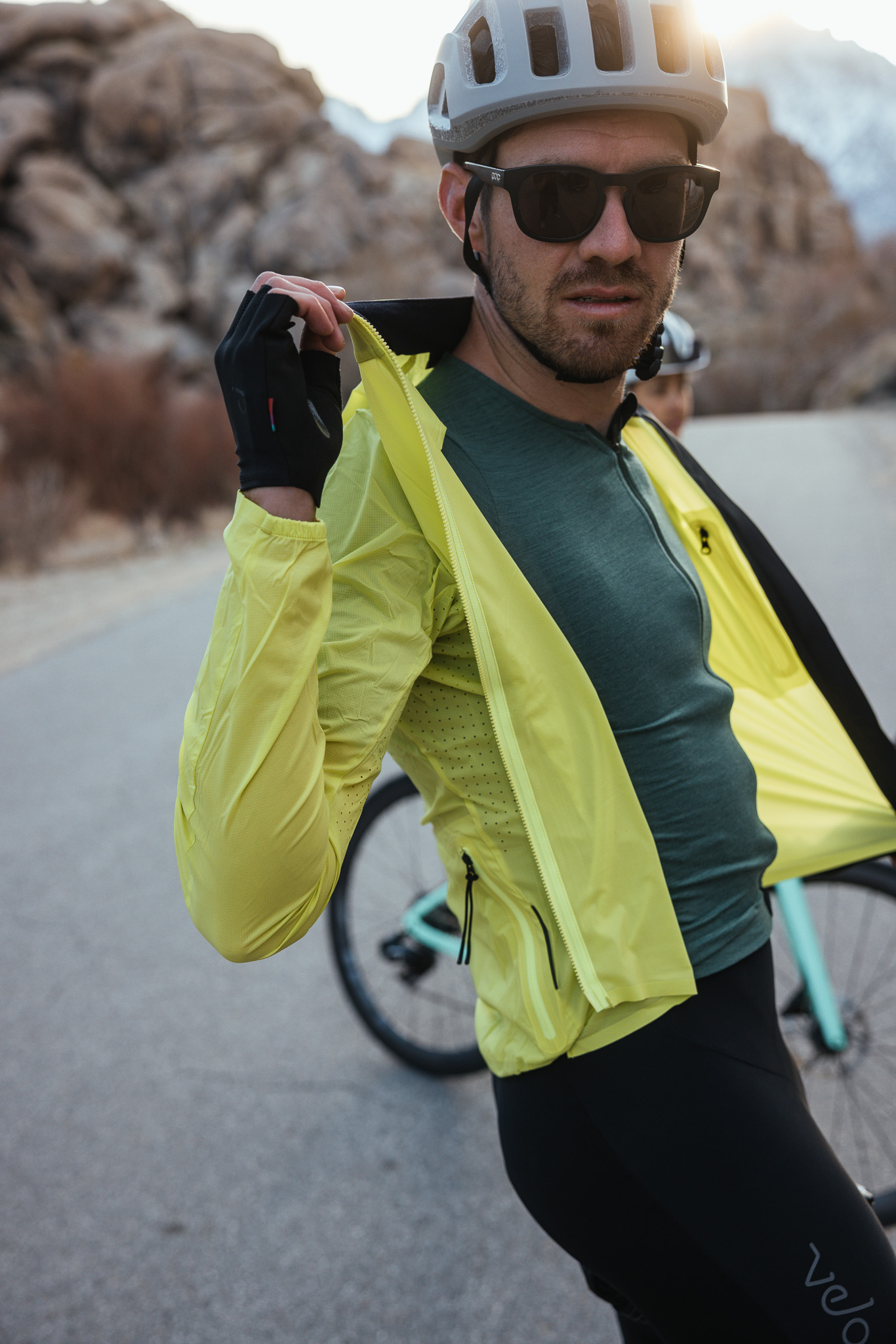
Kitwise, you seemed pretty impressed with your Velocio raincoat?

Alex
Oh man. That thing’s insane. It was so good having that big pocket on the front so I could fully kangaroo stuff. I’d even told Ted King—we’re both sponsored by Velocio—that he should get one. With the hood, you can get fully sealed up in there and he messaged me after I’d finished to let me know that he was equally impressed with how it performed.

cyclespeak
The weather wasn’t kind?

Alex
Some years it’s off-on with the rain but this time, that first week was grim.

cyclespeak
It did look pretty gnarly—wet and windy.

Alex
The only complaint about that jacket was the side zip. For whatever reason I’d lost a bunch of strength in my left hand. It’s slowly coming back—don’t worry, I’m seeing somebody [laughs]—but it was difficult to work that zip. So user error rather than any fault in the jacket.

cyclespeak
What was your record for the number of coffees in a single day?

Alex
Funnily enough Divide was a bit of a detox in terms of caffeine. A lot of that is just logistical. You’re way out there with only so many places you can get one. Some riders like to carry one of those canned coffees which they’ll drink at 9:00pm before riding into the night. I’d drink it first thing in the morning to try and maintain some sanity.

cyclespeak
Do you lose weight riding a race like the Tour Divide?

Alex
I think I’m the only person that didn’t [laughs].

cyclespeak
Really?

Alex
I’ve got a pretty strong stomach. Probably a good thing because my general plan was to just eat everything. So my weight didn’t change but maybe my body composition did? I gained a little in my upper body from muscling around a 50 lb bike.


cyclespeak
Is there any public bathroom etiquette for washing, sleeping, shelter?

Alex
After the first couple of days, people are pretty spread out. But saying that, the toilets are kind of a hot commodity. One reason being they’re free, there’s a nice flat surface to sleep on and minimal bugs inside. And up in grizzly country you can lock the door. But honestly, I was trying to get a hotel whenever it made sense. So it probably broke down to roughly 50:50.

cyclespeak
The benefits of a hot shower and a bed to sleep in?

Alex
I wasn’t consciously thinking of hygiene as a performance boost but you soon come to the realisation that if you don’t take care of yourself, you can’t sit down [laughs]. My butt hurt way more if I slept in a bivvy bag and especially during that first week when everything was soaking wet.

cyclespeak
Was staying dry an almost impossible task?

Alex
I’d packed two pairs of bib shorts but they’d both be wet. So you just need somewhere to get properly dry. And a hotel is really the only option.

cyclespeak
That makes sense.

Alex
Not that it’s a plan that always works out. Because my bibs had those utility pockets on each side and what I’d forgotten was the foil wrapper that I’d stuffed inside. So I was in a hotel and decided to dry them out in a microwave.

cyclespeak
What could possibly go wrong [laughs]?

Alex
Well, they caught fire and I burnt a hole in the bibs. Which really bummed me out because they had the most amazing chamois. But anyways, I still wore them for the rest of the race.

cyclespeak
In terms of other equipment, did you take the right bike?

Alex
Definitely the right bike but there were a few times when slightly bigger tyres would have helped.

cyclespeak
What size were you running?

Alex
45 mm and pretty rugged. They rolled nice and quick on the faster stuff. So it was only when the surface got a little broken up that I wanted anything wider.


cyclespeak
You rode flared gravel bars?

Alex
There was no way I could ride the Divide with a flat bar.

cyclespeak
Not enough hand positions?

Alex
It breaks up the day when you can switch between the hoods and the drops.

cyclespeak
Which I guess is important as you rode 2692.9 challenging miles over 19 days, 14 hours and 46 minutes. What were your emotions on completing this awesome achievement?

Alex
The finish for Divide is kind of anticlimactic—just a wire mesh fence on the Mexico border. But I got lucky because an old friend and his wife have a house down in Silver City and it just so happened that they were staying there at that time. So he picked me up and gave me some clean clothes. The alternative is you arrive in Antelope Wells, on your own, most probably in the middle of the night. It’s definitely not like finishing the Tour de France on the Champs-Élysées. 

cyclespeak
Now you’ve had time to process your experience racing the Tour Divide, is it something you can see yourself doing again?

Alex
Honestly, I don’t know. Firstly I’ve got to see how this left hand comes back. I’m kind of attached to it and the Tour Divide doesn’t mean enough to me to risk permanent damage.

cyclespeak
And you completed it, so it’s not exactly unfinished business.

Alex
And I’m so happy that I decided to ride it. Most people that attempt it, for whatever reason they have this idea of finishing in 20 days. And if you think about it, that’s like trying to ride Lachlan’s Alt Tour in the same amount of time…

cyclespeak
But on way more challenging surfaces and with the possibility of bumping into a grizzly bear [smiles]…

Alex
And there’s also the sleep aspect. I kept relatively well rested and I’m fortunate to have this off switch that certainly helps. When our little one was born, we pulled an all-nighter and then the next night only got three hours of sleep because we were still in the hospital. So when we got home, the baby’s right there in the bassinet and my poor wife is up and down all night feeding her. And me—no eye mask or ear plugs—I’m dead to the world.

cyclespeak
Have you any idea how irritating that is for the person that’s up [laughs]?

Alex
I thought she was going to kill me.

cyclespeak
Even so, that’s a pretty special skill. And useful on ultra-distance events?

Alex
It is. Assuming you don’t sleep through your alarms like I was doing on Divide [laughs].

cyclespeak
So what gets you up and out of bed with a spring in your step now that Tour Divide is done and dusted?

Alex
Right now, I’m having fun getting back to racing. Divide was—not so much a vacation—but a bit of a detour. I wanted to do it, I did it and I had fun with it. Now it’s a case of seeing whether it broke the motor. Maybe I’m more diesel now? So to answer that question, I’ll be cruising around with the family to a bunch of gravel races I’ve got lined up to finish out the season. With a three year old in tow [laughs]. That’s not scary at all, right?

Thanks to Alex Howes

Feature photography by Chris Milliman with kind permission of Velocio

Second ‘family album’ image by Gretchen Powers

Tokuhiko ‘Tok’ Kise / Tools for everyday life

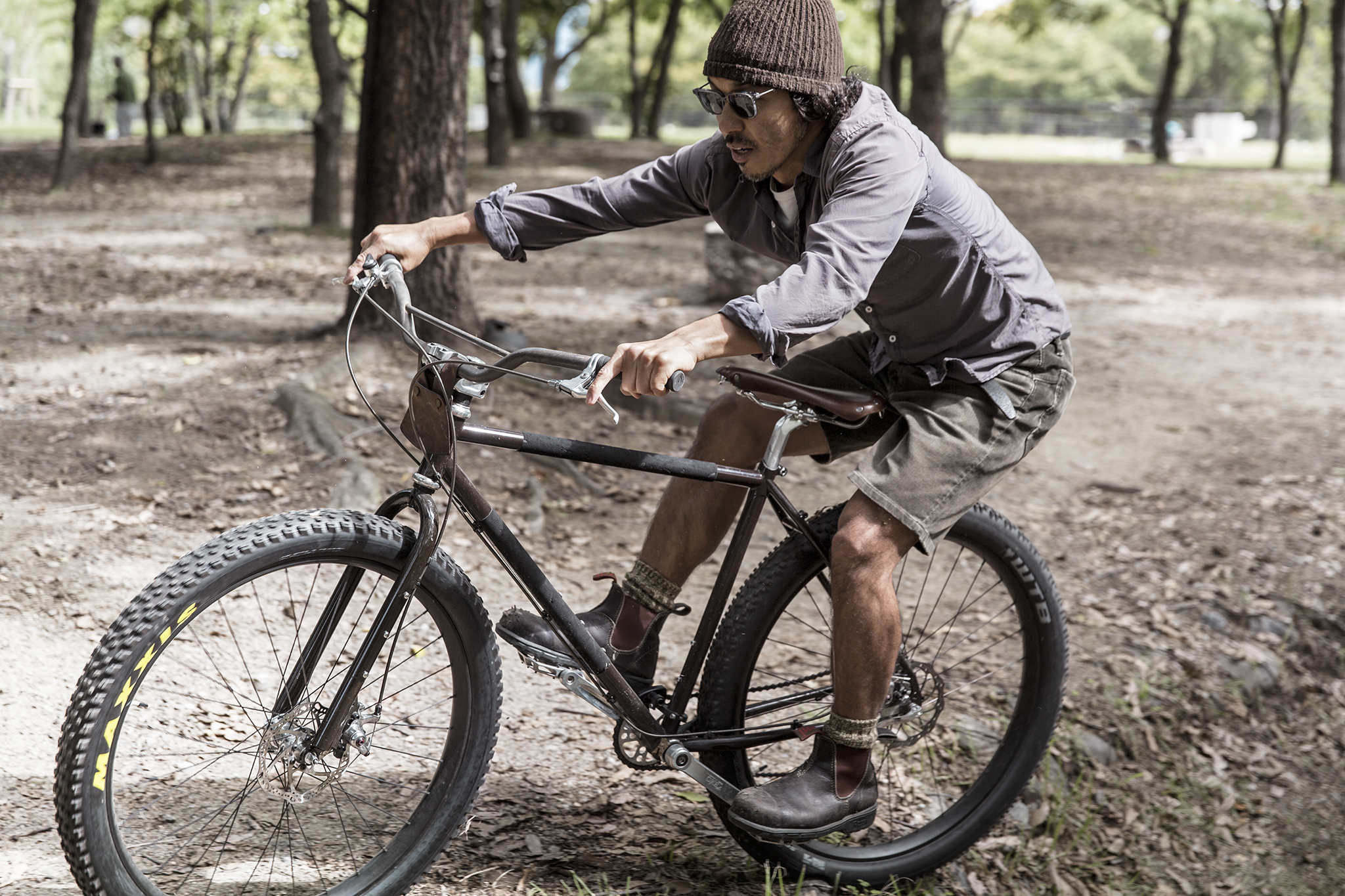
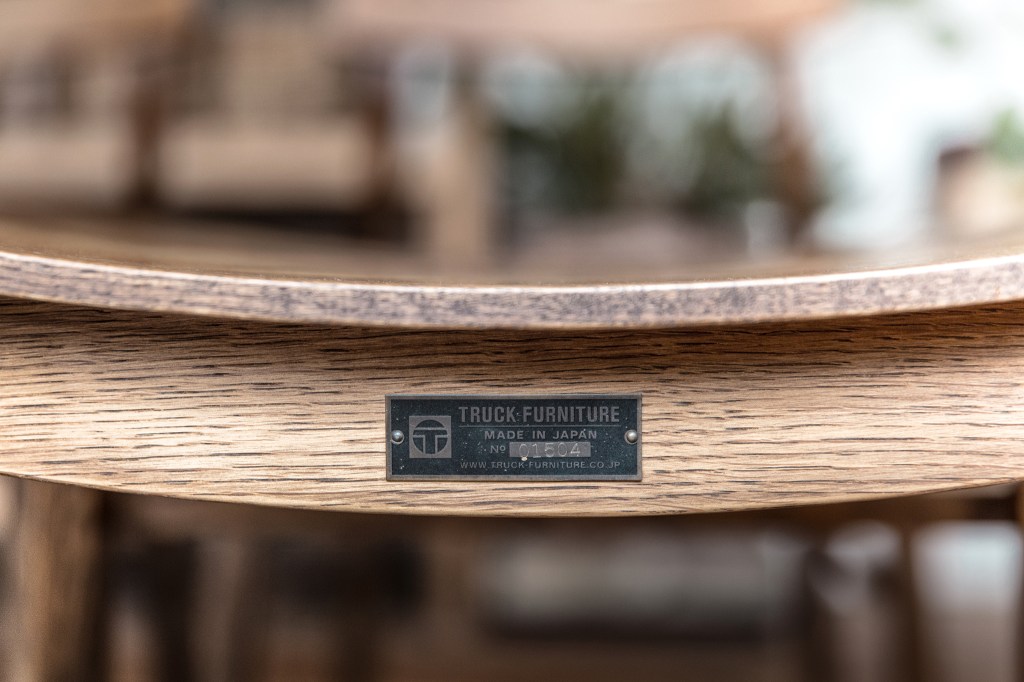
Halfway along a quiet side street in the Japanese city of Osaka is a stand of trees shading the corner of two buildings. To the left, the showroom and workshop of TRUCK Furniture, and on the right, an offshoot of the brand in the shape of Bird cafe. The vision of Tokuhiko ‘Tok’ Kise and his wife Hiromi Karatsu, TRUCK was founded in 1997 with Bird following in 2009 after the original design studio was moved to its present location.

With every item of furniture expertly handcrafted onsite, Tok views these individual pieces as tools for everyday life—a design philosophy that extends to his lifelong appreciation of the bicycle. A quietly passionate pursuit of two-wheeled adventure that reflects a boundless appetite for life and living and an innate respect for materials in all their forms and function.

Illustrated by Lee Basford’s beautifully observed photography, Tok explores the connection between his love of the outdoors and the choices he made as a teenager, why he amasses objects but doesn’t consider himself to be a collector, and how, ultimately, his relationship with the bicycle is at its very simplest when he’s outside having fun.


A youthful 55 years old and quick to smile, Tok is reminiscing about his earliest memories of riding a bike. Perhaps hinting at his future profession crafting bespoke items of furniture, he can remember modifying a bicycle his parents had bought him—Tok swapping out the seat and bars so that it looked like a chopper. Just one example of a childhood quest for bicycle-based fun that he describes with obvious delight.

“In Japan there is a type of shopping bike we call a mamachari. This means ‘Mom’s bike’ and quite often they have a basket on the front. Yes, they are heavy but if there was any sand or gravel I would drift around the corners, jump over obstacles and practise my track stands. So, as a child growing up, the type of bike didn’t make any difference. I just enjoyed riding.”


The youngest of four siblings, Tok recalls a comic book belonging to his brother that depicted a story about two young boys cycling all over Japan with their camping gear. Immediately inspired, Tok purchased a randonneur bike manufactured by Japanese brand Bridgestone that was styled as a European grand tourer with drop bars.

“I rode that randonneur for eight or nine months—enjoying long trips up into the mountains. But then one day I saw a picture of a mountain bike in a Japanese camping magazine and just knew I had to have one. So I immediately placed a ‘for sale’ advertisement for my randonneur in the back of the magazine—there was no internet back then to help me do this—before buying a Japanese-made mountain bike in Tokyo.”

A classic hardtail with chromoly steel frame and cantilever brakes, mountain bikes were still a rarity in Japan and Tok remembers the surprised looks from passing hikers as he descended downhill paths and trails.

“They would stop me and ask if I was going to go down this or that trail on my bike. And I would just smile and answer—‘Yes, of course’—before disappearing into the forest.”

With teenage years giving way to adulthood—Tok initially working for a company manufacturing chairs before starting his own business TRUCK—as a young man forging a new career as a furniture maker he was determined to follow his own path.

“It was the same with my bicycle. If I wanted to ride, I would ride. If I wanted to surf, I would go surfing. Even when I got married and we had our daughter, I could still find some time to do these things. I can remember when my daughter was eight years old, she would sit on the saddle of my mountain bike—with me standing behind her—and we would ride down some gentle paths.”


As the furniture Tok designs and manufactures is all handmade, his appreciation for the physicality of materials also extends to the bikes he chooses to ride.

“My taste is for a frame made from thin, round tubing which I feel looks very classic. And I never buy a bike because of the brand name. It’s more that I respect beautiful workmanship when the proportions are just so. It’s happier than bad work.”

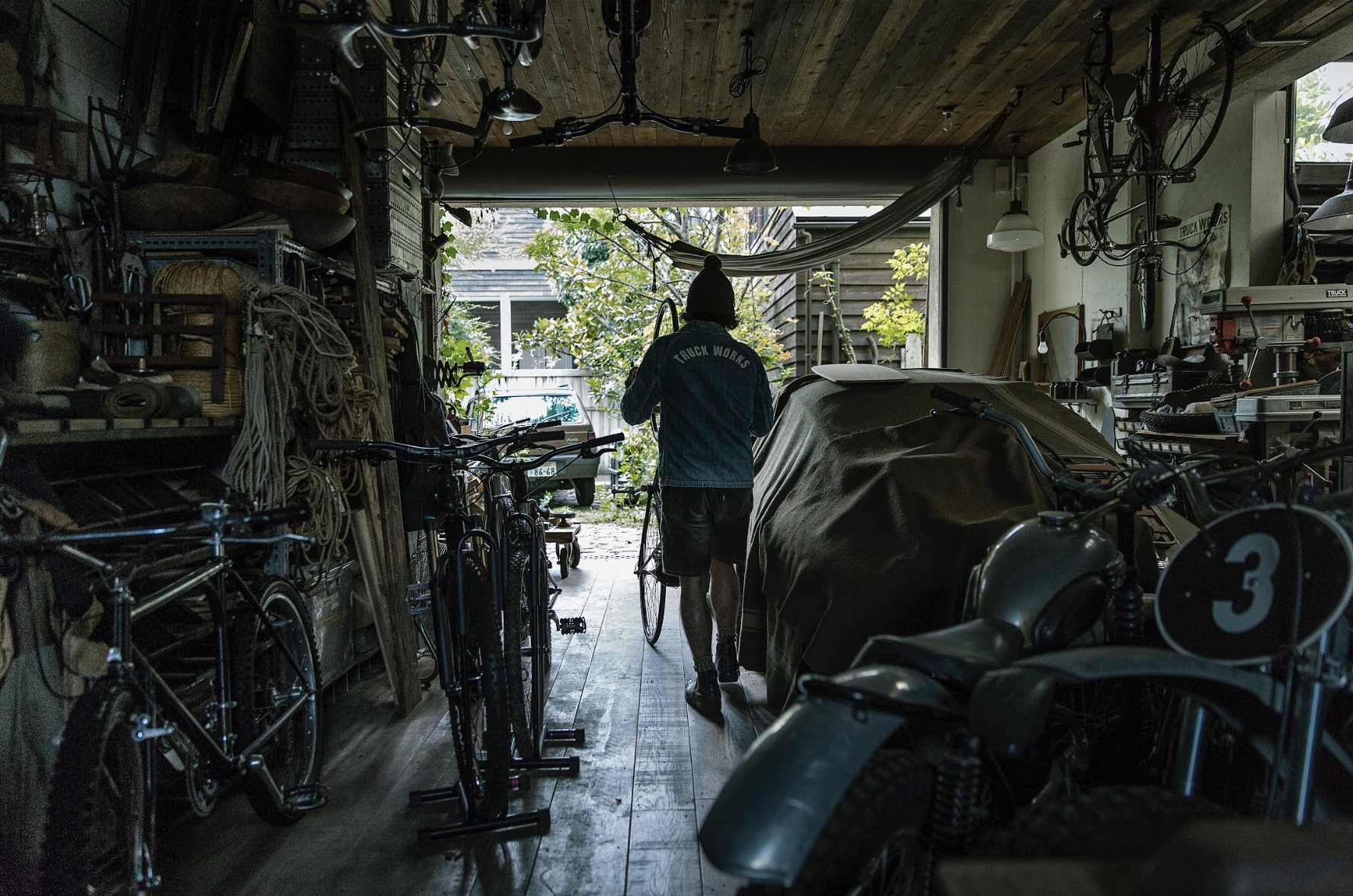
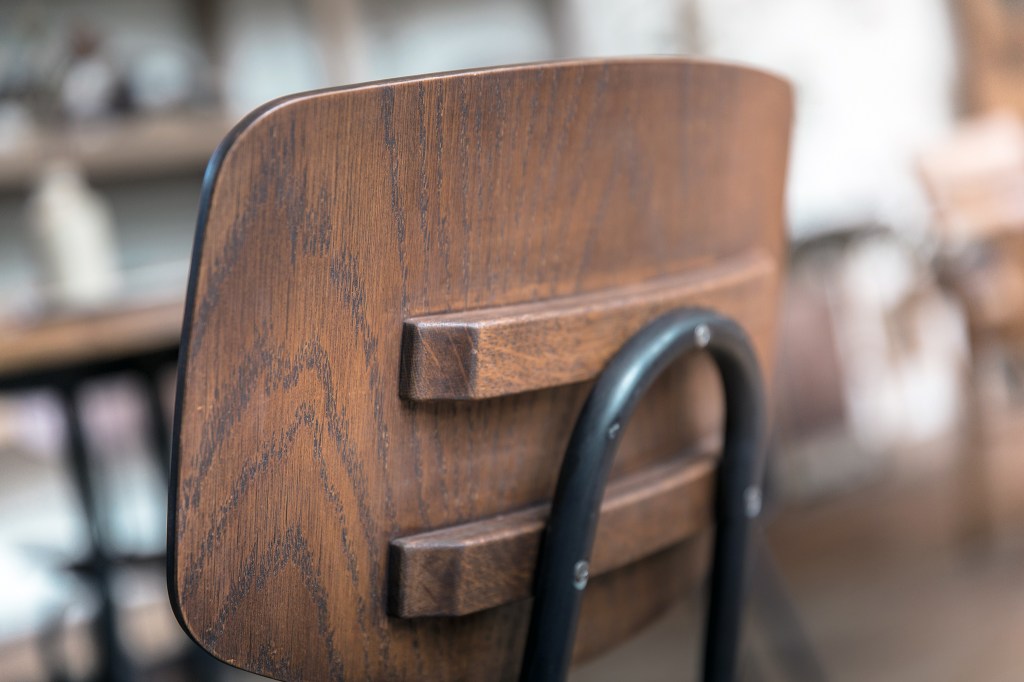
Enter his garage and you are met with a veritable Aladdin’s Cave of tools, motorbikes and bicycles—a layered representation of Tok’s ongoing fascination for engineered products and artefacts. On the floor sits a barrel of wooden mallets alongside a bench supporting multiple pairs of leather work shoes. And above, a row of near identical brushes that frame a vintage Evel Knievel poster taped to the door. 

“I’m not a collector but I know my taste and can decide instantly if I like something or not. It’s rather that the objects find me.”

With a wood-turning lathe set against one wall and assorted drill bits and screwdrivers arranged neatly nearby, he expounds on how he views the individual items of TRUCK furniture as tools for everyday life—Tok wanting his customers to enjoy them without feeling the need to be too precious about their use.


“Sometimes this means you might make a mark with your can of beer or coffee cup. But that is the life of the object and I welcome the patina as it ages. And it’s the same for a bicycle. It isn’t an art piece to be left on the shelf. A bicycle is for riding and having fun.”

As an object, the bicycle has many functions,” he continues. “It can be beautiful standing still but if you push the pedals you move without the need for gasoline. If you drive a car, you don’t feel the wind or smell the pine trees. You can’t hear the birds sing. And because the speed of a bicycle is slower, you can see more.”

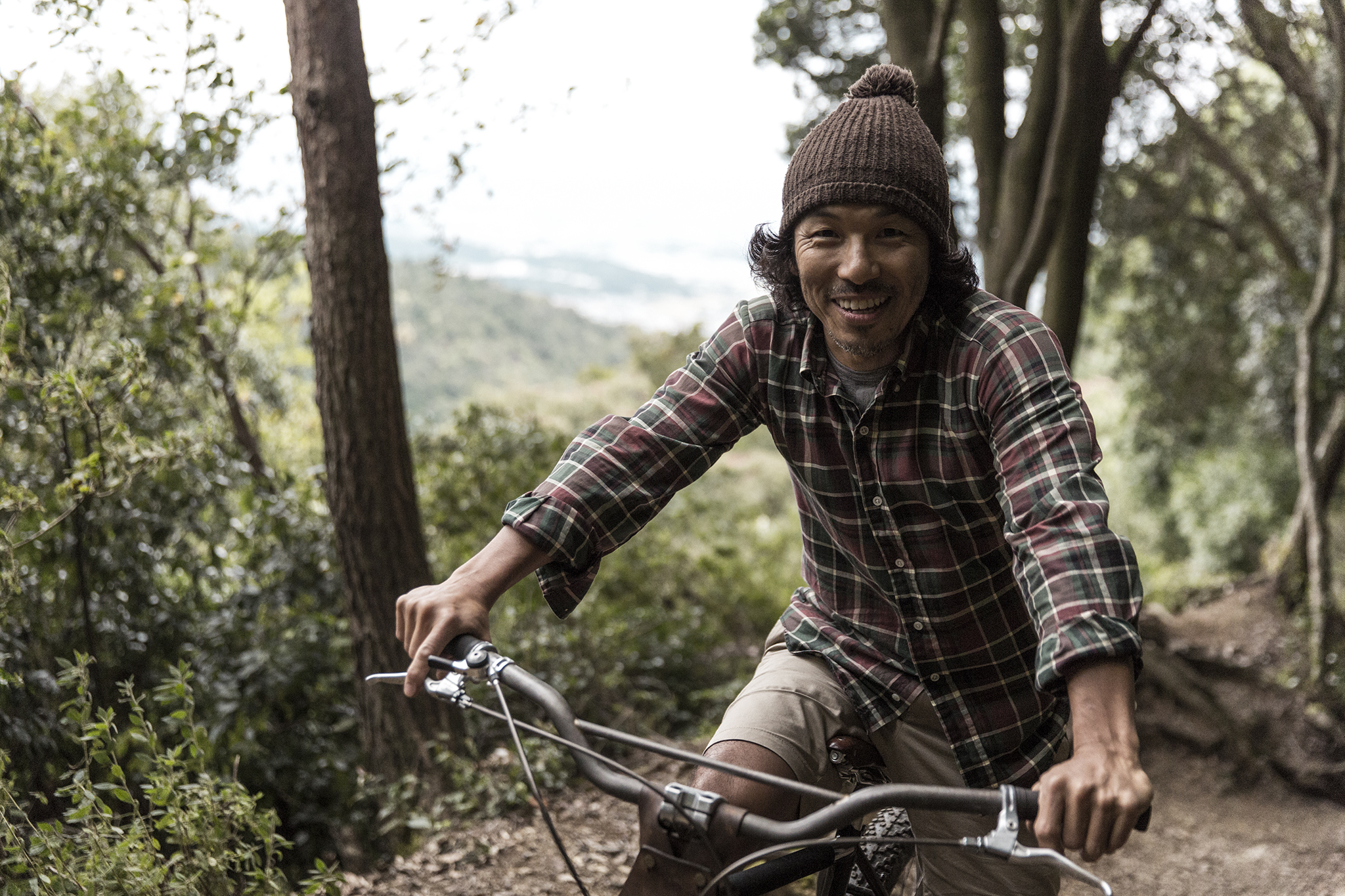
Preferring to ride alone or with a small group of friends, his location in Osaka is a short, half hour drive to the mountains—convenient for loading up his bike and enjoying a morning ride with 360° views back down to the city. Choosing instead to ride from home, one favourite local loop takes riverside trails to the Long Walk coffee shop and their collection of vinyl jazz records.

“I just enjoy riding my bike. Whether that’s on the sidewalk in front of TRUCK or up high in the mountains. And that’s something I’ve done ever since I was a young child. Riding out on my mountain bike when I was 13 years old with some biscuits and a small stove that I would use to make myself a coffee.”

This lifelong love of cycling is nowhere better illustrated then in his choice of career. With his high school friends all heading for university, Tok read an article in an outdoor magazine that mentioned a furniture making class in the Nagano Prefecture. Deciding to enrol, he studied for one year and then returned to Osaka where he built his own workshop before founding TRUCK with his wife Hiromi.

“This all happened because I enjoyed mountain biking and spending time outside—the reason I picked up that magazine in the first place. So ever since I turned 18, my professional life has been furniture making. And my riding threads through this journey. When I was a child, I would customise my bike and I still do that today. Little things like some nice tan-wall tyres, the leather from my workshop wrapping the bars or using the stopper from a bottle of single malt whiskey as a bar end. I enjoy making the bike look and function according to my taste. And it’s the same story with my furniture. I make what pleases me.

Tokuhiko ‘Tok’ Kise / TRUCK Furniture

All photography by Lee Basford with kind permission of Rapha / leebasford.com / Humankind

Read more about Lee’s story and his stunning photography here

Sami Sauri / Hours in the day

From snow-capped mountains to desert sands, the past year has seen a plethora of professional projects for photographer and creative producer Sami Sauri. Based in Girona but rarely in repose, her full-gas approach to work and play brings with it a creative energy that enlivens each and every shoot. Open and honest in how she depicts the highs and lows of a life lived on the road, Sami’s innate sense of fun threads through a conversation that casts a humorous light on lost bikes, a rain soaked search for surf and her wishful desire for more hours in the day.

Sami
Sorry I’m late.

cyclespeak
No problem whatsoever.

Sami
I was getting a new bike fitted and it took longer than expected. And then I got home and the bike wouldn’t fit.

cyclespeak
Fit where?

Sami
In the elevator [laughs]. I had to take the front wheel off and then I couldn’t find my keys.

cyclespeak
What kind of bike is it?

Sami
A YT Industries. They’re my new sponsor.

cyclespeak
We all love a new bike day.

Sami
I’ve got a big trip coming up and don’t want to fuck up my body which is why I arranged the bike fit.


cyclespeak
Speaking of looking after yourself, did something happen yesterday when you were riding back to Girona from Andorra?

Sami
My bag flew off on the second big downhill section. Very strange because I’d checked the straps and I’ve used the same setup on some pretty gnarly stuff. And the funny thing is, I didn’t even realise. I kept going and it turns out there was this car behind me, trying to attract my attention by peeping their horn. But I had my music on and a buff over my ears. Luckily, I had to stop at a red light. The car pulled up and the guy driving explained what had happened. I was like, ‘What!’

cyclespeak
If it wasn’t for that stop light, who knows how far you would have ridden?

Sami
Exactly. And the bag was holding my computer and hard drives. But another car had stopped and they’d picked it up from where it had fallen. Luckily, on a previous trip I’d been working with a sponsor called Urban Armour Wear that makes protective cases for phones and laptops. So at least my stuff was super well protected [laughs].

cyclespeak
And you provided the perfect real-world test.

Sami
In Spanish, to be lucky, we say we have a flower in the ass.

cyclespeak
The past few days I’ve been busy working out what questions to ask you but there’s just so much to cover over the past year.

[Sami laughing]

cyclespeak
And I can’t start a call with four pages of questions. It’s ridiculous. So I’ve had to hone it down as you never sit still. 

Sami
So it’s the highlights?

cyclespeak
That’s right. So starting with the tail end of last year and you were premiering the first episode of Into the Atlantic Islands. Towing a surfboard behind your bike up those Madeira climbs looked hard work?

Sami
They were so steep and I did it wearing sneakers.

cyclespeak
How was the response to the film?

Sami
Looking back, maybe it was a mistake to split it up into little mini episodes rather than one full-length film. And I always find it difficult to edit myself. Hearing your own voice and seeing yourself on camera. And if you think about it in a marketing sense, we shot the film when it was sunny and warm but it had a wintertime release. So maybe a little out of context?

cyclespeak
And the audience response?

Sami
That was really good and we’re now taking those lessons learnt into our second chapter.


cyclespeak
Shortly after your Madeira trip, you went off to Saudi Arabia to film the Dakar Rally.

Sami
That was an experience which I would happily do again. But spending 20 back-to-back days filming in the desert, I did really miss my bike. Kind of my body asking what the fuck I was doing?

cyclespeak
But shortly afterwards, you posted from Fuerteventura where you were taking a well-earned rest.

Sami
It’s a special place for me. Somewhere I go to recharge and relax. I ride but usually spend more time surfing. They have waves all the time so why not [laughs].

cyclespeak
And then quite a contrast in landscape when you visited your friend Gaby in the Alps to help celebrate her birthday. Is there a particular emotional connection you have with mountains?

Sami
Ahhh. Now you’ve got me. Because I’m finding it more and more.

cyclespeak
The call of the mountains?

Sami
There was a time when I was seriously planning on moving to Fuerteventura. There’s endless gravel riding and of course the surfing. Two sports that merge really well and work all of my body. Surfing is so chill with no phones or anything and you get a sense of discovery with your bike.

cyclespeak
But you decided not to move?

Sami
It’s a pretty small island so I’m still happy to stay in Girona for the time being. But the mountains appeal in both a personal and professional way. So I’m not going to say when but I’m already considering a move there.

cyclespeak
Andorra maybe or the Alps?

Sami
No, definitely the Alps.

cyclespeak
I can imagine you in a little cottage on the side of a mountain.

Sami
It might not be a place, exactly. Maybe I’ll just get a car or van and move around. I’m in this limbo at the moment trying to sort stuff out.


cyclespeak
After saying goodbye to Gaby, you’d planned to ride home but the weather was pretty awful so you decided to take a bus. And what happened next was pretty incredible?

Sami
The rain was torrential so I stopped in this middle of nowhere town. There was a restaurant but it only had things with meat available. So I just sat down with a tea and watched the rain get even heavier. I asked them if there was a bus and they told me it was round the corner before helping me find an online timetable.

cyclespeak
That sounds a better option than riding in the pouring rain.

Sami
The bus was running late so I was waiting at the stop in the freezing cold, wearing every layer I was carrying. There was a girl driving and she helped me put my bike underneath in the luggage compartment. But when I came to pay I realised I’d left my wallet in my bags so, once more, out into the rain and cold.

cyclespeak
You paid your fare and found a seat?

Sami
15 or 20 minutes later, the driver suddenly braked and brought the bus to a stop. She was shouting that the door was open but I didn’t immediately realise she was referring to the luggage compartment. And then it suddenly hit me and I raced down the steps and outside – not wearing any rain jacket – to discover my bike was missing.

cyclespeak
That must have been devastating?

Sami
My bike, my clothes, my computer, two hard drives containing recent projects. All missing.

cyclespeak
I can only imagine how that feels.


Sami
And then this car pulls up and explains that they’d been flashing us after they saw something fall out of the bus. I asked them to take me back along the road which they kindly agreed to do. And they were saying it was here, or maybe along here, or actually a little bit further. And all the time I was thinking, where the fuck is my bike!!

cyclespeak
So you couldn’t find it?

Sami
While all this was happening, thankfully the bus was waiting because my wallet and phone were still resting on my seat. So I thanked the car driver for trying to help and climbed back onto the bus to shelter from the rain. I called my friend who was putting me up for the night and I’ve never been so upset in my whole life—breathless, hardly able to speak and sobbing down the phone.

cyclespeak
How do you explain to someone that your bike fell out of a moving vehicle?

Sami
She offered to come and pick me up but I decided to stay on the bus and she’d meet me when we arrived in her town. An hour or two later – after a few more calls of me crying – we pulled up at the bus station. My friend and I were still hugging when I got a notification on my phone to say I’d received an email. This, it turned out, had been sent from a local police station to let me know they had my bike in detention [laughs].

cyclespeak
They’d arrested your bike?

Sami
Yes! And when my friend drove us over, there it was.

cyclespeak
But how did they know it belonged to you?

Sami
They’d opened the bags, powered up my laptop and saw my name on the log-in screen. Searching on Instagram, they’d found my profile and had sent me messages. But checking my Instagram feed was the last thing on my mind as I was panicking about my lost bike so I’d missed them. But from the profile they did manage to find my email and that finally worked.

cyclespeak
That’s quite some detective work!

Sami
And the funny thing is, the boyfriend of the girl I was staying with has this labelling machine and he made me name labels for everything I was carrying and my bike [laughs]. 


cyclespeak
Not long afterwards, you spent some time in Paris shooting for Rose Bikes. How did you find working in an urban environment with its street culture undertones?

Sami
That’s possibly one of my favourite shoots of the year. I love working with El Flamingo Films—the best times ever. And they always seem to use beautifully edgy models and locations that are random, remote and crazy places.

cyclespeak
Random and remote in Paris?

Sami
We went to this neighbourhood that definitely matched that description [laughs]. And I liked how Rose wanted to tell a different kind of story compared to the usual editorial content. We even featured an actual taxi driver in some of the scenes.

cyclespeak
After a spell of surfing and skiing, you signed up for the Gravel Augusta; a 450km route from Barcelona to Valencia with 4000m of climbing. An enjoyable return to long distance racing?

Sami
Looking back, my decision to sign up was crazy [laughs].

cyclespeak
But you raced it nonstop—the first woman home. Pretty impressive.

Sami
I’d been on a ride with some friends and then had lots of wine at a restaurant so I was completely shitfaced when I agreed to do it.

cyclespeak
And then the reality sinks in the following morning.

Sami
In my head, I had the best day ever on the bike. I hadn’t trained so I wasn’t focusing on my speed or where the other riders were. And then during the night section, I’d stopped for dinner – for an hour and a half [laughs] – when another girl arrived. That’s when I realised I was leading and when she asked if there was food available, I pointed the way inside before jumping on my bike.

cyclespeak
And off you went.

Sami
I was riding with this group of men but unfortunately they were too slow. It was 3:00am in the morning and I was feeling good. So I pushed on alone until about 6:00am when I thought I was going to die. 

cyclespeak
Time to refuel?

Sami
A coffee and doughnut at a gas station. And that got me through to the end.


cyclespeak
Without any focused preparation – only the basic fitness of your regular riding – you cover 450km in one go. Good for you!

Sami
But people should not do this [laughs].

cyclespeak
It’s a big ask, certainly.

Sami
And I do know what riding long distances over gravel feels like. So I would suggest working up to an event like this.

cyclespeak
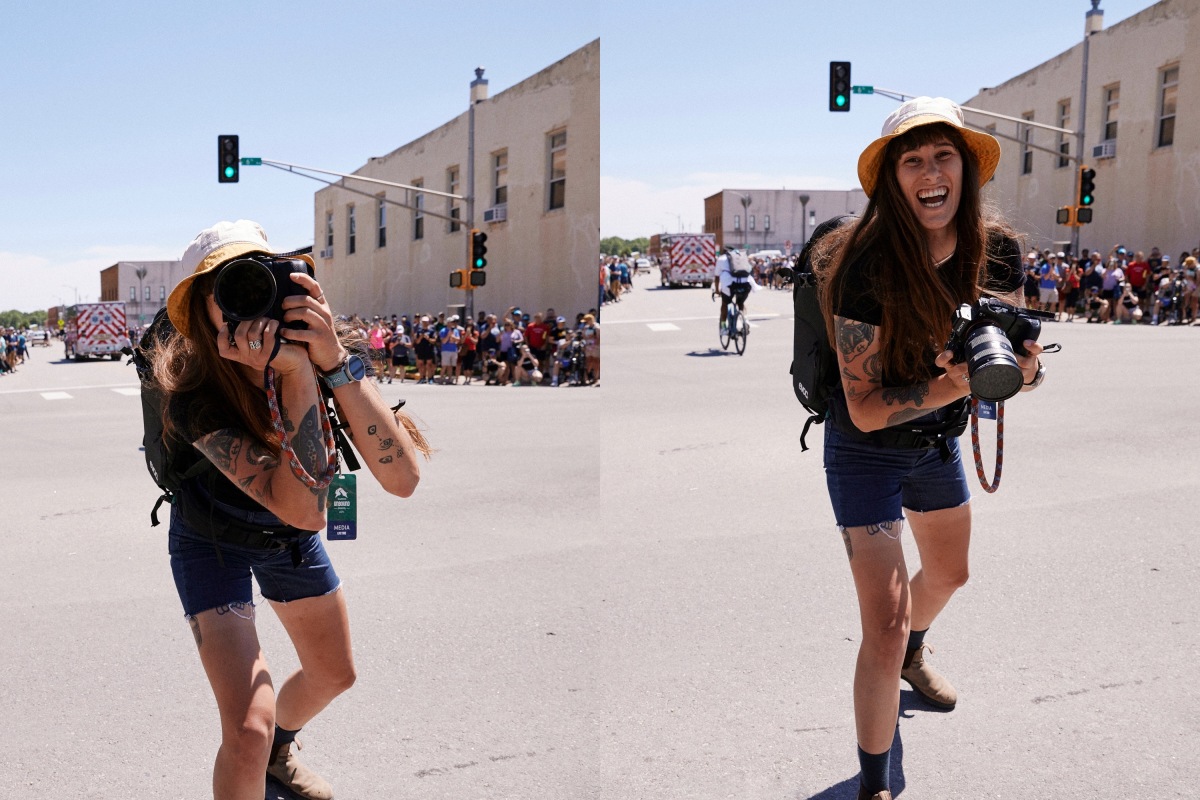
You raced Unbound in 2019 – that’s 200 miles of gravel – and returned this year to photograph the event. Were you tempted to pin on a number and ride it again or happy to stay behind the camera?

Sami
The day before the start, I was ready to race it again. I had my bike with me and rode some of the first sections. And whenever I’m not racing, it always feels like I’m missing something. But on the day of the race, I was sooo happy that I was there as a photographer.

cyclespeak
Was it the weather?

Sami
It was super nice in the morning but then it started to rain. So I was out on the course – wearing a poncho – and sheltering in the car when it got super heavy.

cyclespeak
And you got your picture taken by Dominique Powers.

Sami
Yes! My God, that girl is amazing.

cyclespeak
You had a muscle injury after returning from the US and decided to take a break from Instagram to avoid the temptation of endless scrolling while you were resting up. Did you miss it?

Sami
It can get to be a habit so it’s nice to have time away from the platform. But you also have obligations to your sponsors so I’m still searching for that balance. I do enjoy sharing my adventures and I’ve made some great connections and friendships that way. It’s become another tool for messaging and reaching out to people.


cyclespeak
Another photoshoot – this time for Pas Normal Studios – took you to Iceland. I thought your photographs were particularly beautiful. A landscape you found inspiring?

Sami
The first time I visited Iceland – back in 2019 – I came back with this amazing impression. And the more I work, the more I understand how the right location for a shoot is one of the most important aspects. For me, it works best when I first discover these places by bike, so some of the locations for the Pas Normal campaign were inspired by racing the Rift.

cyclespeak
You returned to Iceland later this year for the next in your Atlantic Islands series. The riding didn’t go exactly to plan which you referenced very openly in a social media post. Do you feel it’s important to be honest about life’s highs and lows?

Sami
I’m been thinking a lot about this since I came back. Because I do wonder whether there are people that assume I’m flying around the world, living my best life, and it’s all flowers and rainbows. But that’s definitely not always the case.

cyclespeak
Is anyone’s life that perfect?

Sami
Some people choose to only post about the good times but I’m working my ass off and sometimes things don’t go to plan. And going back to Iceland, it wasn’t the cycling aspect of the trip but the surfing. You depend so much on the weather, which you can’t control. I have a limited number of days and if you don’t have waves, you don’t surf. And that’s basically what happened. I pedalled for 270km towing a trailer with my surfboard. In the rain. And then there’s no waves. I was disappointed and upset and it’s like when you have a partner. You take these emotions out on them.

cyclespeak
I think that happens to us all.

Sami
Well, in Iceland it was two of my friends. And afterwards I was super sad because I didn’t handle it very well. So after thinking over how I’d behaved, I did post about it. Maybe I was being too honest? Too much drama? But when these things happen, that’s real life. The ups but also the downs.

cyclespeak
The way you come across, it’s not contrived. You say how you feel and I believe people appreciate your honesty. Because everything isn’t curated.


Sami
The photo that went with the post was taken after riding six hours in the rain, only to find no waves. And my expression says it all—what the hell am I doing here? [laughs]

cyclespeak
In another post you mention wanting more hours in the day. Do you find it difficult to fit everything in?

Sami
Every single day I think the same. When I’m out of the house – maybe it’s a shoot that starts at 5:00am – then you have a structure and things usually work out. But at home? Today I was an hour late for our call because there’s never enough time—I’m still wearing my kit from the bike fit. So I could definitely do with a few more hours each day [laughs].

cyclespeak
Can I take you back to the start of the year when you made a post that mentioned how you were facing some life difficulties but looking forward to new decisions and experiences. And it ended with you reaffirming the joy and strength you get from riding your bike. Can I ask whether you’re enjoying life at the moment?

Sami
I definitely feel it’s been a good year in the sense that I said yes to everything I wanted to do and had time for. So I went all in, again, and that’s after promising myself that I would ride more than work. But that didn’t happen [laughs].

cyclespeak
Because there’s always the next project?

Sami
Maybe now, I’m reaching the point where I don’t feel the need to say yes to everything? And there’s so many good memories from the rides I have done this year. We recently released the film of me and my friend Henna bikepacking above the Arctic Circle—such a fun trip. And I’m heading back to Iceland to pick up where we left off. This time, hopefully with some waves and a happy Sami [laughs].

Feature images by Dominique Powers

All other imagery with kind permission of Sami Sauri / samisauri.com

Into the Atlantic Islands

Journeying with Fara Cycling

We’re a relatively small company but that makes us very personable. Every customer and every bike we build is so important to us.”

Speaking over a video call from his office in Taiwan, Jeff Webb has an easy manner that suggests he’s just as comfortable solving problems in the workshop as he is sitting around a boardroom table in his role as CEO of Fara Cycling.

Canadian-born, when he was 19 years old he travelled to Europe to pursue a dream of racing his bike professionally before subsequently settling in Norway. Following a successful career as a sports photographer and years working in the sporting goods industry, Jeff founded Fara Cycling in 2015 with a vision of building a bike brand for a new breed of cyclists. One that’s inspired by adventure, emotions and nature.

“When I first started Fara Cycling, it was typical me—bullheaded in the face of a lot of naivety but just going at it and not feeling that I was prepared to back out. And right from the off, I wanted to make people feel comfortable and do away with any sense of intimidation, elitism and snobbery. You go to a trade show and it’s awash with all these images depicting gritted teeth and hollow-eyed faces. And I’m really not sure who these brands are talking to because at Fara we’re so far away from that. We never mention lactic acid or FTP—that’s not our world. What we do focus on is how the bike allows you to enjoy all these amazing places and experiences.”

Although Fara Cycling is based in the Norwegian capital of Oslo, Jeff has spent the past six months in Taiwan overseeing the final pre-launch phase of the company’s new bike model: the F/GR.

“Because of the various travel restrictions and the need to hotel quarantine on arrival, it makes sense to remain for a longer period rather than travelling back and forth. And Taiwan’s a nice place to be—the climate is warm and there’s so much great riding to choose from.”

With Fara wanting to own as much of the value chain as possible, their Taiwanese facility allows easy access to component suppliers – SRAM are located just down the road – and the convenience of overseeing vital finishing touches such as paint.

“We decided to keep final assembly in-house which is a little unusual in the bike industry. Even the paint we use is purchased by ourselves from the supplier who’s also just round the corner. So all this gives us a pretty unique level of control over the various stages of manufacturing.”


Now that it’s a little over five years since the dream of creating his own brand became a reality, Jeff recognises how the time he spent travelling the globe as a photographer provided the inspiration that eventually led to Fara Cycling.

“I did a lot of work with small skiing and snowboarding brands—allowing me to see from the ground up how they created their own market. So I took all these insights and started Fara in Norway – this fascinating location – because I’ve lived there for the past 25 years, I speak the language and feel socially immersed in every way you can imagine.”

“In Old Norse,” Jeff continues, “At Fara means to journey or venture. So we have this cultural thread that ties together the whole brand and I truly believe that recognising this identity was a key moment in our growth. Something that really drove us and continues to do so.”

With this initial inspiration provided by the winter sports brands he was photographing, it was the years Jeff spent heading up sales management for a large sporting goods corporation that proved equally as motivational when it came to launching his own company.

“The more I worked in this corporate world, the greater the belief in me grew that we could do things better. That we could grow a brand that spoke more directly to the customer base.”

Determined to start his own company according to these firmly held principles, Jeff contacted his friend Kenneth Pedersen—the owner of highly respected brand design agency ANTI and also a keen cyclist.

“If you peek behind the curtain,” suggests Jeff with a smile, “you might be surprised at what we’ve managed to achieve with a relatively small team. We’ve recently expanded in response to the demand for bikes during the pandemic but it wasn’t that long ago – a little over two years – that I was the only full-time employee. I was building bikes during the day and answering emails at night.”


With teams now based in Oslo and Taiwan together with a handful of employees working remotely, not only has the Fara workforce increased in numbers but the model range has grown to encompass riding styles that range from road to gravel adventure.

“We’re heavily influenced by our immediate surroundings,” Jeff explains. “So we design bikes that work in the landscapes where we ourselves ride. Which is why we had a gravel bike from day one—before gravel was even a thing. And the idea for our all-road bike, the F/AR, came about when we wanted a bike that could go anywhere. A bike that’s fast and fun that you can ride really, really far. That really resonates with me and influences the way I myself ride. We weren’t looking to dumb down the ride experience—slow and sluggish was never an option.”

“Riding gravel – or whatever you choose to call it – is very much a social scene too. I regularly see groups of riders heading out of Oslo on a loop before stopping off to chat over a coffee or beer. A very different way of riding compared to ten or 15 years ago. And we saw this as an opportunity to design the whole brand – the concept and messaging – around this new style of riding.”

Another recent trend in the cycling industry is the enormous growth in online sales with Fara opting for a direct-to-customer sales strategy. A working model that sees Jeff taking a turn on customer services and replying to messages on his Instagram account.

“A couple of years ago we were contacted by a customer who had a bike that was making the most terrible noise. He’d taken it to his local bike shop but they couldn’t help so I loaded up my car with tools and spare parts and drove three and a half hours to this guy’s house. It only took 15 minutes to diagnose and fix the problem – the rear axle needed re-greasing – but taking care of this customer’s problem was well worth the time and effort.”

“We’re a bit of a ragtag bunch at Fara and I believe that one of my skills is to recognise the potential in people. So if I come across someone I feel might prove a good fit in our journey, I don’t hesitate in talking to them. I very much appreciate how everyone in the Fara team is so passionate about cycling and also the brand. And with that comes our uncompromising approach to the highest level of customer service—making sure that everyone is treated well and has the best possible consumer journey. After all, your customers are your most important ambassadors.”

Not only is Jeff concerned with implementing a robust system of customer support, his vision of building bikes that are fun to ride but also supremely capable has led his design team to explore issues of rider comfort and convenience—the recently developed integrated luggage system offering a clever method of fixing bike bags using a series of magnets embedded in the frame.

“It may appear deceptively simple,” comments Jeff, “but it’s a response to a set of circumstances familiar to many of our customers. You’re on a multi-day trip, pulling up at your overnight stop with frozen hands and you’re struggling to remove the straps of your bags. There had to be a better way.”


“So in the design phase of the F/AR – because we knew it would be used for this kind of adventure riding – it just felt like a wasted opportunity if we couldn’t find a way of integrating the luggage system. Yes, we wanted the bike to look great with or without the bags, and now that we’ve designed our first version of the system, we just need people to use it and enjoy it and then we’ll see where we can take it from here.”

For customers able to visit Oslo, the various aspects of the customer journey have been distilled into the Fara Cycling Experience Centre—the online process of picking a model to fit a particular riding style before selecting components that work with a customer’s budget complemented by in-person advice and the opportunity to see before you buy.

“Our Experience Centre offers a warm welcome and advice to everyone. We don’t care how long your socks are, if you shave your legs or whether you want to ride thirty kilometres or three hundred. All of that stuff doesn’t concern us—we’re all about the joy of cycling and that everyone should feel welcome. So the first thing you’ll hear as you walk inside is ‘hi’ followed by ‘do you want a cup of coffee’?”

Although it’s clear that Jeff still relishes every available opportunity to engage with his customer base, a typical working day as CEO can depend on a number of disparate factors with his current Taiwanese timezone proving a prime example.

“The mornings are generally quiet over here so I can go for a ride before things get a little crazy after lunch when Oslo wakes up. Then I’ll work into the evening – usually until midnight – but I don’t consider myself a typical executive. I’m just a bike guy and feel very fortunate to have lots of really talented and inspiring colleagues along for the journey. As the founder of the company, it’s really touching when other people buy into your vision.”

“Everybody in the Fara Cycling team works so hard which makes my job so much easier,” Jeff concludes. “And in return, I want to give them a great place to work and the feeling that they’re part of something that’s really cool. Money is money but a sense of collective achievement is priceless.”

Jeff Webb

Fara Cycling

Photo credits: Fara Cycling / Emil Nyeng / Steff Gutovska / Pål Laukli / Sebastian Mamaj

Pete Stetina / Gravel privateer

I’m a racer for hire. Kind of a lone wolf mentality.

Sandwiched between racing Liège–Bastogne–Liège and the Tour of California, Pete Stetina lined up at the 2019 Belgian Waffle Ride in the colours of his World Tour team Trek-Segafredo. A 133-mile gravel race out of San Marcos, California, his first place finish set in motion a seismic shift in the way he now rides a race bike; Pete swapping team buses for van life as he balances the demands of training with negotiating sponsor deals and maintaining his social media presence.

Engagingly honest and self-aware, Pete sat down to take a deep dive into the reasons he races and the reality of life as a gravel privateer—a candid conversation that freewheels from flights of beer to family time on the couch.


cyclespeak
It’s eight in the morning for you. Have you already got a ride in?

Pete
God, no! My wife works a normal 8 – 5 so we’re up at 6:30am getting the coffee going and walking the dogs. The usual morning routine. And then come 10:00am, if the weather is good I might head out. Old pro habits die hard [laughs].

cyclespeak
You’re out on the West Coast?

Pete
That’s right. Northern California; about one hour north of San Francisco.

cyclespeak
Quite a kind climate?

Pete
It’s Mediterranean. Where all the Napa Valley wine comes from. So it’s vineyard riding and steep coastal hills. You get a lot of rain in the winter and a big temperature swing but you can ride 350 days a year.

cyclespeak
On your Instagram bio you describe yourself as a bike privateer—a term I really enjoy as it sounds kind of outside the law, almost swashbuckling. What does it mean to you?

Pete
It can be a little bit of that. I suppose it denotes a way of riding outside the traditional format. A little bit mercenary, I guess. I’m a racer for hire that contracts out to different companies. I’m not beholden to a set template so I can do what I want and make ends meet that way. Kind of a lone wolf mentality.

cyclespeak
A new concept when applied to bike racing?

Pete
It’s always existed – especially in mountain biking – although no one particularly used the term privateer. But then I did this film project during the 2020 lockdown called ‘Let’s Privateer’ that talked about following your heart. And it’s funny, once I started to promote this attitude, how it kinda grew to be an industry-wide term [laughs].

cyclespeak
And how does the term apply to you?

Pete
I’m a team of one. I’m doing my own contracts, my own deals, my own logistics.

cyclespeak
That’s an interesting point you make – you being a team of one – especially considering you enjoyed a 10-year career as a World Tour professional with eight Grand Tours along the way. Is there anything you miss from that time?

Pete
The camaraderie you get with your teammates in a Grand Tour—you feel like you’re going into battle together and long-standing friendships can be built on those shared experiences. And I do miss the simplicity of World Tour life. And when I say simple, I don’t mean that in a negative way. But your job is your body and you just have to be fit and pedal—everything else is taken care of. So whilst it’s very hard physically – the suffering, the diet, the monk lifestyle – it is simple.

cyclespeak
I get the impression that what you do now is anything but?

Pete
It’s so vast [laughs]. I was recently having to do some documents that involved entering my weekly hours and it’s not unusual for me to do a 70-hour week. So I’m doing pro hours training for these ultra-distance events but then everything else on the back end. Emails, social media and all my sponsor obligations. But like they say—it doesn’t always feel like work if you love it.

cyclespeak
Did the World Tour feel like work?

Pete
Towards the end, I did begin to feel a little disillusioned with some of the politics. Constantly having to deal with team managers who act friendly but, come contract time, try and undercut you to get a better price with your agent. So the whole business side of things did begin to grate on me. I don’t mean anything negative about that system but I’m more effective doing it my own way and definitely feel in a better place.

Image: Jake Orness

cyclespeak
Does that translate into performance gains?

Pete
During my best climbing days I was doing top ten finishes on mountain stages but I was never going to win a Grand Tour. And just because someone has a bigger engine doesn’t at all mean they will succeed at gravel at the moment. There are so many other factors that influence whether you’re successful. With this whole privateer model and how it fits in with gravel and its anti-establishment roots, you have to be entrepreneurial.

cyclespeak
You made gravel racing headlines with your BWR [Belgian Waffle Ride] win in 2019. A pretty awesome achievement and I was wondering how it felt to cross the line in first place?

Pete
I honestly didn’t realise how big it would be. I was still racing professionally with Trek-Segafredo and had it in my contract to do three of these alternative races. BWR was the first one and, living as I do in California, it was this super big gravel race. The week before, I’d raced Liège–Bastogne–Liège and was flying back to the US for the Tour of California. My team director wasn’t at all happy that I was returning a week early for some gravel race. And I remember he dropped me off at the airport in Belgium, looked at me and said, ‘You better win’ before shutting the car door and driving off. And I was like, ‘What the hell?’ [laughs].

cyclespeak
But you did win.

Pete
Crossing the line in first place, I guess it was a feeling of relief in that regard.

cyclespeak
And, in a sense, life changing?

Pete
It was an amazing day on the bike and I loved every minute of it. But I never expected it to be this catalyst for changing my career. And then afterwards, the attention it got was like this lightbulb moment when I finally realised that something had shifted. A feeling confirmed a week later as I’m going up a climb in the Tour of California – swinging off after helping Richie Porte – and people are yelling, ‘There’s the Belgian Waffle winner!’

cyclespeak
That’s so cool.

Pete
It helped me to understand that people care and that got the gears turning. And then my second place at the 2019 Dirty Kanza – or Unbound as it’s now known – just acted as confirmation. But it was the BWR repeat in 2021 that was a much more emotional moment.

cyclespeak
Was there a lot more pressure lining up as the previous edition’s winner?

Pete
A lot. Mostly internal but there was public pressure too. I was the guy who’d jumped away from the World Tour and staked his career on gravel racing. But then 2020 didn’t happen with all the races being cancelled, so 2021 was my first, full gravel season. And the reality is that I’d sold all my sponsors on my ability to perform and win some of these races—that BWR 2019 wasn’t a fluke and just down to World Tour watts.

cyclespeak
A lot of mental baggage to carry?

Pete
I’d put all this debilitating pressure on myself to do well at BWR 2021 – especially seeing as Canyon was the headline sponsor – and then the race went so poorly with stupid issues that I thought I was out of it five times or more.

cyclespeak
Is that just the nature of gravel racing? The unpredictability?

Pete
I kind of view a race as a test. If I prepare and do everything just right, then I ace the test which translates to me winning. A very analytical approach that I get pleasure out of. So once again crossing the line in first place, I’m not a very emotional bike racer but it felt like this huge weight that I’d been carrying since 2019 had been suddenly lifted. A sense of brief euphoria that I’d made good on what I’d sold to my sponsors. A very emotional win and something that still gives me a lot of pleasure to look back on.

cyclespeak
Hypothetically, would you swap your BWR wins for a stage victory in the Tour?

Pete
I don’t know if I can answer that. Maybe but…

cyclespeak
I realise they’re very different.

Pete
A stage win in the Tour—the one bike race everyone follows [laughs].

cyclespeak
It’s what many professional cyclists spend a career seeking?

Pete
But those stages happen 21 times a year, every year. So it’s huge for a day but in terms of your job as a bike racer, I’m not absolutely certain it moves the needle that much. Whereas, being the early gravel adopter and then going on to win the BWR twice—that’s been more of a career defining moment.

Image: Linda Guerrette

cyclespeak
You come across in the Wahoo films as a chilled, relaxed kind of chap.

Pete
It’s all a charade [laughs].

cyclespeak
No. Really [laughs]?

Pete
I think the relaxed figure that you see is my natural persona when hanging out. And I think, right now, I’m able to be more comfortable in my own skin. The perception of me was very different as a World Tour roady—because that’s what was needed of me to get the most out of myself. I had close friends in my professional racing days and people that probably didn’t like me that much. I wasn’t mean but very, very focused.

cyclespeak
And now?

Pete
I sometimes wonder if people think it’s a big act but it’s not. I feel I can let my hair down and be my own, organic self. But saying that, it’s also hard to switch off too. You think about the demands of social media and the need to have an online presence with the positives but also the negatives. And that’s something myself and my colleagues living this hybrid lifestyle do struggle with.

cyclespeak
You recently posted a reference to another struggle. This year’s race calendar.

Pete
The gravel race calendar is a headache in itself [laughs]. It’s a good headache because I’m very much a supporter of an unsanctioned gravel world. It doesn’t need a heavy-handed UCI influence—it’s healthy enough on its own.

cyclespeak
I’m sensing a ‘but’…

Pete
But the flip side to that is race organisers just checking their permits and choosing their dates. I’ll get texts about a new event in Utah and they’ve decided on the same day as the biggest existing gravel race in Utah. And I’m like, go a week before or a week after. Don’t fight over the same race entry. Just think [laughs]!

cyclespeak
So how did you go about building your own race calendar?

Pete
It involved a whole bunch of research on small grassroots events that would be fun in a storytelling kind of way. But also the big ones that demand your attention. And then this massive jigsaw has to come together to make sure I can physically get to the races. Because, as a privateer, that’s on you. And if you do miss the registration? Then you have to beg, borrow and steal to get that spot.

cyclespeak
You mentioned the UCI. As an ex-World Tour racer, what’s your take on their interest in gravel racing?

Pete
I don’t see how they’re going to help. I’m pessimistic and see it as a money grab. On the one hand you have this rapidly growing segment of the sport that’s unregulated and free of handcuffs. And the UCI see how they’ve missed the boat and want to come in because it’s lucrative.

cyclespeak
Is it a question of the UCI imposing their own vision?

Pete
You take mountain bike racing as an example. There’s a healthy scene in Europe but gone are the days of big, long loops. It’s a spectator sport on a short circuit with grandstands and concessions. But at the same time, we need to welcome inclusivity and recognise that Europe is very gravel-curious from a racing perspective. And it’s all about community so who am I to say what anyone can or can’t do? I’m not the gatekeeper and if the UCI creates events that people want to race, then good for them. You vote with your registration.

cyclespeak
When you’re not travelling to events and racing, do you train or just ride your bike?

Pete
Both [laughs]. This might be a relatively new race discipline but people are training as hard as they can. And road racing in the US is not particularly healthy at the moment so a lot of riders from the road scene are coming over to gravel. Not so much the sprinters because they have crit racing but if you’re an endurance specialist, you’ve got to do gravel.

cyclespeak
So that means more competition?

Pete
Gravel is only getting faster and the racing is so hard—I’m hitting career-high numbers that eclipse my World Tour days. Which means I do have to train but that’s only half my job. I don’t have a coach and I have to fit in training around media commitments and sponsorship calls.


cyclespeak
So what does your training look like?

Pete
You see this relaxed guy riding the Lost Coast and at home he’s really doing trainer intervals everyday? You’ve got to live what you preach and this sport was founded on adventure so a lot of my training is off-road—feeling the dirt and just being happy riding my bike. 

cyclespeak
I was hoping you were out, doing long rides into the mountains.

Pete
These events, they’re all attrition based. Six, seven, ten hours. So, in a sense, going out on long rides is training.

cyclespeak
Looking at your race calendar, you’ll need to cover a lot of ground to attend these events. So can you talk me through the various stages of your van life?

Pete
Coming from the World Tour, it was always planes, hotels, team buses. And when I started gravel, my plan was to just keep on doing that—have a bike bag, fly in, rent a car from the airport. The van life never interested me. It just seemed like a lot of work, having another automobile.

cyclespeak
So what changed?

Pete
COVID happened, air fares were sketchy and I needed a way of providing value for my sponsors. So I looked at the van thing again and decided that if I was on the road, sleeping in the back, then I’d be free. I wouldn’t be locked down—I could go anywhere in the great wide, western US.

cyclespeak
Sounds exciting.

Pete
I did my research and bought a very used van from a friend. And it immediately opened up this door of possibility. I love the lifestyle of freedom—you’re not beholden to air travel transfer times, lost luggage. I can drive into the evening, carrying all my gear, before sleeping somewhere quiet on my own memory foam mattress. And secondly, it’s fun. Every square inch of space in that van is used with infinite possibilities to customise it to your individual needs. 

cyclespeak
So you were off, exploring wide open places.

Pete
And then my van broke down. Multiple times [laughs].

cyclespeak
You mentioned it was very used.

Pete
Being a privateer, that was a big headache. But one of the benefits of the gravel scene exploding is other industries beyond cycling seeing promotional opportunities. So I landed a van sponsor and now get to drive a very swanky rig [smiles].

cyclespeak
I saw your post that showed the integrated bike racks. Very cool.

Pete
It’s this custom tray that fits beneath my bed that holds three bikes. My road, mountain and gravel bikes neatly slotted together without needing to take the seats off.

cyclespeak
Do you ever suffer from trailer envy when you see Colin’s* Spartan?

[*Gravel racer Colin Strickland]

Pete
I’ve never hauled. That just seems like another headache [laughs]. I like that I can parallel park my van downtown at the market.

cyclespeak
Speaking of Colin, I watched a short video he made before last year’s Unbound when he talked – in some considerable detail – about every aspect of his bike build and race prep. Do you also delight in the details?

Pete
Certain details. And with gravel racing, it’s so detail orientated. From how many tyre plugs and where to carry them for fast access. A much more holistic view on bike racing than just pedalling. And Colin’s a good friend but he’s an engineer in a bike racer’s body. So he likes making his own stuff and doing his own mechanic work. I’m not that way inclined so I have Big Tall Wayne rolling with me. We’re best buddies, he’s an amazing mechanic and we travel the circuit together, drinking beers.

cyclespeak
One notable date on the circuit is for Paydirt, your own event?

Pete
You could say it was part of my move to gravel. It started life as Stetina’s Sierra Prospect out of Lake Tahoe. I live up there for half the year in a little cabin—it’s where I do all my altitude training. I thought it would be good to have my own event and I wanted a way to give back to the community after my shattered leg in 2015 and the consequences of my Dad’s traumatic brain injury after a car / bike collision. So I created this road Gran Fondo with a local charity that supports brain and spinal cord injuries as the beneficiary. But I was still riding the World Tour and the team managers weren’t that into me having other non-racing interests.

cyclespeak
So you switched things up?

Pete
As I was transitioning into gravel, I would go out exploring this range called the Pine Nut Mountains just down the way from Tahoe. It truly is the Wild West out there so I decided to swap the road Sierra Prospect to a gravel format and because mining is a feature of this region, Paydirt was a fitting name for the event.

cyclespeak
It’s a great name.

Pete
We support the High Fives Foundation and it’s my idea of what an amazing day on the bike looks like. Instead of sprinting for seconds on the road, we have a mechanical bull at the finish line and you ride it for a time bonus. We’ve had two years of postponements with COVID and the Californian fires so it’s third time a charm for this year’s event.


cyclespeak
On a more personal note, you’re recognisable for sporting a luxurious moustache. Whenever I go down that route my wife gives me hell. How do you navigate these important issues of individual style?

Pete
You could say the moustache was born out of public pressure. I came out of off-season in 2017 with a very robust, winter beard. Travelling to the Tour Down Under where it’s 40℃, I went to a local barber and asked him to clean it up but he left the moustache. I still had it in the spring at the Giro but then I got sick during the second week of the race and had to go on antibiotics. I was on this one particular hour long climb and my nose was running and dripping into my moustache and it was so gross. So I shaved it off and the next day when I signed on, everyone was booing me. So I brought it back and it’s kind of become my calling card. And in gravel, a sense of individualism is appreciated.

cyclespeak
I haven’t signed-on at the Giro so can’t use that as an excuse.

Pete
If you keep with it long enough, it might grow on her? Maybe then it will become weird if it wasn’t there [laughs].

cyclespeak
I know that you’re passionate about craft beer and have your own namesake brew. I believe this hobby raised a few eyebrows back in your World Tour days?

Pete
The beer – Pete’s Secret Stache – was created for the event I had in Tahoe. I teamed up with a local brewery and the proceeds were going to the charity. And to have my face on a beer can was a point of pride. It’s better than a Tour de France stage win [laughs].

cyclespeak
So why was your team upset?

Pete
Every time I saw it at the local store, I’d take a picture for social media. But the team didn’t like that—they considered it unprofessional. And then later that year, I got a top ten result in a Fall classic and the team was really surprised. They assumed I’d just been partying and drinking beer [laughs].

cyclespeak
But now you don’t have a team to answer to.

Pete
Craft beer and the IPA thing is definitely big in the US and I’ve always been a bit of a beer geek. It’s kind of like fine wine, in the different varieties and tasting notes. Maybe not the best passion to have second to bike racing in terms of performance but there’s always a time and place. And with all the gravel travelling I do, there’s always a brewery where you can sample the local beers.

cyclespeak
Are you by nature a rule breaker? Does challenging the norms come naturally?

Pete
I don’t know if I’m a rule breaker. I’m a practicalist if that’s even a word [laughs].

cyclespeak
Well, it is now.

Pete
If something makes sense to me then I’ll do it. If it doesn’t, then I probably won’t.

cyclespeak
So what are the basic elements of life that you seek to be happy?

Pete
In terms of my career, a happy racer is a fast racer.

cyclespeak
And in more general terms?

Pete
Beer makes me happy. Hanging out with family at home makes me happy. The little things in your relationship or job that, when you add them up, make a big difference. Whether that’s making sure you give your significant-other a kiss when you leave the house, it’s these little things that bring a lot of joy and satisfaction. And I’ve learned that I need to stay true to myself—I have to follow my heart. Sometimes that’s uncomfortable but, so far, it seems to have led me in the right direction.

cyclespeak
What would be a pretty perfect day for Pete Stetina?

Pete
A really nice coffee in the morning. Preferably black—I think if you have to add milk, then you’re trying to hide something. And then an adventurous gravel bike ride followed by a flight of beers at a well-respected craft brewery. Just a three or four ounce taste of every beer they make that you can enjoy with some friends. And the day ending with some family time with my wife and the dogs on the couch at home. I do that a lot and it’s always a good day.

Postscript / A few days after I sat down to chat with Pete, he flew out to Colombia ready to race the Transcordilleras—an eight stage, bike packing gravel rally that traverses the Andes. Over 1,000 km in length and ridden at high altitude, Pete came away with three stages and the overall win.

Pete Stetina / peterstetina.com

Let’s privateer

Feature image by Transcordilleras. Unless otherwise stated, all other photography with kind permission of Pete Stetina.

Krysten Koehn / Portage Cycling

When artist and adventurer Krysten Koehn slammed into the ground on a Hamburg bike path, the immediate consequences of a badly broken hand stretched to postponing a planned bike packing trip through Slovenia. With a move back to Amsterdam in time for the start of a new teaching position already arranged, Krysten decided to return home to Colorado and recover with the help and support of her family. But once reacquainted with the mountain landscapes of her youth, she quickly arrived at the realisation that this emotional reconnection with her homeland was questioning her sense of place.

‘Maybe it takes a stark contrast to unlock your understanding because it soon dawned on me how I’d underestimated the incredible beauty of Colorado. I’d spent so long living in a wet and windy Amsterdam – which at the time I loved – that I’d forgotten what it was like to have the sun shine over 300 days a year and the mountains right on your doorstep.’

With the decision to stay made, Krysten started to search for a temporary teaching job and almost immediately found a suitable position. A brief visit to Europe saw personal belongings packed ready for shipping and her bike boxed for the return flight—Krysten now recrossing the Atlantic as a returning resident rather than temporary visitor.


A few months on from this homecoming and we’re catching up over a video call. It’s just after 5:00am in Colorado but despite the early hour Krysten looks happy and content as she punctuates gaps in our conversation with a spoonful of oatmeal. I comment on the brightly coloured design of her closed curtains and immediately a smile lights up her face.

‘My belongings were sent from the Netherlands to London and 5 months later they’re still sitting in a warehouse waiting to be put into a container. The curtains were given to me by a friend who was moving and she kindly donated a bunch of stuff I could use in my new apartment. She found them in a thrift shop and now it’s my turn to use them.’

Although unsurprisingly frustrated at the shortcomings of transatlantic shipping, having her gravel bike to hand means weekends are now filled with rides as Krysten rediscovers a physical relationship with a landscape that prompts flashes of memory from her childhood.


‘I can remember being on the trail with the sun shining through the branches of pine trees—walking next to a stream with tall grasses parting as my legs pushed forward. And then, as I grew older, those experiences carried more weight and became more salient. My sense of being was formed by this landscape and when I left for Europe, I had this visceral longing for the mountains—like they were a magnet for future experiences. A compass for my life with the mountains at true north.’

Delighting in this process of rediscovery, Krysten nevertheless describes herself as a puzzle piece that once fitted neatly into a bigger picture but now has edges a little roughened from the passage of time.

‘Returning home, there was this sense of reverse culture shock. Even in the wilder parts of Europe, you’re never that far from some form of civilisation. And that’s just not the case in Colorado. Nature is so, so big and it’s taken a while to get my head round this lack of constraints. To ride out and the only thing that references the presence of other people being the tyre tracks left on the gravel trail you’re following.’

This boundless freedom that Krysten documents so beautifully in her Instagram posts and stories has now prompted a new chapter in her cycling journey. Taken aback by the overwhelmingly positive reactions to her social media snippets, Krysten has distilled her love of these landscapes and passion for community into Portage Cycling—a company offering custom cycling adventures that benefit from her unique insights into the best riding experiences Colorado has to offer.

‘I came to the conclusion that I want to be working towards something rather than simply standing still. So why not be really intentional about how I live my life and spend my time. And what really brings me joy – where the air comes from – is creating things, experiencing nature, riding my bicycle and making meaningful connections with people. Combining these four pillars is where Portage was born.’

With the dream of one day opening a cycling guesthouse that focuses all the elements of Portage into a physical space, Krysten is busy launching her new venture as a point of departure for this ultimate goal. A process that required her to name the initial concept and cause for another broad smile.

‘I deliberated for months—scrolling through endless lists of cycling terms to spark ideas. And then I landed on the name Portage. French in origin and meaning to carry but also a colloquial term for carrying your bike. And because gravel riding in Colorado can be pretty gnarly, on occasion you do find yourself hike-a-biking. But, to me, that means you’re truly on an adventure.’


Not limited to a literal translation, another connotation applies to Krysten’s desire to carry people through an experience so all that remains is for guests to relax and truly enjoy the riding.

‘I want the trips I organise to be highly customisable. Maybe you want to eat sandwiches on the trail before heading back to Boulder for dinner at a Michelin starred restaurant. Maybe you only have a weekend and want some sample routes to follow. However you want to ride, whatever you want to experience, I can accommodate that.’

With the process starting over a conversation that enables Krysten to drill down what her guests really want from the experience, with oatmeal now finished and a cup of coffee to hand, I ask her to describe a typical Portage day.

‘It would involve all of the things that you want and none of the things you don’t—highly specific to your individual ideas. A day that starts with a cup or two of really good locally-roasted coffee. And then picture a bowl of homemade granola or a giant plate of Eggs Benedict with bacon and homemade biscuit. We’d then head out on a ride together and discover magical views over endless mountains with red-dirt roads stretching off to the horizon. Lunchtime would see us stopping at a little general store before the ride continuing into the afternoon. Arriving back at base, after showering we’d enjoy a lovely farm-to-table dinner that’s made with locally-sourced, in-season ingredients.’

With a boundless energy and joie de vivre – undiminished even by the pre-dawn challenges of our transatlantic call – as a practising artist, Krysten’s desire to make artworks is inseparable from how she consciously chooses to live her life—a bike ride drawing imaginary lines on the landscape and the act of building Portage from the ground up, both outlets for her irrepressibly creative spirit.

‘To me, bringing an idea into existence and creating something from nothing is an artistic act. And my intention is to show people this awe inspiring land in the hope that, faced with its beauty, they have the same ache in their hearts that I do.’


Krysten Koehn / Portage Cycling

Feature image by Dennis Kugizaki / Ride images by Donalrey Nieva / Colorado images by Krysten

CHPT3 x Vielo / Just add dirt

After years spent working in the cycling industry, Ian Hughes decided it was time to channel his knowledge and experience of distributing brands into developing his own. Together with son Trevor, the pair launched Vielo in 2017 with a shared desire to place honesty and integrity at the forefront of their conversations with customers.

First with a gravel offering before following up with road, what connects both bike models is the absence of a front derailleur—a dedicated 1x set-up that pairs the range of 12 and 13-speed group sets with a boutique approach to frame design that negates a requirement for two chainrings.

A conversation between Ian and CHPT3 founder David Millar added the next intriguing twist to the Vielo story with a limited-run of the V+1 gravel frame paired with mechanical Campagnolo and a unique paint design—a collaboration described here in their own words and culminating in three magical days of photography and film set against a backdrop of Girona’s finest gravel trails.


Ian
I knew David from back in my Scott days when he was riding the pro tour. He went off and did his thing with CHPT3 and I worked on launching Vielo. I’d heard that David was in London doing a commentary for ITV4 and I suggested we meet up so I could show him what we were doing with our bikes. He explained how he was looking to do a collaboration with a UK-based bike company to complement a dirt range of their apparel and this led us to discuss ideas for a gravel bike based on the V+1.


David
When I first saw the bikes, I just fell in love with the concept. Both Ian and Trevor come from mountain biking and they were approaching gravel from this point of view rather than a road cycling perspective.

I can appreciate steel bikes – Speedvagen and all that super hipster shit – but at heart I’m a pro bike racer and I like hardcore performance. And Vielo bikes are super edgy, multi-purpose and carbon.

So we began talking over the idea of CHPT3 doing a gravel bike—how it should be beautiful, fast and well-engineered. A stunning design with some mountain bike heritage but also doffing its cap to road. Once we had these founding principles agreed, we then thought about how we could give these beautifully engineered machines some personality.

Ian
We knew that Campagnolo were bringing out their 13-speed Ekar group set. And when it came to the CHPT3 bike, that had a nice link because David used to ride with Campag back in his pro tour days.


David
I got into bikes from BMXing in the 1980s and then mountain biking in the 90s. Michael Barry and I used to ride gravel around Girona on our race bikes. So we kind of hid a chuckle when gravel became a thing because we’d always done that.

We have three categories in our CHPT3 range: road, dirt and street. Road’s fast, dirt’s all purpose – it’s adventure, discovery, getting lost and then found – and street is flow and elegance. Fashion almost. But dirt is the one that’s most versatile and allows you to cross over between disciplines. You can’t go street to road or road to street. Put all this into a Venn diagram and dirt is the meeting point. The crazy place. A little bit fuck you.

So with Vielo, I was choosing a bike that fitted my style of dirt riding. And Campagnolo just made absolute sense. It’s the most mechanical thing that exists in cycling—a sense of realness, super tactile and you can feel the gear shift. And with the paint job, it was a case of just making every single bike individual. They look smart when they’re dirty and dirty when they’re smart.

Ian
We got this excited call from David after he’d visited his painter Eduard. They’d used the colour palette from the CHPT3 Dirt collection – sprayed randomly over the frame followed by a layer of black – and then Eduard was hand-sanding this outer coating to reveal the colours underneath. And the beauty of this paint scheme is that every bike is unique and we’re strictly limiting them to a run of 50.


David
This bike is very much grounded in Girona. I’ve been here for years and I see other peoples’ bikes and the trends that come and go. And the paint was my cheeky little rebellion against all of that. Anti-fashion, in a way. And then when you go and ride it; holy cow, it’s just incredible.

Ian
As a brand, we needed to do a ride photoshoot. Normally we would choose a UK location but Antonio who looks after all our graphic stuff suggested that we really ought to do this in Spain. After deciding on Girona because David is based there, we began drawing up a wish list of who we wanted to take with us and I’m looking at the numbers and thinking OMG. But both Trevor and I could see how it just made total sense and we set the wheels in motion.

We’d rented this lovely farmhouse so the whole crew could stay together. When we first arrived, a deadpan Chris [Auld] – after years of mixed experiences with accommodation on shoots – immediately commented that it was another shit place booked by the client. Our videographer Chad was loving it, as were Antonio and Claire from the agency The Traveller and the Bear. I’d already made the decision to step back and let them work their magic with the direction of the shoot and I loved the moments when both Chris and Chad showed us some of the content and I could see the excitement in their eyes.

Each evening we’d go back to the farmhouse, share some food and talk over the day—random things like Antonio getting his drone stuck up a tree and it taking us so long trying to retrieve it that the local police turned up to ask what we were doing.

David
CHPT3 is a soft goods company –  we make what people wear – so we normally partner with companies that legitimise our decision to also make hardware. One of the ways we do this is to work with partners that are super authentic and, for me, Vielo absolutely nails that brief. I love what Ian and Trevor are doing so much—it’s a proper collaboration. A mutual appreciation society.

CHPT3

Vielo

Location photography by Chris Auld / Paint shop photography by Sami Sauri

Saskia Martin / From Bad to Better

All my holidays involve riding bikes. I simply can’t sit still and I’m always on the quest for the right type of epic.

Mentally exhausted and with holiday plans in disarray, Saskia Martin looked to the desert wilderness of Andalusia to force a reset. Heading south to ride the Badlands route with her friend Cat Karalis, the redemption Saskia sought proved elusive but she did discover a sense of self and a way of once again moving forward.

Illustrated with her own beautiful photography, Saskia offers a warm and honest reflection on the healing properties of friendship and the freedom of the road.


As a senior product developer for Rapha, my job is to make our designer’s dreams and concepts into a reality. But as it’s a very fast-paced role – which I love because I thrive in chaos and under time constraints – that brings with it a certain degree of pressure and I was close to burn out.

With this feeling compounded by both work and home life revolving around bikes, I woke up one morning and didn’t want to ride. I was still commuting by bike but even that was exhausting. A physical tiredness but also an emotional sense of weariness that was devastating—I was basically going through a break-up with my bikes.

These issues couldn’t have come at a worse time because I’d signed up for the Atlas Mountain Race with my friend Cat. So when this was postponed and still having a window of annual leave to fill, we decided to book a flight to Málaga to see if I could rediscover my cycling mojo by riding the Badlands route. A fuck-it attitude of let’s see how we will do.

My friendship with Cat grew through working together at Rapha. From Regent’s Park laps to weekend bivvying, we’re always searching for our next cycling adventure and have a shared Excel spreadsheet permanently detailing our packing lists. All sub-categorised, a tick underneath each heading tells us who’s bringing what. 


Just getting our boxed bikes to the airport proved one of the trip’s biggest challenges. Cat was taking her Cannondale MTB so her box weighed in at 30 kg – my Juliana gravel bike a relatively svelte 25 kg – but both proved a burden as we pushed and pulled them across London’s Tower Bridge at 5:00am in the morning.

Landing in Málaga saw us building our bikes outside the terminal before riding to the train station and, unbeknownst to us, a train strike. With no news on a resumption of services, we decided to take back logistical control and ride to Granada and the start of the Badlands route.

Messaging my friend to ask if he could make us a route, he sent one through but warned us not to question the elevation as he’d just done an A to B on Komoot. It was Day Minus One and we had 130 km to cover with 2,500 m of climbing—no problem!

From the outside, our hostel in Granada looked really dodgy but proved to be a palace. Which added to our guilt when we got the camping stove going in our room to brew up our morning coffee. As we’d planned to bivvy each night, this would be our last taste of luxury until our pre-booked Airbnb in Colmenar. I’d used Google Maps to pinpoint each evening’s placement for our makeshift camps but that didn’t exactly go to plan either.

Setting off from Granada we got our first taste of the terrain with a few tumbles to fuel our adrenaline levels. Stopping to spend the night on the edge of a small town, we were pitted against a torrential downpour and gale force winds. These meteorological challenges prompted a shockingly-bad attempt at fixing up a shelter to protect us from the elements. With a tarparline stretched over our bikes, we resorted to supporting the centre of our ‘roof’ with a stick in an effort to divert the rivulets of water away from our heads. Surprisingly, considering the climatic conditions, I slept like a log—Cat, not so much.

Waking up on Day Two, I felt refreshed but Cat had slight bivvy eyes. Automatically slipping into my efficient mode, I prepped breakfast and quickly packed up everything for the off. Naturally we immediately began to climb—a rutted track that was so steep we were forced to push our bikes with outstretched arms and bent knees. Finally reaching the top, any sense of elation was immediately quashed by a British cycle-brand busy with their photoshoot.


Leaving behind the models on bikes, photographer, art director, assistants and cars – so much for seeking out the wilderness – we found our way through a series of gorges that sliced through the arid hillsides. A mini Grand Canyon with wild goats and an isolated monastery adding a touch of local colour—also provided by my Garmin and its coded difficulty ratings on the climb profiles. Ranging from a benign green through yellow, orange and finally a heart-palpitating dark red, I would shout out our colour zone at every opportune moment.

Feeling the need for some creature comforts, we decided to book a hotel for the night. On arrival – after we were passed on the road by the photoshoot crew – this establishment proved curiously reminiscent of a Hollywood film set. Embracing its quirky charms and taking the opportunity to wash out our kit, we slept without the need to take turns holding a stick and both woke ready to greet the next day’s challenges.

With this restful night providing an added vigour to our riding, the off-road trails gradually transitioned into a section of forest—both of us enjoying the changes in shade and light and a part of the trip where the chatter of our conversations proved particularly resonant. With our voices and laughter held in this timber-like lattice, it reminded me that what I love about bike-packing is the sound as you ride—the hum of tyres on smooth tarmac or the crunch of gravel on a trail. Very unfortunately I’d been advised that it would be okay to fit these really cheap disc pads and they were screaming whenever I slowed down. To such an extent that I dreaded descending and anyone who knows me, knows that I love to descend. All I wanted to do was climb because at least that meant I could avoid the anxiety of coming down again.
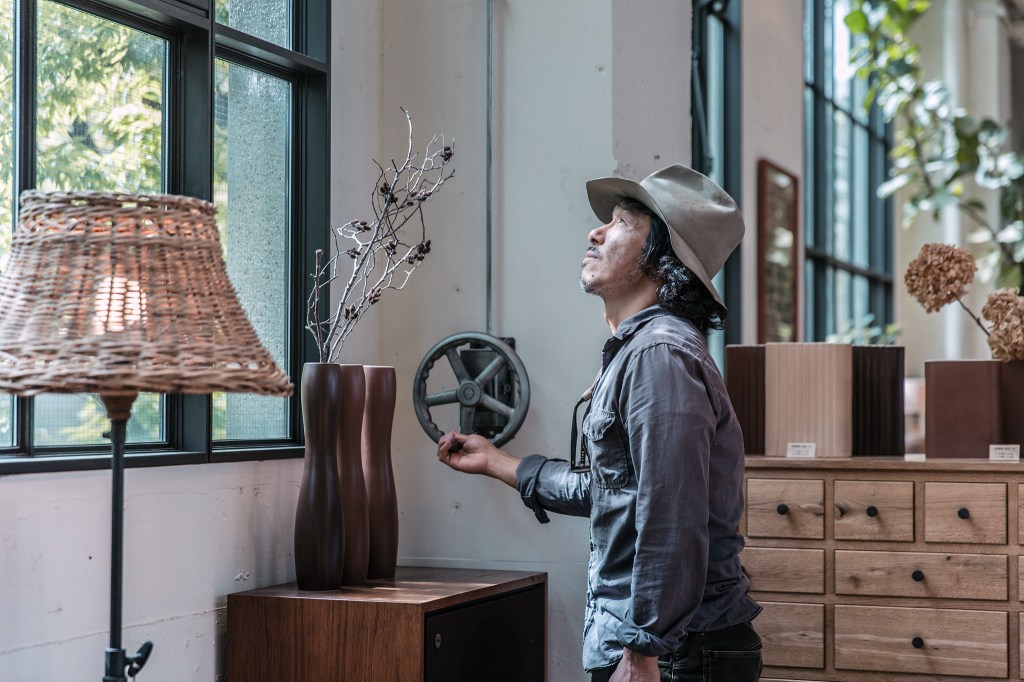
In the forest, however, this wasn’t so much of an issue as my style of riding at home meant I could confidently pick my line and brake less. And it was here that we first spotted through a gap in the trees, the white domes of the Calar Alto Observatory.

Struggling to work out the distance to this landmark, the road inevitably began to climb until I was finally sitting, eating some sweets, and taking in the architecture of this incredible mountain top cluster of buildings. Wishing we could stay and camp out under the stars, I also knew we faced a long descent and that my brakes would scream all the way down. Sure enough, the noise was so loud that when I finally reached the bottom I was crying—no fun at all and with an added sense of losing my thing. Because my thing is descending.

Searching for somewhere to spend the night, we decided on a lay-by next to a motorway. Admittedly it was a bit grim and we were bedeviled by swarms of mosquitoes but the sky was clear so we didn’t need to be covered by our tarp and we fell asleep under a blanket of stars.

Dawn saw us rising with the sun and counting our mosquito bites. Cat almost immediately had a puncture so, once fixed, we sought comfort in a café. Here I experienced one of the highlights of our trip – the shouts and laughter of the customers, the bustle of orders being brought to tables – and what I love about my rides in and around London. Lapping Regent’s Park isn’t exactly exciting but you do it with friends and go to a café afterwards. It sets you up right for the day—which was what I was witnessing in that little corner of Spain.


On our way again, this was the day we’d be crossing the Tabernas—the only official desert on the European continent. My favourite day as it turned out because the terrain was so technical that it cleared my mind of other concerns. We were riding tiny tracks with a drop off to either side and the knowledge that if either of us made a mistake the consequences could be severe. And although a barren landscape, the colours were truly vibrant and we loved carrying our bikes across rail tracks that disappeared either way into the distance.

Closing in on the end of our sojourn, in some ways I was feeling a little deflated. We were always behind in our plans due to the problems with our transfer from the airport and this meant we’d cut out some sections of the official Badlands route. And there was this voice in my head telling me that we should have done more. Cat patiently pointed out that we were on holiday and should only do what we want to do and not worry about the rest. It took me some time but eventually I managed to get to that place and this process was helped by our time at a campsite by the sea. We rented a plot and there were toilets and showers – such luxury – and you fell asleep to the sound of waves crashing on the beach.

To ride the route with Cat – an experienced ultra-distance racer and one of the most wonderful people in my world – was why I kept on moving forward. Every time I doubted or questioned, she was there with a gentle reminder of how to be present and embrace the moment. And what struck me as we wound our way back in the direction of Málaga and our waiting Airbnb, was the constantly shifting landscapes we’d ridden through. Road, desert, forest, beach, rolling coastal-California—jaw-dropping visual surprises like the desert train tracks and flamingos in a lagoon. Views and vistas that I tried to capture with my camera as an added reminder of the joys we had both shared.

In all honesty, I use cycling as therapy—I run away from my problems by riding my bike. But when we returned home and everyone was asking how we got on, I had to put on this front and tell them how amazing our trip was. Because I really wish I could say that I found my cycling mojo in the Badlands of southern Spain but I didn’t.

What I did find was a desire to ride my bike a little more. And our trip gave me the time to reflect on what’s actually important to me and what makes me happy. Everything in life shapes you to one degree or another—the next time you go and do something, you do it as a different person. We’re always growing and I do understand that Badlands has changed me. I just haven’t as yet figured out how.
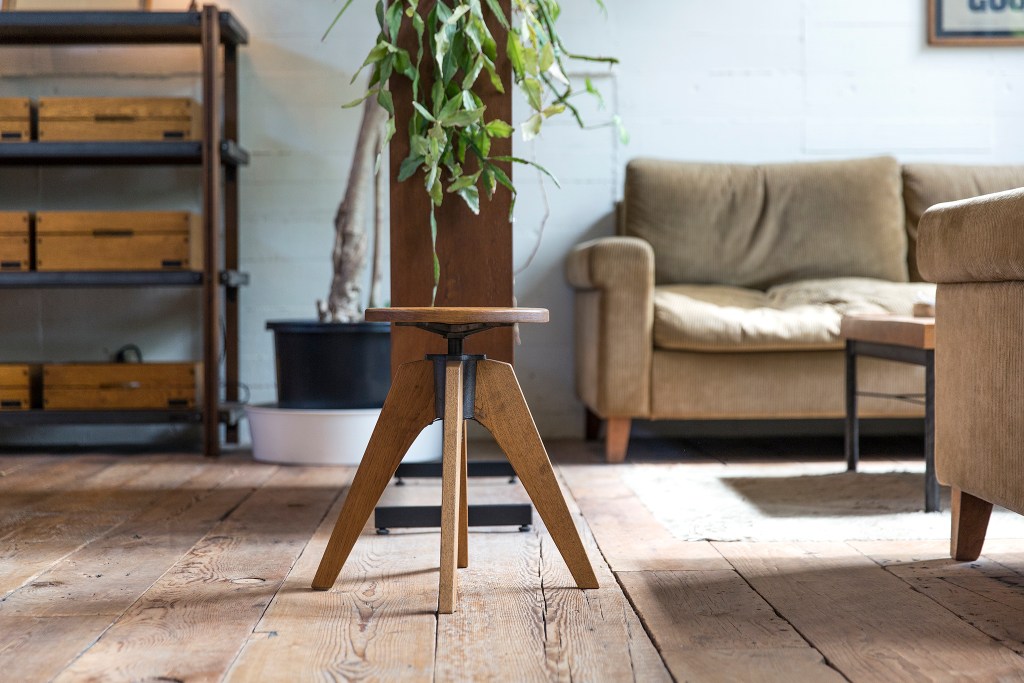

All images with kind permission of Saskia Martin

Cat Karalis

Badlands 2022

Sami Sauri / New adventures

Constantly on the move – camera in hand – from one project to the next, when photographer and filmmaker Sami Sauri decided to commit 100% to her own production company, little did she know what a whirlwind year she would enjoy.

Reflecting on this period of transition in her usual candid manner, Sami considers life’s simple pleasures, why storytelling underpins her way of working and how failure can be a mechanism for growth.


cyclespeak
You’re just back from shooting in Austria. It looked fantastic.

Sami
It was for next year’s Jack Wolfskin spring / summer range.

cyclespeak
But it was snowing.

Sami
I know [laughs]. They chose Austria for the location – which was very nice – but maybe next time we can go to the Canaries? Because the first day it just rained and nobody wanted to wear shorts [laughs].

cyclespeak
Did you expect to be above the snowline?

Sami
No. Not at all. I’d packed a rain jacket but I was wearing normal shoes. And the main story behind the women’s campaign was a hike to a hut at 2100 metres and then down the other side. We were going to spend the night at this altitude – the story was amazing – and the whole crew was female. I turned down two projects just so I could do this shoot.

cyclespeak
But the weather wasn’t helping?

Sami
We had a mountain guide with us and she advised us to postpone for a couple of days. But when we did finally start to climb, on the first ridge we had snow. But I wasn’t going to stop there—this story wouldn’t make sense if we hadn’t got to the hut [laughs].

cyclespeak
So it all worked out in the end?

Sami
For me, I had a wonderful experience—I love those kinds of adventures.


cyclespeak
The last time we caught up, you were listing all your various mishaps. Your foot had been in a plastic boot and you later tore some ligaments when you were out trail running. How’s the summer been in terms of staying in one piece?

Sami
I’ve probably done less this summer than for the last five years. Not because of my foot but I’ve had so much work that I couldn’t find the time for intense bike trips. But I have started running again and trying new sports like motocross.

cyclespeak
Your road to recovery after injuring your foot brought to mind the issues you had with knee pain during the Route 66 and Big Land films.

Sami
The knee pain comes from riding fixed gear. You can’t help falling and it always seems to be on the same side. And I find it interesting that you get used to sleeping in a position that’s comfortable for your hip and your knee—your body quickly adapts to what feels best.

cyclespeak
So it’s something that you can now manage?

Sami
I feel that everything comes for a reason and when I started physio, I discovered that I’d been riding all those years and not using my glutes. There was very little muscle and this was the main reason my knee was hurting. So I now realise that I need to exercise in different ways to help relieve the pain—using bands or a simple 20 minute yoga session every morning to activate my body.

cyclespeak
So that’s your morning routine sorted?

Sami
I’m somebody who finds it very difficult to have constant things in their life [laughs].

cyclespeak
That doesn’t fit well with your personality?

Sami
It’s more my lifestyle right now. So busy and always on the move.

cyclespeak
Is racing the fixed gear scene something you miss?

Sami
I definitely miss that sense of community. And I’ve realised that I’m quite competitive. Which is why I often ride alone because nobody is watching and I can go as fast or as slow as I like and really enjoy it. When I go out with friends, I find myself looking back and wondering where they are [laughs]. 


cyclespeak
I saw a recent post where you were riding near Girona and someone had a bloodied knee?

Sami
The mountain bike ride? When I put my friends through hell [laughs].

cyclespeak
That’s the one.

Sami
I felt so sorry for them. I convinced these two girls – one of them is my physio – that we should take out our mountain bikes and just do some easy, smooth trails. Well, oh my god, we had some proper gnarly downhill stuff [laughs].

cyclespeak
When you aren’t shredding local trails, you spend a fair proportion of your time on the road filming. What do you miss most about home when you’re away?

Sami
I do miss my own cooking. Every time I come back home, the first thing I do is make a plate of my pasta. Maybe this comes from my childhood but I need that plate of pasta.

cyclespeak
Do you have a particular recipe?

Sami
Parmesan, olive oil and salt. That’s it. I don’t need anything else to make me happy. And I might put on some vinyl and turn up the volume [smiles].

cyclespeak
Simple pleasures.

Sami
But after three days, I’m already looking forward to the next adventure [laughs].

cyclespeak
From the moment you receive a phone call or a message, how fast can you be packed and out of the door?

Sami
It doesn’t take me long. 30 minutes?


cyclespeak
Really?

Sami
I pretty much know what I want and what I need—and I don’t need much. But I do always take a pair of cycling shorts because no matter where you are, you might get a ride [laughs].

cyclespeak
You sound very organised?

Sami
Before, everything was super tight with the packing and arriving at the airport. Massive stress [laughs]. Now, I pack two days before I’m due to leave and arrive at the airport at least two hours before my flight—something I never used to do. And when I get to the airport, I’ve figured out a good spot for breakfast, where I can work. And it means I don’t arrive sweating [laughs].

cyclespeak
What would you tell someone just starting out taking photographs or trying their hand at film making?

Sami
I do get messages about that—people wanting to change their lives. For me, I was just handed a camera and told to shoot. And I said, ‘Shoot what [laughs]?’

cyclespeak
That sounds like good advice.

Sami
The first thing I always say to people is just go and do it. Do it, do it and keep on doing it. And fail and do it right and fail again and then see if you like it. You’ll never know when that will be – or whether you will or won’t – until you give it your all.

cyclespeak
And where do you see yourself on that journey?

Sami
I’ve still not completely figured out what’s my vibe. I didn’t think I’d like commercial photography but these last two shoots for big brands I’ve absolutely loved. They were wonderful clients in giving me free rein – I didn’t have a shot list – so it felt like they’d put their trust in me.

cyclespeak
You enjoy an open brief?

Sami
Yes. It’s like for a recent cycling collection I’ve just shot. Super commercial but I gave them this idea that we could rent a motorhome, go to the desert, camp out and ride bikes. Basically shooting on the go.


cyclespeak
Personally speaking, how much is a sense of storytelling and narrative an important element to these projects?

Sami
For me, it’s super important. For the brands, they don’t always ask for it but they all want it.

cyclespeak
I love that.

Sami
Right now, this storytelling style of shooting is mind blowing. Everybody’s doing it.

cyclespeak
Whenever you’re pictured outside – walking, riding, running – very often you have a brilliant smile that lights up your face. And this made me think about a post from earlier this year when you referenced much darker thoughts and feelings.

Sami
I’ve spent time on both sides. I’ve been the happiest person ever and the saddest. And I can think of certain people that wanted to drag me down the wrong path but I think that happens to a lot of people. And the only thing that got me through, was opening the door and going outside. Not necessarily to do sports but sometimes it was a matter of just being out in the fresh air. To find my true self, it’s never going to happen inside a house. I could stay inside – alone with my thoughts – and look at the same wall for a million hours and not feel any better. But if you go out and talk to somebody – your friend, your dog, your horse, even someone you don’t know – then this can make a real difference. It’s like a door that opens or stays closed.

cyclespeak
I guess an open door lets in light? Which brings me to your recent collaboration with Megamo bikes—a custom Sami Sauri paint job for one of their full-suspension mountain bikes with a theme of ‘sunset’.

Sami
I suddenly got this idea in my head about painting a sunset on a bike. To me, the best time of the day because I just love all that colour—not so much on me but definitely on a bike [laughs]. I’m good friends with Megamo and they’ve been super helpful over the past year. Just before I went to Egypt, one of the guys on the trip broke his frame in Barcelona by crashing when we were eating pizza. We got a bike from Megamo in under 12 hours so the trip could go ahead and all their generous help made me want to return the favour.


cyclespeak
So what is it about sunsets that you love so much?

Sami
I’d much rather ride in the evening. In the morning I’m very active mentally and in a creative mood and want to get things done. But when I finish for the day, I can go out and ride into the sunset – it sounds a little like a movie – and that acts as a reward or a pat on the back.

cyclespeak
You’re always on the go – always busy – so how do you unwind?

Sami
I’m not sure I do switch off [laughs]. Maybe when I sleep? And part of me thinks that if I stop, I might miss something [smiles].

cyclespeak
I think that’s a state of mind a lot of people would recognise.

Sami
But I have started reading again—time with no phone or screens. And that’s why I like going on holiday to somewhere simple that doesn’t take lots of decisions to enjoy. Somewhere I can surf or go hiking.

cyclespeak
So do you prefer a 5 day, 5 week or 5 month plan for living your life?

Sami
Hmmm. Fuck. It has to be 5 day because nothing ever goes to plan [laughs]. I can receive a call today and I’m leaving for somewhere else. It’s crazy!

cyclespeak
There’s a post from earlier in the year where you write, ‘Do what you love and love what you do.’ Is that a fair description of how you’re currently living your life?

Sami
It’s not like I’ve always known what path in life I will take. But then somebody handed me a camera to film, photograph and ride at the same time. So I’m grateful for those special people that I’ve known—the ones who after years still see you as you are.

[pause]

It’s not been easy – there were times when I was working three jobs just to eat and put a roof over my head – but I’ve made it this far and I want to live every moment as if it was the last one.


Sami

Photographs of Sami in Egypt with kind permission of Sonam Gotthilf