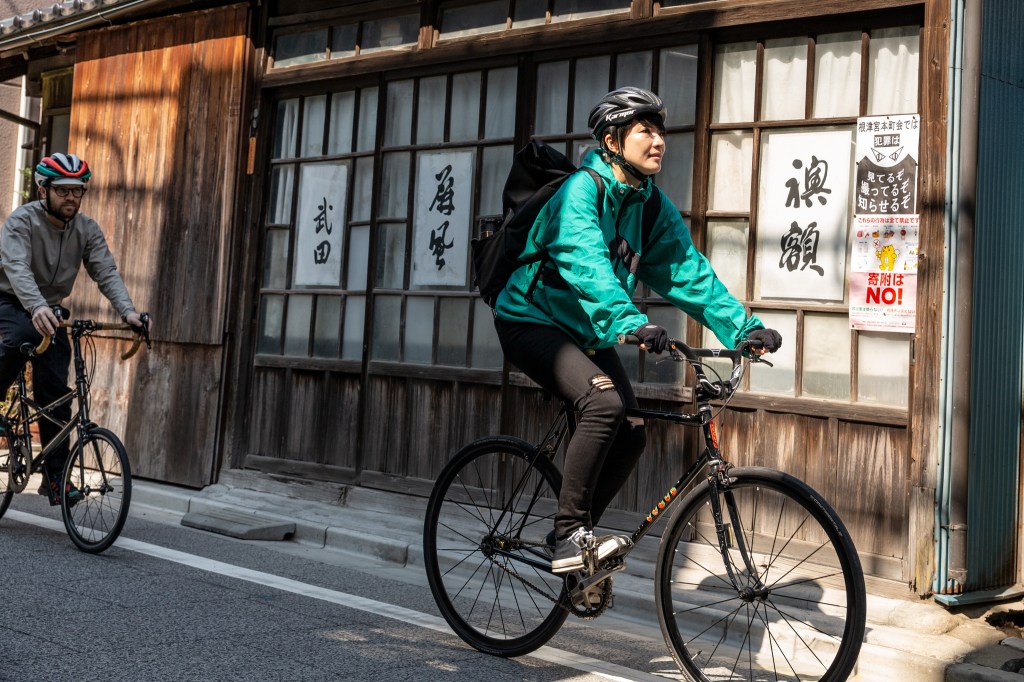
Tokuhiko ‘Tok’ Kise / Tools for everyday life

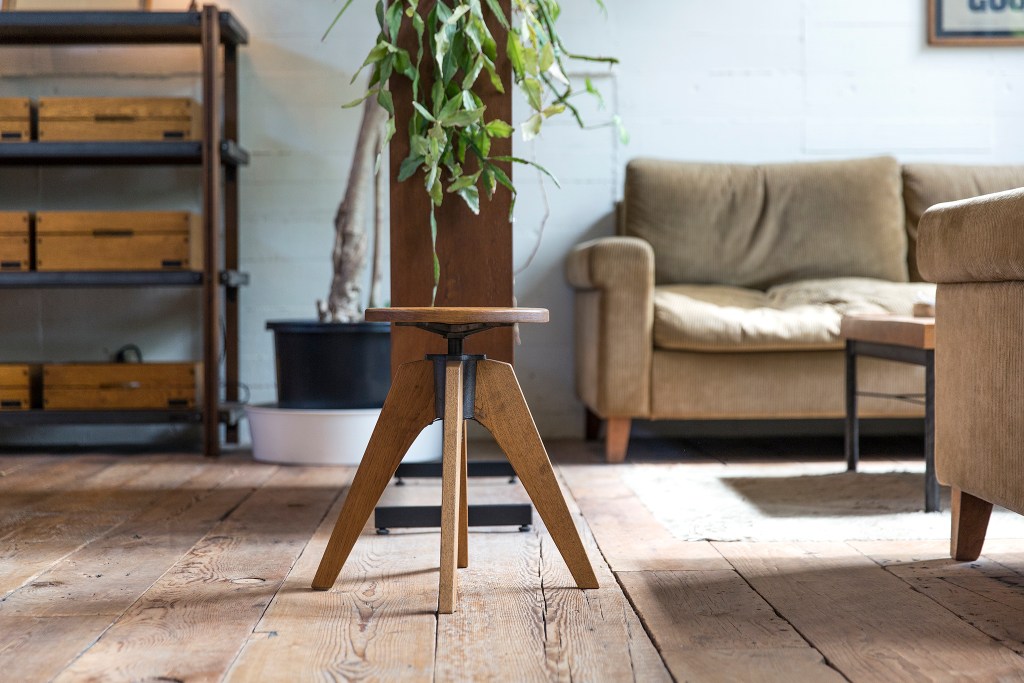
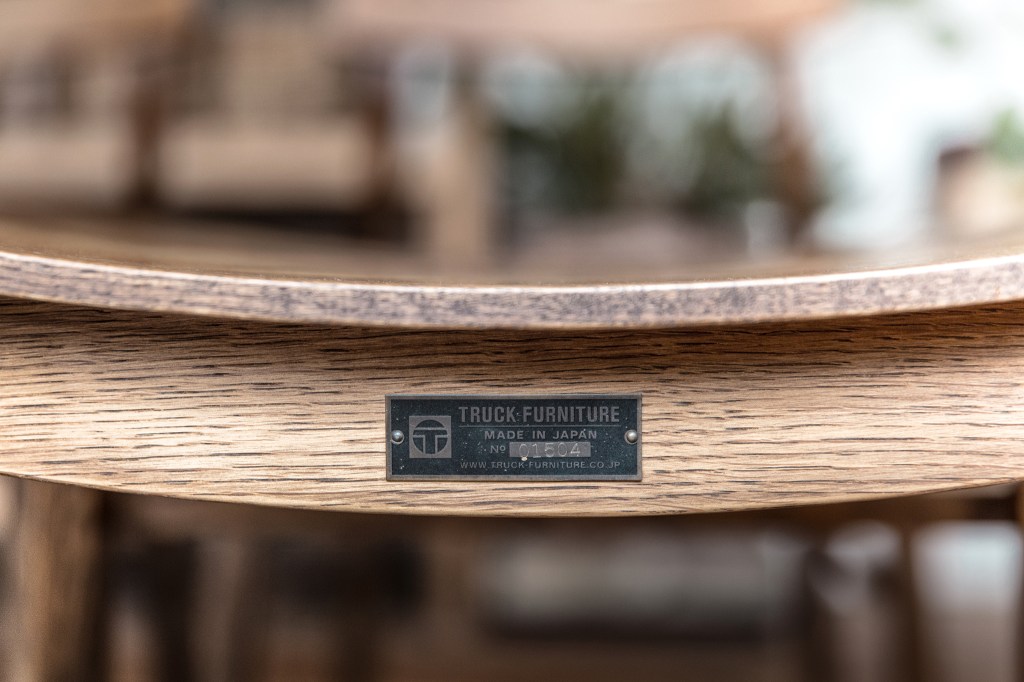
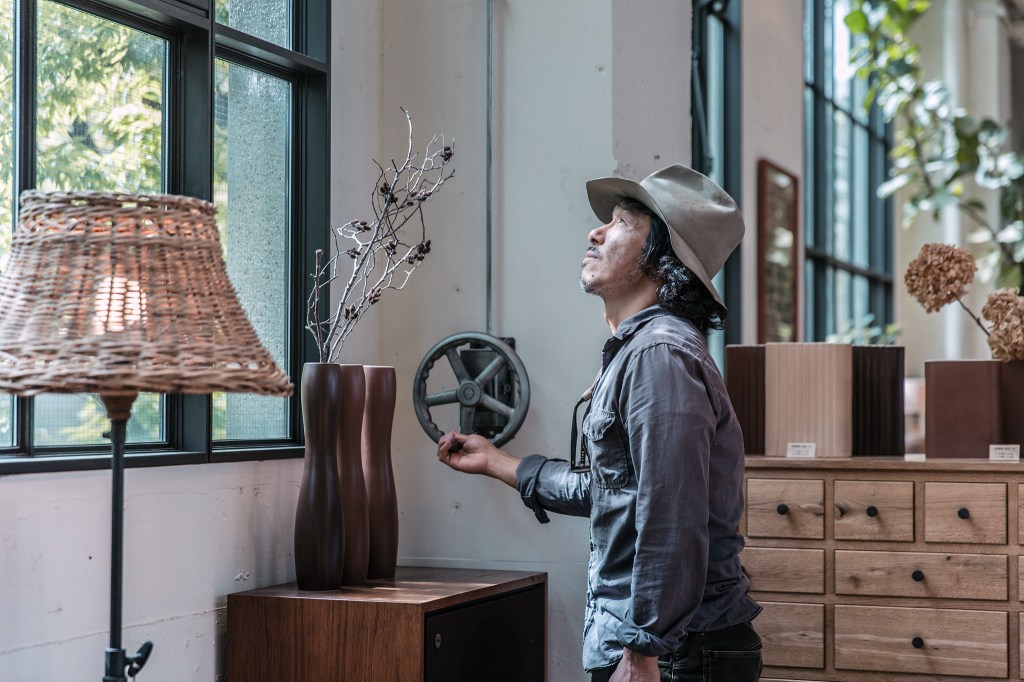
Halfway along a quiet side street in the Japanese city of Osaka is a stand of trees shading the corner of two buildings. To the left, the showroom and workshop of TRUCK Furniture, and on the right, an offshoot of the brand in the shape of Bird cafe. The vision of Tokuhiko ‘Tok’ Kise and his wife Hiromi Karatsu, TRUCK was founded in 1997 with Bird following in 2009 after the original design studio was moved to its present location.

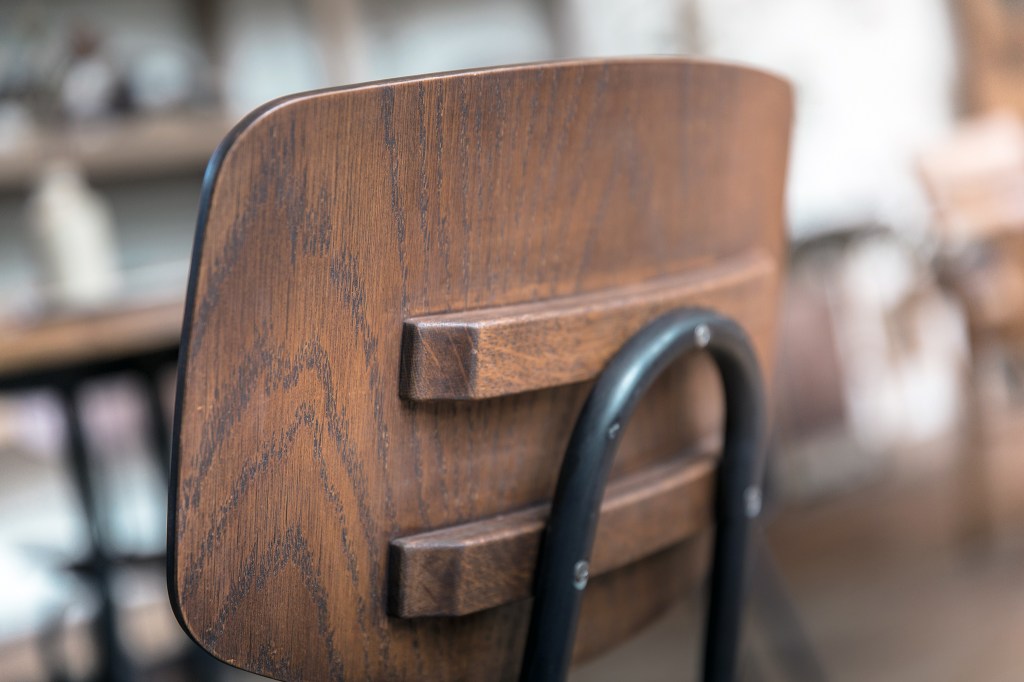
With every item of furniture expertly handcrafted onsite, Tok views these individual pieces as tools for everyday life—a design philosophy that extends to his lifelong appreciation of the bicycle. A quietly passionate pursuit of two-wheeled adventure that reflects a boundless appetite for life and living and an innate respect for materials in all their forms and function.

Illustrated by Lee Basford’s beautifully observed photography, Tok explores the connection between his love of the outdoors and the choices he made as a teenager, why he amasses objects but doesn’t consider himself to be a collector, and how, ultimately, his relationship with the bicycle is at its very simplest when he’s outside having fun.


A youthful 55 years old and quick to smile, Tok is reminiscing about his earliest memories of riding a bike. Perhaps hinting at his future profession crafting bespoke items of furniture, he can remember modifying a bicycle his parents had bought him—Tok swapping out the seat and bars so that it looked like a chopper. Just one example of a childhood quest for bicycle-based fun that he describes with obvious delight.

“In Japan there is a type of shopping bike we call a mamachari. This means ‘Mom’s bike’ and quite often they have a basket on the front. Yes, they are heavy but if there was any sand or gravel I would drift around the corners, jump over obstacles and practise my track stands. So, as a child growing up, the type of bike didn’t make any difference. I just enjoyed riding.”
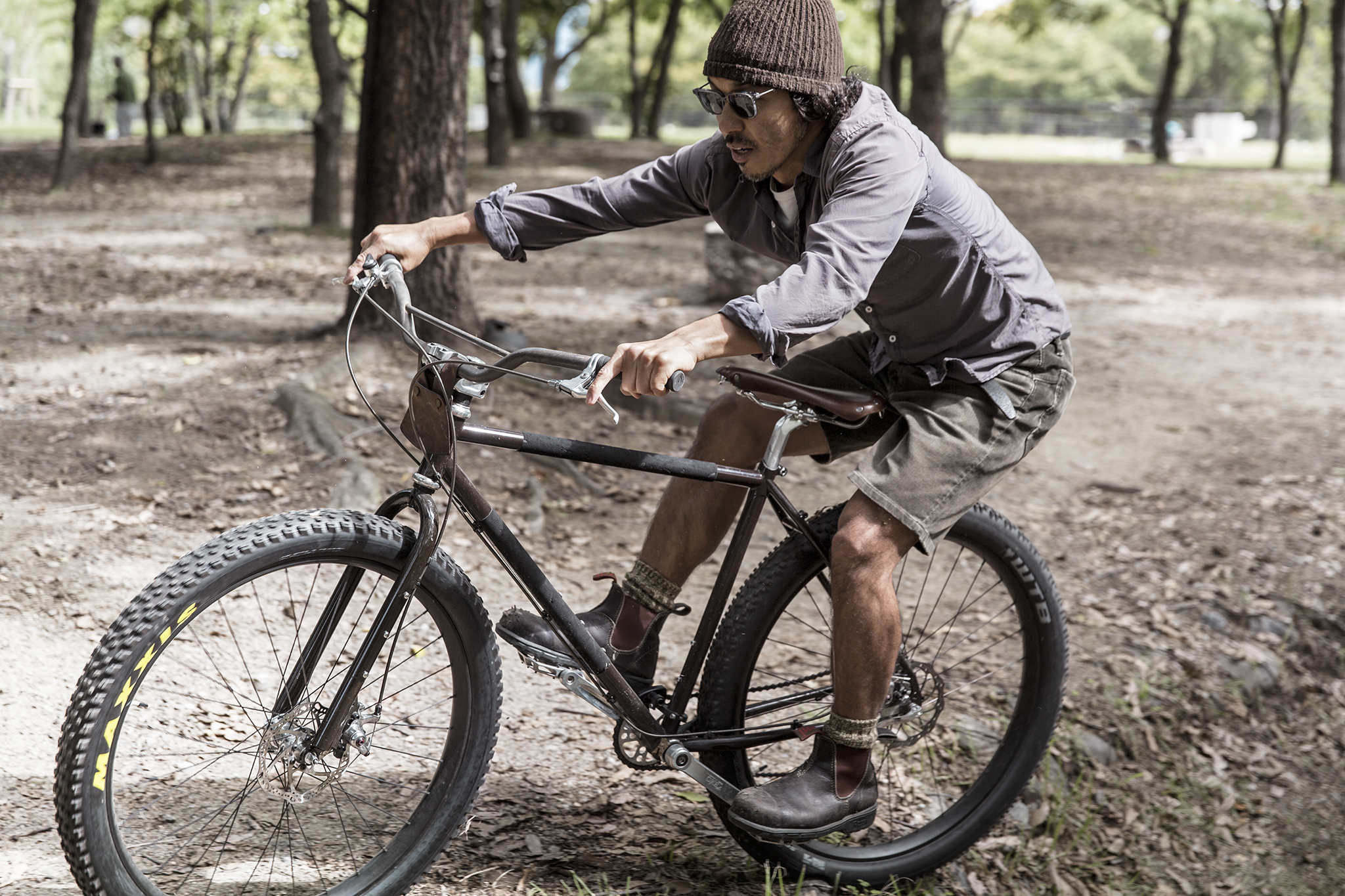
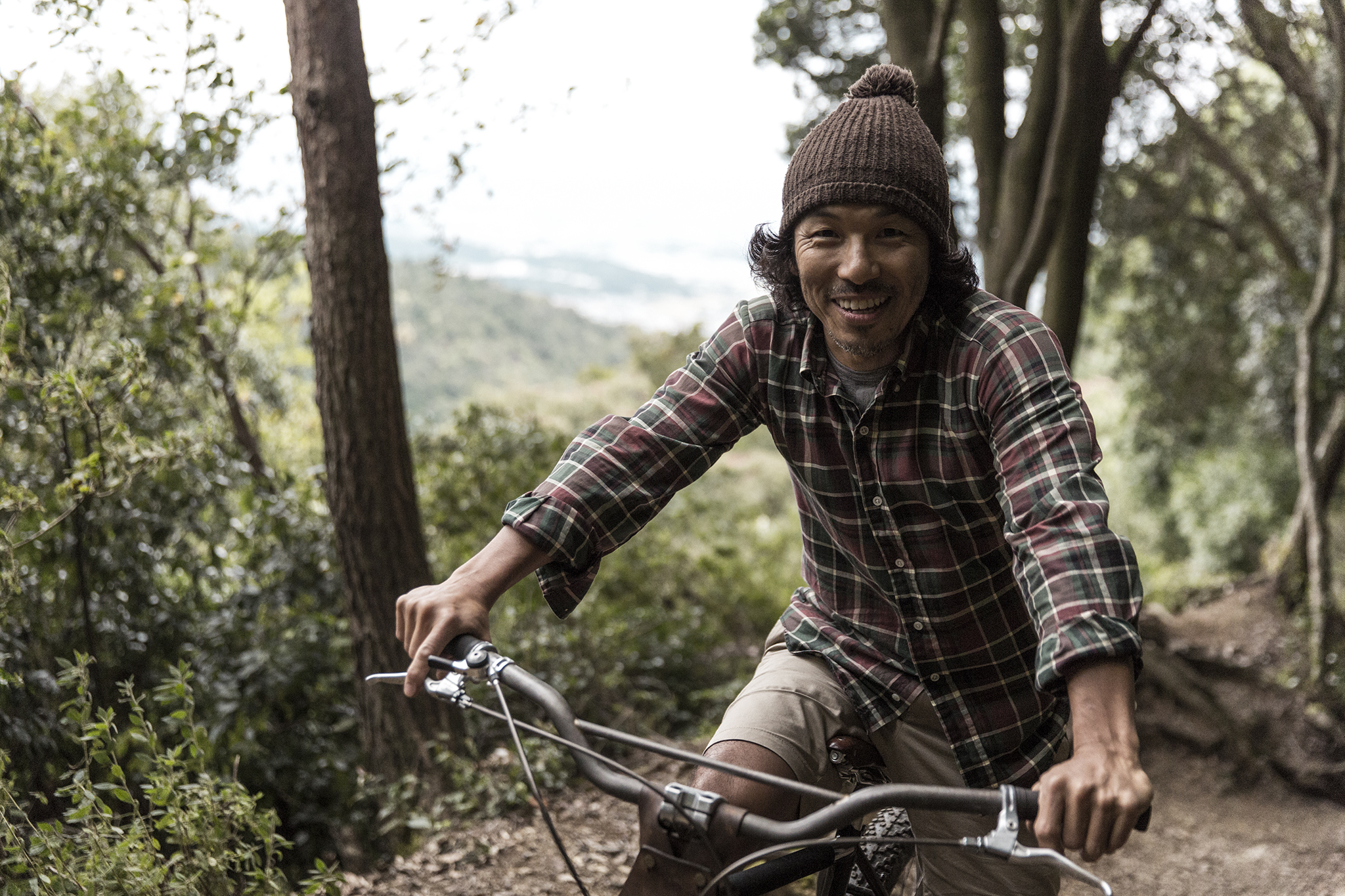
The youngest of four siblings, Tok recalls a comic book belonging to his brother that depicted a story about two young boys cycling all over Japan with their camping gear. Immediately inspired, Tok purchased a randonneur bike manufactured by Japanese brand Bridgestone that was styled as a European grand tourer with drop bars.

“I rode that randonneur for eight or nine months—enjoying long trips up into the mountains. But then one day I saw a picture of a mountain bike in a Japanese camping magazine and just knew I had to have one. So I immediately placed a ‘for sale’ advertisement for my randonneur in the back of the magazine—there was no internet back then to help me do this—before buying a Japanese-made mountain bike in Tokyo.”

A classic hardtail with chromoly steel frame and cantilever brakes, mountain bikes were still a rarity in Japan and Tok remembers the surprised looks from passing hikers as he descended downhill paths and trails.

“They would stop me and ask if I was going to go down this or that trail on my bike. And I would just smile and answer—‘Yes, of course’—before disappearing into the forest.”

With teenage years giving way to adulthood—Tok initially working for a company manufacturing chairs before starting his own business TRUCK—as a young man forging a new career as a furniture maker he was determined to follow his own path.

“It was the same with my bicycle. If I wanted to ride, I would ride. If I wanted to surf, I would go surfing. Even when I got married and we had our daughter, I could still find some time to do these things. I can remember when my daughter was eight years old, she would sit on the saddle of my mountain bike—with me standing behind her—and we would ride down some gentle paths.”
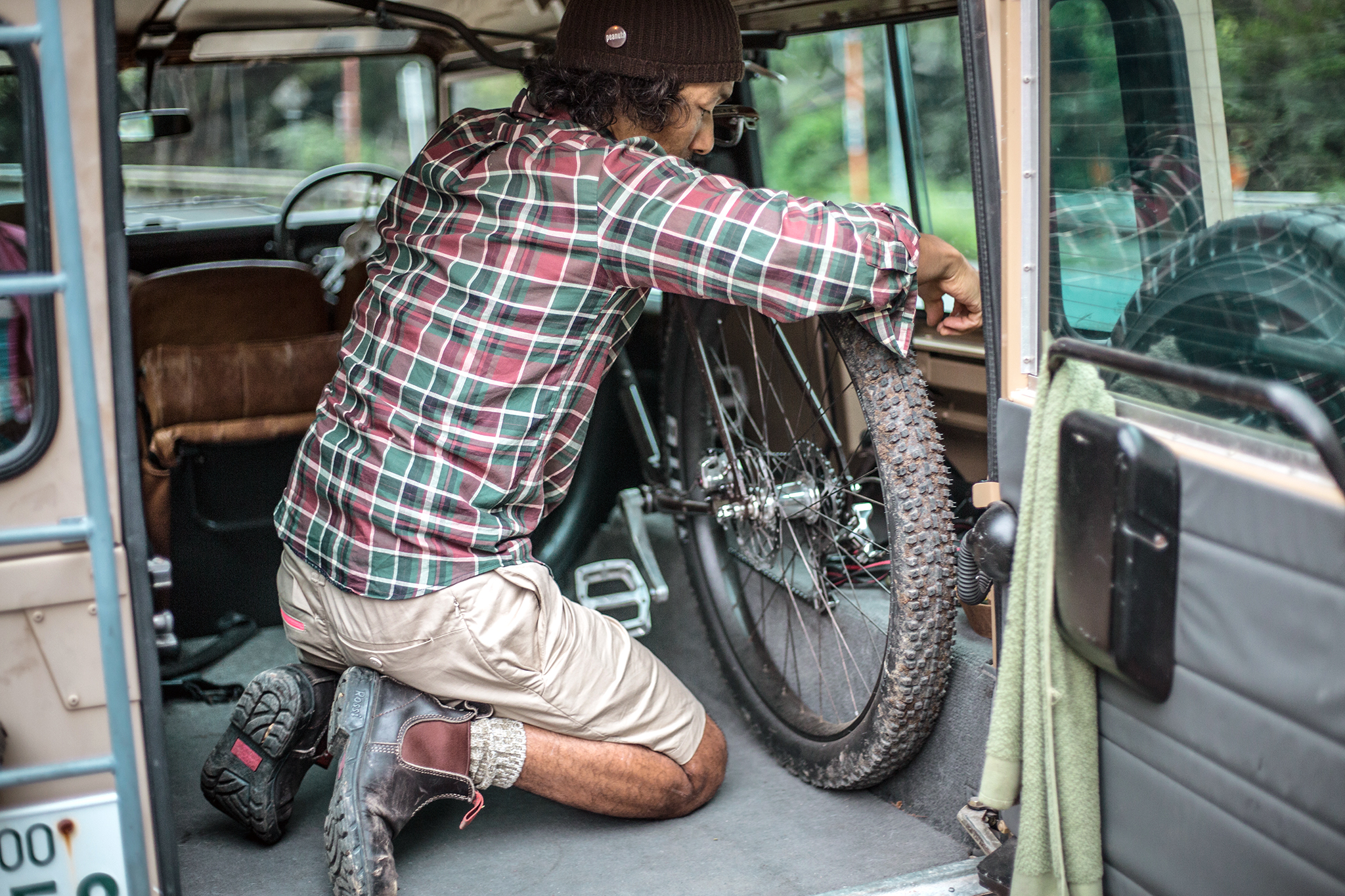

As the furniture Tok designs and manufactures is all handmade, his appreciation for the physicality of materials also extends to the bikes he chooses to ride.

“My taste is for a frame made from thin, round tubing which I feel looks very classic. And I never buy a bike because of the brand name. It’s more that I respect beautiful workmanship when the proportions are just so. It’s happier than bad work.”

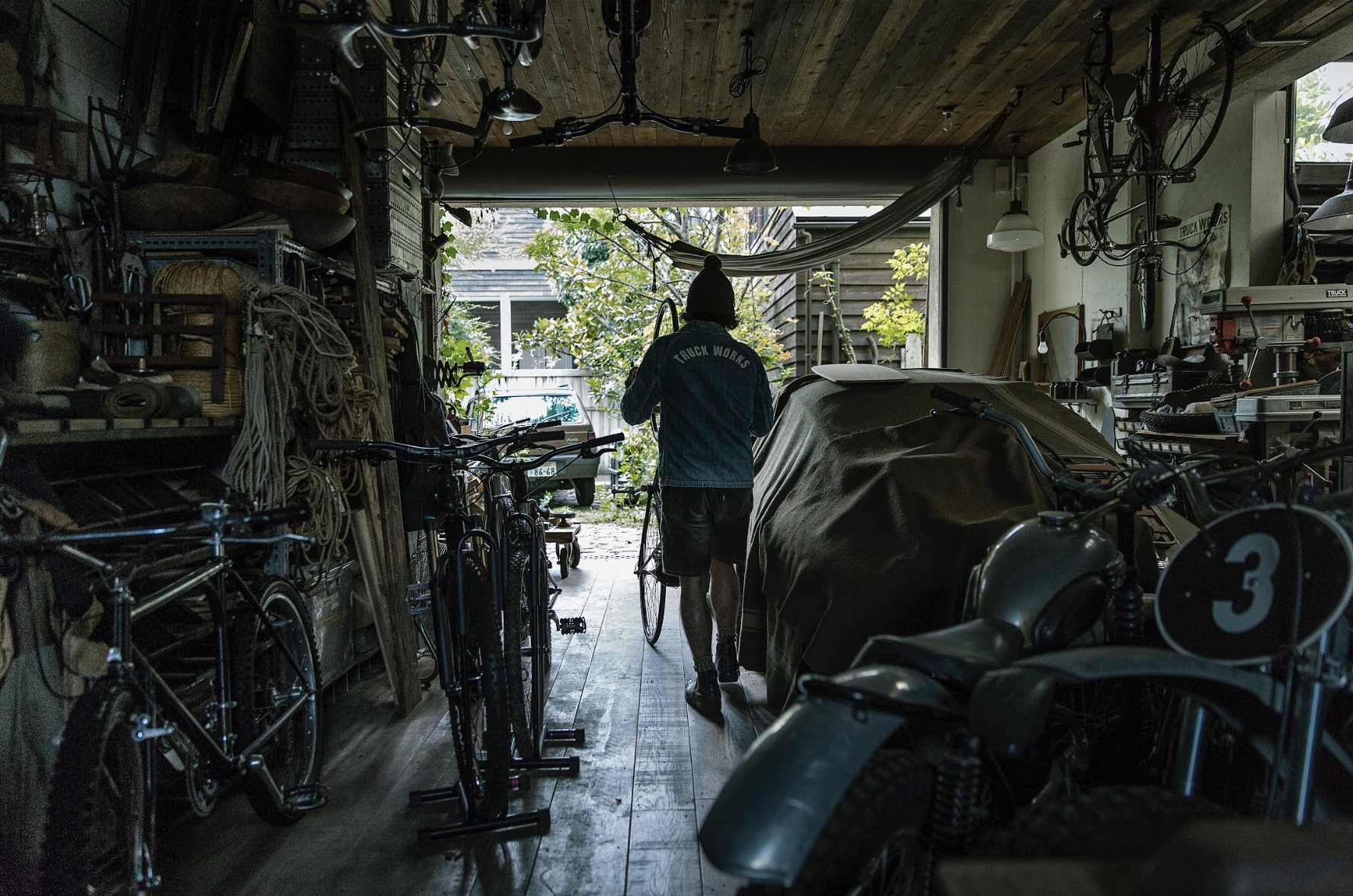
Enter his garage and you are met with a veritable Aladdin’s Cave of tools, motorbikes and bicycles—a layered representation of Tok’s ongoing fascination for engineered products and artefacts. On the floor sits a barrel of wooden mallets alongside a bench supporting multiple pairs of leather work shoes. And above, a row of near identical brushes that frame a vintage Evel Knievel poster taped to the door. 

“I’m not a collector but I know my taste and can decide instantly if I like something or not. It’s rather that the objects find me.”

With a wood-turning lathe set against one wall and assorted drill bits and screwdrivers arranged neatly nearby, he expounds on how he views the individual items of TRUCK furniture as tools for everyday life—Tok wanting his customers to enjoy them without feeling the need to be too precious about their use.


“Sometimes this means you might make a mark with your can of beer or coffee cup. But that is the life of the object and I welcome the patina as it ages. And it’s the same for a bicycle. It isn’t an art piece to be left on the shelf. A bicycle is for riding and having fun.”

As an object, the bicycle has many functions,” he continues. “It can be beautiful standing still but if you push the pedals you move without the need for gasoline. If you drive a car, you don’t feel the wind or smell the pine trees. You can’t hear the birds sing. And because the speed of a bicycle is slower, you can see more.”

Preferring to ride alone or with a small group of friends, his location in Osaka is a short, half hour drive to the mountains—convenient for loading up his bike and enjoying a morning ride with 360° views back down to the city. Choosing instead to ride from home, one favourite local loop takes riverside trails to the Long Walk coffee shop and their collection of vinyl jazz records.

“I just enjoy riding my bike. Whether that’s on the sidewalk in front of TRUCK or up high in the mountains. And that’s something I’ve done ever since I was a young child. Riding out on my mountain bike when I was 13 years old with some biscuits and a small stove that I would use to make myself a coffee.”

This lifelong love of cycling is nowhere better illustrated then in his choice of career. With his high school friends all heading for university, Tok read an article in an outdoor magazine that mentioned a furniture making class in the Nagano Prefecture. Deciding to enrol, he studied for one year and then returned to Osaka where he built his own workshop before founding TRUCK with his wife Hiromi.

“This all happened because I enjoyed mountain biking and spending time outside—the reason I picked up that magazine in the first place. So ever since I turned 18, my professional life has been furniture making. And my riding threads through this journey. When I was a child, I would customise my bike and I still do that today. Little things like some nice tan-wall tyres, the leather from my workshop wrapping the bars or using the stopper from a bottle of single malt whiskey as a bar end. I enjoy making the bike look and function according to my taste. And it’s the same story with my furniture. I make what pleases me.
Tokuhiko ‘Tok’ Kise / TRUCK Furniture

All photography by Lee Basford with kind permission of Rapha / leebasford.com / Humankind

Read more about Lee’s story and his stunning photography here

Lucas Badtke-Berkow / Tokyo Tree Trek

Publishing their Tokyo Tree Trek edition in the spring of 2020, Papersky magazine offered an intriguing insight into the Japanese metropolis from the perspective of the city’s myriad green spaces and the trees that have long been a feature of Tokyo’s urban landscape. Catching up with Papersky’s co-founder and editor, Lucas Badtke-Berkow, we discussed the inspiration that led to the route’s design, why the original premise opened up to offer unexpected outcomes, and how walking or cycling can encourage a rediscovery of aspects of city life often hidden in plain sight.


We’ve managed to successfully navigate a ten hour difference in time zones for our video call but Lucas Badtke-Berkow is having a little trouble showing me a photo spread from a copy of Papersky—the magazine he co-founded with his wife Kaori in 2002. Sitting in front of his laptop, juggling an electric lantern in one hand and the open pages of his publication in the other, the beam of light momentarily picks out the photographs he wants me to see before illuminating his smiling face.

The lantern is on account of Lucas’ farmhouse location. A ‘workcation’ away from his Tokyo home that is proving an increasingly popular trend with a population freed from the office due to home working but needing to maintain social distancing.


Along with frequent bursts of laughter, Lucas talks enthusiastically with a tell-tale Japanese accent. A fascinating insight into cultural assimilation considering he was born in the North American city of Baltimore and grew up in San Francisco where he studied at the University of California.

“After graduation I wanted to go somewhere I hadn’t been to before. I was an American Studies major so there was a lot of focus on American history and American art. And I immediately thought of Japan because in San Francisco there’s a Japanese bookstore called Kinokuniya where I enjoyed looking at lots of different Japanese magazines and photo books. I was always fascinated by how totally different the perspectives and images were compared to the States.”

“So I decided to go and see Japan for myself. I had this tiny, little backpack and just set off for a two week stay. I arrived in 1993 and haven’t really left. I guess it’s a good fit for me.”

With Lucas making his own magazines since elementary school, he launched Tokion in 1996—the publication’s title translating from Japanese characters to mean ‘The Sound of Now’. Mixing Japanese youth culture, music and fashion with American trends in movies, photography and art, the magazine ran for six years and became very popular.


“People didn’t have a clear image of what Japan was at that time. There was no internet back then and it wasn’t easy to see and understand the culture so magazines were one way that people shared and consumed media. We had a bi-lingual setup and published Tokion in Japan, republished in the States and also distributed to Europe. But then, as I got older, I came to the realisation that I couldn’t really make a youth culture magazine anymore. But making magazines was the only thing I knew how to do so I had to rethink what would work next. I’d grown to love travel and visiting different places – both in Japan and overseas – so with my wife Kaori we started to plan how to turn those interests into a magazine. I sold Tokion and we started Papersky in 2002.”

With each edition of the magazine having a central theme, when Lucas heard the announcement that Japan would be hosting the Olympics in 2020, he decided to offer an insight into Tokyo but from a unique perspective. Rather than simply a guide to the best place to eat or which museum to visit, he considered how Papersky could focus on the culture of Tokyo but in a way that people could experience for themselves.

“I had this idea of offering memories that would last a lifetime and discussed this with Kaori. My wife, she’s a very interesting person because she communicates with trees. She goes out very early in the morning when the neighbourhood is quiet and has conversations with several trees that she likes to visit. And then when she returns, over coffee she’ll talk to me about what they said.”

“So with Tokyo expecting all these visitors for the Olympics, it just struck me that maybe we should plan a trail that connects all the trees in the city. And the interesting thing for me is that, unlike a forest which might have only two or three varieties, in the city people have planted all sorts of different trees. Almost like a museum.”


Over the course of six months, the couple began by listing their favourite trees before asking people they knew to suggest one or two of their own. Once all these locations were plotted on a map, the next step was to design a route that would link all the individual trees together. With a certain shape called an ‘uzumaki’ in Japanese – the spiral you see on a snail’s shell – it was decided that the trail would start in Shinagawa and then pass through their own neighbourhood of Higashi-Shibuya before ending at the Imperial Palace.

“So we had this idea of travelling through Tokyo but from a totally different perspective. Along the way you get to meet all the trees and then there’s a nice cafe here and an interesting shop over there. And I’m friends with a lot of bicycle messengers and they know the roads better than pretty much everyone else. We wanted to connect up the route and messengers are usually thinking about how to ride from one building to the next so we just substituted the trees.”

With an initial route mapped out, Lucas cycled the trail with Kaori before they each walked individual sections on their own. A final run-through and the Tokyo Tree Trek was ready for publication in Papersky in time for the expected influx of visitors to the city. 

“Even though we’d originally planned this to coincide with the Olympics which were subsequently postponed, because the magazine came out during lockdown, many people wanted to spend time outside in the fresh air where it wasn’t crowded. Something that we didn’t foresee but an unexpected and satisfying outcome. The trail and the mood of the city were a really good match at that time.”

Another upshot from the trail’s launch was the conversation photographer and creative director Lee Basford initiated with Strava in Japan. A longtime friend of Lucas, he’d enjoyed the Papersky story and felt it would make an interesting ride feature and photo essay. With Strava in San Francisco also onboard, it was decided to make this a global project.

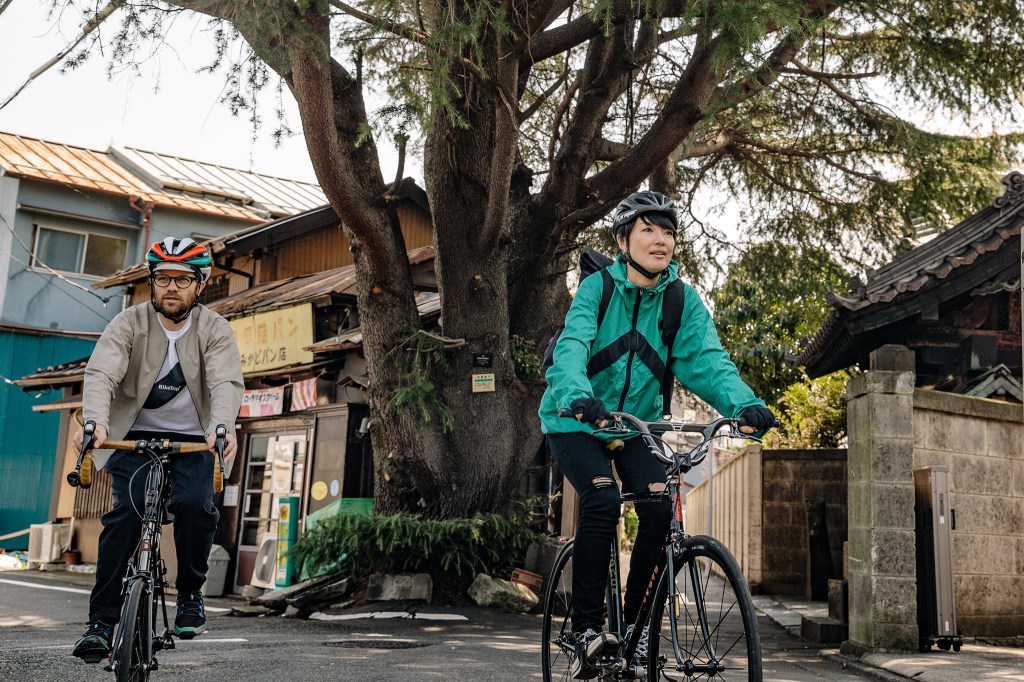
“The idea of seeing a city from a new perspective and to focus on the green spaces with a bicycle friendly route just resonated. So we started super early and went into the evening on two separate days. Lee taking the photographs of myself and my messenger friend, Yuki Tokunaga, riding our bikes.”

With the route avoiding busy roads in favour of quieter back streets and neighbourhoods, not only does it demonstrate how the city embraces nature in the form of parks and open spaces but also how the ancient and modern aspects of Tokyo are so inextricably  intertwined.

“There’s a cafe on the trail that has a number of bonsai trees sitting outside that are over 500 years old. And these places are easy to miss in a city the size of Tokyo. It’s probably the same everywhere but there’s something about Japan that can be really hard to figure out. Where things are and why they’re there. The story behind these places and how they interconnect. So we set out to offer an easy way of navigating the city that helps you to understand the connection between the built and cultural landscape. And these elements become increasingly apparent as you travel along the route. You’re going on a time trip as much as a physical journey.”


In a similar way to how the city of New York embraced the High Line, now that the Tokyo Tree Trek is established, Lucas is hopeful that at some point the city officially adopts the trail with signage to show the route.

“We walked the High Line with the photographer Joel Sternfeld before the city understood the potential. That was 15 or 16 years ago and we did a Green New York issue of Papersky. So it would be nice to see our trail live on in some form or other. Especially as I don’t really consider Tokyo to be a cycling city.”

As Papersky regularly organises its own bicycle tours, the fact they are always so popular suggests that maybe the potential does exist for Japan to embrace cycling on a broader scale. The 40 km loops the magazine plans – with stops along the route for riders to eat well and meet the local population – offering an appealing model for inclusive cycling events.

“There’s a particular type of bike with small wheels called a Mini Velo that are popular in Japan. On our tours we rent this type of bike because it helps to keep the pace even and the group together. It’s important to enjoy cycling and I can remember when I joined my University cycle team that I very nearly quit on my first ride. Watching everyone disappear up the road ahead, I was fortunate to have Harrison Ford’s son riding with me – you know, Han Solo – and he kindly explained that the more you do, the easier it gets. And because he did that, it made me stick with it.”

“But would I call myself a cyclist? That’s a good question because I don’t really give myself any labels. I’m not on the bike everyday but I do use it to explore and to show things in a different way. And if I want more people to know about certain things – to discover the undiscovered – then cycling is a tool that I use to do that. And I think it’s a really good way of raising awareness of your immediate surroundings because you’re travelling using your own energy and feeling the atmosphere around you. It’s the same with walking; it’s just the speed difference. So if someone wanted to call me a cyclist, I’d be OK with that.”


Lucas Badtke-Berkow / Papersky

Photography with kind permission of Lee Basford

Lucas’ ride companion is Yuki Tokunaga

Visit Strava for more images and a detailed description of each stage of the Tokyo Tree Trek route