Onguza Bicycles / The Bliksem

As our call connects, Dan Craven is washing his hands as the Onguza workshop crew finishes for the day. Following a frantic race to refresh the web platform ready for the launch of a new bike, I assume that what I’m seeing is a return to business as usual; prompting Dan to carry his laptop into the adjacent room and point the camera at the floor which is covered with row after row of brightly painted pieces of metal tubing.

“These are all the paint samples that we’re readying for photography,” he explains. “18 different frame colours and 10 wordmark options. Which equates to 179 separate samples we need to prepare.”

All of which is on account of a gravel plus bike called the Bliksem; not only a new addition to the Onguza range but also a new business model that sees a subtle shift from custom to customisable.

“There’s been a pre-production Bliksem riding around Namibia since October last year. And it was a few months before that bike was fabricated when I came to the realisation that so many people had reached out to say they loved our bikes but how they were just a little bit out of their budget. And I was already beginning to suspect that a truly custom geometry bicycle only really matters to a tiny proportion of a bike brand’s customer base. And that’s not because they don’t want it but because they don’t quite understand it.”

Click image to enlarge

Starting with the premise that 99.9% of bicycles in the world today are small, medium and large, Dan remembers that back when he was racing professionally there were still individuals riding custom geometry frames before arguing that this just isn’t the case anymore. And that applies even in the World Tour, the pinnacle of professional road racing. Which all makes sense but seems at odds with the fact that, until very recently, Onguza only fabricated custom geometry frames. An observation that prompts Dan to smile and continue his discourse in his signature, softly modulated tones.

“It’s a little known fact that when we launched Onguza, the first two frames we sold were actually stock geometry. But very quickly we adopted a fully custom approach, simply because the end product costs more and the timeline from design through to build is longer, which allowed us to do things slowly and grow gradually. But the Bliksem was always a planned part of what we wanted to do once we had the factory team established, our own in-house paint booth, and a series of partner bike shops across our key markets.”

More of these partner bike shops a little later. Because what initially I find fascinating is Dan’s assertion that one of the main factors that has slowed Onguza’s manufacturing capability is the time it takes him to figure out all these custom geometries. A process which can sometimes involve upwards of a hundred emails with a customer. Quite a lot, I suggest, which causes Dan to laugh out loud and refer to a recent conversation with Sacha White from Speedvagen who alluded to three hundred emails with a single customer not being that unusual.


Click image to enlarge

“But however many emails each build generated,” Dan now qualifies, “it’s safe to say that everyone in the factory was sitting there, twiddling their thumbs, waiting for me to message the customer to confirm their shoe size.”

So there was obviously a manufacturing bottle neck that needed to be addressed; along with an interesting question of semantics.

“Another big breakthrough was the realisation that when we first launched the company, we used the word luxury a lot. We had those super stylised fashion photographs—which was a good thing because it caught peoples’ attention—but that’s not really me and it’s not really Onguza. So we needed to find our voice and you can only do that over time.”

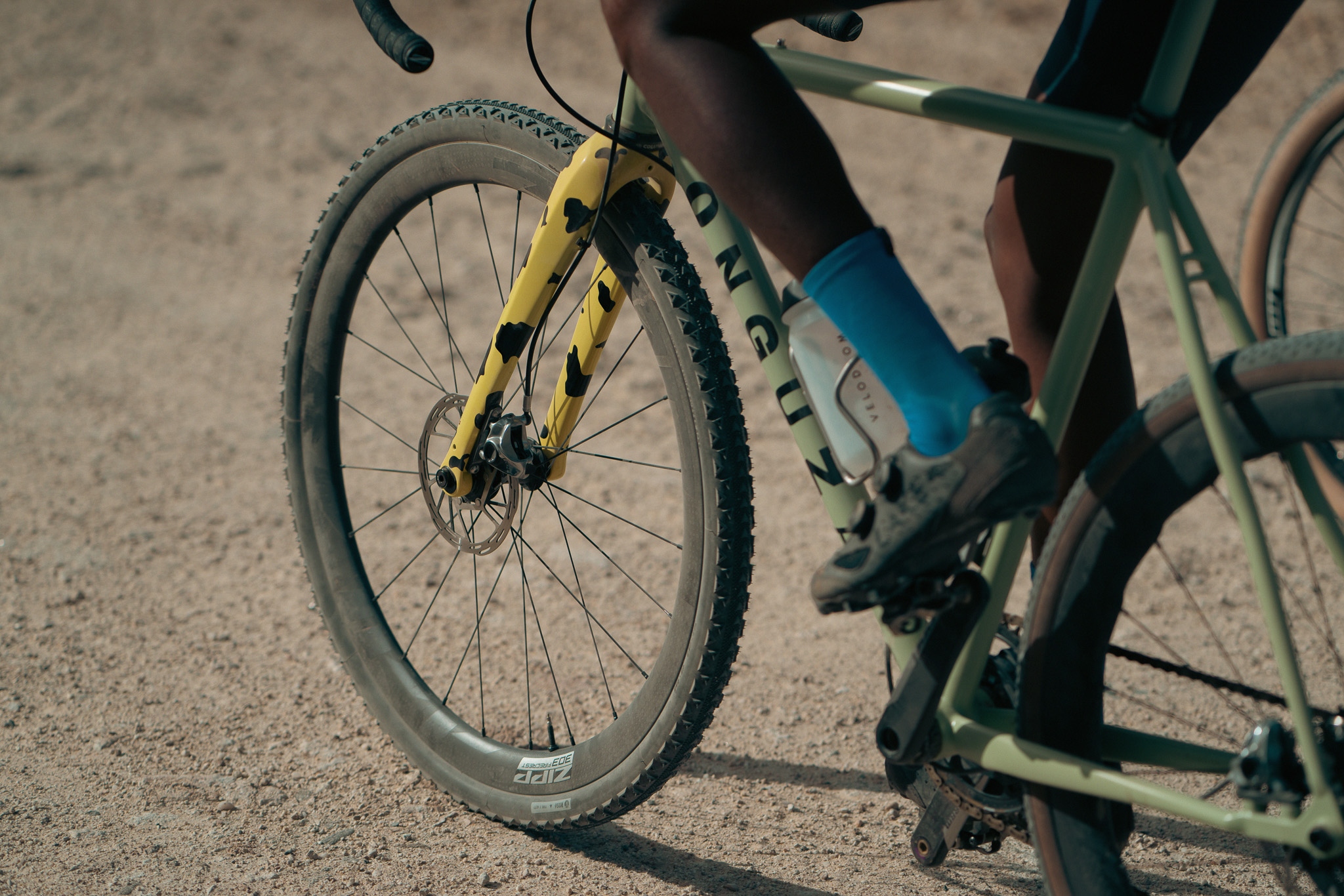
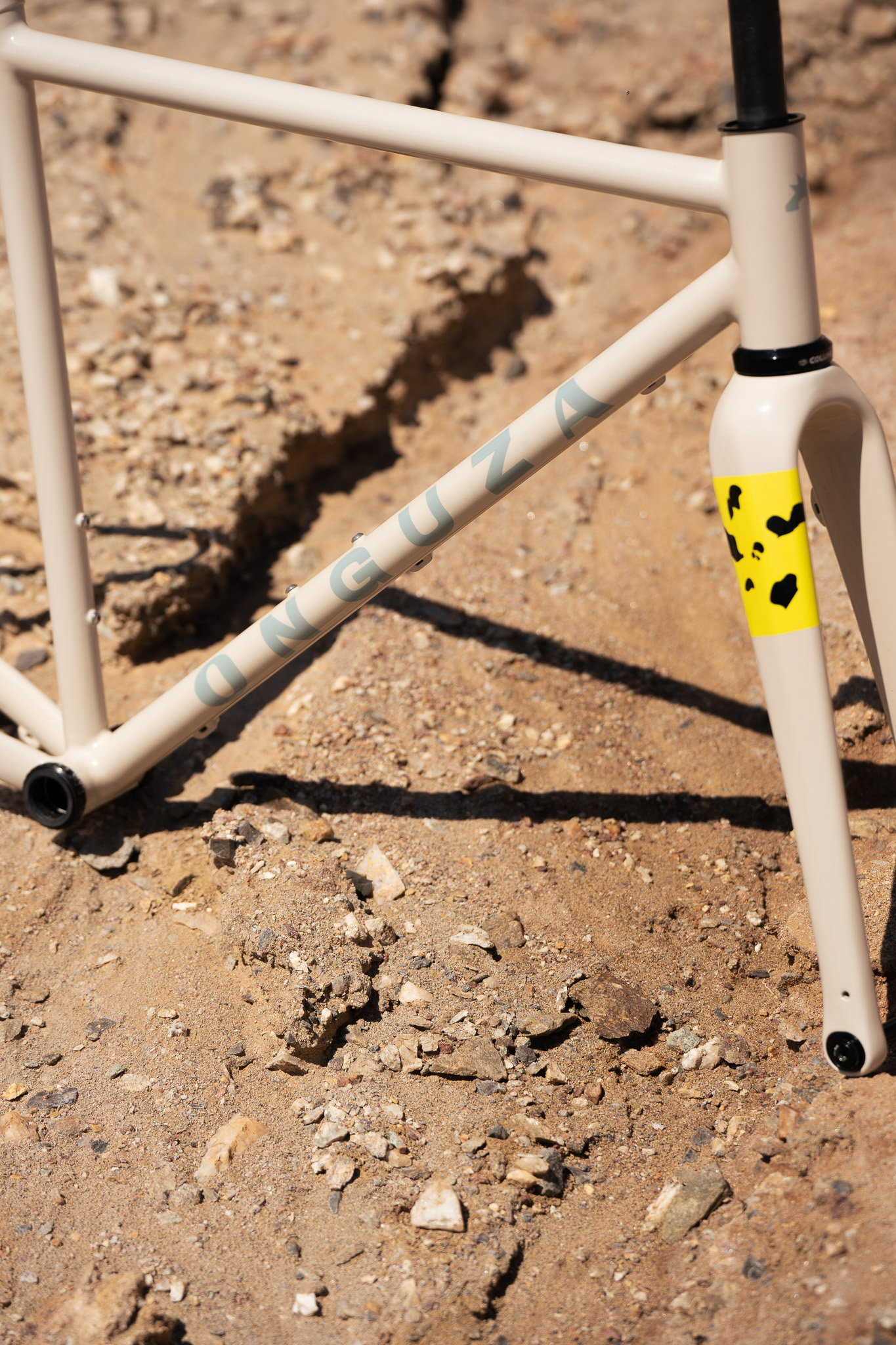
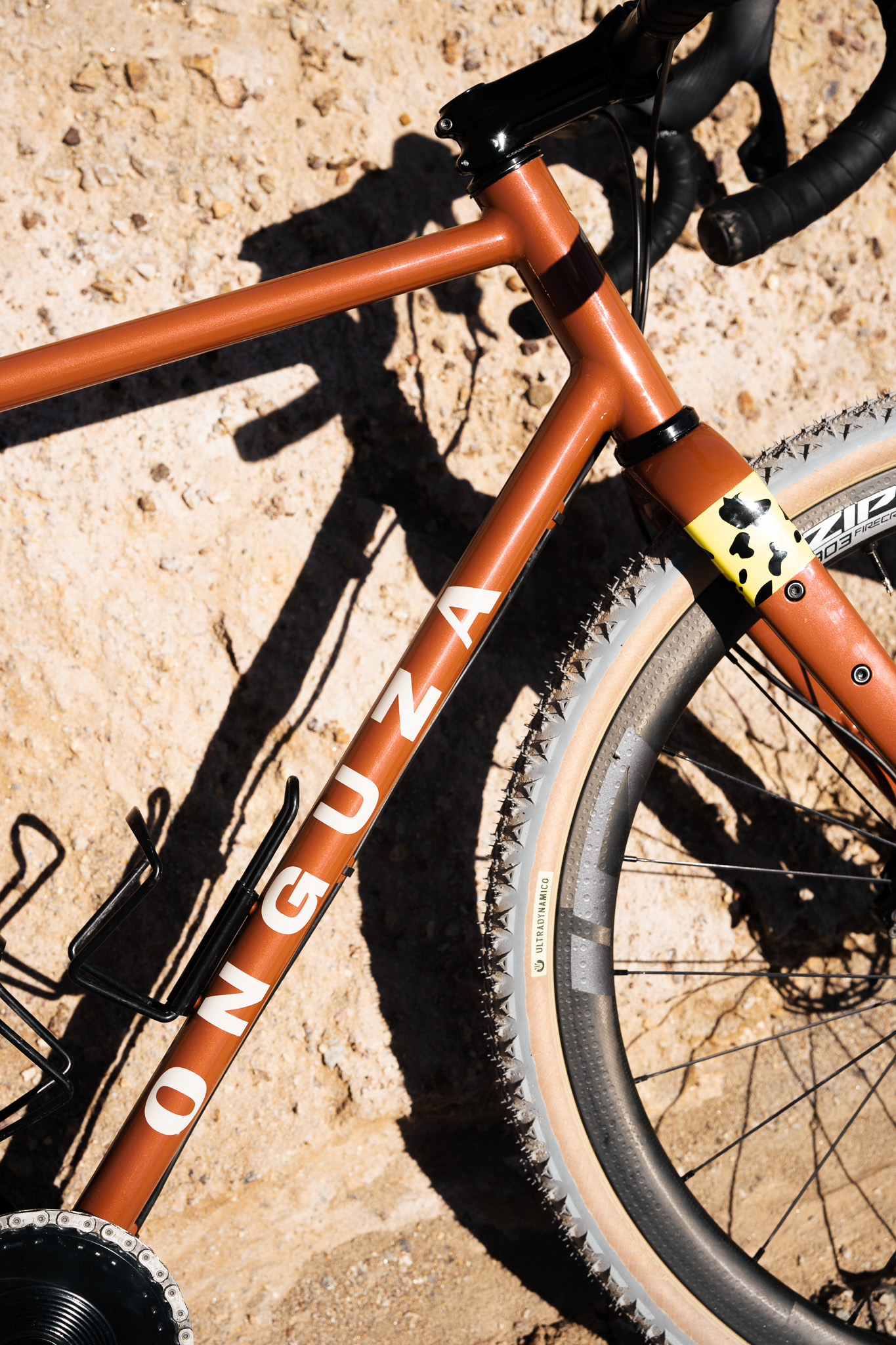
What all this means in terms of the Bliksem, is a simplification of the fabrication process—batch building for want of a better word—but with an array of customisable features. In practice, the workshop team fabricating each frame size as a rolling chassis that can be reached down whenever a customer order comes through and any specced braze-on’s added before it goes to paint in the colour combination selected.

“Not something that all small to medium bike brands can offer because they outsource their paint,” chimes in Dan. “Or they don’t have a factory team big enough to allow for someone being pulled off the production line to braze on an extra set of bottle bosses. And all this thinking raised another question regarding our identity and what we bring to the market. Because ultimately, this doesn’t hinge on our story; that we’re based in the southern tip of Africa in the world’s second most sparsely populated country. That’s a good story, an uplifting story, but what actually defines Onguza is the beautiful bikes that we build.”


Click image to enlarge

So which came first, I’m wondering? The Bliksem frame and all that it entails, or the new model of fabrication?

“For the longest time, this bicycle was known as the SADC bike which stands for Southern African Development Community. The idea was to build a bicycle that was aimed at local riders and this new variant—the Bliksem—continues this evolution but with the customisable features and a new name because SADC wouldn’t resonate with our international customers.”

So what does Bliksem actually mean?

“It was my wife Collyn who landed on it. An Afrikaans word that literally means lightning or can be used as a mild swear word akin to shouting dammit but with a lot more character and panache. And funnily enough the name of my grandfather’s dog.”

Dan’s grandfather Danie Craven, it turns out, was a very famous rugby player—he was inducted into the Rugby Hall of Fame in 1997—and there’s a statue of him standing with Bliksem in Stellenbosch, South Africa. And now that I’m up to speed on what Bliksem means and what it is—a gravel plus standard sized frame with a vast array of customisable features—I’m curious as to how this all works in terms of the customer interface and ordering process? 

“I love nerding out about bicycles and I want to allow my customers to do the same. And how that translates with the Bliksem is that it’s available in stock sizes so they have a degree of confidence in what they’re going to get. From there, every customer is different. If you’re riding from Cairo to Cape Town, then external cables will most likely be your preference so you can fix things on the fly. But anyone living in Northern Europe where you’re never that far from a bike shop might want to spec fully internal cable routing. And with the way our factory operates, that’s entirely possible. Throw in some extra bottle bosses, luggage mounts, or whatever the customer needs to fine tune the bike, and you have a handmade frame at a much lower price point and the only thing it doesn’t have is custom geometry.”


Click image to enlarge

So is this all indicative of the way we now buy bikes, I suggest?

“Looking back to 2010, I felt there was a big resurgence in steel bikes. People were super excited about the idea of commissioning a handmade bicycle. But back then you could argue—or I would argue—that carbon road bikes were pretty ugly. Fast forward to present day and carbon frames are much prettier and definitely more aero; edging closer to steel frames in looks and overtaking the speed of a steel bike. And who wants to buy a bike that might ever-so-slightly slow them down? Someone who is really, really invested in the versatility, durability and comfort of a handmade steel bike.”

Which, I surmise, is why they come to Onguza?

“That’s the idea but there’s a but.”

There is?

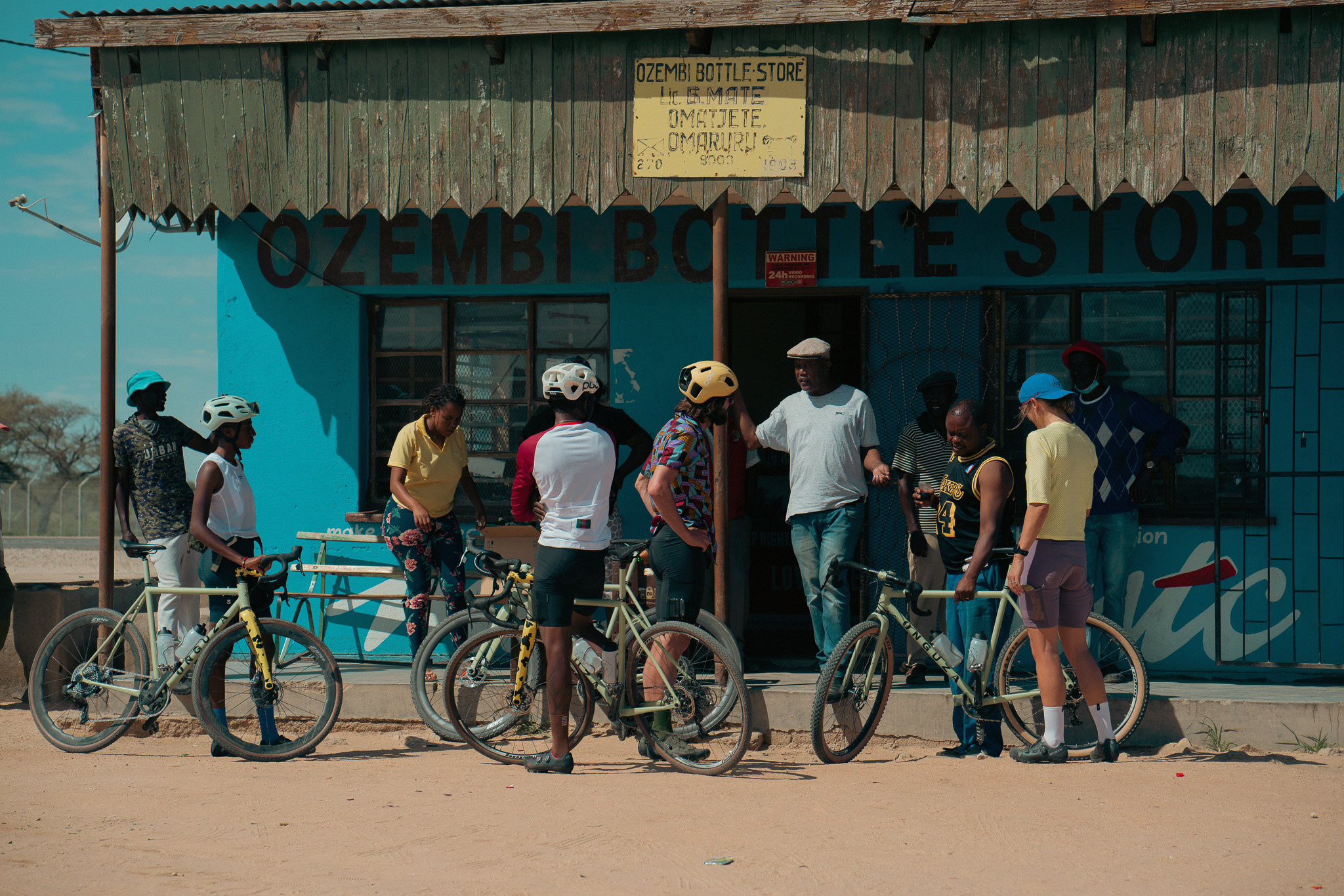
“When you visit a bike shop you can look, touch and feel the bike you’re considering purchasing. The store owner is going to look after you, if you have a few minor teething troubles. And all those practicalities suggest to me that maybe a lot of our customers so far have been the quintessential loner. The person who doesn’t necessarily need a relationship with a bike shop, who’s happy to tinker with their bike and do their own thing. But that’s probably not the majority of the market which is why, moving forward, we are adjusting our margins to allow us to partner with bike shops. We’ve already got Via in London and Acme in Brooklyn, and we’re talking to establishments in Toronto, Copenhagen, Amsterdam, Barcelona, Girona, and at least one—maybe more—in South Africa.”

Here Dan stops; reaching behind his head to unfasten his long hair. I can almost see him mentally picturing this worldwide network of Onguza affiliate partners.

“I believe our bicycles are amazing,” he continues, “I believe in our system of customisable builds, and I believe that having our own paint booth allows us to be agile and responsive to what the customer wishes. And if we can do this, what else can we do?”


Click image to enlarge

After living and breathing the challenges of building a bike brand over the past three and a half years, listening to Dan you really get the feeling that Onguza has reached a point that carries the brand past their Made In Africa story. That with the Bliksem, they have a bike and a model of manufacturing that, as Dan is quick to jest, will give their accountant something to get excited about. But all of this takes an incredible amount of hard work, with not only Dan but also his wife and business partner Collyn sharing the burden.

“We are extremely fortunate in that we very much support each other. And to me, that makes such a huge difference. Because it’s about growth and sometimes, metaphorically burning your fingers. And in business, you have to make those mistakes in order to learn from them. Because you’ve got to remember that I came to this chapter in my life—setting up a handmade bicycle company in Namibia—from the relatively sheltered world of professional bike racing. So it takes a certain length of time and a degree of experience to go from guessing how a company needs to be structured, to actually knowing.”

So do you enjoy what you do, I want to ask?

“The honest answer is that I’m enjoying it more and more. Setting up a company—any company—is rather a rollercoaster ride and if you’d told me, when I was still racing, that I’d be back in my home town of Omaruru in Namibia, getting my hands dirty working in the factory, I would have laughed and said no. But there’s a path that we’re following and as we grow, if I can employ more people to take some of the weight off my shoulders, there are so many other things that Collyn and I want to do.”

Once again, there’s that faraway look in Dan’s eyes.

“There have been a couple of realisations over the past two weeks putting the final touches to our new website. One being that the shift from custom to the customisation of our bicycles is a true superpower. A lightbulb moment of, wait a second, that’s who we are.”

Dan Craven / Onguza Bicycles

All photography with grateful thanks to FC Smith

Dan Craven / Onguza Bicycles

Our name comes from an old Namibian word ‘okuti-onguza’ meaning, “the great expanse of desert out there.”

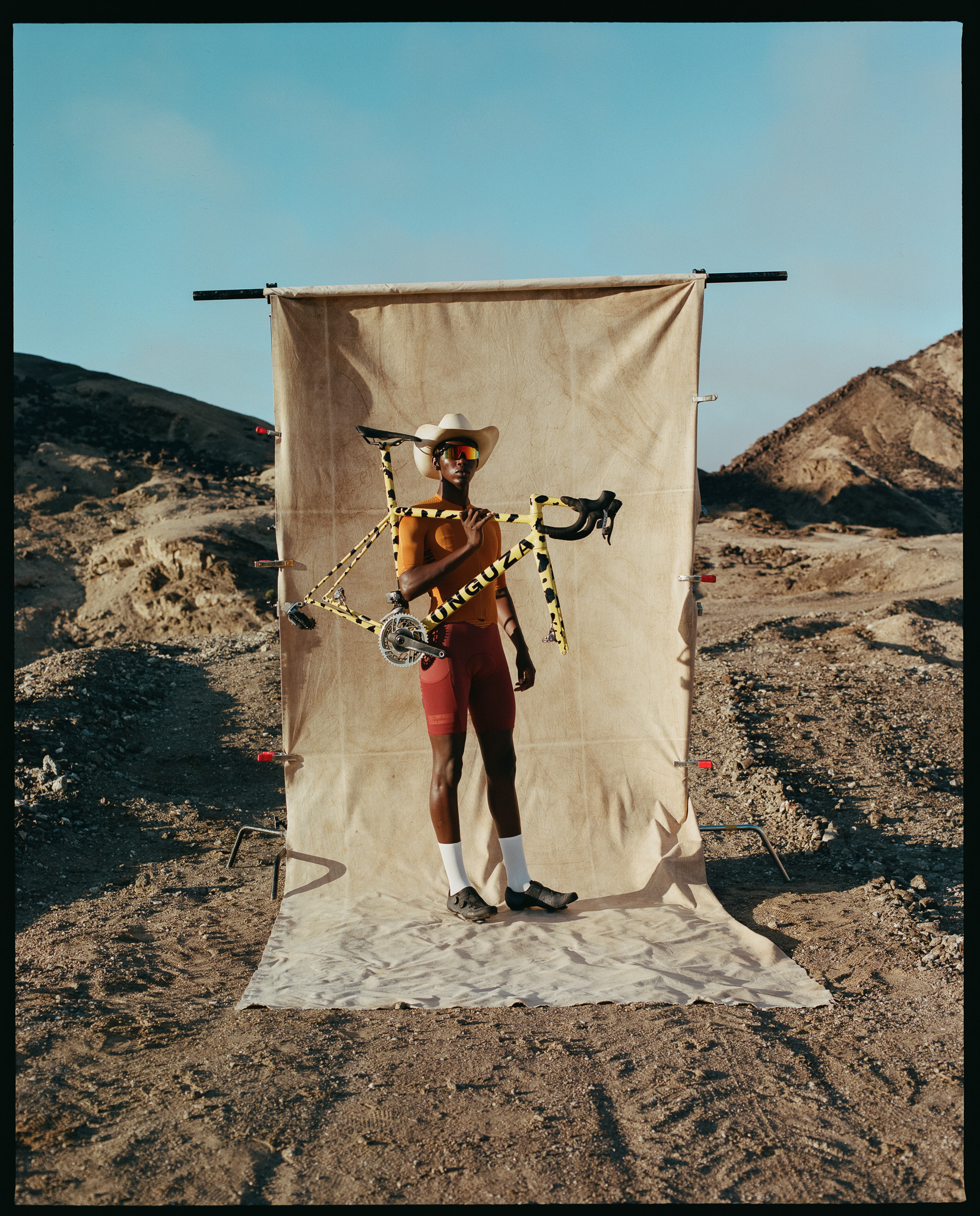
Perhaps the cowboy hat helped but ripples of global interest greeted Onguza Bicycles’ first posting on social media. Featuring a brightly coloured frame – casually slung over the shoulder of a Namibian cyclist – and set against the rocky backdrop of the world’s oldest desert, there was an immediate sense of exciting things to come. At the time a fledgling new brand founded by ex-professional road cyclist Dan Craven, a year later and the first batch of gravel bikes was unveiled at the handmade bicycle show Bespoked.

Over a call from his home in Namibia, Dan took a look back over the past 18 months and beyond—an eloquent and fascinating commentary on his own experiences with frame building, how the Onguza dream finally became a reality, and why this next chapter is firmly rooted in the land of his birth.

cyclespeak
So you’re at home in Namibia?

Dan
That’s right. It’s a beautiful morning here in Omaruru.

cyclespeak
It’s good to finally sit down and talk.

Dan
Even if I got here late [laughs].

cyclespeak
Could you set the scene? Are you living on the farm?

Dan
I wish [smiles]. I did grow up on a farm just outside of town but my family and I are now living on the main street. I’ve been coming and going but they’ve all just arrived, so this is more a launch pad for our life in Namibia.

cyclespeak
That’s quite a big change for everybody?

Dan
Considering my wife is American, went to university in Montreal, lived in London for 13 years and now lives in a town that even Namibians consider small—then yes, you could say that. But Omaruru does have many things going for it. If you ask any Namibian to name an artistic town, this is basically it.

cyclespeak
But I’m right in thinking you were born in Otjiwarongo?

Dan
That’s the town next door. But in Namibian terms, next door can be 140 km away.


cyclespeak
I put Otjiwarongo into Google Maps and it looks like an interesting place. There’s a fashion museum and a crocodile farm.

Dan
The crocodile farm, yes. But a fashion museum?

cyclespeak
The Museum of Namibian Fashion. According to Google.

[Dan entering a search on his laptop]

Dan
Wow. Now you’re teaching me stuff. Because that’s the town where I was born and went to school but I never knew about the museum.

cyclespeak
I changed the setting on Google Maps to satellite and zoomed out. There’s a lot of empty space in Namibia.

Dan
Namibia used to be the second least populated country in the world in terms of people per square kilometre. I think we’re now third so when we say we have wide-open spaces, we really mean wide-open. If we drive from where we live in Omaruru to the country’s capital, Windhoek, that’s a journey of 240 km and you go past two towns.

cyclespeak
Can I ask – and I’m conscious this might be a cliché – but Namibia appears to be a rather rugged – possibly extreme – physical environment?

Dan
That’s a pretty fair assessment.

cyclespeak
And you’re very softly spoken.

Dan
No one has ever put those two statements together before.

[pause while Dan is thinking]

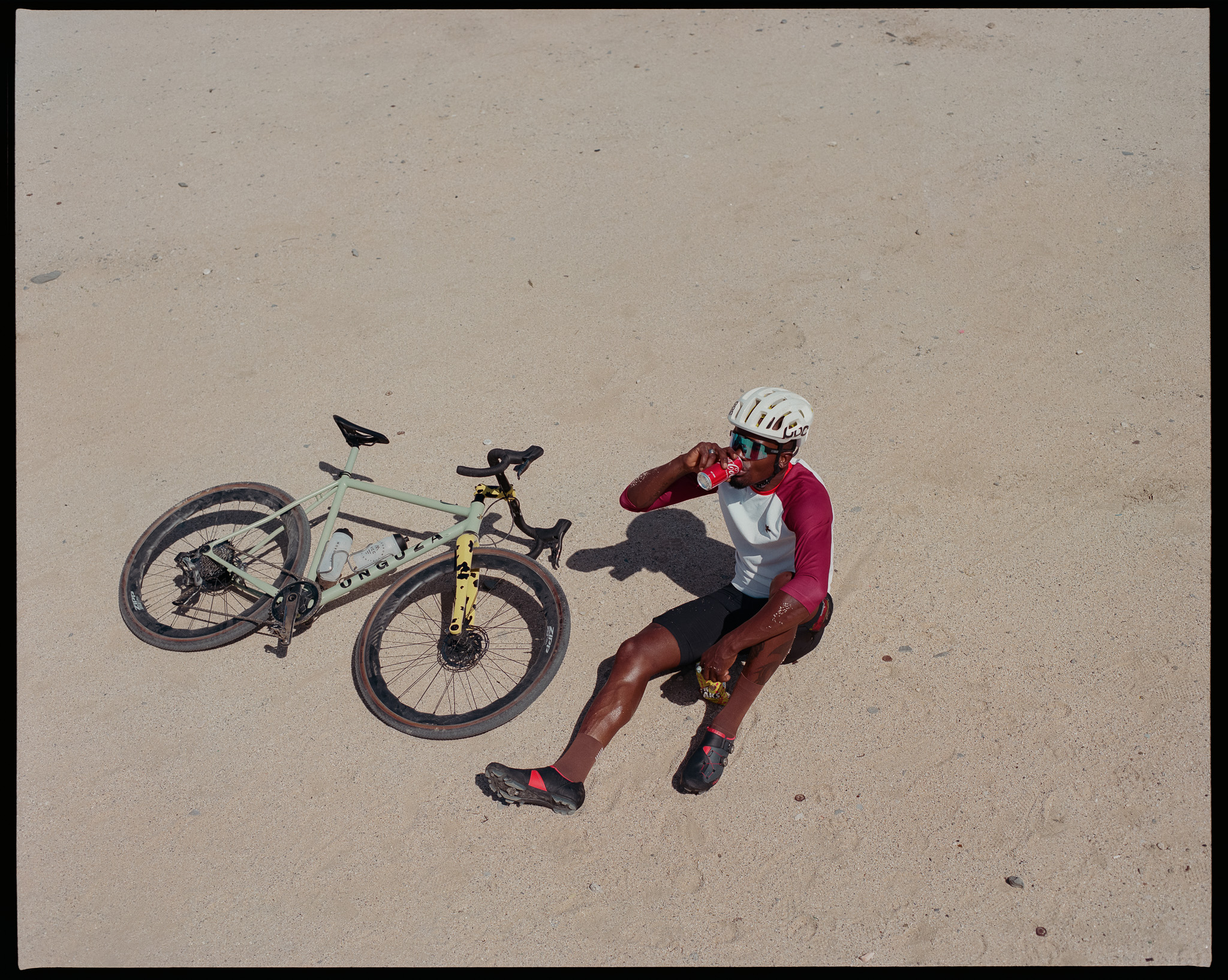
So, yes, Namibia has got the oldest desert in the world. Namibia is rugged and dry. We like to say we’re built a bit different to live here. But, interestingly, the people are super friendly because of it.

cyclespeak
Because life is so hard?

Dan
I’m being playful but there’s a certain European country not known for its friendliness. But if you look at that country, it’s full of farming and wine and abundance. In Namibia, we have an abundance of sand. So if you want to get by, you have to smile and be happy.

cyclespeak
Is that what you remember from your childhood?

Dan
One of my parents’ friends that I knew when I was growing up – a chap called Garth Owen Smith who’s unfortunately now passed away – he won awards from the British Royal Family for his work in saving the rhino. He was this super tall man who lived out in the desert and drove Land Rovers—a real gentleman, very softly spoken and he thought about every word he was saying. So maybe some of these traits rubbed off on me?


cyclespeak
If we cast our minds back to March 2021 when you posted that first picture of an Onguza frame, I clearly remember the excitement it prompted across social media platforms. But I believe you had the initial idea for Onguza bikes way back in 2010 when you were still racing professionally.

Dan
Oh yes.

cyclespeak
And the notion that there’s no such thing as overnight success – that it comes from a long process of chasing ideas – made me wonder what planted the seed?

Dan
I was racing on a steel Condor at the time but didn’t really know anything about steel bikes. And then Rapha approached a few frame builders to fabricate one-off bikes for their Rapha Continental series. One of them was built by this American chap called Ira Ryan and it just blew me away. So I did some research – expecting to learn how this guy was a mechanical engineer and could build rocket ships – but it turned out he had no such background. And then I discovered he’d only been building bikes for five years. So here’s this chap with no formal engineering education and only fabricating frames for a handful of years, and he’s collaborating with Rapha. Which, at the time, was one of the highest compliments a builder could receive.

cyclespeak
It was a very well-respected build series.

Dan
These ideas kind of hung around in the back of my mind until a couple of years later when I grabbed the opportunity to attend the Bicycle Academy on a five day frame building course.

cyclespeak
That sounds like fantastic fun.

Dan
It just blew my mind that I could walk into this workshop and five days later I’d walk out with my own bike frame. So off I went and then two weeks later I went to a different workshop belonging to a friend of mine and built another frame in five days. I returned to Namibia with this second bike and promptly won a race on it.


cyclespeak
Can I ask what kind of race?

Dan
It was 350 km through the desert that I won on a bike I’d built 10 days beforehand. So that was a ‘wow, I can do this’ moment. But…

cyclespeak
But?

Dan
The big takeaway that I haven’t alluded to yet is that I’m a privileged, white man with a beard [laughs]. And does the world really need another white man with a beard building bicycles?

cyclespeak
And this got you thinking?

Dan
It did. Because what about the people in Namibia? By necessity, it’s a country of makers. When you have very little, you take that and turn it into something. So what happens when you give someone a bit more? Some beautiful steel tubes that come all the way from Italy and the necessary training to combine these into an amazing bike frame.

cyclespeak
And Onguza was born.

Dan
We have these two gentlemen – Petrus and Sakaria – that have worked for my family for 20 years as farm labourers. And I can remember countless times when something was broken on the farm and the next day they would have figured out how to fix it. So if I can build a bike frame in five days, what can these guys do? And that’s where the whole idea originated.

cyclespeak
So what happened next?

Dan
Fast forward to 2017 and I invited the frame builder Robin Mather to visit Namibia. He stayed with us for a month to help teach Petrus and Sakaria. And to be honest I was a little apprehensive because I’d spent a fair amount of money arranging Robin’s trip and what if he thought I was wasting my time with these two chaps?

cyclespeak
I suppose it was a meeting of two very different worlds?

Dan
Robin had been working at the Bicycle Academy teaching student after student. And when it came to Petrus and Sakaria, he immediately recognised how they lacked a formal education in terms of mathematics but their innate understanding of making simply blew him away.

cyclespeak
A sense of relief for you?

Dan
It was amazing—and a massive validation. But then I had to catch a flight for a race in Canada and things once again kind of petered out and came to a halt. Which was really painful because every time there was a speed bump, everything would stop. And considering we’re sitting all the way out in Africa, speed bumps happen pretty frequently.


cyclespeak
So what happened to change this situation?

Dan
My career finally ended and I was faced with that classic question—what am I going to do with the rest of my life? I did have the luxury of a number of paths to follow but looking back at this pivotal time, I really only had one option because all the others were meh. They had certain advantages but they weren’t worth leaving my young family for.

cyclespeak
Are these internal monologues something every professional cyclist experiences as they approach retirement?

Dan
Which monologue are you referring to? As there can be multiple [laughs].

cyclespeak
The what next.

Dan
I personally said for many years that the moment I knew what I’d be doing after racing, would be the moment I stopped racing. And my career was more interesting than it was good. I wasn’t making tons of money from cycling but I was doing better than surviving and having loads of fun. But when injuries finally ended my career, I spent the next four years just floating around looking for this next step. By then I was married and didn’t really want to come back to Namibia because it’s such a big place but also such a small place if you know what I mean?

cyclespeak
But you did come back?

Dan
I did. Because I had this nagging thought that I couldn’t put aside—that returning to Namibia was what I needed to do.

cyclespeak
When you say you knew you had to come back, was that to start building bicycles?

Dan
If it wasn’t for Onguza, I wouldn’t be here now.

cyclespeak
I suppose it’s a certain state of mind? When you’re visiting somewhere on holiday, mentally you engage but only on a certain level. Now you’re building a business but also a sense of place with your family?

Dan
Yes. But…

[Dan pauses]

We lived for a while in London and my wife thought she was going to live there forever. And then we lived in Spain and then California and then back to Spain and had similar thoughts. And every time we arrived at wherever, we’d decide to go hard and build a connection. Now we’re here in Namibia and all I can say is that after a difficult couple of months we’re beginning to feel at home. And you have to factor in that for me, as I’m Namibian, making friends is relatively straightforward. For my wife who’s American, it’s a bit different. On one level this land is all about sand dunes and elephants and cheetahs. But she’s really creative and interesting and she’s now discovering this group of people that reflect those characteristics back. And, interestingly, everyone we really get on with seems to be a maker in some fashion. Our best friend in town, as an example, is a carpenter.


cyclespeak
You became a maker yourself when you built your bicycle frames. And now you’ve returned home to Namibia to continue that journey with Petrus and Sakaria. And what interests me, is that you raced professionally on the road for 15 years but your first Onguza bike is for gravel. What determined that design decision?

Dan
For the very simple reason that a gravel bike suits me really well. I live in a town that has one tar road that goes north to south. If I want to ride to the next intersection with another tar road, then I would need to travel 65 km south or 140 km north. Needless to say, as tar roads are in relatively short supply, the number of trucks and other cars is absolutely insane. And when I was a professional cyclist, if I was spending time in Namibia, I didn’t want to train on a mountain bike because the geometry is so different. But a gravel bike was pretty close, so that’s what I rode and still do. In fact I built myself a steel gravel bike back in 2016—only then the term gravel bike hadn’t become a thing. We called them monster cross and if you Google my name with that term you’ll find an article with some pictures of the bike I built with Matthew Sowter at his Saffron Frameworks.

[I did and you can]

Dan
It’s always made sense to ride a gravel bike in Namibia but, that said, the second Onguza frame we’re going to build is a road-plus bike. And then our third bike is either going to be a mountain bike or a different take on gravel.

cyclespeak
Which would be?

Dan
Imagine a 1980s road bike with a lugged fork that can take mountain bike wheels. Very thin tubing balanced with deep section wheels and electronic shifting.

cyclespeak
I do like a classic frame silhouette with round tubes but dressed up with carbon wheels. To me, that just looks cool.

Dan
Exactly. The thin tubes will flex just enough when you’re riding over rutted roads or trails to add comfort but without being too skinny so the thing is a noodle.

cyclespeak
Exciting plans.

Dan
That’s another reason why we came back here. In the sense that the world doesn’t really need another bike brand but Omaruru needs this one. And Namibia needs this one.

cyclespeak
Petrus and Sakaria, they’re shareholders in the business? So both are invested in your long term goals?

Dan
I’ve got a desk in my office and if there are any problems I’m happy to help. But I’m not building these bicycles. Petrus and Sakaria are the frame builders.


cyclespeak
Can I ask why? Because you’ve built frames before.

Dan
Many reasons and it’s not because I can’t. But running a company – and running a company from Namibia – there’s just so much to do. Getting export permits, trade agreements, ordering parts and looking after my babies because there’s no daycare in a small town like Omaruru. So, as you can see, spare time is in short supply but I was never planning on being a frame builder. One of Onguza’s objectives has always been to put a spotlight on African engineering and making. If I’m in the workshop, people might make the assumption that Petrus and Sakaria are merely assistants. No, no, no, no. I assist them if they need an extra pair of hands. These guys, they’re masters of their own destiny.

cyclespeak
You’ve documented how launching Onguza and getting to the point of delivering the first batch of bikes has not been without its challenges. And I imagine you’ve had days racing your bike that pushed you to the limit of your endurance. Are you by nature persistent and goal orientated?

Dan
When I really want something, other things can fade into the background. I’m very obsessive when I get a bee in my bonnet.

cyclespeak
Can you relate that to your cycling career?

Dan
Becoming a professional athlete, you have to be obsessive. Moving your family to a tiny little town in Africa, you’ve got to be pretty obsessive [laughs].

cyclespeak
And speaking of challenges, one scene of the rather lovely promotional film that can be viewed on your website features your blooded nose?

Dan
Basically, I was having too much fun. The scene that follows shows us swimming at the bottom of a mine shaft which was all the way down this steep, rocky slope. I was descending too quickly, hit a rut and got taken out. But I laughed it off in the knowledge that if you roll with the punches, it makes for entertaining TV.

cyclespeak
It certainly does.

Dan
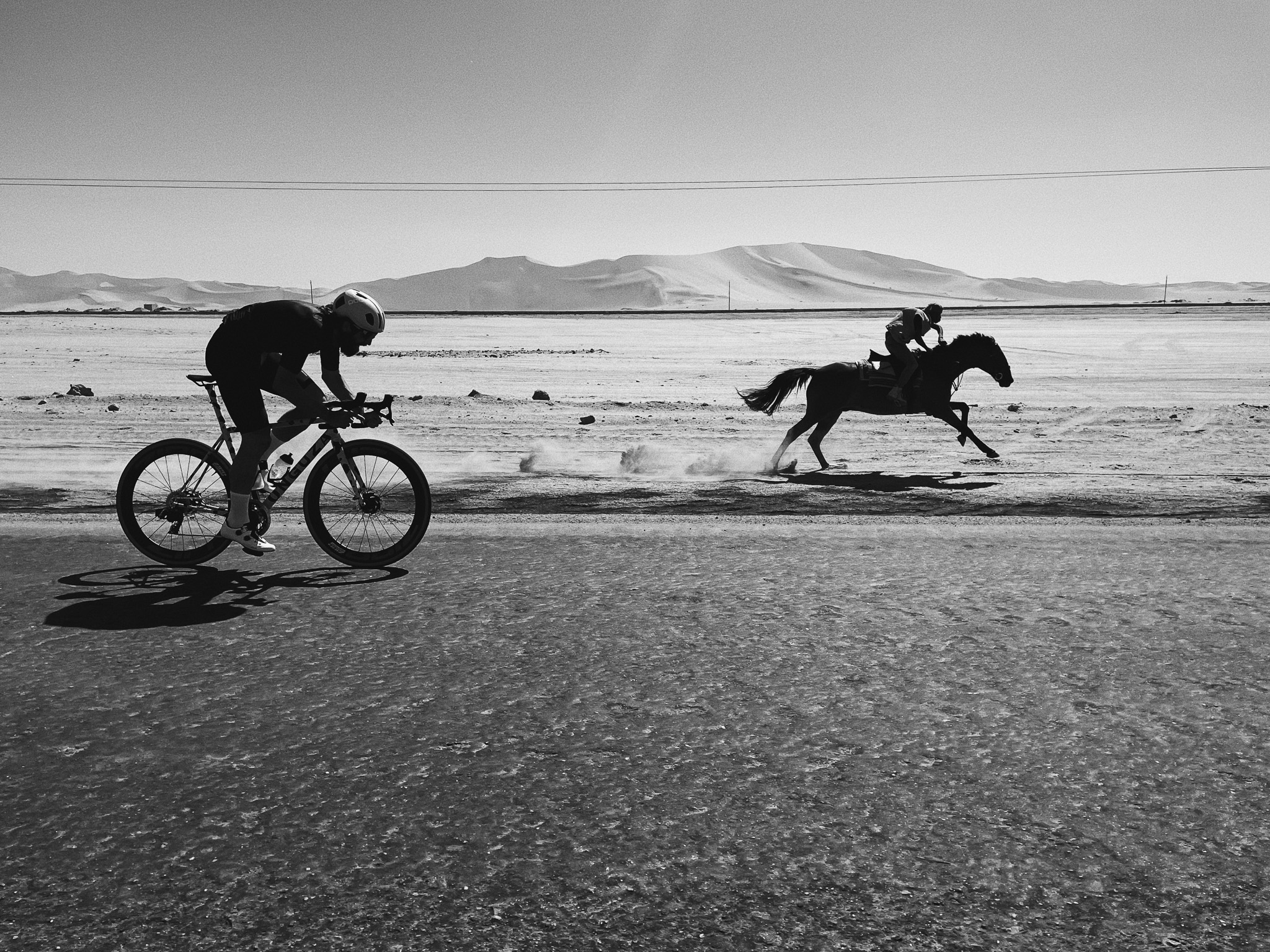
We found the music, my wife provided the storyline but we left it to the director to decide what would be included or left out. At the time, I was just concerned that I wouldn’t be able to film the scene of me racing the horse the next day.


cyclespeak
But you did. And the film certainly gives an impression of the Namibian landscape which, as we’ve already mentioned, is pretty rugged. Which reminds me of a post you made featuring a Land Rover you’d just purchased. How is it working out?

Dan
It’s very, very lonely.

cyclespeak
How so?

Dan
Because we only have the one. It’s a very big problem [laughs]. But I actually found another for sale earlier today [Dan holds up his phone with the online advert].

Collyn [Dan’s wife talking from the next room]
You’re actually talking to a journalist about Land Rovers?

Dan
He asked [laughing].

cyclespeak
That’s true. I did.

[Collyn enters the room to look at the image on Dan’s phone]

Collyn
He’s actually sort of joking and sort of not.

cyclespeak
In another scene from the film, you’re pictured with a bottle of beer. Is that the Namibian equivalent to the European coffee and cake ride?

Dan
In the capital and on the coast, we order a coffee. In Omaruru we go for a ride and come back for a beer. It’s so hot that beer is almost an electrolyte drink.

cyclespeak
I imagine it’s not without its challenges but life sounds pretty good?

Dan
With the boys being small, we have a family tradition of waking early and starting off each day all together with coffee in bed. And we’re now settled in a place that I never thought I’d come back to—to do something that I’d rather do more than anything else in the world. What more amazing thing is there? And my wife who’s from the other side of the world believes in this journey so much that she packed up the kids and cats and brought them all here to build a home with me.

cyclespeak
And here you all are.

Dan
As much as there are so many hurdles ahead of us, we’re doing something that we personally feel needs to happen. And if no-one else is doing it, then why not us? We’re on this crazy adventure and it’s like a dream.

cyclespeak
I’m guessing it was a particularly poignant moment, unveiling your first batch of frames at Bespoked?

Dan
I catch myself watching Petrus and Sakaria in the workshop and when I think back to where we started five years ago, it’s just mind-blowing to see how confident they are. And then I pick up one of the frames and I’m thinking, look at this. Look at how far we’ve come together. And that’s just…

cyclespeak
Priceless?

Dan
Yes. Priceless.

[pause]

If you believe that Africa has potential – that Africa can make beautiful, handcrafted things – then our bicycles can speak for themselves.

Dan Craven / Visit onguza.com to order a frame or complete build

Photography by Ross Garrett with kind permission of Onguza Bicycles