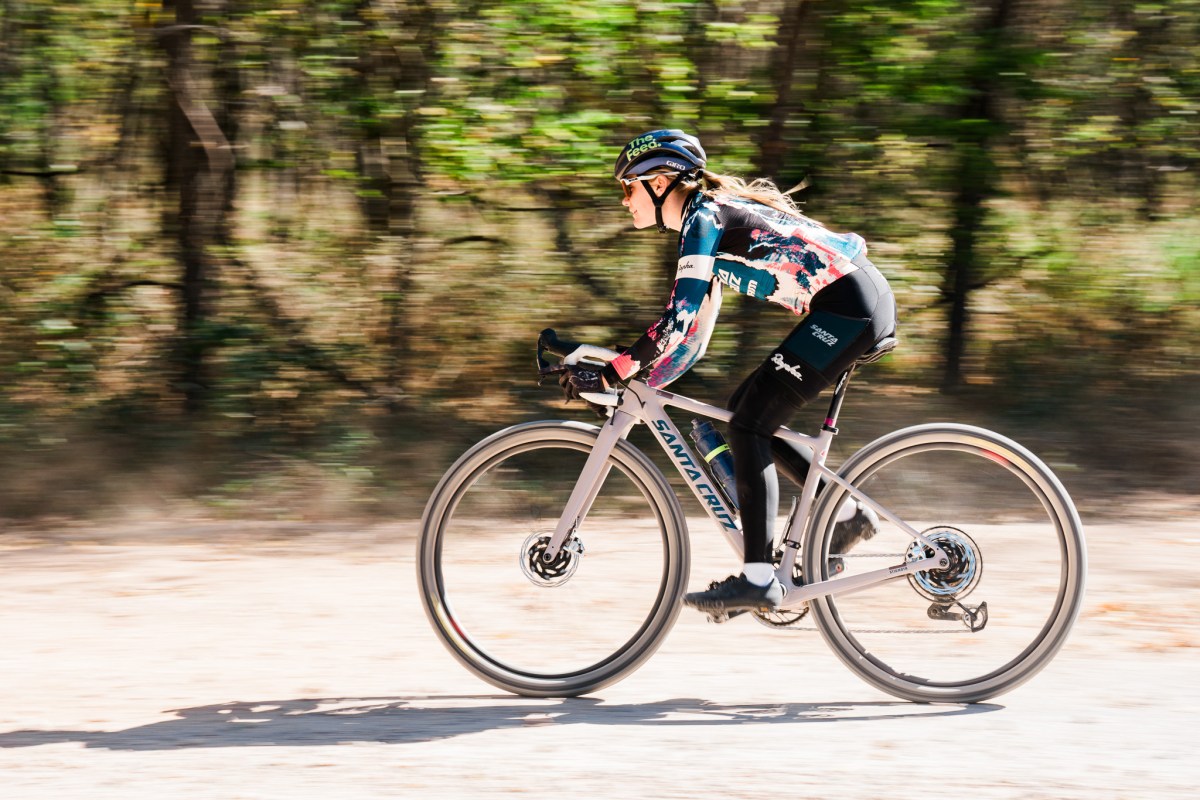
A mere six weeks after surgery to rebuild a shattered collarbone, professional off-road racer Alexis Skarda lined up at the Leadville 100. Determined to get her Lifetime Grand Prix back on track, she subsequently finished the series in fourth spot. A truly remarkable result considering the mid-season disruption to her training, and offering an intriguing insight into her competitive character and willingness to bounce back from adversity.
Speaking from her home in Grand Junction, Colorado, Alexis takes us on a journey from early childhood—when she had zero interest in sporting pursuits—to subsequent success racing off-road disciplines. A candid conversation that explores her motivation to go the extra mile, why some races appeal—and others definitely don’t—and how racing her bike has provided a true sense of self.
Alexis is backlit by morning sunshine as our call connects. More usually recognisable for her Santa Cruz htSQD race attire, she’s dressed for the off-season in jeans and a hoodie. Assuming that rest is now a priority after finishing up another Lifetime Grand Prix, I reference the scene in her White Rim FKT video where, after setting a new fastest time, she’s clearly happy to climb off the bike.
“After both Big and Little Sugar, I knew it was time to stop and take a break. So in a mental capacity, I was ready for a rest. But a week later, I kind of wanted to scratch that FKT itch.”
Clearly still having something left in the tank, I’m wondering whether routine—rest, ride, repeat—plays a part in her approach to training?
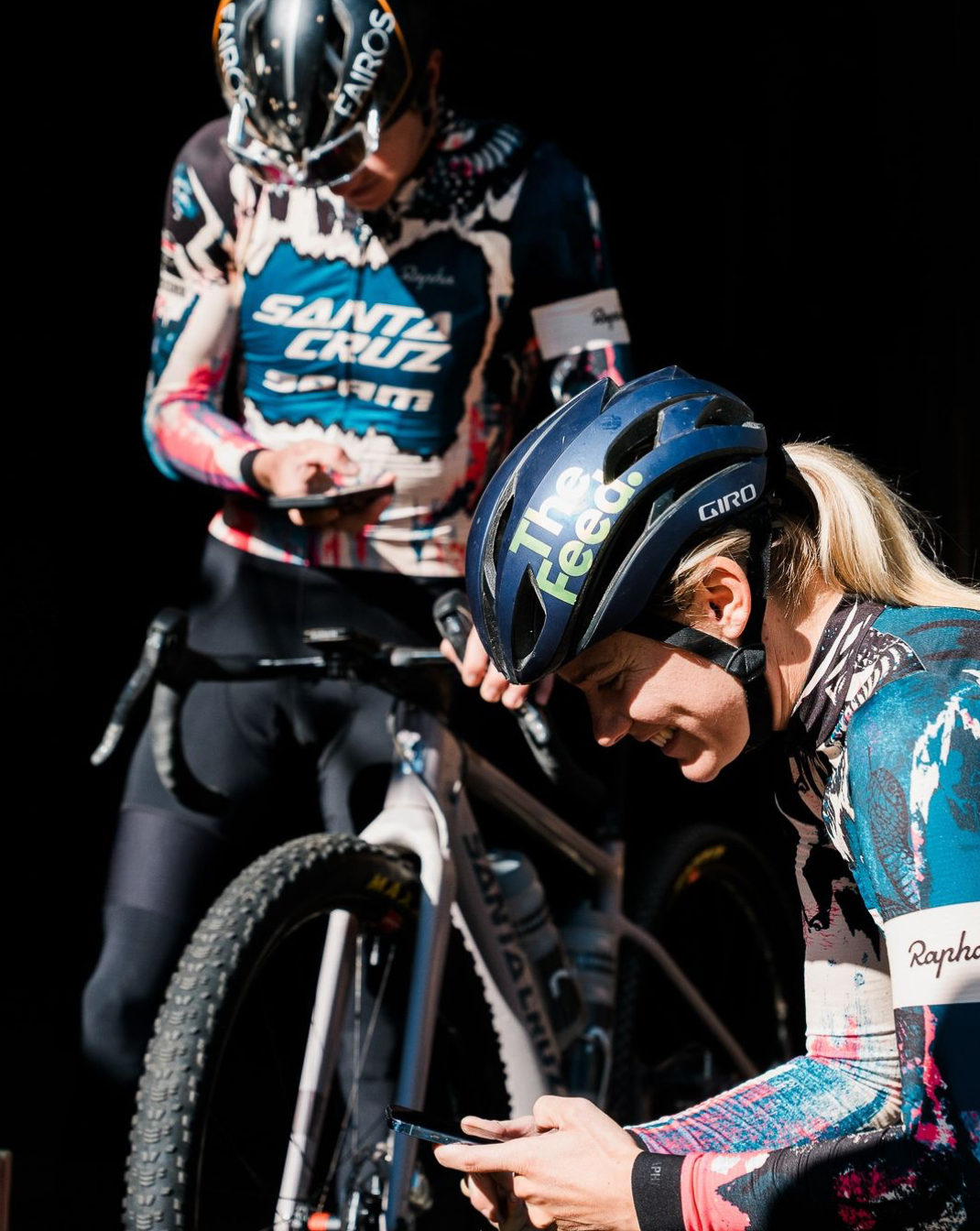
“During the race season, it’s three weeks on, one week off. And by off, I mean easy. I feel that’s a good way to build form because your body has a chance to catch up.”

Click image to enlarge
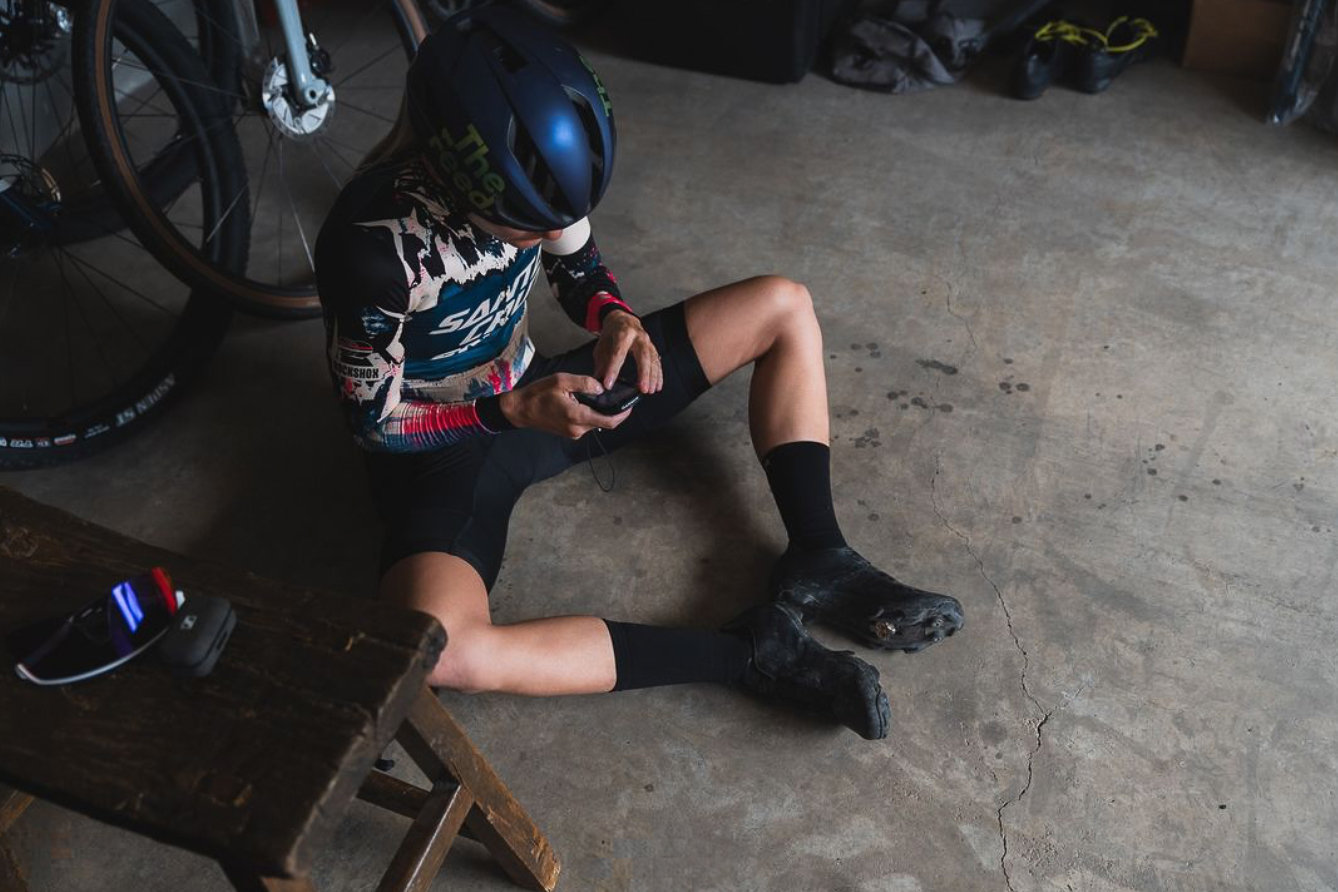
Adding some running into the mix during the off-season as a nod to her athletic background, when the weather turns inclement Alexis describes using her indoor trainer to maintain form.
“But you have to build up mentally,” she adds with a smile. “I use Zwift and listen to music; a combination that works for me. After a week of riding indoors, my mind is nice and numb.”
For an athlete performing at the very peak of her race discipline, it’s perhaps surprising when Alexis describes not enjoying any sports in elementary school. And when she did finally decide to compete in her Fourth Grade fun run, the subsequent win proved such a surprise that her classmates were convinced she’d taken a shortcut. Nonetheless, the seed had been sown and running quickly became her life.
“It’s all I ever wanted to do. And I can remember in middle school, our PE warm-up was to run around the field before coming in for whatever the teacher had planned. But I just stayed out and kept running. So I guess it’s this particular mindset that helps keep me going in the world of ultra-distance biking.”
Competing in Iron Kids when she was only eight years old—Alexis recalls practising transitions in her backyard at home—it was joining the Colorado Mesa University Mountain Bike Team in her junior year of college that proved a pivotal decision. Twice representing the USA at the World Championships and enjoying a super successful race career before the Lifetime Grand Prix came calling, I’m curious whether Alexis feels the race series, to date, has favoured riders from a mountain bike or gravel background?
“Bike handling skills take a while to build so if you come from mountain biking, then maybe you have more of a head start. And when the Lifetime Grand Prix kicked off in 2022, there were gravel racers who’d never ridden a mountain bike in a race situation, so they had to quickly learn this whole new discipline. That being said, the tactics that are now playing out in the Grand Prix also require you to focus on strategy and where you want to spend your energy. A lot of my fellow competitors are very good at that and it’s something that I’m still working on.”

Click image to enlarge
Not that anyone, I suggest, has it 100% dialled at all times—a flat tyre or mechanical all too readily determining a race result—but back to back overall wins at the US Marathon National Cross-Country Mountain Bike Championships saw Alexis sporting a very fetching Stars and Stripes jersey. A race result that perhaps edges it as her proudest moment to date?
“I feel that’s my best result,” she confirms with a slight hesitation in your voice. “But doing Leadville earlier this season—six weeks after surgery for a broken collarbone—proved a pretty memorable day. The crash and subsequent time off the bike had put me so far back in terms of my fitness and, to be honest, I was scared that I’d crash again and really mess myself up.”
But you still went ahead and raced, I prompt.
“And doing it, mentally helped me get back in the game. I’d got in a bad funk during the weeks of recovery because it’s super stressful, knowing you have these big races coming up and you’re getting more and more out of shape every day. So I wasn’t in a great space.”
That Alexis still managed to finish the Grand Prix in fourth place overall has me wondering, when these setbacks occur, where she sits on a scale of utter frustration at not being able to ride, or dogged acceptance that her body needs time to heal?
“When something like that happens, you have so many ups and downs within even the space of a single day. I would go from feeling extremely frustrated, to kind of not knowing what to do with myself, to deciding after talking to my coach that everything was working out fine. And then an hour later, I was falling apart again.”
A mix of emotions, I imagine, made even harder with the Grand Prix being a race series?
“It definitely puts you under more pressure to get back quickly. And maybe this sounds a little dramatic but it’s so easy to lose your whole season if you miss races where you would normally place well. It was super unfortunate when they cancelled Crusher due to the fires but, luckily for me, it meant I had less pressure to do well at Leadville.”


Click image to enlarge
Even rolling up to the start line required Alexis to ignore advice from one particularly risk-adverse member of her medical team. Concerned that the screws fixing the metal plate to her broken collar bone would be shaken loose on the Leadville course, it took conversations with teammates who’d experienced similar injuries to allay any fears.
“I knew I wasn’t fit and that it would hurt but I did feel ready to race. And I was super grateful to have finished without any incident. But that was coupled with a little bit of disappointment because the previous year I’d finished on the podium, so I knew where I should be.”
Living her professional life under such scrutiny, I can only imagine the rollercoaster of emotions?
“Being an athlete and racing is exactly that. All of the time. And though I’m not dramatic by any means, I definitely respond quickly. I can get really excited about things or really down but then it’s over and I’m back to neutral.”
Asked how this might play out at Unbound, where everyone is constantly refreshing their weather app to see if the race will be wet, Alexis responds with a wry smile. Not a favourite race, I suggest?
“I love pushing myself but for some reason Unbound is not my preferred way of doing that. Because what I really like is intensity and Unbound is more of a long, slow discomfort.”
I can hear how Alexis means physical effort when she references intensity but I’m wondering, when the gun goes off, whether a mental switch flips as she enters full-on race mode? And what reserves she draws on when the race is full gas and everything is hurting?
“That’s a good question because I feel that lately the end of the race has not been my strong suit. I tend to spend a lot in the first half—which has always been my racing style—and I’m still learning to work with the group and hold back some reserves for the finish. Which doesn’t come naturally to me because in mountain biking you just go as hard as you possibly can for 90 minutes. And you also have the downhill sections where it’s not exactly easy due to the technicality but there is an element of recovery. Racing gravel, you have to pedal all of the time.”
Racing on the Santa Cruz htSQD team, not only are there logistical and equipment benefits but Alexis also believes her bike family offers her a sense of belonging. And with constant innovation being applied to bike setups and race tactics, she feels reassured to have a team happy to try new things and keep one step ahead. A professional approach to racing that only very recently prompted some difficult conversations in relation to the so-called spirit of gravel.
“I can totally see how cool it was to show up, race without support, and just be a part of the community. But as soon as you put money on the line and organise a race series where everyone is fighting for the overall, you have very different needs.”


Click image to enlarge
A pressurised environment where every decision and race result plays out under worldwide scrutiny, and might make a regular 9-5 job with riding at the weekend seem appealing?
“Like having a normal life?” Alexis quips back with a laugh. “And yes, I might think those thoughts when I’m up at 4:30 in the morning so I can eat breakfast and get to the start line ready to race for eight or so hours. At those times, I do sometimes question why I’m doing it. But then, after the race and depending on your result, it’s like a complete one eighty and you feel on top of the world. So it’s a weird life for sure. With both good and not-so-good aspects.”
Maybe the more you invest in something—the more effort it takes—the greater the sense of accomplishment when everything slots into place?
“But it’s more than the effort you invest on race day. It’s the ten years you’ve put in prior to that—not making a dime—which people don’t always understand. How there were so many years when I seriously considered quitting. When I just needed to push through and believe in myself. But this is a small community and no one is really doing it solely for the money. At the end of the day, we’re all dealing with the same stuff.”
At this, I can’t help suggesting—tongue in cheek— whether Alexis is inadvertently describing the spirit of gravel.
“I guess maybe I am,” she replies with a smile.
Competition aside, when not training and racing Alexis enjoys working on her own music and closed out this year’s Big Sugar with a DJ set. The preparation for which led to a few late nights she confessed in a podcast conversation with fellow off-road racer Payson McElveen.
“To tell the truth, I’m a little embarrassed about the time I put into it. I’m a professional off-road racer—that’s my job—so it feels rather silly to spend so much time on what is, after all, a hobby. But in the same way I put ten years into mountain biking without getting paid to do it, I feel something similar about my music. And though I was a little nervous beforehand, seeing everyone vibing with the songs that I’d chosen felt really special.”


Click image to enlarge
When I mention the format of next year’s Lifetime Grand Prix, it’s amusing to hear Alexis confirm that she has applied but in such a way that suggests the organisers might not offer her a place. But what really intrigues me is not whether this or that race has been added or left out of the series, but whether she views her bike solely as a tool for a purpose or if it prompts a deeper, emotional response?
“That is an interesting question. And there’s definitely an emotional response with the bike. One hundred percent. You spend so much time together that it’s like you have a relationship. Almost as if you’re a team. And that’s especially true for my mountain bike.”
And does that influence your thoughts about why you race, I ask?
“I guess it’s something I’ve always done. Something I was genetically capable of doing. And it’s where, in my formative years, I found my home. People noticed me because it was something I was good at. Something my Dad did and I’ve always looked up to him. So racing—and mountain biking in particular—is really what I’m passionate about and it’s opened my mind to what my strengths and weaknesses are. So you could say it’s helped me develop as a person as well as an athlete.”
Alexis stops, staring into the middle distance, before once again picking up her train of thought.
“Ever since Fourth Grade, racing is what I decided I wanted to do. It’s played out a lot differently to what I expected but I never pictured myself doing anything else.”
All photography by Brett Rothmeyer / brettrothmeyer.com
 cyclespeak