Sami Sauri / Silk Road Mountain Race

Home again after placing 21st overall and second woman to finish on this year’s Silk Road Mountain Race, adventure cyclist and photographer Sami Sauri reflects on the before, the during and the after. Conversationally candid and quick to laugh, Sami unpicks what it takes to complete such an epic challenge, how focusing on fun might just be her secret superpower, and why crossing the finish line helped foster a true sense of self belief.


cyclespeak
You’ve been back home from Kyrgyzstan for a couple of weeks now. How are you feeling?

Sami
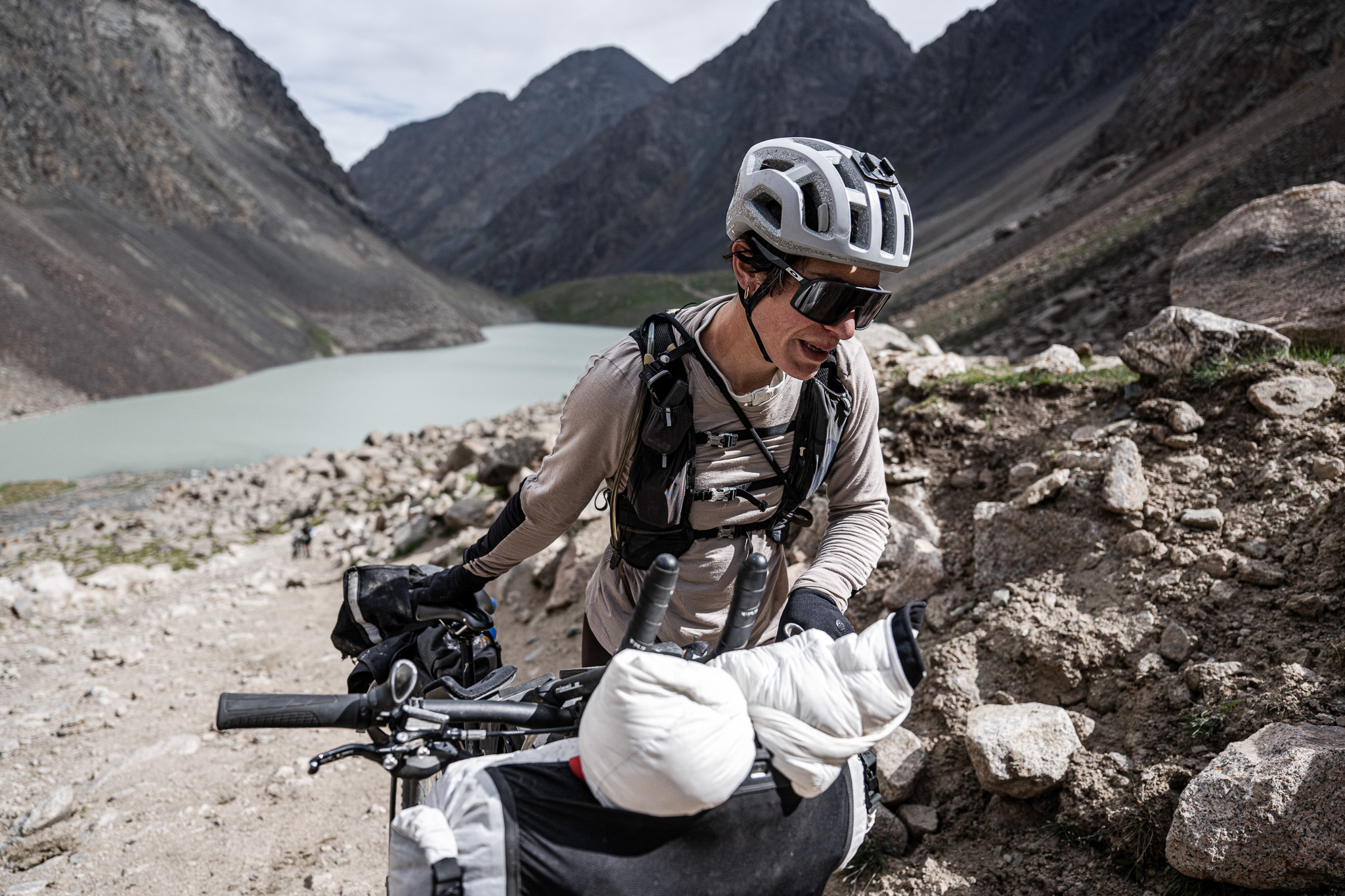
It’s funny that the recovery was better than ever. There was so much hike-a-bike that my body never seemed to get that stressed in either discipline. I rode my bike, I pushed my bike, I carried my bike, I almost went swimming with my bike on some of the river crossings [laughs].

cyclespeak
The Silk Road Mountain Race is such a daunting event and on many peoples’ bucket list. What made you commit to racing it this year?

Sami
Rather than race, I was simply aiming to complete it. And even though I was mentored by James Hayden who talked me through equipment choices and training regimes, I was focusing pretty much on just finishing. Because racing is a whole other level and it wasn’t until day three or four that it even seemed a possibility.

cyclespeak
So what shifted in your outlook?

Sami
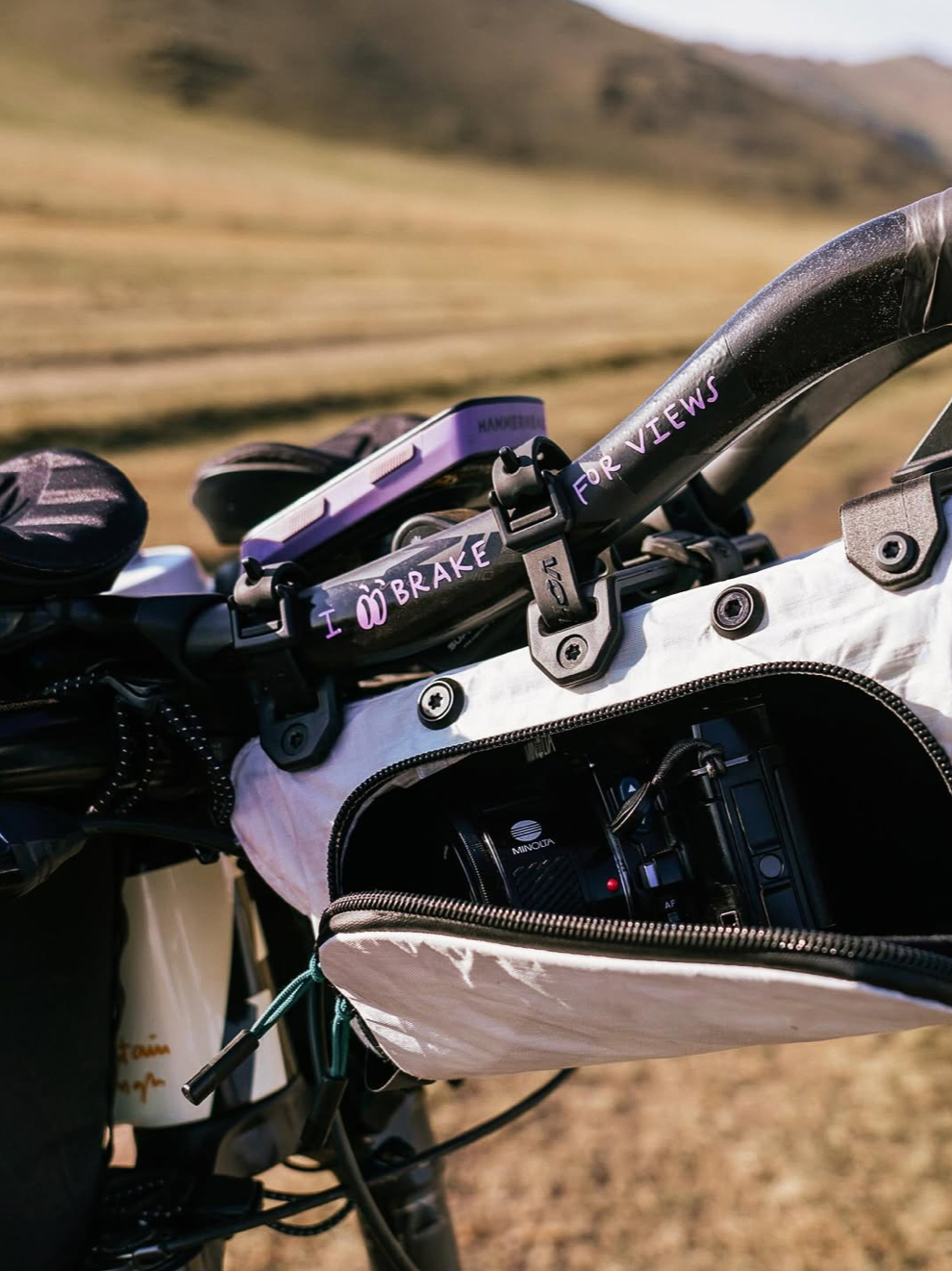
I was watching the dots when I could get a signal and that’s when I started to think that maybe I could place fairly well. But saying that, it was still an adventure and I was carrying a couple of digital cameras and one, quite heavy, analogue to document the experience.

Click image to enlarge

cyclespeak
You’re a very experienced adventure cyclist but did you still have to double down on your preparation for Silk?

Sami
Absolutely. And I was pretty scared about a lot of things because my background is fixed gear and fast gravel racing. So yes, I needed a few tips and tricks to get me through the race; to have the knowledge to make the right decisions at the right time.

cyclespeak
Because the event can be quite brutal?

Sami
I viewed this as more of a survival race and I wanted to control as much as possible in an environment where things can get very quickly out of control.

cyclespeak
You were riding your Rose hardtail with a Tailfin luggage system. In hindsight a good choice?

Sami
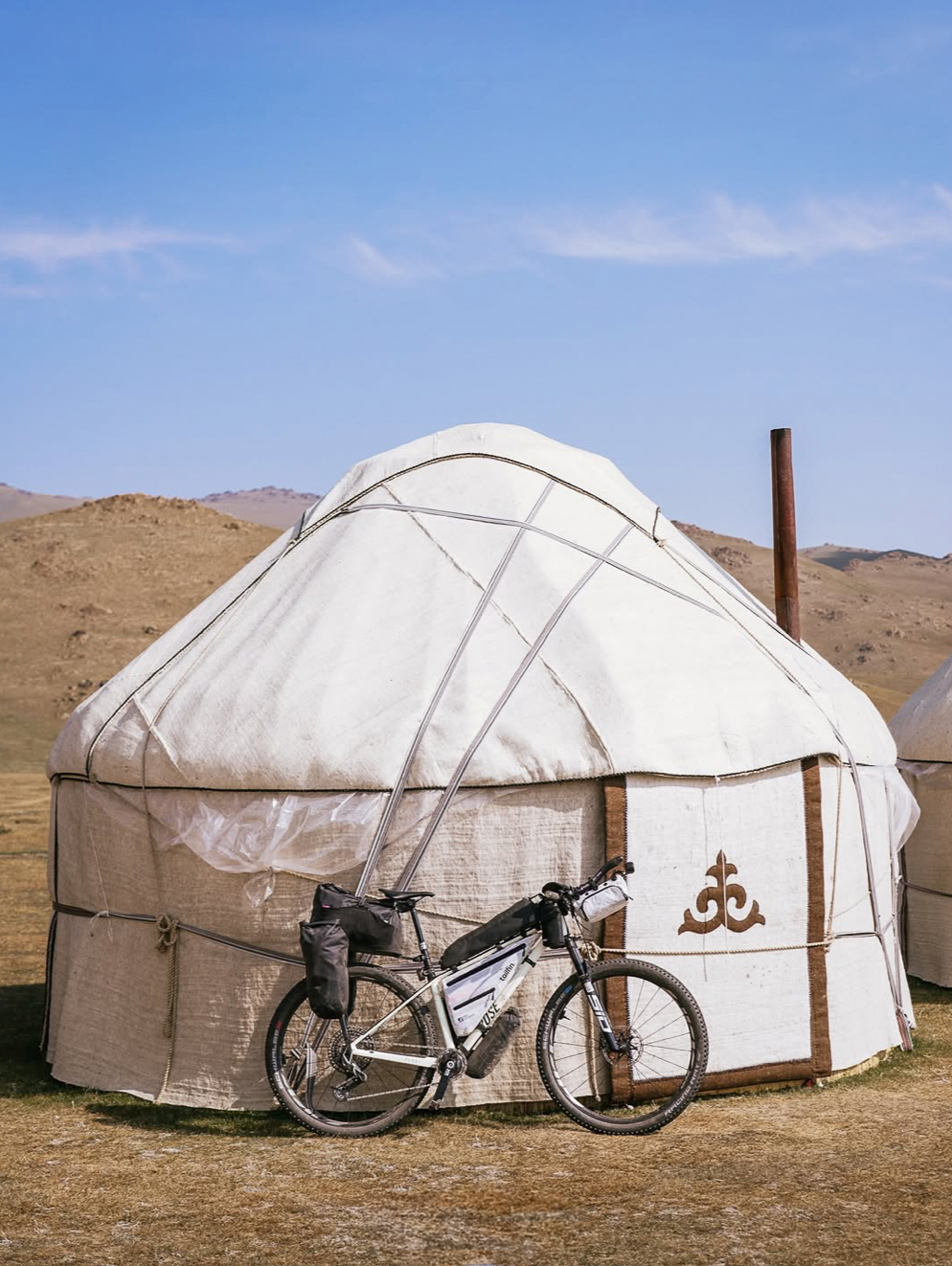
I wouldn’t change anything from that setup. The bike was amazing and Tailfin made me a custom camera bag that attached to my aero bars.

cyclespeak
And riding a hardtail rather than opting for a full suspension bike?

Sami
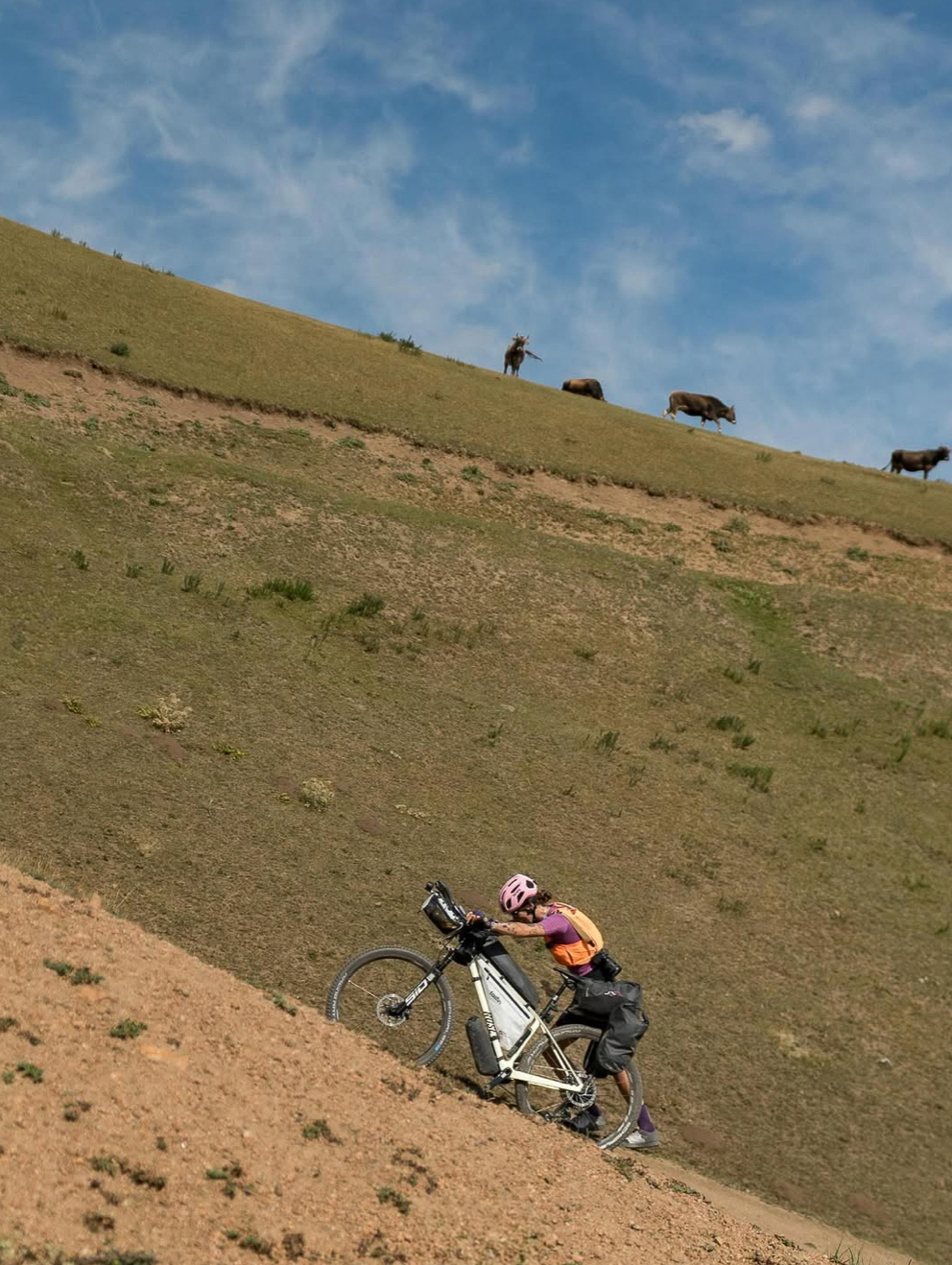
By nature, I enjoy technical terrain and I’m comfortable descending. And a hardtail is lighter when you’re climbing and gives you so much more space in the triangle for luggage options.

Click image to enlarge

cyclespeak
Going from your Instagram posts, it was an achievement in itself to even arrive in Kyrgyzstan? Delayed flights, a forgotten wallet; can you talk me through this rollercoaster ride?

Sami
It wasn’t a delayed flight, it was the delayed brain of Sami [laughs].

cyclespeak
It was?

Sami
I’d booked my flights to arrive early in Kyrgyzstan so I could join two friends on a bike packing trip on the Celestial Divide route. But I guess I had a lot going on pre-travelling—I was embedded with SRAM during the Tour de France Femmes—so when I got home it was quite a rush to get everything packed up. So much faffing around sorting out bags and lights and everything else I would need. But finally everything was ready, I booked my bus ticket to the airport, my neighbour dropped me off at the bus stop, I arrived at the airport, but then couldn’t find my flight on the departures board. So I asked at the information desk only to be told that the flight was the next day and I’d arrived a day early.

cyclespeak
So it was back home?

Sami
That’s right. Up the valley to Chamonix—a pretty fruitless five hour round trip—but at least it allowed me to attach the new saddle that Selle San Marco had sent me which arrived later that day. So, every cloud as they say.

Click image to enlarge

cyclespeak
And then back to the airport the next day.

Sami
I’d contacted my friends in Kyrgyzstan to tell them to start their trip without me and I would catch them up. But then—because I’d been rushing around so much—I realised that I’d left my wallet behind. Luckily I always travel with a card in my passport but it’s a credit card which doesn’t always work if you want to withdraw local currency.

cyclespeak
I’m guessing Kyrgyzstan is one of those countries?

Sami
Correct. So after landing, I had no money and no idea where my friends were. But I did have the route and set out before bumping into two other friends—I mean, what are the odds—so we made a new plan and off we went.

cyclespeak
When you did finally roll up at the Silk start line—ahead of you 1,900 km of rugged terrain and 30,000 m of elevation—what was going through your head?

Sami
Two things, I guess. The first being there’s no way back in the sense that your choices are made and you need to keep moving. It’s not like you can just pop back and grab a jacket if you feel a chill. You’ve got what you’ve got and those decisions are made way before the race gets underway.
Click image to enlarge

cyclespeak
And the second?

Sami
Throughout all of this mentoring with James, one of the things he talked about was having a mantra. Something that would help carry me to the finish.

cyclespeak
And what did you decide on?

Sami
My mantra was if you go further, you will see more. Because riding with a camera, that’s what motivates me to do these adventures.

cyclespeak
What sleep strategy had you decided on? Because there’s a school of thought that if you rest a little longer, you race faster; as opposed to little sleep but a slower pace?

Sami
I’m not super experienced at racing ultras so I’m still working this one out. When I raced Across Andes—which is much shorter than Silk—I found that two hours rest a night worked well. But going without sleep for 24 hours at Bright Midnight paid off so badly.

cyclespeak
And Silk?

Sami
It’s so long that you simply have to sleep; you have to be rested enough to make the right choices at the right moment. So there wasn’t a 24 hour period that I didn’t clock some sleep. But I’m not going to lie, I completely freestyled it [laughs].
Click image to enlarge

cyclespeak
Which looked like?

Sami
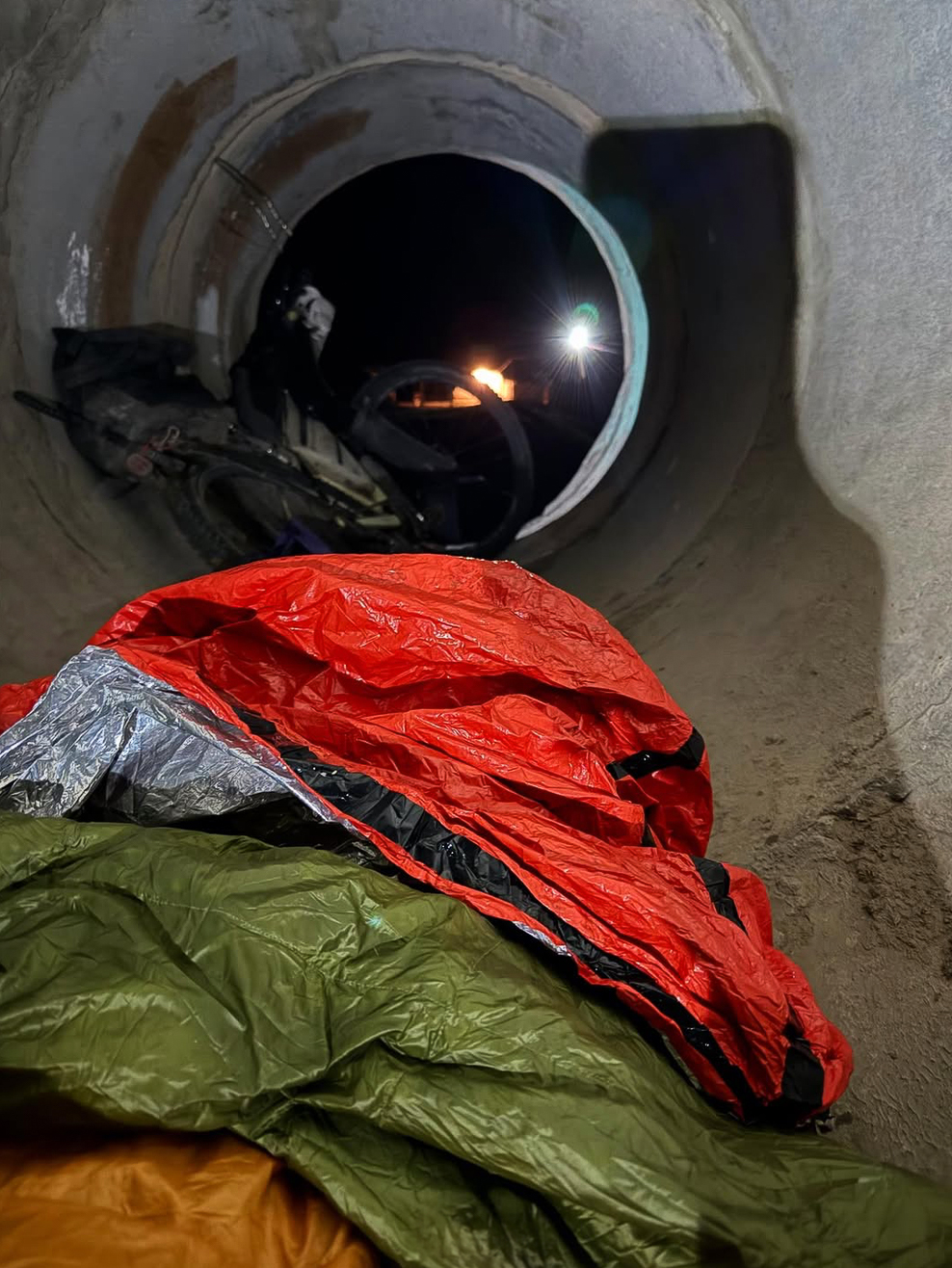
Between three and four hours rest a day. But that was sometimes tricky to manage with it being so cold at night that it was difficult to keep warm if you weren’t moving.

cyclespeak
So if you had to choose between a tent, bivvy, guest house or giant water pipe?

Sami
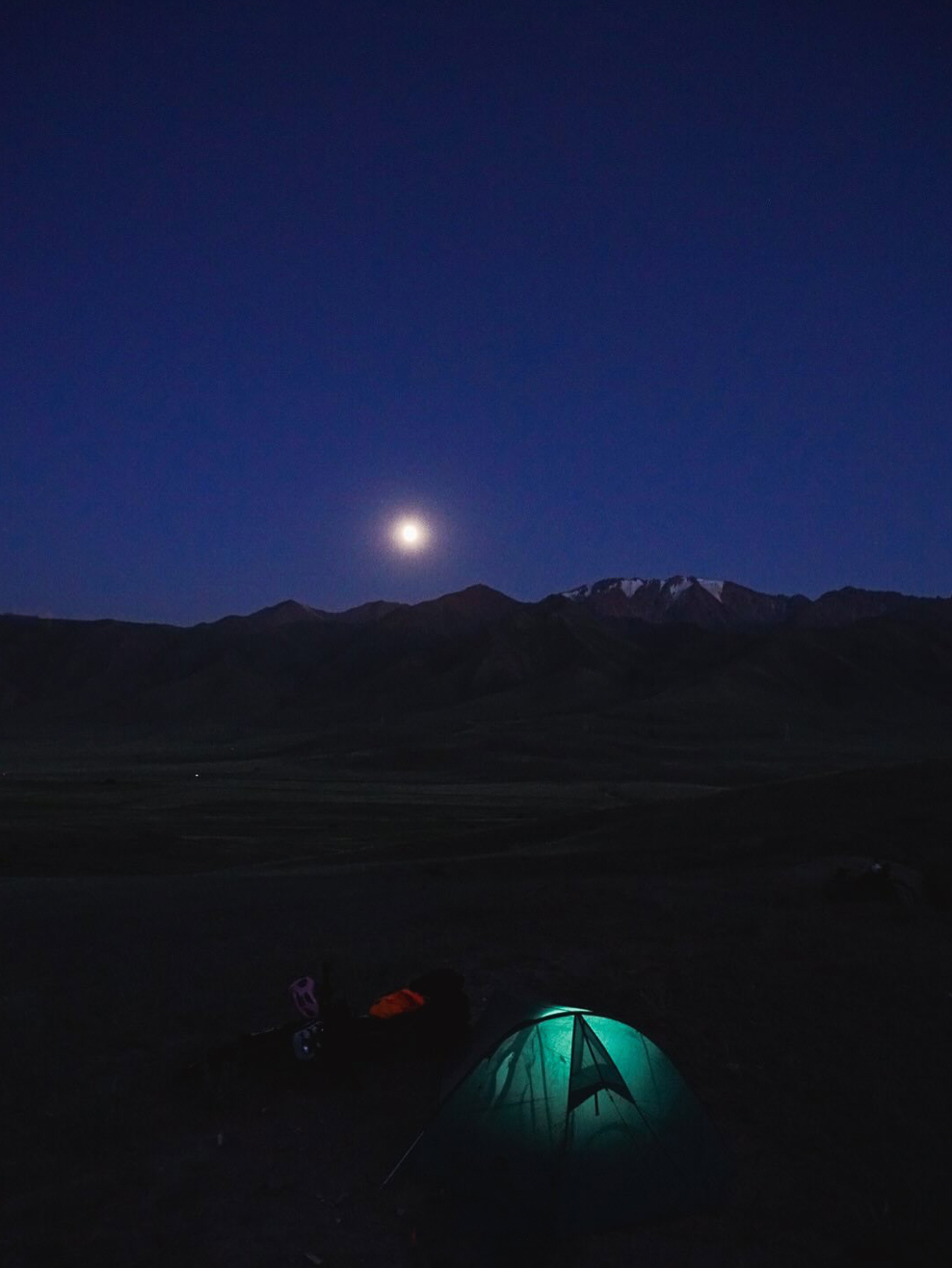
The giant water pipe would have been a pretty good choice—I was very comfortable—but it just funnelled the wind and made my emergency blanket flap around too much. And the guest houses are wonderful for quality food and sleep but they take too much time because everyone is so welcoming and it feels rude to just rush off without having a conversation. And because you’re translating everything back and forth on your phone it can take forever.

cyclespeak
So maybe the tent?

Sami
That was good but, again, it takes a little time to get set up and some nights I just couldn’t be bothered and went straight for the bivvy. Which is quick but has issues with condensation—especially if you double it with the foil blanket—so you can end up feeling wet on the inside. So, to answer your question, maybe a combination is what works best?

Click image to enlarge

cyclespeak
How tricky was it to fuel your race? Did you carry much food or were you relying on roadside provisions?

Sami
You can’t rely on anything [laughs].

cyclespeak
You can’t?

Sami
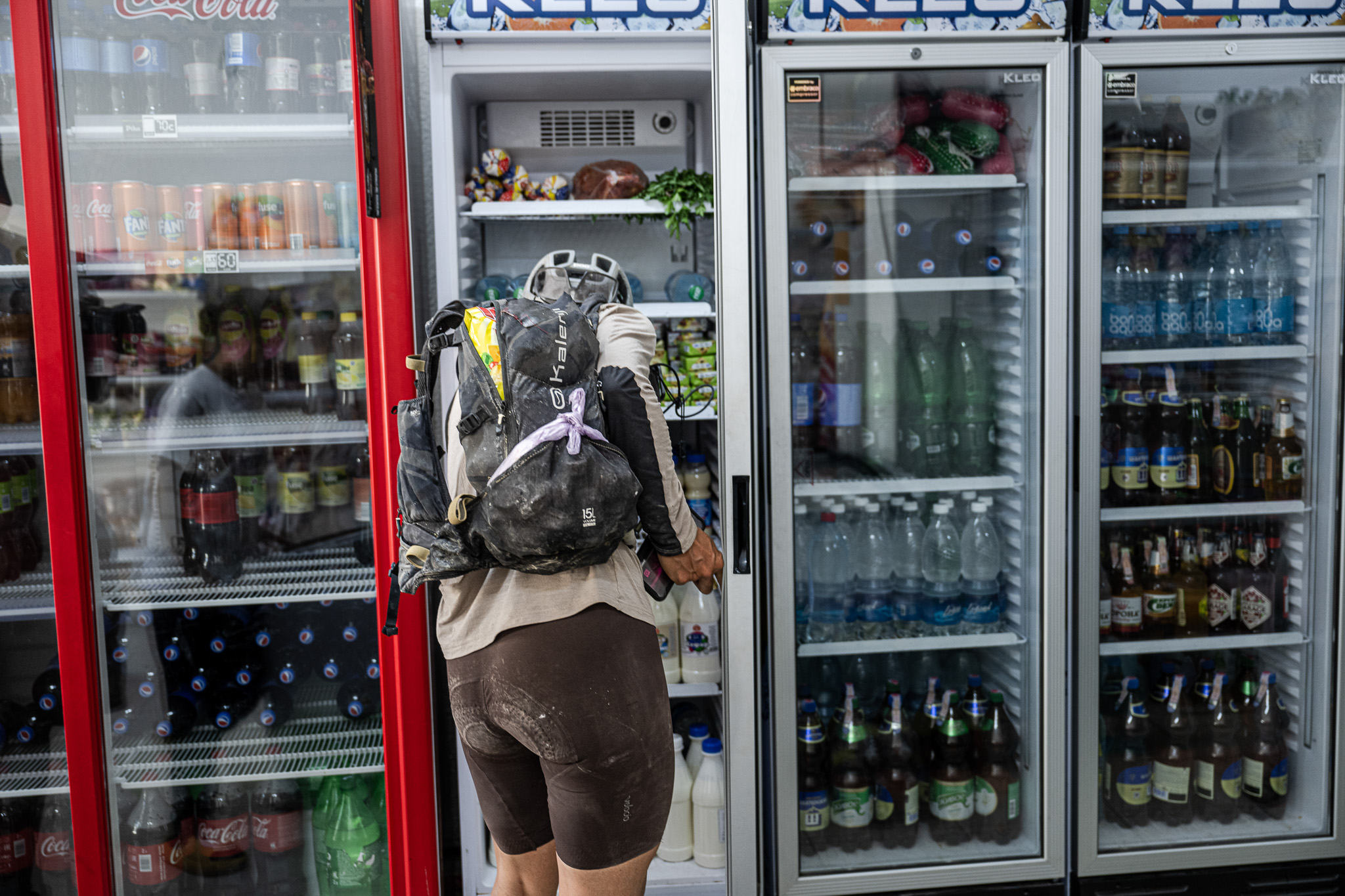
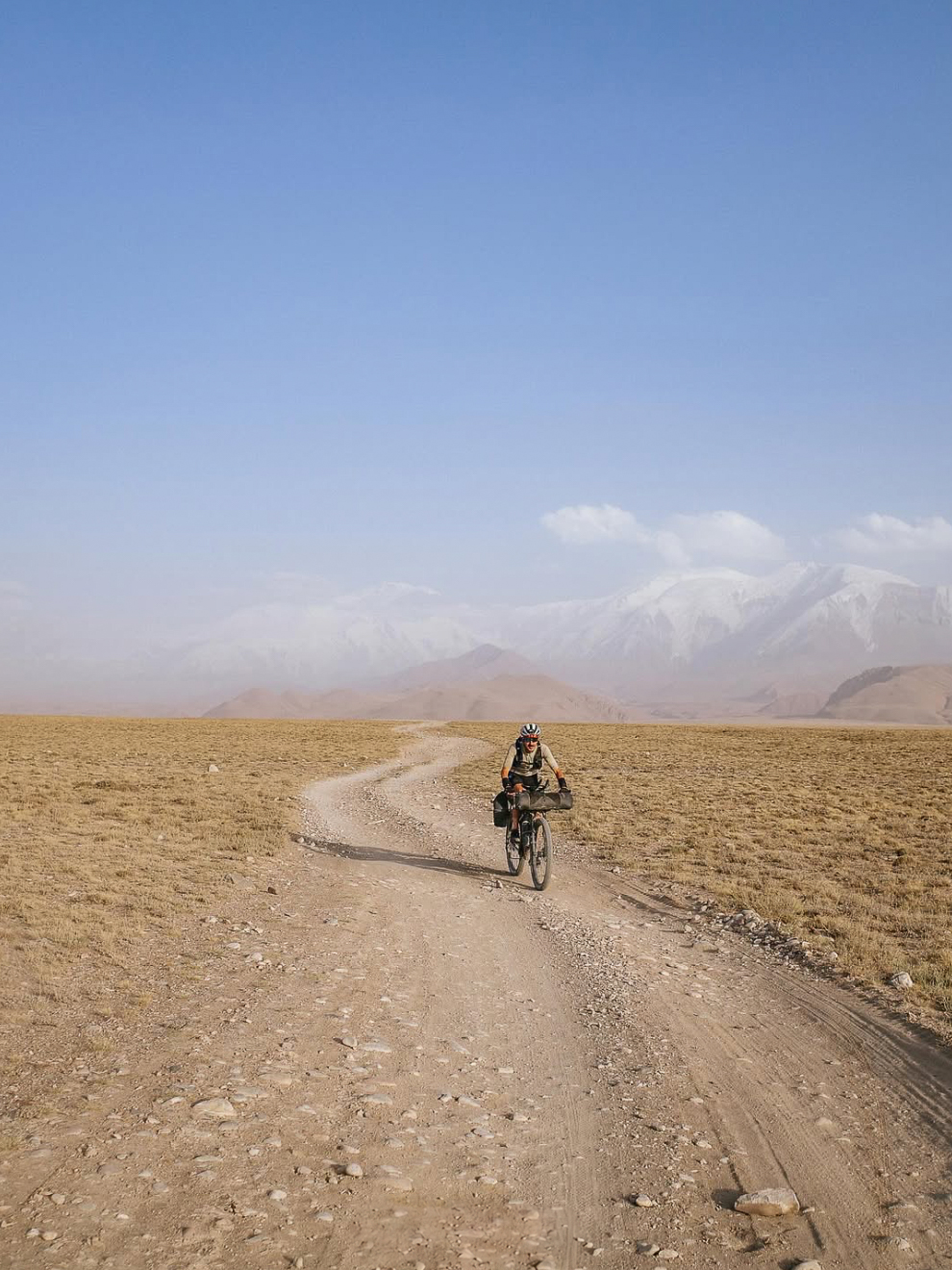
It might say resupply in the road book but that doesn’t necessarily mean a shop. And if there is a shop, it doesn’t mean there’s a vast choice of things to eat. It just means that you’re going to get something. But that still leaves you with stretches of 400 km without any food options. And due to the difficulty of the terrain, that’s equivalent to two days of riding. Which is why I call it a survival race and not a bike race because there were times when I was running out of food and having to ration my M&Ms to one every half an hour. And then when you do finally reach a town with a supermarket, the bag of food you buy is bigger than your body. Or at least it was in my case [laughs].

cyclespeak
I’ve seen pictures from Silk of competitors enjoying an ice cream.

Sami
Not for me.

cyclespeak
Not even the one?

Sami
There are two reasons why not. First, we were pretty high up—our average elevation was higher this year—so it wasn’t as hot as previous editions. And second, I was warned against eating ice cream because the electricity supply is a little inconsistent which means the freezers are constantly thawing and refreezing. But maybe I was overthinking the whole thing [smiles].

Click image to enlarge

cyclespeak
You had a series of tricky river crossings to contend with including wading through waist deep water and some pretty sketchy bridges. I’m guessing quite challenging obstacles?

Sami
One of the main bridges in that particular area collapsed only a day or two before the race started so I walked rather than rode over all of them.

cyclespeak
And the river crossings?

Sami
I had a couple of situations where I thought I would get swept away. So I learnt to wait until other riders were there so I wasn’t crossing alone. And in some cases, people had to camp out overnight to wait and cross in the morning when they could see what they were doing.

cyclespeak
I’m assuming the water is super cold?

Sami
Very, very cold [laughs].

cyclespeak
So if there’s no bridge, are you carrying your bike or pushing it through the water?

Sami
Most of the time you carry it across your shoulders. And sometimes you cross with someone else and you can help each other. But whatever the situation, it was always pretty sketchy.

Click image to enlarge

cyclespeak
Was the extreme elevation difficult to manage?

Sami
I do think a lot of people had problems with that. And I guess because I live in Chamonix, it maybe didn’t affect me quite as much. But I still had a bleeding nose and cough whenever we were above 3500 m which made sleeping sometimes difficult. So if you live and train at sea level, you can see why it can make things difficult and the altitude needs to be taken seriously. It’s no joke.

cyclespeak
You were the second woman to finish and placed 21st overall. And this was your debut Silk Road Mountain Race. Was it a case of instant euphoria arriving at the finish in Karakol or did it take a while to sink in?

Sami
It’s still sinking in [laughs]. Especially because it’s probably the best result in my racing career. And who would have thought I’d be even close to finishing second in Silk? Especially as I was going to Kyrgyzstan for the adventure and to take photographs. Which is what I did.

cyclespeak
Was that your superpower and part of the reason you placed so highly? The fact that you didn’t enter Silk with the view of chasing a result?

Sami
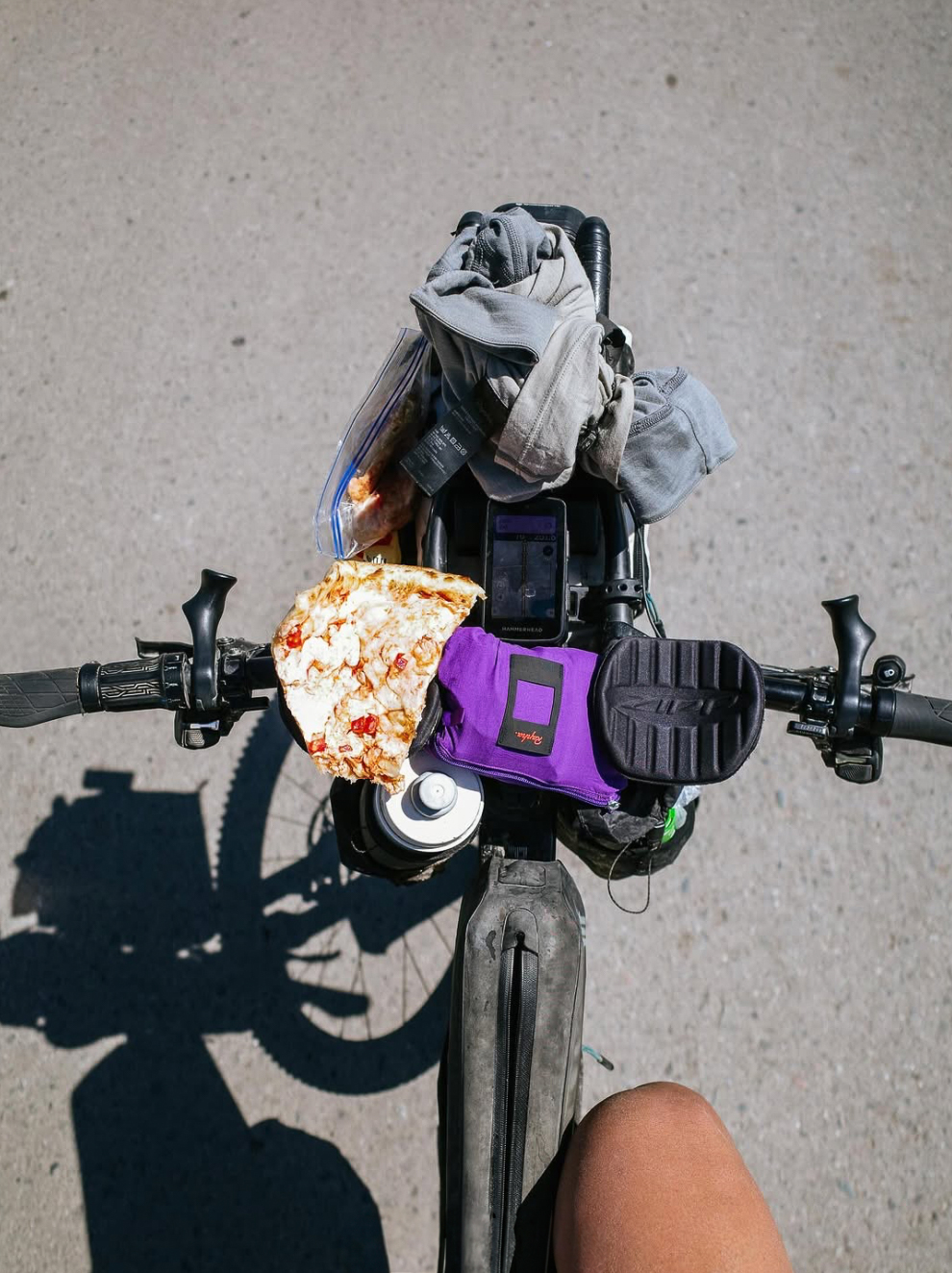
It’s honestly hard to say. I faff around so much in these races and stop for everything. I photograph flowers and the people I meet. I eat pizza on top of a hill and take in the view. But maybe you’re right. Maybe it’s this mindset that makes a difference?

cyclespeak
One incident that you did post about was an upsetting nighttime encounter with a boy and his dogs. But generally speaking, your interactions with the local population were very positive?

Sami
Yes, absolutely. The people in Kyrgyzstan are amazing and that was just a random encounter in an area near to the border. And I wasn’t the only person to run into a little difficulty there. But for the vast majority of the race, I never even thought about my own personal safety.


Click image to enlarge

cyclespeak
So how vulnerable do you feel on events such as these?

Sami
Strangely it was more when I was in or around a city. Somewhere that’s more touristy. When I was out on my own in the wilderness—where you might imagine you’d feel vulnerable—that’s where I felt the safest.

cyclespeak
In a certain way, you were joined on the race by all your dot watchers and by their messages of support. During difficult moments, are you aware of this and does it make a difference?

Sami
My friend Corina took over my Instagram account during the race so—day to day—I really wasn’t that aware of what people were saying. But when I did have a connection and could see all the messages, it was really a quite amazing feeling.

cyclespeak
You mentioned your personal mantra if you go further, you will see more. So is it possible to sum up what you did see?

Sami
You know, it’s funny. I took photos every day and when I look at them now—only a few weeks later—I can’t remember this or that place. Almost like it was so intense, with so many things happening, that I can only recall the hardest bits and some of the best moments. But the bits in between? It almost feels like my mind has deleted them.

Click image to enlarge

cyclespeak
So has this experience changed you?

Sami
I guess the honest answer is that I never thought I could finish something this big. So maybe now I have the reassurance that, yes, I can. And moving forward, the longer the event the better? And all of this came after a very difficult start to the year so it helps to have a sense of belief in yourself. Because before, maybe that was something I lacked?

cyclespeak
So maybe it’s answered some questions? And possibly posed some new ones?

Sami
I guess so [smiles].

cyclespeak
I think what sets you apart—and I truly believe this—is that you enter these extreme events with the goal of having fun. You’re racing Silk and carrying three cameras which just doesn’t line up with the vast majority of the other competitors. And it’s that, which makes your approach so unique and so refreshing.

Sami
Which is how I arrived at my Adventure More project which combines my love for photography and riding my bike. Something I want to do more of.

cyclespeak
When it came time to leave Kyrgyzstan, were you ready or was there an element of sadness at saying goodbye?

Sami
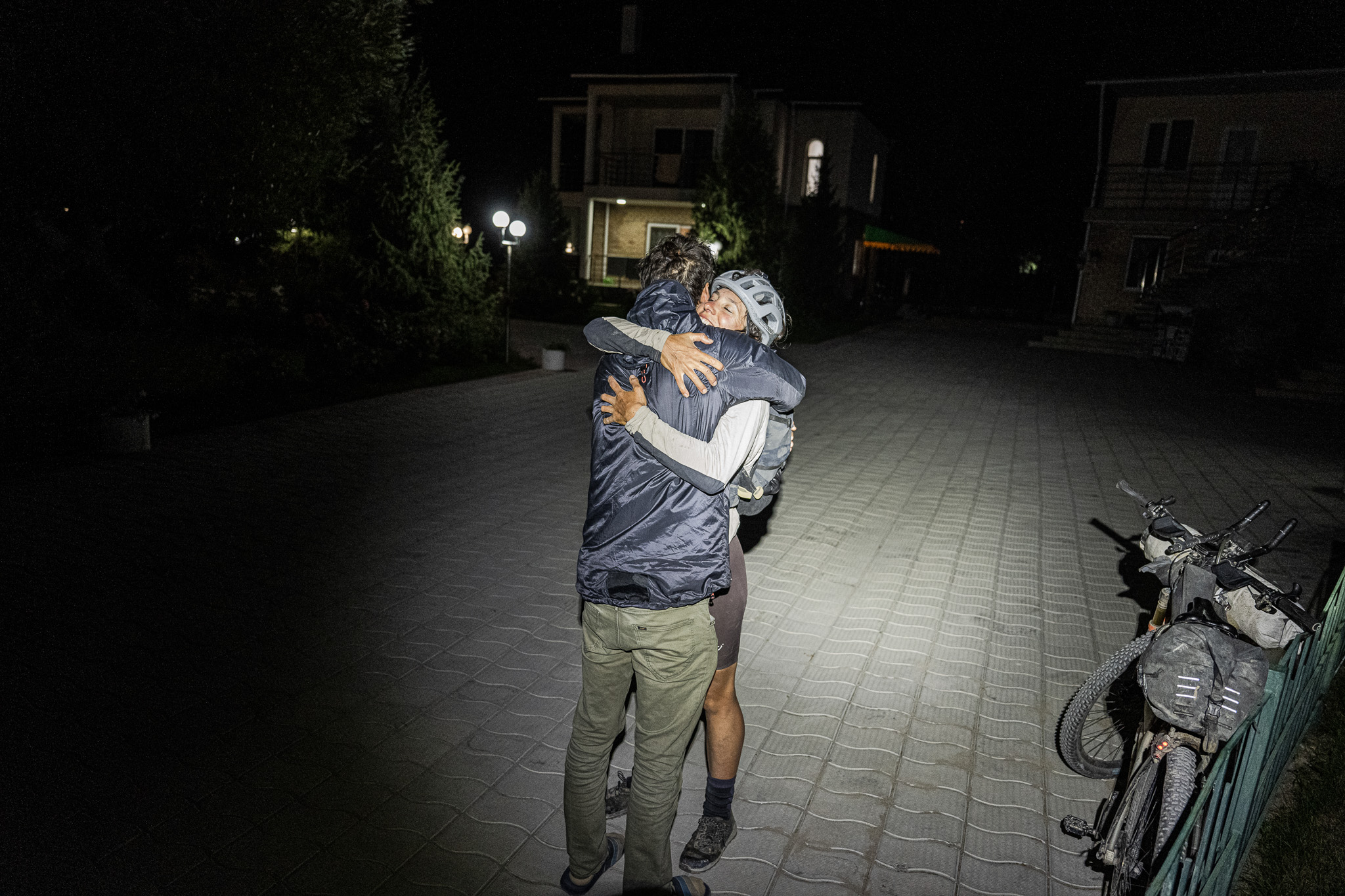
I think because I’d arrived early to go bike packing and had seen maybe more of the country than some of the other competitors, I was ready to go home and spend some time with my boyfriend and see my friends in real life and not just over a video call on my phone. And I was looking forward to having my plate of pasta with Parmigiana that I always have when I return home.

cyclespeak
Every time?

Sami
Yes, every time [laughs].

Sami Sauri / samisauri.com

Feature image by kind permission of Stephen Shelesky / All other photography credited individually

Silk Road Mountain Race

Quinda Verheul / Silk Road Mountain Race

Quinda Verheul is still slightly out of breath as our conversation gets underway. A practising artist when not racing her bike over multi-day ultra distance events, she has just taken a temporary job helping renovate a house and had to rush across town in time for our call.

“I like to ride my bike first thing in the morning and then go to my studio. But it’s all rather chaotic at the moment with this house project. I’ve never done anything like it before but I’m pretty confident it will work out okay.”

Dressed in casual work clothes with her hair cut stylishly short, Quinda talks in a calmly considered fashion, tempered with occasional bursts of laughter—stitching together anecdotes, remembered moments and stories from the road with the mirrored movements of hands that are rarely still.

As an ultra distance racer, Quinda is well practised at following a route across a landscape. But choosing the right path—and at the right time—can also play a part in navigating the broader aspects of our lives. Something Quinda herself discovered when first finding a love for art whilst studying at high school.

“We have different educational levels in the Netherlands which are decided by a test. And as things turned out, it wasn’t possible for me to sit art exams at the school I was attending which I found really disappointing. So I spoke to my art teacher and he arranged for me to take the exams in addition to my regular classes. All these years later, I still sometimes wonder where I’d be now if his response had been different.”

With these art qualifications to hand, Quinda next enrolled on a merchandising course.

“Learning to dress stores, elements of graphic design, lots of really cool stuff.”

But when her tutors suggested she consider university, Quinda decided to first take a gap year before booking a flight to Australia.

“I travelled along the coast—using the time to figure out my next move—and then on my return, accepted a place at the Design Academy Eindhoven. It’s a tough school with everyone very competitive and wanting to be the best. But I loved all that energy and it helped me get a position with the designer Hella Jongerius.”

Following a few years living in Berlin—Quinda eventually growing tired of the constant partying—she is now resident in Rotterdam where she builds art installations that reflect the human impact on the landscape. An artistic process that is documented on her Instagram feed—though with a recent shift to more cycling related content—and prompting me to ask about the origin of her @avoidtheavoid profile name.

“It stems from a belief that humans in general avoid confronting their core behaviours and why they are as they are. We avoid talking about subjects that hurt or challenge us and we avoid facing up to change and making necessary but difficult decisions. So lots of avoiding and hence the name.”

Recalling her first memory of riding a bike—she was very young, hadn’t quite mastered braking and remembers her Mum’s laughter when she rode over a bridge only to disappear into the bushes at the bottom of the slope—Quinda admits to her own sense of avoidance when, as a teenager on holiday, she would complain if a bike ride was suggested; preferring instead to hang out on the beach where she would sit engrossed in a book.

“But then, towards the tail end of my time in Berlin, I discovered how a bike was a fairly inexpensive way of travelling around and I enjoyed the freedom to stop whenever I wanted and pitch my tent in the corner of a field. And I’ve always recognised that I need big changes in my life and this was one of them. It could’ve been anything but just so happened to be a bike.”

Things took a more serious turn with her entry in the Atlas Mountain Race. Other events followed and eventually led to Quinda crossing the finish line at the inaugural Hellenic Mountain Race as first woman home.

“This might sound strange but I just knew I had a shot with that race. I was feeling pretty good and was prepared to push myself a little bit. And then during the race, the shittier the weather became, the stronger I felt. So something inside me switched and I had this mantra repeating in my head: just keep it together and don’t fuck it up. It was tough going with very little sleep but I managed to hold it all together for the win.”

Now recently returned from the Silk Road Mountain Race—buoyed up with memories of an unforgiving but stunningly beautiful landscape—in her own words Quinda reflects back on an experience that was ultimately uplifting but forced her to question the very reason she was racing.


We started in Karakol and I honestly felt ready. Maybe even a little overconfident? I’d seen all the films and felt like I almost knew the course. How hard could it be?

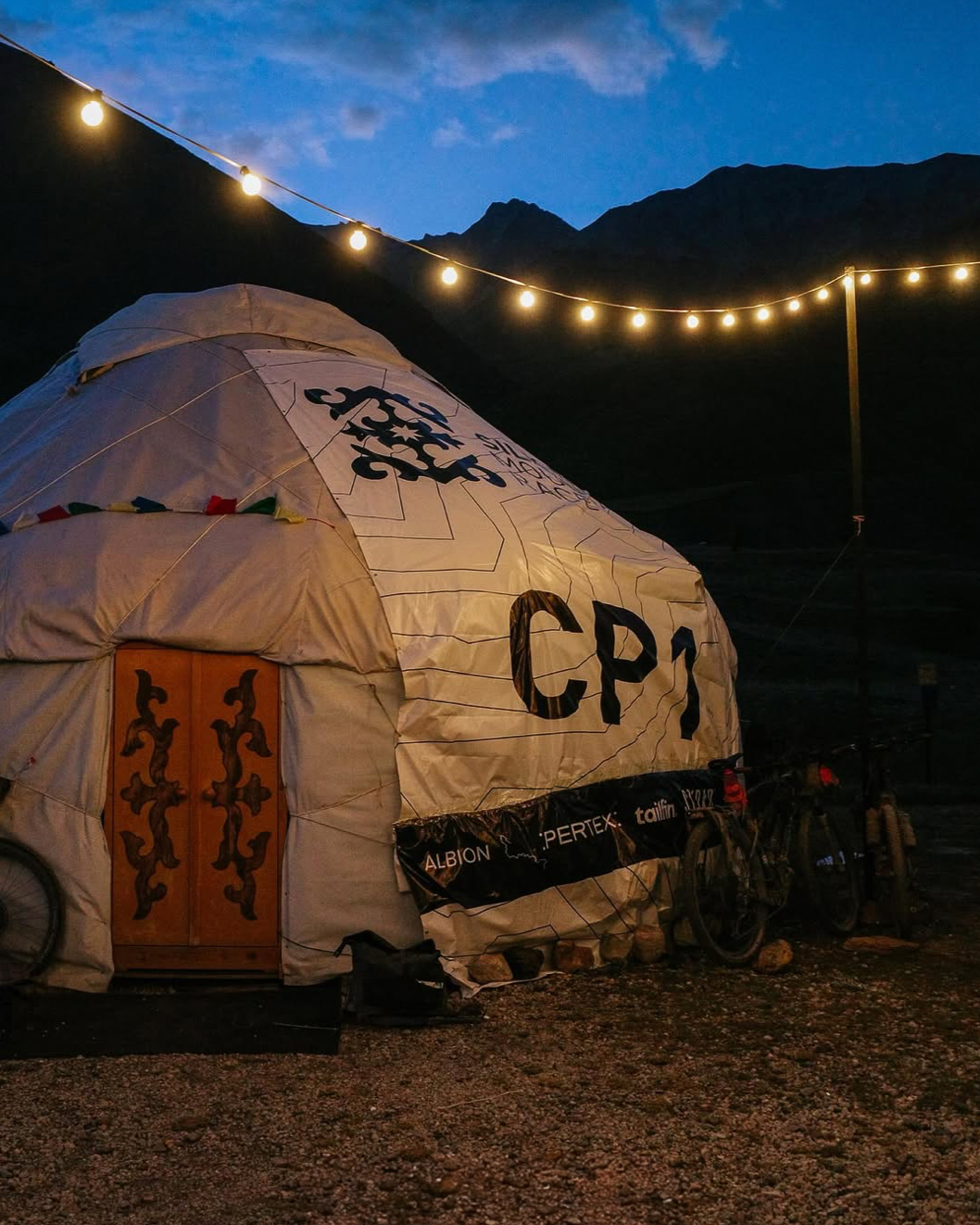
My first goal was to reach Checkpoint One at Enilchek. It was past 10:00pm when I arrived and I knew that some competitors weren’t stopping to rest. But my back hurt and the weather forecast showed overnight thunderstorms and heavy rain. It’s a long race and a lot can happen, so I decided to sleep for a few hours before continuing.

The next day got underway with clear skies and beautiful views followed by a long, long stretch of flat, dull riding—not at all like the race images you see in the media. I pushed on—snacking on ice creams and yoghurt bought from roadside stores—until later that evening I arrived at Saruu where I could eat and resupply. Rolling out of town, I was a little anxious about finding somewhere quiet to sleep but then I noticed a dip in the ground above the river that offered some privacy and I can vividly remember falling asleep underneath the Milky Way with shooting stars criss-crossing the sky.

Click to enlarge image

Ahead lay Jukuu Pass but first I enjoyed a morning of beautiful rolling gravel that led to the climb. Steep with sections of hiking around big boulders, it was exhausting to cross but the views were simply breathtaking.

Descending on old mining roads, I fetched up at a pretty wild river that crossed my trail of GPS breadcrumbs. I walked up and down, trying to spot a bridge or obvious crossing point, until eventually deciding to take off my shoes and socks. Hoisting my bike up across my shoulders and taking each step very carefully, I edged into the freezing cold water. Very quickly the river was up to my waist but what else could I do? Finally making it to the other side, I hurriedly stripped off and put on dry clothes. What seemed like hours later, I passed another rider and asked how they’d got on at the river. And, of course, they described crossing over using a bridge. A bridge which had somehow eluded me.

Even though you’re travelling through the most magnificent landscapes, it was at this point I remember thinking how the distances are so extreme that a river valley can take what seems like forever to traverse. Almost as if you’re at a standstill because your mind cannot comprehend the vastness of the land. Yet here I was, riding for a whole day with left and right looking exactly the same. And after six or seven hours I couldn’t help thinking to myself, “Yes, it’s beautiful, but I’ve seen it now.”

Click to enlarge image

The washboarded roads were pretty severe but I eventually made it to Naryn; determined to get a good dinner and a second meal to take on the road. I had it in my head to not stay a moment longer than was necessary because they say that Naryn is the place to scratch. It’s far enough from the start that your physical and mental reserves are depleted and if you’re entertaining thoughts of stopping then the temptation can be overwhelming. So I organised my food and then pushed on—preferring to find a quiet spot under the stars to rest for the night.

From Naryn there’s another long stretch along the border with China. An endless gravel road with the occasional passing truck throwing up a plume of dust. Towards sunset I instinctively started looking for somewhere secluded to sleep. Often a sheltered grassy spot to the side of the road or trail, by this point in the race my sleeping mat was losing air so every hour or so I would wake resting on the ground. A little annoying but a useful reminder to not oversleep.

Nearing Son Kul, I saw this beautiful bend in the river and decided to have a bath. Once again stripping off—this time of my own volition—only then did I notice a number of passing cars. In a land of true wilderness, I’d somehow managed to bathe with an audience but you develop a sense of whatever on these adventures. Washing my hair, I imagined the good impression I would make at the next checkpoint and it was only much later, when I saw some photographs, that I realised what a wild woman I still presented. But at least I smelt fresh.

Click to enlarge image

Riding towards a yurt village—chased by a thunderstorm—the dust and exertion were taking their toll and I was starting to develop a bad cough. My choices were to eat quickly and hit the road, or sleep the whole night before getting an early start. I opted for a night’s rest and woke feeling more refreshed and cough free.

Setting off, the land was covered in a layer of mist; each blade of grass jewelled with drops of water. Ahead lay another 100 km of road alongside the Chinese border. A little shop selling dumplings broke the monotony and I joined some other riders inside. But it felt literally like a sauna so I made my excuses and got back on my bike.

At the next town I washed my bike, my clothes and then took a shower. And it was around this point in the race that I knew I wasn’t fast enough to press for first woman home. Something crazy would have needed to happen for me to catch up and sleeping each night, as I’d been doing, meant I was rapidly losing contact with the front group. But after experiencing what it took to win the Hellenic race, I just wasn’t willing to push my limits to such an extent.

At Checkpoint Three I bumped into Allan Shaw who was riding his cargo bike. I ate a meal, got my stamp and when I was moving again discovered that Allan and I had a similar pace and kept encountering each other throughout the day.

Click to enlarge image

Ahead lay Kegeti Pass—topping out at over 4000m—and I remember a low point outside a grocery store, sitting with another rider and eating two ice creams at once, praying that my good legs would return. Suddenly, in a cloud of dust, a rickety old car pulled up and a local woman climbed out, dressed super smartly and accompanied by a huge man carrying a gun. She was holding a large suitcase which she proceeded to carry into the shop. I turned to the rider next to me as if to say, “Did you see what I saw?” A moment or two later the woman reappeared, climbed in the car and the pair drove off down the road. One of those moments when you almost have to pinch yourself and also helping banish any thoughts of tired legs.

Climbing Kegeti I noticed a young cow standing next to the river and looking a little lost. It was making plaintive sounds that suggested it was calling its mother so I slowly approached and began talking to it. I kept riding—the cow following—until ahead I saw a herd of cows grazing on a slope above the river. The young cow’s calls were obviously effective as an adult began to respond and I left them both standing and rubbing their heads together.

Heading down from the pass, I was feeling very tired and the next town was a little scary with lots of dogs. But then once again I bumped into Allan and everything suddenly felt better until he crashed on a descent. Fortunately he didn’t hit his head but his shorts were ripped and he was covered in lacerations with a deeper cut on his knee. I helped patch him up as best I could before leading him to the next town and the Secret Oasis which Allan had been excited to see for himself. This turned out to be a street full of shops and proved pretty underwhelming. Even so, Allan was able to leave his bike with one of the shop owners before taking a taxi to the nearest hospital. Later on I learnt that he went back, collected his bike and finished the race. He didn’t want his story to end with the crash.

Click to enlarge image

After Allan left for the hospital, I found it really hard to carry on. I was only 150 km from the finish but I was done and wanted the race to be over. After crying for what felt like hours, I decided to phone a friend so I could hear a familiar voice. She was telling me about her day and how she was really annoyed with her four-year-old—a super lovely kid—because he was constantly wanting to tell her things. And that irrational annoyance resonated because I’d chosen to race the Silk Road and knew full well that I would be facing challenges and unexpected circumstances.

My friend suggested that I find a hotel and get some rest. And straightaway that simple idea broke the negative cycle of my thoughts. I had a shower, drank a beer and slept what felt like forever. And then in the morning, after an amazing breakfast, I found I had enough energy and willpower to push on towards the last remaining climb and the final stretch home.

Cresting the peak was a wonderful moment. Almost more like a finish than the actual finish. The road that followed wasn’t great with big trucks that made me feel so fragile but then I saw Nelson [Trees] waiting to welcome us. I had no cash left at that point and he kindly lent me enough to have a meal. And there I sat, showered and wearing normal clothes, on a chair at a table eating my food. Slightly surreal but such a good feeling.

Click to enlarge image

Now that I’m home again and enough time has passed for my emotions to settle, I’ve come to the understanding that every race has its impact on you. And going back to my thoughts before the start, maybe it was over confidence when I thought, “I’ve got this”. But I did. Yes, I had a few ups and downs but nothing really went wrong. My bike was good, my kit choices all worked as they should, and I just feel so grateful that I was able to make the decision to go there and do this hard thing. 

I recall a conversation I had with the owner of a hotel where I’d spent a night. He was a successful man running a good business but still wasn’t able to enjoy trips to other countries due to the difficulties in obtaining the necessary visa. So in my decision to enter the Silk Road Mountain Race, I understand what a privilege it is to have the freedom to say yes, I will and can do that.

As for learning a little bit more about myself, when I understood that I wasn’t able to stay with the front riders, I was never going to scratch so why continue under a cloud of disappointment? I wasn’t riding with the knee pain or the intense tiredness that was the reality of my Hellenic win. On the Silk Road I got to sleep under the stars in a beautiful landscape that was so vast, my mind struggled to comprehend. And sometimes you need to know when to stop questioning and say, “This is good. This is enough.”

Quinda Verheul / Bikes / Art

Heartfelt thanks to Nils Laengner for the use of his stunning photography.

Silk Road Mountain Race