Angus Morton / The Speed Project CYC

The last time Angus Morton and I caught up, he’d just dropped off his dog Terry prior to a trip overseas. We spoke for a little over an hour and the entire time he was driving his truck from one end of LA to the other. Almost two years to the day since that previous conversation, as our video call connects Gus is once again behind the wheel. But this time only for a couple of intersections before he reaches up to press the remote gate button and pulls into the parking lot of his office building.


Taking the phone off its cradle, our call continues as Gus reaches across to the passenger seat and picks up a pristine white stetson that he places squarely on his head—his Instagram bio leads with All hat, no cattle—with the camera following as he walks through an echoing series of empty corridors. And it’s during this brief interlude that I learn he no longer has Terry.

“He lives just outside of Fresno. My partner and I moved in together—we’re actually engaged—and she has a German Shepherd. And both being big dogs, they used to fight all the time and it got a little hectic. But Terry’s good; I call in to see him whenever I’m driving up to Lachy’s* place. He’s actually hit the jackpot living with a family on this huge ranch where he gets to stretch his legs.”

*Gus’ younger brother Lachlan Morton

So it’s clear that domestic arrangements have changed somewhat—including a move of a few miles from Echo Park to Highland Park—with the remainder of Gus’ news centering around being busy. Very busy.

“There’s been some pretty big projects that I’ve been working on: Crit Dreams, The Divide, Great Southern Country. Add in some shorter content and all that means—until very recently—that I’ve not been riding my bike as much as I’d like.”

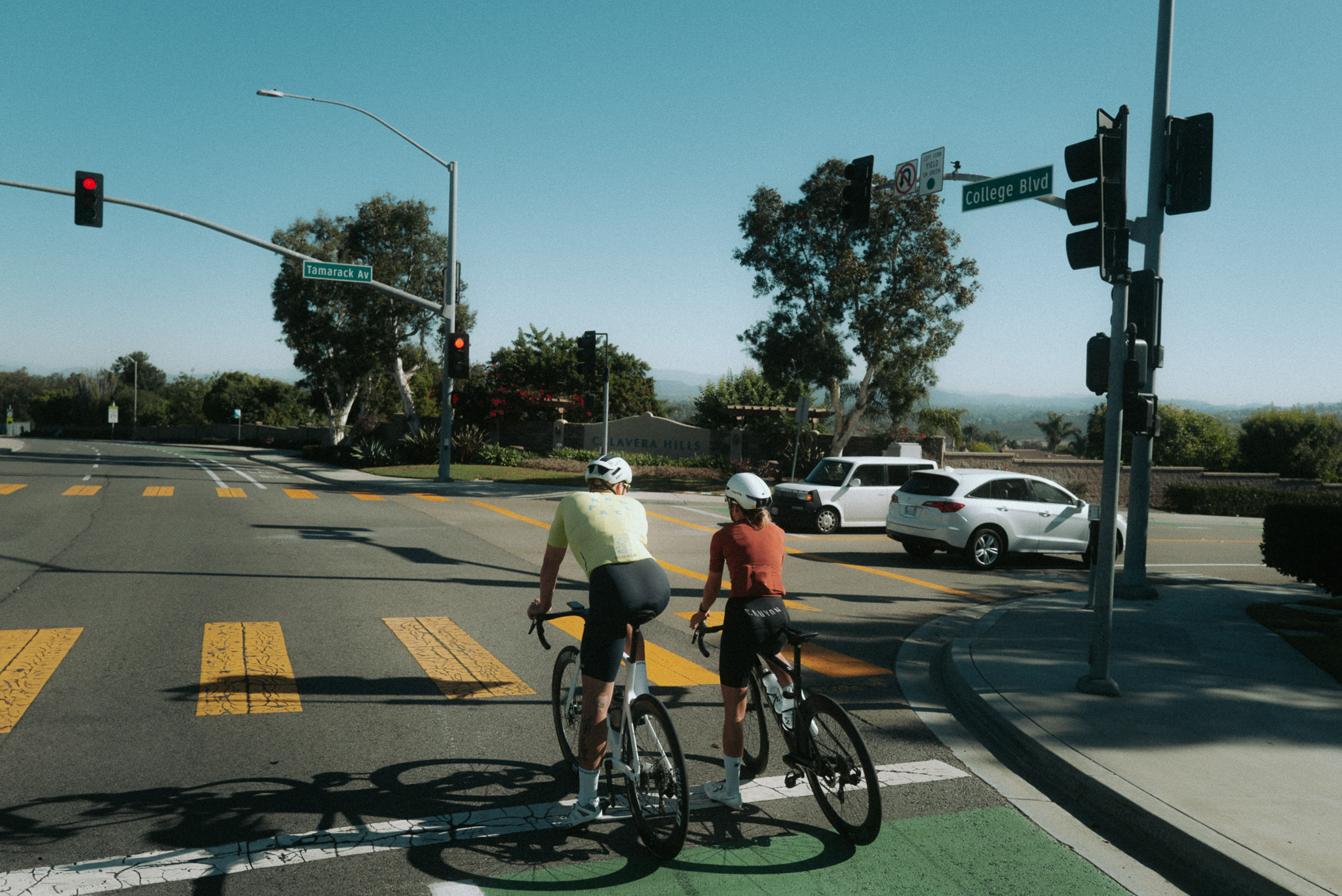
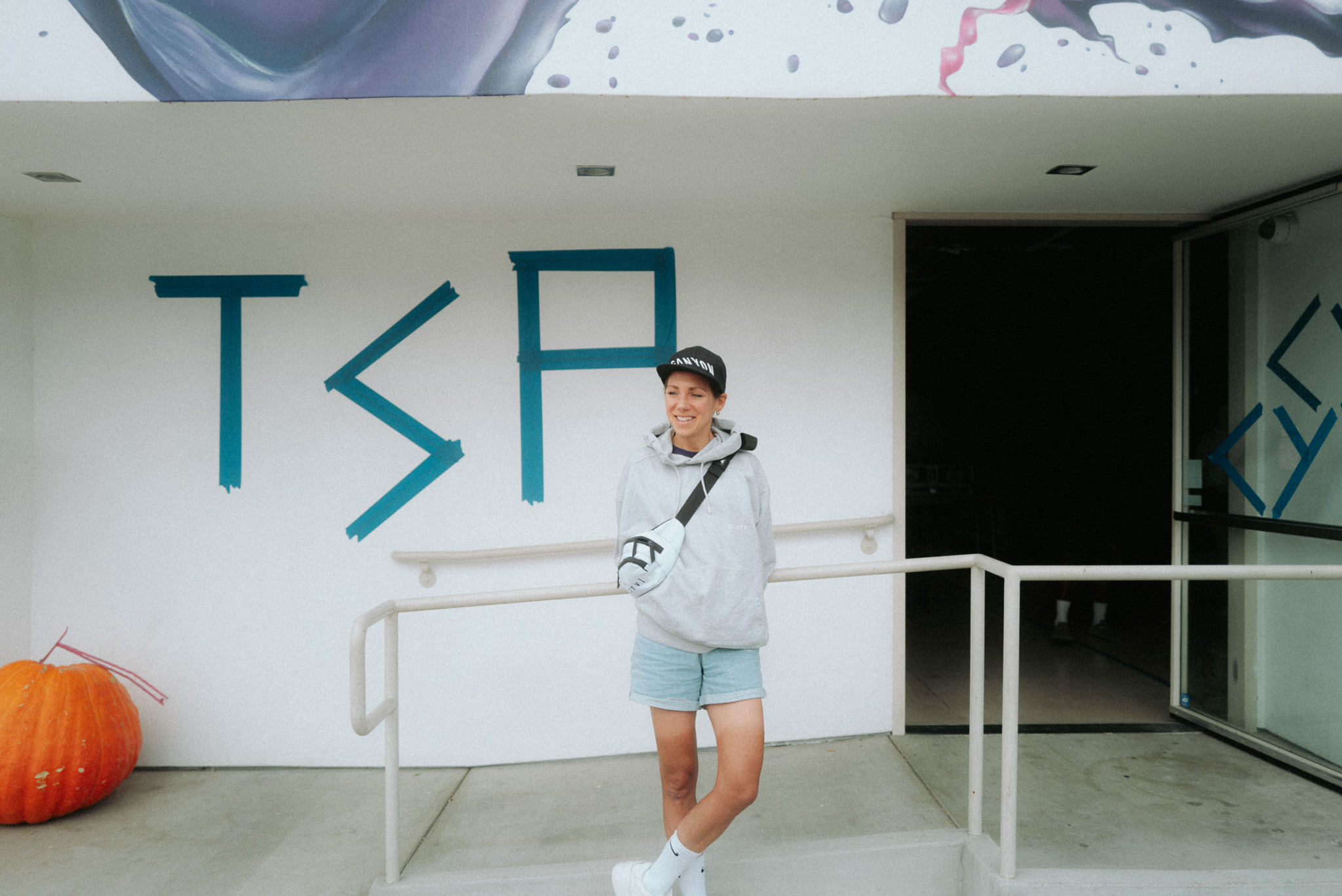
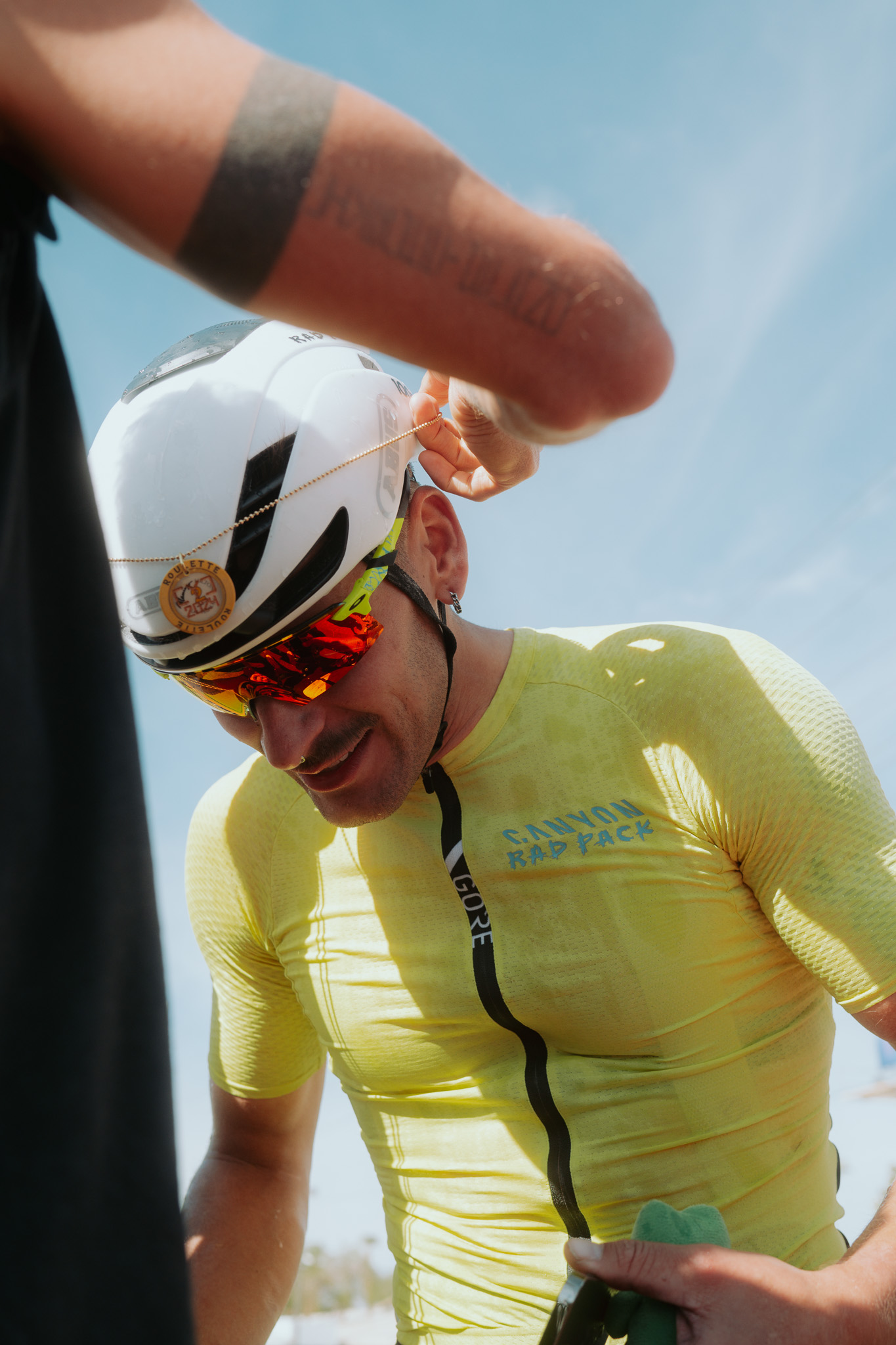
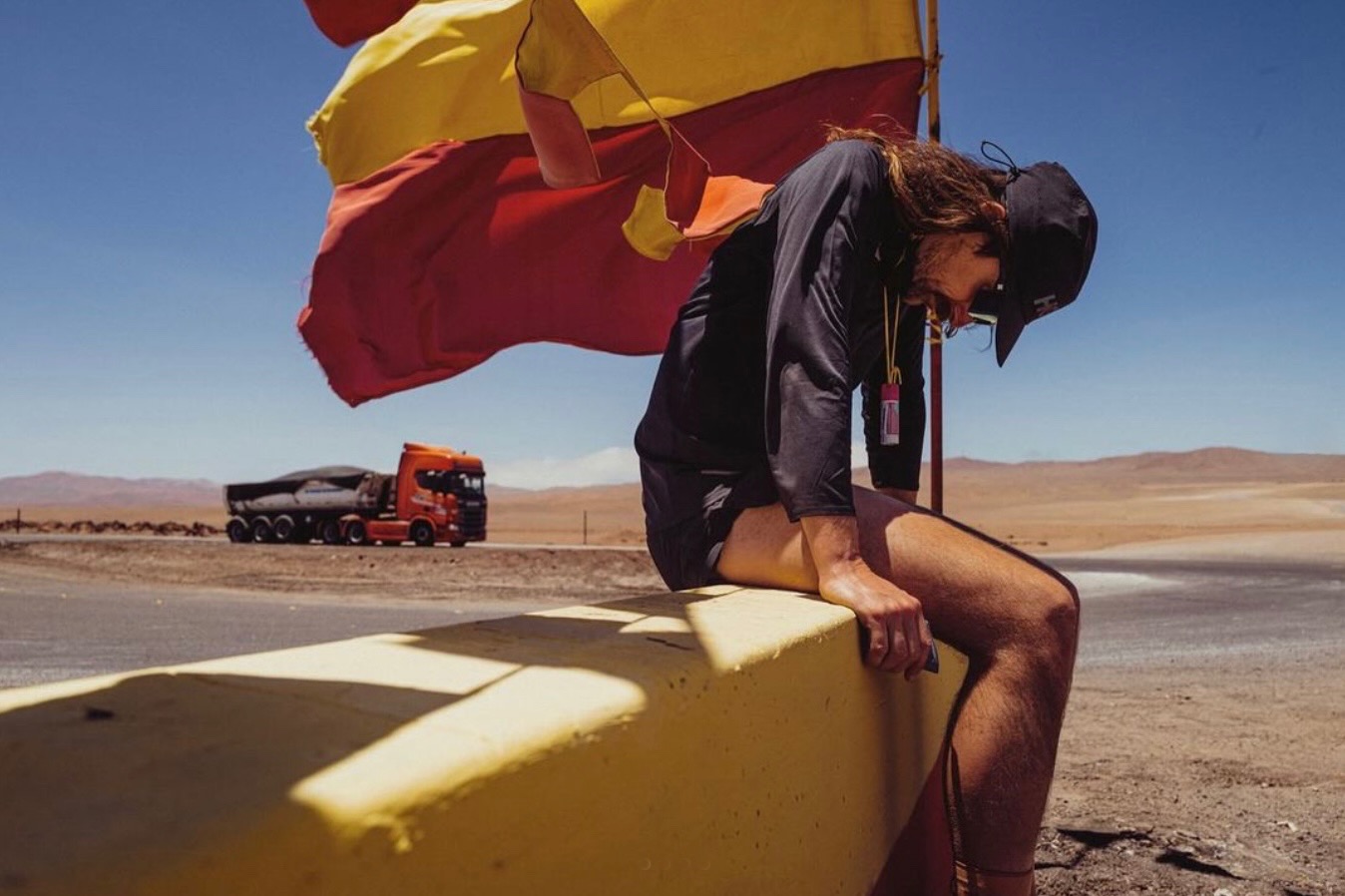
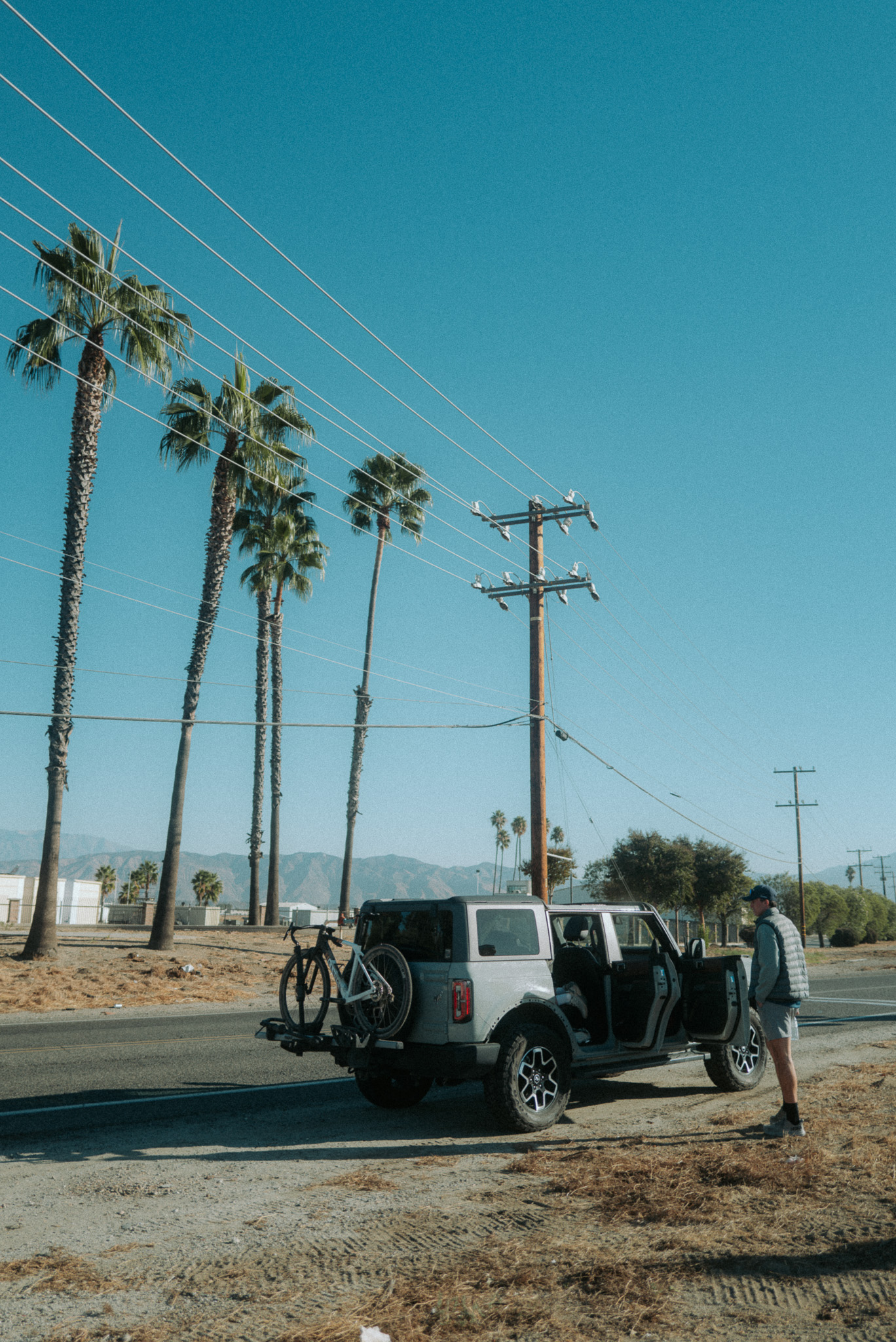
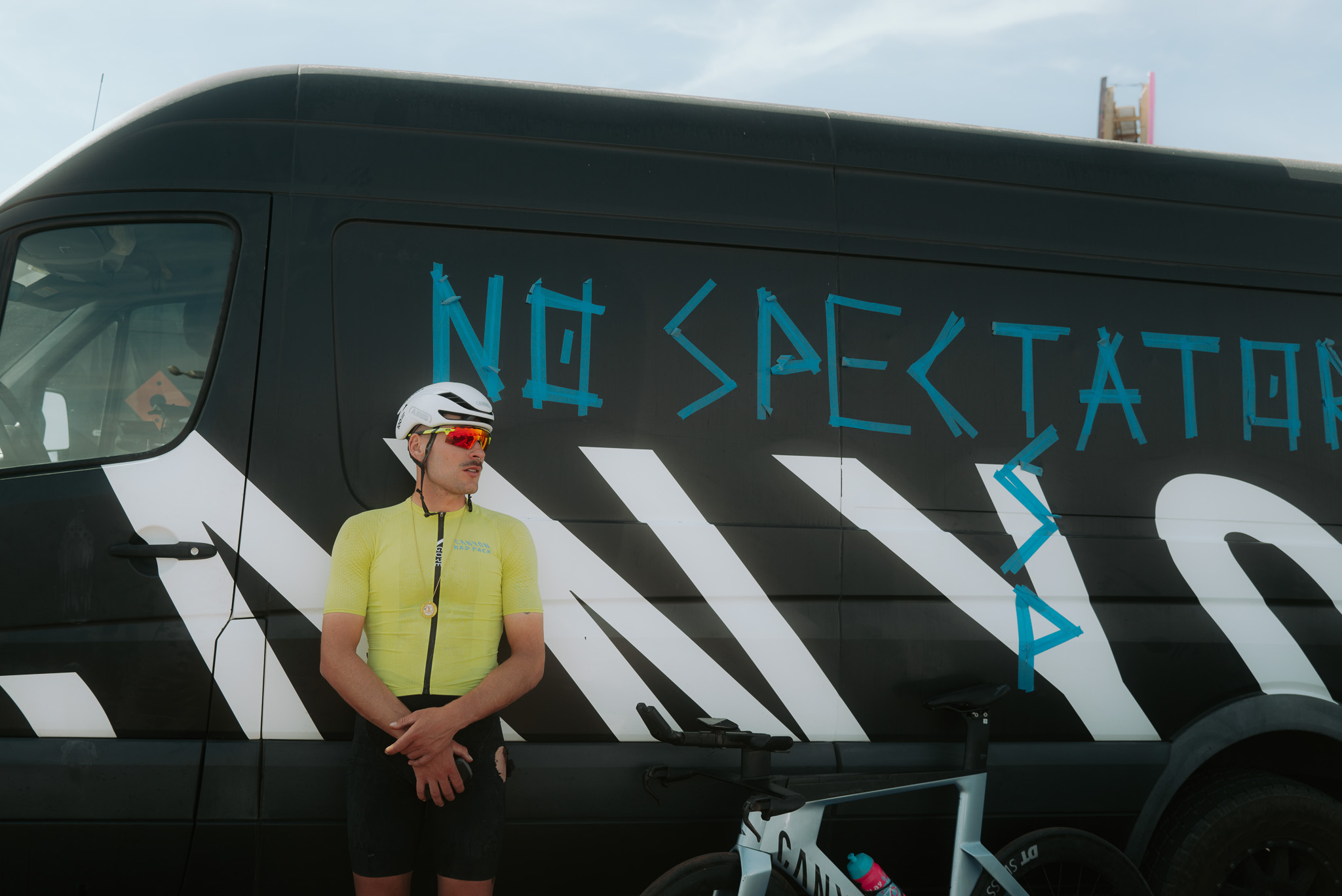
A response that is perhaps slightly ironic. Because it’s the bike and bike riding that prompted me to reach out after I spotted Gus, snapped standing at the roadside, wearing his familiar white stetson, in a photograph taken at last year’s TSP* race from Los Angeles to Las Vegas. But rather than the usual running relay where teams of three cross vast, often inhospitable distances; for the very first time TSP was being raced on bikes. But trying to dig a little deeper—researching the event prior to our call connecting—proved surprisingly challenging. Or perhaps intentional, going by the TSP tagline No spectators?

*The Speed Project

“That actually references the philosophy of TSP founder Nils Arend,” explains Gus. “Going back 13 or so years to when they ran it for the first time. This idea of No spectators meaning that everyone’s a participant. Whether you’re watching from the roadside, crewing a team, or taking a pull in the relay; everyone is helping out in some way or other. And I love that as a concept because what it’s basically saying is that we’re all part of it. In the sense that you take Lachy’s ride around Australia which we filmed. Yes, he rode the bike, but without the support of the crew, there’s no way he would have set the record.”


Click image to open gallery

As it turns out, Gus’ involvement in TSP originated through a good friend of his, the director and photographer Emily Maye. Working on a project that featured TSP back when Gus had first moved to LA, when they caught up a little while later, Emily started talking about this crazy relay race covering vast distances where people switch on the fly.

“It just sounded so wild,” Gus remembers, “and straight away it got me thinking about what it would look like as a bike race. And then we’re a couple of days from finishing up filming The Divide and I get this text message from a number my phone doesn’t recognise. Turns out it was Nils who’d got my contact details from Emily. He was asking whether I wanted to shoot TSP in Chile where the teams would run across the Atacama Desert. So long story short, we head out to Chile where Nils and I very quickly become fast friends—similar personalities and outlook on life—and he was also wondering what a bike version would look like.”

So the idea obviously had legs, I suggest?

“Straight away, in typical Nils fashion, he said let’s do it. And he was dead serious which is why, three months later, we did fucking do it. I’d never organised anything like that before but basically you figure out where you want to start and where you want to finish and off you go.”

Without a fixed route for everyone to follow, the teams were given a series of checkpoints and then had to decide for themselves how to reach them.

“The checkpoint locations were only released ten hours before the race got underway, so the whole event had an element of make-it-up-as-you-go. Which also meant that each team could turn the event into whatever they wanted it to be. Which, in turn, plays into the No rules tagline. They got to set their own boundaries, be creative in the space they were given, which allowed so many different people, from so many different backgrounds, to not only get something out of the race but also be a part of this bigger community. In a sense, everyone had enough freedom to create their very own version of TSP.”
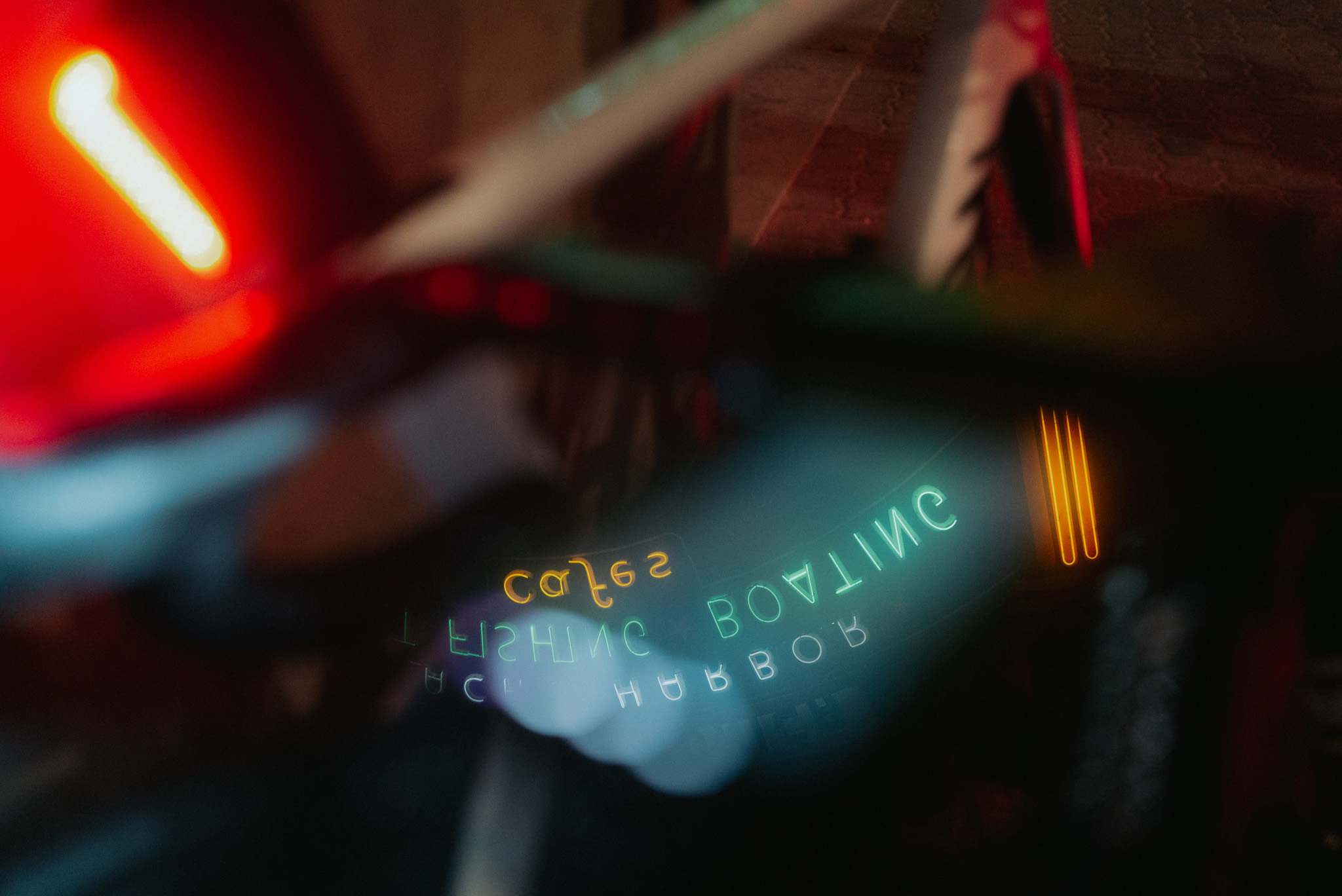
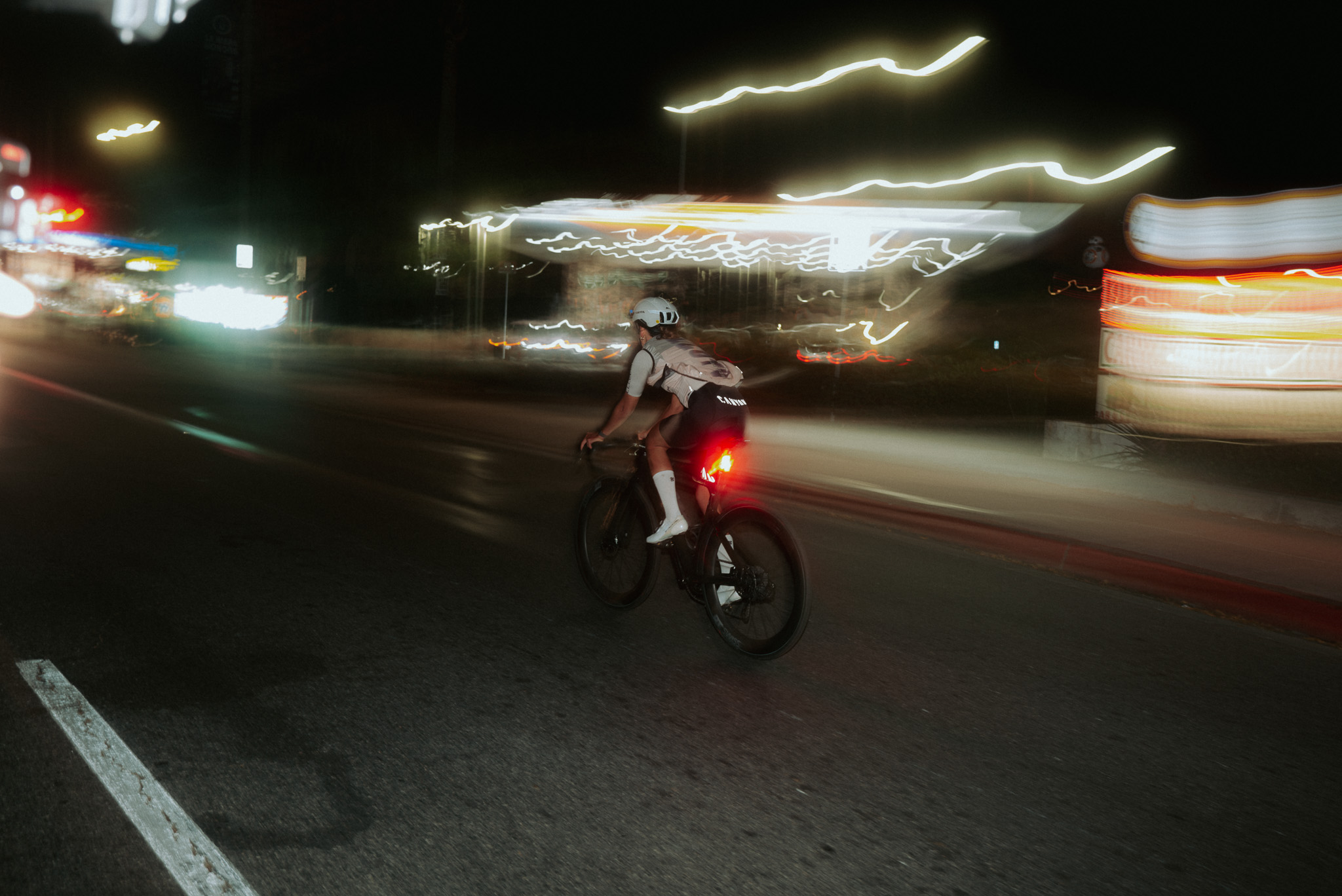
Click image to open gallery

That’s assuming, I can’t help wondering, whether anyone even knew there was a race happening?

“The way that it works—for both the running and cycling events—is by word of mouth. So that might involve asking someone who’s already done the event and they’ll point you in the right direction. Which is kind of funny because last year it was the first time we’d done a cycling version of TSP. But someone hears a rumour and they tell someone else and they’re interested and it kind of goes from there. And that’s one hundred percent intentional because we want this experience to evolve through the participants themselves. So as organisers—if that specific term even applies—we want to be as hands-off as possible in that regard and ensure that we don’t force our own point of view on what it should look like. We feel it’s important to allow the space to develop however people want it to.”

So it’s a race with teams competing over a set distance but on routes they figure out for themselves and without a podium to celebrate placings? That’s some kind of a crazy mash-up, I suggest.

“We don’t award any prizes but human beings are hardwired—and I’m speaking in extreme generalities—to be competitive to some degree. A character trait that I don’t see a problem in acknowledging unless it involves a win-at-all-cost attitude whereby you lose sight of why you initially embarked on this or that experience. So my own buy-in to this event was that it’s fine to be competitive but I don’t want people to feel they have to be. Which then plays into not wanting a prize to be the motivation for lining up at the start.”

Considering it’s very difficult to spot who placed where in the finish line photographs—seemingly everyone is smiling and hugging each other—this offers a marked contrast to World Tour racing where the winning rider crosses the line with arms held aloft and second place is commonly pictured slamming their bars in frustration at wasting all that effort.

“In my mind,” responds Gus, “I imagine how cool an event would be where first and second race each other as hard as they can but when they get to the end, they’re excited to learn about each other’s race and how it all went down. As opposed to winning and it’s hell yeah, that’s what I came for, see ya later.”

Because sharing stories is the prize?

“Exactly. The prize is what you make of it. Because Nils and the team behind TSP have built this insane sense of community. Which means that you might have teams lining up in Santa Monica with wildly differing aims and objectives. And you know what? It’s infectious and it’s cool and that’s coming from someone who generally likes to keep to himself and do his own thing.”
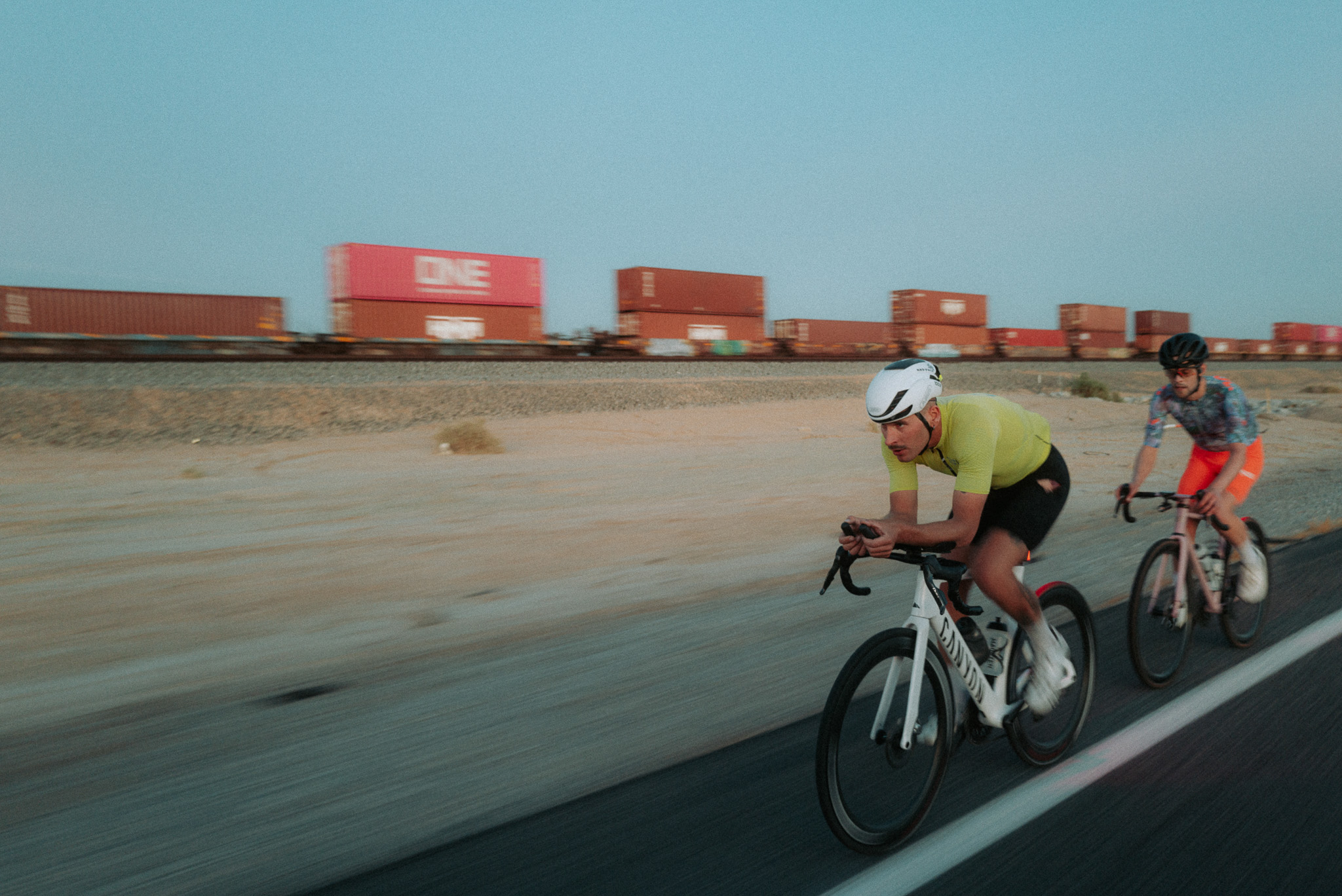
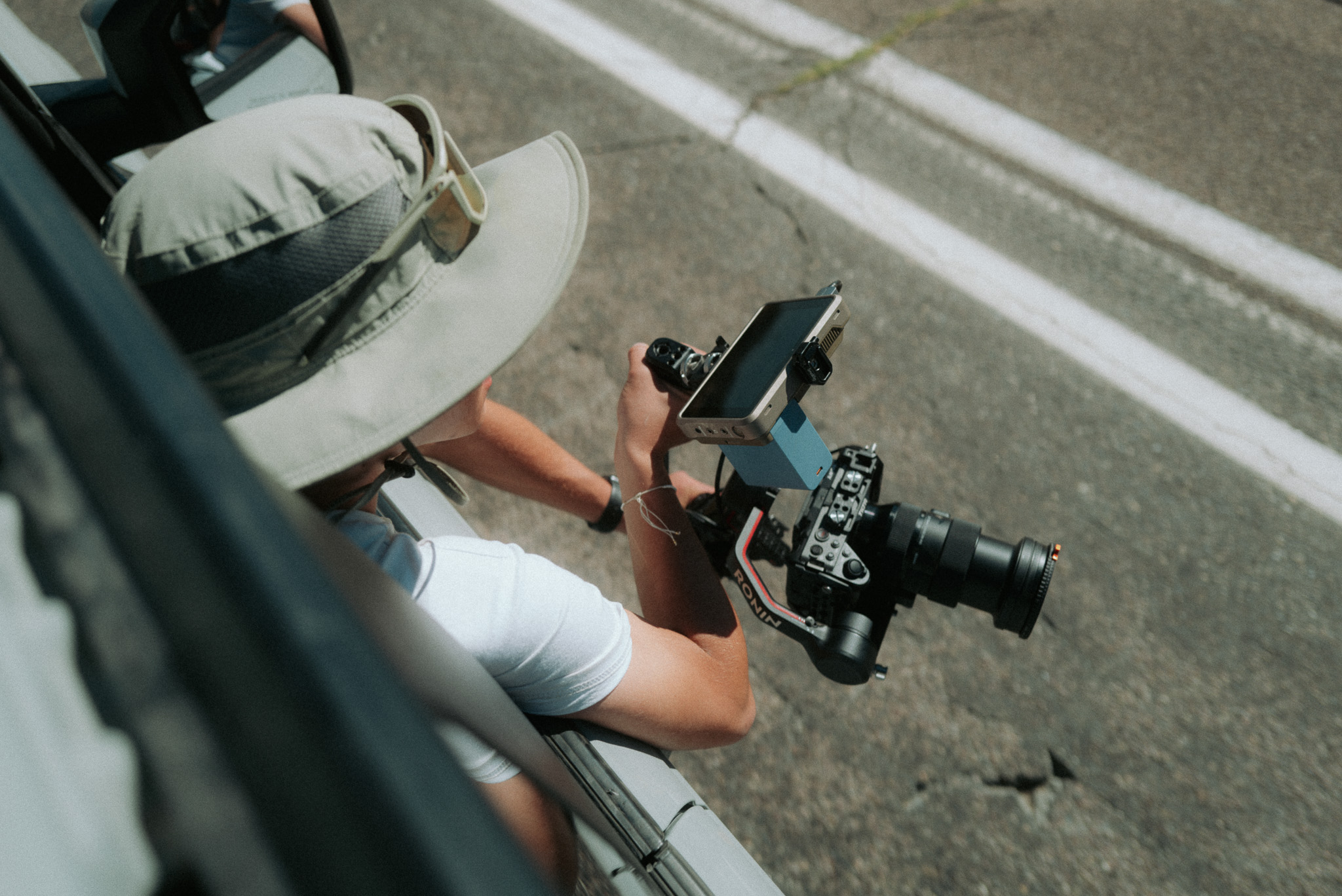
Click image to open gallery

Pictured as he was on the roadside during last year’s running of the event, I’m curious as to exactly what role Gus played?

“I guess you could say I was bringing my knowledge of bikes and cycling to whoever needed it.”

You were an available resource?

“Yeah, that’s about the size of it. Just helping out.”

And as for taking part if there’s a follow-up event?

“I would love to and that’s saying something in itself. Because when last year’s TSP CYC took place, I hadn’t properly ridden a bike for years and was the least physically healthy I’d been in a long time. But over the past six months I’ve really been riding a lot. At least in frequency if not in distance. And I guess I need to take part to truly understand what everyone is talking about.”

Including the afterparty, I prompt. Which going by the running editions, are known to be rather legendary?

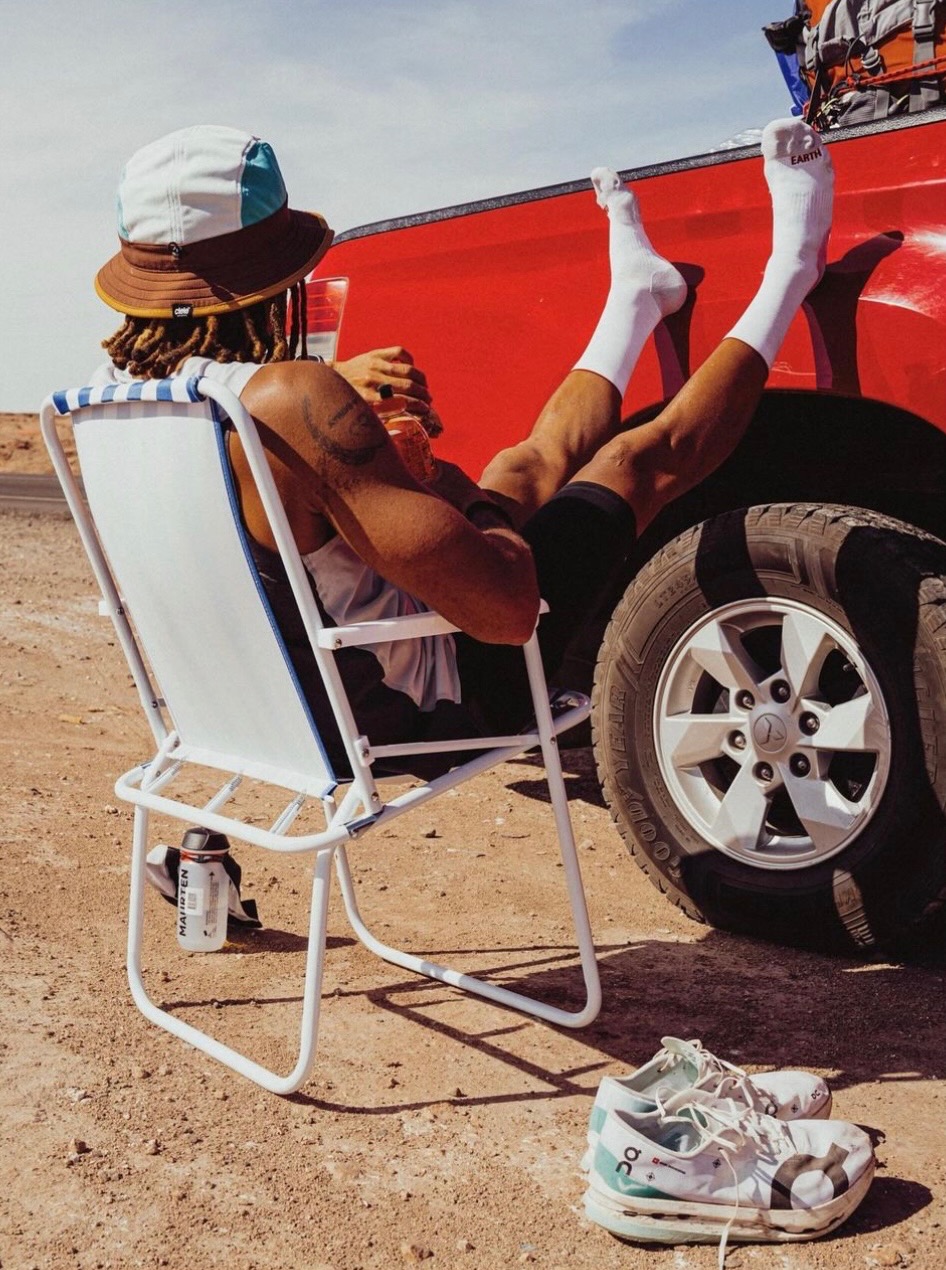
“For our event last year, the afterparty was probably best summed up as a lot of conversations, a lot of new friends, a lot of quick bonds formed by having barriers that were previously in place being removed due to the nature of the event. Everyone connecting over how crazy it was to ride your bike for hundreds of miles, non-stop, across pretty gruelling terrain and figuring out this weird journey on the fly.”

There’s an excited edge to Gus’ voice as he paints this picture of a disparate group of people all sharing their own, individual stories from the road. Stories that—going by TSPNo rules tagline—might reference some rule breaking?

“There were no rules so I guess not,” fires back Gus with a laugh.

But it’s all so achingly cool, I tease. And possibly there’s a perception that TSP is akin to a private member’s club where you post images and videos tagged with IYKYK?

“I do get that. Because it’s not like there’s a website where you click a link, pay a fee and you’re registered. But like I said before, maybe it’s as simple as just reaching out to someone who’s done it and asking how they ended up taking part. And at least that’s now a little bit easier because there has actually been one. So yes, there’s a step to participating but maybe that step isn’t as big a hurdle as people think it is.”

And hurdles can be a good thing, I counter. Because in life most things that take some effort, some investment, usually give back the most?

Click image to open gallery

“I’m not going to tell you that this is categorically the best way to put on an event. In my mind—or at least the way I see things at the moment—there is no better, only different. And that’s also what I love about TSP. Because it’s not for everybody and nor should it be.”

Gus pauses here for a second as he pulls together his train of thoughts before continuing.

“Before it came along, there wasn’t really anything like it. So maybe it does cater for a certain type of person but you could argue how they didn’t have anything before and it’s filling another little piece in the puzzle of human expression and it is what it is. In the same way that I’m not mad at whoever puts on Unbound; an event I have zero compulsion to race. I’m not, fuck those guys for putting on that fucking event. I don’t give a shit. As long as you’re not hurting anybody, do whatever you want.”

As to whether they’ll be another TSP CYC later this year, Gus is—in this particular instance—without an answer.

“We don’t have any dates yet. But I think it will happen.”

So watch this space?

“I don’t drive the ship or anything. I’m just a fan and possible future participant.”

With our time together drawing to a close, I can’t resist winding the clock back a few years to a conversation we had in Girona where we touched on Gus’ groundbreaking partnership with Rapha and, in particular, his lead role in the brand’s promotional short Riding is the answer. Which, in itself, begs the question whether that statement still holds true?

“You know, I’ve not thought about all that for so long. Because what’s changed is that I don’t need to race anymore, I don’t need to go on anyone else’s adventure. I don’t need to be posted on anyone’s fucking Instagram. I’ve become more private which means that now my riding is just for me. But, within that definition, I guess you could say it’s still the answer.”

There’s a hesitancy in Gus’ voice that suggests he’s not quite finished.

“Maybe it’s the question that is different. Because previously cycling was the hurly-burly, the shark bait that I used to attract the characters that interested me. So you could argue it stopped being the question in 2017 when I got done with Outskirts. And maybe it’s now become an altogether different thing.”

Angus Morton / thatisgus.com / Thereabouts / The Speed Project

Dan King / A reason to be there

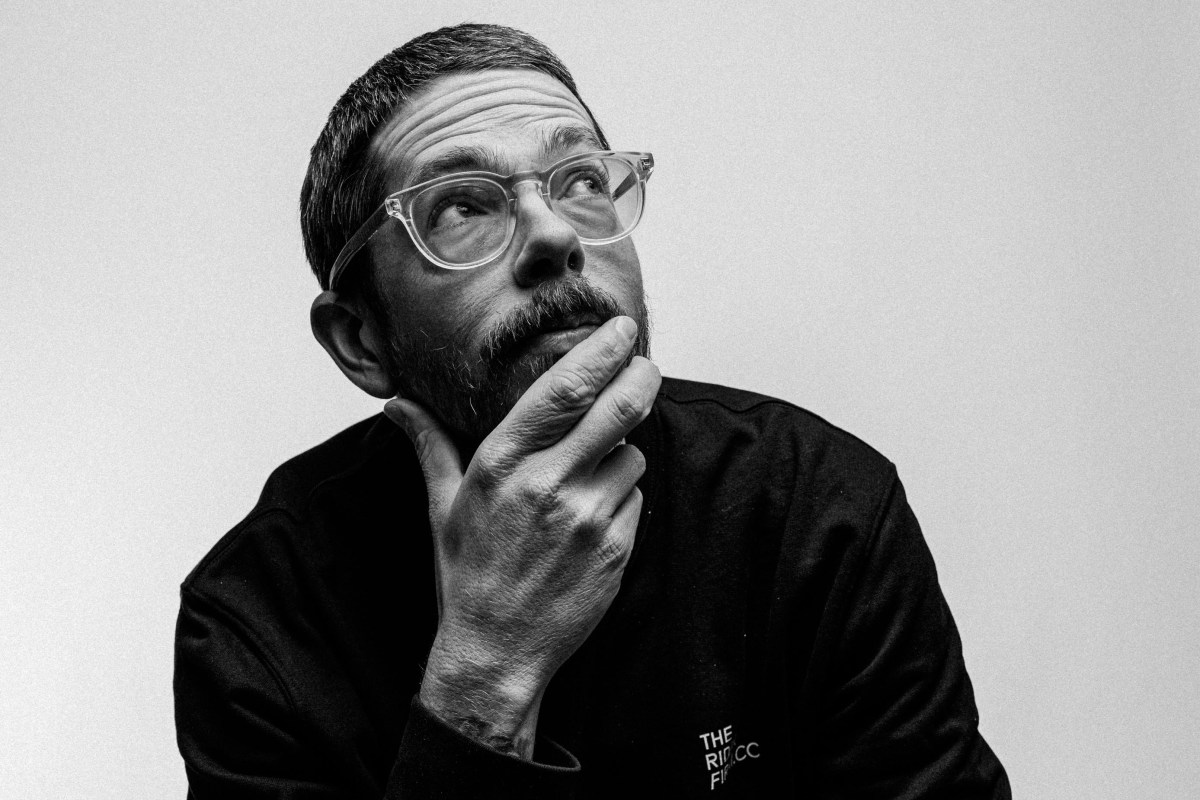
As the list of jobs lengthens—you’ll need the fingers of both hands to keep count—it takes a surprisingly long time before professional photographer and filmmaker Dan King mentions first picking up a camera. But pick one up he did—or borrowed, to be absolutely accurate—before heading to the south of France and the start of his creative journey.

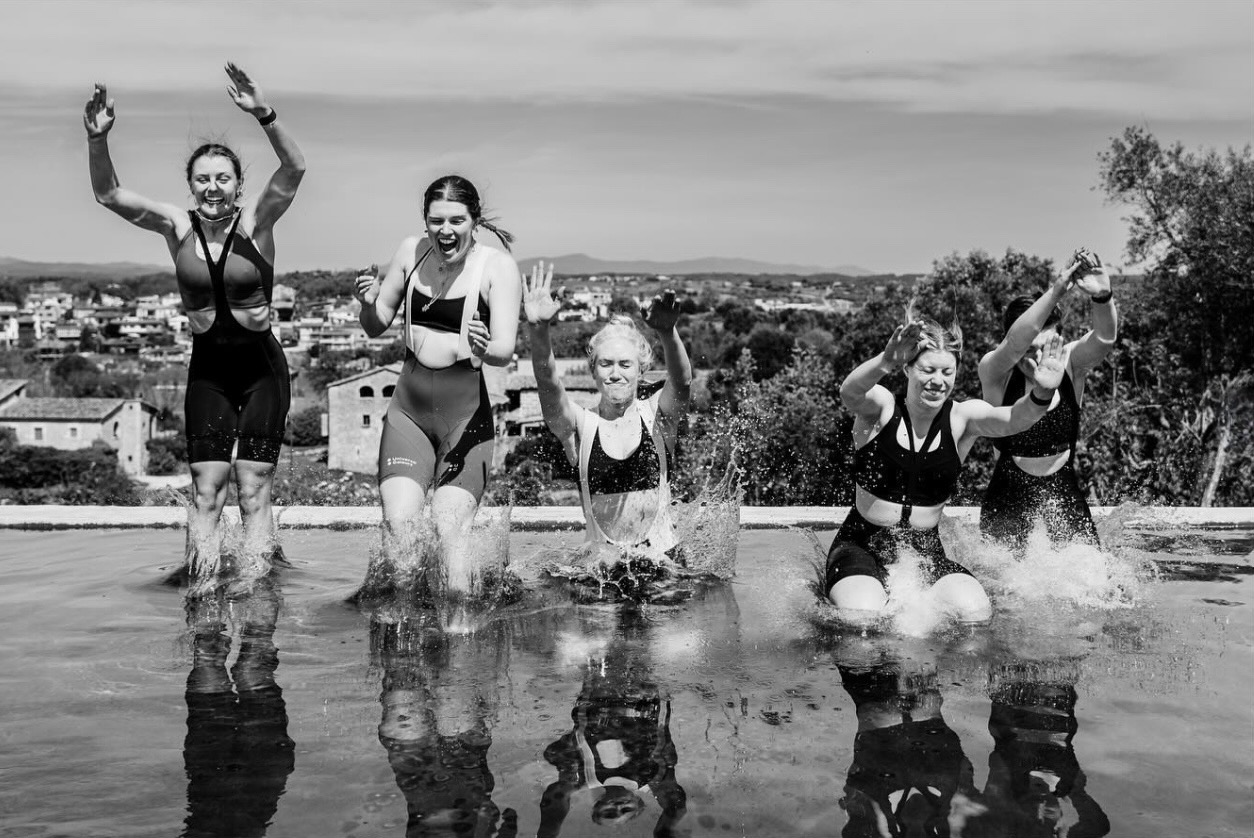
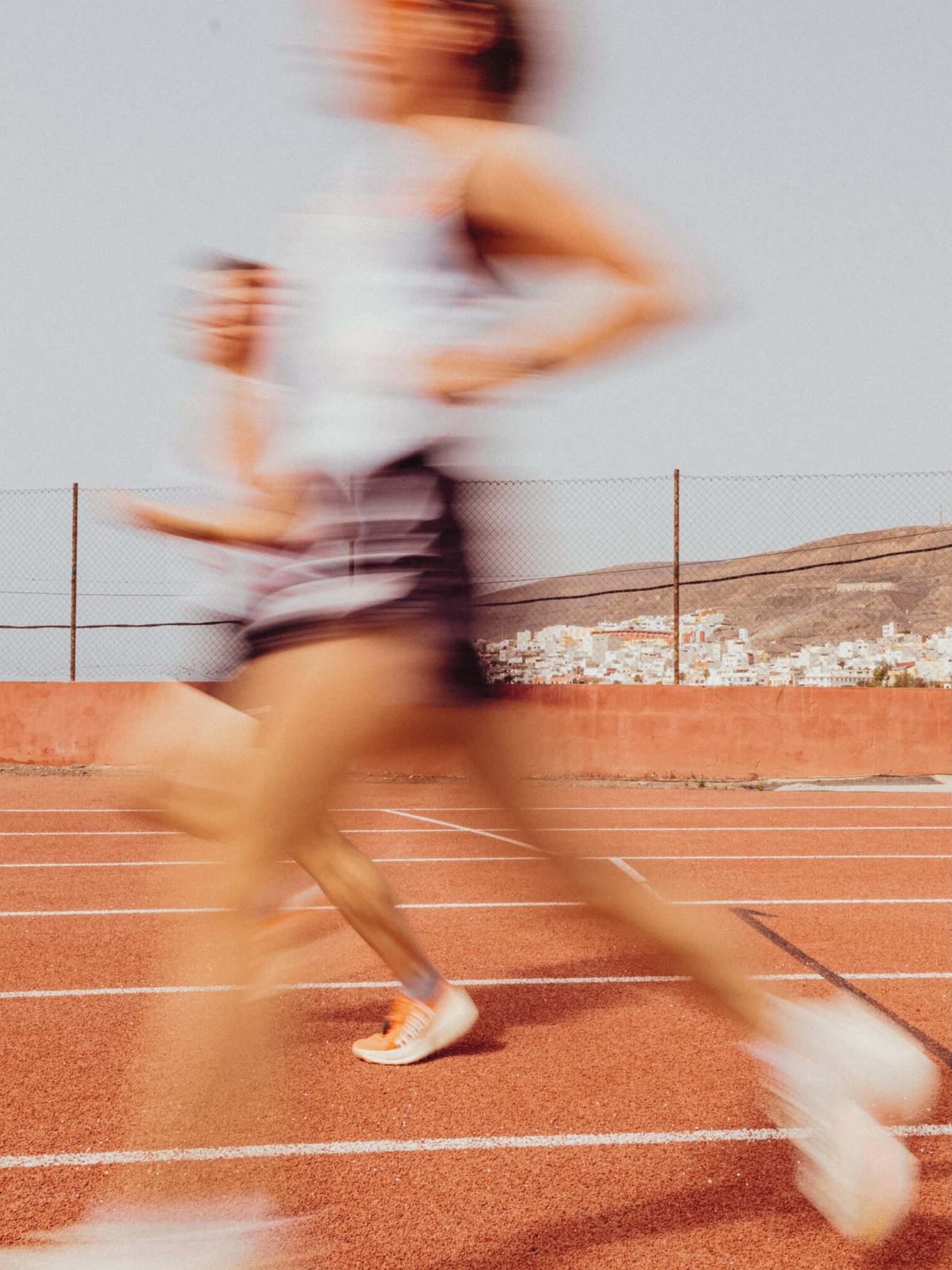
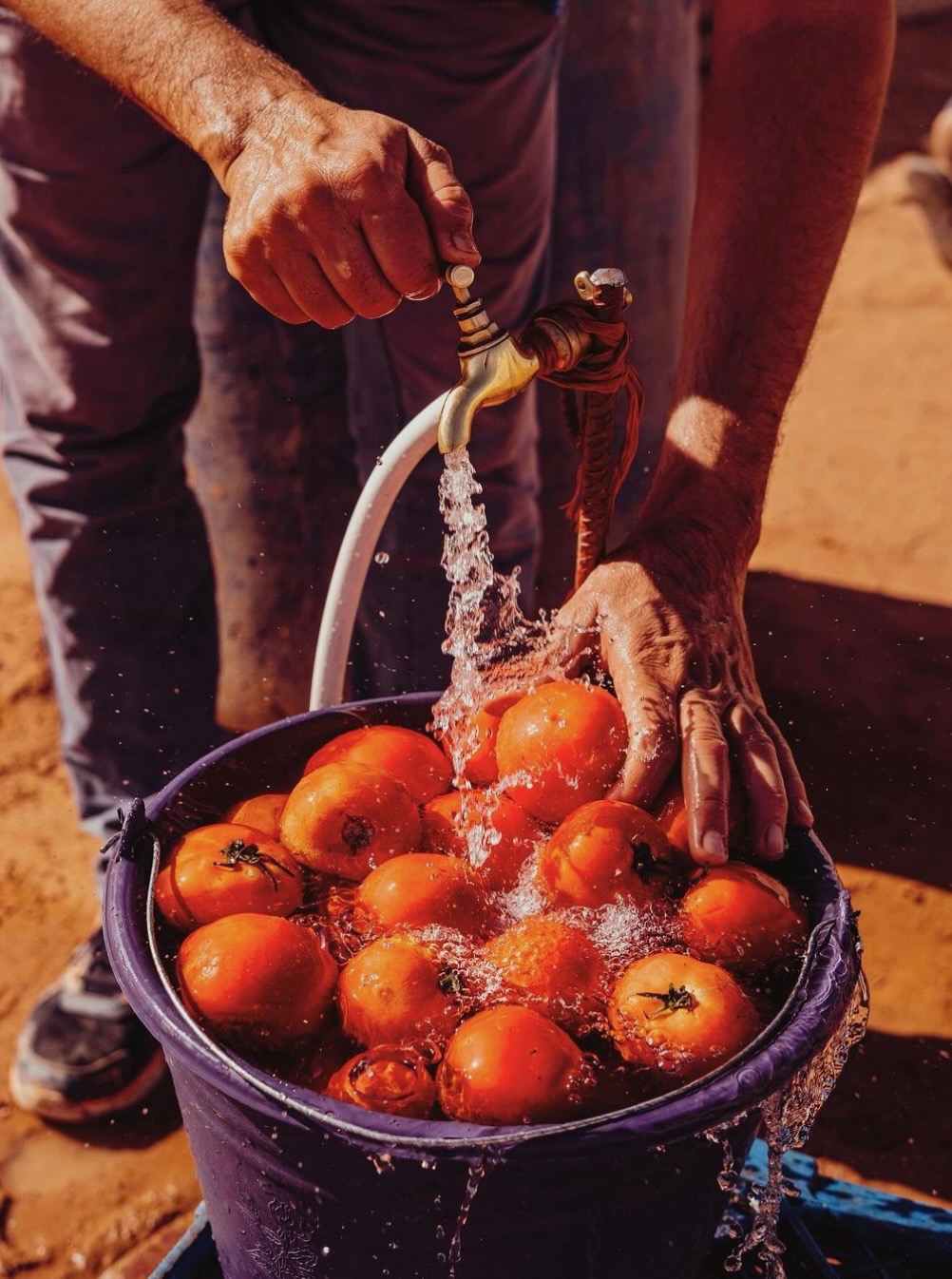
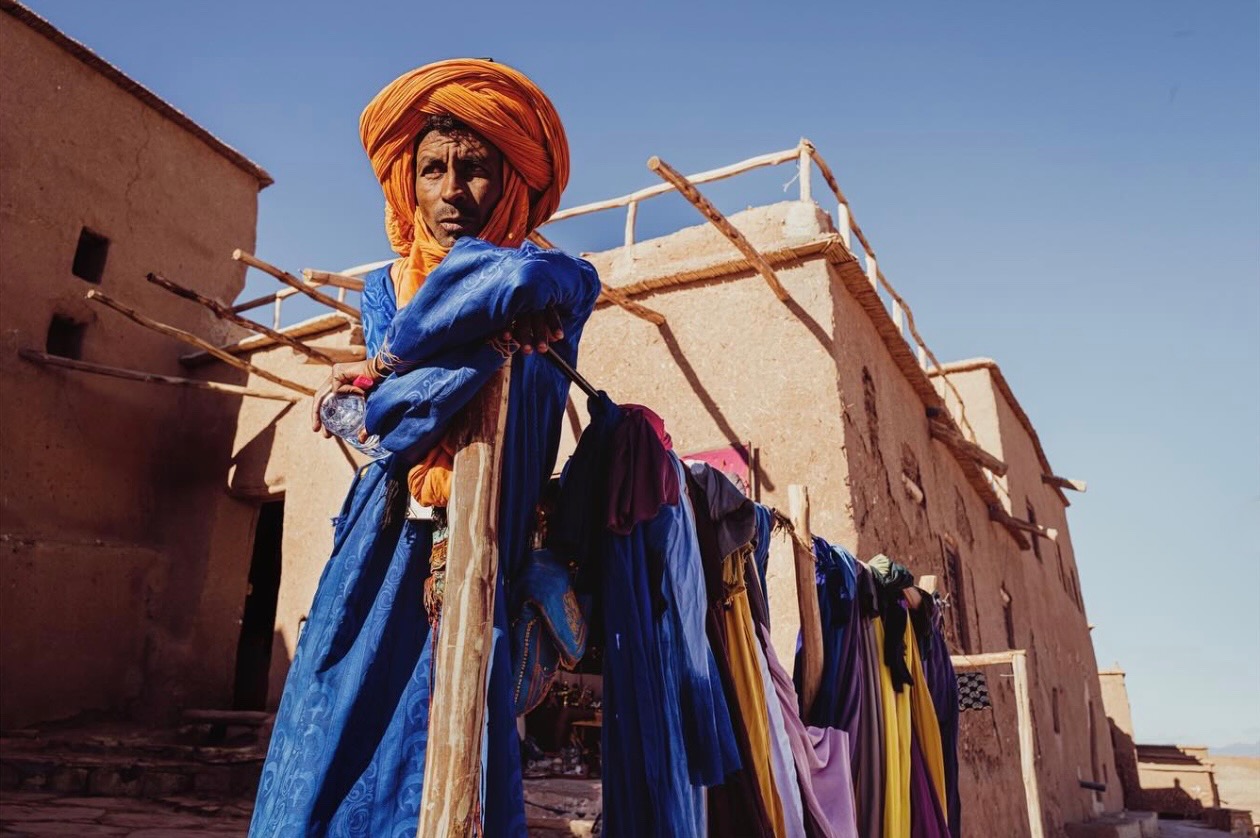
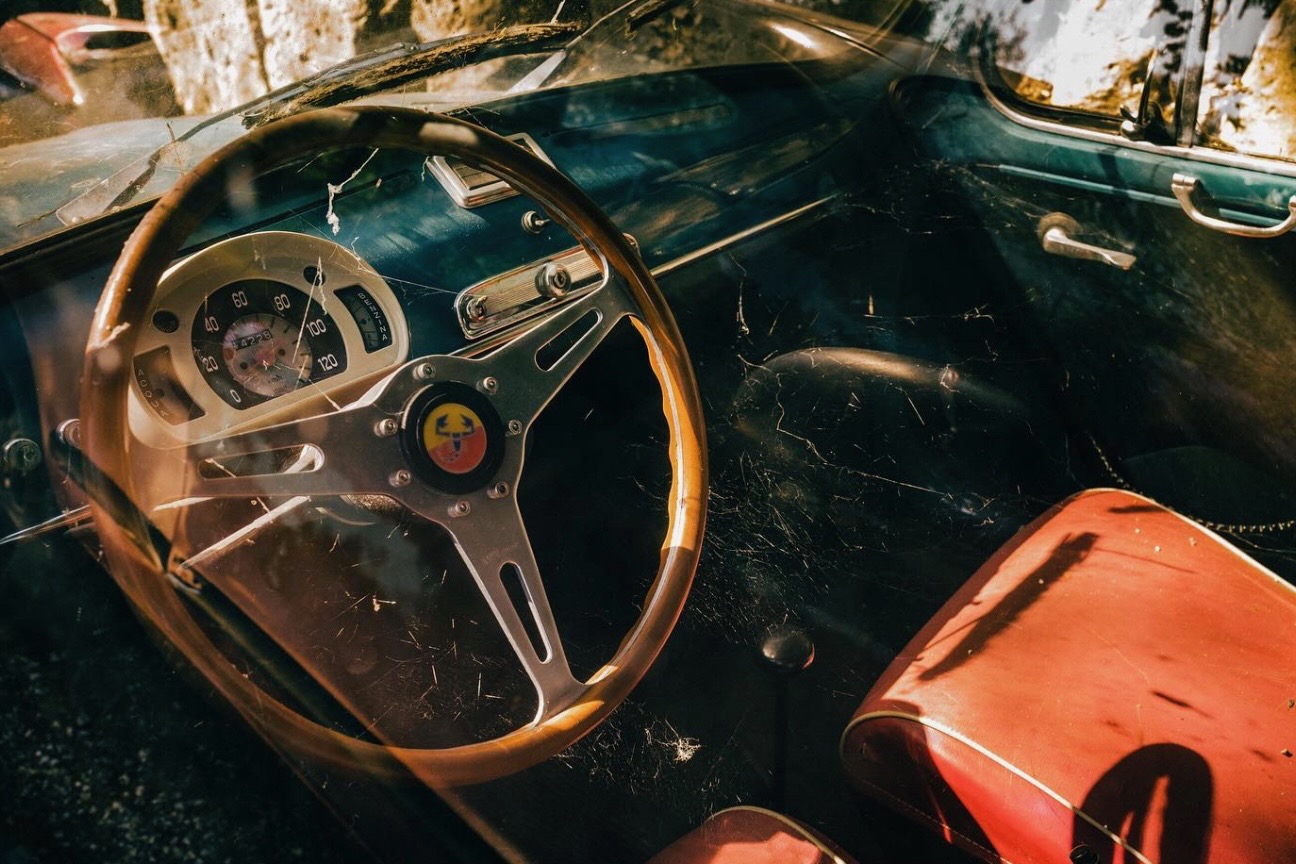
Self-taught and with an innate passion for the outdoors, Dan’s body of work beautifully captures the blur of mid-race bodies and finish line faces etched with emotion. An approach to his craft that he offers up as a no-nonsense narrative: from a fascinating deep-dive into his recent film Caboose, to why it’s much more than just taking a good photo.


cyclespeak
You’re down in Brighton?

Dan
In a tiny village just outside.

cyclespeak
You grew up in this area?

Dan
I was born in Southwick which is a town just along the coast from Brighton. And my wife is from Burgess Hill which is why we ended up living here. But we’re actually thinking about selling up and moving up to the Peaks. What we can get for the little cottage we’re in now should get us something a bit bigger by moving further north.

cyclespeak
It’s rather grey up here.

Dan
That’s fine by me. I love the north. I would move to Scotland if I could make the transport connections work. So the Peaks is the ideal scenario and we’ve landed on Holmfirth as one potential place to start looking. Close to a couple of airports and good motorway links.

cyclespeak
And plenty of green fields and open spaces?

Dan
I couldn’t live in a city. It would drive me crazy. When I go to see Tom* in Manchester, I can’t do the crowds or the tram thing. All of that is just bollocks.

*Tom Reynolds. Friend and co-creator of Caboose

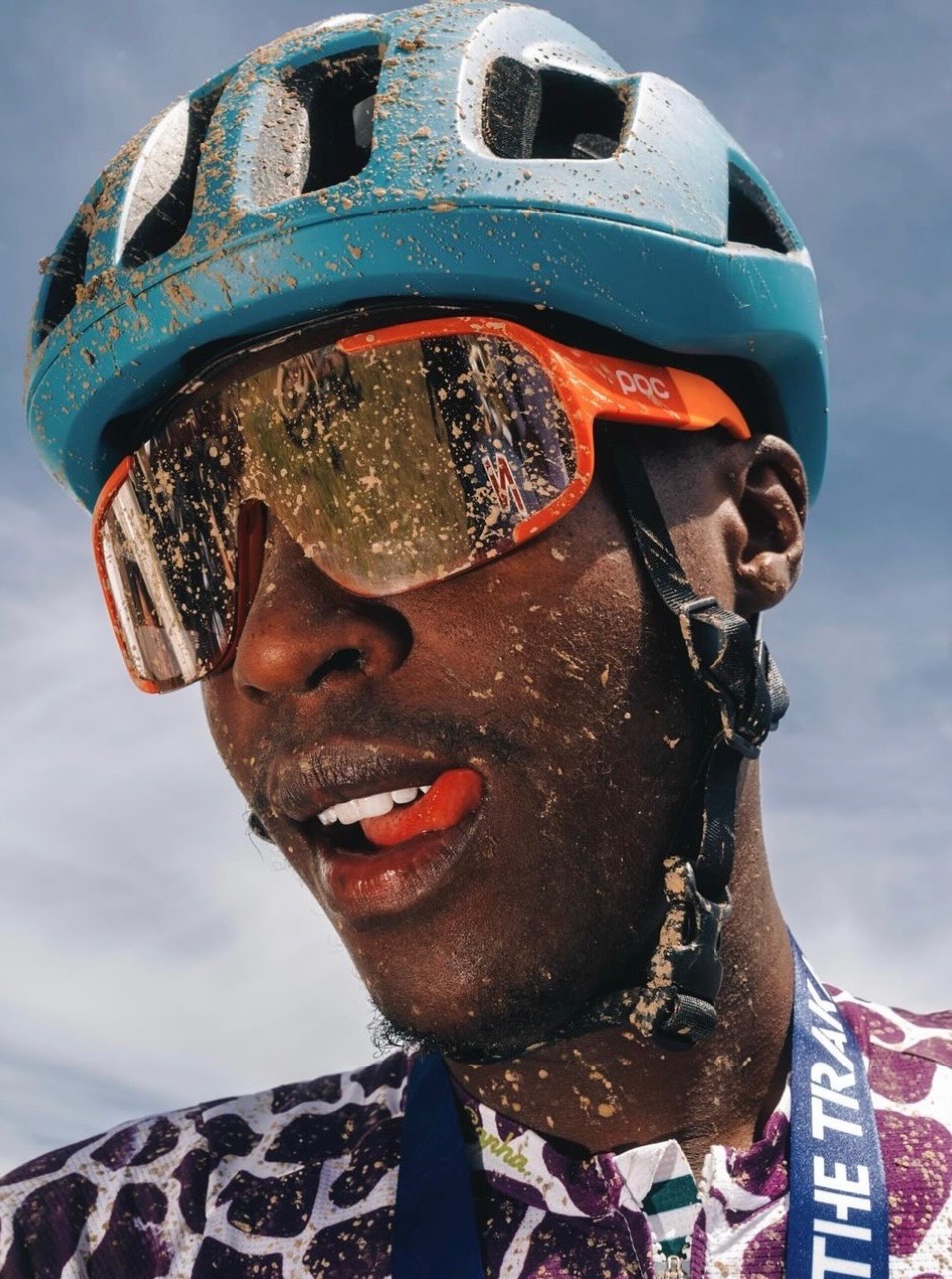
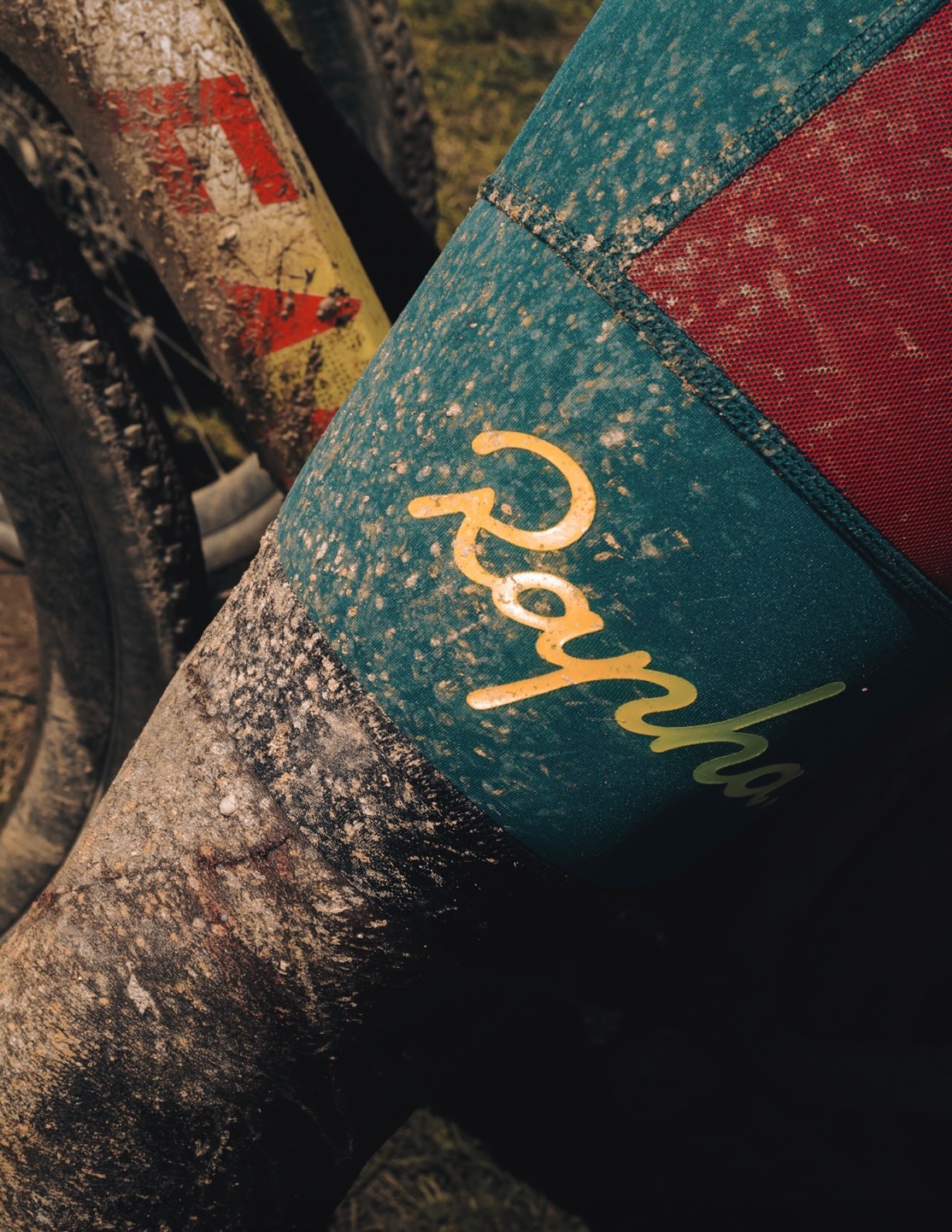
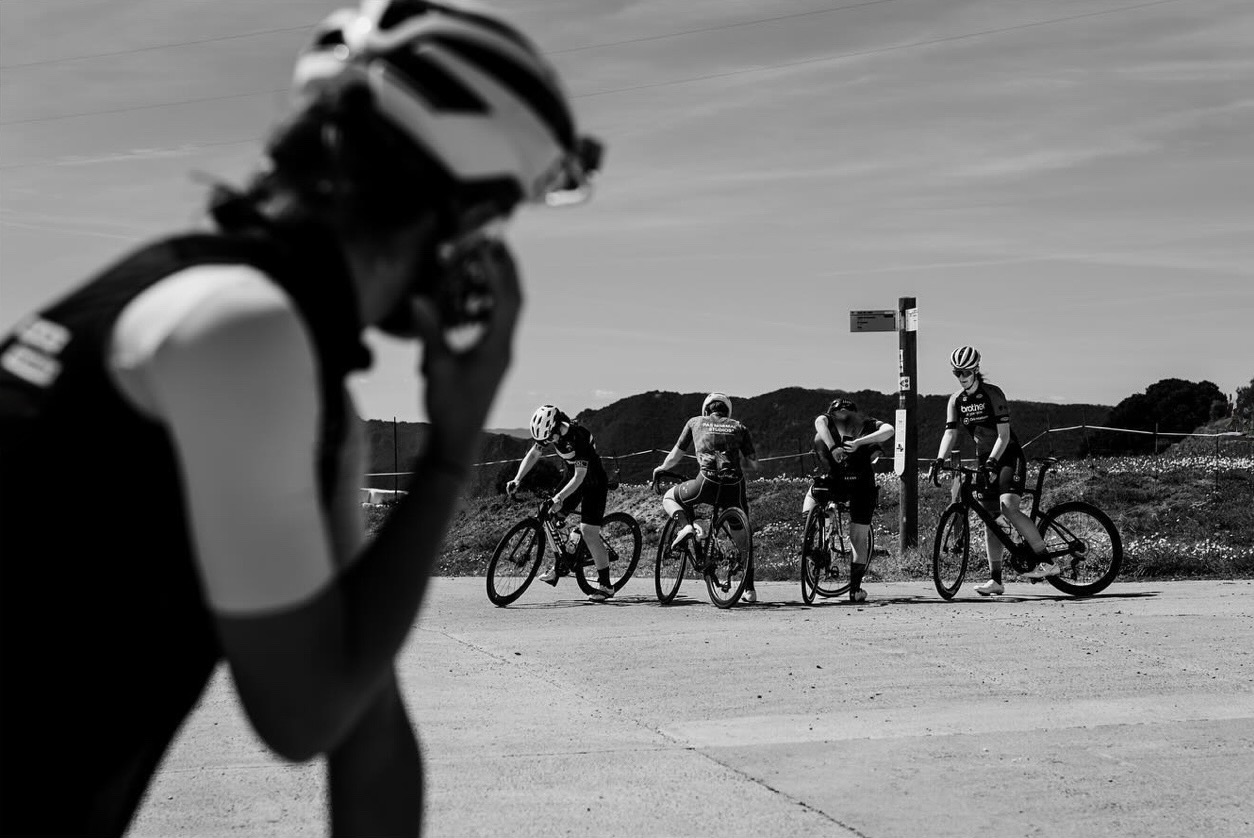
Team Amani / The TRAKA


Click image to enlarge

cyclespeak
Can we rewind back to your childhood? Whether it was a creative, artistic upbringing?

Dan
My Dad worked in IT so all we did was computers.

cyclespeak
Gaming or programming?

Dan
By the time I was in my mid-teens, I could build websites, even build my own computer. So I would copy CDs and games and sell them at school. But I never got on with Sixth Form—I just didn’t enjoy it—so I left and got a job at Marks & Spencer. And then a mate started an evening course in computing so I decided to do that. A job in IT security followed until another mate—who worked as a builder—mentioned that his uncle was looking for a woodworking apprentice. It took four years for me to get qualified but then I went out to Australia because another mate was working as a roofer. I’d only been there for three days before I started working as a roofer too. It was good money and you were working outside but then I hurt my back. My visa was about to expire so I just came home.

cyclespeak
And another job to add to our growing list?

Dan
I went to work with the mate who’d got me into carpentry—fitting kitchens—but my back was still playing up and because I was still doing the websites, I decided to apply for this job at a print agency that wanted to get into web design. That lasted for three years until I was headhunted to work with a startup that was doing something similar to Mailchimp. It was pretty obvious from the very beginning that they were never going to compete, so I decided to set up my own web agency. It was around this time that I was really getting into my cycling and keen to do web stuff for outdoorsy brands. So every morning I would walk down to the local chippy where I would peel mountains of potatoes. This gave me the ready money to travel into Brighton where I would meet people and pitch them my web work.

cyclespeak
But still no photography?

Dan
We’re nearly there [laughs]. Because I’d seen a post that mentioned the Further bike packing route in the Pyrenees. So I borrowed a camera and got myself down to the south of France with a view to taking some pictures for social media. I arrived late on a Friday night and the first person I met was Mike, co-owner of Zero Neuf*. Hunt bike wheels also happened to be there and asked if they could use some of my pictures for their newsletter. A little while later, Hunt got back in touch to ask if I’d like to shoot the road team they were sponsoring and it all started from there with a kind of three-year-plan.

*The farmhouse and retreat run by Mike Tucker and his wife Joss

cyclespeak
Which was?

Dan
Year One, I would go to events, take pictures and hope to meet people who would want to use the images or might need some web work. Year Two, I was only going to go if I had my expenses paid. And then Year Three, I needed to get paid for my time.

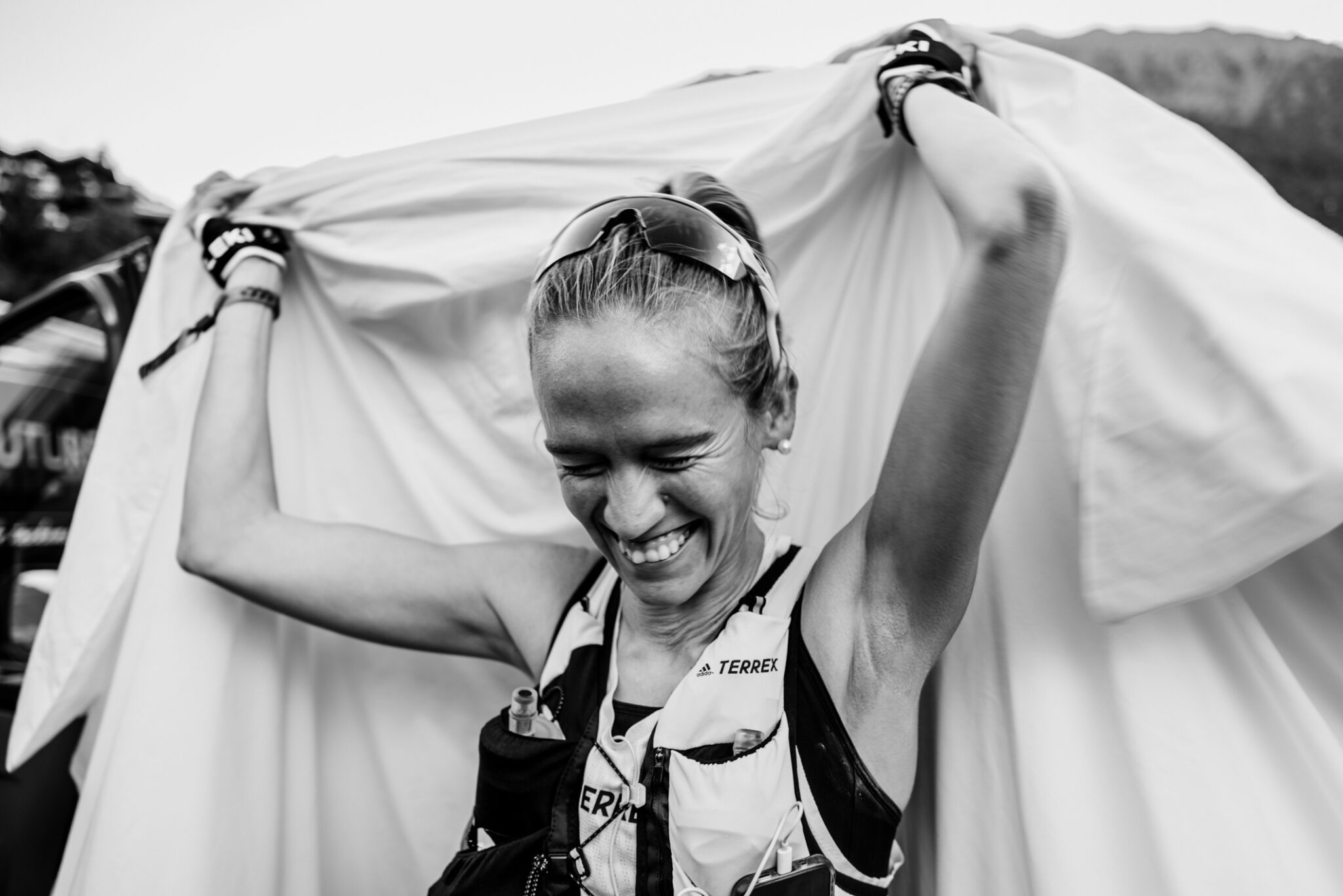
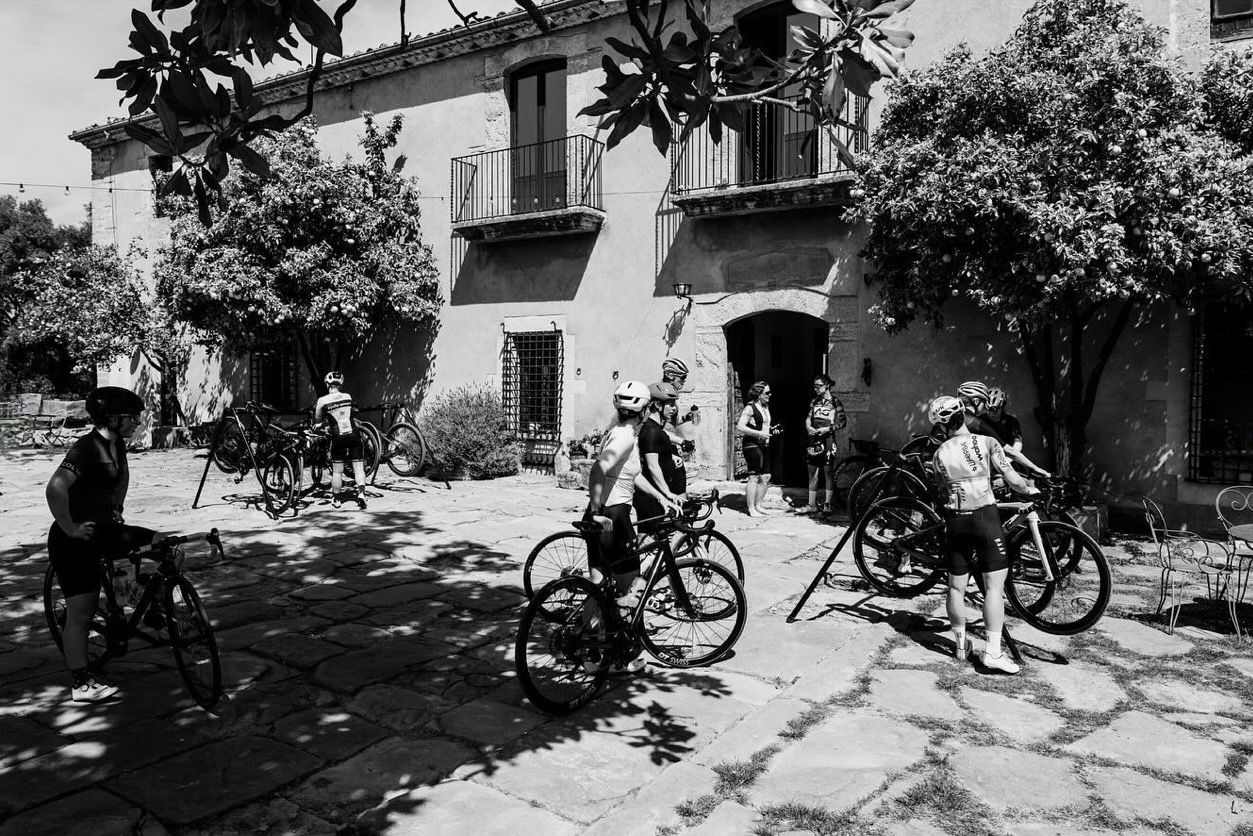
UTMB / Chamonix


Click image to enlarge

cyclespeak
So until you rocked up at Zero Neuf, the camera had never really figured?

Dan
My Grandad was into photography—in the way that he thought he was—and had all the gear but no idea. But me? I was never that into it.

cyclespeak
Because there’s the assumption—as it’s your profession—that at some point the camera switched from simply recording events such as holidays or birthdays to expressing an emotion or telling a story?

Dan
The biggest problem with photography, as I see it, is that very few people will share information about how and what they’re doing. But I was lucky because, early on, when I messaged the photographer Sean Hardy he was happy to chat about what it takes to build a career.

cyclespeak
It must take time to work out the way you shoot?

Dan
A brand employs you for the experience and knowledge you bring to their campaign. And yes, it takes time to fathom that out. But I had the safety blanket of my web design so I was in a very fortunate position of being able to pick the jobs that I really wanted to do. Because I’ve always preferred to do something that feels real and authentic.

cyclespeak
How does that play out in a practical sense?

Dan
It can go one of two ways. You either 100% stage whatever you’re shooting. Or it’s actually happening in real time and you’re there to capture it. When it’s in the middle, in my opinion it just doesn’t work. The models are uncomfortable because everything feels unnatural.

cyclespeak
Can we take these thoughts and ideas and apply them to your film Caboose that was shot around The Speed Project Atacama? The desert landscape was breathtaking but logistically I’m guessing it had its moments?

Dan
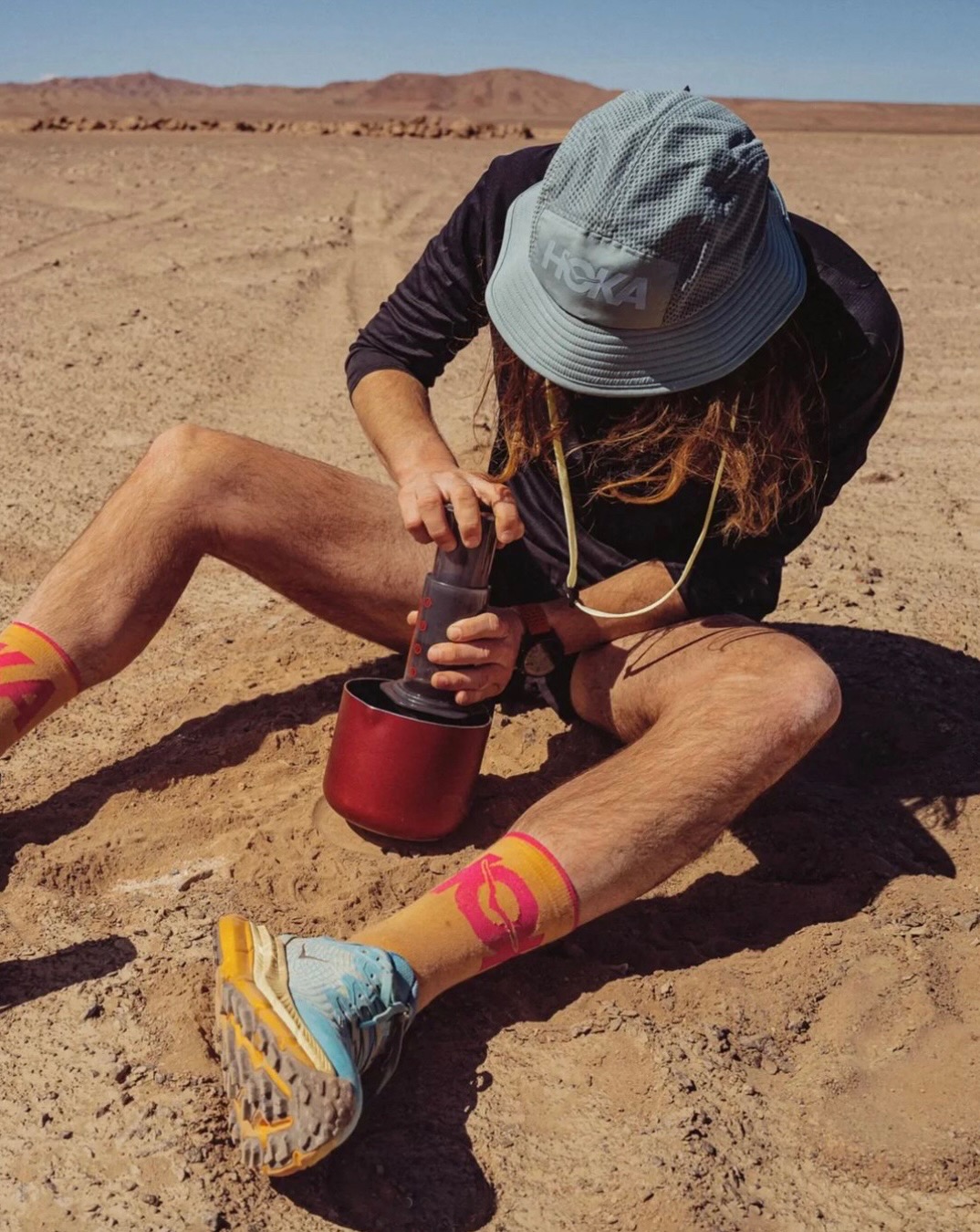
Atacama was in November and I’d first met Tom in June at the Gather Festival hosted at Zero Neuf. He mentioned that he was going to Chile for The Speed Project and I was like, fuck me mate, I want to go too, let’s talk.

cyclespeak
And Tom hooked you up?

Dan
After Gather, there were messages going back and forth until it was all arranged. But rather than just photographing the race, I said to Tom that we should reach out to some brands for sponsorship and make a film.

cyclespeak
How did you structure the pitch?

Dan
The approach I take is: this is what I’m going to do, are you in? That way the brands know what they’re signing up to and I retain creative control.

cyclespeak
So the project is on your terms?

Dan
Exactly. And if we’re sponsored by a number of brands, there isn’t one dominant voice shouting above the rest. So we reached out and it was, yeah, yeah, that’s all cool, and I booked my flight.

The Speed Project / Atacama


Click image to enlarge

cyclespeak
Did you and Tom work on a possible story line?

Dan
Leading up to the trip, I shot some video of Tom but you don’t really know how everything will pan out. It’s a real event so you can’t really count on anything. All you can control is having the available resources to capture whatever happens. But as we now had a budget, we decided to get our own crew to free me up from having to drive and look after the runners. So I reached out to a friend in South America and she recommended this person called Tilly who runs a horse and husky ranch.

cyclespeak
So you land in Chile…

Dan
And Tilly was there to meet us at the airport. And straight away she’s on it. Telling the hire car company—who were trying to pull a fast one—to fuck off. Perfect!

cyclespeak
What approach did you take to equipment?

Dan
My kit was pretty minimal because we were on the road but I knew I had enough storage and batteries to film everything. And then we would see what we had when we got back home.

cyclespeak
I’m guessing some decisions were made on the fly?

Dan
After we landed, we had a day’s drive to the start in Iquique. And on that drive I’d already decided to film some B roll with Tom wearing the same kit he’d be using in the race. So I had these shots in my head and we’d stop, hop out, do some filming before carrying on.

cyclespeak
It helped knowing you had these shots as back-up?

Dan
I knew that once the race got underway, I’d have no control over what time of day I could film. But funnily enough, the vast majority of that stuff was never used. The only shot I’m 100% certain we used was the opening scene at the bus stop. And Tom is getting up off the bench because a couple close-by were having a massive argument.

cyclespeak
So when the race finally started, you mentioned how you were filming everything?

Dan
Yes, but very quickly it was, fuck, this is so repetitive. Apart from the changing landscape, every leg and changeover looked the same. But I still had to be ready in case something did happen and—because it was repetitive—I had the luxury of maybe capturing something in a different way from how it had happened before. And Tom was the thread, so I knew that if I filmed everything he did, it would work out in the edit.

cyclespeak
So when do you start to pull the story together? As it’s happening or when you’re home and watching the footage?

Dan
I find it’s best to just park it for a month before starting the edit. Otherwise you’re just too close to the story. So after a few weeks I went up to stay with Tom in Manchester and we watched it all over again, in time order, and took three hours of footage down to about an hour. All the scenes we wanted to keep, we then story-boarded along this gradient of emotional intensity to keep the viewer engaged. And then in February, we went back out to Zero Neuf and did a little run camp. We ran before breakfast, sat down to edit and then ran again after lunch.

SYNRGY Training Camp


Click image to enlarge

cyclespeak
Now that you’ve been touring the finished film—and you’ve talked in some detail about the creative process—I was wondering where you seek inspiration?

Dan
I’m a sucker for print and there’s usually a pile of magazines close to hand. And on Instagram you do see interesting things. But, to be honest, I take photographs the way I want to take them.

cyclespeak
And that also applies when you’re working for a client?

Dan
Yeah, pretty much. I might get a brief but more often than not it’s comprised of imagery that I’ve shot previously.

cyclespeak
So they want you basically?

Dan
Generally that’s the way it works. And if the project doesn’t appeal, then it’s perhaps best to say no. Because even if it’s the best pay in the world, you’ll fuck it up or just not enjoy it.

cyclespeak
What’s your take on social media and living a life online?

Dan
You take Instagram for example. We’d be screwed in some respect if that platform suddenly ceased to exist. Because for many creatives, it’s super important. Most people have a website but what’s the first thing someone does when you mention a photographer or filmmaker?

cyclespeak
They check out their Instagram feed.

Dan
Exactly. And I wouldn’t be where I am today without Instagram. A lot of my connections have come from there. But it’s more than just taking a good photo.

cyclespeak
In what way?

Dan
You need to work well in a team. Like last year, I did loads of trail running photography. That came about because a brand sent me to shoot a race and that required me to work with other production teams. And we were on this mountain, in the middle of nowhere, and the videographer was up the trail. He’d left his tripod next to me, so I just picked it up and carried it with me. And he was over-the-moon which I found rather a surprising reaction because it didn’t seem like a particularly big deal. Isn’t it a given that you’d help look after someone’s gear?

cyclespeak
Obviously not [smiles].

Dan
Yeah, so working well in a team, not bringing the mood down, it’s all super important.

cyclespeak
From the outside looking in, people might assume that it’s an enviable career but I’m guessing there are challenges earning a living as a professional photographer?

Dan
Maybe I’m contradicting what I said earlier but if you’re freelance, it’s hard to say no. Because you don’t have contracts. Maybe a rough idea of the days you’ll be working but you never really know what it will look like next year. Whatever I earn now, I see as the most I’ll ever earn and that’s what I budget on.

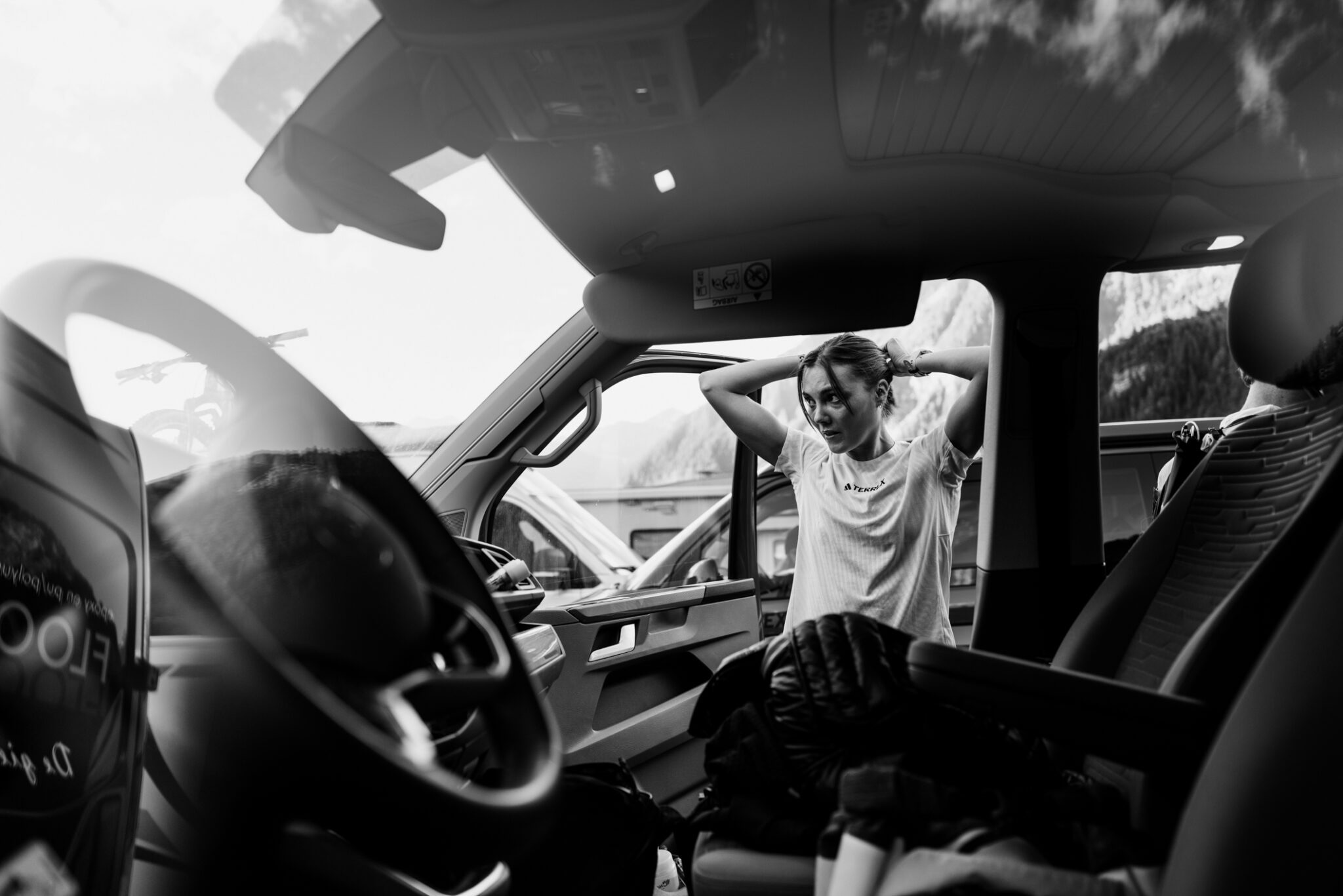
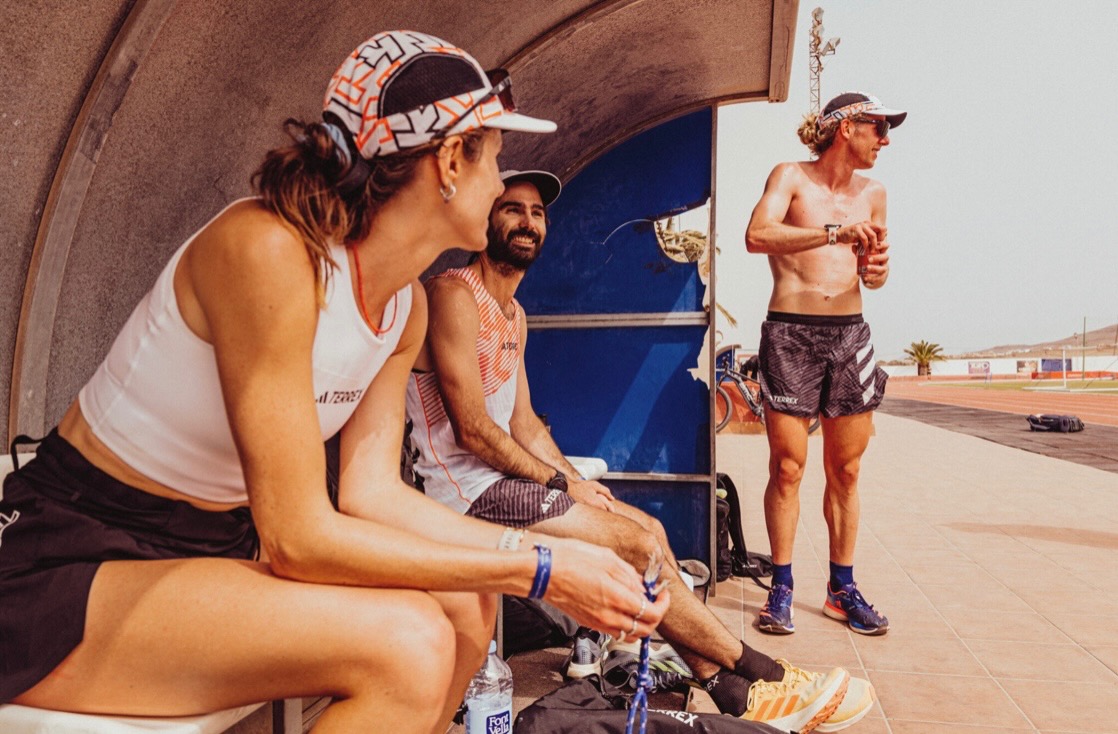
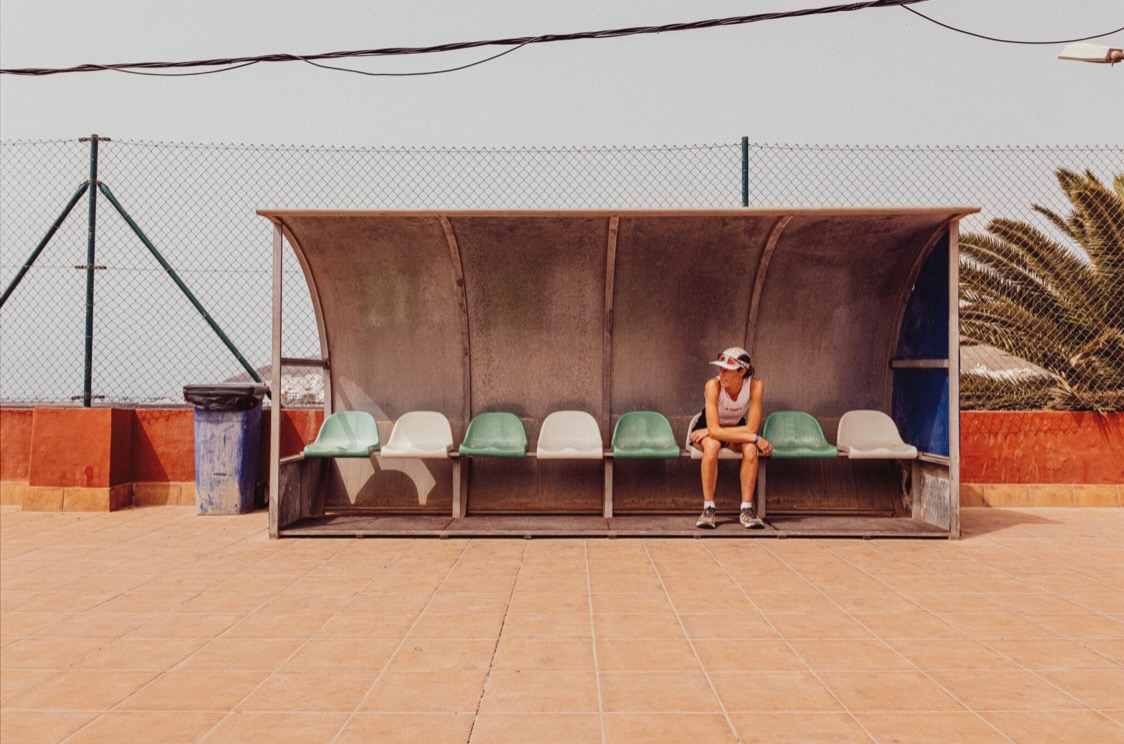
Adidas Terrex Camp


Click image to enlarge

cyclespeak
So unless the job is really not your cup of tea, you say yes?

Dan
That’s about it. Unless you’re just starting out and you say yes to everything [laughs]. And that causes you to buy more gear so, basically, you need an overdraft and credit cards to be a freelance photographer.

cyclespeak
Travel is a necessity for your profession. So what does home mean to you?

Dan
There are many places where I feel at home. I feel at home when I’m at Zero Neuf. That’s where I feel my most relaxed. But in another sense, my family here is my home. And however I choose to define it, I have to be busy. Which is why I like to travel because my time is occupied.

cyclespeak
I’m not going to ask you to name your favourite images but do you find it easy to feel a sense of satisfaction in your work? Or is there always the next project?

Dan
I think I do. But maybe that satisfaction comes as much from the process as the final result. Knowing how you captured a particular photograph, the memories of that moment and the people involved.

cyclespeak
I’ve spoken to a number of creatives, from a wide range of disciplines, who are hyper critical about their work.

Dan
You do look back and notice how your style has evolved over time. Or you’ll see someone else’s photograph from the same race and ask yourself why you didn’t do it that way. But I don’t worry too much about it and it’s like me and Sean [Hardy] always say: job done, move on.

cyclespeak
I like that.

Dan
Over the week of UTMB* I’ll take thousands of photographs and 99.9% of them will never see the light of day. The sun might be in the wrong place or it looks shit. But that’s the job.

*Ultra Trail du Mont-Blanc

cyclespeak
You call it a job but, in an emotional sense, can you describe how it feels to raise your camera to the eye?

Dan
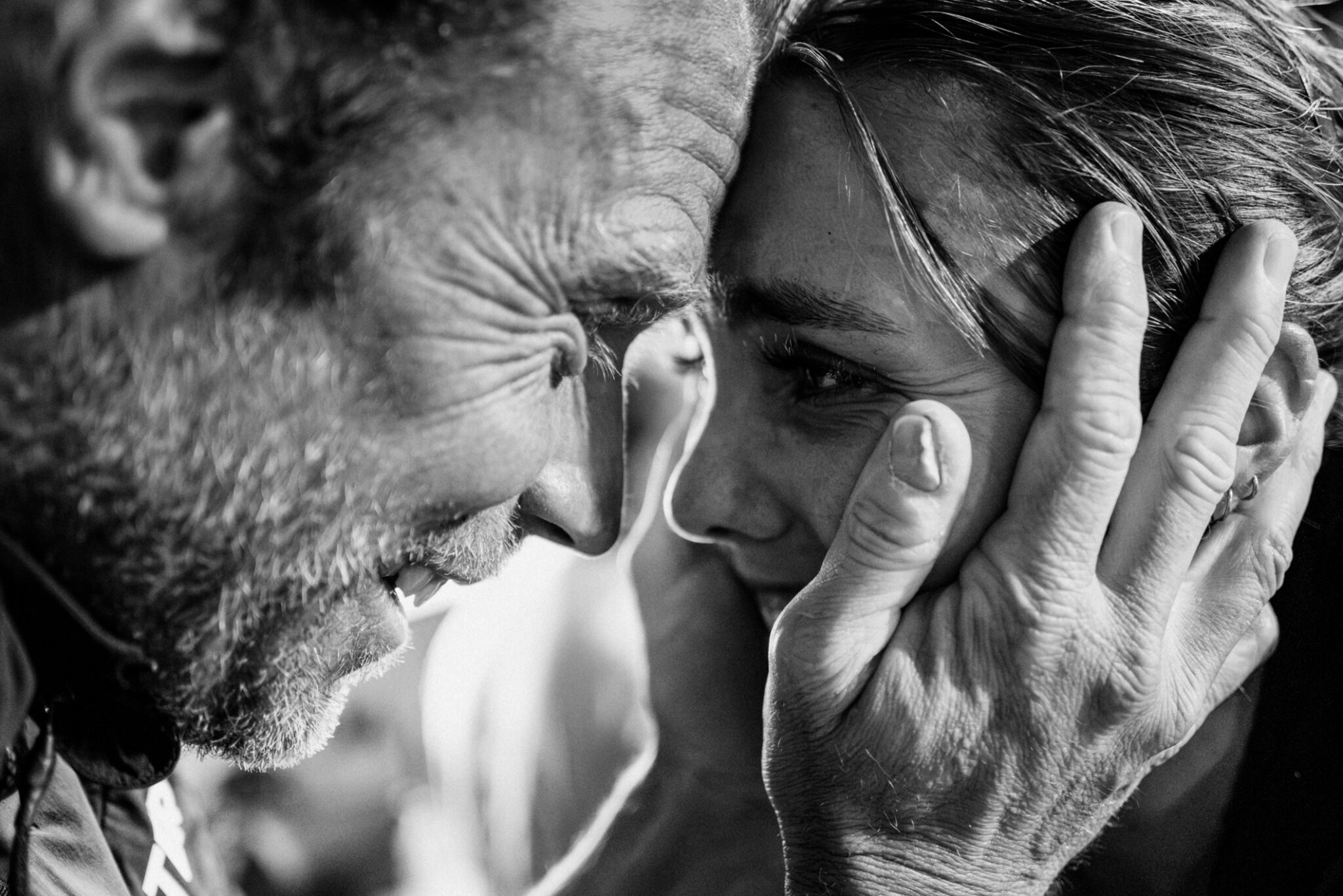
I always hold my camera. So it’s there, ready. And the process of taking a photo is almost instinctual. In terms of emotions, when you’re on the finish line of a bike race, it’s almost like a war. A real fight to hold your place in the scrum of photographers. But with running events, it’s a very different vibe. You have your allocated place, everyone is very respectful. Of course it took me a while to figure this out and I was standing in front of the TV cameras snapping away until I felt a gentle tap on my shoulder.

cyclespeak
Would you say there’s a transference of emotion from the subject, through the camera, to you?

Dan
It’s probably more accurate to say that holding the camera to my eye is masking my own emotions. I still have the same feelings but the camera allows me to hide.

cyclespeak
Why do you feel the need to hide these emotions?

Dan
My mate was getting married and asked if I would take some photos. And I don’t do weddings. But I still took my camera because it meant I wasn’t on show. Because some people like being the centre of attention but I like having a job to do.


Click image to enlarge

cyclespeak
And you’re more comfortable behind the camera?

Dan
When I was in Paris for the Olympics there was this Japanese couple taking photos on their phones. And I didn’t think twice about getting right up into their faces and taking a picture. But I would never do that in the UK.

cyclespeak
Why not?

Dan
Because, in Paris, there was no way we could communicate. In the UK, you wouldn’t get away with doing that.

cyclespeak
An argument would ensue?

Dan
Street photography is a lot easier when you can hide behind your lack of cultural understanding.

cyclespeak
So are you taking on a character when you pick up your camera? Disguising the real you?

Dan
It’s like going to work. And because I earn a living as a documentary photographer, my job is to document. So with that defined purpose comes a heightened sense of confidence. I know what I’m doing. Like I’m carrying a get-out-jail-free card.

cyclespeak
It’s fascinating how different people perceive the interactions we have in life. But then you bracket this with your ability to capture these moments.

Dan
With a camera in your hand, you’ve always got a reason to be there.

Photography with kind permission of Dan King / Feature image by Maurten

danking.cc