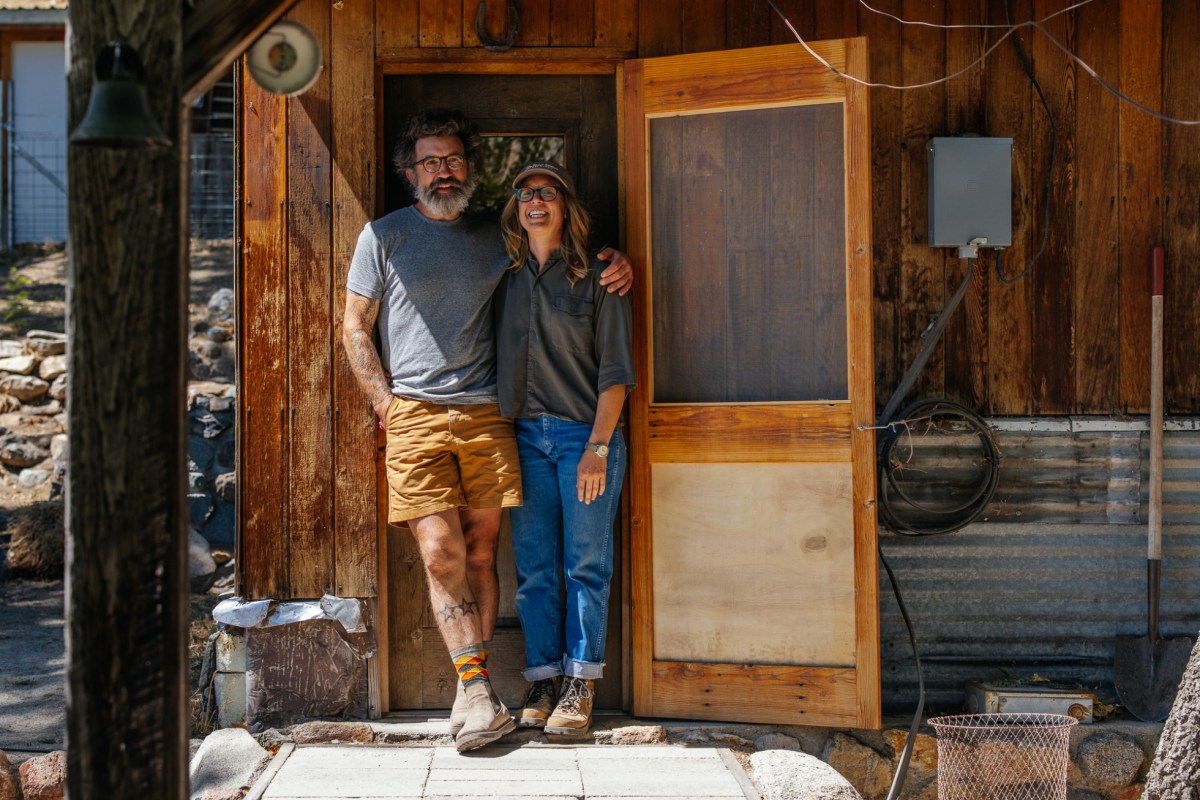
I’m sitting on a call with Casey Clark and Sarah Lillegard from their home in Lassen County, California. After some initial technical difficulties, somewhat fittingly these partners in both life and work are sharing a single pair of wired ear buds. With individual small businesses balanced by their brand Camp And Go Slow—playfully self-described as a menagerie of bar tapes, bags, apparel and accessories—our conversation explores how they first found each other as a couple, both the risk and reward of being their own bosses, and how they wouldn’t have it any other way.
cyclespeak
As it’s your morning and my early evening, I was wondering whether there’s a routine your day usually follows?
Casey
We start out about the same but then things can get a little random.
cyclespeak
So you sit down together over breakfast?
Casey
We do. Because we both work from home, we’re pretty much here together each and every day.
Sarah
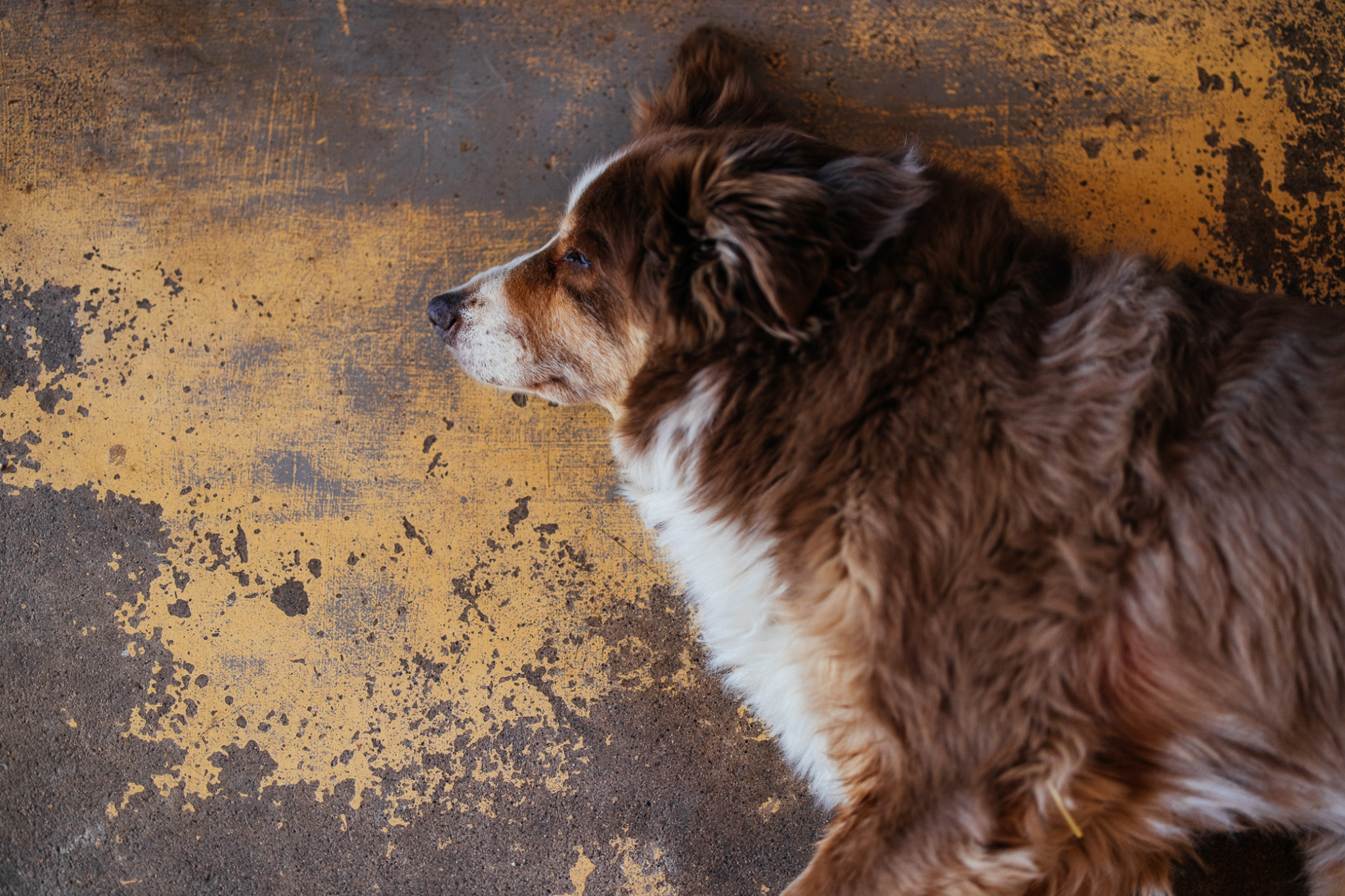
We have animals so there are morning chores. Letting the sheep out of the barn, feeding the dog and the cat.
cyclespeak
So what time does your day start?
Casey
We try not to set an alarm unless we really need to. But between the sun and our little dog, it’s usually somewhere between six and seven.
cyclespeak
Before we dig deeper into your work lives, can we start with your story as a couple?
Sarah
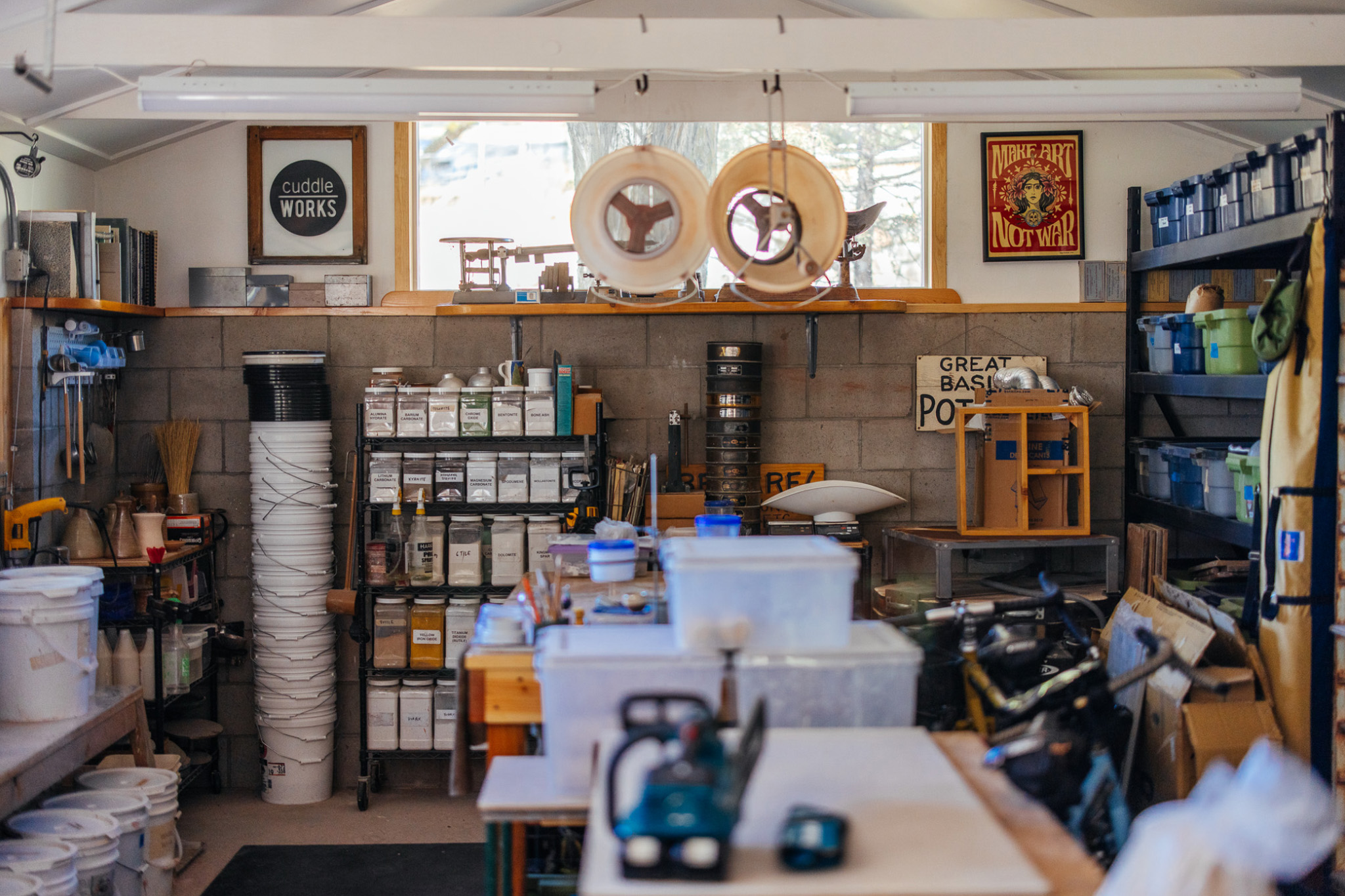
Casey and I had been in similar friend groups for quite a while. We were both involved with non-profits and art groups in Reno and we shared a makers’ space called Cuddleworks. Casey was making pottery, I had an artist studio, and at some point during this time we’d both separated from our then partners. Gradually we began to realise that our friendship had the potential to be a little bit more than simply friends and that we both shared similar ideas of where we wanted our lives to go. Which, as I remember it, led to a very adult realisation that yes, this is working out very well.
Casey
We’d been friends for quite a while before we started dating. Which is kind of weird because usually you start dating and then see if there’s a friendship.
Click an image to open gallery
cyclespeak
And it all went from there?
Casey
Sharing those big spaces meant we were constantly collaborating on this or that—very aware of what each was doing—and then when we moved out here together, we pretty much continued working in much the same way.
cyclespeak
Was there ever a fear that you might spoil a friendship?
Sarah
For me, there was an odd certainty about where we were going relationship wise. It was check, check, check, all the boxes ticked. And to be honest, I was more worried that it wasn’t going to happen.
Casey
Knowing the way I can process things, maybe there was a part of me that recognised I should be afraid of spoiling our friendship. But in reality it never felt like a concern. It all felt very intuitive and an easy decision to make.
cyclespeak
Leaving aside Camp And Go Slow for a moment and focusing first on individual work roles, I read on your website, Casey, that you’re a bike mechanic (retired), potter (current), and cyclist (passable). So is being a potter a passion, a profession, or a little of both?
Casey
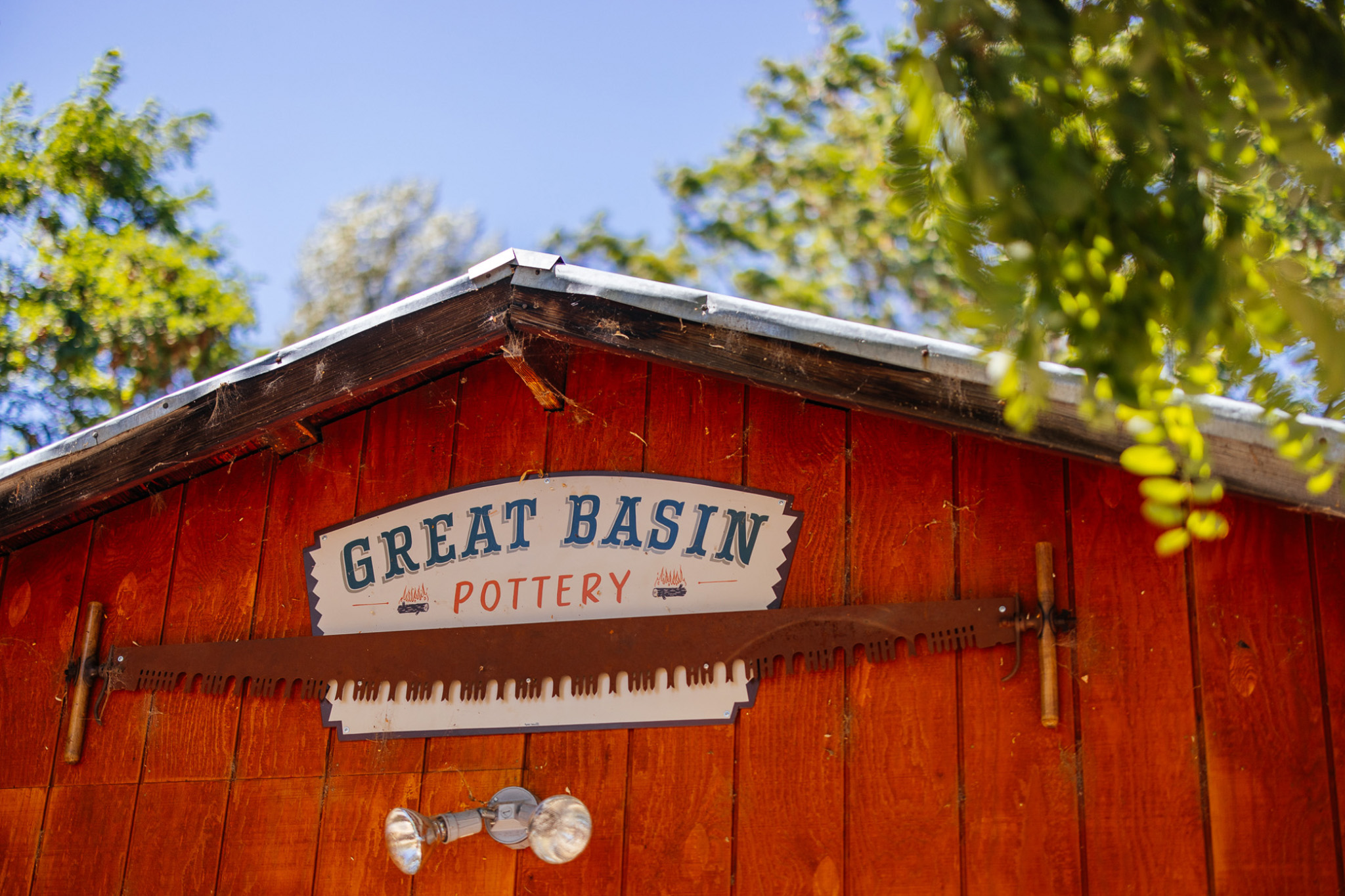
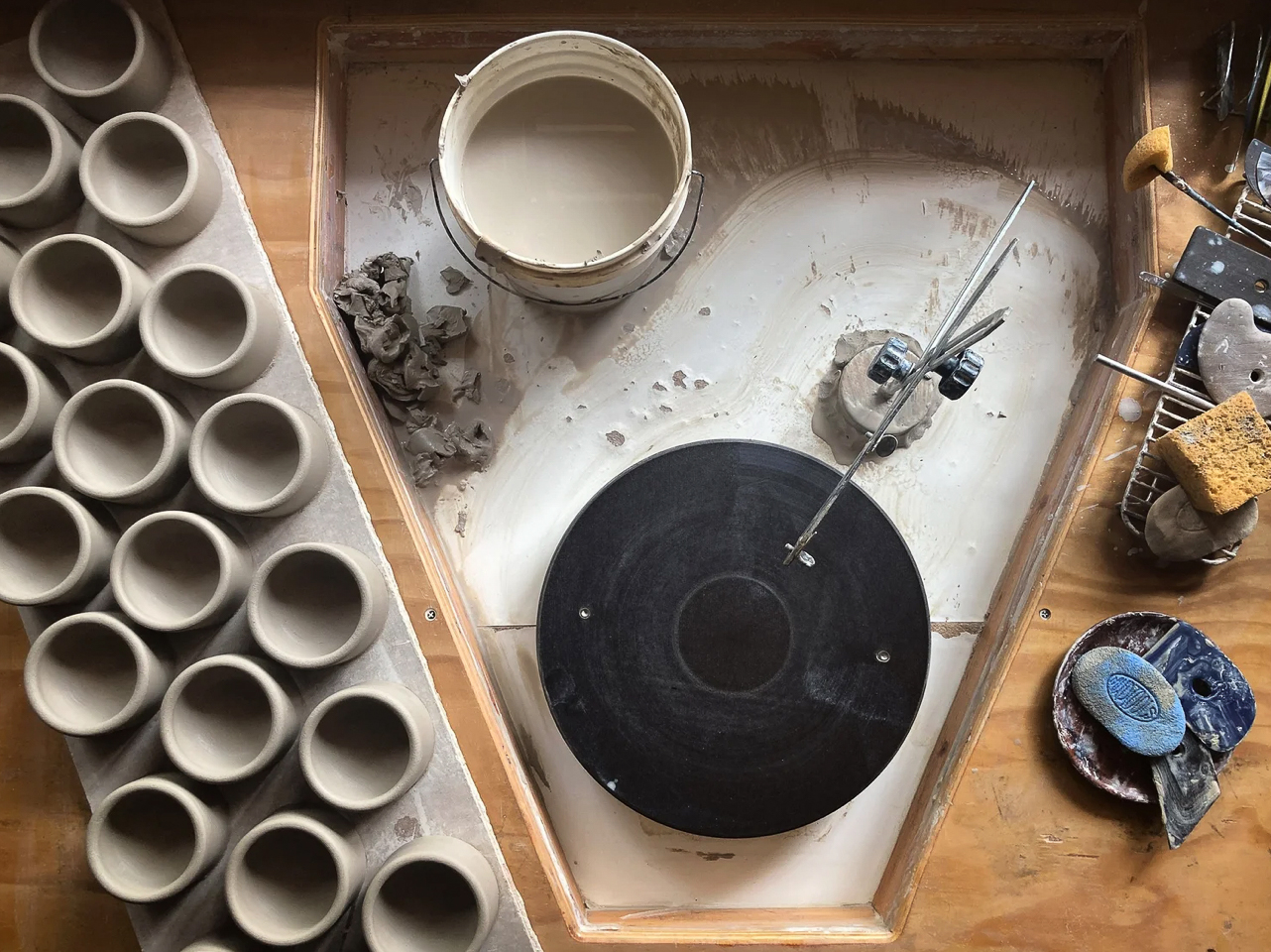
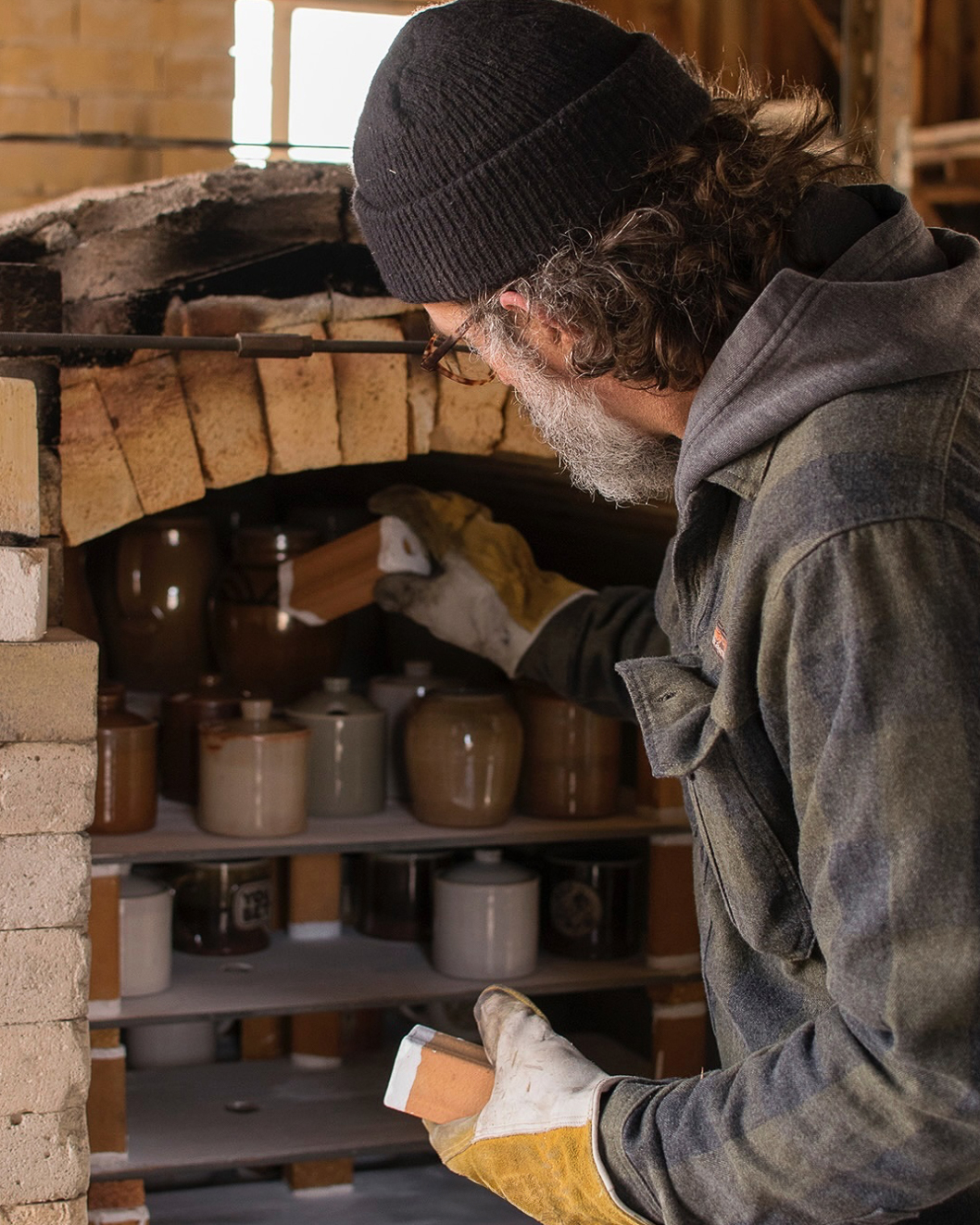
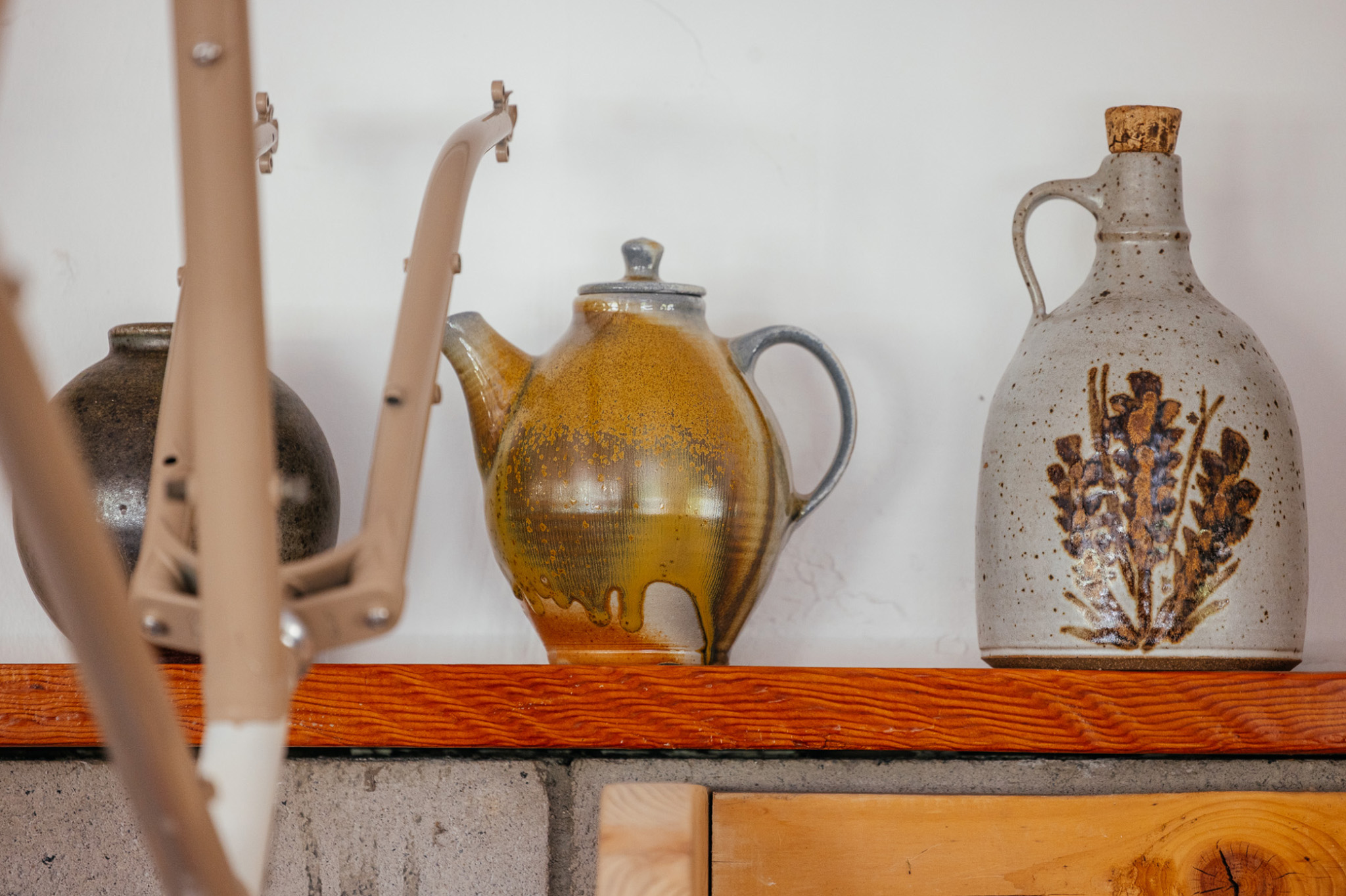
Obsession seems a little more apt of a term. But now it’s my profession, the reason we live where we live, and why I split my time between making pots and running Camp And Go Slow.
cyclespeak
So how did that play out?
Casey
I was working full-time as a bike mechanic, clocking out from the bike shop, and then starting work on my pottery—oftentimes until one or two in the morning—in my studio that was next door.
cyclespeak
And now?
Casey
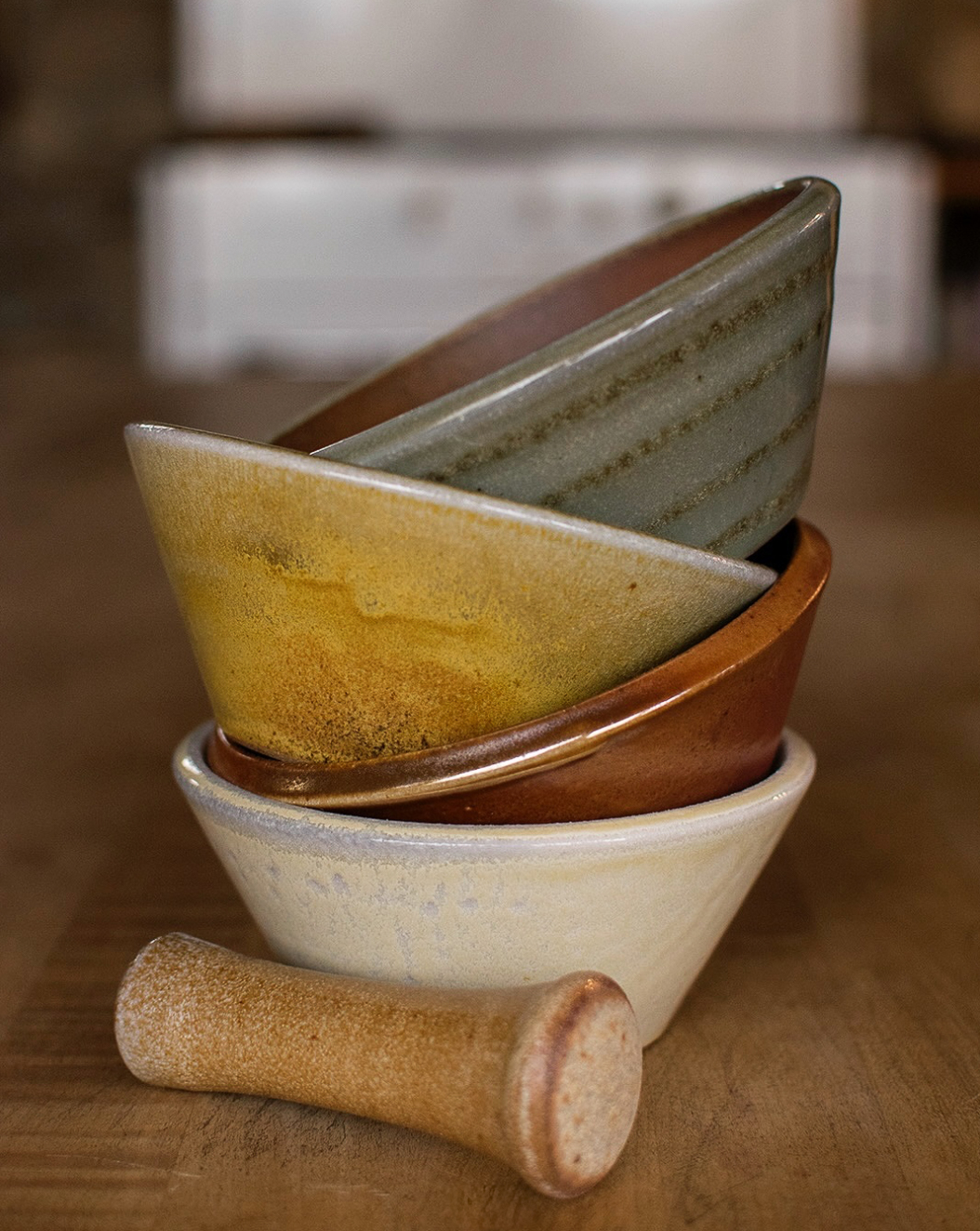
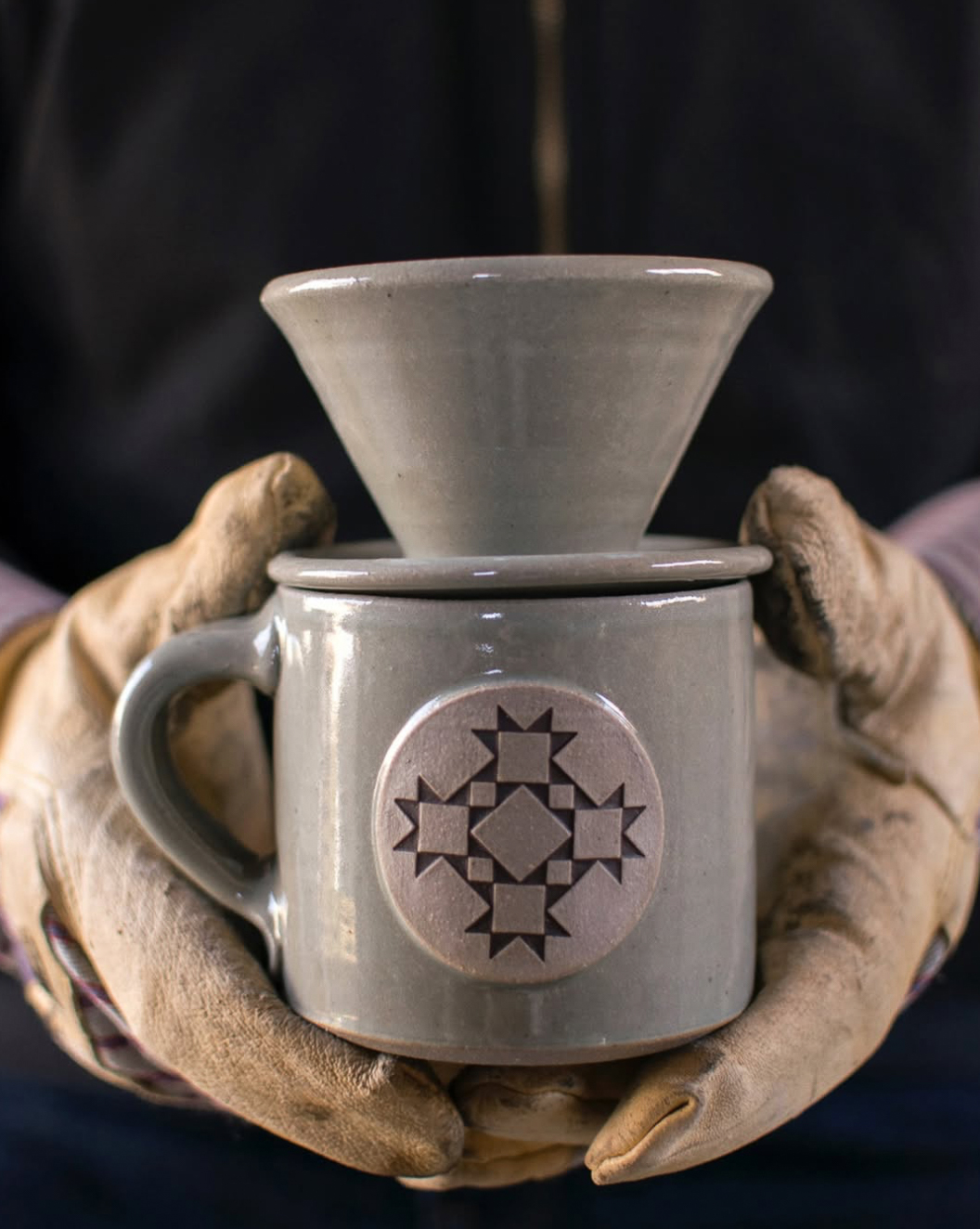
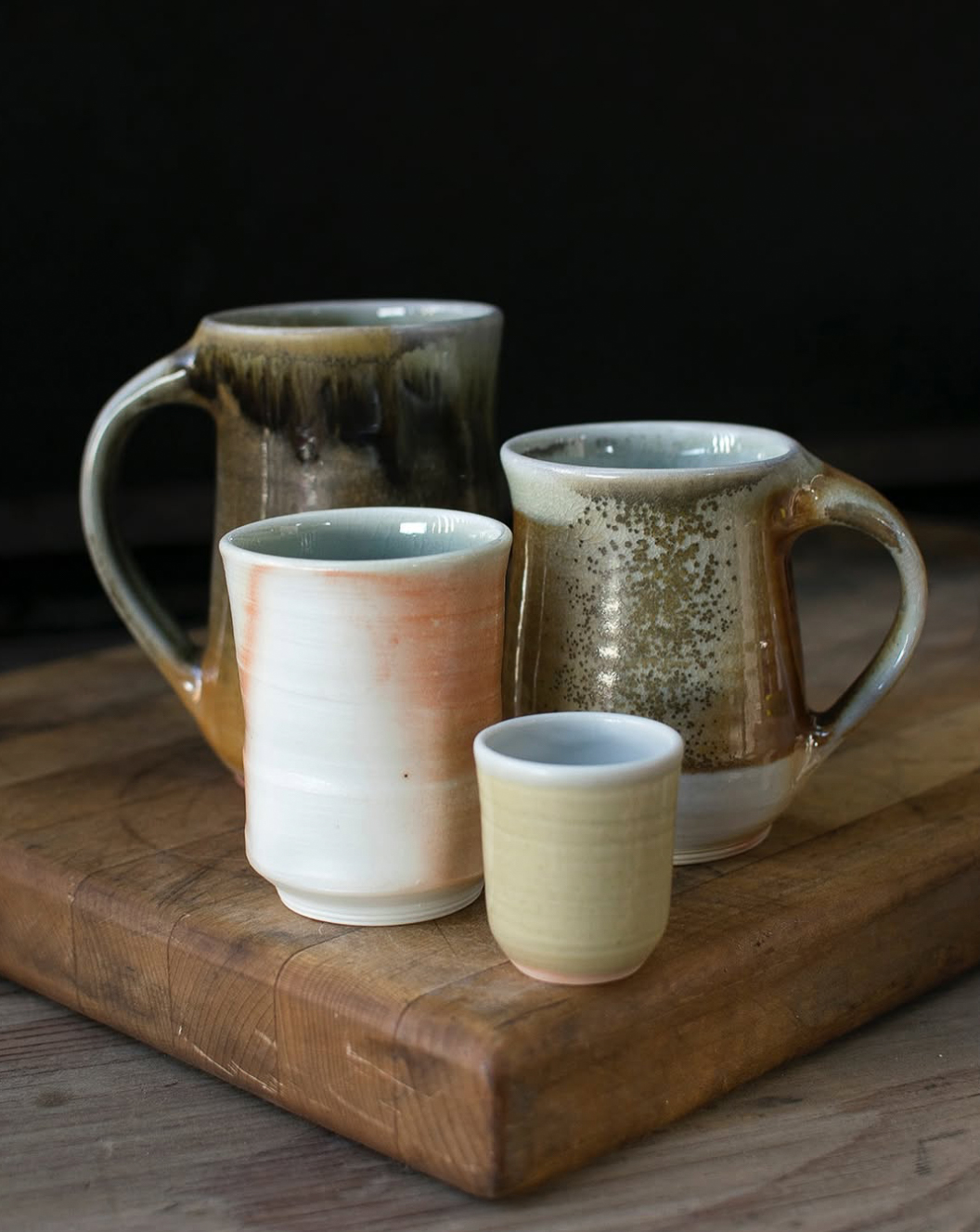
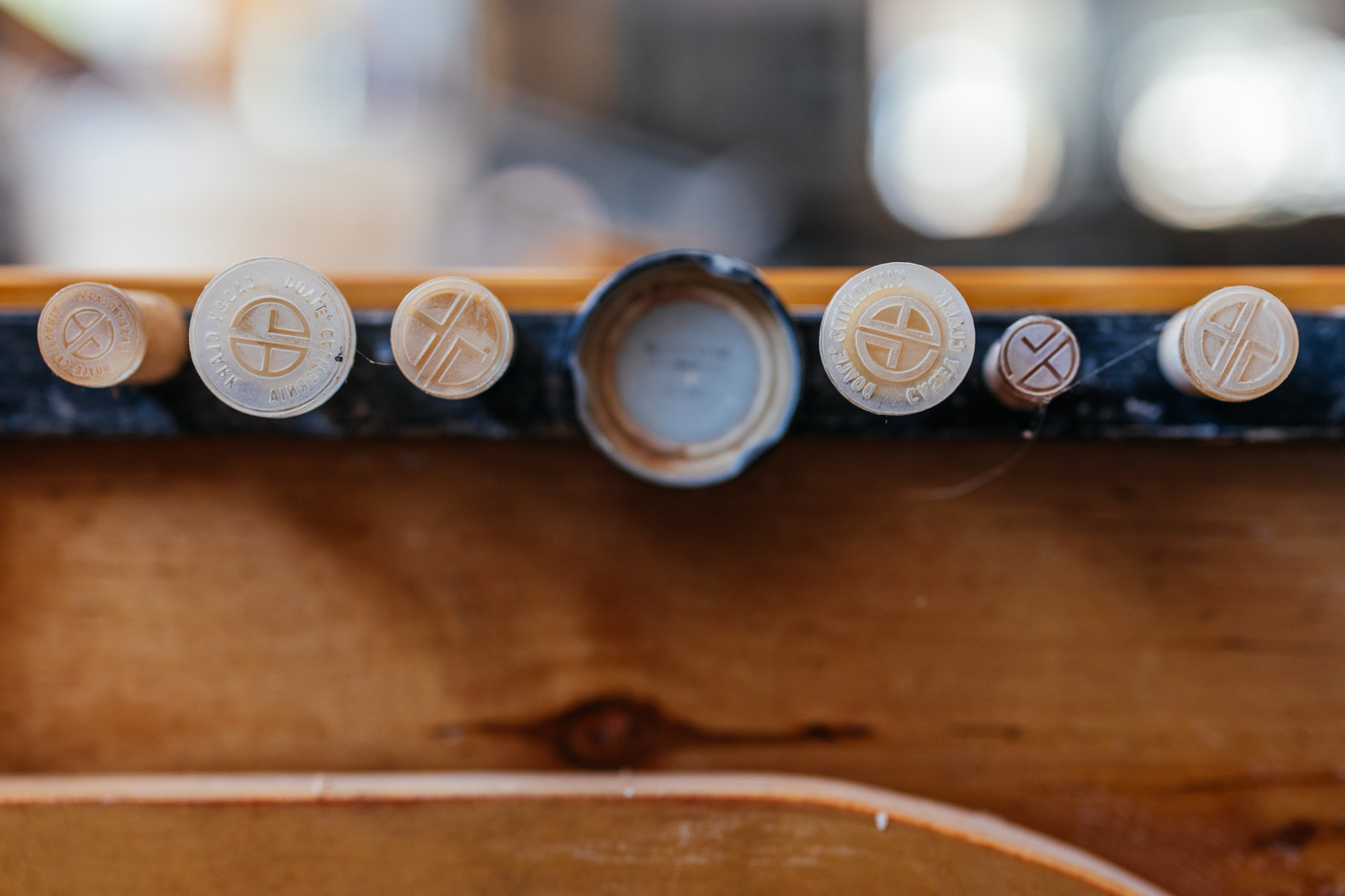
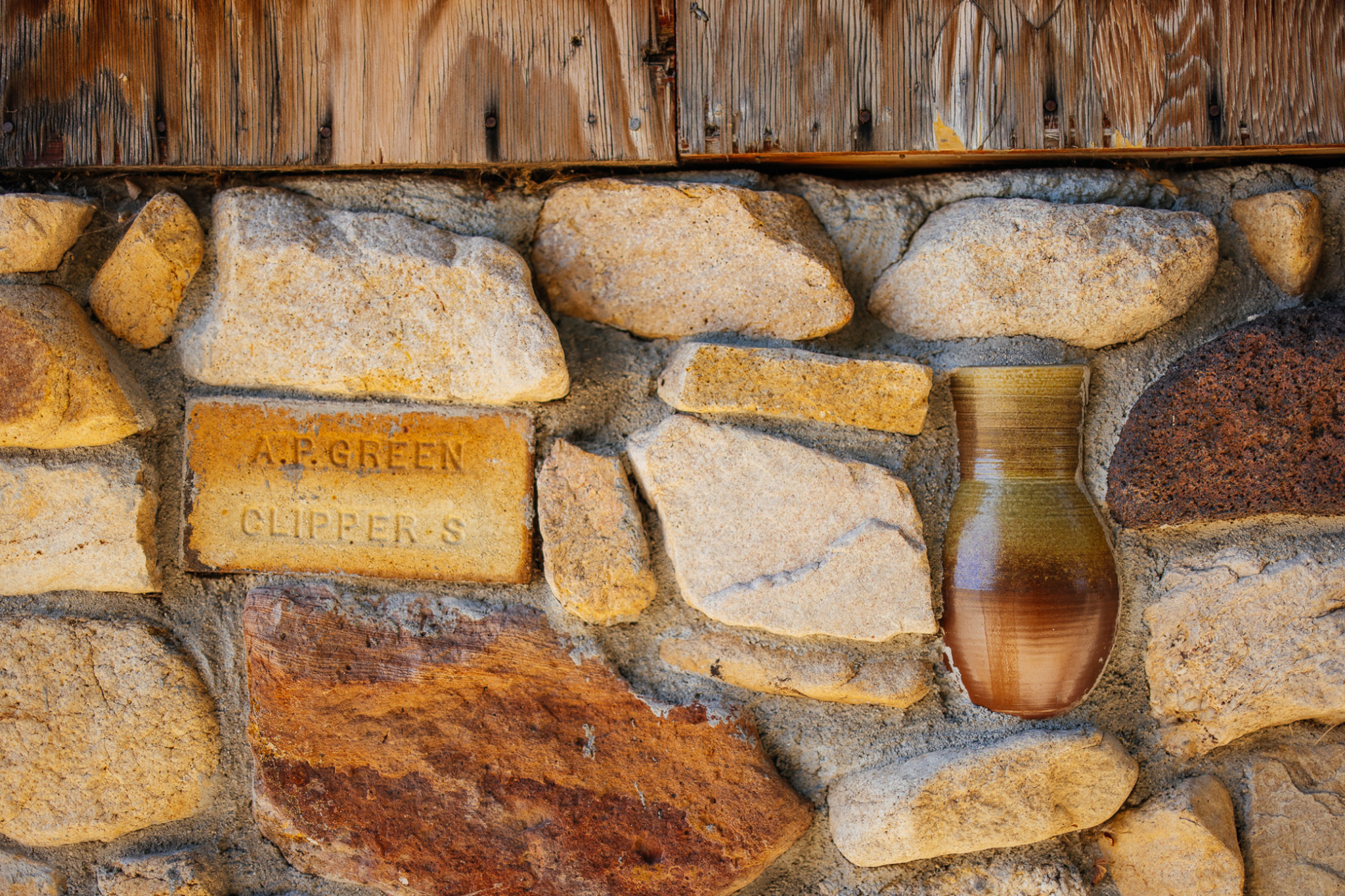
It’s become an important and necessary part of our small business model. I still love it but I do have to manage my time pretty carefully, produce enough items, and make sure they’re priced accordingly. So you start off learning the craft part of it with all the intrinsic motivations that come with doing something you care deeply about. And then, if you decide to commodify it and turn what you’re making into a business, then that imposes certain restraints. There are a lot of pots I picture in my head that I know I can’t sell. But that’s the trade-off.
Click an image to open gallery
cyclespeak
Same question for you Sarah. With the intriguing reference to you being a small flock sheep shearer with the emphasis on small.
Sarah
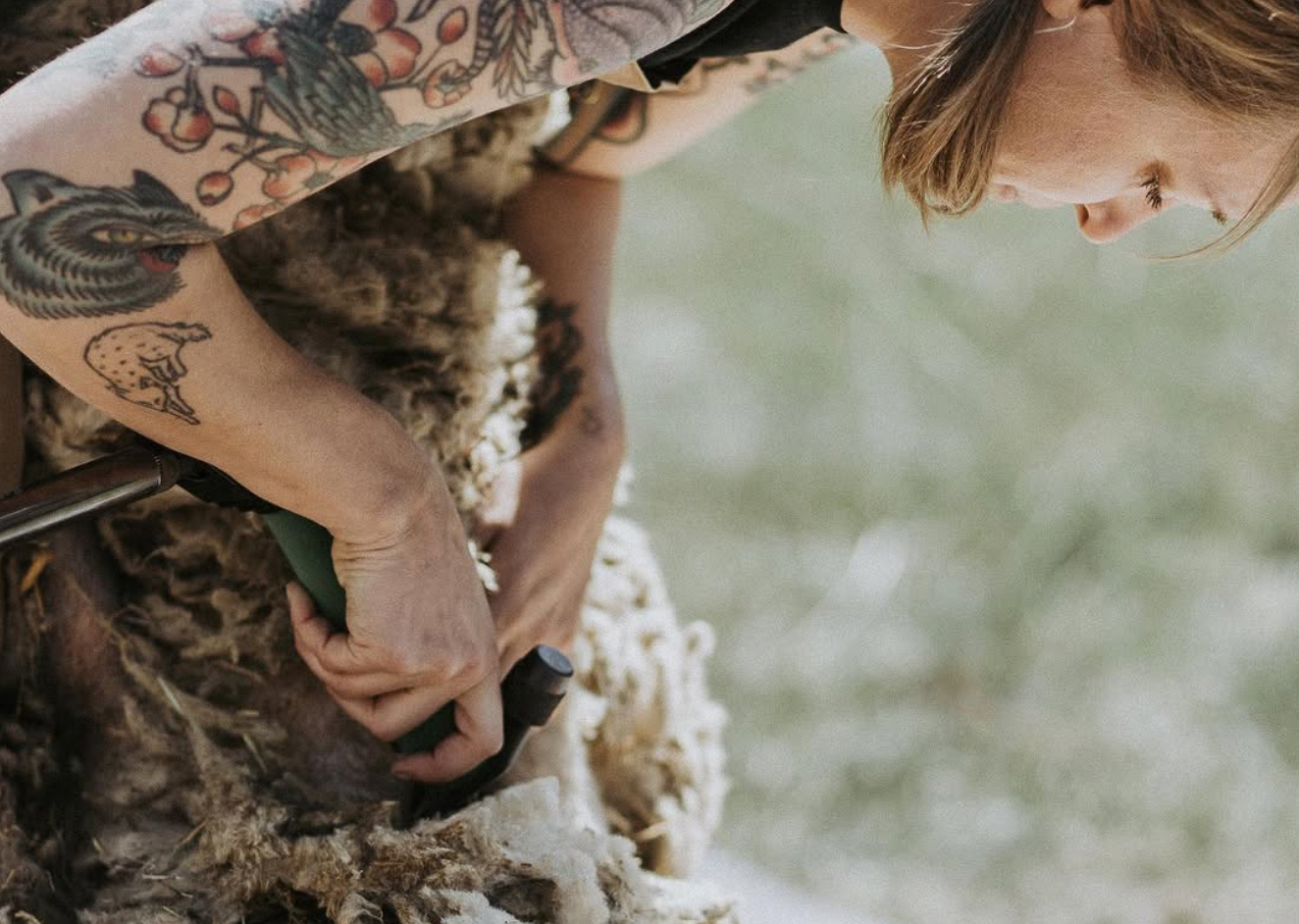
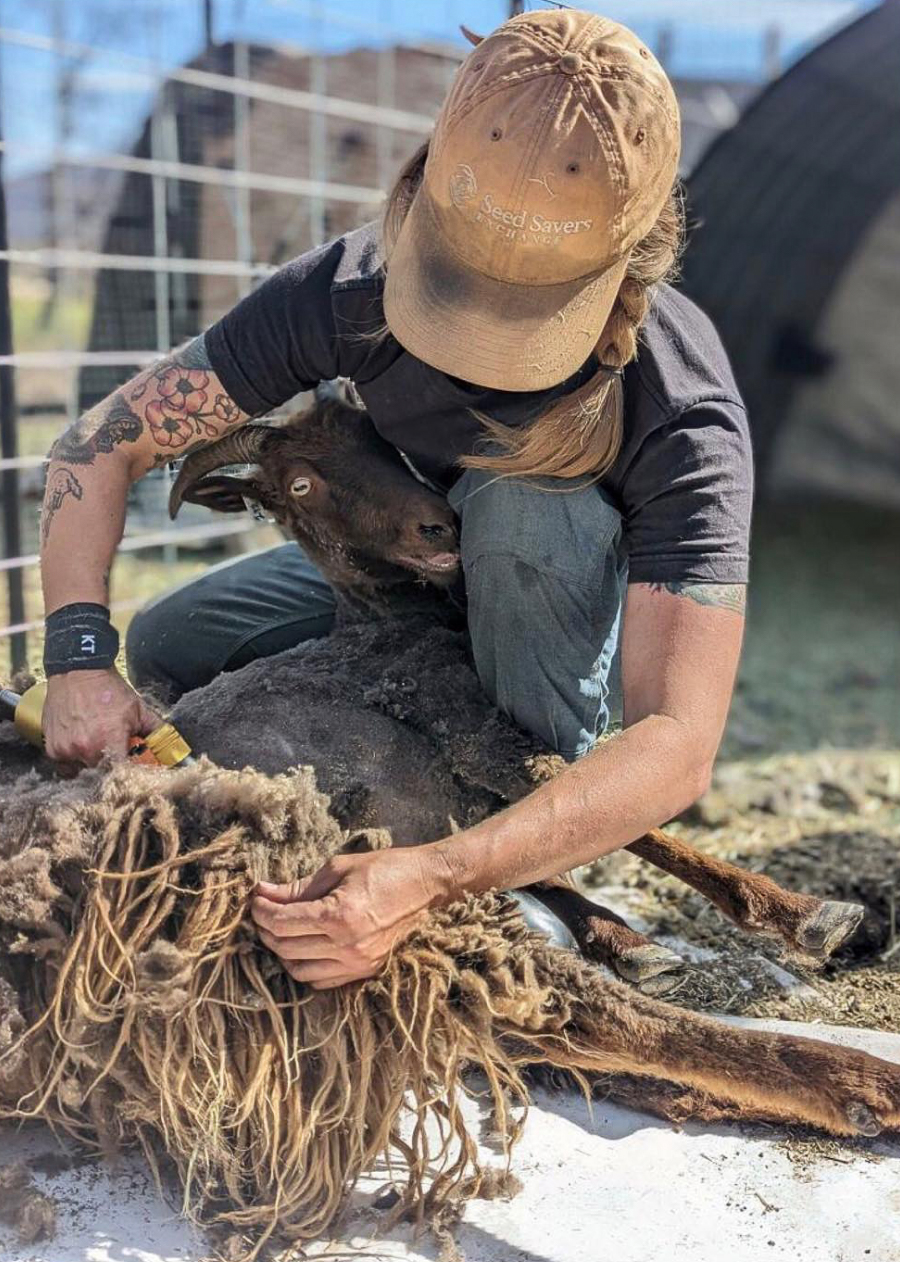
In the shearing industry there’s a distinction between large and small flock shearing. And most images that you see on television or online tend to feature a large flock. There’s a pen of sheep in a contained area and the pace is pretty frenetic.
cyclespeak
And small flock shearing?
Sarah
I mainly work with small-scale ranchers or people that have hobby flocks. There’s a lot more focus on customer service which means I spend a lot of my time interacting with the flock owner. It’s not unusual for these sheep to have names, specific personality traits, and origin stories that the owner is keen to share with me. Whereas in large flock shearing they have to make numbers so they’re moving through thousands of sheep.
cyclespeak
How did this job find you? Or did you find it?
Casey
How long have we got? [laughs]
Sarah
I took a wool spinning class and instead of learning to knit with the yarn I was making, I went the other way. Partly because sheep are so fascinating—I’ve read up on the cultural history of sheep and love talking breeds with the flock owners—and because it’s a job with a rural setting.
cyclespeak
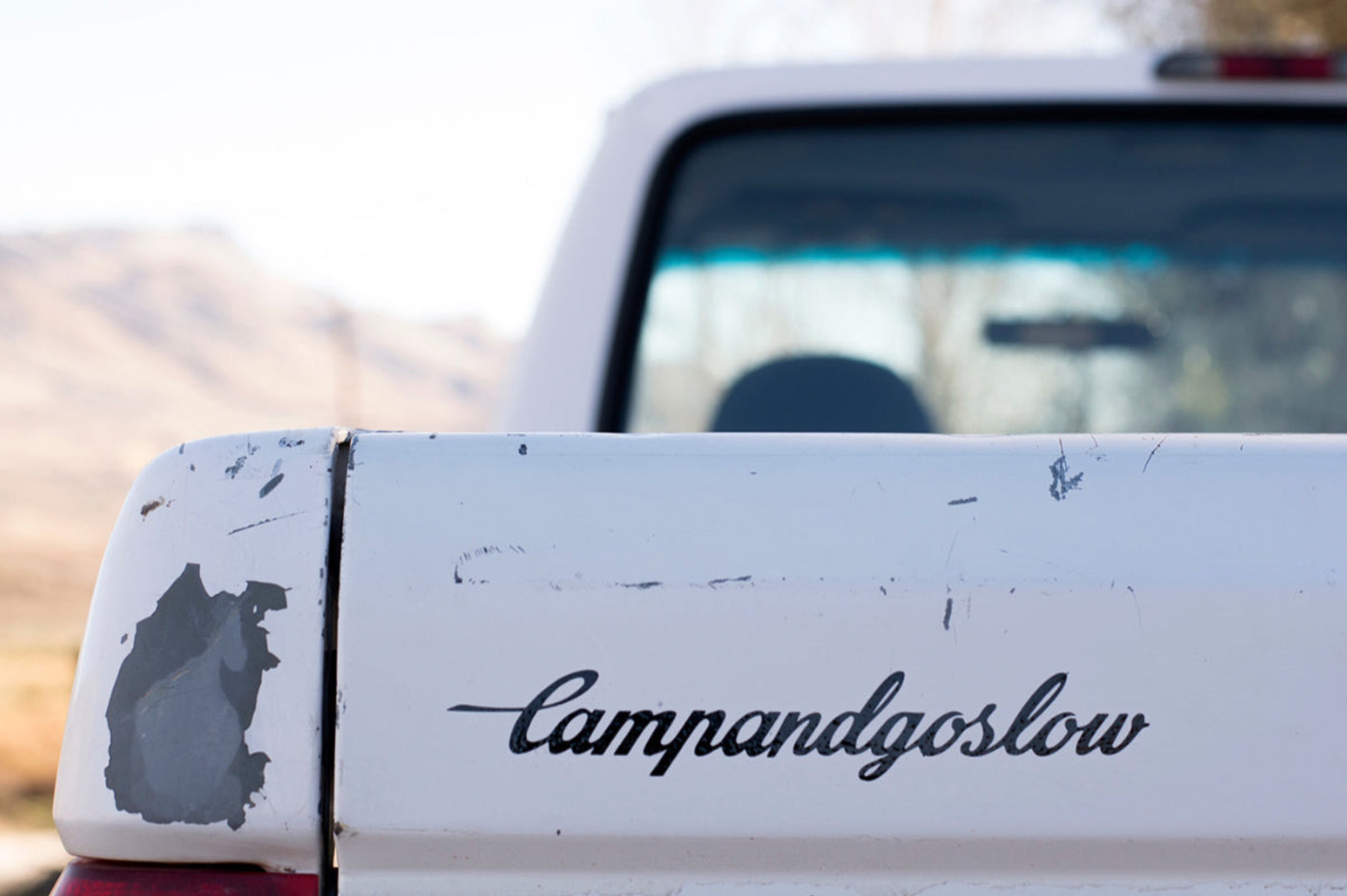
Which brings us nicely to your shared business Camp And Go Slow. Which I believe started almost as a joke with a die-cut sticker?
Casey
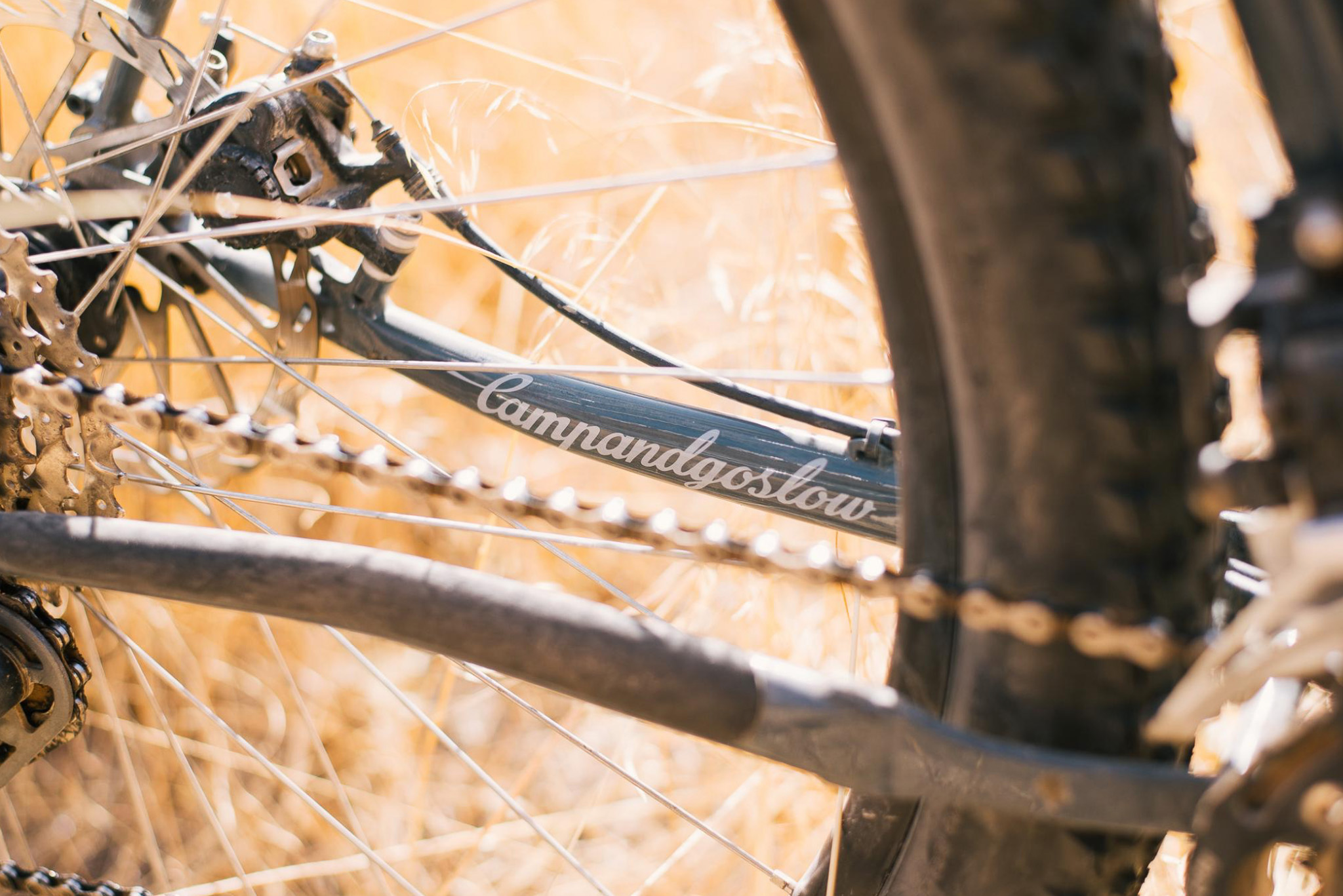
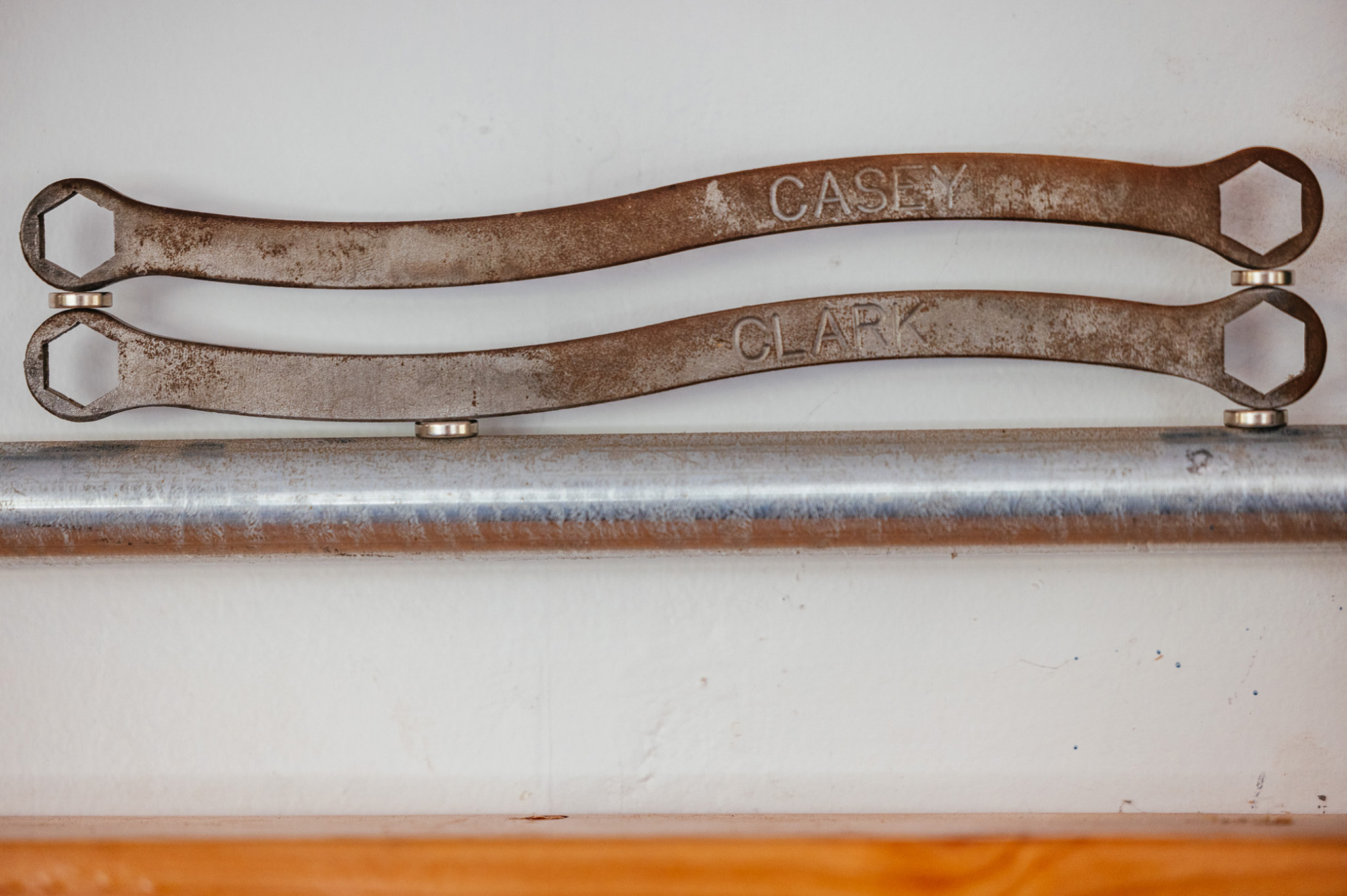
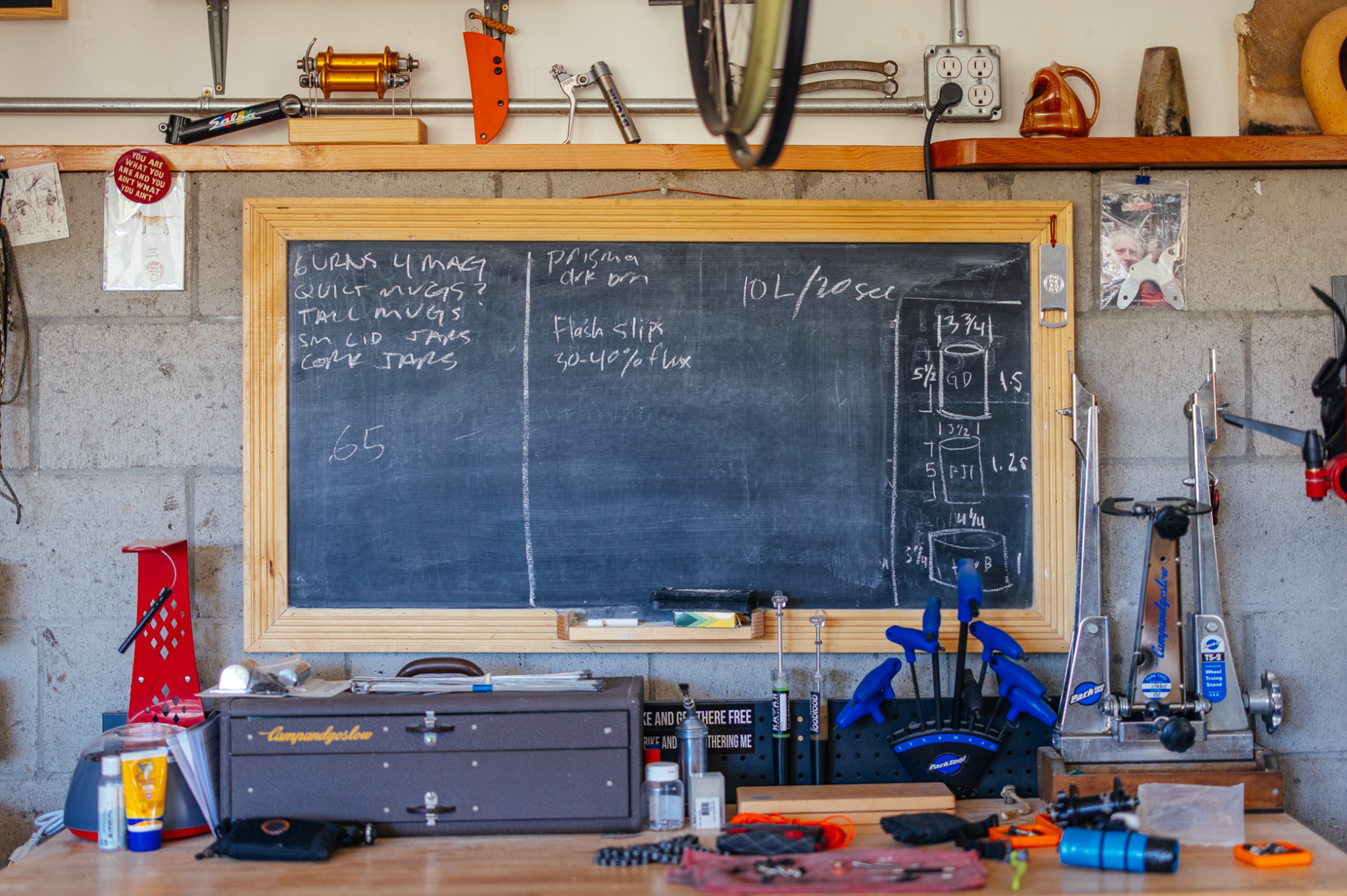
It was a bike shop gag. And there were only twelve in the first batch of stickers. Literally cut out of some scrap vinyl from a trash can. But I gave them out to my friends and they all thought it was funny and then people started asking for more. Which was when I actually paid $4 to buy some vinyl.
cyclespeak
From little acorns, as they say. And now that it’s grown to be a business in its own right, how do you individually divide up the tasks that help keep Camp And Go Slow on the road?
Casey
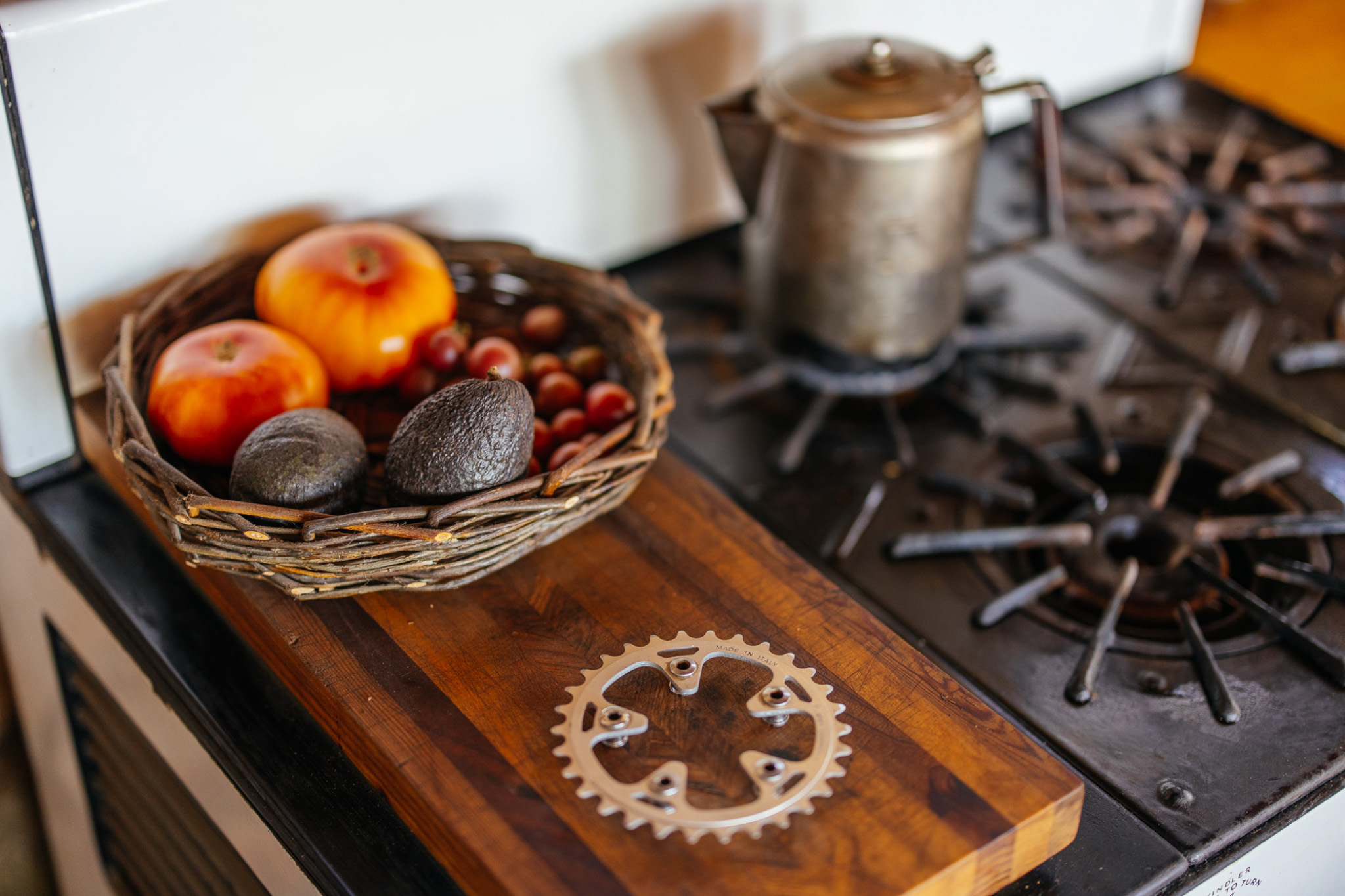
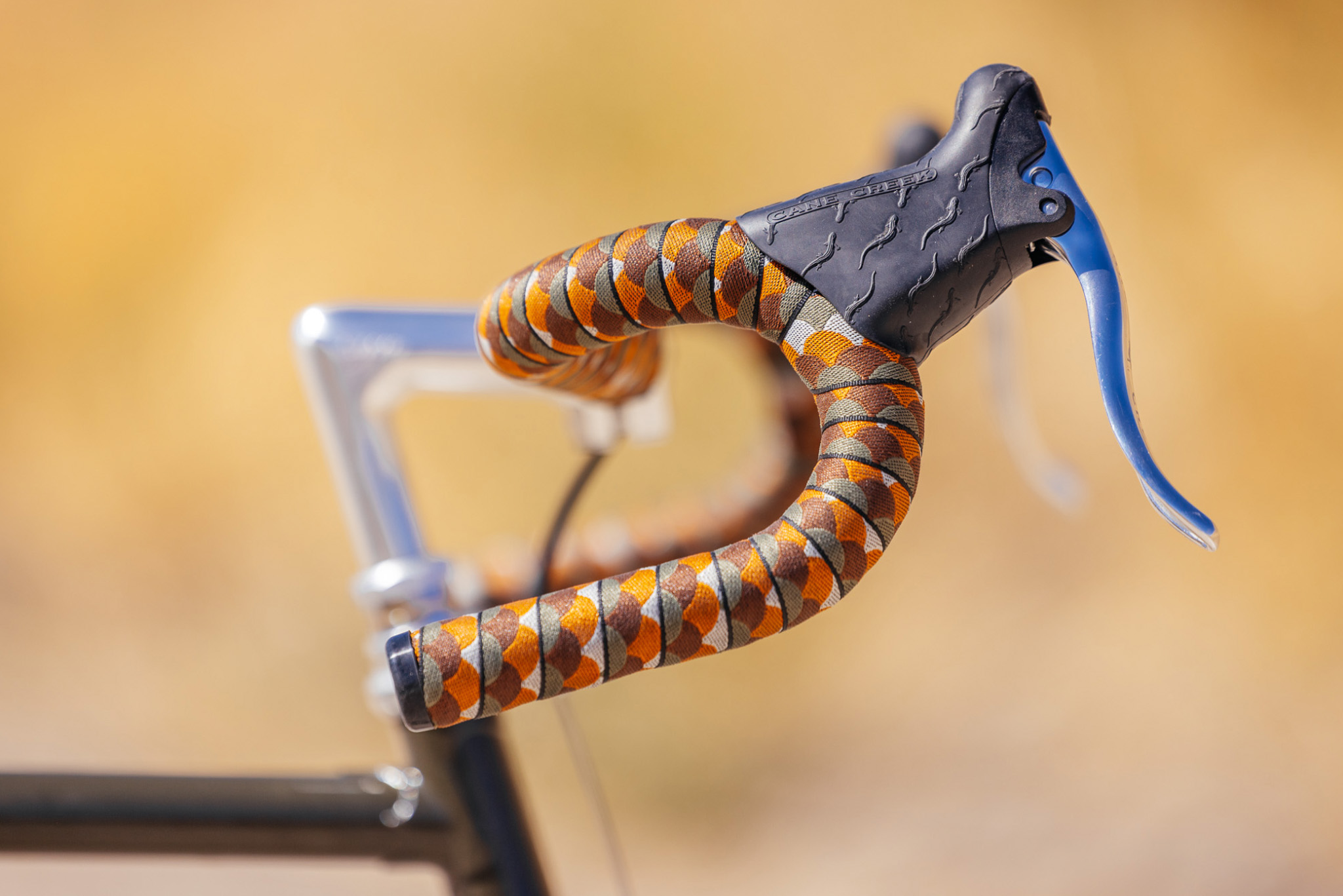
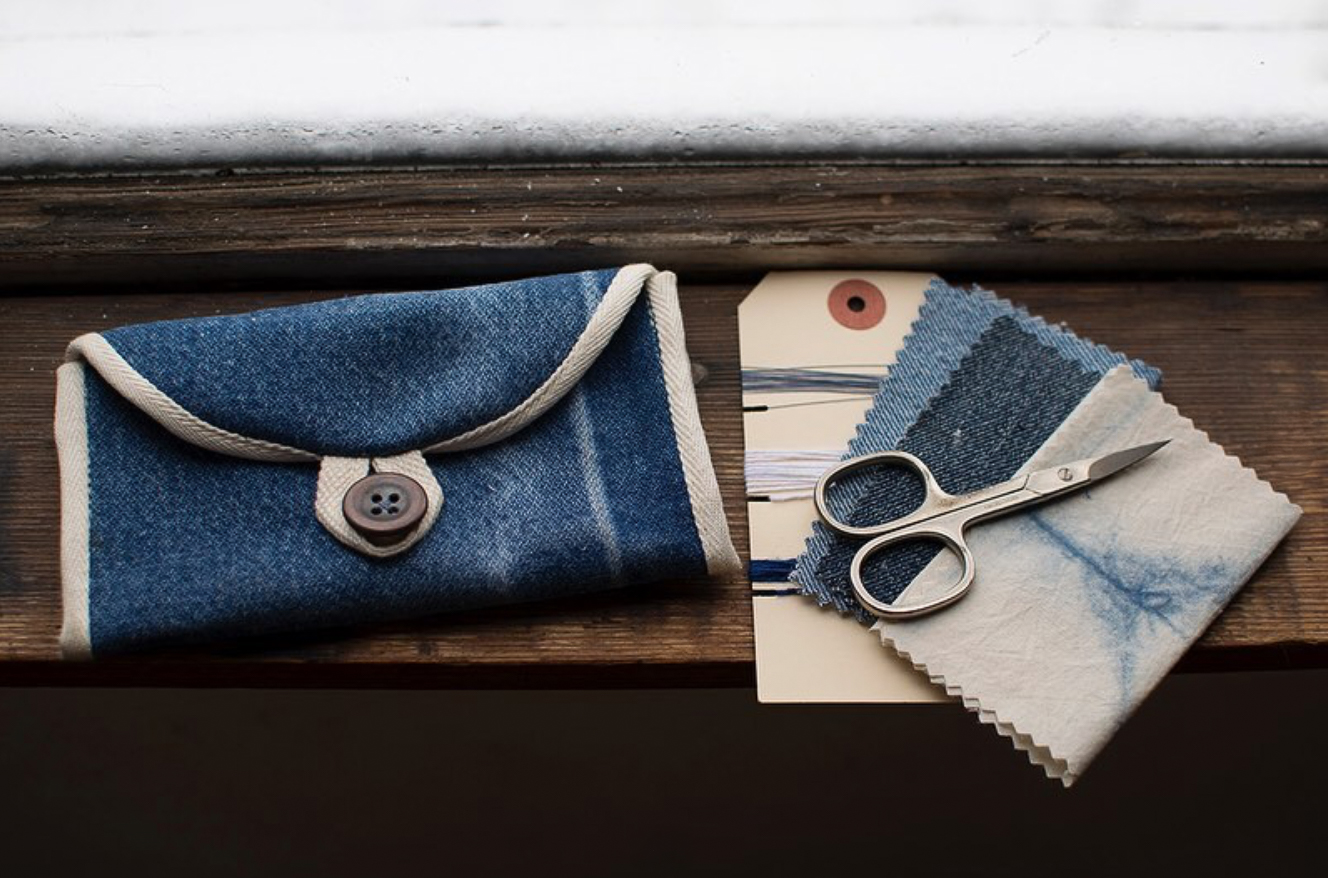
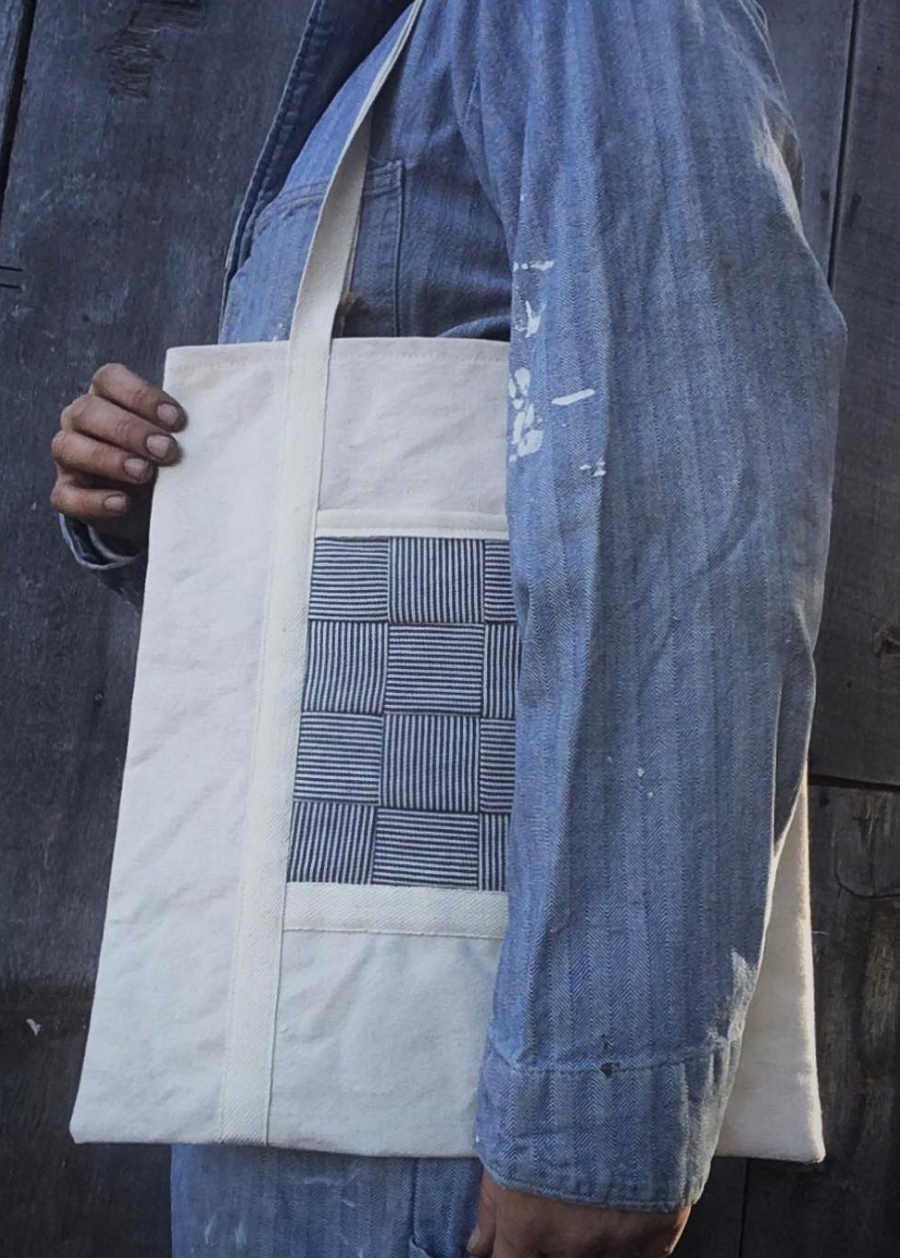
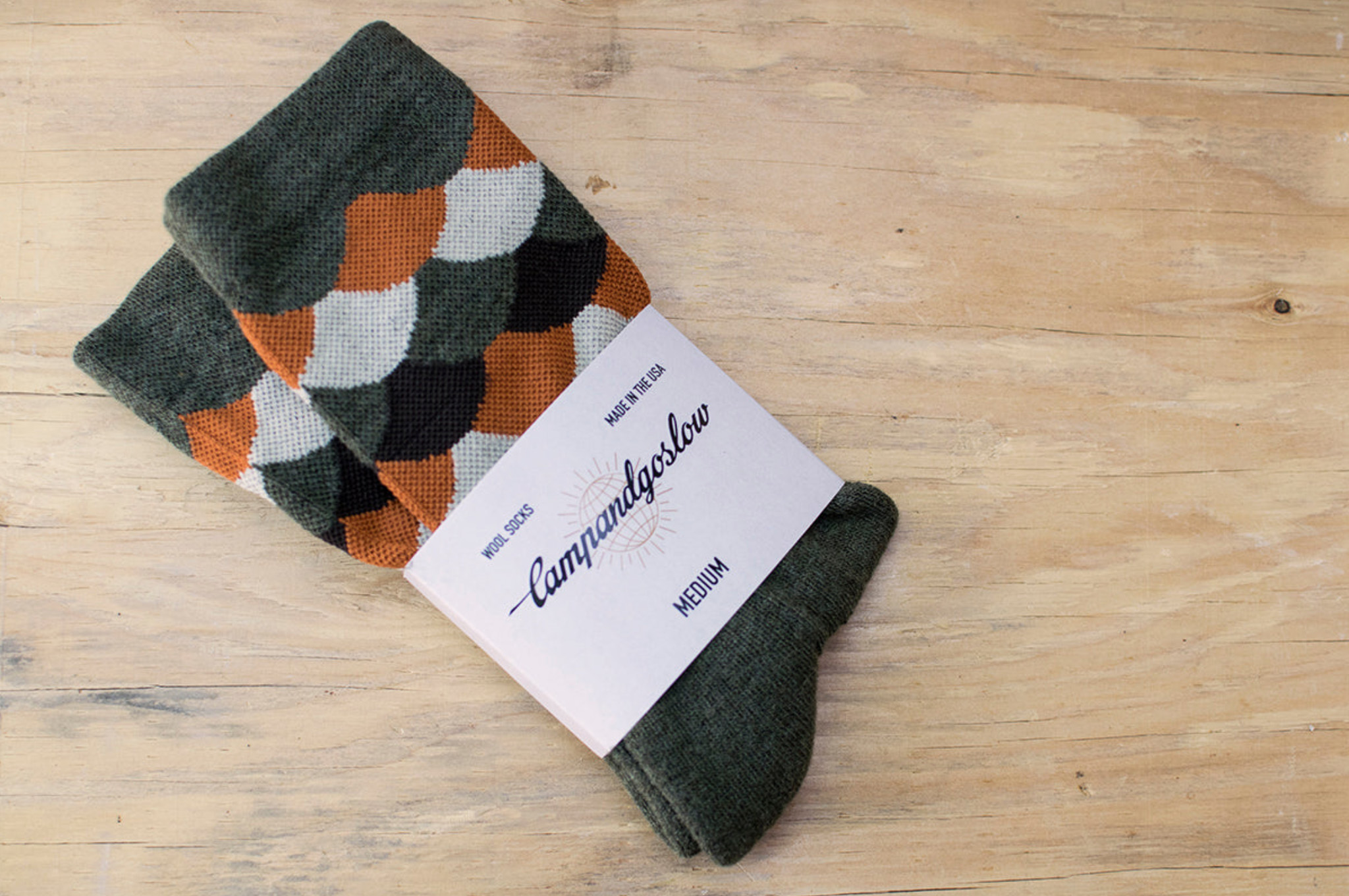
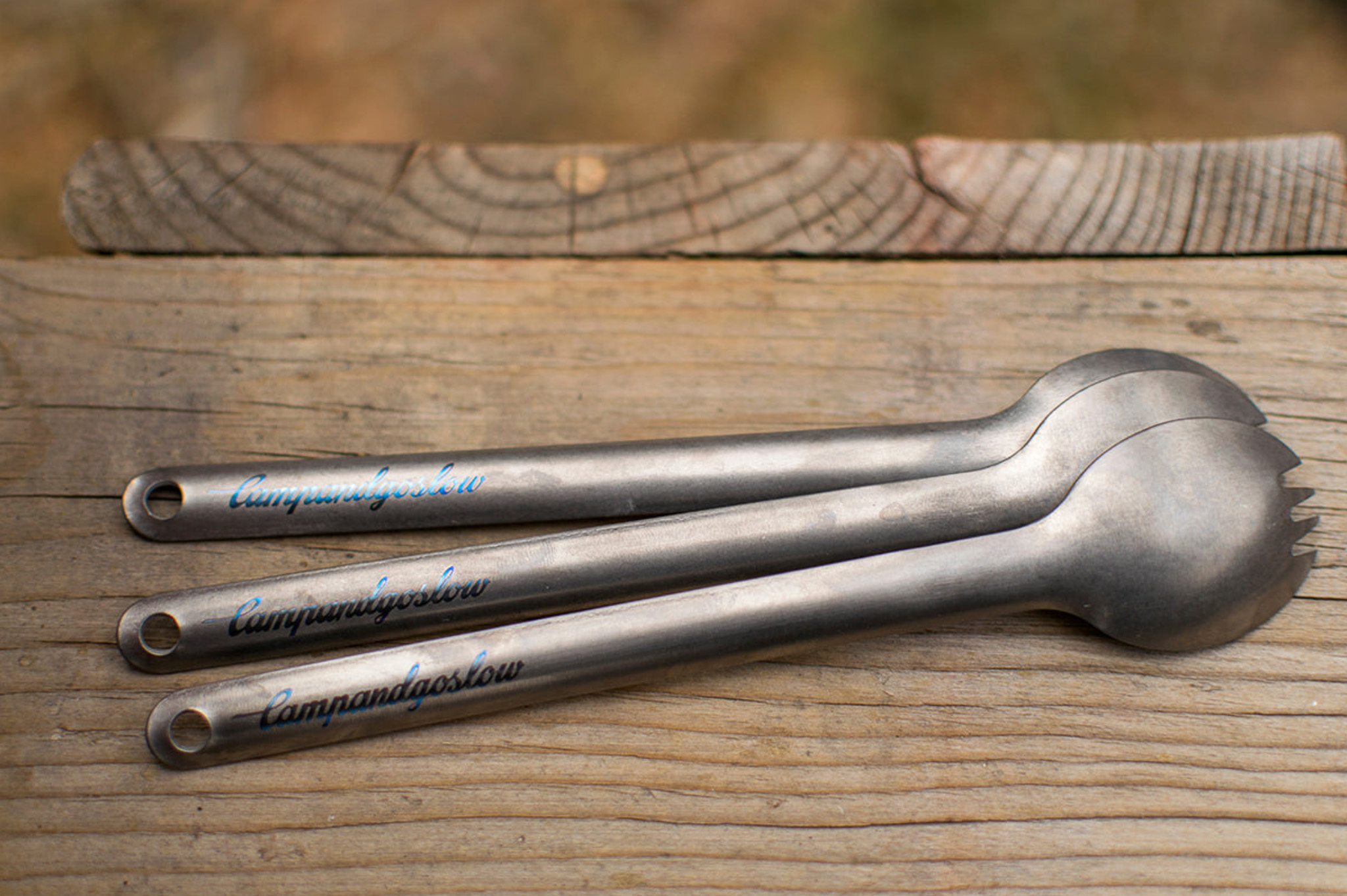
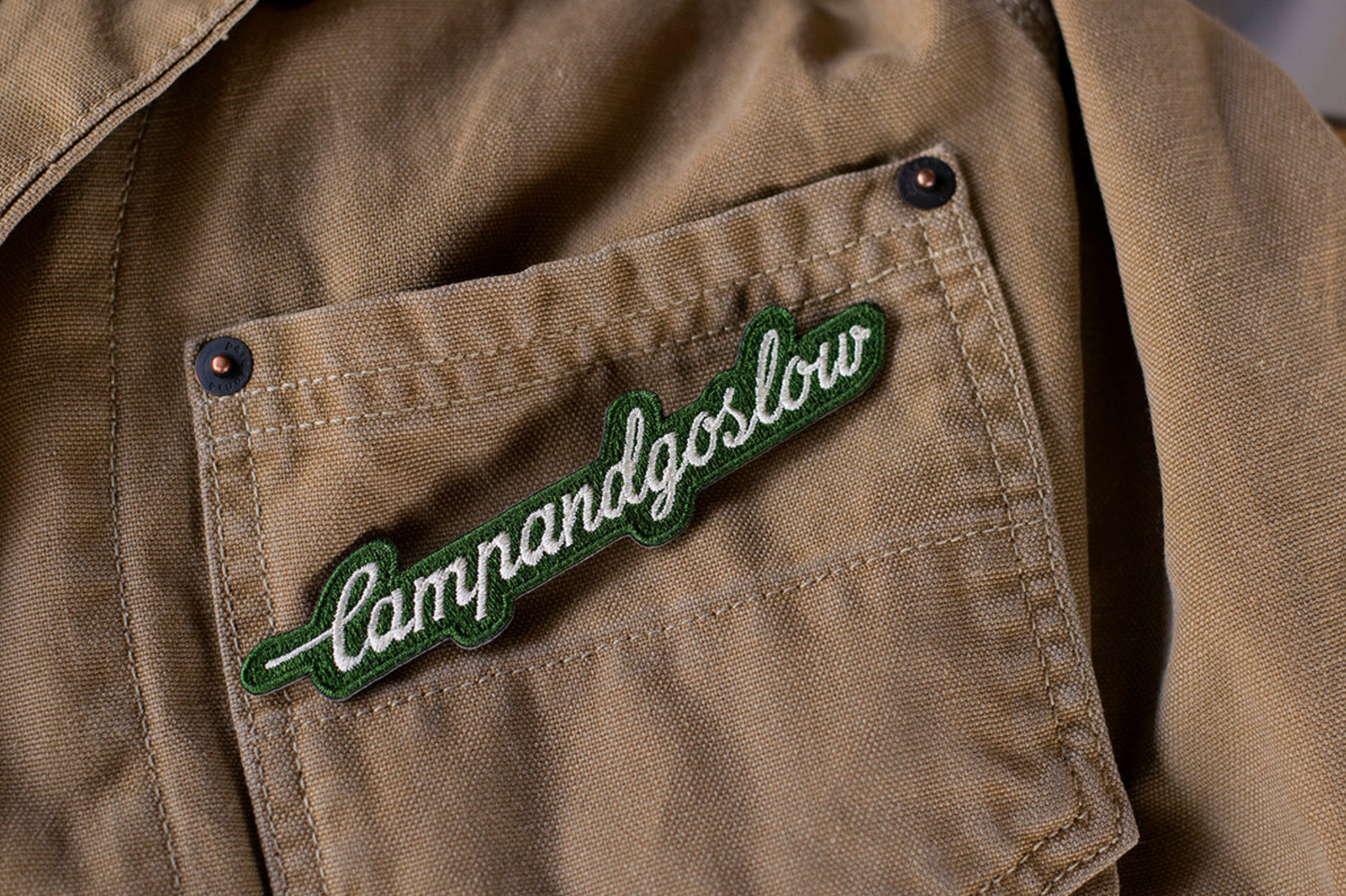
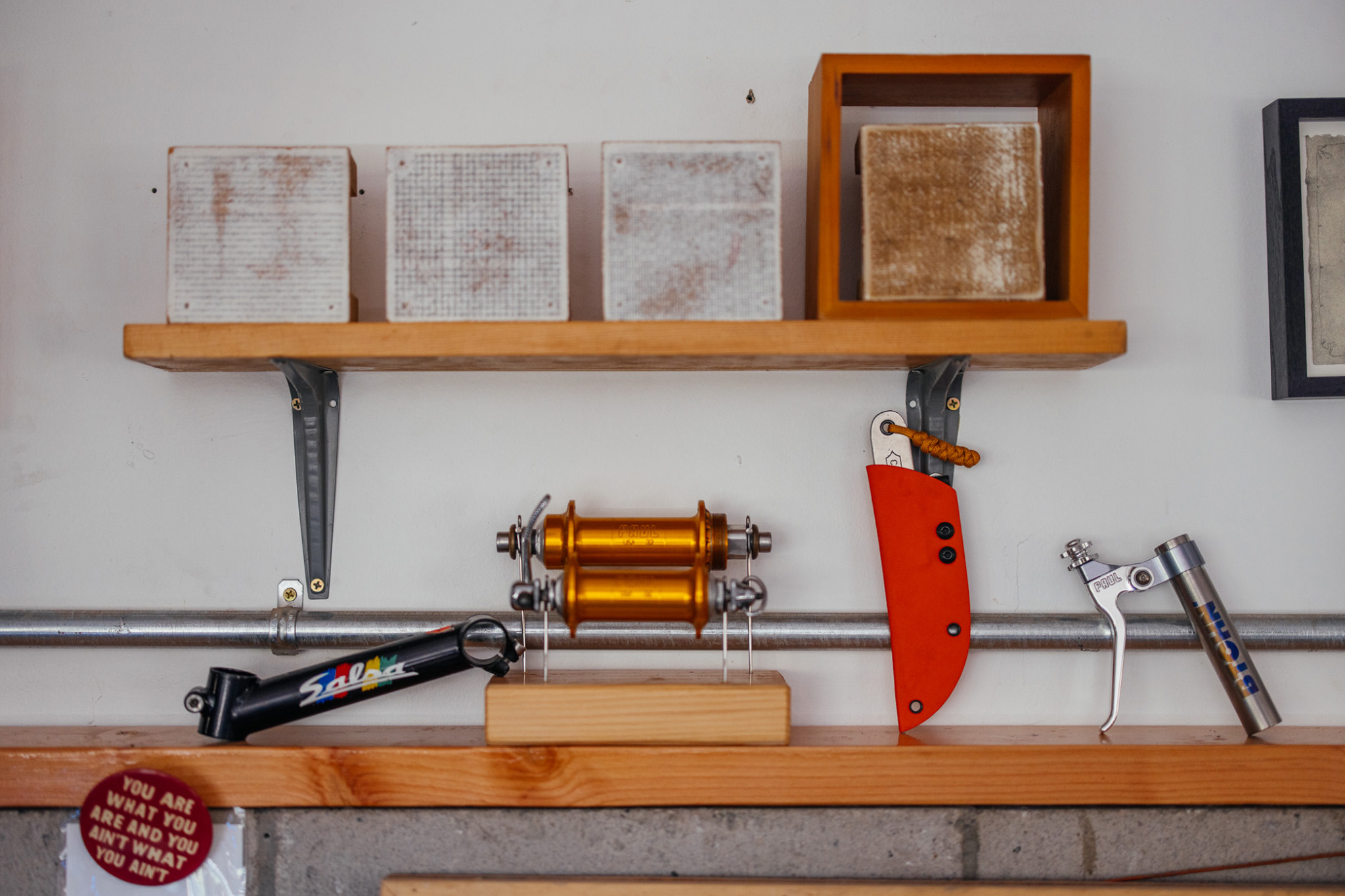
One aspect of our romantic breakfast-together lifestyle is basically eating eggs whilst having a daily employee meeting. The initial product development—which is a fancy way to say it—is mostly derived from my bike-nerd brain and then we bounce these ideas back and forth across the table. And because I’ve worked in bike shops pretty much since I was out of high school, I have a lot of friends with small businesses producing various bike-related products and that encourages me to consider what they’re good at, how we can collaborate, and how that might be mutually beneficial.
Click an image to open gallery
cyclespeak
And your role in the business, Sarah?
Sarah
Bike culture isn’t ingrained in my life. So Casey is the one with product ideas and the witty social media posts. But my background in exhibit curation and graphic design helps when we take a concept through to ideation. I look after all the day-to-day digital file components of each individual design and spend a lot of time considering colour palettes.
cyclespeak
You mention colour and I’ve noticed that much of your product range appears to take stylistic cues from your local fauna and flora and an earthy colour palette. And I was wondering if Camp And Go Slow is intrinsically rooted in your present locality or whether it’s actually the two of you and could therefore adapt to wherever you decide to lay your hat?
Sarah
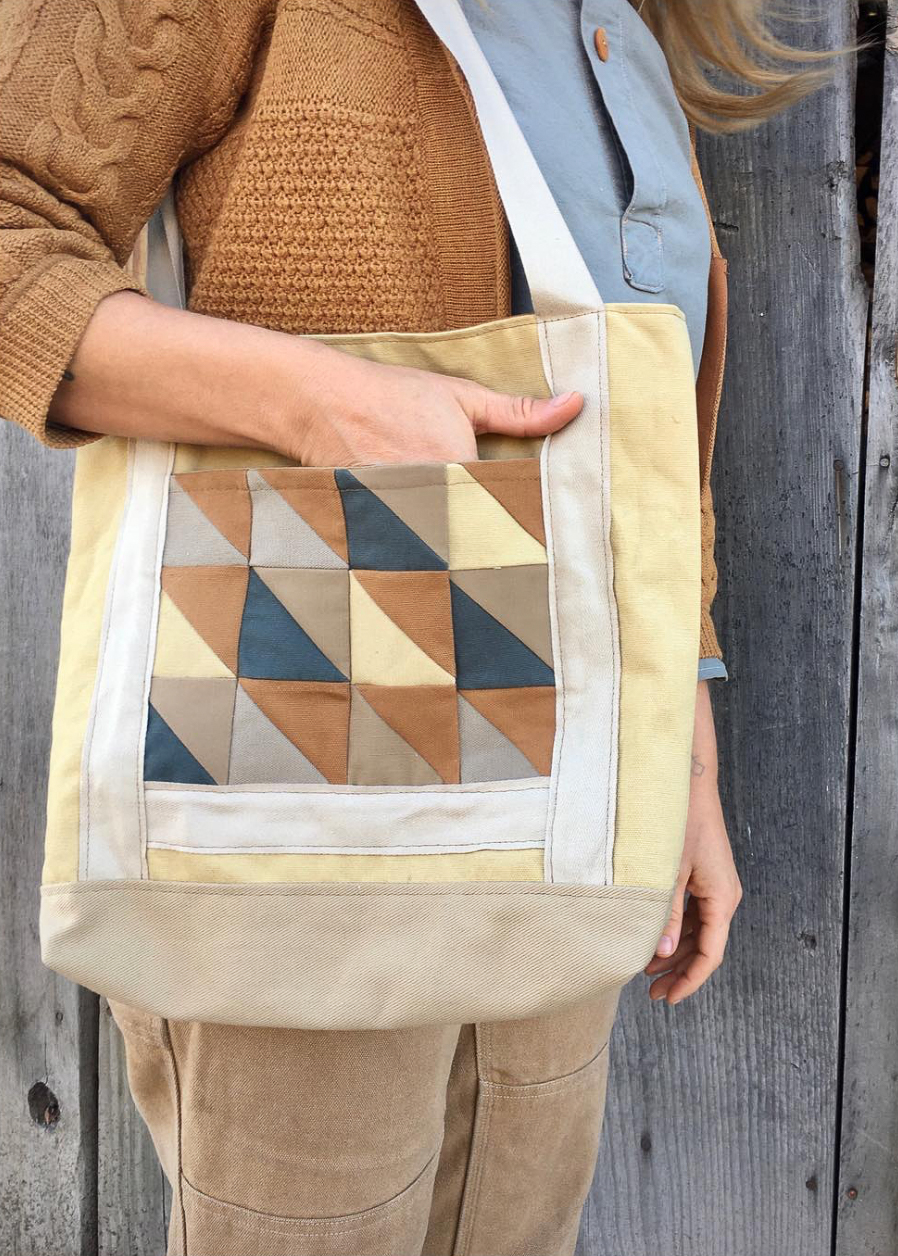
I have strong feelings about this. And particularly the colour influence of our work which I would agree is rooted in the Great Basin where we live. The palette is pretty subtle, it rewards a long look, it’s very seasonal. And I feel at a certain point that kind of infiltrates into who we are and what we make.
cyclespeak
And you, Casey?
Casey
It’s a good question but not one that I’ve ever thought about because I’ve never considered the possibility of living anywhere else.
cyclespeak
As simple as that.
Casey
If you look at how we dress and the way our house looks, it’s pretty obvious that the language of this colour palette is native to us. And that’s not to say we don’t like other languages but we’re not fluent in them.
cyclespeak
I don’t think anyone lives a life devoid of pressure and the occasional calamity. So how do you each respond to challenging times and, as a couple, support each other?
Casey
That’s a big one.
Sarah
I feel like a good chunk of our relationship has been navigating traumatic and stressful situations. When we moved out here, it felt like one natural disaster after another.
Casey
We’ve had some doozies with wild fires and a mud slide that took out our water supply.
Sarah
I feel like we’re constantly learning better ways of managing. Because by nature I tend to bottle things up and get stressed. But Casey can read that right away; obviously I’m far from subtle…
Casey
It’s a bottle but it’s a clear bottle.
Click an image to open gallery
Sarah
So if I’m stressed, Casey will encourage me to spend time in the garden, go for a run, take the dog for a walk. In much the same way as I’ll suggest Casey gets out on his bike or spends some time with friends.
Casey
There are the day-to-day pressures of being small business owners and juggling the gazillion responsibilities that come with that. And we understand that when we do take some time away, whatever project we’re working on will be right here on the kitchen table waiting for when we get back. Which means we work a lot but we understand that trade-off and with it you get a lot of agency.
cyclespeak
And when it’s not an everyday problem but something more potentially catastrophic?
Casey
It’s usually a natural disaster or a weather related problem that just throws everything into chaos. And when these things happen, you don’t go for a bike ride and feel better. But you gradually evolve a response mechanism after going through the wringer a few times. We both know what we’re good at, so we see what needs to be done without having to hash out who’s doing what.
Sarah
During the wildfire—when it was coming straight at our property—my priority was to make sure the animals were safe. And when that moment arrived, I didn’t say, “Casey, I love you, be safe” because I knew he understood how to handle the stress of that situation. But then later, when things were more under control, I did wonder whether it was odd that I didn’t vocalise my concern and affection. But I trusted Casey implicitly in the knowledge that he knew what to do.
cyclespeak
You mention communication and your breakfast-time talks. And I was wondering whether there’s a debrief at the end of each day? Or is everything a little blurred because you live where you work and work where you live?
Casey
The second one [laughs]. We don’t really have boundaries between working and living. It all happens simultaneously.
cyclespeak
Would you like to have boundaries?
Casey
Not boundaries as such. But it might be nice to feel less pressure to be productive and work so often.
Click an image to open gallery
cyclespeak
How does this look in real life?
Casey
It’s rare that I go for a bike ride and don’t stop to take photos for the Instagram feed. It’s rare that I go on a bike ride not thinking about the never-ending list of projects that I’ve got on the go.
cyclespeak
So you’re always on?
Casey
Pretty much but it sounds a lot worse than it actually is. I like being tuned into it. I’ve worked really hard so I can be tuned into it. And it’s a lot more rewarding than spending eight hours a day working towards someone else’s goals.
cyclespeak
But that’s the reality for the vast majority of people. They do a job that’s okay but not something they love. To get a monthly pay check that they spend on their hobbies and interests. Whereas you and Sarah have flipped that and though you might put in more hours, your passions guide what you do for a living.
Casey
It’s definitely less financially secure and the boundaries are blurred. But we’ve both tried to do it the other way and that’s just not how we’re wired.
cyclespeak
I understand the challenges of running a small business—or businesses in your case—and I imagine you put in way more hours than the standard nine to five but can I say that you both look very well on the life decisions you’ve made?
Casey
Thank you [smiles]. And I guess that’s just how we roll. There’s this need to be neck deep in whatever project or business idea we’ve got going on. Which all comes with more risk but a lot more reward when you nail it.
cyclespeak
Does that all resonate, Sarah?
Sarah
I feel like we’re constantly trying to sort out how to communicate what needs to happen and when. And then you add in all the tasks relating to the upkeep of this property. Which means that certain times of the year can be a little intense with to-do lists and calendar notes.
cyclespeak
Those pinch points of life and living?
Sarah
Sometimes in the spring it can feel especially overwhelming when the shearing season adds to everything else we’ve got going on—a lot of moving parts—which is usually when we discuss how it would look if we scaled back one of the businesses. We’ve got this three-legged stool with Casey’s pottery, my sheep shearing, and Camp And Go Slow. Which in reality means that no one business gets one hundred percent of our attention and time. So we do have these what if conversations but we’ve never quite found an answer.
Click an image to open gallery
cyclespeak
Is that because you prefer things to happen organically?
Casey
I don’t know whether making plans or favouring organic growth are mutually exclusive. We’re both very methodical but there are always those moments when things don’t quite go according to plan. Which, if you think about it, is most of the time. And it’s not like we’re typing out little manifestos but we have a framework and then shuffle things around as needs must.
cyclespeak
And long term planning?
Sarah
I think that’s where the organic comes in. There isn’t a ten-year master plan pinned up on the wall because every year there’s some big hick-up. But for me, not having a rigid sense of what the future holds makes the bumps in the road a little less stressful.
Casey
It’s like being on a bike tour. You have a general sense of the direction and the route you’ll be following but there’s always something that throws a spanner in the works. So the flexibility to improvise is a real skill and a lot of what I learned through bike touring applies really well to our businesses.
cyclespeak
Pulling all these strands together and in whatever terms you choose Sarah, what do you see and feel when you look at Casey?
Sarah
There are so many things that constantly amaze and impress. His mind works in a way that is so different from my own. I swear he wakes up, opens his eyes, and tells a joke. Whereas I have to save it up for a year, working it over in my head. And there’s this duality with Casey that, being his partner, I get to see. On the one hand a toughness and sense of accountability that can come across as a little gruff or grumpy. But wrapped up and around that is so much kindness and consideration. Smart, savvy and handsome. Rugged yet sensitive.
cyclespeak
The same question for you, Casey.
Casey
Sarah has qualities that I might have little bits of, but I wish were bigger. In Sarah they’re inflated a thousand times. She’s such a thoughtful and caring individual—it’s just innate—the bedrock of her whole being. Which makes it so easy for me to trust her and that’s coming from someone with an autonomy complex. And Sarah is the only person in my life that I know will do this or that way better than I ever could. Which is a charming thing to have in a business partner but especially in a life partner. It just feels so nice to be seen and taken care of. And I don’t think I’ve ever enjoyed that so much as I do now. A little halo of light around my gruff exterior and this might sound a little clichéd but I like myself more when I’m around her.
Click an image to open gallery
cyclespeak
And the best aspects of your life together?
Casey
My favourite thing is just being in it with Sarah. Even the challenging parts—perhaps especially the challenging parts—when instinctively we draw closer to each other. There’s this profound sense of reward that, together, we’ve got through whatever has been thrown at us. It’s like when they say something’s greater than the sum of its parts. We both place a value on the agency of working for ourselves and how we get to decide when and where to focus our time and energy.
Sarah
I really appreciate how we can create ethical boundaries on what we make and how we do it; something I always struggled with when I was working for other businesses. And what this looks like—when we’re developing products for Camp And Go Slow—is a lot of time considering how we’re treating the other makers we’re working with, what the customer experience will look like, and whether there’s a longevity to whatever we’re creating. It’s so exciting to finally touch and feel a product that started out as a discussion over the breakfast table.
Casey
Because our businesses are really small, we don’t have marketing executives and account managers pushing us in this or that direction. If I want to spend an extra couple of minutes on every coffee mug that I make, doing some fussy little detail that most people won’t even notice, I can just do it. We both place a lot of importance in that sense of freedom. And because we’re really into the details of what we do, that’s where we get to do our most rewarding work. And there’s nobody here to stop us [smiles].
Feature image and Great Basin Pottery photography with kind permission of John Watson and The Radavist
Grateful thanks to Casey and Sarah of Camp And Go Slow for their conversational candour

