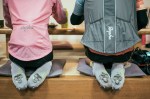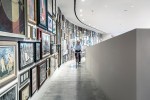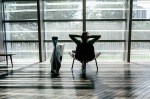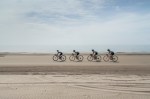
James Pawson / Made You Look

A couple of years ago, I’d arranged to interview Rapha’s Head of PR at their Imperial Works headquarters. After entering the building down a ramp with employees wheeling their bikes to the waiting storage area, we joined the queue for coffee before climbing the stairs to a large open plan work area. During the various introductions to different operational teams, I can remember passing a section of the floorplan closed off with tall curtains. Intrigued, I slowed, only to be led away with a few hushed words of explanation. ‘Oh, that’s just design.’ 

I’ve always assumed that this understated remark was simply their polite way of diverting my attention. Because judging from the number of product launches we see in response to each new cycling season, clearly these designers are kept busy. But what, in effect, do they do?

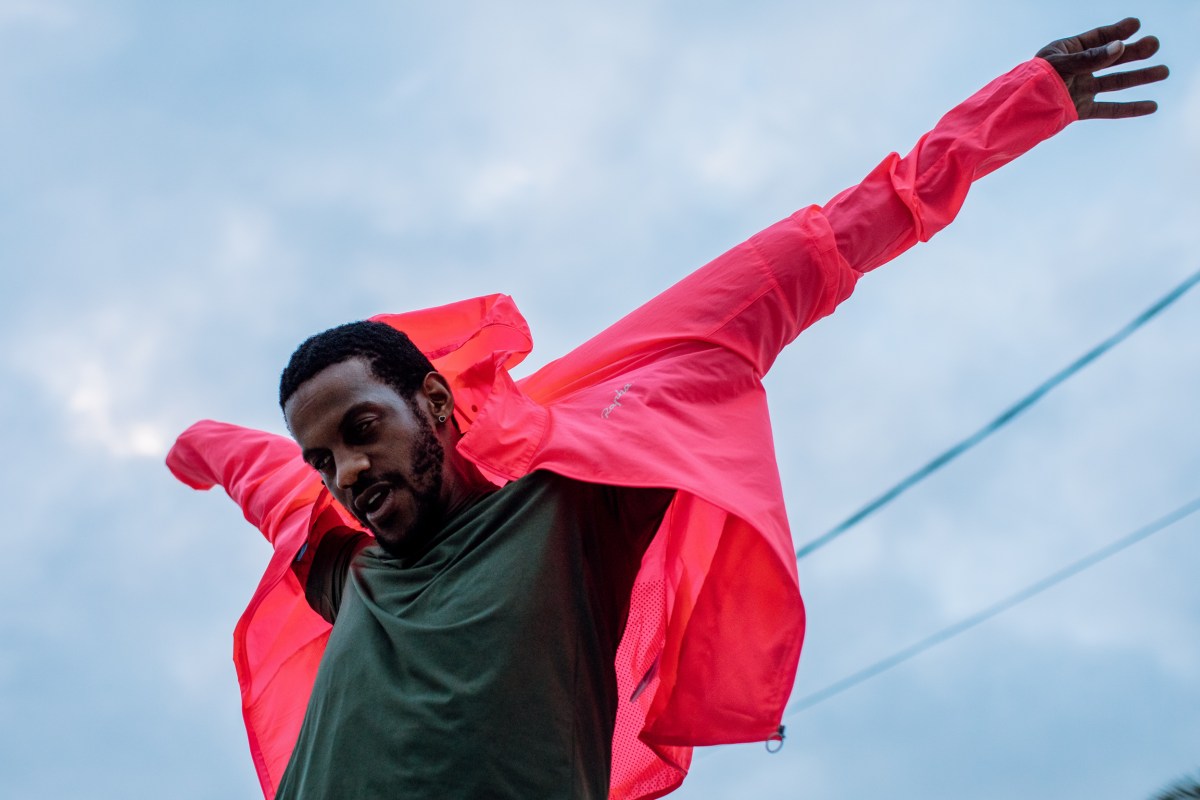
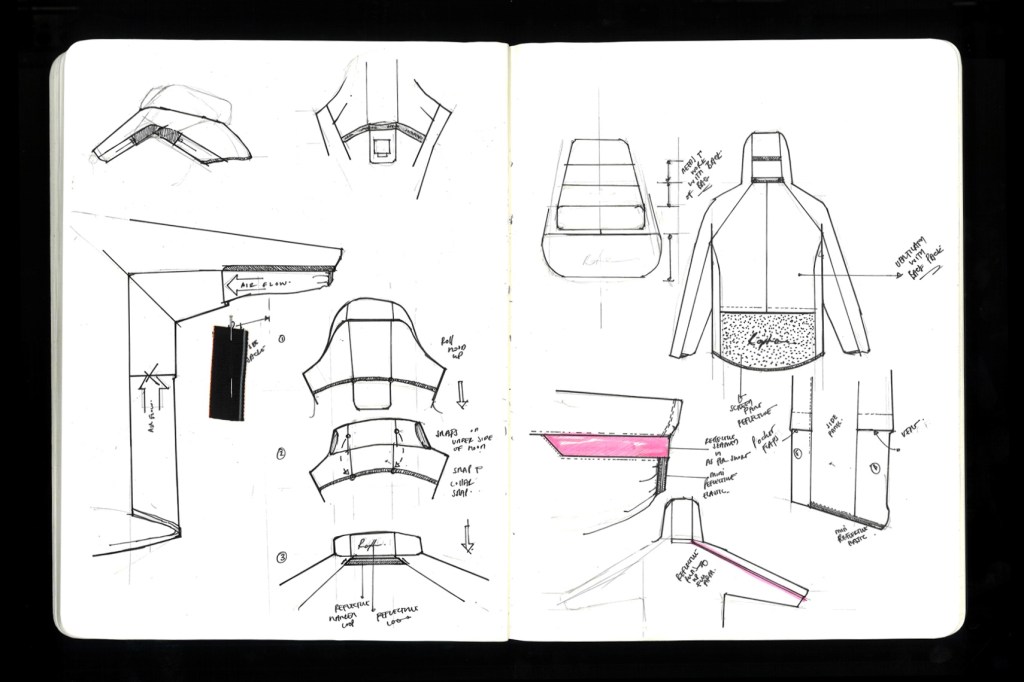
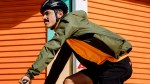
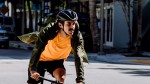
Responsible for the design of Rapha’s recently launched Lightweight Commuter Jacket, James Pawson has a passionate understanding of the creative process in his role as Product Designer with the London-based company. And in telling the behind-the-scenes story of this particular piece, perhaps offering us an insight into what lies behind that curtain…

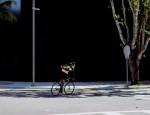
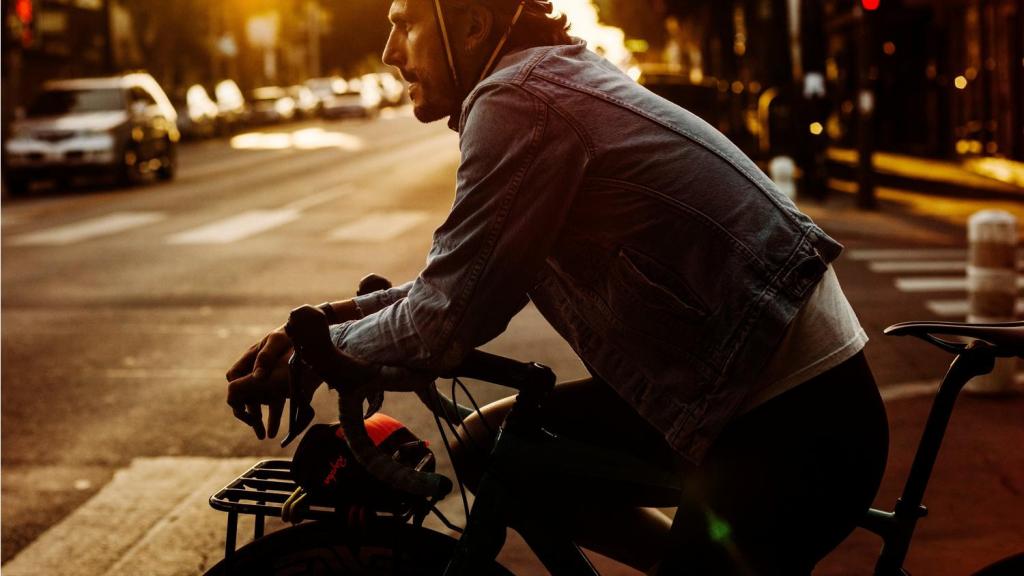
It’s important to understand the problem. And because I’ve lived and commuted in London for close to 10 years, I kind of knew what this piece needed to do. It’s a challenging environment for riding so visibility in both daylight and into the evening is a must. And it was also about nailing the fit; ensuring there’s a balance between form and function. A focus on detailing that I think it’s fair to say Rapha has a reputation for.

Version 2

So from this starting point, you marry the needs of the customer to how they will wear the piece. And having used the original jacket on my daily commute to work, I was aware of certain design aspects that I wanted to revisit and refine. We’re very fortunate to have our own atelier where pattern cutters and machinists can run off these little 3D mock-ups of maybe a cuff detail, a hood or a pocket opening. Allowing me to play around before building these separate parts into the design of the final product. Trying an idea, getting it out on the bike and seeing if it works.

To me, this questioning attitude is fundamental to the role of a designer but I am aware that I drive my team crazy because I’m never satisfied; always wanting one more prototype [laughs]. But at Rapha, that’s kind of expected. Never leaving any stone unturned in a quest for the best a design can be. And if our customers could actually see the amount of work that goes on behind the scenes, I’m sure they’d understand why we always try to take our products to the next level.

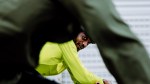
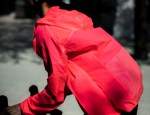
Moving forward from this initial concept stage and addressing the technical aspects of the design, the elasticated cuffs, hem and hood all have three yarns of 3M reflective knitted in. The round reflective patch on the rear of the jacket originated from our story labels but was simplified down and externalised to not only be functional but to also incorporate the ‘Made You Look’ tagline. In terms of placement, you’re always going to need the reflectivity on the lower back so we positioned this to be visible below the bottom edge of a backpack and level with the eye line of car drivers. A design concept I put to the test riding home with a colleague of mine when she must have got some funny looks; sitting on my wheel taking pictures of my rear end to document the placing of the various reflective elements.

Version 2

Sometimes this process can be product specific. You take the Classic Jersey, for example, and we can only go so far from that particular brief. But with other lines, we have quite an organic approach and it’s fun to see where it takes you in terms of the look and feel. For this jacket, I knew it had to come in at under £100 and include x, y and z in terms of features. So it was my job to make that happen.

Design doesn’t happen in isolation and I’m also working on the next generation of waterproof commuter jackets. We envisage these two garments sitting side by side and complementing the different international markets. There’s the west coast of the States where it doesn’t really get cold or wet enough to ride in the waterproof piece but then we have the European and Far East markets where the climate means a fully waterproof version sells well. And it’s the same with colour. The ones that pop really resonate in Australia, South Korea, Japan and the West Coast. Whereas in the UK we love a muted black, navy or green. So we try to ensure we’re offering a decent range of choice and these decisions are very much influenced by the insights we get from our worldwide network of clubhouses and our regional managers. A little nugget of information from Taipei or a suggestion from San Francisco can be invaluable and helps balance what the customer wants with showing them something new.

Looking at the design process in its entirety, the very beginning and very end are for me the most satisfying. When you start a new project, at that point you’re at your most creative with a period of time to try out new concepts and ideas. A really exciting search for solutions that can even challenge what the team expect you to come up with. And then on the flip side, when you finally get to see your design being worn by someone. Maybe on your commute or riding around Richmond Park; to understand that hard-earned cash has been spent on a product that you’ve designed is so rewarding.

JP_Sketchbook 2

Not that every decision works out though. And as much as I hate it when this happens, you have to accept that failure is an important part of the design process. Sometimes you need to acknowledge when you’ve reached a deadend and it’s a case of, right, how can we start again? There’s always lessons to be learned and you’ve just got to be quick to react to them.

As a designer, I find how you soak up information is constantly evolving. I graduated less than 10 years ago and in that relatively short time, the influence of social media has become increasingly important. You need to be aware of it to ensure your product is culturally relevant but still balance this understanding of what everyone else is doing with your own references and how you choose to interpret them.

In terms of the manufacturing side of things, we also need to consider how environmentally responsible we are in our designs. Especially as we sit first in the consumer journey. If we really own those decisions by producing quality products that will last or maybe pushing to use a recycled fabric or zipper; then hopefully it will have a ripple effect across the industry and the customer will grow to expect that level of change.

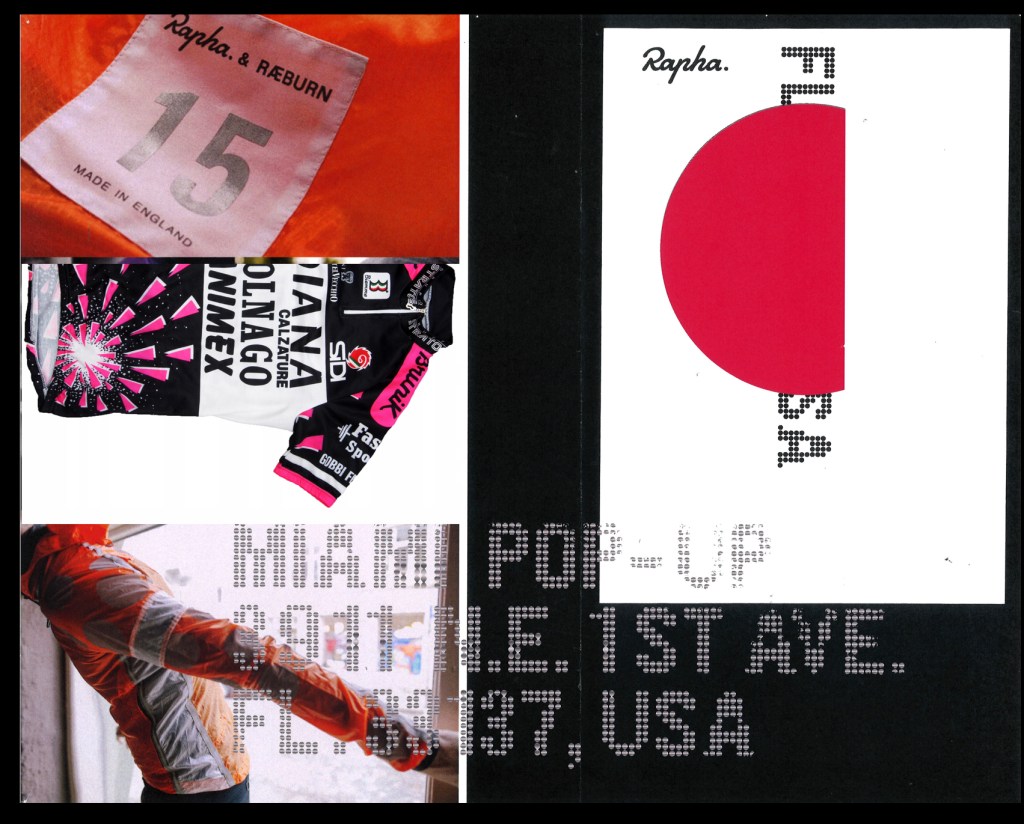
Which colour of Lightweight Commuter would I choose? My original research referenced a piece from the Rapha & Raeburn collaboration. An amazing jacket in recycled parachute silk with this vibrant colour scheme. So I’d go for orange because it’s really visible when I’m riding to and from work. And it still looks cool if you want to wear it out around town [laughs].


Research and sketchbook images by James Pawson

Photography with kind permission of Rapha UK

Hannah Barnes / The Wild Ones

Having a palmares that includes a British national road title and the UCI Team Time Trial World Championship, Hannah Barnes is no stranger to leaving it all on the road. And with a season start racing Omloop Het Nieuwsblad alongside her Canyon-SRAM teammates, Hannah [pictured above, left] reflects back on her early days as a professional, how she transitions from the off-season and how it feels to ride with the ‘Wild Ones’.

In your online journal you reference the off-season and not needing to worry about form and power numbers.

After last year’s final race I had 5 weeks of doing nothing. No bike, no riding. Eating and drinking a little more and having loads of fun. The 25th November was my first ride and over the following 6 weeks it was pretty slow and steady. Getting the base miles back in until the New Year after which you start to add in the intensity.

So now that you’re at the Canyon-SRAM pre-season training camp, I was wondering what emotions run through your mind when you look ahead to the coming year?

Well, numbers do matter [laughs]. From mid-January it’s quite specific training with a lot of intervals. But it’s been good to see the progress this winter which is a positive. We’ve been enjoying some good rides together and pushing each other. And everyone knows that we’re close to starting the season and that brings with it a sense of excitement.

Is it possible to predict form?

Even though you’ve had 5 or so months away from racing you still have some idea of how well you’re going but you never really know until you’re standing on the start line. In December it’s very relaxed – the training is just long and social – but now we’re at the camp it’s much more focused. Riding out to the climbs; a lot of meetings where we talk through how we’re going to approach the races and the strategies we can use.

h120_studio_canyonsram_london_42

Looking at the Rapha ‘Wild Ones’ promotional launch for Canyon-SRAM, I noticed that certain words seem to resonate: uniqueness, power, trust, family. And I was wondering about the dynamics of building a new team for a new season?

Some of the team are more experienced than others but I feel that’s a really good way for individual riders to build on performances and develop their race craft. And it’s nice to appreciate the riders that are new to the team; so super motivated and excited to race.

You’re quoted in the promotional material as stating, ‘We’re all wild women…some are quiet, some are loud.’ Where do you sit on that spectrum?

More quiet. It takes me a very long time to open up. I’m fine once I feel comfortable but I’m quite shy if I’m walking into a room of people I don’t really know.

Does that translate into how you race?

Yes [laughs]. It’s actually very noticeable that the louder riders that we have – in the sense that they’re not afraid to say what they think or shy away from their opinions – they’re definitely the ones that race more aggressively. Not in a nasty way but in the sense that they instinctively don’t hesitate.

Speaking of race craft, one of the overriding memories I have of watching you race was the time in Woking when you crashed heavily. You picked yourself up, chased back on and took the bunch sprint to win the race before receiving any medical treatment. 9 stitches to the face, I believe. And I thought that spoke volumes about your drive and determination.

I didn’t really appreciate how bad it was [laughs]. Going on to win the race, it’s quite astonishing what adrenaline can do. But as soon as I crossed the line it suddenly hit me. They had to delay the podium because I was sitting feeling faint in the little tent they have behind the finish.

Your teammate Christa Riffel is pictured in her new kit but with a broken foot and this made me think back to 2015 when you broke your ankle and attended the January 2016 pre-season camp on crutches. Have you been able to help Christa get through this temporary set back?

h120_studio_canyonsram_london_03

We’ve had quite a few injuries on this team so we definitely reassured her and told her not to panic or be worried. Because even though she won’t be racing until the middle of April, the season is long and she’ll be able to feel the benefits of this later start in August and September when everyone’s pretty tired and she’s still really motivated and got some energy left.

And feeling fresh?

Well, fresher [laughs].

Because 12 months on from that 2016 pre-season camp you posted a picture on Instagram showing how the muscle mass had reduced after you had your plaster cast removed. So I was wondering what sustained you emotionally as you worked back to full fitness?

I think coming back from the injury in some way mirrors the drop in fitness you have in any off-season when you’ve been completely off the bike. Just more exaggerated because you’re starting from ground zero and there’s just further for you to go. But you put in the work and every day you see, not massive steps forward, but a gradual improvement that’s motivating in itself.

Your team has seen a number of new signings through the Zwift Academy competition and I know that you benefited from support from the Rayner Foundation [formally the Dave Rayner Foundation] when you were starting out. How did this support help and what are your memories of the Foundation from that time?

It really helped because, back when I was 19, I was living in Holland but wasn’t getting a wage. So I had to work through the winter at a hotel. Six in the morning to three in the afternoon before getting home, changed and out again on my bike. Long days and not that enjoyable but I needed to save up as much as I could ready for the start of the season. And there were times such as when I’d raced and won the Smithfield Nocturne when I had to email the organisers to ask if they’d please give me my prize money early as I needed to book a ferry home to go to the Nationals. Really hard times and the financial support I received from the Rayner Foundation was so very important in allowing me to carry on racing.

Going back to talking about training, are you happy to get out rain or shine?

It depends on what mood I’m in on the day [laughs]. And I moved to Spain so they’re fewer days when it’s too miserable to ride outside. It also helps that we’ve got a really good relationship with Zwift if I do decide to stay indoors.

h120_studio_canyonsram_london_06

So as a professional cyclist, what do you think are the biggest misconceptions from the outside looking in about the life that you lead?

That it’s glamorous [laughs]. Because that’s not always the case at all. And people think that being able to ride your bike every day must be so much fun but there are days when it’s a job. Though I still wouldn’t change it for the world.

Racing, training or off-season; what does it mean to ride your bike?

When I’m at the airport, people will see the bike box and ask what it is. So maybe I take for granted that wherever I go, the bike goes too. And, for me, that suggests a certain sense of independence that a bike gives you. I can remember my Dad saying when we were little that a bike is fast enough to get you somewhere but slow enough for you to see everything on the way. With Canyon-SRAM we’re all riding our bikes for a living and there’s days when I do wonder how I’ve got myself into this situation; how cool it is [laughs]. My bike has taken me to some pretty crazy places and allowed me to meet some really amazing people. So what does it mean to ride my bike? Freedom, I guess.


Hannah Barnes

Canyon-SRAM

Rapha / The Wild Ones

The Rayner Foundation

All images by Ana Cuba with kind permission of Rapha UK.


Henrik Orre / Cooking and other adventures

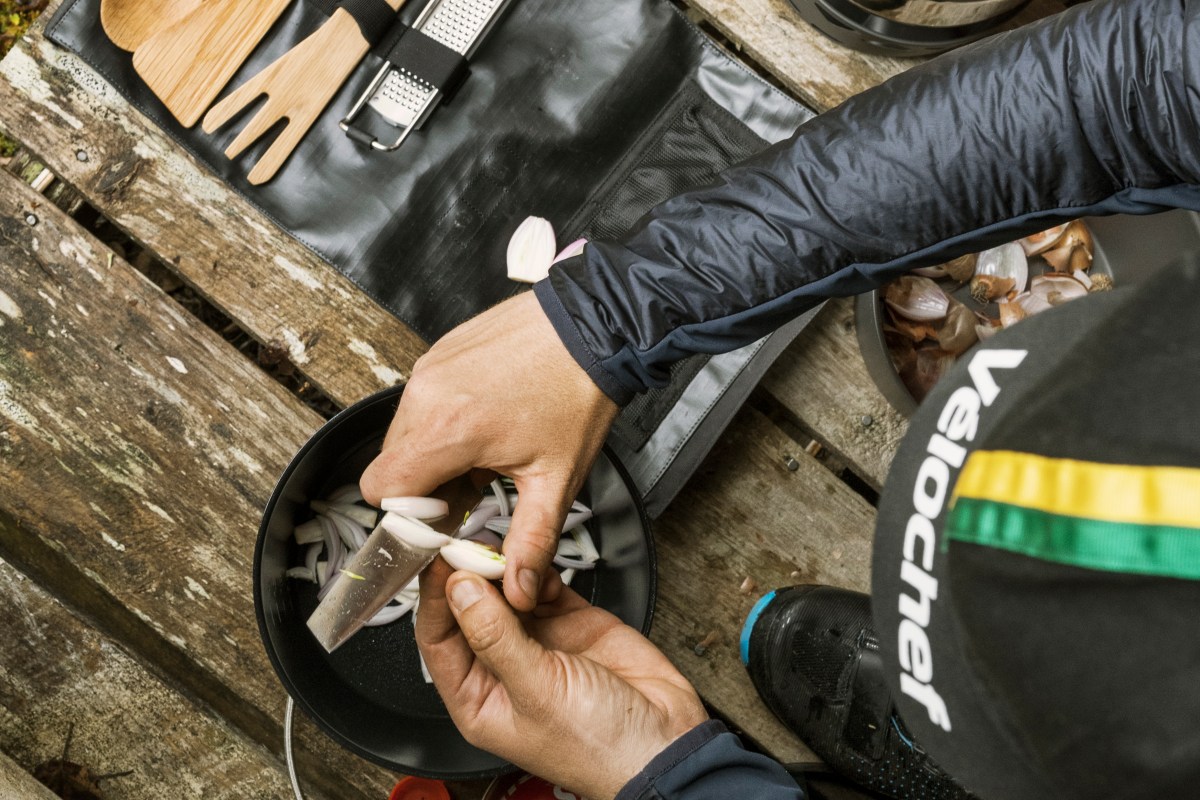
In a country known for its cross-country skiing, having a father and brother both winning national cycling titles added a nuanced aspect to a childhood growing up in the small Norwegian town of Tönsberg. Not that Henrik Orre decided to follow the same path and race professionally; choosing instead to enrol in chef school before starting his first cooking job at the age of 18. But cycling nevertheless has been a thread woven through Henrik’s career to date. Initially when he took on the role as chef for Team Sky, through his series of Velochef publications and then, more recently, in the launch of Service Course Oslo.

Now that he’s putting the finishing touches to opening his kitchen to guests and illustrated by images taken from his third Velochef volume, Henrik talks about the hard hours required to achieve the highest level of culinary art, where he rides his bike on his rare days off and how childhood days as a Scout inspired him to take his cooking outdoors.

_______________________________________________

‘I never got into racing like my father and brother. I just had an old BMX bike that I used to ride around where we lived. I saw how much effort was required from my brother to race on a national level and thought, yeah, you go do that and I’ll try something different [laughs].’

No stranger to hard work, Henrik’s competitive nature came to the fore when he gained a place on the Norwegian National Culinary Team before going on to win the Culinary World Cup. His experiences working under a head chef who didn’t advocate an old-school approach to kitchen management encouraging Henrik to develop his own style of leadership based on friendliness rather than fear.

Primus stove

‘I learned a lot and respected that attitude so I guess I was trained in the same mould. Leading by example rather than just shouting at people. And restaurant work will always be special for me. Starting from scratch; taking a new team from zero up to our two Michelin stars in less than a couple of years. A lot of hard work but it’s so satisfying to see the reactions of your guests when a beautiful plate of food is placed in front of them. And to pull this off – night after night – you need a very sophisticated team working at the highest level. From the kitchen right through to front of house; more a lifestyle than a job really.’

Accepting the role of Team Sky chef in 2013, Henrik quickly discovered that although the quantities may be more substantial, professional cyclists appreciate food that tastes amazing just as much as his restaurant guests. The consideration of nutritional requirements just one element of a far-reaching focus on detail that made the team much talked about both in the media and on the professional race circuit.

‘We could even translate Team Sky’s marginal gains in terms of food. Looking at every step of our operations and leading to us investing in a mobile kitchen truck to provide a safer and more efficient environment to prepare our meals. Much more controlled in terms of hygiene as it removed the need to use hotel kitchens. Even down to the way we transported our food in a temperature-controlled vehicle.’

_DSC6343

Mentally throwing a switch to cope with the intensity of life on the road, Henrik describes working in a professional bubble for up to 4 weeks at a time; the circus-like atmosphere of the Tour being a particular favourite race. Plans that were made the previous December implemented during the early season and culminating in victory on the Champs-Élysées. A working culture, as Henrik sees it, where every team member counts towards helping the riders perform at their best whenever it’s needed.

‘I loved my time with Team Sky but it was hard work and when you’re on the road it’s difficult to switch off. My day would normally start around 7:00am when I’d go straight down to my kitchen to start on the breakfasts. The boys would then head off on the bus, leaving us to pack up the truck ready for our transfer. This could involve anything from one to four hours of driving depending on the route with hopefully enough time to do some shopping and sit down to lunch after arriving at the next hotel. But then you’d have to immediately start prepping for the team dinner. Working through the evening and then straight to bed. No chilled time at all [smiles].’

Following a conversation with the photographer Patrik Engstöm in 2015, the Velochef concept grew from Henrik combining his previous restaurant experience with his role at Team Sky. Having worked together previously, Patrik suggested the idea of producing a cookbook that married healthy food and cycle culture. Fast forward a few months and ‘Velochef: Food for Training and Competition’ was published containing 80 healthy recipes based around meals to have before, during, and after training.

Camp fire

‘We believed there was a gap in the market. That’s why we considered the project in the first place. And if you work at producing a book that looks nice, with recipes that are tasty and you add a few stories about professional cyclists; then maybe you have a better than even chance of it working. Having Team Sky in there certainly helped [laughs] and we both definitely believed that our concept was a good one. But, to be honest, when it was first published we’d have been happy to just sell the first print run and break even. And it still surprises me today how many people still ask about that first book even though it’s currently sold out. A lot of emails before Christmas [smiles].’

Adopting a similar approach to creating his Velochef recipes that he applied to his time working at a Michelin starred restaurant, Henrik describes starting with the main ingredients before considering what to add around them to make a meal. Though admittedly with a different range of ingredients and equipment than his readers would realistically have available in their own kitchens.

‘In a good restaurant there’s few limitations and therefore, in a sense, endless possibilities. With Velochef, maybe I had to go a little slower. But even so, I think people nowadays are generally more aware of what they’re eating. More focus on individuals taking responsibility for their footprint on this world and that’s not just in relation to the food they choose but also in their everyday lives as consumers.’

_DSC6549

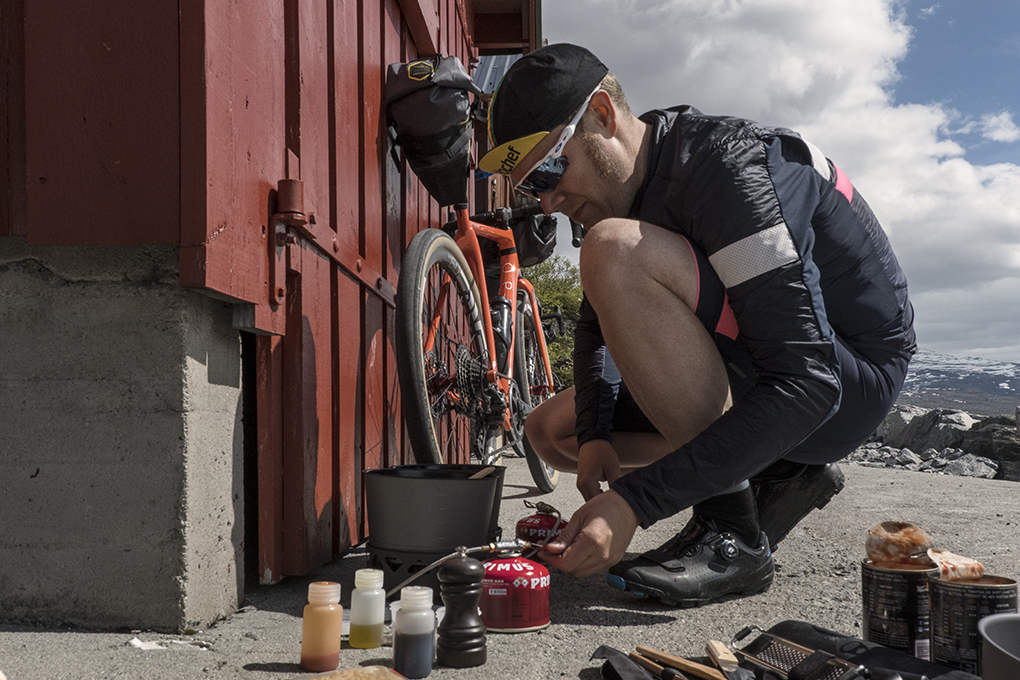
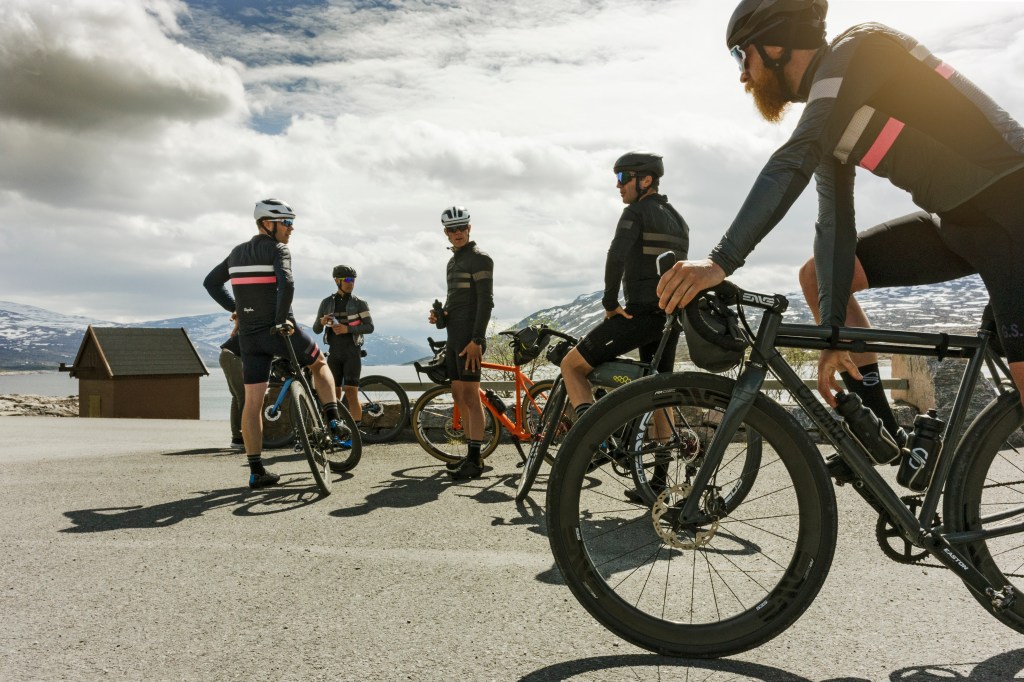
Following a second Velochef book with a theme of local recipes and epic rides, recognising the growing trend for gravel riding led Henrik to a new approach by taking his readers out of the kitchen. Inspired by childhood memories of being a Scout when he learnt to cook over an open fire and once again featuring photographs taken by Patrik Engstöm, ‘Velochef: Food For Adventure’ shows Henrik not only cooking over a portable gas stove but also riding his favourite gravel bike across a backdrop of suitably epic Norwegian landscapes. A style of cycling he enjoys whenever he can spare time away from his work and family commitments.

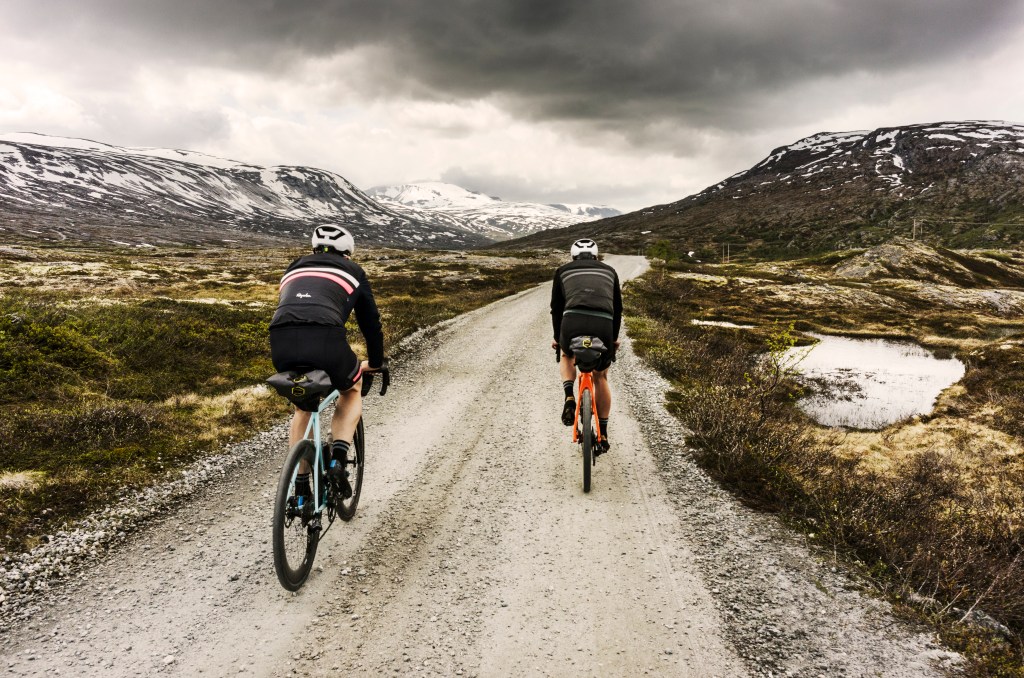
‘I recently moved back to Oslo after 12 years living and working in Stockholm. We have this network of gravel roads that are only 20 minutes from the centre of the city. 550 km of non-stop trails running through the woodland that are used for cross-country skiing in the winter and are perfect to ride in the spring and summer. There’s usually a cabin in the woods where we can call in for a coffee and maybe a cinnamon bun or a waffle. I never do gels or energy bars. If I do bring something I prefer to carry a little sandwich or a banana. I much rather have natural foods to be honest.’

Sometimes accompanying Henrik on these rides, Jonas Strømberg not only features in the images that illustrate the third Velochef book but also recently joined Henrik as partner in a new business venture.

Gravel

‘The project first started with Jonas. We’ve been friends for a number of years and because he had his bike shop and I was doing my cooking we always said that one day we should do something together. And then two years ago we were both working on a gravel event in Oslo with a quick dinner planned at his place on the night before. The one glass of wine that we poured to accompany our food ended up being four bottles as we just talked into the night; laying down a plan that would usually form the memory of an enjoyable evening in good company but this time we decided to actually follow through.’

‘I asked a few colleagues in Oslo if they knew of any suitable premises for a combined cafe and bike shop. But even though we really felt our concept was strong it soon became apparent that we didn’t have the required finances and resources to get the project up and running. So the idea of working together was starting to fade until, by coincidence, I had a call from Christian Meier to say that he had investors for the Service Course and whether I was interested in coming onboard. I explained that it all sounded really good but we’d committed to this unfinished project. He came to visit with another of his investors before asking when we could open our very own Service Course in Oslo [smiles].’

With the decision made, everything came together really quickly and the store opened in November 2019 with a cafe soon to follow. Both Henrik and Jonas excited at the prospect of establishing the Service Course Oslo as a destination for cycling, food and coffee throughout the whole year. The strip of cobbles that bisect the shopfloor just one aspect of a strong visual identity the pair have brought to their project.

_DSC6291

‘I’m a devil in the details. But that originates with my cooking and the constant questions and searching for solutions that comes with the recipes you create. Striving to improve on a daily basis; never standing still. And it’s the same with cycling. I’m not a good mechanic but I’m an expert at cleaning my bike [laughs]. I feel it says a lot about you as a person.’

‘Jonas is a stylish guy,’ Henrik continues. ‘Knows how to ride and brings years of retail expertise. And for both of us, the Service Course Oslo is now a full-time job and we’re working together with this common goal. There’s still things to sort out – paperwork that needs to be done, constant meetings and ‘to do’ lists – but I know that I’ll soon be cooking in my new kitchen. And for me that’s the reward. When I can walk in, switch on the lights and go full gas. Serving good coffee and great food. It can’t get better than that, can it?’

Henrik Orre

Special mention to photographer Patrik Engstöm for the images he shot to illustrate ‘Velochef: Food For Adventure’

Food for adventure

Vincent Engel / Riding the roof of the world

I first got to know Vincent Engel a couple of years ago when I needed some images to illustrate an article on Rapha Amsterdam. Vincent’s beautiful photographs of riders set against sweeping Dutch landscapes perfectly illustrated the clubhouse cycle culture. At the time, however, he was still transitioning into his new career as a photographer and even finding it difficult to use that particular term. Fast forward to 2020 and Vincent is now busy balancing his time between working for Rapha and his own photographic commissions. The reason we’re once again sitting down to chat now that he’s returned from riding the roof of the world.

So, a good trip?

After I got back from Tibet I immediately left for Mallorca and the Rapha Summit so I’ve only recently had time to process my thoughts and feelings about the experience.

You were working with Serk; a cycling company based in Beijing, China

I have an architect friend who was over in China when I was still working in Saudi Arabia. He’d mentioned that one of the company’s co-founders, Shannon Bufton, was giving a lecture about cycling in China. Shannon’s an Australian, an architect and was living and working in Dubai before going back to Beijing and setting up Serk with Liman Zhao. I was intrigued so asked my friend for his email address and sent him a message.

And he got back to you?

Shannon was keen to have me over in Beijing to see what Serk was doing so he invited me to accompany one of their Everest trips and take some photographs.

What an amazing opportunity.

It certainly was but at the same time I was thinking Everest? Cycling? This was something I had to carefully consider and by the time I’d made a decision there was a problem with getting the correct permits. An opportunity of a lifetime that I’d just thrown away and a hard won lesson that you should just say yes and think about things later [laughs].

P1117223

So where did it go from there?

We kept in touch and when a friend here in the Netherlands was planning an Everesting challenge I suggested that he join one of Serk’s trips and ride to Everest itself. He liked that idea and thought it would be good if I came along too.

And this time you said yes?

I did [laughs]. Shannon was really happy with this arrangement but just needed to square the funding. This led to him designing a complete clothing set for each rider made from yak wool instead of merino and these sales allowed me to take a place on the trip with a green light to do the photography.

So how do you prepare for riding in Tibet?

You really want to know, Chris?

Yes, Vincent, I really want to know [laughs].

I completely didn’t. I was so busy with work for Rapha that I never seemed to have any spare time. And that was combined with my worst year on the bike – only riding 2,000 km – and a sense of nervousness because I knew that a photographer that accompanied one of Serk’s previous trips had the flu and really got into trouble because of the altitude. So I was very aware that you needed to be fit and healthy but maybe didn’t fully expand on my lack of ride preparation with Shannon [smiles].

I suppose it’s difficult to know quite what to expect on such a trip?

It is because I didn’t have any reference points. Especially when you consider the  extreme altitude. And then I also had to decide whether to shoot from the bike or from the support vehicle.

P1116854

And what did you decide?

Well, I didn’t take a bike with me so I guess that’s pretty self-explanatory [laughs]. And Serk has its own titanium range so I knew I could borrow a bike if needed. But then I caught a cold immediately after arriving in Beijing. Just what I was afraid might happen and accompanied by some serious teasing from the group in response to all these photographers – past and present – falling by the wayside [laughs].

So you had a dilemma?

Yes. To go with the group or pull out. Weighing up the options of joining a trip, literally, of a lifetime or playing safe.

Was the latter really an option?

Thanks to a medicine called Diamox that treats altitude sickness, no [smiles].

From the outset you weren’t planning on travelling by bike but you had other equipment to think about. Did the climatic conditions affect your choices?

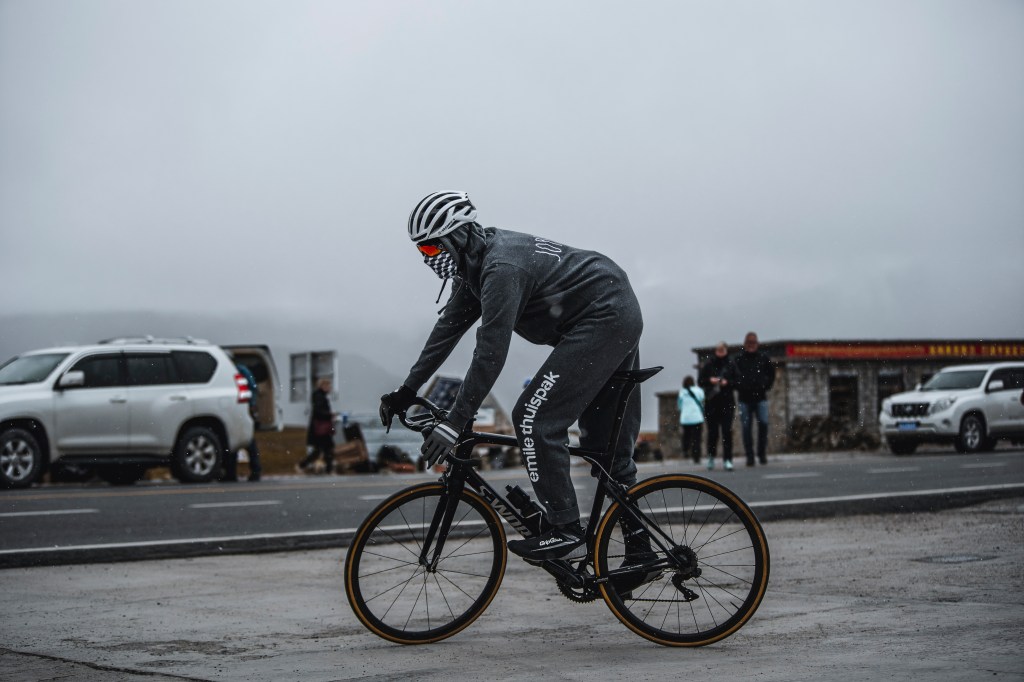
The Leica SL system that I use is so robust that I wasn’t particularly concerned; even though the weather in Tibet can be one of extremes. It can be very hot but we also had a few days of snow. And it can change every 15 minutes so that was the difficult aspect. The most commonly asked question that was directed at the guides concerned what the riders should wear. And the answer was always the same. Just bring everything because, at some point during each day, you’ll probably need it [smiles].

Can you tell me about the ‘onesie’ suit that one of the riders was wearing?

He was the youngest cyclist on our trip and a little bit of an extrovert. He had this one-piece suit for wearing in the van to warm up if the day proved wet. But on one particular descent in the worst weather ever – rain, snow and hail – he decided to wear it on the bike. It made for an interesting image [laughs].

P1094820

Looking back on your pre-arrival expectations, when you landed in Beijing and then took the internal flight to the start of the first stage in Chengdu, what were your first impressions?

I was expecting it to be a spiritual journey as well as a road trip. Shannon had already mentioned to me that everyone, at some point, cries. They get so overwhelmed by Everest and the surrounding region. And because I was looking at the group rather than riding alongside them, I could more easily observe their reactions and the effect of the altitude. That riding 50 km at 5,000 m feels more like 150 km. How breathing becomes so difficult that even walking takes more effort. And I was running out and back from the van to get the shots even though our guides kept telling me the number one rule at Everest base camp is to go slow. But I didn’t want to miss a single moment even though it was exhausting [laughs].

How did the days work out? What was the rhythm of the trip in the sense of the riders and guides?

We had two vehicles; one to carry riders and a mechanics’ van to hold the spare bikes. The mechanics always drove behind the group to attend to any issues and sweep the tour along. For the majority of the time I travelled with the lead vehicle so I could work out the best vantage points before the riders approached.

So each day started with breakfast?

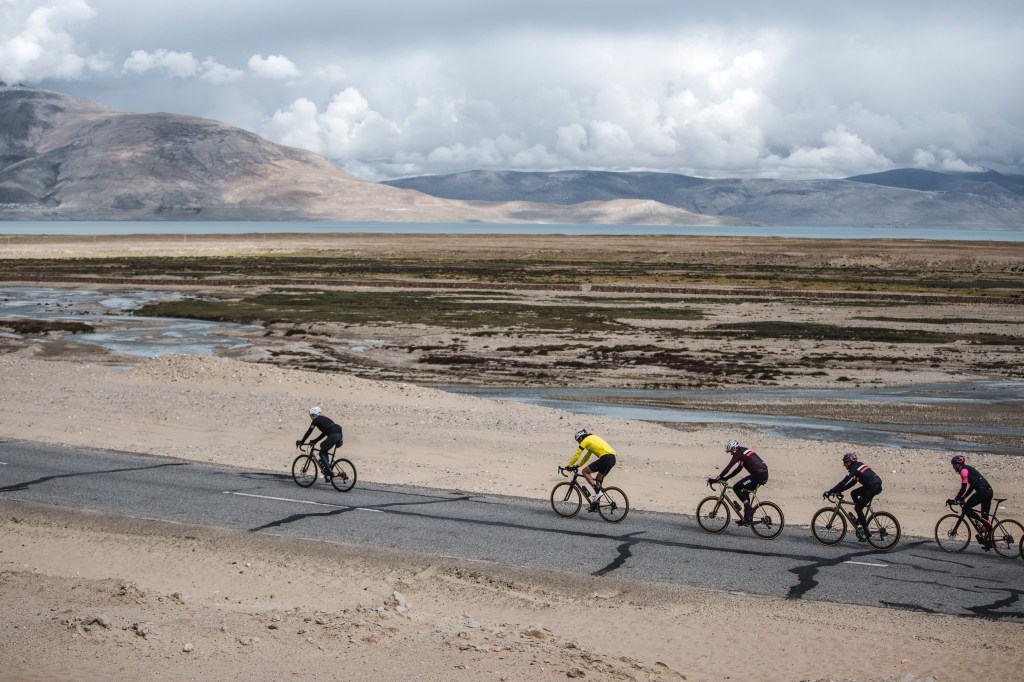
A simple Chinese breakfast of rice or noodles before the group set off riding. Each day we rode higher before descending a little to the next hotel. So, overall, the trend was a gradual gain in height to acclimatise to the altitude. Very different compared to riding in the Alps because we were starting out at 4,000 m and could still see the tops of distant mountains. Never more noticeable than when we reached base camp at 5,600 m and Everest was towering above us [smiles].

And the landscape?

This was super varied. Every day a change of scenery. Sand dunes and wild rivers; lush green vegetation and mangroves.

It must have been pretty special when you got those first glimpses of the high mountains?

I’m not one of those guys that really lives in the moment. Not a personality trait that I’m particularly happy about because it takes me until I’m back at home before it begins to sink in quite how amazing an experience was [smiles]. But the actual moment of reaching Everest? I just felt like I had a job to do.

P1093655

I can understand that you’re very focused. But looking at the shots you took, there’s such beauty in those images. A reaction that I would suggest reflects a deep emotional response. As if you’re inviting the viewer to almost reach out and touch the texture and form of the landscape.

That was the most interesting aspect of this trip; the fact that nature dominates when it’s set against the reference point of a rider.

But you also managed to combine these stunning vistas with shots taken in really quite extreme weather. Bodies covered up against the elements with their hunched shoulders and bowed heads.

They were all strong cyclists but it was a tough trip and you’d need to be superhuman not to get tired. And that was the case; some good days and some not so much. Riders completely wrecked due to the altitude with everything feeling fucked. The usual ups and downs that were exacerbated by the challenges of the region we were crossing.

Were you able to get a sense of the people and their communities?

It’s an ancient and fascinating culture. And it’s always fun to engage with the people you meet so you can pick up some simple words and phrases in their language. I wanted to visit one of the Tibetan monasteries but was a little late so decided to walk around the outside where you can see all the prayer wheels decorated with colourful pieces of cloth. I later found out that you have to turn them clockwise but I was mistakenly walking in the opposite direction which explains why individuals were trying to help me change direction. A very warm and humble people.

Any issues with flying your drone?

I actually didn’t use the drone that much. You’re already at such a great height; standing at 5,000 m and shooting down. But they’re such a fan of switchbacks over there that I did use the drone to capture those quite remarkable sections of road.

DJI_0116

Any images that you’re particularly happy with?

There are and they usually have a disproportionate use of scale. Rider small, landscape big [smiles]. Possibly not the most popular ones because people naturally prefer a close-up of themselves but they’re the ones that I personally like.

A trip that you’d recommend to other cyclists?

We saw these advertising signs rising 10 m high in the skyline that left absolutely no doubt that Tibet is part of China. Depending on who you speak to, the political situation has its supporters but also opponents. But going to Tibet in general I’d very much recommend. It’s changing very rapidly and we travelled through small villages on gravel sections between concrete curbs waiting for the road to be laid that I’m guessing are now beautifully smooth tarmac. And if you’re a fan of wide-open views then it’s definitely the country for you. But maybe a complex trip to organise. Serk made our trip incredibly straightforward with their familiarity regarding arranging the hotels, transport and guides. And then there’s all the passes and military permits that you need. So to do this on your own can’t be easy.

Any other challenges that spring to mind?

We started our trip from one of the world’s highest airports at around 3,000 m. And when we reached base camp at 5,600 m there’s only 50% of the oxygen at sea level. But riding at such an altitude; you really start to view yourself in a different way. You hit the wall much easier so it’s interesting to see how you react as an individual.

But worth the effort?

This group all knew each other so they really worked well together. When it got tough and the weather worsened they looked out for each other and there was a strong sense of camaraderie. But talking to Shannon, there’s been many occasions when riders sign up individually and then leave after a week’s tour as best friends. The act of facing these extremes together has bonded them and forged lasting relationships.

For you, personally, what were the highlights?

I just felt so humble that I was able to witness this trip. But my most proud aspect? You know I arrived with a cold and for two weeks I was a little bit sick and struggling with the altitude. But the day we were scheduled to arrive at Everest base camp I told the driver to drop me off before grabbing one of the spare bikes from the mechanics’ van and riding the final leg with the group. Of all the stages, the one that I most wanted to do. I didn’t have any cycling shoes or bib shorts. Just my Rapha trousers and down jacket, a pair of trainers and a camera on my back. And that’s how I rode the final 65 km up to 5,600 m. Something I just had to do [smiles].

P1117930

In some ways this was a trip of extremes. And I remember thinking when we spoke previously that you’d reached a certain point in your professional life where you needed to take a leap of faith. So how does this trip sit in terms of that personal journey?

From a designer’s background I have a passion for aesthetics and telling stories. And carrying a camera helps validate my life choices. As a way of learning about yourself, photography is wonderful in that it reflects your world back at you but it can also be a harsh tool. It was asking me to make a choice between using it to earn a living or keeping it for myself only as a hobby. In the end it demands passion and sacrifice. Long hours with both ups and downs and a requirement to stay excited and energised day after day.

The distance from home, the cultural differences, the altitude. Did you learn anything about yourself as you rode into base camp? Has it changed you in any way?

What I actually gained was a greater confidence in myself as a photographer. That’s the real difference between now and when we discussed this a couple of years ago. At that time I was just starting out and exploring whether I could actually make it in a professional sense. But now? I don’t do anything for free anymore. In the beginning I did work just for the exposure but that doesn’t buy your bread or pay your mortgage. So I’ve been able to discover my sense of worth. Still a very difficult business but it’s good to let go of these doubts [smiles].

Images with kind permission of Vincent Engel

Serk Cycling


Vladimir Balahovsky / Equilibrium Cycleworks

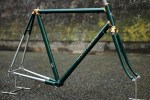
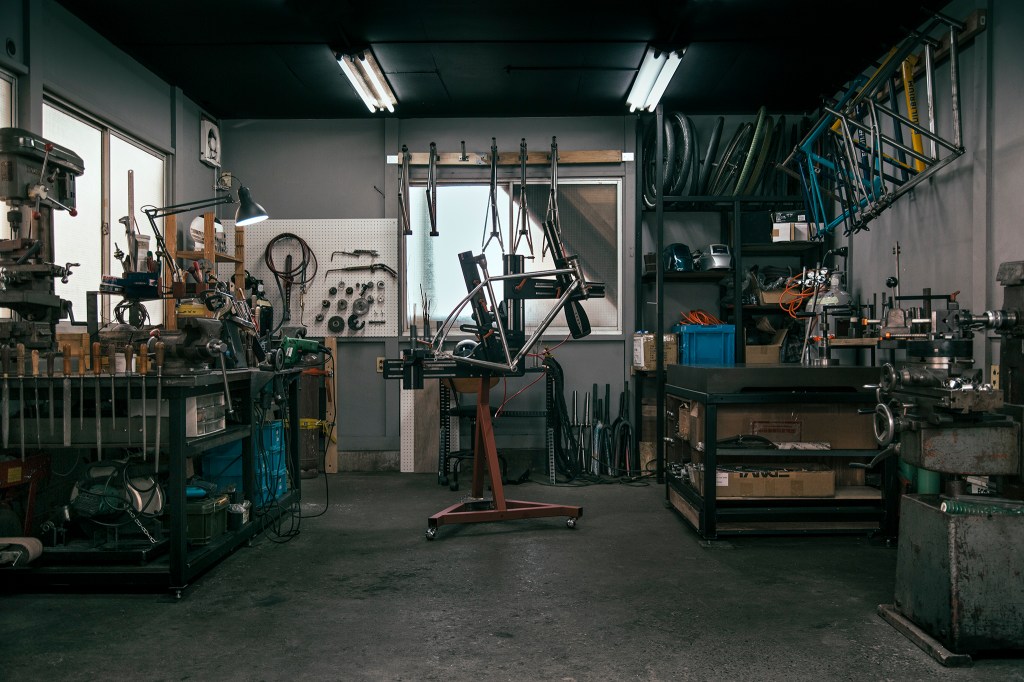
‘I was living in London when the fixed gear scene began to boom. Steel bikes all over the place with their cool, simple lines. And straight away I wanted to ride. But more than that, I wanted to make one myself.’

Growing up in a Russian-speaking region of Latvia, it took the 1991 secession from Soviet rule and the resulting relaxation in visa rules before Vladimir Balahovsky could travel to London in search of work. On arrival he accepted what would be a series of temporary jobs; the bikes he saw on the city streets inspiring him to purchase an old Raleigh fabricated from Reynolds 531.

‘I loved the freedom of riding my bike. And that encouraged me to customise the paint scheme and swap out different components. All the time on the internet researching different frame builders. Which was kind of ironic considering I’d never had any interest in building anything myself before then. I could break things but not make them [laughs]. My father was a machinist and worked in a big factory that manufactured tractors. He’d built our house himself and he could fix his car. Almost anything. But I was a really bad boy when I was a kid – just wanting to be entertained – and I can remember looking at my father and thinking, no, I’m different.’

‘But then meeting my future wife in London; that proved a pivotal moment. When she returned to Japan after her visa expired I decided to follow. Moving to Tokyo without really anything; just a couple of secondhand sweaters and a few more bits and pieces. And when I arrived I was so broke I couldn’t even afford the cheapest bike. But this made me realise that because nice track frames went for such a lot of money, then maybe it could be an opportunity to earn a living. So I began looking for a supplier and found this guy in Italy who had connections with a bike shop that had dozens of old frames and wheels stacked up in its backyard. I arranged to have these imported and sold them on Japanese eBay; finding I could make pretty decent money.’

Working out of the couple’s one-bedroom apartment – Vlad fixing up and customising his vintage finds on a tiny balcony high above street level – the government’s decision to change the law and prevent individuals from riding on the streets without brakes signalled an end to the burgeoning track bike scene. Questioning what to do next jobwise coincided with the generous gift of his wife’s grandmother’s house in downtown Tokyo. Subsequently rebuilt as a new property, Vlad finally had some dedicated space on the first floor for what his wife teasingly described as his hobby.

‘It was only a small space but that didn’t matter. I would have slept with a bike if required. And looking back it was clear I had reached a crossroads. Should I decide to look for a regular job or try and pursue my dream of building my own frames?’

386A4360_edit_fin_2048

‘But my whole story has been a series of coincidences,’ Vlad continues. ‘And I wonder if it ever really depended on me or whether it was destiny. I wanted to learn to build frames but, at that time, the interest was too high. Everyone was riding steel bikes and the frame-building courses had waiting lists of 2 or 3 years. But somehow I still believed that if I could connect with cycling I could make it my future job. And all the time that I was selling on eBay I was researching on the internet about the different steels and components. Constantly educating myself; I couldn’t think about anything else.’

Able to communicate conversationally in Japanese, Vlad had visited a bike workshop in his local neighbourhood to arrange for a couple of repairs. The proprietor, Mr Ohtaki, was a passionate and well-respected NJS frame builder and when Vlad decided to take the plunge and ask if he would teach him how to build a frame, without hesitation the master craftsman gave Vlad a list of the tools that he would need to get started before explaining where he could source them.

‘I’d tried to prepare myself with my research but dry knowledge doesn’t allow you to grasp the intuitive aspects of the build process. So I’d stand for hours and just watch how Mr Ohtaki moved; how he used the file. And by watching him I was becoming attuned to his world. If you can see the precision of a professional craftsman’s movements – how calm they are – it’s the most beautiful thing to behold.’

‘I spent weeks at Mr Ohtaki’s workshop where he showed me the various aspects of fabrication; building a couple of frames together before it was time to work on my own. Brazing tubes together, over and over; just practising. The process is very strict and if you don’t know what you’re doing, it can be a disaster. You have to be really confident and that requires time. Many, many hours of practice. And in the beginning my standards were really high. In the work of Mr Ohtaki I had a mental image of how it was supposed to look. Everything visually sharp and crisp.’

Years later and with his own frame-making brand now firmly established, Vlad views the help and encouragement he received as a priceless gift that considering his Eastern European background was quite extraordinary. He understands that his ability to communicate in Japanese was crucial but Vlad recalls many conversations with machinist shops in the neighbourhood that although polite never led to a working relationship.

‘You’d say hello and they’d acknowledge you but that was about it. Perhaps they’re a little shy or embarrassed that they can’t communicate easily. Especially if they don’t speak English. But the Japanese have quite rigid views and don’t always feel particularly comfortable dealing with foreigners. So me learning from Mr Ohtaki was so very unusual that it’s hard to believe it actually happened.’

Setting himself such high standards for the frames he fabricates, Vlad is not an individual easily pleased or willing to rest on his laurels. Each completed project brings a certain sense of satisfaction but these are fleeting moments before the process starts all over again. A sense of forward movement that he considers, on balance, to be positive and driven by a desire to never simply repeat. A professional drive for perfection now supported by a fully-equipped workshop but rooted in the lessons learnt at his mentor’s side.

‘At some stage not having the proper tools is just a waste of your time. You need to embrace the efficiency and time-saving qualities they bring. But in the beginning, you risk missing out on the opportunity to learn at a deeper level. When I first started building I had to cut all the tubes by hand and then master the proper filing technique. So the most precise and efficient tool is yourself. Your eyes and hands. At least in my opinion [smiles].’

When the time came to establish his Equilibrium brand, Vlad intuitively understood that any implied considerations of balance related to not only the rider’s experience and the bike as a physical object but also to his own emotional engagement.

386A4310_edit_fin_2048

‘Building a frame; you can’t rush and you can’t be angry or upset. The perfect pace and state of mind is vital otherwise you start screwing things up. Your inner-self attuned to the object you’re creating; allowing your senses to express themselves in harmony.’

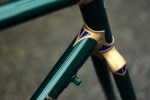
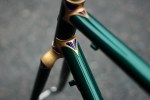
A holistic approach that he extends to the fabrication of each frame and beyond. Vlad viewing the bike and rider as part of a shared journey that is referenced in the headtube badge. Two intertwined letter Es that represent the coming together of the various facets of the build process to create one whole experience.

‘The only true opinion that matters is when an individual rides one of your bikes. It’s then that you find out if you’re on the right track [smiles]. And the standard of the competition is very high so there’s a requirement to constantly invest in refining your skills and technique. I started TIG welding a year ago and it was so difficult that I just had to stop and focus on learning to do it really well. I didn’t build any customer frames for two months because if you aren’t practising for one or two days you lose any proficiency you’ve gained up to that point. A considerable cost in not doing your regular job for so long but how do you put a price on the time you spend in education; for trying new things?’

New directions that account for Vlad’s recent decision to also build in titanium after years working solely with steel and the reason for the welding lessons.

‘The ride quality is really amazing and there’s so many advantages to this material that makes sense for a cyclist. The power transfer is so efficient. You push the pedal and the bike simply goes. It works with you; every single effort is rewarded. So smooth in absorbing vibrations it’s as if you’re levitating above the road. And throughout my career, what I’ve always aimed to deliver is a sublime ride experience. But to be honest, that’s regardless of the frame material. Maybe one day I’ll build the perfect carbon bike or even one using bamboo [laughs]. If it works, then why not?’

‘I never want to stand still,’ Vlad concludes, ‘and I suppose that’s why I’m always asking questions about the bikes that I build. 6 months before my father passed away I built my first junk bike. He saw it and we spoke and he knew I was going to continue in this direction. But I really regret that when I was younger I never took advantage of his valuable knowledge. That I didn’t take the opportunity to learn. So I think this accounts for the passion I now feel. In a sense, like it’s a sport and I’m competing against myself. Keeping it fresh because I can’t build the same bike every day. I’ve got some stock models and even with these I’m thinking about how I can improve this or that. And that’s why I can’t work for somebody else. I remember in the past when I had a normal job but with zero interest. The frame building was the first time for me that I felt energised. I can wake up early and work for 12 hours and it doesn’t matter. Because I’m enjoying every single minute that I spend in my workshop.’

@equilibriumcycles

equilibriumcycleworks.com

All workshop images with kind permission of Lee Basford

Bike gallery images by equilibriumcycleworks.com

Stuart Clapp / Matters of Desire

Stuart Clapp is by nature a talker. His unabated responses to my questions – punctuated by frequent bursts of laughter – leaving me a little concerned that I’ll ever manage to interject. Fortunately we soon find our conversational rhythm and I’m regaled with energised reflections on his role as Desire Editor for Rouleur Magazine, his considered views on cycling etiquette and why it’s sometimes better to spend more but buy once.

You’ve been riding?

I went out earlier this morning but if I nod off it’s because I’ve got a puppy that keeps getting up during the night. It was so nice during the Rouleur Classic as I got a lie-in every day.

Do you have house rules for the dog? Are you firm but fair?

Not exactly. I think he sees me as an equal [laughs]. He tries to bite me all the time as if I’m on his level and he’s trying to get pecking order. Which is funny considering I’m losing out to a five-month-old Italian Greyhound that weighs about as much as one of my wheelsets.

You mentioned the Rouleur Classic. I guess a particularly busy time of the year?

I’m always really busy but I never really have a clue what I’m supposed to be doing. I did know that I was podcasting from around the show and there was some social media stuff but generally people just ask me if I want to do this or that and I just say yes [laughs].

Sounds very chilled.

It can be but when the schedule came out for this year’s Classic I noticed a Desire Presents listed on the stage timings and I thought, hang on a second, before having this massive anxiety attack. But when I messaged Ian Cleverly, our Executive Editor, he told me not to worry because they’d got someone to do that spot properly and he’d just see me at the bar [laughs].

-_7R24023675benF1 copy

How did you end up working for Rouleur?

I was at this wedding. Sharing a place with Ian because we’ve known each other for years and go to football together. And he asked me whether I’d seen the magazine recently and if I wanted to come and work on it and do the Desire section. He explained that he was asking me before we got too drunk because he wanted to have some sort of business chat. And that was two and a half years ago.

Good years?

Very. It’s been fun to see it grow bigger and bigger.

What kind of qualifications does an individual need to be a Desire Editor?

My background was in PR. I’d launched the Extreme Sports Channel – working in skate-boarding for years – and then I left to become PR Manager for Evans Cycles. I did that for a bit before getting another job in skate-boarding. Evans Cycles, as you know, are based in Gatwick but this new job offer was from a company with a head office in Los Angeles. So you do the math on that decision [laughs].

So you found yourself out on the West Coast?

A bit like cycling, skate-boarding goes in waves with these 10-year peaks and troughs. My little boy was due to be born in January and I got made redundant the day after the Christmas party. Perfect timing [smiles].

That can’t have been easy?

Fortunately I had a couple of mates at Factory Media. One of them was David – at that time the editor of Bicycle Buyer magazine – so I worked there before managing the first Rapha pop-up cafe on Clerkenwell Road. And then another job came up when I was contacted by my friend Albert at Madison. I got to know Ian and the guys at Rouleur through that job and at the same time was reading the magazine, loving it, and wondering how does anyone go about getting a job there. How do you write for Rouleur?

-_7R2487275benF1 copy

So the question is, what does a Desire Editor actually do?

Dunno [laughs]. How a magazine works is that we have an editorial plan for the whole year. From there I’ll be given a number of concepts for different issues that originate with just one word. I then go away and figure out what we can do with that. Because we don’t just want another series of shots of someone riding a bike.

That’s been done to death?

Exactly. So I’ve got this idea and then I’ll talk to Benedict Campbell who does our photography and also happens to be bloody amazing. Because the pictures are all him; I just provide Benedict with the initial idea. It’s like he’s the painter and I roll up with the easel and some paints.

Is there an element of narrative? Of telling stories?

There is because we’re not reviewing the stuff we feature. And when the Desire section expanded from 16 to 25 pages, that also meant I had to start writing stuff [laughs].

It’s fairly high-end, the products you feature?

I know that a lot of the stuff we feature in the Desire section is ridiculously expensive. But in the same way I can’t afford the £20,000 watch that you’ll find in GQ, it’s still nice to look at.

So how do you define Desire?

I was talking about this the other day in the office. For me, it’s whether – even with unlimited amounts of money – you’d still desire a particular product. There has to be an element that transcends what an item costs.

Could it be argued that desires are best left unfulfilled? That the wanting is a more satisfying and interesting state of mind than the having?

That’s an interesting concept [smiles]. Looking back at the photoshoot we did with all the supercars; wanting those cars is very different than actually living with them. And because we don’t actually review the bikes, stylistically it’s more like a fashion shoot. We’re not concerned with shifting product and we wouldn’t include anything because we’d been approached by a particular sponsor or brand. If it’s featured in Desire, it’s there on its own merit. If someone tells me that something has to go in, then that won’t happen. I’m freelance; so fire me [laughs].

-_7R2416443benF1 copy

Considering the cycling trends that come and go; are these encouraging a throw-away society? Does that concern you?

No, not really [laughs]. I’m just thinking whether something looks cool. And a lot of the kit that we feature isn’t exactly cheap but it is high quality and therefore very long-lasting and the sort of stuff that you invest in and keep.

So a case of spend a bit more but buy once?

Yes. 100%. Because as cyclists, we spend a lot of time hanging around in cafes. A ride I did recently had a moving time of 1 hour and 30 minutes but the elapsed time was over 3 hours. And we talk about kit quite a lot and there’s this general agreement that if you go for a good quality manufacturer then you’ll have clothing that not only fits and performs well on the road but also has a longevity that cheaper brands can’t deliver due to the materials they use.

Is this an important message that manufacturers need to convey to their customers?

It’s an interesting point because some of the more established brands, though still technically excellent, if they launched today as a new business they’d run the risk of being lost in the market. And Instagram has definitely changed the way we interact with brands in terms of telling a story rather than just presenting a certain look. When Rapha first produced their Continental films you saw yourself in the riders that were featured. In a sense you’re recognising that it could be you riding those roads. In a lot of ways you’re buying into a lifestyle as much as a particular product. So it’s a far tougher market place in terms of the sheer range of what’s on offer but brands have social media and influencers to drive sales.

You mention influencers and I’m interested in where you see Rouleur sitting in this respect? I’m thinking of the reference on your website’s About us section that refers to Rouleur magazine as the world’s finest road cycling journal for the most discerning of rider.

With Rouleur, I think in the past that was fair comment. But now? I see us as being quite subversive. Because if you look at it and break it down it’s all a bit bonkers. Desire is very tongue-in-cheek and we can have loads of fun with it because no one really tells us off [smiles]. So rather than elitist I believe it’s evolved to have its own style and a unique voice. Yes, we have in the past commissioned two-part articles on DT Swiss spokes that were pretty hard work. But now, there’s a sense of humour and no one’s thinking check us out.

-_7R25032235benF1 copy

So what does your working week look like?

Well, I’m not actually based in the office. I work from home and go in once a month. I’m told the next Desire theme and then I contact Benedict to ask when he’s free.

Sounds like a cool job?

Yes, it’s really cool but there’s also a massive amount of trust from the editorial team that I’m actually doing something [laughs].

Has it ever gone completely wrong?

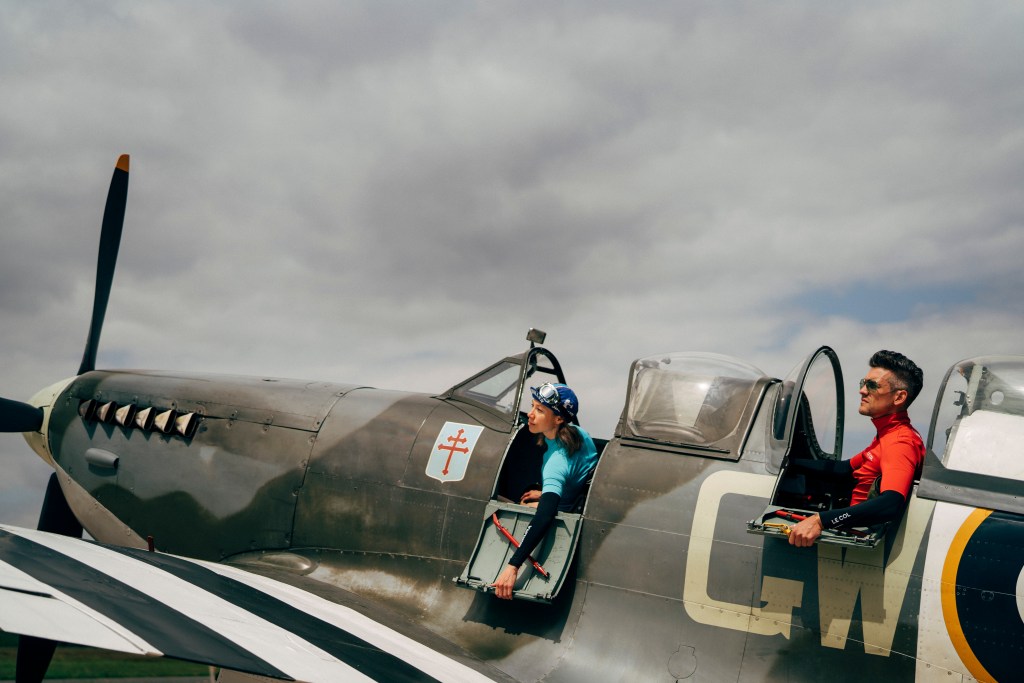
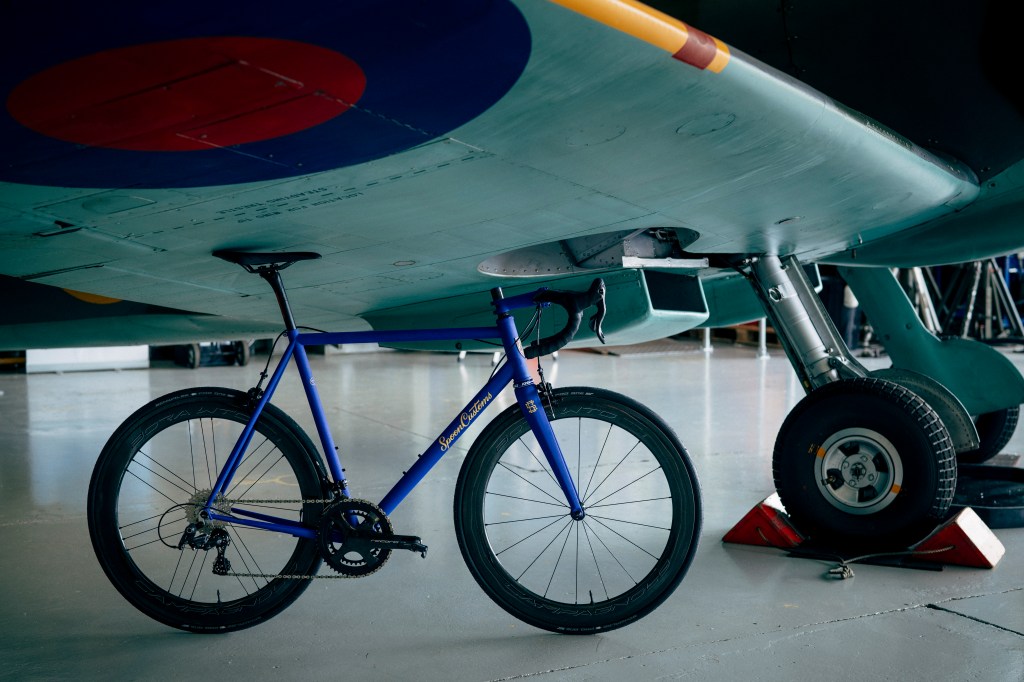
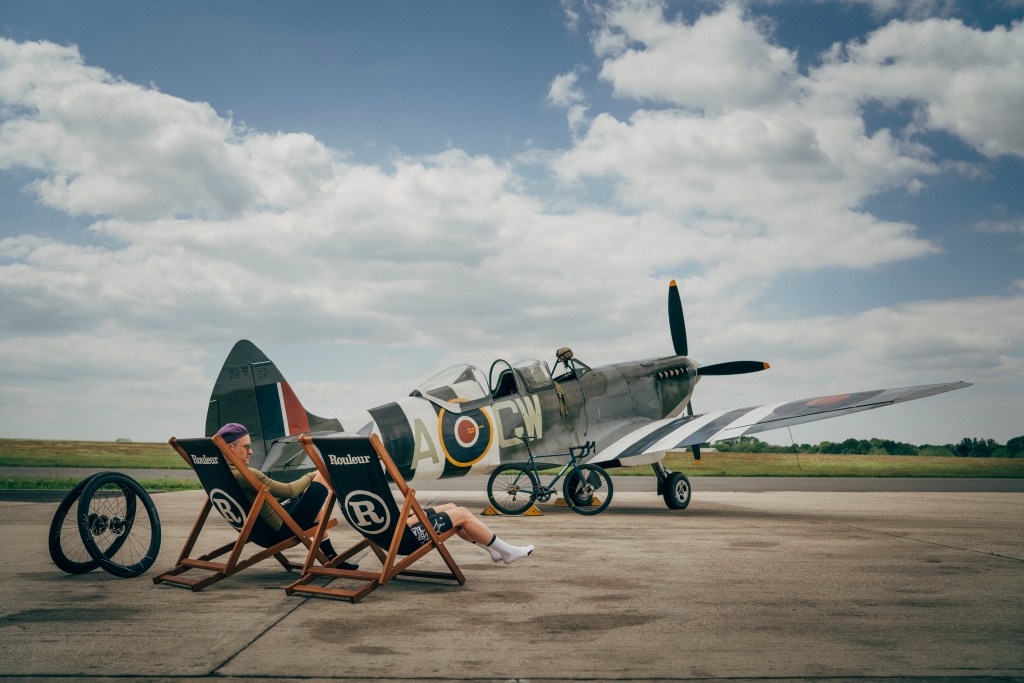
Well – I can’t believe I’m actually telling you this – there was the Spitfire shoot [laughs]. This was arranged through a PR who does a lot of stuff with National Trust buildings. I told him we needed some Spitfires and he said he knew the guys at Biggin Hill and that he could get the new museum for us. So I told him that was fantastic and we set a date.

It was all arranged?

This was a Thursday and the shoot was the following Tuesday – all a little bit last minute – and then I get a call from the PR guy to say he’d been listening to my podcast, had heard me talking about the Spitfires and just wanted to mention that he hadn’t got any [laughs].

Not the sort of news you wanted to hear?

Especially because I’d been proactive and Google-imaged the Biggin Hill Museum and there’s loads of Spitfires all lined up. But he pointed out that I’d been looking at the Heritage Hanger which we hadn’t got. At this point I put the phone down and I’m sweating. We’d booked everything, I’d done about three podcasts all banging on about doing a photo-shoot with Spitfires and we hadn’t got any planes.

So what happened next?

The PR guy calls me back to say I need to speak to this chap and – you couldn’t of written this – it turns out he’s a subscriber to Rouleur [laughs]. So I phoned him and he sorted everything out.

And the Spitfires?

When we got there, he’s telling us to move them around for the photographs if we need to. I mean, these planes flew in the Battle of Britain and I’m thinking that we can’t just climb all over them? But it turned out that we could and the shoot went really well. A real squeaky bum moment but it came off and one of the images even made it onto the front cover.

-_7R24333243benF1 copy

Speaking of front covers, could Rouleur ever be digital only?

In my opinion it’s a premium product and people still like to buy nice magazines. It’s like when I’m trying to describe Rouleur to someone and I always compare it to a coffee-table book rather than a cycling magazine. Cycling Weekly is a good read but not many people keep them forever. People still get misty-eyed over certain Rouleur issues and my little boy loves the cover we did with Sagan’s plasticine head. But what do I know? I still like buying CDs which my wife thinks is just plain weird [laughs].

If you were writing an etiquette guide to cycling, what advice would you offer?

Where do you want me to start [laughs].

How about some style tips for on the bike?

For me, helmets and shoes should always match. So if you’re wearing white shoes you need a white helmet. That might sound a little OCD but it’s just that I’m quite particular. On a similar theme, big sunglasses are great but there has to be a gap between them and your helmet. And if you’re wearing a Gabba or an equivalent item from another brand, then you have to wear arm warmers with it.

Why?

I don’t know but it’s just wrong not to [laughs]. And it’s the same if you’re wearing knee or leg warmers. These should only be worn with arm warmers otherwise it looks like you’re wearing a t-shirt and jeans. And, for me, that’s a big no no.

Dare I mention jersey pockets?

Obviously anything you put in them has to be arranged symmetrically. Middle pocket I have a micro-pump and spare tube. I don’t use CO2 canisters because you can get them so wrong. Then it’s tyre levers, wallet and keys on the left; phone on the right.

I guess you want to avoid overloading your pockets but this time of year it does get trickier?

But that’s going back to what we were saying about investing in good kit that functions well on the road. And you obviously want to keep both arm and leg warmers on for as long as possible [laughs]. Tao [Geoghegan Hart] said to me once that it was 18°C before he gets his legs out.

And mudguards?

That’s a bone of contention so I’ll choose to answer with another question. Has Mario Cipollini ever ridden a bike with mudguards [smiles]?

-_7R25219422benF1 copy

Does all of this advice apply universally?

There are always exceptions. It’s not uncommon to see cyclists on the Continent wearing full pro kit. But that’s OK because it comes from a football thing. And I’ve never seen a British cyclist wear a sleeveless jersey. Go to Europe and you’ll see loads. And if you’re ever in Mallorca and passed by a bunch of riders wearing head-to-toe Rapha and riding S-Works; it’s a good bet they’re from England.

But it’s these little differences that matter. Our own sense of identity?

Or mistaken identity. At this year’s World Championships up in Yorkshire I was lucky enough to be riding with some of the pros and actually got to sign my first autograph. I was standing with Pete Kennaugh and David Millar and this guy had a cap he wanted signing. But because I’d never signed anything before I just wrote my name in block capitals. So amongst all these signatures from individuals who are actually famous, it looks like I’m shouting my name [laughs].

Talking to you, what comes over is a real love of life.

I know it means I can be a pain in the arse but I’m really the happiest person all of the time. Annoyingly upbeat according to certain of my colleagues [laughs]. And it’s important to be thankful because shit things happen to people; they’ve happened to me. But you know what, I’ve got a pretty good life and a job that I really enjoy. So on balance, I’m doing OK [smiles].

Stuart Clapp

All images with kind permission of Benedict Campbell

Rouleur


Lee Basford / Creative movements

Perspective can be found in a variety of forms. In terms of a design rendering, it might provide the viewer with an intimation of depth in relation to other objects. But apply this in a cultural sense and the viewer’s own position – both geographically and emotionally – can have a significant impact on the insights offered. As an English designer and art director living in Tokyo, Lee Basford has spent many years defining his own perspective in a series of movements; movements that have resulted in a richly creative professional life and a connection with the city he now calls home that he’s beautifully captured with his camera.

‘I originally studied at Bournville School of Art before a move to Central Saint Martins in London. Focusing mainly on design although the Visual Communication course crossed over into Fine Art and very much encouraged exploration and original thinking. Even from the very start of my working life, a design solution not necessarily meaning a graphic representation. If it answered the brief, it could be in the form of a sculpture or some other form of communication.’

Following graduation, Lee began working as a designer and art director; often creating things by hand as a relief from time spent behind a computer and enjoying numerous personal projects that embraced elements of both art and photography. A chance email from a friend asking for contributions to a new lifestyle and culture magazine coinciding with the first in a series of visits to Japan where he made lots of new friends, won a UNIQLO design award and featured in a number of exhibitions. An enjoyable period of work that eventually led to Lee’s decision to relocate to Tokyo in the summer of 2013.

‘The day before I was leaving for Japan, I received an email from a friend who’d also been part of the Ride BMX, Level and Dirt MTB magazines. He was starting a new cycling website and global club called Nowhere Fast and arriving in Japan with my bike gave me the incentive to start creating content for them. So much was new and interesting to me and I suppose that being behind the lens as an outsider gave my images a unique perspective. And it was through these stories that I began working with Rapha; initially photographing and writing content before art directing larger projects like the three Japanese-themed Rapha Rides films.’

Although he enjoys a collaborative process – working alongside people who share a common connection and vision – Lee’s previous role for his UK-based design agency involved a series of big campaigns but offered little control over the choice of clients. Music sleeves, video games and movie posters; work that he was proud of but leaving him with a desire to determine the types of projects he would choose to take on.

‘After moving to Japan and starting up by myself, I found I could pursue work that fitted more with my own sensibilities; directing design solutions and outcomes from a more personal perspective which I think helps to keep things interesting. And whether it’s photography, illustration, sculpture or writing; very often there’s a crossing over – a meeting point – where these disciplines come together.’
Spending his spare time documenting Tokyo street life and cross-country journeys by bike fed into his professional relationship with Rapha; the British cycling brand having already cemented a strong photographic identity through the images of Ben Ingham. A body of work that Lee found visionary and influencing his decision to make photography a more integral part of his creative process.

‘My photography is definitely more of a documentary style. A desire to be real; to interpret a true moment. I imagine subconsciously my design background affects how I see things but I’m usually looking to show something that’s not posed or set up. And I prefer to keep moving and blend into the background. With documentary photography it can all happen very fast – especially if it involves bikes – so if you stop you miss things.’

‘I think narrative is important,’ Lee continues, ‘but something I tend to focus more on when I’m editing a story. Depending on the shoot I usually have an idea of the variety of shots that will be needed but, other than that, it’s more important to be focused on what’s actually happening at the time. Because it’s often the little things you didn’t expect that make the best photographs.’

Nobeyama_17_1_386A8343_2048_2

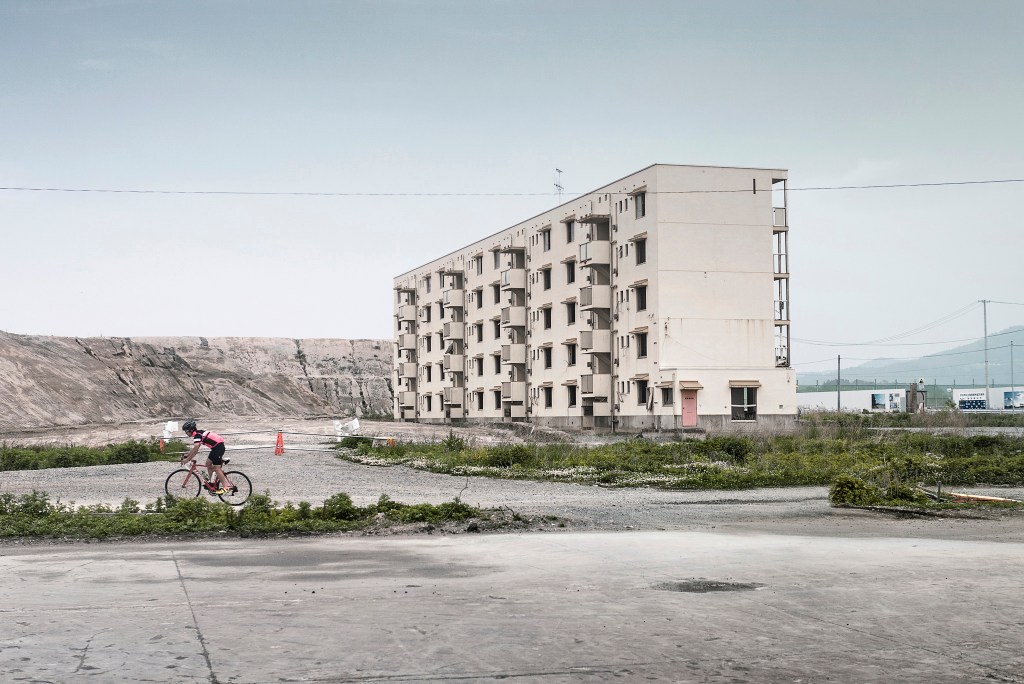
A sentiment perfectly illustrated by Lee’s capturing of the Nobeyama Supercross. Freezing temperatures, mud, snow and rain; a true sense of a body emptied in the hunched shoulders of a competitor. An emotive response to a subject echoed in a poignant set of images taken in Tohoku. The scene of a devastating tsunami to which Lee had travelled along with an aid team a month after the disaster and has returned almost every year since; a conversation with Paul Smith after a photo-shoot in Tokyo leading to a commission to document the region once more by bike and exhibit the photographs in the fashion designer’s gallery. This sense of cultural connection heightening the longer Lee has lived in his adopted home.

‘Living and working in Japan has now become very normal for me but I can clearly remember my first year and the surprise of a blue sky on most days. And being in Tokyo obviously has the advantage of being one of the world’s cultural and creative centres. Having access to that on your doorstep is not to be taken lightly. But much of what can be eye-opening for a first time visitor can so easily become the norm when you’re concerned with the everyday as most people are. Obviously being an outsider to some degree gives you a different perspective on things which can be advantageous in many ways. And the energy and pace can be very intense with a high-speed turnaround of everything. Perhaps too fast and wasteful at times but for a designer, it means there are always opportunities.’

Considering the work culture in Japan – a subject Lee believes is often discussed negatively – he recognises that long hours are an everyday aspect of professional life but not that dissimilar to the fast-paced design environment in England. An understanding of societal nuances that he extends to cycling with Lee appreciating how the Japanese are by nature accepting and non-judgmental.

‘Saying that,’ he adds with a smile, ‘being perfectly turned out in your cycling kit – even for a first time ride – is not uncommon. Similarly with bikes; the standard and quality is very high at most levels and there’s a lot of custom steel.’

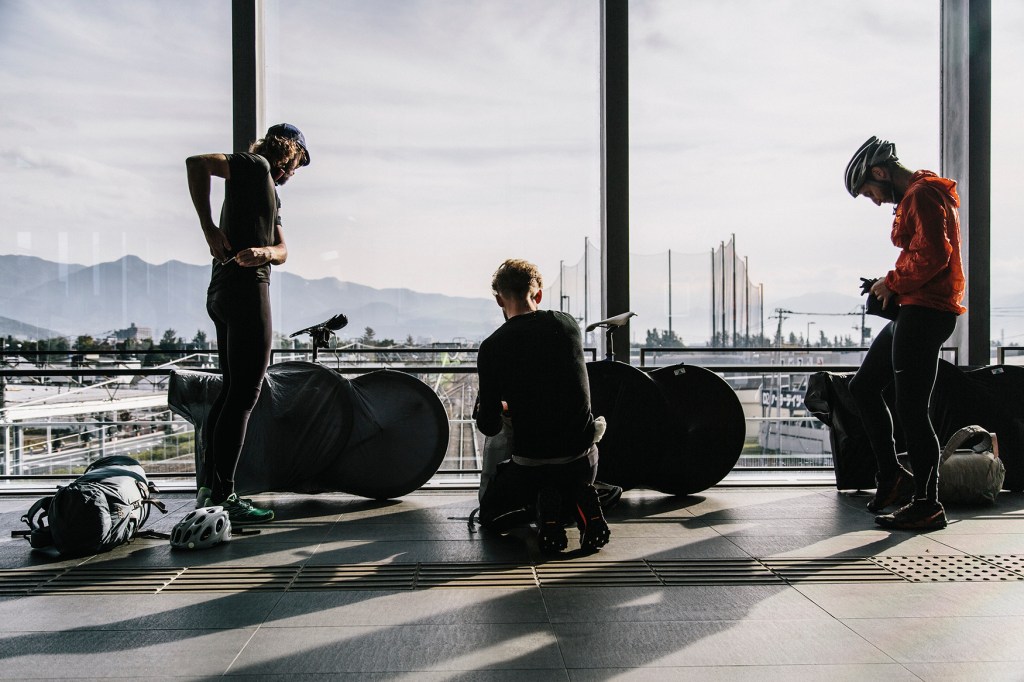
With rinko bags a common sight on station platforms – transit laws requiring cyclists to completely cover their bikes when travelling by rail – Lee describes how riders will avoid the junk miles getting through the numerous suburbs by taking an early morning train out of the city to the nearby mountains. Or those choosing to ride from the Tokyo city centre enjoying the 50 km Tama River route towards Okutama and the views of Mt. Fuji.

‘I’ve seen the Rapha scene in Tokyo grow from early pop-ups to the clubhouse first opening. Building in strength each year with the Prestige rides a particular highlight. Bringing together people from all across the country to ride some of its most spectacular and challenging landscapes. And the RCC rides are increasingly member-led; the constant flow of overseas riders appreciating the welcoming atmosphere and advice on local routes.’

As for his own riding, Lee enjoys meeting new people from different backgrounds but also long solo rides when he’ll explore places both in the city and beyond.

‘Tokyo is so rich and varied that it still feels fresh every time I go out. And I love discovering new routes and relish the freedom to stop and explore whenever the mood takes me. Often getting lost in the outer edges where the gloss is removed and deeper parts of the city are revealed. Places I would never have found had I planned where I was going.’

‘It’s a city where you really don’t need to drive and I enjoy cycling everywhere with my 4 year old daughter in a child seat. It’s a heavy bike and she weighs almost 20kg so the pace may be slow but it’s still a good workout. And it’s so much better to be connected that way too; experiencing the city and chatting along the way together. When you navigate the city by train you get an unrealistic idea of its geography; by bike you really get to know the city for itself.’


All images with kind permission of Lee Basford

Created for Rapha, Papersky Magazine and weMove

leebasford.com

humankind.jp

Return to Tohoku

Rapha Rides Tokyo / Osaka / Kyushu


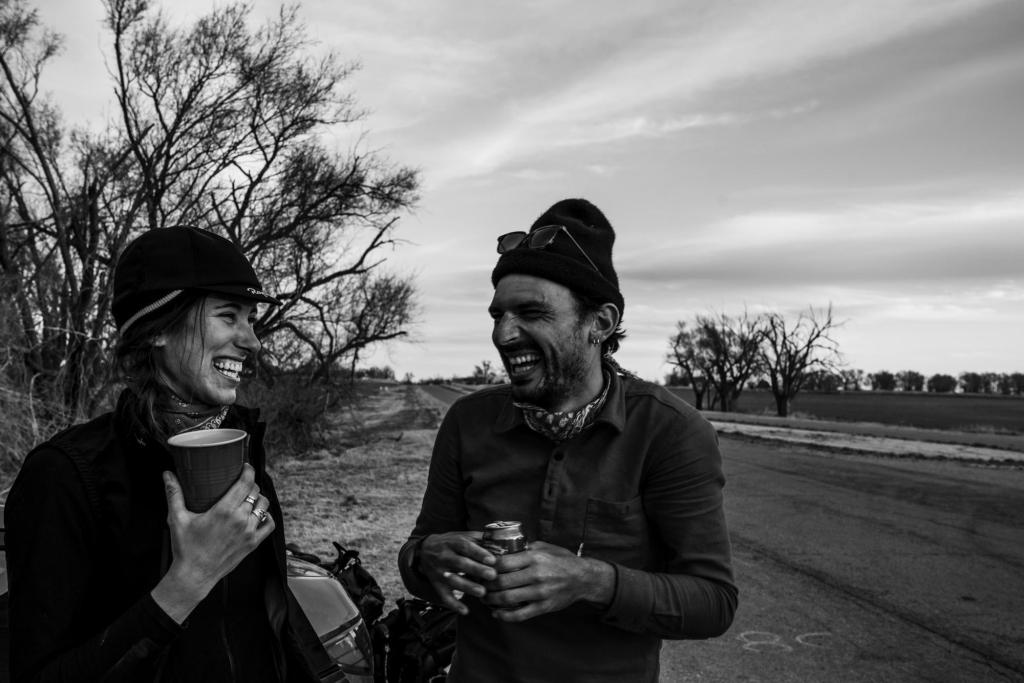
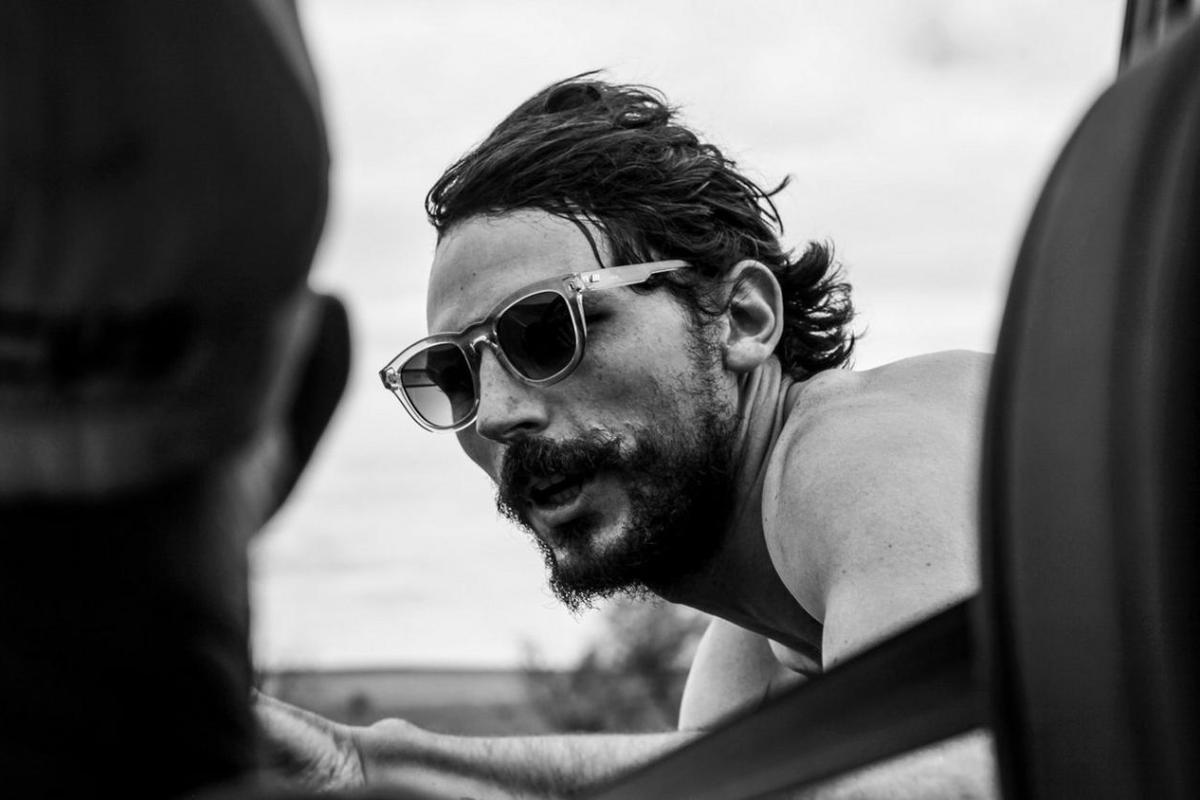
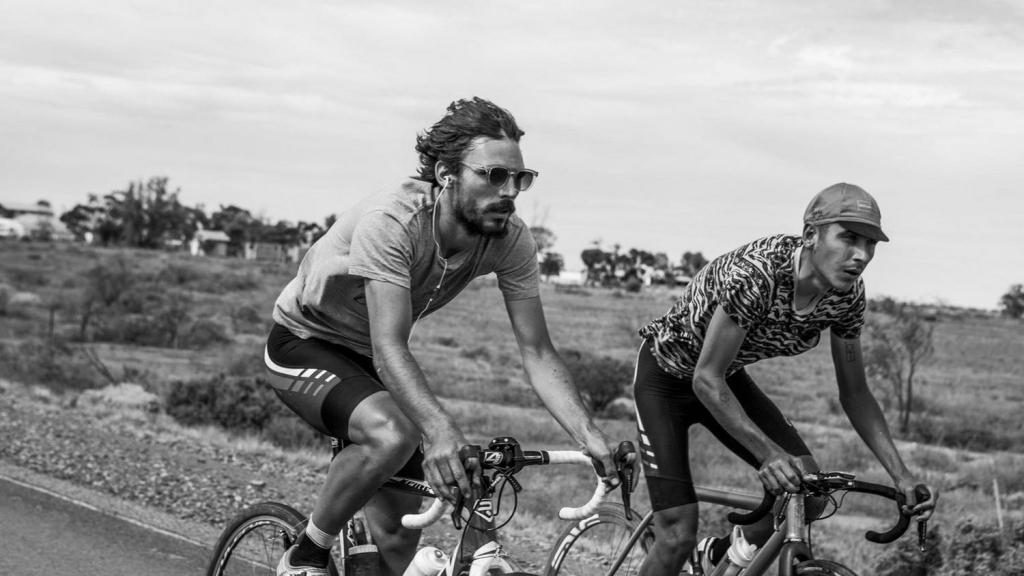
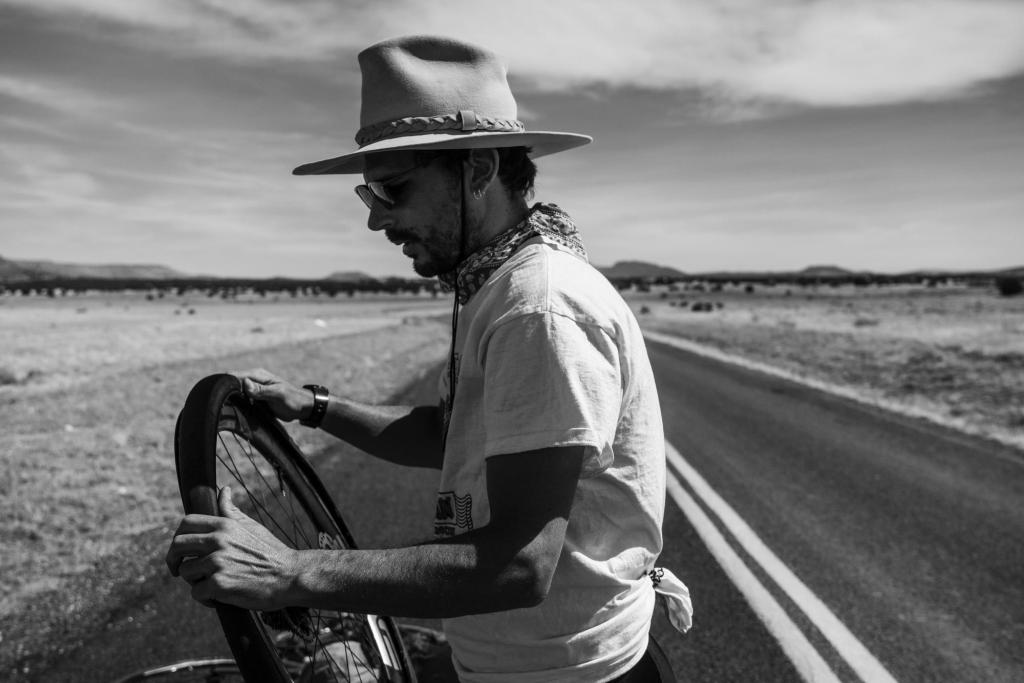
Gus Morton / Here Or Thereabouts Part 2

In this, the second part of our conversation, Angus ‘Gus’ Morton muses on the future of professional cycling, his striving for a life of simple pleasures and whether love is, indeed, all you need.

Looking back at the films you’ve been associated with, one of my personal favourites is Rapha’s short feature ‘Riding is the answer’. Did you direct that?

 I didn’t but that’s actually a funny story because I had no idea I was going to be in that. Or even the level it was on. I’d just shot the first Outskirts and was living out in LA and this guy from Rapha was explaining that they were in town on these dates and would I be available to be part of the shoot for a day. So I was like, sure, and didn’t think anything of it. A month goes by and I get this call from the executive producer at a creative agency and so I’m wondering what they’re doing getting involved because I’m only going to feature in this film for a second or two. Then I get a lady wanting to take some photographs and I have to go to wardrobe but I was super late because I rode there and when I finally arrive there’s 30 people waiting.

 I imagine not particularly happy?

 Oh, man. They were pissed [laughs]. And then they start talking about the days we’ll be shooting and I’m telling them that I won’t be in town that long. Apparently the shit hit the fan and there was this huge meltdown. I woke up in the morning and there’s 30 emails and millions of missed calls. Turns out I was the main character [laughs].

 That tiny detail kind of passed you by somehow?

 Man, it was a bit of a stitch up. And I honestly had no idea. I just thought it would be a van with a camera in the back but it was this huge production. They’d closed parts of Downtown LA and I was riding around on empty streets. No cars.

 Just the amount of work to get those permits.

 Yeah. It was insane. Comical. A proper LA shoot.

feel_whats_real_yellow

But, for me, the film was perfectly pitched. And thinking on from the tagline – about riding answering questions – looking back at your professional racing career I was wondering what kind of rider you were?

 Not a very good one [laughs].

 I’m sure that’s not the case.

 I was a worker. Just a team guy. That was my job riding for Jelly Belly. I was pretty good at cobbled stuff but never that good when it came to individual success. Though I must admit that the first time I was pro I had some decent results but most of the time I was sick with this parasite.

 They didn’t know what the problem was?

 No and my body was doing all this weird stuff like it stopped producing testosterone. It took a while to figure it all out and kind of plagued that first part of my professional career. And then when I’d finished racing for the first time and got into film, this guy asked me what I wanted to do and I told him I wanted to be a director. I was young, probably 22 at the time, and pretty bull-headed. And he looked at me and then told me to go away and do something else for 10 years.

 10 years?

 Just go out into the world and experience. Because what perspective do you have when you haven’t done shit? So I really took that to heart and it played a big part in me getting back into racing for a second time.

 From the outside, professional cycling can seem a very brutal career. All about performance?

 It is. Exactly right. And it’s kind of funny how you’re judged. Some riders do one good thing and somehow hang onto that. Others are consistently up there but without the recognition they actually deserve. And I don’t really think that cycling truly understands that it’s in control of its own destiny. Everyone’s racing to get first but what the fans also buy into are the characters and stories. Yet the professional sport almost wants to eliminate personality. And it blew me away that, year after year, Team Sky riders were literally getting piss thrown over them and yet they continued with the same MO. Was it successful? Yes. But what’s the point of it all?

 So what’s your take on Education First’s Alternative Calendar?

That’s where it’s going. We look back at bike riding and all we talk about are the epic stories. Because that’s what captures our hearts and the general audience doesn’t give two fucks for science and system. It’s all romantic; all emotional. And brands are already beginning to change their focus so ideally we’ll see the sport continue in this direction.

 So you think other professional cycling teams are watching?

 Dude, you look at Education First during the Giro when Dirty Kanza was building up. There was more media focus on a one-day 200 mile gravel race across the backroads of Kansas than a fucking 21 day grand tour.

 I can see your point. I’ve watched the Dirty Kanza film three times. The Giro once. So in terms of a business model?

 How much would it have cost the team to ride the Giro? Two, three hundred grand? By contrast, for EF to ride Dirty Kanza it would have cost them basically nothing. And there’s still this disconnect between directly spending money in sponsoring a team and whether you can accurately measure a return. But you know exactly how many views you’ve had on YouTube. And I’m like, if you create a character you’re guaranteed to get ‘x’ number of views per race on whatever content you build around it. People switch on Neighbours every night and watch it. No one wins. They watch it for the characters and the stories. Why don’t you create something like that in sport?

h118_location_brand-campaign_LA_60

I recently saw an Instagram post obilqely referring to a current female professional cyclist. Arguing that she hadn’t placed well in a race or her own national championships for a number of years and the only reason she was still a member of the race squad was down to her being pretty and having a huge following on social media.

 But what’s the problem there? This post is arguing that she doesn’t deserve a spot on the team but is the problem the rider or the entire sport. Doesn’t that just demonstrate that no one gives a fuck about results? That there’s limited value in that for the sponsor and this rider is bringing something extra to the table? I mean, I hate social media. I don’t use Instagram anymore aside from contacting people. I had my own troubles with that but not from any particular high ground. It just took up too much of my time. But this rider is being followed for a reason. Maybe because it offers an insight into her life as a professional cyclist. Or she’s followed because she has something to say that matters to people. Whether she can still ride her bike and place well? Obviously lower down the priority list of her followers but also her sponsors because she’s got a contract. And that’s what I’m trying to say. All these sponsors are investing money into the sport in the hope that they’ll win. Is that a reasonable allocation of funds? One team is putting in ten million, another team their ten million. But the most interesting thing about bike riding is how dedicated these riders are and how far they’re prepared to push themselves. So many characters from so many different backgrounds. It’s a potential gold mine [laughs].

 Again, I’m hearing from you this focus on stories?

 The thing with Dirty Kanza – the way it played out – I still don’t think they fully get it.

 In what sense?

 We can all see the race. We understand what that is. But what would it look like if we threw these guys completely fish out of water? OK, we’ve just finished the Tour of California and we’ve got ten days to Dirty Kanza. Let’s ride there; training on the road as we go. Let’s sleep in a van. Camp. We don’t need all this other shit. We’re approaching it exactly the same way other people racing are doing it.

 Thinking about Lachlan [Morton], Taylor [Phinney] and Alex [Howes] riding Dirty Kanza; all of them professional cyclists for EF Education First and I did wonder how their entry in the race would be viewed by the amateur racers. But, as it turned out, they didn’t win.

 Taylor said it was absolute hell. And it shows they’re human and that’s all we want. To see these guys be genuine; that they’re not robots or beyond our realm of thought.

 That they suffer; that they have their highs and lows?

 And then when an amateur cyclist beats them? Well, that opens up a whole other level of narrative.

TBTS-4457

This grassroots approach to riding your bike; is a life of simple pleasures important to you?

 I think that’s what I’m pursuing. What I’m exploring through these films. Spending all my time boiling things down to their absolute essence. What is satisfaction at its most basic, molecular level?

 Have you found the answer?

 No [laughs]. But the act of trying allows me the realisation that I don’t need much to be happy.

 And the understanding that enough is enough?

 Yeah. I’ve had problems with that [smiles]. Constantly asking myself what can we do next, how can we make it better? I’ve been staying with Taylor and we’ve been spending a lot of time thinking about that.

 With this mental and emotional exploration, I’m thinking of the Beatles’ song ‘All you need is love.’ Would you agree?

 I think love is an interesting one. It can be all consuming; whether you have it or are pursuing it. When you’re falling into it, then it is all you need. And then if it’s lost, it’s all you want. So maybe it’s about being comfortable with yourself first. For a number of years I’ve chased all these different things and in some ways they’ve offered a form of distraction. So what I’m trying to do now is to take stock and confront all these things that I’ve ignored.

 I found it interesting how you allowed references to your relationship with Sami [Sauri] to be included in the final edit of Big Land.

 I left them in there for a reason. Which is funny because we got a lot of backlash; people just didn’t get it. But my thinking was that something really interesting happens on these journeys. You go through all of these emotional states when you’re physically tired. So me including those scenes was all about highlighting how the dumbest, smallest, pettiest things can result in these ridiculous arguments. Which, from a distance, looks like a real hipster break-up but that’s the point of it.
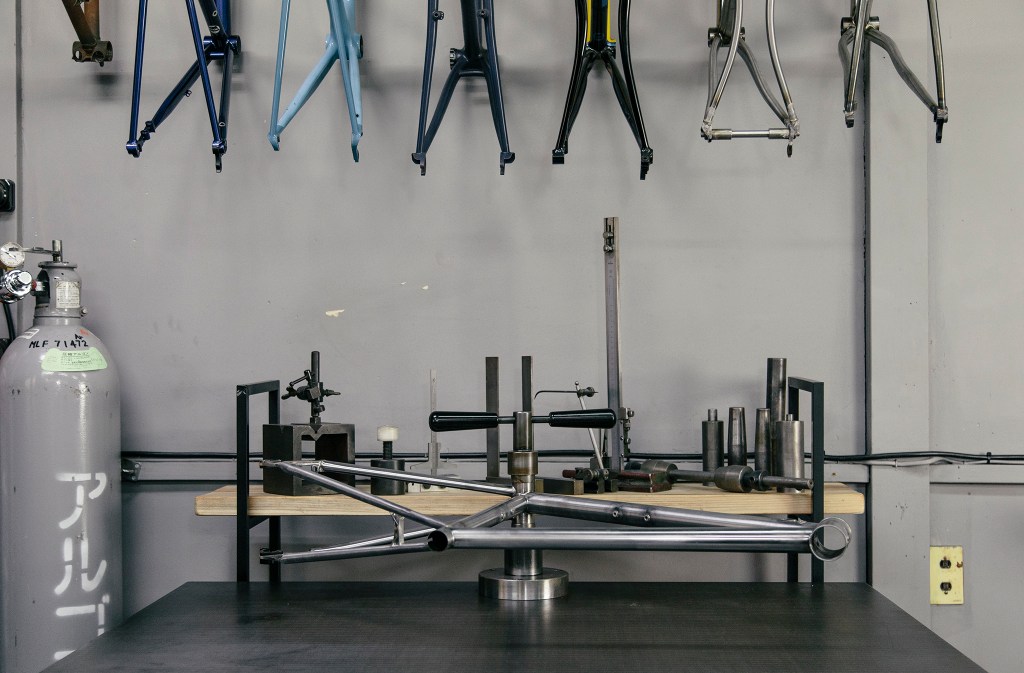
 That it’s real?

 Absolutely. And it’s like in life, we sometimes need to take a step back and realise how the tiny, insignificant things that we’re focusing so intently on are, in fact, tiny and insignificant. But I’m not sure that this approach was totally understood when it came to the film. Which kind of backfired because Sami copped a lot of flak.
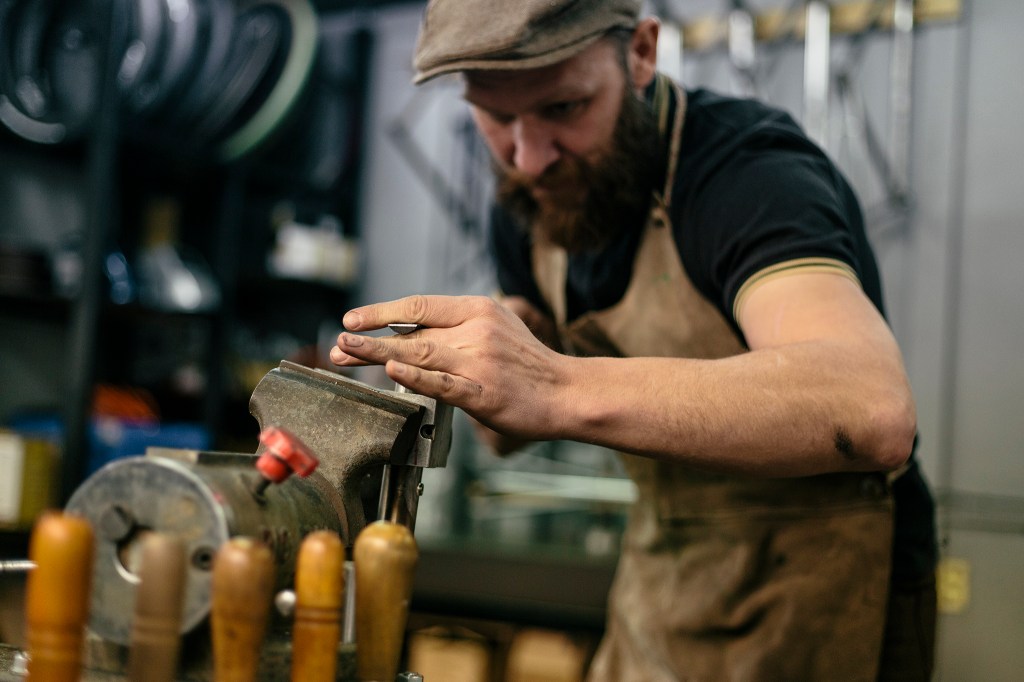
 Did people think it was contrived?

 I think they thought it was trivial. Which it was but that was the point [laughs]. And that highlights the fact that maybe a lot of our audience don’t watch the films in the way I thought they might. So that’s a learning curve that I also need to take on board. You put stuff out there but then you need to emotionally let go because you can’t dictate how people will choose to interpret your work.

 In the film you looked really pissed off. Are you the sort of person to make the first move?

 I’m quite fiery [smiles]. Very emotional in that regard and I can be a real prick sometimes. But I’m getting much better at being able to apologise. Because it’s not always about accepting blame. It can be saying sorry for how you’ve behaved and then moving forward. Not an easy lesson to learn and I’ve done a lot of dumb stuff in the past. But I’m trying to get better and that’s why it’s good to take a step back.

With Gus

There’s that lovely black & white picture of you and Sami on Route 66. What were you laughing at?

 That was literally as we were crossing from Oklahoma into Texas. We’d all had a really dark time for a number of reasons and it was just a very cathartic moment as we stood – howling and yelling – sipping a beer. The sort of moment that I’m still trying to articulate to an audience. Because, for me, those are the fundamental elements of a trip like that.

 The sense that emotions should be expressed. That it’s good to let things out?

 And riding helps. Because you can ruminate on things before deciding to talk them through. Lachy and mine’s relationship is built on those moments. We won’t see each other for months and then we’ll ride and talk about whatever’s nagging at us. And these journeys that we’ve filmed are all about those shared moments on the road.

 From the outside looking in, it looks quite fun to be Gus Morton?

 It has its moments [laughs]. But, yeah, I have a great life. I’m very privileged to do what I love and to have the freedom to do that. It’s not easy in the sense that things don’t just fall on your lap. To have the life that I lead you have to chase it hard. And with the films; you want them to be aspirational. For people to engage and feel the need to go on their own journeys. In a sense, that’s the whole idea.

Photography: Thereabouts

Riding is the answer

Outskirts

Rapha Outskirts Collection


Gus Morton / Here Or Thereabouts Part 1

It’s a hot summer’s day in Girona and ex-professional cyclist turned documentary filmmaker Angus ‘Gus’ Morton walks into the cafe with his wrist strapped up. Unable to ride, this enforced period of inactivity mirrors the break he’s taking from his hugely influential Thereabouts and Outskirts film series.

Depicting long-distance bike adventures, in this first part of our conversation Gus candidly discusses the origins of these films, how he decides which shots make the final cut and why it’s not particularly advisable to eat a 72 oz steak in a single sitting.

To quote the last message you sent me, you’re doing fuck all at the moment. How does that sit with you?

 It’s good to sometimes do nothing but I guess I’m in a slightly odd situation in that I live in Boulder but I was recently back in Australia for my sister’s wedding and had my visa revoked.

 Your US visa?

 Yeah, that’s right. I’ve been resident since 2015 and every few years you need to re-apply and I pay a lawyer to do that. They made a clerical error so basically I need to go through the whole process all over again. Which is a huge pain in the ass but also means that I can’t travel back home.

 I was wondering whether you’d done anything to upset the current political administration?

 You could speculate on that [laughs] but it turns out that the visa I’ve been happily using for the past three years was in fact the wrong type.

 So you’ve got a home in Boulder that you can’t go to?

 Fortunately I was living in LA before moving to Girona to finish off a bunch of projects so I don’t actually have a place that I’m renting but all my stuff is there.

 And it looks like you’ve also been in the wars. What’s happening with your wrist?

 I was mountain-biking on some local trails and it was getting late. About 9:30 at night and starting to go dark. We were getting to the bottom of a run and I just didn’t see a drop; max speed into a 3 metre ditch and I planted face first. Knocked off part of my front tooth.

 You can’t tell.

 Dude, if you need to get any dental work done, come to Spain [smiles].

 And the wrist?

 It’s not broken but I’ve done something to the tendons. Because immediately after the accident I had to go out to Vietnam for a week-long photoshoot so I was straight away back riding. And it hasn’t been right since.

Outskirts2

All this travel – you grew up in Australia, you’re currently in Girona but all your stuff’s in Boulder – how do you define home? Places, people, belongings?

 For me it’s people; family. My brother and parents all live in the US so at the moment that’s where I associate as home. I certainly don’t see Australia in the same way.

 But that’s where you were raised?

 I’ve not lived there in a long time. I still love visiting and potentially that’s where I’ll end up but right now I’m just where the people are.

 Applying this sense of movement you’re describing to your recent films, they appear to be very fluid in the way they were made. Was that an aesthetic decision or simply how you like to work?

 It was very much a certain feel that I was going for. When you look back at the original Thereabouts film, Lachy [Gus’ brother Lachlan Morton] was in the World Tour but wasn’t super happy with it. I was working in TV, had got to a point where I was directing shows and I guess like with everything you always have a boss and I suppose I wasn’t feeling that creatively satisfied. Constantly being hemmed in and pushed in certain directions; making a product for a certain audience and accountable to someone else’s plans. So I was looking for a way to have a creative outlet, Lachy wanted to do the same thing and we just decided to go on this trip.

 With the freedom that brings?

 It was born out of this idea that you should take the time to go out and do things the way you want to do them. And I’d been working for the past 18 months on this long-form documentary and when they were condensing it down I was frustrated by the demand from the network that everything had to be really well explained.

 Dumbed-down?

 Maybe forcing a story that wasn’t there. And the style that came out of Thereabouts was to tell it how it happened and not scrap a bit because it was out of focus or the audio was shit. That we’re actually going to embrace that. The rawness of it demonstrating an honesty that reflects our own experience. This was the way it happened – it wasn’t smooth, it wasn’t polished because life rarely is – and I guess that became a kind of house style.

 A working method that continued into Outskirts?

 I wanted to hone in on that even more. To be as minimal as possible in terms of impact. Removing the requirement for a large crew size; a storyline reduced to meeting people on the road with no real agenda. Just seeing what they talk about and in doing so, gaining an authentic understanding of place.

h118_outskirts-route66_usa_80

It made for a very immediate style of film-making and there’s a quality in those interactions that maybe you’d lose if they were scripted?

 The first Outskirts [Route 66] was truest to our original idea. The others had to be somewhat modified to suit a particular audience but, again, it comes down to who’s paying your bills. And in essence, we’re using cycling as a film-making tool. The characters we met, that’s the sort of stuff that happens. Especially in America [smiles].

 More so than other countries?

 In my experience the people are more willing, when they see a camera, to engage. And that’s, at a fundamental level, what people have always done. They’d look you in the eye and express their opinion without this layer of separation we now have with social media. And that forces you to try and find some element of common ground or to at least respect someone’s views even if they differ from your own because they’re standing right in front of you. And, increasingly, we don’t have that anymore.

 And the fact you’re travelling by bike helped?

 Absolutely. It was a really remarkable way of achieving this connection because you’re vulnerable and an outsider.

 Some of the people you met had quite challenging views.

 They’re the ones that made the film [laughs].

 So there were some you chose not to include?

 We’d ridden quite a long day and went to a bar and started talking to a group of guys. One of them was a classical pianist even though – and I say this with the deepest respect – he looked like someone who worked on the land. So he can play Beethoven and Bach but then all of a sudden it turns into a discussion on guns and the right to bear arms. It then moves on to the mass shootings that had recently happened in the US and he’s explaining to me how the weapons used were not the best way to kill large numbers of people. Five minutes ago this guy bought me a beer and now he’s telling me, in some detail, how he would shoot people more efficiently. Obviously very challenging as your views are totally irreconcilable.

 Did you set out to document or react? How far along that line can you go?

 It’s sometimes hard not to react but the Outskirts series is about conveying what actually happened. And if we do any more we’ll continue on that path.

 Does that mean you’ll be eating more steaks*?

 [*Gus successfully took on the Big Texan Challenge to eat a 72 oz steak, baked potato and shrimp in under 60 minutes]

 Dude, that was intense [laughs]. I guess I’m competitive – nowadays more so with myself than others – and I wanted to find out what would happen. Which I did. Projectile vomiting. My body just rejected it.

 But, crucially, after you’d beaten the timer and got the t-shirt?

 We’d just ridden 3,000 miles but you’d pull in for supplies at a gas-station in New Mexico and an old lady would spot that t-shirt from way over and that’s what would impress her. And even though the whole episode is laden with so many moral complications, there’s also something kind of  wonderful about everybody in the restaurant whooping and high-fiving when I’d finished. People were loving it and it brought them together.

h118_outskirts-route66_usa_91

But you’ve got to feel sorry for all these high-end manufacturers making cycling kit and Outskirts starts this fashion for simply wearing a t-shirt.

 It’s pretty funny, I guess [laughs]. It started with me and Lachy just doing it. A reaction to the team kit our sponsors would require us to wear. Kind of like our non-uniform day or dress-down Friday. You’re doing the same thing – in our case riding bikes – but your whole perspective is subtly changed. And then, with Outskirts, when we’d meet people on the road or stop off in a bar after a long day, we’d just fit right in.

 So what else is new and exciting you at the moment?

 When I finished off Shadow of the East I was in Australia – in exile [laughs] – living in this remote spot in one of the national parks. I couldn’t go back to America, I didn’t have a job and I’m not someone who likes to be idle. So I set out on paper a bunch of ideas that I’d had kicking around in my head and some of these projects are now slowly beginning to take shape. One of these, in particular, being pretty extreme and a big undertaking. Outside of that we have another serialised show tying into some adventure stuff.

 Is it important to have control over this process?

 Yes but it also helps if I have team members that can fit around my way of working. Handling communication with clients; telling me I’m a month late [laughs].

 Are you a natural delegator?

 Not naturally, no. With the first Outskirts we had a post-production company doing the edit after we’d shot over 70 hours of footage. The film’s structure was all in my head and the shit they decided to cut out is what we wanted to keep in. That’s our MO. So when we got the first edit back it was so far from what it was meant to be that I took it back off them and re-cut it.

 Because I generally find that with creative individuals, it’s often difficult for them to let go of something that they’ve invested emotionally in.

 Totally. But I am gradually realising that I need to do that [smiles]. And in terms of what’s next. Nothing but everything. Not being able to go home has put a lot of plans off because I’ve kind of been floating around. And, as I came to all of this from a directing background, I’m not really sure I want to be in front of the camera anymore.

 As your work is so influential and you now have a public persona, is the fact that you’re known and recognised ever a burden?

 I don’t think that many people are aware [laughs].

 Really?

 Maybe I don’t pay attention to all of it? And it’s interesting because the last three films that I’ve done, I’m not really happy with any of them. I’m thinking that it could of been better here or there.

h118_outskirts-route66_usa_860

Can you see yourself ever being happy?

 That’s the thing. No, I don’t think so. Maybe someday I’ll produce something that I’m legitimately happy with [smiles].

 I wouldn’t put money on it. I think that people working in creative industries; they’ll always be something.

 I kind of like that. And I just want to be always working. Working on something that I like.

 Is that when you’re happiest?

 The only time that I’m truly happy is when I’m on location shooting. When I’m looking through the lens of a camera and seeing something that’s beautiful or if I’m standing next to someone who’s telling me something that you could never have imagined. When you’re editing and a sequence just clicks and then you know people have watched it and got something from it; that’s kind of cool as well [smiles].

Photography: Thereabouts

Watch Outskirts

Rapha Outskirts Collection


Sanne Hitipeuw / Journeys of the self

On the evening of June 21st, Sanne Hitipeuw stood on the start line of Den Store Styrkeprøven. Translating as The Great Trial of Strength, ahead lay a 540 km race from the Norwegian city of Trondheim to the capital Oslo; a tough enough proposition before even considering the requirement to cross the finish line in under 24 hours.

Driving up to the event from her home city of Amsterdam, Sanne admits to burying any thoughts of trepidation beneath her default position of ‘it will be alright’. But as the race unfolded and the worsening weather contrived with an unforgiving route to slow her progress, an overall time of 29 hours left her with a sense of disappointment rather than feelings of elation at completing such an audacious undertaking. A reaction to this epic feat of endurance that speaks of Sanne’s steely spirit but also an ongoing search for balance between a determination to meet self-imposed expectations and the happiness that riding her bike brings.

After studying a Master’s degree in Corporate Law, Sanne joined a large, international law firm in 2014; an adrenaline-filled, high-pressured work life that left little time for outside interests and not at all what she’d previously envisaged as a potential career path.

‘Even though I’d enrolled on the course I never seriously considered becoming a lawyer. But when I was still studying, my father got sick with a very aggressive form of cancer. 6 months later he passed away.’

IMG_6980_25-11-2018-19-22-00

‘My method of coping was to block all of this out and not focus on the emotional side of how I was feeling. Throwing myself into my studies which then resulted in a job offer; such a high-paced environment that I could easily work in excess of 80 hours a week. Keeping myself so busy, I guess, that I wouldn’t have to feel anything.’

It was at this time that Vincent Engel returned to the Netherlands after working overseas and challenged her to buy a bike and ride up Mont Ventoux with him. Conquering the climb after a mere two days of training, Sanne enjoyed the experience to such an extent that it prompted the purchase of a good bike and a determination to use cycling as an opportunity to reflect and discover another side to herself. A change in focus perhaps best illustrated by her decision to spend a couple of months riding in Jakarta and Bali before then planning a solo transfer ride between Amsterdam and Berlin.

‘After my father got sick and passed away I’d been focusing only on others. Trying to help my family and friends – feeling responsible for them – but in the meantime I was losing grip; rushing through life without being able to stop, enjoy and appreciate. Suppressing all my feelings didn’t help so I decided to take some time for myself. To try and find some peace of mind. To go riding.’

‘My trip to Indonesia and then Amsterdam to Berlin,’ Sanne continues, ‘was an extension of that. To focus on myself and get back to who I really am. Being alone on the bike; totally independent without anyone wanting something from me.’

IMG_6330__23-10-2018-22-02-07

Over the 800 km route to Berlin, Sanne discovered that the freedom of moving from one place to another and the new people she met on the road all gave her a real sense of living in the moment. But the ride didn’t come without its challenges.

‘There were minor mistakes such as telling myself that I couldn’t stop for lunch until I’d crossed the German border and then, after 180 km, being so tired I didn’t eat enough; decisions that with hindsight you realise were rather foolish. But there was also a navigational mishap that sent me down a gravel track into a forest; no internet connection to help me re-route and after flatting twice it started to go dark. You’re in an unfamiliar country, you don’t speak the language and it’s easy to feel lonely and scared.’

‘But looking back I now realise that overcoming these obstacles is something to be proud of and was quite an achievement. Rationally you might argue that you can’t afford the expense or the amount of time travelling but life can be short and my emotional side now says do it. That is what I learnt from my trip to Berlin.’

With such a gifted photographer by her side, Sanne has a wealth of captured moments with which to reflect on past journeys. Vincent’s images taken on a trip to Switzerland in which she’s pictured pushing her bike through heavy snow particularly resonating; Sanne feeling they have a pure quality that perfectly defines exactly what cycling means to her. The challenge of discovering places that are almost inaccessible but not quite enough to discourage a desire to see what’s around the next corner. Or the overcoming of obstacles that extends to the inclement weather which can be a feature of riding over winter in the Netherlands; the wind whipping off the North Sea and driving the rain almost horizontally across a rider’s path.

IMG_0356

‘There’s this picture taken in the snow which we very rarely get in the Netherlands. That particular day we had a Code Orange weather warning which means you should stay indoors where it’s safe. But we decided to go out and enjoy the city from a whole different perspective. With a snow-storm blowing, my hands were burning with the cold but we still wanted to take that picture because it can feel good to meet the conditions head-on. Of course we prefer sunny days and feeling the heat on our skin, but life can be boring and monotonous and it’s not always a good thing to stay at home and wait for the comfort of easier times.’

With this love of adventure, Sanne prefers the thrill of discovering new places to simply riding a familiar loop. Choosing to pressure herself to reach the limits of her endurance in the knowledge that she can still dig deeper and carry on. Sharing her time with a close group of friends, exploring gravel paths, stopping for coffee; simple pleasures that riding a bike affords but a stark contrast to the challenge of Den Store Styrkeprøven.

‘Ever since I learnt about this Midsummer race I’ve wanted to give it a shot. It sounded impossible but I just couldn’t get it out of my head and decided to make it happen. I got talking to people with a view to riding with someone but no one wanted to do it. And when you consider the numbers then maybe they’re right [laughs]. But with every new challenge it’s not just about the thinking; there’s also the doing. And that’s partly why I travelled to Norway because it doesn’t always come to you. Sometimes you need to seek out adventure; to make life happen.’

In her friend Cyril Chermin she finally found someone who – according to Sanne – was crazy enough to agree to partner her. He’d cycled to Japan from Amsterdam so shared the same need to experience new places and both decided to treat the race as a journey that they could then write or talk about. As it turned out, they had plenty of stories to tell when almost from the off their carefully-laid plans began, one by one, to fall apart.

_DSC9852

‘Our original idea was to form a larger group and take turns on the front. But this just didn’t happen and we ended up riding on our own. And the first 100 km is basically all climbing before the road plateaus across the top of a mountain for another 40 km; fully exposed to all that the weather was throwing at us and seemingly never-ending. We pulled into a feed station and everyone was wrapped up in those foil blankets. Not a good vibe and we still had such a long way to go. Mentally we were close to being fried as it was taking far, far longer than we’d imagined and I’ve never felt so up against it when riding a bike.’

‘But you re-group and carry on. I felt like crying at some points but the thought of stopping never entered my head. I did wonder how on earth we’d manage to finish but we were always going to finish. Vincent was following by car and taking pictures but never once did I consider climbing off my bike. And I do recognise in me this sense of perfectionism that doesn’t always make things easy. We completed the 540 km in a moving time of 21:59 but I’d set out to finish the ride with an overall time under 24 hours. I didn’t do it and I felt disappointed.’

‘In my family there’s a history of debilitating depression and it’s something that I also have to struggle with. Each day asking myself why am I alive? Do I like life and facing up to the responsibility of making those necessary changes if the answer is a no. And that’s why I push past my comfort zone. Why I still want to finish Styrkeprøven in under 24 hours.’

Although there’s still a sense of unfinished business, allowing time to fully reflect has also resulted in Sanne framing her experience in a sense of personal empowerment. Whether an individual decides to ride 500 km or 50, that it doesn’t have to be about the numbers because the experience is just as important. Maybe even more so.

L1020638

‘Most of my life I’ve allowed my decisions to be dictated by my rational, ambitious side; following my head rather than my heart. That’s how I ended up being a lawyer which in the beginning I really liked but it reached a point where I felt I was rushing through life and becoming increasingly unhappy. Using work to distract from the grief of losing my father that I’d never really processed and still haven’t. So when I consider why I love riding my bike so much – even though sometimes I can be pretty hard on myself [smiles] – it’s my emotional self that’s been buried for so long at last being allowed to surface.’

Now working as a freelance legal consultant and project manager, Sanne’s professional life is by necessity hectic but she is trying to prioritise time spent on the bike and the balance in her life that this brings.

‘I try to live my life now – I owe it to my father – knowing that I don’t want to regret the choices that I didn’t make. Which is why, when I look at the images of the trip to the Swiss Alps that I made with Vincent, there’s a realisation that being in an environment where I can be with my own thoughts – exploring new places, taking on challenges and doing the seemingly impossible – is helping me put my feet back on the ground. That the sense of being I achieved pushing my bike through the snow made me feel alive again.’

‘Simply put, I need cycling to make me happy. It gives me the energy and drive to explore new places and plan the next adventure. That’s why I travel so much and take my bike wherever I go. I want to ride new roads and meet new people along the way. For me it’s all about connecting. But not only with others. Mostly with myself. Making me feel alive; helping me find peace on an emotional level. All of this, I guess, the reason why I ride.’


Sanne Hitipeuw

All images with kind permission of Vincent Engel

Sami Sauri / Letting things happen

Sami Sauri has spent the past 18 months freelancing; most notably riding and producing the Outskirts film series alongside her partner Angus [Gus] Morton. Now based in Girona, we first meet on an uncharacteristically wet day; Sami’s demeanor mirroring the falling rain as she’s feeling a little under the weather since returning from a testing Dirty Kanza. Fortunately the morning of our arranged coffee dawns a beautifully sunny June day and Sami walks into Federal café with a broad smile. Seating ourselves at an upstairs table and to the distant accompaniment of a street musician playing Spanish guitar, what follows is an impromptu and candid conversation that takes in everything from behind-the-camera insights into the making of the Outskirts films to a way of living a life that embraces change and new opportunities.

You look really happy.

I’ve just been offered a position working for Komoot. Super exciting because I’ve been freelancing for a year and a half which is cool but I just need some stability.

So where will you be based?

Right here in Girona [laughs]. It’s remote. Komoot works with regional managers so I’ll be looking after Spain. Building a community and taking care of events which is kind of what I do anyway. It’s cool because it’s something you can combine with other projects.

That sounds exciting?

I’ve had two weeks off after racing Dirty Kanza with my body feeling weak and I was like, oh my God the stress. But then I got the message from Komoot.

That reminds me of something Gus said in Route 66. He talked about wanting a life of chaos…

And he’s got it. Totally [laughs].

But he also looks back to a time when life was much simpler. So for you, having a regular job brings with it a similar outlook?

Maybe it’s good to have a little bit of chaos but with some structure. Is that even possible [laughs]?

Gravel

Structure brings with it routine.

For me, that can be boring. But the thing with Komoot – working remotely – I can be in the south of Spain one week and then back in Girona.

So was it advertised or did Komoot approach you?

I was working for a communications company in Berlin – handling all their influencer programmes for the Netherlands, France, Italy and Spain – so I knew the role was coming up but went through the usual process just like everyone else. And it’s pretty much what I do anyway [smiles].

Is a varied work life important to you?

Since forever I grab opportunities as they come. I was head barista for Rapha in Berlin and then when Gus came into my life it totally opened up a completely new world. And having lots of different interests and projects is really cool because you keep things fresh.

So if you had one role – Monday to Friday – that maybe wouldn’t work?

I don’t know [laughs]? I worked regular hours in Berlin with Rapha but for the past 18 months I’ve been enjoying the freedom of not being stuck inside the same four walls. I see me with a job every day but just not working in the same place every day.

So how far ahead do you look? Or is it simply a matter of reacting to things as they happen?

I’d been living day to day but riding Dirty Kanza kind of changed all that. Because I went to the race totally unprepared and it was sooo tough and that taught me a very important lesson. So I’m considering maybe looking a little further ahead than the next weekend [laughs].

Sami x Standert

You mentioned that meeting Gus – having him in your life – opened up new possibilities. Is that in terms of attitudes or opportunities?

I think it’s both. With regards to work but also to life in general. Travelling to ride and shoot and then also produce on the Outskirts films; that came from him but then things start to happen organically and lead to other projects. And it’s not as if we’re always searching for these things. Sometimes they just come up and you need to be ready.

How does that way of working relate to a project such as Outskirts?

You take Route 66. I absolutely love it but that was the most unplanned film ever [laughs]. A full-on feature film made day by day; just letting things happen. All filmed hand-held without a camera crew. And we were just happy to go with it; to see where it flowed. Riding big distances on our bikes which dictated the rhythm of the way we worked. And even though my knee was hurting; to be part of that, it felt amazing.

Is that a way of travelling you enjoy?

I love it [smiles]. Whatever comes, it comes. Like when we’d finished filming Big Land we decided to keep on riding another 1500 km with Chaz and Nico; two fixed gear boys from Chicago and San Francisco.

Why the decision to continue?

Just to see if we could film totally unsupported. And at some point it will get released but we’re just taking our time. It’s one that we wanted to do for ourselves.

Were the mosquitoes as bad as they appeared in Big Land?

They were really bad. But then on the second part we didn’t have any [laughs]. It was amazing weather and insane roads but just nothing. Huge distances between towns and these were proper mining communities. For the last stretch we bought 16 sandwiches to eat on the road and slept under an abandoned mobile home.

Wrapped up

Very much a working environment?

You would never go there as a tourist. Our final stop was Fermont; a mining city that’s contained within a single building that’s more than a kilometre long. A school, hotel, shops; all inside this one building. But I get that because when we arrived there was a 60 km/h wind blowing and it’s easy to imagine what would happen if you combine that with heavy snowfall.

How is the knee now because it seemed to be really painful?

After Route 66 the pain went away which is kind of why I came back for Big Land but about 3 days in it returned. And then there was the gravel and some problems with Gus that made me just blow-up [smiles].

I find that interesting because in Big Land your personal life crossed into the film. In the final edit you allowed some aspects of those arguments to remain.

Oh there’s some that we had to take out [laughs].

But in the film you also talk about love. So was it an easy decision to include those particular scenes?

I think it’s important to understand why I was sitting in the car. Because that day there was a big fight; the boys being boys and still trying to go fast and I was struggling but Gus thought I was doing it on purpose so I just decided to climb off the bike. As it turned out, a good decision as the gnarliest parts were the next few days.

With Gus

And you were also there as the producer. What does this role actually entail?

Basically, you pre-plan everything; all the logistics. For Big Land and Shadow of the East – the ones that I really produced – I had to book all the flights and get everyone there at the same time. For Dan [Craven], that only happened two days before we started riding. We needed a fourth rider and originally Taylor Phinney was coming along but he had to race. I knew Dan through his wife and he’d just finished shooting with Rapha so it all came together at the last moment.

Does your personality lend itself to this role?
No, not really [laughs]. But I like the producer job because I get to meet loads of new people and take care of everything.

I assume if anything goes wrong, they immediately come to you?

That’s right. So I just hope there aren’t too many problems [laughs]. Like on Big Land when we arrived in that town after the night with all the mosquitoes and there was only one room for 6 people. Oh man, I was cooked; on the phone and checking the original booking until we finally managed to get another room.

And when the filming has finished?

During post-production I’m tying up any loose ends, figuring out whether we should do a screening, sending images to sponsors. Just taking care of every small detail and helping Gus with the editing to try and save some time. I mean, it’s a feature film. People take 4 years but we did 3 in one year [laughs]. It’s brutal; Gus caged up editing in that black room for such a long time.

You chose not to ride in Shadow of the East?

That was a different type of project. Beautifully shot, very filmic. And originally we didn’t want to have anybody else; not even me [laughs]. We set out to reference the first Thereabouts film when it was just Gus and Lachlan. But then the boys wanted Juan Antonio Flecha who I originally knew from surfing.

Smiling

Lachlan looked so cold in Shadows. Was it a challenging shoot?

Oh man. It was totally crazy. After we’d filmed that scene we started running downhill to try and get warm.

And then Juan Antonio got sick after eating the lamb.

I’d woken up and we were speaking Spanish and he was telling me that he’d had no sleep at all and that he wasn’t feeling great. He still wanted to ride and I was trying to reassure him that he’d be fine. But it turned out that everyone who’d had the lamb – not me because I don’t eat meat – had drank a shot of this digestif which kills everything. Everyone, that is, apart from Juan Antonio. And I was like, that’s it, you got it [smiles].

It really looked like he was suffering…

Juan had to stop a number of times – more than the couple we showed in the film – but we needed to keep moving. Lachlan was using the trip as training for the Tour Down Under and we had set distances for each day. So we were trying to encourage Juan to get in the car but he didn’t want to and it was just really funny.

You must be aware that there’s a recognised Outskirts look on the bike?

A lot of the time I manage the Thereabouts Instagram account and people tag us in when they post a picture riding and wearing a t-shirt. It’s all about being comfortable. Something made from merino; it just feels so good. When you’re going bike-packing, the clothes you wear on the bike are the clothes you’re going to wear when you climb off. And this concept just came into Gus’ head that when we were riding and filming we’d look normal and just fit in with the people we’d be meeting on the trip. And that made such a difference when we were talking to them on camera.

The images you take on the road and the portraits in particular; they have a kind of gentle intensity with the subjects appearing very comfortable and open. How do you achieve that?

There’s a few that came about simply by talking; just asking – super honestly – if I can take a picture. And then when I’m shooting Lachy [Lachlan Morton]; I just love him. He just doesn’t care which is what makes him such a good subject. Gus is the same; he can be so natural in front of the camera. There’s this image from the day I jumped in the car on Big Land and he was so pissed but I had to do that portrait [smiles].

Sami Big Land

What’s going through your head when you’re taking photographs?

It’s an immediate response. I have a little eye but I’ve never studied photography. And I don’t call myself a photographer. It started with Route 66 and when you’re in America it’s really easy to get good shots. The space and the colours. And I love doing photos because it’s something you can do anywhere and at anytime but then I kind of like the process that producing a film involves.

And there’s also your riding?

In Spanish we have a saying that roughly translates as ‘non-stop ass’. And that’s me! I’ve always been a little hyper-active from when I was very small. My mother took me to every single sport that was available to tire me out [smiles]. And I still can’t sit around doing nothing.

Being based in Girona must make it easy to get out on your bike?

It’s a little of everything. In winter I spent a lot of time bouldering which is a good fit with cycling in terms of building strength. And I like riding with friends but I’m just as happy going out alone. That way I can do whatever I want because I might start on a road but I always seem to end up finishing on gravel [smiles].

What’s it like being recognised? People knowing who you are?

Living in Girona it does happen. People don’t always approach me but I can hear them whispering. And then if Gus is with me, well [laughs]…it’s just crazy.

But do they expect you to behave in a certain way? Is there a sense of ownership by the public?

I’m a very open person and I don’t really care what people think. People do mention the arguments we had in Outskirts but I’m not shy in saying that, yes, sometimes we all have a bad day. And then thinking along those same lines, it doesn’t take much to make me happy. Like when we were in Norway recently riding this beautiful, insane, next-level gravel. I just couldn’t stop myself smiling [laughs].

Sami Sauri

samisauri.com

Photography: Thereabouts

Komoot

Rapha