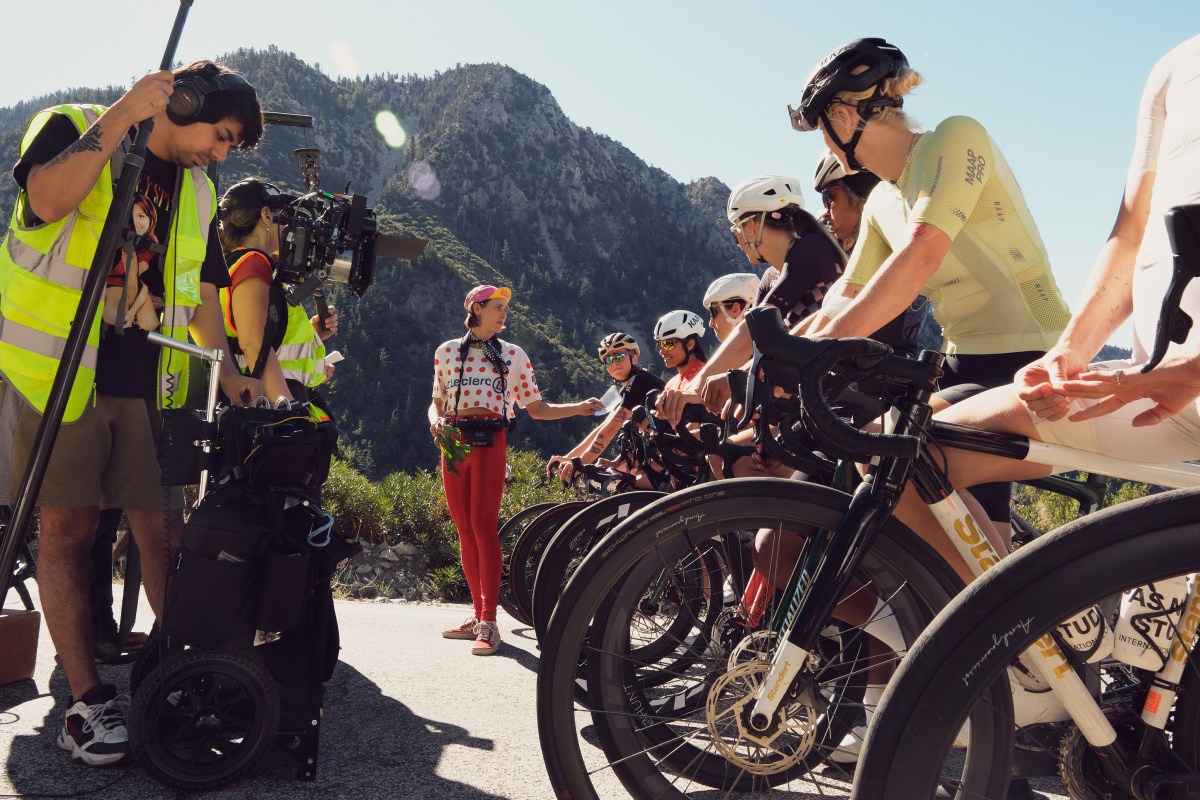
With her feature length film Cali Girls about to premiere at the Bicycle Film Festival, writer-director Jen Whalen offers up her raw, honest reflections on the emotional rollercoaster that is filmmaking.
It’s Fall but in the middle of another record breaking heat wave, and for the first time since moving to Los Angeles, Jen Whalen has air conditioning at home. “Full disclosure,” she confides with a smile, “I’m seven months pregnant and my brain feels like a big bowl of oatmeal. So I’m grateful for small mercies.”
Looking radiant and exuding a quiet, calm confidence, Jen has just got off a call in her role as creative director for Aventon, the top ebike brand in the US market. A professional shift she sees as a brand new adventure after spending the previous five years freelancing as a director-producer and like most Angeleno creatives, moonlighting here and there as on-camera talent.
Born in Upstate New York, Jen’s father worked for Kodak which meant the family moved fairly frequently with extended stays in Mexico, Uruguay—where her younger sister was born—and Florida.
“And then later, as a teen, I would fly out to Los Angeles to visit my Dad and work at the coffee shop next to Bob’s Big Boy in Burbank. Nights were spent getting into trouble at the infamous Cobrasnake parties and days were spent foaming milk and dreaming of one day living in LA. So I guess, after so many moves, home is now where my chosen family is. And perhaps influenced by this slight resentment I harbour against Florida which was kind of a weird place to do most of my growing up. I was a punk, I definitely did not feel like I belonged in the sunshine state drowning in conservative extremists and lifted trucks, so I sought out all the other misfits.”
This nod to the past extends to a Chrome Dyno BMX bike that Jen was given in the 3rd Grade and still owns to this day.
“It’s in the garage—in need of a little love—but I could never get rid of it.”
Which suggests a degree of sentimentality?
“I begged for that bike after my brother got the hyper-yellow one. Probably my first exposure to gender roles and sexism when no-one asked me if I wanted a Dyno. Like, what the fuck!!”
So a cool bike that emotionally transports Jen back to her eight-year-old self, ripping around the neighbourhood, and breaking the norms of how a girl back then looked and acted?
“An attitude that’s still in me as an adult,” she adds with a smile. “I’m still that girl that got called son and buddy at Taco Bell because of my bowl cut.”
Originally intent on studying musical theatre and acting at college—“My Mom, quite unequivocally, said absolutely no way”—Jen switched to broadcast journalism so she could learn about production whilst still pursuing her interest in current affairs and writing.
“But working on a news show, my one blind spot was the requirement to bury any personal opinions. Which was probably why my professor, when I was graduating, suggested that path wasn’t for me and that I should focus instead on making films and documentaries. Advice I, one hundred percent, took on board.”
Working part-time at American Apparel in South Beach, Miami—“The absolute heyday of the brand and I saw all of the bad stuff”—when Jen was visiting a friend in New York and being too broke to pay to see the movies, she decided to volunteer at the Bicycle Film Festival. There she met the festival’s director and obviously left an impression; being asked to oversee taking the festival to Miami.
“Next thing I knew, I got a call to say the BFF executive producer was leaving and did I want to move to New York? Which sounds kind of funny—going in at that level—but it was just me and the director in the New York office with a couple of other people. So I was plucked out of the underbelly of American Apparel and because I’d always had an interest in art, photography and bikes, it was a pretty good fit.”
Newly arrived in New York and surrounded by incredibly talented people, looking back Jen describes this time as being like a kid in a candy store. A series of pinch-me moments that even extended to the track bike she was riding—a white KHS frame covered with stickers—influencing the visual look of the bike the main character Wilee rides in the cult cinema classic Premium Rush.
“The SONY production team took a lot of inspiration from the New York bike messenger scene and were shooting in and around my neighbourhood. One day I’d just popped into a store to buy a banana and was sitting on my bike next to the sidewalk when a member of the crew came up to explain that I didn’t need to buy my own because they had catering set up a little ways down the street. After explaining that I wasn’t a cast member, they then tried to get me in the movie as an extra but my boss at the Bicycle Film Festival wouldn’t allow it because he was so anti-Hollywood. He even had me charge the male lead, Joseph Gordon-Levitt, $7 to view the films we were screening. Which was super embarrassing being the huge 10 Things I Hate About You fan that I am.”
But Hollywood nevertheless beckoned and a relocation to the West Coast in 2012 saw Jen take up a job as writer-producer for Warner Bros where she spent a decade crafting promos and campaigns for TV shows. A time in her life when she was also racing her bike: training before and after work, over the weekends, until what Jen describes as a quarter-mid life crisis prompted her to quit, fly with her bike to New York, and then ride all the way back to LA.
“I put it down to an accumulated restlessness that brought me to that point. I’d been racing road bikes for four or five years and made it to the top level. I was Cat 1, I did pro races, I was signed to a domestic pro team but it just wasn’t giving anything back as a return on my efforts other than satiating a passion. Which was worth it for a while but passion alone doesn’t pay the bills. We were dedicating our lives to playing a sport that hardly existed, a sport that was rarely broadcast, and we received coupons for hair dryers instead of checks at some of the local races. And it wasn’t like I was working a barista job which would have given me the time to focus fully on my racing. I had a career position with a Hollywood studio which meant I was doing too much for too long. And that only encourages me to do spontaneous, idiotic things like quitting my job and riding across the country. But I’d burnt out hard and rather than finding a therapist, I just got on my bike with the accompanying endorphin rush from the thrill of it all.”
Enjoying the freedom that bike-packing afforded—an antidote to the super regimented, super prescriptive nature of competition—when Jen finally arrived back on the West Coast she did one final race; winning the California State Championship on a one-day race licence she purchased for a few dollars before rolling up to the start line.
“That’s the little asshole in me,” Jen teases with a laugh. “I’d done that race as a domestique so many times but I was never the chosen rider to get the glory, to throw my arms up over the line and seal the deal. And I had all those miles in my legs, I wasn’t racing under team orders, and I had this mental power from riding so far for so long. Which proved pivotal on the last climb of the championship course when I nearly got dropped but I just kept on grinding it out. And then, when it came down to a final sprint, it was game on.”
After returning to Warner Bros for a few more years, Jen went freelance as a writer, director and producer through a company she founded called California Girls Productions. A career trajectory that led to Latigo Fever, the first in a series of short films that have subsequently garnered a cult following and went on to inspire the feature film that Jen is now proudly premiering.
“This all came about due to a creative itch that wasn’t being scratched through my job. There I was, wanting to make weird, experimental content but I was working in a corporate role for a studio. So I needed a creative outlet and when I attended a season-opener bike race with a new friend I had made, Erin Lamb, she pitched me the idea of throwing your Garmin over the virtual finish line on a climb to get the QOM. Back then Strava was in its beta phase—it wasn’t even orange—and I just loved her storyline and suggested we make it into a film.”
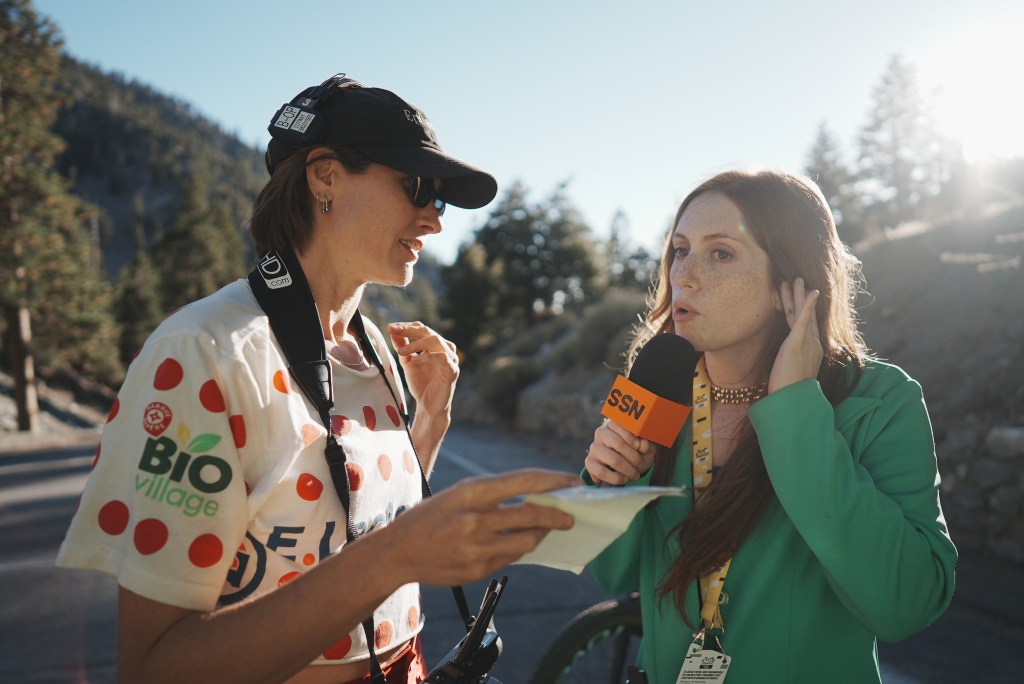
“So we shot that a few weeks later with a tiny crew,” Jen continues. “And it proved to be so much fun that we went on to make four more short films over the following 10 years. I always had it in my head that this should be picked up for a series and then Specialized brought me on as a brand ambassador because they all loved Cali Girls. When the ambassador programme folded, as a goodbye present to me, they offered the seed money to get the feature film off the ground.”
With the Cali Girls shorts scripted as a love-hate letter to her time as a racer, Jen emphasises that her goal has always been to point out and celebrate the ridiculously delightful aspects of bike culture. A viewpoint, you could argue, that rubs up against the commonly held cycling clichés and the sport’s penchant for unwritten rules.
“I’ve always been a little indifferent to the sock height debate and how they should match your helmet. The people that invented those rules are not the kind of people I choose to hang out with; in much the same way that people tried to dial my personality down when I was racing. This conservative notion that we should act almost as little debutants; whereas I had this reputation of being a problem. Which is really funny to me because what that actually meant was that I would talk back in a race. So where I am now, is that we should all respect the rules of the road, we should understand the group dynamic and how to ride safely with others. But the white socks? I don’t give a rat’s ass what you wear on a bike ride.”
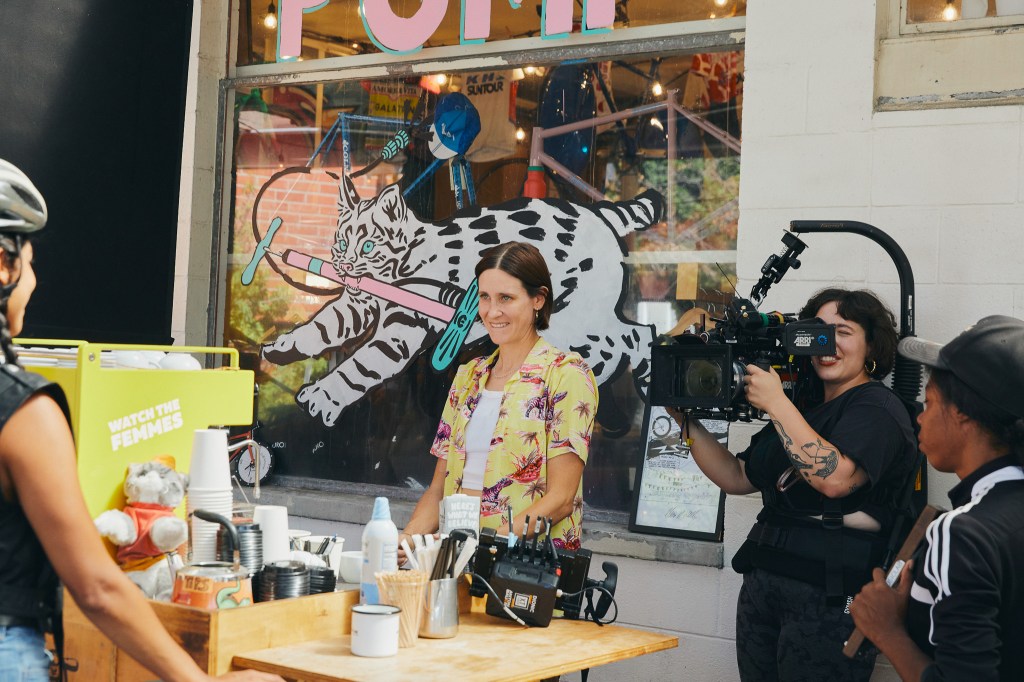
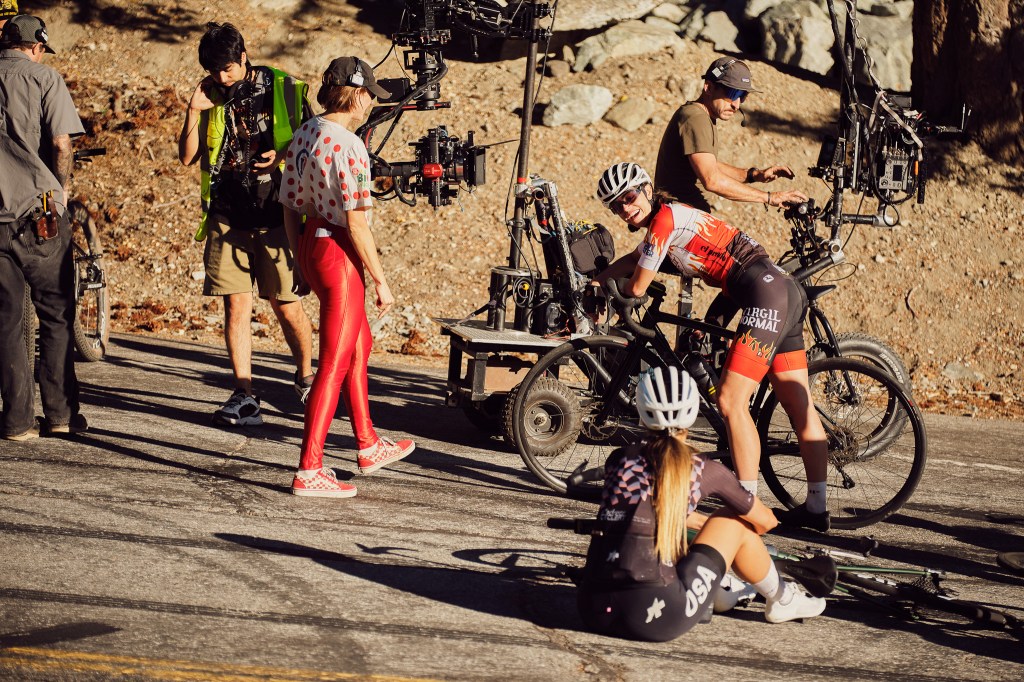
Fast forward over the past three years and Cali Girls, the feature film, is ready to premiere. But that’s not to downplay the level of commitment and relentless application that was required to not only get the project off the ground but through filming and post production.
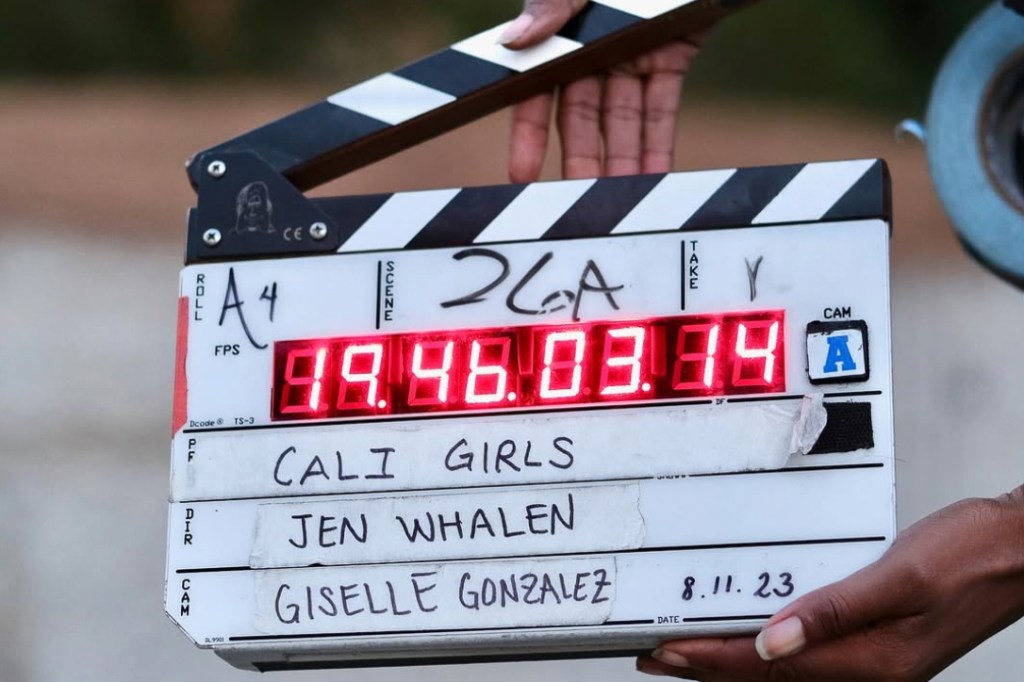
“The process usually starts with you shopping your screenplay around to either production companies or to a specific actor or director. Very often screenplays get stuck at this stage but with Cali Girls, I’ve never been prepared to sell the concept short. I always wanted it to look and feel like a Hollywood indie production—like the film Ladybird but on wheels—and my route was a little different because I started off with a brand donation. Not enough to see the film through all of production but enough to believe we could start it. And then, when I was struggling to find the rest of the financing, I took it over the line. The least painful investment I’ve ever had to make because I believe in this project so much.”
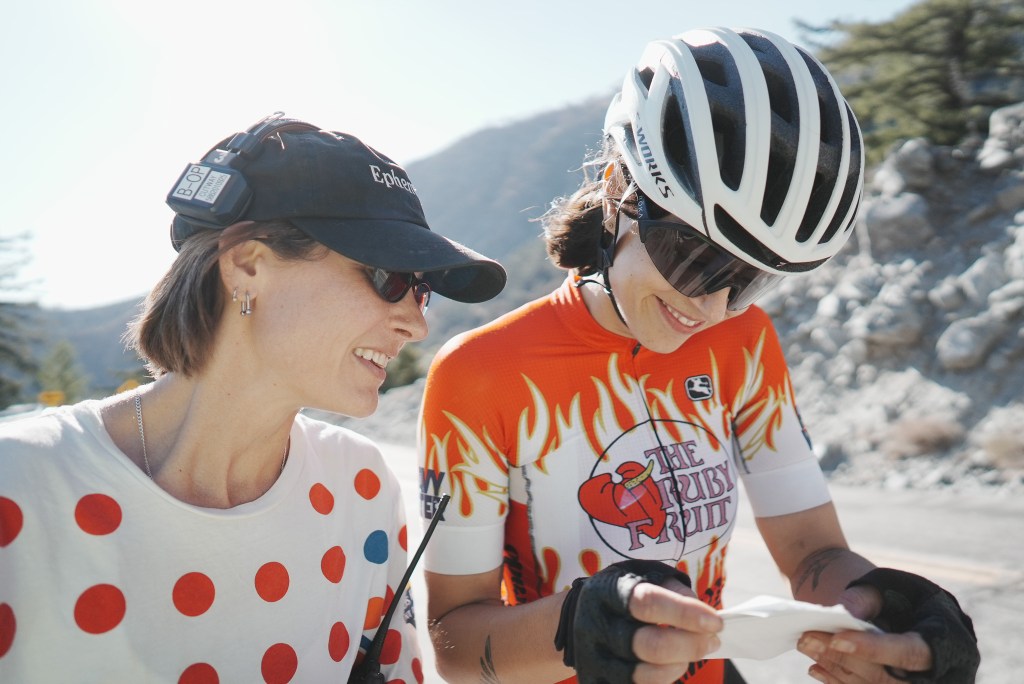
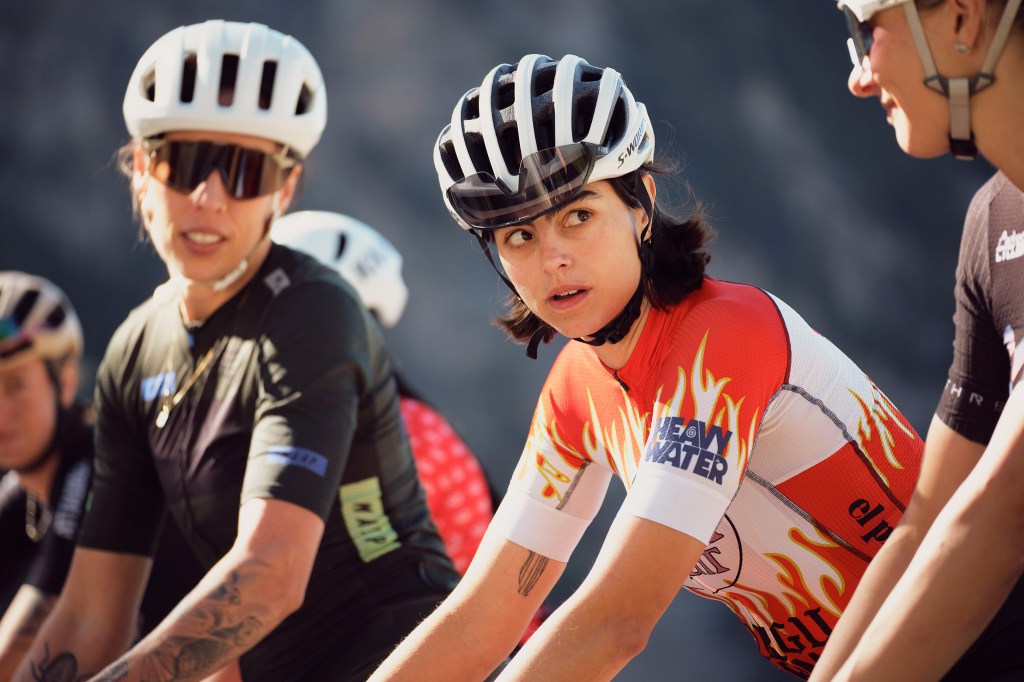
“Which I guess is why, every time someone new came on set, I made it my mission to infect them with the spirit of Cali Girls. Because the story and what it represents is a big motivating factor; in part because it highlights the disparity our female characters experience and how it bleeds into everyday life. So I deliberately had a majority female cast and crew which proved a delightfully collaborative and egoless work environment. We all had a great time, it was very rewarding, and as a bonus we got full camera support from Panavision who have a programme to recognise women and women of colour crews.”
In common with most creatives, Jen admits to finding it difficult to sign off this latest project: alluding to the fact that she will think about it for the rest of her life and the little changes she could have made.
“But I’m an over-thinker,” she goes on to explain, “and not good at finishing things to the point where I can step away. I have no problem getting to the finishing stage but then I have a tendency to want to make a million different versions rather than simply putting it out there. Because once it’s out, there’s no changing anything, and that’s the fear. But you know what, I’d much rather go the extra mile than have the feeling we fell short or didn’t serve the project fully.”
Whether the experience of making a feature film has changed her, Jen suggests that she’s still the same person as far as enjoying the experience but that she now knows a lot more regarding the filmmaking process.
“When we shot Latigo Fever, I was at the beginning of my career. And now I’m 14 years further along my creative journey; each episode of Cali Girls representing the next level of experience. But much more than just me, what this feature film represents is the combined efforts of over one hundred people—this huge family—that have touched the film over the past three years. It’s still my dream for Cali Girls to make it. And not only have we made a really good movie, but also a darn good proof of concept for something even bigger.”
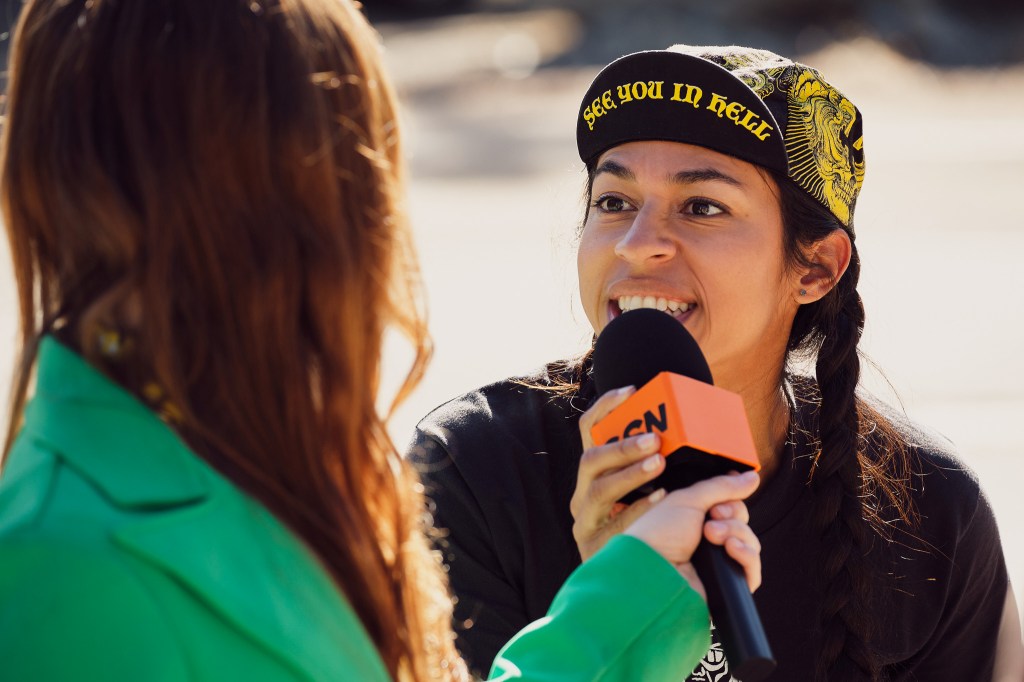
Behind the scenes photography by Jeremy Colegrove with kind permission of Jen Whalen
Cali Girls premieres on Sunday 22nd November at the 26th Bicycle Film Festival, Los Angeles. Tickets available here

