
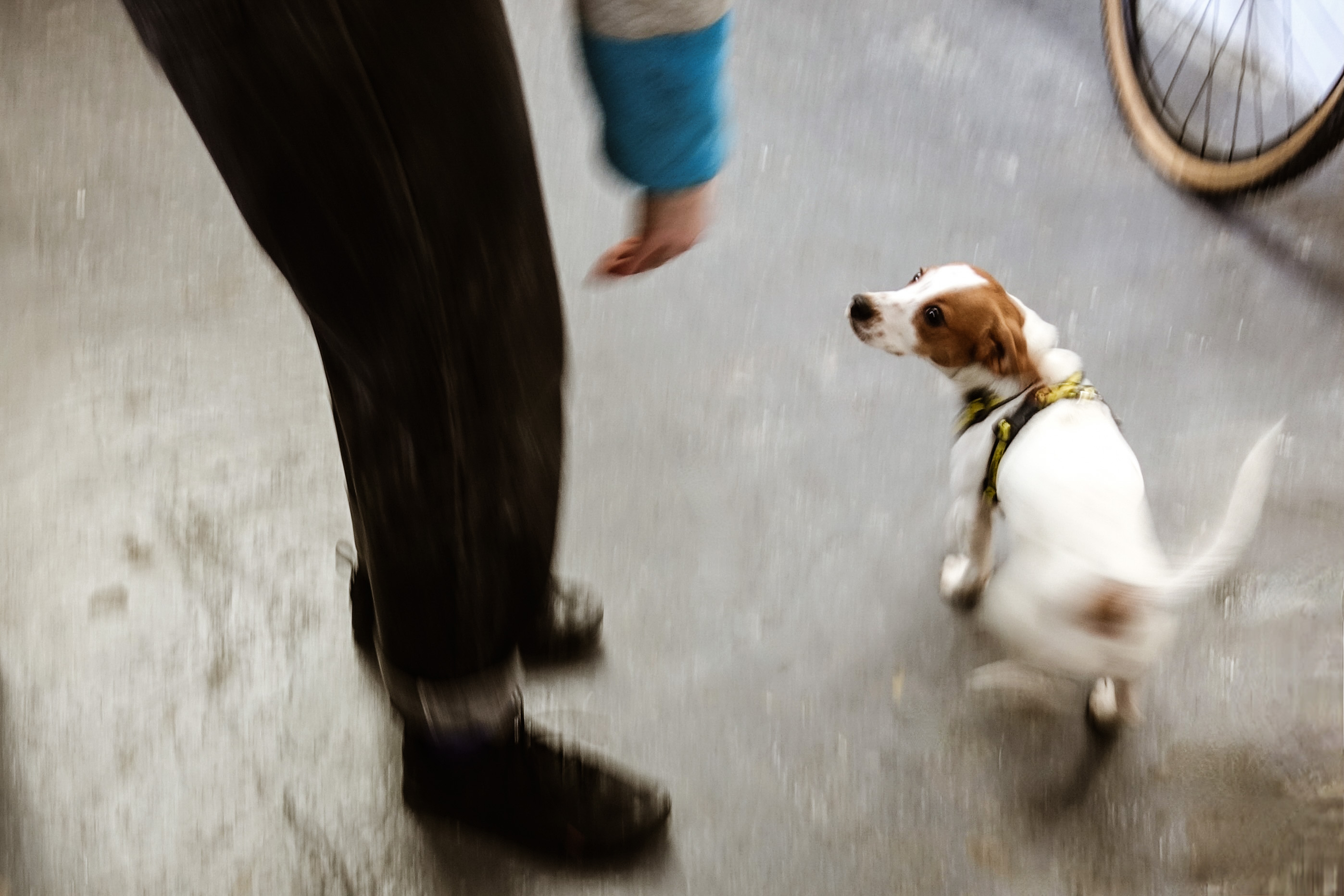
I’ve travelled out from central London to the southwest end of the Northern Line. Exiting the station, a short walk through the surrounding suburbs leads to an industrial estate and the home of Isen Workshop. Pushing open the door, there’s a sudden movement as a small dog darts out and excitedly runs rings around my legs. Caren Hartley follows and greets me with a smile as she scoops up this new addition to the Isen family. The dog’s name is Frieda and it’s her first day in the workshop—Caren obviously delighted with her new companion as she politely asks if I’d like a cup of tea.
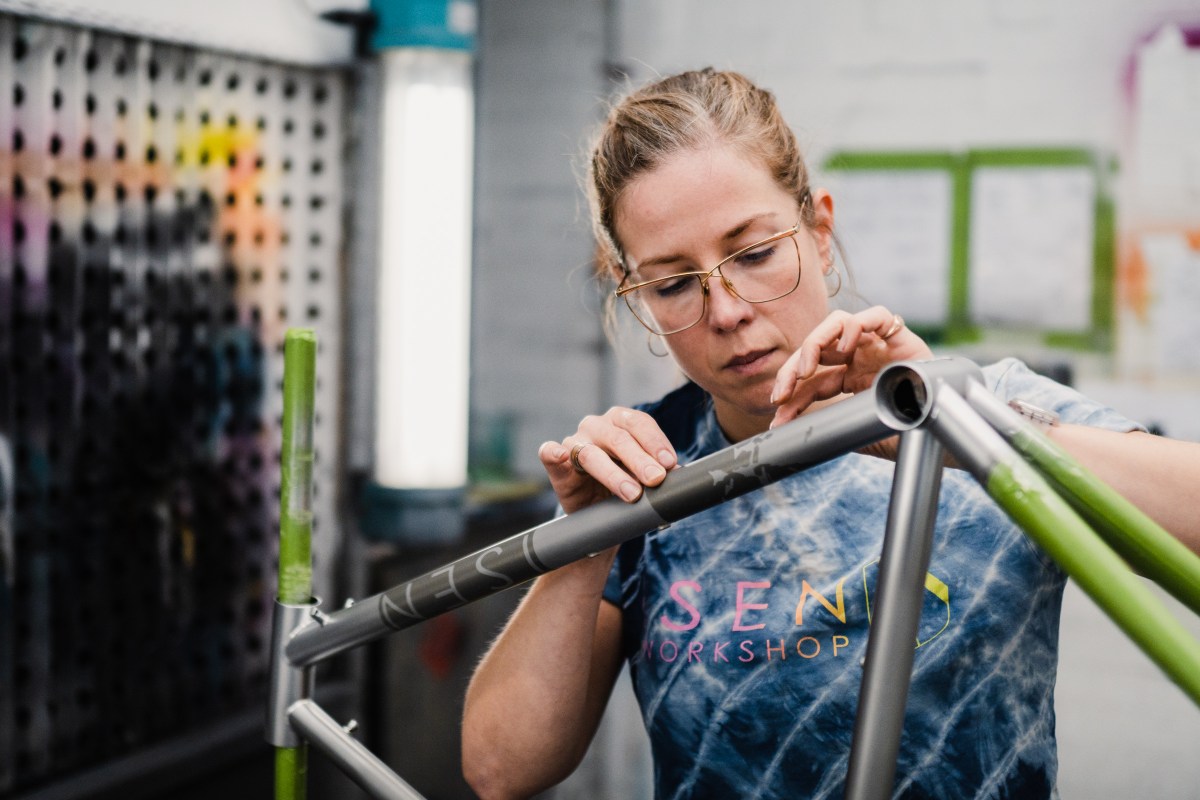
Dressed casually and warmly welcoming, as the tea is brewing Caren takes me on an impromptu tour of the workshop with its pleasantly chaotic mix of boxed raw materials, hand tools and industrial machinery. Originally fabricating frames as Hartley Cycles, Isen was founded when Caren partnered with Matt McDonough of Talbot Frameworks—the pair subsequently carving out a reputation for beautifully built bikes in steel and titanium.
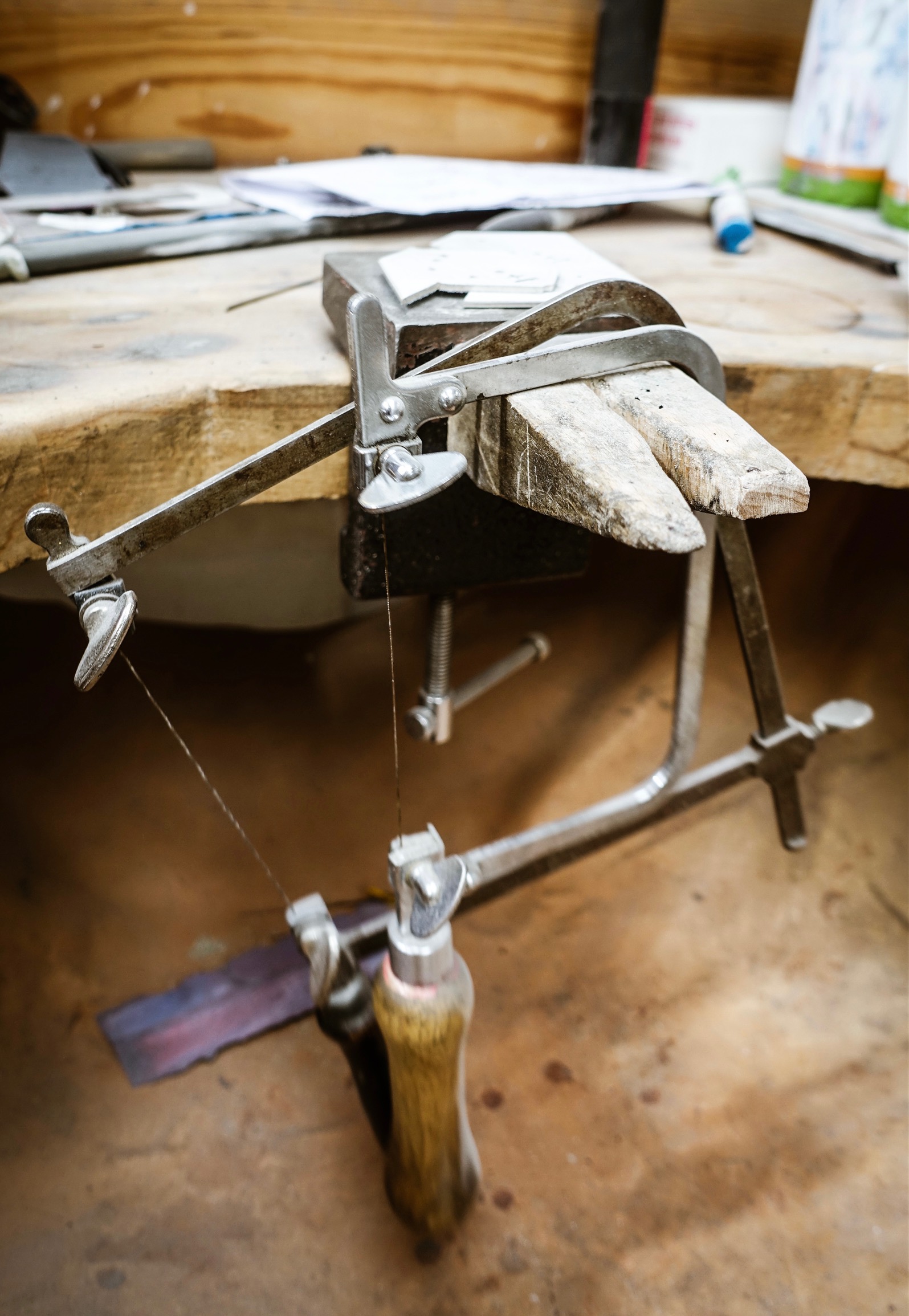
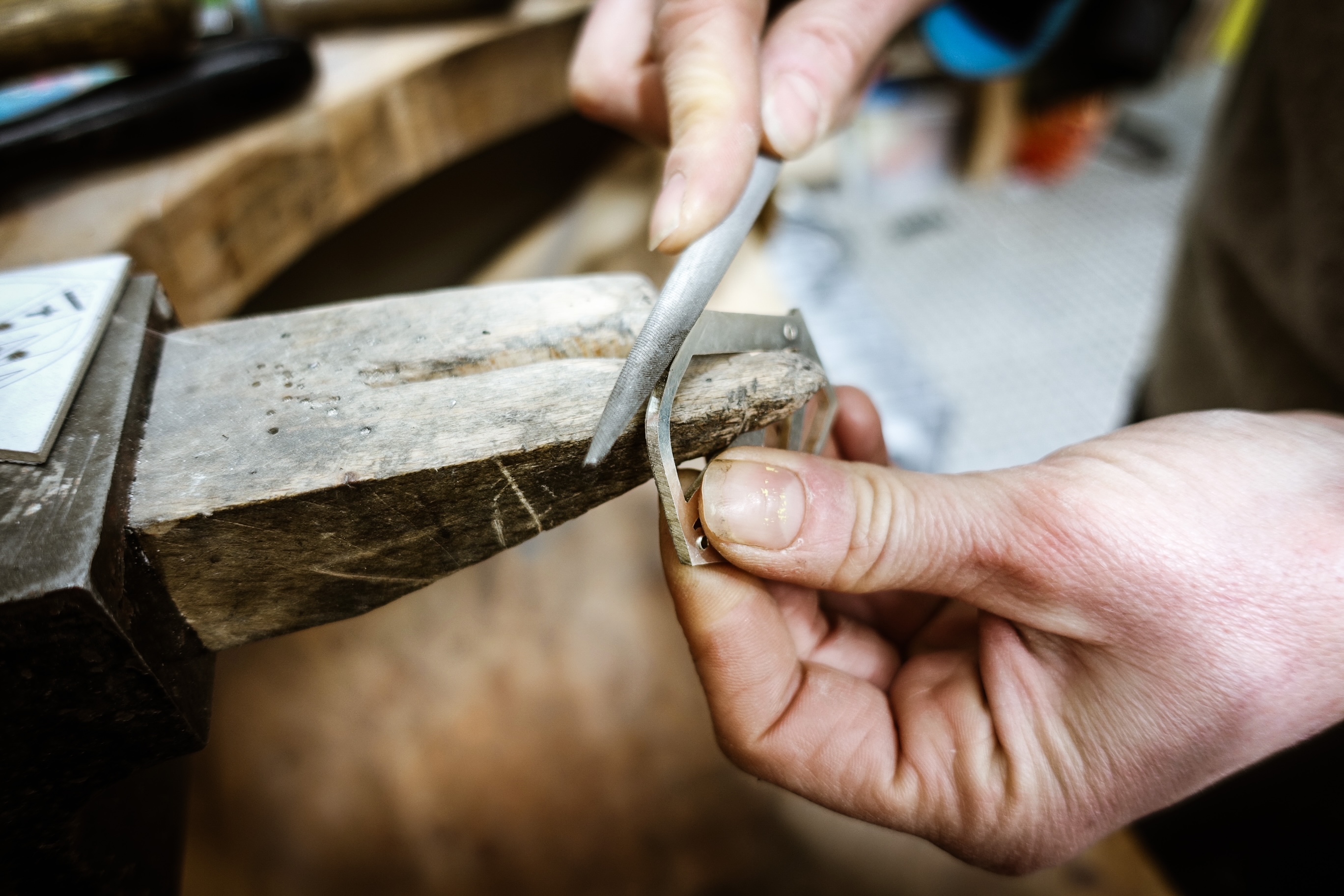
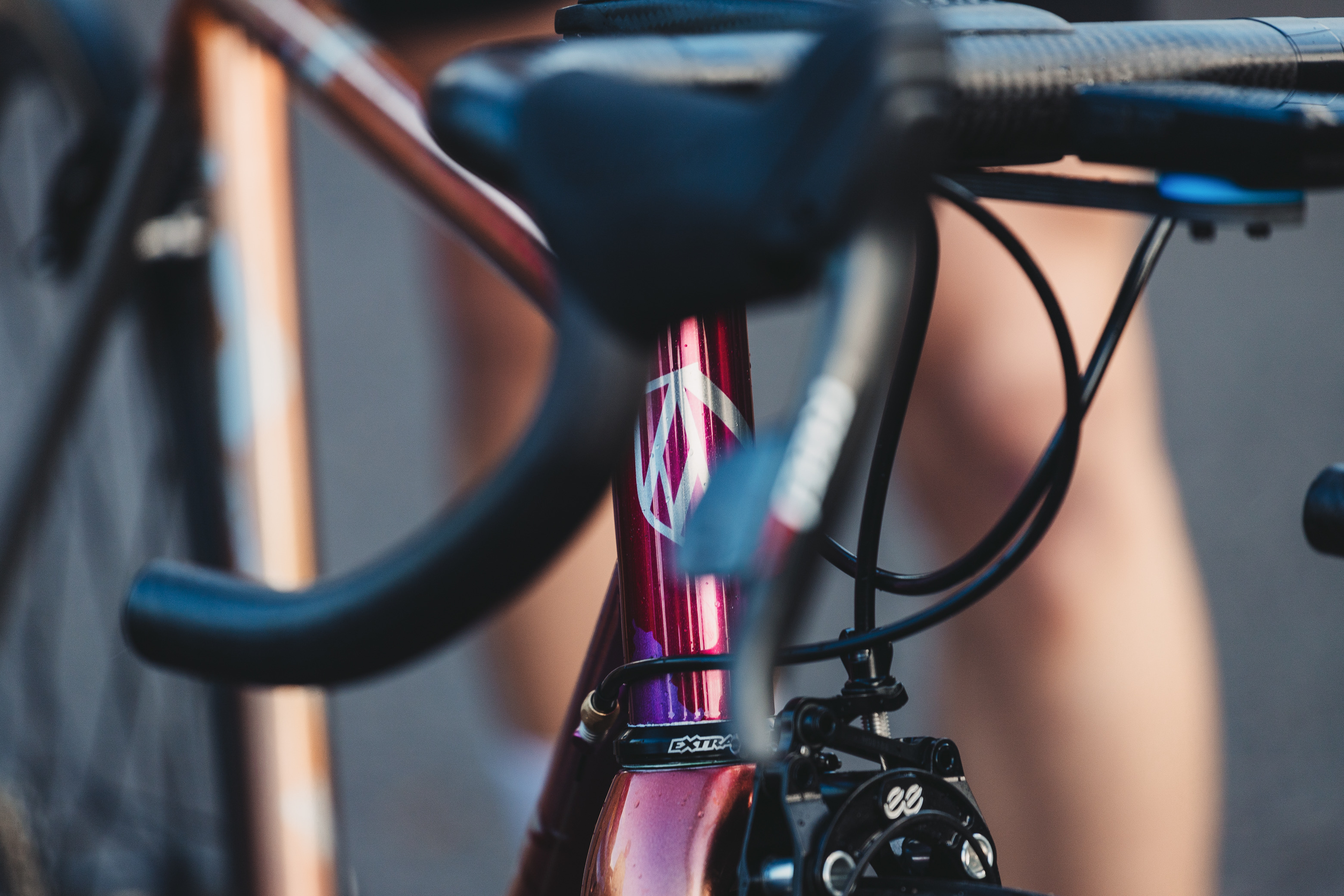
Having previously studied at the Royal College of Art, clues to Caren’s background in fine metalwork can be found in the jewellery-making tools she uses to craft custom head badges that many of Isen’s customers add as a build option.
‘I was always making things as a child and I remember my parents being quite creative. Dad was a watchmaker and Mum would make costumes for us out of crêpe paper and cereal boxes. And then later, when I spent time in the metalwork department on my art foundation course, I became fascinated by the magic of soldering. It wasn’t that I was necessarily interested in making jewellery but that’s what you made out of metal.’

As her career progressed, Caren’s plans for creating larger-scale artworks were hampered by cuts in funding prompted by a worldwide financial crisis—a day-to-day existence of writing proposals which in most instances proved unsuccessful.
‘I knew I wanted a change but I was avoiding making any decisions by hanging out with my friend Jenni Gwiazdowski at the London Bike Kitchen. But after attending an event with her where I met a frame builder, I had this sudden realisation that it was a little like jewellery—basically big soldering—and I just needed to start making things that were bike shaped.’
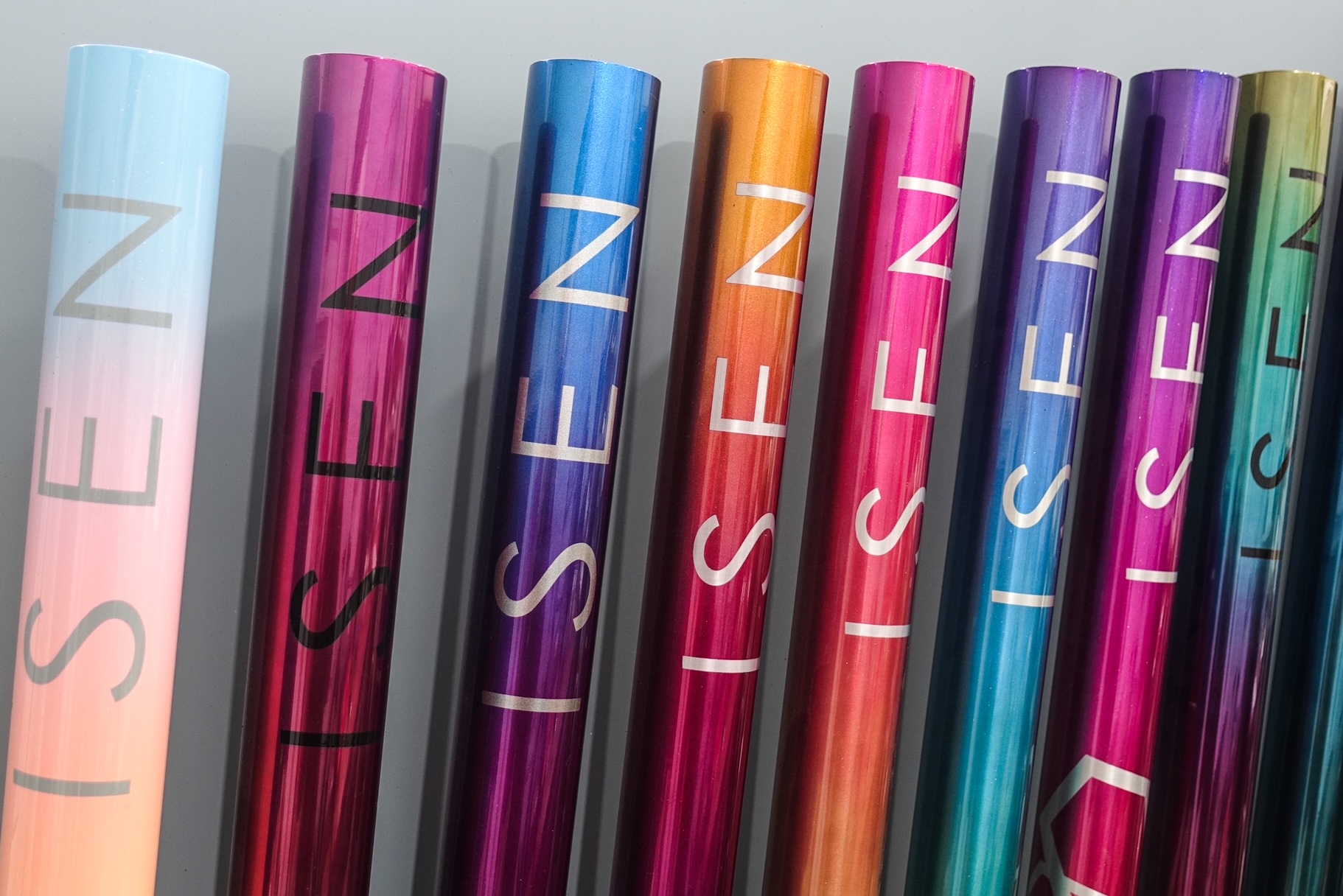
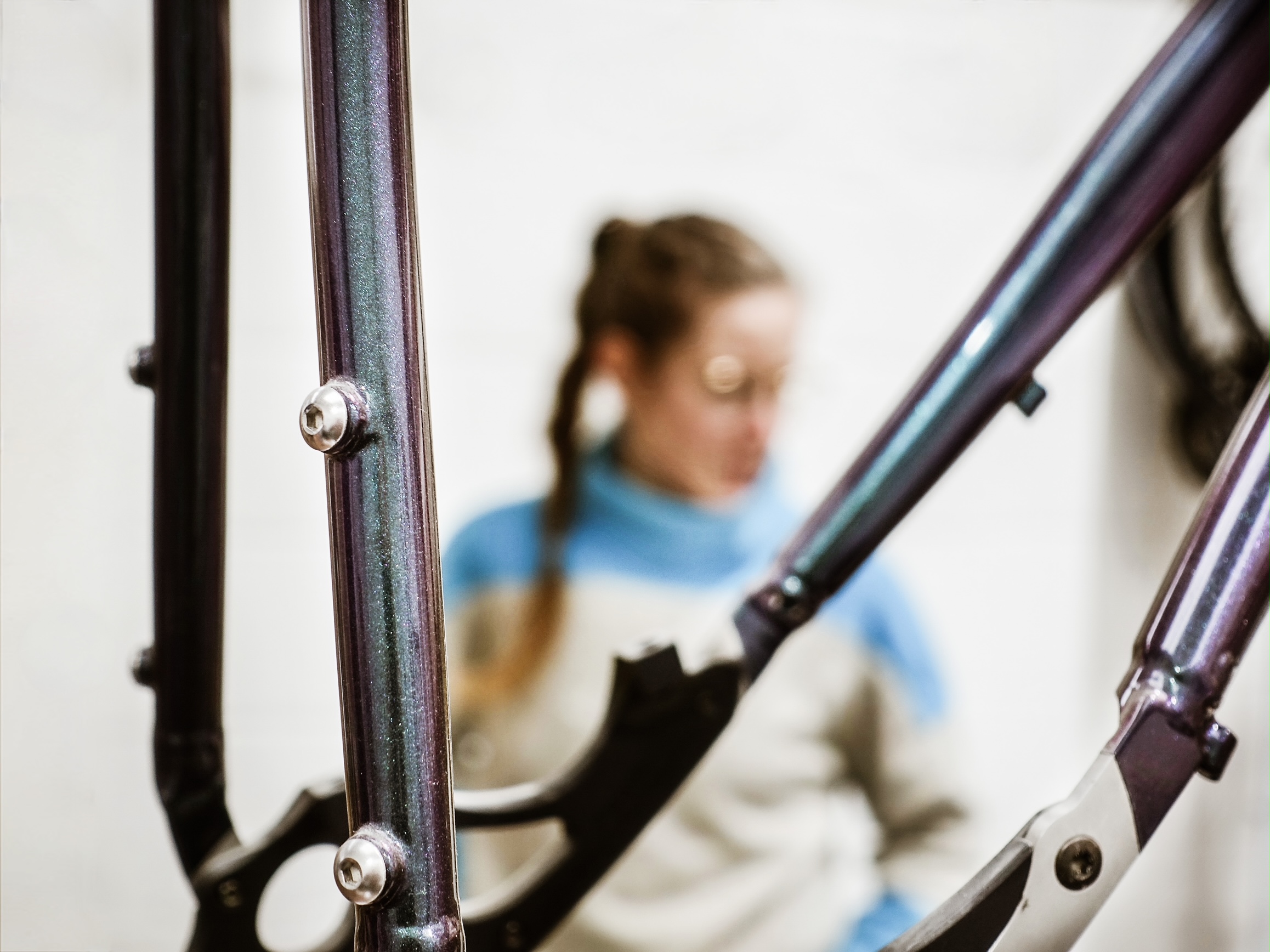
With 15 years of experience building custom bikes between them, Matt now concentrates on fabrication with Caren focusing on paint—a completely in-house process that starts with a tube set and customer build sheet.
‘When Matt and I first started Isen, our plan was to have a range of frame sizes available to be built up. In reality, everyone wants something a tiny bit different so we have models which are your jumping in point and then we can work on custom geometry and anything extra that’s required.’

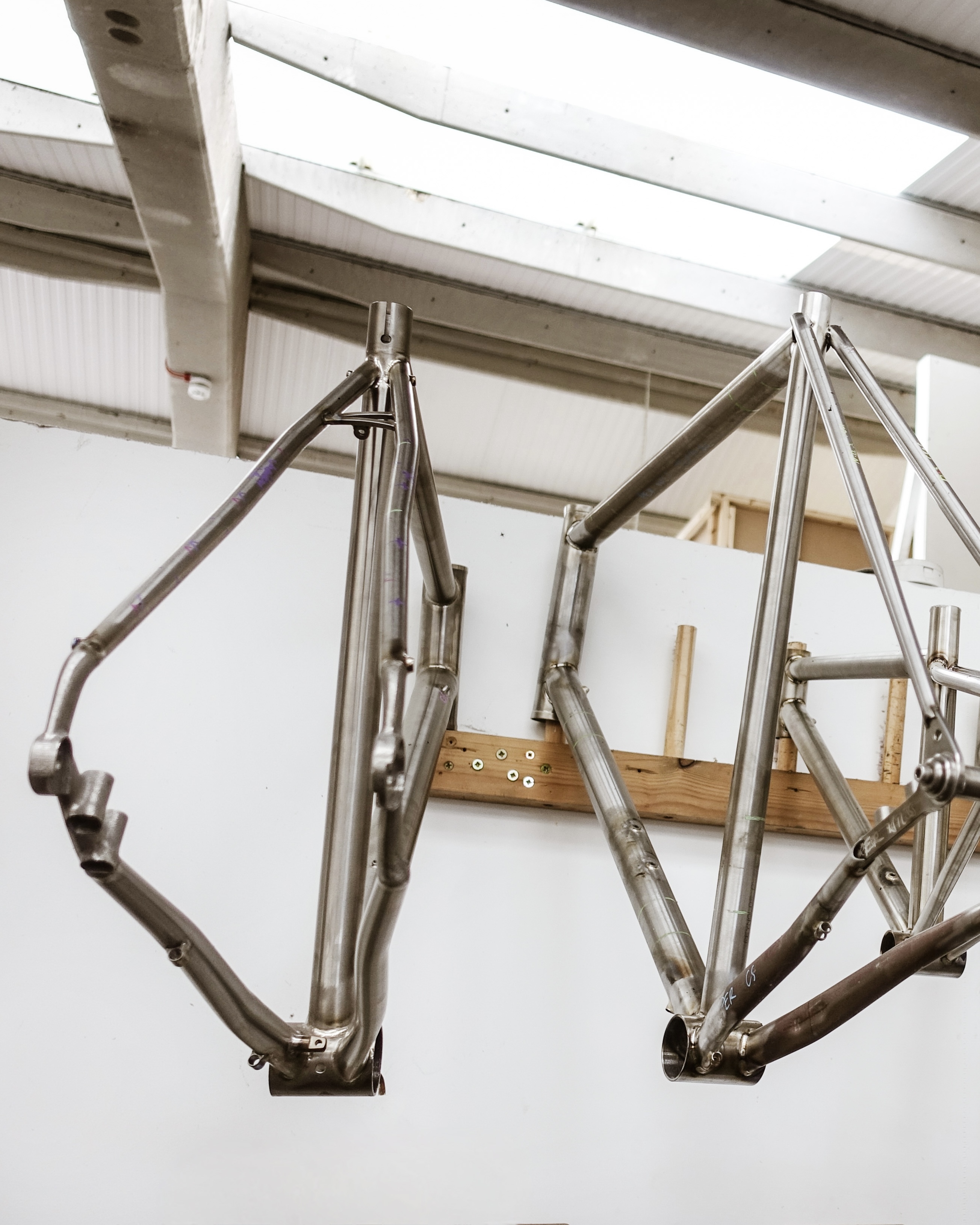

As we leave the workshop’s fabrication bay with its familiar array of jigs, welding equipment and lathes, sitting on a table next to Caren’s paint booth is a piece of equipment that hints at this agile approach to design—a 3D printer they use to rapid prototype component test pieces in response to customer feedback and their own desire to balance form and function.
‘It’s all about working with, rather than against a material’s intrinsic properties. That’s why we use carbon tubing for our integrated seat post and stainless steel if you want a really light, stiff road bike.’
Softly spoken and self-deprecating, when asked if she finds a sense of peace in the workshop, Caren suggests that hand fabricating metal feels comfortable and calming but paint brings its own intensity.
‘I remember someone saying to me when I first started, that the difference between a good and bad painter is a good one knows how to fix all the mistakes. And paint is definitely more pressurised with the number of variables at play. But when a frame is finished and fully assembled, that’s definitely the best bit. It takes such a long time to make a bike from the tubes in a box to the welding and paint. So there’s a little bit of you that goes “Yesss!” when it’s finally ready for the customer.’
Acknowledging with a smile her own innate perfectionism, it’s clear that Caren’s attention to detail has found the perfect outlet in her brilliantly bold paint designs. And just as each and every Isen frame is handmade to order, the hours of care she invests in perfecting each paint scheme is understandable for such a bespoke product—a considered purchase for any prospective customer that, whilst not inexpensive, is surprisingly affordable compared to the current pricing of bikes from the larger manufacturers.
‘People are regularly spending £7000 or more on standard-sized bikes nowadays. Ten years ago that would have seemed a lot but it’s far more normalised now. And you can get a really, really nice custom bike for that money that’s made to your exact specifications and will perform as well as the best carbon frames. It might weigh a few hundred grams more but it will still be lightweight and a joy to ride.’


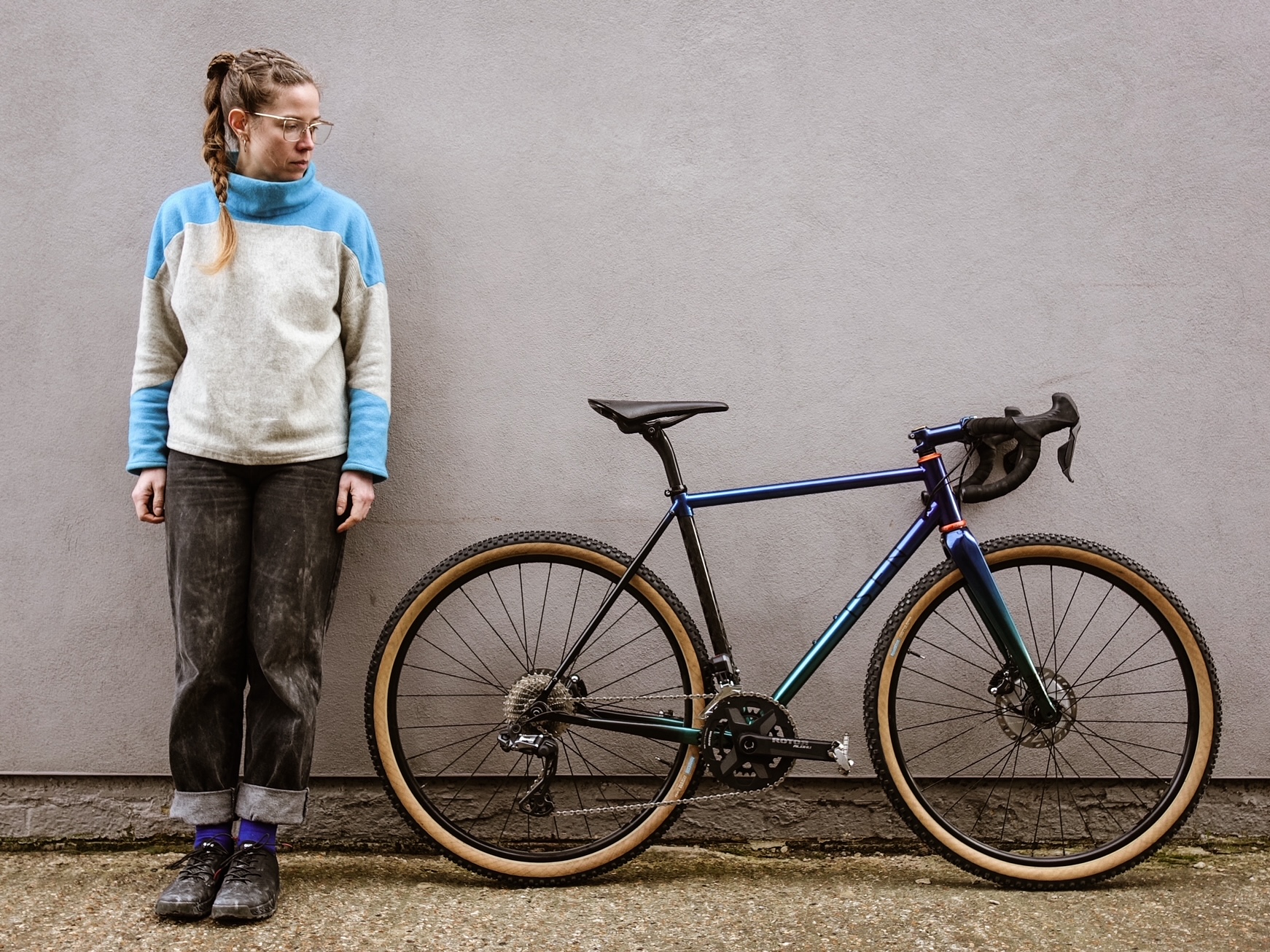
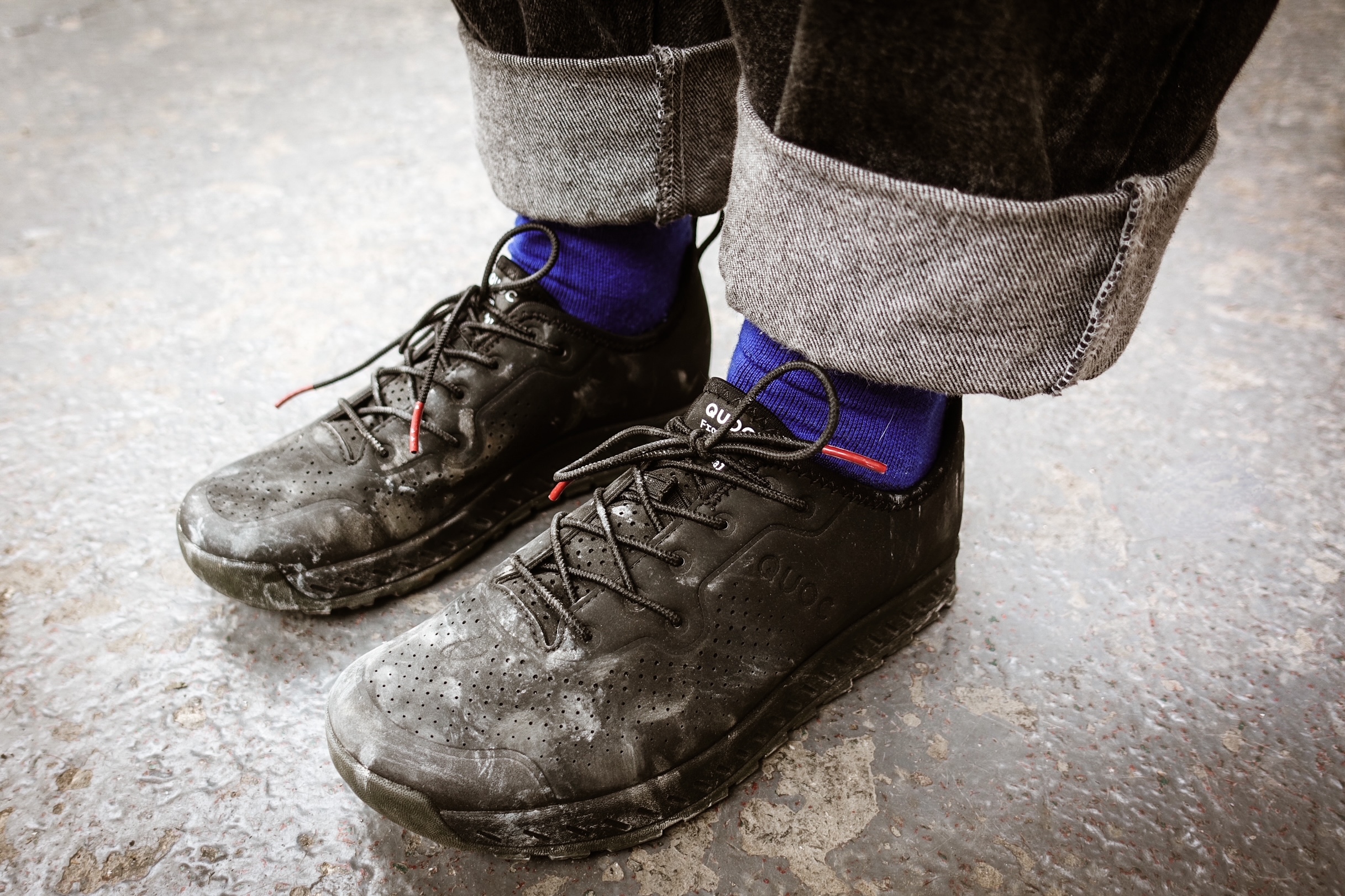
The importance of choosing the right bike is a process Caren equates to the comfort and wearability of her Quoc Weekend Sneakers.
‘When ordering a bike, the correct size and fit are probably the two most important aspects. Components can be upgraded or finessed but if your frame isn’t right it will fundamentally compromise your riding enjoyment. And just as we hope our customers fall in love with their new Isen, I still have that new shoe thing where I catch myself looking at my Quocs.’
As the London location of the Isen Workshop was perhaps unsurprisingly chosen for its commutability by bicycle, escaping the pressures of work sees Caren loading up her GOAT—think rugged, cross–country mountain bike—before heading off for a weekend camping trip.
‘Manufacturing—and especially making things by hand—is a hard industry to be viable. So when I’m here at the workshop, it can get a little stressful but I do get to ride lovely bikes and that’s really very nice.’
All photography by cyclespeak


 cyclespeak