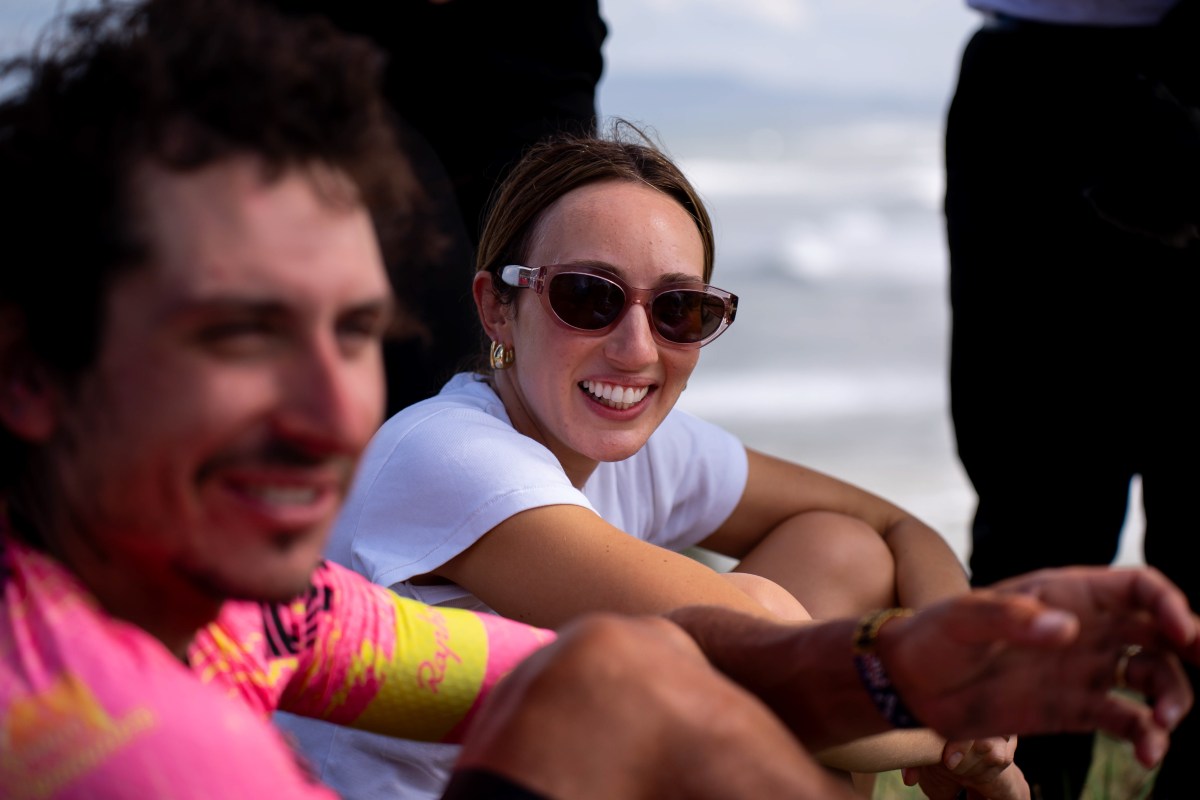
Rachel Peck / The two of us together

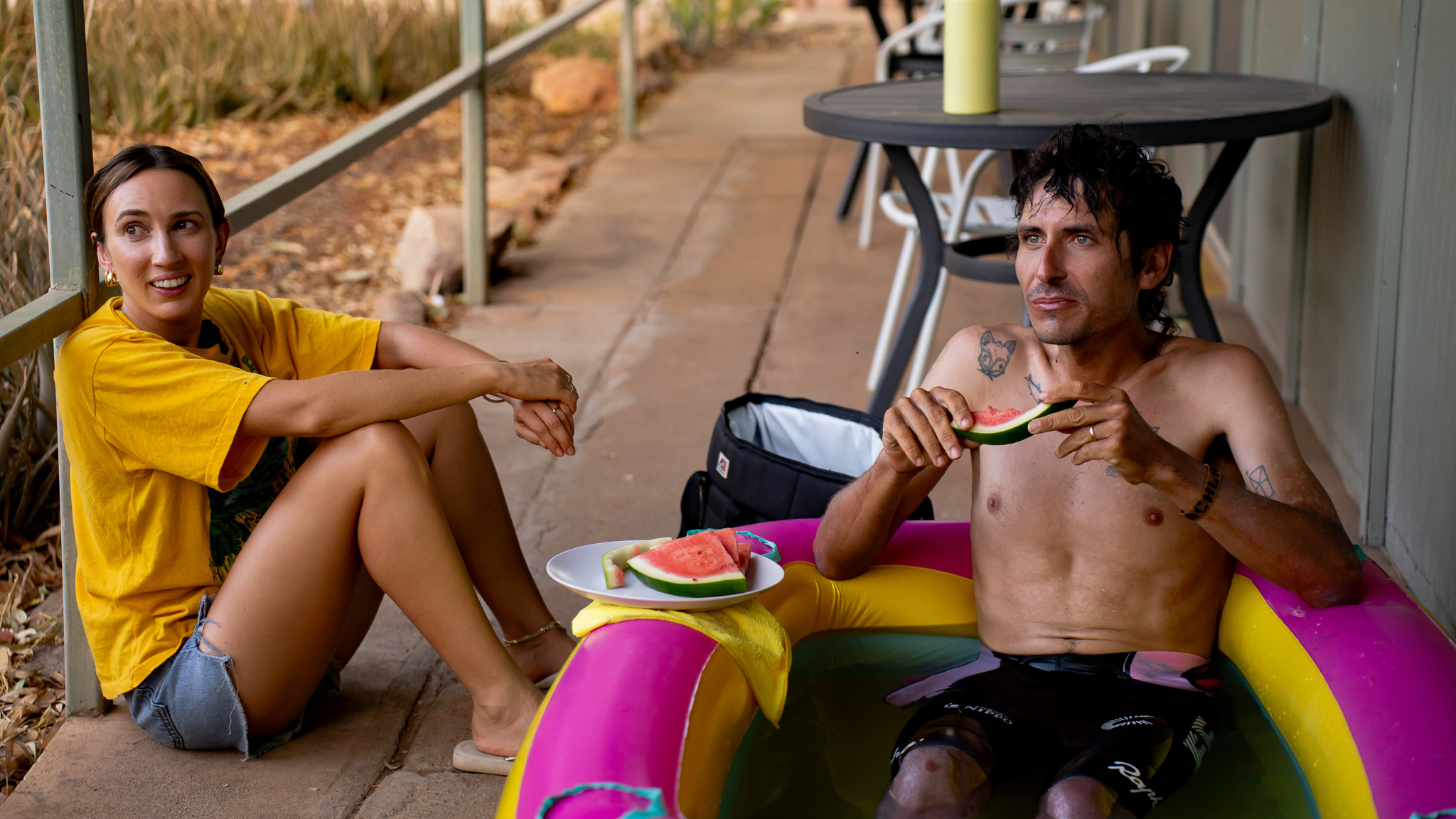
Lachlan Morton, former World Tour professional and now ultra-distance racing legend, is sitting in a brightly-coloured, plastic paddling pool filled with ice water. His wife, Rachel Peck, after helping him take off his shoes and socks, runs her fingers through his hair before fetching him something to eat.

“You look a little zooted,” she says with a gentle laugh; a hollow-eyed Lachlan raising a smile before responding, “I’m fucked, mate.”

This particularly poignant scene—towards the middle of his record breaking circumnavigation of Australia by bike—is just one of many in the recently released film The Great Southern Country that underscore Rachel’s supporting role in helping her husband cover 14,210 km in just shy of 31 days. A fascinating balancing act of managing the logistics of a record attempt with the perfectly understandable concern of seeing a loved one push themselves to the very limit of their endurance.

“What’s funny is you can’t put your arms round them and complain how what they’re doing is so fucking hard. Because they’ve got to do exactly the same thing the next day. So there is this requirement to hold things together.”

And holding things together appears to be Rachel’s forte; her film persona suggesting she is just the right kind of personality—calm, quick to laugh and always ready with a smile—that you would be happy to spend a month with, on the road, cooped up in an RV. The nice girl, I suggest, that’s referenced in her Instagram bio?

“People that know me well,” Rachel explains with a laugh, “know that I can be, not a bitch, but pretty goofy and not exactly normal. So I just thought describing myself as nice would be funny.”

Recently returned home after her Antipodean odyssey but with another flight to catch in the morning for a trip to Mexico, I’m guessing there’s not really such a thing as a typical day?

“Things kind of happen in blocks. We’ll be in one place for three months or so, and then we’ll be somewhere else. But when we are back in the States, a typical day involves me working from home as a graphic designer. But that’s all mixed up with some hiking, Pilates, or a run as a way of getting out and about. And I love to spend time with Lach when he’s at home. We love to cook together and just hang out. Home is our downtime because when we’re away on a trip, there’s usually a lot happening.”
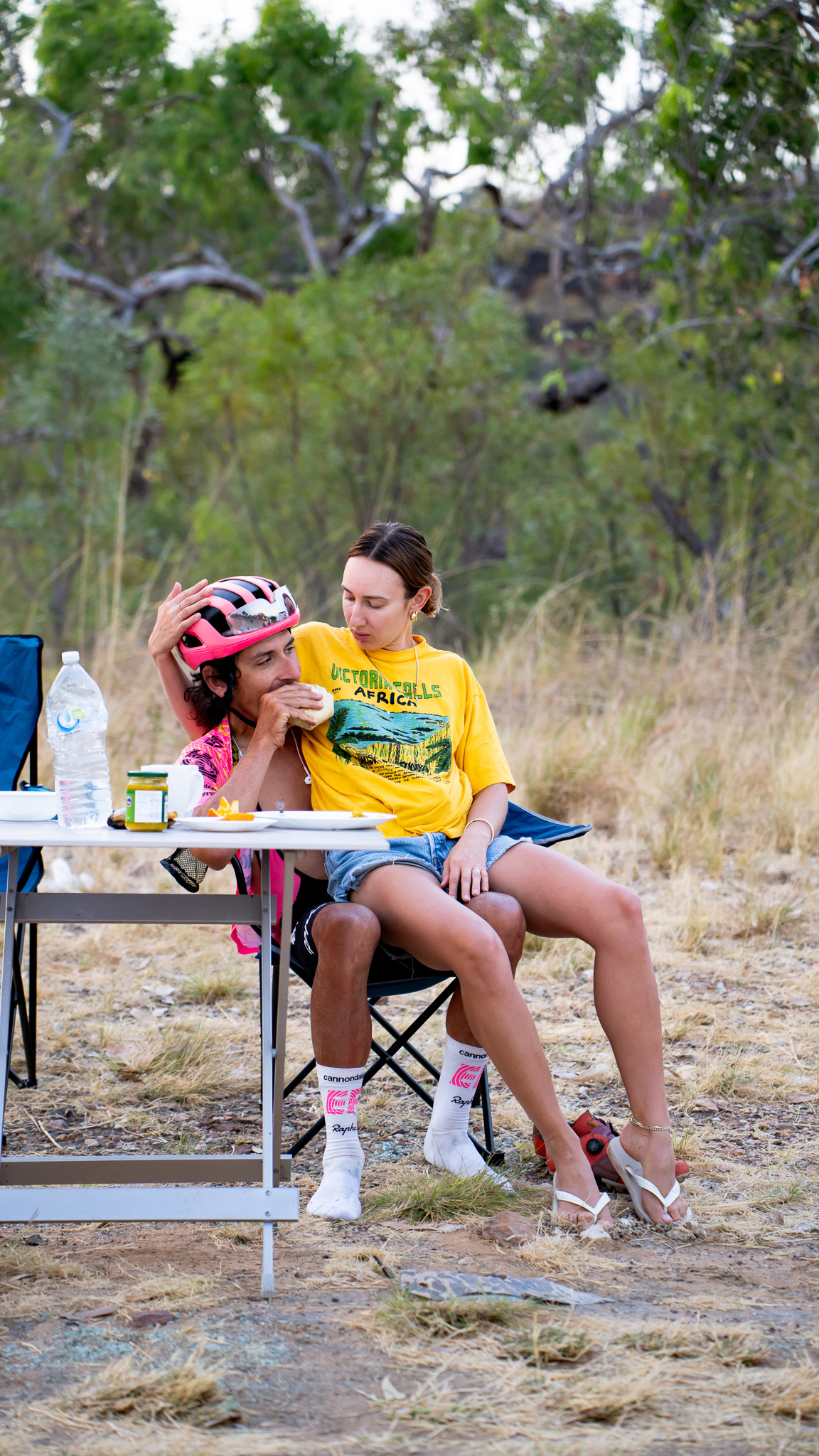
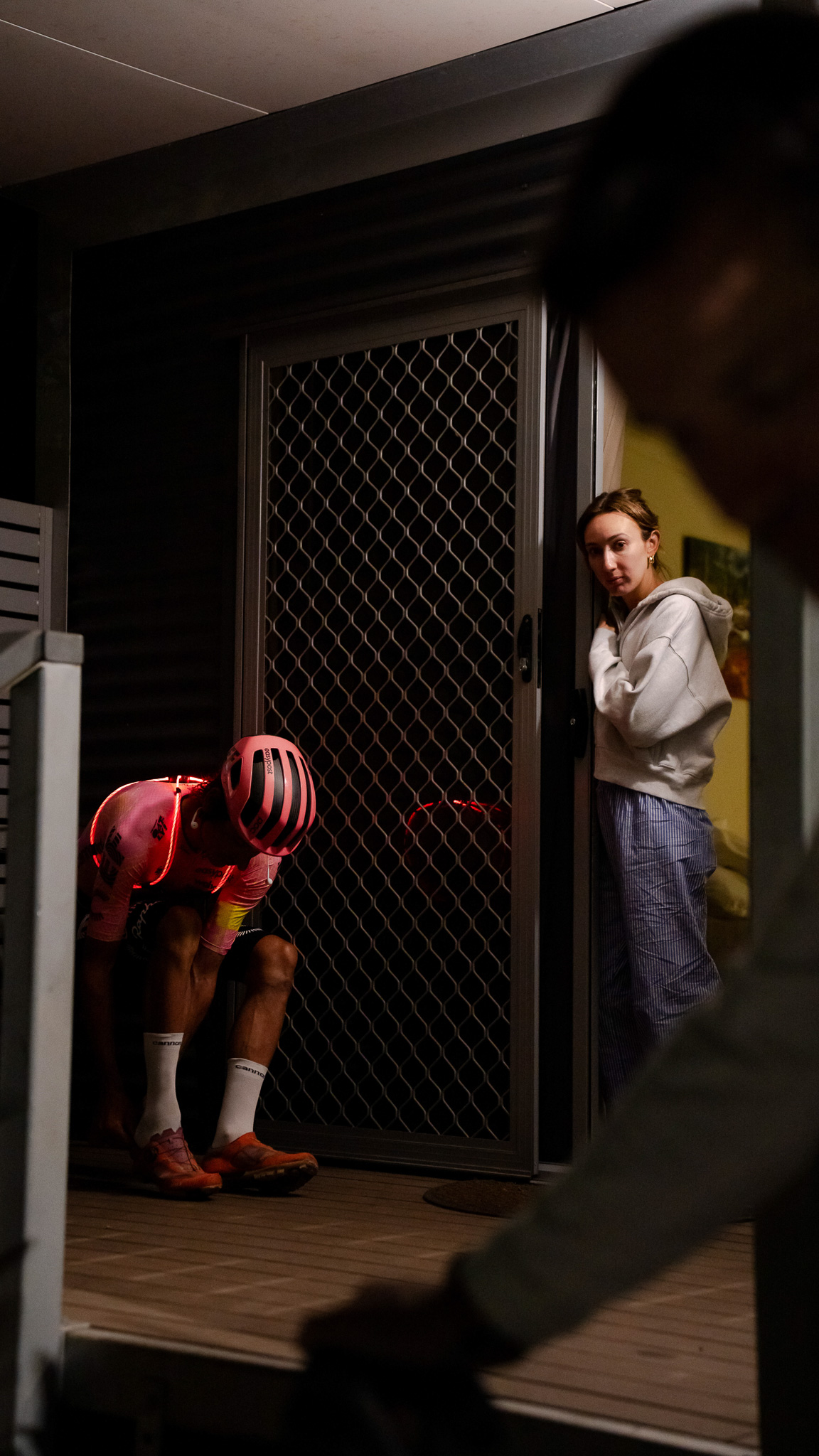
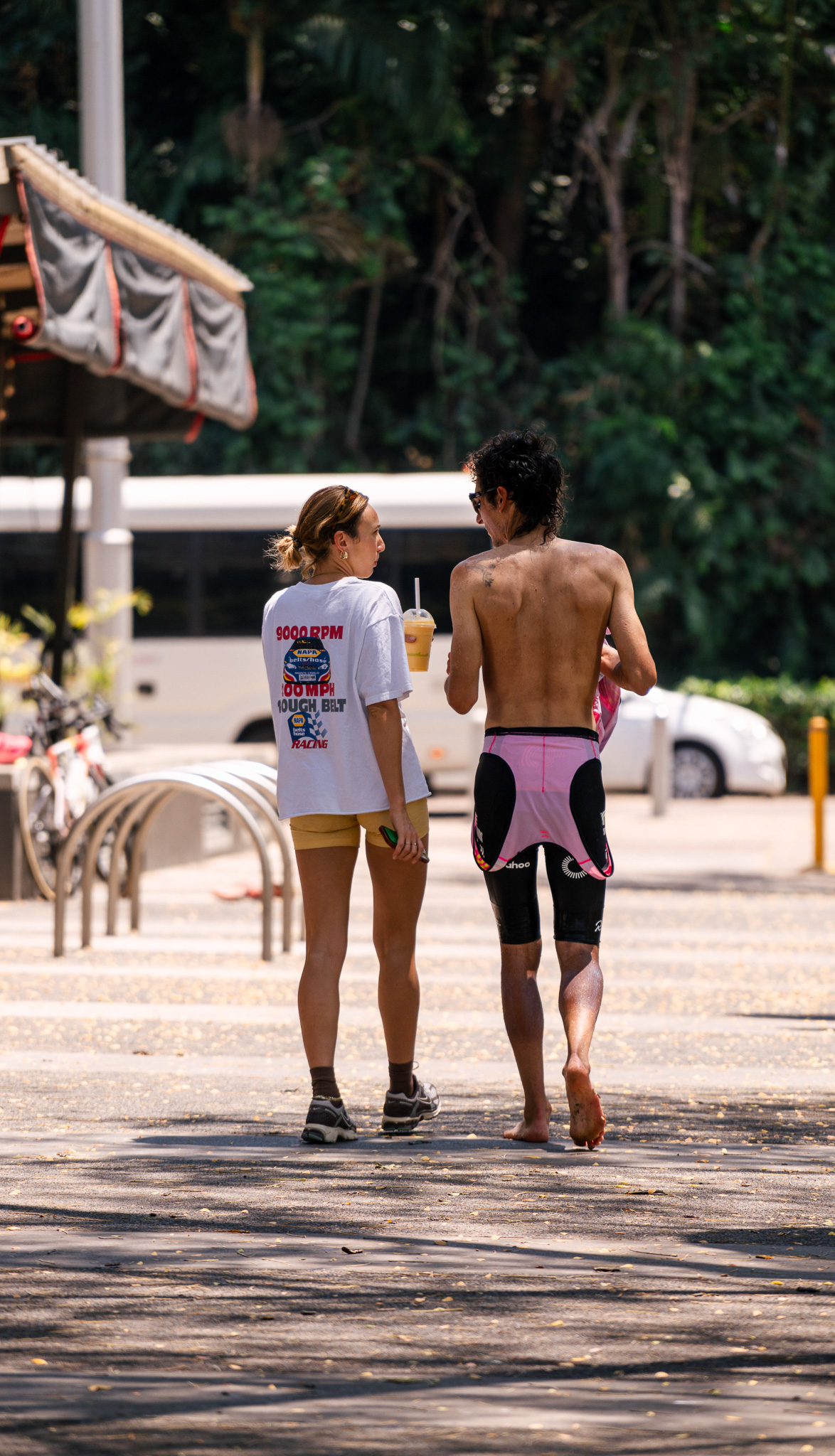
Click image to enlarge

With this mention of her graphic design career, Rachel is quick to acknowledge her father as encouraging all her childhood creative endeavours.

“As well as a passion for music, he had a huge collection of graphic design and cartoon books. Things like Robert Crumb—which I guess was pretty inappropriate for my age back then—but I loved all that stuff.”

Growing up in Sydney, the urban environment meant Rachel never developed a particularly strong connection with nature. And it was the move to Port Macquarie as a teenager—coincidently where Lachlan grew up—that proved to be her first introduction to a more rural setting.

“It was quite a shift from city living where the sound of passing cars would lull me to sleep. The nearest thing we got to a traffic jam in Port Macquarie was cows crossing the road.”

High school proved problematic; worries over not being able to get into university not helped by Rachel skipping class. Begging her parents to put her into a private school—with the sole purpose of getting good marks—as she attended her first classes, Rachel noticed this quiet, retiring young man.

“That’s where I first met Lach but we never actually hung out or spoke much. Just the occasional passing encounter until, on my friend’s birthday, she insisted I go out to celebrate. I said I couldn’t because I had to revise for an exam but she’d stolen another girl’s ID and was insisting I agree after all the effort she’d gone to. So we went out and I bumped into Lach and that’s when we finally started to talk and get to know one another.”

Spending all their holidays hanging out together, things came to a head when Lachlan had to leave for the States to join his racing development team.

“I found that a bit of a shock,” Rachel reminisces, “and I think he was nervous about telling me. Because I only found out two weeks before he was due to leave. And my initial thought was maybe he didn’t think what we had was that serious. But he was emailing me constantly from the team camp and we’d talk over Skype so it was clear our relationship was important.”

“We had a couple of years with huge stretches without seeing each other,” Rachel continues. “Sometimes up to six months when we were balancing his race schedule with my university studies. Which is really funny because now, if he’s away for two weeks, we’ll be complaining it’s too long.”

Maintaining their relationship at the opposite ends of numerous time zones, Lachlan had now moved to Girona, Spain, where Rachel joined him for a holiday.

“It was obvious when I arrived that he wasn’t doing very well. It seemed to me that he was struggling to find a deeper purpose than just race results—feeling quite isolated from the other World Tour professionals—and questioning whether he really wanted to keep racing. So I was really feeling for him and asked what would make it better. And he came right out and suggested I be there with him. Figuring that I could still work remotely, I said okay, I’ll do it.”

A leap of faith, as Rachel now describes it, but one that immediately prompted Lachlan to call his brother Gus to tell him the news.

“What was I thinking?” Rachel quips with a laugh. “It was a case of, oh wow, I guess we’re actually doing this. But when I got back to Australia at the end of my holiday and told my family and friends, I don’t think people really believed I would go through with it until I started selling my furniture.”

Marrying when they were both 22—Rachel playfully refers to herself as a child bride—life soon settled down to a mix of freelance projects and race-day spectating from the finish line. An ever-so-slightly arm’s length connection with Lachlan’s professional career that was turned on its head when the Australia record attempt was first mooted.


Click image to enlarge

“The project kind of grew organically. Partly because Lach is given a lot of freedom and encouragement by his team EF Education-Oatly with regard to choosing his calendar and the things that he does. And Lach being Lach, he likes to do something quite epic at least once a year. So we had all these ideas floating around until we finally landed on Australia. And then I said that I’d like to join him on the record attempt in a support role. Because when would I ever get to see Australia like that otherwise?”

Because of the time involved in circumnavigating a whole country, Lachlan was keen to build a team he would feel super comfortable with; the first person on his list being his brother, filmmaker Angus Morton.

“I knew that if Gus agreed to film it,” confirms Rachel, “Lach would definitely be up for giving it a go.”

Watching the resultant feature-length film—cleverly balancing shots of Lachlan on the road with his support team’s daily duties—it very quickly becomes apparent that plans had to be constantly adapted on the fly. And that Rachel’s own routines—and especially her sleeping—gradually shifted to match Lachlan’s ride schedule.

“What was funny—because everyone else had these very defined roles—was that at the beginning of the trip I really thought I’d just keep myself busy helping out wherever I could. Tom Hopper was the mechanic and also drove the RV, Graham Sears was the coach and kept on top of all the numbers, Gus and his crew were filming, Karter Machen was taking photographs, Athalee Brown was on physio and massage. But then almost from the off, I became responsible for booking each night’s accommodation, figuring out where Lach was at any given moment, what the wind patterns were and how that would help or hinder his progress. So there I was, acting as the logistics manager, until the final week when I added Lach’s PR manager to my list of things to do. By that point—and I think you can see it in the film—he was super sleep deprived but I was telling him he had to talk to this or that journalist. And all that meant I had to research which towns we would pass through that would have cell reception.”

Referencing the inevitable tiredness that accrues from riding an average of 450 km a day—and acknowledging the inherent risk involved in racing bikes—I’m wondering if Rachel found these emotions difficult to manage or whether she was simply able to trust and believe in Lachlan’s abilities to be okay?

“I totally trust Lach’s decision making. But that only carries you so far and there were so many other factors beyond his control. And towards the end I was starting to feel really nervous about the trucks and the traffic. To such an extent that, in the final few days, I couldn’t shake this feeling of nervousness and I was sleeping less than Lach.”


Not that there weren’t plenty of laughs along the way; Rachel posting a series of very entertaining Instagram reels that suggested some of the stopovers were a little rough and ready.

“By the end of the first day we were in a different state. So that blew my mind because we were moving at warp speed. And then as soon as we got north into Queensland, most of the camping sites were unpowered and the facilities were limited to say the least. I was convinced that I would get bed bugs and did question whether a prison cell would be more comfortable. Some of the places where we stayed didn’t have windows, others did have an air-conditioning unit but it was dripping onto the bed.”

All part and parcel of life on the road, I suggest, and soon forgotten when Lachlan did finally roll to a stop with the accompanying sense of elation that the challenge was done and dusted?

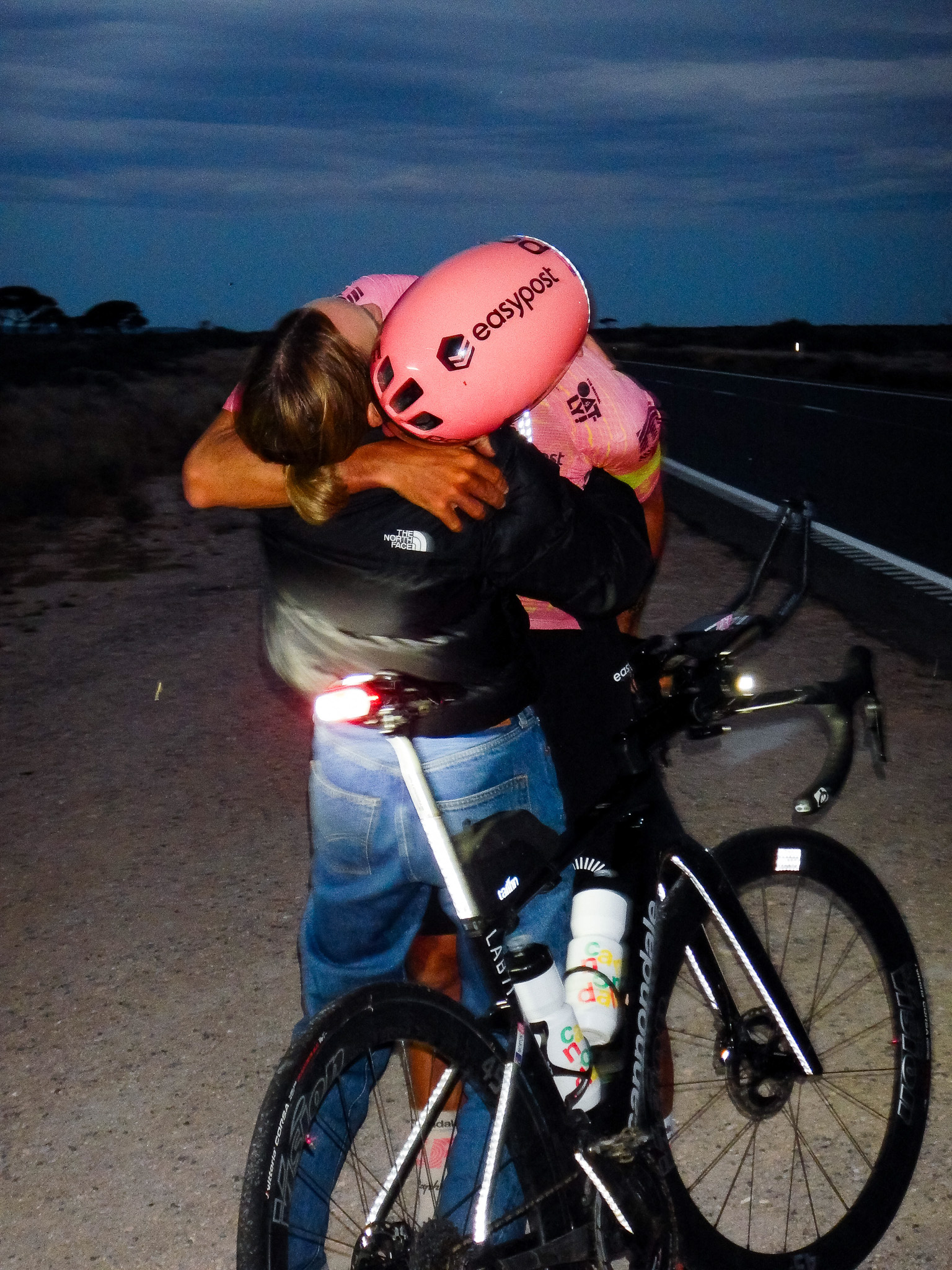
“You know what’s funny? There wasn’t any sense of surprise because I always knew he’d break the record. I never doubted that for a second. But there was a little hint of sadness because, whenever he finishes these types of endurance rides, it can feel quite anticlimactic. Not in a this sucks way, but unlike other sporting events where there’s a podium and a big party, Lach just wants to go to sleep.”

As to the question of what next, Rachel does mention in the film that this might be her last big adventure before starting a family.

“Going on this record breaking journey together, it brought home to both of us how great Australia is. It’s always been in the back of our minds that we’ll move back there at some point. But after finishing the trip, maybe that will happen a little sooner than we thought?”


Not that Lachlan doesn’t have other, non-cycling talents, I suggest with tongue firmly in cheek, referencing a potential future in comedy with his CEO sketches. Wearing a shirt, tie and an oversized suit, the spoof promotional video he presents for the Pretty Great Instant coffee company he fronts, sees Lachlan deadpan a bleeped-out Big Fucking Sale before Rachel’s off-camera correction—that’s Black Friday Sale—can be heard.

“The operation is me, him and the big suit,” she qualifies with a broad smile. “So Lach is my victim for all that. There’s a lot of me begging him to put on the big suit before bossing him around for a few hours.”

This explanation of Rachel’s creative control over Lachlan’s CEO alter-ego is momentarily interrupted by what sounds like construction work in the next room. Which makes sense as Rachel had previously asked to bring our call an hour earlier and prompting me to ask about her concept of home. Born and raised in Australia before spending time living in Europe and now resident in California, is it people, places or belongings that anchor her to one particular location?

“It’s definitely not belongings,” she answers immediately with an upward glance to take in the room. “The way we move around makes me so indifferent to owning a lot of stuff. To such an extent that we’ve lived in this house for over a year and it’s shocking how little furniture we have. And Lach is like me but even more of a minimalist. But to answer your question, Lach feels like home. And for me, that’s enough.”

Which brings us nicely to their recent 10 year wedding anniversary. And whether, after all the adventures, travels and relocations, they’re still the same two people that met and fell in love?

“I think so for sure. Because the more time we spend together, just the two of us, the more we develop this very small gang mentality that reflects the freaks that we are. And that only keeps on getting deeper and deeper. The way we talk and are with each other when we’re alone almost has its own language. So I guess you could say that we’re pretty codependent.”

Rachel Peck / steel ponies.co

All photography by Karter Machen / kartermachen.com

Chiara Redaschi / Captured moments

I eat a lot. A lot of pasta [laughs].
Is that the secret?
Yes. The Italian secret!

I’m on a video call with photographer Chiara Redaschi but have to pause while she catches her breath. With her phone unable to connect, she’s just run across town to sit on the terrace of her boyfriend’s restaurant where the WiFi is better. 

“I live near Milan but I’m spending the summer here in Tuscany. It’s a little town called La California not far from the sea and when I’m not taking photographs, I help out in the restaurant. Lots of seafood and Italian classics like spaghetti.”

With a body of work that combines dramatic vistas with emotionally charged images of faces that fill the frame, now that Chiara’s heart has stopped racing, I ask whether growing up with artistically inclined parents helped determine her own creative path.


“In many ways it was kind of normal for me. My Mom would paint outside on the terrace and my Dad and his brother were both interested in photography. My Uncle passed away when I was 11 but I do remember that he was very experimental—much like an artist. And this might sound a little silly but when I started making my own photographs, it felt like my Uncle was continuing to express himself through me. Like a book with chapters and I’m carrying on the writing.”

Growing up in Novara in the north of Italy, as a teenager Chiara would skip school to soak up the atmosphere of nearby Milan and Turin—the energy of these urban environments finding an outlet in her first runway images shot in the style of a street photographer.

“I was studying a degree in Artistic Management but an internship with a fashion brand made me decide not to go back. The designer told me they needed some pictures taking and then I spent the summer travelling across Europe following the fixed gear racing circuit with my camera. Before I knew what was happening, photography was my job [laughs].”


Hands rarely still as her movements punctuate each sentence, Chiara describes how these first formative years working for a fashion house still influence her current style of photography.

“Researching a shoot for a cycling brand, I’ll often include elements of fashion photography. I love their crazy viewpoints—how they position the models and sometimes add something into the frame to help tell a story or convey a particular emotion.”

Describing herself as instinctual and less of a planner, being present in the moment and getting in amongst the thick of the action is Chiara’s preferred style of shooting—an approach she recently adopted when she was following the Trans Balkan Race.

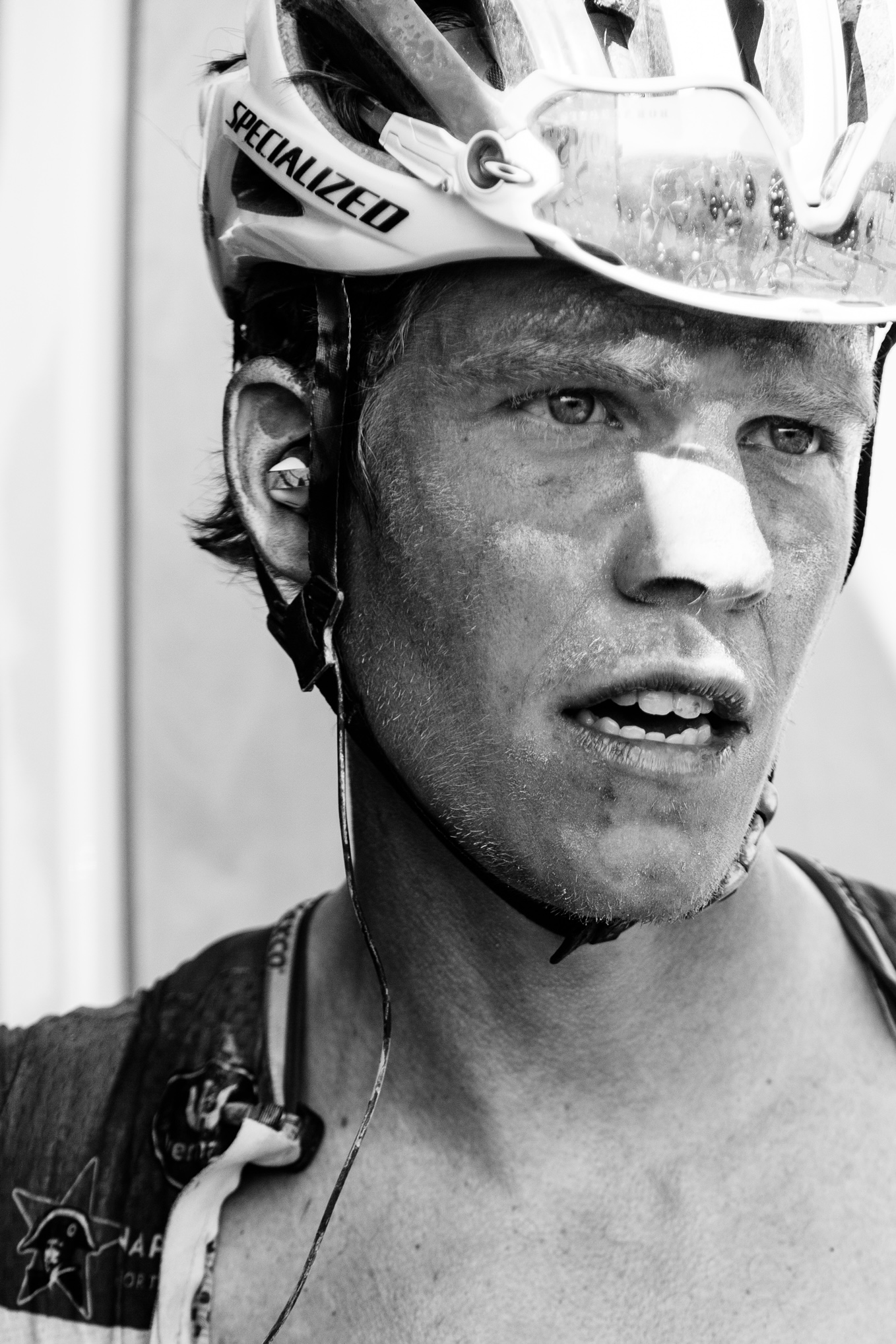
“You’re so remote – in the middle of nowhere – and then you spot a rider in the distance. And it’s so amazing to be out there, capturing these moments. To me, it feels…[Chiara checks her online translator]…like a magnet! A sense of attraction that’s particularly strong when I take a portrait. All that emotion etched on a face—when I see this, I have to take a picture. I can’t just stand and watch. It’s stronger than me.”


Travelling extensively for her work – Chiara can be packed and out of the door in 30 minutes – this sense of movement reminds her of childhood summers spent visiting Spain and Portugal with her parents. But time spent in Novara is also precious and acts as a counterpoint to the inevitable stresses of a life lived on the road.

“When you’re constantly on the move – something I love to do – you rarely have time to process everything that you’ve done. So home is where I take the time to stop and reset. I open the door and breathe out [Chiara sighs deeply]. I spend time with my parents and visit my grandma. She’s 103 years old and we do the usual Italian stuff—talk, eat and talk some more.”

Sandwiched between work trips and family time, riding her bike is another passion Chiara loves to indulge. So when she’s not at the restaurant, summer days in Tuscany often involve a gravel loop with time to stop and enjoy the view.

“I have my phone but rarely carry a camera. It’s good for me to not always be thinking about taking pictures. And I feel safe away from the cars when I’m riding off-road. In Tuscany we have our white roads so why not [laughs].”


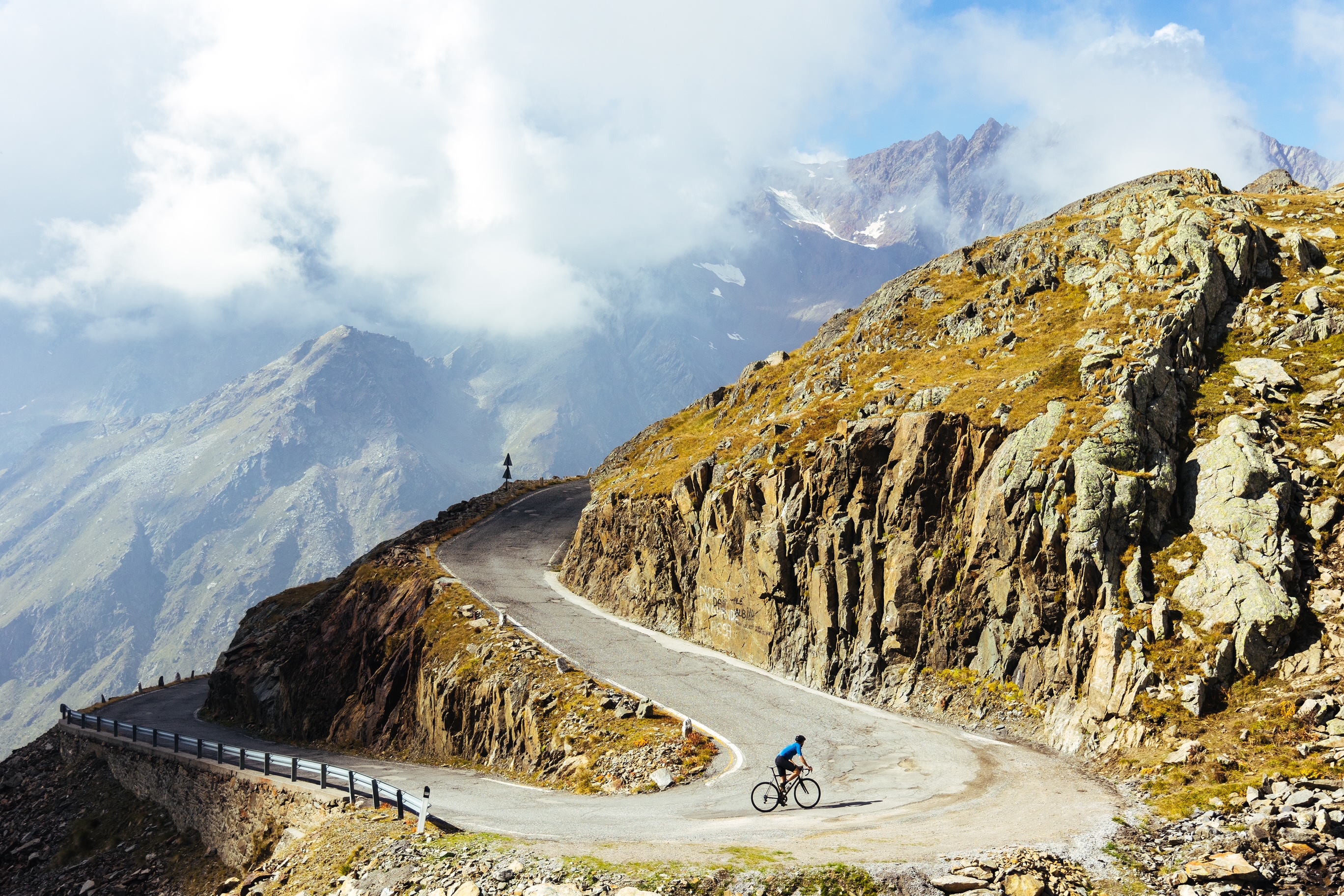
Relishing time spent outdoors, Chiara illustrates this sensibility with a story from a recent photographic assignment in the mountains to the north of her birthplace. Standing by the roadside, taking pictures on the Gavia Pass, a butterfly passed so closely to her ear that she heard the flutter of its wings.

“It was such an amazing experience and it still gives me goosebumps when I think about it.”

A description that leads me to ask whether, when pressing the shutter, Chiara ever has an inkling that the stars have aligned in one particular shot?

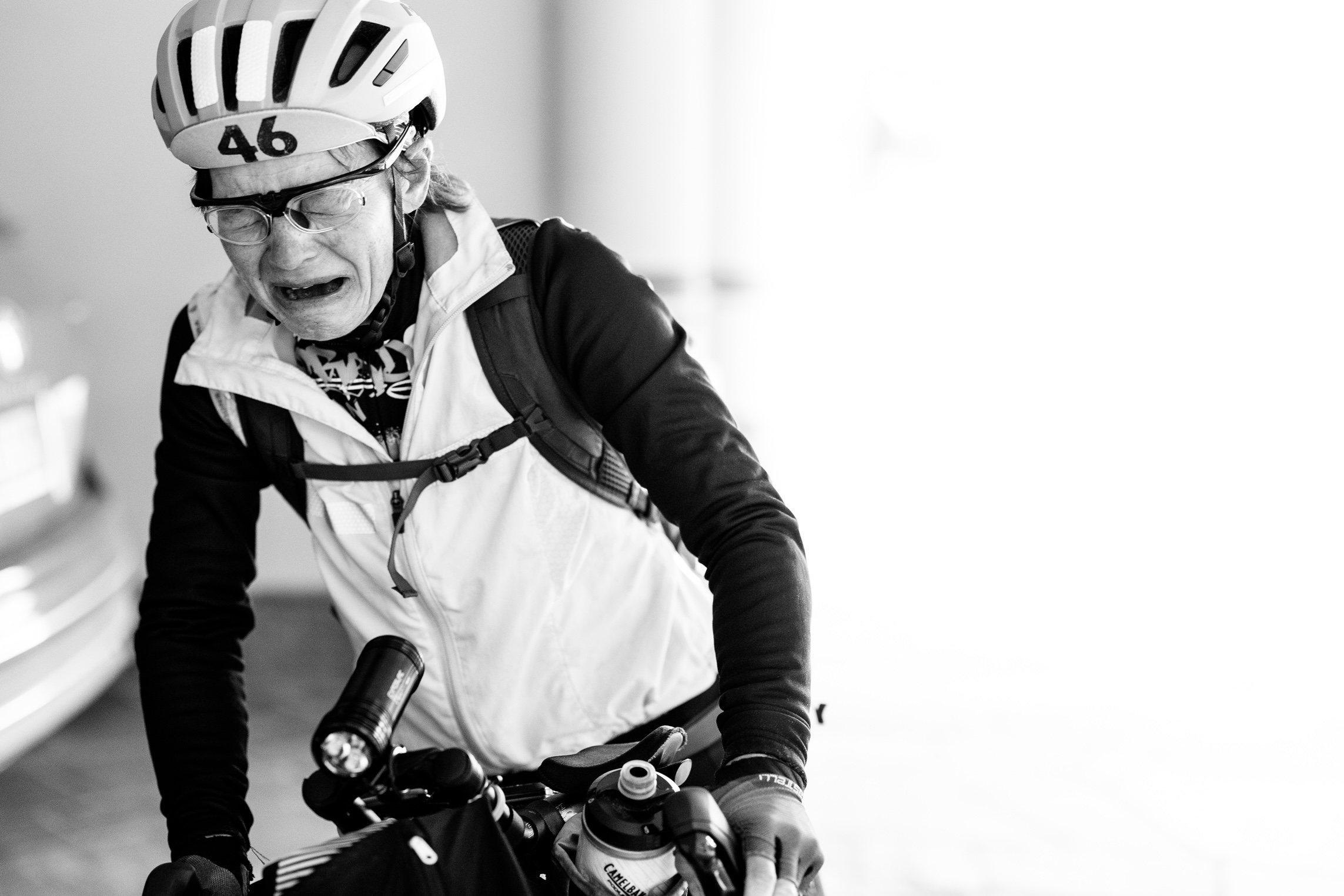
“I photographed Petra on this year’s Transcontinental as she arrived at a checkpoint. At first, the riders passing through were racing but later there was a switch to those that were simply fighting to keep on riding. And when I saw Petra – riding alone in the middle of the night – her raw emotions affected me so deeply. I’m crying now, thinking about it. I could feel the pain, the emotion, and I knew that shot was good.”


Pausing a moment – the birdsong of her terrace location a stark contrast to remembered times of mountain tops at midnight – Chiara gathers herself before explaining how she sometimes needs to stop and take a breath when she’s working. How it can be so emotional that her hands start to shake.

“But I know that I have to keep going because I want to capture all these moments—a record of what I see and feel. And I’m laughing when I think it’s my job because it never feels that way. It’s a part of me that was always there. I took my first photograph in Venice when I was five years old with a Barbie camera. And I wouldn’t be doing it as a profession if it was just a way of paying the bills. I want to enjoy what I’m doing—to make something that will last forever.”

All images with kind permission of Chiara Redaschi / chiararedaschi.com

Thereabouts / Crust Bikes

Part community, part production company, part creative partner. Ask Gus Morton and Isaac Karsen to define Thereabouts and you’re offered a number of varied responses. What is abundantly clear, however, is a passion for storytelling and the narrative of their collaboration with Crust Bikes is an exemplar of the Thereabouts vision. Rooted in the Australian Outback and culminating in a Utah desert testbed; a tale that encompasses talk of farm tractors, friendships forged on the trail and a belief in the bike as a tool for journeying.

cyclespeak
Looking back on the genesis of this bike build, where were you in terms of the riding you were doing? What was your mindset at that time?

Gus
I guess the idea has always been there ever since that very first Thereabouts ride to Uluru in 2013. Back then, your only option for endurance or rough-road riding was a cross bike. But they’re very upright and the bottom bracket’s quite high. They suit cross, they suit jumping over things, they suit those twitchy kinds of conditions. But there wasn’t really a bike with geometry that matched riding on gravel roads in the strictest sense.

cyclespeak
And this got you thinking along those lines?

Gus
On that trip we wanted to ride on different types of terrain. I just had a basic cross bike but Lachy* knew that his team issue Cervélo S5 wasn’t exactly capable of doing that [laughs]. So all credit to his foresight, he called up Mosaic and got them to build him a road geometry bike that could also handle gravel with an Enve fork that could fit a bigger tyre. He kind of created a road bike for dirt.

[*Gus’ brother, Lachlan Morton]

cyclespeak
And that got you both thinking?

Gus
After that first experience riding through the Outback, a whole bunch of product ideas came into our heads. And we’d already been playing around with the ways of riding a bike that weren’t being serviced. So after Uluru we were thinking how we’d go about making a bike and that it would look like this or this or this. And we’d talk about it and draw up designs. Eventually this led to a bike frame under the name Outlands. I think there’s ten of them floating around and I’ve still got a couple in my garage at home.

cyclespeak
But the process never went any further?

Gus
It takes a lot of time and experience to do original stuff – whether that’s a bike from scratch or even a piece of clothing. We’d been talking to some people in Hong Kong but it was like, fuck, we don’t know what we’re doing here. And this was back in 2015, 2016 when both Lachy and I were professional athletes and didn’t have a huge amount of time to dedicate to going over and spending a couple of months in Hong Kong.

cyclespeak
So what’s changed since then?

Gus
Those ideas were floating around from the very beginning of Thereabouts and people have always asked when we were going to make stuff. And then when Isaac and I got together, I guess the act of bringing in an outside perspective with all this other world experience kind of opened up our thoughts. That maybe we could do this in collaboration with smaller brands. And it was Isaac who created that impetus and had the technical know-how.

cyclespeak
You each come at things from your own perspective?

Gus
I’ve said this to you before, I’m very utility focused. I’ll just do whatever I can to make something work. I enjoy that but I’m really only using the tools that I have. Isaac is much more about the right tools for the job and acknowledging that there are people with the expertise to make this stuff. And so, with Isaac on board, we decided to make a bike. Yes, I had connections with people, but it was his knowledge of equipment and his perspective on riding that created the impetus for us to be like, well, who would we want to partner with? What do we want to make?

Ready for anything

cyclespeak
Thinking along those lines, Isaac, when you see a bike leaning against a wall or outside a coffee shop, what do you see as the potential in that collection of tubes and components?

Isaac
I’m not sure whether this will answer your question but in advertising, which is what my full-time job was before coming onboard with Thereabouts, you’re basically a commissioner. You make decisions on the director and the film editor, the visual FX and the music. You lead with your team – this collection of collaborators – and I guess my brain just works that way. So when Gus and I first got together and discussed all the possibilities for projects, we began by figuring out all the people Gus knew and had worked with.

cyclespeak
To build your team.

Isaac
And in a similar way to a collection of ideas and a collaboration of minds, bikes are so exciting because you personally get to choose all the parts. What wheels you want and what tyres will work with the riding you’ll be doing. And I guess I really enjoy figuring out how all these separate elements can come together. In a sense, working out the tone and the character. Which is just as true for a film as it is for a bike build. 

Gus
And that’s what’s interesting because we were only talking yesterday about what’s changed with Thereabouts since Isaac and I got together. I’m someone that if I see something, I’ll ask myself whether I can do that too. And if I can’t, I won’t do it. Or maybe I can see a way I can learn that skill and take on that task. But I’m not someone who reaches out for help.

cyclespeak
And Isaac?

Gus
He’s very much no, no, no. We’ve got to do this properly. Isaac’s more for finding the right person, reaching out to them, engaging with them and bringing them in. And the balance of those two outlooks has really launched Thereabouts massively forward. Whereas before, if it couldn’t just be done in-house then it wasn’t going to happen. And that’s where I was blocked.

cyclespeak
This sounds like quite a profound change in your way of thinking?

Gus
I wanted to do all these things but didn’t really know where to start. The bike, the film projects, the podcast. All these new facets of Thereabouts have come about because of Isaac’s whole other approach to thinking that balanced out my own in a really powerful way.

cyclespeak
So the idea for the bike has been there from the early days of Thereabouts and you’ve referenced before, Gus, that you see a bike as a tool for moving and for journeying. And Isaac, I know you share that viewpoint, but you also come at it from a form and function perspective. Do you both feel the project benefited from these different approaches in bringing the process to fruition?

Gus
To be honest, I was always onboard with making a bike but it was Isaac’s desire to see it done properly that proved the deciding factor. Left to my own devices, I would just ride what I had and stick a rack on it or tie a bag on. Often things that weren’t really meant to be used in that way but I would modify them to just make it work with the shit that I had. And from that regard, the equipment was always an afterthought. But having done that for a long time, all of a sudden someone comes in and tells you, no, there’s a product for that. Or the potential to create something to do that particular job. And the Crust bike is a perfect example. When I rode it for the first time I was like, oh shit, that’s what it feels like to ride something that’s meant to be ridden in those conditions. It’s so much easier and so much more enjoyable [laughs].

Utah testbed

cyclespeak
I love the idea that you don’t see the bike purely as a possession. It’s all about what you can do with it. Where it can take you.

Gus
Exactly. All of a sudden you’re like, holy shit, if we really wanted to, we could hang three gallons of water on this bike and survive in the desert for multiple days without re-supplying. And that’s straight where my mind goes. Riding the Crust, all of a sudden this whole new world opens up.

cyclespeak
Isaac, you mentioned the process and I was wondering whether there were other framebuilders in the mix or was it always going to be Crust?

Isaac
I was still living in Downtown LA at the time and I only had a road bike. Just riding in Griffith Park and wasn’t really able to get out any further from a time perspective. But I’d lusted after a Crust bike for ages. And especially the Bombora which was the frame we’ve used on our build. And we have to give massive credit to Cheech and Matt for what they’re doing with Crust because they’re building just the coolest bikes. Really owning that category of frames and doing it their own way.

cyclespeak
I like the idea that you’re a fan. How there’s an emotional element to your choice of collaborator. 

Isaac
So I mentioned to Gus that it would be cool to do a Crust and we should get in touch somehow. And he was like, oh, I know Matt. And I’m like, we should hit them up now. And Gus just sent him a message.

cyclespeak 
With all these different strands coming together, would you say there’s an element of Matt and Cheech in the Thereabouts build?

Gus
Absolutely and it’s funny you should say that as I was thinking about my relationship with Matt. Because when you’re riding a bike professionally, you get introduced to all the big names on the race circuit. Just by virtue of you simply being part of that world. But to be honest, for me, I’ve always been most at home with the dude at the bar that you meet when you’re out riding. That’s where my engagement lies and where my love of this sport is based. Whether that’s down to my inability to make it as a bike rider, I’m not exactly sure. But I’m definitely more comfortable with the more anonymous side of things.

cyclespeak
And you feel this relates to your friendship with Matt?

Gus
A while back, I was invited on a ride in California and Matt was also on it. He’s this little Aussie bloke – I immediately clocked the accent – but I didn’t know who the fuck he was. And he didn’t know me either. But we’re riding along and chatting and just through talking, all of a sudden, I realised that this is the guy that makes Crust bikes.

cyclespeak
And a connection was made.

Gus
Here’s this bloke who was a plumber, a surfer, a BMXer. And with Crust he just created his own niche within the cycling world. Really doing it his own way. And there’s no pretence with Matt; he’s super sarcastic and his sense of humour is really similar to mine. So just over the course of this five day ride, I got to know Matt after gravitating to him. The kind of person that doesn’t give a shit about the way that things are or the way things have been.

Desert campout

cyclespeak
That sounds a very grounded, down-to-earth approach to business?

Gus
Way back, Lachy and I had talked to 3T about the Exploro bike. That was originally going to be called the Thereabouts bike.

cyclespeak
No way.

Gus
Yeah, we worked with Gérard Vroomen. Discussions going to and fro about the design and the whole, fucking gigantic legal process of royalties. We both thought it would be sick to have our name on a bike but the project kind of stalled. And we then went through a similar process with a number of other companies. Sitting around the table with all these heads of brand and they’d be talking about incorporating what we were doing with Thereabouts into their shit.

cyclespeak
But nothing came of it?

Gus
I kinda thought that having a bike was impossible. You’ve got to jump through so many hoops and then at the eleventh hour the process reaches a point where it stalls. But with Matt, there was none of that [laughs]. We called him and asked about making a bike and he said, ‘Yeah, sure.’ And it was really that easy. One person, their own brand, doing their own thing and just interested in making stuff that excites them. And that’s like, very rare, I think. Just wanting to get it done.

cyclespeak
In the Thereabouts podcast episode that features Crust, Matt says he doesn’t care what the cycling industry thinks.

Gus
That’s right. He doesn’t [laughs].

cyclespeak
So I wondered where you sit? And whether your self-perception is one of outsiders?

Isaac
That’s an interesting topic [Gus laughing in background]. I think to a degree we’re outsiders but, in the same breath, we’re still kind of part of it all. And going back to my earlier point about collaboration, we still need wheels and a group set to complete the build. So, no matter what, you look to different people to help bring your vision to life. And we value and really care about our relationships with those individuals or brands that build bikes and I think it’s really inspiring what people like Matt and Cheech are doing at Crust.

cyclespeak
So, after deciding on Crust for the frames, I guess you had a free rein for the componentry?

Gus
Exactly. Isaac was like, let’s do this or use this. And that’s sort of how this all works. One of us will come in with an idea – for a film, podcast, whatever – and the other one will either be, that’s great, or no mate. There’s a sense of checks and balances but when it came to the  equipment it was very much what’s the sickest thing we could put on the bike. I suppose the best way I can frame it is to ask if you know that much about tractors?

cyclespeak
Tractors?

Gus
Well, Lamborghini started out making tractors. My Dad used to have a Lamborghini tractor on the farm. And I kind of picture the Crust in the same way. It’s got really fucking fast shit on it but it’s still a tractor [laughs]. You’re not going to race this in the World Tour but it’s specced out like it expects to be. So the thinking went, what’s the most do-anything robust frame? And that’s how we arrived at the Crust Bombora. And then we asked ourselves, what’s the most badass shit we can put on it so we can make this tractor go as fast as possible over any terrain.

Isaac riding the Thereabouts Crust

cyclespeak
It sounds like a fun process?

Gus
Just completely unorthodox. And going back to that question of whether we see ourselves as outsiders. From an ideological standpoint, then absolutely, we’re outsiders. We’re talking about using the bike in very different ways but, at the same time, we have to co-exist inside this industry and we’ve got really great relationships with brands like SRAM, Rapha and Specialized. It’s just that we tend to look at ways of using a bike that lie outside the regular realm of riding.

cyclespeak
In the film Sometime Thereafter, you explore the idea of a shared journey experienced through individual perspectives. So when the finished Crust was standing in front of you, how did you both feel seeing your name on the bike?

Gus
I guess I look at it this way. A bike is greater than the sum of its parts and we were lucky enough to know these people who make derailleurs, wheels, tyres. Who make bar tape and saddles. They’re all creating these elements and there’s all these personalities and characters behind those components. And Isaac was able to pull them all together into an epitome of what we are and what our view of the sport is. And as a result, we put our name on it because it’s a physical representation of where we currently see Thereabouts and what we want to use a bike for. That unquantifiable essence of a bike and how it moves you through space. That’s us, putting our name on it. Like putting an intention to your day [laughs].

Isaac
The parts arrived as Covid was happening so the bikes were built up during lockdown in Portland. I drove everything over and then, a few days later, you’ve got a fully-built bike. Which was crazy because they looked way different than I was expecting.

cyclespeak
And then you got to ride them.

Isaac
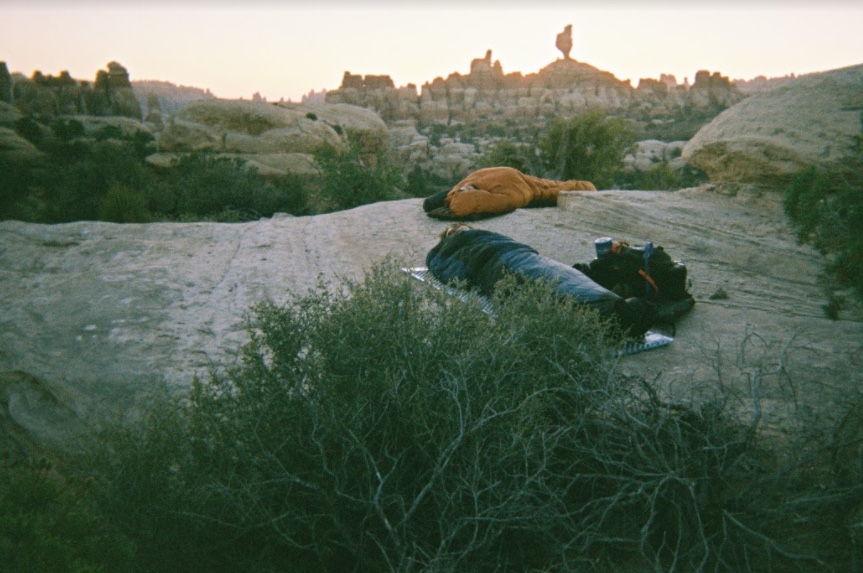
It was mine and Gus’ first escape from lockdown restrictions on a trip to Southern Utah. I loaded the bikes into my car and we drove all the way south.

cyclespeak
Was this Utah trip a case of ticking boxes – a testbed for the bikes – or more about asking questions?

Isaac
It was heavenly.

Gus
It was.

Isaac
The riding was pretty out there and our bikes were completely fucked up but they survived.

cyclespeak
Once again, returning to the theme of a tool for a purpose?

Gus
Exactly. In terms of putting your name on something, we’re storytellers and this build fits in a kind of abstract way to that end. A tool that will help us to tell a story and hopefully empower people to make their own journeys.

Gus and Isaac

cyclespeak
You mentioned how your Crust bikes were built up during the Covid lockdown. Has the pandemic influenced the direction you’re going with Thereabouts?

Gus
Looking back on the past year, having everything scratched gave us time to rethink our approach and strategise a bit.  Along the lines of what we want to do and how we’re going to do it. So we spent a lot of time reformatting the business plan. How we can make and tell these stories and get them to the widest audience in the most beautiful way. So we’ve got a lot of exciting things in development and a shitload of work to be done over the next six months. But we’re getting there [smiles].

cyclespeak
For many people, the pandemic has been life changing and not always in a positive way. But maybe adversity can sometimes push you to question and reassess how you’re living? To explore new directions and appreciate what we might have taken for granted?

Gus
At least from my personal point of view, I’ve always felt the urgency to do things and get them out. The last two years have really changed that for a number of reasons but as a result I feel we now have a more sound perspective which will hopefully help us make a bigger difference in the work that we do. At the heart of Thereabouts, it’s about telling stories that inspire people. We want to show the positive impact sport can have on society at whatever level you choose to engage. Sometimes it feels the way we go about this might not be the easiest way to do it. But, for us, it’s certainly the most rewarding.

Gus Morton / Isaac Karsen / hereorthereabouts

All images with kind permission of Thereabouts

Thereabouts Outspoken Ep011 – Crust Bikes

Crust Bikes