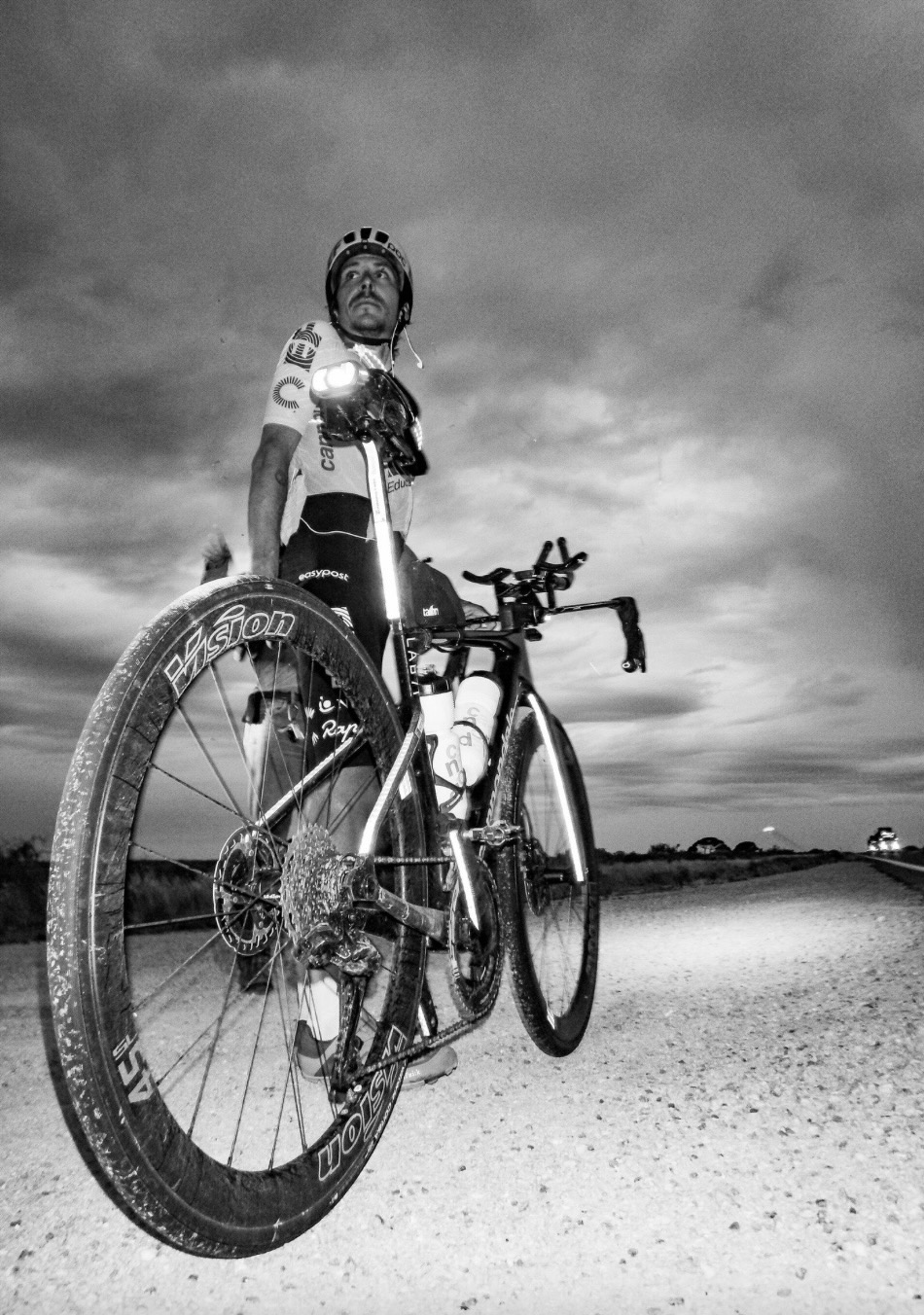
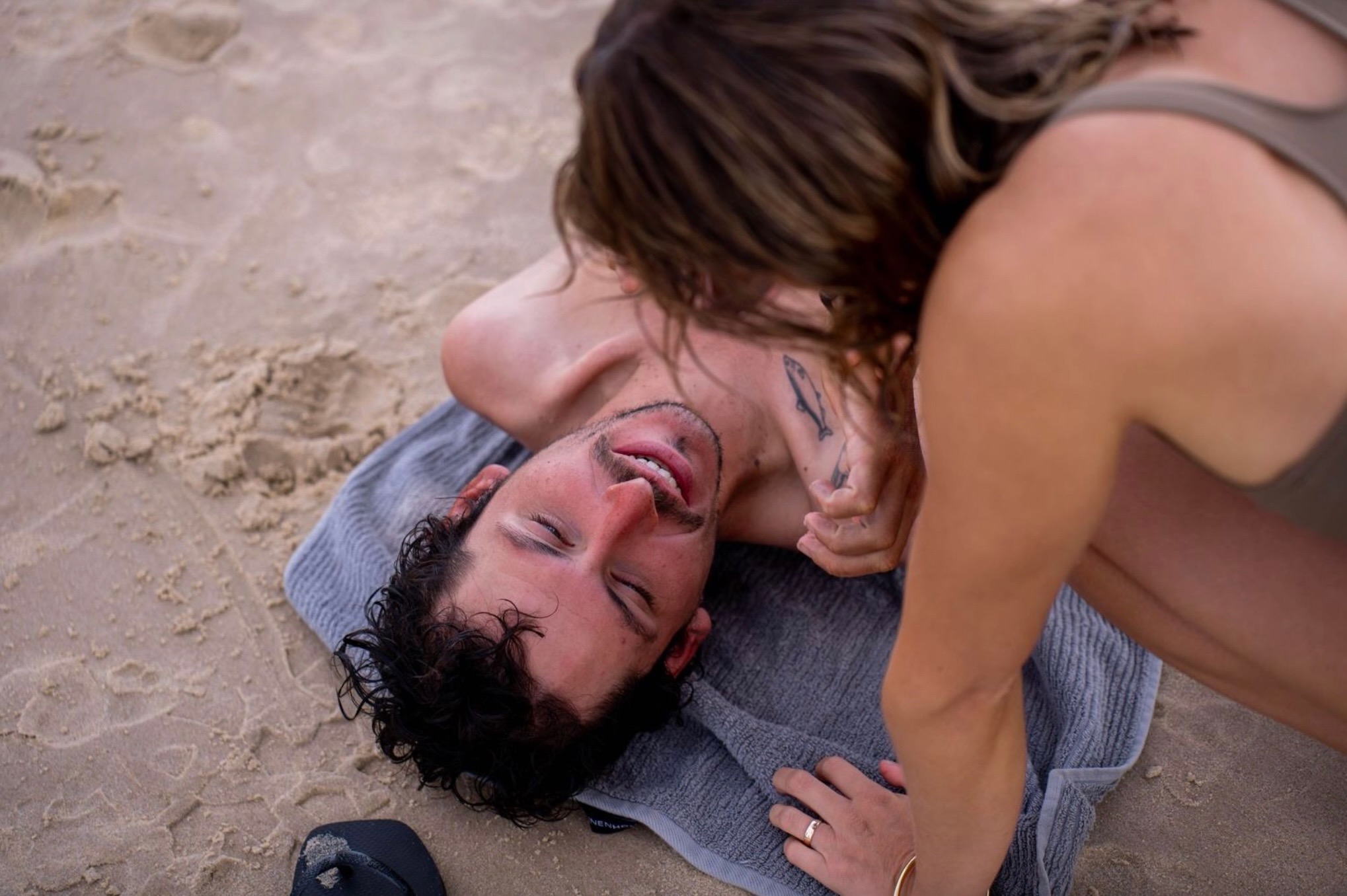
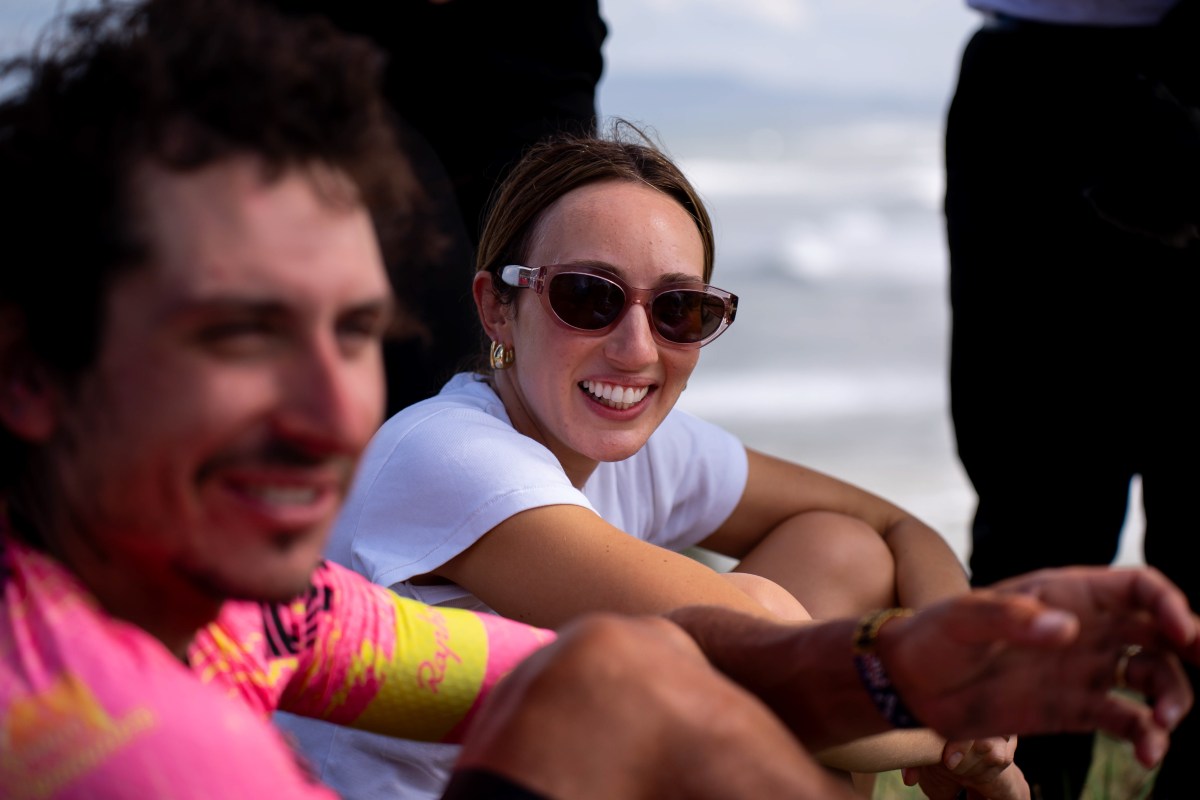
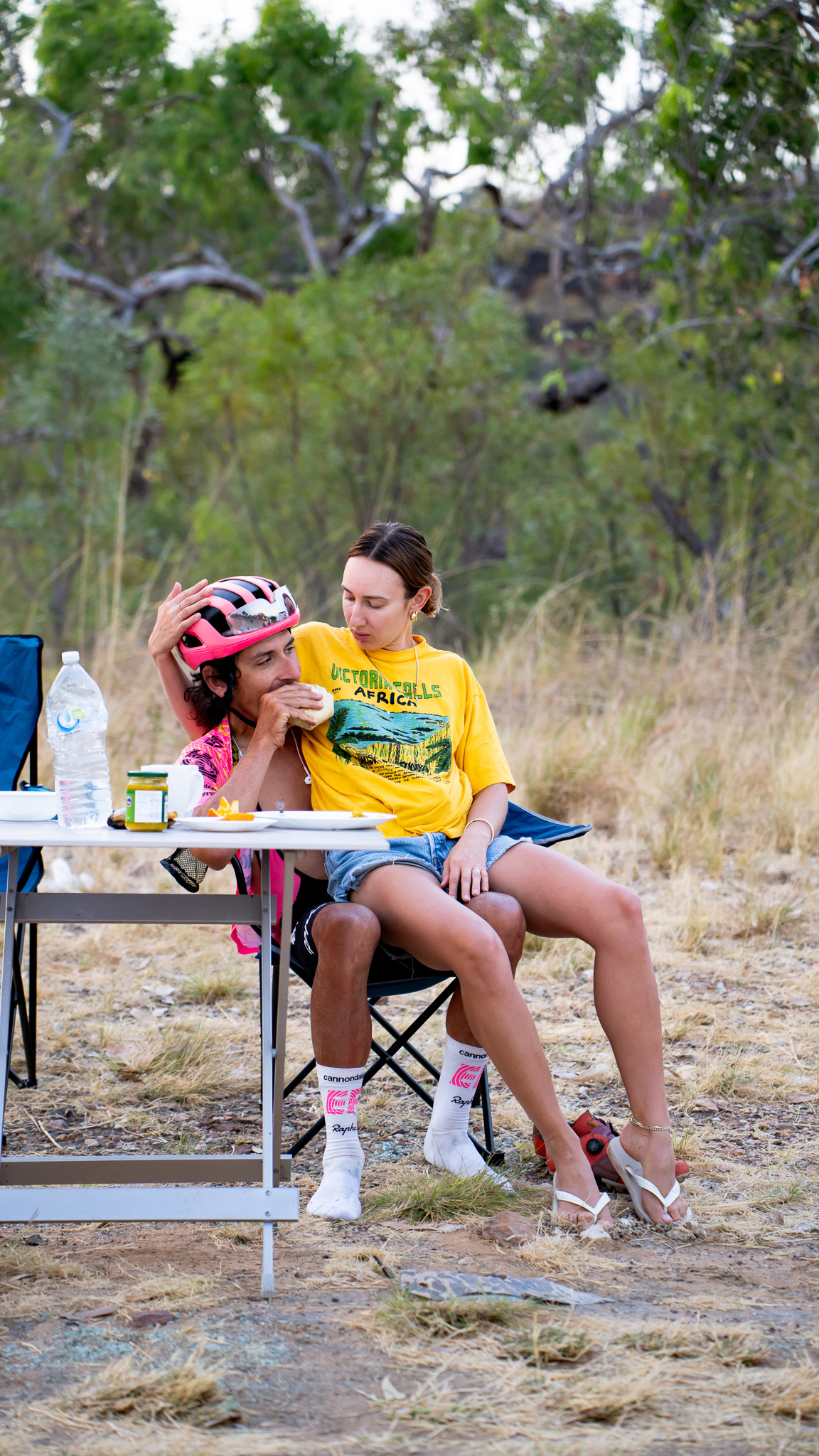
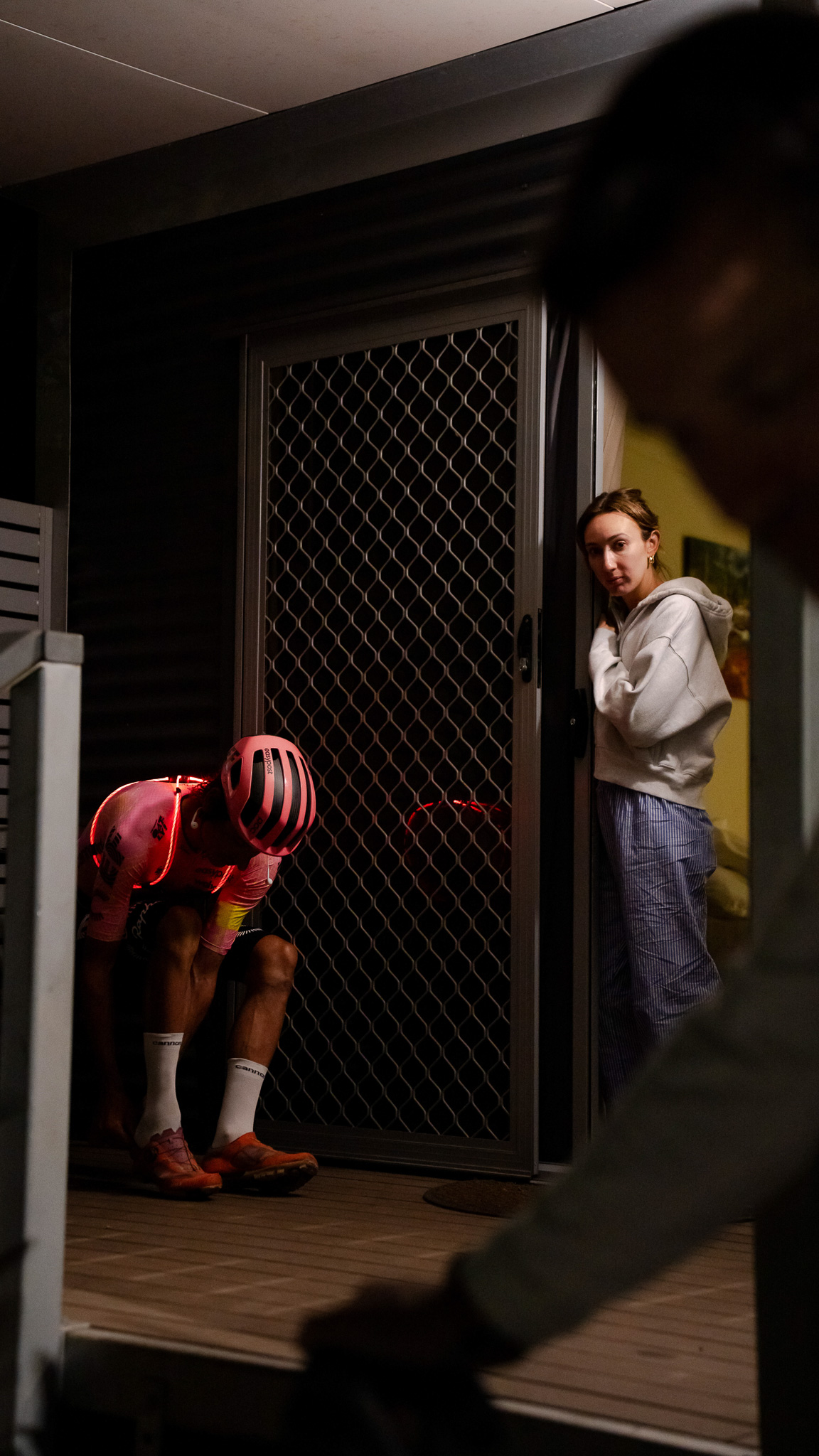
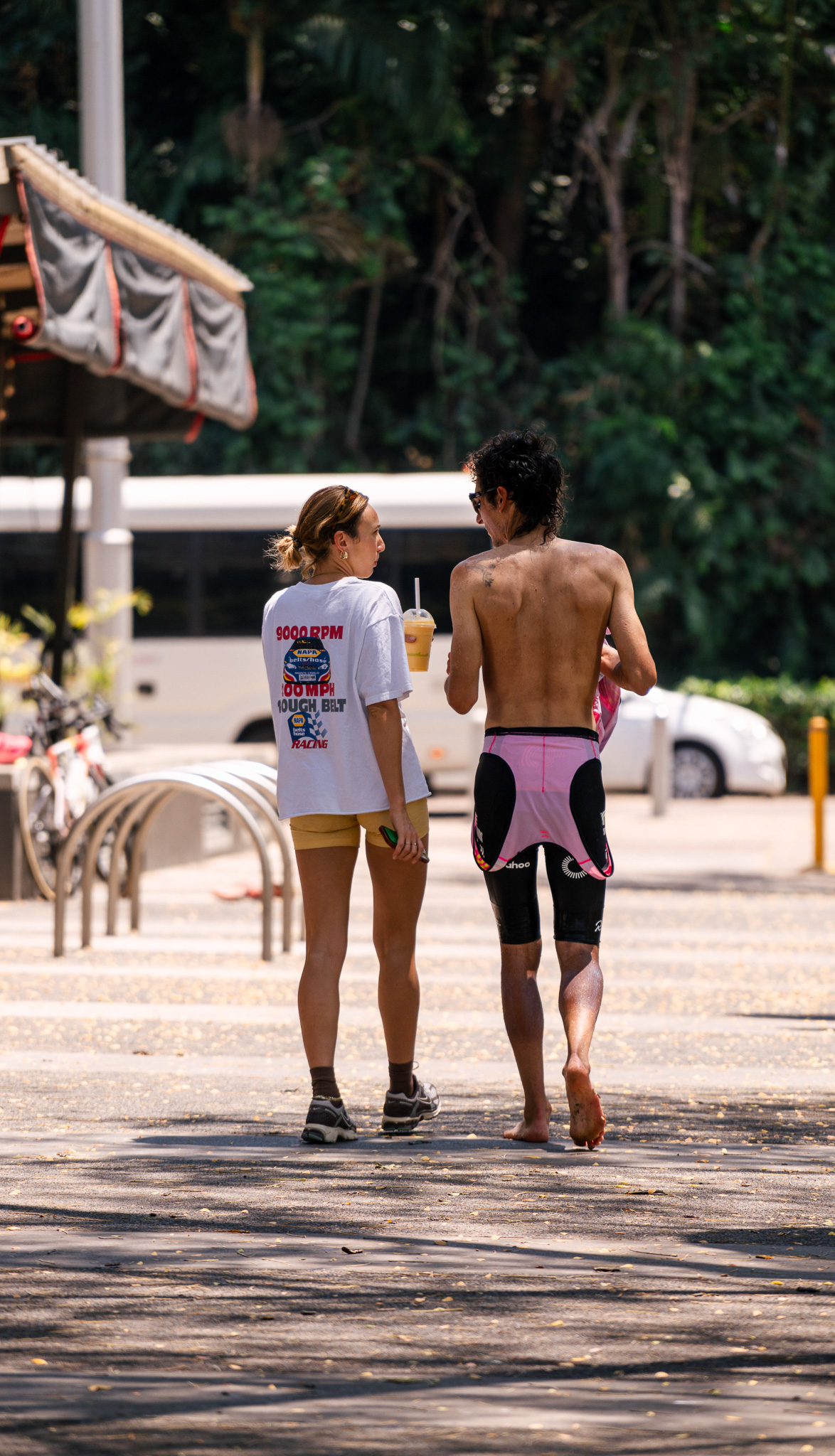
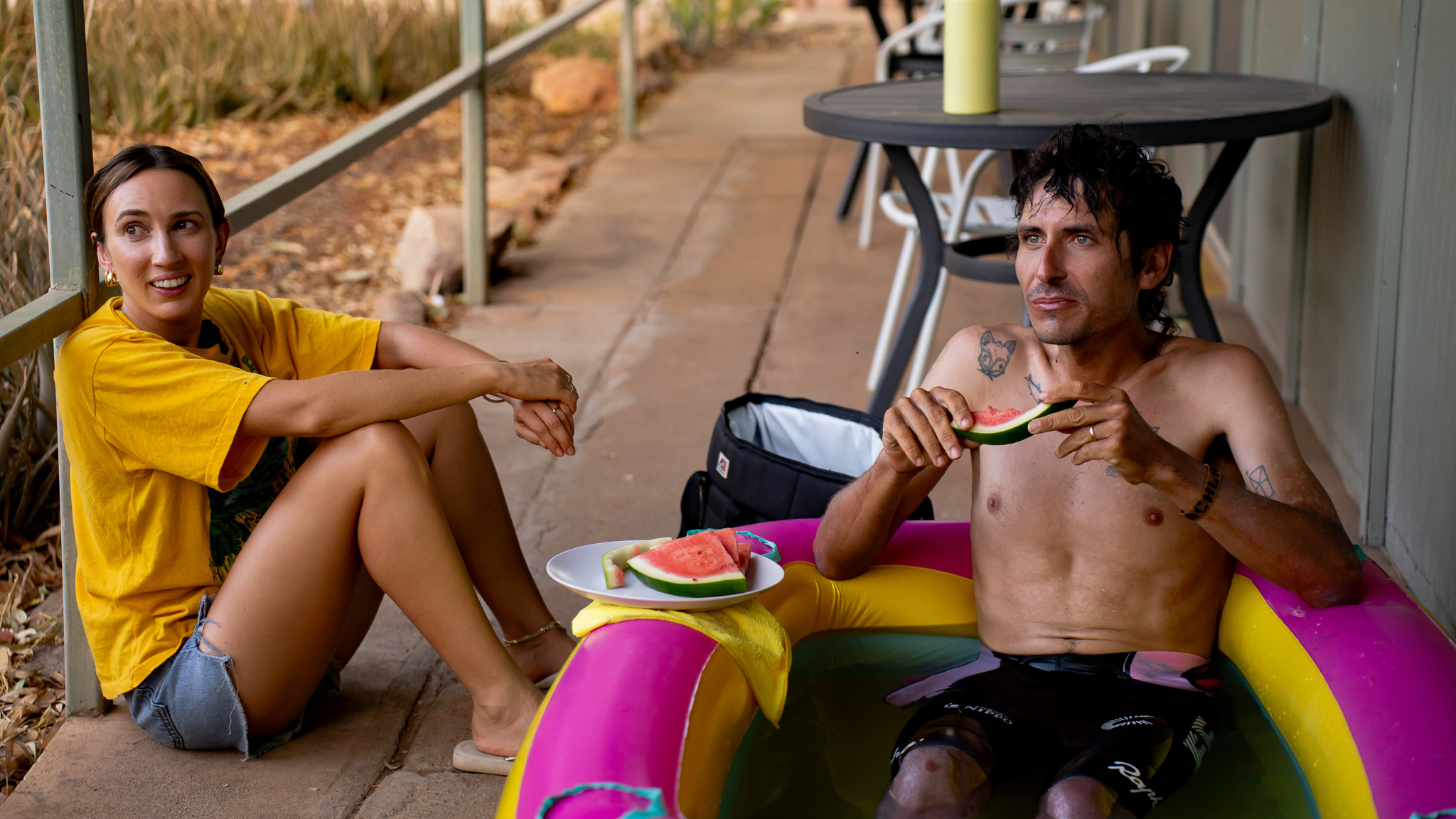
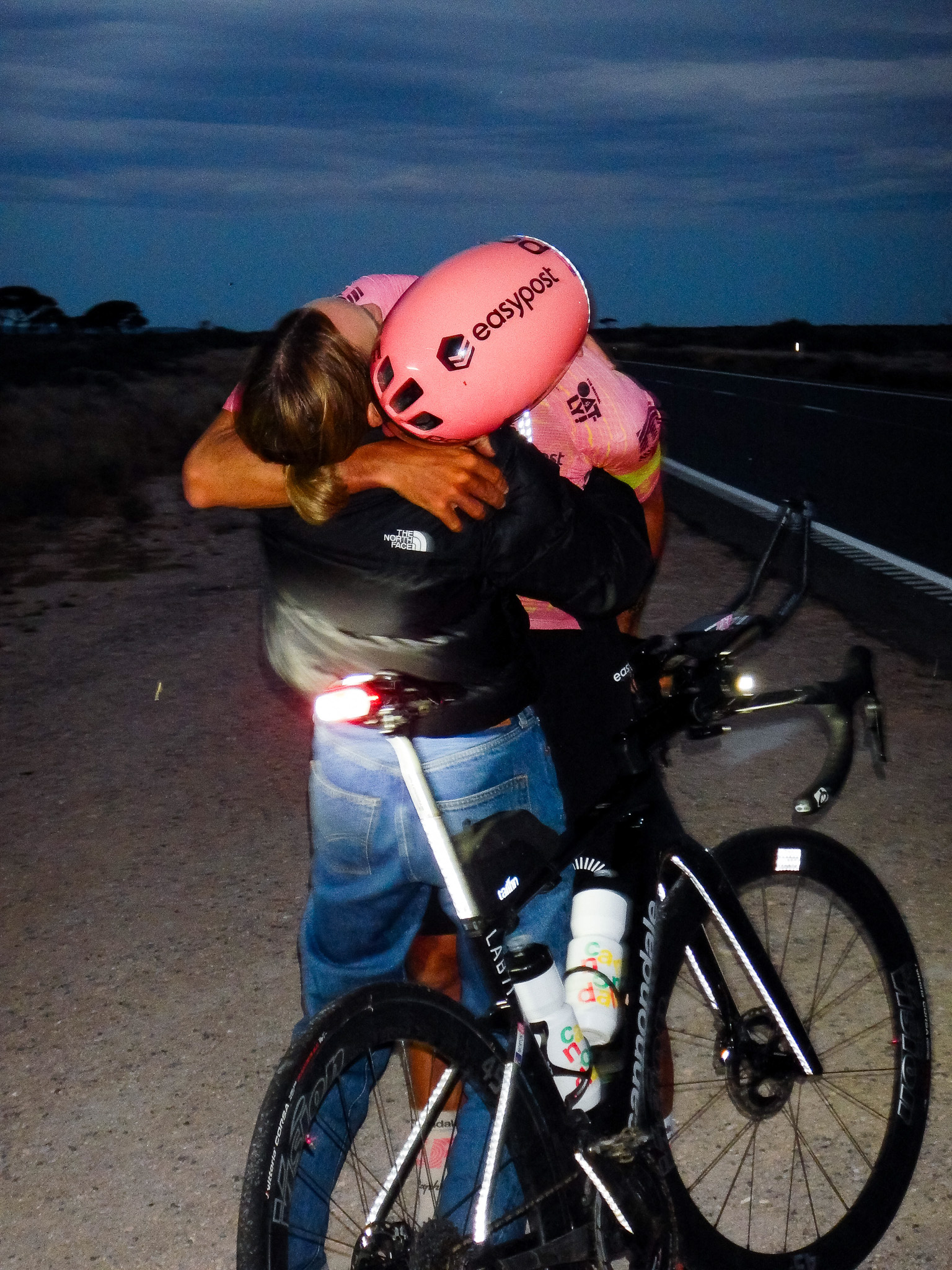
Photographer Karter Machen has recently returned from a month long circumnavigation of Australia where, camera in hand, he shadowed ultra-distance racing legend Lachlan Morton. The resulting photographs—freeze framed moments that document this epic undertaking—beautifully reflect Karter’s instinctive ability to combine elements of emotional intensity and poetic storytelling into a single, still image.
Now home in Washington State but busy planning a potential relocation to Europe, we sat down over a call to discuss Karter’s creative journey and how this informs his own sense of wellbeing. A circuitous conversation that strays towards the philosophical in questioning what we really need to feel whole in an increasingly fragmented world.
cyclespeak
Australia looked amazing. An enjoyable trip?
Karter
One of the most intense experiences of my life to date. Each and every day had its surprises.
cyclespeak
The resulting film directed by Gus Morton did seem to suggest that, by necessity, you were making things up on the fly?
Karter
Plans kept being thrown out of the window but you roll with the punches.
cyclespeak
My youngest son commented that all the people I interview have really cool names. He’ll be pleased to know that you’re continuing this tradition.
Karter
A lot of my family came from Wales. There’s a town there called Machen and I guess quite a few of them got on a boat in the 1700s and sailed over here. But it’s pronounced like you’d say May-chin so no one ever says it correctly the first time [laughs].
cyclespeak
So you have to explain…
Karter
Every time. And that goes for my first name too. Karter with a K.
cyclespeak
Can we start with a whistle stop tour of your childhood?
Karter
I grew up in Idaho Falls. A small farm community—basically potatoes as far as the eye can see—so it was a case of making your own fun. A lot of time spent outside, playing in the irrigation canals that watered the fields. We’d jump right in and float all day.
cyclespeak
And sports?
Karter
I had no interest whatsoever in endurance sports. And cycling specifically was never really a thing where I grew up. We had bikes to get around but the idea that people raced them was just foreign to us. So I played a lot of American Football. Just like the movie where the whole town turns out for the game. And then later in life I started to transition into action sports. My older brother was an excellent skier so I followed his path. And it wasn’t until my late teens that I discovered cycling.
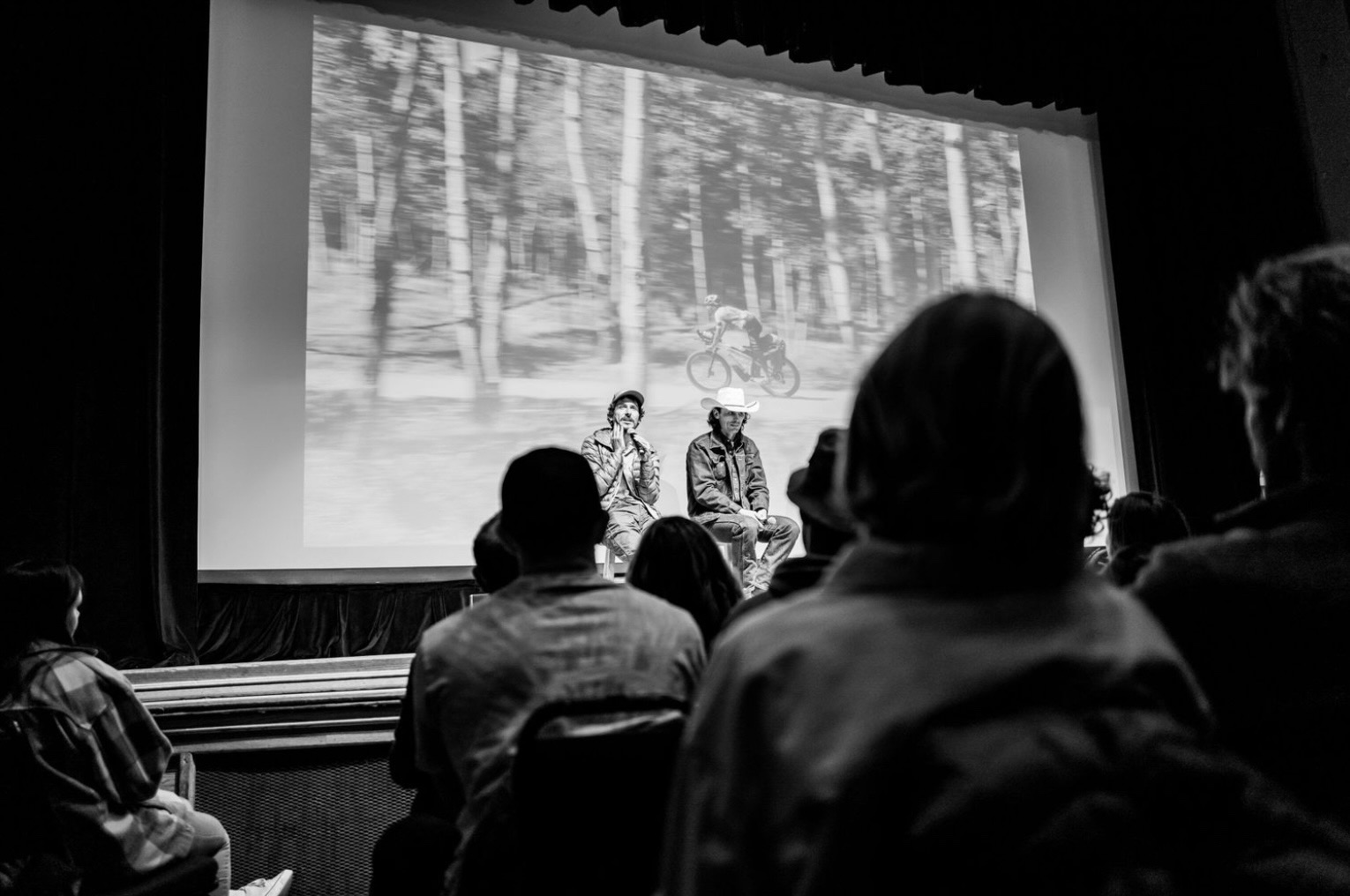
The Divide Film Tour // EF



Click image to enlarge
cyclespeak
And what did that look like?
Karter
I got a downhill mountain bike and then a couple of years later Creg Fielding, a friend of my Dad’s, introduced me to the road scene. He let me borrow a bike and some kit and took me out for a ride. Probably one of the worst experiences of my life…
cyclespeak
It was?
Karter
My legs were on fire—on a 12 mile ride—and I couldn’t, for the life of me, figure out how anyone could do this for fun. But over the following three years it very quickly took over my life. I had a lot of time on my hands and needed something to do. And choosing to ride a bike really shifted my whole perception of mental health and navigating through life. Being able to slow things down and process life with all its complications. It changed my mindset and, eventually, changed my career.
cyclespeak
But first there was college?
Karter
I started a business degree but didn’t really have a plan. And I had a few part-time jobs: working as a waiter and as a tour guide in Moab, Utah, where I rock-crawled big Hummer trucks. It was around this time that I got my first camera and started to shoot friend’s weddings. Doing that prompted me to drop out of college and find work in media production. I spent a while working as a junior creative director for a marketing agency. So primarily video production.
cyclespeak
Can you pinpoint a moment when the camera switched from simply recording an event—you mentioned weddings—to something you could use to tell stories?
Karter
That’s an interesting question. And I guess it was a gradual process during my media career. Because initially, the camera was a tool and there was no passion. Just a means to make a living. But then I’d go on trips with my friends and take pictures and it was those pictures that I loved. And then, when I would give people a copy and see how much it meant to them, that also became a driving force and the shift in perspective that maybe I needed.
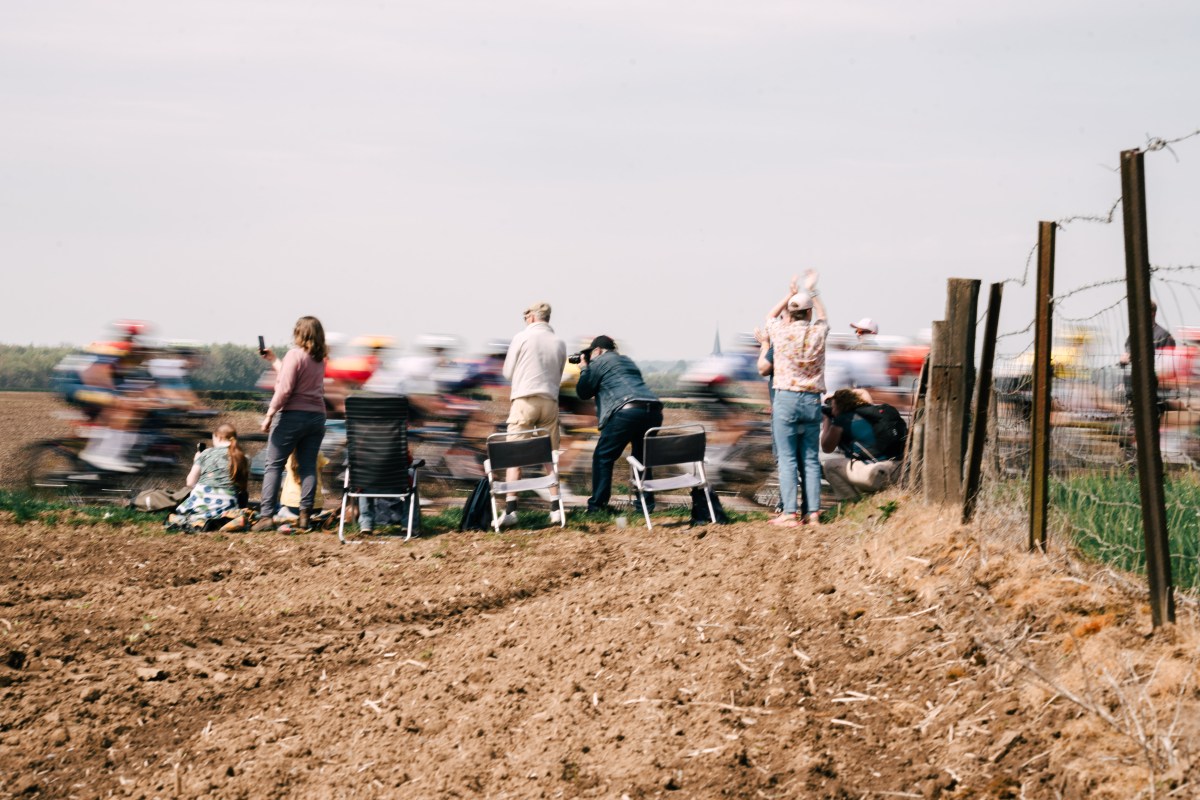
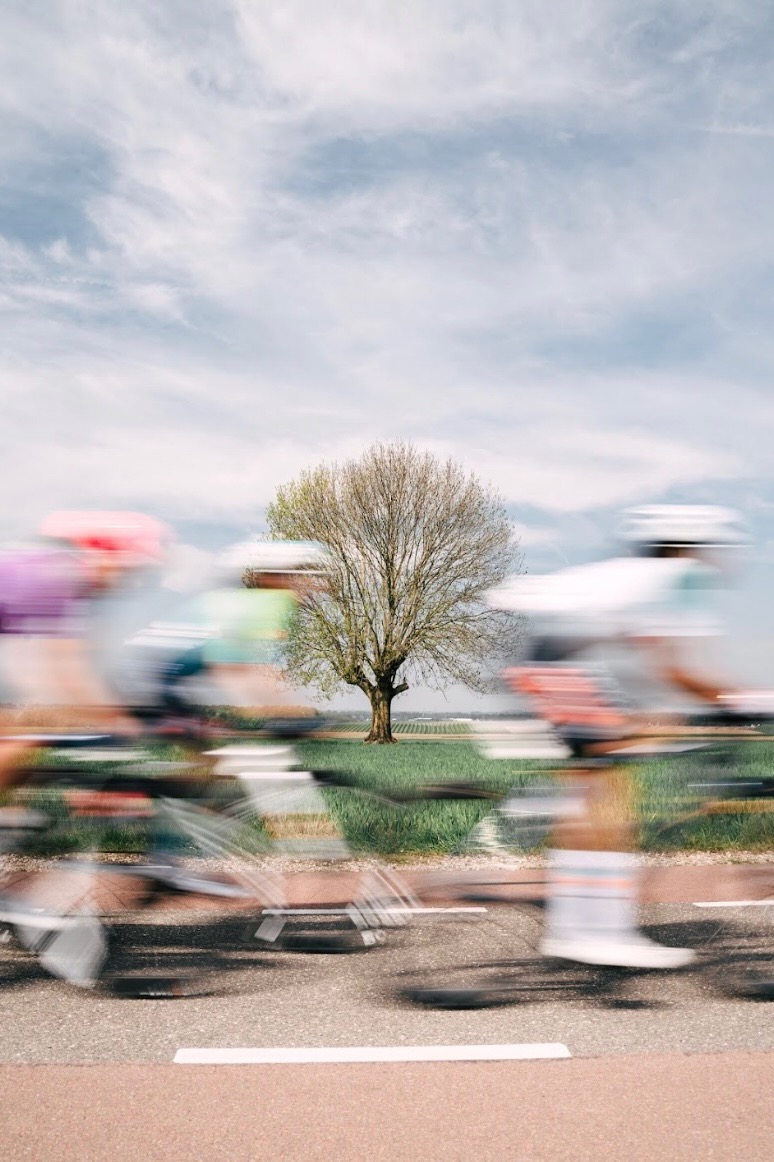
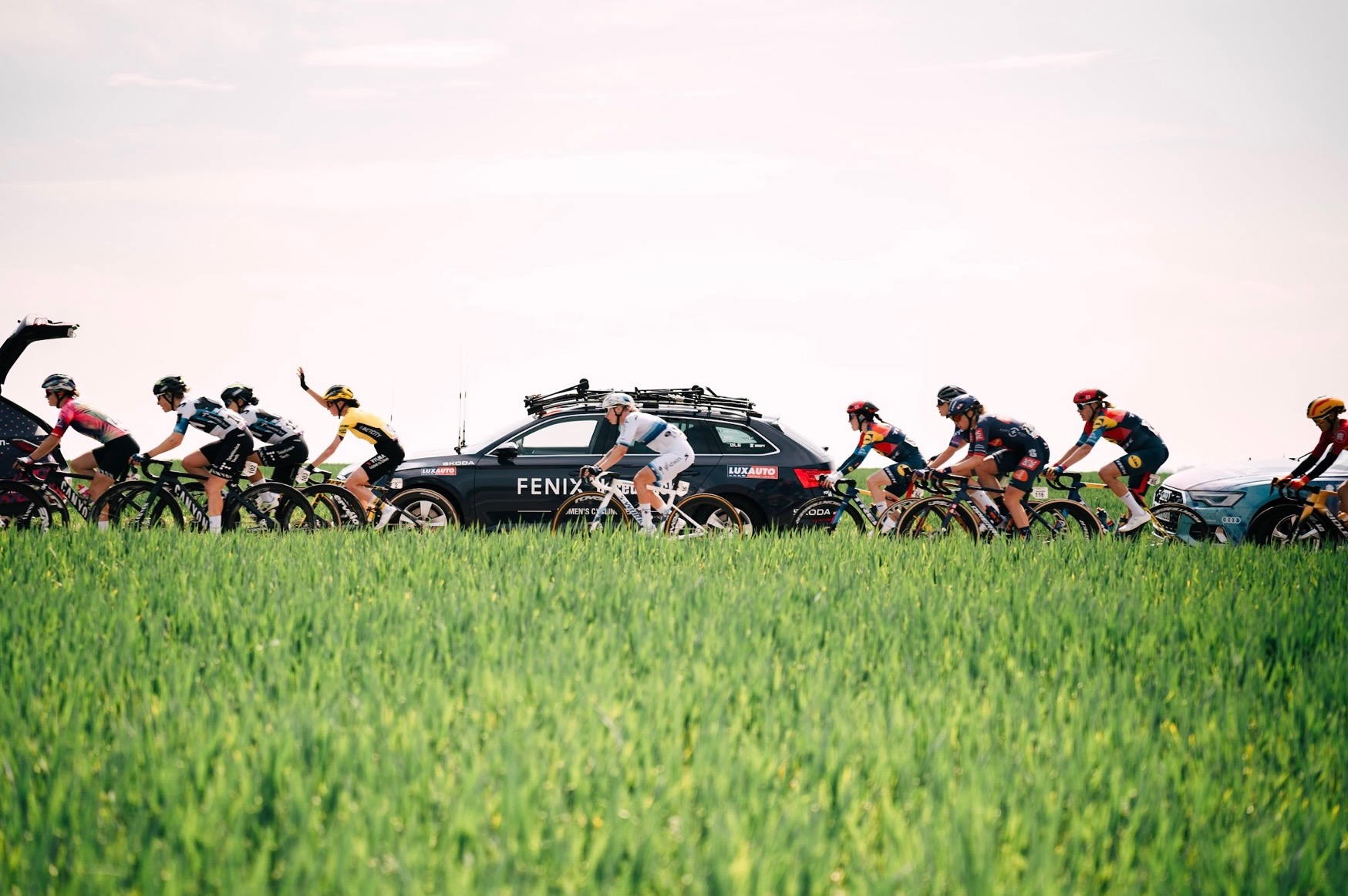
Amstel Gold // La Flèche Wallonne



Click image to enlarge
cyclespeak
Looking through your portfolio, your images are rarely straight and static. There are strong directional diagonals, shifts of subject weight in the frame, a focusing-in on faces and hands. And I was wondering whether this approach is a series of conscious decisions or more of an instinctive response?
Karter
In those heightened moments when so much is going on, we use the term spray and pray. But as my career has progressed—maybe leaning on past experience—I’ve started to take fewer and fewer images. And then in post production, I’ll look at the framing to help tell the story.
cyclespeak
Does film photography interest you at all? To purposefully slow down the process?
Karter
I rented a Leica Q2 to capture the European leg of the film tour that Lachlan and Gus Morton did for the Tour Divide. A digital camera but it still slowed down the way I shot an image. And that also coincided with a period of time when I was changing how I was framing and composing each shot. Which provides its own sense of satisfaction when you take fewer images but with a good proportion that are strong.
cyclespeak
So is it about capturing a moment? Documenting what is happening?
Karter
I guess what was once a process of documenting whatever was happening is now shifting towards more of a narrative. And there’s this phrase—a moment in time—that for a while has really resonated with me. So having the opportunity to just be present and capture something that will never happen in the same way ever again feels pretty special.
cyclespeak
A story captured in a single frame, forever?
Karter
Which I guess is why I enjoy looking back over previous work and having the memories of those moments resurface.
cyclespeak
As a creative individual, where do you seek inspiration?
Karter
That’s another good question. Because I don’t always see myself as a creative person.
cyclespeak
Can I ask why not?
Karter
Maybe there’s a slight imposter syndrome? And I just struggle to feel that way about my own work.
cyclespeak
You’re not alone in thinking that way. Because I find a lot of creative people are always hyper critical about their work and find it difficult to feel a sense of satisfaction.
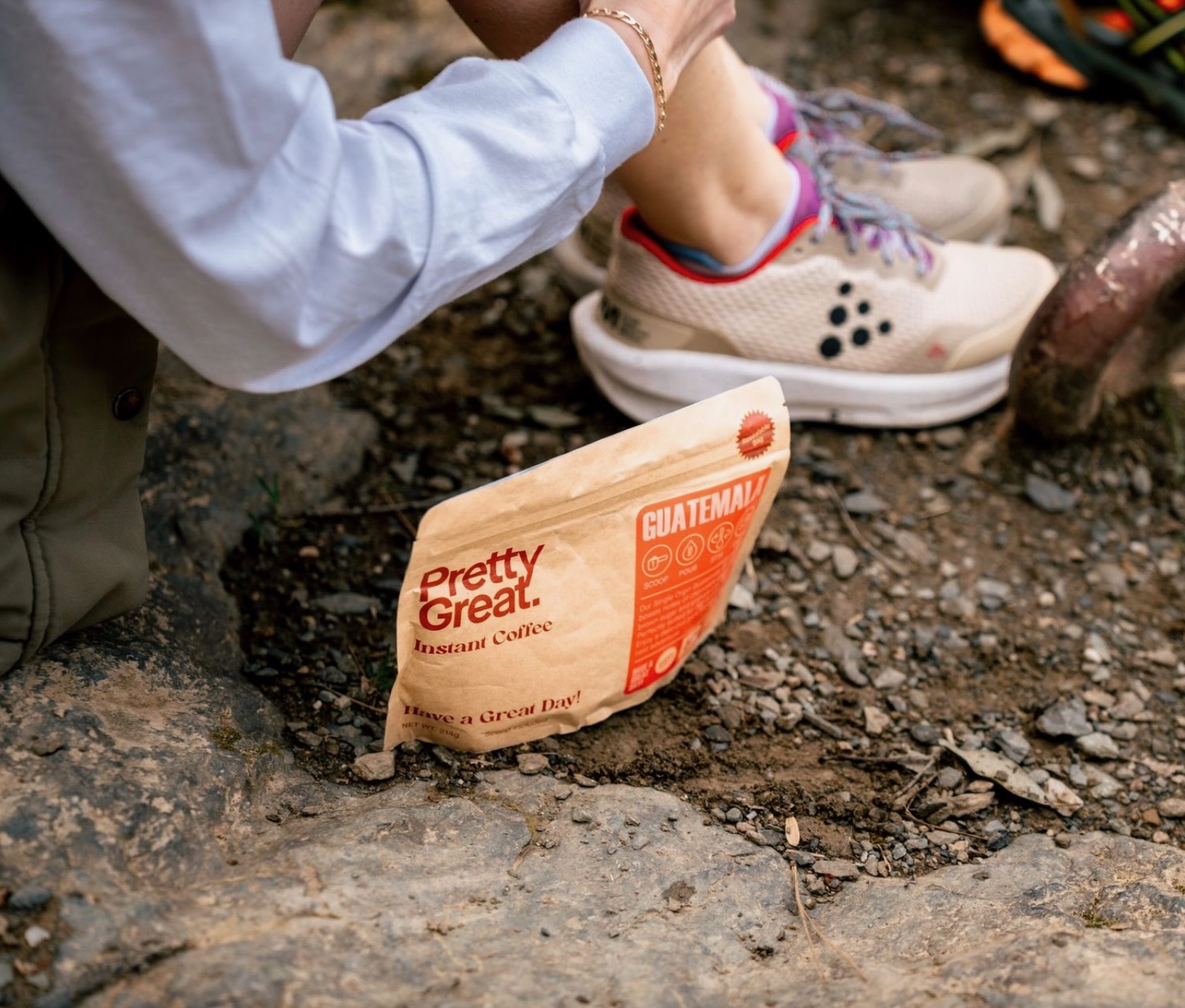
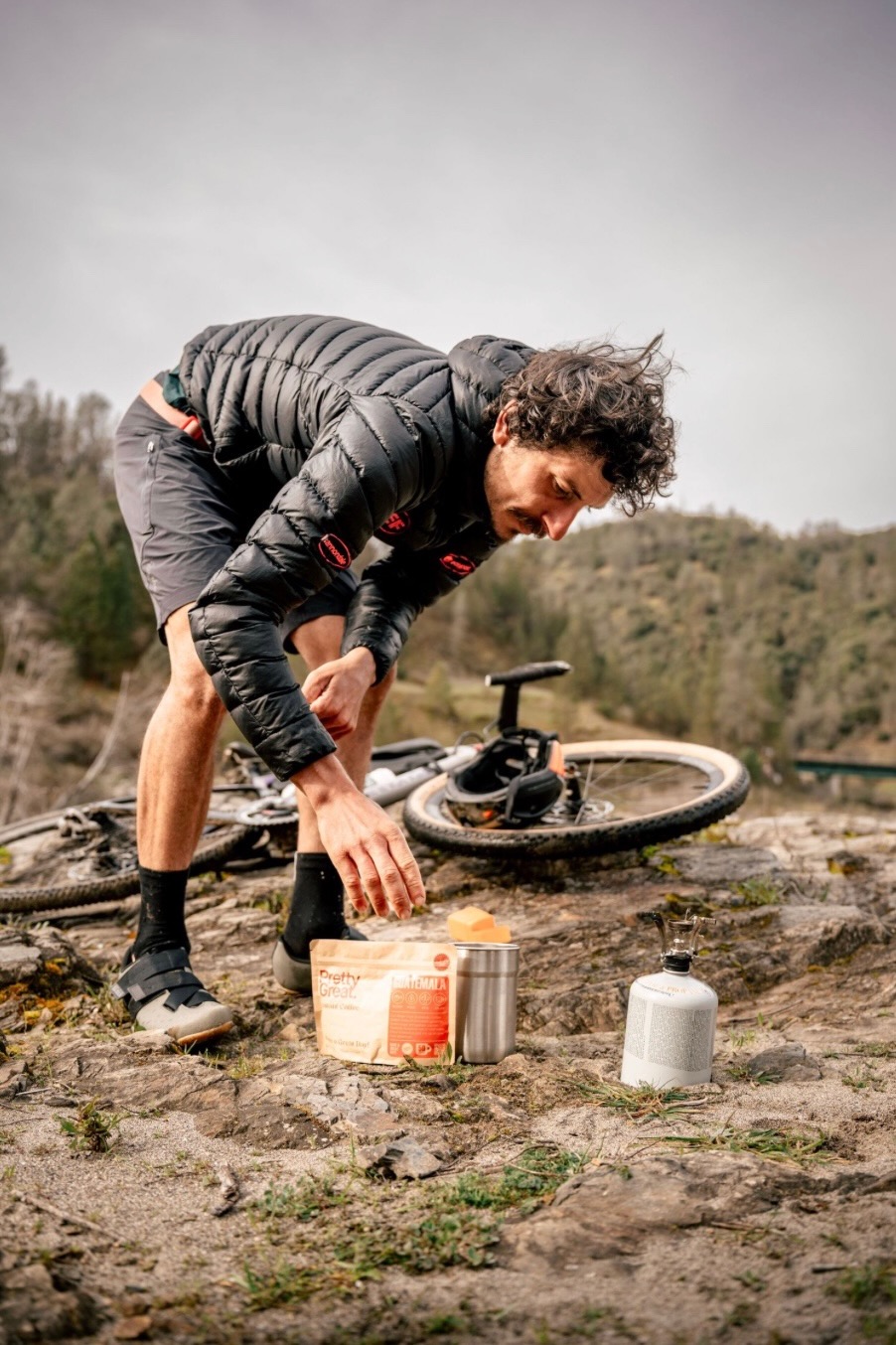
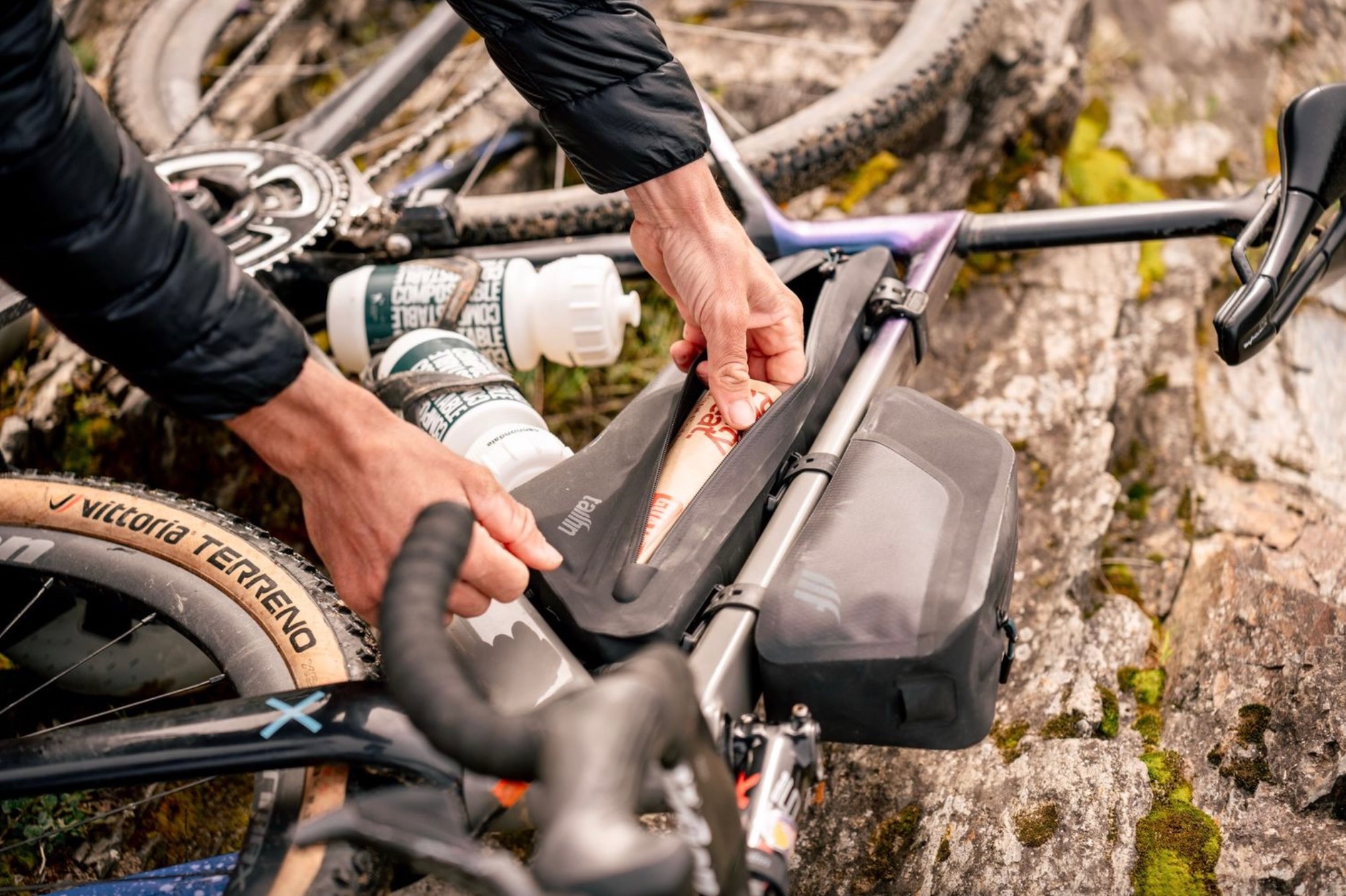
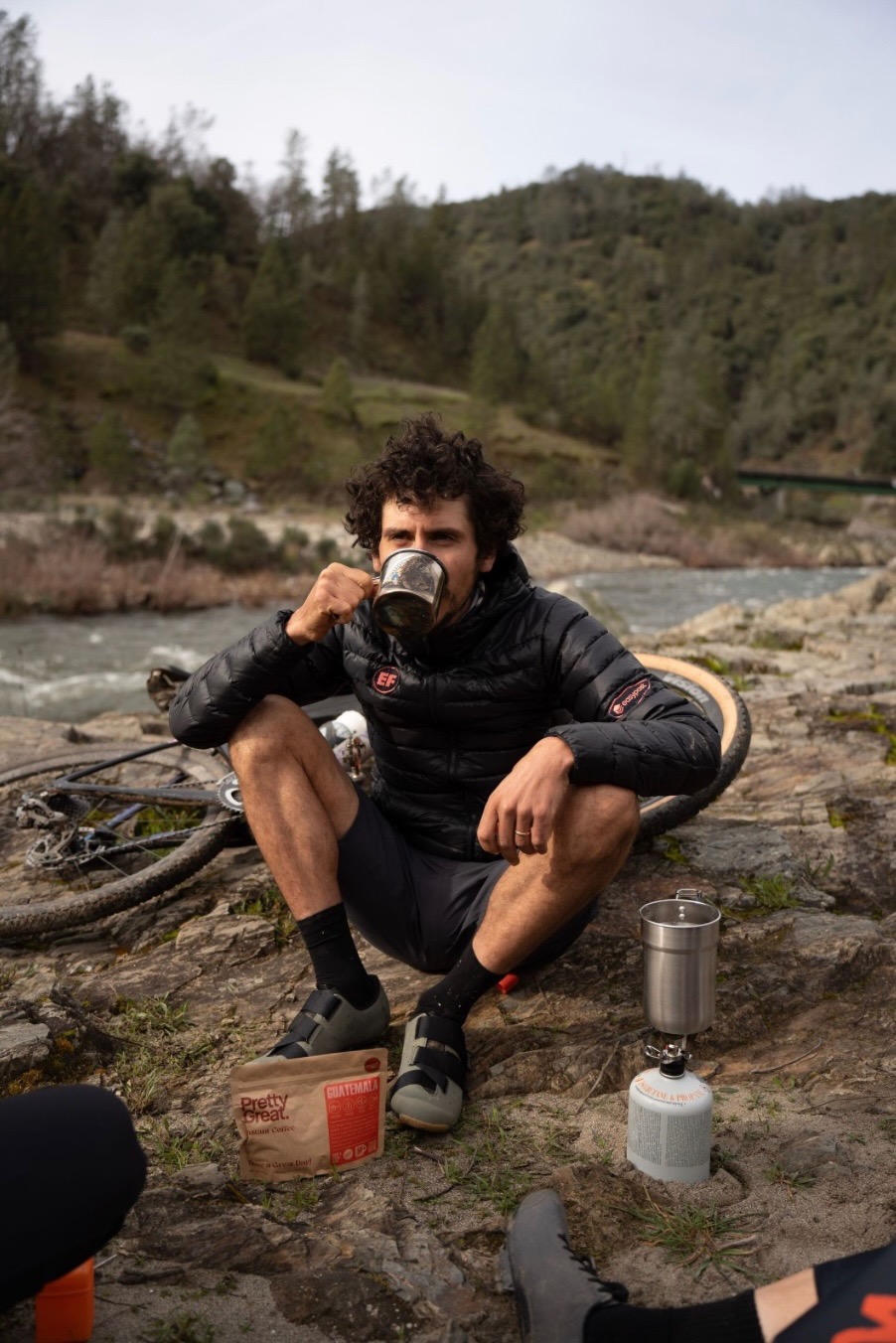
Pretty Great Instant

Click image to enlarge
Karter
Looking back on my career, there was a lot of, if the client’s happy, then job done. And then there’s been the whole battle with social media coming of age. Always comparing and fixating over likes and who’s getting attention. All the bullshit that comes with seeking validation from these platforms.
cyclespeak
But most people struggle with that in some way or another?
Karter
I guess they do. And now I try not to concern myself with those thoughts. I strive to capture a good image and if I’m happy, then that’s enough. And it’s only taken me seven years to arrive at this point [laughs].
cyclespeak
You say a good image. Can I ask how you make that judgement?
Karter
I guess what it comes down to, for me, is capturing the emotion. Whether that’s the landscape, the weather, however the subject is reacting to their environment. The full picture. And all of that in a single, fixed frame.
cyclespeak
People looking at what you do for a living—the travel, the exciting events, the exotic locations—they might very well perceive that as a glamorous job. But nothing is ever easy in life—there are always stresses and strains—so what are the realities, your reality, of earning a living as a photographer?
Karter
There’s a lot of sacrifice. Not a unique aspect but there’s been so much time with loved ones that I’ve missed. And I do feel incredibly fortunate that I get to experience all these things but there can be weeks and weeks without any sense of normalcy: late nights, early mornings, crazy hours, and a lot of unknowns that you just have to battle. You have to roll with the circumstances which interestingly has also trickled down into my day-to-day life.
cyclespeak
How so?
Karter
Certain shoots can bring with them an immense pressure on what you need to get done. You’re making decisions on the fly and managing your outcomes to the best of your ability. So when something happens in your personal life, as much as you might want to mope about it, you learn to make the necessary decisions and keep moving.
cyclespeak
Does your cycling have a similar effect?
Karter
I guess when you voluntarily put yourself in situations that are just awful. When you’ve been pedalling your bike for 15 hours and asking yourself why you’re doing it?
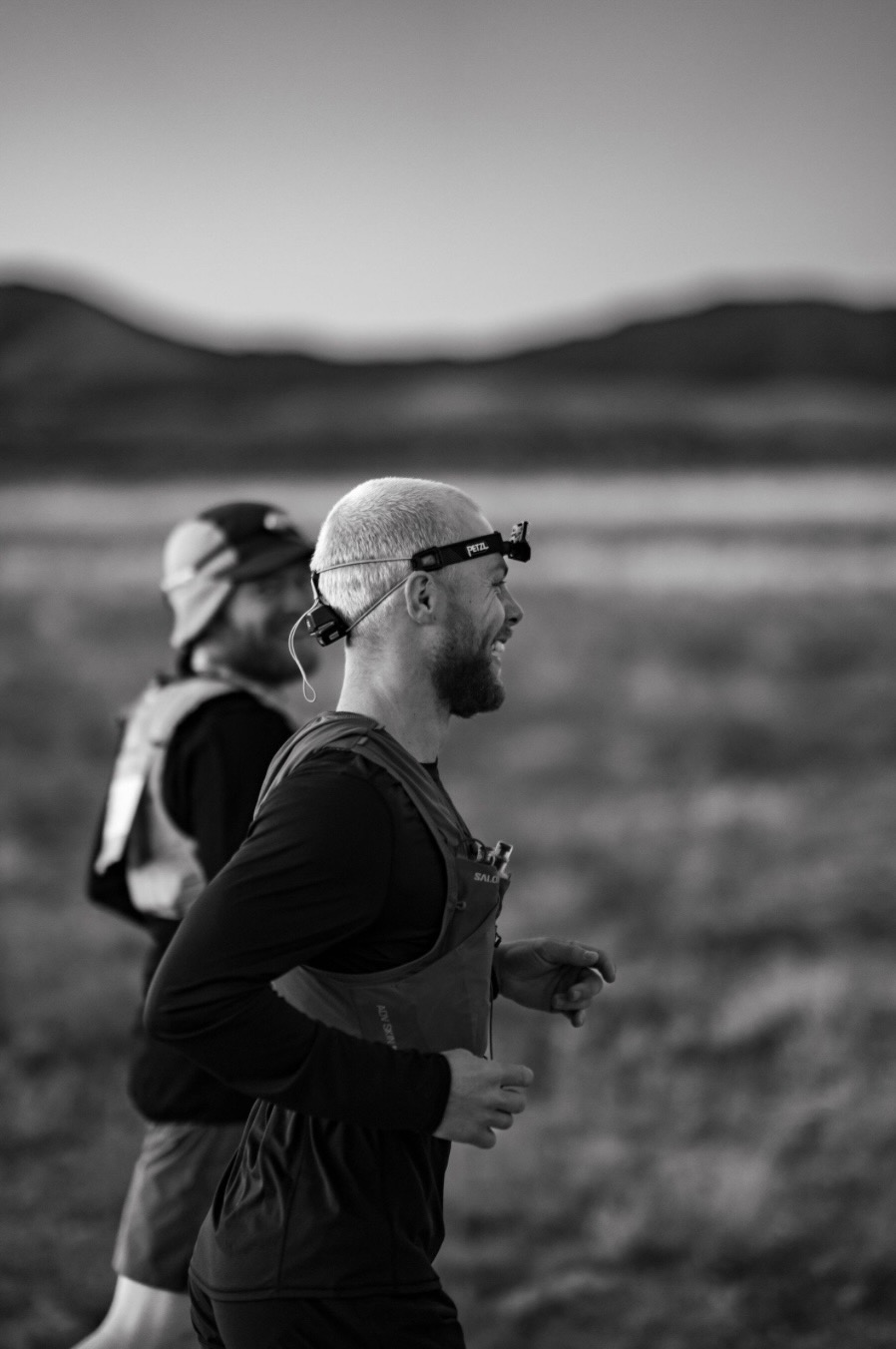
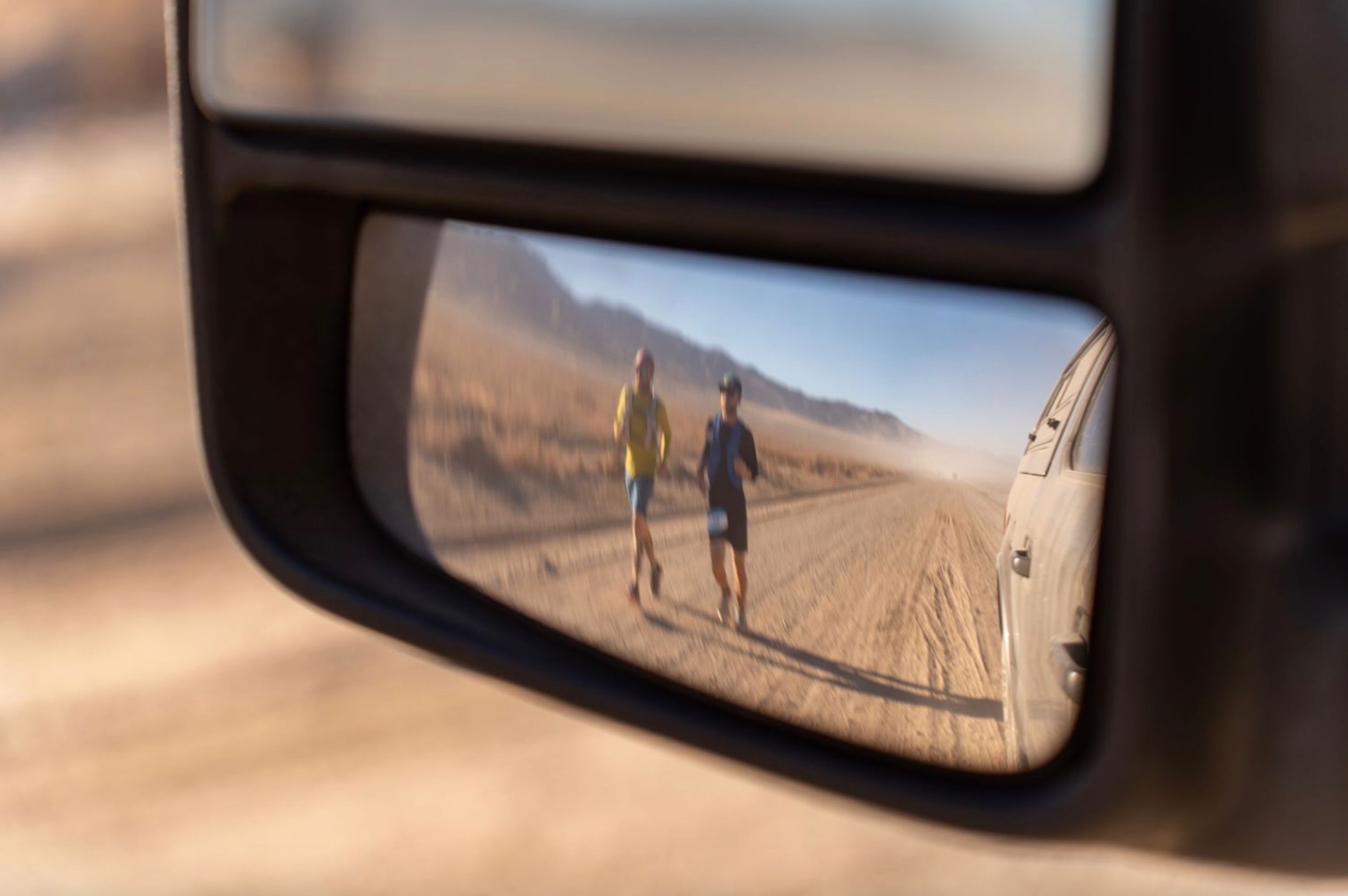
The Pony Express 100


Click image to enlarge
cyclespeak
When were you riding for 15 hours?
Karter
Last year I did a 200 mile gravel race in Utah that was routed along the old pony express roads. And I say roads in the loosest of terms. But taking on these challenges teaches you the value of time well spent. No scrolling on your phone, no TV, just alone with your thoughts and nowhere to hide if that makes sense? Because it’s going to crack you open at some point and that forces you to look at yourself in a very raw sense. And that’s really helped me to get a grasp on a lot of things in my life that previously I found problematic.
cyclespeak
You mentioned the pressure of social media in relation to your photography. So is it fair to say we’re increasingly fed this idea of happiness as a state of being? The reward for wanting whatever brands have to sell. But life is sometimes balanced by sadness and maybe if we aimed for contentment, then that’s a more realistic goal?
Karter
I’m one hundred percent on the same page. True happiness is fleeting at best. Something my girlfriend and I were talking about yesterday on a walk. How we question what we’re doing with our lives.
cyclespeak
Did you come to any conclusions?
Karter
I want to be confident in my own decisions. With my photography but also my morning routines, my diet, my leisure time, the clothes that I wear and the bikes that I ride.
cyclespeak
So how does that relate to your cameras? Are they a toolkit for doing your job or is there an emotional element?
Karter
Recently it’s started to feel nice.
cyclespeak
Why the change?
Long pause
Karter
Probably because I’ve been more true to myself in how I capture things. A slowing down and finding joy in the process. More of a connection with the camera when before it was just something I used to capture what the client wanted. And The Great Southern Country also played a part because I went in with total creative freedom and was able to feel a sense of pride with the images that came out of that experience.
cyclespeak
So looking at your life in general, is each and every day an adventure? Something to be appreciated?
Karter
I believe so. And that kind of leads into my freelance way of working after spending so many years with a 9-5 routine. If I can learn something each day, see something that fascinates, enjoy the simple things that maybe we take for granted?
cyclespeak
I guess what you’re describing is being present in whatever you’re doing rather than a constant searching for bigger and better?
The Great Southern Country



Click image to enlarge
Karter
One of my personal mantras—for want of a better word—is to live with awe. And that might be the birds singing on your morning walk or a conversation with a random stranger at the airline check-in desk. Our lives are filled with junk from the marketing messages in our inbox, to the way our phones encourage us to keep scrolling. But there’s so much, right in front of us, that’s so worth appreciating.
cyclespeak
I understand that travel is a necessity for your profession. So what is your concept of home? A place, people, belongings or something else?
Karter
That is such a good question. And for me, I try to feel at home wherever I am. Maybe because my schedule can be a little chaotic. But what anchors me most is the time I spend with my partner Emily.
cyclespeak
Is there anything you carry with you on work trips that has a sense of home?
Karter reaches out of shot before holding up a leather-bound notebook
Karter
My Mom gave me this a while back and it just sat in a drawer. But then one day I stumbled upon it and it’s been travelling with me ever since. On the front it says write something worth reading or do something worth writing. I don’t use it as a journal but, if the mood takes me and I feel inspired, then I’ll jot down whatever is on my mind.
cyclespeak
How do bikes fit into life and living? Because I saw on your feed that you have a very nice Standert which I guess is a rarity in the States?
Karter
I love that bike. And yes, most people I meet don’t recognise the brand as it’s Berlin-based. And I arrived at this particular bike after disappearing down the rabbit hole of lightweight carbon with all the whistles and bells to make you go faster. But then I saw my first Standert and was just struck by their beauty and the story behind the brand. So removed from the conversations I’d been having where I was questioning whether it’s worth spending an extra $2000 to save 150g. It was a case of, enough, I just want to ride a bike that resonates with me, that has the same kind of vibe as owning a classic car.
cyclespeak
I was intrigued by your Instagram bio where it states you’re just happy to be here.
Karter
It’s just something I’ve always said. Because people will apologise when I’m on a shoot if the weather is bad or there’s a problem with logistics. Which is very nice of them but I’ll stop them and say, “I’m just happy to be here”. Because everything doesn’t always go according to plan and to be very upfront, I had a long battle with depression and experienced some difficult times. So learning to fall in love with life again, no matter what’s happening, I’m just happy to be here.
All photography with kind permission of Karter Machen / kartermachen.com





 cyclespeak