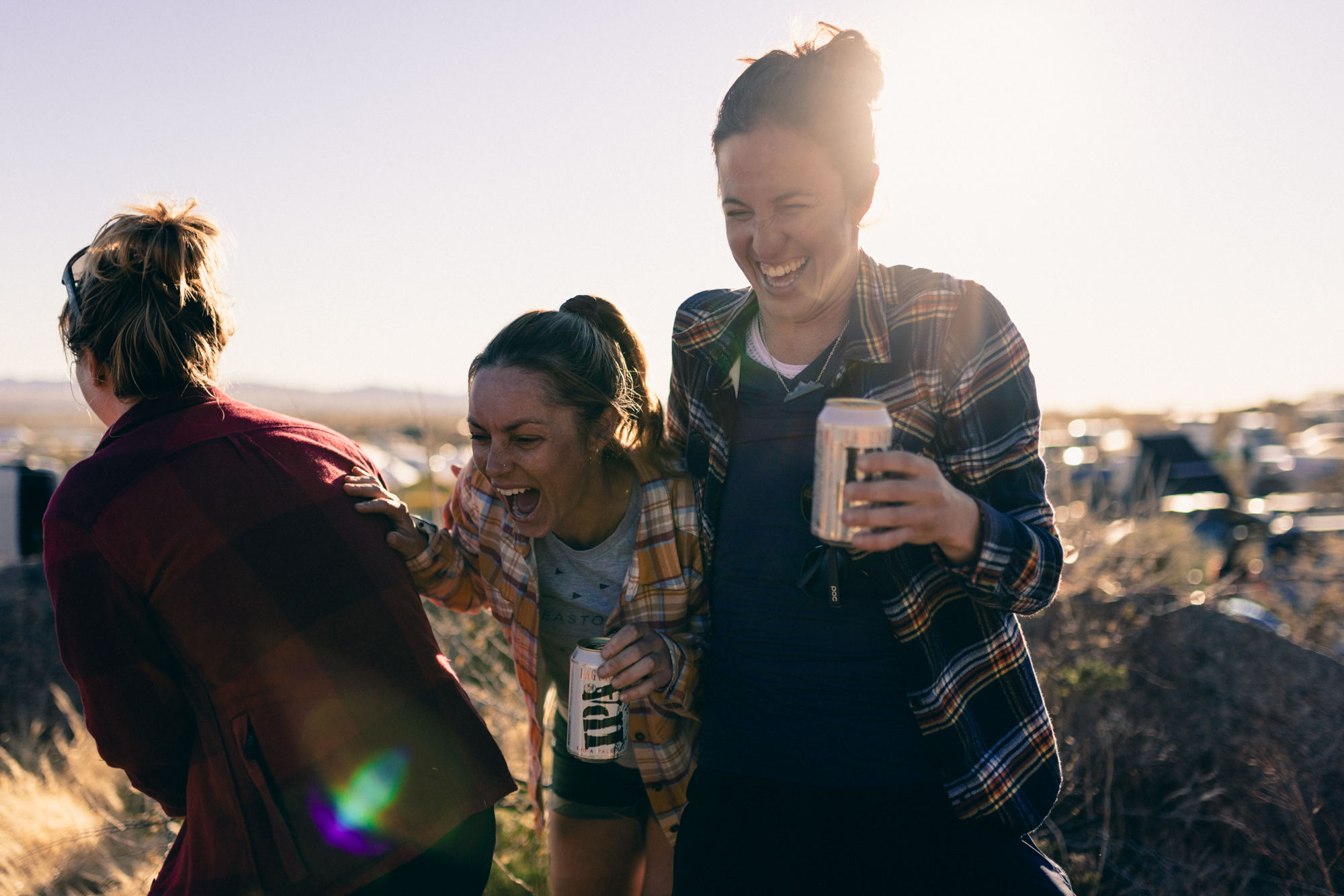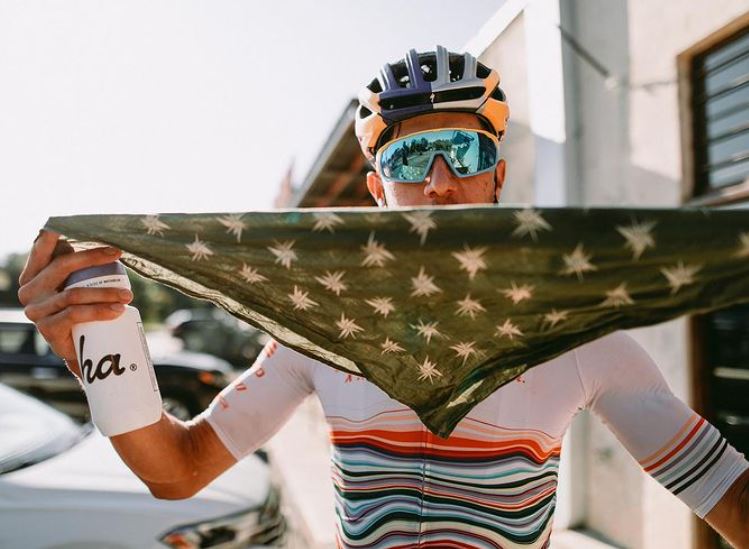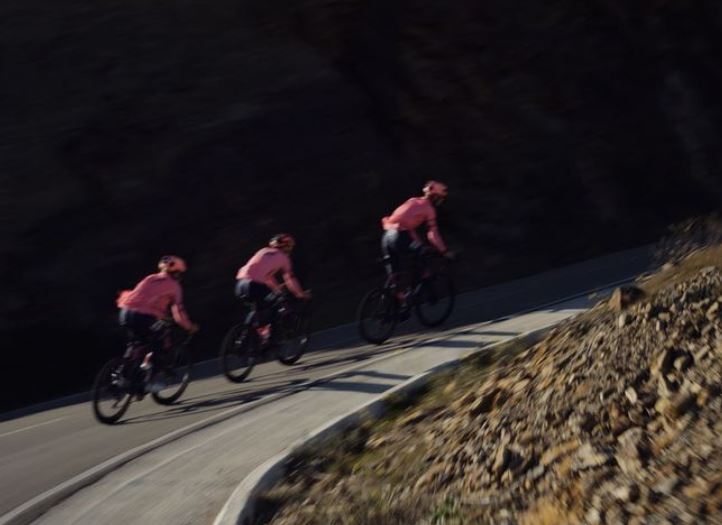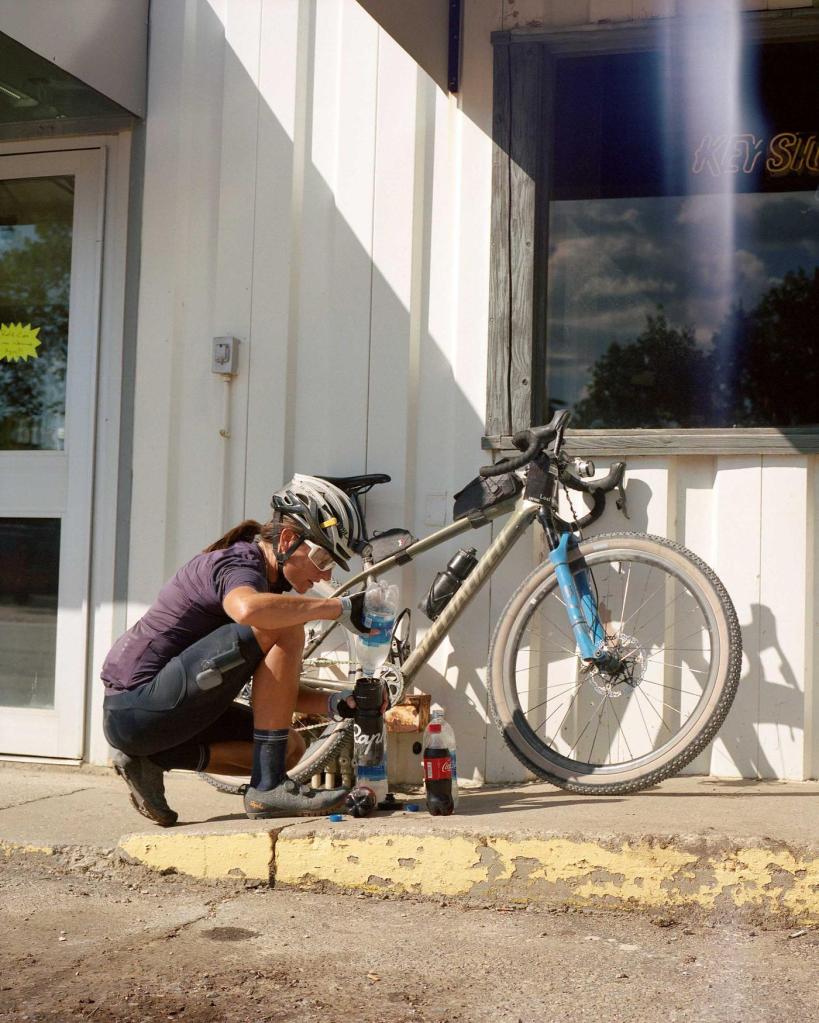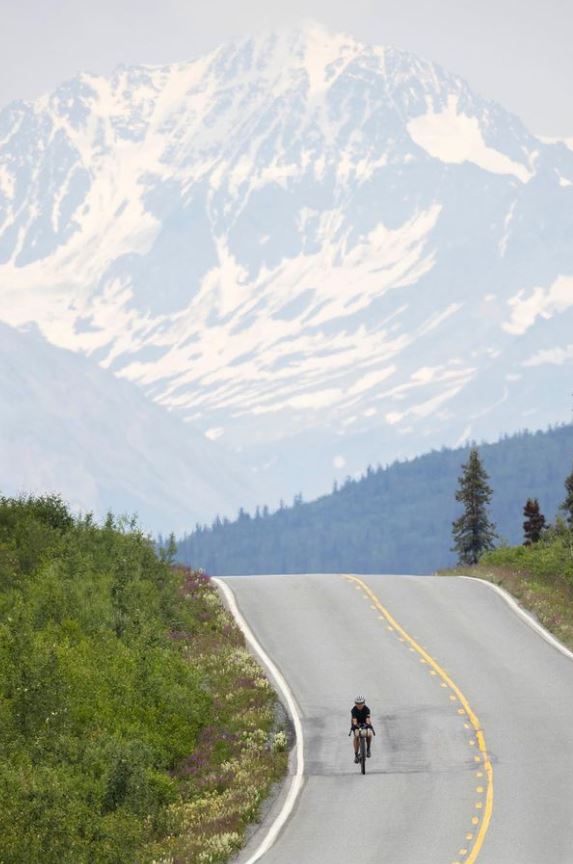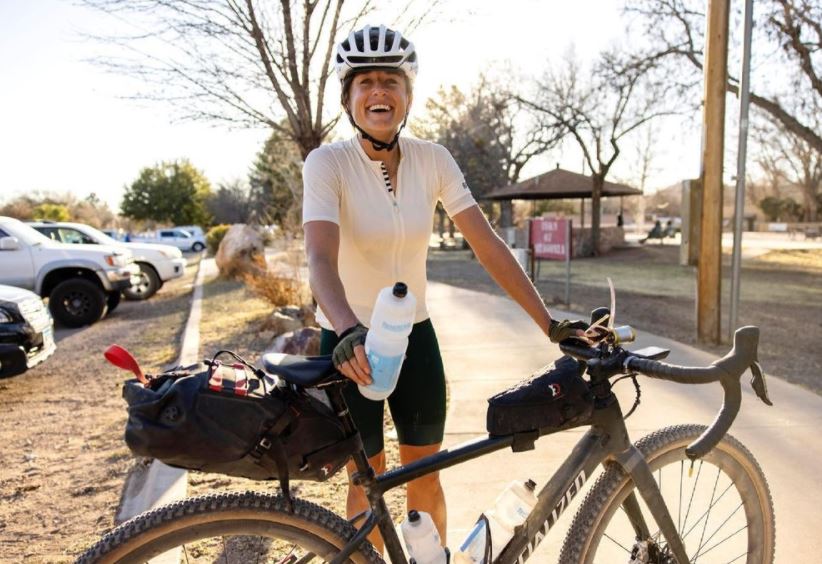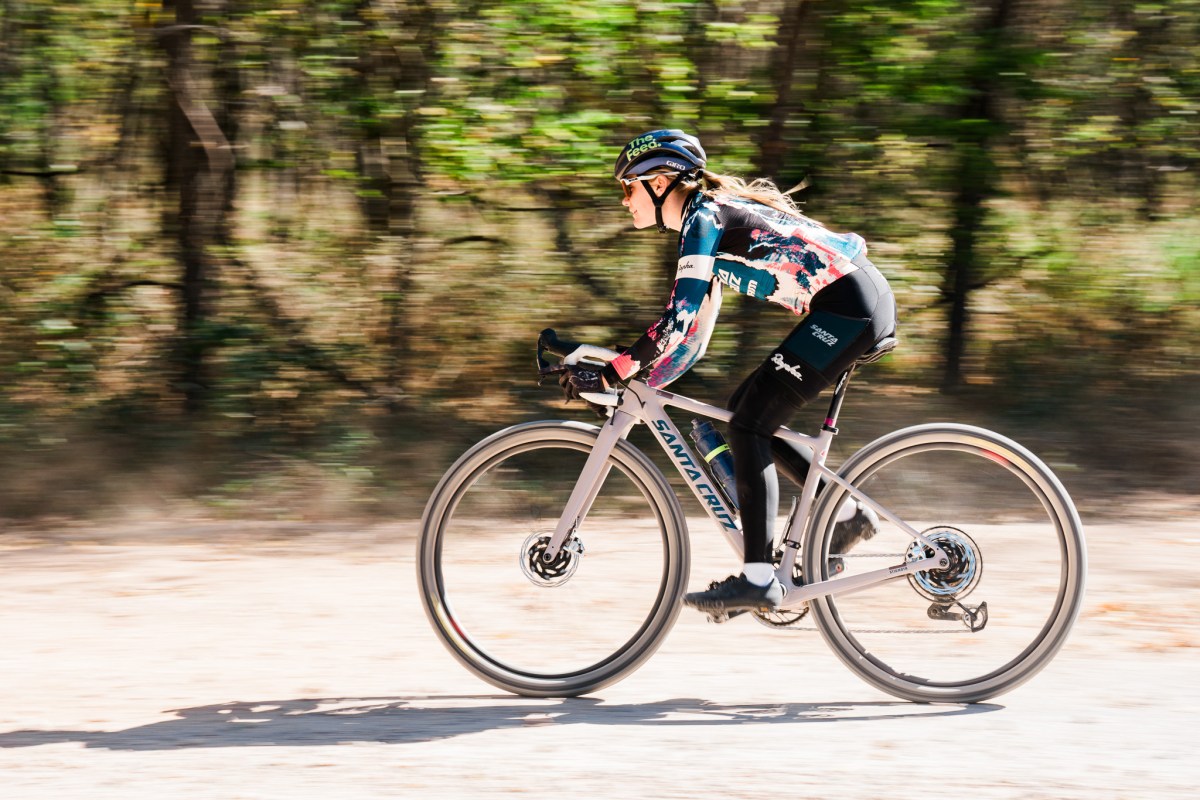
Alexis Skarda / A Sense of Self

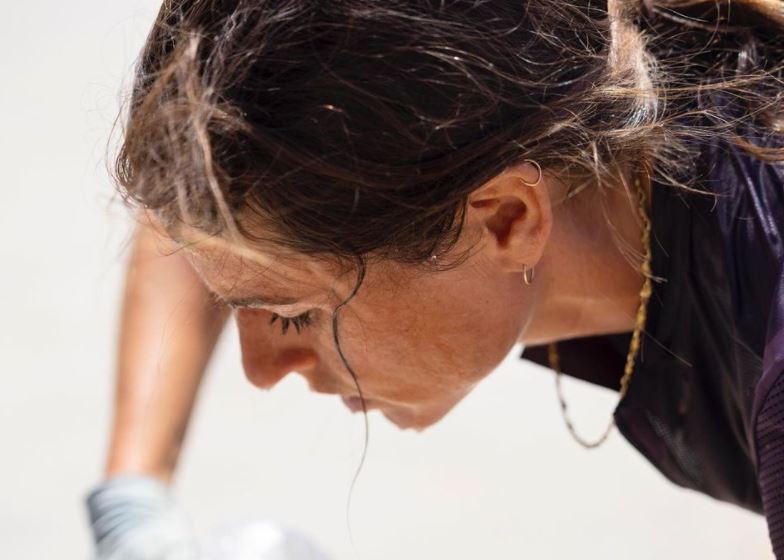
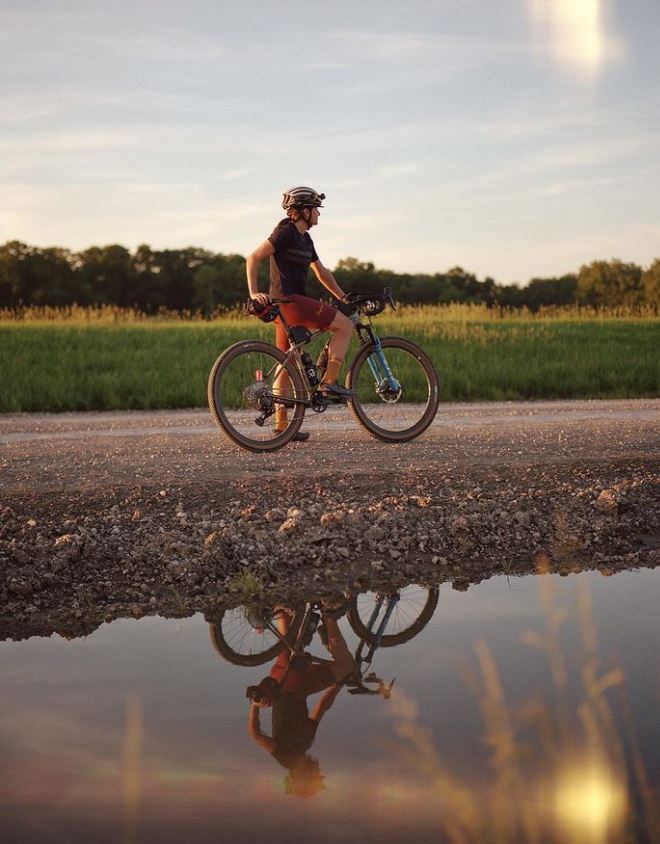
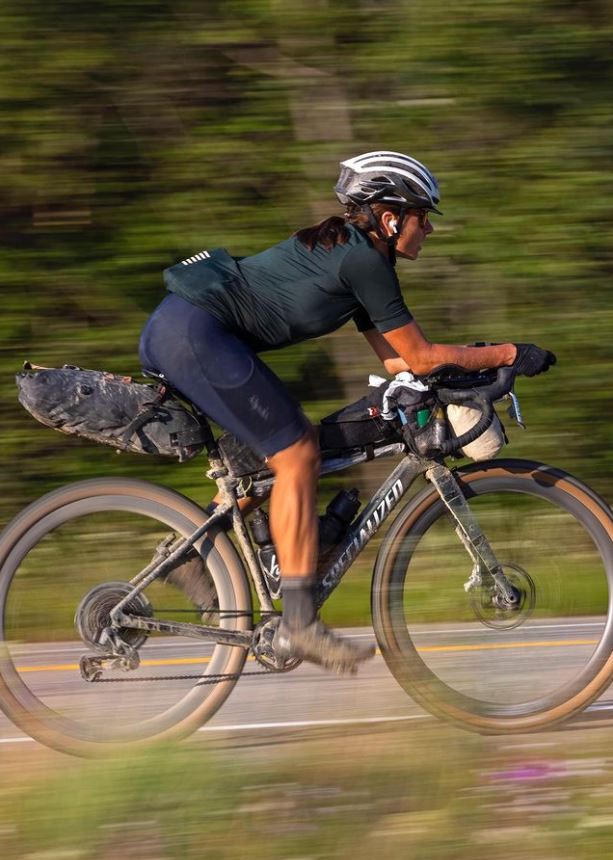
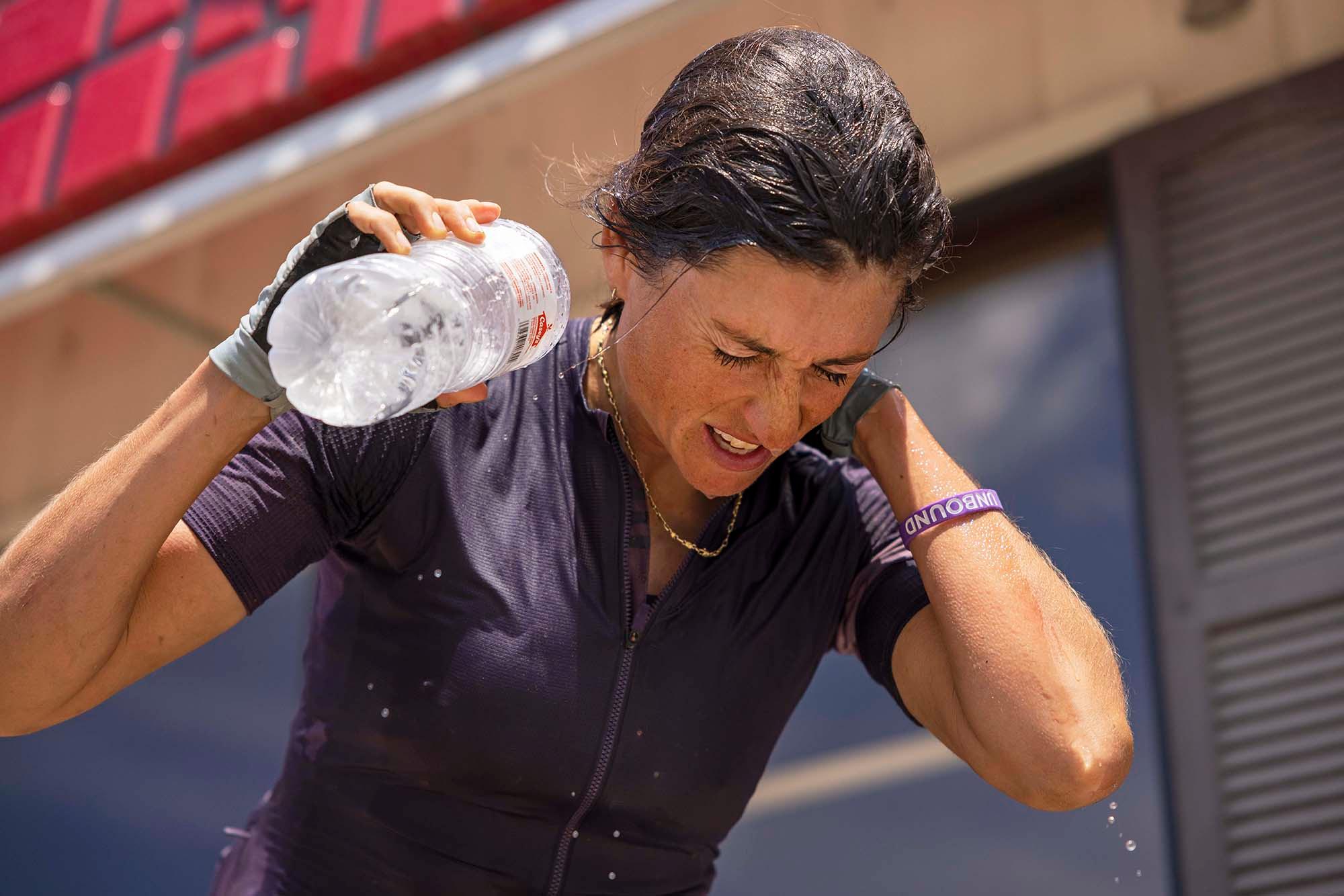
A mere six weeks after surgery to rebuild a shattered collarbone, professional off-road racer Alexis Skarda lined up at the Leadville 100. Determined to get her Lifetime Grand Prix back on track, she subsequently finished the series in fourth spot. A truly remarkable result considering the mid-season disruption to her training, and offering an intriguing insight into her competitive character and willingness to bounce back from adversity.

Speaking from her home in Grand Junction, Colorado, Alexis takes us on a journey from early childhood—when she had zero interest in sporting pursuits—to subsequent success racing off-road disciplines. A candid conversation that explores her motivation to go the extra mile, why some races appeal—and others definitely don’t—and how racing her bike has provided a true sense of self.


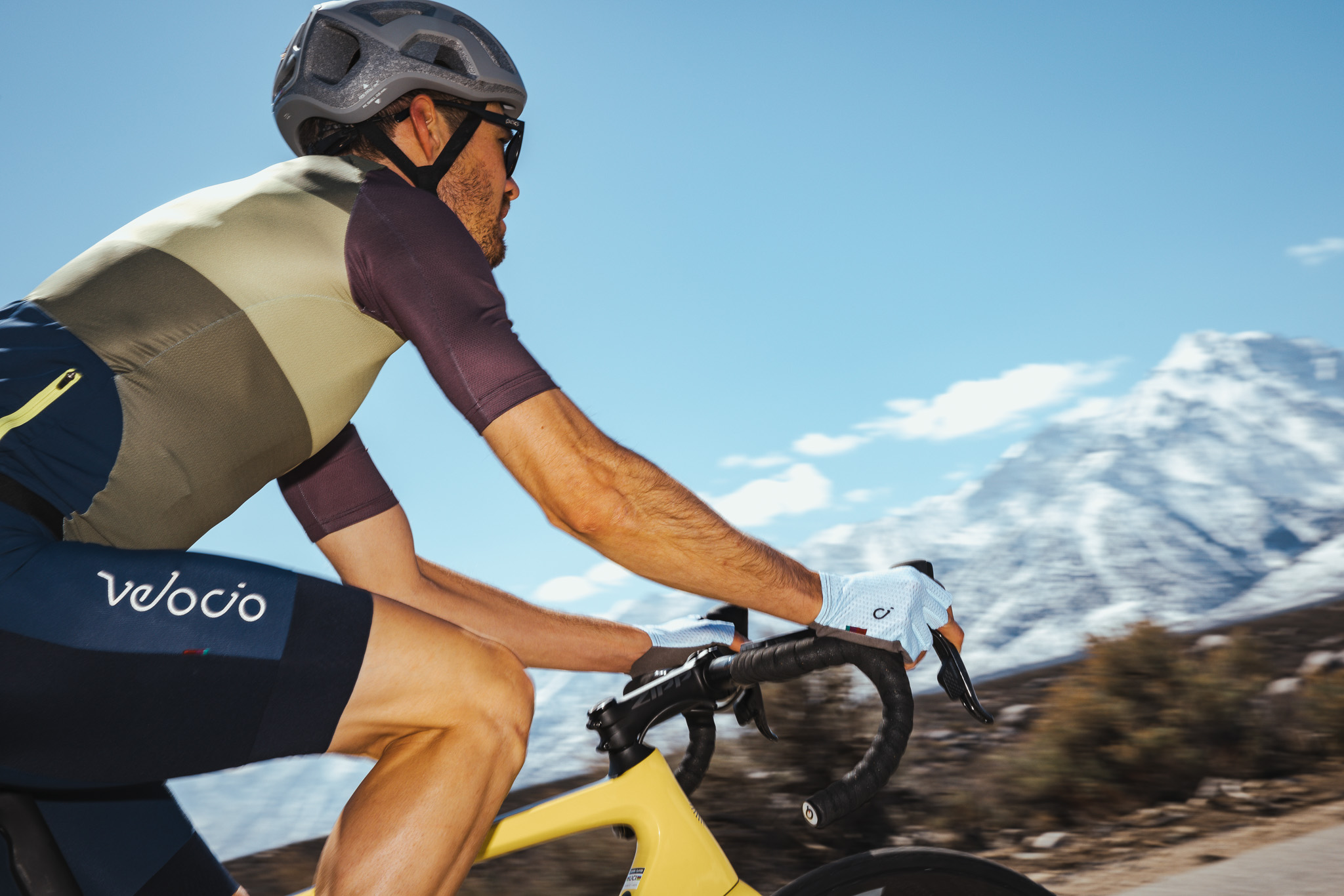
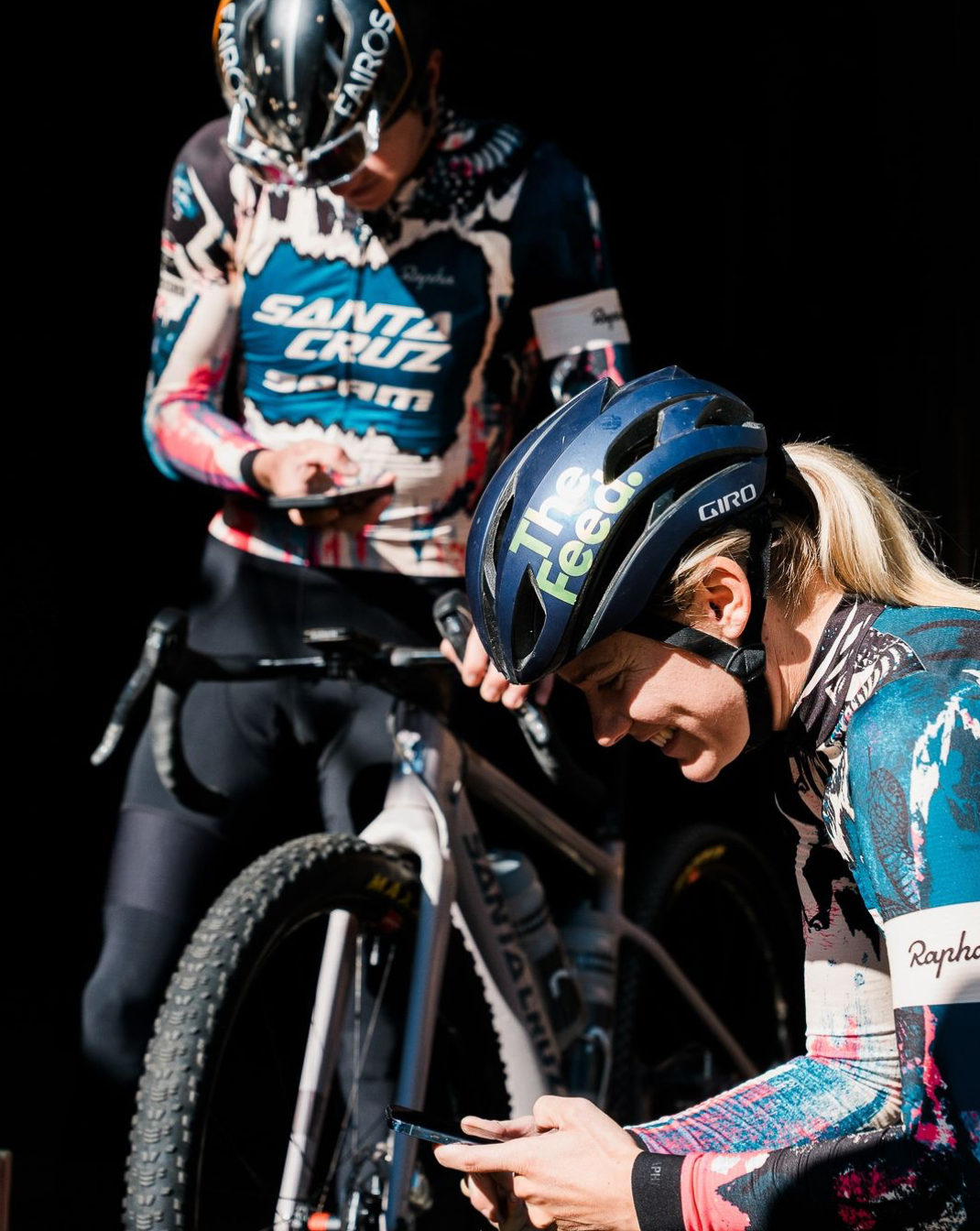
Alexis is backlit by morning sunshine as our call connects. More usually recognisable for her Santa Cruz htSQD race attire, she’s dressed for the off-season in jeans and a hoodie. Assuming that rest is now a priority after finishing up another Lifetime Grand Prix, I reference the scene in her White Rim FKT video where, after setting a new fastest time, she’s clearly happy to climb off the bike.

After both Big and Little Sugar, I knew it was time to stop and take a break. So in a mental capacity, I was ready for a rest. But a week later, I kind of wanted to scratch that FKT itch.”

Clearly still having something left in the tank, I’m wondering whether routine—rest, ride, repeat—plays a part in her approach to training?

“During the race season, it’s three weeks on, one week off. And by off, I mean easy. I feel that’s a good way to build form because your body has a chance to catch up.”

Click image to enlarge

Adding some running into the mix during the off-season as a nod to her athletic background, when the weather turns inclement Alexis describes using her indoor trainer to maintain form.

“But you have to build up mentally,” she adds with a smile. “I use Zwift and listen to music; a combination that works for me. After a week of riding indoors, my mind is nice and numb.”

For an athlete performing at the very peak of her race discipline, it’s perhaps surprising when Alexis describes not enjoying any sports in elementary school. And when she did finally decide to compete in her Fourth Grade fun run, the subsequent win proved such a surprise that her classmates were convinced she’d taken a shortcut. Nonetheless, the seed had been sown and running quickly became her life.

“It’s all I ever wanted to do. And I can remember in middle school, our PE warm-up was to run around the field before coming in for whatever the teacher had planned. But I just stayed out and kept running. So I guess it’s this particular mindset that helps keep me going in the world of ultra-distance biking.”

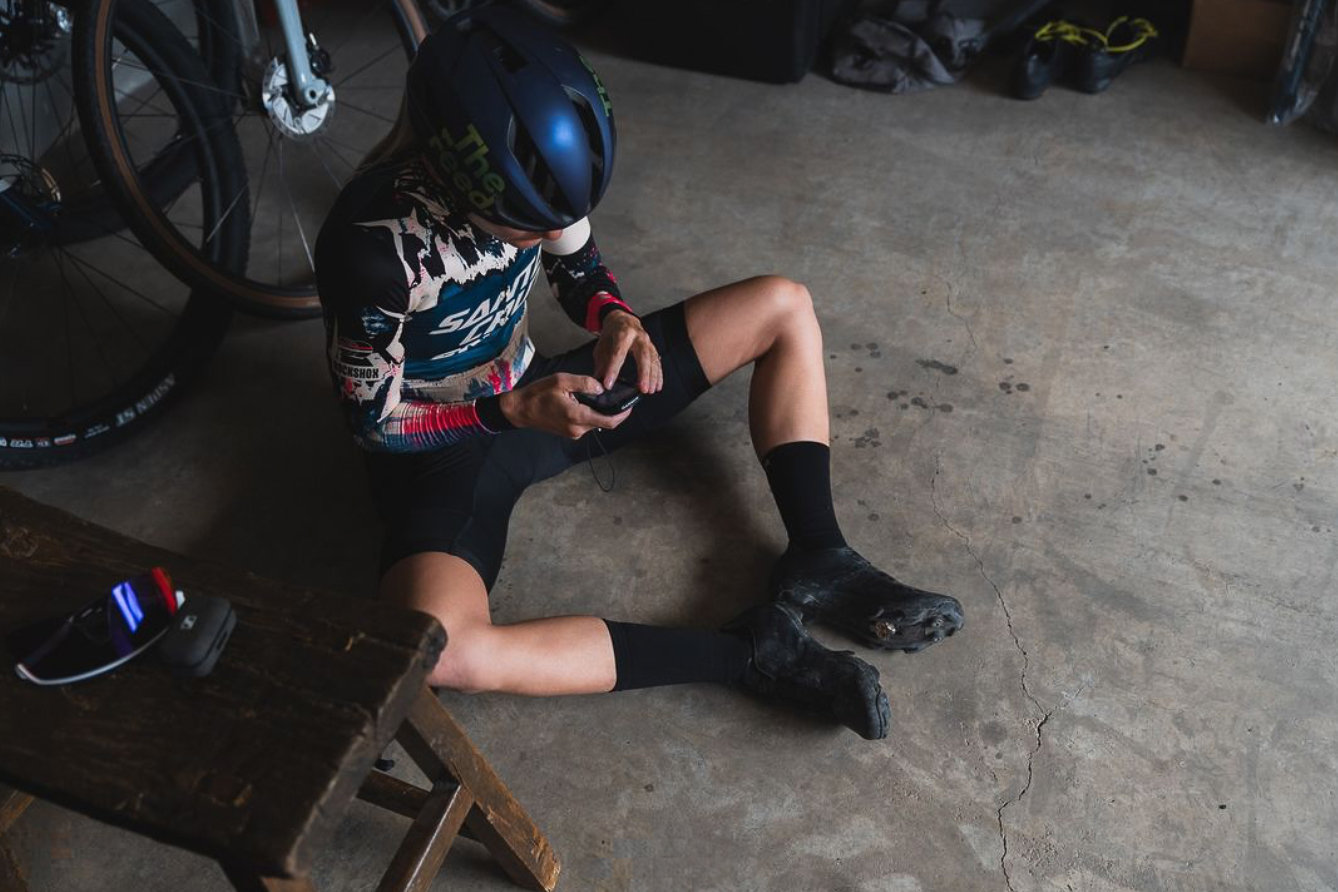
Competing in Iron Kids when she was only eight years old—Alexis recalls practising transitions in her backyard at home—it was joining the Colorado Mesa University Mountain Bike Team in her junior year of college that proved a pivotal decision. Twice representing the USA at the World Championships and enjoying a super successful race career before the Lifetime Grand Prix came calling, I’m curious whether Alexis feels the race series, to date, has favoured riders from a mountain bike or gravel background?

“Bike handling skills take a while to build so if you come from mountain biking, then maybe you have more of a head start. And when the Lifetime Grand Prix kicked off in 2022, there were gravel racers who’d never ridden a mountain bike in a race situation, so they had to quickly learn this whole new discipline. That being said, the tactics that are now playing out in the Grand Prix also require you to focus on strategy and where you want to spend your energy. A lot of my fellow competitors are very good at that and it’s something that I’m still working on.”

Click image to enlarge

Not that anyone, I suggest, has it 100% dialled at all times—a flat tyre or mechanical all too readily determining a race result—but back to back overall wins at the US Marathon National Cross-Country Mountain Bike Championships saw Alexis sporting a very fetching Stars and Stripes jersey. A race result that perhaps edges it as her proudest moment to date?

“I feel that’s my best result,” she confirms with a slight hesitation in your voice. “But doing Leadville earlier this season—six weeks after surgery for a broken collarbone—proved a pretty memorable day. The crash and subsequent time off the bike had put me so far back in terms of my fitness and, to be honest, I was scared that I’d crash again and really mess myself up.”

But you still went ahead and raced, I prompt.

“And doing it, mentally helped me get back in the game. I’d got in a bad funk during the weeks of recovery because it’s super stressful, knowing you have these big races coming up and you’re getting more and more out of shape every day. So I wasn’t in a great space.”

That Alexis still managed to finish the Grand Prix in fourth place overall has me wondering, when these setbacks occur, where she sits on a scale of utter frustration at not being able to ride, or dogged acceptance that her body needs time to heal?

“When something like that happens, you have so many ups and downs within even the space of a single day. I would go from feeling extremely frustrated, to kind of not knowing what to do with myself, to deciding after talking to my coach that everything was working out fine. And then an hour later, I was falling apart again.”

A mix of emotions, I imagine, made even harder with the Grand Prix being a race series?

“It definitely puts you under more pressure to get back quickly. And maybe this sounds a little dramatic but it’s so easy to lose your whole season if you miss races where you would normally place well. It was super unfortunate when they cancelled Crusher due to the fires but, luckily for me, it meant I had less pressure to do well at Leadville.”

Click image to enlarge

Even rolling up to the start line required Alexis to ignore advice from one particularly risk-adverse member of her medical team. Concerned that the screws fixing the metal plate to her broken collar bone would be shaken loose on the Leadville course, it took conversations with teammates who’d experienced similar injuries to allay any fears.

“I knew I wasn’t fit and that it would hurt but I did feel ready to race. And I was super grateful to have finished without any incident. But that was coupled with a little bit of disappointment because the previous year I’d finished on the podium, so I knew where I should be.”

Living her professional life under such scrutiny, I can only imagine the rollercoaster of emotions?

Being an athlete and racing is exactly that. All of the time. And though I’m not dramatic by any means, I definitely respond quickly. I can get really excited about things or really down but then it’s over and I’m back to neutral.”

Asked how this might play out at Unbound, where everyone is constantly refreshing their weather app to see if the race will be wet, Alexis responds with a wry smile. Not a favourite race, I suggest?

“I love pushing myself but for some reason Unbound is not my preferred way of doing that. Because what I really like is intensity and Unbound is more of a long, slow discomfort.”

I can hear how Alexis means physical effort when she references intensity but I’m wondering, when the gun goes off, whether a mental switch flips as she enters full-on race mode? And what reserves she draws on when the race is full gas and everything is hurting?

“That’s a good question because I feel that lately the end of the race has not been my strong suit. I tend to spend a lot in the first half—which has always been my racing style—and I’m still learning to work with the group and hold back some reserves for the finish. Which doesn’t come naturally to me because in mountain biking you just go as hard as you possibly can for 90 minutes. And you also have the downhill sections where it’s not exactly easy due to the technicality but there is an element of recovery. Racing gravel, you have to pedal all of the time.”

Racing on the Santa Cruz htSQD team, not only are there logistical and equipment benefits but Alexis also believes her bike family offers her a sense of belonging. And with constant innovation being applied to bike setups and race tactics, she feels reassured to have a team happy to try new things and keep one step ahead. A professional approach to racing that only very recently prompted some difficult conversations in relation to the so-called spirit of gravel.

“I can totally see how cool it was to show up, race without support, and just be a part of the community. But as soon as you put money on the line and organise a race series where everyone is fighting for the overall, you have very different needs.”

Click image to enlarge

A pressurised environment where every decision and race result plays out under worldwide scrutiny, and might make a regular 9-5 job with riding at the weekend seem appealing?

“Like having a normal life?” Alexis quips back with a laugh. “And yes, I might think those thoughts when I’m up at 4:30 in the morning so I can eat breakfast and get to the start line ready to race for eight or so hours. At those times, I do sometimes question why I’m doing it. But then, after the race and depending on your result, it’s like a complete one eighty and you feel on top of the world. So it’s a weird life for sure. With both good and not-so-good aspects.”

Maybe the more you invest in something—the more effort it takes—the greater the sense of accomplishment when everything slots into place?

“But it’s more than the effort you invest on race day. It’s the ten years you’ve put in prior to that—not making a dime—which people don’t always understand. How there were so many years when I seriously considered quitting. When I just needed to push through and believe in myself. But this is a small community and no one is really doing it solely for the money. At the end of the day, we’re all dealing with the same stuff.”

At this, I can’t help suggesting—tongue in cheek— whether Alexis is inadvertently describing the spirit of gravel.

I guess maybe I am,” she replies with a smile.

Competition aside, when not training and racing Alexis enjoys working on her own music and closed out this year’s Big Sugar with a DJ set. The preparation for which led to a few late nights she confessed in a podcast conversation with fellow off-road racer Payson McElveen.

“To tell the truth, I’m a little embarrassed about the time I put into it. I’m a professional off-road racer—that’s my job—so it feels rather silly to spend so much time on what is, after all, a hobby. But in the same way I put ten years into mountain biking without getting paid to do it, I feel something similar about my music. And though I was a little nervous beforehand, seeing everyone vibing with the songs that I’d chosen felt really special.”

Click image to enlarge

When I mention the format of next year’s Lifetime Grand Prix, it’s amusing to hear Alexis confirm that she has applied but in such a way that suggests the organisers might not offer her a place. But what really intrigues me is not whether this or that race has been added or left out of the series, but whether she views her bike solely as a tool for a purpose or if it prompts a deeper, emotional response?

“That is an interesting question. And there’s definitely an emotional response with the bike. One hundred percent. You spend so much time together that it’s like you have a relationship. Almost as if you’re a team. And that’s especially true for my mountain bike.”

And does that influence your thoughts about why you race, I ask?

“I guess it’s something I’ve always done. Something I was genetically capable of doing. And it’s where, in my formative years, I found my home. People noticed me because it was something I was good at. Something my Dad did and I’ve always looked up to him. So racing—and mountain biking in particular—is really what I’m passionate about and it’s opened my mind to what my strengths and weaknesses are. So you could say it’s helped me develop as a person as well as an athlete.”

Alexis stops, staring into the middle distance, before once again picking up her train of thought.

“Ever since Fourth Grade, racing is what I decided I wanted to do. It’s played out a lot differently to what I expected but I never pictured myself doing anything else.”

Alexis Skarda

All photography by Brett Rothmeyer / brettrothmeyer.com

Ian Boswell / Shifting perspectives

The last time I sat down to chat with Ian Boswell, he was fresh from winning his second-ever gravel race. That the race just happened to be Unbound made for a compelling story—retired professional road cyclist tries his hand at emerging gravel discipline and comes away with the sport’s biggest, most prestigious, prize.
A little over two years since this momentous result, Ian continues to combine his gravel racing with a role at Wahoo in athlete liaison, hosting his ‘Breakfast with Boz’ podcast and the newfound joys of becoming a first-time dad. And as we pick up from where we left off—discussing the balance he seeks between family life and career commitments—we dig down into the growing pains of the gravel scene, consider Ian’s motivation to carry on racing, and explore his shifting perspectives on competition and community.


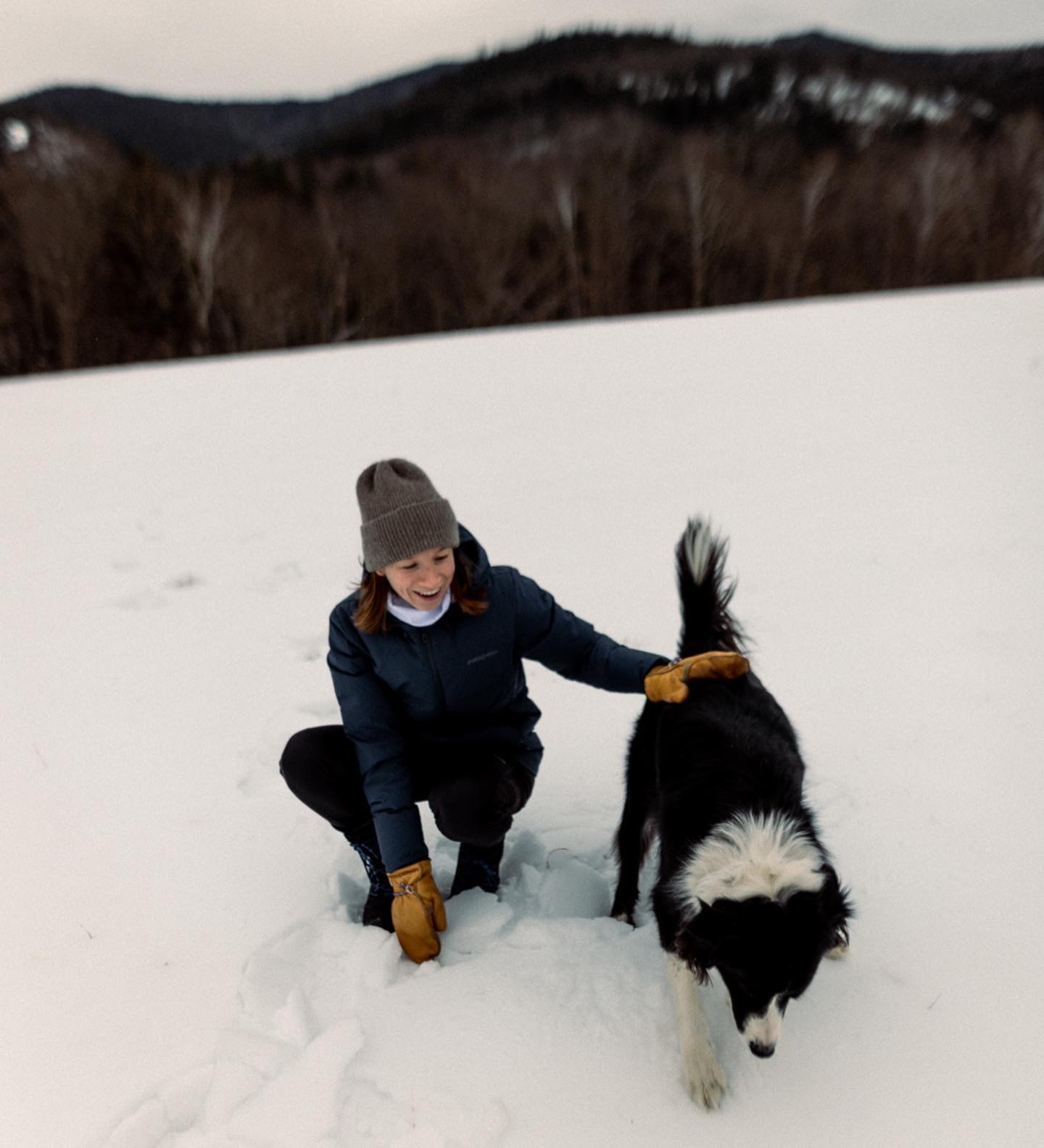
Still bearing a close physical resemblance to his World Tour days—he cuts a slim and athletic figure—Ian’s taking our call from his farmhouse home in rural Vermont. With the region famed for its resplendent Fall foliage, I’m wondering whether his 10-acre smallholding is still a riot of colour?

“Vermont looks its best in late September, early October. Now it’s just dismal,” he responds with a smile. 

“So has it transitioned to mud season?” I ask.

“It’s more like stick season with the trees all losing their leaves, and we’re all still waiting for the first proper snowfall.”


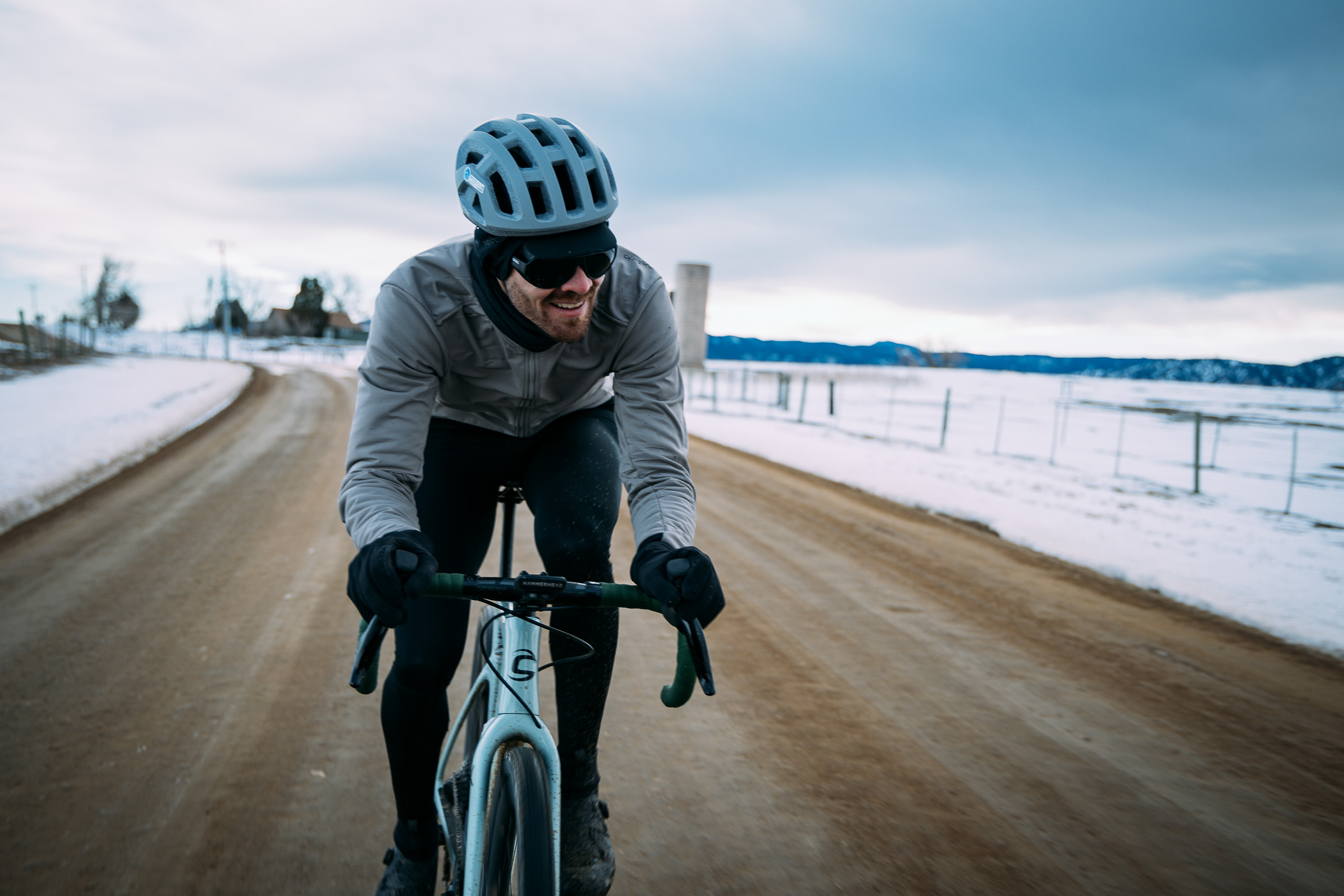
Referencing Ian’s much-documented dislike for mud, our talk turns to this year’s Unbound where overnight rain turned parts of the course into a quagmire. “Oh, goodness. I despise it with all my heart,” he admits. “But at least I was in the lead group ahead of the main field so we could take to the grass at the side of the road before that also got all beat up. It’s a hard enough event without having to contend with thick, gloopy mud. And it came so early that some people’s races were over after only 10 miles. Broken gearing and all other kinds of mayhem.”

As it’s been rumoured that a re-route was always an option for the event organisers, I’m curious to know Ian’s thoughts on the decision to leave in those muddy sections.

“My initial thoughts were perhaps not but that’s based on my own feelings concerning mud. If you look at the cost for people entering Unbound and the effort it takes in simply getting to Emporia, then to have your race ending after only a few miles must be incredibly disappointing. But to keep the route as planned was also a nice reminder of what this race started out as.”

“Which was?” I prompt.

“Back in the day the field was way smaller and it attracted a certain type of experienced cyclist,” Ian points out. “They knew how to break a chain and fix a flat. They knew not to shift if their derailleur was clogged. But now that gravel has really blown up, you hear people talking about rolling resistance and aerodynamics. Which is maybe a natural evolution of the sport but all that goes out the window when your wheels won’t turn.”

“And that’s a good thing?” I question.

“It’s a reminder that Unbound is still an adventure,” he suggests. “And that all those other skills are still incredibly important.”

Contrasting the previous two muddy editions of Unbound with the UCI World Gravel Championships held in Veneto, Italy, I question whether this illustrates two very different approaches to racing gravel.

“In my opinion, it’s kind of cool because we’re not defining the sport to be one thing or another,” Ian replies. “In the eyes of the UCI, gravel looks like 160 km with 50% of the course on road. North American gravel races are all totally unique and defined by the geography of the locale.”

Click image to enlarge

This mention of Europe prompts me to ask Ian about a recent trip to Nice where he attended a friend’s wedding.

“It’s funny to go on vacation to somewhere you know really well. There’s no need to research where to eat or visit which is super relaxing. And it was also the first trip my wife and I have taken without our daughter.”

As Ian was also over in France earlier in the year covering the Tour de France, our conversation moves to the lifestyle of today’s professional cyclists compared to when Ian was racing the World Tour. “I think the biggest thing that’s changed is the psyche of the riders today. To get a rider of my generation to live the lifestyle that’s required of the modern pro—measuring your sleep, weighing in every day, not going out for a beer—would possibly be seen as too much of a sacrifice?”

“When I was training out of Nice with Chris Froome and Richie Porte,” Ian continues, “we’d always have a coffee stop. For the current generation, that’s all irrelevant as there’s no measurable benefit of a mid-ride coffee. For them, the perspective of what being a pro cyclist looks like has completely changed. And when we say that racing is now harder, that’s the normality for the young pros just entering the sport. When they join a team at age 16, they’re already living a life of sacrifice and discipline. They find comfort in measuring their training stress, glycogen levels, their sleep score. If I was living like the current crop of pro cyclists, I would have a very short career. But that’s not to say the same applies to them. It’s what they signed up for.”

Recalling the last time we spoke, Ian had just announced that he was going to be a first-time dad; a fact he inadvertently let slip filming the final scene of a Wahoo documentary. So after a two-year intervening period, I wonder how he’s coping with balancing professional commitments with fatherhood.

“Well, it’s not without its challenges,” he laughs. “Personally, I truly cannot imagine raising a child and still being in the World Tour, where your sleep and recovery are so super important. If our daughter is sick, I’m still going to give her a hug and a kiss. Whereas if you’re preparing for the Tour de France?”

“It’s funny how our priorities change,” I observe.

“She’s coming up on two years old and starting to talk. And you hear little footsteps around the house which is a joy. So it’s been one of the most amazing things in my life, but you definitely need to reevaluate your use of time. To the extent that we seriously question what we did before we had our daughter.”


This mention of time management—Ian fitting in his training around dad duties and a full-time job with Wahoo—and I can’t help but wonder if there’s any way having a child can make him a better gravel racer?

“My goal is always to do the best that I can and to finish each and every race safely. After an event, my daughter doesn’t care if I finished first or in last place, but maybe there’s a sense of increased purpose in what I’m trying to achieve?”

Maybe, I suggest, he could adopt a similar strategy to Vermont neighbour and fellow gravel racer Ted King who takes his wife and young family on the road for months on end; driving from one race to the next in an RV. “I understand the appeal,” Ian replies with a smile. “But our life here in Vermont is so labour intensive and the racing season is when you most want to be home on the farm. We love where we live and the summer is when the sun is shining and the garden needs our attention.”

With home and family obviously a priority, Ian still manages to contend a number of races throughout the year—the 2023 season getting underway with a trip to South Africa to ride Cape Epic alongside fellow ex-pro and podcaster Mitch Docker. With the pair signing up for the amateur category—Ian is quick to point out he would never describe himself as a professional mountain biker—to their surprise this was the first year that an amateur leader’s jersey was up for grabs and they subsequently came away with the win. A result, I suggest, that might make him consider entering next year’s Lifetime Grand Prix with its mix of gravel and mountain bike races?

“Let me put it this way. I’ve already spent a little over 10 years on the World Tour being told when and where to race.”

My immediate thought being that’s a no?

“But funnily enough,” Ian continues, “I did actually apply to race the Grand Prix back in 2022 but then a couple of days prior to them announcing who had a place, I emailed to ask if they’d withdraw my application.”

“What prompted you to change your mind?” I ask.

“I just got to thinking that I really didn’t want to take a spot away from some up-and-coming rider whose life could be so dramatically changed by participating in the series. And with the Grand Prix, you’re chasing points at every race. But if I get a flat at Unbound, I can choose to just cruise in and it doesn’t really matter. I can make that mental switch because my day isn’t ruined.”

Although Ian still enjoys racing, he clearly no longer has anything to prove; choosing to race on his own terms and not worry about the outcome of every race. Even to the extent of riding certain events on an e-bike from the back of the field as neutral support. “I spent the better part of my whole adult life chasing the performance end of cycling. Whereas this approach allows me to view the sport from a totally different perspective,” he explains.

Coming over as very grounded in what he does and doesn’t want to do, I wonder whether the fact he won Unbound—arguably gravel’s biggest race—takes away any perceived pressure to keep searching for the next result. Is it a case of, okay, I’ve done it, I’ve won the big one, and I don’t need to worry about anything anymore?

“I do question whether there’s a basic human desire for people to return to something they’ve already accomplished,” he suggests thoughtfully. “But I suppose the difference is that I can continue to race at Unbound without it compromising my life at home. I’m not away at altitude camp or moving us all over to Europe so I can train better. So within the parameters I set myself for our quality of life as a family, I’m still able to perform. If I was finishing Unbound in 80th place after a clean race, then maybe I’d be thinking it was time to hang up my racing wheels and go and do something else?”

A response that maybe skirts around the question of how it feels to win an event—and win it at his first attempt—that for many professionals is the gravel Holy Grail? But he nevertheless returned for the subsequent two editions and came away with a 3rd and 5th. Remarkably consistent, I suggest, for such a gnarly event?

“For the past two years, Unbound has come down to a bunch sprint and that’s after 200 miles of hard riding. So for me to be still contesting the race in that front group is fulfilment enough. Winning is great but at the same time, part of my personal journey is whether I can still trade blows with these other riders.”

Click image to enlarge

It’s at this point in our conversation that I mention Ian’s recent appearance at Steamboat dressed up as ‘gravel beef’ for the fancy dress hill climb. A tongue-in-cheek response, I presume, to the pushback he received on social media after expressing his opinions on riders taking turns and pulling through on a pace line.

“It all came back to my first experience at Unbound when we had a group of five, riding at the front and all taking a turn,” Ian explains. “There was no hiding and we raced in the knowledge that the strongest rider would take the win. Such a fair and equal battle with a level of respect and admiration for each other.”

“Are you suggesting that’s changing?” I ask.

“I come from the World Tour where if you win, you get more money and maybe a bigger team. But in gravel, we have this opportunity to redefine what success looks like. And what I find a little frustrating—and I should say that I’m enjoying the tail end of a racing career but my future isn’t defined by the results I now have—is that I’m trying to look out for the next generation of riders. With this increased focus on professionalism, we’re in danger of falling back into this default mode of what brands and the media see as racing success. And it doesn’t have to be that way. Gravel can be something totally new and different and nothing like the structure of road racing.”

It’s here I mention that at recent editions of Unbound, some riders had four or five people in their support crew—washing bikes, changing wheels, handing out nutrition—almost like an F1 pitstop. And I know that Ian, speaking on a podcast, suggested that each rider could have a crate into which they could add anything they might need but they, themselves, had to handle the stop and therefore level the playing field.

“That was one of the coolest things I felt about my first Unbound in 2021,” he reminisces. “That theoretically anyone could register, roll up, race and win—there was very little barrier to entry. You needed a bike, you needed to be at the start line and you could win the biggest gravel race in the world. Not incredibly likely but possible.”

“And now?”

“The more money gravel racing attracts, the more professionalism we see and the greater the barrier—not necessarily to entry—but to winning. Because there’s the argument that now you need a large support crew and a power washer in order to be competitive.”


Not wanting to dwell solely on seemingly negative aspects of a sport that has exploded in popularity over the past years, I suggest we flip it 180 and look at what gravel’s got right over the past year.

“I say credit to the UCI for closing the course,” Ian immediately fires back. “It’s incredibly safe for the racers.”

“But maybe not possible for a race like Unbound?” I suggest.

“You simply can’t close 200 miles of roads for 20 hours,” agrees Ian. “There’s a 10-hour gap between the fastest riders and people crossing the line after midnight. But as speeds get faster, the level of risk that people are prepared to take also gets higher because there’s more at stake. At the sharp end of any gravel field, racing is a job. There are bonuses if you win. And I’ve listened to so many safety speeches before races get underway that mention riding on open roads. But no one actually follows the rules of the road and it can be chaotic. Oddly part of the excitement but it can also lead to crashes. So, yes, safety needs to become a bigger concern.”

“Your day job is looking after athlete liaison for Wahoo,” I ask. “Have you seen any changes in this role over the past couple of years?”

“This isn’t particularly unique to Wahoo,” suggests Ian, “but the reasons brands now choose to work with athletes is changing. When I was racing the World Tour, the perceived wisdom was the better your results, the more money you made and the bigger sponsors you attracted. It was a well-recognised ladder to success.”

“But now?”

“That’s still largely the case but we have other perspectives on where you can get a return on your investment. Oftentimes a successful athlete is validating your product but is that quite a niche audience and maybe one that’s already highly engaged? So when you compare that approach to certain YouTubers who might have a far broader reach, you get brands putting a value on this grassroots engagement.”

Click image to enlarge

Sensing a shift in marketing strategy, I’m wondering how Ian himself views the need to keep pace with the demands of a world driven by social media. A career professional before building an audience on Instagram was viewed with the same level of scrutiny as an athlete’s power files, does he welcome this brave new world?

“I came up through this very clear structure of what it took to become a paid athlete,” he replies. “You do better, you train harder, you keep your head down and put the work in. But now? We live in a world where people can be influential irrespective of whether they cross the line in first place. They’ve grown a huge following and people really listen to what they have to say.”

“So your view of sport is changing?” I suggest.

“When I first came to this role, my thinking was we should sponsor the biggest teams and the best athletes. But I see people out there who are definitely not winning events but have an incredibly important role in building and representing their community. That might take the form of leading a weekly group ride in a small town in middle America; showing new riders how to clip in or explaining why you shouldn’t cross chain. And I’ve come to understand that these people are just as valuable to support as the athletes we see crossing the finish line in first place.”

Hearing the excitement in his voice, it’s clear Ian enjoys the challenges that change within the sport present. That what matters most is to see people succeed in their cycling goals, whether that’s finishing a race or simply connecting with friends.

“So often in sport,” he continues, “we focus solely on the elite. Which is why I really enjoyed riding Steamboat from the back and mixing it up with people on their first gravel event. Because there’s no one who shows up in the pro field at Unbound whose aim for the day is simply to finish. Whereas for the vast majority of riders, that’s their one goal for the event.”

“Which,” I presume, “is super inspiring?”

“For the longest time, my view of cycling was this very narrow window of, if they’re not doing it like me—if they’re not skinny and super fit—then why would they ride a bike? But now I have a much broader view of what cycling can be. Some people use a bicycle to connect with friends, others to commute or to grow a community. And what’s been so fascinating is to see how the bicycle can represent so many varied opportunities to different sorts of people.”

With this talk of community, I’m still smiling at the thought of the 2021 Unbound winner riding an e-bike and handing out gels to the back of the field at Steamboat Gravel.

“To be honest,” he laughs, “most of the people I met had no idea who I was.”

A typically self-deprecating response and just one more example of his refreshingly grounded sense of self. And perhaps going some way to explain how he answers my final question; whether he can offer an example of life’s simple pleasures that help him feel content and satisfied?

Without a moment’s hesitation, he quips back, “That’s easy. Mowing my lawn.”

“A simple pleasure?” I respond.

“So many aspects of my life have no finish line. You win Unbound and people ask if you can win it again. But when I’m sitting on my tractor, mowing the field, there’s a beginning and a defined end. When you’re done, you’re done. You can’t do anything more. And there’s a distinct comfort in that feeling.”

Ian Boswell

All photography by Alex Roszko for Specialized Bicycle Company

Alex Howes / Fast forward

In 2019—the same year he won the US National Road Race Championship—Alex Howes rolled up to the start line of Dirty Kanza. Ahead lay 200 miles of farm tracks and flint hills in a gravel race now known as Unbound. Riding with friend and teammate Lachlan Morton in the colours of Education First, their race was documented in what would become a series of inspirational films capturing the highs and lows of this alternative racing calendar.

Recently retired from the World Tour but still working with Team Education First as a cycling coach, Alex is now forging a new career as a gravel racer—a professional pivot that he discusses over a transatlantic call from his home in Nederland, Colorado.

A freewheeling and candid conversation that takes in everything from family road trips to bears, bugs and beards, Alex turns the page from World Tour to Tour Divide and what it takes to ride 2,963 offroad miles in a little over 19 days.


cyclespeak
Hey, Alex. How’s it going?

Alex
It’s going alright. Yourself?

cyclespeak
Good, thanks. It’s breakfast time on your side of the world and I can see you’ve already got a coffee on the go.

Alex
We had a huge storm last night so we were up a fair bit. Right on top of us—I couldn’t believe how loud it was. I’m not usually afraid of lightning but that was something else.

cyclespeak
In the media we’ve seen some pretty extreme weather over in the States. Or are these storms the norm for you at this time of year?

Alex
It can happen, for sure. A lot of people living up here have double surge protectors on their houses. And we occasionally get this dry, static air that makes for some super intense lightning.

cyclespeak
How remote are you? Where’s your nearest store if you want a pint of milk?

Alex
We’re not way out there but that’s kind of by design. When I was racing in the World Tour I needed to be able to get to Europe relatively quickly. So we’re 30 minutes up the canyon from Boulder in a little town called Nederland. There’s a local store where you can pretty much buy everything you need. And I can be out the door here and over to Frankfurt in 12 hours.

cyclespeak
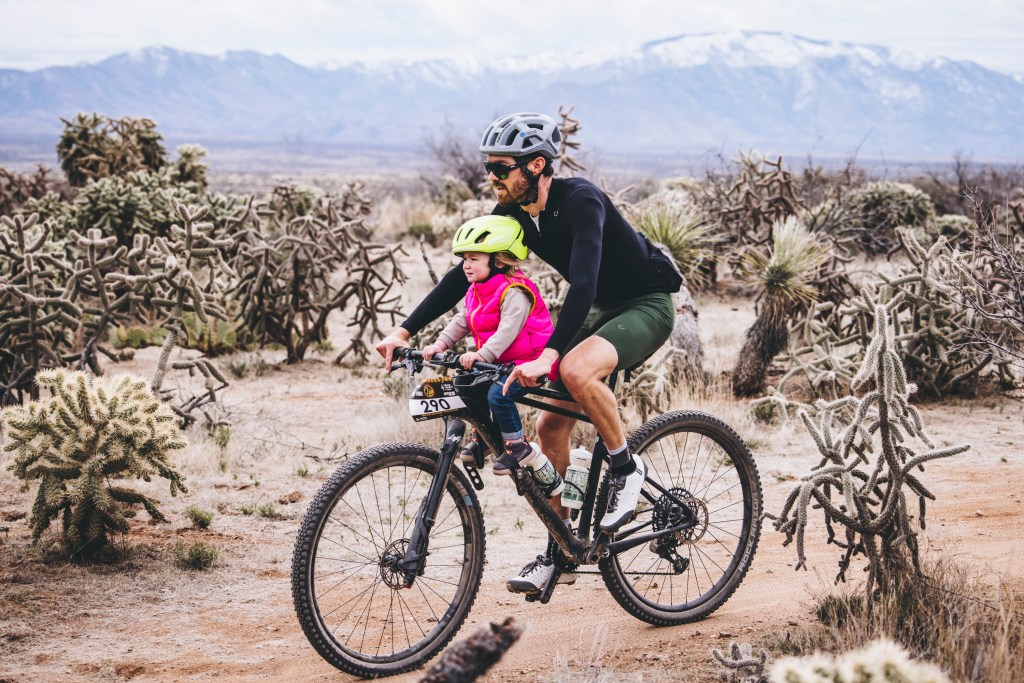
I saw a lovely post of you and your little girl at a local cycling event. May I ask how you’ve taken to fatherhood? From my own experience, it’s rather a rollercoaster ride.

Alex
I think that’s the right way to describe it [laughs]. And I was not so long ago thinking how bike racing and fatherhood are one and the same. Birds of a similar feather.

cyclespeak
I can’t resist asking you to elaborate on that.

Alex
You have these moments of extreme joy when you wouldn’t swap it for anything in the world. And then you get moments where you’re like, what have I done [laughs].

cyclespeak
I don’t think anyone is quite prepared for it. And maybe if we did understand how challenging it can be, we’d think again. But then you have people wanting to do it all over again. I remember my wife saying to me that she wanted another baby and I’m thinking really.

Alex
That’s where we’re at now. We’ve got this pretty good kid who’s also a big handful.

cyclespeak
If it’s any help, I’ve got two boys and from experience it isn’t like having one plus one. It’s more like one and two thirds because a lot of the decisions you faced the first time around you’ve already made. So I probably enjoyed the process more with our second child which I guess sounds a little strange.

Alex
But you survived and they’re society’s problem now [smiles].


cyclespeak
Not as a strict rule but children do tend to flourish with a sense of routine. Does that sit well with you or do you prefer things to be a little more haphazard?

Alex
I don’t know if it’s a preference but I guess that haphazard best describes how I’ve lived my life for the last 35 years. But I do agree with the idea of routine and we definitely pay for it when our daughter goes to bed late. And this year we’ve been cruising around in a travel trailer to a bunch of races.

cyclespeak
Say you’ve got a race weekend and it’s just you. How does that compare to when the family is travelling with you? I’m guessing it’s a very different experience?

Alex
The solo mission is definitely lower stress [laughs].

cyclespeak
You can focus solely on you and your race?

Alex
With the little one, dinner’s at 6:30 whether or not you need to be doing something else. And if we don’t keep to that schedule we’re screwed for the next day.

cyclespeak
Consequences [smiles].

Alex
There’s a little give and take but it’s also been fun and we’ve visited some really cool places as a family.

cyclespeak
We’ve already mentioned that you live in Colorado and I was watching your Fat Pursuit* series of Instagram stories where every film clip shows longer and longer icicles hanging from your beard. And I was wondering whether you relish difficult ride and race conditions or does the professional in you just get the job done?

[*a winter race ridden on fat bikes]

Alex
I actually didn’t view the Fat Pursuit as particularly difficult…

cyclespeak
You didn’t [laughs]…

Alex
The event itself was hard but I had the right equipment. And with the conditions, they are what they are. It’s a dry cold which is very different to your winters in the UK where you’re just soaked to the bone.

cyclespeak
Tell me about it [laughs].

Alex
I couldn’t do that. Well, I could because the professional in me would just get on with it but would I want to? Whereas over here, the wind can kick your butt but the snow stays snow for the most part and you just need to manage your layers. Other than that, the only thing that’s cold is your nose [laughs].


cyclespeak
You enjoyed a ten year World Tour career riding at the pinnacle of professional road cycling. A little bit of a clichéd question but is there anything about that lifestyle that you miss?

Alex
Honestly, it’s the team aspect that I miss the most. I’m now having a lot of fun, doing my own thing, but at the same time that camaraderie between the riders and support staff— all working towards a common goal—it’s cool. It was fun sitting on the bus, knowing exactly what you’re doing that day. High pressure but with high reward.

cyclespeak
And now?

Alex
If I wake up and don’t want to do something, I generally don’t do it [smiles].

cyclespeak
Looking at the age of the GC riders now winning Grand Tours, in your opinion are long, established World Tour careers a thing of the past?

Alex
That’s a good question. The races are definitely more intense—a lot more explosive. Everyone’s going faster and in order to make that happen that’s reflected in the amount of dedication required in the riders. It’s always been said that cycling at this level is a 24/7, 365 type of job. And I look at how hard some of these young men and women are training and it’s pretty incredible. So maybe you will see shorter careers but I’m not sure whether that’s necessarily a bad thing. There’s a lot of living left to do after you finish racing.

cyclespeak
I can remember hearing the results of the 2019 National Road Race Championships when you finally got that jersey after a number of attempts. I’m guessing the feeling as you crossed the line was one of euphoria but was there also a sense of writing your name in the cycling history books? An achievement no one can ever take away from you?

Alex
It was pretty special but I think I’d already realised that it almost doesn’t matter what you do in cycling. It’s very fleeting. You take Jonas Vingegaard as an example. He wins this year’s Tour de France and for a few days his name and face are featured on every media platform but the focus soon shifts to who will do well at the Vuelta. And that clock doesn’t stop and there’s a new champion every year. And whilst it’s fun and special to have your name on that list—in years to come you can scroll back and say, yep, I’m still there—it’s not a bronze statue in the centre of town.

cyclespeak
So what was the motivation as you rolled up at the start line?

Alex
The big shift was being diagnosed with hyperthyroidism in 2018 and the subsequent concern that my racing career was over. And then coming back hard in 2019 with the feeling that anything I achieved was for me. Not for the headlines, not for the history books. And, looking back, I think that shift in mentality was a major contributing factor to winning that year.

cyclespeak
It sounds to me like there was less pressure?

Alex
Going into it, I was on the radar but I don’t think anybody had me down as the favourite. At that point, people weren’t sure whether I was still a bike racer.

cyclespeak
But you took the win and in the subsequent couple of years combined a road programme with gravel and mountain biking. And I was chatting with Pete Stetina and he was contrasting his World Tour days when he had a team to do everything for him and now he’s putting in super long weeks organising everything that goes with being a gravel privateer. So I was wondering whether you’ve also seen this shift?

Alex
It’s interesting because I will admit that organisation and routine are not my particular strengths. And now that everything comes down to me—for better or worse—what that looks like is I’ll do an event like the Tour Divide, have a great time but only reply to a handful of emails in a month. Then I get back home—totally shattered—but need to put in 80 hour weeks getting my life back on track. So it comes in big waves and surges with fatherhood and training also needing to fit into the equation.

cyclespeak
You’ve got it coming at you from every direction.

Alex
I’d be lying if I said I always keep track of it all. So I just try and do my best [laughs].


cyclespeak
I’ve lost track of the number of times I’ve watched you and Lachlan [Morton] in the Dirty Kanza and Leadville films for Rapha. Was there a sense that you were a crucial part of something really special in cycling?

Alex
That whole time with EF Gone Racing was fun. I know it was something Lachlan always wanted to do and we were both sort of dabbling in it anyways. We both genuinely love to race and there’s a big difference in the emotional and physical toll of a race like Leadville that’s literally on my doorstep, two hours from home. Especially when the alternative is getting on a plane and flying to Europe to spend three months cranking out a bunch of World Tour races. To be able to do a backyard brawl, that’s good fun for us.

cyclespeak
And then they decided to make the films?

Alex
It was a pretty unique situation to have both EF and Rapha talking about off-road racing. And we’re like, yeah, we’re already doing that. Bring your camera [smiles].

cyclespeak
And the films proved a huge success.

Alex
It quickly became apparent the impact it was having. The number of times that people have come up to both of us and said it was the reason they’d started riding a bike. I remember I had one guy who told me he’d lost 70 lbs after watching those films and was going to ride the 200 at Unbound.

cyclespeak
How does that make you feel? When people tell you they’re now healthier and happier because they watched a bunch of films featuring you and Lachlan riding your bikes on dirt?

Alex
On the one hand it’s special—super cool—because the more people on bikes the better in my opinion. And I’ve personally seen it change so many people for the better. They calm down and slim up [laughs].

cyclespeak
I sense there’s a but?

Alex
Myself and Lachlan, we’re not anything particularly special and sometimes it feels like people put us on a pedestal or look to us for answers. And I’m just a dude on a bike too. They just happened to bring a camera along.

cyclespeak
Personally I think there’s a lot more to it than that and there’s obviously something really special in these films that connects with people. But let’s fast forward a few years and look at how gravel racing seems to be going through some growing pains—kind of difficult teenage years—as it transitions from a no rules, race-what-you-brung sport to the ongoing concerns over winning at all cost and team tactics. As you come over as never taking things too seriously, do these issues have any impact on the way you race?

Alex
I get frustrated because most of these issues are just details that may or may not need addressing. And if you want to deal with it as a rider, just say something during the race.

cyclespeak
Is that something you’ve done?

Alex [pausing as he gathers his thoughts]
I can get pretty heated in a race situation. I still have that in me. In my mind, that’s what the race is for. That’s our arena. That’s where you do it. You can say whatever you want during the race—get properly wound up—and then you cross the finish line. I don’t understand why people throw stuff up on social media or start screaming at each other in the parking lot. The race is over. Let’s put all that away and get on with our lives.

cyclespeak
How does this all compare to the years you spent road racing?

Alex
In the World Tour, it’s probably a lot more common than people realise. It’s super dangerous, riders are taking big risks, you have a director in your ear telling you to get this or that team out of the way. It’s messy out there but then you get done, get out of your race kit and life goes on.


cyclespeak
You scored a top ten finish in last year’s Lifetime Grand Prix series. Was that a race format that suited your riding style? Did you enjoy it?

Alex
I do like the Grand Prix. I think it casts a spotlight on off-road racing and that’s a net positive for the sport. But does it suit me? Not necessarily [laughs].

cyclespeak
Because it’s both mountain biking and gravel?

Alex
It’s two disciplines but I think it’s the style of racing that isn’t the best fit for me. I was always more of a punchier rider—hitting really high short power numbers repeatedly throughout a day—whereas gravel and mountain biking are a bit more diesel if that makes any sense? Hard on the pedals without ever going too hard. The average power is high but the spikes are low. But that doesn’t mean I don’t try [smiles].

cyclespeak
And you’ve just recently got off the Tour Divide. A big daddy of an ultra distance event. You prepped the ride with a fully sussed Cannondale Topstone but I was wondering how you work on your head game for such an epic undertaking?

Alex
Honestly, I’m very fortunate that I have 20 plus years riding bikes under my belt.

cyclespeak
And you have ridden all three Grand Tours.

Alex
I guess you could say I’ve been around the block a couple of times [smiles].

cyclespeak
So mentally, you were dialled in?

Alex
The hard part about Divide—but also the nice thing—is that it’s basically an individual event. So you never have to go any harder than you can. Whereas with World Tour racing—this will sound silly because you can’t give 110%—but the number of times in any given race that you’re absolutely on your limit but you somehow have to figure out how to continue just so you can hold a wheel. And sometimes you can’t figure it out and you get dropped and you’re out the back and you have to sell your soul to make the time cutoff. 

cyclespeak
And riding the Tour Divide?

Alex
You might mess up but you can always decide to call it for the day and climb into your sleeping bag. You get to make those choices [laughs].

cyclespeak
I was slightly concerned because you were clean shaven at the start. Was that at the risk of removing your bearded super powers?

Alex
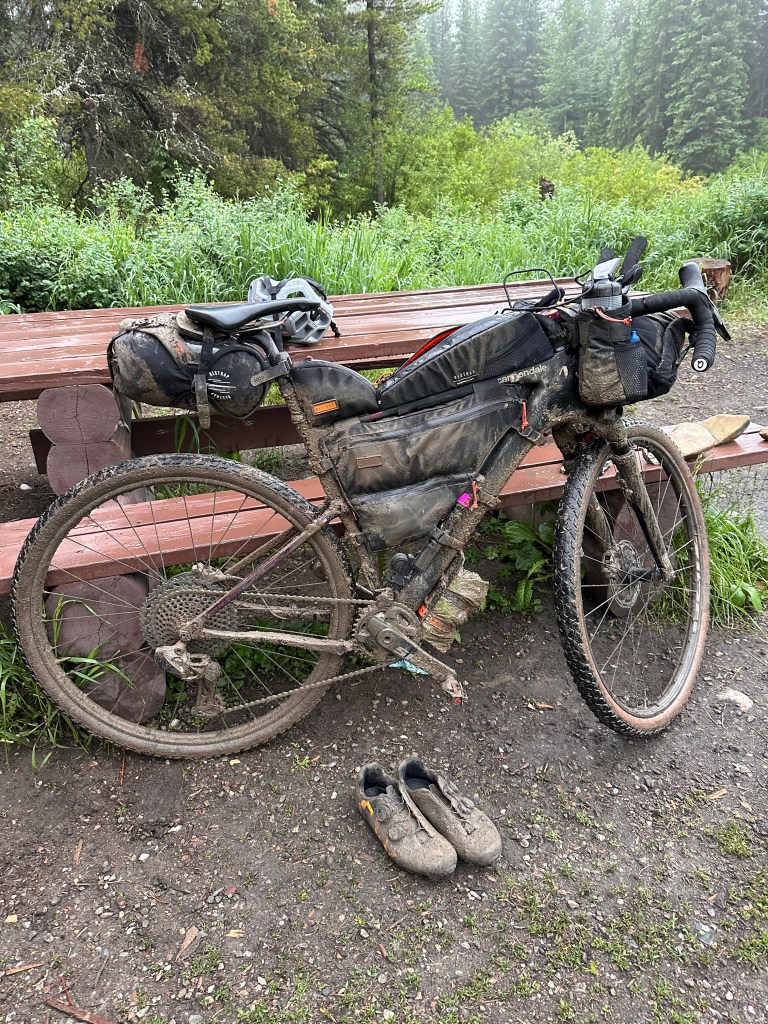
I figured I’d be scruffy enough by the end [laughs]. And in hindsight, I do wish I’d left a bit of beard on there because of the bugs. Every time I had a mechanical—which happened a few times—I was just swarmed. I lost a lot of blood to mosquitoes, let’s put it that way.

cyclespeak
Inspired by your Tour Divide video diaries, I’ve gleaned a few topics of conversation. The first being bears and other animal activity. Any close calls?

Alex
Luckily none for me but some people saw a number of bears.

cyclespeak
Lael Wilcox encountered a mountain lion during a past Tour Divide attempt.

Alex
Mountain lions are certainly a feature of that neck of the woods. But it’s the grizzlies up north that scare me [laughs].


cyclespeak
You also had some problems with your wheels? [Alex fashioned a replacement wheel spoke from a piece of rope]

Alex
That was unfortunate. I thought I’d done my homework but I think I’d underestimated how much weight I was carrying. And then you’re tired and smashing into stuff in the dark. So making spokes out of rope was definitely a first for me. It took some thinking to get that done.

cyclespeak
It looked like a fascinating fix.

Alex
It’s a good example of what you can figure out when you have time and no other options. I was pretty shit out of luck so just took everything I had and spread it out on the ground.

cyclespeak
Kitwise, you seemed pretty impressed with your Velocio raincoat?

Alex
Oh man. That thing’s insane. It was so good having that big pocket on the front so I could fully kangaroo stuff. I’d even told Ted King—we’re both sponsored by Velocio—that he should get one. With the hood, you can get fully sealed up in there and he messaged me after I’d finished to let me know that he was equally impressed with how it performed.

cyclespeak
The weather wasn’t kind?

Alex
Some years it’s off-on with the rain but this time, that first week was grim.

cyclespeak
It did look pretty gnarly—wet and windy.

Alex
The only complaint about that jacket was the side zip. For whatever reason I’d lost a bunch of strength in my left hand. It’s slowly coming back—don’t worry, I’m seeing somebody [laughs]—but it was difficult to work that zip. So user error rather than any fault in the jacket.

cyclespeak
What was your record for the number of coffees in a single day?

Alex
Funnily enough Divide was a bit of a detox in terms of caffeine. A lot of that is just logistical. You’re way out there with only so many places you can get one. Some riders like to carry one of those canned coffees which they’ll drink at 9:00pm before riding into the night. I’d drink it first thing in the morning to try and maintain some sanity.

cyclespeak
Do you lose weight riding a race like the Tour Divide?

Alex
I think I’m the only person that didn’t [laughs].

cyclespeak
Really?

Alex
I’ve got a pretty strong stomach. Probably a good thing because my general plan was to just eat everything. So my weight didn’t change but maybe my body composition did? I gained a little in my upper body from muscling around a 50 lb bike.


cyclespeak
Is there any public bathroom etiquette for washing, sleeping, shelter?

Alex
After the first couple of days, people are pretty spread out. But saying that, the toilets are kind of a hot commodity. One reason being they’re free, there’s a nice flat surface to sleep on and minimal bugs inside. And up in grizzly country you can lock the door. But honestly, I was trying to get a hotel whenever it made sense. So it probably broke down to roughly 50:50.

cyclespeak
The benefits of a hot shower and a bed to sleep in?

Alex
I wasn’t consciously thinking of hygiene as a performance boost but you soon come to the realisation that if you don’t take care of yourself, you can’t sit down [laughs]. My butt hurt way more if I slept in a bivvy bag and especially during that first week when everything was soaking wet.

cyclespeak
Was staying dry an almost impossible task?

Alex
I’d packed two pairs of bib shorts but they’d both be wet. So you just need somewhere to get properly dry. And a hotel is really the only option.

cyclespeak
That makes sense.

Alex
Not that it’s a plan that always works out. Because my bibs had those utility pockets on each side and what I’d forgotten was the foil wrapper that I’d stuffed inside. So I was in a hotel and decided to dry them out in a microwave.

cyclespeak
What could possibly go wrong [laughs]?

Alex
Well, they caught fire and I burnt a hole in the bibs. Which really bummed me out because they had the most amazing chamois. But anyways, I still wore them for the rest of the race.

cyclespeak
In terms of other equipment, did you take the right bike?

Alex
Definitely the right bike but there were a few times when slightly bigger tyres would have helped.

cyclespeak
What size were you running?

Alex
45 mm and pretty rugged. They rolled nice and quick on the faster stuff. So it was only when the surface got a little broken up that I wanted anything wider.


cyclespeak
You rode flared gravel bars?

Alex
There was no way I could ride the Divide with a flat bar.

cyclespeak
Not enough hand positions?

Alex
It breaks up the day when you can switch between the hoods and the drops.

cyclespeak
Which I guess is important as you rode 2692.9 challenging miles over 19 days, 14 hours and 46 minutes. What were your emotions on completing this awesome achievement?

Alex
The finish for Divide is kind of anticlimactic—just a wire mesh fence on the Mexico border. But I got lucky because an old friend and his wife have a house down in Silver City and it just so happened that they were staying there at that time. So he picked me up and gave me some clean clothes. The alternative is you arrive in Antelope Wells, on your own, most probably in the middle of the night. It’s definitely not like finishing the Tour de France on the Champs-Élysées. 

cyclespeak
Now you’ve had time to process your experience racing the Tour Divide, is it something you can see yourself doing again?

Alex
Honestly, I don’t know. Firstly I’ve got to see how this left hand comes back. I’m kind of attached to it and the Tour Divide doesn’t mean enough to me to risk permanent damage.

cyclespeak
And you completed it, so it’s not exactly unfinished business.

Alex
And I’m so happy that I decided to ride it. Most people that attempt it, for whatever reason they have this idea of finishing in 20 days. And if you think about it, that’s like trying to ride Lachlan’s Alt Tour in the same amount of time…

cyclespeak
But on way more challenging surfaces and with the possibility of bumping into a grizzly bear [smiles]…

Alex
And there’s also the sleep aspect. I kept relatively well rested and I’m fortunate to have this off switch that certainly helps. When our little one was born, we pulled an all-nighter and then the next night only got three hours of sleep because we were still in the hospital. So when we got home, the baby’s right there in the bassinet and my poor wife is up and down all night feeding her. And me—no eye mask or ear plugs—I’m dead to the world.

cyclespeak
Have you any idea how irritating that is for the person that’s up [laughs]?

Alex
I thought she was going to kill me.

cyclespeak
Even so, that’s a pretty special skill. And useful on ultra-distance events?

Alex
It is. Assuming you don’t sleep through your alarms like I was doing on Divide [laughs].

cyclespeak
So what gets you up and out of bed with a spring in your step now that Tour Divide is done and dusted?

Alex
Right now, I’m having fun getting back to racing. Divide was—not so much a vacation—but a bit of a detour. I wanted to do it, I did it and I had fun with it. Now it’s a case of seeing whether it broke the motor. Maybe I’m more diesel now? So to answer that question, I’ll be cruising around with the family to a bunch of gravel races I’ve got lined up to finish out the season. With a three year old in tow [laughs]. That’s not scary at all, right?

Thanks to Alex Howes

Feature photography by Chris Milliman with kind permission of Velocio

Second ‘family album’ image by Gretchen Powers

Amity Rockwell / Other things too

“How can I put this? I love bikes and I love what I do. But I also love a lot of other things too.”

Bursting onto the gravel scene with her 2019 win at Unbound, Amity Rockwell quit her barista job and turned professional. And now, as she prepares for another season of racing, Amity reflects on her journey so far: from first running to then riding, how she strives to balance a life lived under public scrutiny, and her take on gravel’s ongoing search for identity. A freewheeling conversation that takes in everything from Amity’s own coffee order to the very reasons she rides.

cyclespeak
Hi Amity. Looks like you’re calling from home?

Amity 
That’s right. I’m in Lake Tahoe right now. Up in the mountains so we have plenty of snow. I live at 6,500 ft and most of the peaks are pushing 8,000 ft around here.

cyclespeak
I saw a post by Pete Stetina who lives near you and he was checking for bears before he let his dogs out.

Amity
There’s a few of us gravel racers that live up here. It’s like a Californian altitude retreat and we’re quite a crew. And we do have bears but they’re not dangerous. No one gets attacked—they just want your food. You’re actually excited when you spot one.

cyclespeak
It’s morning for you so I guess you start the day with a coffee?

Amity
I’ve already had my coffee and now moved onto tea. It’s so cold up here that I need a warm beverage at all times. But I am a big coffee person—that was my job before bikes became my sole professional focus.

cyclespeak
So how do you make your coffee at home?

Amity
I just make myself a pour-over. Nice and simple.

cyclespeak
And if you were ordering at a café?

Amity
Drip.

cyclespeak
Not an espresso based drink?

Amity
Just a mug of whatever batch brew they’re serving. That’s the best way to judge a place. If the drip’s not good then forget it. It’s the core of any coffee operation.

cyclespeak
That’s a good tip. And while we’re talking about your recommendations, what’s your take on ride snacks?

Amity
I usually carry sandwiches made with the bread that I bake. So a nice peanut butter and marmalade.

cyclespeak
Interesting. Marmalade rather than jelly?

Amity
I make a lot of marmalade [laughs].

cyclespeak
Smooth or rough cut?

Amity
Rough. And it’s probably very non-traditional but I’ve given some to my British friends and they approved.

cyclespeak
Your name, Amity, sounds a little unfamiliar to my English ear. Is it typically North American?

Amity
I’ve never actually met another Amity [laughs]. My Mom is a total hippy and I think she just wanted me to have an original name. And she came across it because of her friend’s dog.

cyclespeak
So you’re named after your Mum’s friend’s dog?

Amity
I guess so. In a weird way. And it means friendship and goodwill which is kind of nice. But that’s also why it’s used ironically in a lot of horror movies and it’s also the town in Jaws.

cyclespeak
That’s right. It is.

[Amity laughing]


cyclespeak
I was intrigued by how much care you took arranging the sliced pieces of avocado in the Old Pueblo film for Wahoo. Does that reflect your personality?

Amity 
I’m sure it does. And I wasn’t doing it consciously. I’ve done it like that for as long as I can remember—way before I posted about it on Instagram. And when I did put up a video, it got way more views than any of my cycling related content [laughs].

cyclespeak
You mentioned your love of baking and we know you slice avocado very proficiently. Any other hidden talents?

Amity
Oh, gosh.

[pause while Amity is thinking]

I do tend to irritate a good deal of my friends because, everything I do, I’m usually very good at. And I don’t mean to sound full of myself. I just don’t have any time or energy to do things poorly. So if I get into something, I have zero chill about it. I won’t accept not doing it to the highest possible level that I can manage. But I’ve always been somewhat of a perfectionist [laughs].

cyclespeak
And how do you apply this perfectionism?

Amity
In college I did a lot of printmaking and I still draw a lot. People write in a journal but I tend to draw things to help sort my brain out. And I fully can see myself returning to more artistic pursuits once I’m done with bicycles.

cyclespeak
Speaking about bikes, how are your mechanic skills?

Amity
I’m decent. Maybe a little better than most professional racers because I didn’t have a particularly easy way into the sport. When I dropped out of college I got into coffee where I was making $12 something an hour. Not the kind of money you need to access the competitive end of the bike world. So my way around that was volunteering at a community bike workshop in Berkeley. And by putting in the hours there, helping people fix their bikes, I was able to acquire the skills I needed to work on my own bikes. Which is a big expense if you can’t do it yourself. And I could also buy tubes at wholesale prices [laughs].

cyclespeak
Useful skills to have.

Amity
If you’re riding 200 miles, there’s more chance that something will go wrong and having some idea of how to fix things helps you to not panic. I had a relatively clean race when I won Unbound but the year I came back and got second, I had a lot of issues but managed to keep moving. My shifting totally failed at mile 120 but I was able to fix it.

cyclespeak
It was your win at the 2019 Unbound that meant you could quit your barista job and turn professional. Is there anything you miss from those days?

Amity
Oh, absolutely. I miss having a set number of hours a day that I’m at work and then you’re done and you come home. You’re at peace and you can do whatever you want. There’s nothing to think about until you show up for work the next day. More and more – as I manage my own stuff and push my racing career – that’s what I dream about. The luxury of only doing something for a set number of hours per day and then having leisure time. But that’s always going to be the struggle when you turn a hobby into your job.

cyclespeak
Pete Stetina – who we’ve already mentioned – told me how he regularly puts in 50 hour weeks managing all his training, logistics and social media commitments. Does this sound familiar?

Amity
I don’t want to say that I’m not dedicated but I keep all the extra stuff to a minimum. I don’t have my own podcast and I don’t have some super organised approach to social media. So there’s not a huge amount of side projects alongside my racing. Stuff comes up, naturally, but I see those World Tour guys being so applied [laughs].

cyclespeak
I guess we all have varying degrees of focus?

Amity
How can I put this? I love bikes and I love what I do. But I also love a lot of other things too. Yes, I train and ride a lot but I try not to let that totally consume me.

cyclespeak
Is it fair to say you have a different relationship with the bike since turning professional?

Amity
100%. In some ways, it now feels like a job. Before it was my career, I made an explicit point of never riding if I truly didn’t want to. Because I knew it would result in me seeing riding in a negative light. And choosing to not ride would mean I’d want to ride twice as bad the next day and probably go twice as far.


cyclespeak
That makes sense.

Amity
I came to cycling after burning out pretty badly as a runner. My attitude then was you go out no matter what. It wasn’t even my job but that was the mentality I had at that time. But that meant I had to quit running completely which is why I now ride a bike.

cyclespeak
And listen to your body?

Amity
I do. But there’s also times when you don’t want to go out and then after a few minutes you’re loving it. And I have this superstition that it’s those days when I get to see the craziest sunset or PR a climb.

cyclespeak
Sometimes it can be a case of just getting out of the door?

Amity
It is! That’s the most infuriating thing about cycling—that it takes so long to kit up. You need to apply your sunscreen, lube your chain, pump up your tyres, make sure everything is charged. And if it’s cold there’s base layers, jackets and overshoes. Whereas with running, you just need a few moments of intention and you’re out there. With cycling, you have 30 minutes to come up with every excuse why you shouldn’t ride [laughs].

cyclespeak
There’s maybe the odd occasion but it’s rare that I regret a ride.

Amity
Living up here in Lake Tahoe, there are fewer barriers to getting outside. Literally across the road from me is one of the best climbs in California. I don’t need to put the bike in the car or slog through miles of suburbs. When I was living in San Francisco, you’ve got to carry your bike down however many steps and there’s way more traffic. Which is why riding with friends is so important. If you’ve made plans the day before, you don’t let them down.

cyclespeak
Looking back at that Unbound win, the start is quite frenetic with everyone jostling for position. Is it possible to prepare yourself specifically for this particular event? And what part does good fortune play in determining your result?

Amity
I don’t want to come off like a complete asshole but Unbound is not the hardest race that I’ve done. For me personally, I come from the Bay area where long hard rides are a thing and the dirt is pretty gnarly. I didn’t realise until after the fact but I’d done harder races before I rode my first Unbound.

cyclespeak
But it’s talked of with such reverence?

Amity
It’s insane and I do think that winning it was down to a combination of everything going well. Mentally, physically, mechanically, tactically. So, yes, it is a hard race to do well at but I also believe that it’s an achievable goal for most cyclists if they manage to fuel their ride.

cyclespeak
What got you to the start line?

Amity
It was Yuri Hauswald  – who lived not far from me – winning in 2015 that sent ripples through my neighbourhood when he took the top spot. That first made me think that if I worked really hard, then maybe in five years or so I could try racing the event. Meanwhile I’m going to these Grasshoppers which are a local gravel series. And there was one – I’m not even sure if it exists anymore – that was 80 or 90 miles of pavement with 9,000 ft of climbing followed by 20 miles of single track best suited to a full-suspension mountain bike. But you’re on a gravel bike which isn’t really suitable for either section and it’s 100°F in the shade. And that’s what I think about when anyone asks what’s the hardest event I’ve ever raced. There are lots of things about Unbound that make it unique but it’s nice to have that Grasshopper in my back pocket. And it took nearly three years of doing fast, hectic race starts for me to be really comfortable in those situations. But once you deal with the nerves, it’s kind of a gift in a way. Because the first two hours go by and you’ve done almost 50 miles and you’ve had a bunch of help and barely pedalled.

cyclespeak
I believe there are some changes for this year’s Unbound?

Amity
It’s going to be a lot different because they’re separating the elite field from everyone else. And I honestly don’t have a strong opinion either way. A few years ago gravel was so small that it was really important for women to be a part of the main field. And it’s kind of cool that riders like me can just come out of relatively nowhere and do well. So perhaps there’s an argument that there are people just outside of the elite field who could legitimately win.

cyclespeak
And a counter viewpoint?

Amity
On the flip side, possibly there are questions of safety. The more there is on the table, the dumber some people will behave—myself included [laughs]. So maybe it kind of encourages this sense of recklessness. But that’s what’s nice about having a bunch of different race organisers. Everybody can make their own decisions on what kind of race they want to run. Some things are going to stick and some aren’t—there’s not one answer to how you should run a gravel race. I’ve been doing Crusher in the Tushar for years and they’ve always separated the men and women’s starts. But it’s worked because you very quickly reach this two hour climb which sorts things out. But Kansas? It’s a total rush to start with this huge field all wanting the same position. Personally I love that—it’s part of racing. Nobody enters a crit and complains about elbows. It is what it is.

cyclespeak
Riding 200 miles on gravel must give you lots of time to think. Or are you totally focused on your placing, nutrition, listening out for leaking sealant?

Amity
Oh God no. I’m all over the place. Usually I’m playing music in my head—the same three song lines on repeat. You can’t focus for 12 hours and I think the ability to let your brain do whatever it wants is a key aspect of being a successful endurance athlete. Generally, we’re pretty good at entertaining ourselves for hours on end [laughs].

cyclespeak
I guess sponsor partnerships are a vital element of racing professionally and you very recently announced a new relationship with Pas Normal Studios. Have you managed to dry out after that weekend of riding over in the San Francisco Bay area?

Amity
Only just [laughs].

cyclespeak
It looked really wet.

Amity
So wet that it was kind of funny. After a certain point, everything is so bad that you have to take a step back and look at it from a different perspective. And all it takes is two other people saying let’s do this and you’re out there.

cyclespeak
Do you ever train indoors?

Amity
It works great for some people but I’m not mentally strong enough for Zwift. The main reason I ride a bike is to spend time outside. So if the weather is particularly awful and I really don’t want to ride, then I’ll find something else to do. And I tend to do well at races in really terrible conditions which is probably because I will ride my bike in pretty much anything. Even up here when there’s 10 ft of snow either side of the road, if it’s over 40°F and not too icy then I’ll ride. Anything beats staying indoors and getting even more screen time than I already do.


cyclespeak
Your Instagram feed beautifully documents the strong friendships you’ve forged with other riders and industry professionals. You’re wearing Dominique Power’s sweater in her Camelbak shots of you—much to her sister’s amusement. Are these relationships incredibly important?

Amity
I guess that’s the short answer to why I’m doing what I’m doing. Like I said, previous to bikes I was a runner and that’s a very solitary pursuit. But I was fine with being a loner—I’ve always had the kind of personality that doesn’t need to be constantly socialising.

cyclespeak
But now that you ride bikes?

Amity
Cycling has been this crazy way to enjoy really strong female friendships that I never experienced growing up or at college. Super important but in an ironic way we’re all such good friends because we’re the type of people not to have a lot of close friends. Biking is this weird kind of enabler for all of us.

cyclespeak
So would you say the bike helps balance your life?

Amity
I think there was probably a time when that was the case but it can also work in the opposite direction.

cyclespeak
Interesting.

Amity
I do meet a lot of professional cyclists that let their life revolve around the bike. Which, in turn, means they’re incredibly good at what they do. But I don’t think I’d be successful as a traditional pro. Despite being pretty strong, I would never have made it in the road scene. I don’t have that single mindedness and I never will. So it’s such a blessing that we now have this weird discipline called gravel where you can still be very, very good without being 100% focused all the time.

cyclespeak
You’re known for standing up for beliefs and causes you feel are important. And you also reference on your Substack newsletter how difficult 2022 was. So I was wondering whether your public platform proves a challenge, a privilege or a mix of sometimes conflicting thoughts and emotions?

Amity
I suppose it’s fair to question why you should bother having such a public existence if you’re not going to use it for some purpose. And I do think there’s an obligation once you reach a certain level in the sport to shape it how you believe it should look moving forward. But do I enjoy it? I really don’t know.

[pause as Amity gathers her thoughts]

Amity
Attention is great. I love when I meet someone out on the trails and they know who I am. That’s always going to feel good. But I’m also envious of my friends who can be whoever they want to be on Instagram or decide not to post anything at all for six months. And when something happens, there’s no expectation that they should say anything about it.

cyclespeak
But you need to maintain a social media presence?

Amity
And I honestly don’t think it comes naturally to me. The one thing I have figured out is that it’s best not to think about it too much [laughs]. And I have a few rules such as not posting anything if I’m not 100% sure about what I’m saying. And I’ll also stick to my guns about certain issues which I think resonates with some people.

cyclespeak
I think they respect the fact that when you say something, it is you saying it.

Amity
That’s got me in hot water before.

[cyclespeak laughs]

Amity
There was some discourse – maybe about two years ago – about making all these rules in gravel. And I got so mad that I sat down and just cranked out this piece about the spirit of gravel. I have connections at VeloNews – mostly my friend Betsy Welch – and she immediately published it. Shortly after I had this major sponsor reach out to say they loved how I was out there, talking about stuff, but could I just give them a heads-up next time [laughs].

cyclespeak
We live and learn.

Amity
That’s the funny thing with sponsorship. I’m unapologetically myself – quite scrappy and totally self-sufficient – but then you get bigger brands coming in and wanting to support you but also wanting to have some amount of ownership over your brand and what you say and do.

cyclespeak
That sounds like it takes some navigating?

Amity
Trust is needed from both parties and that’s something I don’t always find easy. I can be quite stubborn and I do like to say what’s on my mind. So some relationships work and some don’t but for the most part it’s been good.

cyclespeak
I guess life isn’t all plain sailing [smiles].

Amity
It wasn’t any different in coffee. I’m sure all my employers back then found me occasionally difficult [laughs].


cyclespeak
Speaking of difficulties, I listen to a lot of different podcasts that reference the growing pains of the North American gravel scene.

Amity
It’s like adolescence with gravel trying to figure out its core sense of identity.

cyclespeak
You must have noticed some changes over the past few years?

Amity
In 2016 I was racing road because back then, you couldn’t make a living in gravel. I’d show up to try and accumulate some points but they’d say the race didn’t qualify because the women’s field was so small. So gravel was this revelation because I wasn’t pigeonholed. We showed up, riding whatever bike we had and we all raced together. And the contrast between those two extremes was so insane to me. It’s done more for women’s equality in cycling than anything else I can think of.

cyclespeak
Sharing the same roll out for example?

Amity
What gravel has done is give us this space to outwardly demonstrate how strongly women can race. Which perhaps is why you see more equality in sponsorship, prize money and coverage when compared to road racing.

cyclespeak
What does your season look like in terms of racing? Will we see a return to Unbound?

Amity
I love Unbound and see that as an absolute key aspect of my success there. A lot of people don’t seem to enjoy it and maybe it’s something they feel they have to do? It’s not for everybody and that’s absolutely fine. Personally, I feel it’s a fantastic event. The energy is insane and the course is a perfect distance for me. Enough time for everything to fall apart and be put back together again. And succeeding in something difficult and challenging is what keeps me out on the bike all year.

cyclespeak
What else is planned?

Amity
I’ve got a 24 hour cross-country race. And I’m thinking how cool it would be to set a FKT* but you can imagine how much can happen in 24 hours [laughs]. Maybe I can only ride for 13 hours because that’s the longest I’ve ever ridden. And I’m also finally getting out to Kenya for the Migration Race. Never been to Africa, never raced in those conditions. Literally no clue what that’s going to be like [laughs].

*Fastest Known Time

cyclespeak
Sounds super exciting.

Amity
It’s half events that I know and love. And the other half? Who knows what will happen. But I took that chance at Kansas and it led me here.

cyclespeak
Putting aside racing, what would a pretty perfect day look like?

Amity
I always say I prefer training to racing. So a perfect day would start with a good cup of coffee followed by a long, mountain bike ride. And then coming home and getting to do something creative. I really enjoy cooking and baking so something with food would be satisfying on a personal level.

cyclespeak
That sounds like a nice, peaceful day.

Amity
I sometimes make the straightforward seem a little complicated. But generally? My life is full of pretty simple things.

Amity Rockwell

Feature image with kind permission of Dominique Powers

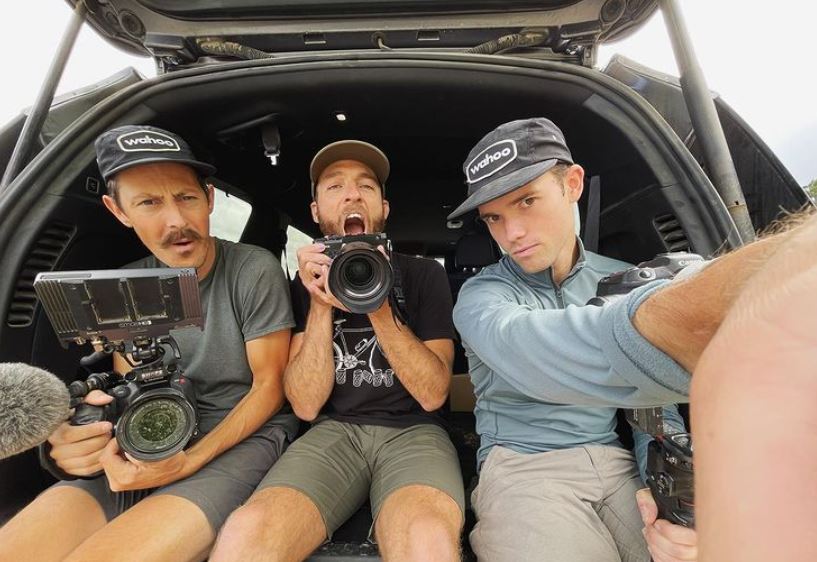
Ansel Dickey / Vermont Social

“It’s a massive refinement of small moments that the viewer ends up seeing.”

After eschewing college for a career racing bikes, Ansel Dickey [pictured far right] combined his love of photography and film in Vermont Social—the creative agency he founded that delivers beautifully realised visual media with a focus on storytelling.

Referencing his latest film for Wahoo Frontiers, Ansel discusses in detail the logistical demands and production processes that such a project entails—a freewheeling conversation that takes in barn envy, motorbike chases through Austin, Texas and telling secrets to the camera.

cyclespeak
So how are things in Vermont?

Ansel
We’re in the middle of a long mud season.

cyclespeak
I’ve heard about that. When I spoke to Ian Boswell* he was saying that winter is sort of prolonged but it’s proper snow so you can go fat biking or cross-country skiing.

[*Wahoo Frontiers athlete and winner of Unbound 2021]

Ansel
Yeah, I mean winter is actually quite enjoyable but when all the snow is gone it’s still really cold and the dirt roads – which are like 80% of all our roads –  are just gnarly and rutted.

cyclespeak
And you end up coming back with a filthy bike that needs cleaning.

Ansel
If I have to wash my bike after a ride, then I’m not going out. There’s no requirement for me to train on the bike anymore and I’ve been converted to running. It’s super time efficient so if I’m busy I can just do 20 minutes and feel like I’ve accomplished something. But lately I’ve been really missing the bike so I went out on this nice long ride yesterday. The first in five months. It’s finally dry enough and warm enough to go out.

cyclespeak
I’m right in thinking you bought a house a couple of years back?

Ansel
Yeah. My fiancée Gertrude and I found a place in West Windsor. We’d been looking for a while but couldn’t find anything and then this house popped up. So we jumped on it.


cyclespeak
Are people still working from home and wanting more space?

Ansel
The remote work environment has been picked up by a lot of companies and people are realising that compared to metropolitan areas, Vermont is still relatively cheap. People understand that their money can go a lot farther. But then they get to mud season and it’s like, fuck, I wanna go back to the city [laughs].

cyclespeak
The question is – and this is an important question – have you got a big barn like Ian?

Ansel
I wish. His barn is next level. We do have a two car garage but, unlike Gertrude, I don’t use it for my car because my side is full of bikes and crap.

cyclespeak
Speaking of possessions, I can see the neck of a cello poking out from behind the couch. Who’s the musician? 

Ansel
That’s mine but I haven’t played in a while. My Dad is a musician so I grew up playing a lot of instruments. I play more guitar now.

cyclespeak
I’ve seen pictures of you with a banjo.

Ansel
Yeah. And my dog’s name is Banjo. Unfortunately he just tore his ACL playing fetch.

cyclespeak
Is that fixable?

Ansel
It is but we still don’t know if it’s fully or partially torn. And it’s a real shame because mud season is his favourite. Especially if it’s been raining. He’s that kind of dog [laughs]. 

cyclespeak
When Banjo was a puppy you were still racing bikes professionally. Can you talk me through your transition to content creator?

Ansel
Bikes were always a big part of my life. I started racing when I was 15 or 16, slowly improved and got on the national team. And then right out of high school I signed my first professional contract. So that helped me decide that I didn’t really want to go to college and I’d rather go off racing. I travelled loads and met a lot of great people. But even though I did the Tour of China and raced in Azerbaijan, I never really made it to Ian’s level—never made it to where it was totally justifiable with me making a huge living.

cyclespeak
So what changed?

Ansel
I had a teammate called Sam Rosenholtz who was also a portrait photographer. We went to a training camp in Spain and I remember watching him carry around his camera and take photographs. I was, okay, cameras are cool and I want to play with them too. So I started just doing it for fun—taking my camera to races when I was travelling.


cyclespeak
And from there?

Ansel
At the same time I had already started Vermont Social but as a social media marketing company. I was basically helping small business clients like a bike shop in New Hampshire or a beer store in Vermont—running their social media for them while I was abroad racing.

cyclespeak
And the photography?

Ansel
It was the realisation that a lot of these same social media clients also needed photographic services and that eventually evolved into video. And because I was becoming more invested in getting better at film and photography than getting better at racing my bike, I knew it was time to quit.

cyclespeak
Was that a head or a heart shift?

Ansel
I think the heart took a lot longer than the head. Analytically, I knew how hard I’d worked at my racing but did I want to waste another five or ten years doing the same races and getting the same results? Or did I want to pivot?

cyclespeak
How long did it take for riding your bike to not feel like training?

Ansel
Oh man, I think it’s still an issue. Being an athlete at that level, you’re tortured because of this desire to do well. But I also think that anything in my life, when I enjoy it, I enjoy the feeling of getting better. I think that’s why I got into running because I’m not that good at it yet and I can see the progression. When I get on my bike, I’m just reminded of how good I used to be. So it’s tough [laughs].

cyclespeak
Why the name Vermont Social?

Ansel
I like the way it sounded. Like, pretty cool.

cyclespeak
And the brand logo comes from your love of fishing? 

Ansel
Yeah. I grew up on Cape Cod in Massachusetts where I fell in love with fly fishing. I’ve always liked companies that had a mascot, so I was like, why not just make it a fish? And because I like an organic approach to things, the only native fish to Vermont is the Brook Trout.

cyclespeak
And that all came together and just felt right?

Ansel
I always thought that with branding and design, things need to look good as a base but beyond that, your brand is really created by the interactions you have with your customers. And like the layers on an onion, it takes years and years to build.


cyclespeak
Your latest film for Wahoo Frontiers – 24 Hours in Old Pueblo – is 11 minutes and some seconds of brilliance. Beautifully filmed and depicting these four young women, out racing in the desert and having fun. Can you describe the processes you follow in a project such as this? From conception through to delivery, and how do you use the event to tell a story?

Ansel
As you probably know, Wahoo Fitness is a big client of ours and a lot of the original ideas come from them. Once the idea is on the table, then it’s my job to do the research and come up with what the story is. With this film, the idea centres around community and camaraderie.

cyclespeak
So you have your story. What’s next?

Ansel
Pre-production involves researching the athletes—who they are, their past results and a little of their character. And then there’s the event. How long has it been running? What’s the format?

cyclespeak
So for this film?

Ansel
The women are four individuals – really good in their own right – so it’s cool to see them come together to form this team in a fun and funky event.

cyclespeak
And the logistics?

Ansel
We knew the event was way out in the desert. Everyone calls it the Burning Man of bike festivals which I would say is super accurate [laughs].

cyclespeak
Which means you were camping?

Ansel
We set to work making a list of everything we’d need to take with us and decided to rent a sprinter van so we could camp out with the girls and charge our equipment. It was myself and Josh Bernales—another DP who’s just moved to Colorado but used to live in Vermont.


cyclespeak
What about the actual filming?

Ansel
The pre-production plan has all the story ideas and interview questions. The production plan is, okay, we’ll do sunset shooting here, interviews over there and we’ll film the race in this way. Beyond that, you’re on the fly. Documenting things as they unfold and constantly looking for opportunities to tell the story that’s always in the back of your mind. 

cyclespeak
Is that story influenced by what’s happening on the ground?

Ansel
It totally evolves and you just have to be okay with that because we don’t want to put words in their mouths. So you have to be ready to change direction, ask another question or reshoot something in a way that helps explain where it’s going. And it’s also important to have fun. We were camping in the desert so you’re hanging out with the girls and cooking with them. You’ve got to build a rapport before you expect to get good stuff on film.

cyclespeak
I can see how it would be fun but it also sounds a little intense?

Ansel
You shoot all day, dump cards at night. Then go to sleep – or not in this film’s case – and begin all over again the next day. And then you go home and start the editing process and, honestly, that’s where the story really comes alive. You have an idea of what you shot but you really don’t know what it’s going to turn into until you get it onto the timeline.

cyclespeak
As I already mentioned, the film runs to just over 11 minutes. But how much footage did you have available to edit down?

Ansel
I don’t know the exact length but it was 4 to 5 terabytes. And that’s pretty typical for a project such as this. Basically, if you’re there, shoot it. Because you’ll get into the edit and wish you had it. It’s a massive refinement of small moments that the viewer ends up seeing.

cyclespeak
A semi-serious question but who had the tidier camp?

Ansel
We managed to keep the inside of our van pretty organised but outside was just trashed. There’s so much going on and we didn’t have a producer on set organising our stuff. We’re helping the girls cook, bringing them a jacket when they’re cold, helping fix their bikes—and all the time trying to film. So cleaning was the last thing on anyone’s mind and it showed at the end. If you wanted to eat something, you would just pick up a dirty bowl, brush it out and find some food to put in it [laughs].


cyclespeak
Moving on to other projects, when Ian shared his secret to the camera in your film documenting the 2021 Unbound, I welled up myself*. How do you balance the need to film what’s happening without being too intrusive? But also building these relationships that allow the subjects to share their thoughts and feelings so freely?

[*In the final scene of the film, Ian let slip that his wife Gretchen was expecting their first child]

Ansel
Unbound was super cool because Ian won. And he’s a really good friend so it’s really easy to work with him. Beyond that, we try to approach these stories and the humans behind them with respect and humility. You can’t just barge in—you need to wait for them to be comfortable opening up. And it’s also about getting the best out of them as opposed to putting words in their mouths.

cyclespeak
I do feel that your films go beyond purely documenting. And I’m guessing the athletes that you feature trust that you’ll take what they do and say and treat this with respect. And I was wondering, now that you’ve been working with Education First, whether there are any challenges particular to the World Tour?

Ansel
There sure are [laughs]. The fact that everything is orchestrated and organised around the athletes means you’re a fly on the wall watching things unfold. You’re basically like paparazzi following them around—spraying and praying and documenting that way. But it’s also really cool because I always wanted to go to the World Tour as a bike racer and now I’ve finally made it as a filmmaker which is kind of cool. 

cyclespeak
You posted a really nice photograph of you and the team taken by Jered Gruber. Do you enjoy collaborating with other professionals?

Ansel
Having two cameras, another person flying the drone and someone doing audio—it all adds up to make a much better experience for the viewer. Everyone’s devotion to the craft really comes into play and most of these projects simply aren’t possible without teamwork.

cyclespeak
What are your thoughts on social media? Because that’s where Vermont Social started.

Ansel
I’m personally and professionally thrilled that I don’t have to manage other people’s social media anymore. That was a 2-3 year period when we did it as a service and it made money but was just absolutely brutal. Anything you did wasn’t good enough and there was always a problem with an angry commenter or the client not being happy with what you were doing. With the film and photography stuff, you’re delivering this product and if you’ve done your job well, when they get delivery they’re like, holy crap, this is amazing [laughs].

cyclespeak
Any social media positives?

Ansel
On the flip side, it’s relatively easy to build a big audience and you can get your work out to the world really, really quickly and that accelerates everything else. So maybe it’s a two-sided coin and like I always tell people, use it as a tool because that’s what it is.


cyclespeak
Any past projects that proved particularly challenging?

Ansel
We had fun with both the Colin Strickland and Sarah Sturm Frontiers episodes. It was at the height of COVID during the early fall of 2020. No one was flying at that point but Wahoo Fitness really wanted us to do the projects. So we figured out that if we rented a commercial sprinter van, it would take our air mattresses, camera gear and mountain bikes. And then we drove from Vermont to Texas.

cyclespeak
That’s a long way.

Ansel
It was a three day drive with us sleeping in the van because we didn’t trust hotels. When we got to Austin ready to start filming with Colin, he just opened up his garage and there were all these motorcycles in a row. Both Nick [Keating] and I ride so, calm as you like, Colin throws us two sets of keys and hands over some helmets. Follow me, he says, we’re going out to dinner. So we’re bombing through downtown Austin, trying to keep up with Colin and it’s like ten minutes since we first met him. Absolutely insane [laughs].

cyclespeak
That sounds pretty cool to me.

Ansel
And then once the project was done, we drove straight to Colorado to film with Sarah Sturm—still sleeping in the van and still not showering. After spending four days camping up in the mountains with Sarah and her boyfriend, we drove all the way back home to Vermont.

cyclespeak
How long were you away from home?

Ansel
That was a month-long process of living in a commercial sprinter van that wasn’t built for camping. Just to shoot these two projects during COVID.

cyclespeak
Speaking of projects, you’ve got a big day coming up in June? I’ve been sneaking a peek at your wedding webpage and then I saw a super nice portrait of Gertrude on your Instagram feed. In the post’s comment, you describe her as strong, thoughtful, fierce, loving, caring, compassionate, sometimes impatient and always, always beautiful. And I wondered what words Gertrude would use to describe you?


Ansel
Ohh man.

[pause]

Disorganised. Impulsive probably. Serious at times. Maybe overly serious. Motivated. And throw in disorganised again [laughs].

cyclespeak
Disorganised twice [laughs]?

Ansel
Yeah. But we’re a good match. Gertrude is definitely the organised one and I’m more go-with-the-flow. Or thinking about something totally different – head in the clouds – and not interacting with what’s going on in the moment [laughs].

cyclespeak
Does your mind wander to hopes and dreams for the future?

Ansel
That’s an interesting question. Because I’ve never really been that good at setting long term goals. I’m very good at setting short term goals and working really hard to achieve them. But long term? I do know that I don’t want to grow Vermont Social into this big media conglomerate. At the moment I get to work with amazing people and tell stories that really interest me.

cyclespeak
And on a personal level?

Ansel
Long term is obviously to have a family and hopefully build our own house somewhere with a bit more land.

cyclespeak
A house with a barn?

Ansel
Yeah [laughs]. A barn is key and maybe a couple of border collies and some other animals. I think that would make for a really happy life.

Ansel Dickey / Vermont Social / Vermont Overland / Wahoo Frontiers

Feature image: Jered Gruber / All other images with kind permission of Ansel Dickey and Vermont Social

Lael Wilcox / [smiles]

Take even the most cursory glance at Lael Wilcox’s social media feed and the one constancy is her smile. Wide enough to crease the cheeks and crinkle the eyes, this ultra-distance racer and bikepacker exudes a love of riding bikes that proves infectious. To such an extent that hearing Lael enthusiastically describe her incredible exploits crossing countries and continents and you just can’t help smiling back.

But not every ride or race ends as Lael originally determined it might. And this year’s Tour Divide proved the exception to the rule in leaving tears rolling down her face as raging wildfires forced Lael to abandon her record attempt.

A few days after scratching from the Tour Divide, Lael sat down to talk about managing adversity, finding a sense of joy in the outdoors and how, ultimately, love makes every day feel special.


cyclespeak
Can I start by asking how you are? I saw images of the smoke from the Tour Divide and it didn’t look good.

Lael
I knew beforehand about the wildfires but it didn’t hit me until I was riding just how serious it would be as far as the air quality. It looked and felt like the apocalypse—the end of the world. So, yes, it was sad that I had to stop my ride. But getting into the thick of it, I realised that I simply couldn’t carry on. It was the only choice I could make.

cyclespeak
I can only imagine how difficult it was to call it a day.

Lael
More than that, it was just so depressing seeing these places ravaged by fires and the effect this is having on the communities that live there and the wildlife too.


cyclespeak
Speaking of wildlife, I believe you bumped into a mountain lion?

Lael
It was incredible. I’d always thought it was super rare to see them because they’re so hyper aware of people and other animals. And then coming up a climb, my bike lights reflected off this pair of eyes and I stopped, thinking it was a raccoon or something. But then I made out the outline of the mountain lion’s body and its tail.

cyclespeak
So quite a surprise?

Lael
It was midnight, I was already sleep-deprived and really motivated to get to this small town where I knew I could sleep in the church. So I’m thinking, oh dear, now what am I supposed to do?

cyclespeak
And what did you decide?

Lael
Not knowing how they usually behave, I weighed up whether it might attack me if I tried to get past. So I just stood still and started talking to it—trying to convey the idea that I wasn’t menacing by telling it I just wanted to get by. I could hear some other sounds which I think were its cubs and as I slowly began to move along the path, the mountain lion came out from the trees and was walking in front of me along the trail for 10 minutes or so before disappearing off into the bushes and leaving me to ride down the hill. But it didn’t end there. A little further on there was another animal on the trail in front of me and my bike light picked out this white stripe along its back. And I’m like, that’s a skunk and I’m going to get sprayed! Fortunately it darted off to one side but there’s me thinking, what next [laughs]?


cyclespeak
All this excitement after a hard day’s riding.

Lael
I finally got to the town but I didn’t know where the church was. I turned on my phone to look it up but of course there wasn’t any cell reception. Then I passed an old covered wagon – kind of a tourist town display – and I’m thinking I can always sleep in that but then I saw the church. I pushed my bike inside, it’s warm and there’s power outlets and a bathroom. What else do you need [smiles]?

cyclespeak
I’m surprised you were able to unwind enough to sleep.

Lael
After riding 170 miles that day, it was quite a night. But that’s what makes it exciting. So many unknowns and everyday is packed full of these obstacles that you quickly forget about because you’re so focused on getting where you’re going.

cyclespeak
You already hold the women’s Tour Divide record* which you set in 2015. And on this attempt you were aiming to beat the overall record set by the late Mike Hall in 2016. For such a mammoth undertaking, is mental preparation just as important as the physical?

*Lael covered the 4,418 km in 15 days, 10 hours and 59 minutes.

Lael
For me, the main thing is wrapping your head around the need to maintain a level of urgency for two weeks. Because when you get tired, are you going to have that drive to keep pushing forward? If the weather’s bad or you’re in pain – maybe you see a mountain lion [smiles] – all these different things can crack at you and potentially slow your progress.


cyclespeak
So what’s the secret to maintaining your momentum?

Lael
You just need to ride the best that you can through these moments until they pass—that’s the most important thing. In a sense, more important than speed. Speed plays into it but if you only ride 15 hours a day, realistically it doesn’t matter how fast you travel because you’re not going to have the record. It’s just not possible.

cyclespeak
Your smile – on and off the bike – is so recognisably a part of your outward persona. And I was wondering whether the positivity that you radiate is a key to your success? Because I watched your film with Rapha that shows you racing this year’s Unbound Gravel XL – 358 self-supported miles that you covered in under 27 hours – and you never looked like you weren’t having fun.

Lael
I definitely ride better and stronger if I feel good. And I feel good most of the time because I’m actually doing something I enjoy. Of course there are moments of hardship but, looking at the overall picture, even if it’s hard, even if it hurts, I’d still rather be there, trying to achieve my best result.

cyclespeak
And it’s like you said, these issues rarely last forever?

Lael
We all have negative thoughts—I’m not fast enough, strong enough, this isn’t working. But it doesn’t help you ride better. So I’ve learnt over time to just not get into that downward spiral of negativity. To find the positives in those moments until it starts to get better again.


cyclespeak
I’m guessing it helps if you’re naturally positive. A glass half-full kind of person?

Lael
I do think that’s my natural state when I’m moving outside. And I just extended that feeling to a 24 hour race and then a 2 week race. Still connecting to the same joy that comes from riding my bike.

cyclespeak
That’s an interesting choice of word: joy.

Lael
I feel that’s the greatest gift we have as humans—getting to experience places and cultures, terrain and weather. And for the most part, it’s all free. Which is why I find these wildfires so devastating because it steals that away from us.

cyclespeak
As we’re speaking about positivity, can you talk me through your decision to scratch on the Tour Divide? How you manage these situations when circumstances are beyond your control?

Lael
Scratching from this year’s Tour Divide definitely hit me hard. I felt I was doing well and even though there was a lot of smoke, it was manageable. But then it got to a point where it wasn’t. Crossing this one city of Butte in Montana, I was riding towards a massive wildfire – smoke and flames – and in that half an hour I could hear myself start to wheeze and feel my lungs labouring. At that moment, I did feel incredibly sad and started crying as I was riding my bike. Because I knew I had to stop and I just hate giving up. But as we’ve already talked about, part of this racing is overcoming barriers or challenges and sometimes it’s out of your hands.

cyclespeak
Over the past year and a bit, we’ve witnessed a wave of individuals re-engaging with the outdoors—possibly prompted by a desire to stay local and enjoy the fresh air.

Lael
I feel that’s one of the best outcomes from the pandemic. People realising that this is something they can do, that makes them feel better and helps them process the other, potentially hard aspects of their lives. And it doesn’t have to be riding the Tour Divide. It can be engaging with the outdoors in any way that’s real to them. Going just that little bit further than they’ve been before and how empowering that can feel.


cyclespeak
For me, lockdown encouraged me to ride from my doorstep and rediscover my immediate environment.

Lael
I went back to Alaska where I’m from. I’d done a project in 2017 where I cycled all the major roads—something like seven or eight thousand kilometres. Some of these routes were pretty remote and I saw animals and mountains and not a lot of people out there. But I did that alone and I’ve since thought how nice it would be to revisit this trip but make a film with my now-wife Rue. I’d told her about these places and she shoots photographs and video so that’s what we did.

cyclespeak
Your relationship with riding started out as transport. You commuted to your job at a brewery when you were 20 and it went from there. So now, after all those years and thousands of kilometres, when you see a bike leaning up against a wall, how does it speak to you on an emotional level?

Lael
I’ve never learned to drive a car and the bike is a huge upgrade in transportation from walking. Easier to carry equipment and it’s such a simple machine that you probably won’t break down. And it’s also part of our culture—you’re a kid, you learn how to ride a bike and that offers your first real taste of freedom. You can now go further, easier, faster. And that immediateness of hopping on a bike offers such a sense of liberation. I still feel that way every time I ride my bike.

cyclespeak
I can see how it can extend your horizon—allowing you to journey through the landscape because you can go that little bit further than if you were walking. Something you do on a multiple-thousands-of-kilometres scale?

Lael
But that’s just me compressing more into less time. And people should ride the way they want to. I sometimes get criticised for not taking enough time to stop and appreciate the view [smiles].


cyclespeak
I think humankind is rather too fond of passing opinions when it really doesn’t materially matter to them. But advice can be useful so I wanted to ask what you’d say to someone contemplating taking up cycling?

Lael
To ride somewhere real.

cyclespeak
Real?

Lael
Ride your errands, commute around town, ride to your friend’s house. That way you’re actually riding for a reason. And if you want to build up your distance, take a bus or a train and ride home. Because that way, the closer you get, the more familiar it feels when you’re beginning to feel a little tired.

cyclespeak
The races you take part in, by their very nature, offer plenty of thinking time in the saddle. What kind of thoughts enter your head or are you too focused on the task at hand?

Lael
I just let my mind go free and think whatever I want. My first two times riding the Tour Divide, I also rode from Alaska to the start…

cyclespeak
I love that. Because the Tour Divide at 4,418 km just isn’t long enough [laughs].

Lael
At that time, I only had a flip-phone so no music or podcasts. So I was there, alone, riding for weeks at a time—making my own decisions, being whoever I wanted to be. Since then and after racing thousands and thousands of kilometres, I like to listen to audio books. Riding through the night, you can get really engaged in a story [smiles].


cyclespeak
In the Rapha film, you mentioned that night time can be tough. Do you thrive on these aspects of adversity or does discipline and the promise of dawn light see you through?

Lael
I always look forward to the sun coming up. In the dark, it’s just harder to be alert and ride fast. You can’t see as well and that’s when you feel tired. Especially when it’s cold, there’s an instinct to just stop and sleep.

cyclespeak
Which is what the vast majority of the human race does at night time.

Lael
The strategy I use on races like the Tour Divide is that, if I feel tired, I’ll just stop and sleep for four hours and then wake up and carry on—even if it’s the middle of the night. Because regardless of when you sleep, you have to ride in the dark at some point to cover the miles.

cyclespeak
A little bit of a segue but you mentioned your now-wife Rue. You recently got married…

Lael
Yeahhh!

cyclespeak
Your wedding sounded really wonderful—I love the idea of the scooters.

Lael
I’m just happier than I’ve ever been before. I’ve always loved spending time outdoors on my bike but now I have Rue with me for the rest of my life so every day is good.


cyclespeak
The pictures you share on Instagram of you with Rue are incredibly life affirming.

Lael
Rue rides but she also shoots so we can do projects together. What a gift—it’s just amazing.

cyclespeak
Whenever I talk to bike racers or industry creatives such as photographers and filmmakers, I sometimes get a sense that they’re never satisfied. They’re always looking to go faster, to take a better photograph or try another film edit. Where do you sit in saying to yourself, ‘Job well done?’

Lael
I think if I give it my best effort – and I’ll know if I have or not – then I do have a sense of satisfaction. And with ultra-distance racing, you have a lot of time. So maybe you don’t feel great but you’re still moving so that’s your best effort at that particular moment. And then a few hours later you feel great so you pick up the pace. At the end and regardless of my finish, if I tried my hardest then I’m happy.

cyclespeak
And when things are out of your control like this year’s Tour Divide?

Lael
If something goes wrong – a mechanical or I get sick or unforeseen circumstances like the fires – then I have a reason to go back and give it another go [smiles].

cyclespeak
I mentioned how riding a bike started out purely as transport to get to work…

Lael
I was commuting and then bike touring and then ultra-distance racing—frustrated because I was working two jobs to pay for these things.


cyclespeak
I do wonder how much of that drive and determination influences your current success?

Lael
I suppose it shows that I’m doing something I really, really want. Otherwise I would’ve just given it up because I spent years doing that. Working 12 hours a day and worrying when I’d get to ride my bike. Or when I’d get to sleep [laughs].

cyclespeak
The way you ride, the distances you cover, the results you enjoy—do you feel a sense of responsibility that you’re a public face flying the flag for female participation in bike racing?

Lael
It all adds to my level of motivation. That I can race against the men and go for the overall. In other disciplines of cycling, that just isn’t possible. Women and men are competing in completely different categories but in bike packing, we all get to line up together and whoever gets to the finish first, wins. I find that super exciting and motivating because I want to be the winner and I know it’s possible. And it’s not just about pure power or speed—there are so many other aspects like recovery and efficiency that come into play. How you feel on Day 10, how you react to seeing a mountain lion [laughs].

cyclespeak
I’m guessing you also need to minimise the chance of mechanicals during the race?

Lael
The thing with ultra-distance is that everything breaks or falls apart—your bike and your body. So I want to start out with both myself and my bike in great condition because I know that by the end of it, we’ll be trashed.

cyclespeak
I suppose over time you get to know what works and what doesn’t?

Lael
My gear choices are mostly for comfort. Going into a race, I’m very aware that at some point I’ll be experiencing a lot of pain so maybe I’ll pick a larger tyre, a fork with more travel or figure out a range of hand positions. Basically, what’s going to keep me happy on the bike for the longest. You want to pack light but what do you actually need?


cyclespeak
You’re constantly on the move with your racing schedule so I wanted to ask about your concept of home?

Lael
That’s definitely Rue. Just spending time with her wherever we go—being together. We’re currently living in Tucson, Arizona, and thinking of buying a house. I’m 35 and never thought it would be something that I’d want to do but it would be a nice place to spend time in the winter.

cyclespeak
Can I ask why Tucson?

Lael
It has great winter weather and beautiful mountains. It’s pretty inexpensive and you can ride up Mount Lemmon to over 9,000 ft—from saguaro cactus to pine forest in a 20 mile ride.

cyclespeak
And it would be good to have a base for storing bikes?

Lael
I love to change them because I spend so much intense time on one bike that I want to ride something completely different. If I’ve raced my mountain bike, I want to ride road. If I’m racing road, then I want to ride a full suspension mountain bike. Swapping between them puts my brain in a different place and keeps me motivated.

cyclespeak
Looking forward, do you have a five year, five month or five day plan?

Lael
Somewhere in between? Two months is pretty good [laughs].

cyclespeak
Is that your comfort zone?

Lael
It’s enough time to puzzle things together.

cyclespeak
And the best thing about being Lael Wilcox?

Lael
I’m very fortunate that I pretty much get to do exactly what I want, every single day. And I’m so grateful for that. I wake up and if I want to go for a bike ride, I go for a bike ride. I just get to follow my dreams and I can’t believe that’s my life.

[smiles]


Feature image chosen by Rue Kaladyte

All photography by Rue Kaladyte with kind permission of Lael Wilcox

Rapha Gone Racing – Unbound Gravel XL

Lael Rides Alaska