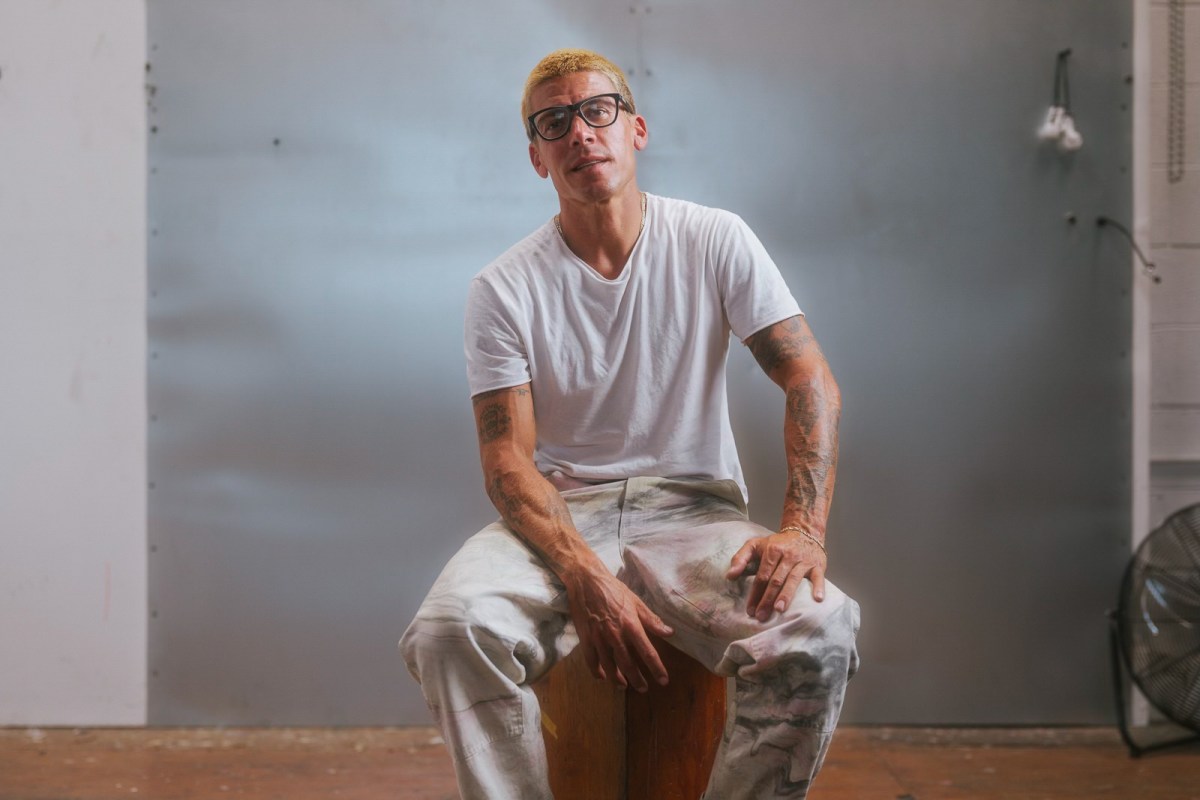
Chas Christiansen / New horizons

“Nothing is more damaging to the adventurous spirit within than a secure future.

So says the poster—sold out I might add—on Chas Christiansen’s online store.

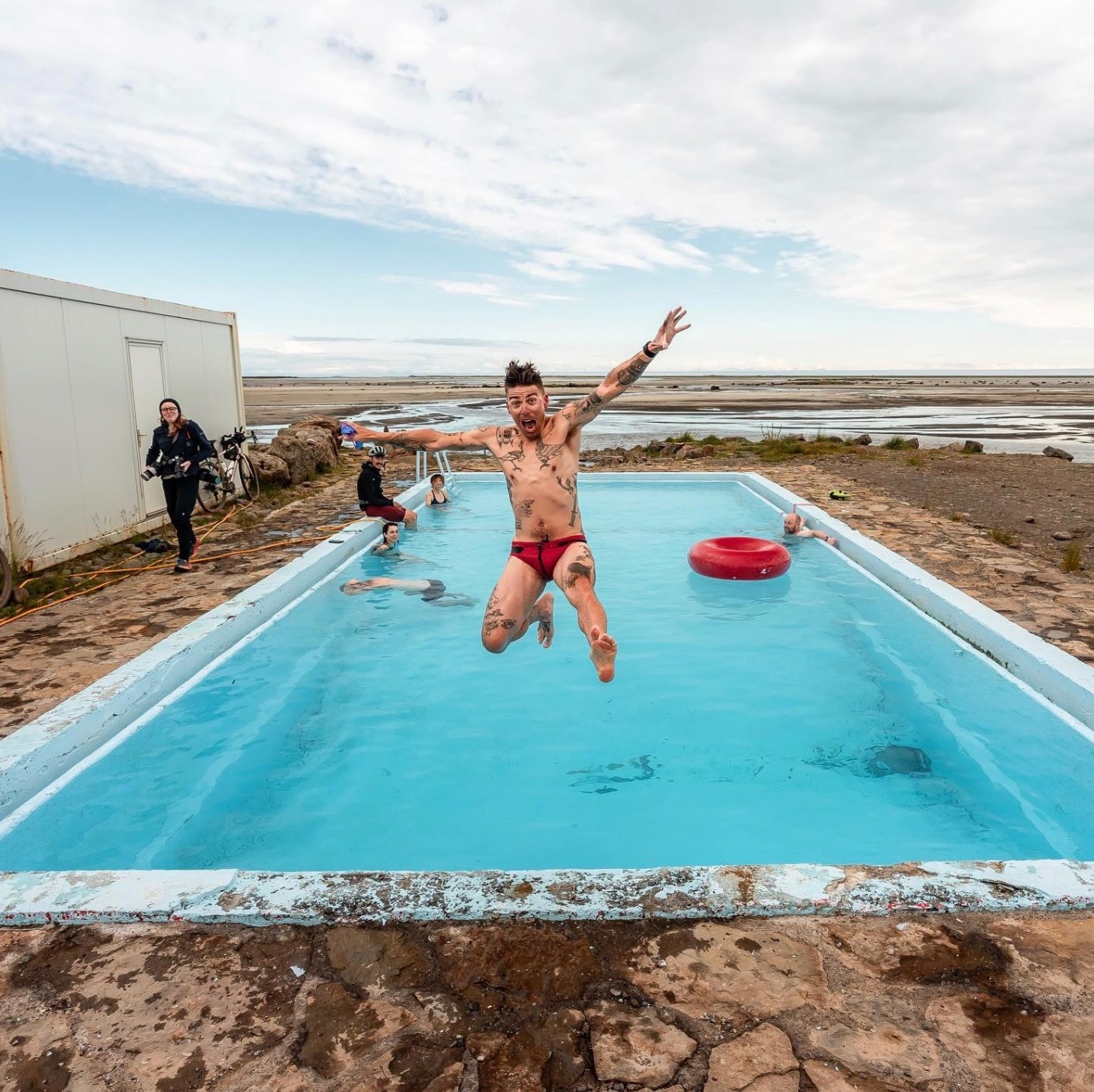
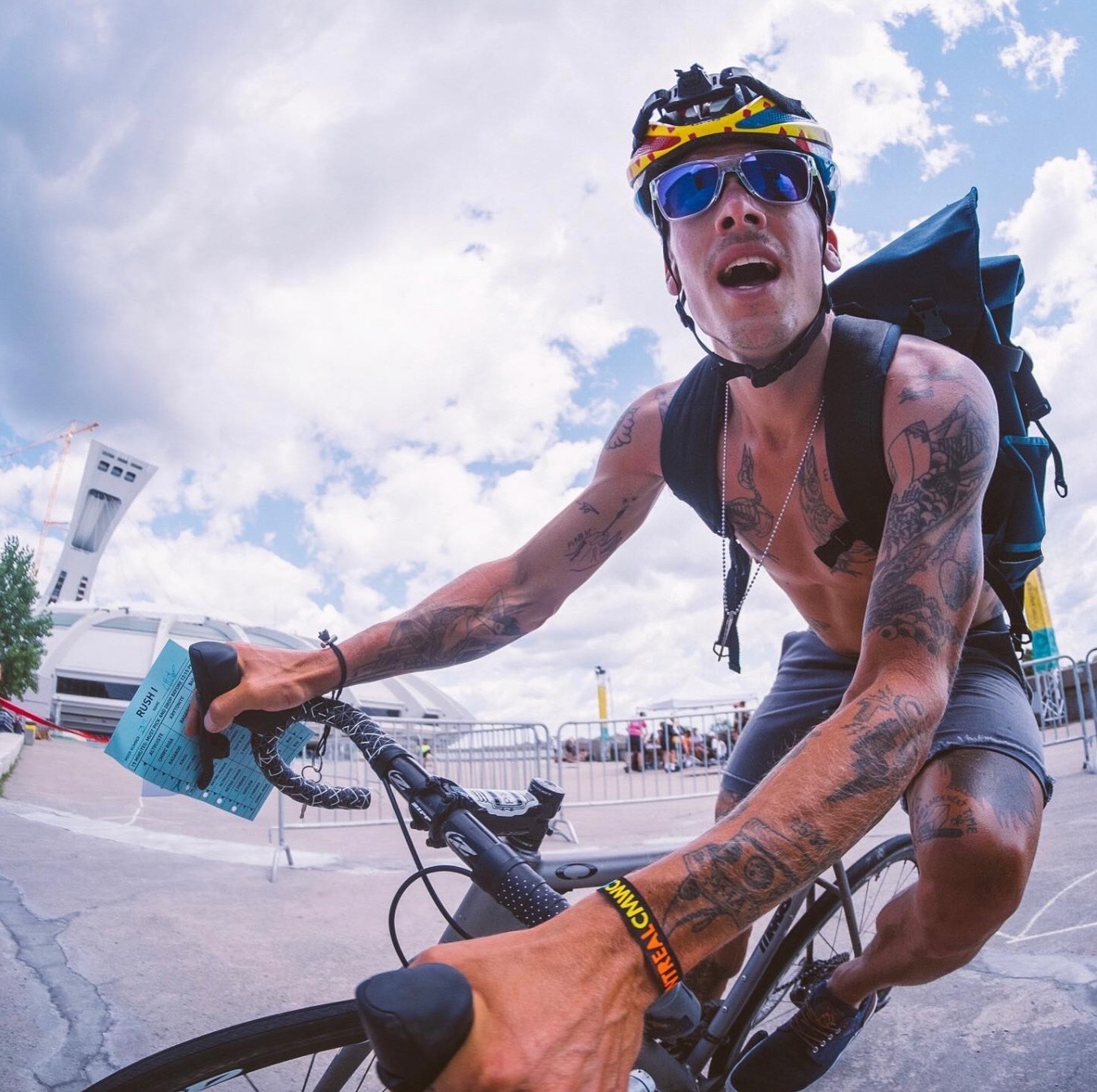
But change—whether chosen or forced upon us—inevitably brings with it a sense of uncertainty. A situation the artist, fixed gear legend and relentless optimist freely admits is a struggle as he considers the what next. Questions and contradictions he addresses in a searingly honest conversation balanced with humour and heartfelt reflection, that sees Chas offload on the what-was-then and the new directions of the now.


cyclespeak
You’re sitting outside in the sunshine. Are you at home?

Chas
I’m not. I’m at a friend of mine’s house. About an hour away from Oakland on the coast. Which is funny because it’s a place I usually ride by…

cyclespeak
But this time you stopped.

Chas
It’s good to spend some normal person time every once in a while.

cyclespeak
We’ve kind of already told the greater part of your story…

Chas
But I’m definitely going through life changes at the moment. This will be my last year riding professionally before I move in a different direction. So it seems to me like a good time to sit down, talk about it all, and reflect a little bit.

cyclespeak
Because the last time we spoke you were days away from ACL reconstruction surgery. And I was wondering which was the most challenging part of the process: the physical recovery or the mental task of managing worries and concerns?

Chas
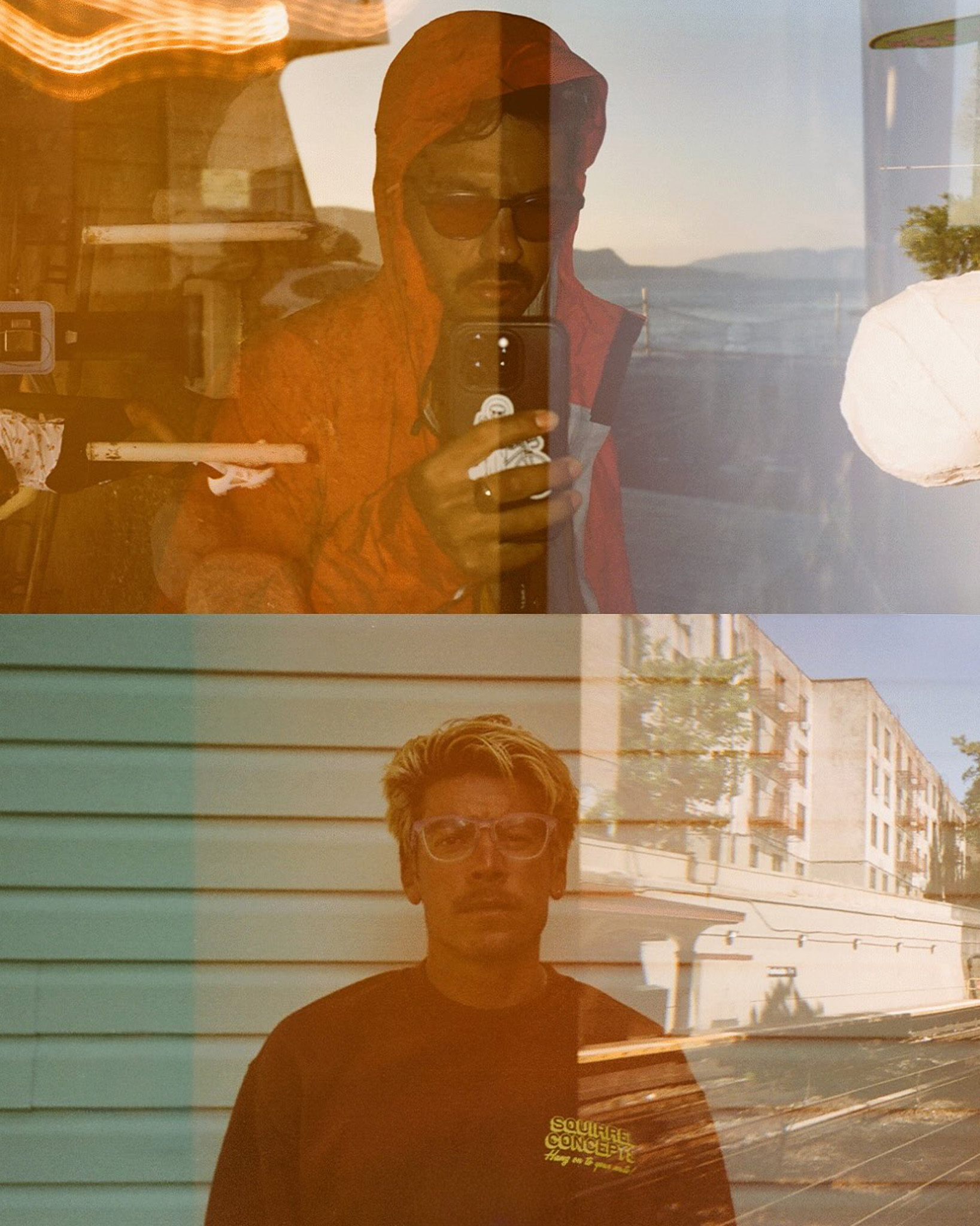
You know, it was probably the mental aspects. And what’s funny is that when I look back, even though I was going through so much, it was such a simple period in my life. The first time in 20 years I’d ever stopped and taken a break.
Click an image to open gallery

cyclespeak
It sounds like it was needed?

Chas
Physical stuff is fine. I’ve been a pro-athlete long enough to understand the importance of following a PT recovery plan. If anything, that gave me some day-to-day structure and a sense of purpose to work around. But the mental side was tough. Because for a while I’d been having feelings to suggest that I wasn’t at my happiest doing this job anymore. And having that enforced period of not being able to ride maybe gave me the time to explore that for a little bit? Which in turn started the whole process of where I find myself right now. A catalyst for change, if you will.

cyclespeak
I’m reading between the lines but is this a question of identity? Almost as if you’ve inhabited this character for so many years…

Chas
Notchas? With the question now being who’s actually Chas?

cyclespeak
And the answer to that question is part of the journey you’re now on.

Chas
But what’s funny is that when I’d recovered from the surgery, I’d been so single minded at getting back to where I’d been before—I’d built up so much momentum—that it wasn’t until earlier this year that I finally came to a reckoning and started to ask some serious questions about what it all meant.

cyclespeak
Before we explore all that in more detail and just to satisfy my curiosity, can you fill me in on the Zombie Knee™ reference?

Chas
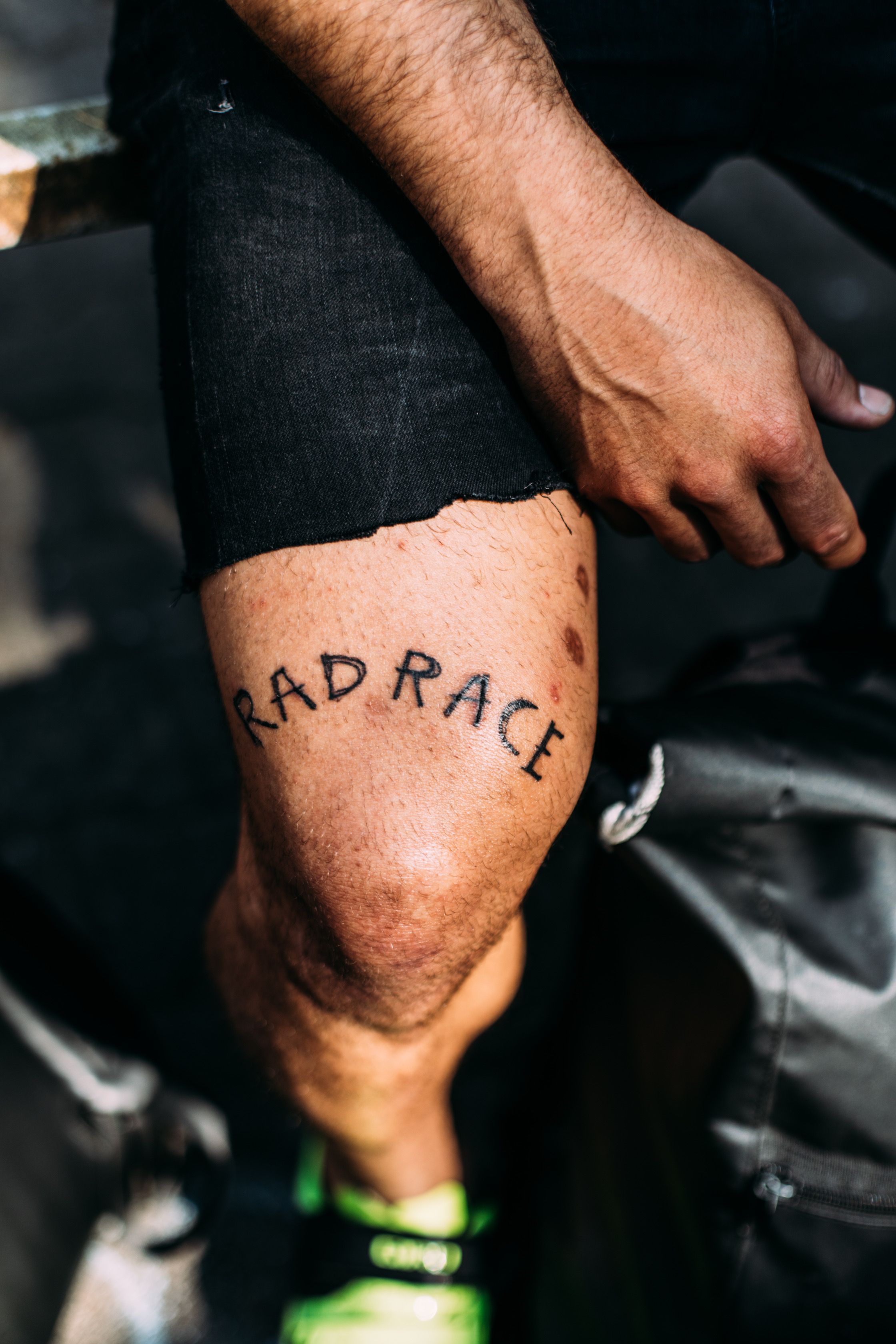
I aged-out of them taking one of my own tendons to repair my knee.

cyclespeak
That age being?

Chas
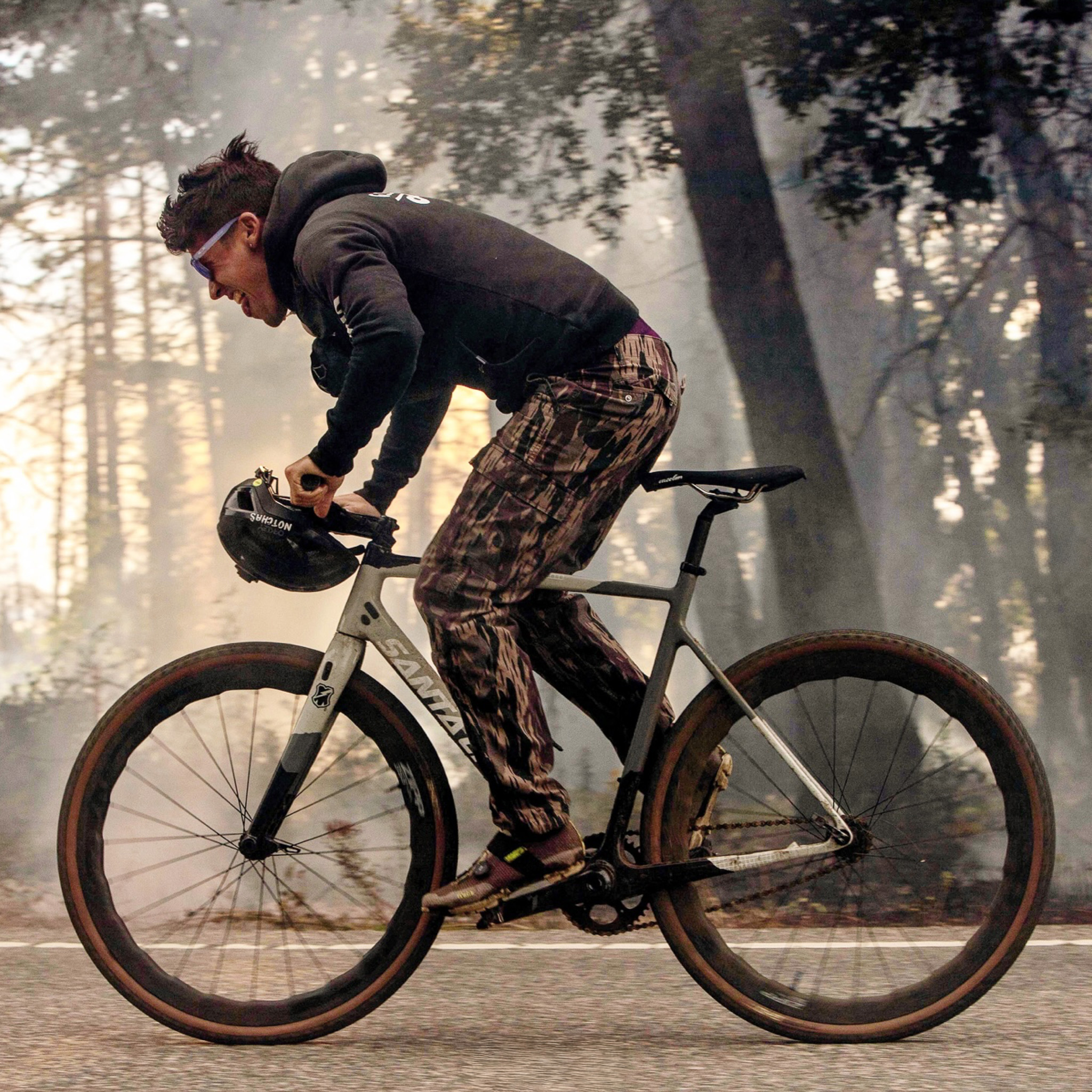
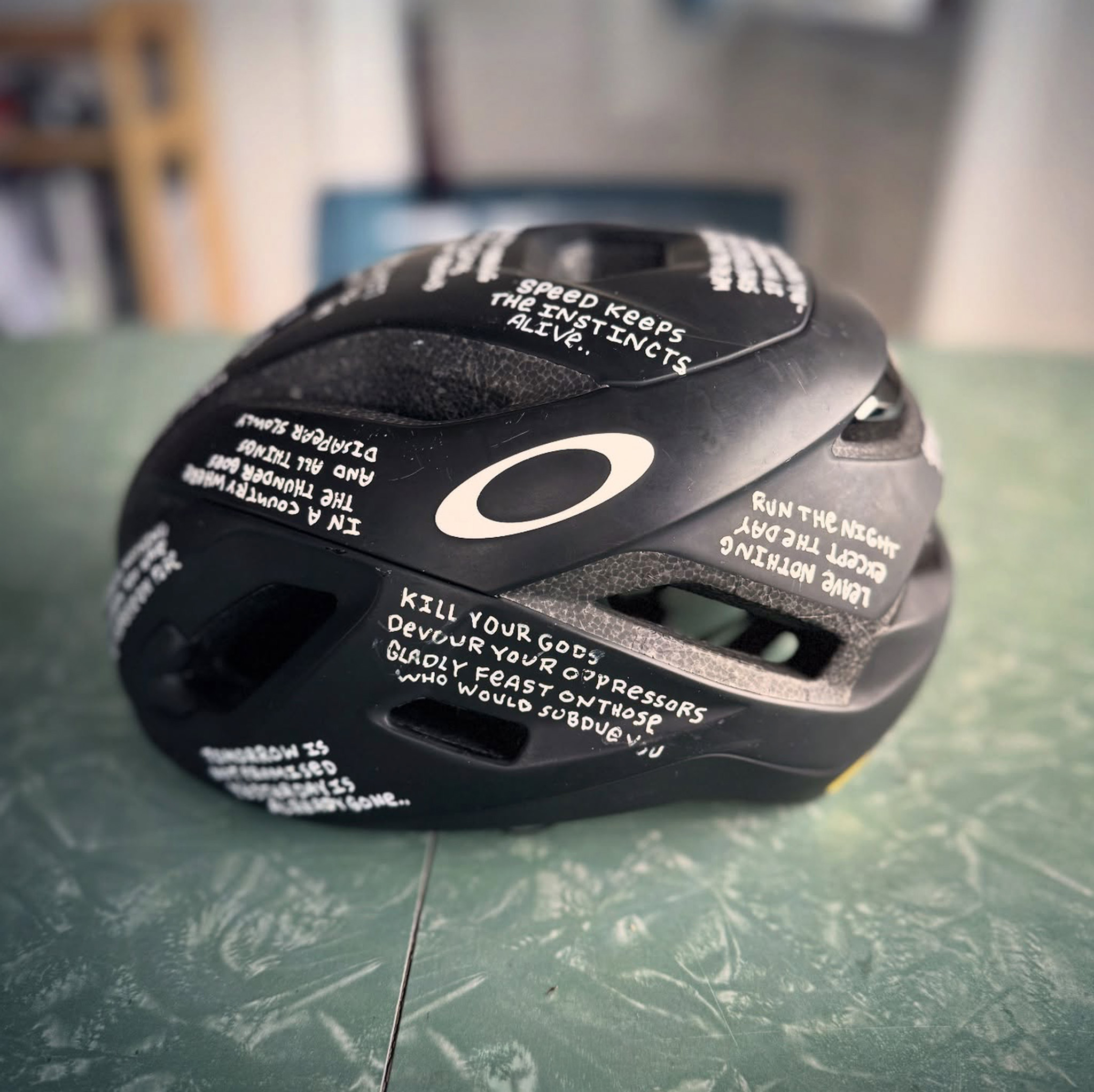
Younger than 40. And the injury that prompted this surgery happened two days after my fortieth birthday so I have an achilles tendon from a man named Dan in my knee. Which explains the zombie reference as a way of acknowledging that gift and I had the donor’s name tattooed on my knee as soon as I’d been discharged from physical therapy. I guess there’s limited factory parts for me now [smiles].
Click an image to open gallery

cyclespeak
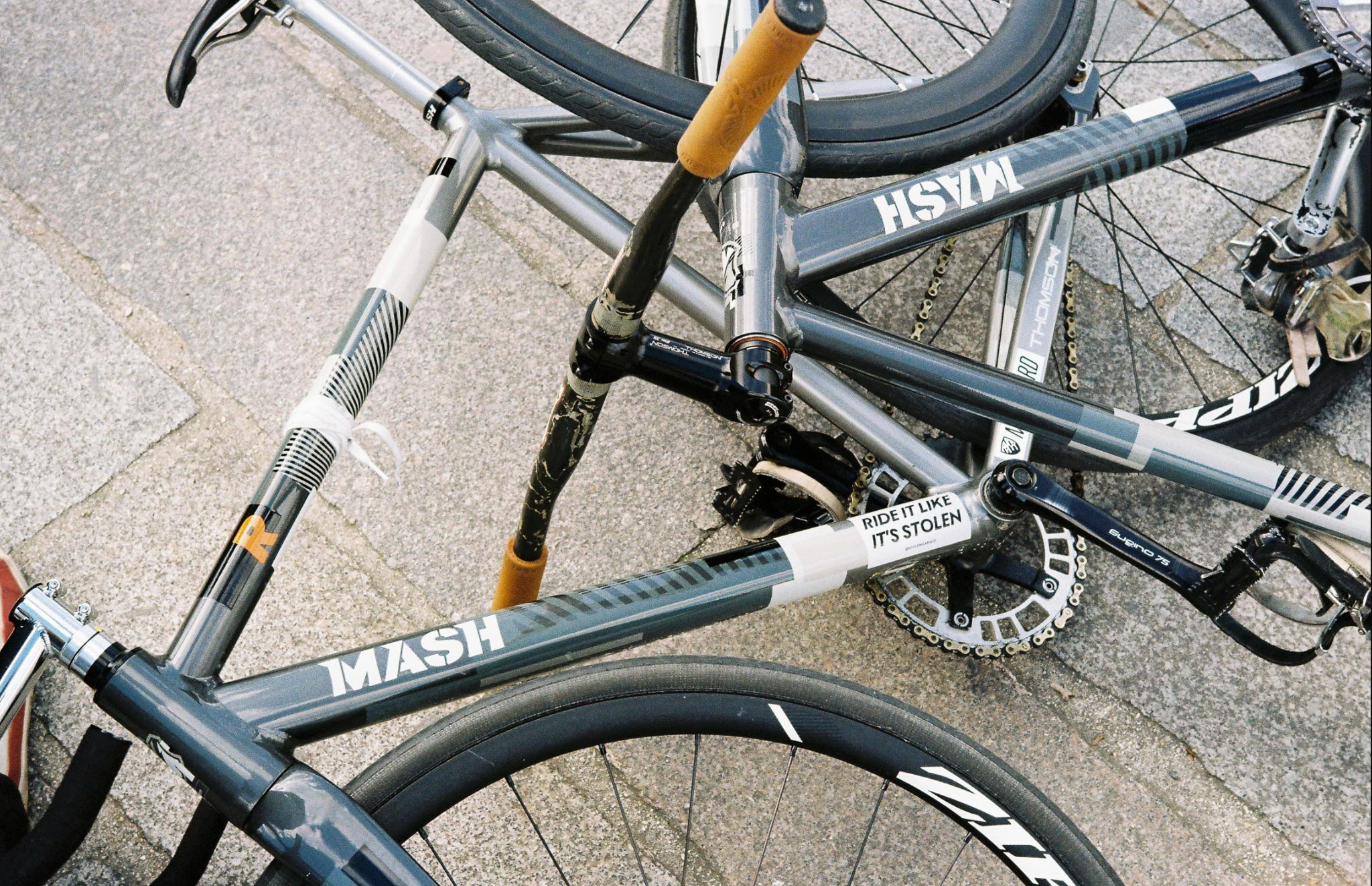
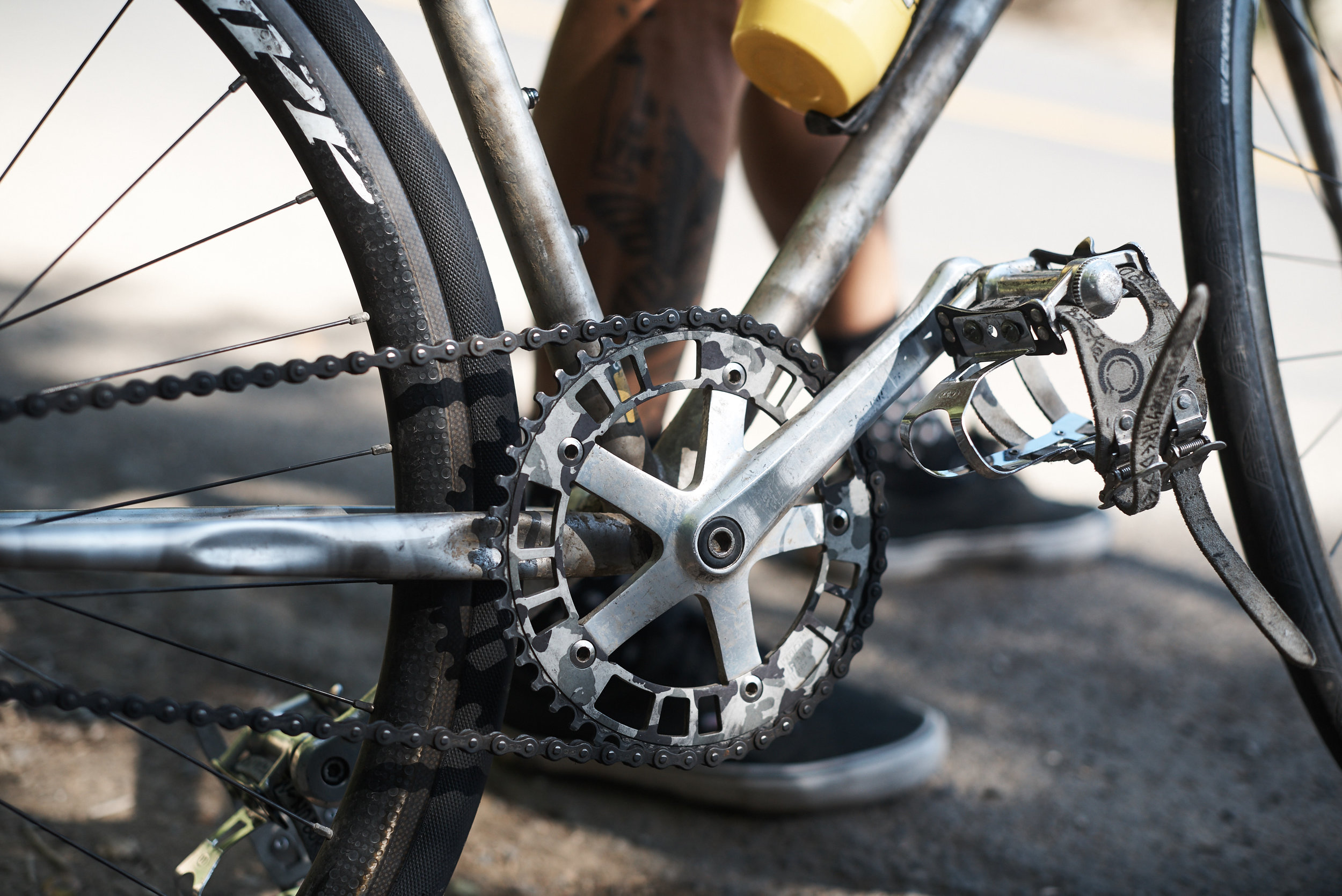
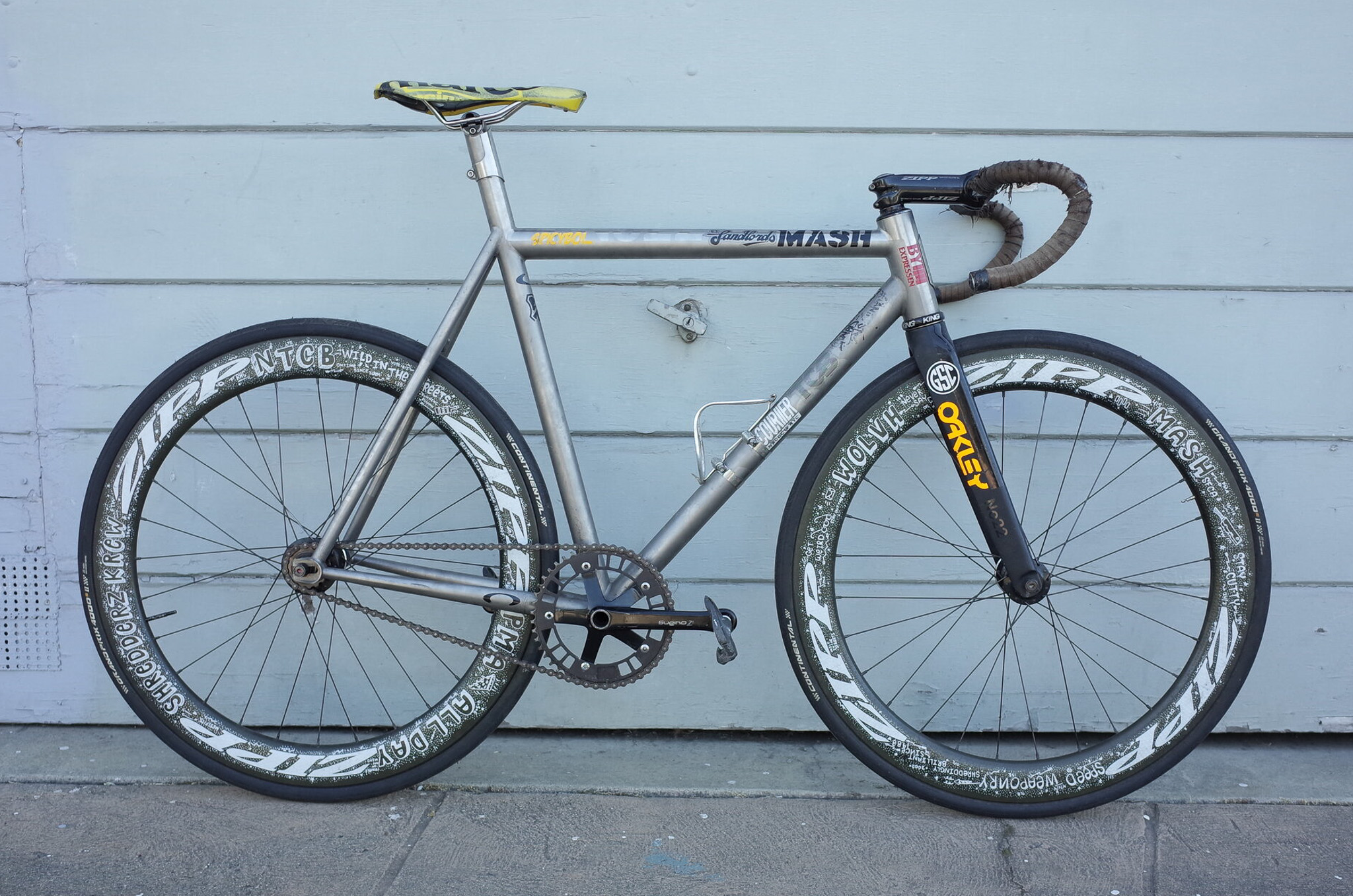
Speaking of parts—or featherweight components—is your MASH / Santa Cruz Stigmata still the lightest tracklocross build ever at 15.2lb?

Chas
Your timing is really good because that’s the bike I hurt my knee on. And I’ve only recently got it rideable and then raced on it for the first time since I crashed two years ago. And I can confirm how astonishingly fast and light that bike is but after I posted to dare anyone to make a lighter bike, sad to say, someone did. And to the tune of half a pound lighter.

cyclespeak
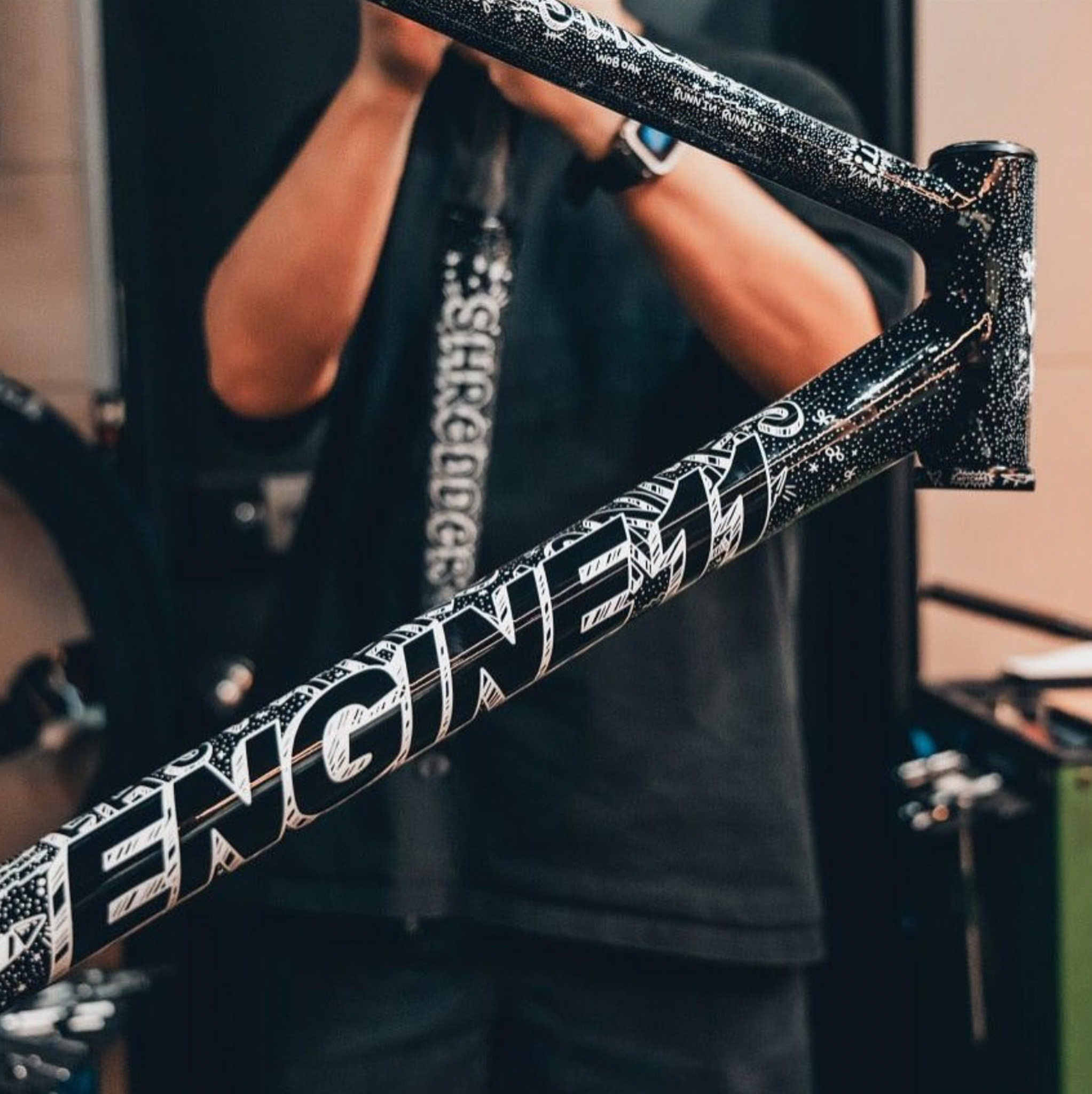
More bike talk in the shape of the limited release collab you did with Engine11 and the AARN double sided track rings. Do you by nature get a buzz from working with others?

Chas
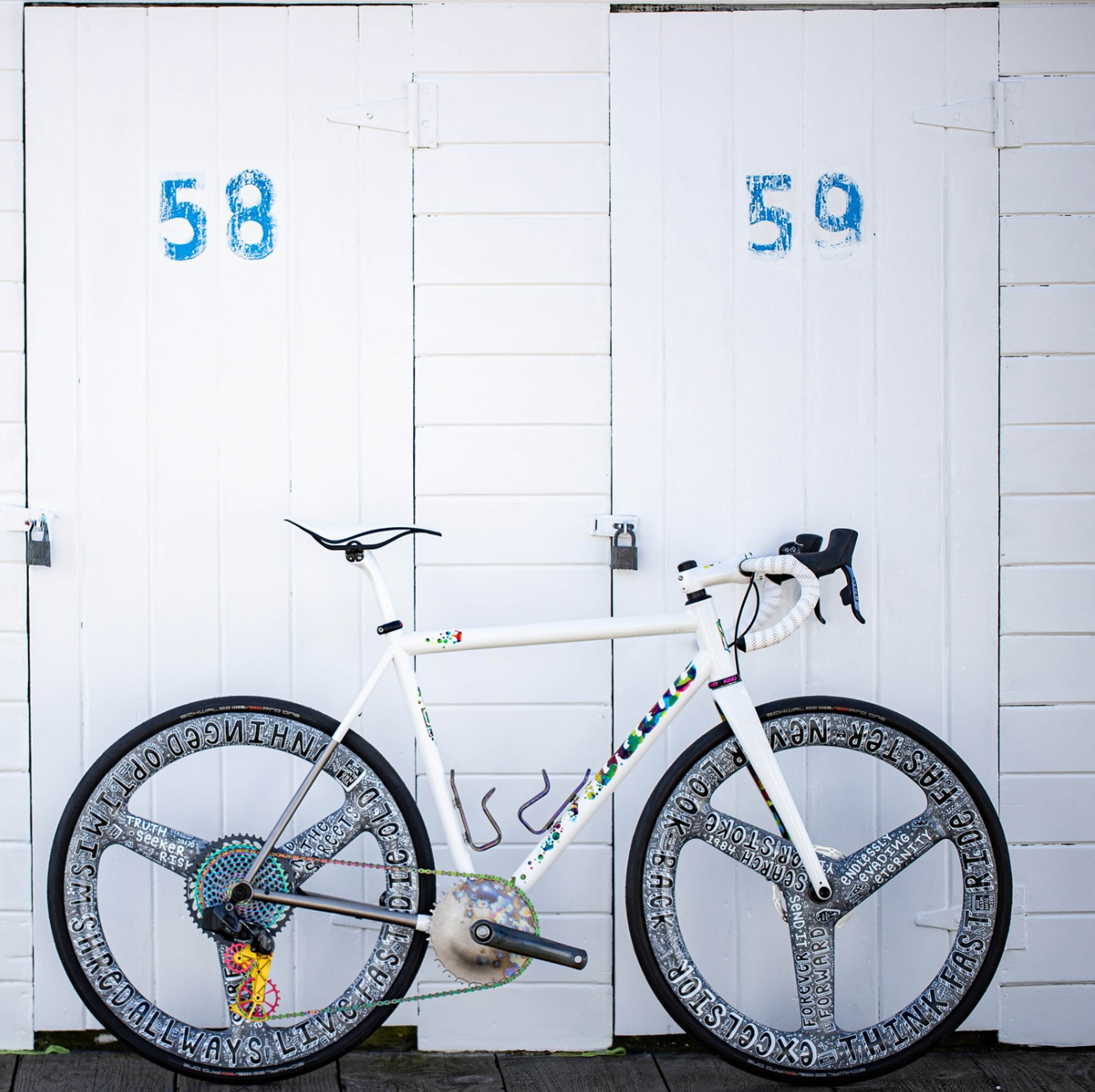
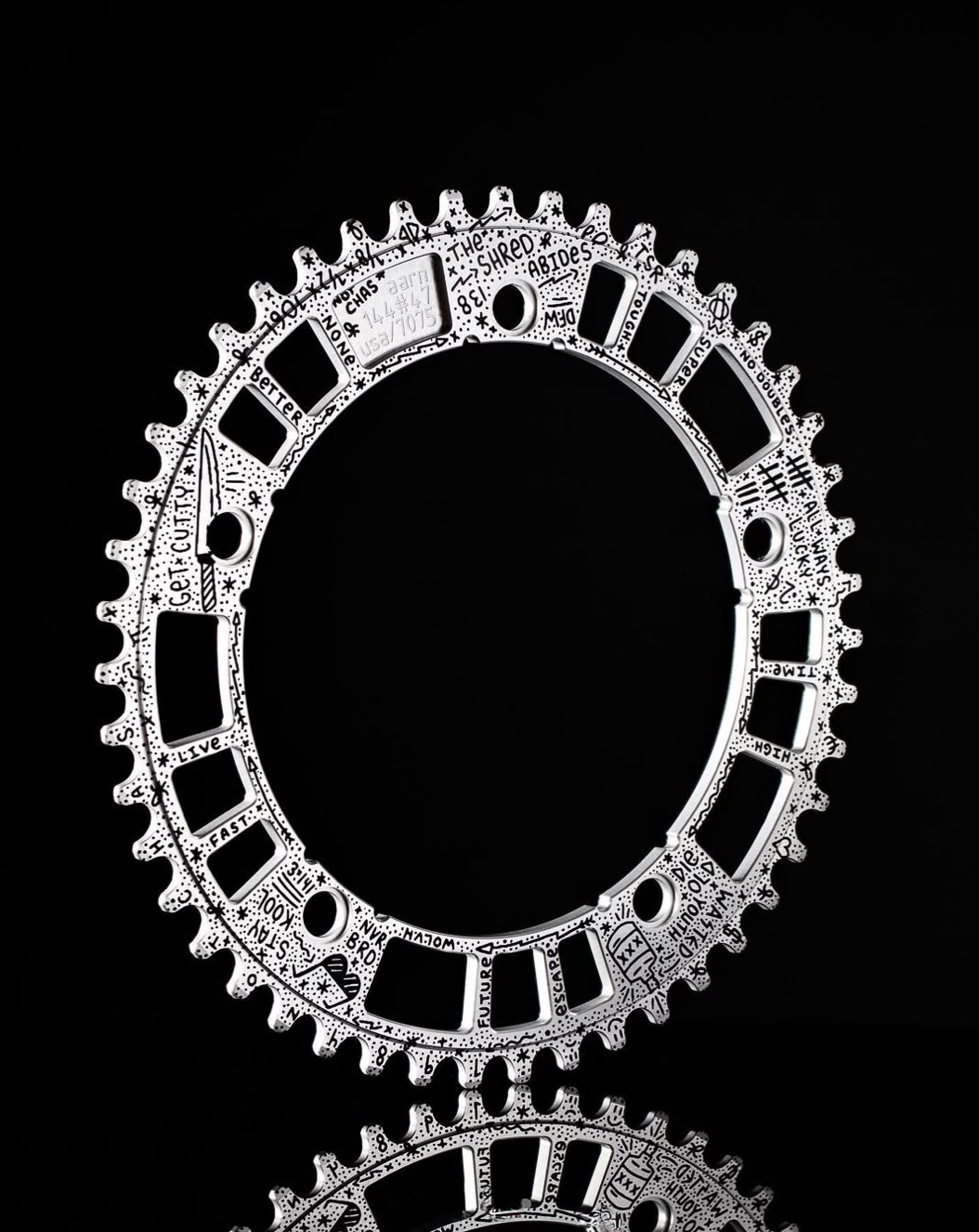
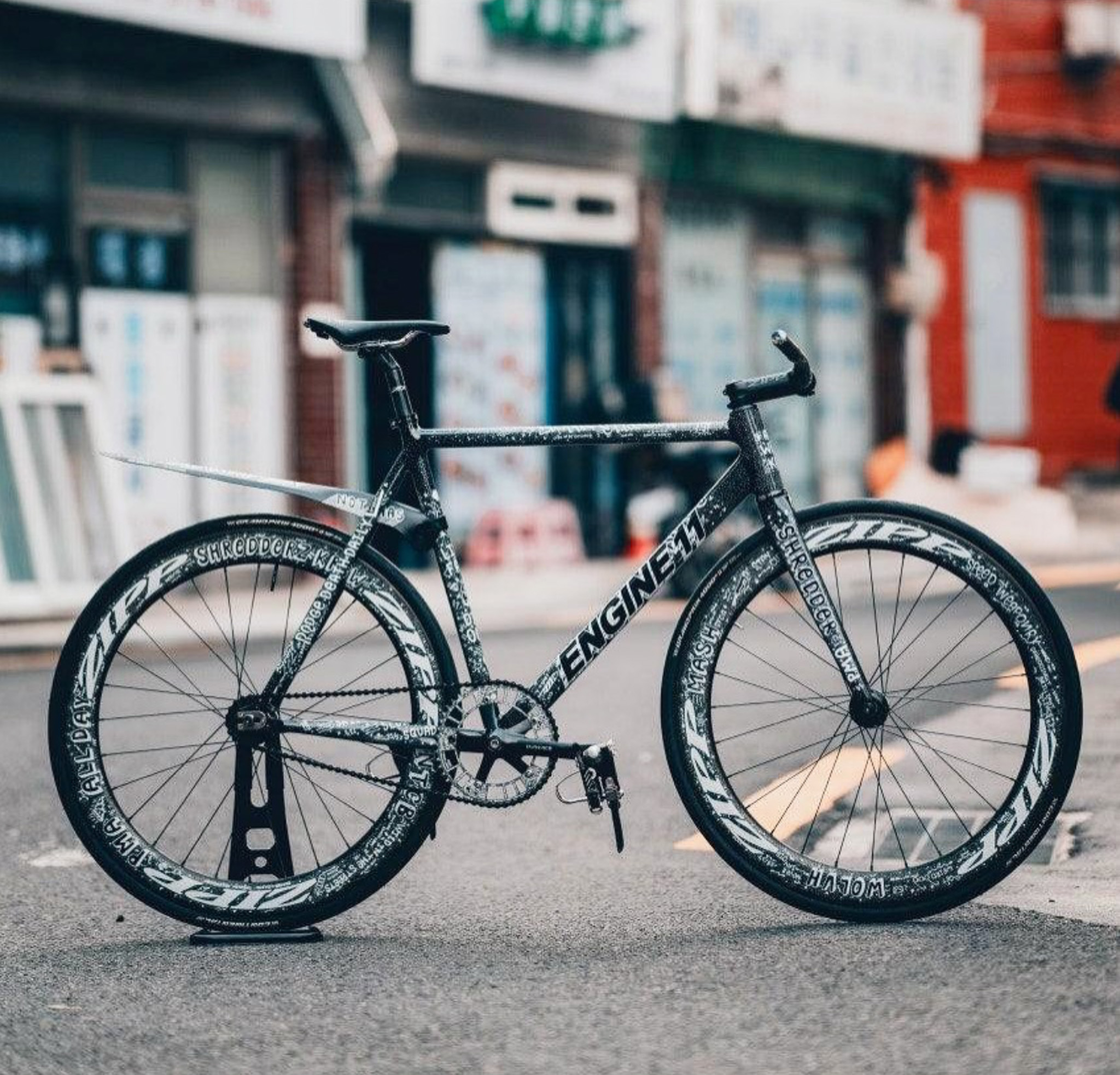
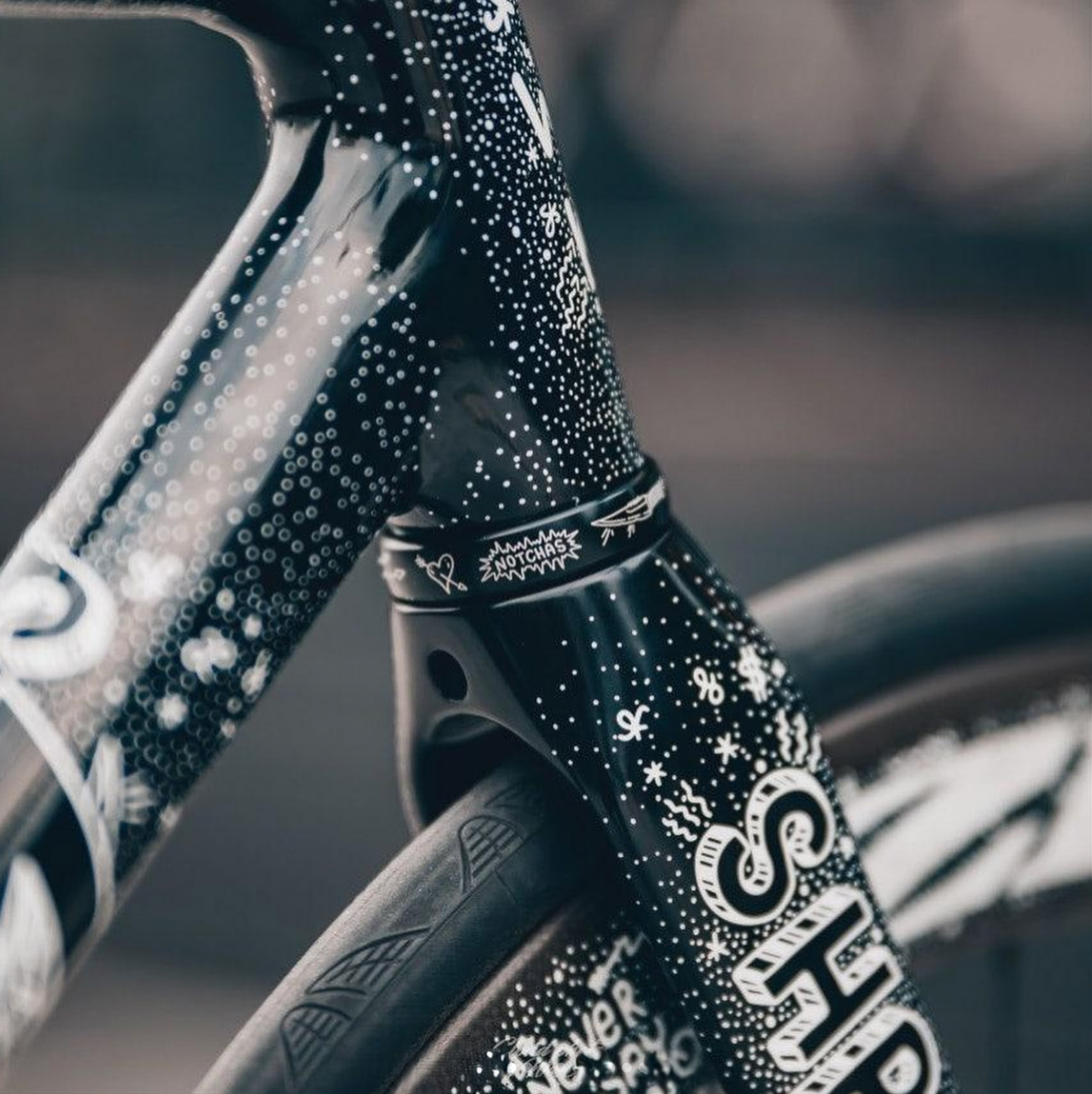
Collaborative design is amazing. Because, for me, it stretches the boundaries of my art. Which I freely admit is a little lowbrow. 2D doodles on paper or on this or that component. So you take the Engine11 frame and the AARN chainrings, not only are you considering a physical object and how you’re going to cover it, but there’s a production process to also factor in which brings another level of complexity to my designs.

cyclespeak
So there’s a certain sense of satisfaction in overcoming these challenges?

Chas
That’s one way of putting it. I’ve worked with Aaron Panone of AARN for over a decade and on the first ever edition of the rings we did, I forgot to mirror the design on the other side so a lot of the art is backwards. Which I just smooth over by saying those were limited edition pieces and hence collectable [laughs].
Click an image to open gallery

cyclespeak
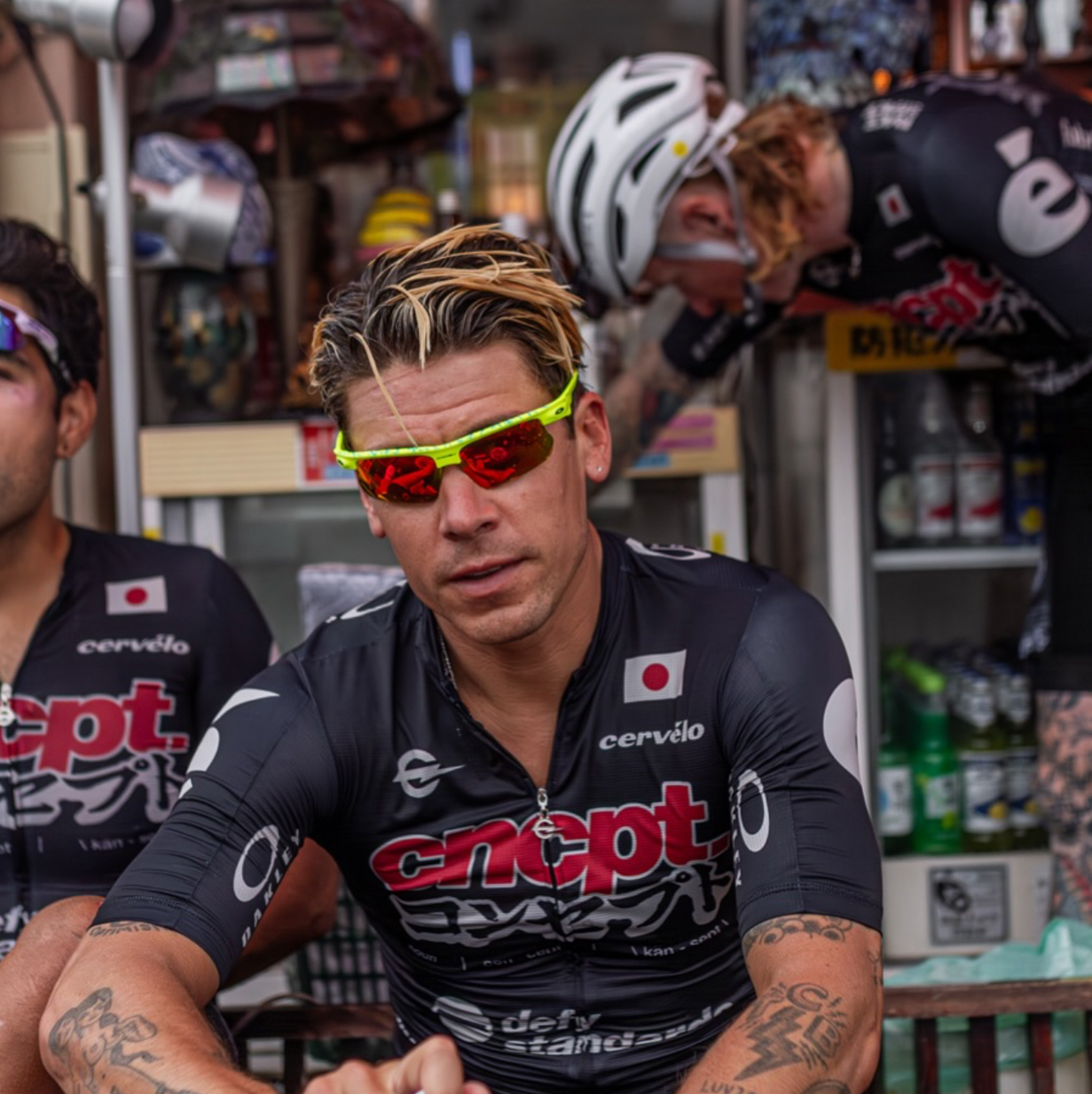
In May 2025 it was announced that you were joining the CNCPT team and then a little while later you set off on a tour of Japan with Alonso, Sean and Alvin.

Chas
I’ve been friends with the CNCPT boys for as long as we’ve been racing bikes. So being teammates seemed like something that had already existed throughout that time. But now I get to wear the jersey.

cyclespeak
And Japan?

Chas
One of the funniest things I remember from that trip is that, early on before we’d even got going on our tour, we were messing around in a mall where they have all those machines where you can buy little plastic toys. And as a joke, we all bought these tiny recorders which we somehow managed to learn to play some tunes on. So we’d pull up at a convenience store in the middle of rural Japan and it was never a spoken thing but one of us would start playing and the others would join in; four sweaty, grown men in cycling kit, loitering outside under the porch, tootling away together. The looks we got were priceless.

cyclespeak
Loitering with intent to make music.

Chas
Loitering with intent about sums it up [smiles].

cyclespeak
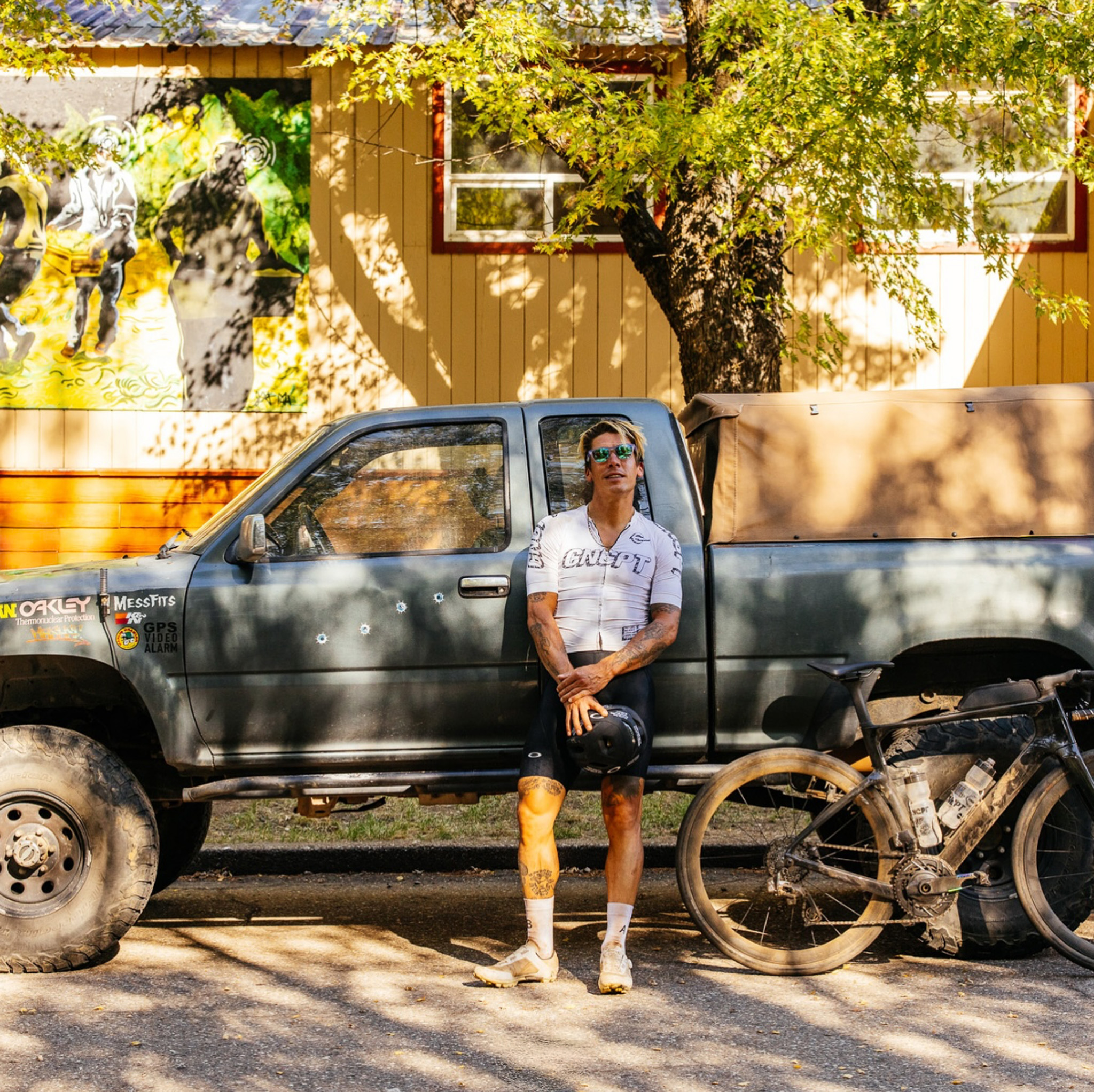
You acknowledged the advent of your truck rolling over 300k miles in a post and then later this year had a number of kit and component auctions to fund an engine rebuild.

Chas
That’s funny you mentioning my truck because tomorrow I’m picking it up from the shop after two months of them working on it. And it’s not that I place much importance on physical objects—I’m more of an experience based person—but that truck, for me, is a symbol of freedom. In the way that it handles and drives, it’s just like a track bike. And like my knee, the engine got a rebuild and we’re both good to keep on going.
Click an image to open gallery

cyclespeak
Looking back at your auctions to fund the engine rebuild, what’s your relationship with stuff?

Chas
It actually comes with a significant amount of stress. So the truck gave me the impetus to shift a lot of it in order to raise the funds I needed to get the engine fixed. And you want to know the worst thing? It’s the fact that none of it was being used. All that race gear might hold a sentimental value to me but it means a lot more to know that someone else is wearing my old MASH kit out on their rides.

cyclespeak
So a cathartic process?

Chas
It was. A trip down memory lane when I was sorting everything out. Race kits with a hole in and I was like, “I remember that crash.”

cyclespeak
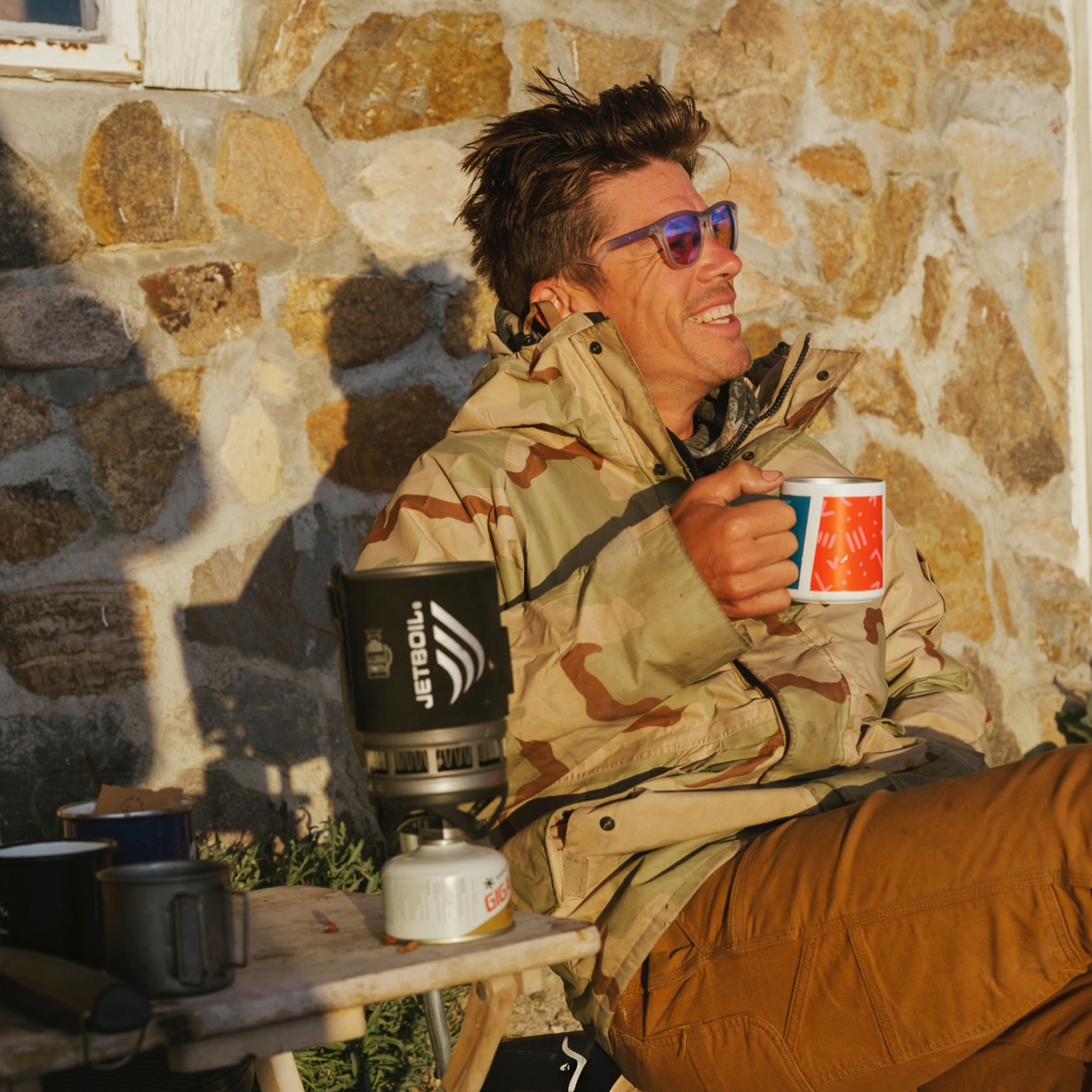
You frequently mention the freedom of travel and new experiences. And Death Valley seems to have a pull on you in that sense. Is that where you do some of your physical and mental sorting out?

Chas
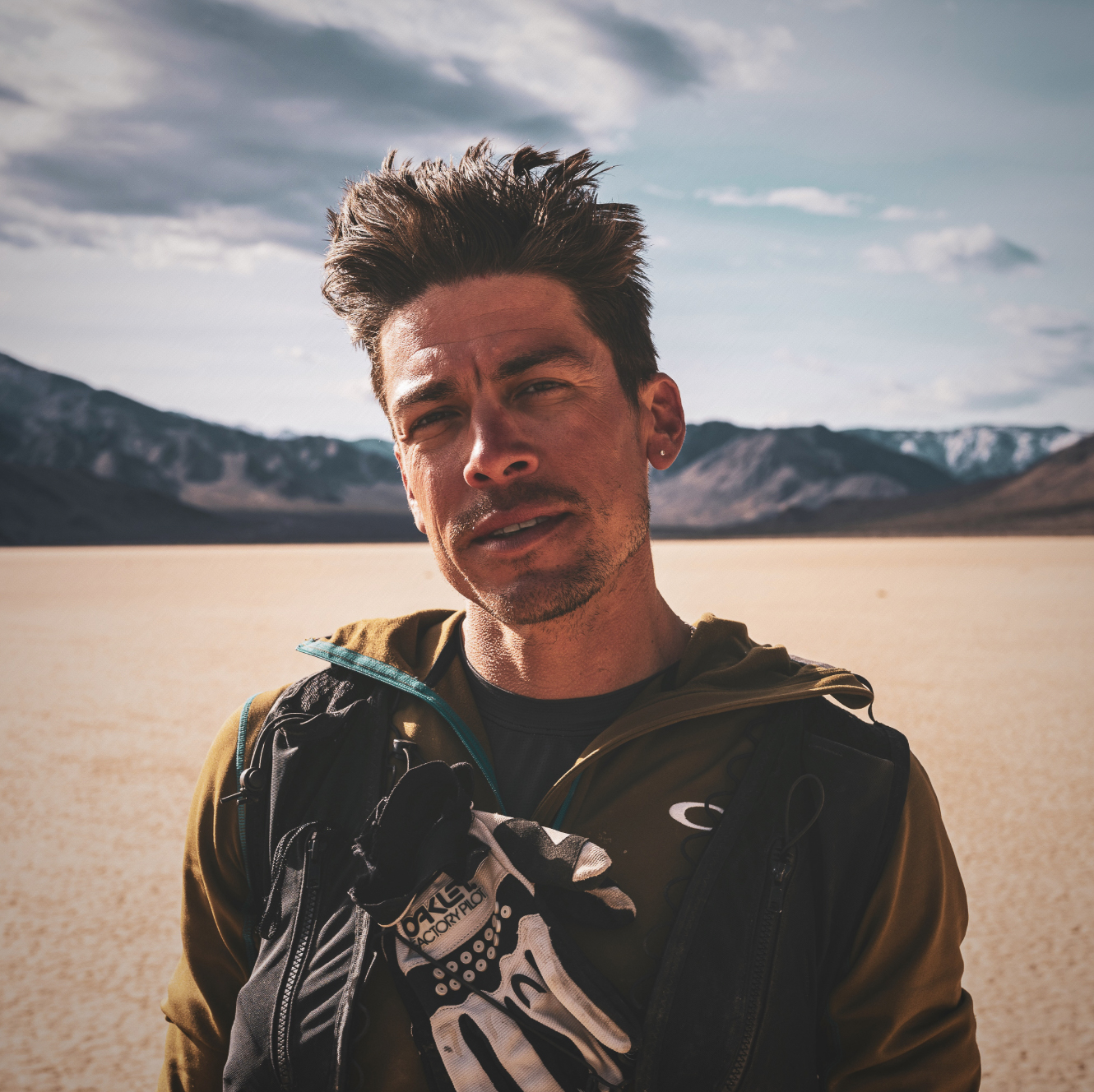
There’s something about the expansive nature of that locality combined with the utter remoteness and the necessity to be self-supported. All that gets me to a place where I can mentally cleanse myself. Sometimes that’s by myself, other times when we organise our annual group ride. Which, when they first started, were really small but this last year we had 28 people and was probably my favourite thing I’ve done this year.

cyclespeak
Going from the social media posts I saw, you had 28 people and a whole bunch of fireworks.

Chas
Hey, woah. It’s a national park. I don’t know what you’re talking about [smiles]. But you know what? I like a little childlike fun in my life. And for whatever reason, fireworks take me straight back to the twelve-year-old Chas.
Click an image to open gallery

cyclespeak
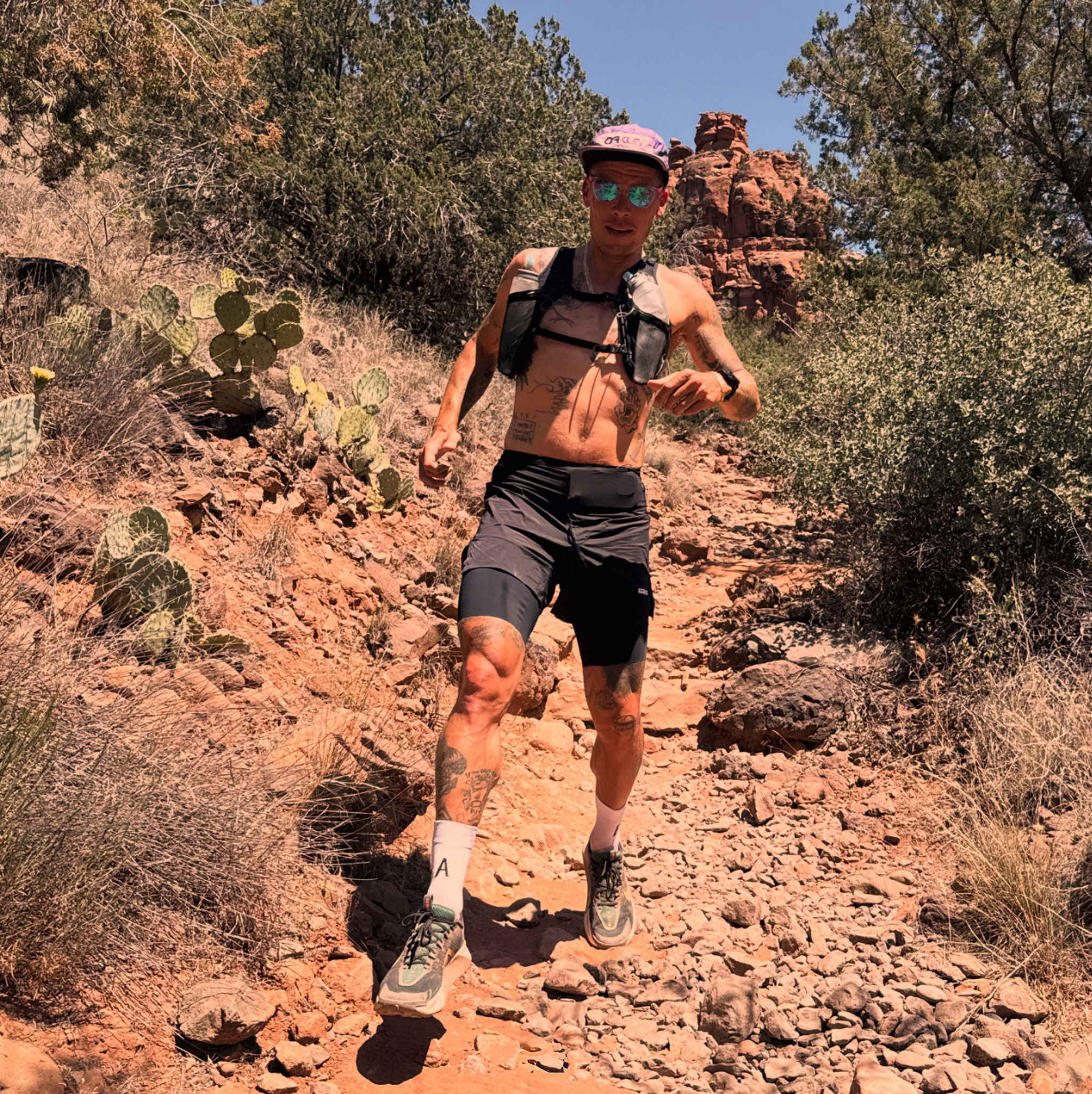
From riding to running, and I’m not talking about a quick jog round the block. One of your early sorties saw you take on a 40 mile ultra in Arizona.

Chas
As I was recovering from surgery, my PT told me that if I ever wanted to run again, I needed to get moving. I guess you use it or lose it and my mind has to recognise that the impact on my reconstructed knee from running is a good thing. And then as I’ve been starting to transition away from pro cycling, it’s a space where nobody knows who I am. Which means that my running acts as this release valve because it allows me to still use my body and get what I need out of sport without all this weight of outside expectations. And here’s a little sneaky secret. Running led to swimming so I’ve registered for a half Ironman. Which makes me question who I’ve become because if you’d asked Chas, 15 years ago, if he’d ever do a triathlon, he would probably have punched you in the face.

cyclespeak
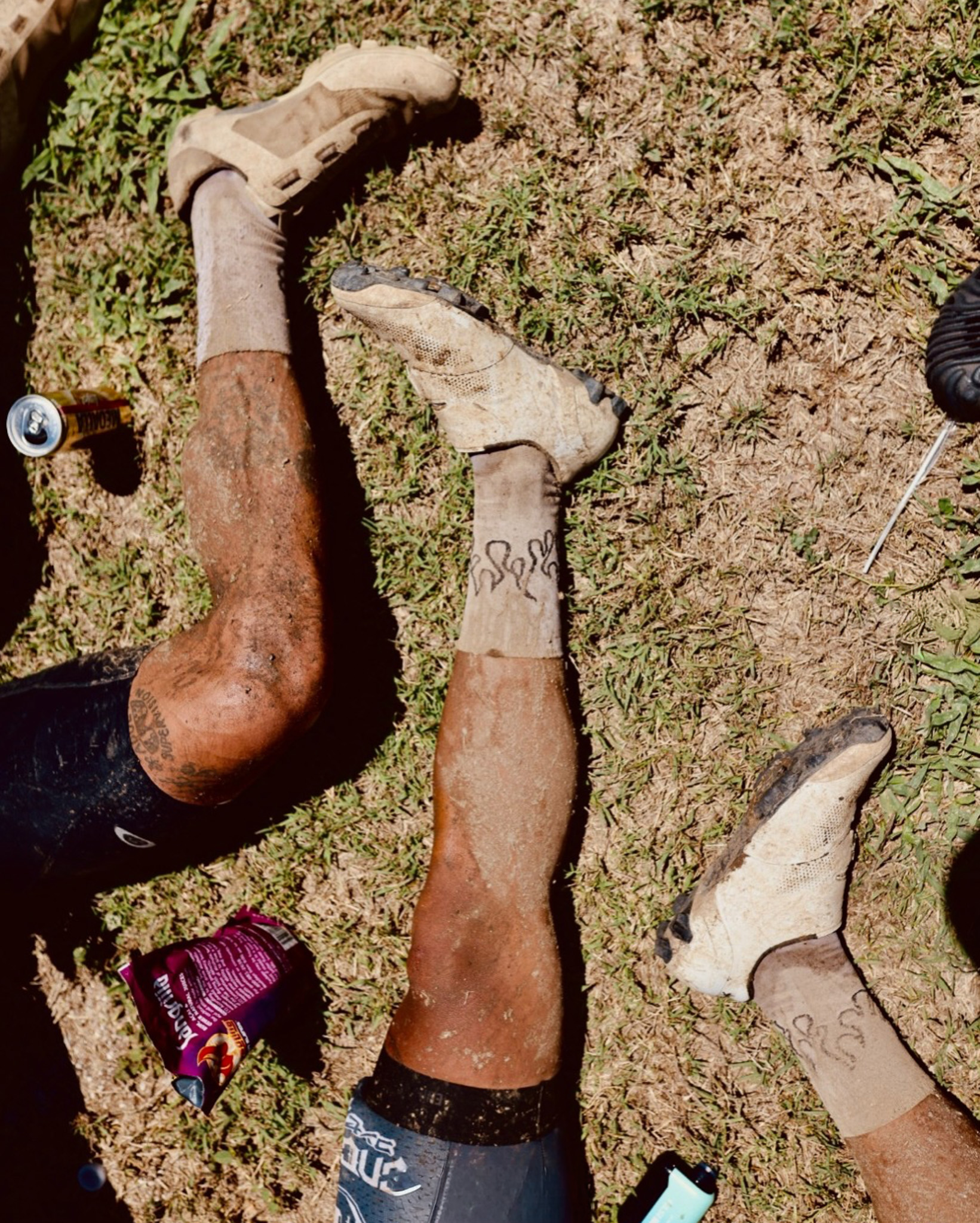
I was researching the 50k Taco Bell run in San Francisco that you competed in and it stated that no outside nutrition is allowed except supplements like tequila and caffeine.

Chas
It’s a wild event. An unsanctioned version of a totally legit, sanctioned race that takes place out in Colorado. And I’m lucky to have this great group of friends that, like me, don’t take themselves too seriously. An attitude that matches this event perfectly because to run 50k—in a weird, mildly painful way—is no small feat.
Click an image to open gallery

cyclespeak
Weird, painful?

Chas
You run between nine different Taco Bells and only eat whatever they have to offer. However, if it’s a Taco Bell Cantina, you can substitute the food for a shot of tequila. But just watch out for those hot sauces. Too many and they’ll catch up with you.

cyclespeak
You lined up for The Rift in July. The 330 km ABYSS ultra route. Was that in any way a shakedown event for the Silk Road Mountain Race?

Chas
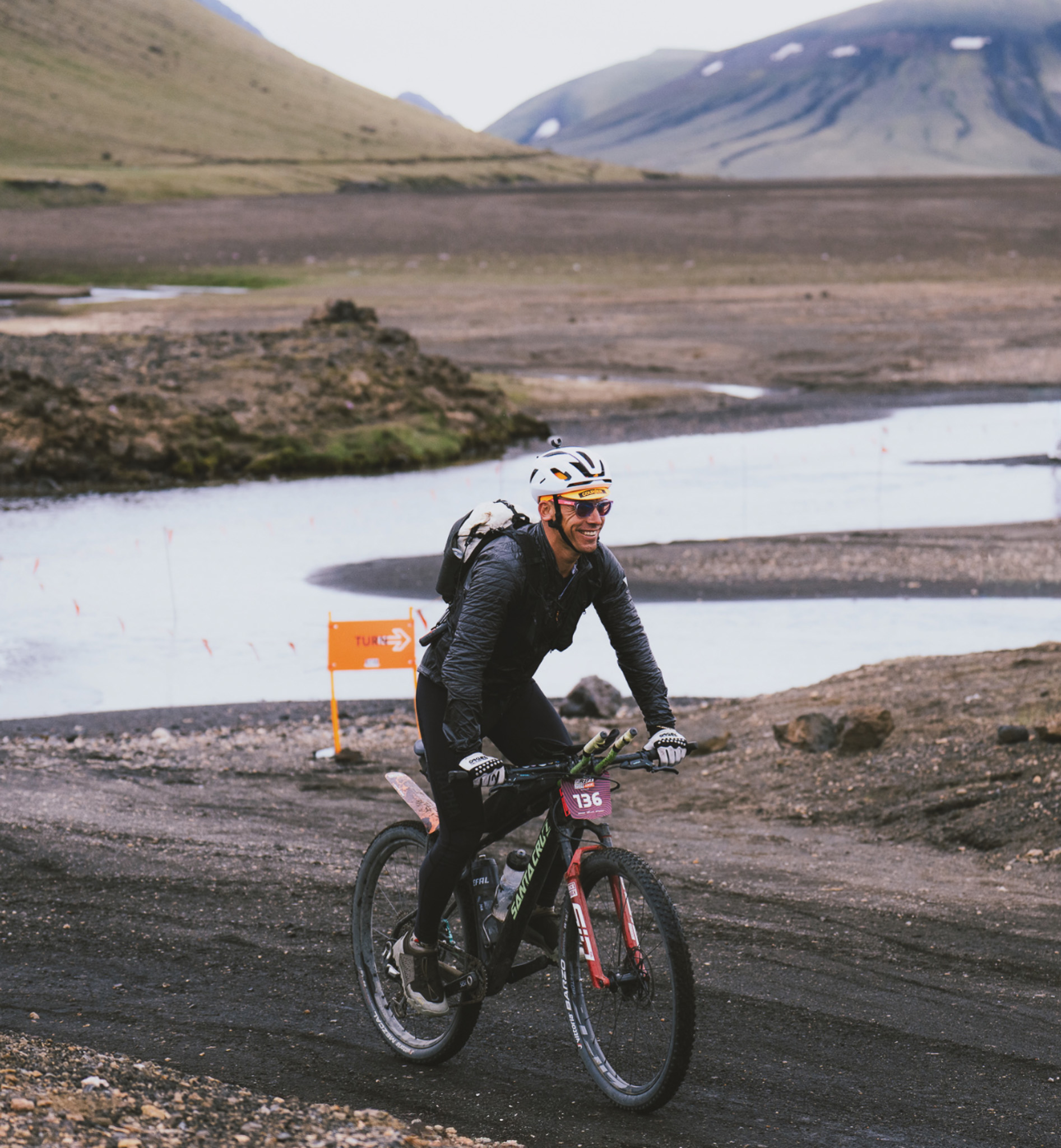
I’ve always loved racing in Iceland and my buddy Chris Burkhard hit me up about the event. The timing for Kyrgyzstan worked out as I could return home for a couple of weeks before heading out again for Silk. But then, with my decision to not travel out to Kyrgyzstan, this changed how I felt about The Rift. Would this be the last ever time I raced professionally?

cyclespeak
Which sounds quite momentous?

Chas
In some ways it was my swan song. An opportunity to take it all in, enjoy it, and acknowledge what an amazing journey this has all been. And Iceland is the perfect place to have all those thoughts because you’re riding at four in the morning through what is essentially another planet. So it proved to be a really positive experience and a reminder that I still love to race my bike and have all those great sensations.

cyclespeak
Which brings us to July when you posted the following: I’m not racing @silkroadmountainrace this year because my heart and head are not there…and that’s ok.

Chas
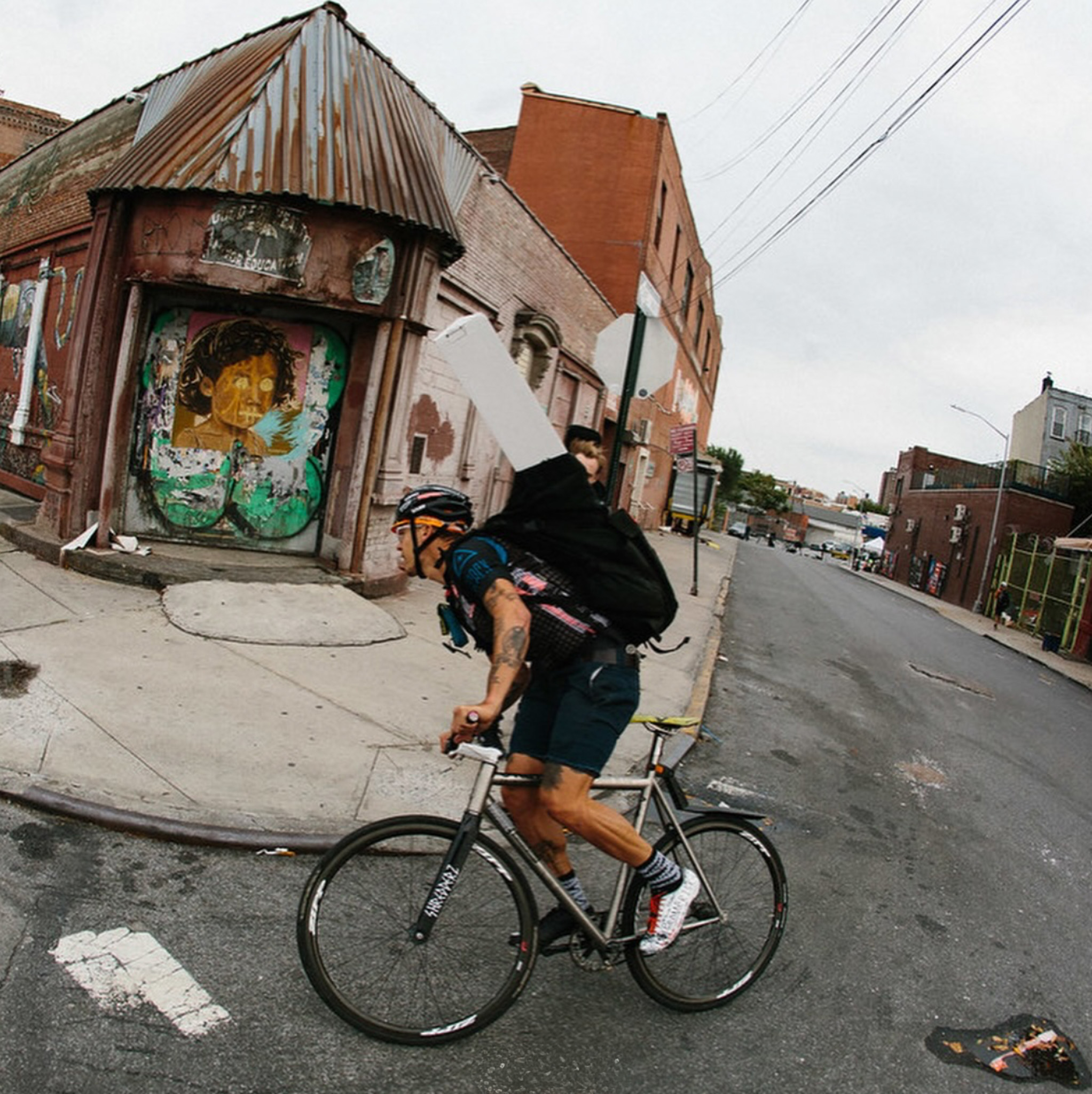
Silk had been on my calendar for years. The race I was supposed to race but then my knee surgery got in the way. And even throughout my recovery, it was the shining star of motivation. So a good couple of years working towards it but also, if I’m honest, a couple of years knowing that it’s not really what I want to do.
Click an image to open gallery

cyclespeak
Can you put a finger on what lay behind those feelings?

Chas
I’ve been working on a bike for 20 years. I started as a bike messenger in 2006 and I’ve been a professional cyclist for the last 12. And you get to the point where you’re doing things because it’s your job. And there’s nothing wrong with that. That’s the reality for most folks. But I was travelling to all these different places and having what you could describe as once-in-a-lifetime experiences and my heart and head weren’t in it.

cyclespeak
So stepping away from Silk?

Chas
Was a way of wilfully breaking the cycle. Because our trip was fully funded, we had money to make a film, kind of a dream scenario. So walking away meant something.

cyclespeak
You’re talking about accountability?

Chas
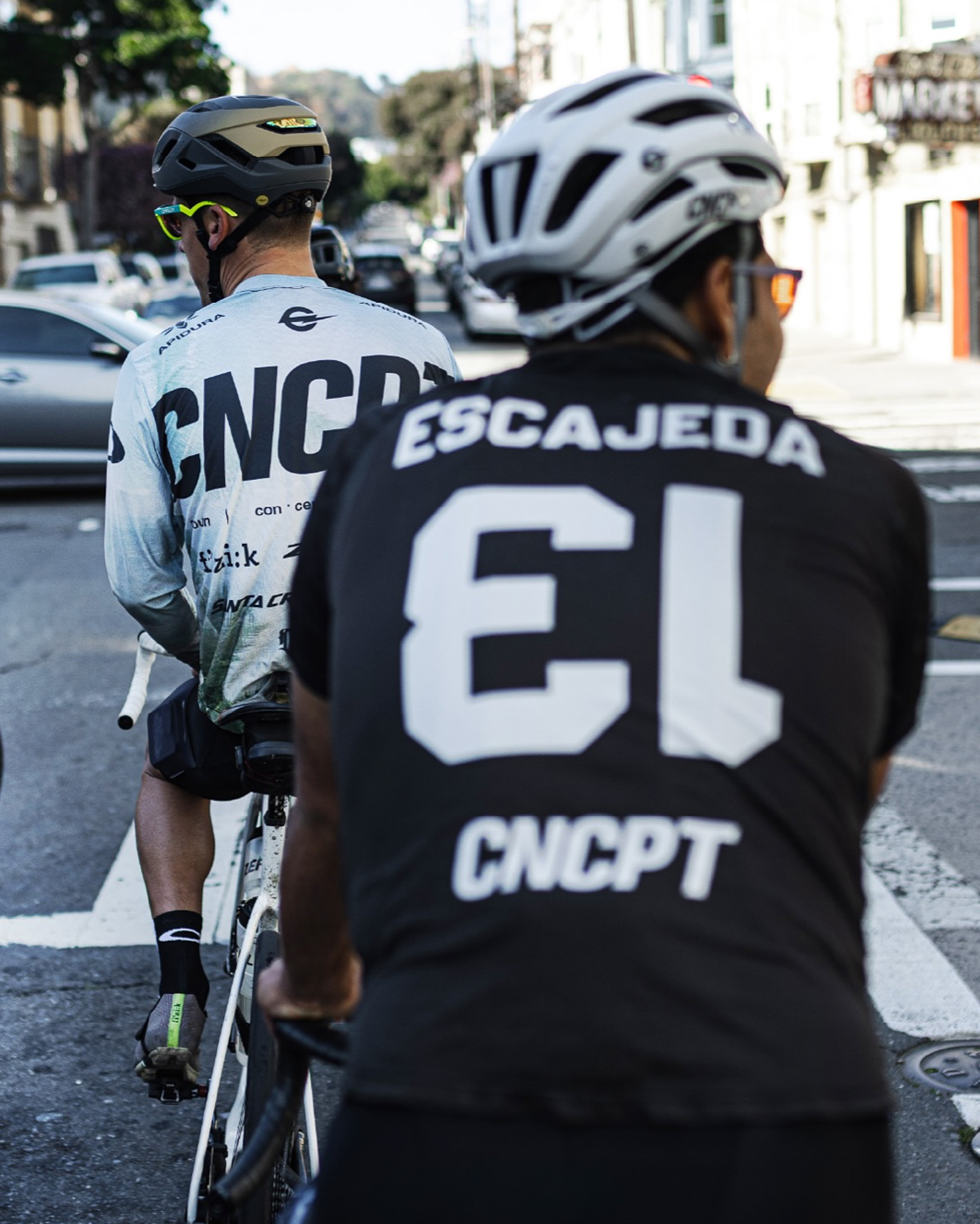
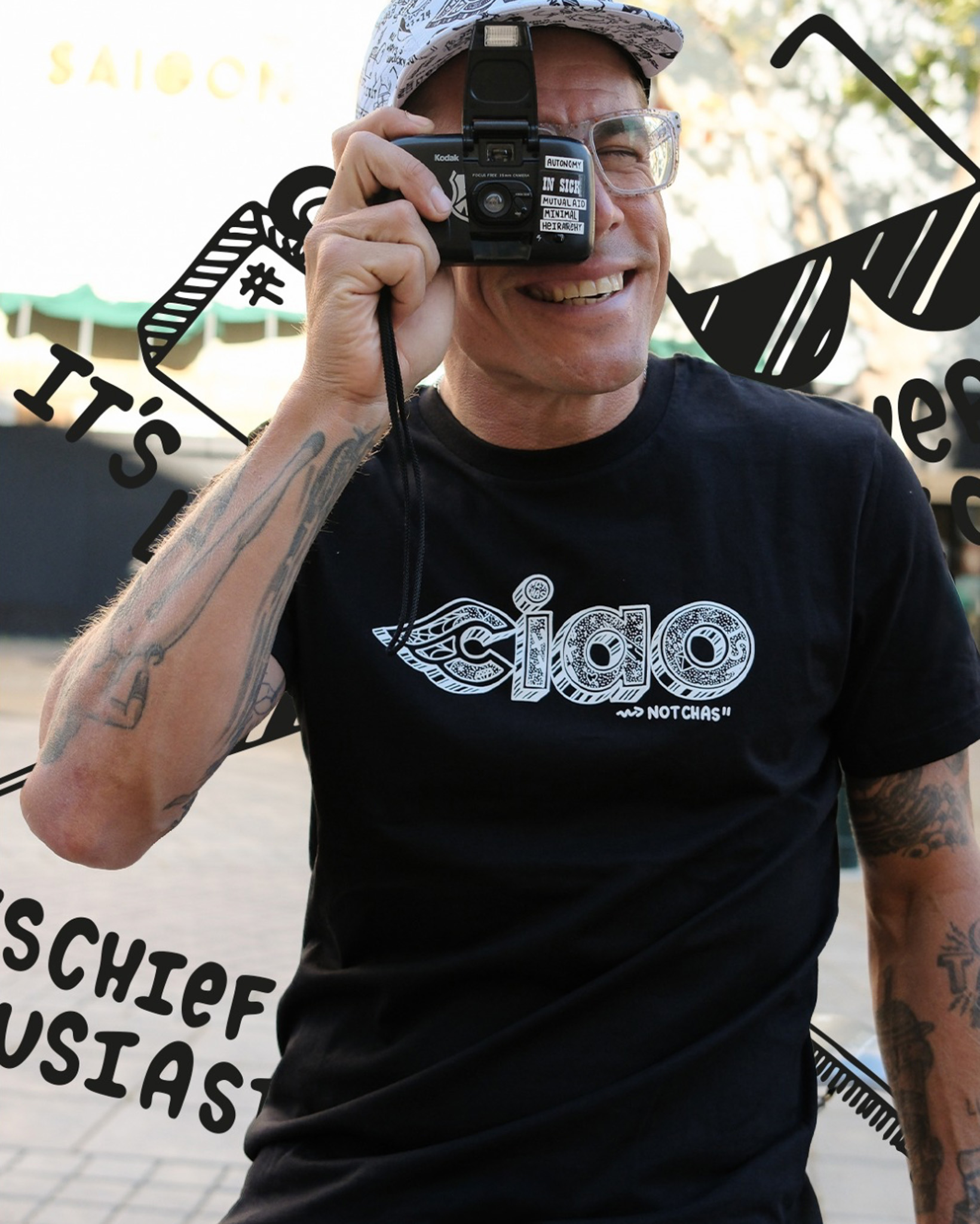
When I first started to earn a living riding my bike, I promised myself I would say yes to everything. So to flip that on its head and say no to Silk was a pretty big deal. And let’s not forget that I was down to race as a pair with my buddy Alvin. Which brings with it a whole other level of consideration if I were to line up with him, knowing that mentally I wasn’t there. We’d done a bunch of training and I knew that he was super motivated and one hundred percent good to go.
Click an image to open gallery

cyclespeak
So saying no to that…

Chas
Was me wanting to take a step back. And although it’s scary, I do believe I’m regaining agency about what makes me happy and what I want to do with my life. Something I’ve not been feeling in a really long time.

cyclespeak
Was it important to announce this decision to the wider world?

Chas
I think I’m big on accountability. And I’d been talking about racing Silk a whole bunch so it seemed appropriate to make a statement and close the circle. As opposed to simply ghosting away. Because the past couple of decades have seen me experience incredible emotional highs but there have also been really low points that I never gave credence to. I just steamrollered on to the next high. And it had got to the point where I was travelling three weeks out of every month, 10 months of the year. So logistically, in a real world sense, I never stopped and took the time to work through any negative feelings I was having. But here’s the rub…I love this. It’s the coolest job; travelling the world to race bikes with my friends in crazy places. So I knew that if I didn’t make my decision about Silk public, I’d just keep backsliding and nothing would change.

cyclespeak
Is there ever any pressure to inhabit the best-of reel of these highs that you mention? Almost as if you’re playing a character?

Chas
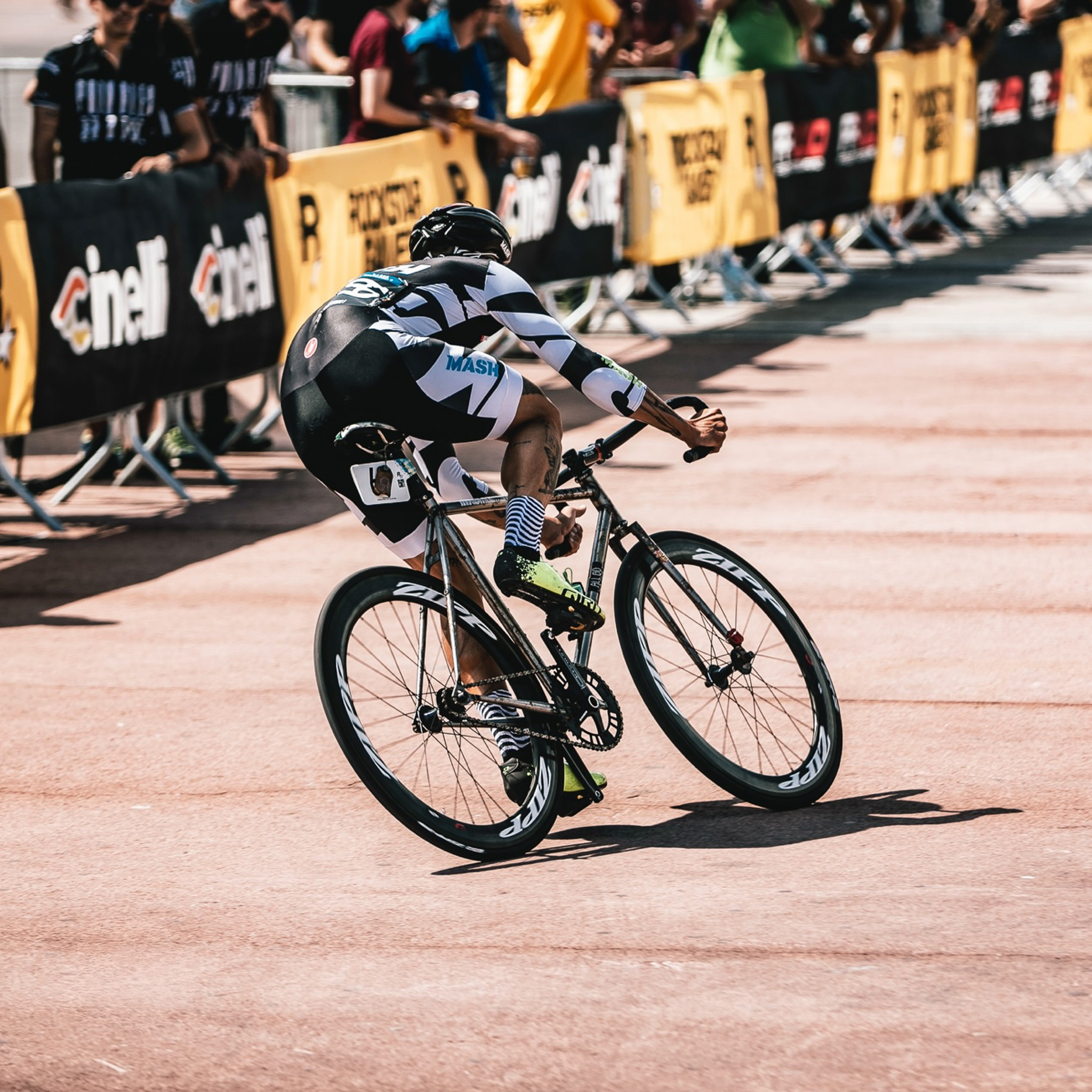
There’s no doubt about it. I’m Notchas. And that’s one hundred percent authentic which I guess is why it resonates with so many people and the brands that have supported me over all these years. But that being said, I kind of lost sight of what I actually need in my life. The things that will sustain me both physically and mentally in my search for the stoke. Because the search is real and like you said, my life had turned into a highlight reel.
Click an image to open gallery

cyclespeak
Personally, I believe we’re living through troubling times. There’s still joy to be found but also hardship and uncertainty. So where and how do you seek strength and support?

Chas
That’s a big question because when I look at all these changes that I’m going through, for the longest time I simply ignored any perceived problems because I had this singular focus on the trip, the travel, the race. So I’m now having to learn how to deal with all that. Which is why I’m trying to focus on the things that I care about—the friends and the family that bring joy to my life—rather than simply burying it all and getting on the next flight.

cyclespeak
So what’s next?

Chas
TBD. Partly because I didn’t fully realise how structured my life has been. I thought it was the exact opposite but, when I took a step back, it all started to make sense. There’s contract season which needs negotiating, then you get your race calendar set up, which in effect sets in stone the whole year. Factor in the January training blocks and next thing you know it’s November. So I’m still going to race bikes but I’m really leaning into the idea of things being less structured. And what that will look like is me being self-funded—which might prove interesting—and with more focus on quality over quantity.

cyclespeak
So when you wake up in the morning, what’s the first thing that goes through your head?

Chas
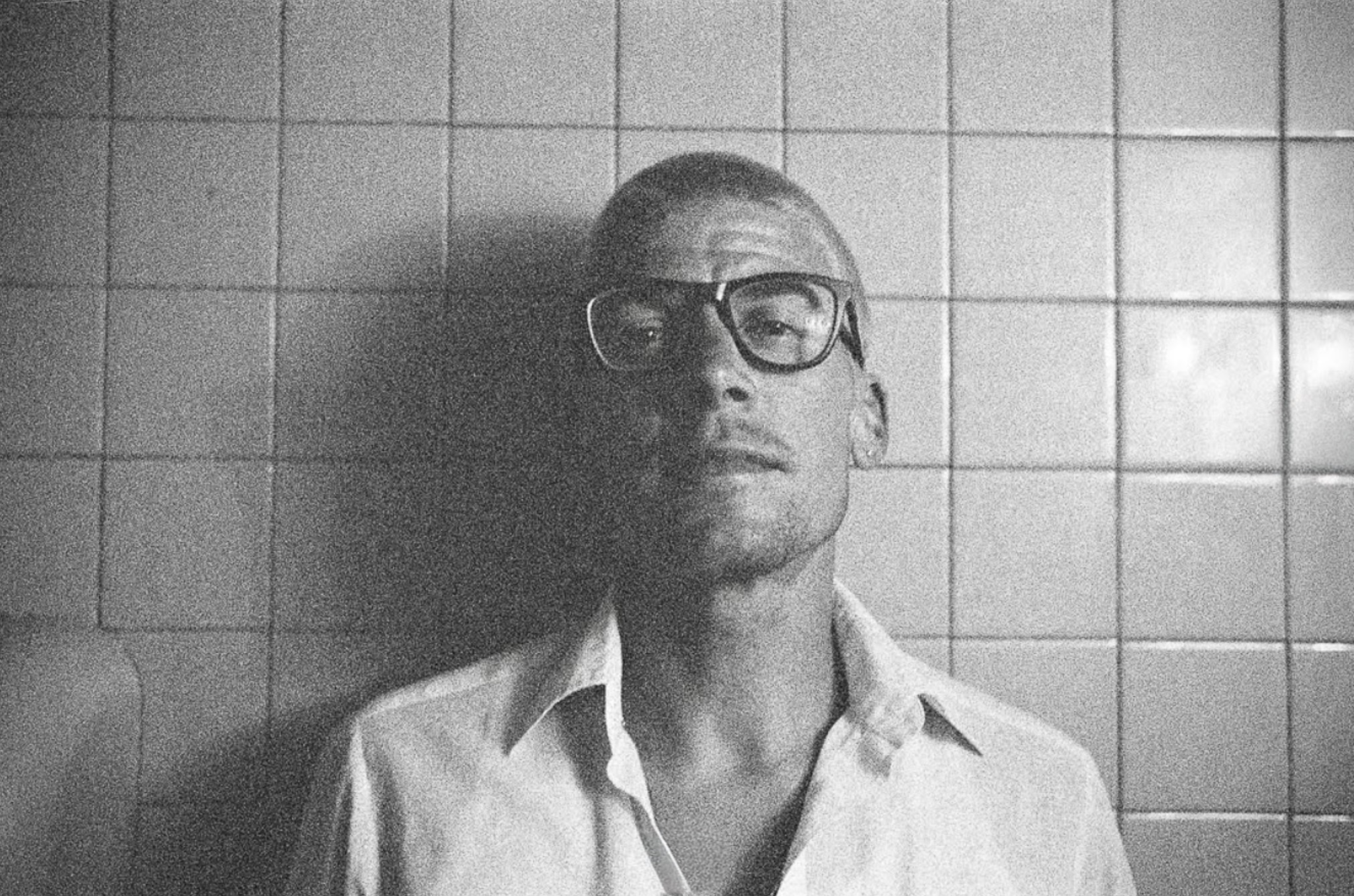
Right now? If I’m being honest, it’s fear. For the past couple of decades it’s been the next thing and the next but now there’s a lot of uncertainty in my life. And although this decision was my own to make, there’s an element of what am I going to do today. So I’m excited but also trepidacious. Which is an interesting place to be in life.
Click an image to open gallery

cyclespeak
Can I suggest that a lot of people live their lives as a compromise? They feel they have to do this or that job—that might not excite or stimulate them—to cover their rent or mortgage payments. And they might daydream about breaking free from society’s shackles and perceived expectations but never find the strength or support to take that first step.

Chas
This has been, by far, the hardest year I’ve had in my 41 spins around the sun. And I’ve ridden a fixed gear through city traffic for a living. But the idea of creating life change and seeing it through is pretty scary. And I laugh about it because I still have this PMA* and out of all the challenging things that I’ve done—things that a lot of people would consider insanely hard—this is actually what terrifies me on a daily basis.

*positive mental attitude

cyclespeak
If we can wind the clock back to last December, you posted these poignant words: The cracks are where we grow, everything that goes wrong is an opportunity to get it right. Was the time of that post significant—it being winter—or was it more dictated by these life changes you’ve been describing?

Chas
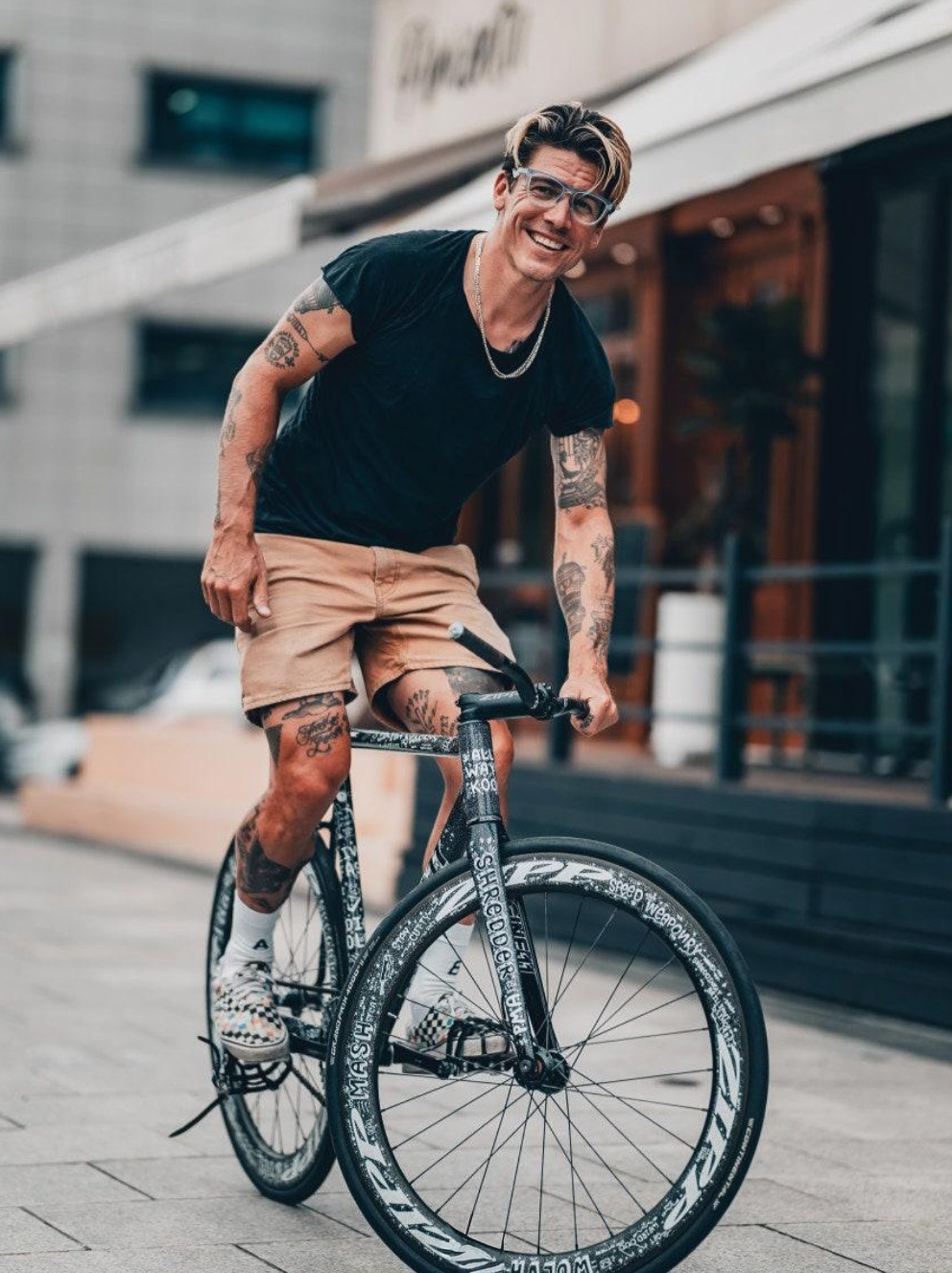
Full transparency, I separated from my long-term partner late last year. And that has been a significant part of this whole process. And for someone who’s relentlessly—might I say toxically—positive, being able to embrace the cracks, the things that go wrong in life, and see them as opportunities for growth, is something that I’ve been really working on.
Click an image to open gallery

cyclespeak
You’re talking about resilience?

Chas
Resilience is probably one of the most important character traits we can develop but that’s not to diminish the difficulty of picking yourself up off the ground when things go wrong. That can be hard. And what I’m coming to terms with is that it’s okay to take a knee and acknowledge that things are difficult. Which isn’t easy when you have this idea that there’s only one path forward—which when you crash in a race means getting back on the bike and getting to the finish. But where I’m at now, is questioning whether there are other goals that I want to pursue. That it’s okay to take some time to reset before going in a different direction.

cyclespeak
What I find super inspirational is how you acknowledge these tough times but still come out swinging.

Chas
You take Instagram as an example. There’s this feeling that everyone on the platform is leading this perfect life and I’ve certainly been guilty of only showing the good parts. But that’s not everyday life, I don’t believe anyone gets to live like that all of the time, and why would you want to? You need the downs to define the ups. So in sharing all this, maybe I can signal that it’s okay to have difficulties. That you can embrace them and process them. Which is something I never did before but I’m trying real hard to do now. And when all is said and done, the really important part is you just get back up and do something.

Feature image by Matthew Reamer

All other photography with kind permission of Chas Christiansen (photographers credited individually)

notchas.com

Paul Declercq / Slow Spin Society

It’s a bright, sunny day in Paris but Paul Declercq is busy working and yet to take advantage of the warm weather. Youthful and athletic in build, his voice is instantly recognisable from the Slow Spin Society podcast where he channels his fascination for all aspects of fixed gear culture.

After a peripatetic childhood and far from home on a gap year, it was a series of serendipitous chance encounters that sent Paul down the path he’s still travelling. A seismic shift in life and living that we explore in a metaphorical alleycat; conversational checkpoints referencing a frankly remarkable introduction to riding fixed, why he favours a film camera to document the scene, and the real-world realities of a career pursuing bike-based journalism.

cyclespeak
It looks like good weather for bike riding?

Paul
I’ve spent most of my day sitting in front of this computer so my ride will have to be later this afternoon.

cyclespeak
Are you taking our call from home?

Paul
Home hasn’t been a thing for me for the past three years. Which in reality means I’ve been hopping from one couch to another.


cyclespeak
Is that by choice or by circumstances?

Paul
It actually goes back to when I started the Slow Spin Society five years ago. And realising from the very beginning that I wouldn’t be able to make a reasonable living solely out of it. So that meant I was doing all manner of things on the side to help boost my earnings—some photography, working in a pizzeria, the usual stuff we all do—but that all changed when I broke up with my ex-partner and very quickly came to realise that I couldn’t afford rent on my own.

cyclespeak
It’s the same over here in England. The cost of living is crazy expensive.

Paul
That got me thinking that if I decided not to pay rent anymore, I could devote more time to growing Slow Spin Society so that, one day, I might make a living out of it. Which is why I’m staying a couple of weeks at one place, then another, and so on.

cyclespeak
That very much resonates with the time in which we live. The fact you need a salaried job to pay for a roof over your head but which, in turn, limits the creative freedom and energy to build something that isn’t a traditional business or profession.


Paul
Trust me, there are many, many days when I’m standing under the shower, telling myself that I need to get a normal job and live a normal life. But whenever I have, in the past, taken a nine to five position it’s never, ever, worked out for me.

cyclespeak
Can I ask why not?

Paul
There’s this idea that you can keep regular work hours and then use your free time to do your creative stuff. And I’m not looking down at everyone who does work nine to five because society simply couldn’t function without these people and they have my utmost respect. But I just find I lack the ability to do what I don’t want to do. So putting myself in work mode for eight hours a day—and enjoying my hobbies before or after that—just isn’t for me. And trust me, I’ve tried.

cyclespeak
Have you always felt the same way?

Paul
Funnily enough, I’ve always been pretty stubborn about what I want or don’t want to do. And now I find myself in this weird situation where my baseline for living is so low. I don’t have anyone to care for apart from myself, I don’t owe money to anyone, I’m very frugal and have correspondingly small needs. Which means that although I don’t make very much money and it’s not at all comfortable, for the time being it works.


cyclespeak
Is there a structure to your days? A recognisable routine?

Paul
There are some aspects of routine which I feel you actually need if you’re never at the same place for more than a couple of weeks at a time. And this might be a bit of a stretch in response to your question but if I ever feel really down, I go to McDonald’s and order some fries. Because wherever you are on this planet and however you feel, they are always the same. Which I personally find very comforting and helps me stay grounded if life is proving particularly challenging.

cyclespeak
So what does day-to-day look like?

Paul
When I wake up I always check my emails before doing some writing or research work. Because that’s what journalism is all about, the hunt for the next story and the next big thing. And then once I’ve finished any client work, I usually spend the afternoon purposefully off the computer. Maybe I’ll ride to a park or a coffee shop where I can organise my head and jot down any ideas or thoughts in a little notebook.


cyclespeak
Can I ask where you grew up and what you were like as a child?

Paul
I’m originally from a very small island next to Mauritius called Réunion Island; technically part of France so I have a French passport. And because my Dad travelled with work, we also lived in Africa in places like Senegal and Kenya. In the summer we would sometimes go back to France which is where I first started cycling—mainly riding mountain bikes—and then later I stayed in France for high school.

cyclespeak
Because of your upbringing, was there ever a sense of you being an outsider?

Paul
To be honest, I’ve never had a proper fit with the education system. Something about it just wasn’t for me; even though I tried really hard to fit in. It was a necessary step and physically I was present. But mentally? I was somewhere else.

cyclespeak
So how did this longing to get away play out?

Paul
Moving around a lot because of my Dad’s job, when I got a bit older I do remember picturing myself in a little apartment and embarking on a profession after university. But I had absolutely no idea about what I wanted to do, so I sat down with my Dad and asked him for a year. A year before starting university that I could use to figure things out. He agreed, saying that he would help me pay two months of rent but no more. So with his help, plus the money I’d saved from working pretty much all summer, I was off to a good start.


cyclespeak
So how did you spend that year?

Paul
I got one of those globes that light up and gave it a spin. Where my finger landed was where I would spend my year. You know, like in the movies.

cyclespeak
That’s a novel way of determining your future. Where did you go?

Paul
My finger landed on China but I wasn’t quite sure about that. Not that I don’t like China but I decided to just look at the other countries near to where my finger had landed and that’s when I decided on Japan.

cyclespeak
So quite a contrast in culture to your own.

Paul
A few weeks after I landed in Japan, someone I met in Tokyo offered to show me the trendy fashion district. When we were there, this guy walked up and asked if I was a model. My immediate reaction was that this was some sort of scam—I’d never in my entire life thought this would be a job I’d ever do—but the same scenario played out multiple times during the day until I finally allowed myself to be led to this showroom where I was fitted for a shoot the next day. I’d already applied for a few jobs with the companies that would take on foreigners but I was able to pick up enough freelance modelling to cover my rent. And then after eight or nine months, I was approached by a bigger agency who offered to sponsor my visa application in exchange for an exclusive contract. So I said, cool, okay, let’s do it.


cyclespeak
How did riding bikes fit in?

Paul
Up to that point, I would never have described cycling as my life. As a teenager I rode to school and went mountain biking on the weekend but bikes were a tool; a means to an end. The cultural side of my life was consumed by skateboarding and this continued when I got to Japan.

cyclespeak
So what changed?

Paul
One day I managed to break my board which was really upsetting because it was the only material thing I had that was a link to my past life. So I decided to check out this skate shop in the suburbs with a view to buying a new deck. On the train back into the city I got off one stop early to try out my new board in a nearby park. That’s where I saw this bunch of people who had boards but were also riding bikes. I had some conversational Japanese by then and they knew a little English so we got chatting and they invited me to a party later that evening. My immediate reaction was to say no as I didn’t want to slow them down but one of them lived around the corner and offered me a bike. So I rode to the party, had an amazing time, and discovered that most of them were bike messengers. They were planning a city ride the next day so I arranged to meet them and they had another bike for me to borrow. It wasn’t like I hadn’t ridden fixed gear before but this was Tokyo; one of the busiest urban environments you can experience. But it was such a good day and when it was time to go our separate ways, they asked me if I liked the bike. I told them I loved the bike and they said I should keep it.


cyclespeak
That’s amazing!

Paul
I’d known them for less than 48 hours and now I had a bike to ride and a group of friends to hang out with. And from that point moving forwards, I pretty much dropped everything I was doing and spent every day either going to castings, on a shoot, or hanging out with these people.

cyclespeak
So how does that bridge to the Slow Spin Society?

Paul
I was learning so much about the scene and that just encouraged me to dig a little deeper. I’m a late 90s kid so, to me, everything is on the internet but there was this huge gap between what people were saying to me anecdotally and whatever was available online. And what soon became apparent was that the underground nature of the scene meant that it simply wasn’t being archived comprehensively. Which is why I decided to start sharing content—in a sense I was self-feeding my curiosity—in the hope that it would encourage more people to try riding fixed. But this wasn’t something I could do simply with an Instagram account. It needed a bigger platform and that’s how Slow Spin Society started.

cyclespeak
Your Instagram bio leads with Good things take time. There is no need to go that fast. Why that particular emphasis?


Paul
The fixed gear scene comes and goes in popularity. I’m 30 years old and I’m personally witnessing a second cycle already. And with that comes certain narratives that state you need to ride brakeless in the city and jam yourself in traffic. That you need to go fast because if you’re not fast, then it’s not cool. Now don’t get me wrong, I love fixed gear but I also feel you don’t necessarily need to do all that to enjoy the scene. And from day one, I knew I wanted to make a meaningful space for all kinds of people to find inspiration and feel encouraged to get outside riding bikes. I’m very conscious that these things take time and—being someone who isn’t afraid to say no—I decided from the start to do things on my own terms. Even if that meant the pace of progress would be slow.

cyclespeak
What I find interesting and maybe feeds into this approach, is that all the imagery featured on the Slow Spin Society website is exclusively film photography. Can you talk about this artistic decision and whether it resonates with the feel and challenge of riding fixed gear?

Paul
There are a few things that feed into this. Firstly and perhaps most significantly, my grandfather was a war photographer and he influenced how I approached photography from a very early age. That’s not to say I haven’t had a digital phase but I found it both over and underwhelming. Your camera is either set to full auto and you simply point and shoot, or it’s set to manual so there’s shutter speed, aperture, ISO, white balance, along with a billion other settings that a modern digital camera has and will probably affect 1% of your image quality in a meaningful way.


cyclespeak
And film?

Paul
It feels like I’m stripping down the process to its simplest form. I guess in much the same way as my McDonald’s fries, I feel grounded and at home using a film camera.

cyclespeak
The camera you use is rather special in itself—a Leica M6—and that got me wondering what it would equate to as a fixed gear bike?

Paul
That’s not something I’ve ever even considered [laughs]. But I feel the closest match would be a No.22 Little Wing. Because the M6 does exactly what I need it to do and nothing more. It’s a good tool.

cyclespeak
And what prompted its purchase?

Paul
I’d spent a lot of time with a Nikon F3 and F100—both very accomplished cameras—but they are heavy and quite bulky and I often left them at home when I was going out on a ride. So I initially switched to the M6 for weight reasons after I asked a friend in Japan for advice on a rangefinder. He immediately suggested a Leica but warned me that as soon as I held one in my hands, I was done.

cyclespeak
Was he proved right?

Paul
To be honest, I was sceptical but decided to visit a second hand camera shop anyway. I went in, asked if they had any used film Leicas, picked up the M6 they had in stock and…


cyclespeak
And?

Paul
I was done [laughs]. The only problem being that it was way over my budget. Incredibly over my budget. So I sold a lot of stuff including maybe a dozen bikes but it was exactly the right camera for me.

cyclespeak
It’s a rangefinder so no auto focus which must make shooting on the bike a little tricky?

Paul
You use what’s called hyper-focal distances. Meaning that, if I have a 35mm focal length lens and close down the aperture to f/8, I know that everything between three metres and infinity will be in focus.

cyclespeak
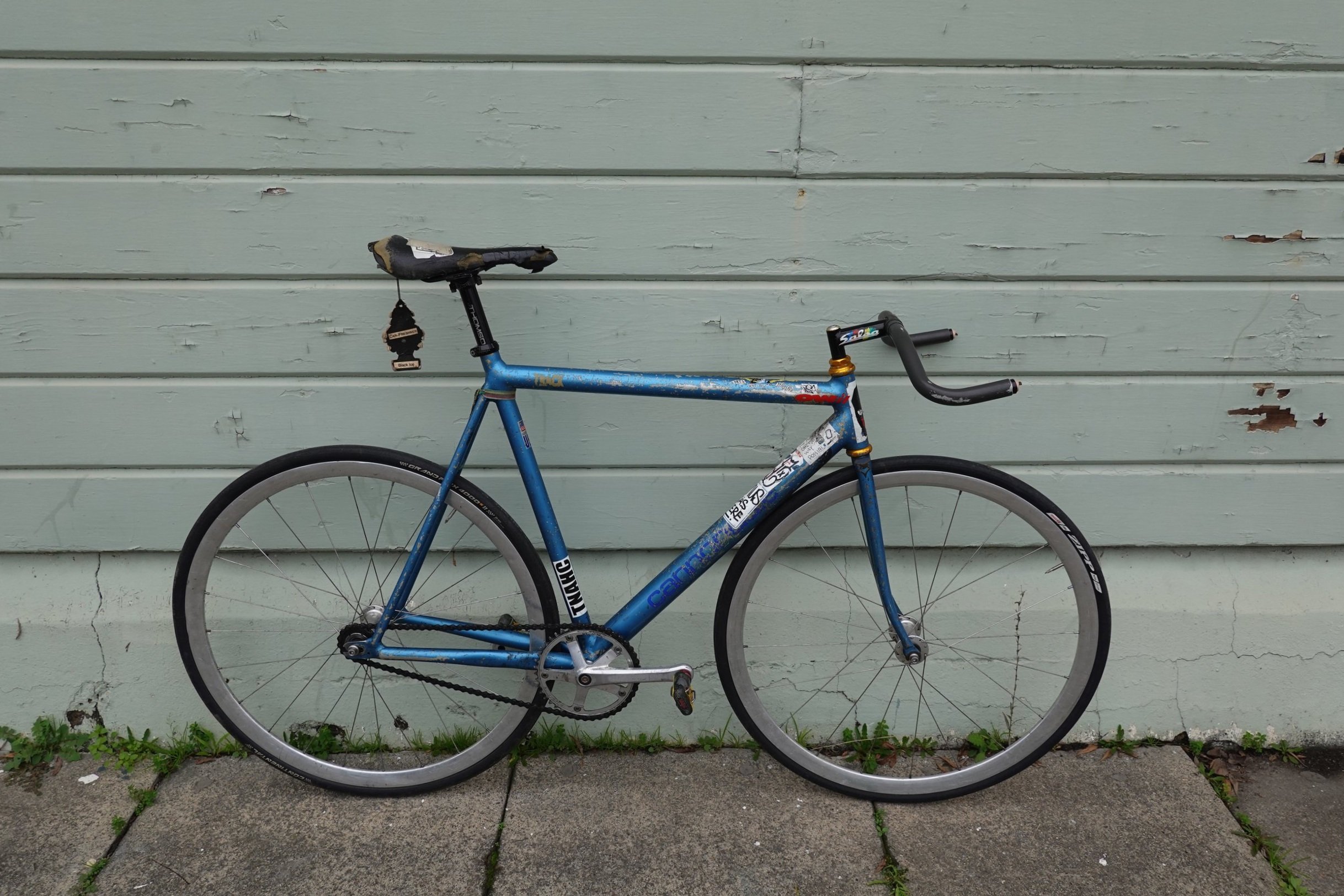
When I sat down to chat with fixed gear legend Chas Christiansen, we were talking about his bike garage and in particular his Cannondale Track which he describes as a unicorn bike. And that got me thinking about how certain individuals collect classic cars from bygone eras and whether any modern day cars will eventually gain classic status. So my question is, are there any contemporary track bikes that will eventually rival the Cannondale as a classic? 

Paul
It’s hard to say because the way we produce and consume today is so very different to 40 or 50 years ago. Contemporary super cars achieve a collectable status but is that through passion and sentiment or solely because of the investment returns? It’s expensive so it’s good.


cyclespeak
And bikes?

Paul
There are definitely parallels in cycling. In the way that Specialized release a new Tarmac every year and it’s a great bike, a very fast bike, but is any variant legendary in the same way as the Cannondale Track? Which might be explained by our love of nostalgia and a yearning for the past. So in answer to your question, I feel it’s doubtful a contemporary bike can achieve legendary status solely through its form or function. But maybe it can by whoever rides it and their own individual story.

cyclespeak
So by association? A bike can be imbued with the rider’s sense of cool?

Paul
Exactly.

cyclespeak
I feel like it would be remiss of me not to ask. Have you found your unicorn bike?

Paul
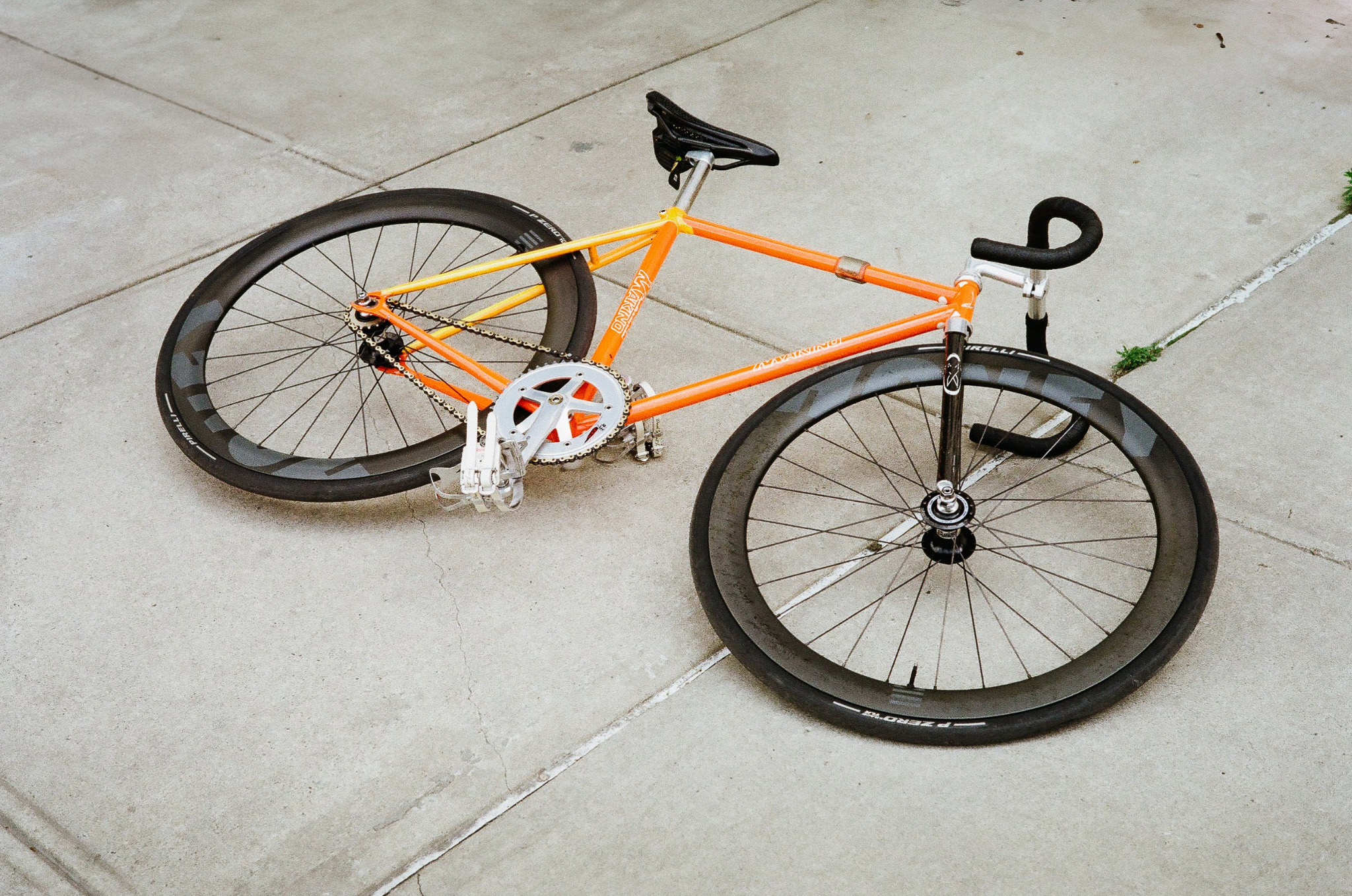
Good question [laughs]. And there are so many amazing bikes that I’ve owned but my Cinelli Mash Parallax takes some beating. I’ve had it repainted so there are flames on it, I travel with it, I meet people with it, people recognise me when I’m riding it and wave. Even if it doesn’t have a lot of monetary value—it wasn’t an expensive bike—it still means a lot to me. So that’s the closest I can get to a unicorn bike.

cyclespeak
Cycling as a pastime or pursuit can be very diverse with multiple disciplines and attitudes. Is the fixed gear world tribal?


Paul
The thing about any underground culture is that it brings people, outcasts, together. Ten years ago, when track bike parts were a bit harder to find, once you’d bought from a particular person you’d tend to stick with them. And then you also have to factor in how for roadies, time trialists, mountain bikers, the cycling industry is forever innovating new parts, components, frames and accessories just for you. That also happens with fixed gear brands but to a much lesser extent. Most of the time, it’s you and the people that look and think like you.

cyclespeak
So I’ve just bought my first single speed bike: a road frame conversion with front and back cantilever brakes and a freewheel. Let’s imagine I show up at your Thursday night ride. Is that configuration acceptable or would I get comments about not riding fixed?

Paul
I would love you to be there. Because in my mind, as long as you’re having fun, it doesn’t matter what kind of bike you ride. Everybody has something to bring to the table and I would hate to refuse you a good time just because you have a freewheel.

cyclespeak
But I’m guessing there are still points of ride and style etiquette in the fixed gear world?

Paul
We might be an underground culture—the bunch of outcasts that I mentioned—but it definitively exists. Like if you ride a true fixed gear then you should ride brakeless. And how a fixed gear road bike conversion will never be as cool as a pure-breed track bike. But like a lot of this type of thing, you can buy into it or not.


cyclespeak
So let’s imagine I’m riding a pure-breed track bike through the city, what should I be wearing to complement that aesthetic?

Paul
You can be pretty flexible. But now that I’m thinking about it, maybe not.

cyclespeak
Go on then. Paint me a picture.

Paul
There’s definitely a range of extremes and to be considered normal you need to be somewhere in the middle. If you go bibshorts, road pedals, helmet, sunglasses, then people will think you’re taking yourself way too seriously. But if you go jean-shorts over leggings, mountain bike shoes and a huge bag slung over one shoulder, then you’ll get looks questioning whether you’re a real messenger or just someone pretending. So it’s probably safer to go full-on casual which still leaves you a lot of scope for individual creativity.

cyclespeak
And how about the etiquette of a group ride? The dos and don’ts?

Paul
If you’re riding brakeless your stopping distance is going to be longer so that’s probably the main thing to think about. But in terms of etiquette, the fixed gear scene is definitely a lot more relaxed than road cycling. It’s a bit more wild and attracts a younger crowd.


cyclespeak
What’s your take on the videos you see posted where someone is playing chicken with oncoming cars?

Paul
I, personally, do not ride to impress. But that is a feature of fixed gear. So I guess that as long as you’re riding within your abilities and not putting others in danger, then do whatever you want. But I also sometimes see people taking a certain pride in putting themselves in potentially tricky situations, which fed into my original decision to call this Slow Spin Society. Because we all enjoy the same kind of bikes and you can be one of us without the need to ride at 30kph against the flow of traffic.

cyclespeak
That’s something I find refreshing regarding the Slow Spin Society podcast. How you’re comfortable gently poking fun at your own world and its clichés.

Paul
They apply to me as much as anyone else [laughs]. Because I’m one hundred percent guilty of showing up to a party and literally waiting until someone talks to me about my bike. But one of the key values of Slow Spin Society is authenticity. I want to stay real.

cyclespeak
So, with that in mind, where do you see the Slow Spin Society in five years time?


Paul
That’s a great question.

cyclespeak
With a great answer?

Paul
What’s funny is that my love for fixed gear has turned into a love for everything that doesn’t fit under the term competitive cycling. And what that means is that I started with track bikes but now I also enjoy bike packing, touring with friends, and everything that offers me a good time on two wheels. I even want to give road bikes a go but in a gentle, relaxed, non-roadie manner. Just having fun, riding bikes with my friends. That’s all I want.

cyclespeak
And how does all that fit with Slow Spin Society?

Paul
Maybe as a hub for alternative cycling? To continue the growth of a meaningful culture that connects the manufacturing side of things with the community. One needs the other but the problem nowadays is that brands are rarely willing to pay for journalism. They’ll offer to give you a frame set or a pair of wheels—which at face value might seem pretty sweet—but I’m sorry to inform everyone that it doesn’t put food on the table or help pay the rent. If, that is, at some point in the future I even have a place I can call home.

cyclespeak
Quite the dilemma.

Paul
You know, here I am putting all my time and energy into Slow Spin Society—and I fucking love what I do—but if you want thoughtful, independent cycling media to exist, then we have to start treating it as real work. Because it is.


cyclespeak
What do you think the mid-teens Paul would say if he could see you now?

Paul
Probably something along the lines of, “A bike. Are you kidding me?”

cyclespeak
Really?

Paul
Maybe that response is because my younger self was obsessed with motorsport and didn’t see much value in human powered motion. But also because whenever I think about what I’ve been building with Slow Spin Society, I’m aware that it’s not quite there yet. It’s definitely something but not fully formed. So I’m a forever dissatisfied person constantly striving to do better.

cyclespeak
Can I just stop you there to suggest there’s not one single creative person I’ve spoken with who’s ever able to say, “Right, I’m done.” They are constantly questioning, constantly looking to refine.

Paul
That kind of makes sense. So going back to my mid-teen self, maybe they would give me a thumbs up and tell me to keep going. That I’m almost there?

All photography shot on film by Paul using his Leica M6 / Slow Spin Society

Feature image by Philipp Grutzmann


Click on image to open gallery

Chas Christiansen / In search of the stoke

Former bike messenger, fixed-gear legend, artist, photographer, and bike aficionado; Chas Christiansen offers up an intriguing narrative on embracing each and every opportunity. Threaded through with a rich vein of self-deprecating humour, this Oakley wearing modern day Renaissance Man offloads on the hits he’s taken, the hardwon moments of clarity, and his continuing search for the stoke.


Chas
Hey! Whatsup?

cyclespeak
All good here. Especially as the stars are aligned for our call. I was driving into Manchester early this morning, only to pull up behind a plumber’s van and see one of the stickers adorning the rear doors spelling out CHAS.

Chas
Well there you go.

cyclespeak
You’re calling from home?

Chas
This is my basement studio space. Or more technically—because there’s a risk of earthquakes in the San Francisco Bay Area—my first floor above ground.

cyclespeak
We find that all very confusing because your first floor is our ground floor.

Chas
Oh, I hear you. And, in the States, if you do see a button marked G in an elevator, you might press it expecting the ground floor but in fact it takes you to the garage.

cyclespeak
You mentioned San Francisco as home?

Chas
Actually it’s Oakland. And that’s a big distinction for the locals.

cyclespeak
So it’s important?

Chas
Oh definitely. It’s a little like comparing Manhattan to Brooklyn.

cyclespeak
So which one is a) cooler and b) more affordable?

Chas
That’s a tough question [laughs]. And I’m going to say Oakland for both.


Click on image to enlarge

cyclespeak
Has Oakland become cooler since you took up residency?

Chas
Not at all [laughs]. But what I can say is that a lot of what I liked about San Francisco has changed—which is the nature of cities—yet Oakland still retains those key aspects that make it feel like home. There’s more of an artist based community, things are less driven by money, it’s a little more bohemian.

cyclespeak
I’m guessing Chas is short for Charles.

Chas
It is. Charles William Christiansen.

cyclespeak
Does anyone call you Charles?

Chas
The police and my grandmother. My Mom changed to Chas. And I definitely don’t answer to Chuck.

cyclespeak
You’ve just had a show of your artwork and photography open in San Francisco. I’m guessing a busy, fun-filled, exhausting weekend?

Chas
I have not been this fulfilled in quite some time. On so many different levels. I’ve had all this stuff bouncing around in my head for years, so to see it all come together felt amazing. But it was the response from my community that was especially touching. My whole goal was to recreate the scene from a decade ago when we’d visit gallery after gallery on a Friday night before all ending up at a bar. And at the opening night of my show, I had the same feeling as hundreds of people spilled out onto the street.

cyclespeak
Bikes, bike racing and artistic endeavors all seem intertwined in how you live your life. And your show was titled Born to fuck around, forced to find out. So looking back to your childhood, were you raised in a creative, outdoorsy environment?

Chas
Not really, no. I grew up outside of Olympia, Washington. Lower middle-class, so not poor but we definitely didn’t have a lot of money. We’d go camping every once in a while and I remember hiking a couple of times. As for being creative, I’ve always been into drawing but the house wasn’t filled with art.

cyclespeak
On your Instagram feed, there’s a certain confidence you exude when you engage with the camera. And I was wondering whether you were one of the cool kids at school, possibly an extrovert in class, or maybe kind of shy and retiring?

Chas
I think it’s fair to say that I’ve always had the ability to connect with people. But I was more of a nerd and definitely not one of the cool kids. I was a reader, I worked at the theatre and hung around with the drama kids. And I was a skateboarder, I was into punk and had a mohawk. So quite a mix but, at the same time, I went to all the parties and was on good terms with everybody.


Click on image to enlarge

cyclespeak
A planned career travelling the world in the Merchant Marine was cut short after you were arrested for tagging a building. And after paying your dues, you eventually landed in Portland where you could snowboard. And I believe you were known for driving up to the slopes in your convertible, fully kitted out and wearing snow goggles?

Chas
Yes, sir. That sounds about right [laughs].

cyclespeak
So how did you end up working as a bike messenger?

Chas
I rode bikes as a kid but was never super serious about it. But that convertible got me into some trouble to the tune of 22 speeding tickets in two years. So finally they took away my licence—funnily enough on the way up to go snowboarding—when I was pulled over literally a hundred feet from the resort. They arrested me, took me down to the station, impounded my car and that left me without any means of transport for getting to work.

cyclespeak
Which is where the bike comes in?

Chas
I was washing dishes at this super fine-dining restaurant and one of the servers suggested I get a bike. He even took me to a bike shop and sorted me out with this old Fuji cyclocross frame. So there I was, riding to work, and beginning to notice all the different people commuting by bike. The ones that always stood out were riding these super sleek bikes. They all had tattoos and looked cool but it was the way they’d skid that really got me.

cyclespeak
I can see the attraction.

Chas
Eventually I figured out they were bike messengers and there was this alley-cat scene. At that time I wasn’t earning a lot of money, was pretty broke, and the only cycling kit I had was hand-me-downs so I felt really out of place. But they were wearing cut-off shorts and a tee. And it just hit me that these were my kind of people.

cyclespeak
And a potential new scene to explore?

Chas
Absolutely. So in my lunch break—I was now working as a butcher—I would chase them all around downtown and, in the process, get them all super annoyed. Until finally, one of them took me aside and told me to meet them later at the Ash Street Saloon. I showed up at the appointed time, paid my five dollar entry fee, and raced my first alley-cat. And that’s when I had this moment of clarity. Because these people got paid to ride their bikes. I was a fucking butcher and packed sausages for a living.


Click on image to enlarge

cyclespeak
So you decided to switch career paths?

Chas
I kept on racing alley-cats until this messenger guy told me he was leaving Portland and did I want him to put in a good word for me to take over his job. So he did, I went in and talked to the dispatcher, got the job and quit being a butcher.

cyclespeak
It does look amazingly cool but what were the realities of your life as a messenger?

Chas
It’s the best, worst job in the world. You’re essentially given these tasks but then left to your own devices to figure out how to complete them. So there’s plenty of opportunities to learn about self-sufficiency and every day is different. There’s this fucking amazing community but the downside is that this same community can also be really toxic. It’s not a job with a lot of upward advancement and there’s a lot of partying and drug use. So it’s fun when you’re young but if you’re still drinking with the boys and girls into your thirties, it can start to wear on you.

cyclespeak
So a hard life?

Chas
It kills your body and that’s not just the partying. It’s a physical job and you take hits. I’ve had scrapes with so many cars and there’s no health insurance by and large so you inevitably go back to work before you really should. I was fortunate and got out at a good time—it helps to have an exit strategy—but my knees are still shot.

cyclespeak
You did more than get out of it. You founded the messenger company TCB*.

*Taking Care of Business

Chas
That’s another thing. You should never form a bike messenger company if you want to make money [laughs].

cyclespeak
It’s like they say: if you want to make a million in the cycling industry, start with two.

Chas
Exactly. But I’d worked as a messenger for enough shitty companies that I wanted to ensure that everyone who worked for TCB made good money and was taken care of.

cyclespeak
How long did it take before you were riding fixed without thinking about it?

Chas
A couple of years at least. When I first started riding a track bike, I was all over the road. And it honestly wasn’t until I moved to San Francisco and had to really deal with the hills that my confidence grew. But even then I took my fair share of hits and left skin on the ground.

cyclespeak
But eventually there’s a moment when things just click into place?

Chas
It got to the point where I would ride two or three miles through congested downtown traffic and not remember how I got there. Yes, I was conscious of talking over the phone and the dispatcher’s voice on the radio, but the actual movement between drops was a blur. So maybe that was my 10,000 hour moment when I could ride through traffic without the need for conscious thought?


Click on image to enlarge

cyclespeak
Was this the gateway to racing Red Hook?

Chas
I think it was. Because David Trimble started Red Hook so that his bike messenger and road-race friends could all come to his birthday party. But even though I regularly rode alley-cats, I didn’t come from a professional racing background. There had never been any talk of watts, a training plan, stretching, or a racing kit. Recovery, for me, was slamming three beers before crashing out on the couch. So Red Hook was probably the easiest way that I could step into sanctioned racing and rub shoulders with professionals. You spend enough time with those guys and things start to rub off.

cyclespeak
And then gravel came calling?

Chas
That was the Grasshopper adventure series. And back then, they were essentially alley-cats. You would show up at this small town in northern California and they’d give you a spoke card with the route printed on the back. And that just connected with me. You had to figure it out without recourse to a smartphone or GPS device. You were self-sufficient and left to your own devices which is pretty much how being a bike messenger works. And then stepping into ultra-distance racing with the Transcontinental, it’s basically just an even bigger alley-cat. You start here, end there, and there’s four checkpoints you need to pass through. It might take two or three weeks as opposed to four hours but I already understood the concept.

cyclespeak
You scaled it?

Chas
One hundred percent. From racing city streets to racing across continental Europe.

cyclespeak
On your website’s Garage page there’s a ​​No22 Little Wing titanium track bike that you term a forever bike. And that got me wondering why you could never part with it? Is it the memories it embodies, or the way it rides?

Chas
Kind of all of the above. I rode for MASH for a really long time and No22 was the first bike company that supported me after I stepped away from Cinelli. And I was intrigued by titanium—in the room next door there’s a huge stack of broken aluminium and steel frames—and I just hope, when I’m 65, that I’m still riding that track bike down to the coffee shop.

cyclespeak
Another Garage bike—I could happily go on, referencing each and every example—is a 1993 Cannondale track bike that you rode the shit out of as a messenger in Portland. A bike you term a unicorn. Can you put into words what it feels like, both physically and emotionally, to ride fixed through the city streets?

Chas
This is going to sound a little trite but there’s this connection to a machine that is purely instinctive. And when you pair that with flowing through city traffic—faster and smoother than any other vehicle—you get this intense feeling of freedom. It’s very intuitive so mentally you’re disconnected from the physical. And because it’s fixed, you’re not thinking about what gear you’re in or when to hit the brakes: it’s this gap, that gap, make the light. You’re not looking immediately in front of you, you’re looking ten moves ahead. Dodging and weaving—your heart rate elevated—and it’s those moments that I feel the greatest sense of freedom because I’m not constrained by anything.


Click on image to enlarge

cyclespeak
Just backing up to your first Transcontinental, on the face of it that was a big leap into the unknown. But you’d already ridden from Portland to Chicago to attend a messenger race. On a track bike, with a paper map.

Chas
That’s what’s so funny about the move to ultras. Because like you said, we’d already been doing it forever. But what got me to the start line of the Transcontinental, was the kit company PEdALED hitting up me and my forever partner in crime, Nico Deportago-Cabrera.

cyclespeak
And what did they say?

Chas
They told us there was this thing and they could get us in if we wanted to do it. And we were like, why not? Because at that time, if pretty much anyone was offering us an opportunity to travel, the answer would be a yes.

cyclespeak
So you were in.

Chas
But with no fucking clue as to how big a deal the Transcontinental was. To the extent that we got a lot of beef when we scratched at the fourth checkpoint so we could go race the Cycle Messenger World Championship. I can remember handing over our trackers at the top of some mountain in Romania and thinking, fuck, how do we now get to Montreal in 49 hours? But we muddled through and when we got home, discovered the internet was really pissed off with us. Nico did the research and it was, dude, this ultra-racing is a really big deal. Which was the main motivation for going back to the Transcontinental the next year and finishing.

cyclespeak
I guess there’s a physical and mental aspect to both a fixed-gear crit and a multi-day, ultra-distance race?

Chas
Mental strength and self-sufficiency play a huge part in both alley-cats and ultra events. However you want to do it, is how you do it. Yes, there are some rules that determine how the race goes down, but no one is really saying that it has to be this or that way. And when all’s said and done, it’s about not taking setbacks as the end of your race.

cyclespeak
But there is a difference between the disciplines?

Chas
As I see it, if you win a fixed-gear crit, you go to the podium and the crowd is screaming. But when you finish an ultra event, most of the time nobody is there. And there’s been times I’ve wrapped up my race at 3:00am in a parking lot and just started crying. So if you put me on the spot, I’d say that finishing within the time cut of an ultra is a more fulfilling experience.


Click on image to enlarge

cyclespeak
Can you picture one of your lowest, low points in a race and describe how you dug yourself out of that hole?

Chas
I didn’t. Because sometimes you don’t. And that’s the hard truth of not only ultra-distance racing but of life in general. I entered the inaugural Atlas Mountain Race in Morocco as a pair with Nico and his fork broke. We’d already discussed what would happen if one of us couldn’t continue—that we’d carry on alone—but riding away and leaving him behind was devastating. And it soon became apparent that I just wasn’t emotionally ready to be out there by myself. So after three days of pushing on alone, I scratched.

cyclespeak
What made you decide to stop?

Chas
I’m all about the positive mental attitude and that works fine until it doesn’t. So I guess I just got to the point where I was so sad, so scared, so overwhelmed, that I just had to call it. A heartbreaking experience that left me crying in the back of a cab in Morocco with the driver staring back through the rear-view mirror at this unwashed, stinky and dishevelled guy.

cyclespeak
Coming full circle back to your artistic pursuits, there are numerous examples of your doodling that I find incredibly exciting. Can you talk me through where it’s taken you and where it’s going?

Chas
I have no idea where it’s going [laughs]. But I was always encouraged to draw and I’ve always been a doodler. That, in turn, led to graffiti and me getting arrested for tagging a building.

cyclespeak
And it now inspires your creative expression as an artist?

Chas
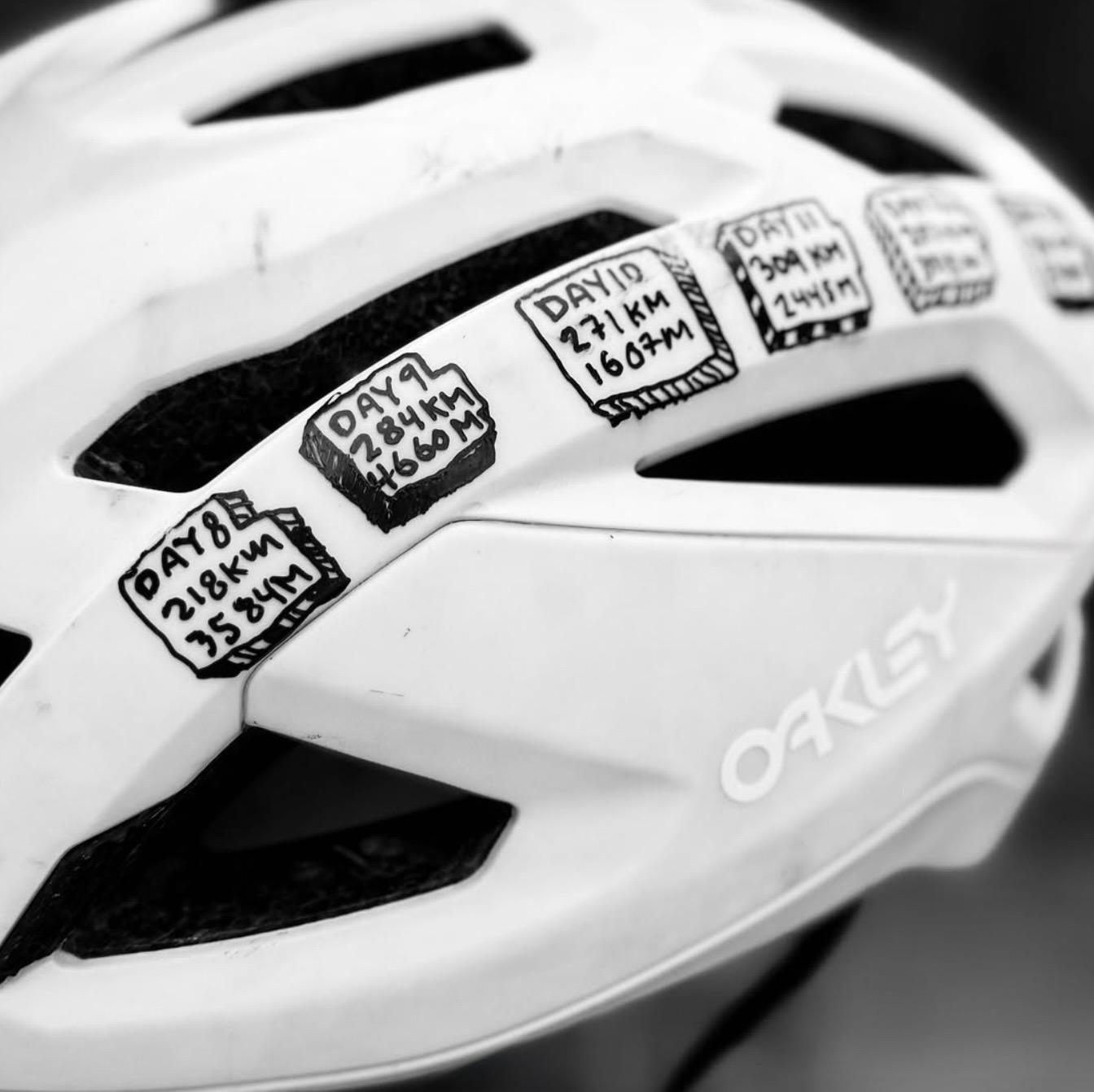
It’s a deep part of messenger culture and when I was working in the city—making drops at Fortune 500 company offices, basement businesses, and everywhere in between—I would hear people talking and clock the signage on the streets. So I decided—rather than lose all these references—that I would write them down. And not wanting to tag on someone’s property led me to start drawing on the things I would get sent by my sponsors. Whether it was a helmet or a pair of shoes; I would personalise it with my doodles. Then when I started to travel, I would return home with notebooks full of thoughts and ideas, images on my iPhone and photographs I’d taken with my film camera. I didn’t have any canvases but what I did have lying around were disc wheels and brake calipers and it’s all just evolved from there. A stream of consciousness that I transfer onto physical objects.

cyclespeak
You mention photographs and a couple of months back you posted a series of images shot on a roll of film that had been mistakenly put through the camera twice. An accident but a very fortuitous one.

Chas
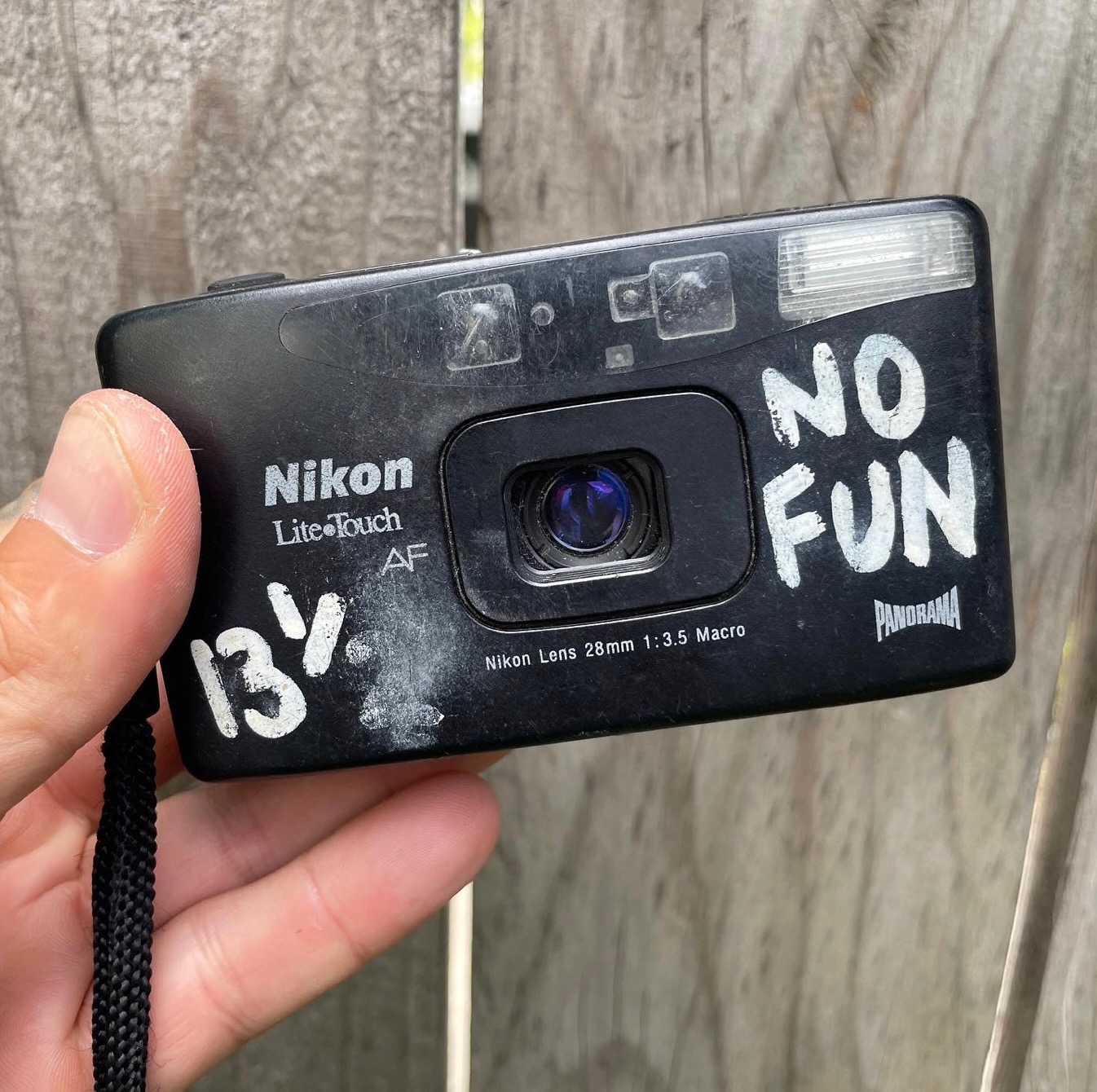
Double exposure shots are something I’m always playing with but those turned out better than the ones I purposefully try for. And I love film cameras in general. You take a shot on your phone or with a digital camera and you can see it immediately, you can edit it on the fly, there’s instant gratification. But I have multiple film cameras on the go at any one moment and some of those have rolls in there for six to nine months. So you have this chronology of things that you’ve done and moments that you’ve probably forgotten. And it’s only when the roll gets developed and the shots are printed that you get reminded of that. I like the idea of documenting life and then seeing whatever you get out of it.


Click on image to enlarge

cyclespeak
You’re comfortable with this analogue process?

Chas
My generation is the very last to truly remember a pre-internet age. I wrote my first papers by hand and I didn’t get a smartphone until I was 25. And you know what, I feel really privileged to be part of the generation that bridges that gap.

cyclespeak
But you wouldn’t want to wind the clock back?

Chas
There are lots of advantages to having our current level of connectivity. But I can’t help missing the travelling I did before I got my first smartphone. That feeling you had when you were lost and had to ask for directions. You had so many interactions with the people in the place you were at. Now you just ask your phone for the top-ten rated restaurants and you follow the blue dots. The first international trips I made to race alley-cats, you got handed a physical map and you memorised the landmarks. Not that it’s better or worse but I just miss analogue travel.

cyclespeak
Zooming in on day-to-day life and living, is there such a thing as a typical day?

Chas
I’m trying to get there [laughs]. These last three years, I feel like I’ve finally achieved a life goal of being an international, globetrotting, professional cyclist. I’ve been fully sponsored by Oakley and it’s been amazing. But all that equates to 180 days out of every year on the road. And as with most things in life—when you dare to live your dream—inevitably it starts to tarnish. It’s hard to be a parent and a partner when you spend so much time away from home. Frequent flyer miles are fun and cool but you reach the point where it starts to feel like work. Which really bums me out because living that life was truly special. So this year, I’m still racing bikes but what was once a typical day—returning from a trip, catching up on laundry, before getting on another plane—will now involve more time at home, more time in my studio, and more of a focus on quality over quantity in the races I do.

cyclespeak
Your Instagram profile leads out with Exploring the world in search of the stoke. What, to you, does this embody and have you found it?

Chas
The stoke is a feeling of freedom and speed. That moment when everything else falls away and you’re one hundred percent focused. And, for me, I find that on the bike. Whether that’s a track bike on city streets, a training ride to a mountain top, or crossing a desert on a hardtail; whatever is happening in front of you is your entire existence. Your body and soul focusing on one thing without distraction. Not that it’s a perpetual state of being—it’s fleeting—but I like to think it’s a never-ending search. And like I’ve already mentioned, I’m big into PMA—positive mental attitude—but that’s not to say that you always have to be happy. Maybe it’s enough to know that things will get better, even when it’s looking really shitty.


Click on image to enlarge

cyclespeak
Looking back over your life to date, is it fair to say you’ve burnt bright in terms of a rich and diverse range of experience?

Chas
It’s one of the things that scares me the most. I’m very momentum driven and if a project is given a green light, I go. And I truly believe that saying yes has allowed me to live this life and have these experiences: I’ll buy the ticket and take the ride. One of the things that gives me a sense of pride about myself is that I will jump into a scary situation and just kind of work things out. But all of that predisposes that things keep happening. Because what’s the word they use about sailing?

[here Chas pauses]

The doldrums. That’s it. When the wind dies down, the waves flatten and you’re just stuck floating. And I guess your question hits particularly hard because I’m about to have ACL surgery—my first big injury in a decade of professional racing—which means I’ll be out for six to eight weeks. Longer than I’ve been down in my entire life. But it is what it is, and I’m excited to face that challenge. I’m not what you’d call a spiritual person—I’m not religious—but I do believe there are forces in life and things happen for a reason. And this injury is now part of my journey so let’s see where it will take me.

All photography with kind permission of Chas Christiansen / notchas.com

Jan Sprünken / Rad Race

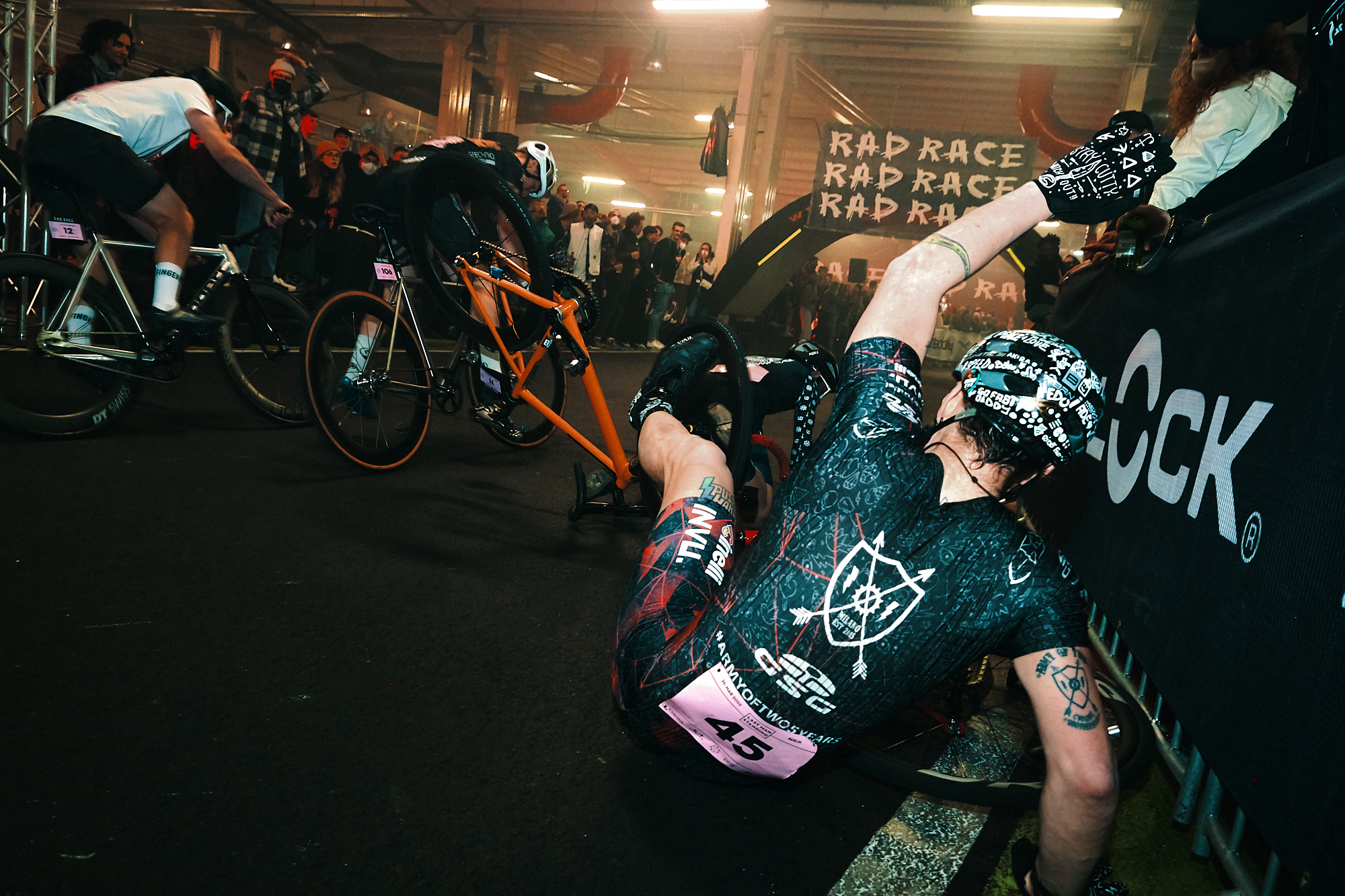
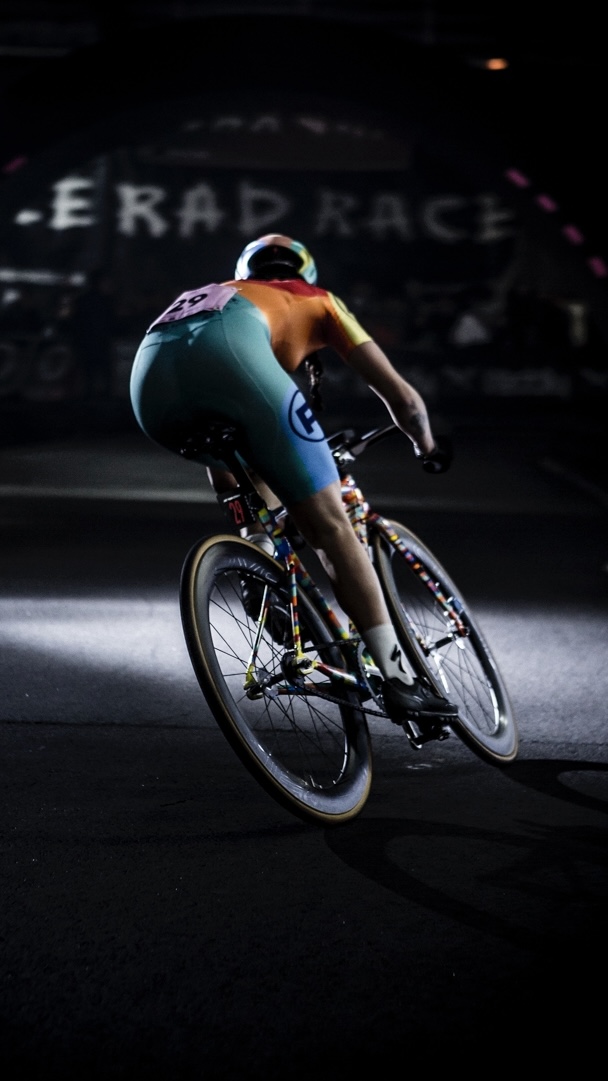
Rad Race? In German, rad means wheel and it can also be a shortened term for bike. But it’s not supposed to translate simply as bike race. There’s a lot more to it than that.

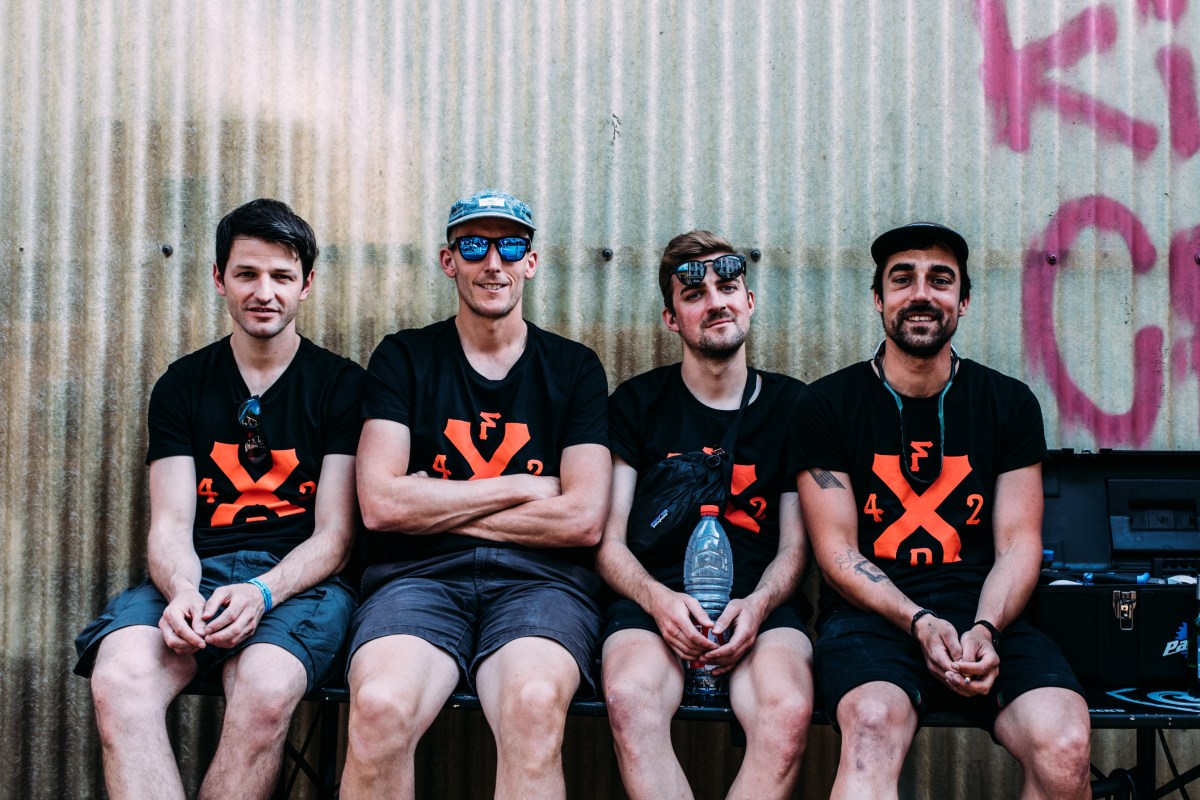
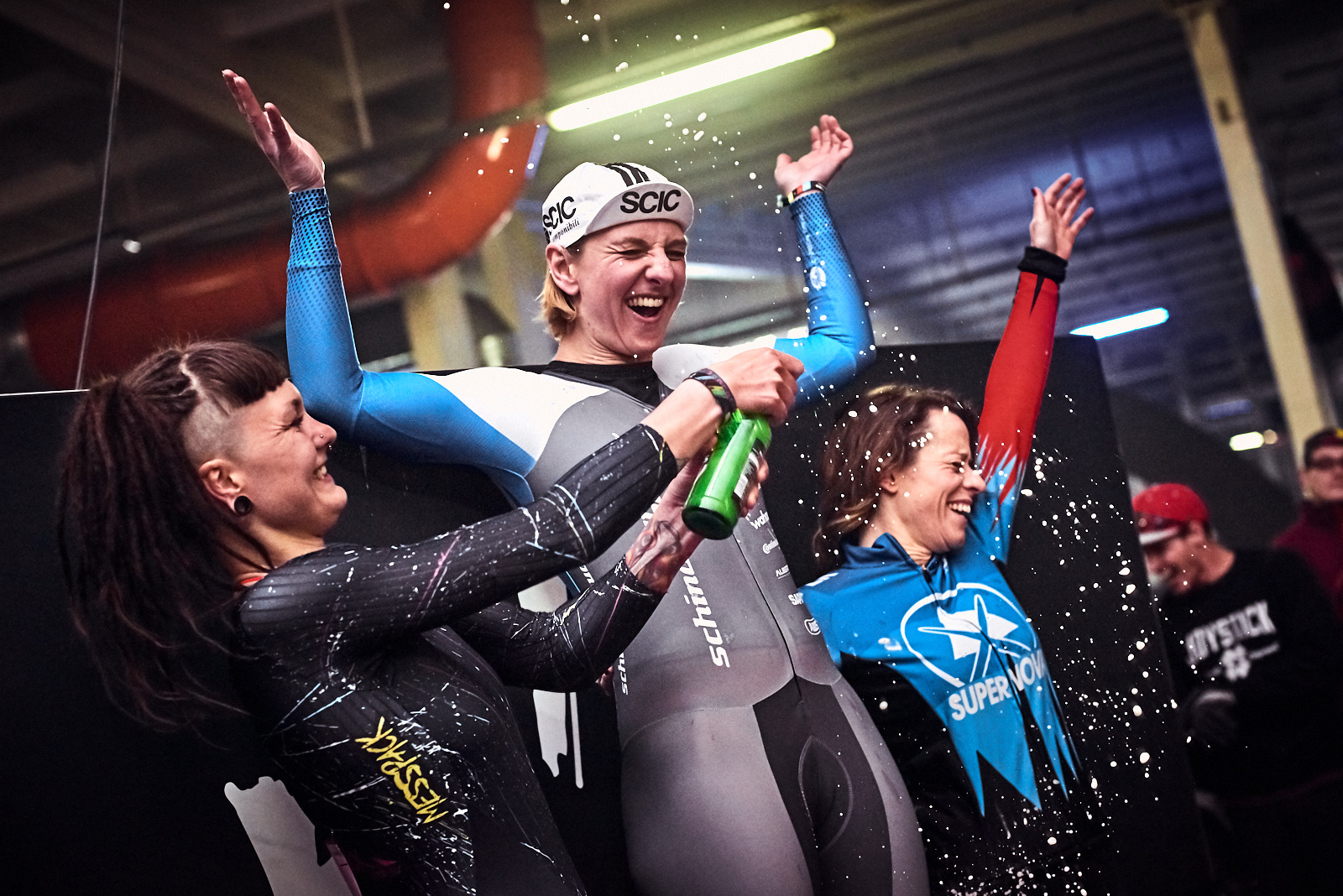
I’m on a video call with Jan Sprünken [pictured second left]; one of the original 12 friends that first founded Rad Race. After I semi-seriously apologise for my store cupboard background, he smiles and suggests that it’s a filter I’m using. A nicely judged off-the-cuff comment that sets the tone for our conversation—Jan responding to my questions with a thread of answers and anecdotes that place a sense of fun and community equally among all other considerations.


Jan
I’m currently living in Berlin but Rad Race was founded in a city called Münster. It’s known as the bicycle capital of Germany because when you arrive at the train station there’s just a shit load of bikes everywhere. And we were a group of friends all with a Münster background—either studying or born and raised there.

cyclespeak
And the initial inspiration?

Jan
Like a lot of the best ideas, this one grew from us sitting round a campfire, talking and drinking beer. Just us bullshitting and saying why don’t we do this or that. But then you never really do whatever you suggest. It’s a campfire thing that feels good in the moment and you’re not really considering all the down sides.

cyclespeak
But, in this case, the idea stuck?

Jan
That was Ingo [Engelhardt]. To give him credit, he’s the kind of guy that gets things done. And the next day when we were sitting in a café, he showed us his phone and there was this Facebook page which he’d created. So all of a sudden there was an idea, a name and a visual identity.


cyclespeak
And from there?

Jan
We set about drawing up a business plan but none of us had any experience with start-ups. So the process was driven by gut feeling. Whatever felt wrong we ignored and what felt right we followed.

cyclespeak
Before the concept of Rad Race was first dreamt up, how were you all riding?

Jan
Some guys had single speed bikes. Some were more road. My background was professional basketball. I had a mountain bike but I only rode it about four times a year [smiles].

cyclespeak
Was there a common interest?

Jan
This was the tail end of 2013 so the fixed gear scene was still peaking and we all loved watching them race and admired the skills they had to control the bike.

cyclespeak
Now that you’ve established your own event series, I was wondering where you see Rad Race in terms of the broader cycling industry?

Jan
It’s not supposed to be this excluding, elitist thing. It’s not one, narrow definition of riding.


cyclespeak
So what would be a broader definition?

Jan
It’s an attempt to enjoy cycling and build a community. To be a platform for people to come together and explore what the bike can offer.

cyclespeak
That reminds me of a quote on your website: ‘We don’t care where you come from and why you ride’. 

Jan
That’s from the early days. But we still like it so why change? And it’s a reminder for us too, that as long as you get a kick out of riding, then that’s the most important common denominator.

cyclespeak
Is this an attitude that needs constant curating?

Jan
Unfortunately, it’s human nature to create an us and them. It happens everywhere so we always want to be open and welcoming.

cyclespeak
I think it’s really cool that you place so much emphasis on people having fun.

Jan
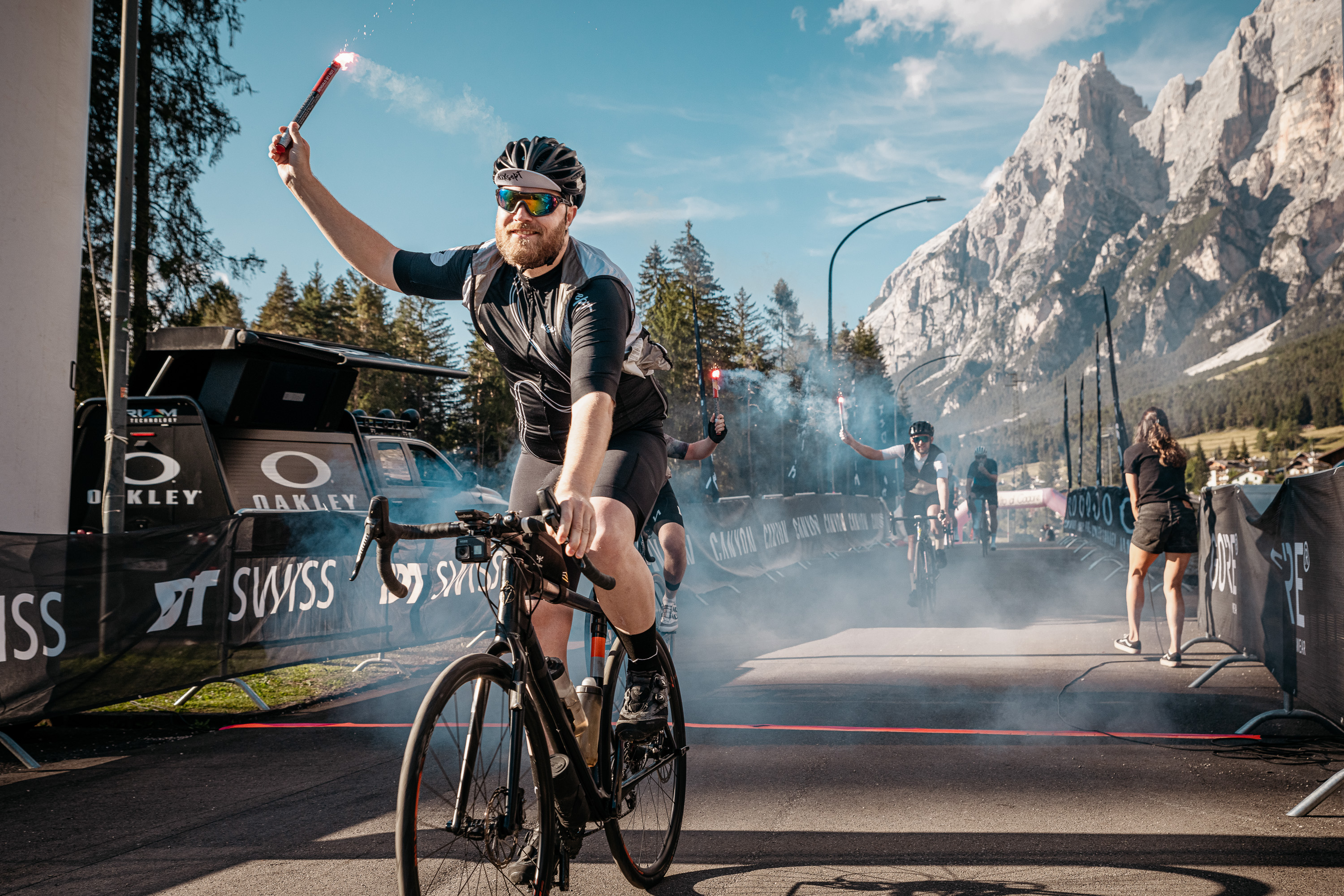
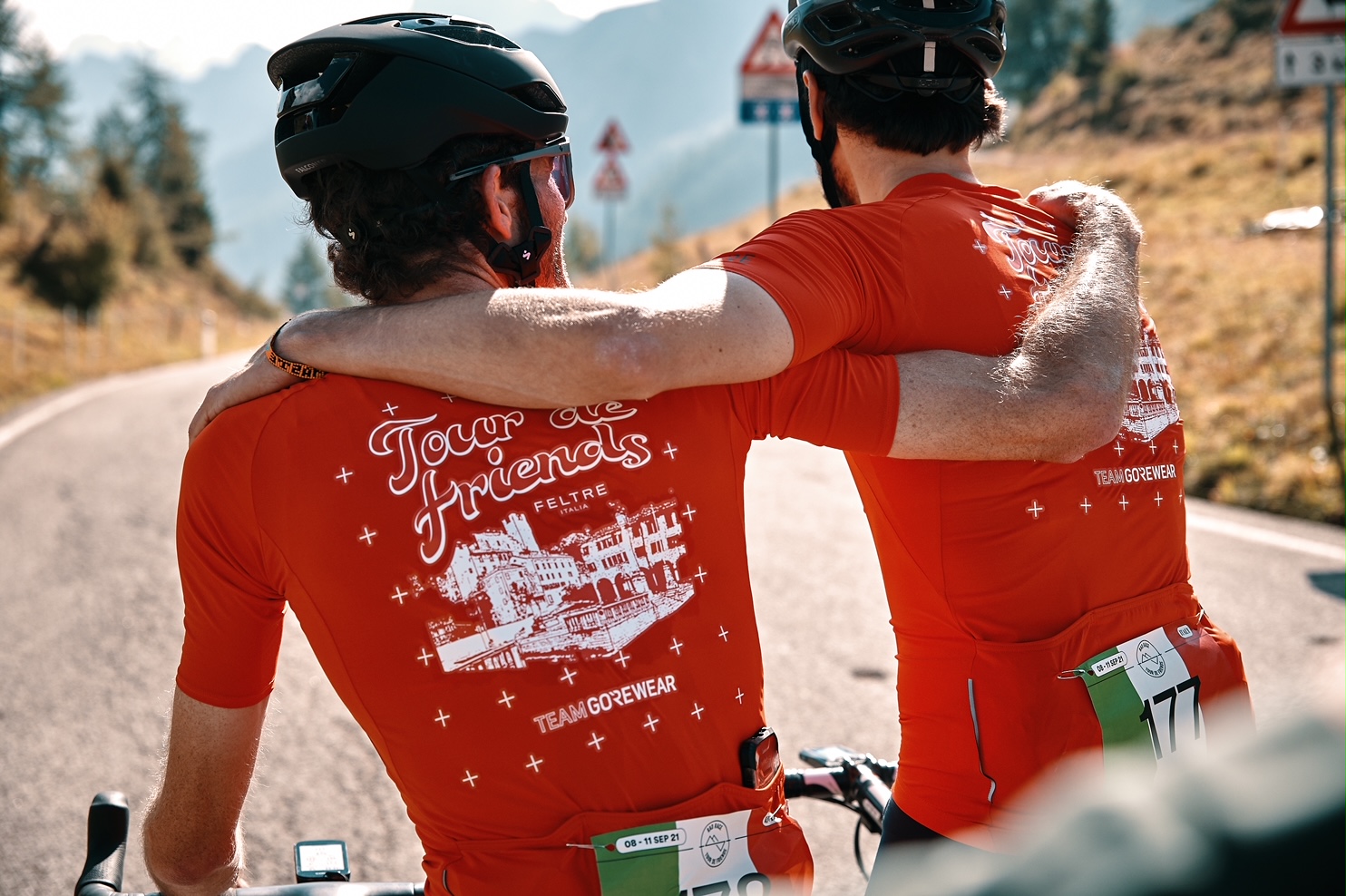
It’s like the first time we organised a multi-stage ride that started in Munich before ending up close to Venice. It was meant to be a race but we did the test ride with a handful of friends and ended up questioning whether it had to be a race? Because why would you want to drop each other? Fuck no. So we turned the whole concept on its head and the Tour de Friends was born. 500 people crossing the Alps together and every night we gather at the finish of each stage and drink a couple of beers. The perfect platform for doing what you enjoy and having a good time.


cyclespeak
You organise a variety of events including fixed gear racing, ultra distance non-stop challenges and multi-stage tours. Is there an element of Rad Race DNA that runs through each and every event?

Jan
There is but it took me a while to understand this myself. At first I only saw these exciting bike events but it was later that the concept of community struck me as a crucial aspect of what we do. I’ve known some of the participants for close to ten years and many are now good friends. They come to have fun, to ride their bikes and to share in something that’s bigger than the individual.

cyclespeak
Races such as Last Wo/Man Standing; I’m guessing there’s an awful lot of hard work that goes into hosting such an event?

Jan
Yes, indeed [laughs].

cyclespeak
And you naturally need a suitable venue?

Jan
The first time we ran this event, we knew we wanted it to be in Berlin. So we rented an indoor karting track in this really hip area of the city.

cyclespeak
And things grew from there?

Jan
A little too well because they kept increasing the fees. Doubling the price each year and demanding they take over the concessions. Especially for this event, the after-show party is off the charts and we can recoup some of our expenditure on the food and drink sales. So we ended the relationship and that proved a liberating moment for us.


cyclespeak
So a good decision?

Jan
It was but we still needed a new place which was obviously a problem. So myself, Ingo and one of our track riders Axel spent a day in Berlin going round all the other karting circuits and writing down the pros and cons. Is there room for spectators? Is the track wide enough for passing. Maybe there’s a bridge with limited headroom that would decapitate our riders? In the end we decided on our favourite and shook hands with the guy who owned it.

cyclespeak
So it all ended well?

Jan
You could say that but we did have one year when he complained that his restrooms had been destroyed. People partying hard and [pause] you know…

cyclespeak
I guess I do [smiles].

Jan
So we immediately asked him to fix it and we covered the cost. It’s a relationship we really value and a venue that works well. In fact one year – just before the pandemic – Fabian Cancellara participated.

cyclespeak
That’s pretty special.

Jan
I can still picture the looks on the faces of the other riders when they lined up with him at the start. But that’s the really cool part too. He’s not automatically the best rider at Last Wo/Man Standing because it’s completely different to what he’s used to doing. Obviously he’s one of the greatest cyclists of all time but he still got eliminated in Round Two by a street messenger guy who spends every day riding fixed and dodging cars on the city streets.


cyclespeak
I’ve rewatched your Final Lap video numerous times and the camera work is mindblowing? How do you capture such awesome imagery?

Jan
It’s a drone.

cyclespeak
But the kart track is inside?

Jan
The operator is a friend of ours. And we explained about the ceiling height, the spectators and all the gantries. But he was confident that he could get the shots we needed.

cyclespeak
You feel like you’re in the race, on a bike, immediately behind the other riders. Simply stunning.

Jan
Watching him navigate the drone was almost as exciting as the race itself [laughs].

cyclespeak
And then I watched another of your videos. Carnage, corners and crashes. And this one made me question what type of rider is attracted to your way of racing? It’s very cut and thrust.

Jan
I don’t know that term but it sounds cool. Actually, it sounds exactly what it is [laughs].


cyclespeak
So maybe not for everyone?

Jan
It appeals to people that love to ride their fixed gear bikes on the street. Who commute in that fashion or maybe earn a living as a messenger. But the people that do well also train really hard. The guy who won this year’s competition – Alec Briggs – he’s not riding his bike to a bar to have a beer and then home again. He’s a legit cyclist and has all the skills.

cyclespeak
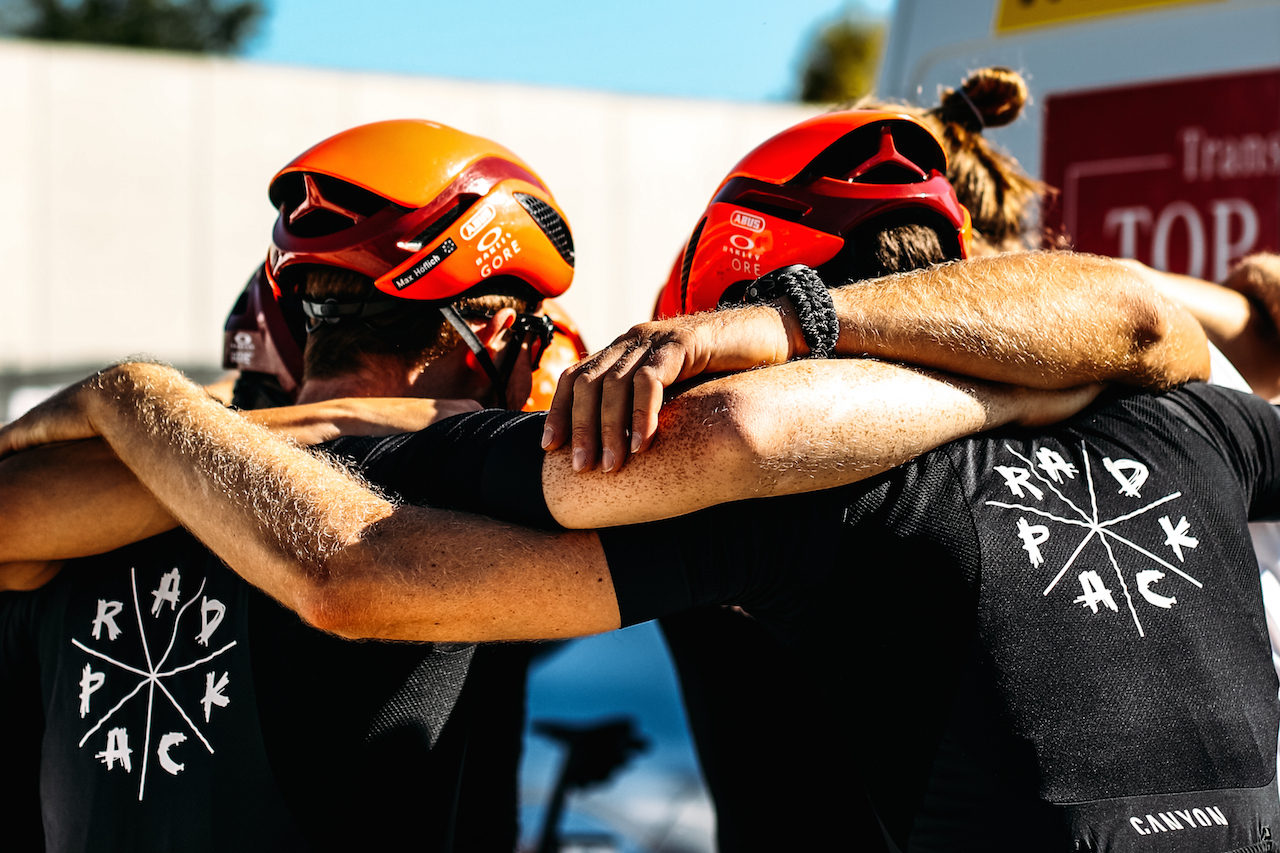
Speaking of training, you have your own teams. The Rad Pack and Grl Pack.

Jan
They do race but they’re not really racing teams. They developed after we did trips together where we all wore a specially designed jersey. So we all felt like a team.

cyclespeak
In the team images you have on the website, there’s lots of laughter and smiles and not taking yourselves too seriously? Maybe a little different than the grim suffering depicted in some race photography?

Jan
Our riders are ambitious and want to do well but it’s not their job. If they don’t enter a race for five or six months, that’s perfectly okay. Yes, there are races we participate in but it’s not really a race team. It’s more of an open and fluid definition of team.

cyclespeak
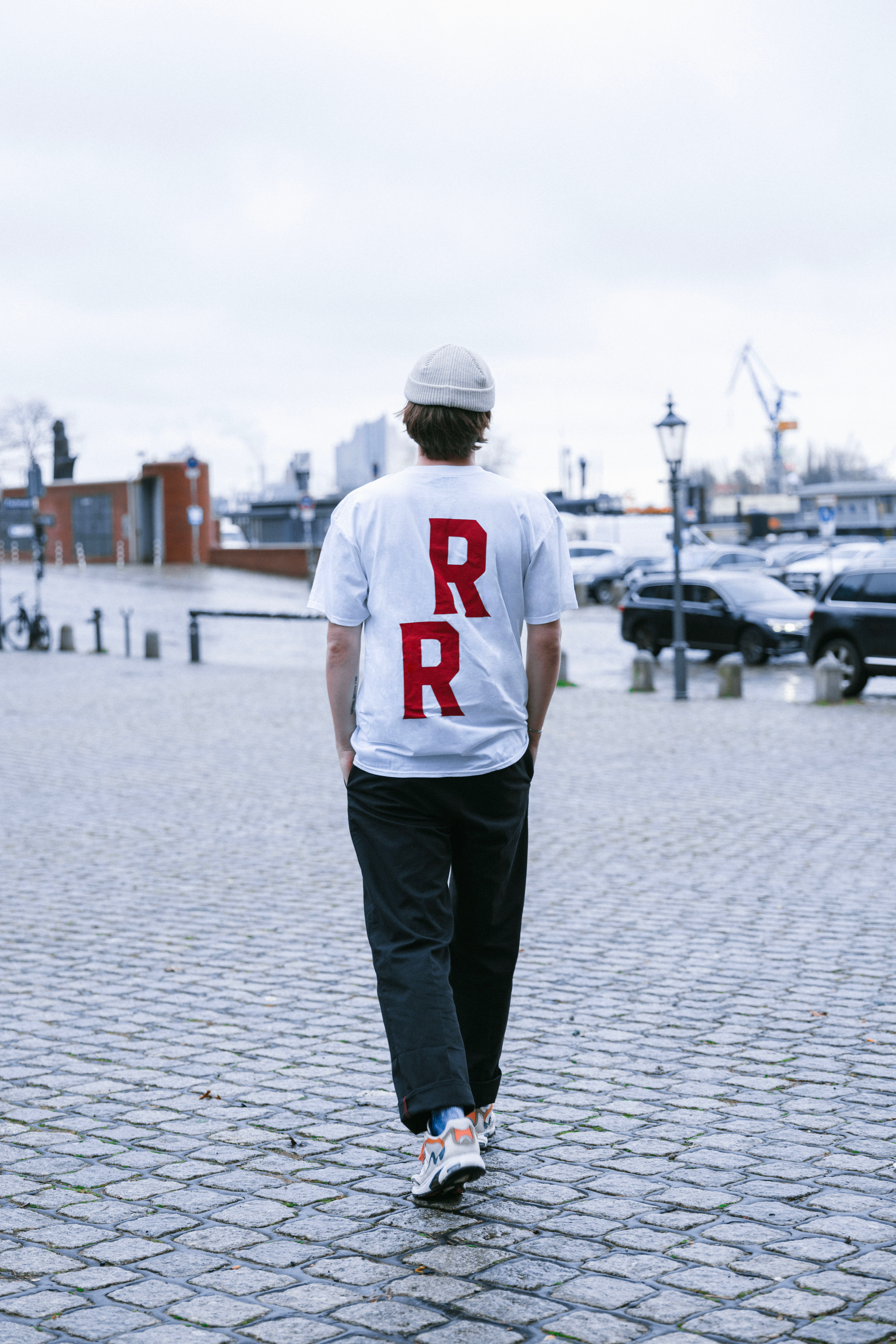
Alongside your race and event series, you now have a physical presence in Hamburg with your Rad Race shop.

Jan
Hamburg happened when we needed to swap this small rented workshop we were using as an office for something bigger. We saw this amazing space next to the fish market which is a really prestigious area down by the river. And because it was a lot bigger, we started thinking how it could be more than just an office and that’s how we arrived at the shop concept.


cyclespeak
So an unexpected outcome?

Jan
More jumping in at the deep end because we didn’t know jack shit about opening a bike store [laughs].

cyclespeak
I notice that you’re hiring. You’re looking for mechanics and baristas?

Jan
Yes. Always [laughs].

cyclespeak
Always?

Jan
We completely underestimated how busy our bike workshop would be. We had a good friend who was a mechanic that we thought would be perfect. He’d get a paycheck and we’d have someone we could trust. But leading up to the official opening we had this pop-up and even at that early stage we could see how busy we’d be.

cyclespeak
Which explains the job advert.

Jan
Because of what we do with the race series, we meet so many people that are enthusiastic about cycling and we often get mechanics asking if they can come and work at our place. And we say, “Yes, you can!” [laughs]


cyclespeak
I work a couple of days a week as a barista but I’m based south of Manchester. That’s quite a commute to your Hamburg shop so I didn’t apply for your position [smiles].

Jan
You could spend your vacation with us. As an intern? You could show us how to fix great coffee?

cyclespeak
There’s a certain Berlin-based bicycle brand that – rumour suggests – has the fastest shop ride in the world.

Jan
I think that might be true [laughs].

cyclespeak
So your Hamburg shop isn’t out to steal their crown?

Jan
We do have rides but we just invite people to meet there and sometimes they happen and sometimes they don’t. From what I’ve heard, the one you mentioned in Berlin is legit [smiles].

cyclespeak
Does this go back to what you mentioned earlier? About just letting things follow their own course?

Jan
What we do and what we don’t do?

cyclespeak
Yes. Exactly that.

Jan
We only want to go in a direction where things feel good to us. And the decisions we make aren’t always financially driven. I don’t think we’ve ever made a single euro in profit with the Last Wo/Man Standing events. It’s actually the opposite but we feel it’s worth it. It’s a fun event that feels good and we know that eventually they’ll be a benefit. We like to earn money too – we’re not angels – but we stick to our way of working because some of the best things we’ve done have happened in this way.

Rad Race

Photography with kind permission of Rad Race: Arturs Pavlovs / Bengt Stiller / Björn Reschabek / Chiara Redaschi / Tom Schegel / Nils Laengner / Christoph Steinweg / Dennis Arndt / Yunus Hutterer

Jean-Baptiste Delorme / Easy riding

“A couple of years ago I was riding my track bike down the street from my house. I had my hands off the bars adjusting my helmet and my feet were locked in the toe-clips. All of a sudden the seat post broke in two and I cartwheeled off the bike. Landing on my ass, it took me a moment to realise what had happened before I dusted myself down and walked back home—the frame in one hand and the saddle in the other.”

For someone with such a relaxed approach to cycling, photographer and videographer Jean-Baptiste Delorme’s introduction to riding was anything but. After being presented with a new mountain bike at the age of 12, he was sent off to take lessons at a local cycling club. Already skateboarding and relishing the freedom of practising whenever he wanted, Jean-Baptiste (or JB as he’s more familiarly known) disliked the rigid routine of the bicycle training to such a degree that he stopped riding altogether.

“I hated it and still have bad memories of that time. But a few years later, my Uncle invited us for a week’s vacation in Morzine in the Alps. You could rent downhill bikes and this I loved!”

Having discovered how much fun cycling could be, JB took to riding the hills around Auvergne where he lived at that time. A year later saw a move to Montpellier to study architecture and a switch to riding a track bike following a chance encounter with another student from his school.


“I tried his bike, really enjoyed the feel of it and like everyone else was doing, I got my own road-bike conversion. And then one night I saw a group of young people out riding on the street. I mentioned this to my friend and he told me it was a crew called La Nuit Noire* that met up after work. Making contact, I started to ride with them and soon discovered how much I loved being part of a group of friends rather than a traditional cycling club. In a sense, it took me back to when I used to skate—just hanging out and pushing ourselves to see what we could do.”

*The Dark Night

Having previously studied photography before architecture school, JB lost motivation without a defined purpose for the imagery he was creating. But now, with his friends from La Nuit Noire, he discovered a newfound desire to document what they were doing as a crew.

“It was creating images for social media and to make some prints that pushed me to pick up my camera again. And then after graduation, I chose to work in photography and video. My Mum still asks me why I did the studies but never worked as an architect. But I tell her I regret nothing because there were aspects of the course that I’ve since found very useful. Studying architecture, you’re encouraged to ask yourself questions with regard to the process and the endpoint—if I do this, for this purpose, what will be the outcome? So maybe it’s provided me with a way of thinking that I still subconsciously make use of in my work?”


Mentioning the stereotypical cycling imagery of roadsides lined with fans and riders’ jerseys covered in the brand names of sponsors, JB conjures up this visualisation to illustrate why he instinctively prefers a simpler aesthetic and a more minimalistic approach to representing movement—a pureness in sport that he finds particularly beautiful.

“I grew up watching skate videos and they’ve always been a big influence on my work. You see things differently because they use the space in a certain way and there’s a rhythm to the movement. So I try to create a tension in my pictures—a graphic approach that’s pure and free. Much in the same way that a track bike is stripped back, it’s about removing what disturbs the eye from a composition and taking away any unnecessary noise.”

Working in both photography and film, JB believes that both mediums can be used to convey an emotion but expressing this in video is more challenging as it requires a bigger team of people to create a quality product. That unlike photography – where it’s easier to control all the different variables – with film it’s harder to get exactly what you want. An analysis of method that JB extends to how he shoots from two opposing perspectives.


“Static viewpoints are good for more composed images. When I have a specific idea and I say we’re going to do this and this and this. But I really like shooting from a bike because it feels more spontaneous. Like you’re floating with the other rider – a sense of a shared experience – and you can move around to see how the light works from a certain angle. And sometimes you get lost and the photos have an element of surprise. A combination of luck and locality that can add that magical ingredient.”

Preferring to shoot with a mirrorless camera, much of JB’s recent work was captured with a Sony A7iii—the tilt screen proving invaluable in allowing him to position the camera away from his eye when riding.

“What makes a huge difference when you’re shooting on the go – it can get a little sketchy – is knowing your camera is up to the job. It’s important to have really good autofocus but there’s still a certain amount of praying that the images turn out how you want. So if I’m shooting from the bike, I’ll move around from spot to spot, just following the rider wherever they decide to go. When I have the feeling that the light and the environment is interesting, then I’ll shoot hundreds of photos in a short period of time knowing that maybe only one or two will express what I want. Fixing in a fraction of a second a mix of light and attitude that gives context to the moment—a little like casting your fishing line in the hope that you’ll catch something interesting.”

Without my bikes, I wouldn’t get done half of what I do each day. I’d be stuck in traffic.

With an All City track bike for short rides around his home city of Montpellier – rides that JB says put a smile on his face – his main bike is a Bombtrack Hook EXT equipped with a frame bag and flat pedals that he uses for commuting, riding gravel or the bike packing trips he loves to take.

“For me, riding is a lot like skateboarding. A good excuse to create something, to have fun, to meet people and explore what’s around you. But even though my whole world has been built around cycling, it’s not an end in itself. I would rather have a 10km ride to reach a cool spot and the rest of the day hanging out with my friends, than spend the whole day riding but not talking to anyone.”

“It’s funny,” concludes JB, “that some French people watch the Tour de France just to see the countryside. What I want to do in my work, is to give people the inspiration and confidence to ride their bikes for all sorts of reasons and not just for sport. A bike is the perfect tool to live your life and I want to communicate that sense of opportunity and freedom.”

All photography by Jean-Baptiste Delorme

jb-delorme.com