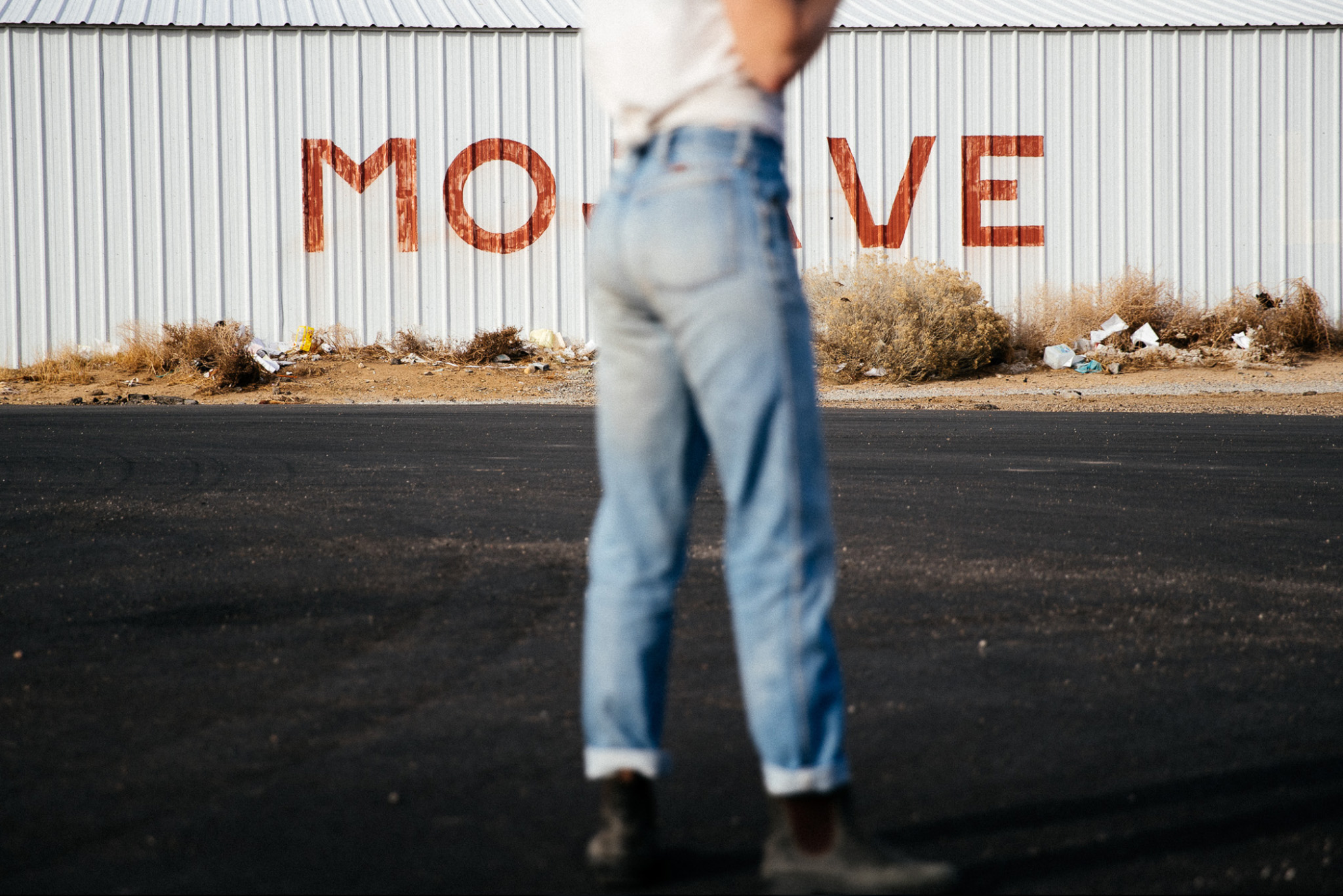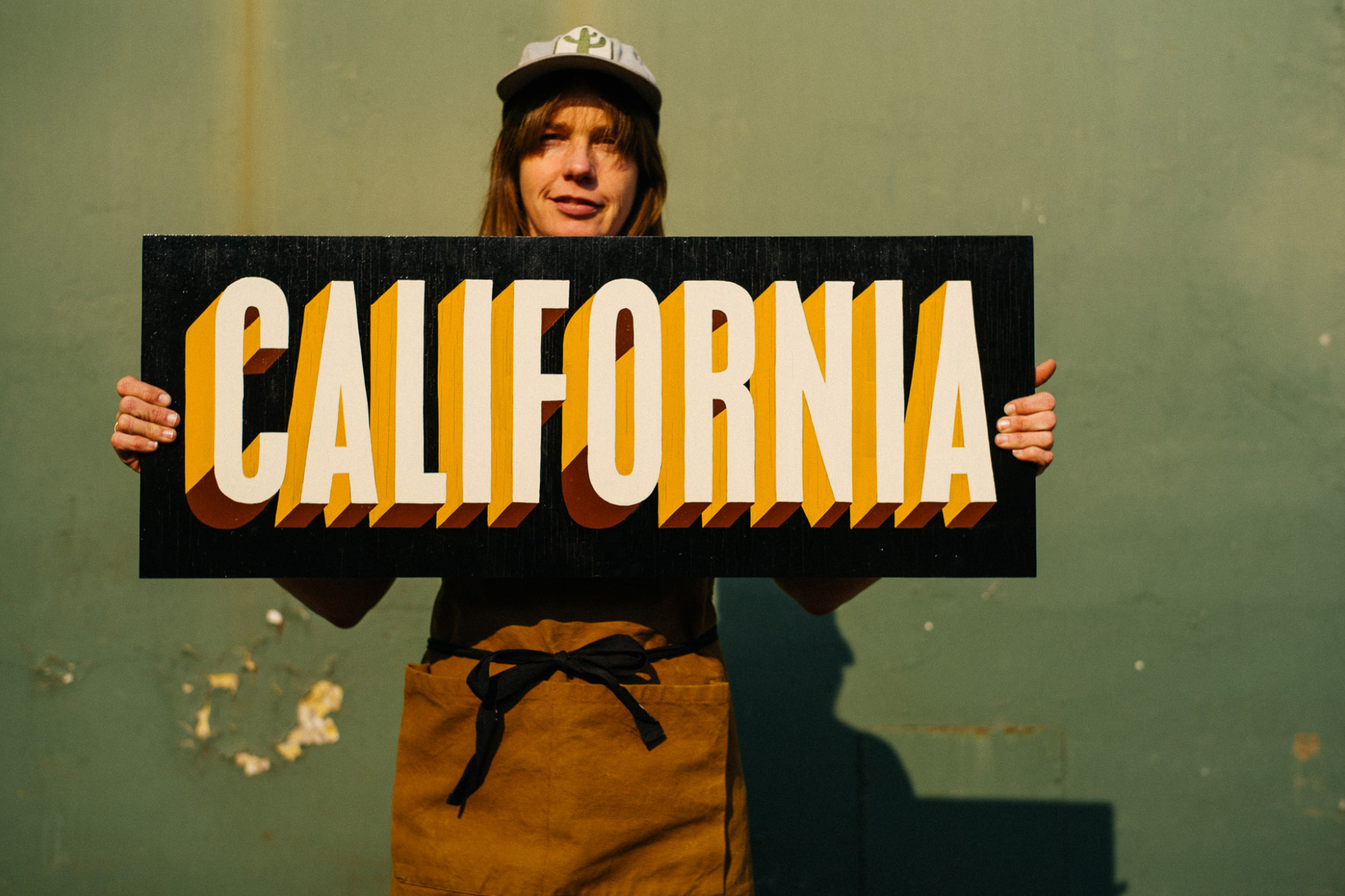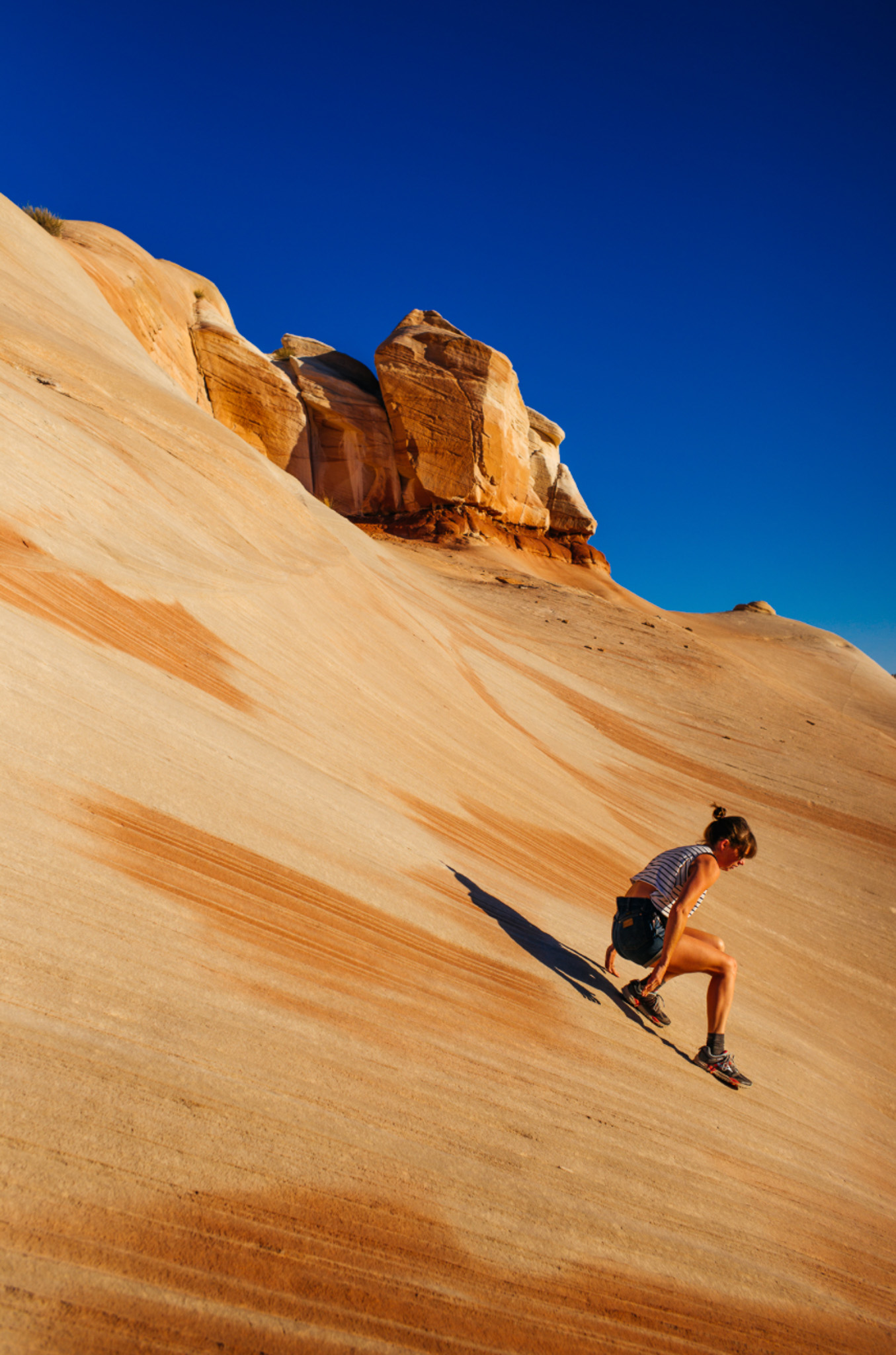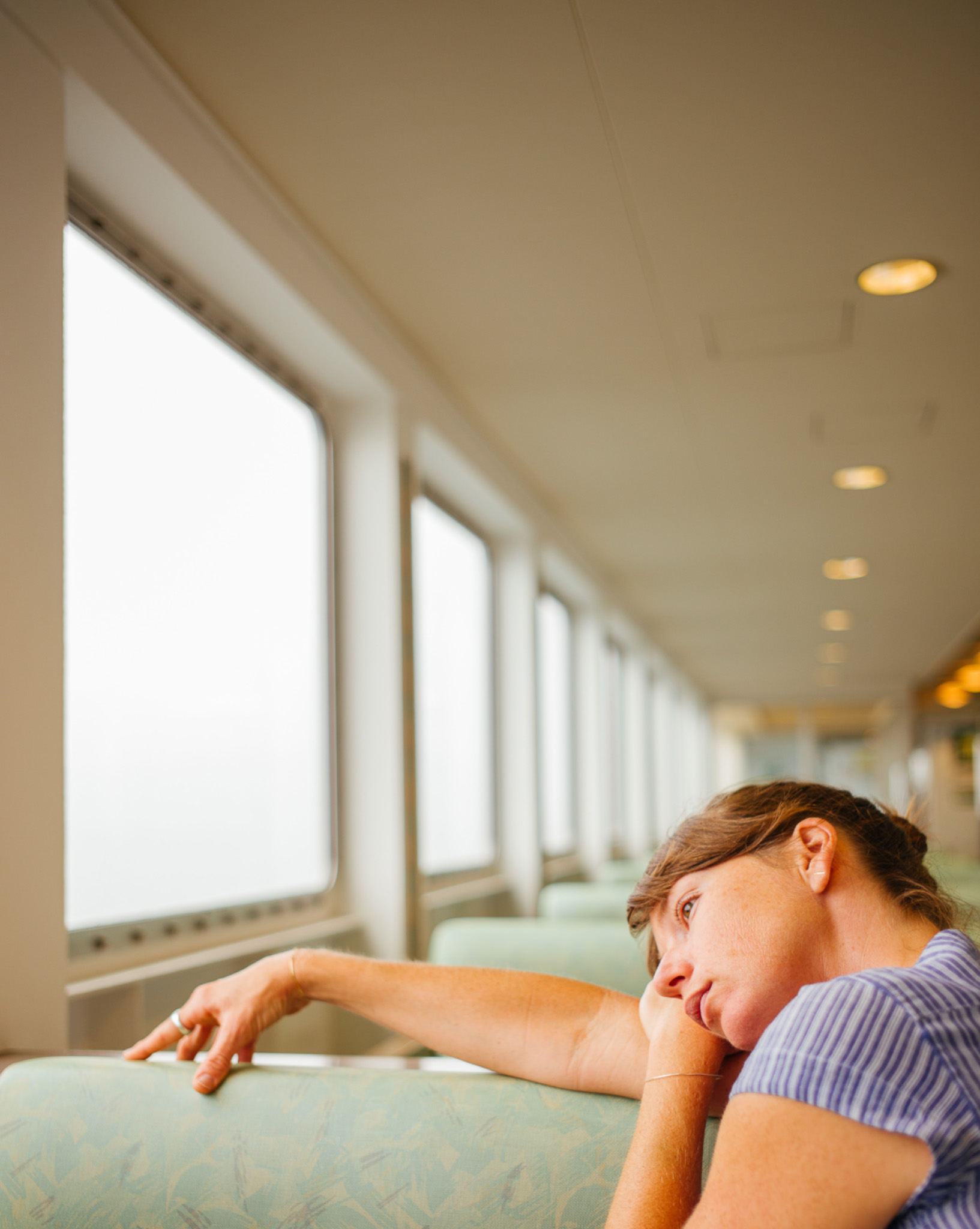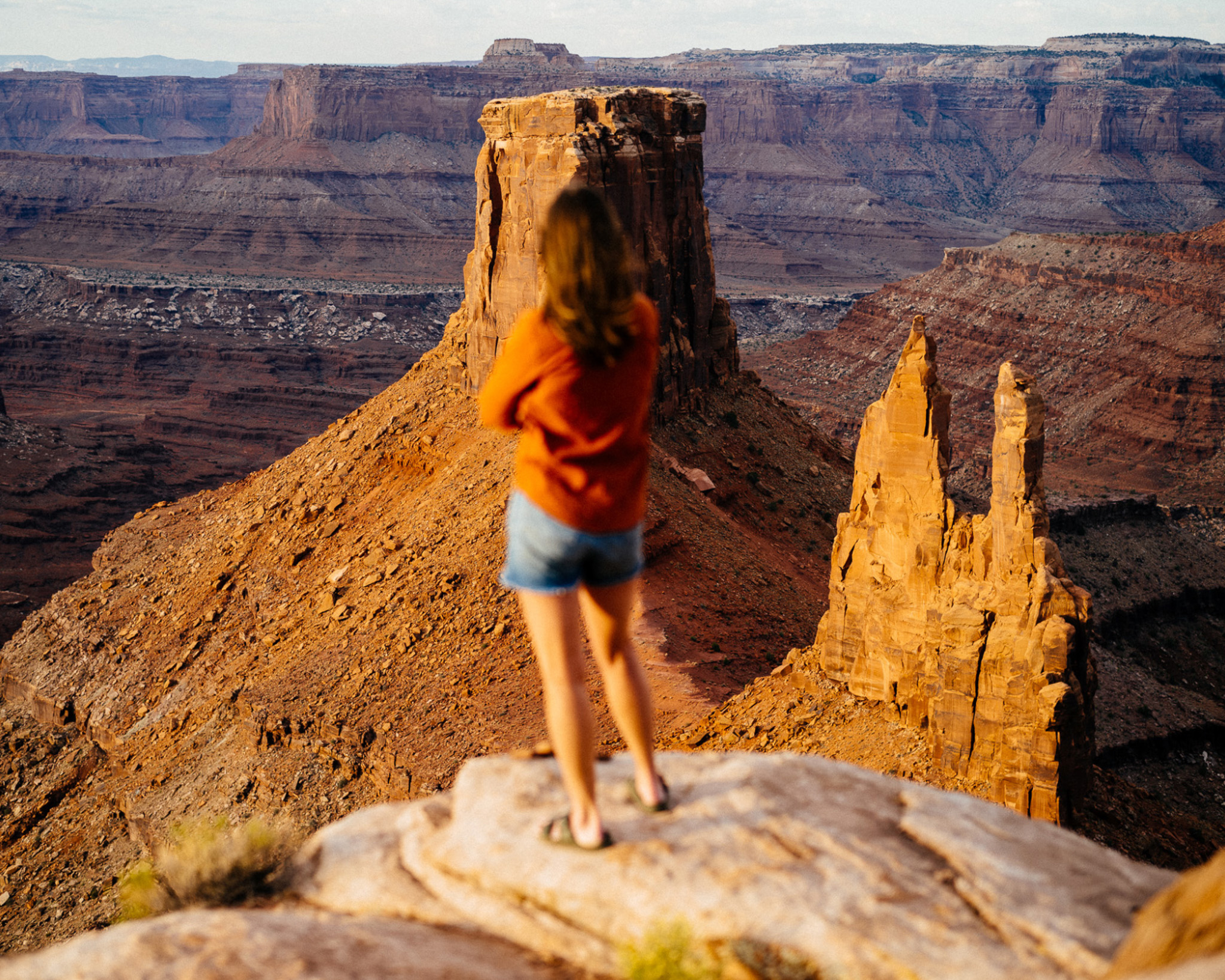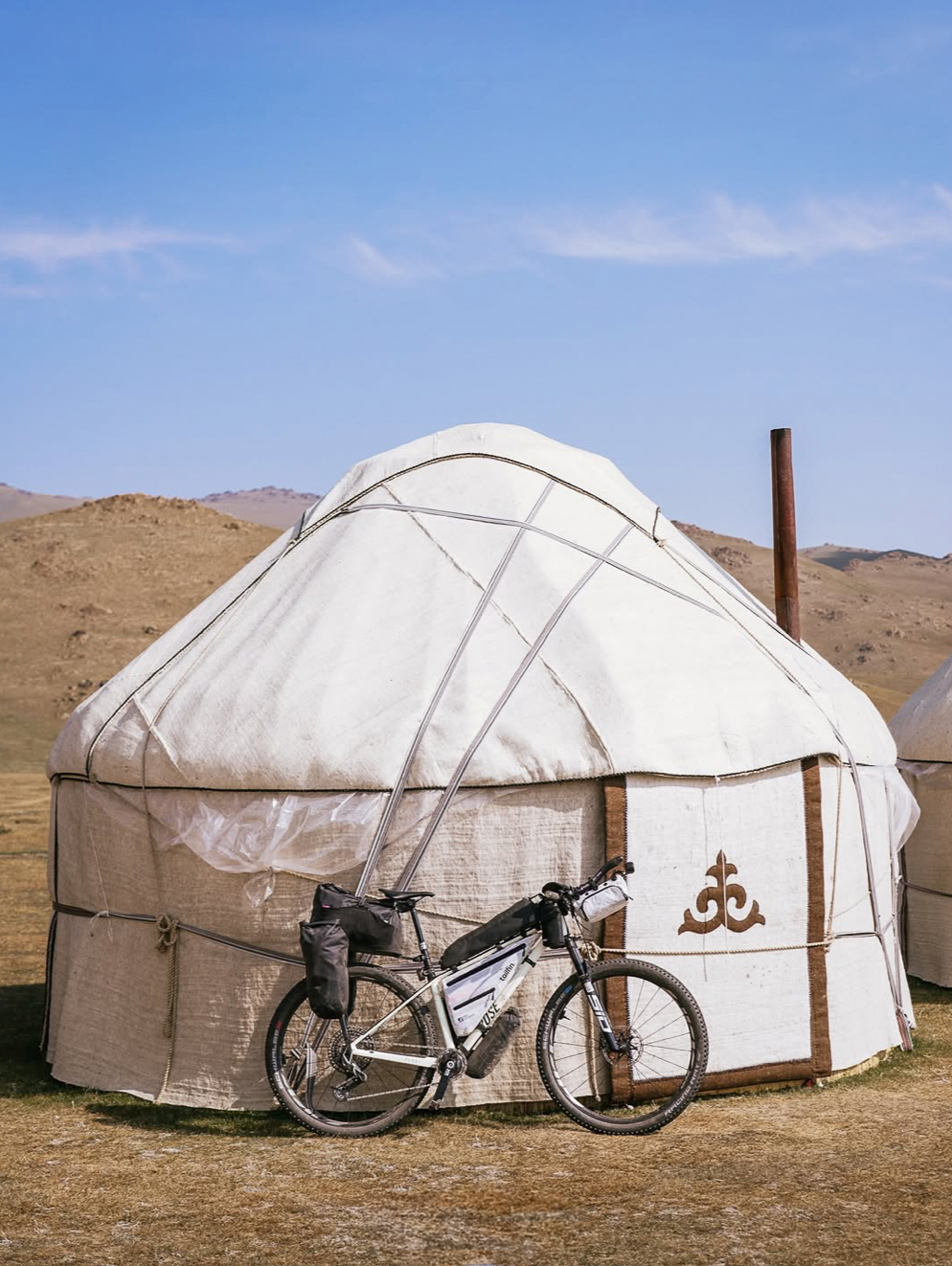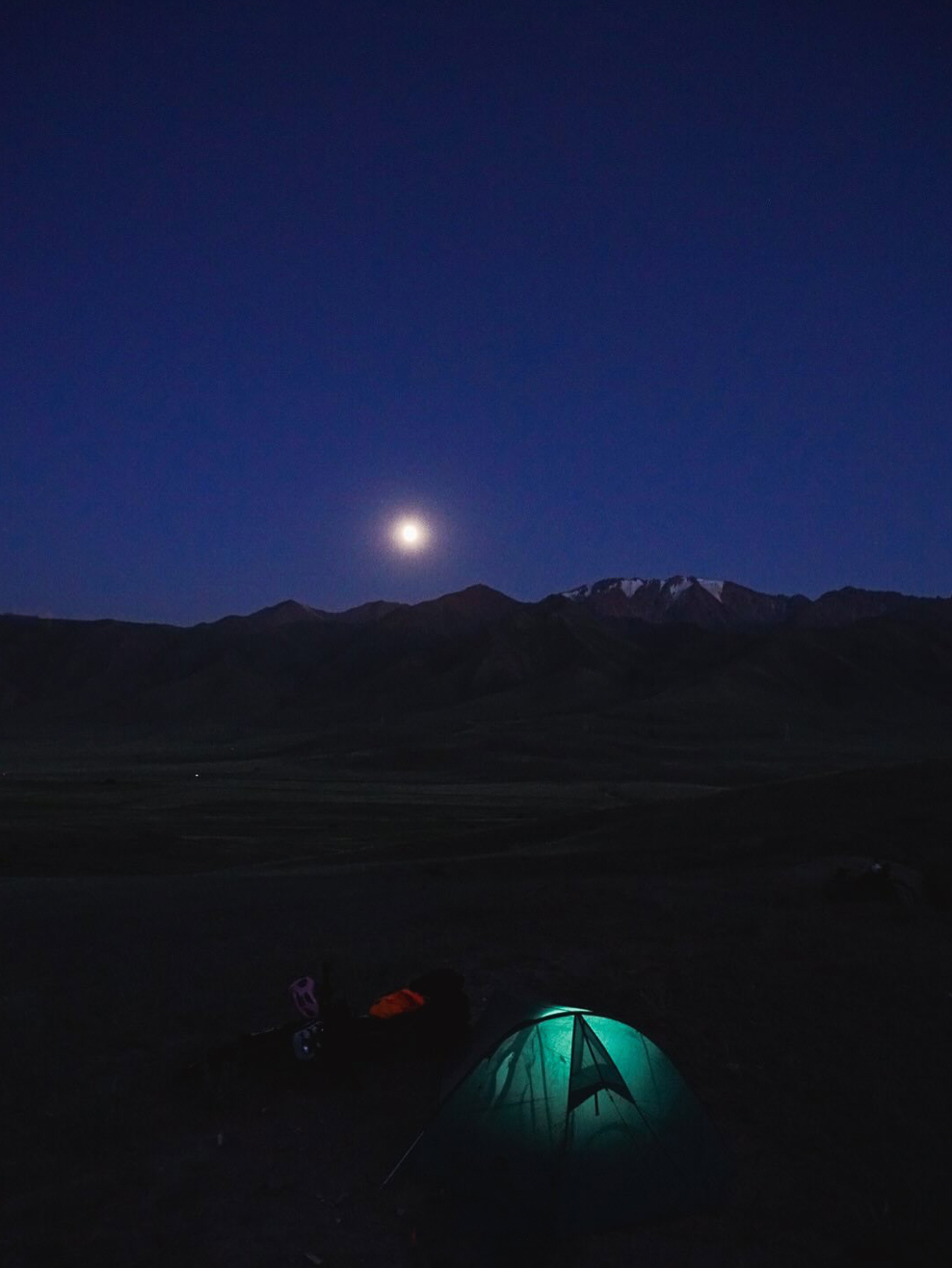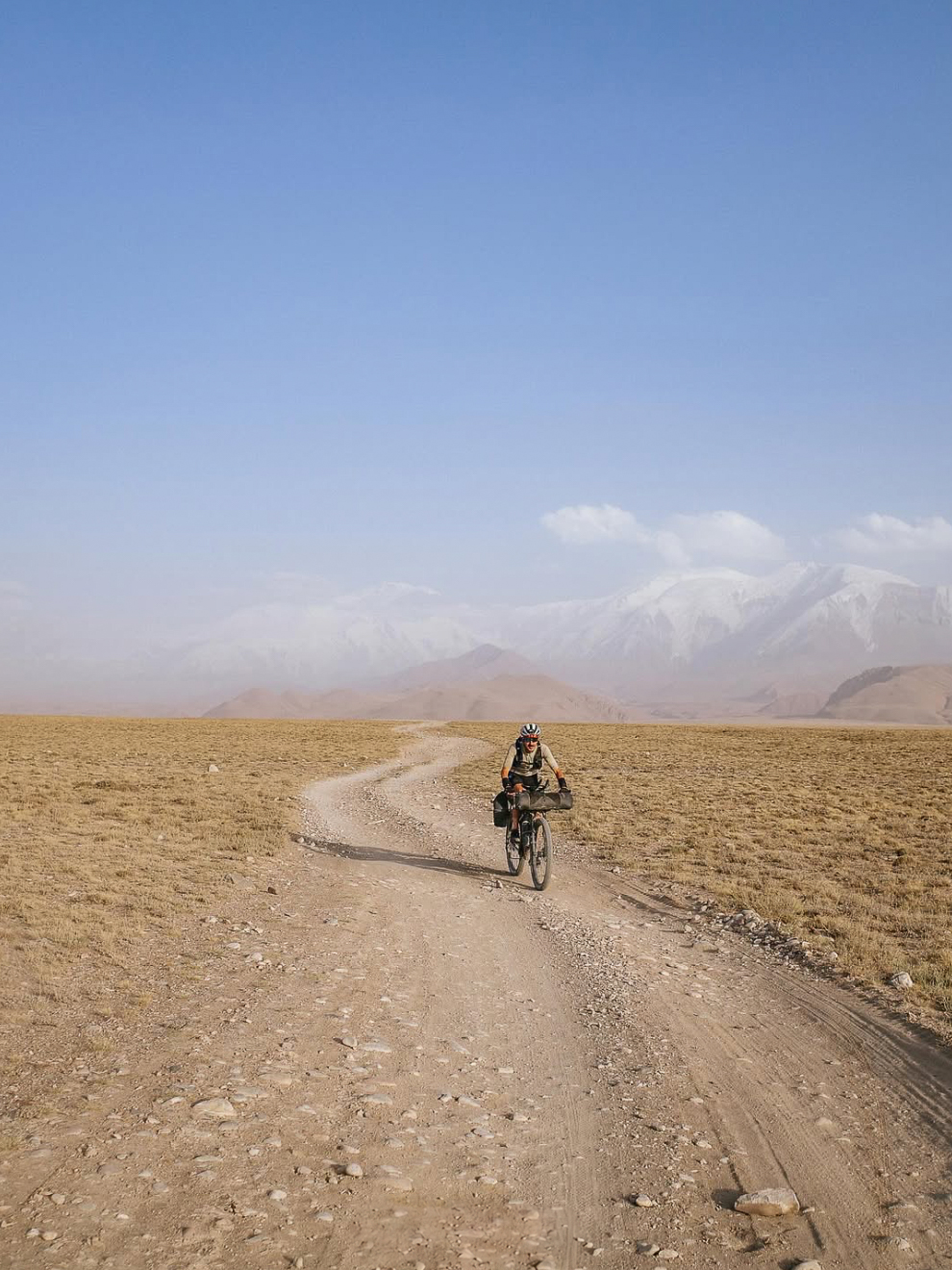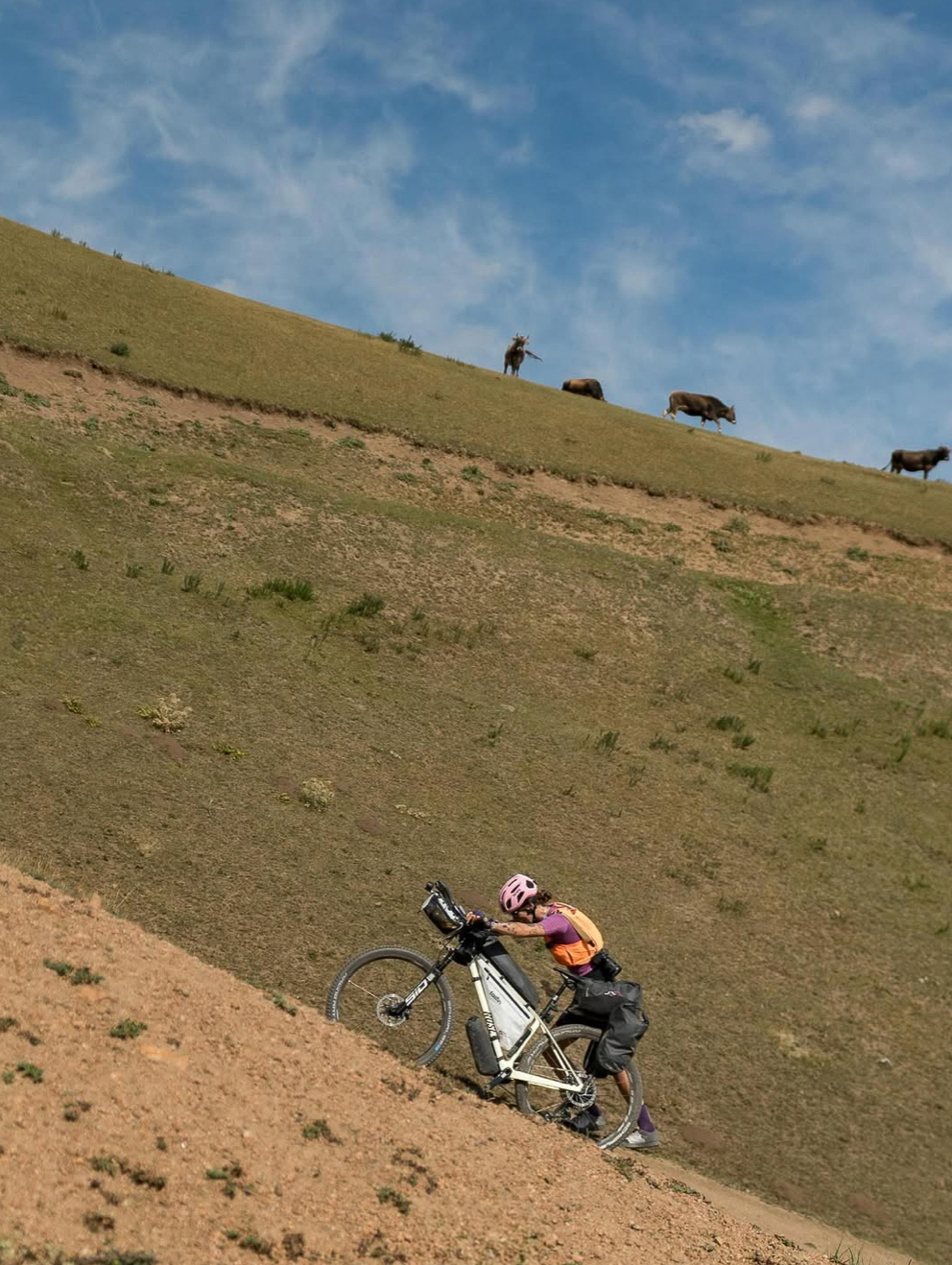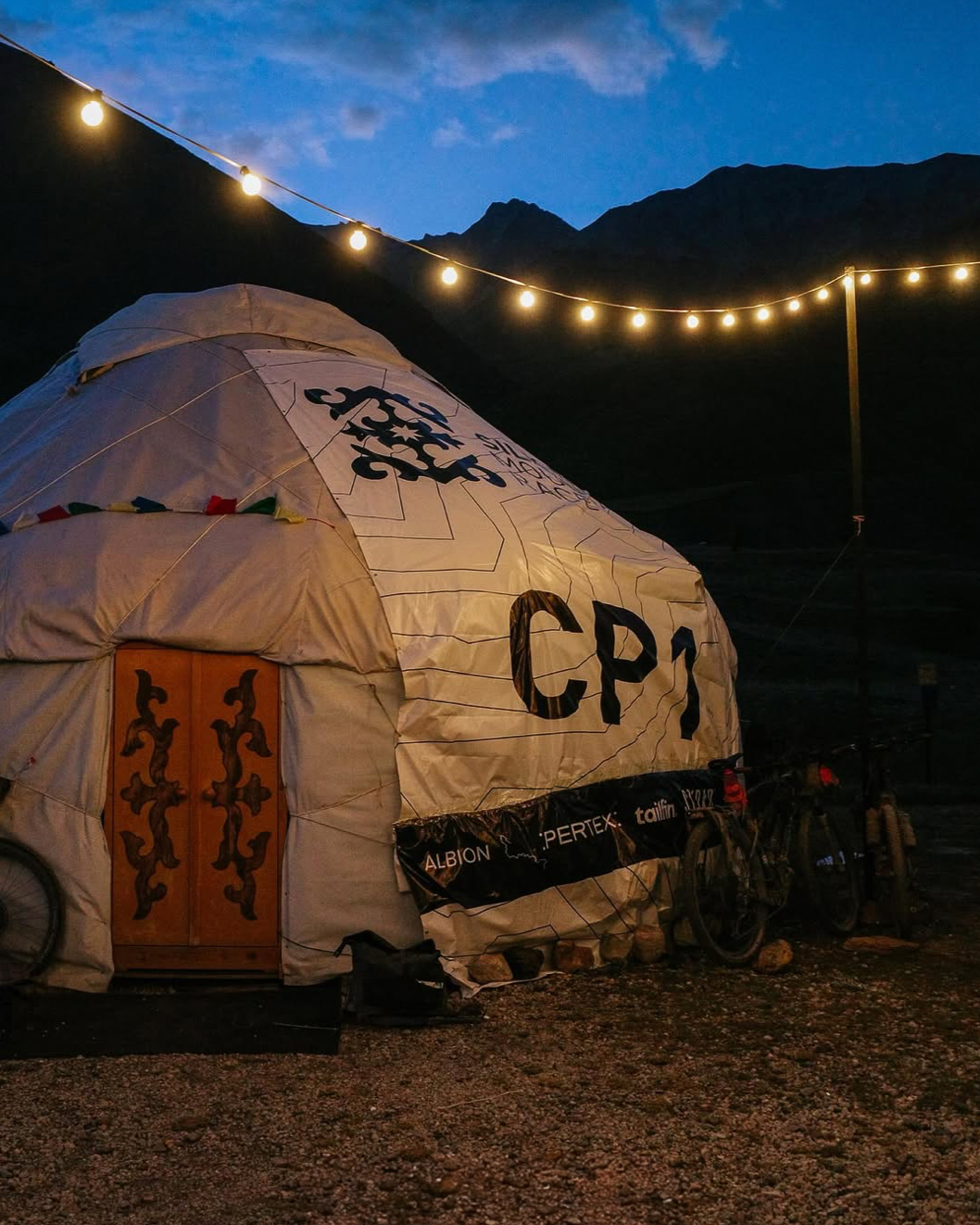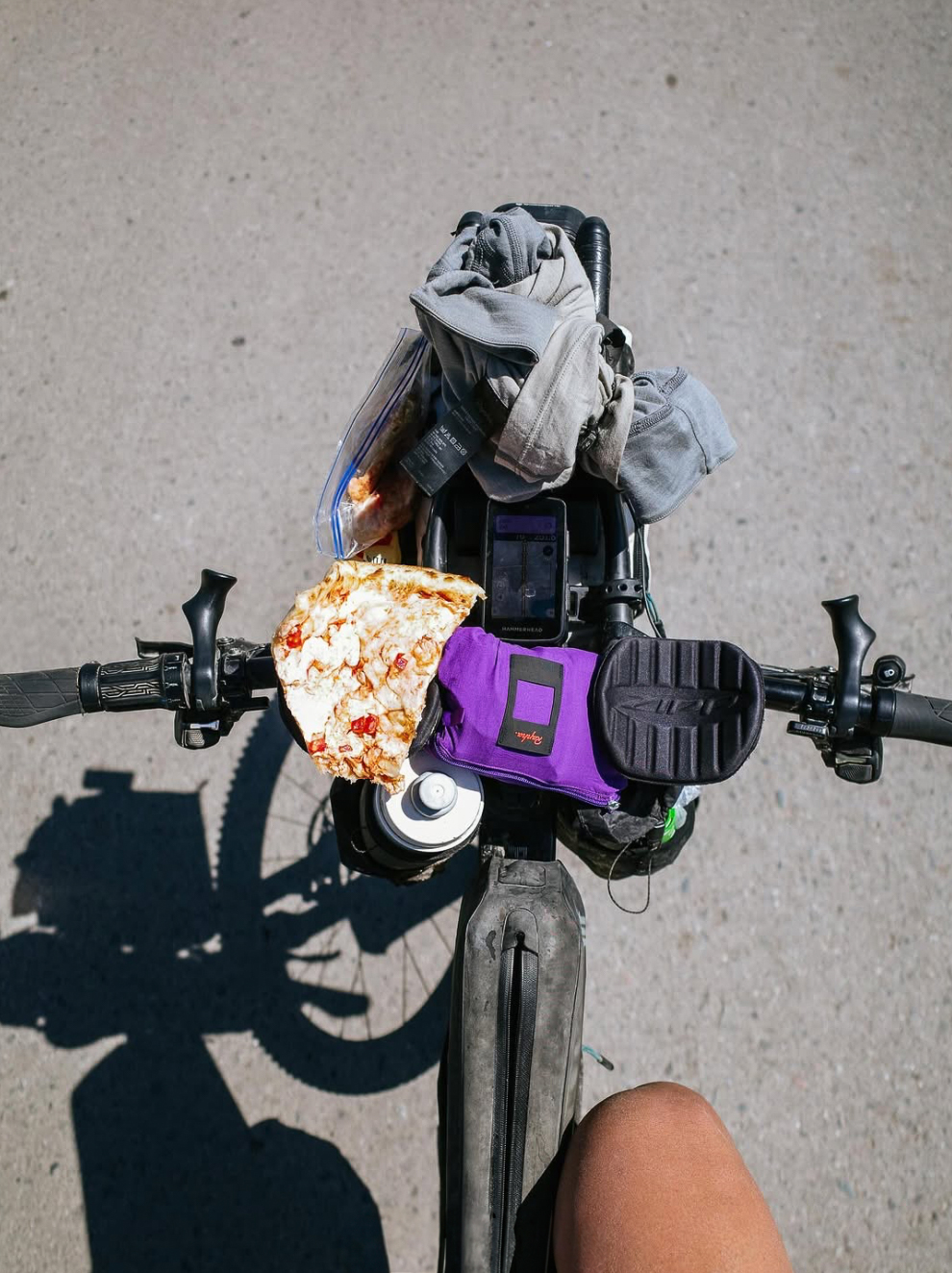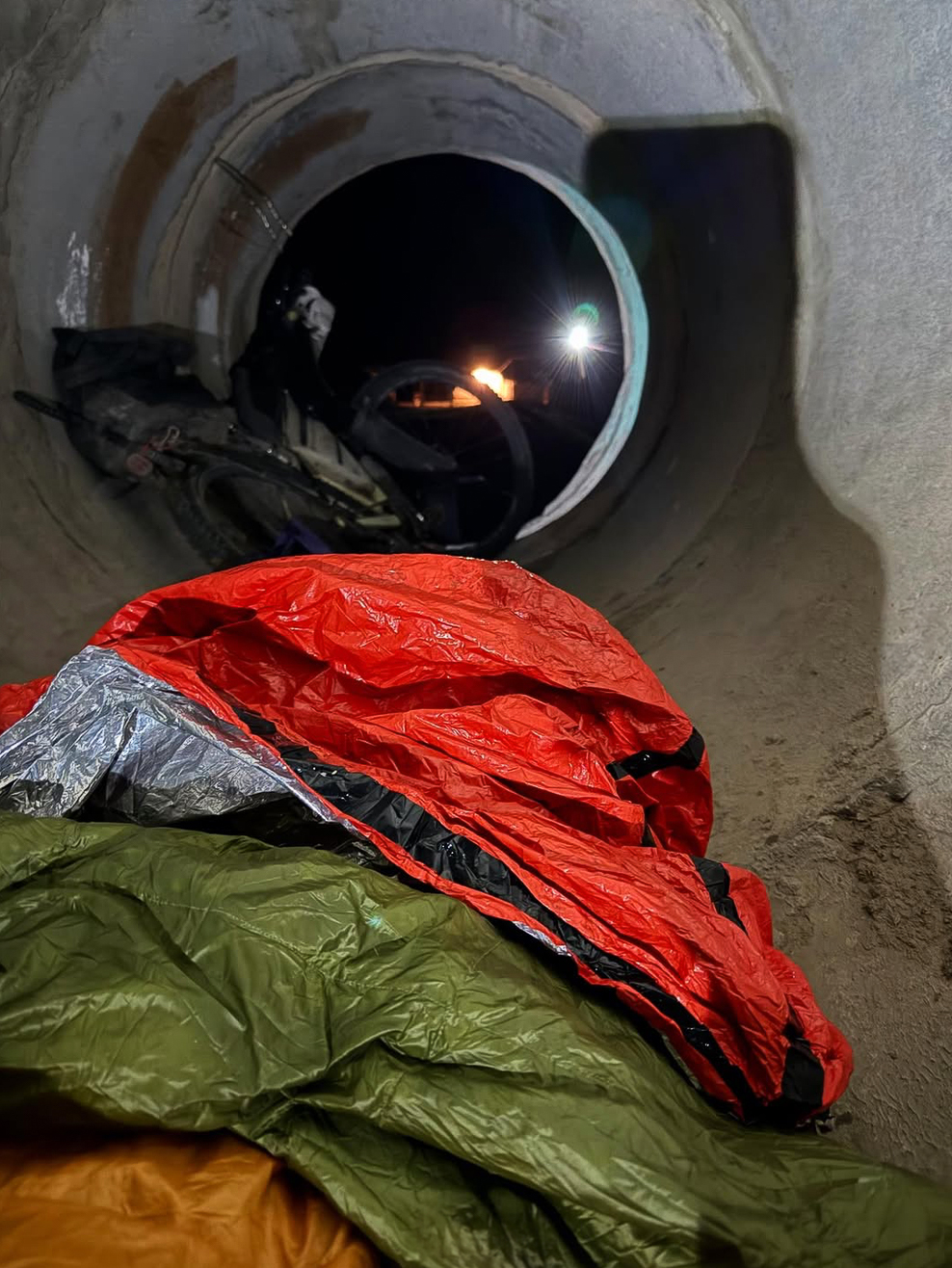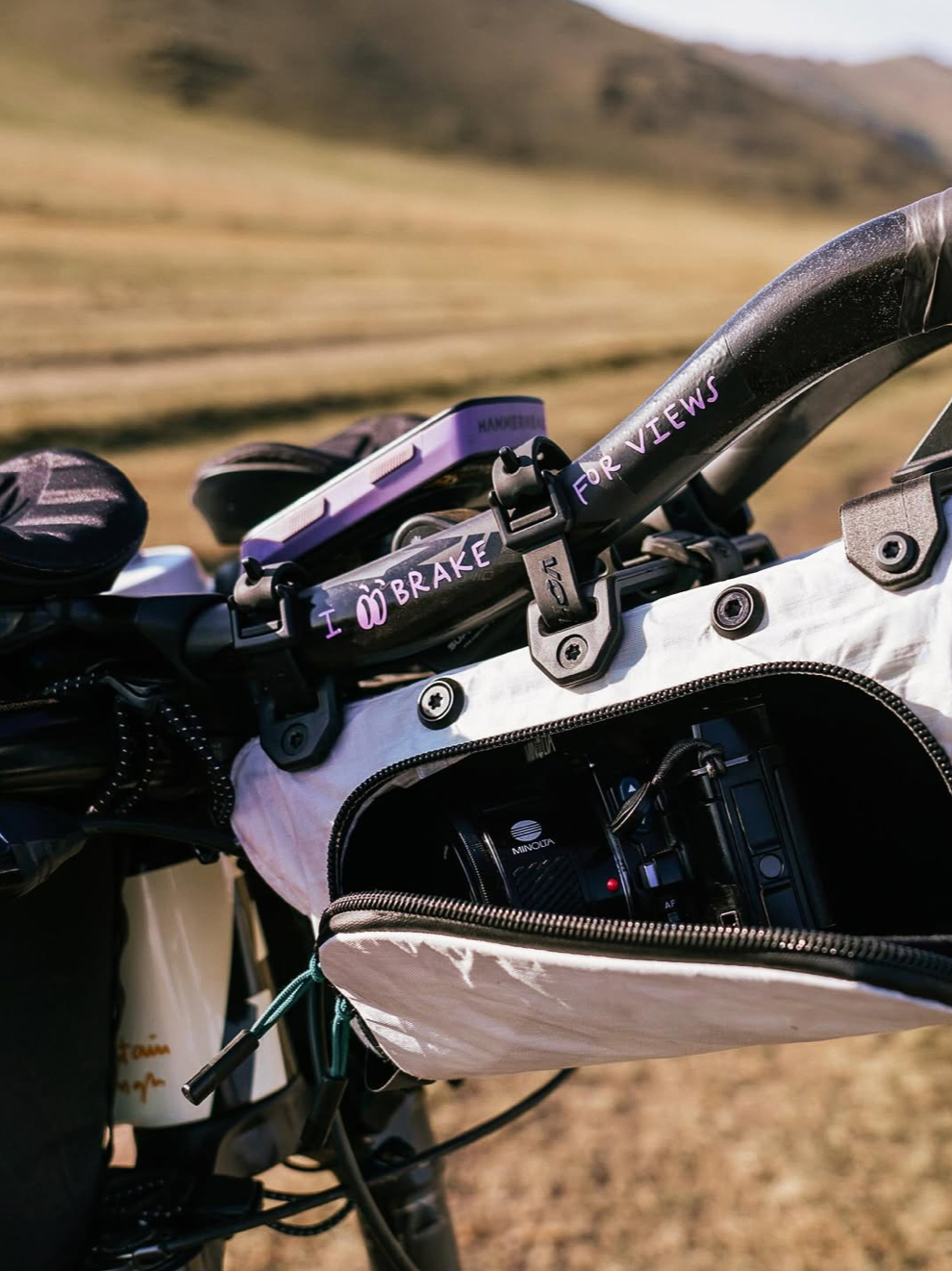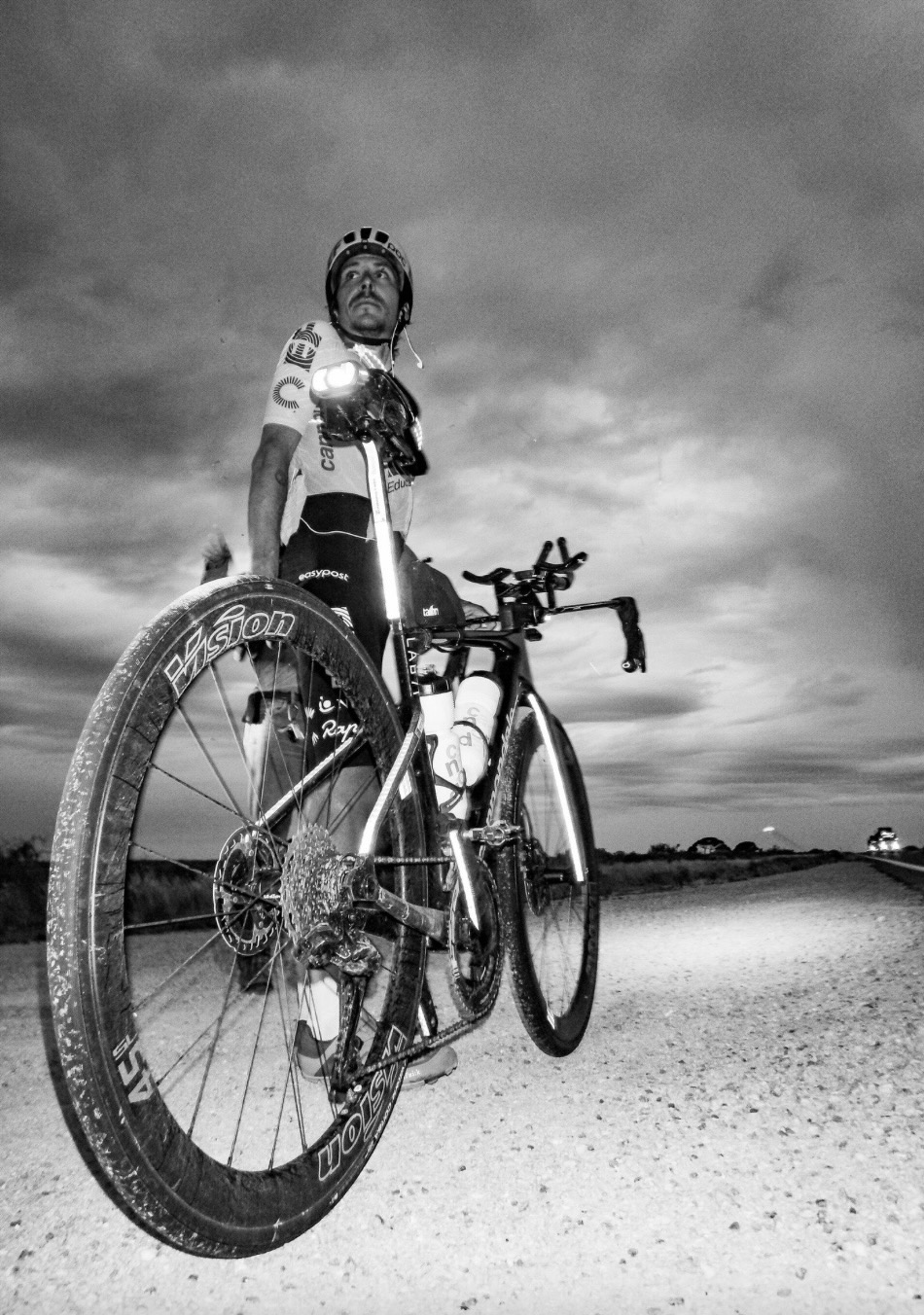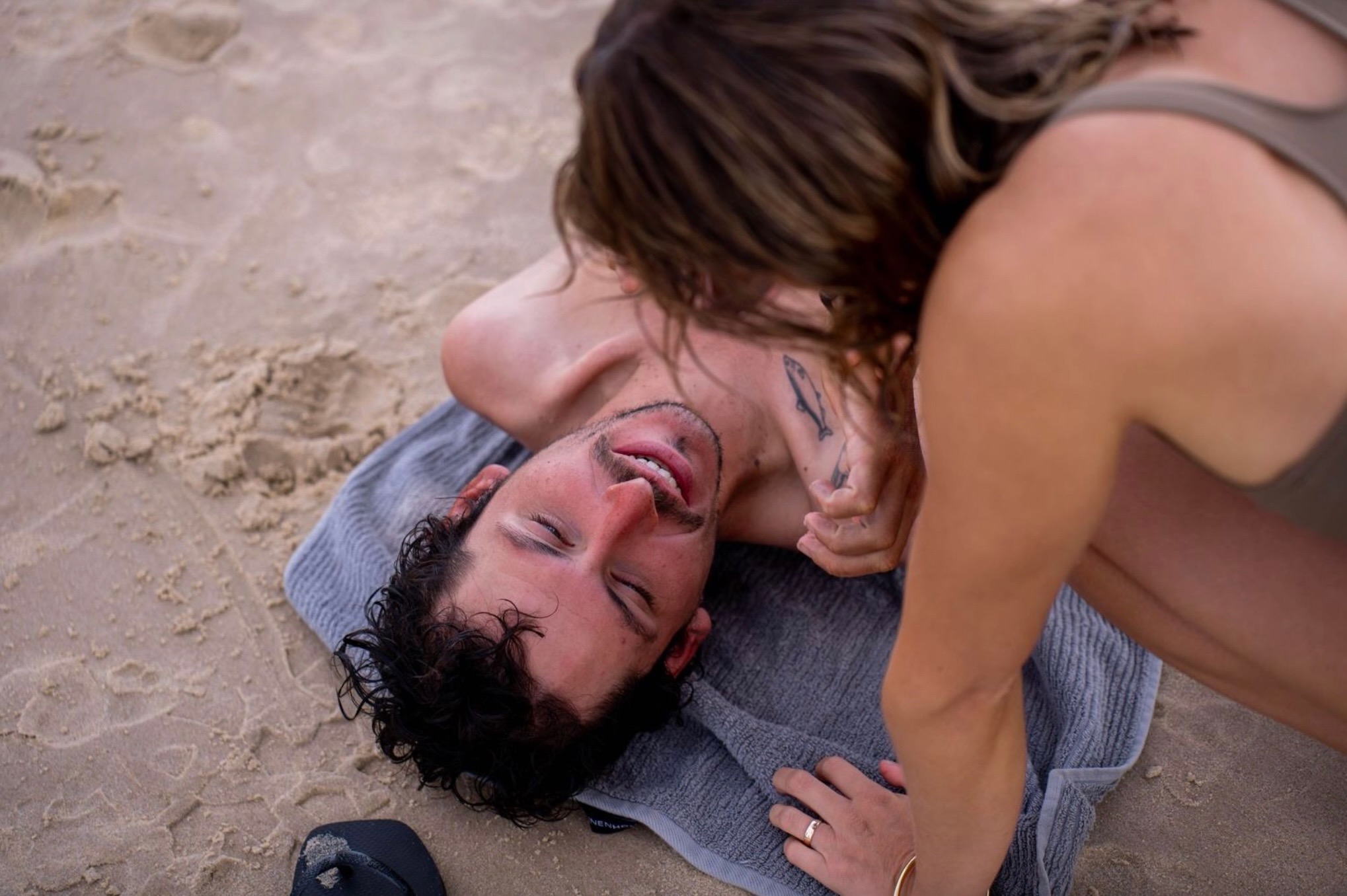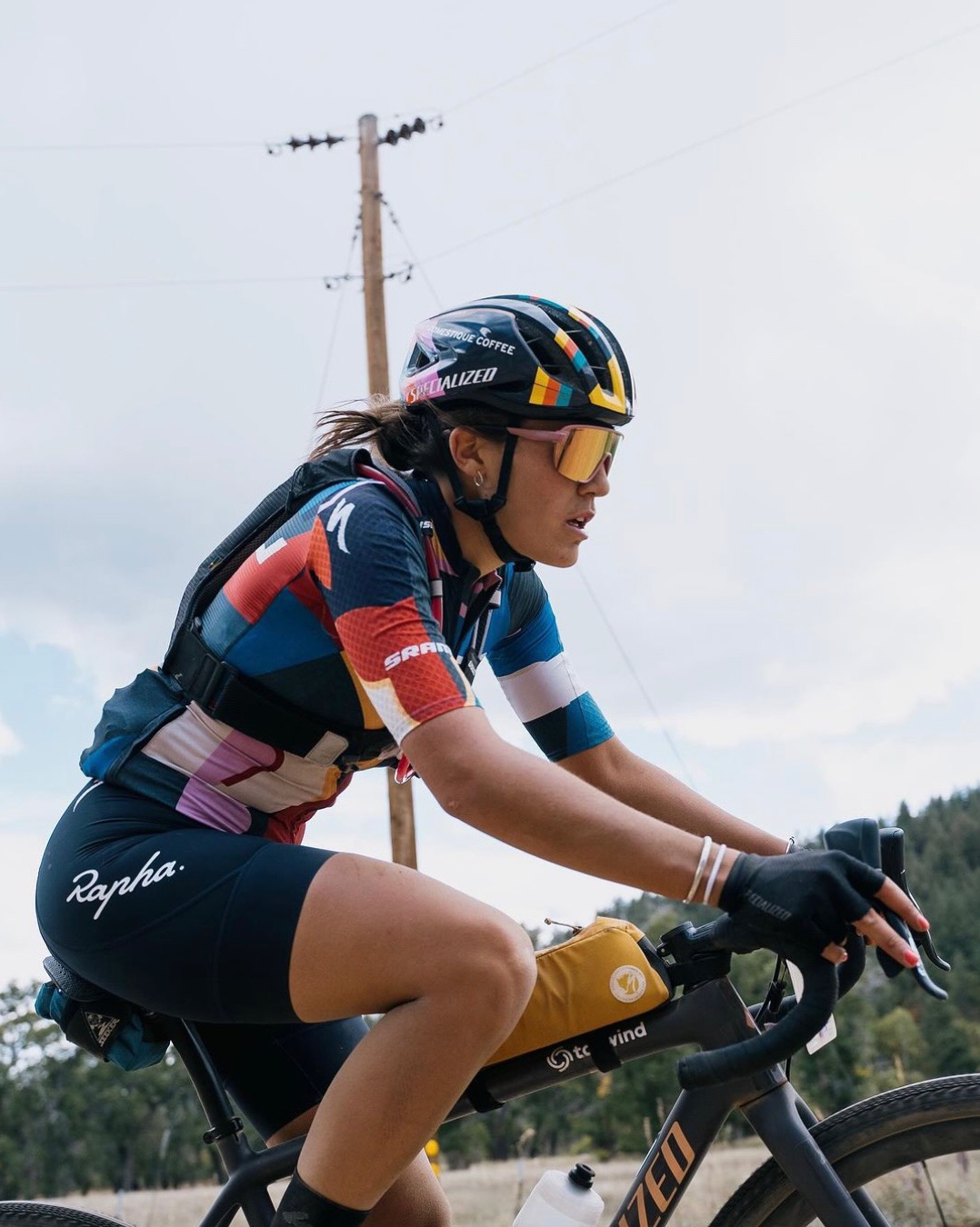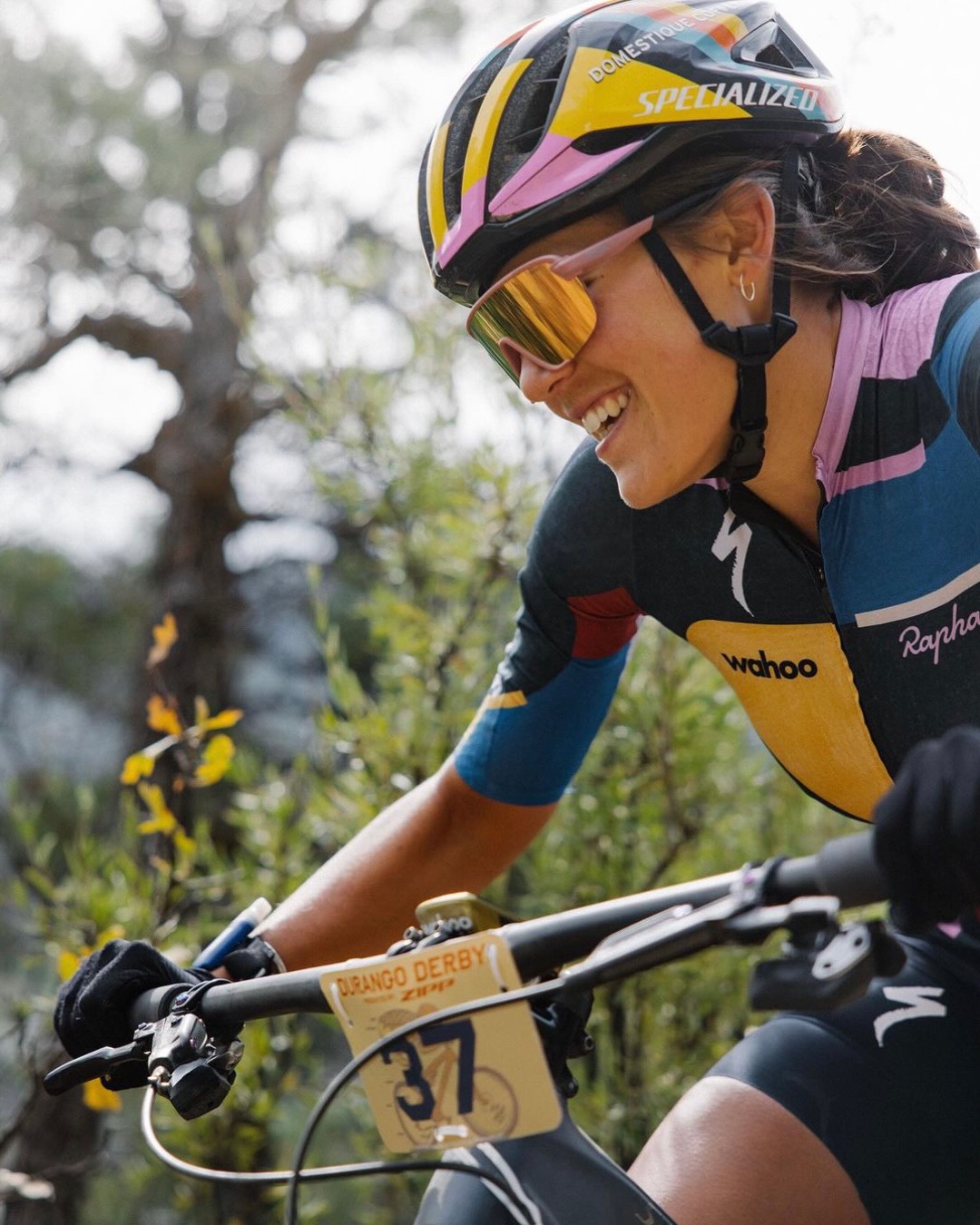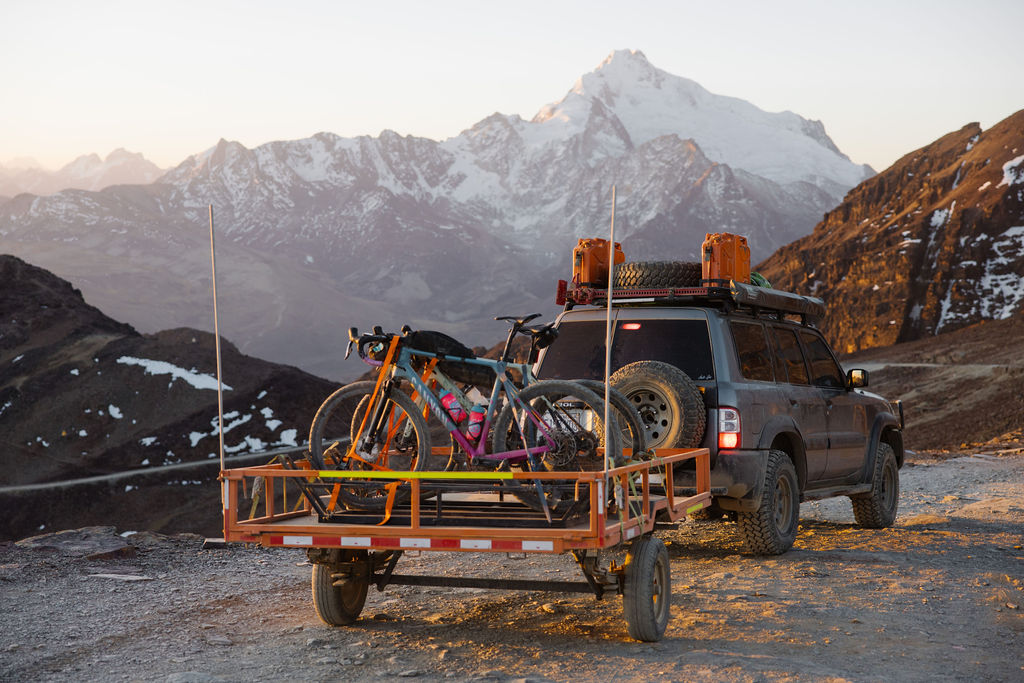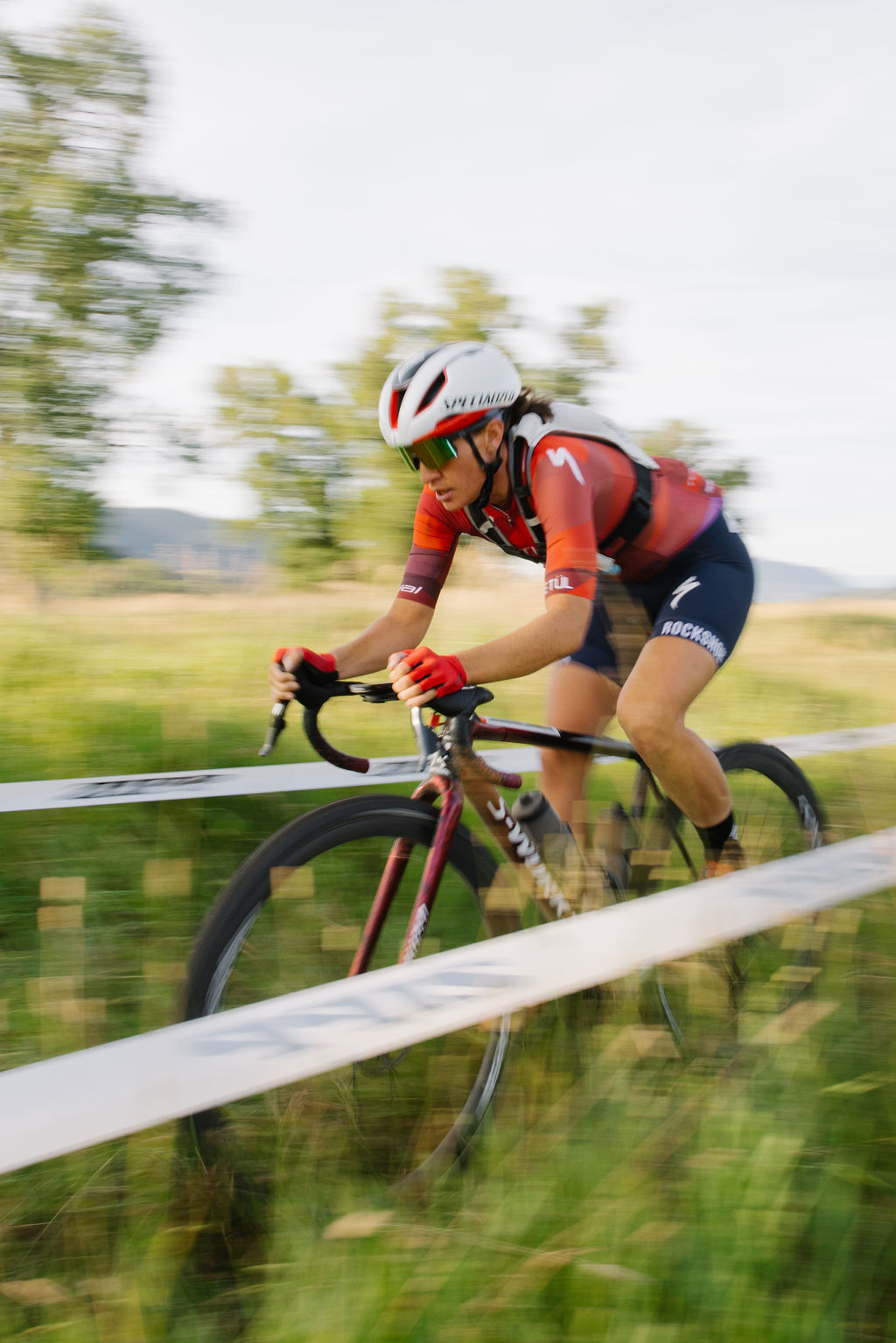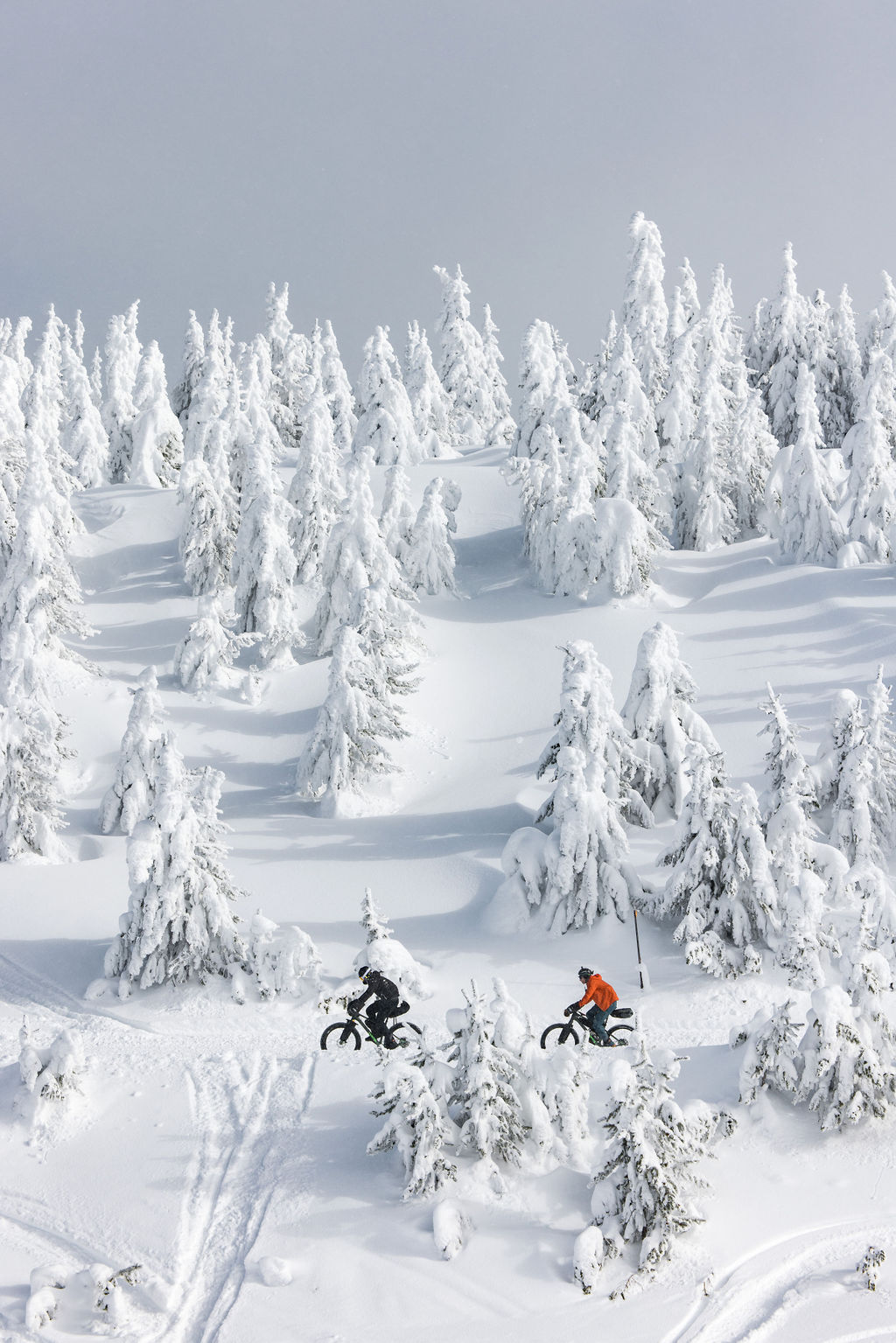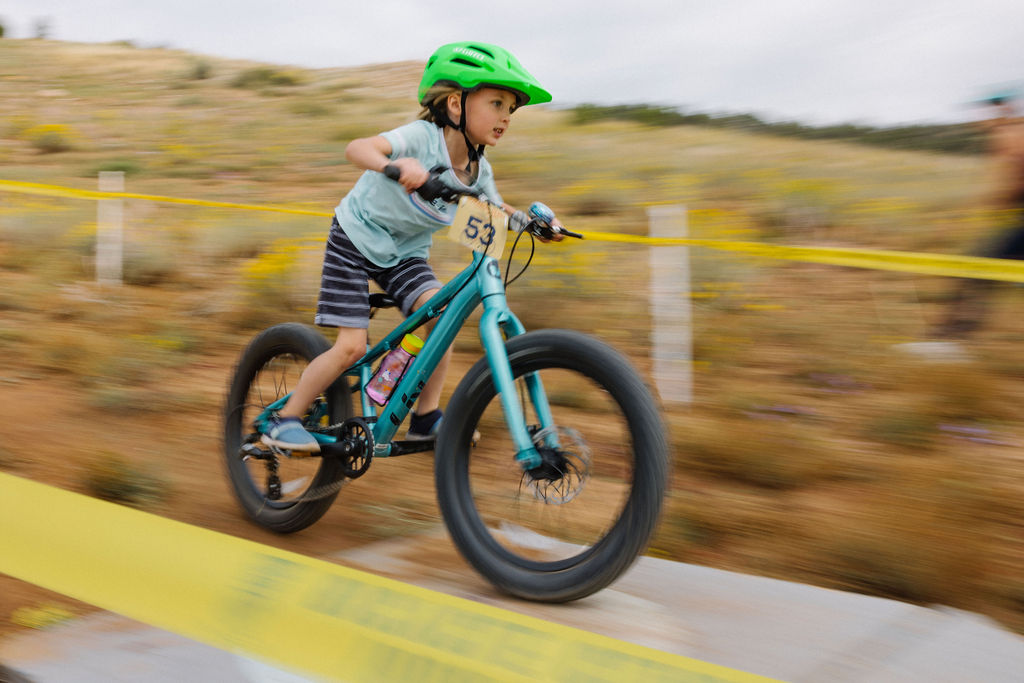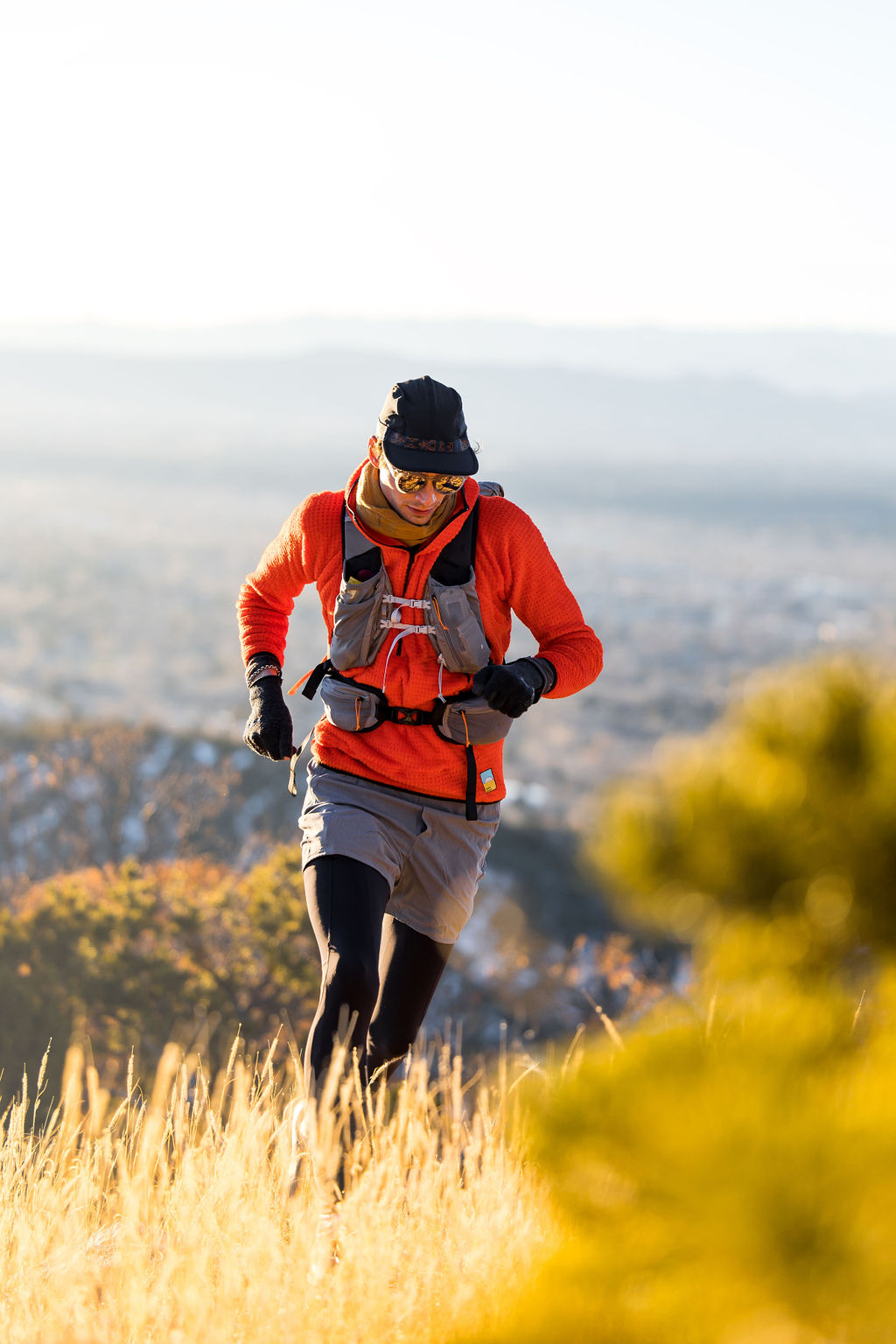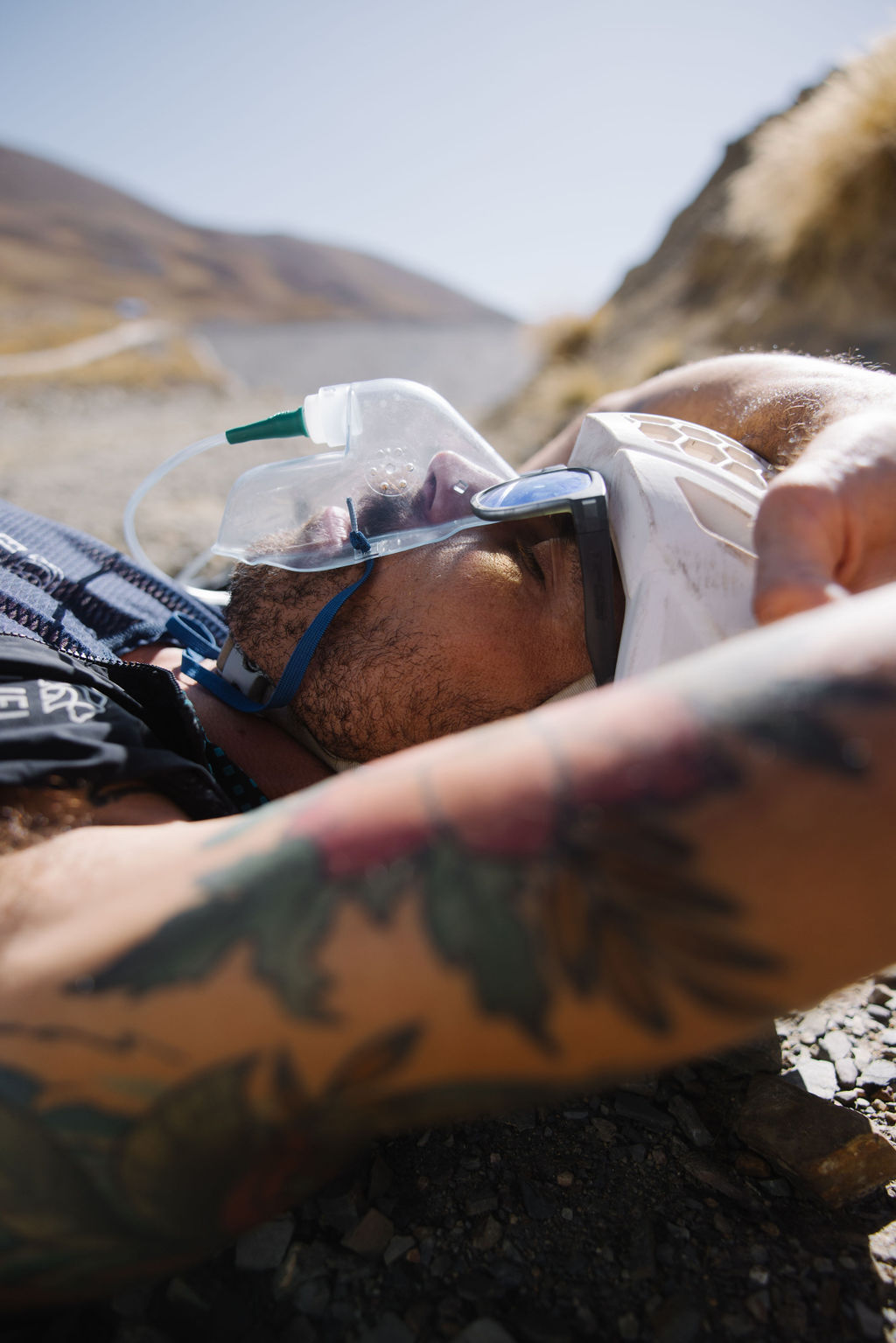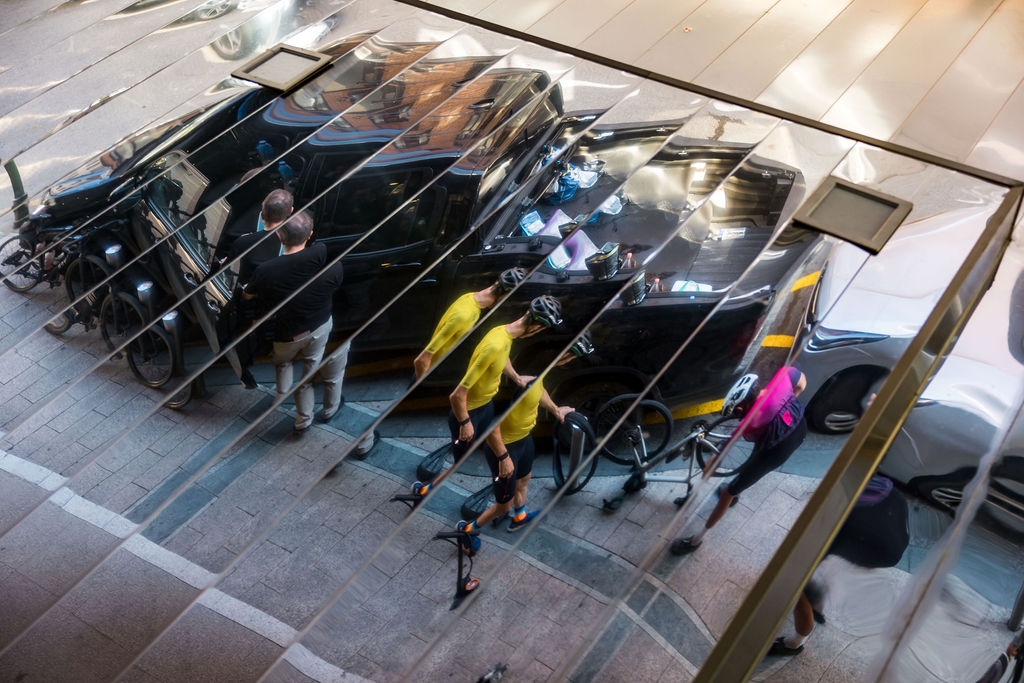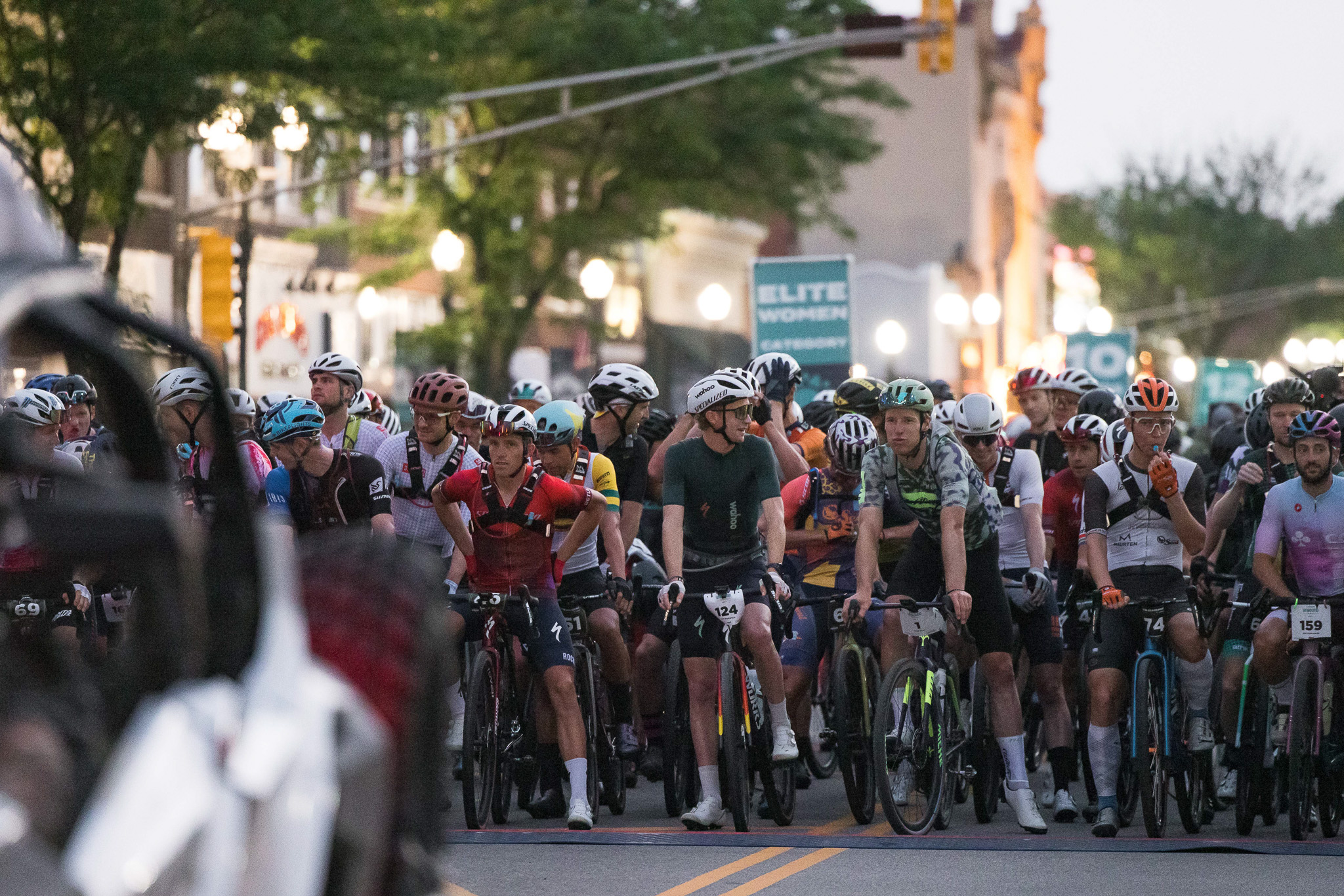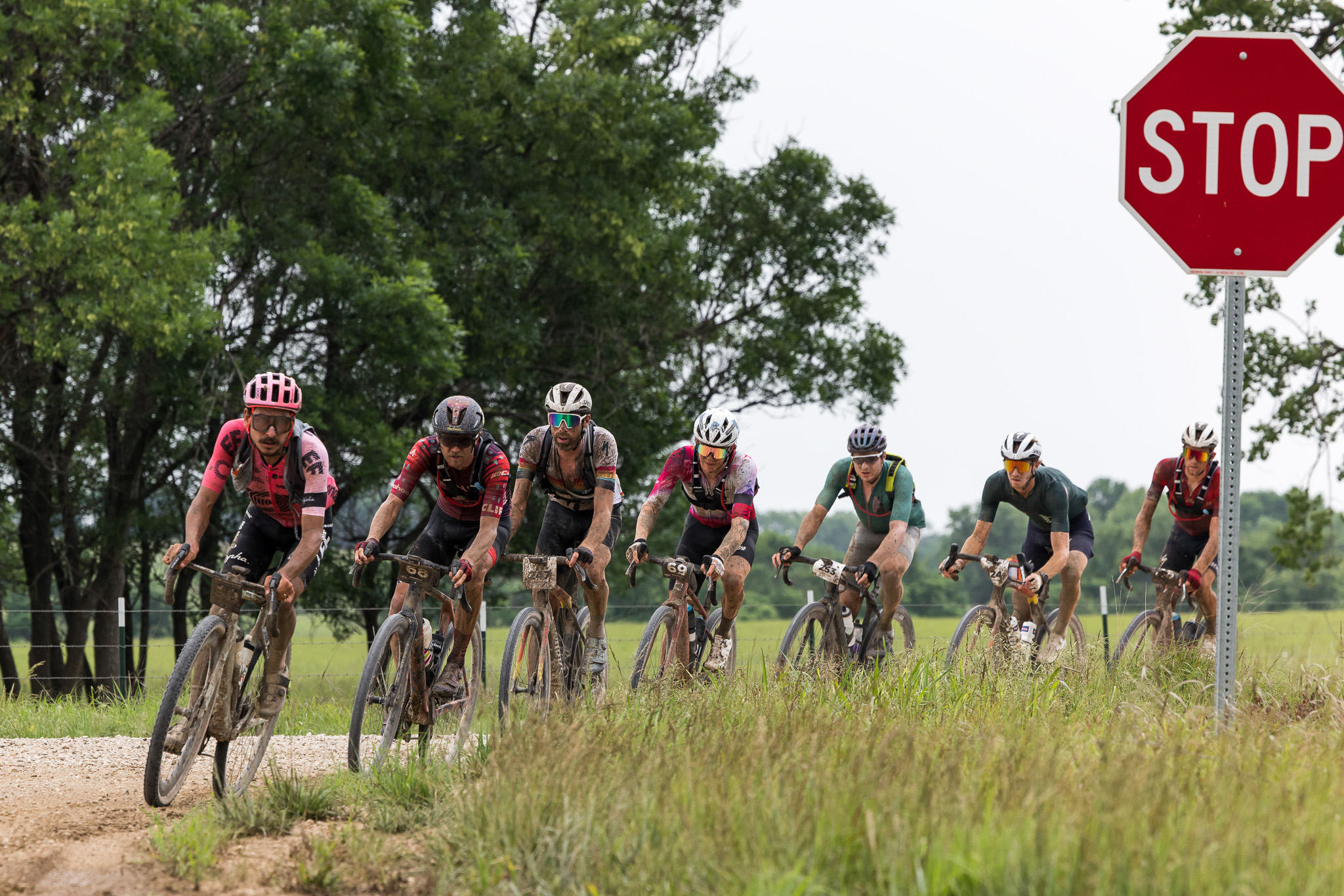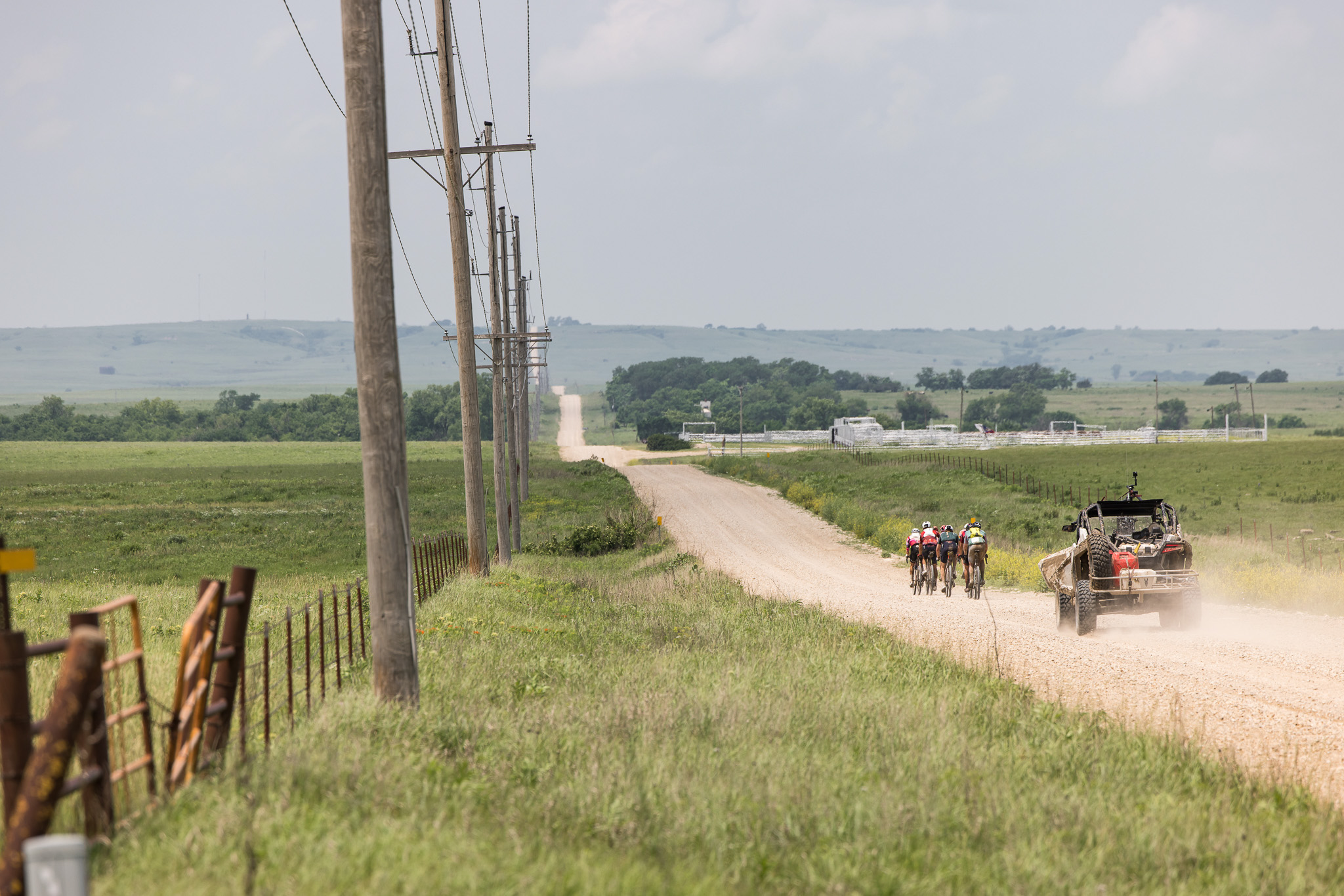
Sami Sauri / Silk Road Mountain Race

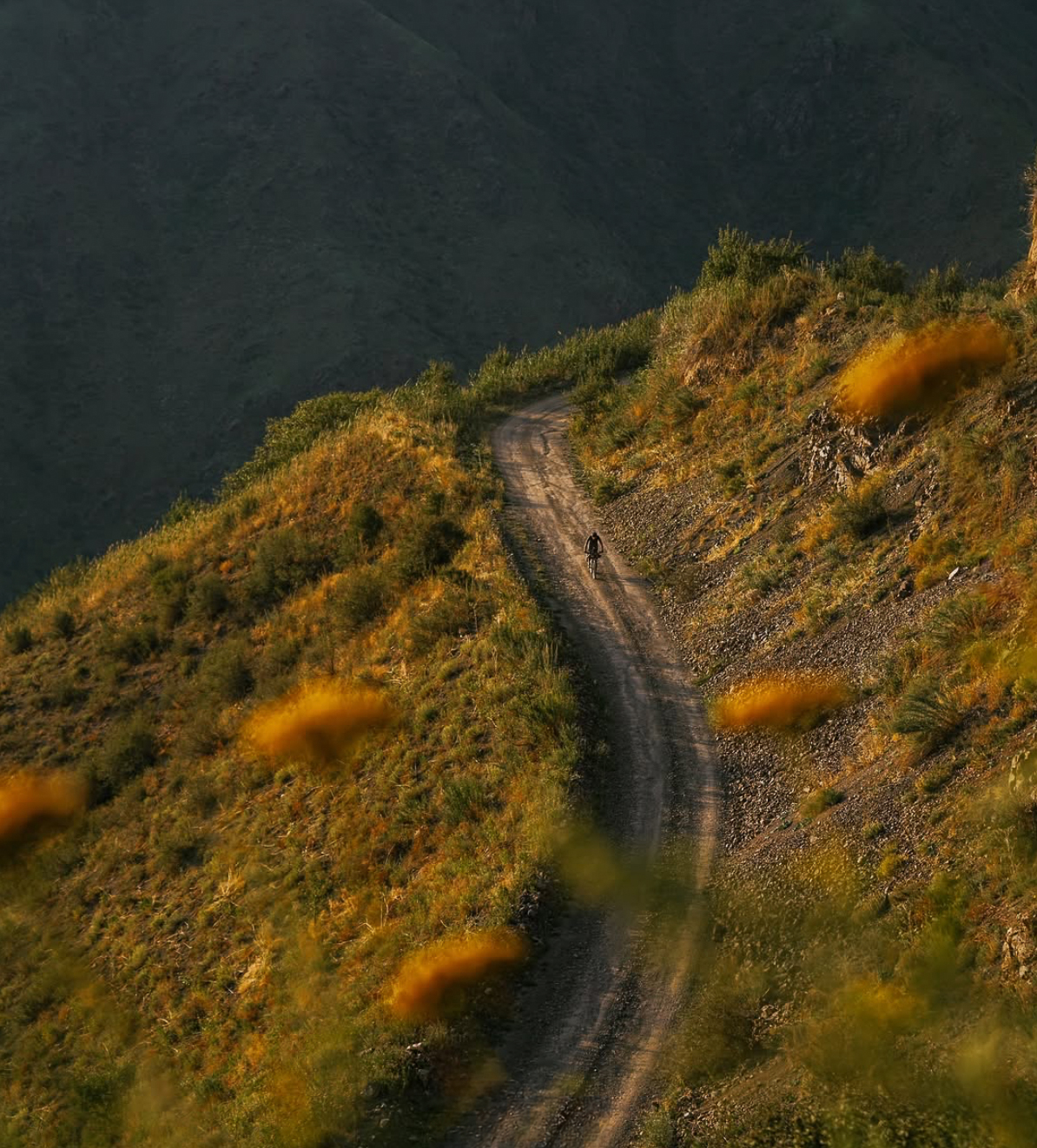
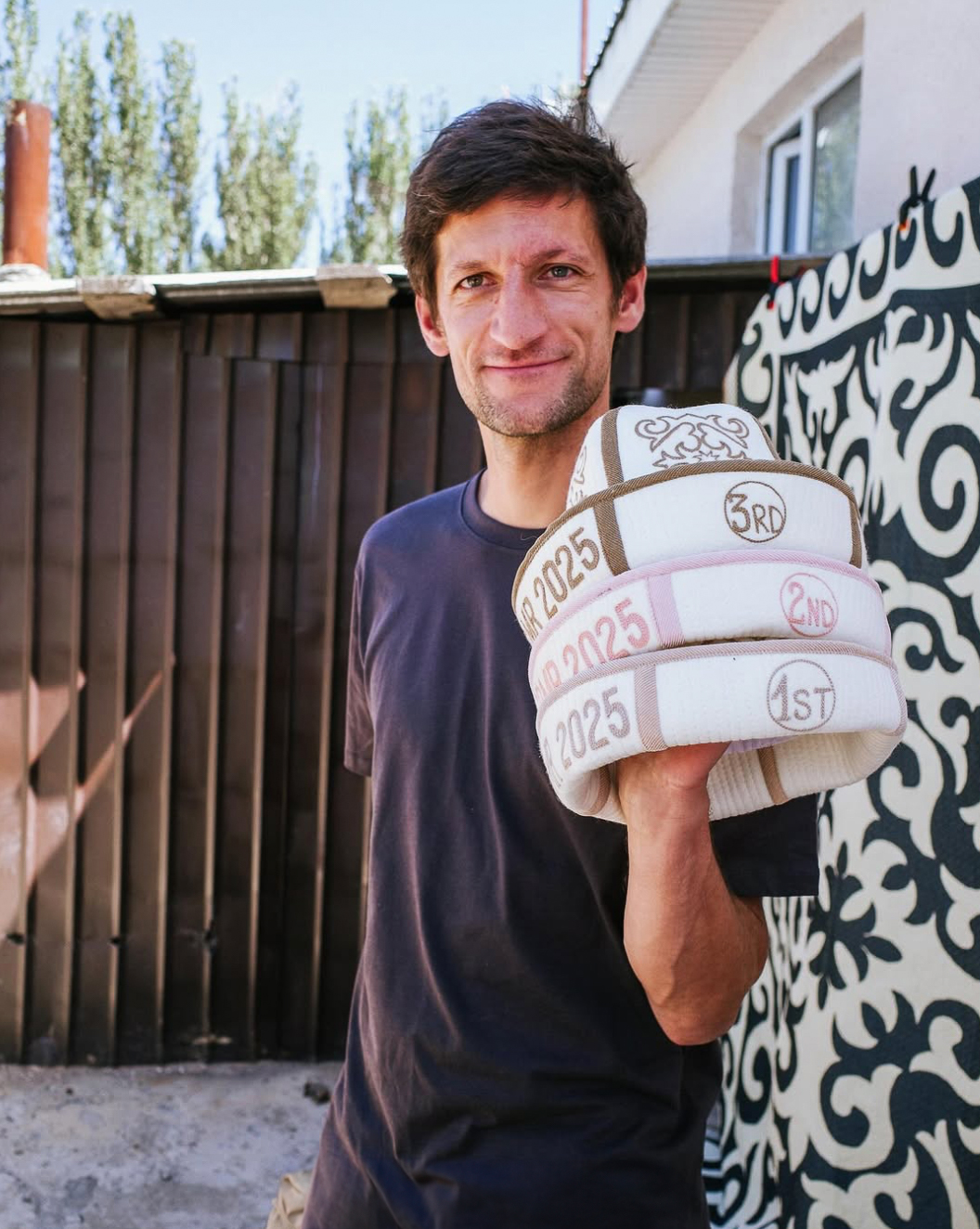
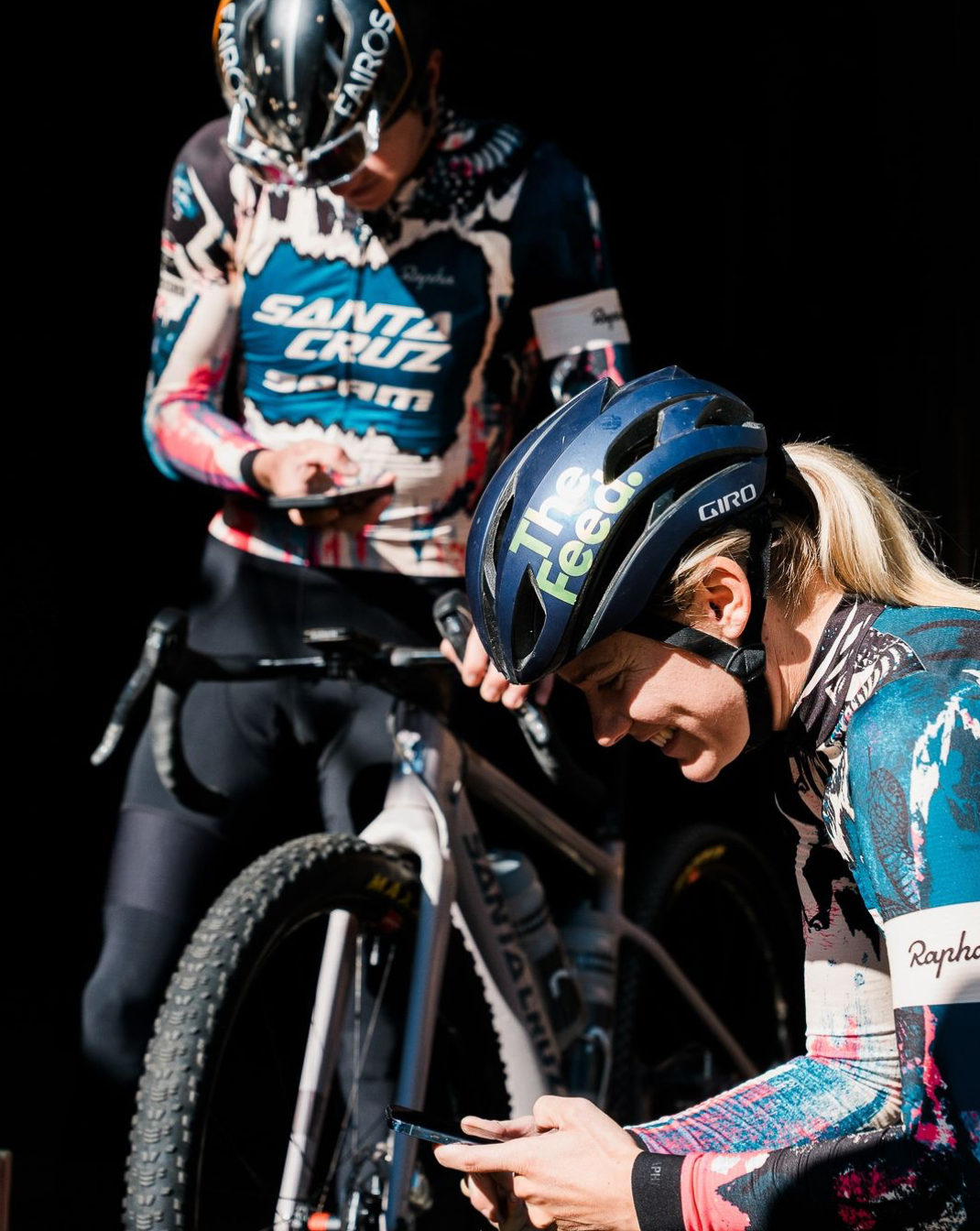
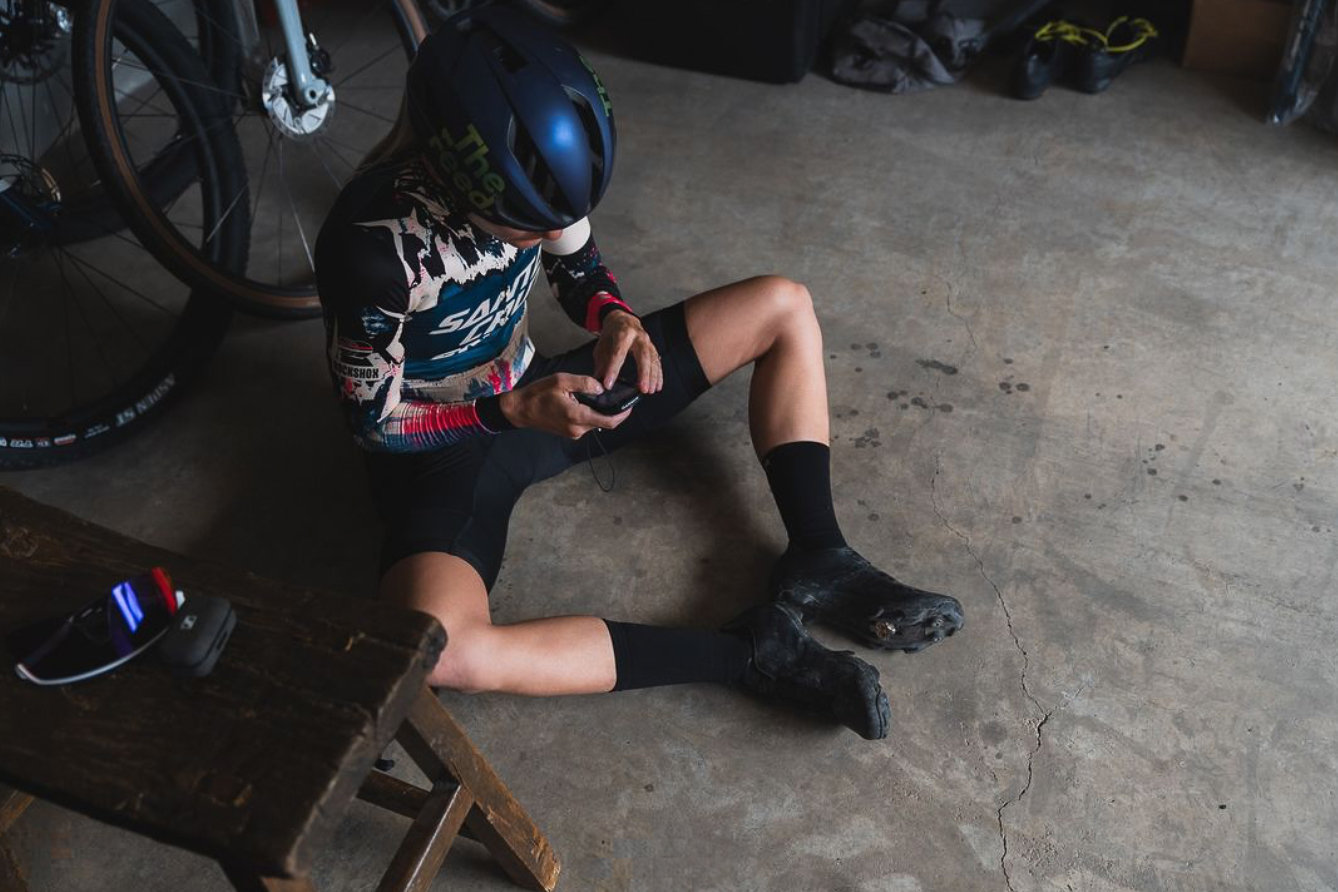
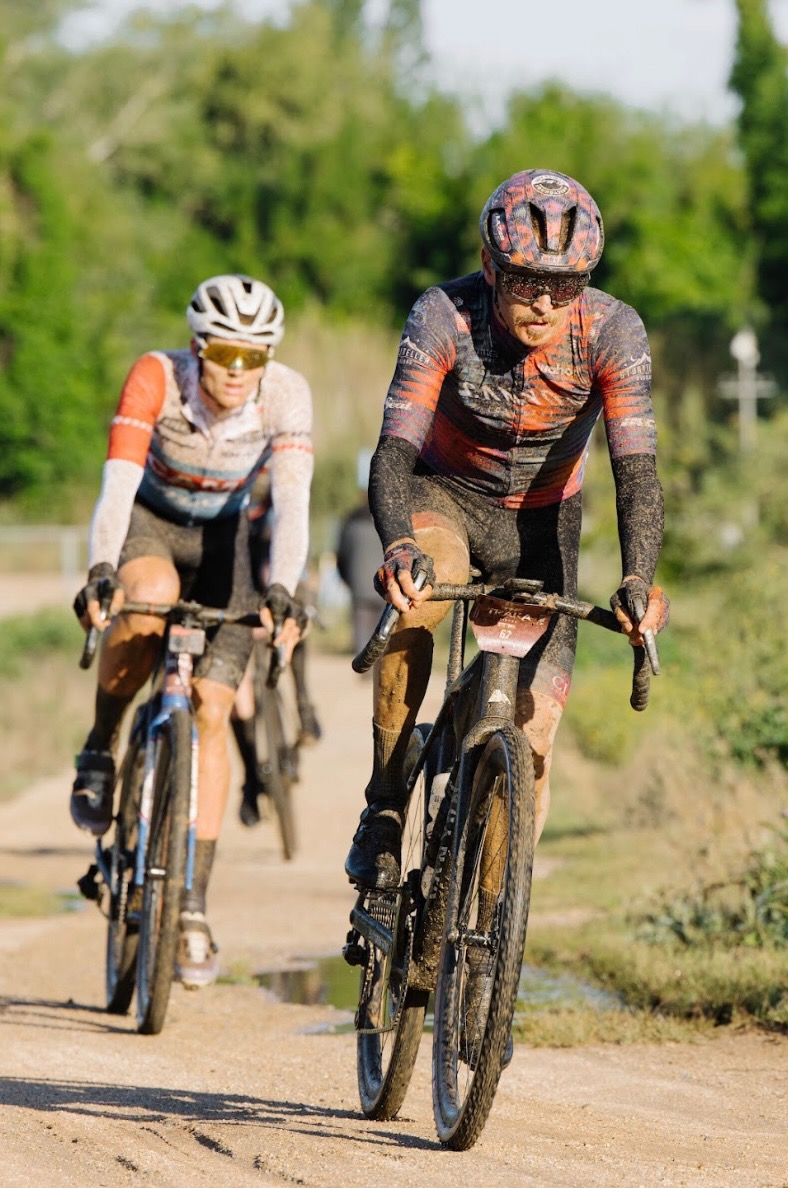
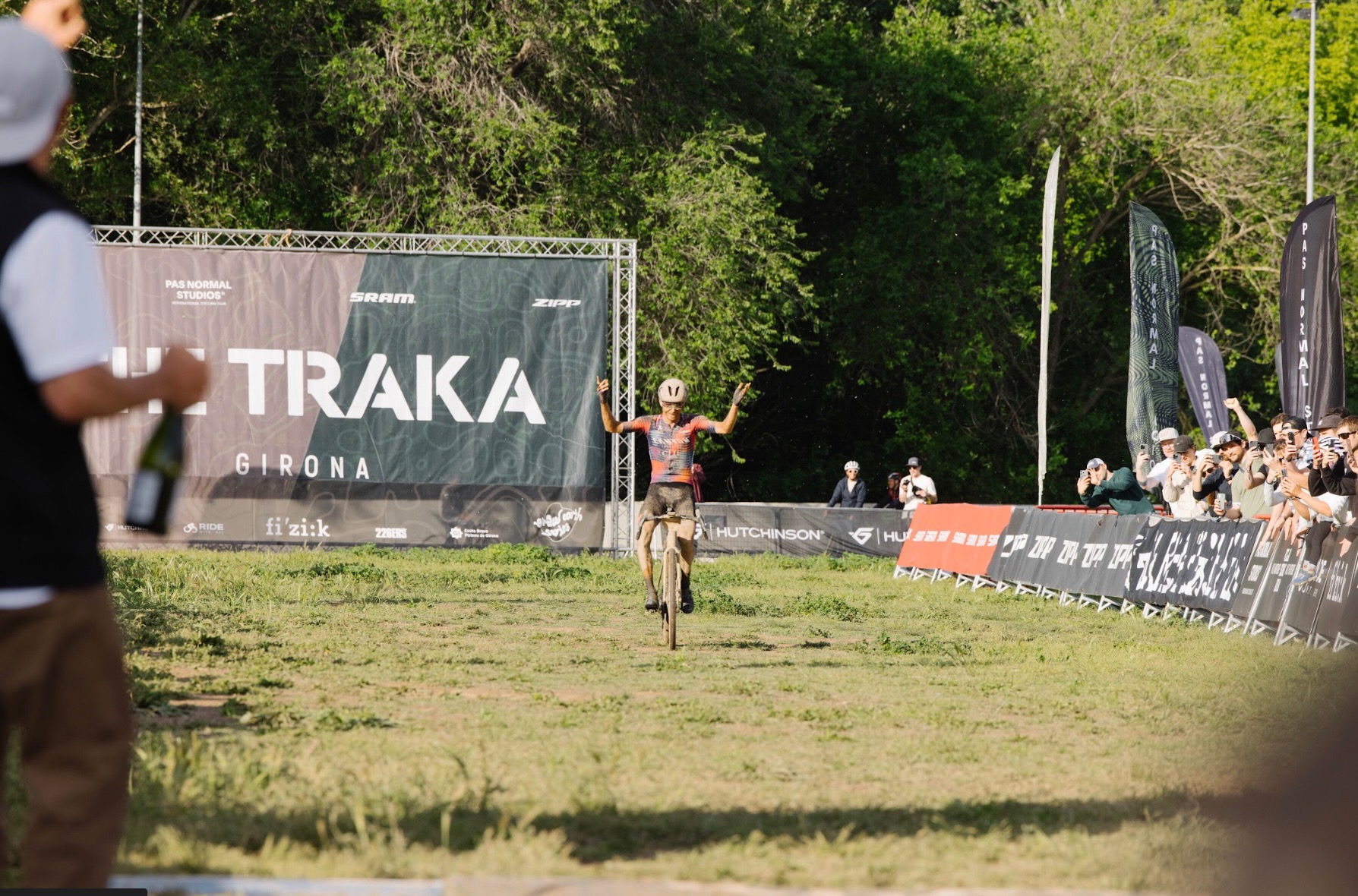
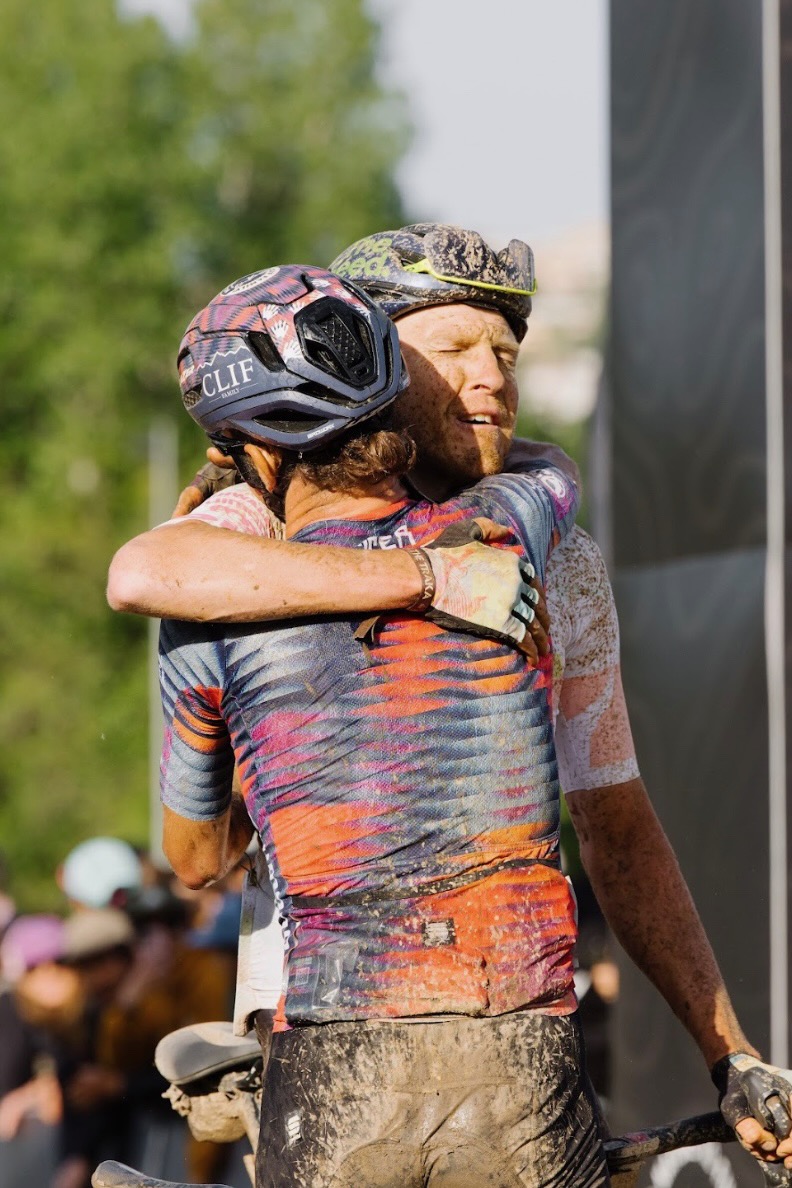
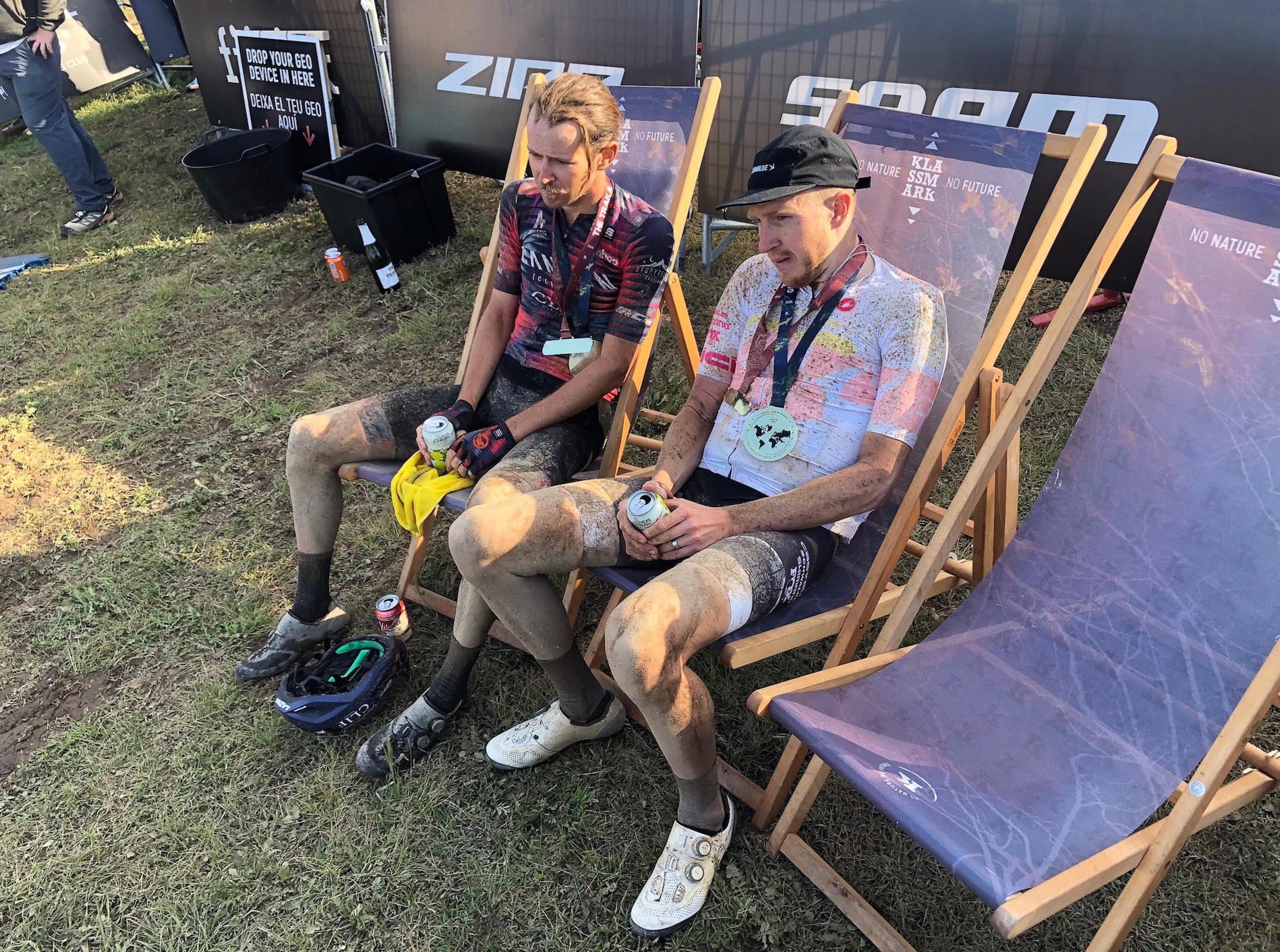
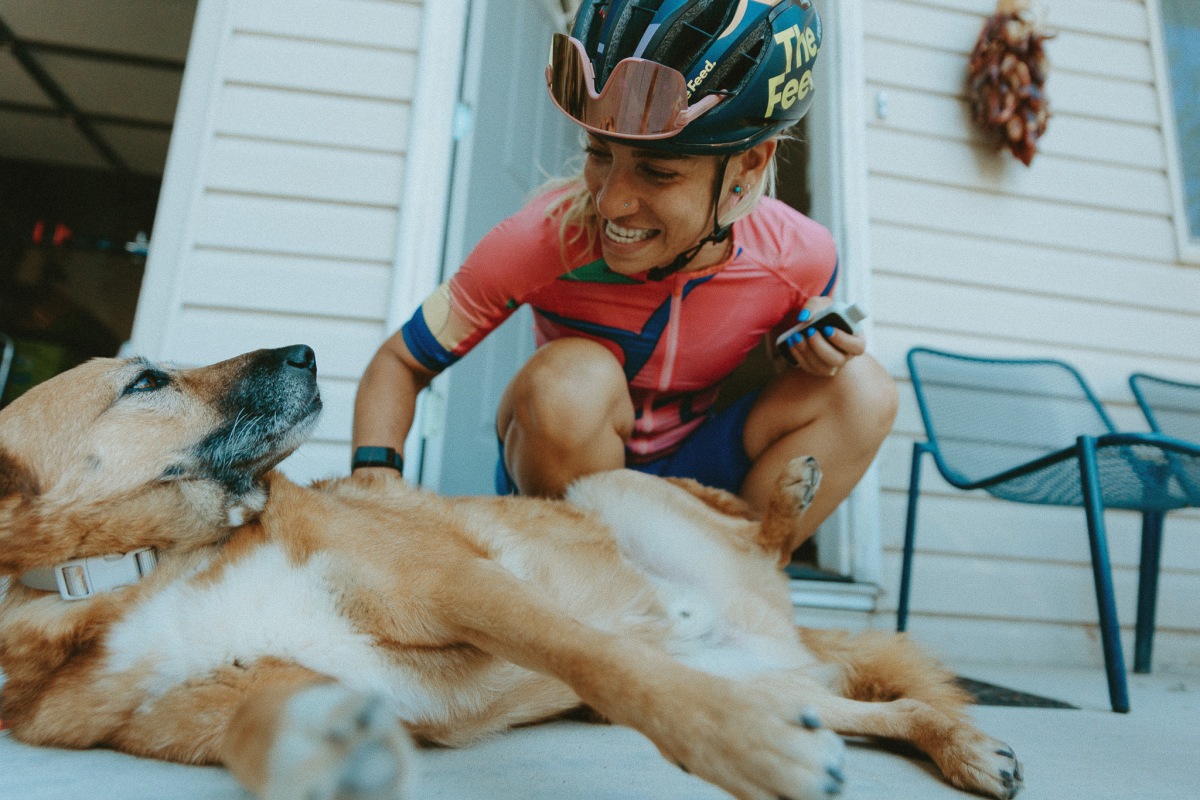
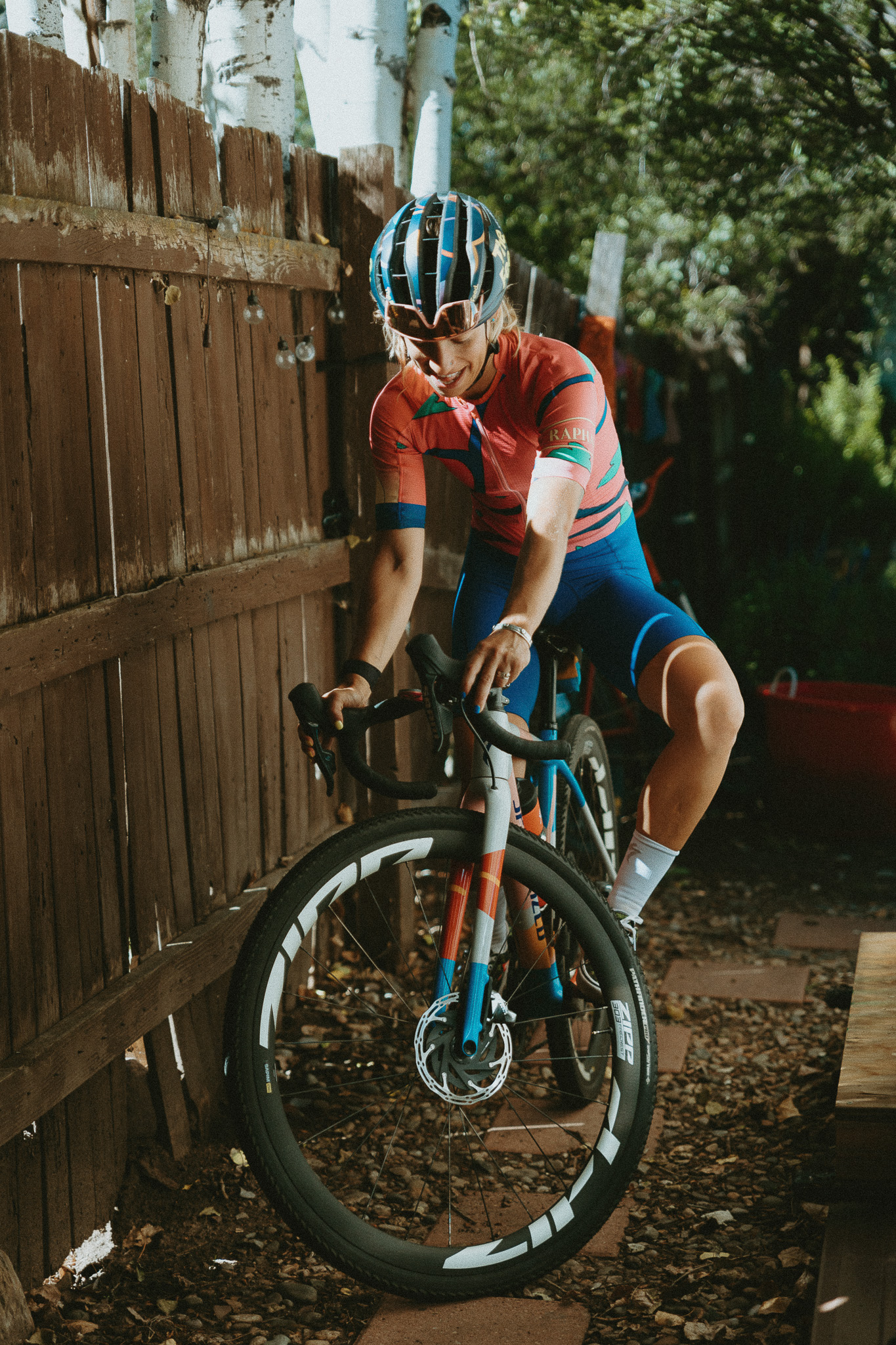
Home again after placing 21st overall and second woman to finish on this year’s Silk Road Mountain Race, adventure cyclist and photographer Sami Sauri reflects on the before, the during and the after. Conversationally candid and quick to laugh, Sami unpicks what it takes to complete such an epic challenge, how focusing on fun might just be her secret superpower, and why crossing the finish line helped foster a true sense of self belief.


cyclespeak
You’ve been back home from Kyrgyzstan for a couple of weeks now. How are you feeling?

Sami
It’s funny that the recovery was better than ever. There was so much hike-a-bike that my body never seemed to get that stressed in either discipline. I rode my bike, I pushed my bike, I carried my bike, I almost went swimming with my bike on some of the river crossings [laughs].

cyclespeak
The Silk Road Mountain Race is such a daunting event and on many peoples’ bucket list. What made you commit to racing it this year?

Sami
Rather than race, I was simply aiming to complete it. And even though I was mentored by James Hayden who talked me through equipment choices and training regimes, I was focusing pretty much on just finishing. Because racing is a whole other level and it wasn’t until day three or four that it even seemed a possibility.

cyclespeak
So what shifted in your outlook?

Sami
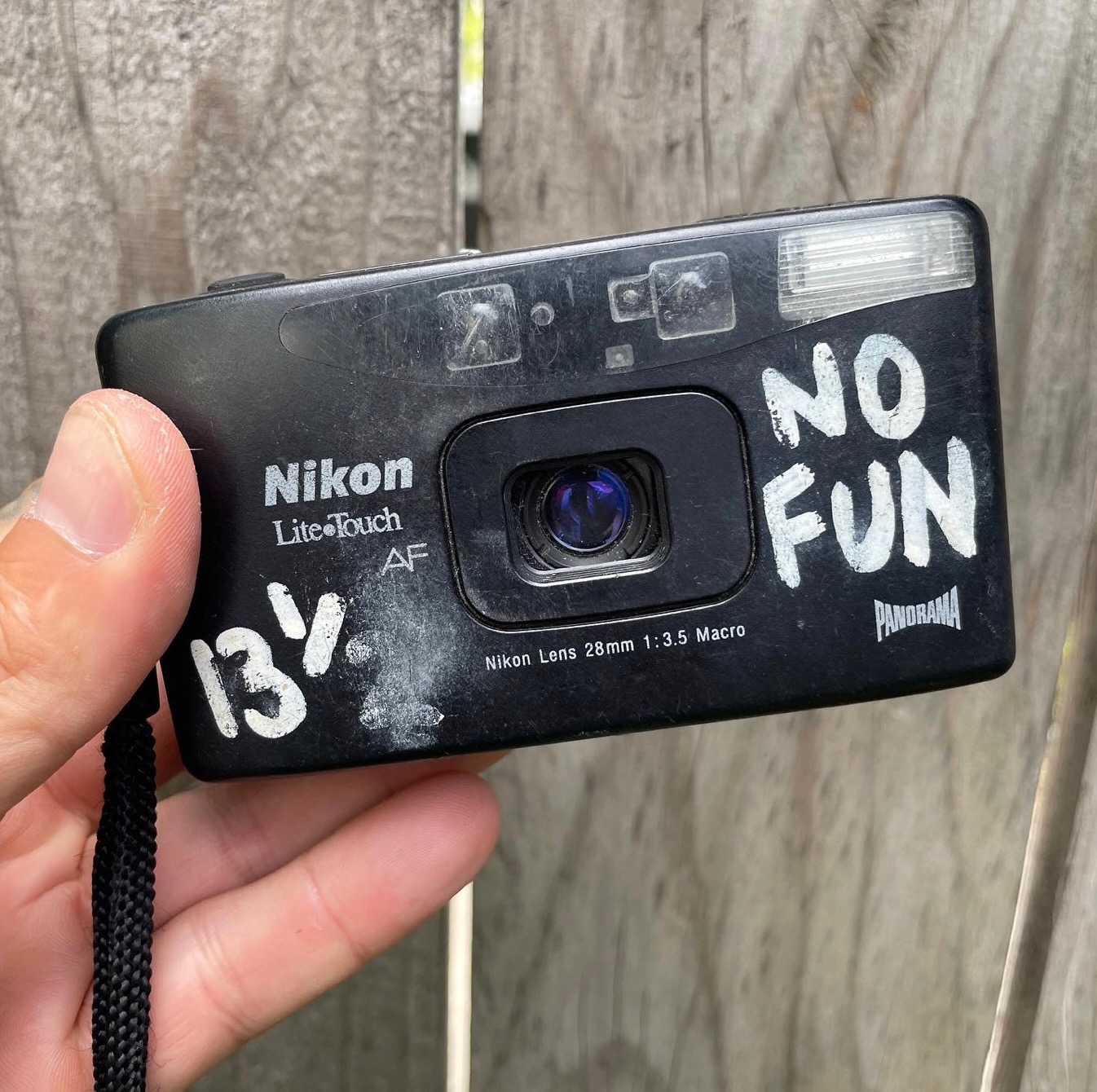
I was watching the dots when I could get a signal and that’s when I started to think that maybe I could place fairly well. But saying that, it was still an adventure and I was carrying a couple of digital cameras and one, quite heavy, analogue to document the experience.


Click image to enlarge

cyclespeak
You’re a very experienced adventure cyclist but did you still have to double down on your preparation for Silk?

Sami
Absolutely. And I was pretty scared about a lot of things because my background is fixed gear and fast gravel racing. So yes, I needed a few tips and tricks to get me through the race; to have the knowledge to make the right decisions at the right time.

cyclespeak
Because the event can be quite brutal?

Sami
I viewed this as more of a survival race and I wanted to control as much as possible in an environment where things can get very quickly out of control.

cyclespeak
You were riding your Rose hardtail with a Tailfin luggage system. In hindsight a good choice?

Sami
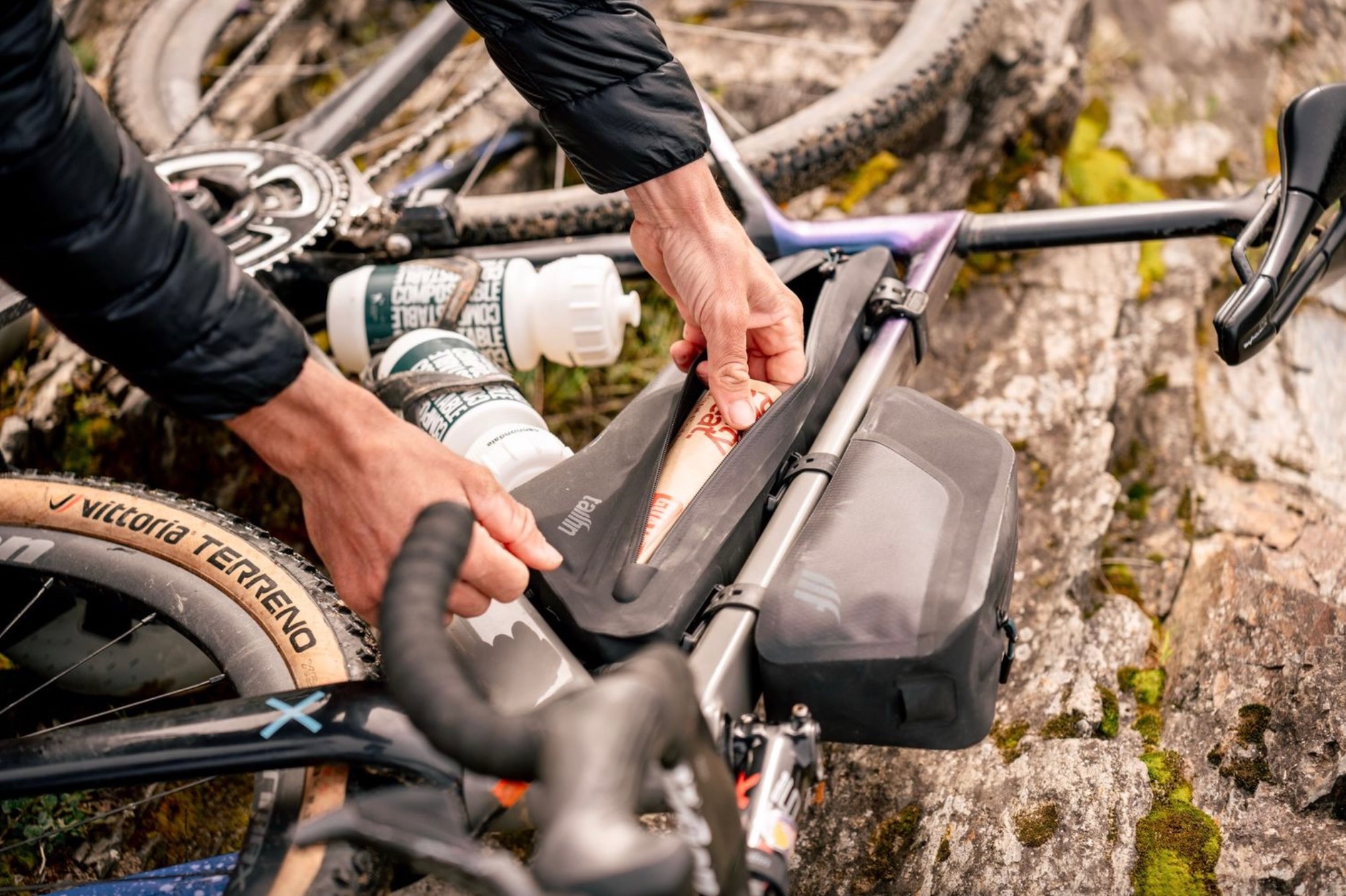
I wouldn’t change anything from that setup. The bike was amazing and Tailfin made me a custom camera bag that attached to my aero bars.

cyclespeak
And riding a hardtail rather than opting for a full suspension bike?

Sami
By nature, I enjoy technical terrain and I’m comfortable descending. And a hardtail is lighter when you’re climbing and gives you so much more space in the triangle for luggage options.


Click image to enlarge

cyclespeak
Going from your Instagram posts, it was an achievement in itself to even arrive in Kyrgyzstan? Delayed flights, a forgotten wallet; can you talk me through this rollercoaster ride?

Sami
It wasn’t a delayed flight, it was the delayed brain of Sami [laughs].

cyclespeak
It was?

Sami
I’d booked my flights to arrive early in Kyrgyzstan so I could join two friends on a bike packing trip on the Celestial Divide route. But I guess I had a lot going on pre-travelling—I was embedded with SRAM during the Tour de France Femmes—so when I got home it was quite a rush to get everything packed up. So much faffing around sorting out bags and lights and everything else I would need. But finally everything was ready, I booked my bus ticket to the airport, my neighbour dropped me off at the bus stop, I arrived at the airport, but then couldn’t find my flight on the departures board. So I asked at the information desk only to be told that the flight was the next day and I’d arrived a day early.

cyclespeak
So it was back home?

Sami
That’s right. Up the valley to Chamonix—a pretty fruitless five hour round trip—but at least it allowed me to attach the new saddle that Selle San Marco had sent me which arrived later that day. So, every cloud as they say.


Click image to enlarge

cyclespeak
And then back to the airport the next day.

Sami
I’d contacted my friends in Kyrgyzstan to tell them to start their trip without me and I would catch them up. But then—because I’d been rushing around so much—I realised that I’d left my wallet behind. Luckily I always travel with a card in my passport but it’s a credit card which doesn’t always work if you want to withdraw local currency.

cyclespeak
I’m guessing Kyrgyzstan is one of those countries?

Sami
Correct. So after landing, I had no money and no idea where my friends were. But I did have the route and set out before bumping into two other friends—I mean, what are the odds—so we made a new plan and off we went.

cyclespeak
When you did finally roll up at the Silk start line—ahead of you 1,900 km of rugged terrain and 30,000 m of elevation—what was going through your head?

Sami
Two things, I guess. The first being there’s no way back in the sense that your choices are made and you need to keep moving. It’s not like you can just pop back and grab a jacket if you feel a chill. You’ve got what you’ve got and those decisions are made way before the race gets underway.


Click image to enlarge

cyclespeak
And the second?

Sami
Throughout all of this mentoring with James, one of the things he talked about was having a mantra. Something that would help carry me to the finish.

cyclespeak
And what did you decide on?

Sami
My mantra was if you go further, you will see more. Because riding with a camera, that’s what motivates me to do these adventures.

cyclespeak
What sleep strategy had you decided on? Because there’s a school of thought that if you rest a little longer, you race faster; as opposed to little sleep but a slower pace?

Sami
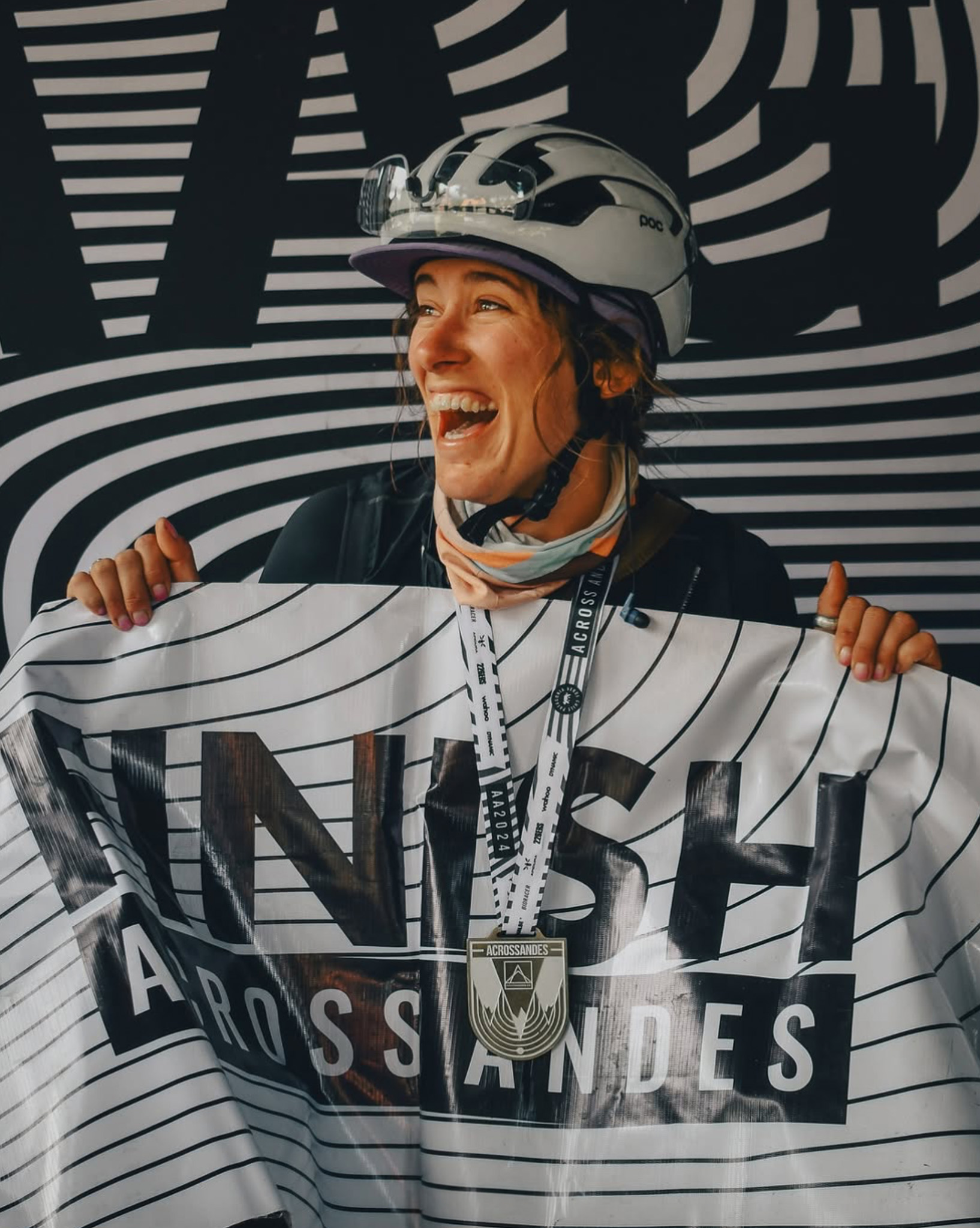
I’m not super experienced at racing ultras so I’m still working this one out. When I raced Across Andes—which is much shorter than Silk—I found that two hours rest a night worked well. But going without sleep for 24 hours at Bright Midnight paid off so badly.

cyclespeak
And Silk?

Sami
It’s so long that you simply have to sleep; you have to be rested enough to make the right choices at the right moment. So there wasn’t a 24 hour period that I didn’t clock some sleep. But I’m not going to lie, I completely freestyled it [laughs].


Click image to enlarge

cyclespeak
Which looked like?

Sami
Between three and four hours rest a day. But that was sometimes tricky to manage with it being so cold at night that it was difficult to keep warm if you weren’t moving.

cyclespeak
So if you had to choose between a tent, bivvy, guest house or giant water pipe?

Sami
The giant water pipe would have been a pretty good choice—I was very comfortable—but it just funnelled the wind and made my emergency blanket flap around too much. And the guest houses are wonderful for quality food and sleep but they take too much time because everyone is so welcoming and it feels rude to just rush off without having a conversation. And because you’re translating everything back and forth on your phone it can take forever.

cyclespeak
So maybe the tent?

Sami
That was good but, again, it takes a little time to get set up and some nights I just couldn’t be bothered and went straight for the bivvy. Which is quick but has issues with condensation—especially if you double it with the foil blanket—so you can end up feeling wet on the inside. So, to answer your question, maybe a combination is what works best?

Click image to enlarge

cyclespeak
How tricky was it to fuel your race? Did you carry much food or were you relying on roadside provisions?

Sami
You can’t rely on anything [laughs].

cyclespeak
You can’t?

Sami
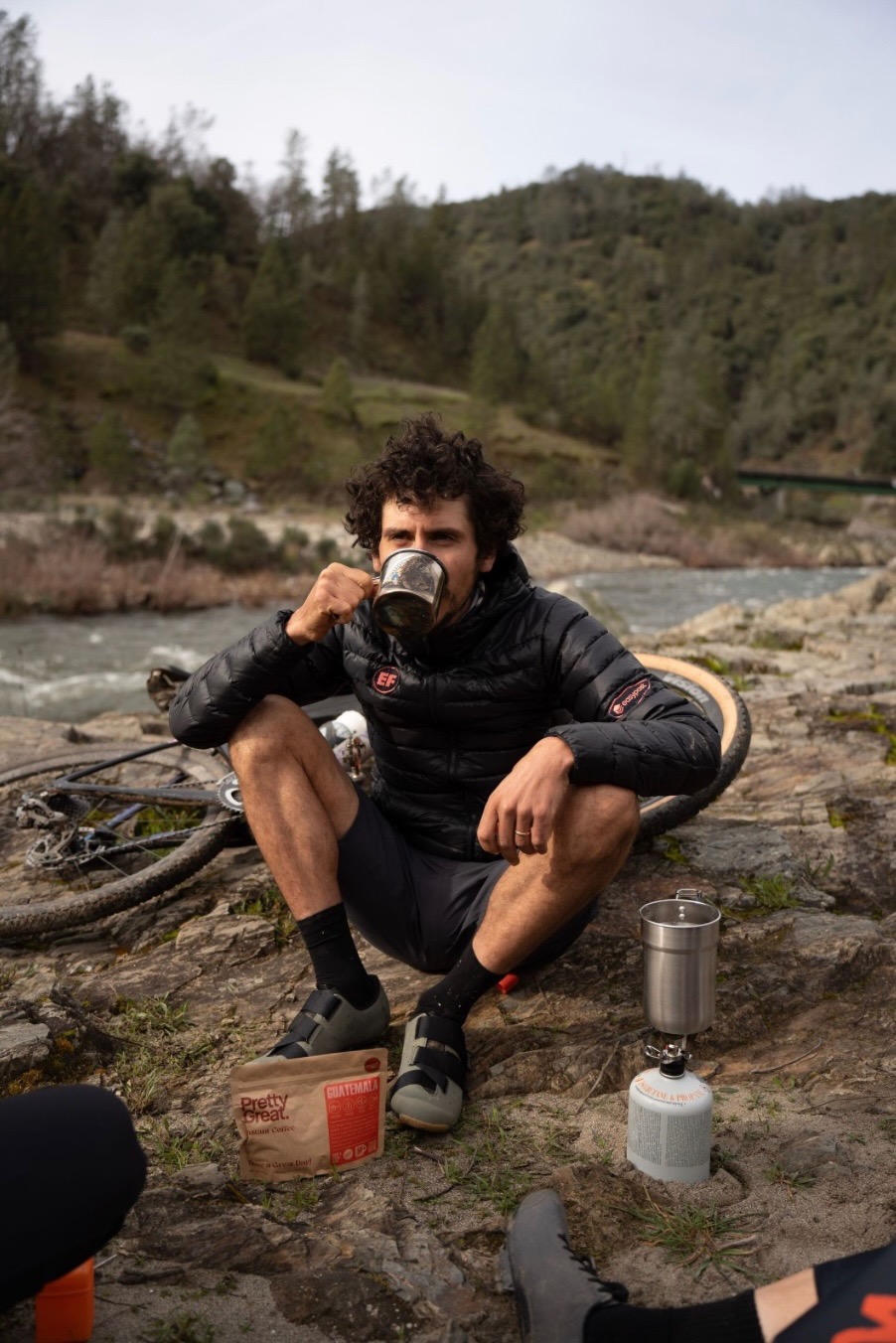
It might say resupply in the road book but that doesn’t necessarily mean a shop. And if there is a shop, it doesn’t mean there’s a vast choice of things to eat. It just means that you’re going to get something. But that still leaves you with stretches of 400 km without any food options. And due to the difficulty of the terrain, that’s equivalent to two days of riding. Which is why I call it a survival race and not a bike race because there were times when I was running out of food and having to ration my M&Ms to one every half an hour. And then when you do finally reach a town with a supermarket, the bag of food you buy is bigger than your body. Or at least it was in my case [laughs].
cyclespeak
I’ve seen pictures from Silk of competitors enjoying an ice cream.

Sami
Not for me.

cyclespeak
Not even the one?

Sami
There are two reasons why not. First, we were pretty high up—our average elevation was higher this year—so it wasn’t as hot as previous editions. And second, I was warned against eating ice cream because the electricity supply is a little inconsistent which means the freezers are constantly thawing and refreezing. But maybe I was overthinking the whole thing [smiles].


Click image to enlarge

cyclespeak
You had a series of tricky river crossings to contend with including wading through waist deep water and some pretty sketchy bridges. I’m guessing quite challenging obstacles?

Sami
One of the main bridges in that particular area collapsed only a day or two before the race started so I walked rather than rode over all of them.

cyclespeak
And the river crossings?

Sami
I had a couple of situations where I thought I would get swept away. So I learnt to wait until other riders were there so I wasn’t crossing alone. And in some cases, people had to camp out overnight to wait and cross in the morning when they could see what they were doing.

cyclespeak
I’m assuming the water is super cold?

Sami
Very, very cold [laughs].

cyclespeak
So if there’s no bridge, are you carrying your bike or pushing it through the water?

Sami
Most of the time you carry it across your shoulders. And sometimes you cross with someone else and you can help each other. But whatever the situation, it was always pretty sketchy.


Click image to enlarge

cyclespeak
Was the extreme elevation difficult to manage?

Sami
I do think a lot of people had problems with that. And I guess because I live in Chamonix, it maybe didn’t affect me quite as much. But I still had a bleeding nose and cough whenever we were above 3500 m which made sleeping sometimes difficult. So if you live and train at sea level, you can see why it can make things difficult and the altitude needs to be taken seriously. It’s no joke.

cyclespeak
You were the second woman to finish and placed 21st overall. And this was your debut Silk Road Mountain Race. Was it a case of instant euphoria arriving at the finish in Karakol or did it take a while to sink in?

Sami
It’s still sinking in [laughs]. Especially because it’s probably the best result in my racing career. And who would have thought I’d be even close to finishing second in Silk? Especially as I was going to Kyrgyzstan for the adventure and to take photographs. Which is what I did.

cyclespeak
Was that your superpower and part of the reason you placed so highly? The fact that you didn’t enter Silk with the view of chasing a result?

Sami
It’s honestly hard to say. I faff around so much in these races and stop for everything. I photograph flowers and the people I meet. I eat pizza on top of a hill and take in the view. But maybe you’re right. Maybe it’s this mindset that makes a difference?

cyclespeak
One incident that you did post about was an upsetting nighttime encounter with a boy and his dogs. But generally speaking, your interactions with the local population were very positive?

Sami
Yes, absolutely. The people in Kyrgyzstan are amazing and that was just a random encounter in an area near to the border. And I wasn’t the only person to run into a little difficulty there. But for the vast majority of the race, I never even thought about my own personal safety.


Click image to enlarge

cyclespeak
So how vulnerable do you feel on events such as these?

Sami
Strangely it was more when I was in or around a city. Somewhere that’s more touristy. When I was out on my own in the wilderness—where you might imagine you’d feel vulnerable—that’s where I felt the safest.

cyclespeak
In a certain way, you were joined on the race by all your dot watchers and by their messages of support. During difficult moments, are you aware of this and does it make a difference?

Sami
My friend Corina took over my Instagram account during the race so—day to day—I really wasn’t that aware of what people were saying. But when I did have a connection and could see all the messages, it was really a quite amazing feeling.

cyclespeak
You mentioned your personal mantra if you go further, you will see more. So is it possible to sum up what you did see?

Sami
You know, it’s funny. I took photos every day and when I look at them now—only a few weeks later—I can’t remember this or that place. Almost like it was so intense, with so many things happening, that I can only recall the hardest bits and some of the best moments. But the bits in between? It almost feels like my mind has deleted them.


Click image to enlarge

cyclespeak
So has this experience changed you?

Sami
I guess the honest answer is that I never thought I could finish something this big. So maybe now I have the reassurance that, yes, I can. And moving forward, the longer the event the better? And all of this came after a very difficult start to the year so it helps to have a sense of belief in yourself. Because before, maybe that was something I lacked?

cyclespeak
So maybe it’s answered some questions? And possibly posed some new ones?

Sami
I guess so [smiles].

cyclespeak
I think what sets you apart—and I truly believe this—is that you enter these extreme events with the goal of having fun. You’re racing Silk and carrying three cameras which just doesn’t line up with the vast majority of the other competitors. And it’s that, which makes your approach so unique and so refreshing.

Sami
Which is how I arrived at my Adventure More project which combines my love for photography and riding my bike. Something I want to do more of.

cyclespeak
When it came time to leave Kyrgyzstan, were you ready or was there an element of sadness at saying goodbye?

Sami
I think because I’d arrived early to go bike packing and had seen maybe more of the country than some of the other competitors, I was ready to go home and spend some time with my boyfriend and see my friends in real life and not just over a video call on my phone. And I was looking forward to having my plate of pasta with Parmigiana that I always have when I return home.

cyclespeak
Every time?

Sami
Yes, every time [laughs].

Sami Sauri / samisauri.com

Feature image by kind permission of Stephen Shelesky / All other photography credited individually

Silk Road Mountain Race

Karter Machen / Just happy to be here

Photographer Karter Machen has recently returned from a month long circumnavigation of Australia where, camera in hand, he shadowed ultra-distance racing legend Lachlan Morton. The resulting photographs—freeze framed moments that document this epic undertaking—beautifully reflect Karter’s instinctive ability to combine elements of emotional intensity and poetic storytelling into a single, still image.

Now home in Washington State but busy planning a potential relocation to Europe, we sat down over a call to discuss Karter’s creative journey and how this informs his own sense of wellbeing. A circuitous conversation that strays towards the philosophical in questioning what we really need to feel whole in an increasingly fragmented world.


cyclespeak
Australia looked amazing. An enjoyable trip?

Karter
One of the most intense experiences of my life to date. Each and every day had its surprises.

cyclespeak
The resulting film directed by Gus Morton did seem to suggest that, by necessity, you were making things up on the fly?

Karter
Plans kept being thrown out of the window but you roll with the punches.

cyclespeak
My youngest son commented that all the people I interview have really cool names. He’ll be pleased to know that you’re continuing this tradition.

Karter
A lot of my family came from Wales. There’s a town there called Machen and I guess quite a few of them got on a boat in the 1700s and sailed over here. But it’s pronounced like you’d say May-chin so no one ever says it correctly the first time [laughs].

cyclespeak
So you have to explain…

Karter
Every time. And that goes for my first name too. Karter with a K.

cyclespeak
Can we start with a whistle stop tour of your childhood?

Karter
I grew up in Idaho Falls. A small farm community—basically potatoes as far as the eye can see—so it was a case of making your own fun. A lot of time spent outside, playing in the irrigation canals that watered the fields. We’d jump right in and float all day.

cyclespeak
And sports?

Karter
I had no interest whatsoever in endurance sports. And cycling specifically was never really a thing where I grew up. We had bikes to get around but the idea that people raced them was just foreign to us. So I played a lot of American Football. Just like the movie where the whole town turns out for the game. And then later in life I started to transition into action sports. My older brother was an excellent skier so I followed his path. And it wasn’t until my late teens that I discovered cycling.

The Divide Film Tour // EF


Click image to enlarge

cyclespeak
And what did that look like?

Karter
I got a downhill mountain bike and then a couple of years later Creg Fielding, a friend of my Dad’s, introduced me to the road scene. He let me borrow a bike and some kit and took me out for a ride. Probably one of the worst experiences of my life…

cyclespeak
It was?

Karter
My legs were on fire—on a 12 mile ride—and I couldn’t, for the life of me, figure out how anyone could do this for fun. But over the following three years it very quickly took over my life. I had a lot of time on my hands and needed something to do. And choosing to ride a bike really shifted my whole perception of mental health and navigating through life. Being able to slow things down and process life with all its complications. It changed my mindset and, eventually, changed my career.

cyclespeak
But first there was college?

Karter
I started a business degree but didn’t really have a plan. And I had a few part-time jobs: working as a waiter and as a tour guide in Moab, Utah, where I rock-crawled big Hummer trucks. It was around this time that I got my first camera and started to shoot friend’s weddings. Doing that prompted me to drop out of college and find work in media production. I spent a while working as a junior creative director for a marketing agency. So primarily video production.

cyclespeak
Can you pinpoint a moment when the camera switched from simply recording an event—you mentioned weddings—to something you could use to tell stories?

Karter
That’s an interesting question. And I guess it was a gradual process during my media career. Because initially, the camera was a tool and there was no passion. Just a means to make a living. But then I’d go on trips with my friends and take pictures and it was those pictures that I loved. And then, when I would give people a copy and see how much it meant to them, that also became a driving force and the shift in perspective that maybe I needed.

Amstel Gold // La Flèche Wallonne


Click image to enlarge

cyclespeak
Looking through your portfolio, your images are rarely straight and static. There are strong directional diagonals, shifts of subject weight in the frame, a focusing-in on faces and hands. And I was wondering whether this approach is a series of conscious decisions or more of an instinctive response?

Karter
In those heightened moments when so much is going on, we use the term spray and pray. But as my career has progressed—maybe leaning on past experience—I’ve started to take fewer and fewer images. And then in post production, I’ll look at the framing to help tell the story.

cyclespeak
Does film photography interest you at all? To purposefully slow down the process?

Karter
I rented a Leica Q2 to capture the European leg of the film tour that Lachlan and Gus Morton did for the Tour Divide. A digital camera but it still slowed down the way I shot an image. And that also coincided with a period of time when I was changing how I was framing and composing each shot. Which provides its own sense of satisfaction when you take fewer images but with a good proportion that are strong.

cyclespeak
So is it about capturing a moment? Documenting what is happening?

Karter
I guess what was once a process of documenting whatever was happening is now shifting towards more of a narrative. And there’s this phrase—a moment in time—that for a while has really resonated with me. So having the opportunity to just be present and capture something that will never happen in the same way ever again feels pretty special.

cyclespeak
A story captured in a single frame, forever?

Karter
Which I guess is why I enjoy looking back over previous work and having the memories of those moments resurface.

cyclespeak
As a creative individual, where do you seek inspiration?

Karter
That’s another good question. Because I don’t always see myself as a creative person.

cyclespeak
Can I ask why not?

Karter
Maybe there’s a slight imposter syndrome? And I just struggle to feel that way about my own work.

cyclespeak
You’re not alone in thinking that way. Because I find a lot of creative people are always hyper critical about their work and find it difficult to feel a sense of satisfaction.

Pretty Great Instant


Click image to enlarge

Karter
Looking back on my career, there was a lot of, if the client’s happy, then job done. And then there’s been the whole battle with social media coming of age. Always comparing and fixating over likes and who’s getting attention. All the bullshit that comes with seeking validation from these platforms.

cyclespeak
But most people struggle with that in some way or another?

Karter
I guess they do. And now I try not to concern myself with those thoughts. I strive to capture a good image and if I’m happy, then that’s enough. And it’s only taken me seven years to arrive at this point [laughs].

cyclespeak
You say a good image. Can I ask how you make that judgement?

Karter
I guess what it comes down to, for me, is capturing the emotion. Whether that’s the landscape, the weather, however the subject is reacting to their environment. The full picture. And all of that in a single, fixed frame.

cyclespeak
People looking at what you do for a living—the travel, the exciting events, the exotic locations—they might very well perceive that as a glamorous job. But nothing is ever easy in life—there are always stresses and strains—so what are the realities, your reality, of earning a living as a photographer?

Karter
There’s a lot of sacrifice. Not a unique aspect but there’s been so much time with loved ones that I’ve missed. And I do feel incredibly fortunate that I get to experience all these things but there can be weeks and weeks without any sense of normalcy: late nights, early mornings, crazy hours, and a lot of unknowns that you just have to battle. You have to roll with the circumstances which interestingly has also trickled down into my day-to-day life.

cyclespeak
How so?

Karter
Certain shoots can bring with them an immense pressure on what you need to get done. You’re making decisions on the fly and managing your outcomes to the best of your ability. So when something happens in your personal life, as much as you might want to mope about it, you learn to make the necessary decisions and keep moving.

cyclespeak
Does your cycling have a similar effect?

Karter
I guess when you voluntarily put yourself in situations that are just awful. When you’ve been pedalling your bike for 15 hours and asking yourself why you’re doing it?

The Pony Express 100


Click image to enlarge

cyclespeak
When were you riding for 15 hours?

Karter
Last year I did a 200 mile gravel race in Utah that was routed along the old pony express roads. And I say roads in the loosest of terms. But taking on these challenges teaches you the value of time well spent. No scrolling on your phone, no TV, just alone with your thoughts and nowhere to hide if that makes sense? Because it’s going to crack you open at some point and that forces you to look at yourself in a very raw sense. And that’s really helped me to get a grasp on a lot of things in my life that previously I found problematic.

cyclespeak
You mentioned the pressure of social media in relation to your photography. So is it fair to say we’re increasingly fed this idea of happiness as a state of being? The reward for wanting whatever brands have to sell. But life is sometimes balanced by sadness and maybe if we aimed for contentment, then that’s a more realistic goal?

Karter
I’m one hundred percent on the same page. True happiness is fleeting at best. Something my girlfriend and I were talking about yesterday on a walk. How we question what we’re doing with our lives.

cyclespeak
Did you come to any conclusions?

Karter
I want to be confident in my own decisions. With my photography but also my morning routines, my diet, my leisure time, the clothes that I wear and the bikes that I ride.

cyclespeak
So how does that relate to your cameras? Are they a toolkit for doing your job or is there an emotional element?

Karter
Recently it’s started to feel nice.

cyclespeak
Why the change?

Long pause

Karter
Probably because I’ve been more true to myself in how I capture things. A slowing down and finding joy in the process. More of a connection with the camera when before it was just something I used to capture what the client wanted. And The Great Southern Country also played a part because I went in with total creative freedom and was able to feel a sense of pride with the images that came out of that experience.

cyclespeak
So looking at your life in general, is each and every day an adventure? Something to be appreciated?

Karter
I believe so. And that kind of leads into my freelance way of working after spending so many years with a 9-5 routine. If I can learn something each day, see something that fascinates, enjoy the simple things that maybe we take for granted?

cyclespeak
I guess what you’re describing is being present in whatever you’re doing rather than a constant searching for bigger and better?

The Great Southern Country


Click image to enlarge

Karter
One of my personal mantras—for want of a better word—is to live with awe. And that might be the birds singing on your morning walk or a conversation with a random stranger at the airline check-in desk. Our lives are filled with junk from the marketing messages in our inbox, to the way our phones encourage us to keep scrolling. But there’s so much, right in front of us, that’s so worth appreciating.

cyclespeak
I understand that travel is a necessity for your profession. So what is your concept of home? A place, people, belongings or something else?

Karter
That is such a good question. And for me, I try to feel at home wherever I am. Maybe because my schedule can be a little chaotic. But what anchors me most is the time I spend with my partner Emily.

cyclespeak
Is there anything you carry with you on work trips that has a sense of home?

Karter reaches out of shot before holding up a leather-bound notebook

Karter
My Mom gave me this a while back and it just sat in a drawer. But then one day I stumbled upon it and it’s been travelling with me ever since. On the front it says write something worth reading or do something worth writing. I don’t use it as a journal but, if the mood takes me and I feel inspired, then I’ll jot down whatever is on my mind.

cyclespeak
How do bikes fit into life and living? Because I saw on your feed that you have a very nice Standert which I guess is a rarity in the States?

Karter
I love that bike. And yes, most people I meet don’t recognise the brand as it’s Berlin-based. And I arrived at this particular bike after disappearing down the rabbit hole of lightweight carbon with all the whistles and bells to make you go faster. But then I saw my first Standert and was just struck by their beauty and the story behind the brand. So removed from the conversations I’d been having where I was questioning whether it’s worth spending an extra $2000 to save 150g. It was a case of, enough, I just want to ride a bike that resonates with me, that has the same kind of vibe as owning a classic car.

cyclespeak
I was intrigued by your Instagram bio where it states you’re just happy to be here.

Karter
It’s just something I’ve always said. Because people will apologise when I’m on a shoot if the weather is bad or there’s a problem with logistics. Which is very nice of them but I’ll stop them and say, “I’m just happy to be here”. Because everything doesn’t always go according to plan and to be very upfront, I had a long battle with depression and experienced some difficult times. So learning to fall in love with life again, no matter what’s happening, I’m just happy to be here.

All photography with kind permission of Karter Machen / kartermachen.com

Chas Christiansen / In search of the stoke

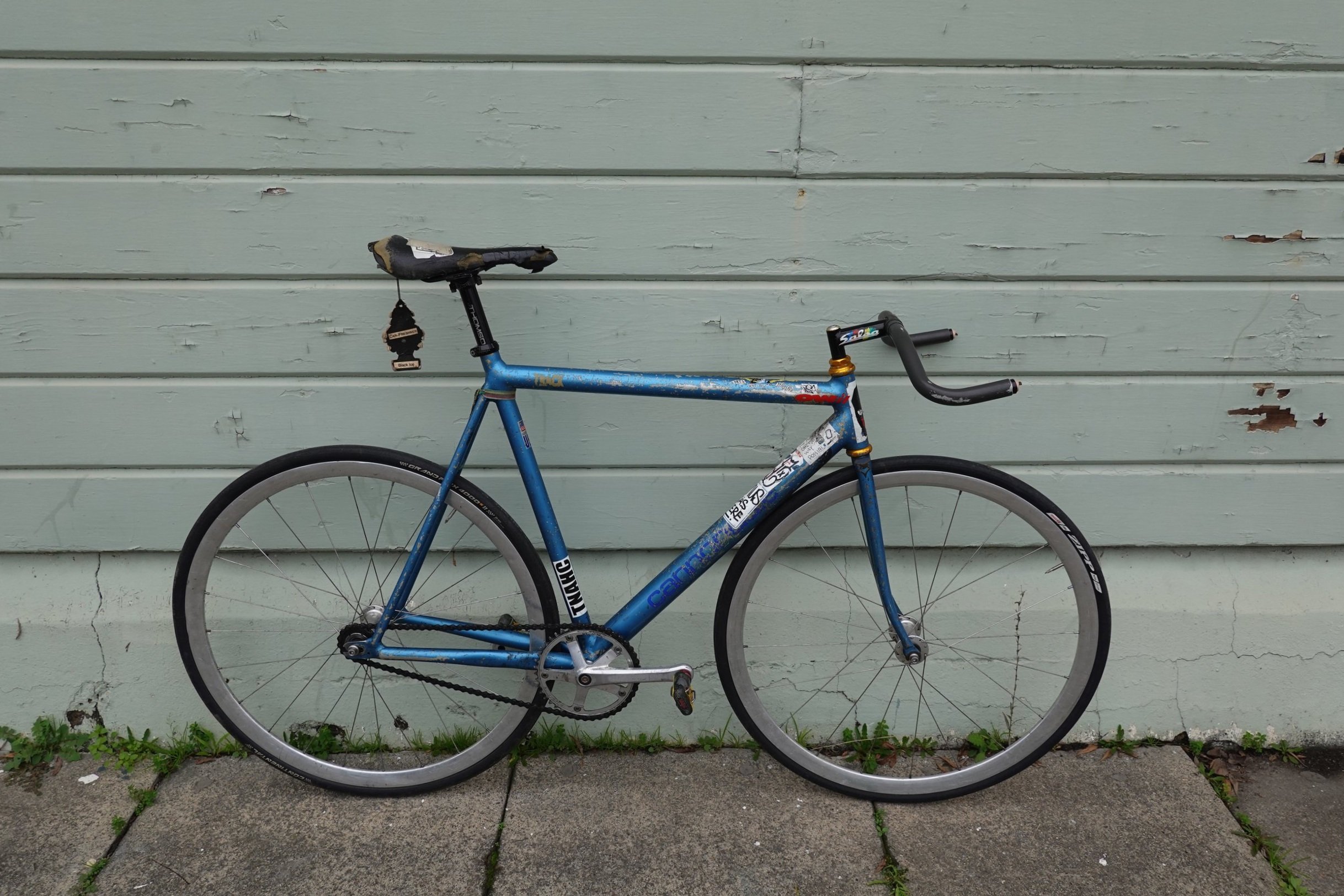
Former bike messenger, fixed-gear legend, artist, photographer, and bike aficionado; Chas Christiansen offers up an intriguing narrative on embracing each and every opportunity. Threaded through with a rich vein of self-deprecating humour, this Oakley wearing modern day Renaissance Man offloads on the hits he’s taken, the hardwon moments of clarity, and his continuing search for the stoke.


Chas
Hey! Whatsup?

cyclespeak
All good here. Especially as the stars are aligned for our call. I was driving into Manchester early this morning, only to pull up behind a plumber’s van and see one of the stickers adorning the rear doors spelling out CHAS.

Chas
Well there you go.

cyclespeak
You’re calling from home?

Chas
This is my basement studio space. Or more technically—because there’s a risk of earthquakes in the San Francisco Bay Area—my first floor above ground.

cyclespeak
We find that all very confusing because your first floor is our ground floor.

Chas
Oh, I hear you. And, in the States, if you do see a button marked G in an elevator, you might press it expecting the ground floor but in fact it takes you to the garage.

cyclespeak
You mentioned San Francisco as home?

Chas
Actually it’s Oakland. And that’s a big distinction for the locals.

cyclespeak
So it’s important?

Chas
Oh definitely. It’s a little like comparing Manhattan to Brooklyn.

cyclespeak
So which one is a) cooler and b) more affordable?

Chas
That’s a tough question [laughs]. And I’m going to say Oakland for both.


Click on image to enlarge

cyclespeak
Has Oakland become cooler since you took up residency?

Chas
Not at all [laughs]. But what I can say is that a lot of what I liked about San Francisco has changed—which is the nature of cities—yet Oakland still retains those key aspects that make it feel like home. There’s more of an artist based community, things are less driven by money, it’s a little more bohemian.

cyclespeak
I’m guessing Chas is short for Charles.

Chas
It is. Charles William Christiansen.

cyclespeak
Does anyone call you Charles?

Chas
The police and my grandmother. My Mom changed to Chas. And I definitely don’t answer to Chuck.

cyclespeak
You’ve just had a show of your artwork and photography open in San Francisco. I’m guessing a busy, fun-filled, exhausting weekend?

Chas
I have not been this fulfilled in quite some time. On so many different levels. I’ve had all this stuff bouncing around in my head for years, so to see it all come together felt amazing. But it was the response from my community that was especially touching. My whole goal was to recreate the scene from a decade ago when we’d visit gallery after gallery on a Friday night before all ending up at a bar. And at the opening night of my show, I had the same feeling as hundreds of people spilled out onto the street.

cyclespeak
Bikes, bike racing and artistic endeavors all seem intertwined in how you live your life. And your show was titled Born to fuck around, forced to find out. So looking back to your childhood, were you raised in a creative, outdoorsy environment?

Chas
Not really, no. I grew up outside of Olympia, Washington. Lower middle-class, so not poor but we definitely didn’t have a lot of money. We’d go camping every once in a while and I remember hiking a couple of times. As for being creative, I’ve always been into drawing but the house wasn’t filled with art.

cyclespeak
On your Instagram feed, there’s a certain confidence you exude when you engage with the camera. And I was wondering whether you were one of the cool kids at school, possibly an extrovert in class, or maybe kind of shy and retiring?

Chas
I think it’s fair to say that I’ve always had the ability to connect with people. But I was more of a nerd and definitely not one of the cool kids. I was a reader, I worked at the theatre and hung around with the drama kids. And I was a skateboarder, I was into punk and had a mohawk. So quite a mix but, at the same time, I went to all the parties and was on good terms with everybody.


Click on image to enlarge

cyclespeak
A planned career travelling the world in the Merchant Marine was cut short after you were arrested for tagging a building. And after paying your dues, you eventually landed in Portland where you could snowboard. And I believe you were known for driving up to the slopes in your convertible, fully kitted out and wearing snow goggles?

Chas
Yes, sir. That sounds about right [laughs].

cyclespeak
So how did you end up working as a bike messenger?

Chas
I rode bikes as a kid but was never super serious about it. But that convertible got me into some trouble to the tune of 22 speeding tickets in two years. So finally they took away my licence—funnily enough on the way up to go snowboarding—when I was pulled over literally a hundred feet from the resort. They arrested me, took me down to the station, impounded my car and that left me without any means of transport for getting to work.

cyclespeak
Which is where the bike comes in?

Chas
I was washing dishes at this super fine-dining restaurant and one of the servers suggested I get a bike. He even took me to a bike shop and sorted me out with this old Fuji cyclocross frame. So there I was, riding to work, and beginning to notice all the different people commuting by bike. The ones that always stood out were riding these super sleek bikes. They all had tattoos and looked cool but it was the way they’d skid that really got me.

cyclespeak
I can see the attraction.

Chas
Eventually I figured out they were bike messengers and there was this alley-cat scene. At that time I wasn’t earning a lot of money, was pretty broke, and the only cycling kit I had was hand-me-downs so I felt really out of place. But they were wearing cut-off shorts and a tee. And it just hit me that these were my kind of people.

cyclespeak
And a potential new scene to explore?

Chas
Absolutely. So in my lunch break—I was now working as a butcher—I would chase them all around downtown and, in the process, get them all super annoyed. Until finally, one of them took me aside and told me to meet them later at the Ash Street Saloon. I showed up at the appointed time, paid my five dollar entry fee, and raced my first alley-cat. And that’s when I had this moment of clarity. Because these people got paid to ride their bikes. I was a fucking butcher and packed sausages for a living.


Click on image to enlarge

cyclespeak
So you decided to switch career paths?

Chas
I kept on racing alley-cats until this messenger guy told me he was leaving Portland and did I want him to put in a good word for me to take over his job. So he did, I went in and talked to the dispatcher, got the job and quit being a butcher.

cyclespeak
It does look amazingly cool but what were the realities of your life as a messenger?

Chas
It’s the best, worst job in the world. You’re essentially given these tasks but then left to your own devices to figure out how to complete them. So there’s plenty of opportunities to learn about self-sufficiency and every day is different. There’s this fucking amazing community but the downside is that this same community can also be really toxic. It’s not a job with a lot of upward advancement and there’s a lot of partying and drug use. So it’s fun when you’re young but if you’re still drinking with the boys and girls into your thirties, it can start to wear on you.

cyclespeak
So a hard life?

Chas
It kills your body and that’s not just the partying. It’s a physical job and you take hits. I’ve had scrapes with so many cars and there’s no health insurance by and large so you inevitably go back to work before you really should. I was fortunate and got out at a good time—it helps to have an exit strategy—but my knees are still shot.

cyclespeak
You did more than get out of it. You founded the messenger company TCB*.

*Taking Care of Business

Chas
That’s another thing. You should never form a bike messenger company if you want to make money [laughs].

cyclespeak
It’s like they say: if you want to make a million in the cycling industry, start with two.

Chas
Exactly. But I’d worked as a messenger for enough shitty companies that I wanted to ensure that everyone who worked for TCB made good money and was taken care of.

cyclespeak
How long did it take before you were riding fixed without thinking about it?

Chas
A couple of years at least. When I first started riding a track bike, I was all over the road. And it honestly wasn’t until I moved to San Francisco and had to really deal with the hills that my confidence grew. But even then I took my fair share of hits and left skin on the ground.

cyclespeak
But eventually there’s a moment when things just click into place?

Chas
It got to the point where I would ride two or three miles through congested downtown traffic and not remember how I got there. Yes, I was conscious of talking over the phone and the dispatcher’s voice on the radio, but the actual movement between drops was a blur. So maybe that was my 10,000 hour moment when I could ride through traffic without the need for conscious thought?


Click on image to enlarge

cyclespeak
Was this the gateway to racing Red Hook?

Chas
I think it was. Because David Trimble started Red Hook so that his bike messenger and road-race friends could all come to his birthday party. But even though I regularly rode alley-cats, I didn’t come from a professional racing background. There had never been any talk of watts, a training plan, stretching, or a racing kit. Recovery, for me, was slamming three beers before crashing out on the couch. So Red Hook was probably the easiest way that I could step into sanctioned racing and rub shoulders with professionals. You spend enough time with those guys and things start to rub off.

cyclespeak
And then gravel came calling?

Chas
That was the Grasshopper adventure series. And back then, they were essentially alley-cats. You would show up at this small town in northern California and they’d give you a spoke card with the route printed on the back. And that just connected with me. You had to figure it out without recourse to a smartphone or GPS device. You were self-sufficient and left to your own devices which is pretty much how being a bike messenger works. And then stepping into ultra-distance racing with the Transcontinental, it’s basically just an even bigger alley-cat. You start here, end there, and there’s four checkpoints you need to pass through. It might take two or three weeks as opposed to four hours but I already understood the concept.

cyclespeak
You scaled it?

Chas
One hundred percent. From racing city streets to racing across continental Europe.

cyclespeak
On your website’s Garage page there’s a ​​No22 Little Wing titanium track bike that you term a forever bike. And that got me wondering why you could never part with it? Is it the memories it embodies, or the way it rides?

Chas
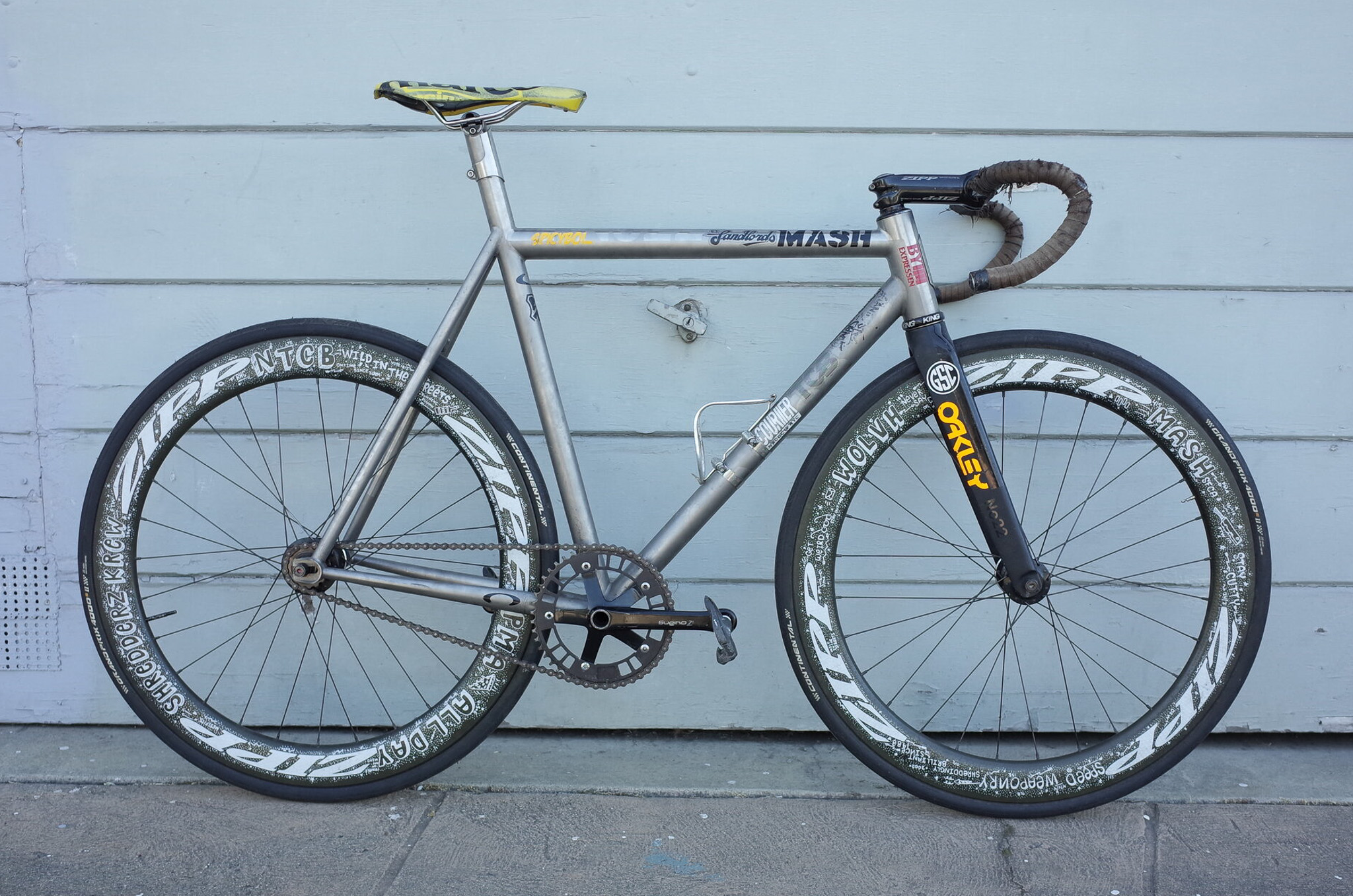
Kind of all of the above. I rode for MASH for a really long time and No22 was the first bike company that supported me after I stepped away from Cinelli. And I was intrigued by titanium—in the room next door there’s a huge stack of broken aluminium and steel frames—and I just hope, when I’m 65, that I’m still riding that track bike down to the coffee shop.

cyclespeak
Another Garage bike—I could happily go on, referencing each and every example—is a 1993 Cannondale track bike that you rode the shit out of as a messenger in Portland. A bike you term a unicorn. Can you put into words what it feels like, both physically and emotionally, to ride fixed through the city streets?

Chas
This is going to sound a little trite but there’s this connection to a machine that is purely instinctive. And when you pair that with flowing through city traffic—faster and smoother than any other vehicle—you get this intense feeling of freedom. It’s very intuitive so mentally you’re disconnected from the physical. And because it’s fixed, you’re not thinking about what gear you’re in or when to hit the brakes: it’s this gap, that gap, make the light. You’re not looking immediately in front of you, you’re looking ten moves ahead. Dodging and weaving—your heart rate elevated—and it’s those moments that I feel the greatest sense of freedom because I’m not constrained by anything.


Click on image to enlarge

cyclespeak
Just backing up to your first Transcontinental, on the face of it that was a big leap into the unknown. But you’d already ridden from Portland to Chicago to attend a messenger race. On a track bike, with a paper map.

Chas
That’s what’s so funny about the move to ultras. Because like you said, we’d already been doing it forever. But what got me to the start line of the Transcontinental, was the kit company PEdALED hitting up me and my forever partner in crime, Nico Deportago-Cabrera.

cyclespeak
And what did they say?

Chas
They told us there was this thing and they could get us in if we wanted to do it. And we were like, why not? Because at that time, if pretty much anyone was offering us an opportunity to travel, the answer would be a yes.

cyclespeak
So you were in.

Chas
But with no fucking clue as to how big a deal the Transcontinental was. To the extent that we got a lot of beef when we scratched at the fourth checkpoint so we could go race the Cycle Messenger World Championship. I can remember handing over our trackers at the top of some mountain in Romania and thinking, fuck, how do we now get to Montreal in 49 hours? But we muddled through and when we got home, discovered the internet was really pissed off with us. Nico did the research and it was, dude, this ultra-racing is a really big deal. Which was the main motivation for going back to the Transcontinental the next year and finishing.

cyclespeak
I guess there’s a physical and mental aspect to both a fixed-gear crit and a multi-day, ultra-distance race?

Chas
Mental strength and self-sufficiency play a huge part in both alley-cats and ultra events. However you want to do it, is how you do it. Yes, there are some rules that determine how the race goes down, but no one is really saying that it has to be this or that way. And when all’s said and done, it’s about not taking setbacks as the end of your race.

cyclespeak
But there is a difference between the disciplines?

Chas
As I see it, if you win a fixed-gear crit, you go to the podium and the crowd is screaming. But when you finish an ultra event, most of the time nobody is there. And there’s been times I’ve wrapped up my race at 3:00am in a parking lot and just started crying. So if you put me on the spot, I’d say that finishing within the time cut of an ultra is a more fulfilling experience.


Click on image to enlarge

cyclespeak
Can you picture one of your lowest, low points in a race and describe how you dug yourself out of that hole?

Chas
I didn’t. Because sometimes you don’t. And that’s the hard truth of not only ultra-distance racing but of life in general. I entered the inaugural Atlas Mountain Race in Morocco as a pair with Nico and his fork broke. We’d already discussed what would happen if one of us couldn’t continue—that we’d carry on alone—but riding away and leaving him behind was devastating. And it soon became apparent that I just wasn’t emotionally ready to be out there by myself. So after three days of pushing on alone, I scratched.

cyclespeak
What made you decide to stop?

Chas
I’m all about the positive mental attitude and that works fine until it doesn’t. So I guess I just got to the point where I was so sad, so scared, so overwhelmed, that I just had to call it. A heartbreaking experience that left me crying in the back of a cab in Morocco with the driver staring back through the rear-view mirror at this unwashed, stinky and dishevelled guy.

cyclespeak
Coming full circle back to your artistic pursuits, there are numerous examples of your doodling that I find incredibly exciting. Can you talk me through where it’s taken you and where it’s going?

Chas
I have no idea where it’s going [laughs]. But I was always encouraged to draw and I’ve always been a doodler. That, in turn, led to graffiti and me getting arrested for tagging a building.

cyclespeak
And it now inspires your creative expression as an artist?

Chas
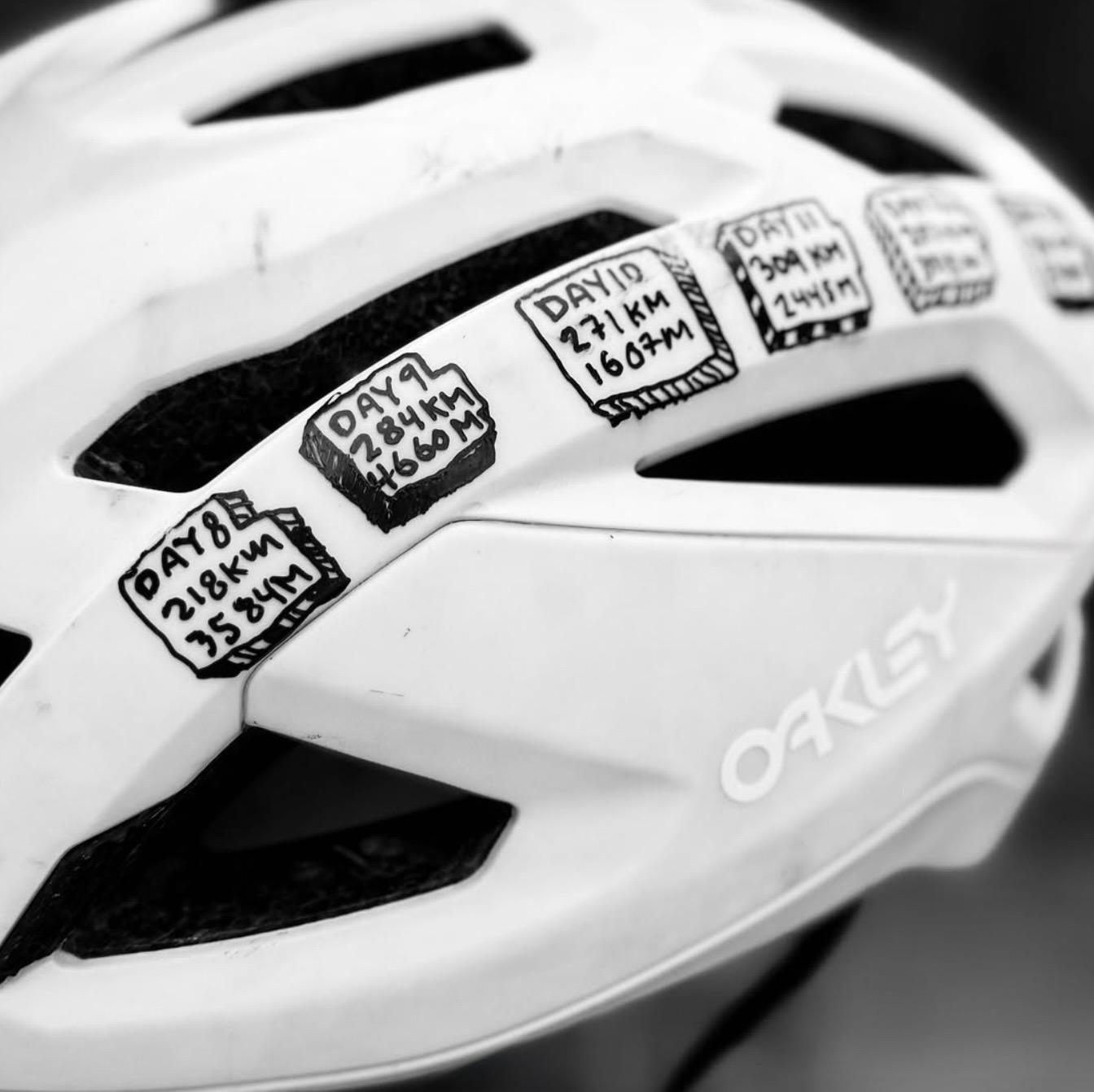
It’s a deep part of messenger culture and when I was working in the city—making drops at Fortune 500 company offices, basement businesses, and everywhere in between—I would hear people talking and clock the signage on the streets. So I decided—rather than lose all these references—that I would write them down. And not wanting to tag on someone’s property led me to start drawing on the things I would get sent by my sponsors. Whether it was a helmet or a pair of shoes; I would personalise it with my doodles. Then when I started to travel, I would return home with notebooks full of thoughts and ideas, images on my iPhone and photographs I’d taken with my film camera. I didn’t have any canvases but what I did have lying around were disc wheels and brake calipers and it’s all just evolved from there. A stream of consciousness that I transfer onto physical objects.

cyclespeak
You mention photographs and a couple of months back you posted a series of images shot on a roll of film that had been mistakenly put through the camera twice. An accident but a very fortuitous one.

Chas
Double exposure shots are something I’m always playing with but those turned out better than the ones I purposefully try for. And I love film cameras in general. You take a shot on your phone or with a digital camera and you can see it immediately, you can edit it on the fly, there’s instant gratification. But I have multiple film cameras on the go at any one moment and some of those have rolls in there for six to nine months. So you have this chronology of things that you’ve done and moments that you’ve probably forgotten. And it’s only when the roll gets developed and the shots are printed that you get reminded of that. I like the idea of documenting life and then seeing whatever you get out of it.


Click on image to enlarge

cyclespeak
You’re comfortable with this analogue process?

Chas
My generation is the very last to truly remember a pre-internet age. I wrote my first papers by hand and I didn’t get a smartphone until I was 25. And you know what, I feel really privileged to be part of the generation that bridges that gap.

cyclespeak
But you wouldn’t want to wind the clock back?

Chas
There are lots of advantages to having our current level of connectivity. But I can’t help missing the travelling I did before I got my first smartphone. That feeling you had when you were lost and had to ask for directions. You had so many interactions with the people in the place you were at. Now you just ask your phone for the top-ten rated restaurants and you follow the blue dots. The first international trips I made to race alley-cats, you got handed a physical map and you memorised the landmarks. Not that it’s better or worse but I just miss analogue travel.

cyclespeak
Zooming in on day-to-day life and living, is there such a thing as a typical day?

Chas
I’m trying to get there [laughs]. These last three years, I feel like I’ve finally achieved a life goal of being an international, globetrotting, professional cyclist. I’ve been fully sponsored by Oakley and it’s been amazing. But all that equates to 180 days out of every year on the road. And as with most things in life—when you dare to live your dream—inevitably it starts to tarnish. It’s hard to be a parent and a partner when you spend so much time away from home. Frequent flyer miles are fun and cool but you reach the point where it starts to feel like work. Which really bums me out because living that life was truly special. So this year, I’m still racing bikes but what was once a typical day—returning from a trip, catching up on laundry, before getting on another plane—will now involve more time at home, more time in my studio, and more of a focus on quality over quantity in the races I do.

cyclespeak
Your Instagram profile leads out with Exploring the world in search of the stoke. What, to you, does this embody and have you found it?

Chas
The stoke is a feeling of freedom and speed. That moment when everything else falls away and you’re one hundred percent focused. And, for me, I find that on the bike. Whether that’s a track bike on city streets, a training ride to a mountain top, or crossing a desert on a hardtail; whatever is happening in front of you is your entire existence. Your body and soul focusing on one thing without distraction. Not that it’s a perpetual state of being—it’s fleeting—but I like to think it’s a never-ending search. And like I’ve already mentioned, I’m big into PMA—positive mental attitude—but that’s not to say that you always have to be happy. Maybe it’s enough to know that things will get better, even when it’s looking really shitty.


Click on image to enlarge

cyclespeak
Looking back over your life to date, is it fair to say you’ve burnt bright in terms of a rich and diverse range of experience?

Chas
It’s one of the things that scares me the most. I’m very momentum driven and if a project is given a green light, I go. And I truly believe that saying yes has allowed me to live this life and have these experiences: I’ll buy the ticket and take the ride. One of the things that gives me a sense of pride about myself is that I will jump into a scary situation and just kind of work things out. But all of that predisposes that things keep happening. Because what’s the word they use about sailing?

[here Chas pauses]

The doldrums. That’s it. When the wind dies down, the waves flatten and you’re just stuck floating. And I guess your question hits particularly hard because I’m about to have ACL surgery—my first big injury in a decade of professional racing—which means I’ll be out for six to eight weeks. Longer than I’ve been down in my entire life. But it is what it is, and I’m excited to face that challenge. I’m not what you’d call a spiritual person—I’m not religious—but I do believe there are forces in life and things happen for a reason. And this injury is now part of my journey so let’s see where it will take me.

All photography with kind permission of Chas Christiansen / notchas.com

Sami Sauri / Adventure more

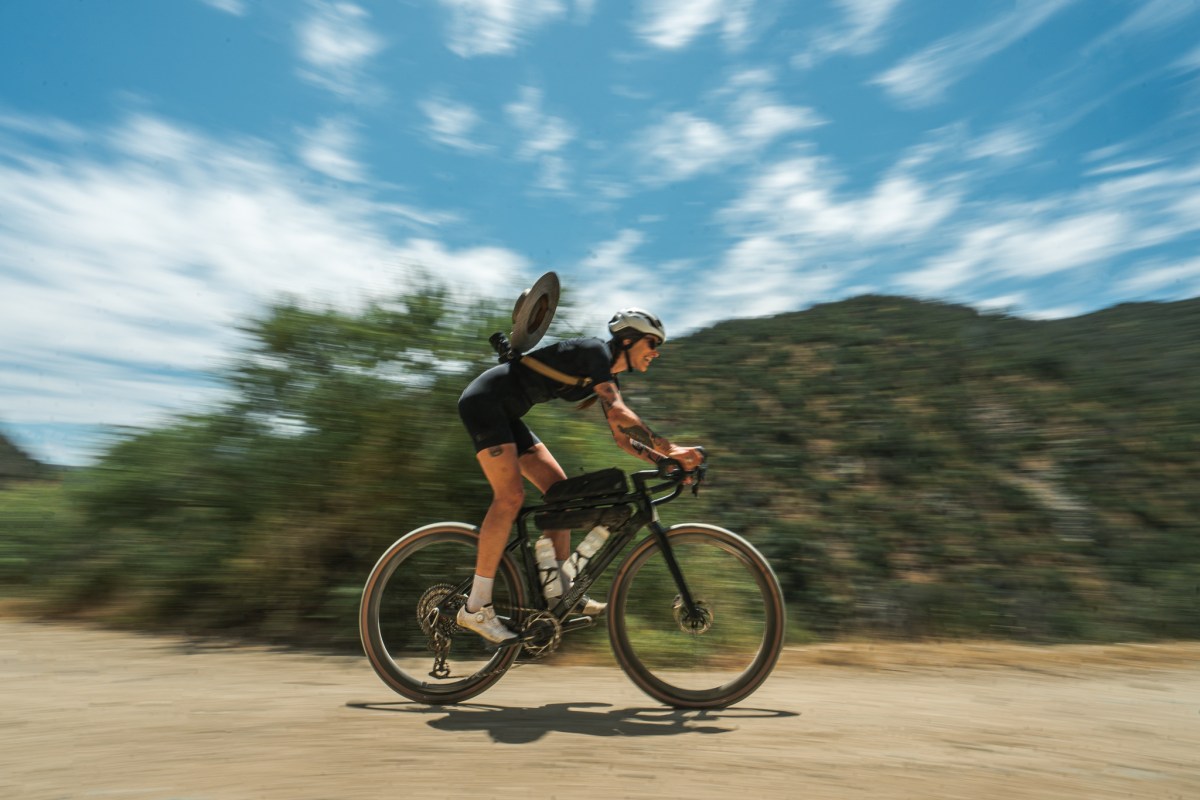
With the camera capturing Sami Sauri in a blur of motion—seemingly floating across the gravel surface—her broad smile perhaps belies the difficulties of a challenging year. But this second swing at Across Andes resulted in a remarkable podium finish that saw the year out in fine style with the promise of more adventures to come. A year that Sami—never shy of speaking openly about life’s ups and downs—recounts in her typically honest and humorous fashion.

Sami
Home again [smiles].

cyclespeak
With a collection of hats hanging up on the wall.

Sami
It’s getting bigger. That one [pointing to a broad-brimmed hat] I brought back from Chile.

cyclespeak
How’s the weather in Chamonix?

Sami
Today is nice and sunny and it’s all white outside.

[here Sami stops, turns and starts talking off camera]

As you can see, I have a dog now. He wants to say hello [laughs].

cyclespeak
What’s he called?

Sami
Captain. And it’s been really fun even though he’s only 10 months old and a bit cheeky sometimes.

cyclespeak
A little like a toddler?

Sami
Maybe more of a teenager [smiles]. Crying as if he wants to go to the toilet but really just wanting to play outside. But he’s worth it because he brings so much happiness.


Click image to enlarge

cyclespeak
Looking back to the last time we spoke, you were planning to smash out the Festive 500 in one go. But then decided to split the distance over 3 or 4 beautiful days. Would you have made that same, confident decision a few years ago?

Sami
That’s an interesting question. And I don’t think so because, back then, in many ways I was a completely different person.

cyclespeak
With maybe more of a focus on numbers whereas now it’s about enjoying the experience?

Sami
And discovering new places. That’s a cool thing to do.


Click image to enlarge

cyclespeak
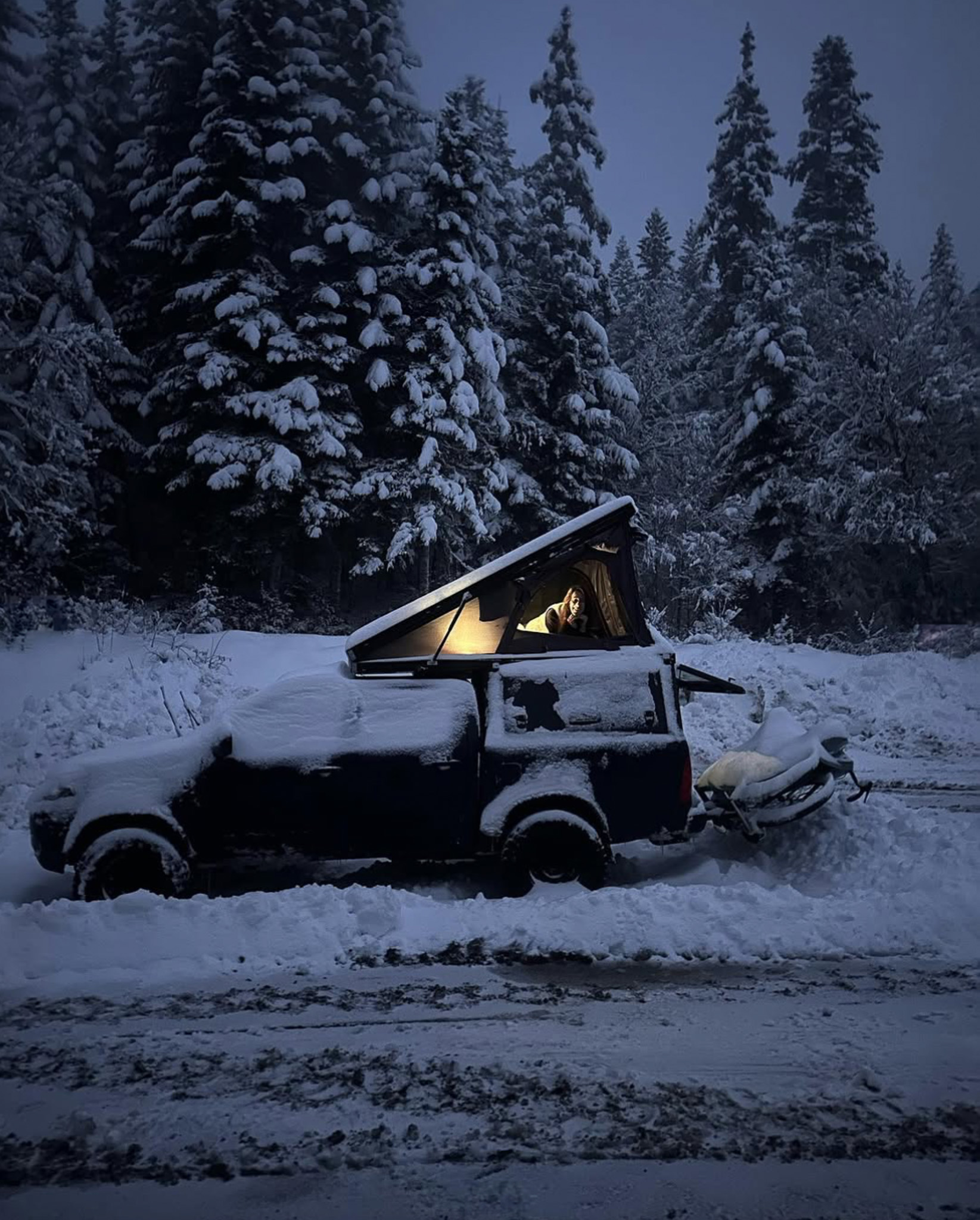
Before travelling back out to the desert to photograph the Dakar Rally, January saw you on a snowy camp out in the roof tent of your 4×4 truck.

Sami
I got that particular vehicle rather than a regular car because it makes it so much easier to scout a shoot or follow a gravel race. And it made a huge difference having a 4×4 when I was at the Traka with all the rain. But the night you mentioned was pretty cold [laughs].

cyclespeak
You then spent 22 days embedded in a Dakar Rally team. How was it a second time around?

Sami
Dakar is a weird one because it’s such an amazing experience but dealing with the race organisers is so tricky. It’s super expensive for the teams to have an accredited media team but then I ended up having so many fights with the officials over where on the course I could shoot. It got to the stage where I would leave my tracker on the side of the road and then head off into the desert—walking for fucking miles—to get my shots.

cyclespeak
So the process took some navigating?

Sami
It was a bit of a shit show. But by the end, I’d been fighting so much that they decided to put me into one of their media cars [laughs].


Click image to enlarge

cyclespeak
Travelling back from the heat of the desert to snow covered Alpine peaks, you were faced with problems of where to live. And I remember you posting a very poignant picture of all your belongings piled up in a temporary garage space. I imagine a very difficult time?

Sami
The guys I was living with, they’d only told me the day before I left for Dakar that I had to leave. They were my best friends—I walked their kids to school—and it wasn’t something that I could see coming. And looking back, that breakup was harder than with a boyfriend.

cyclespeak
That sounds like a lot to contend with?

Sami
I decided to just put everything in a garage and figure out the rest later. I had some work lined up but there were also worries about my sponsors and I remember considering whether to take a full-time job. And it took over a month to find this place in Chamonix which was also very lucky because a friend of mine was living here previously and she reached out to me to say she was moving.

cyclespeak
It all sounds super stressful.

Sami
It was. But living here has been amazing. It’s small but there’s a garden at the front and I get to see Mont Blanc everyday when I wake up.


Click image to enlarge

cyclespeak
That sounds so cool. And talking of home, in early Spring you spent some time in Girona where you’d lived for four years before moving to the French Alps. How did it feel to be back?

Sami
It was actually a bit overwhelming. Girona has changed a lot and although there’s still the pro racing aspect, there’s also a lot of focus on gravel influencers. So a lot of the talk at cafés is about watts and kilometres. Not to say there’s anything wrong with that but I just prefer to talk about different things.

cyclespeak
You posted a lovely set of shots from a carnival-themed ride with the @girona_gravelgirls. It looked like a super fun day?

Sami
Oh my God. As a community, they’ve grown so much. But I guess it helps that they’re based in one particular location and they welcome whoever wants to ride. It doesn’t matter what bike you turn up on, what clothes you wear, or if you’re new to cycling. It’s so much fun because everyone respects each other.

cyclespeak
You decided not to race Santa Vall—part of the Gravel Earth series—choosing instead to photograph the event. And then you posted a fascinating viewpoint on the way brands value photographers monetarily and how individuals offering to work for free is maybe undermining the whole creative industry. Can you talk me through your take on these thoughts and ideas?

Sami
I’d applied for media accreditation and put together a package to create content for individual athletes and brands that was priced accordingly. But you also get people just showing up, working for free, and sharing their images with the athletes who then pass them on to their sponsors. Which is kind of why the industry is going to shit. Because if we all did that, why would brands be bothered to pay professionals? Professionals who’ve been working their asses off for a decade or two, perfecting their craft.

cyclespeak
So how can we make positive changes?

Sami
I think the race organisers have to play a part and maybe we need some honest, open conversations? I’m probably a little more expensive than others because I’ve been doing this for a long time. So now, if I want to work, I want to work properly and get paid a fair amount. Because who can afford to live on a day rate of €130 which is what someone told me they were asking for? You’ve got to be fucking crazy.

cyclespeak
I guess if you want quality content—captured by experienced professionals—then that comes with a cost.

Sami
And if you undervalue yourself now, you’ll be doing it for the rest of your career. In the same way that if you work for any company and never ask for a pay rise. They’re not going to do it for you.

cyclespeak
Imagine the response you’d get from people doing regular jobs if you asked whether they’d be willing to work for free?

Sami
Exactly. It’s down to each individual to make their own journey and find their own path. And I’m also very aware that my situation is a little unique; in that I create content but also have my athlete and ambassador roles. And sometimes I do worry whether I’m being too open and honest about things [smiles].


Click image to enlarge

cyclespeak
June saw you back in Emporia, Kansas, for Unbound. And you got a simply awesome shot of Rosa Klöser immediately after she won the 9-up sprint. A happy, tiring, emotional kind of day?

Sami
It was a little strange because I was thinking of racing the Unbound XL this year. A feeling that I should be back in front of the camera instead of behind. But I had 14 riders to document which is a lot [laughs].

cyclespeak
You shared some images shot on film from Unbound. A medium you enjoy using?

Sami
Yes. Especially at races. There’s something about the images that’s so hard to replicate using digital. And it’s a completely different process; not being able to see or change whatever you’ve captured. But I do sometimes wonder if my generation will be the last to shoot on film. Whether it will gradually die away?


Click image to enlarge

cyclespeak
Another summer development was your new bike sponsor, Rose, which you immediately got to test out on the Cheese Divide.

Sami
We wanted to do the Italy Divide but that involves a shit show of hike-a-bike. And I have this tea towel that I got in Italy that shows all the different cheese regions, so we used that as a map instead.

cyclespeak
So how many different cheeses did you taste?

Sami
Not as many as you might think [laughs]. Because it was super hot—40℃ by midday—and all I really wanted to eat was ice cream. So maybe we overestimated our appetite for cheese but the scenery was so beautiful.

cyclespeak
In September you rolled out at 4:00am to ride your Tour du Mont Blanc: 322 km and 7949 m of vertical. A big day?

Sami
It was a massive day [laughs].

cyclespeak
One that you enjoyed or was it a challenge to be completed?

Sami
Oh no. I had a blast. Because it’s probably six years since I’ve had a road bike and by the time I was climbing my third col of the day, I was an hour and a half ahead of schedule.

cyclespeak
You were flying.

Sami
I was. Which I paid for later on in the day [smiles]. But I had a goal of finishing in 18 hours and I pushed hard at the end to come in at just over 17 hours.

cyclespeak
So you still have a competitive edge?

Sami
I do!!


Click image to enlarge

cyclespeak
You’ve seen the year out with another go at the unsupported gravel race Across Andes where you finished an amazing second place. From your posts, you seemed very at home in Chile?

Sami
There’s just something about Chile. So many possible projects that I’d be really happy to do. You’ve got the wildness of the land but also cool cities like Santiago. It just blows my mind.

cyclespeak
And the people?

Sami
They just seem so comfortable in expressing their feelings—so much affection and love—and I’ve even thought of moving out there at some point. Maybe to retire [laughs].

cyclespeak
According to your Strava feed, you rode just shy of 44,000 km in 58 hr. That’s pretty impressive.

Sami
I know [laughs]. The ride file got corrupted but I’m still hoping to fix it.

cyclespeak
It’s such a gruelling event where you’re balancing the mental and physical demands of sleep deprivation, fuelling, and the sometimes extreme weather. So I was wondering what keeps you going?

Sami
For that race in particular, it was carrying my camera. The route is so beautiful and changing all the time. And that gave me the motivation to keep going, to keep seeing what was next, and record it along the way.


Click image to enlarge

cyclespeak
You recently posted on Instagram about a new chapter in your riding life: #adventuremore.

Sami
Across Andes was a pilot for Adventure More. Basically documenting races from within with a focus on the community and culture that surround a particular event. Rather than just posting a couple of race shots and a result—which is absolutely fine—I want to go a bit deeper.

cyclespeak
You end your Across Andes recap by referencing what a hard year it’s been for a lot of reasons. So has 2024 changed you? Have you learnt anything new or surprising about yourself?

Sami
Lots of things [laughs]. Where do I start?

cyclespeak
Wherever you feel comfortable in starting?

Sami
To maybe understand the need for patience? Because I’ve still got so much growing to do. And even though it has been a tough year and, at times, I’ve doubted myself, if you keep moving forward with a smile on your face, then good things can happen.

Photography with kind permission of Sami Sauri (credited individually) / samisauri.com

Feature image with grateful thanks to Jeremy Toro

Alexis Skarda / A Sense of Self

A mere six weeks after surgery to rebuild a shattered collarbone, professional off-road racer Alexis Skarda lined up at the Leadville 100. Determined to get her Lifetime Grand Prix back on track, she subsequently finished the series in fourth spot. A truly remarkable result considering the mid-season disruption to her training, and offering an intriguing insight into her competitive character and willingness to bounce back from adversity.

Speaking from her home in Grand Junction, Colorado, Alexis takes us on a journey from early childhood—when she had zero interest in sporting pursuits—to subsequent success racing off-road disciplines. A candid conversation that explores her motivation to go the extra mile, why some races appeal—and others definitely don’t—and how racing her bike has provided a true sense of self.


Alexis is backlit by morning sunshine as our call connects. More usually recognisable for her Santa Cruz htSQD race attire, she’s dressed for the off-season in jeans and a hoodie. Assuming that rest is now a priority after finishing up another Lifetime Grand Prix, I reference the scene in her White Rim FKT video where, after setting a new fastest time, she’s clearly happy to climb off the bike.

After both Big and Little Sugar, I knew it was time to stop and take a break. So in a mental capacity, I was ready for a rest. But a week later, I kind of wanted to scratch that FKT itch.”

Clearly still having something left in the tank, I’m wondering whether routine—rest, ride, repeat—plays a part in her approach to training?

“During the race season, it’s three weeks on, one week off. And by off, I mean easy. I feel that’s a good way to build form because your body has a chance to catch up.”

Click image to enlarge

Adding some running into the mix during the off-season as a nod to her athletic background, when the weather turns inclement Alexis describes using her indoor trainer to maintain form.

“But you have to build up mentally,” she adds with a smile. “I use Zwift and listen to music; a combination that works for me. After a week of riding indoors, my mind is nice and numb.”

For an athlete performing at the very peak of her race discipline, it’s perhaps surprising when Alexis describes not enjoying any sports in elementary school. And when she did finally decide to compete in her Fourth Grade fun run, the subsequent win proved such a surprise that her classmates were convinced she’d taken a shortcut. Nonetheless, the seed had been sown and running quickly became her life.

“It’s all I ever wanted to do. And I can remember in middle school, our PE warm-up was to run around the field before coming in for whatever the teacher had planned. But I just stayed out and kept running. So I guess it’s this particular mindset that helps keep me going in the world of ultra-distance biking.”

Competing in Iron Kids when she was only eight years old—Alexis recalls practising transitions in her backyard at home—it was joining the Colorado Mesa University Mountain Bike Team in her junior year of college that proved a pivotal decision. Twice representing the USA at the World Championships and enjoying a super successful race career before the Lifetime Grand Prix came calling, I’m curious whether Alexis feels the race series, to date, has favoured riders from a mountain bike or gravel background?

“Bike handling skills take a while to build so if you come from mountain biking, then maybe you have more of a head start. And when the Lifetime Grand Prix kicked off in 2022, there were gravel racers who’d never ridden a mountain bike in a race situation, so they had to quickly learn this whole new discipline. That being said, the tactics that are now playing out in the Grand Prix also require you to focus on strategy and where you want to spend your energy. A lot of my fellow competitors are very good at that and it’s something that I’m still working on.”

Click image to enlarge

Not that anyone, I suggest, has it 100% dialled at all times—a flat tyre or mechanical all too readily determining a race result—but back to back overall wins at the US Marathon National Cross-Country Mountain Bike Championships saw Alexis sporting a very fetching Stars and Stripes jersey. A race result that perhaps edges it as her proudest moment to date?

“I feel that’s my best result,” she confirms with a slight hesitation in your voice. “But doing Leadville earlier this season—six weeks after surgery for a broken collarbone—proved a pretty memorable day. The crash and subsequent time off the bike had put me so far back in terms of my fitness and, to be honest, I was scared that I’d crash again and really mess myself up.”

But you still went ahead and raced, I prompt.

“And doing it, mentally helped me get back in the game. I’d got in a bad funk during the weeks of recovery because it’s super stressful, knowing you have these big races coming up and you’re getting more and more out of shape every day. So I wasn’t in a great space.”

That Alexis still managed to finish the Grand Prix in fourth place overall has me wondering, when these setbacks occur, where she sits on a scale of utter frustration at not being able to ride, or dogged acceptance that her body needs time to heal?

“When something like that happens, you have so many ups and downs within even the space of a single day. I would go from feeling extremely frustrated, to kind of not knowing what to do with myself, to deciding after talking to my coach that everything was working out fine. And then an hour later, I was falling apart again.”

A mix of emotions, I imagine, made even harder with the Grand Prix being a race series?

“It definitely puts you under more pressure to get back quickly. And maybe this sounds a little dramatic but it’s so easy to lose your whole season if you miss races where you would normally place well. It was super unfortunate when they cancelled Crusher due to the fires but, luckily for me, it meant I had less pressure to do well at Leadville.”

Click image to enlarge

Even rolling up to the start line required Alexis to ignore advice from one particularly risk-adverse member of her medical team. Concerned that the screws fixing the metal plate to her broken collar bone would be shaken loose on the Leadville course, it took conversations with teammates who’d experienced similar injuries to allay any fears.

“I knew I wasn’t fit and that it would hurt but I did feel ready to race. And I was super grateful to have finished without any incident. But that was coupled with a little bit of disappointment because the previous year I’d finished on the podium, so I knew where I should be.”

Living her professional life under such scrutiny, I can only imagine the rollercoaster of emotions?

Being an athlete and racing is exactly that. All of the time. And though I’m not dramatic by any means, I definitely respond quickly. I can get really excited about things or really down but then it’s over and I’m back to neutral.”

Asked how this might play out at Unbound, where everyone is constantly refreshing their weather app to see if the race will be wet, Alexis responds with a wry smile. Not a favourite race, I suggest?

“I love pushing myself but for some reason Unbound is not my preferred way of doing that. Because what I really like is intensity and Unbound is more of a long, slow discomfort.”

I can hear how Alexis means physical effort when she references intensity but I’m wondering, when the gun goes off, whether a mental switch flips as she enters full-on race mode? And what reserves she draws on when the race is full gas and everything is hurting?

“That’s a good question because I feel that lately the end of the race has not been my strong suit. I tend to spend a lot in the first half—which has always been my racing style—and I’m still learning to work with the group and hold back some reserves for the finish. Which doesn’t come naturally to me because in mountain biking you just go as hard as you possibly can for 90 minutes. And you also have the downhill sections where it’s not exactly easy due to the technicality but there is an element of recovery. Racing gravel, you have to pedal all of the time.”

Racing on the Santa Cruz htSQD team, not only are there logistical and equipment benefits but Alexis also believes her bike family offers her a sense of belonging. And with constant innovation being applied to bike setups and race tactics, she feels reassured to have a team happy to try new things and keep one step ahead. A professional approach to racing that only very recently prompted some difficult conversations in relation to the so-called spirit of gravel.

“I can totally see how cool it was to show up, race without support, and just be a part of the community. But as soon as you put money on the line and organise a race series where everyone is fighting for the overall, you have very different needs.”

Click image to enlarge

A pressurised environment where every decision and race result plays out under worldwide scrutiny, and might make a regular 9-5 job with riding at the weekend seem appealing?

“Like having a normal life?” Alexis quips back with a laugh. “And yes, I might think those thoughts when I’m up at 4:30 in the morning so I can eat breakfast and get to the start line ready to race for eight or so hours. At those times, I do sometimes question why I’m doing it. But then, after the race and depending on your result, it’s like a complete one eighty and you feel on top of the world. So it’s a weird life for sure. With both good and not-so-good aspects.”

Maybe the more you invest in something—the more effort it takes—the greater the sense of accomplishment when everything slots into place?

“But it’s more than the effort you invest on race day. It’s the ten years you’ve put in prior to that—not making a dime—which people don’t always understand. How there were so many years when I seriously considered quitting. When I just needed to push through and believe in myself. But this is a small community and no one is really doing it solely for the money. At the end of the day, we’re all dealing with the same stuff.”

At this, I can’t help suggesting—tongue in cheek— whether Alexis is inadvertently describing the spirit of gravel.

I guess maybe I am,” she replies with a smile.

Competition aside, when not training and racing Alexis enjoys working on her own music and closed out this year’s Big Sugar with a DJ set. The preparation for which led to a few late nights she confessed in a podcast conversation with fellow off-road racer Payson McElveen.

“To tell the truth, I’m a little embarrassed about the time I put into it. I’m a professional off-road racer—that’s my job—so it feels rather silly to spend so much time on what is, after all, a hobby. But in the same way I put ten years into mountain biking without getting paid to do it, I feel something similar about my music. And though I was a little nervous beforehand, seeing everyone vibing with the songs that I’d chosen felt really special.”

Click image to enlarge

When I mention the format of next year’s Lifetime Grand Prix, it’s amusing to hear Alexis confirm that she has applied but in such a way that suggests the organisers might not offer her a place. But what really intrigues me is not whether this or that race has been added or left out of the series, but whether she views her bike solely as a tool for a purpose or if it prompts a deeper, emotional response?

“That is an interesting question. And there’s definitely an emotional response with the bike. One hundred percent. You spend so much time together that it’s like you have a relationship. Almost as if you’re a team. And that’s especially true for my mountain bike.”

And does that influence your thoughts about why you race, I ask?

“I guess it’s something I’ve always done. Something I was genetically capable of doing. And it’s where, in my formative years, I found my home. People noticed me because it was something I was good at. Something my Dad did and I’ve always looked up to him. So racing—and mountain biking in particular—is really what I’m passionate about and it’s opened my mind to what my strengths and weaknesses are. So you could say it’s helped me develop as a person as well as an athlete.”

Alexis stops, staring into the middle distance, before once again picking up her train of thought.

“Ever since Fourth Grade, racing is what I decided I wanted to do. It’s played out a lot differently to what I expected but I never pictured myself doing anything else.”

Alexis Skarda

All photography by Brett Rothmeyer / brettrothmeyer.com

Pete Stetina / Return for the dirt

Kicking off with Lachlan Morton’s win at Unbound, the Life Time Grand Prix three years in, and the realities of campaigning a privateer gravel calendar, Pete Stetina then gets down to business with a fascinating look back at his first tilt at the TRAKA 360—arguably Europe’s premier gravel event.

Despite a series of mechanical mishaps and a race route ripped apart by a week of heavy rain, his refusal to throw in the towel saw him push through for the win. A truly remarkable result that Pete describes, blow-by-blow, before squaring up to decide which race takes the title of biggest, baddest, hardest of all.


cyclespeak
You’re calling from California?

Pete
I am. Back home in Santa Rosa.

cyclespeak
After racing Unbound last weekend?

Pete
My result was a little bit of a disappointment but nothing really went wrong that I can point to. I made the right moves at the right moments and was in the group with Mattia de Marchi chasing after Lachlan—we got to within a minute at 60km to go—when my stomach flipped upside down, the lights went out like never before, and I just had to nurse it home. But that’s bike racing for you and my friend Lachlan is such a worthy winner.

cyclespeak
I did note your time for this year’s race. 9:22:57. A few years back, that would have seen you finishing in first place with time to spare?

Pete
That’s the same story for every race on the calendar. Winning times are tumbling by huge margins. I guess you can factor in better fuelling and equipment but the conditions at this year’s Unbound were also nigh on perfect. There was a little rain in the days leading up to the start—everyone, myself included, freaking out about the chance of mud—but then it dried up just enough to make the going super fast.

cyclespeak
The whole world seemed to cheer when Lachlan crossed the finish line. And I was reminded of the post he made leading up to Unbound when he mentioned being more focused on enjoyment and not getting caught up with what everyone else was doing. Does that resonate with how you yourself prepare for a big race?

Pete
It’s how I try to do a lot of it now. Guys like myself and Lachy have been racing professionally for a long time and understand that the best road to success is to play it our way. The way that Lachlan raced Unbound was perfect for him. It’s not like everyone else can go out and replicate those moves. He had to go from a long way out because he’s such a diesel these days and maybe doesn’t have the same sprint as a Keegan or a Van Avermaet. So he played to his strengths and did it on his terms.


Click image to enlarge

cyclespeak
Last time we chatted it was very early in 2022 and the inaugural year for the Life Time Grand Prix. Now that the series is firmly established, what’s your take on how it’s continuing to influence professional gravel racing?

Pete
I feel the US still leads the way in the world of gravel—where it’s most prolific and you can enjoy the best career financially—and the Life Time series is the pre-eminent representation of this way of racing. Saying that, if a European rider goes to their sponsor and says they want to race the Grand Prix, I do wonder how much that sponsor particularly cares? I know the pro road mentality—it’s what I did for 10 years—and the World Tour only really cares about the World Tour.

cyclespeak
We did see UCI Gravel Champion and current World Tour pro Matej Mohoric race Unbound this year?

Pete
Gravel as a whole is gaining more respect but that’s still race by race. Unbound is Unbound and that’s where everyone wants to come, so you do have this influx of people. But does the global community care as much about Chequamegon or Crusher in the Tushar?

cyclespeak
Fast forward to 2024 and you took an early season win at BWR* Utah; a race series in which you’ve enjoyed considerable success over the past few years with multiple victories. Can you put your finger on what it is about BWR that drives this winning streak?
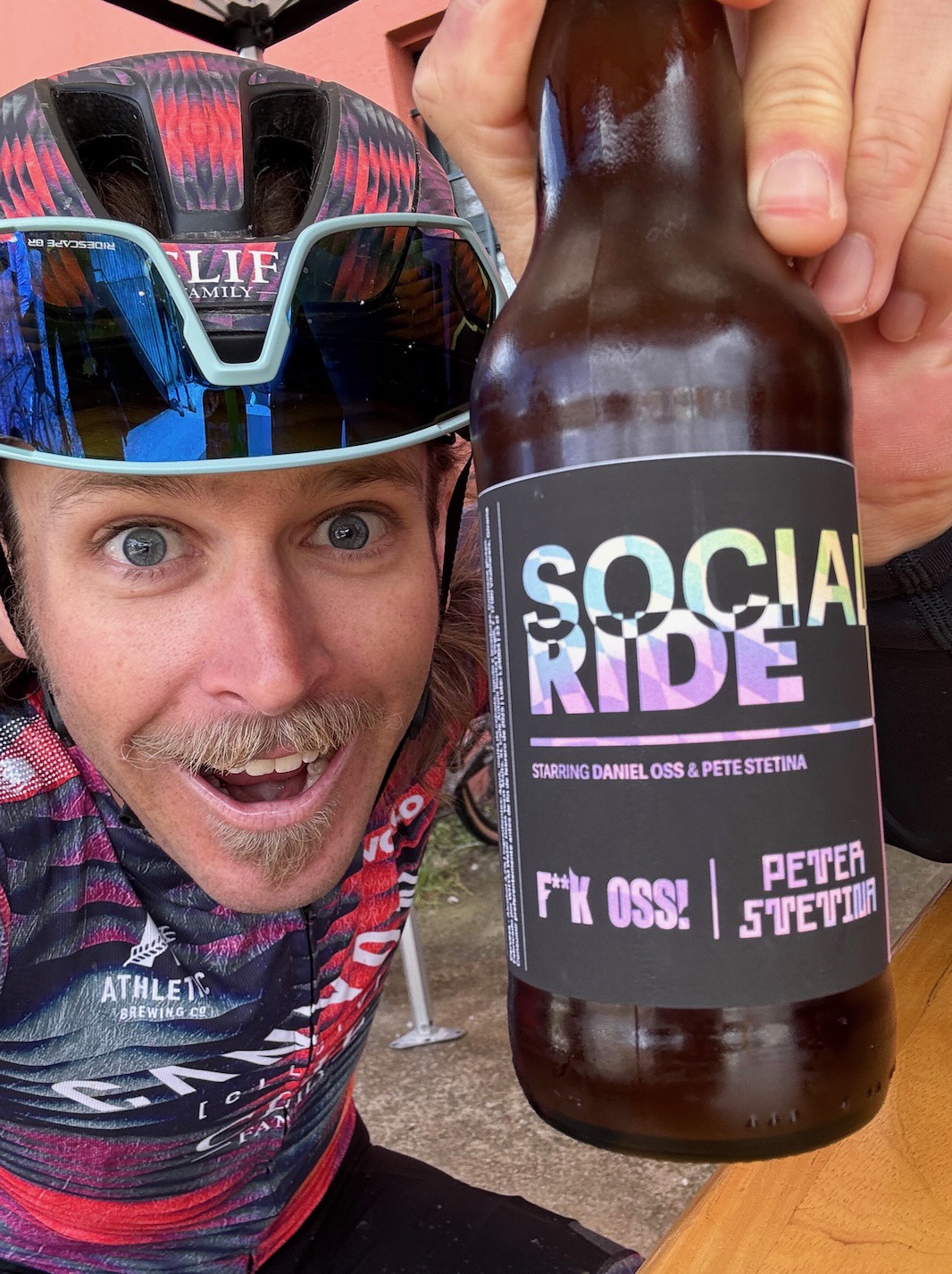
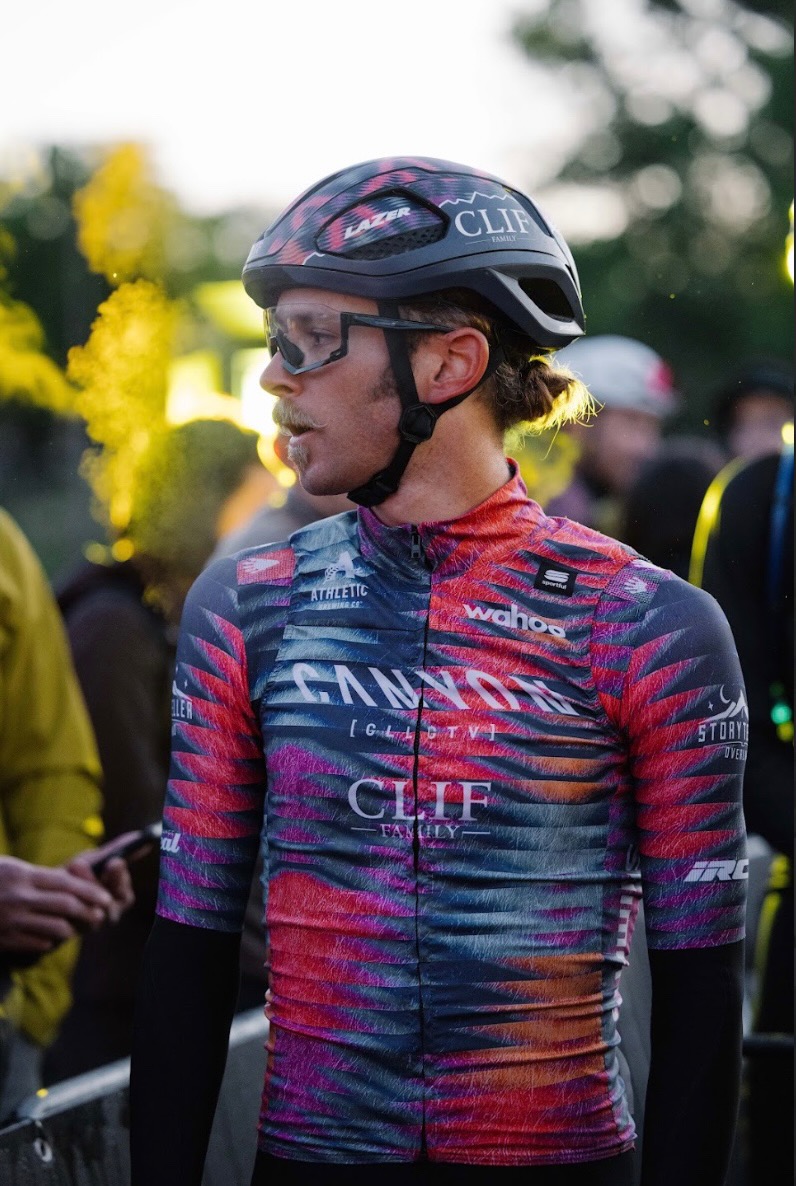
*Belgian Waffle Ride

Pete
That’s a good question.

[pauses]

I guess it plays out a little differently to the Grand Prix and just suits how I like to ride. Maybe more road race tactics which is where I come from. And BWR is more of a hybrid in terms of surface. Yes, there’s single track but mixed in with a fair amount of pavement and the organiser always likes to throw in a climb towards the end that creates separation. But at the end of the day, it’s a case of good vibes and confidence.

cyclespeak
That’s a good mix.

Pete
I’ve won three BWR Utah titles so I guess you could say I’ve got that one figured out.


Click image to enlarge

cyclespeak
I was scrolling through your 2019 results when you were riding in the World Tour with Trek-Segafredo—but still took second at Unbound—and it struck me that, according to procyclingstats, you had 80 race days that year compared to 12 in 2023. And maybe this is rather a simplistic comparison but which was the harder year?

Pete
I’m going to spin that question and start off by saying I raced almost 30 times in 2023. I guess procyclingstats is attempting to understand gravel but what qualifies as an official gravel race in their mind? Here in California we have the Grasshoppers but maybe they’re viewed as a regional series even though the field is deep.

cyclespeak
So how do you define a race?

Pete
Anytime I pin on a number. Because you know you’re going to go as deep as you can on that day. And going back to your question, you look at my schedule and there’s only 30 days of racing compared to the 80 I did in the World Tour. But it probably equates to the same amount of travel commitment. And that’s the metric, right? The hardest aspect we have to balance with our loved ones. Because now, I’m primarily a one-day racer and travelling almost every weekend.

cyclespeak
Maybe even travelling more than when you were racing the World Tour?

Pete
What I think you’re seeing, is that the riders with a road background are used to that. And maybe we use the smaller events to race into form? Whereas there are other riders who only roll up to the key races when they feel 100% prepared and primed.

cyclespeak
You’re racing gravel in the top tier, yet seem to relish the regional races just as much as Unbound or Leadville?

Pete
A couple of years back, I felt I was getting pulled back into that high performance, elite-only points chase. And what I was maybe forgetting, was the reason I left the World Tour was to pursue a more fulfilling, holistic race career. So I needed to take a step back and make the conscious decision for my own internal harmony to do it my way. A sentiment I feel Lachlan addressed really well in a recent interview where he contrasted the high octane, marginal gains of the gravel world to his own World Tour days.

cyclespeak
So what does your way look like?

Pete
I can’t do good vibes only and go out to the brewery on the evening before a big race—I still need to ride hard—but I can choose to balance key events like Unbound with the smaller races where I can enjoy the relaxed atmosphere and hang out with the community.

cyclespeak
I was chatting to Sarah Sturm recently and she was quite open about wanting to mix things up race-wise after finding the Grand Prix series a little repetitive. Are these considerations you yourself share? And did they play into your decision to cross the Atlantic to race the TRAKA?

Pete
I love the Grand Prix and what they’re doing for pro-racing in the US but they’re not the only show in town. You’ve got Mid South, Steamboat, BWR and TRAKA, to name but a few, that are all super relevant. So I can’t just give myself solely to the Grand Prix because there’s just too much cool shit going on and I want to do it all.

cyclespeak
This was your first time racing the TRAKA but you spent time living and training out of Girona during your World Tour days?

Pete
I lived in Girona way back in 2007 before it became such a cycling hotspot. So it was quite an eye-opening experience returning. The city is still beautiful and great for a week’s visit but I wouldn’t want to live there now.


Click image to enlarge

cyclespeak
No?

Pete
I love to ride and race but don’t want to be reminded of that 24/7. Saying that, it was really fun to return because I’d never really ridden dirt in Girona.

cyclespeak
I guess when you were living there, it never occurred to you to try it?

Pete
Gravel wasn’t even a thing, back then. So I guess you could say this was my return for the dirt. And to stay in the same hotel where I always used to crash was such good fun. The final third of my career—when I was constantly going back and forth between Europe and the States—I got rid of my apartment. So I literally had a suitcase waiting in the storage closet of the Hotel Historic that I would open up when I rolled into town. And that still feels like my Catalan family.

cyclespeak
You were down to race the 360km route which has 3700m of climbing and is notoriously super gnarly. Leaving aside for a moment the weather conditions, were there any changes in preparation you made compared to your US races?

Pete
Not really. I’m naturally a climber so tend to race better when it’s a harder, hillier course. The only change I made to my training was sprinkling in quite a few more seven to nine hour rides a couple of months out. Trying to normalise that long, long distance in the saddle.

cyclespeak
Girona had been suffering from a severe drought leading up to the TRAKA. But then during race week, the rain was monsoon-like leading to the organisers first delaying and then cancelling the XL race. Can you talk me through the days leading up to the start of your race? Were you able to recon much of the route and did the uncertainty upset your race preparation?

Pete
Honestly, I think you can draw a parallel between my TRAKA and Lachlan’s Unbound. In the sense that we both took our foot off the gas and tried not to stress over the small stuff.

cyclespeak
How so?

Pete
You have riders that know the TRAKA course super well and have raced it on multiple occasions. But then suddenly the weather is throwing a wrench into everyone’s race preparation. I show up and there’s no way I can recce 360km within three days and be rested for the race. So I decided to ride the final 120km with my friend and coach Dennis van Winden and call it good. As things played out, a blessing in disguise as that last section is so darn twisty that it helps to know the key turns.

cyclespeak
You knew you didn’t have extensive experience at riding dirt in this region. But, on the other hand, felt confident in your ability to do well in BWR style races. When you finally lined up at 6:00am on race day, did it cross your mind that you could take the win?

Pete
On paper I guess I was one of the contenders. And I heard some comments about how the Americans were finally coming over to race. But I was very aware that other riders were much better prepared for this particular race than I was. I’d raced BWR California a week before—that result sealing my Triple Crown—and then straight away hopped on an international flight without really having any time to rest and recover. So not having the perfect build-up—in any shape or form—if I’d have stressed about all the small stuff I would have just psyched myself out completely.

cyclespeak
I guess that comes with experience? The ability to take that mental step back. Because going by your posts after crossing the finish line, it’s safe to say you had quite an eventful day?

Pete
Starting out, the first 60km was honestly quite stressful. Thankfully it had stopped raining but the mud was insane. And the conditions were just compounded by all these young riders who were so hungry, they just charged through irrespective of following the best line. I couldn’t tell how deep the puddles were. Some were only a couple of centimetres but others were, quite literally, half a metre.

cyclespeak
That sounds super chaotic.

Pete
Those guys didn’t seem to worry if there was a hidden rock waiting to take out their wheel. Their mindset was, fuck it, I’m going to send through it. Taking insane risks and just destroying their bikes in the process. And I was getting so beat up in the scrum that eventually I just had to commit and follow. Until eventually the attrition whittled the group down to about 15 or so riders after two hours of racing.


Click image to enlarge

cyclespeak
Where was this in relation to the race route?

Pete
At this point we were crossing the flatlands heading north towards the first aid station. Everyone kind of called a truce so I decided that was a good moment to take a comfort break. But as I pushed on to catch up to the group, a rock sniped my rear wheel and the tyre went fully flat in an instant. I jumped off and tried to plug the thing but there was mud everywhere so I was struggling to even find the hole. After throwing in three plugs it still wasn’t sealing, my gear was strewn out all over the trail, and that’s when I noticed the rock had punctured the bead of the tyre at the rim.

cyclespeak
What happened next?

Pete
After throwing in another two plugs, the tyre was finally holding air and I set off to chase down the group. Glancing at my Wahoo, I could see that I was down by six minutes. So I’m thinking, crap, this is a problem.

cyclespeak
So you’re chasing on hard?

Pete
We were about 20km from the aid station and I was just hoping the pace of the group would stay steady. So I went all in, time-trialling, and finally reached the aid station where my friend and mechanic Big Tall Wayne checked over my rear wheel. It was still holding air so we decided to leave well alone. Rob Britton—who’d also punctured and was chasing back on—serendipitously was leaving the aid station at the same time. We go way back, there’s a lot of mutual respect, and we decided to work together to try and bridge up to the front group. I honestly thought it was a big ask but we’d both travelled over from North America and packing it in after three hours was never going to happen.

cyclespeak
I guess the effort it took to even get to the start line means you’re committed.

Pete
We were riding as a two-man team and sharing the load when, unfortunately, I had more problems with the mud. It was acting like a lubricant and causing my seat post to slip so I had to stop another two times to unpack a multi-tool and adjust my ride position. By all intents and purposes, it was turning into a complete mess of a day.

cyclespeak
But you managed to bridge up to Rob again?

Pete
I caught up with him right before the hike-a-bike section and I could see the lead group away in the distance. Self-timing the gap, I had them around eight minutes ahead. And it was here that we entered what I like to refer to as the doldrums. Heading south across the coastal plains into a block headwind: it was slow, it was hot, it was late in the day. And that’s where we kept passing the odd rider or two—absolutely destroyed—that had been shelled from the front. So beat up, they couldn’t even hang with me and Rob and take a pull.

cyclespeak
The chase was on.

Pete
But it was here that I really started to suffer. I’d been rationing water and was rapidly becoming dehydrated—still taking a turn but my lights were starting to flicker—whereas Rob was still strong. But about 20km from the second aid stop, we caught sight of the lead group and that gave me the lift I needed. That was never supposed to happen—chasing down an eight minute gap—but we were back in the race.

cyclespeak
And then after the aid stop?

Pete
We resupplied as fast as possible—boom, boom, boom—and charged out the other side as one group. Approaching the climbs after Corçà, Rob and I both knew this was the break point of the race. And sure enough, everyone dropped off leaving just three of us. Rob, myself and Mattia de Marchi; three time TRAKA winner.

cyclespeak
Exalted company.

Pete
Mattia attacked—as you’d expect—but only gained 15 or so seconds on the climb. I then took a few risks on the descent, caught up with Mattia but distanced Rob. And I just felt—after riding together for so long and so far—that it wasn’t fair to screw him over. Mattia races with such a sense of honour that we both eased up a little and allowed Rob to latch on. The fourth place rider was way back so we all knew that this was the podium. And then, as things sometimes have a way of playing out, a stick kicked up and ripped off Mattia’s rear derailleur. The worst luck in the shape of a total random act and his day was done.

cyclespeak
Which just left the two of you.

Pete
There was 60km to go and we both felt flabbergasted—completely dumbfounded—that we were sitting in first and second place. But as each of us tried to picture how it would play out, it gradually became evident that Rob’s bigger gears were starting to take a toll. We both knew the final move would be on the hill outside of Sant Gregori and that’s where I hit it with everything I had and was able to bring it home.


Click image to enlarge

cyclespeak
What a day!

Pete
Placing first was incredible but there were also all these other silver linings that made it feel equally special. Having my oldest Catalan friends helping out Big Tall Wayne as my pit crew and all of Canyon’s top brass waiting at the finish line. This weird set of circumstances that played out over three hundred plus kilometres.

cyclespeak
And then it was time to celebrate?

Pete
When you race that hard and for that long, your body is in full revolt. You can’t go out and party.

cyclespeak
Not even a little party?

Pete
We went to a bar, ate some good food, and that was me done. And I was still pretty wrecked the next day. Sleeping in until 11:00am before breakfasting on two espressos and a beer.

cyclespeak
The response must have been overwhelming?

Pete
Since the finish, I’ve received so many calls and messages. And I guess that’s when the enormity sets in. I knew TRAKA was a big race but kind of didn’t understand how big.

cyclespeak
‘The biggest, the baddest, the hardest of all.’ That was a comment you made in a podcast in reference to Unbound. Now that you’ve ridden, and won, the Traka 360, are you still sticking to that statement?

Pete
I still feel that Unbound is the biggest.

[pause]

But I don’t think it’s the baddest or the hardest.

cyclespeak
No?

Pete
Unbound is the OG. The granddaddy of this whole space. But now the collective professional field is so good at racing 200 miles of Kansas gravel that—setting aside my stomach issues—this edition was my easiest Unbound.

cyclespeak
And the TRAKA?

Pete
Let’s just say that I’ve done enough bike racing to question whether these fairytales ever happen for me. And even though I’ve enjoyed my fair share of success, nothing compares to how this race played out. So crossing the line, I knew something special had just happened.

Peter Stetina / peterstetina.com

Feature image by kind permission of Alex Roszko for Orange Seal / All other imagery individually credited

Sarah Sturm / The coolest job ever

Instantly recognisable for her beaming smile, raucous laughter and even the occasional tear, off-road racer Sarah Sturm is a living, breathing embodiment of what-you-see-is-what-you-get. But dig a little deeper, and there’s an intriguing sense of quiet introspection that contrasts her doggedness and determination.

Talking over a call from her home in Colorado—Sarah’s dog Norman keeping her company—this complex and questioning performance athlete offers her unfiltered views on the highs and lows of the gravel world, the inherently selfish nature of the sport, and the way she balances the emotional strain of a life lived in public.


cyclespeak
You’re just back from the West Coast. It looked like an amazing trip but not without its moments?

Sarah
I was just talking with a friend about my norovirus experience. Equal parts shitty—quite literally—but also so, so funny. And my coach decided it was toughness training because I kept on riding [laughs].

cyclespeak
Because, initially, you suspected food poisoning?

Sarah
I really thought it was. But then on day three, my friend Maude also came down with the same symptoms. So we were trying to work out what just the two of us had done that was different to the rest of the group.

cyclespeak
Considering you were quite poorly, you got in some miles.

Sarah
California is a crazy place. Just insane. It’s got all these tech bros and rich people but it’s also really beautiful and I can totally understand why so many people want to live there.

cyclespeak
You were riding down the coast?

Sarah
Yep. From San Francisco to Santa Barbara and then I kept on to LA. I ate well on the first day but for the remainder of the trip, with my tummy troubles, I existed on a single banana and a PayDay bar.

cyclespeak
But you’ve made it back to Colorado in one piece. And I’m guessing Norm was pleased to see you. I can just see his ears poking up in the corner of your screen. Is he the sort of dog who likes to be near you?

Sarah
All the time. It’s why we hang out in an old school bus. Otherwise, I would drive my Honda to the races [laughs].

Click image to enlarge

cyclespeak
So you live in Durango?

Sarah
That’s right. I’m back for a bit before I pop down to Arizona where the winter weather is a little kinder. It’s very affordable to stay and, unlike LA, less like a Disneyland for adults.

cyclespeak
Talking about affordability, I was planning on visiting a friend in Boulder and was pricing up some accommodation. Seriously expensive.

Sarah
I’m only spending $800 for a month in Tucson. And you’re right. Boulder is insane. There’s no way I could afford to live there. Unless we park up in the bus [laughs].

cyclespeak
So, at home in Durango, are you a cycling gear all hung up in colour-coordinated rows, kind of person?

Sarah
I’m going to say yes but only because my fiancé Dylan is extremely organised in his role as my equipment manager. So his desire for neatness and efficiency is kind of forced upon me; for my remaining career and our future marriage.

cyclespeak
Have you set the date?

Sarah
We have. At the end of my season in November which is a funny time to get married in Colorado.

cyclespeak
A weather risk?

Sarah
Yes! You’ll need to be tough and bring a jacket.

cyclespeak
Because you first met Dylan when you were both studying design at college. But I believe your graphic design business is currently on hold whilst you focus 100% on racing?

Sarah
I was kind of phasing out of it, to be honest. I love being creative and I was already starting to make my cycling life into this creative space as opposed to working for clients. Part of being a freelance designer is listening to a client’s shitty ideas and then getting it done because you want and need money. But cycling has been my main source of income for the past six years. So—very fortunately—I was able to move on from that aspect of my life. But I still get to design my bike and helmet paint schemes.

Click image to enlarge

cyclespeak
Speaking of creativity, could you talk a little about the kiss-the-baby thing?

Sarah
I know [laughs]. It’s so weird. And you’re not missing out on anything.

cyclespeak
Because I saw your SSCXWC + Sarah Sturm video and loved it…

Sarah
That’s the venue we’re looking at for our wedding.

cyclespeak
But it’s basically a deserted hill top.

Sarah
Yep. It’s the mesa above Durango.

cyclespeak
With gopher holes.

Sarah
Norm loves it. But he’s never got a gopher. Anyways, back to kiss-the-baby. I began racing in cyclocross which I really loved.

cyclespeak
The races are a lot shorter in duration than the gravel scene?

Sarah
It’s shorter races, it’s not as much training, and it’s just so much fun. Then there’s the crowd which—outside the start / finish line—you don’t really get at a gravel event. Admittedly cyclocross is a little random and not always easy to explain when the person sitting next to you on a plane asks what you do.

cyclespeak
How do you answer?

Sarah
I just say it’s a better version of the Tour de France.

cyclespeak
That seems fair [laughs].

Click image to enlarge

Sarah
Anyway, I digress. The kiss-the-baby thing started at the US Single Speed Cross Nationals one year. They had this feature where we rode up a ramp and through this junk trailer packed with people throwing things at you. Trust me, it’s a disgusting, rambunctious, not-good-for-your-health experience of athleticism [laughs]. Someone in that trailer—almost certainly super hammered—had these old baby dolls and insisted on jamming them in our faces, yelling, “Kiss the baby,” before you could pass.

cyclespeak
Okay. That makes absolute sense [smiles].

Sarah
And then. And this is not exactly a great memory for me. Not particularly a shining moment. So, kids, don’t do this.

cyclespeak
That’s fair warning.

Sarah
So I was so super intoxicated after only eating a packet of oatmeal in the morning, finishing my race, and then cheering on the men whilst drinking shots, that I got hold of the dolls and started to yell, “Kiss the baby,” too. And now it returns to haunt me at every single race. Which is a very long way of explaining why I was glueing tiny dolls heads onto my race number in the video. Not a move that my bike sponsor Specialized saw coming [laughs].

cyclespeak
I’d love to be a fly on the wall at their brand liaison meeting.

Sarah
Oh my God, yes! And that’s after cutting so much from the final version of the film.

cyclespeak
We see glimpses of it in the video and I know people love to talk about your school bus but I’m a little confused by the terms you use in the States for these types of vehicles. It took five minutes talking to Alex Howes—admittedly a very enjoyable five minutes—to finally figure out that the travel trailer he was sleeping in at races was what we, in England, call a caravan.

Sarah
Oh, I get you. It’s totally confusing. It’s like when we say sprinter van—which should really only apply to a Mercedes—but we’re referencing a Ford or a Dodge.

cyclespeak
In England, we have what we call white-van man. Named because most commercial vehicles are painted white—the cheapest colour option—and are often driven terribly. So when you’re out in your school bus, do other drivers make assumptions and give you a wide berth?

[Sarah laughs]

Sarah
Because of the wrap—the design I did is very colourful—I do wonder whether people think we have children onboard. So that’s perhaps the reason they give us extra space? But then we drive past and they see all the bikes attached on the back and assume we’re just this bunch of hippies.

cyclespeak
It does have a little of that vibe. Maybe it’s the shape?

Sarah
Dylan saw it advertised on Facebook Marketplace and it was only an hour from here and affordable.

Click image to enlarge

cyclespeak
I read somewhere that you didn’t actually get the bus for bike racing?

Sarah
We bought it because of Norman. A portable camp, kitchen and bed with space for him to stretch out. It was never meant to be driven to Unbound. But as things turned out, we’ve driven it the length and breadth of the west side of the US. And let me just put this on the record; it is not a comfortable vehicle for that kind of journeying.

cyclespeak
No?

Sarah
It’s so loud—Dylan will sit up front wearing ear protectors—but somehow me and my 70-year-old mother drove straight across the country in it and she was listening to an audiobook on tape. Unbelievable [laughs].

cyclespeak
It certainly catches the eye.

Sarah
It has its quirks but I love it. And we’re currently in the process of getting a more race friendly, super-functional vehicle but every ad that I forward to Dylan looks really similar to the bus we already own.

cyclespeak
You use the term super-functional. Which leads me nicely onto the level of team support that seems required to be competitive in the gravel racing world nowadays? An inevitability of gravel’s popularity which should therefore be embraced? Or does it disenfranchise the privateer who has a limited budget and is balancing their racing with a full-time job?

Sarah
This is such a good question. And it was inevitable, right?

cyclespeak
Maybe because there’s more money being made available?

Sarah
I’m going to make a big statement here. But they’re my friends so I can say this.

cyclespeak
Go for it.

Sarah
Back in 2019 when I won BWR*, Keegan and Sofia were still racing mountain bikes and they would tease me by calling gravel a retirement sport. But now they’re both racing the Lifetime Grand Prix and are two of the most hardworking professionals I know. They’ve been racing since forever, bring with them all this experience, and have raised the bar to where we presently see gravel racing. And when someone ups the ante, others follow.

*Belgian Waffle Ride

cyclespeak
I guess a very different situation to when you first rolled up at that start line in 2019?

Sarah
It was just me and the bike that Specialized had given me to ride. There was no-one waiting in the feed zones for me, I had my pockets stuffed with sandwiches, and didn’t know shit about gravel. But now, everyone is at this insane level of training and prep, and that, in turn, means you need a crew and a mechanic.

Click image to enlarge

cyclespeak
For the past two years you’ve had your own little team with Ellen Campbell. And I understand that you both race independently but can you talk about the dynamic of how this all works in terms of your personalities?

Sarah
I used to coach Ellen when she was 14. And we work really well together because we’re super opposite. I’m a little more sporadic and Ellen is super organised and logical [laughs]. The gravel world is difficult to break into unless you have a huge result so me bringing Ellen onto our team was always with the goal of mentoring the privateer life. I want to leverage the connections I’ve made and introduce Ellen to these people.

cyclespeak
Sought of semi-seriously but does Norman give you a race edge?

Sarah
Hmmm. That’s an interesting question. And I do know I’m always incredibly excited to see Dylan and Norm at the end of an event. This year at Unbound specifically—which was an horrific experience—I remember riding the last 10 miles and just wanting to finish so I could give them a hug.

cyclespeak
There’s a great photograph taken at Unbound that captures the moment when you first realise you’ve finished in third place.

Sarah
Looking back at my athletic career, that was definitely one of the highlights. Because Unbound is basically our Tour de France, right? It’s a big event and it’s so hard to keep track of where you’re placing out on the course. So it was a lovely surprise.

cyclespeak
We’ve already mentioned your breakout win at BWR in 2019. Have you changed since then as a racer?

Sarah
I guess one way of putting it—and I’ve learnt a lot—is that I’ve had to adapt. Because the level that we’re now racing at has just gone…

cyclespeak
Stratospheric?

Sarah
Yes! Like when I got to line up at the UCI Gravel World Champs with the winner of last year’s Tour de France Femmes. Together with everyone who is anyone and that includes some seriously big names from the World Tour.

cyclespeak
Is it fair to say they’re coming to gravel from a different pathway?

Sarah
I’m racing against women who have been to the Olympics. They’ve raced mountain bikes and road at a super high level. Whereas I grew up playing soccer and doing martial arts and my race resume is pretty much gravel. So I’m actually quite proud of myself and the work I’ve put in. I’ve even hired a nutritionist because I realised how I was only eating half the carbs I needed to race at the front [laughs].

Click image to enlarge

cyclespeak
You placed fourth in the 2023 Lifetime Grand Prix and I’m conscious that—unlike the majority of people’s jobs—every single up and down happens under the full scrutiny of your sport and community. Does that bring with it a certain pressure to perform? And if so, how do you stay so smiley?

Sarah
Probably because I think sport is so silly [laughs]. Because at the end of the day, even if you’re the best athlete in the world, what are you actually contributing? What are you gifting to this existence we have as humans? Yes, I understand that it can be inspiring. But it’s also absolutely selfish. All these people wearing these ridiculous outfits, riding this outlandish piece of equipment, and one of them is the fastest and wins. And that’s an accomplishment?

cyclespeak
Can I suggest that many people would say, “Yes, it is.”

Sarah
Maybe you’re right. Because it’s not nihilism [laughs] but I do question what it’s all about. And I think that—because I like to have fun—people just assume I hop on my bike and casually ride around Durango in the off-season and just party and ski with my friends. But that is not the case. I have a training plan. I check in with my coach every single day. I lift heavy weights. I even put them back [laughs].

cyclespeak
Maybe, like many of us, you’re just searching for some answers?

Sarah
I go through extreme highs and very low lows. Last year’s Leadville, for example, was rough. And that’s so stupid. In the grand scheme of things, Leadville doesn’t really matter. But I allowed myself to feel so sad when I fell short of my self-imposed goal. And it’s not like I’m out there saving lives.

cyclespeak
So why put yourself through it?

Sarah
Because being an athlete is the coolest job ever but also one of the most stressful; in that it’s almost impossible to detangle your self-worth from a result. But I do wonder if that’s how we are wired. That even if we didn’t have the same level of scrutiny over our day jobs—if you took all the photos, videos and fandom out of it—we’d still be super competitive?

cyclespeak
You must need a certain something that drives you, to even contemplate rolling up to a start line?

Sarah
Or something wrong with you to keep pushing after you’ve peed in your pants [laughs].

cyclespeak
Really? It’s now so competitive that there’s no time to even stop for a comfort break?

Sarah
Yep. It’s crazy.

Click image to enlarge

cyclespeak
You’re perhaps questioning the positive impact from racing and I don’t want to disagree with you…

Sarah
Oh, please do [laughs].

cyclespeak
But scrolling through all the comments on your posts, it’s clear that you inspire countless people through your racing.

Sarah
I love that people take the time to comment on a post or say hi at the races. And it amazes me that people care what I do and how I do it.

cyclespeak
So who do you follow that inspires you?

Sarah
Demi Vollering springs to mind. Watching her win last year’s Tour de France Femmes was so inspiring.

cyclespeak
And then she got third at the UCI Gravel Champs.

Sarah
These women just have insane power. It’s unreal. But watching them, it did make me realise that I might not have the same cornering skills on the road, but get me on a sketchy, gravel descent and I can probably pass them [laughs].

cyclespeak
In your film for Wahoo—It’s supposed to be fun—you talk about some of the highs and lows of what is a long, long season. Sitting eating pre-race oatmeal in tears at four in the morning or shakedown rides with Ellen filled with chatter and laughter. Quite a range of emotions to contend with?

Sarah
I’m gradually learning to cope a lot better. And I probably had less pre-race nerves during my second year on the Grand Prix. The first year I was seriously questioning if I belonged and whether everyone would see what a fraud I was. So, yeah, looking back at that first Grand Prix year, I was in tears before Unbound and absolutely terrified. Which, as things turned out, was completely justified as the start was so scary. But in the second year, it was a different ballgame. Stiffer competition but I had a bit more confidence.

cyclespeak
You did mention in a recent interview that the Grand Prix series can get a little boring? I guess doing events like the Traka helps to keep things fresh?

Sarah
Totally. But I still want to do the Grand Prix again because this is my job and that’s where most of the media is centred. But the very nature of a race series is you end up repeating the same events. So there’s this context to deal with. In your head you know you finished in this position last year so if you do worse than that, you’re going to feel crummy.

cyclespeak
So the Traka…

Sarah
I just needed something new. A different level of pressure because I wasn’t counting points as I crossed the finish line. Not that I do my own mental maths because my Dad does it for me.

Click image to enlarge

cyclespeak
You came in a strong second at the Traka behind an on-fire Amity Rockwell. Riding 390 km of challenging parcours in 15 hours and 46 minutes. Which if you think about it, is kind of crazy?

Sarah
I know. And I’m doing it again this year [laughs].

cyclespeak
That route is so hard.

Sarah
And last year, I flew into Girona right after Sea Otter. I didn’t know the course because there wasn’t an opportunity to pre-ride. And I’d got it into my head that outside support wasn’t allowed; not realising that wasn’t the case until the day before the race. So we pivoted and Dylan was waiting for me at the feed stops. But I still managed to run out of water and I was nauseous for so much of that day.

cyclespeak
Your sponsor Osprey pulled together a brilliant film of your Traka experience—well worth a watch—which really conveyed how brutal the race was. And I recognised the garden of your hotel because that’s where I stay in Girona. You were building up your bike with Dylan next to the wooden pergola where I hang up my bib shorts to dry.

Sarah
I’m sure they love seeing all your laundry [laughs].

cyclespeak
An important question. Did you try the hotel buffet?

Sarah
I did!

cyclespeak
My friend—every time we stay there—tells me he’s going to go steady and not eat too much but then just can’t resist.

Sarah
That’s how I am with any buffet. Pre-race or not.

cyclespeak
Before the race, you joined Sami Sauri on one of her Women’s Collective rides. It looked like seriously good fun.

Sarah
Rather than worrying about my lack of race prep, I got to talk and ride with all these cool women. Something I never usually get to do. And I had such a great week in Girona. We ate out every night—which purely from a performance standpoint is less than ideal—but it’s cheap in Europe and I like going to dinner with my friends.

Click image to enlarge

cyclespeak
Is this engagement outside of racing something you find fulfilling? Because in your Wahoo film you talk about mentorship and you’ve already mentioned how you used to coach Ellen.

Sarah
Yes, is the short answer. And although I’m not exactly great at organising stuff, I love connecting with people authentically. But being a bike racer is so selfish—it has to be—so having a dog and prioritising my relationship with Dylan is about as much as I can handle at the moment. But moving forward, as my career progresses, it would be good to do some cool, fun things with other people.

cyclespeak
Speaking of cool, fun things—and returning once again to your SSCXWC film—I was wondering whether the UCI should decide grid positions for their Gravel World Championships with a tug of war, beer chug and Big Mac eating heats?

Sarah
Hell yeah!! Can you imagine? Because I guarantee that the women racers normally on the front would be way in the back. And people like me would shine [laughs]. 

cyclespeak
Let’s talk to the UCI and make it happen.

Sarah
Just so you know, I’m actually quite a slow chugger. But just watch me jam a Big Mac down my gullet.

cyclespeak
Before we say goodbye, I also asked this final question of your teammate Ellen. Because we’ve already talked about the full media glare of the race world where every decision you make can be dissected and commented on. So, bearing all that in mind, is it a simple thing to say why you race?

Sarah
Actually it is. And I’m not trying to be too profound. But it’s either in you or it’s not. The desire to have that sort of challenge and have it against other people. That’s something so specific and personal and deep and beautiful but also a bit dark. A primal exercise of competition and survival of the fittest 

[Sarah pauses]

Or just something that us crazy people do [laughs].


Sarah Sturm

Ellen Campbell / Good sensations

Now heading into her third season as a full-time professional and rostered to race the 2024 Lifetime Grand Prix, Ellen Campbell takes an intriguing look at the emotional challenges of rolling up to a start line, the self-healing benefits of kindness and compassion, and how fun and laughter with teammate Sarah Sturm help balance the pressure to perform.


cyclespeak
Hi Ellen. How’s Madeira working out for you?

Ellen
It’s a really cool little island. Our friend’s Mom bought a spot here to have as a rental and we were invited over for a month-long training camp to escape the winter. So here we are [smiles].

cyclespeak
Is it good road riding?

Ellen
Honestly? I’d say a mountain bike would probably be best. It’s super steep and the roads are kinda rough.

cyclespeak
So what does your off-season look like? I’ve seen you’ve been out skiing and hiking so is it a time to let loose?

Ellen
At this point, mid-January, I’m definitely back into structured training. After a rather turbulent start to my off-season. Normally I take one or two weeks off the bike and I’ll ski, climb or run. Whatever motivates me to get outside. But this year I was travelling more—maybe not getting the rest I needed—and my body was telling me to slow down and step back a little. So not exactly the smoothest transition into training.

cyclespeak
And now you’re back at it but in Madeira?

Ellen
Which is kind of challenging because there aren’t any easy spins [laughs].

Click image to enlarge

cyclespeak
You mentioned needing a couple of weeks to rest up. Are you able to accept that or is there a part of you frustrated at being inactive?

Ellen
I’m not super great at it. I tend to have this internal battle going on. Part of my brain is telling me that rest is good and I’m doing the right thing. But the other part sees everyone else on social media out training and there’s this feeling you’re missing out. So, yes, it can be hard but it’s really only a moment in time and there are so many more days in the year.

cyclespeak
I’ve heard you talk about riding with the Durango Devo* squad and you raced a lot before first chatting to Sarah at Leadville about going full-on professional. But what are your memories of bikes and riding from childhood?

*A community-centred development programme dedicated to sharing the love of riding mountain bikes based out of Durango, Colorado.

Ellen
I definitely had cycling in my life from a very young age. My Dad is a big road cyclist—maybe even a fanatic—so he was a massive influence. Not pushy but it was something that he enjoyed doing so we always had bikes around and there was talk of the Tour.

cyclespeak
And that, in turn, led to you riding with Devo?

Ellen
Which was a great environment to learn the ins and outs of racing in a team and having fun on the bike. At first I didn’t like it that much because it’s hard, going up hills. I remember not liking the feeling of being uncomfortable. So back then, I mostly rode to spend time with my friends. When you’re talking to each other, the hills don’t seem so bad [laughs].

Click image to enlarge

cyclespeak
You mention having fun on the bike and that reminds me of this quote from the tail-end of 2023: ‘We’re here for the giggles. And the fun. And the friendship. But mostly for the giggles.’ And I wanted to ask about those sentiments with respect to your team dynamic with Sarah?

Ellen
I remember writing that post because it was kind of a hard one. Because both me and Sarah are very serious cyclists but we never want to take ourselves too seriously. Cycling attracts a lot of Type A people and there can be a lot on the line if it’s your livelihood. So on the one hand there’s definitely this tension but then you have Sarah who’s so giggly. And it helps that we spend so much time together, travelling to a race, driving through the middle of nowhere. We have this good little crew: me and Sarah, my partner Howard, and Dylan, Sarah’s partner.

cyclespeak
And that team dynamic helps balance out the inevitable stresses of racing?

Ellen
One of Devo’s slogans was ‘Never forget the feeling’. A reminder to enjoy the sensation of flying down a hill or going hard when the mood takes you and not taking any of that for granted. So when I was writing that post, I was not only thinking about the racing but all the other special little pieces that come into play. Navigating Sarah’s school bus through a tiny, little town or yelling at Norm* to climb onboard after he’s stretched his legs. All the fun stuff that keeps you moving when you’re suffering over 200 miles of Kansas gravel.

*Sarah’s dog Norman

cyclespeak
Back in 2022, you referred to yourself as a newbie when you first became Sarah’s teammate. So what kind of learner are you?

Ellen
That’s not something I’ve ever really thought about [laughs]. But I have noticed that I’ll mimic other people that I think are good at something. I have a picture in my brain of what that looks like and I’ll try and copy it. So maybe you could say I’m an experiential learner?

cyclespeak
What were the biggest takeaways from your first full-time season?

Ellen
2022 was quite a whirlwind. So much newness coupled with this feeling of ‘Holy cow, I’m actually doing this.’ Because coming through the Durango Devo programme, I always knew that if I worked hard enough, then professional racing was a goal to which I could aspire. But when that finally becomes a reality, it’s as if your mind is playing catch up and there’s this nagging question of whether you’ve earned it.

cyclespeak
So how does riding as a team figure in a race situation? Does it give you both an edge?

Ellen
From the very beginning, Sarah and I decided to operate as a team everywhere except on the race course. We’re good friends and want to support each other, so we’ll talk during the race but I’m never riding for Sarah. If she flatted, I’d happily give her a CO2 cartridge or a spare tube; but in much the same way that I’d do that for a lot of people and not just Sarah.

Click image to enlarge

cyclespeak
What’s your take on the rise in professionalism on the gravel racing circuit? Large support crews, power washers, spare wheels etc. Is it inevitable as the scene explodes in popularity—and should therefore be embraced—or does it disenfranchise the privateer who has a limited budget and is balancing their racing with a full-time job?

Ellen
That’s a tricky line to walk as I do feel it’s very difficult to mandate levels of support. You’ll always have individuals with different resources regardless of whether they’re on a factory team or a privateer. And let’s not forget the thousands of competitors lining up to race these events without any outside support.

cyclespeak
I guess there are no simple answers?

Ellen
Maybe, as professional athletes, we need to focus on making the sport approachable; whether that’s our interactions on race day or in the posts we put out on social media? And then combine that with a cascading series of race distances so that individuals new to riding a bike can come along and join in the fun?

cyclespeak
Speaking of responsibilities and in a sport that seems to delight in finding contentious issues to argue over, have you always been comfortable in expressing an opinion and planting a flag for what you believe in?

Ellen
I wouldn’t say I’m always comfortable [laughs]. But there are moments when things can get a little silly. And I do try and see both sides of things because it’s easy to get worked up or offended. But there’s no one way to do bike racing and I will speak out when I feel someone is being too narrow-minded.

cyclespeak
In your recap from season closer Big Sugar you mention racing assertive and smart but then reference a death by a thousand cuts. And it struck me how very candid and upfront you are with your comments?

Ellen
Social media is a funny one for me. And I do feel it’s important to be as authentic and honest as I can.

cyclespeak
I guess what we often see is rather a filtered version of our best lives. So it’s refreshing when people share their difficulties and talk about the lows as well as the highs?

Ellen
It’s just my take on things but if someone else had a difficult day riding an event, then to see that I also suffered out on the course might help them to validate their own experience?

Click image to enlarge

cyclespeak
You placed 11th in last year’s Lifetime Grand Prix and you’re rostered to race in the series again this year. Is it a format that plays to your strengths, that you enjoy and enables you to have fun racing? Or does the success of the series bring with it a sense of pressure to perform?

Ellen
The length of the series is definitely a help as I tend to be a pretty consistent rider. So multiple races over a longer period of time is generally beneficial even though there are more opportunities to get hurt or sick. And if you look at it plain and simple, all you can do is line up, try and do your best, and hope that the stars align.

cyclespeak
On the one hand, you can define success with your Grand Prix race results. And then, on the other hand, you had 20 novice riders show up for your first RIDE DIRT workshop which is pretty awesome. So in a very broad sense, what are your metrics for a successful season?

Ellen
That’s a great question…

[Ellen pauses]

I guess I break it down between the competition side of things and the feelings I have about bike riding. And having those women show up for my workshop—putting their trust in me—was one of those great sensations.

cyclespeak
And that helps you find a sense of balance?

Ellen
Over a season there will always be things that don’t go to plan. So overall, I just want to feel good about my performance. I want a race to go right regardless of where I’m placing and for me to enjoy a good experience out there. But these same metrics can be applied to a skills workshop I’m leading or if someone I’m coaching gets a good result.

cyclespeak
So an emphasis on the right feelings?

Ellen
This year I had a rider I coach win a mountain bike national title. Which was pretty cool. So yes, good sensations are my metric for success [smiles].

Click image to enlarge

cyclespeak
Focusing in on your own racing style, in the MTB rounds of the Grand Prix when you’re racing on singletrack, are you a shouter—get the F out of my way—or more of a polite ‘can I pass’?

Ellen
I’d describe myself as assertive but nice. Or nicely assertive. You take your pick [laughs].

cyclespeak
What does that look like in a race situation?

Ellen
A lot of my high school races included sections with limited opportunities to pass. And I was always taught—which is what I tell anyone I coach—that you have the right to pass but not to be mean. In terms of my personality, I don’t seek out conflict but I also want to get things done and get to where I’m going.

cyclespeak
You could argue that being a professional athlete brings with it certain pressures. And I was wondering whether there are ever days when a regular 9-5 job with riding at the weekend seems appealing? Or are you living the dream?

Ellen
Financially, a 9-5 job sometimes sounds appealing [laughs]. But no, I get to lead a relaxed life where I wake up, go for a ride, have lunch, maybe watch a movie or catch up with friends, before going to bed. Sometimes I’m not feeling particularly motivated to train but head out regardless. Or if I’m travelling, I might miss out on family occasions. But I wouldn’t swap what I do. And if I had a regular job, I wouldn’t be flying off to spend a month in Madeira.

cyclespeak
That would be an interesting conversation to have with your employer [smiles].

Ellen
I guess you could say I feel very privileged to live the life that I do. And want to soak up every opportunity for as long as I have it. I call it my vacation life [laughs].

cyclespeak
So as a disciplined professional, are you a ride-all-weathers athlete or is there a place for indoor training?

Ellen
Generally I try and get outside as much as possible but there are definitely times when it just doesn’t make sense. My coach—especially this time of year when the weather is so variable—will plan a combination of activities. I might go Nordic skiing for a couple of hours and then go on the indoor trainer.

cyclespeak
I’m an hour tops on my indoor trainer. After that I’m losing the will to live.

Click image to enlarge

Ellen
I’m right there with you. My max is probably an hour and a half and there has to be some structure. If I’m twiddling my thumbs, watching a movie, then it’s more likely 20 minutes [laughs].

cyclespeak
Your partner Howard* also races the Grand Prix series. So I’m guessing that makes logistics a little easier?

*Off-road professional racer Howard Grotts

Ellen
Travelling together is definitely a plus. Sarah, Howard and I all live in Durango, so that helps with booking flights or sharing a ride to the race. And another big benefit is Howard obviously understands what’s going on with my training and my goals for the season.

cyclespeak
When you’re out on the trails together, is there ever a sense of competition?

Ellen
Not so much. But we did have one little incident…

cyclespeak
Which was?

Ellen
We were living in Montana, returning from a ride, when Howard asked if I wanted to sprint home. I honestly wasn’t that keen but we started to accelerate before getting our bars locked up. Howard was okay, he didn’t go down, but I crashed and this happened right before mountain bike nationals which was kind of worrying. Luckily there was no permanent damage apart from a pretty spectacular bruise [laughs].

cyclespeak
Rather than post the usual year-end recap reel, you saw out 2023 with some intentions. The themes included having compassion for yourself, bringing more awareness to your body’s needs, making time for family and friendships. Are these set in stone or do they act as markers to guide you through the coming year?

Ellen
It was never intended to be a rigid plan. If something doesn’t feel right, then it will change and evolve as I learn and experience new things. But I did feel it was important to set some goals that would lead to success not only in bike racing but in life. Trying to be a professional athlete in any sport is hard so it’s important to be kind to yourself.

cyclespeak
I think it’s something that would be helpful for most people. Life can be very tricky. And intense.

Ellen
I feel it’s important to give yourself the space to acknowledge any negativity but know that it doesn’t define you or make you a bad person.

Click image to enlarge

cyclespeak
When you line up at the start of a race, every decision you make out on the course is open to scrutiny. But then I scroll through the comments on your Instagram posts and there’s so much good feeling and respect for what you’re setting out to do. This enormous groundswell of positive energy that combines with a sense that you inspire so many individuals. So is it tricky to balance this public persona with a need for privacy?

Ellen
That’s a good question and I think I need to remember this a bit more. Because I’m not the kind of person who will process alone. Often I feel the need to share and talk with others and I definitely lean on Howard and Sarah in this regard. But in terms of my public persona—when I’m at a race or an expo—I do consider how I carry myself because actions can speak louder than words. Yes, a certain result can be life changing but ultimately a race is just a race. And I always remember the distinct moments when people have been kind to me. And I also remember when people are mean. So I try really hard to be nice when I’m racing.

cyclespeak
Not many of us do our jobs under a media spotlight?

Ellen
It’s kind of crazy when you race. You’re under this magnifying glass with everyone watching you. And it’s not as if you’re looking your best. You’re properly suffering and you’ve got food all over your face [laughs]. But when people do have an outburst or say something unkind, then there’s a tendency for it to come back and bite them on the butt.

cyclespeak
Taking all these thoughts and detours into consideration, is it a simple thing to say why you race?

Ellen
I honestly don’t know if it is. Sometimes it’s not fun but then I think about the times we hang out after a race, the finish line hugs, the fun and laughter of travelling with Sarah, the cool places we get to see.

[Ellen pauses]

But why do I race? I guess the opportunity I get to push myself is pretty unique. Because you can push yourself in a whole lot of different ways: in your job or as a parent. But to do that in a physical sense and on a global stage? That’s really special and definitely not something I take for granted.

Feature image with kind permission of Alex Roszko / All other photography (credited individually) courtesy of Ellen Campbell.

Alex Roszko / Fast, fun and easy

It’s Thanksgiving Day and photographer Alex Roszko is taking our video call on his mobile phone as he strolls through a suburban neighbourhood in Austin, Texas. Jacket zipped up against the December chill, he’s visibly relaxed and happy to let our conversation wander.

Tracing his love of visual storytelling to when he was gifted his first cameraa Polaroid covered in Ninja Turtle stickerswhen the opportunity arose to swap his programming position with an engineering firm for the gravel trails of race events, he decided to make the leap.

A decision to pursue photography as a full-time career that he explores with an unwavering honesty; Alex offering an intriguing take on the challenges of being your own boss, and why it can be the smallest of details that make your heart sing.


Alex
Good morning. Or I guess afternoon for you?

cyclespeak
That’s time zones for you. But we managed to navigate the difference at our first attempt. You’re calling from Austin?

Alex
I am. But I usually only stay for a few weeks at a time. Which probably explains why the most common question I get asked is, “So, how long are you here?”

cyclespeak
Austin is enjoying something of a boom?

Alex
You can see it in the house prices. Tech is coming in. We’re the new San Francisco [laughs].

cyclespeak
The price of progress. And I remember a friend of mine mentioning that a lot of your dirt roads are being paved over?

Alex
You have to get pretty far out of town to find any good gravel.

Click image to enlarge

cyclespeak
Because you’ve just got back from Girona where there are endless trails to ride. And I was smiling at your Instagram story where you mentioned not being able to take your bike bag on the small train to Barcelona which meant an unexpected €200 trip by taxi.

Alex
To be fair, I’d taken this same train a couple of times without any problems. But this time, I just happened on the wrong person and it was a very definite ‘no’.

cyclespeak
I was looking at the ‘About’ section of your website where you mention that your first name is John.

Alex
But I go by my middle name, Alexander. Or Alex. But most people call me Roszko. Which is my last name. Which I can see is all kind of confusing [smiles].

cyclespeak
When I saw the spelling of Roszko, I immediately thought you might have some European heritage?

Alex
I believe my great grandparents came over from Poland in the 20s.

cyclespeak
Well, there you go. And looking back on your family life and childhood, do you remember it as being particularly creative?

Alex
Actually, my dream as a child was to be an artist. I was obsessed with drawing and I must have sketched the Titanic over a hundred times to try and get it perfect. But I’ve always been a visual learner rather than relying on memorising text.

cyclespeak
So what are your first memories of photography?

Alex
I got my first camera when I was seven or eight. So I’ve been looking through a lens for a long, long time.

Click image to enlarge

cyclespeak
Did your visual education continue at high school and college?

Alex
I went to high school in Houston. Initially still wanting to be an artist but that changed when I developed an interest in meteorology and geography. I was really enamoured with the physical world and our weather and how that all combines. But when I enrolled in community college, I discovered meteorology was out of the question because it required four years of physics or math; two subjects I’m just hopeless with. My brain just doesn’t bend in those ways [laughs].

cyclespeak
So what did you study instead?

Alex
I graduated from Texas State University with a degree in physical geography.

cyclespeak
Where did your photography fit in?

Alex
I’d skateboarded for twenty years by this point but got an injury so I picked up my camera to take some pictures of my friends. And that was the moment when photography re-entered my life and I started to scratch this creative itch.

cyclespeak
I’m guessing you didn’t immediately start earning a living as a photographer?

Alex
I remember in 2013 using my credit card to buy my first full-frame camera—which was terrifying—and the deal I made with myself was I had to pay it off with the income I made using the camera. At the time I was working for a local engineering firm so at weekends I would take high school portraits, graduations and engagements before trying my hand at weddings. That lasted for eight years. A 9-5 job during the week and photography on the weekends.

cyclespeak
So what happened to make photography a full-time gig?

Alex
Covid, actually. We were all working from home and my company sent out this email to ask for volunteers who wanted to quit.

cyclespeak
Voluntary severance?

Alex
That’s right. I thought about all the free time I would have and what I could do if I accepted their offer. So I volunteered.

cyclespeak
And said goodbye to the 9-5?

Click image to enlarge

Alex
Actually, no. Long-story-short, they denied my application but this idea was still stirring around inside my head so I reached out to some local bike shops and offered my photographic services on retainer. I’d arranged a meeting with one of these bike shops and told my boss that I was sick and had to finish early. But he told me I couldn’t because we had a meeting at noon that I needed to attend. So I rescheduled with the bike shop, turned up at this meeting, only to be told they were letting me go.

cyclespeak
How did that feel?

Alex
I was kind of happy, excited and also a little scared. But then I just drove down to the bike shop and negotiated my first retainer. So I was technically unemployed for about 30 minutes.

cyclespeak
Looking back at your photographic work since this pivotal moment, it’s been very varied and you’re definitely not pigeonholed with a bike in every shot.

Alex
Each brief is pretty unique. And I wear a lot of hats. I do a lot of product photography but even that allows a degree of creativity when there’s a message behind what I’m portraying. Other times it’s adventure photography where it’s more difficult to control the environment so there’s an element of spray-and-pray. And then there are times when I try a new creative angle.

cyclespeak
Keeping things fresh isn’t always easy?

Alex
It’s very hard and needs constant thought and application. Something I discuss with my videographer friends and their use of movement, edits and music. But a photo is a photo. One final product.

cyclespeak
Sometimes I think it’s the shots off the bike—sitting around a campfire making coffee or sheltering from a rainstorm—that afford you little moments of visual magic.

Alex
I completely agree. I definitely get more joy from the details. When I see someone capturing muddy eyelashes it just looks so cool.

cyclespeak
Your Instagram story from earlier today had a very nice shot of your partner’s wisps of hair escaping from her helmet and droplets of rain on her eyewear.

Alex
Capturing details like that is my personal motivation. You know, the little nuances of a moment like the hair wisp photo. I’m out with my partner—we’re in the mountains with the Fall colours on the trees—but I keep getting pulled in by the way her hair is catching the wind. Until eventually I snap out of it and realise I need a photo [laughs].

Click image to enlarge

cyclespeak
In your approach to a shoot, where does the balance lie between what you’ve previously planned to capture and your instinctual response to a subject and location?

Alex
I plan things pretty meticulously—a lot of scouting and Google Street View—but I do a lot of my shoots on the bike and I’ll always see something I didn’t expect. And those are the moments I typically like the most. The impromptu shots when you feel that spark of inspiration. I’d much rather be pulled in by a location than force the photo. Which is why I build in some spare time on a shoot and I always tell everyone that it’s going to be fast, fun and easy. As if we’re just on a bike ride and hanging out together.

cyclespeak
Are you conscious of using phrases like ‘just one more time’ or ‘can you ride that section again’?

Alex
Managing time and keeping everyone happy and engaged is one of the biggest challenges of any shoot. And it definitely helps that you sell yourself; so they’re onboard with what you’re trying to achieve. If you’re fun to work with and personable and you make people laugh, then you’re much more likely to forge a healthy relationship with a client and get a callback. The images are almost the easy part—that’s what I do, it’s my job—but what I’m also focusing on is my interaction with the subject or the client. That takes a lot of effort but I want it to look and feel effortless.

cyclespeak
The secret sauce?

Alex
A shoot can go great and you come away with some stunning images. But if the client or subjects are having a rotten time, then that almost feels like a failure.

cyclespeak
I’ve enjoyed talking to a wide range of creatives across a number of disciplines and they can be very hard on themselves—always focusing on how they could have done something better. And I was wondering where you sit on that spectrum?

Alex
I re-read my post about Big Sugar and it made me question whether I’m ever positive about my work [laughs]. I’m aware that sometimes my sharing can be a little woe-is-me, but I think it’s important to share both the wins and the losses. And it doesn’t help when my friends and co-workers are constantly churning out incredible work. A feeling encapsulated by probably my favourite quote, ‘comparison is the thief of joy’.

cyclespeak
I love that.

Alex
But I believe that you really do have to be critical of yourself in order to improve. Because if you thought that everything you did was bang on the money…

cyclespeak
You’d stand still?

Alex
Exactly. But, as in all things, there’s a balance to be found. And one thing that I have noticed in my creative community, is how welcoming and supportive they all are. To such a degree that I see them as co-workers rather than my competition. And I might leave an event in a self-critical frame of mind but then get lifted up by the positivity of what feels like a family.

Click image to enlarge

cyclespeak
With all this talk about doing a good job, can I ask if there’s such a thing as the perfect photograph? Does it exist and, if so, whether there’s a recipe to replicate perfection?

Alex
I wish I knew [smiles]. So I’m going to butcher a quote from a good friend of mine, the photographer Caleb Kerr, who suggests that every good photograph needs three things: an interesting subject, something happening that makes that particular moment unique, and good light. Because you can take a hundred great photos of someone smiling, but if you can capture that exact glance, at that exact time…

cyclespeak
A photographer friend of mine, Ian Walton, very often places the point of interest just outside of the frame…

Alex
Nice!

cyclespeak
So it encourages the viewer to seek the narrative.

Alex
I completely agree.

cyclespeak
Your own imagery is beautifully lit and full of captured motion. And you’ve mentioned that you like to shoot while on the bike. But are there times when it’s better to be slightly removed?

Alex
Sometimes when I’m close to the action, I do get lost in it. So I just have to take a step back and remind myself that I’m the photographer with a job to do. And that can be as simple as being dropped off at a distance to get that tracking shot of the riders crossing the landscape.

cyclespeak
Are you the type of person that can leave for an assignment at the drop of a hat?

Alex
It can vary. Sometimes I can be ready to go in 10 minutes. Sometimes it might take half a day. And I am pretty scatterbrained so I like to have everything I need physically arranged in front of me.

Click image to enlarge

cyclespeak
I’m guessing it’s also important to keep yourself fuelled on a long workday? Does a coffee help and, if so, what’s your order?

Alex
Now that I’m back from Spain, I’m a flat white kind of guy.

cyclespeak
Does a Texan flat white differ from the Spanish equivalent?

Alex
Inwardly I’m smiling when you order a flat white in Austin and they ask you, “What size?” And when it comes to food, I do have this pretty notorious streak for under-fuelling on race days.

cyclespeak
In the same way that Dominique Powers has her partner Ken handing her Snickers, you need someone to take charge of your fuelling.

Alex
If we’re working the same event, Dominique feeds me actually. She’ll produce a hummus sandwich or an extra Uncrustables.

cyclespeak
I’m guessing it’s a tool of your trade but what are your views on Instagram?

Alex
Just last night I thought, this is a soul-sucking waste of time. And then, other times, I view it as such an amazing networking tool. So maybe, as my Dad is fond of saying, everything in moderation. And because I manage social media for a few brands, it’s part of my job and I kind of need to know what’s going on.

cyclespeak
Inspiration comes from a rich variety of sources. Where do you look to fill up your creative reserves?

Alex
All kinds of places. I have friends that only use an iPhone and get amazing results that make me stop and think. And my colleagues blow my mind when we’re at the same event and they come away with a completely different image set.

cyclespeak
Is this a state of mind? Being open to visual stimuli?

Alex
I think of work all the time….

[Alex pauses]

…or am I just looking for inspiration? Because returning to this concept of the perfect photograph, it needs to strike me visually—give me goosebumps—but also include an emotional element. What is that person thinking and how does it make me feel? Which is pretty amazing for a flat format that you view on a screen or pin to the wall.

Click image to enlarge

cyclespeak
From the outside looking in, people might assume that it’s an enviable career but are there challenges of earning a living as a professional photographer?

Alex
It’s funny you ask because I’ve just posted an image on my Stories that asks what people think you do as a professional photographer. And it shows a pie chart with the smallest segment labelled as ‘taking photos’ and the largest as ‘having fun’.

cyclespeak
That sounds like the perfect job [laughs].

Alex
But there’s a second pie chart which shows what I actually do.

cyclespeak
Which is?

Alex
There’s the same-sized segment for taking photos but the rest is divided up into marketing, social media, budgeting, emails, planning, portfolio consolidation. Basically everything that consumes the vast majority of my time.

cyclespeak
That’s a lot of work.

Alex
I’m very fortunate to love what I do but at times it can be stressful and I’ve never worked harder in my life. And only recently when I was in Spain on holiday with my partner, she commented that I looked rather down. So I explained that I’d been up since four in the morning worrying about what I was going to do next year and whether this career was sustainable.

cyclespeak
I imagine you aren’t alone with those thoughts. And because you work for yourself, everything is down to you.

Alex
Which reminds me of another silly quote, ‘I didn’t want to work a 9-5 job so now I work 24/7.’

cyclespeak
Obviously travel is a necessary aspect of your profession. So I was wondering about your concept of home? Is it a place, people, belongings or something else?

Alex
When I’m away, it’s people. That’s what I miss the most. And I’ve had some changes in my living arrangements this year so I’m staying with a friend right now whilst I transition into my next phase.

cyclespeak
What might that look like?

Alex
It could be a van or even multiple locations; part-time here and there. So home for me is a little abstract at the moment.

Click image to enlarge

cyclespeak
As a photographer, your sight is crucial to the imagery you create. How do you tap into your other senses?

Alex
My music taste is pretty eclectic, but the last time I flew back from Spain, I spent the entire journey—upwards of 20 hours—listening to Brian Eno. Very musical and pure ambience. And I find that to be incredibly meditative as it helps me to stay calm and centre my thoughts.

cyclespeak
I like the image of you flying across the Atlantic together with Brian Eno.

Alex
And I’ve played drums for many years so whatever I’m listening to, I’ll concentrate on the rhythm and technique.

cyclespeak
What does a typical day in your life look like when you’re not carrying a camera? How do you unwind from the pressures of a busy work life?

Alex
I ride nearly every day. I wake up at seven and hopefully I’m out on the bike by eight. And I also like to plan fun things; it’s always nice to have something to look forward to. Maybe the next trip, tickets for a show, or checking out a few vans for sale as I’m in the market.

cyclespeak
Have you got a #vanlife wish list?

Alex
Basically a sprinter van. Room for a bed, storage for bikes. Water and solar. Composting toilet.

cyclespeak
Is the plan to convert it yourself?

Alex
Based on my work schedule, that’s unlikely. So I’ll probably go for one that ticks most of my boxes, try living with it for a while and then make any necessary modifications.

cyclespeak
You’re living the dream [smiles].

Alex
That’s an interesting phrase because I hear it a lot. And I never quite know how to respond.

cyclespeak
How so?

Alex
Don’t get me wrong, my life is rich and varied and I feel very fortunate to be earning a living this way. But there are aspects I still find a little scary. So I’m wary of people comparing a romanticised version of my life with theirs and feeling they come up short. Because I was there, working the 9-5, for a very long time, dreaming of becoming a photographer. And now that’s become a reality, I’m a little happier but there are also things that stress me out.

Click image to enlarge

cyclespeak
Is it fair to say that happiness as a state of being doesn’t really exist? That life has a way of balancing things out? And we live in a world where marketing and social media platforms drive sales through making you feel less of a person without this or that? So maybe, rather than shooting for happiness—or living the dream—it might be better to aim for contentment?

Alex
Only very recently, I was thinking something very similar when I was having a bad day in Spain. There I was, on holiday with my partner, riding my bike, eating great food, not worrying about money or health issues. Absolutely no reason that justified me feeling unhappy. But I was. And then the next day—when it was cold and nasty—I was in the best mood ever. So what’s going on? And that got me thinking about our perception of happiness. You definitely can’t buy it and it can be tricky to hang onto.

cyclespeak
I guess there’s always more. Always something bigger or better. And maybe we all occasionally struggle with knowing when enough is enough.

Alex
I guess so [smiles].

cyclespeak
So once again circling back to your photography, in an emotional sense can you describe how it feels to hold your camera and raise it to your eye?

Alex
It can be frantic. Get the shot, get the shot. The subject is moving, things are changing. Go, go, go.

cyclespeak
I guess that’s especially the case for an event or race situation?

Alex
But if you’re talking about pure emotion, when I’m holding a camera I definitely feel empowered and confident. And, in a sense, invisible. Which I guess is an odd thing to say when you consider I’m taking pictures. 

cyclespeak
In the sense that you’re divorced from what’s going on?

Alex
Absolutely. And maybe because it’s human nature for people to want to look natural. So they’ll play it cool. Which was exactly what happened yesterday when I was taking a shot from the inside of a coffee shop of some riders in the parking lot. Nobody took a blind bit of notice—or at least that’s the impression they gave—so I was invisible.

Click image to enlarge

cyclespeak
Do you think a lot about the future? Where you’ll be and what you’ll be doing?

Alex
I know we’ve talked about me getting a van and, long-term, I do think about a home and where it will be. But for now, I’m just trying to take advantage of my time and health by travelling and pushing my limits both physically and creatively. I’ve been very aware and thankful for my health over the past few years.

cyclespeak
One aspect of our lives that we sometimes take for granted?

Alex
Definitely. Everything is fleeting. And maybe that’s why I enjoyed photographing those hair wisps so much. Because, for me, they perfectly represent another one of my favourite quotes; ‘nuance is the spice of life’. I’m not sure where I first heard it but it’s been ringing around in my head a lot lately and it’s so true.

cyclespeak
The little details—so easy to overlook—that help define a situation or experience and its importance.

Alex
Because nuance is the best part of most things. It’s the part you can’t describe or easily explain.

cyclespeak
The things on the edge or outside of the frame?

Alex
There you go. Beautiful [laughs].

All photography by Alex Roszko / roszkophoto.com

Ian Boswell / Shifting perspectives

The last time I sat down to chat with Ian Boswell, he was fresh from winning his second-ever gravel race. That the race just happened to be Unbound made for a compelling story—retired professional road cyclist tries his hand at emerging gravel discipline and comes away with the sport’s biggest, most prestigious, prize.

A little over two years since this momentous result, Ian continues to combine his gravel racing with a role at Wahoo in athlete liaison, hosting his ‘Breakfast with Boz’ podcast and the newfound joys of becoming a first-time dad. And as we pick up from where we left off—discussing the balance he seeks between family life and career commitments—we dig down into the growing pains of the gravel scene, consider Ian’s motivation to carry on racing, and explore his shifting perspectives on competition and community.


Still bearing a close physical resemblance to his World Tour days—he cuts a slim and athletic figure—Ian’s taking our call from his farmhouse home in rural Vermont. With the region famed for its resplendent Fall foliage, I’m wondering whether his 10-acre smallholding is still a riot of colour?

“Vermont looks its best in late September, early October. Now it’s just dismal,” he responds with a smile. 

“So has it transitioned to mud season?” I ask.

“It’s more like stick season with the trees all losing their leaves, and we’re all still waiting for the first proper snowfall.”


Referencing Ian’s much-documented dislike for mud, our talk turns to this year’s Unbound where overnight rain turned parts of the course into a quagmire. “Oh, goodness. I despise it with all my heart,” he admits. “But at least I was in the lead group ahead of the main field so we could take to the grass at the side of the road before that also got all beat up. It’s a hard enough event without having to contend with thick, gloopy mud. And it came so early that some people’s races were over after only 10 miles. Broken gearing and all other kinds of mayhem.”

As it’s been rumoured that a re-route was always an option for the event organisers, I’m curious to know Ian’s thoughts on the decision to leave in those muddy sections.

“My initial thoughts were perhaps not but that’s based on my own feelings concerning mud. If you look at the cost for people entering Unbound and the effort it takes in simply getting to Emporia, then to have your race ending after only a few miles must be incredibly disappointing. But to keep the route as planned was also a nice reminder of what this race started out as.”

“Which was?” I prompt.

“Back in the day the field was way smaller and it attracted a certain type of experienced cyclist,” Ian points out. “They knew how to break a chain and fix a flat. They knew not to shift if their derailleur was clogged. But now that gravel has really blown up, you hear people talking about rolling resistance and aerodynamics. Which is maybe a natural evolution of the sport but all that goes out the window when your wheels won’t turn.”

“And that’s a good thing?” I question.

“It’s a reminder that Unbound is still an adventure,” he suggests. “And that all those other skills are still incredibly important.”

Contrasting the previous two muddy editions of Unbound with the UCI World Gravel Championships held in Veneto, Italy, I question whether this illustrates two very different approaches to racing gravel.

“In my opinion, it’s kind of cool because we’re not defining the sport to be one thing or another,” Ian replies. “In the eyes of the UCI, gravel looks like 160 km with 50% of the course on road. North American gravel races are all totally unique and defined by the geography of the locale.”

Click image to enlarge

This mention of Europe prompts me to ask Ian about a recent trip to Nice where he attended a friend’s wedding.

“It’s funny to go on vacation to somewhere you know really well. There’s no need to research where to eat or visit which is super relaxing. And it was also the first trip my wife and I have taken without our daughter.”

As Ian was also over in France earlier in the year covering the Tour de France, our conversation moves to the lifestyle of today’s professional cyclists compared to when Ian was racing the World Tour. “I think the biggest thing that’s changed is the psyche of the riders today. To get a rider of my generation to live the lifestyle that’s required of the modern pro—measuring your sleep, weighing in every day, not going out for a beer—would possibly be seen as too much of a sacrifice?”

“When I was training out of Nice with Chris Froome and Richie Porte,” Ian continues, “we’d always have a coffee stop. For the current generation, that’s all irrelevant as there’s no measurable benefit of a mid-ride coffee. For them, the perspective of what being a pro cyclist looks like has completely changed. And when we say that racing is now harder, that’s the normality for the young pros just entering the sport. When they join a team at age 16, they’re already living a life of sacrifice and discipline. They find comfort in measuring their training stress, glycogen levels, their sleep score. If I was living like the current crop of pro cyclists, I would have a very short career. But that’s not to say the same applies to them. It’s what they signed up for.”

Recalling the last time we spoke, Ian had just announced that he was going to be a first-time dad; a fact he inadvertently let slip filming the final scene of a Wahoo documentary. So after a two-year intervening period, I wonder how he’s coping with balancing professional commitments with fatherhood.

“Well, it’s not without its challenges,” he laughs. “Personally, I truly cannot imagine raising a child and still being in the World Tour, where your sleep and recovery are so super important. If our daughter is sick, I’m still going to give her a hug and a kiss. Whereas if you’re preparing for the Tour de France?”

“It’s funny how our priorities change,” I observe.

“She’s coming up on two years old and starting to talk. And you hear little footsteps around the house which is a joy. So it’s been one of the most amazing things in my life, but you definitely need to reevaluate your use of time. To the extent that we seriously question what we did before we had our daughter.”


This mention of time management—Ian fitting in his training around dad duties and a full-time job with Wahoo—and I can’t help but wonder if there’s any way having a child can make him a better gravel racer?

“My goal is always to do the best that I can and to finish each and every race safely. After an event, my daughter doesn’t care if I finished first or in last place, but maybe there’s a sense of increased purpose in what I’m trying to achieve?”

Maybe, I suggest, he could adopt a similar strategy to Vermont neighbour and fellow gravel racer Ted King who takes his wife and young family on the road for months on end; driving from one race to the next in an RV. “I understand the appeal,” Ian replies with a smile. “But our life here in Vermont is so labour intensive and the racing season is when you most want to be home on the farm. We love where we live and the summer is when the sun is shining and the garden needs our attention.”

With home and family obviously a priority, Ian still manages to contend a number of races throughout the year—the 2023 season getting underway with a trip to South Africa to ride Cape Epic alongside fellow ex-pro and podcaster Mitch Docker. With the pair signing up for the amateur category—Ian is quick to point out he would never describe himself as a professional mountain biker—to their surprise this was the first year that an amateur leader’s jersey was up for grabs and they subsequently came away with the win. A result, I suggest, that might make him consider entering next year’s Lifetime Grand Prix with its mix of gravel and mountain bike races?

“Let me put it this way. I’ve already spent a little over 10 years on the World Tour being told when and where to race.”

My immediate thought being that’s a no?

“But funnily enough,” Ian continues, “I did actually apply to race the Grand Prix back in 2022 but then a couple of days prior to them announcing who had a place, I emailed to ask if they’d withdraw my application.”

“What prompted you to change your mind?” I ask.

“I just got to thinking that I really didn’t want to take a spot away from some up-and-coming rider whose life could be so dramatically changed by participating in the series. And with the Grand Prix, you’re chasing points at every race. But if I get a flat at Unbound, I can choose to just cruise in and it doesn’t really matter. I can make that mental switch because my day isn’t ruined.”

Although Ian still enjoys racing, he clearly no longer has anything to prove; choosing to race on his own terms and not worry about the outcome of every race. Even to the extent of riding certain events on an e-bike from the back of the field as neutral support. “I spent the better part of my whole adult life chasing the performance end of cycling. Whereas this approach allows me to view the sport from a totally different perspective,” he explains.

Coming over as very grounded in what he does and doesn’t want to do, I wonder whether the fact he won Unbound—arguably gravel’s biggest race—takes away any perceived pressure to keep searching for the next result. Is it a case of, okay, I’ve done it, I’ve won the big one, and I don’t need to worry about anything anymore?

“I do question whether there’s a basic human desire for people to return to something they’ve already accomplished,” he suggests thoughtfully. “But I suppose the difference is that I can continue to race at Unbound without it compromising my life at home. I’m not away at altitude camp or moving us all over to Europe so I can train better. So within the parameters I set myself for our quality of life as a family, I’m still able to perform. If I was finishing Unbound in 80th place after a clean race, then maybe I’d be thinking it was time to hang up my racing wheels and go and do something else?”

A response that maybe skirts around the question of how it feels to win an event—and win it at his first attempt—that for many professionals is the gravel Holy Grail? But he nevertheless returned for the subsequent two editions and came away with a 3rd and 5th. Remarkably consistent, I suggest, for such a gnarly event?

“For the past two years, Unbound has come down to a bunch sprint and that’s after 200 miles of hard riding. So for me to be still contesting the race in that front group is fulfilment enough. Winning is great but at the same time, part of my personal journey is whether I can still trade blows with these other riders.”

Click image to enlarge

It’s at this point in our conversation that I mention Ian’s recent appearance at Steamboat dressed up as ‘gravel beef’ for the fancy dress hill climb. A tongue-in-cheek response, I presume, to the pushback he received on social media after expressing his opinions on riders taking turns and pulling through on a pace line.

“It all came back to my first experience at Unbound when we had a group of five, riding at the front and all taking a turn,” Ian explains. “There was no hiding and we raced in the knowledge that the strongest rider would take the win. Such a fair and equal battle with a level of respect and admiration for each other.”

“Are you suggesting that’s changing?” I ask.

“I come from the World Tour where if you win, you get more money and maybe a bigger team. But in gravel, we have this opportunity to redefine what success looks like. And what I find a little frustrating—and I should say that I’m enjoying the tail end of a racing career but my future isn’t defined by the results I now have—is that I’m trying to look out for the next generation of riders. With this increased focus on professionalism, we’re in danger of falling back into this default mode of what brands and the media see as racing success. And it doesn’t have to be that way. Gravel can be something totally new and different and nothing like the structure of road racing.”

It’s here I mention that at recent editions of Unbound, some riders had four or five people in their support crew—washing bikes, changing wheels, handing out nutrition—almost like an F1 pitstop. And I know that Ian, speaking on a podcast, suggested that each rider could have a crate into which they could add anything they might need but they, themselves, had to handle the stop and therefore level the playing field.

“That was one of the coolest things I felt about my first Unbound in 2021,” he reminisces. “That theoretically anyone could register, roll up, race and win—there was very little barrier to entry. You needed a bike, you needed to be at the start line and you could win the biggest gravel race in the world. Not incredibly likely but possible.”

“And now?”

“The more money gravel racing attracts, the more professionalism we see and the greater the barrier—not necessarily to entry—but to winning. Because there’s the argument that now you need a large support crew and a power washer in order to be competitive.”


Not wanting to dwell solely on seemingly negative aspects of a sport that has exploded in popularity over the past years, I suggest we flip it 180 and look at what gravel’s got right over the past year.

“I say credit to the UCI for closing the course,” Ian immediately fires back. “It’s incredibly safe for the racers.”

“But maybe not possible for a race like Unbound?” I suggest.

“You simply can’t close 200 miles of roads for 20 hours,” agrees Ian. “There’s a 10-hour gap between the fastest riders and people crossing the line after midnight. But as speeds get faster, the level of risk that people are prepared to take also gets higher because there’s more at stake. At the sharp end of any gravel field, racing is a job. There are bonuses if you win. And I’ve listened to so many safety speeches before races get underway that mention riding on open roads. But no one actually follows the rules of the road and it can be chaotic. Oddly part of the excitement but it can also lead to crashes. So, yes, safety needs to become a bigger concern.”

“Your day job is looking after athlete liaison for Wahoo,” I ask. “Have you seen any changes in this role over the past couple of years?”

“This isn’t particularly unique to Wahoo,” suggests Ian, “but the reasons brands now choose to work with athletes is changing. When I was racing the World Tour, the perceived wisdom was the better your results, the more money you made and the bigger sponsors you attracted. It was a well-recognised ladder to success.”

“But now?”

“That’s still largely the case but we have other perspectives on where you can get a return on your investment. Oftentimes a successful athlete is validating your product but is that quite a niche audience and maybe one that’s already highly engaged? So when you compare that approach to certain YouTubers who might have a far broader reach, you get brands putting a value on this grassroots engagement.”

Click image to enlarge

Sensing a shift in marketing strategy, I’m wondering how Ian himself views the need to keep pace with the demands of a world driven by social media. A career professional before building an audience on Instagram was viewed with the same level of scrutiny as an athlete’s power files, does he welcome this brave new world?

“I came up through this very clear structure of what it took to become a paid athlete,” he replies. “You do better, you train harder, you keep your head down and put the work in. But now? We live in a world where people can be influential irrespective of whether they cross the line in first place. They’ve grown a huge following and people really listen to what they have to say.”

“So your view of sport is changing?” I suggest.

“When I first came to this role, my thinking was we should sponsor the biggest teams and the best athletes. But I see people out there who are definitely not winning events but have an incredibly important role in building and representing their community. That might take the form of leading a weekly group ride in a small town in middle America; showing new riders how to clip in or explaining why you shouldn’t cross chain. And I’ve come to understand that these people are just as valuable to support as the athletes we see crossing the finish line in first place.”

Hearing the excitement in his voice, it’s clear Ian enjoys the challenges that change within the sport present. That what matters most is to see people succeed in their cycling goals, whether that’s finishing a race or simply connecting with friends.

“So often in sport,” he continues, “we focus solely on the elite. Which is why I really enjoyed riding Steamboat from the back and mixing it up with people on their first gravel event. Because there’s no one who shows up in the pro field at Unbound whose aim for the day is simply to finish. Whereas for the vast majority of riders, that’s their one goal for the event.”

“Which,” I presume, “is super inspiring?”

“For the longest time, my view of cycling was this very narrow window of, if they’re not doing it like me—if they’re not skinny and super fit—then why would they ride a bike? But now I have a much broader view of what cycling can be. Some people use a bicycle to connect with friends, others to commute or to grow a community. And what’s been so fascinating is to see how the bicycle can represent so many varied opportunities to different sorts of people.”

With this talk of community, I’m still smiling at the thought of the 2021 Unbound winner riding an e-bike and handing out gels to the back of the field at Steamboat Gravel.

“To be honest,” he laughs, “most of the people I met had no idea who I was.”

A typically self-deprecating response and just one more example of his refreshingly grounded sense of self. And perhaps going some way to explain how he answers my final question; whether he can offer an example of life’s simple pleasures that help him feel content and satisfied?

Without a moment’s hesitation, he quips back, “That’s easy. Mowing my lawn.”

“A simple pleasure?” I respond.

“So many aspects of my life have no finish line. You win Unbound and people ask if you can win it again. But when I’m sitting on my tractor, mowing the field, there’s a beginning and a defined end. When you’re done, you’re done. You can’t do anything more. And there’s a distinct comfort in that feeling.”

Ian Boswell

All photography by Alex Roszko for Specialized Bicycle Company

Sami Sauri / Mountain high

In a year that saw life explorer Sami Sauri swap city living in Girona for a new home in the French Alps, we once again sat down to chat over the thrills—and some spills—of snow buried bikes, baking bread in Arabia and a wild ride by ambulance through Kenya’s Maasai Mara.

Honest, heartfelt and never shying away from life’s complexities, Sami weighs up the uncertainties of her profession, how she sought solitude but then needed to embrace the silence, and why there’s always time to stop and smell the flowers.


cyclespeak
Your hair looks very long, Sami. Though, to be fair, it’s quite often hidden under your bike helmet.

Sami
I’m trying to grow the fringe out after I cut it. I was very disappointed [laughs].

cyclespeak
You cut it yourself?

Sami
Why spend the money to go to a hairdresser?

cyclespeak
When you can do it yourself and then be disappointed.

Sami
Exactly [laughs].

cyclespeak
You’re calling from Morzine?

Sami
My new home in the French Alps.

cyclespeak
I picture you halfway up a mountain in a wooden chalet.

Sami
It’s a typical little village towards the top of a col. So every time I finish my training I have this steep, steep climb back home.

cyclespeak
How’s your French?

Sami
I knew French before so that was a big advantage.

cyclespeak
So that’s Spanish, obviously, and Catalan?

Sami
Yes.

cyclespeak
And also French and English.

Sami
And Italian [laughs].

cyclespeak
Is there no end to your talents?

Sami
I’m also trying to learn some Arabic. I feel it will open doors and allow me to speak to the women I meet in their own language.

cyclespeak
I’m really looking forward to hearing all about your new home but can we start with your recent adventures in Turkey? Judging by your posts and stories, it looked like some kind of Hollywood screenplay.

Sami
The plan was to ride in the northeast of Turkey where few people speak English and there’s very little information available about cycling or hiking.

cyclespeak
It sounds relatively unexplored in bike packing terms?

Sami
Every time I was working on the route, I just kept on finding more and more epic stuff. It’s such a big country and I just wanted to go and discover it for myself.

Click image to enlarge

cyclespeak
So what happened on that fateful day?

Sami
I woke up with my partner Nick to a lovely sunny sunrise. We’d pitched our tent at about 2,000 m and the wind had been a little gusty during the night but nothing that would give rise to concerns. So we had no idea that it was all going to go shitfaced [laughs].

cyclespeak
So it was a beautiful day…

Sami
And we started hiking up, carrying our bikes, all our gear and enough food for two days. My hip was starting to hurt so Nick was going back and forth to carry the two bikes towards the pass that would take us over into the next valley.

cyclespeak
He’s an ultra runner so I’m guessing feels super comfortable in the mountains.

Sami
The higher we climbed, the more snow was on the ground and it was getting quite foggy. And then as we reached 3000 m, the wind was getting really strong and drifting snow over our bikes. It was at this point that I knew we had to quickly make a decision.

cyclespeak
At altitude, the weather can change so suddenly.

Sami
Nick couldn’t feel his feet, I was wearing everything I had and visibility was down to a few metres. So we decided to abandon the bikes and get down to where we could pitch our tent and wait out the storm.

cyclespeak
With snow on the ground, that must make navigation difficult?

Sami
Earlier in the day we’d passed a shepherd’s barn. The path was covered but we eventually reached this shelter—feeling pretty panicky—and pitched our tent inside. We got a fire going and heated up some noodles and then I managed to get phone reception through the SIM card I’d left at home. So I sent a message to my friends Ben and Gaby in France with the Instagram profile name of this guy we’d met earlier in the day before the weather went crazy. He’d invited us for a cup of chai at the house he was renovating and we’d noticed he was driving a 4×4.

cyclespeak
That sounds very fortuitous.

Sami
So Ben and Gaby reached out with our coordinates and asked if he could possibly pick us up in the morning at the barn where we were sheltering. But a couple of hours later—Nick was asleep in the tent—I heard a car pull up outside. I was shaking Nick to wake him and he was like, “Stop dreaming. Nobody is going to drive up a mountain in a snowstorm.” But the headlights were shining through the cracks in the barn door and I jumped up, still inside my sleeping bag, and started shouting. The guy had brought us hot soup and tea and then took us down to this pension hotel.

cyclespeak
That’s so kind.

Sami
They wouldn’t even let us pay for our stay. Amazing.

cyclespeak
And your bikes? Because they were still buried under a snow drift at 3000 m.

Sami
We took a couple of days to recuperate before renting a car—another adventure because everything was in Turkish—and driving to the other side of the pass where we could trek up to collect our bikes.

cyclespeak
You make this all sound very simple but they were covered in snow on the side of a mountain.

Sami
First, we live in a technological world where we can record everything. And we had our Suunto watches so we had the coordinates and we’d left them by a quite distinctive rock.

cyclespeak
I enjoyed your Instagram story where you scrape away at the snow to reveal a wheel which you then bend over and kiss.

Sami
We’d abandoned everything in such a hurry that it was a relief to find our bikes as we’d left them.

Click image to enlarge

cyclespeak
It’s good that it all ended well. And taking our conversation to warmer climes, late last year you took a trip to Socotra where you spent some time with a group of teenage girls?

Sami
I was invited to visit them at home. They smiled and I smiled back and then I watched as they prepared some flatbreads. One of them was wearing curcuma on her face—this yellow henna made from turmeric—and I was trying to communicate how pretty it looked. Well, five minutes later they came out with a bowl and started pouring curcuma all over my body.

cyclespeak
I’m guessing there’s not much you can do as a guest in their house?

Sami
Exactly. I didn’t want to be disrespectful and it was nice that the girls wanted to share a little of their culture with me. But I was so yellow I looked like a character from the Simpsons.

Click image to enlarge

cyclespeak
We live and learn.

Sami
I actually went back to the same family the next time I visited Socotra and took them some notebooks and crayons for school but also some black henna and asked if they would paint designs on my hands and feet.

cyclespeak
A little after your time in Socotra you had another adventure but this time in the high mountains on a ski / bike trip.

Sami
That was amazing. The fact that you’re travelling under your own power and able to reach places that you couldn’t get to by car. Physically tough as we had eight back-to-back days.

Click image to enlarge

cyclespeak
I’m guessing you burn lots of calories and I saw an Instagram story where you were enjoying a fondue. Is there a forfeit if your chunk of bread falls off into the melted cheese?

Sami
Yes [laughs]!

cyclespeak
There is?

Sami
I always say, if you drop the bread, you pay for the fondue.

cyclespeak
The start of the year also saw you launch your W Collective and I was wondering what inspiration lay behind the original idea?

Sami
It all started from a conversation I had with a friend from Dubai. One day she asked me how I went cycling with a period. And I was like, well, I just use a tampon and that’s it. And when she explained that she couldn’t do that, it left me feeling like I didn’t have any answers. So that got me thinking about all the other women out there who may have questions on a whole range of subjects and maybe we need to create a safe space where ideas, advice and experiences can be shared.

cyclespeak
You led a W ride out from La Comuna in Girona in the days leading up to the Traka. What did it feel like to see all those women coming together under a banner that you’d created?

Sami
I honestly couldn’t believe it. I’d advertised the ride but you sometimes have this fear of failure? Where the only ones who show up will be your usual four friends. So when 40 women turned up it was amazing and a little scary because I was the only one leading [laughs]. Luckily my friend Maya—she’s the community manager in Spain for Komoot—was able to help out. 

cyclespeak
So after coffee, off you all went?

Sami
I’d chosen quite a hilly route and when we re-grouped after this longer climb everyone was chatting away—cheep, cheep, cheep—and when I said, “Okay, let’s roll,” no one followed me. They were all too busy getting to know each other [laughs].

cyclespeak
It sounds like a proper social ride. And I saw one of your W Collective stickers on the coffee counter at La Comuna. Am I right in thinking Sarah Sturm did the design for you?

Click image to enlarge

Sami
Sarah was super generous and referenced the ride in her Traka film. So cool!

cyclespeak
You rode your YT-Industries gravel bike in the Traka. How’s it working out for you?

Sami
I really love that bike.

cyclespeak
It’s fitted with a short travel suspension fork. Does that make a big difference?

Sami
It does for me because I love going downhill fast. Shredding properly and seeking out gnarly trails and rocky paths. But even on smoother gravel it will make a difference over a long day. On the Traka 360, everyone was knackered. Hands and arms on fire. Me? Zero, nothing. And on the downhill sections I was able to pass people with ease.

cyclespeak
In the summer, you took a blue and white colourway of the YT bike to Kenya for the Safari Gravel and Migration Gravel races. It looked like you enjoyed a very warm welcome?

Click image to enlarge

Sami
I didn’t want to feel rushed so arrived a week and a half before the first race was due to start. I visited the Team AMANI House and the new pump track—a wonderful project that will soon be finished—and then I led another woman’s ride.

cyclespeak
I saw lots of zebras in your posts.

Sami
And giraffes and elephants [laughs].

cyclespeak
Very unfortunately you crashed out during the Migration Gravel race?

Sami
My first big injury from racing and I was in the middle of the Maasai Mara in Kenya. I don’t remember the crash but immediately afterwards I thought I’d broken my back. It turns out it was my sacrum which is connected to your pelvis.

cyclespeak
That sounds super painful.

Sami
It was also my first time in an ambulance. Five hours on a very bumpy road and when we were nearly back at the camp we were stuck in a traffic jam because the riders were coming through. A complete shit show with the truck carrying all the race baggage stuck in the mud and my ambulance the only vehicle with a winch. It was 30°C, I’d just had an injection of Tramadol because the pain was so bad and when the winch cable took the strain, I was close to being catapulted out of the rear doors.

cyclespeak
What happened when you finally got to camp?

Sami
The doctor checked me over and asked if I wanted to fly by helicopter to Nairobi? But I really wanted to do the safari we had planned so decided to stay in the camp, get some sleep and cope as best as I could with the pain. And then I spent three days travelling all over Kenya with a cushion under my ass.

cyclespeak
Did you get checked out when you got home?

Sami
They just confirmed it was broken and told me to rest for six weeks. No speedy recovery.

Click image to enlarge

cyclespeak
Speaking of this setback, earlier in the year you posted—in your typical unfiltered fashion—about how you define yourself professionally and whether people sometimes have assumptions that life is easy for you. Are these difficult thoughts to navigate?

Sami
100%. I’m constantly struggling to make sense of it all. Because you need to plan each year in advance and sell ideas and projects to brands and sponsors so that you can continue to be a full-time cyclist. And this time of the year—September and October—can be a little uncertain because you don’t always know who’s in and who’s out.

cyclespeak
I guess it’s the not knowing that can be stressful?

Sami
I put a calendar up and marked next year’s racing but everything costs so much money. You need to pay the entry fee, your hotel and travel. My last race of the year is Across Andes in Chile and that’s a super expensive trip. I get a sponsor salary but that doesn’t always cover all this extra stuff that I’m choosing to do. So sometimes I’m a little conflicted. Do I focus on my bike packing trips and creating routes like I did in Turkey? Or do I keep racing for a few more years whilst my body is still strong?

Click image to enlarge

cyclespeak
It sounds like there’s an inherent amount of uncertainty in this model of making a living. But could you ever see yourself doing a regular job?

Sami
For the security, maybe. And sometimes I do think it would be nice going back to when I made coffee, got a monthly paycheck and still had time to ride my bike. But that would mean working for somebody, instead of being my own boss. And there’s also the fact that I have zero family back-up, so if I have a problem I better have some savings which means managing things really carefully between submitting invoices and paying my taxes.

cyclespeak
I’ll admit to being very biased—in the hope that you carry on being you and having these amazing adventures. Because what you do is super inspirational and that encourages people to get out on their own bikes. But I don’t for one second think it’s easy. So that being said, let’s come full circle back to the mountains and your move from Girona. What prompted you to relocate in the first place?

Sami
Girona is amazing but it’s also a bubble with the same things happening and I’d lived there for four years. So I just needed a change both personally and professionally.

cyclespeak
And does Morzine live up to your expectations?

Sami
When I open my front door in the morning the view takes your breath away. The only problem is it helps to have a car and I don’t have a car licence. But the guys at Cake Bike very kindly loaned me one for a year and basically saved my ass. But most days, now that I can ride again, I’m out training.

Click image to enlarge

cyclespeak
Looking back to when we talked this time last year, are you the same Sami or have you changed in some ways?

Sami
That’s a very good question.

[pause]

I guess I’ve had to learn how to be alone. Because when I lived in Girona, I’d just go for a coffee and there was always someone I knew to talk to. But here, there’s solitude and silence. Which I’ve grown to love but at the start was a little more challenging.

cyclespeak
So what’s exciting you, motivating you at the moment?

Sami
I want to pivot more into longer distance events. Gravel races now are going the way of road and it’s just full gas from the off. And I’m more of a one pace and go forever which is what appeals about the Across Andes event. It’s my first ever ultra that is more than 500 km. Because I did a 450 km race before but you can do that in a day.

cyclespeak
I remember you did that race with no specific training and you were still first woman home.

Sami
Yes. But it was only 450.

cyclespeak
Only [laughs].

Sami
In Chile it’s 1000 km. And that’s no joke. Or one day [laughs].

cyclespeak
It sounds like the perfect event to see out your year.

Sami
I’m going to give it a try to see if I like it. I’ve always been somebody who prefers long distances because I love stopping to chat with people, to try nice food, to look at flowers. And I want to see what my mind can cope with. Not my body. My body is whatever. But my brain? That’s the hardest part [laughs].

Click image to play film

Thanks to Sami for the stories and smiles

Feature image by Nick Cusseneers / ‘Eat pasta, ride fasta’ film by Jean-Baptiste Delorme / All other photography credited individually

samisauri.com / The W Collective / YT Industries