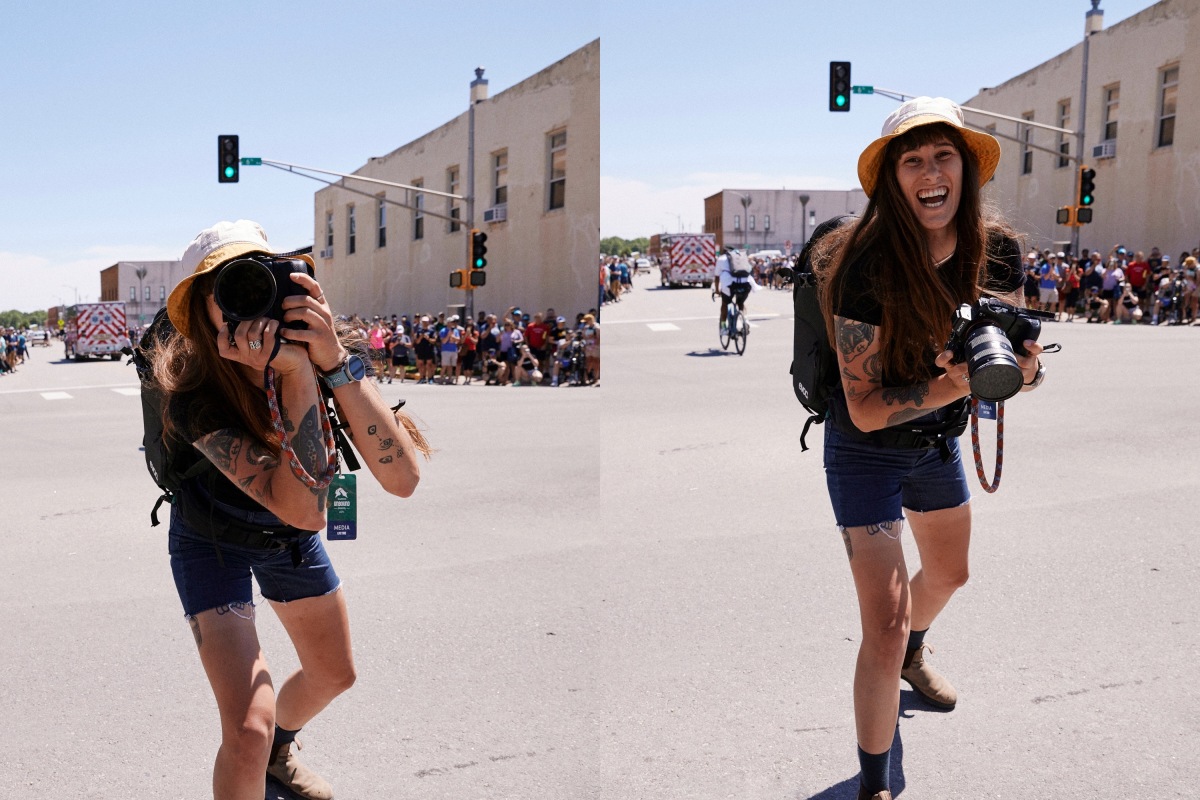
Sami Sauri / Silk Road Mountain Race

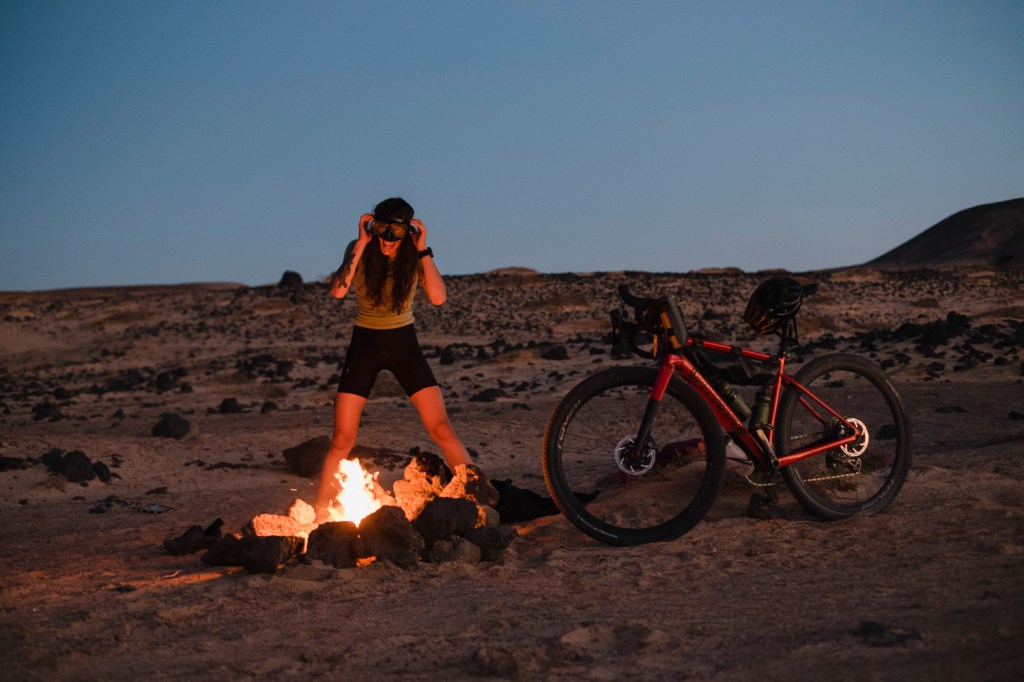
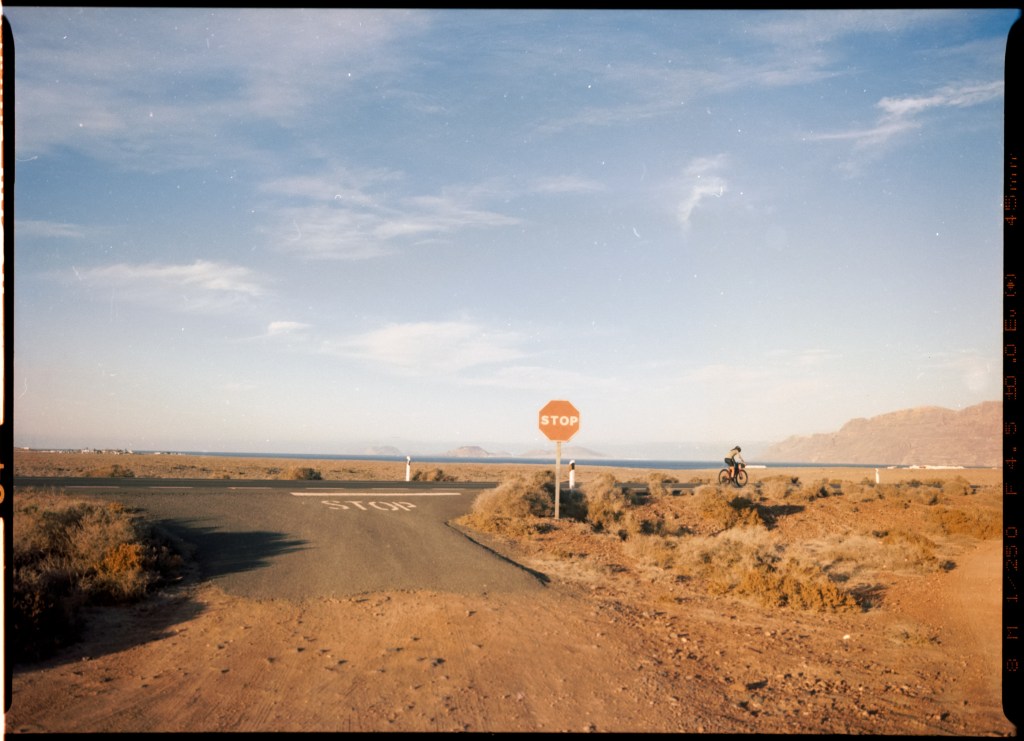
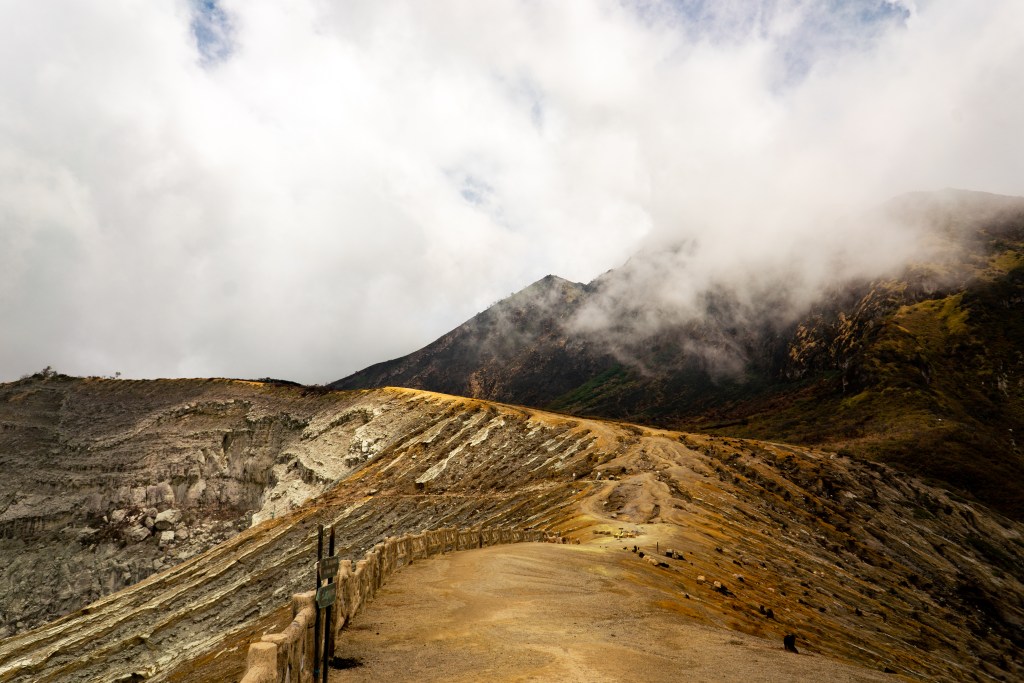
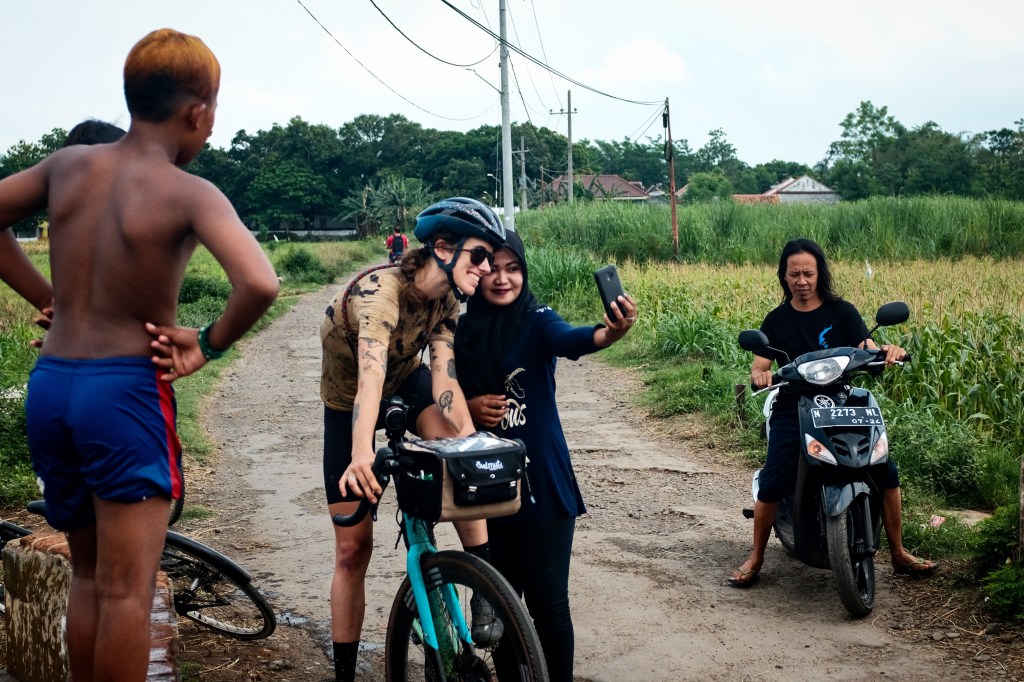
Home again after placing 21st overall and second woman to finish on this year’s Silk Road Mountain Race, adventure cyclist and photographer Sami Sauri reflects on the before, the during and the after. Conversationally candid and quick to laugh, Sami unpicks what it takes to complete such an epic challenge, how focusing on fun might just be her secret superpower, and why crossing the finish line helped foster a true sense of self belief.


cyclespeak
You’ve been back home from Kyrgyzstan for a couple of weeks now. How are you feeling?

Sami
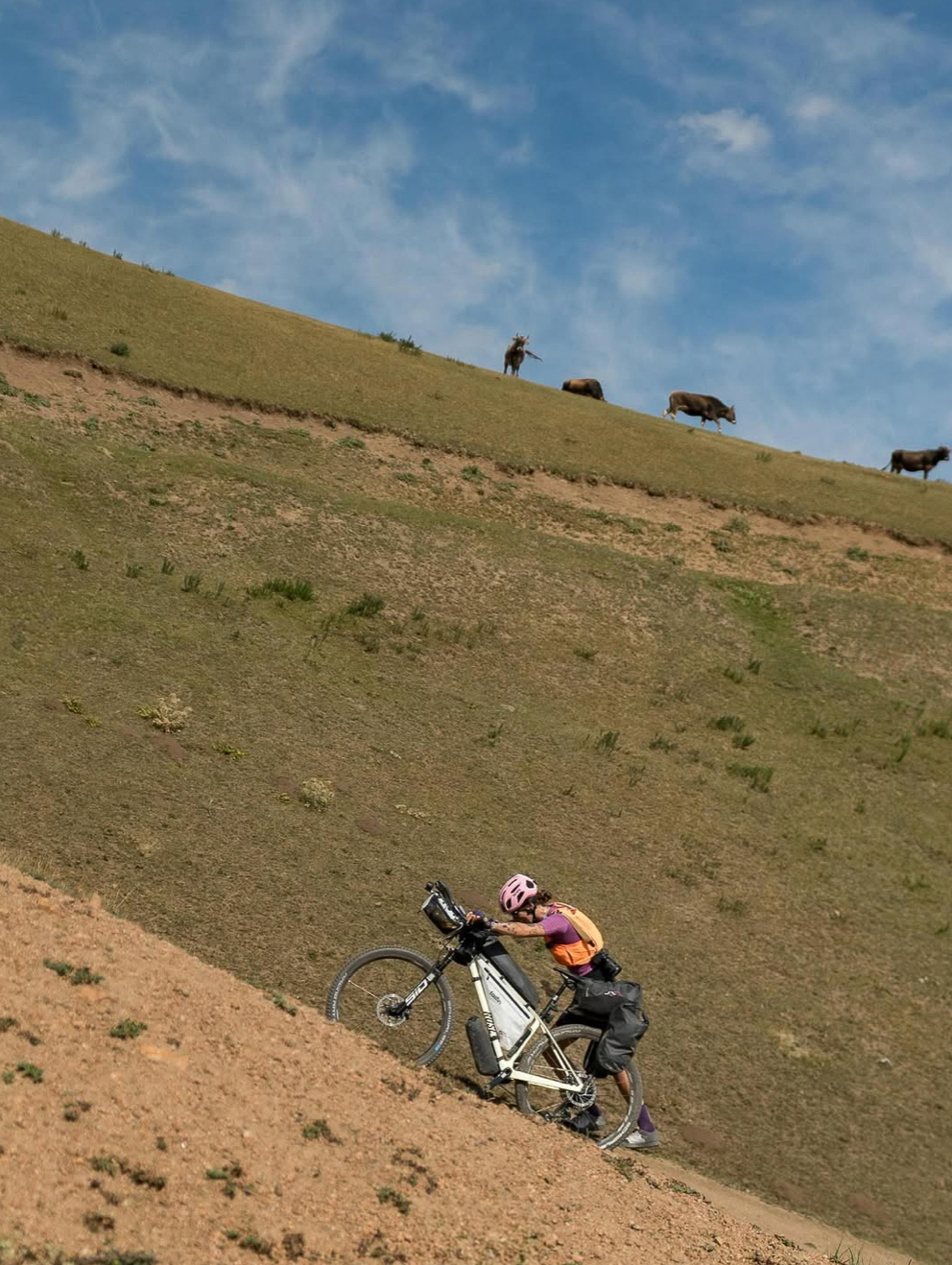
It’s funny that the recovery was better than ever. There was so much hike-a-bike that my body never seemed to get that stressed in either discipline. I rode my bike, I pushed my bike, I carried my bike, I almost went swimming with my bike on some of the river crossings [laughs].

cyclespeak
The Silk Road Mountain Race is such a daunting event and on many peoples’ bucket list. What made you commit to racing it this year?

Sami
Rather than race, I was simply aiming to complete it. And even though I was mentored by James Hayden who talked me through equipment choices and training regimes, I was focusing pretty much on just finishing. Because racing is a whole other level and it wasn’t until day three or four that it even seemed a possibility.

cyclespeak
So what shifted in your outlook?

Sami
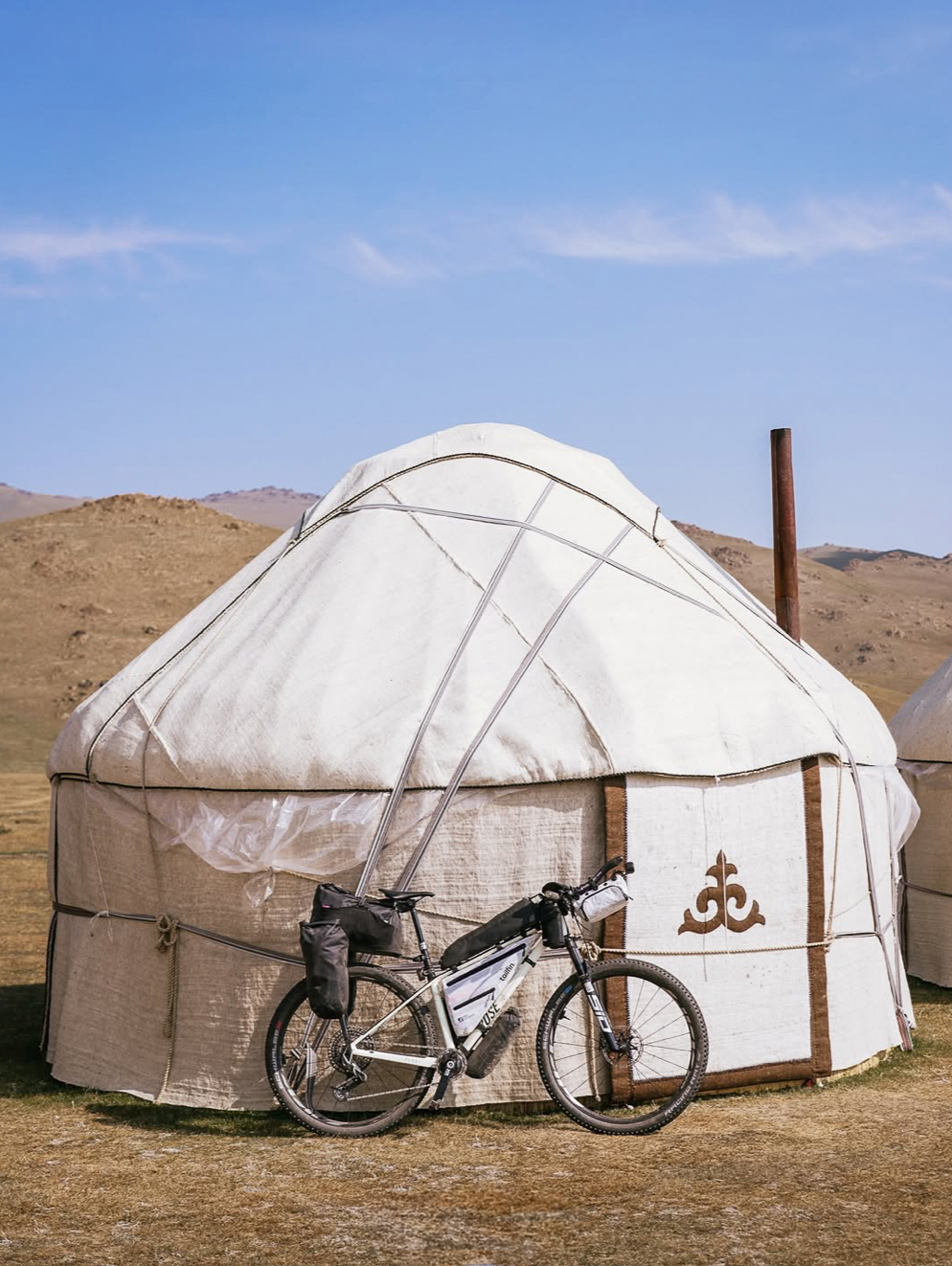
I was watching the dots when I could get a signal and that’s when I started to think that maybe I could place fairly well. But saying that, it was still an adventure and I was carrying a couple of digital cameras and one, quite heavy, analogue to document the experience.

Click image to enlarge

cyclespeak
You’re a very experienced adventure cyclist but did you still have to double down on your preparation for Silk?

Sami
Absolutely. And I was pretty scared about a lot of things because my background is fixed gear and fast gravel racing. So yes, I needed a few tips and tricks to get me through the race; to have the knowledge to make the right decisions at the right time.

cyclespeak
Because the event can be quite brutal?

Sami
I viewed this as more of a survival race and I wanted to control as much as possible in an environment where things can get very quickly out of control.

cyclespeak
You were riding your Rose hardtail with a Tailfin luggage system. In hindsight a good choice?

Sami
I wouldn’t change anything from that setup. The bike was amazing and Tailfin made me a custom camera bag that attached to my aero bars.

cyclespeak
And riding a hardtail rather than opting for a full suspension bike?

Sami
By nature, I enjoy technical terrain and I’m comfortable descending. And a hardtail is lighter when you’re climbing and gives you so much more space in the triangle for luggage options.

Click image to enlarge

cyclespeak
Going from your Instagram posts, it was an achievement in itself to even arrive in Kyrgyzstan? Delayed flights, a forgotten wallet; can you talk me through this rollercoaster ride?

Sami
It wasn’t a delayed flight, it was the delayed brain of Sami [laughs].

cyclespeak
It was?

Sami
I’d booked my flights to arrive early in Kyrgyzstan so I could join two friends on a bike packing trip on the Celestial Divide route. But I guess I had a lot going on pre-travelling—I was embedded with SRAM during the Tour de France Femmes—so when I got home it was quite a rush to get everything packed up. So much faffing around sorting out bags and lights and everything else I would need. But finally everything was ready, I booked my bus ticket to the airport, my neighbour dropped me off at the bus stop, I arrived at the airport, but then couldn’t find my flight on the departures board. So I asked at the information desk only to be told that the flight was the next day and I’d arrived a day early.

cyclespeak
So it was back home?

Sami
That’s right. Up the valley to Chamonix—a pretty fruitless five hour round trip—but at least it allowed me to attach the new saddle that Selle San Marco had sent me which arrived later that day. So, every cloud as they say.

Click image to enlarge

cyclespeak
And then back to the airport the next day.

Sami
I’d contacted my friends in Kyrgyzstan to tell them to start their trip without me and I would catch them up. But then—because I’d been rushing around so much—I realised that I’d left my wallet behind. Luckily I always travel with a card in my passport but it’s a credit card which doesn’t always work if you want to withdraw local currency.

cyclespeak
I’m guessing Kyrgyzstan is one of those countries?

Sami
Correct. So after landing, I had no money and no idea where my friends were. But I did have the route and set out before bumping into two other friends—I mean, what are the odds—so we made a new plan and off we went.

cyclespeak
When you did finally roll up at the Silk start line—ahead of you 1,900 km of rugged terrain and 30,000 m of elevation—what was going through your head?

Sami
Two things, I guess. The first being there’s no way back in the sense that your choices are made and you need to keep moving. It’s not like you can just pop back and grab a jacket if you feel a chill. You’ve got what you’ve got and those decisions are made way before the race gets underway.
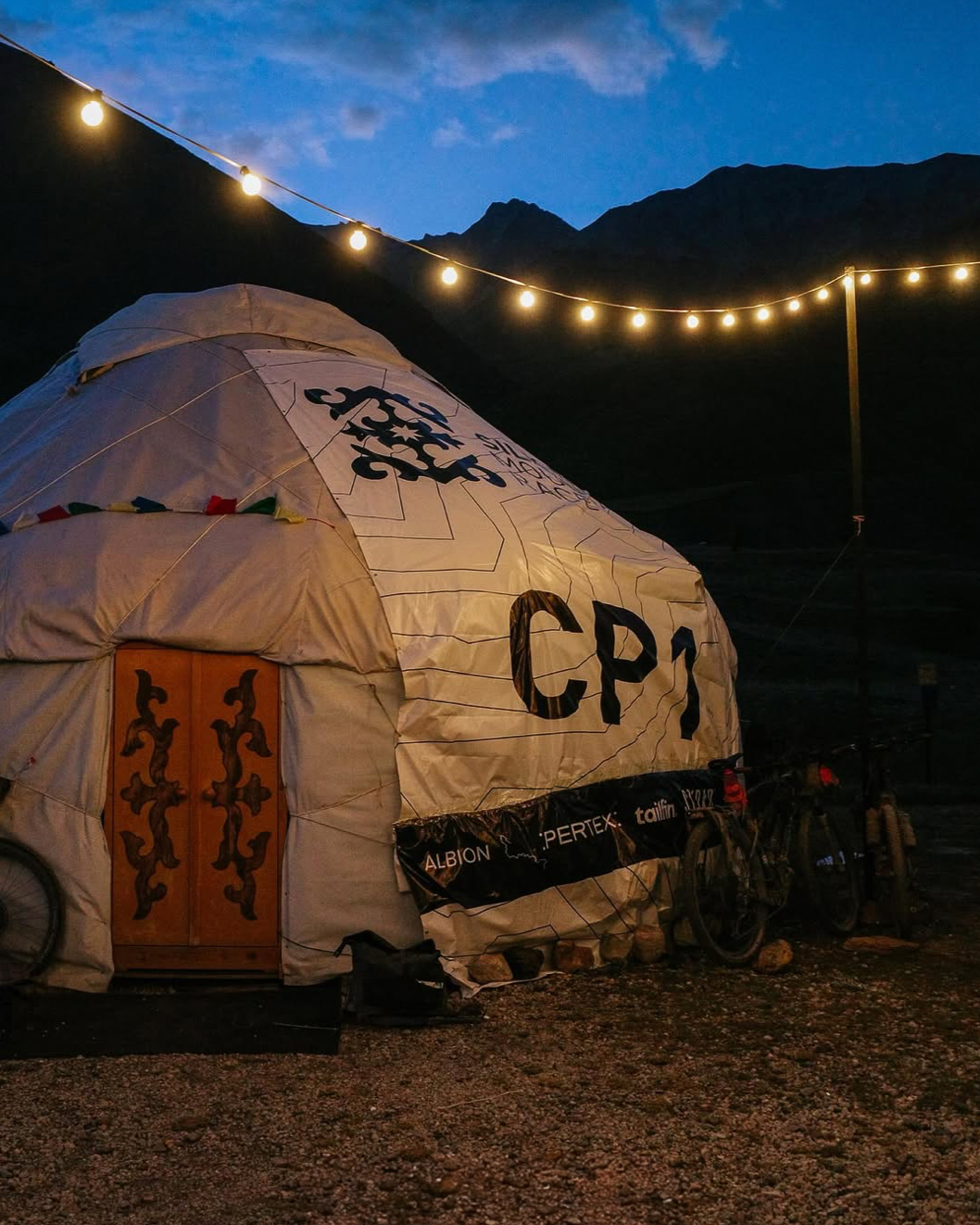
Click image to enlarge

cyclespeak
And the second?

Sami
Throughout all of this mentoring with James, one of the things he talked about was having a mantra. Something that would help carry me to the finish.

cyclespeak
And what did you decide on?

Sami
My mantra was if you go further, you will see more. Because riding with a camera, that’s what motivates me to do these adventures.

cyclespeak
What sleep strategy had you decided on? Because there’s a school of thought that if you rest a little longer, you race faster; as opposed to little sleep but a slower pace?

Sami
I’m not super experienced at racing ultras so I’m still working this one out. When I raced Across Andes—which is much shorter than Silk—I found that two hours rest a night worked well. But going without sleep for 24 hours at Bright Midnight paid off so badly.

cyclespeak
And Silk?

Sami
It’s so long that you simply have to sleep; you have to be rested enough to make the right choices at the right moment. So there wasn’t a 24 hour period that I didn’t clock some sleep. But I’m not going to lie, I completely freestyled it [laughs].
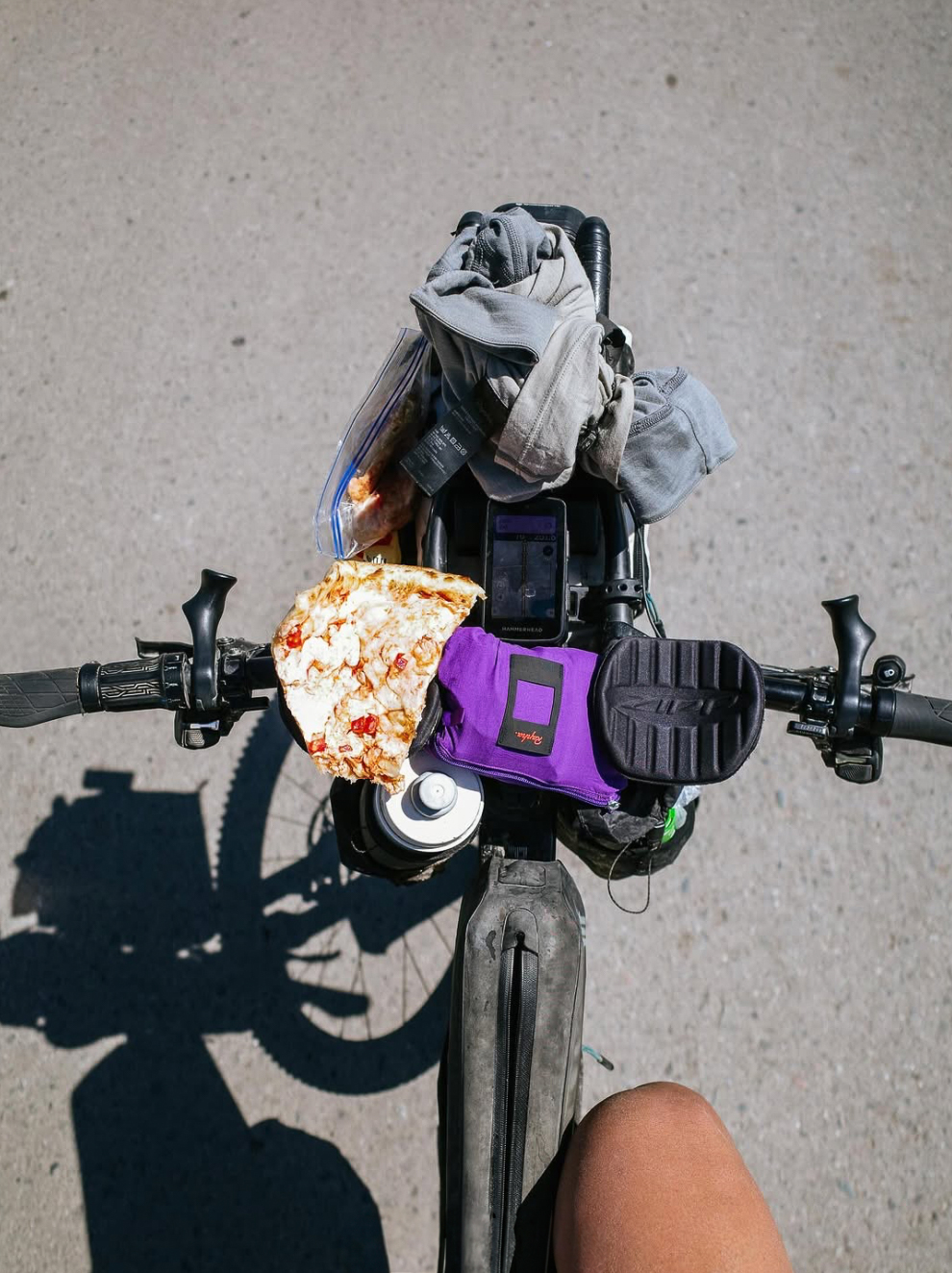
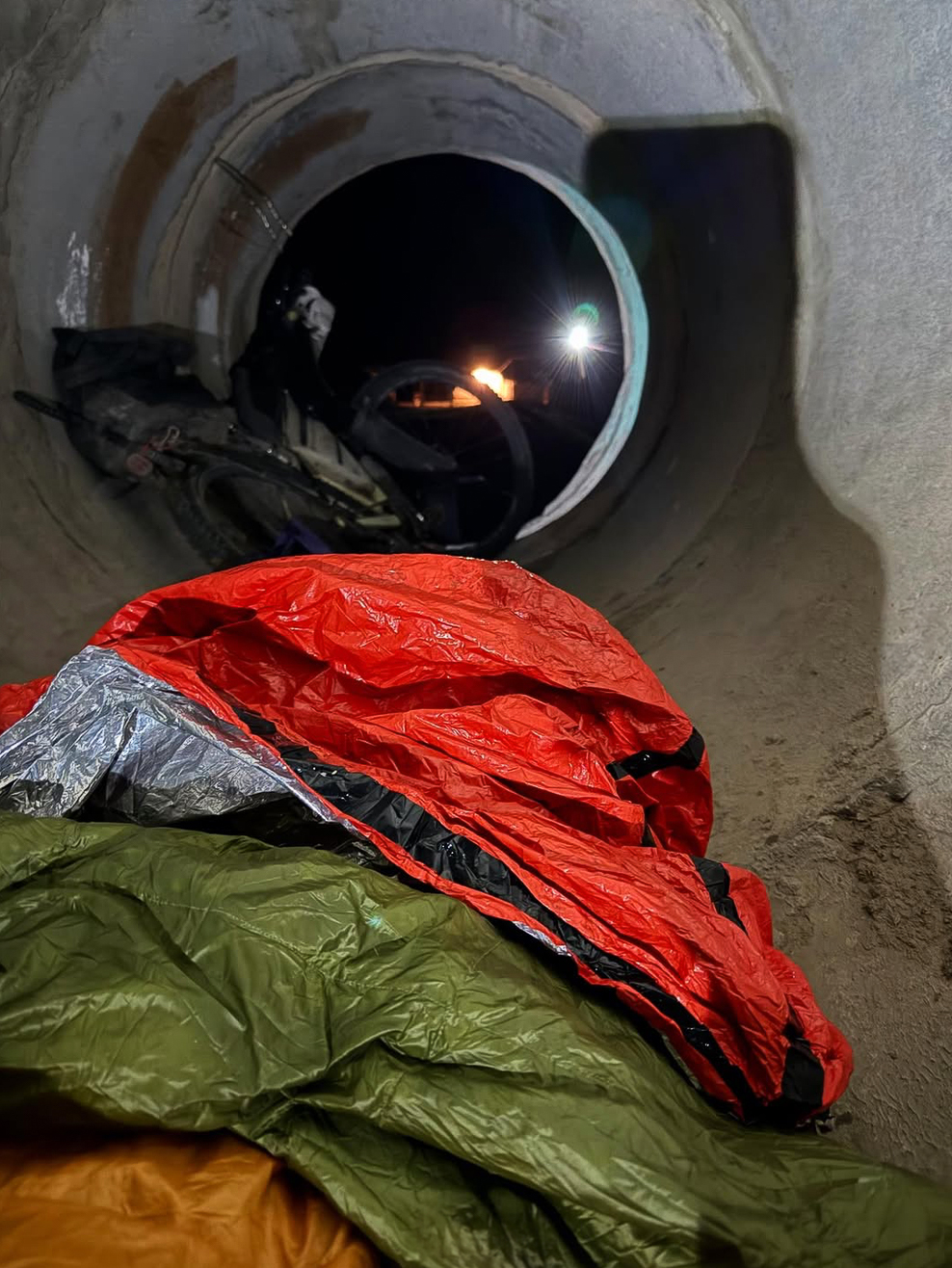
Click image to enlarge

cyclespeak
Which looked like?

Sami
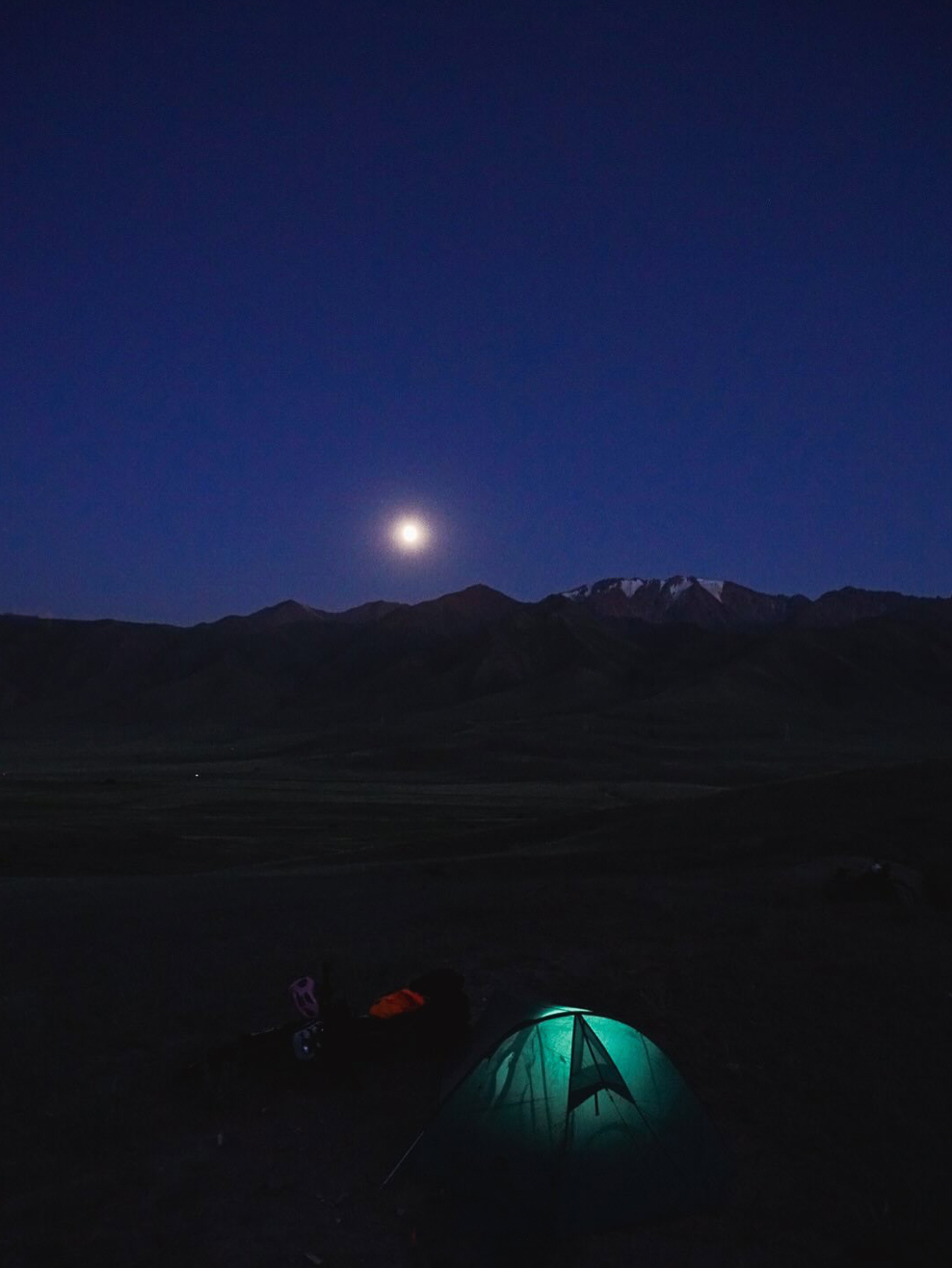
Between three and four hours rest a day. But that was sometimes tricky to manage with it being so cold at night that it was difficult to keep warm if you weren’t moving.

cyclespeak
So if you had to choose between a tent, bivvy, guest house or giant water pipe?

Sami
The giant water pipe would have been a pretty good choice—I was very comfortable—but it just funnelled the wind and made my emergency blanket flap around too much. And the guest houses are wonderful for quality food and sleep but they take too much time because everyone is so welcoming and it feels rude to just rush off without having a conversation. And because you’re translating everything back and forth on your phone it can take forever.

cyclespeak
So maybe the tent?

Sami
That was good but, again, it takes a little time to get set up and some nights I just couldn’t be bothered and went straight for the bivvy. Which is quick but has issues with condensation—especially if you double it with the foil blanket—so you can end up feeling wet on the inside. So, to answer your question, maybe a combination is what works best?

Click image to enlarge

cyclespeak
How tricky was it to fuel your race? Did you carry much food or were you relying on roadside provisions?

Sami
You can’t rely on anything [laughs].

cyclespeak
You can’t?

Sami
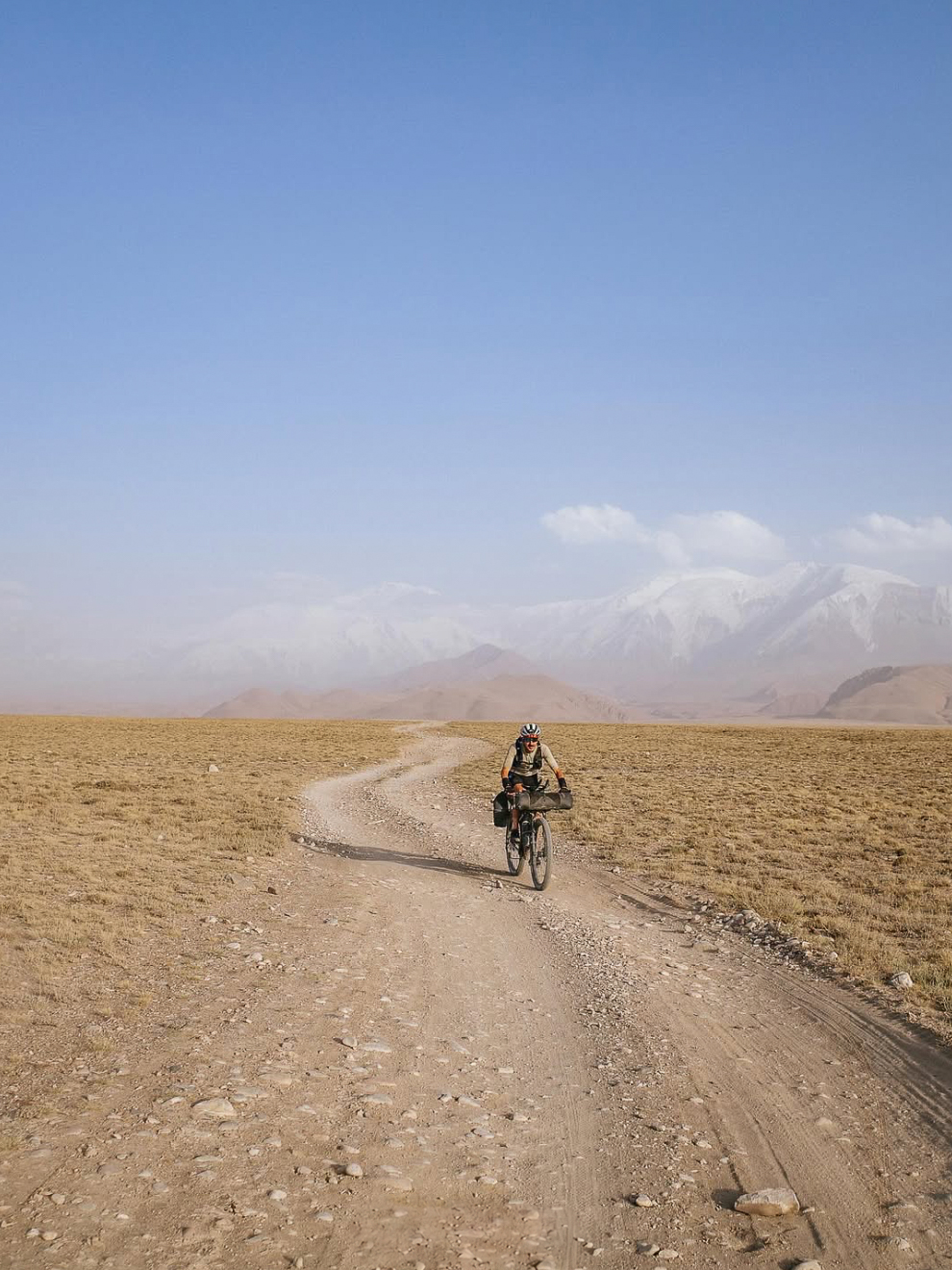
It might say resupply in the road book but that doesn’t necessarily mean a shop. And if there is a shop, it doesn’t mean there’s a vast choice of things to eat. It just means that you’re going to get something. But that still leaves you with stretches of 400 km without any food options. And due to the difficulty of the terrain, that’s equivalent to two days of riding. Which is why I call it a survival race and not a bike race because there were times when I was running out of food and having to ration my M&Ms to one every half an hour. And then when you do finally reach a town with a supermarket, the bag of food you buy is bigger than your body. Or at least it was in my case [laughs].

cyclespeak
I’ve seen pictures from Silk of competitors enjoying an ice cream.

Sami
Not for me.

cyclespeak
Not even the one?

Sami
There are two reasons why not. First, we were pretty high up—our average elevation was higher this year—so it wasn’t as hot as previous editions. And second, I was warned against eating ice cream because the electricity supply is a little inconsistent which means the freezers are constantly thawing and refreezing. But maybe I was overthinking the whole thing [smiles].

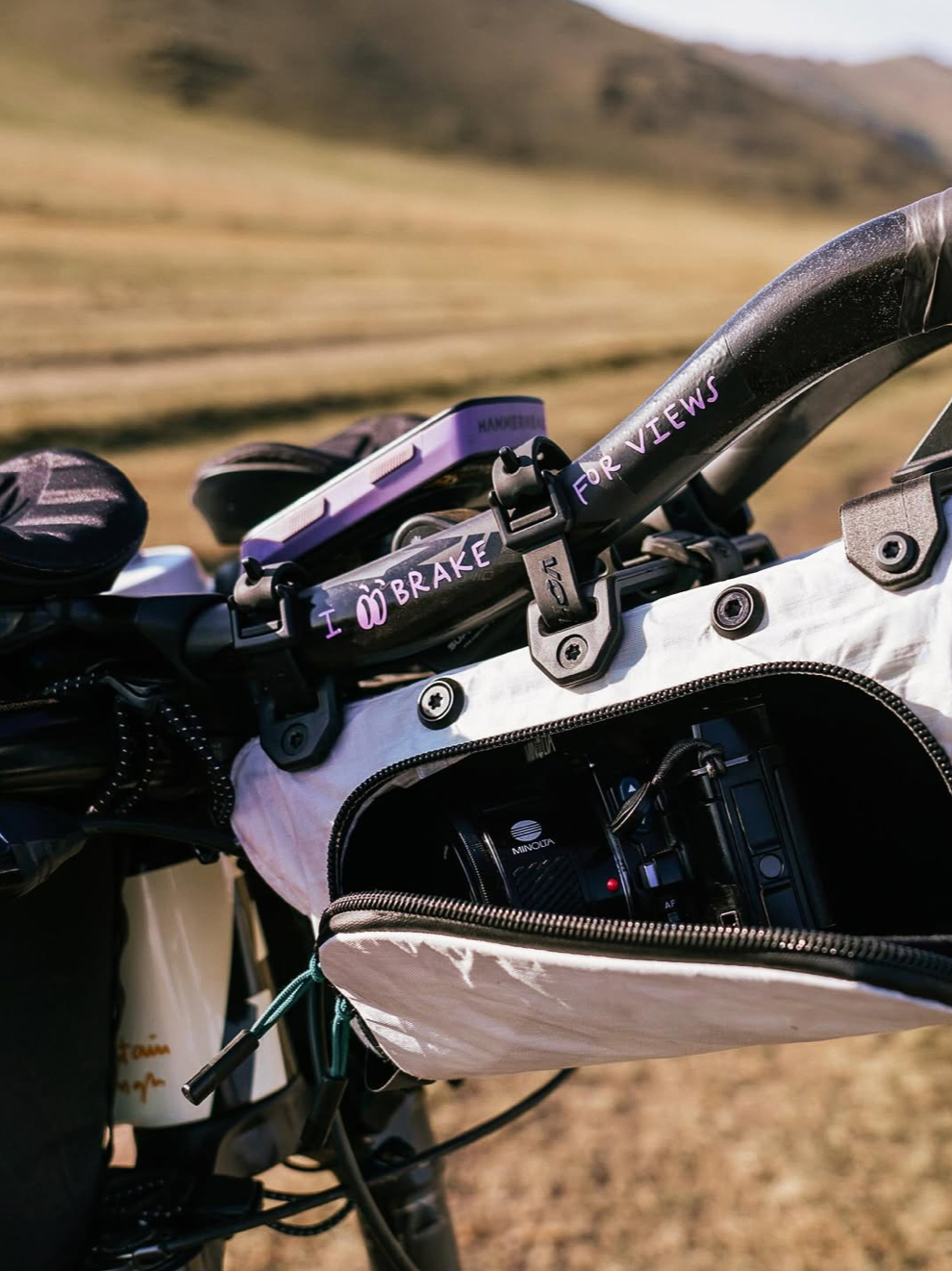
Click image to enlarge

cyclespeak
You had a series of tricky river crossings to contend with including wading through waist deep water and some pretty sketchy bridges. I’m guessing quite challenging obstacles?

Sami
One of the main bridges in that particular area collapsed only a day or two before the race started so I walked rather than rode over all of them.

cyclespeak
And the river crossings?

Sami
I had a couple of situations where I thought I would get swept away. So I learnt to wait until other riders were there so I wasn’t crossing alone. And in some cases, people had to camp out overnight to wait and cross in the morning when they could see what they were doing.

cyclespeak
I’m assuming the water is super cold?

Sami
Very, very cold [laughs].

cyclespeak
So if there’s no bridge, are you carrying your bike or pushing it through the water?

Sami
Most of the time you carry it across your shoulders. And sometimes you cross with someone else and you can help each other. But whatever the situation, it was always pretty sketchy.

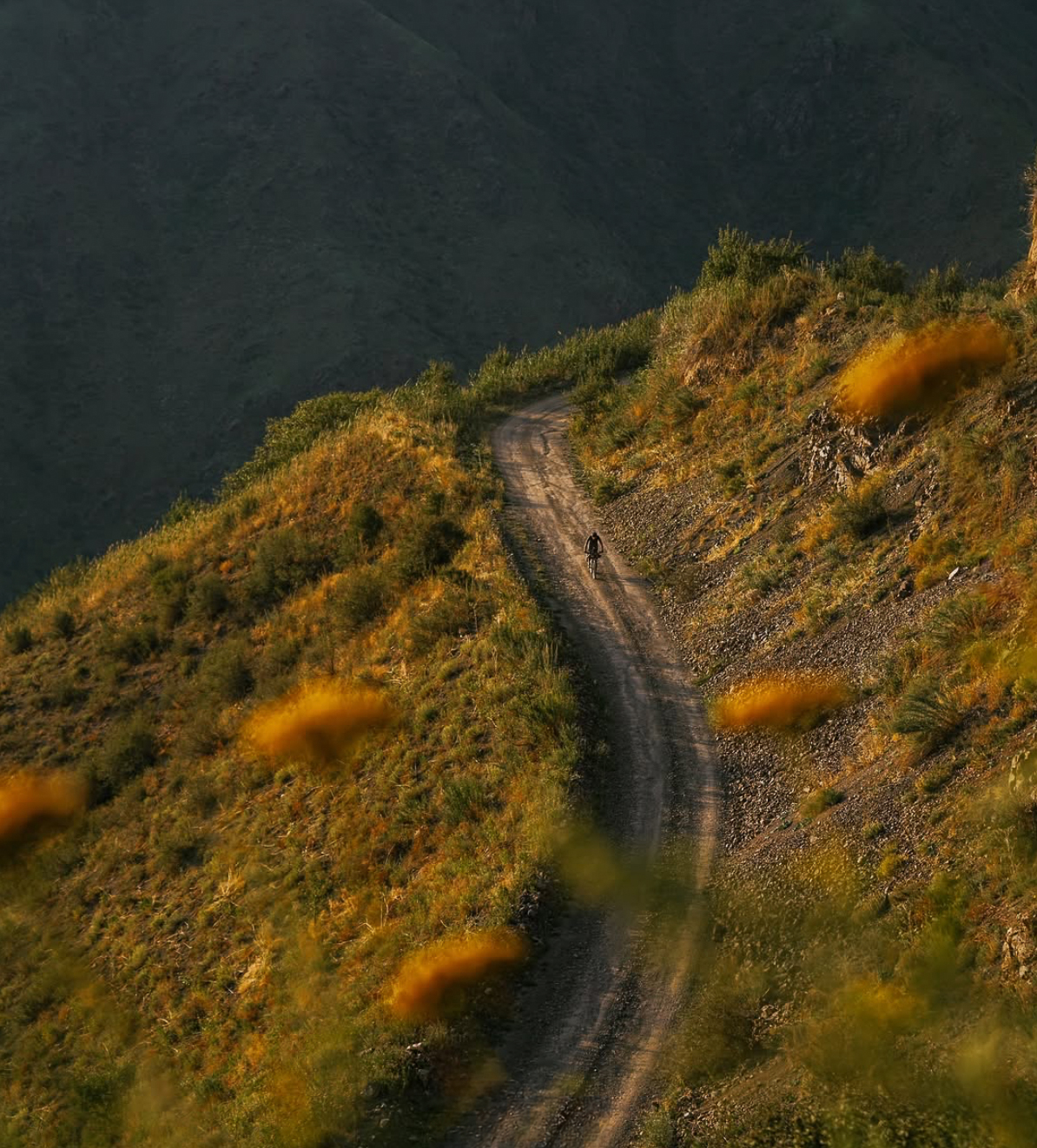
Click image to enlarge

cyclespeak
Was the extreme elevation difficult to manage?

Sami
I do think a lot of people had problems with that. And I guess because I live in Chamonix, it maybe didn’t affect me quite as much. But I still had a bleeding nose and cough whenever we were above 3500 m which made sleeping sometimes difficult. So if you live and train at sea level, you can see why it can make things difficult and the altitude needs to be taken seriously. It’s no joke.

cyclespeak
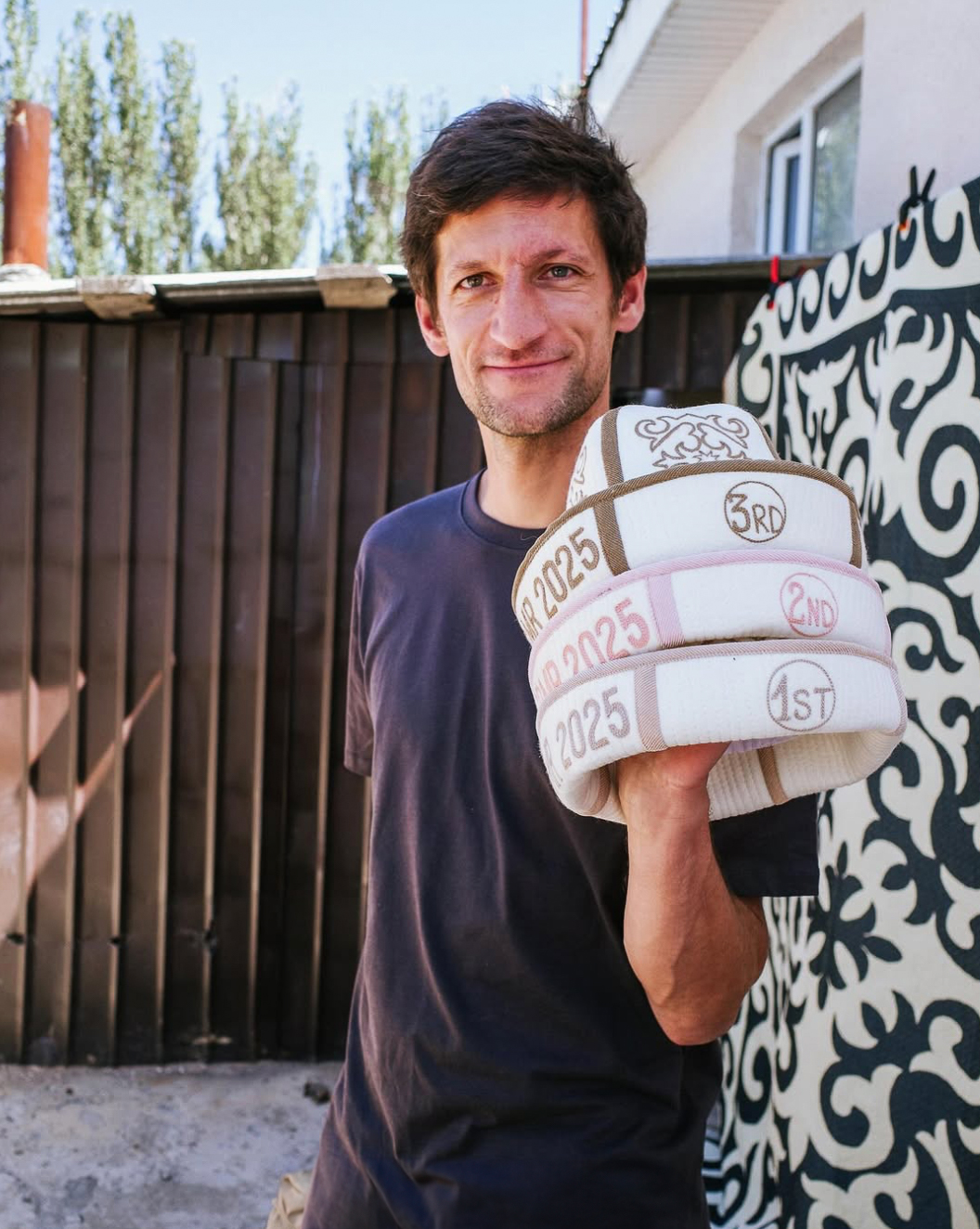
You were the second woman to finish and placed 21st overall. And this was your debut Silk Road Mountain Race. Was it a case of instant euphoria arriving at the finish in Karakol or did it take a while to sink in?

Sami
It’s still sinking in [laughs]. Especially because it’s probably the best result in my racing career. And who would have thought I’d be even close to finishing second in Silk? Especially as I was going to Kyrgyzstan for the adventure and to take photographs. Which is what I did.

cyclespeak
Was that your superpower and part of the reason you placed so highly? The fact that you didn’t enter Silk with the view of chasing a result?

Sami
It’s honestly hard to say. I faff around so much in these races and stop for everything. I photograph flowers and the people I meet. I eat pizza on top of a hill and take in the view. But maybe you’re right. Maybe it’s this mindset that makes a difference?

cyclespeak
One incident that you did post about was an upsetting nighttime encounter with a boy and his dogs. But generally speaking, your interactions with the local population were very positive?

Sami
Yes, absolutely. The people in Kyrgyzstan are amazing and that was just a random encounter in an area near to the border. And I wasn’t the only person to run into a little difficulty there. But for the vast majority of the race, I never even thought about my own personal safety.


Click image to enlarge

cyclespeak
So how vulnerable do you feel on events such as these?

Sami
Strangely it was more when I was in or around a city. Somewhere that’s more touristy. When I was out on my own in the wilderness—where you might imagine you’d feel vulnerable—that’s where I felt the safest.

cyclespeak
In a certain way, you were joined on the race by all your dot watchers and by their messages of support. During difficult moments, are you aware of this and does it make a difference?

Sami
My friend Corina took over my Instagram account during the race so—day to day—I really wasn’t that aware of what people were saying. But when I did have a connection and could see all the messages, it was really a quite amazing feeling.

cyclespeak
You mentioned your personal mantra if you go further, you will see more. So is it possible to sum up what you did see?

Sami
You know, it’s funny. I took photos every day and when I look at them now—only a few weeks later—I can’t remember this or that place. Almost like it was so intense, with so many things happening, that I can only recall the hardest bits and some of the best moments. But the bits in between? It almost feels like my mind has deleted them.

Click image to enlarge

cyclespeak
So has this experience changed you?

Sami
I guess the honest answer is that I never thought I could finish something this big. So maybe now I have the reassurance that, yes, I can. And moving forward, the longer the event the better? And all of this came after a very difficult start to the year so it helps to have a sense of belief in yourself. Because before, maybe that was something I lacked?

cyclespeak
So maybe it’s answered some questions? And possibly posed some new ones?

Sami
I guess so [smiles].

cyclespeak
I think what sets you apart—and I truly believe this—is that you enter these extreme events with the goal of having fun. You’re racing Silk and carrying three cameras which just doesn’t line up with the vast majority of the other competitors. And it’s that, which makes your approach so unique and so refreshing.

Sami
Which is how I arrived at my Adventure More project which combines my love for photography and riding my bike. Something I want to do more of.

cyclespeak
When it came time to leave Kyrgyzstan, were you ready or was there an element of sadness at saying goodbye?

Sami
I think because I’d arrived early to go bike packing and had seen maybe more of the country than some of the other competitors, I was ready to go home and spend some time with my boyfriend and see my friends in real life and not just over a video call on my phone. And I was looking forward to having my plate of pasta with Parmigiana that I always have when I return home.

cyclespeak
Every time?

Sami
Yes, every time [laughs].

Sami Sauri / samisauri.com

Feature image by kind permission of Stephen Shelesky / All other photography credited individually
Silk Road Mountain Race

Sami Sauri / Adventure more

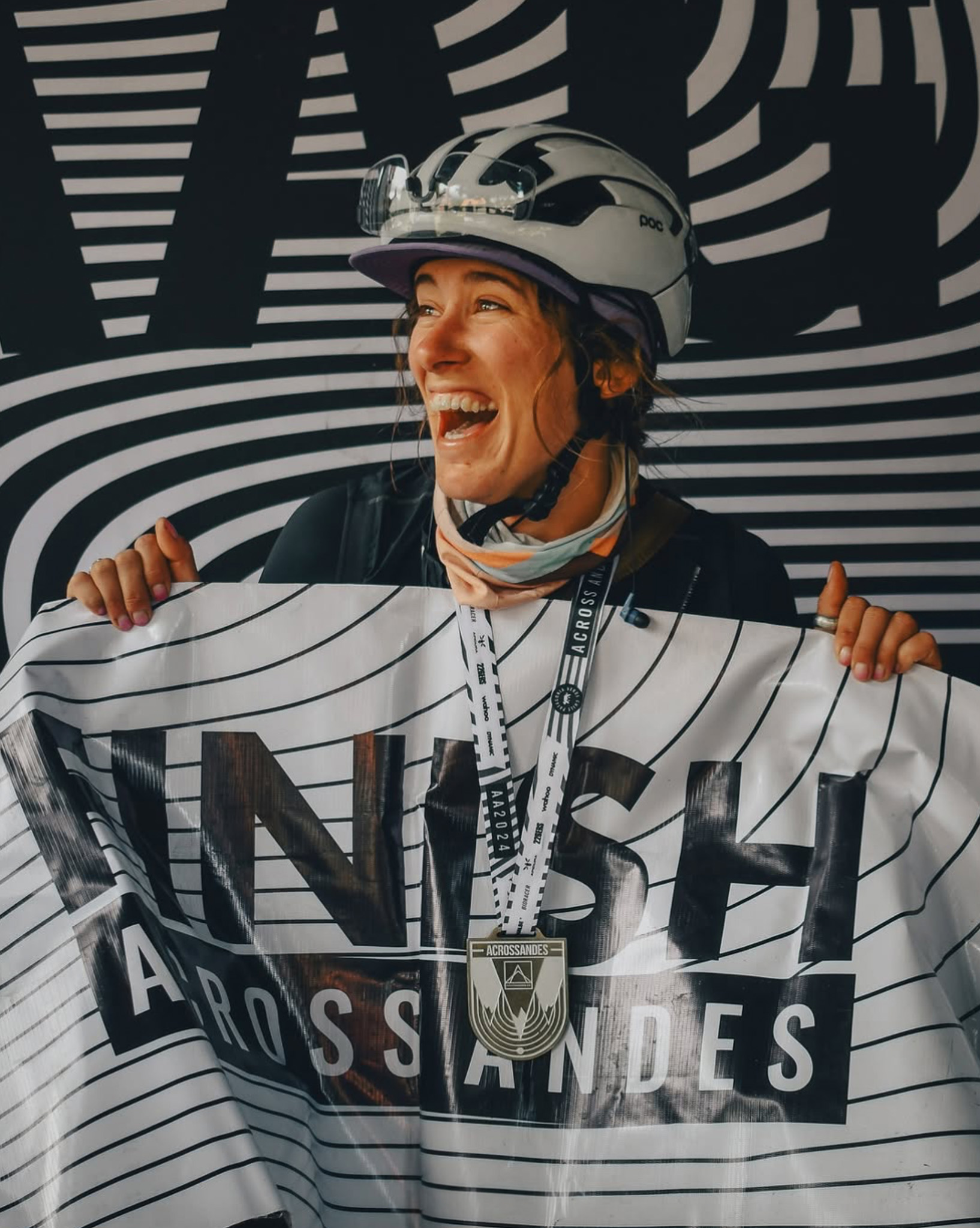
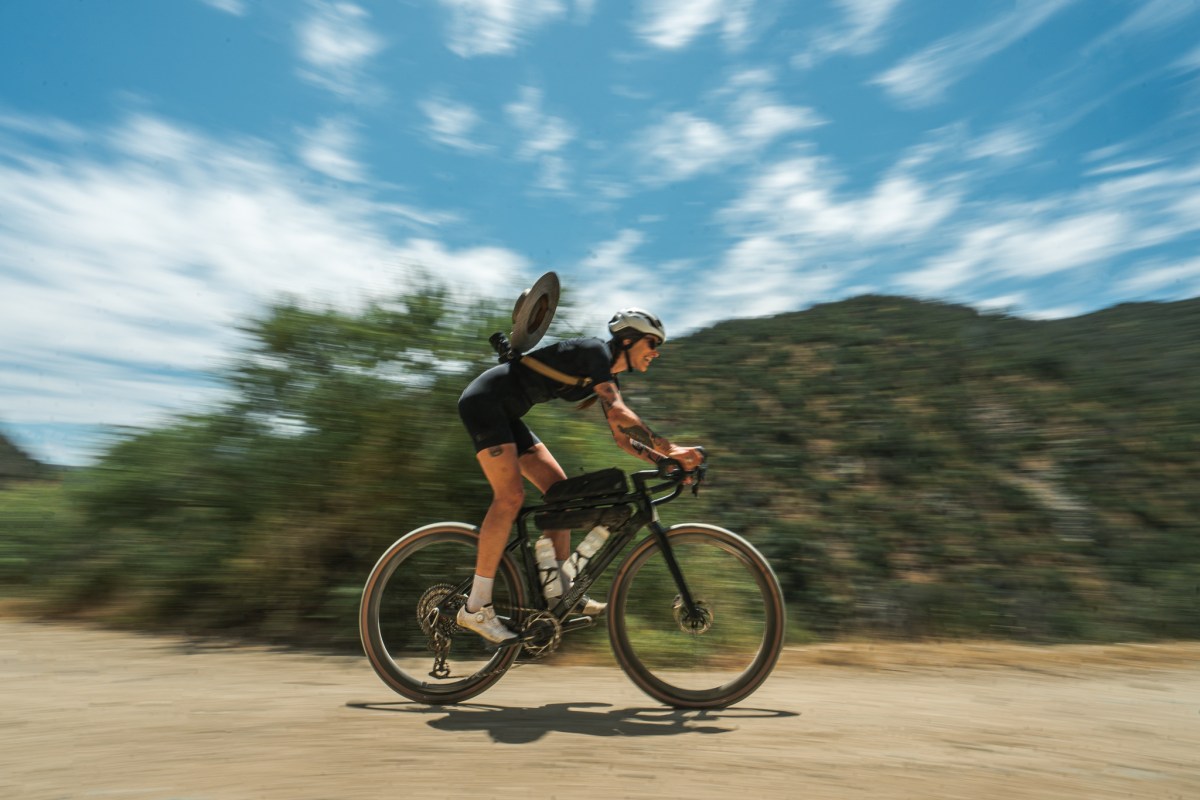
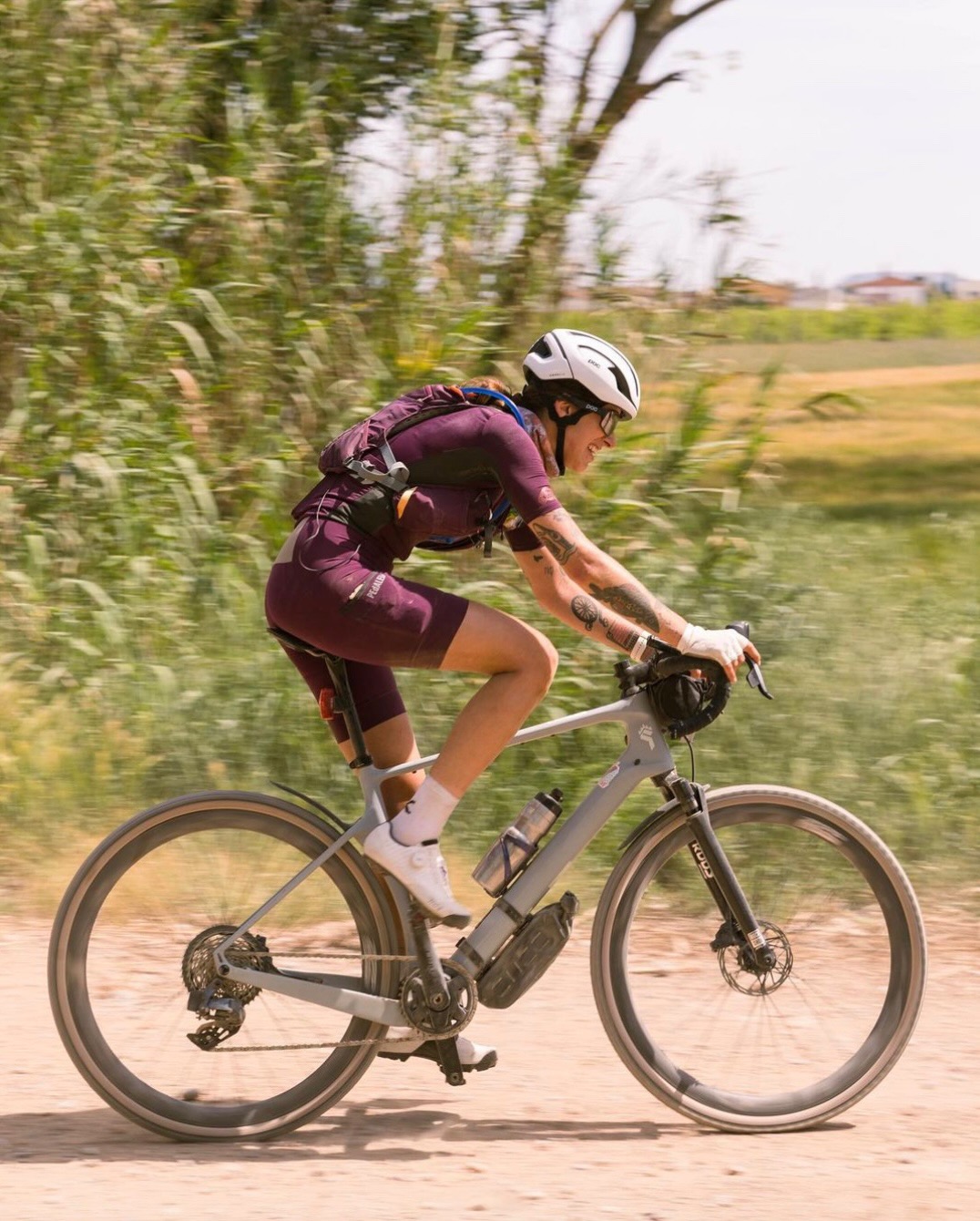
With the camera capturing Sami Sauri in a blur of motion—seemingly floating across the gravel surface—her broad smile perhaps belies the difficulties of a challenging year. But this second swing at Across Andes resulted in a remarkable podium finish that saw the year out in fine style with the promise of more adventures to come. A year that Sami—never shy of speaking openly about life’s ups and downs—recounts in her typically honest and humorous fashion.

Sami
Home again [smiles].

cyclespeak
With a collection of hats hanging up on the wall.

Sami
It’s getting bigger. That one [pointing to a broad-brimmed hat] I brought back from Chile.

cyclespeak
How’s the weather in Chamonix?

Sami
Today is nice and sunny and it’s all white outside.

[here Sami stops, turns and starts talking off camera]

As you can see, I have a dog now. He wants to say hello [laughs].

cyclespeak
What’s he called?

Sami
Captain. And it’s been really fun even though he’s only 10 months old and a bit cheeky sometimes.

cyclespeak
A little like a toddler?

Sami
Maybe more of a teenager [smiles]. Crying as if he wants to go to the toilet but really just wanting to play outside. But he’s worth it because he brings so much happiness.


Click image to enlarge

cyclespeak
Looking back to the last time we spoke, you were planning to smash out the Festive 500 in one go. But then decided to split the distance over 3 or 4 beautiful days. Would you have made that same, confident decision a few years ago?

Sami
That’s an interesting question. And I don’t think so because, back then, in many ways I was a completely different person.

cyclespeak
With maybe more of a focus on numbers whereas now it’s about enjoying the experience?

Sami
And discovering new places. That’s a cool thing to do.


Click image to enlarge

cyclespeak
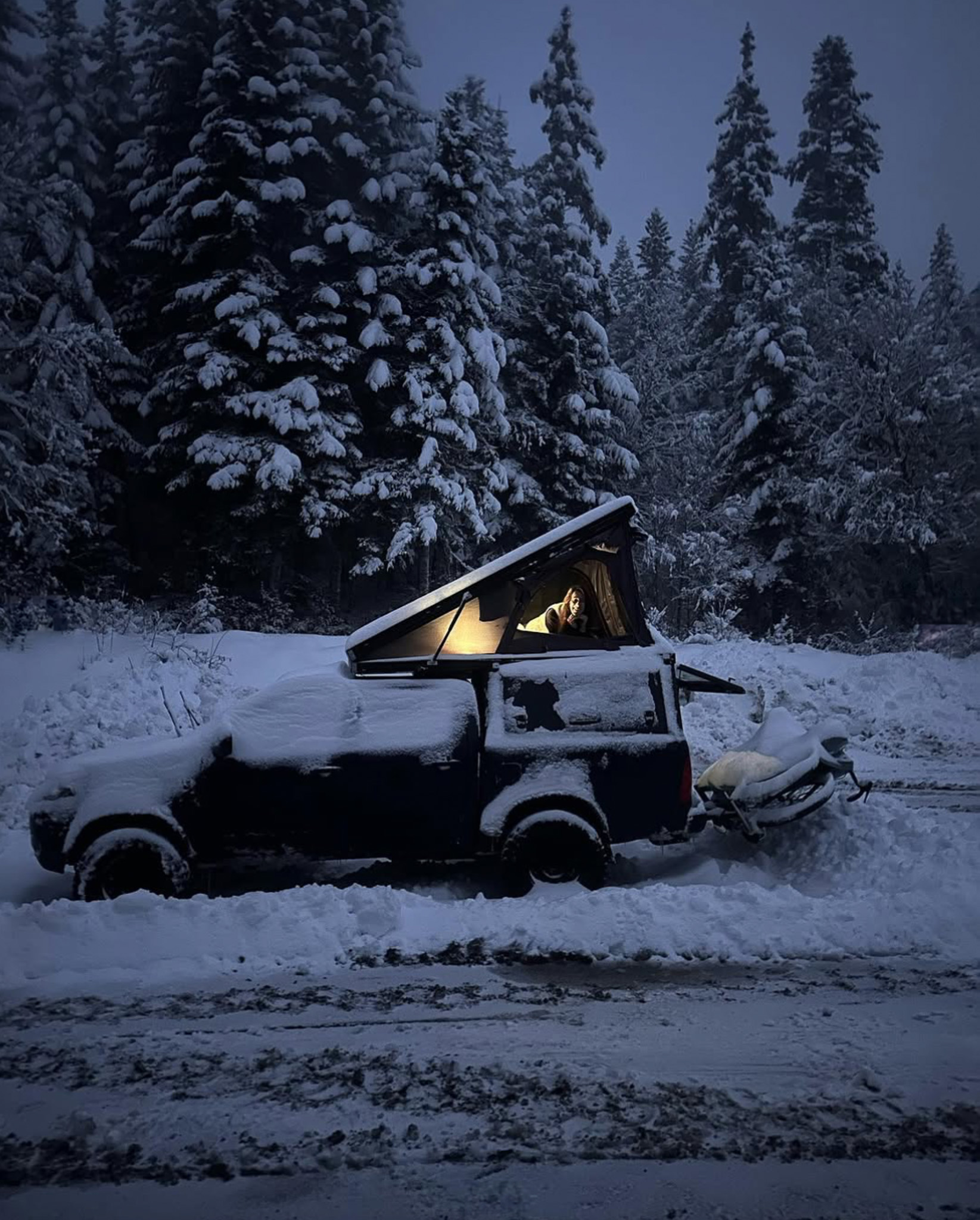
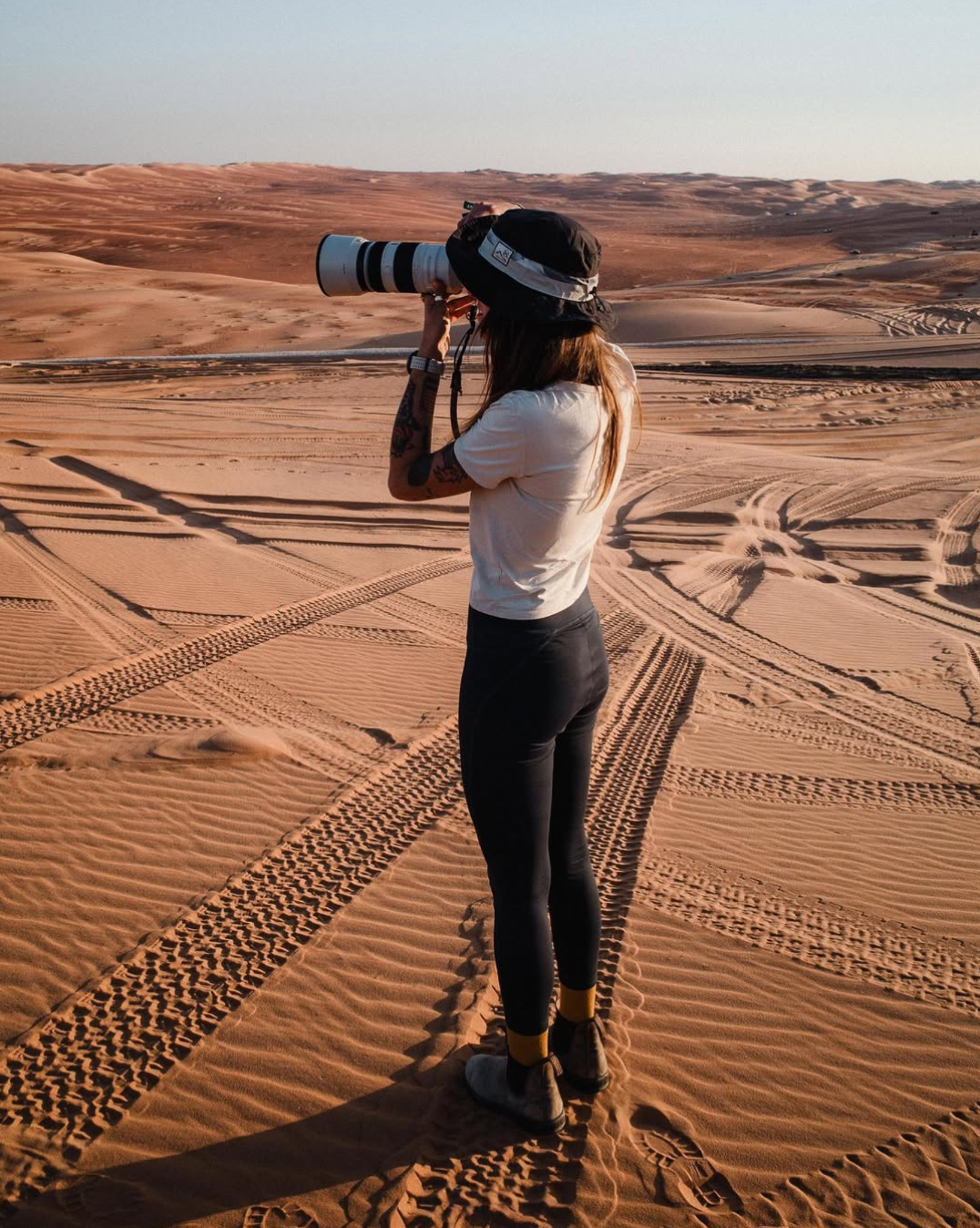
Before travelling back out to the desert to photograph the Dakar Rally, January saw you on a snowy camp out in the roof tent of your 4×4 truck.

Sami
I got that particular vehicle rather than a regular car because it makes it so much easier to scout a shoot or follow a gravel race. And it made a huge difference having a 4×4 when I was at the Traka with all the rain. But the night you mentioned was pretty cold [laughs].

cyclespeak
You then spent 22 days embedded in a Dakar Rally team. How was it a second time around?

Sami
Dakar is a weird one because it’s such an amazing experience but dealing with the race organisers is so tricky. It’s super expensive for the teams to have an accredited media team but then I ended up having so many fights with the officials over where on the course I could shoot. It got to the stage where I would leave my tracker on the side of the road and then head off into the desert—walking for fucking miles—to get my shots.

cyclespeak
So the process took some navigating?

Sami
It was a bit of a shit show. But by the end, I’d been fighting so much that they decided to put me into one of their media cars [laughs].


Click image to enlarge

cyclespeak
Travelling back from the heat of the desert to snow covered Alpine peaks, you were faced with problems of where to live. And I remember you posting a very poignant picture of all your belongings piled up in a temporary garage space. I imagine a very difficult time?

Sami
The guys I was living with, they’d only told me the day before I left for Dakar that I had to leave. They were my best friends—I walked their kids to school—and it wasn’t something that I could see coming. And looking back, that breakup was harder than with a boyfriend.

cyclespeak
That sounds like a lot to contend with?

Sami
I decided to just put everything in a garage and figure out the rest later. I had some work lined up but there were also worries about my sponsors and I remember considering whether to take a full-time job. And it took over a month to find this place in Chamonix which was also very lucky because a friend of mine was living here previously and she reached out to me to say she was moving.

cyclespeak
It all sounds super stressful.

Sami
It was. But living here has been amazing. It’s small but there’s a garden at the front and I get to see Mont Blanc everyday when I wake up.


Click image to enlarge

cyclespeak
That sounds so cool. And talking of home, in early Spring you spent some time in Girona where you’d lived for four years before moving to the French Alps. How did it feel to be back?

Sami
It was actually a bit overwhelming. Girona has changed a lot and although there’s still the pro racing aspect, there’s also a lot of focus on gravel influencers. So a lot of the talk at cafés is about watts and kilometres. Not to say there’s anything wrong with that but I just prefer to talk about different things.

cyclespeak
You posted a lovely set of shots from a carnival-themed ride with the @girona_gravelgirls. It looked like a super fun day?

Sami
Oh my God. As a community, they’ve grown so much. But I guess it helps that they’re based in one particular location and they welcome whoever wants to ride. It doesn’t matter what bike you turn up on, what clothes you wear, or if you’re new to cycling. It’s so much fun because everyone respects each other.

cyclespeak
You decided not to race Santa Vall—part of the Gravel Earth series—choosing instead to photograph the event. And then you posted a fascinating viewpoint on the way brands value photographers monetarily and how individuals offering to work for free is maybe undermining the whole creative industry. Can you talk me through your take on these thoughts and ideas?

Sami
I’d applied for media accreditation and put together a package to create content for individual athletes and brands that was priced accordingly. But you also get people just showing up, working for free, and sharing their images with the athletes who then pass them on to their sponsors. Which is kind of why the industry is going to shit. Because if we all did that, why would brands be bothered to pay professionals? Professionals who’ve been working their asses off for a decade or two, perfecting their craft.

cyclespeak
So how can we make positive changes?

Sami
I think the race organisers have to play a part and maybe we need some honest, open conversations? I’m probably a little more expensive than others because I’ve been doing this for a long time. So now, if I want to work, I want to work properly and get paid a fair amount. Because who can afford to live on a day rate of €130 which is what someone told me they were asking for? You’ve got to be fucking crazy.

cyclespeak
I guess if you want quality content—captured by experienced professionals—then that comes with a cost.

Sami
And if you undervalue yourself now, you’ll be doing it for the rest of your career. In the same way that if you work for any company and never ask for a pay rise. They’re not going to do it for you.

cyclespeak
Imagine the response you’d get from people doing regular jobs if you asked whether they’d be willing to work for free?

Sami
Exactly. It’s down to each individual to make their own journey and find their own path. And I’m also very aware that my situation is a little unique; in that I create content but also have my athlete and ambassador roles. And sometimes I do worry whether I’m being too open and honest about things [smiles].


Click image to enlarge

cyclespeak
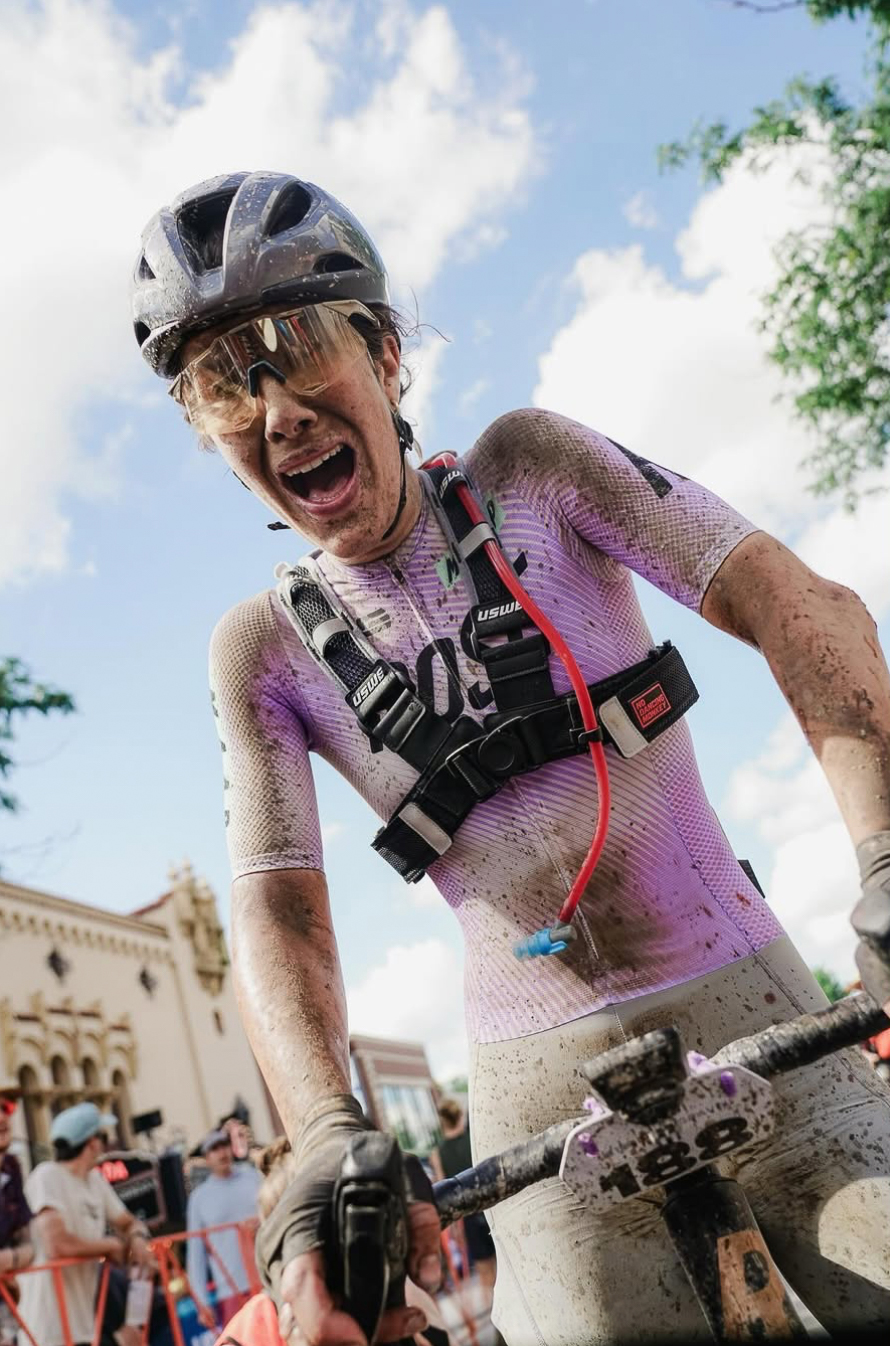
June saw you back in Emporia, Kansas, for Unbound. And you got a simply awesome shot of Rosa Klöser immediately after she won the 9-up sprint. A happy, tiring, emotional kind of day?

Sami
It was a little strange because I was thinking of racing the Unbound XL this year. A feeling that I should be back in front of the camera instead of behind. But I had 14 riders to document which is a lot [laughs].

cyclespeak
You shared some images shot on film from Unbound. A medium you enjoy using?

Sami
Yes. Especially at races. There’s something about the images that’s so hard to replicate using digital. And it’s a completely different process; not being able to see or change whatever you’ve captured. But I do sometimes wonder if my generation will be the last to shoot on film. Whether it will gradually die away?


Click image to enlarge

cyclespeak
Another summer development was your new bike sponsor, Rose, which you immediately got to test out on the Cheese Divide.

Sami
We wanted to do the Italy Divide but that involves a shit show of hike-a-bike. And I have this tea towel that I got in Italy that shows all the different cheese regions, so we used that as a map instead.

cyclespeak
So how many different cheeses did you taste?

Sami
Not as many as you might think [laughs]. Because it was super hot—40℃ by midday—and all I really wanted to eat was ice cream. So maybe we overestimated our appetite for cheese but the scenery was so beautiful.

cyclespeak
In September you rolled out at 4:00am to ride your Tour du Mont Blanc: 322 km and 7949 m of vertical. A big day?

Sami
It was a massive day [laughs].

cyclespeak
One that you enjoyed or was it a challenge to be completed?

Sami
Oh no. I had a blast. Because it’s probably six years since I’ve had a road bike and by the time I was climbing my third col of the day, I was an hour and a half ahead of schedule.

cyclespeak
You were flying.

Sami
I was. Which I paid for later on in the day [smiles]. But I had a goal of finishing in 18 hours and I pushed hard at the end to come in at just over 17 hours.

cyclespeak
So you still have a competitive edge?

Sami
I do!!


Click image to enlarge

cyclespeak
You’ve seen the year out with another go at the unsupported gravel race Across Andes where you finished an amazing second place. From your posts, you seemed very at home in Chile?

Sami
There’s just something about Chile. So many possible projects that I’d be really happy to do. You’ve got the wildness of the land but also cool cities like Santiago. It just blows my mind.

cyclespeak
And the people?

Sami
They just seem so comfortable in expressing their feelings—so much affection and love—and I’ve even thought of moving out there at some point. Maybe to retire [laughs].

cyclespeak
According to your Strava feed, you rode just shy of 44,000 km in 58 hr. That’s pretty impressive.

Sami
I know [laughs]. The ride file got corrupted but I’m still hoping to fix it.

cyclespeak
It’s such a gruelling event where you’re balancing the mental and physical demands of sleep deprivation, fuelling, and the sometimes extreme weather. So I was wondering what keeps you going?

Sami
For that race in particular, it was carrying my camera. The route is so beautiful and changing all the time. And that gave me the motivation to keep going, to keep seeing what was next, and record it along the way.


Click image to enlarge

cyclespeak
You recently posted on Instagram about a new chapter in your riding life: #adventuremore.

Sami
Across Andes was a pilot for Adventure More. Basically documenting races from within with a focus on the community and culture that surround a particular event. Rather than just posting a couple of race shots and a result—which is absolutely fine—I want to go a bit deeper.

cyclespeak
You end your Across Andes recap by referencing what a hard year it’s been for a lot of reasons. So has 2024 changed you? Have you learnt anything new or surprising about yourself?

Sami
Lots of things [laughs]. Where do I start?

cyclespeak
Wherever you feel comfortable in starting?

Sami
To maybe understand the need for patience? Because I’ve still got so much growing to do. And even though it has been a tough year and, at times, I’ve doubted myself, if you keep moving forward with a smile on your face, then good things can happen.

Photography with kind permission of Sami Sauri (credited individually) / samisauri.com

Feature image with grateful thanks to Jeremy Toro

Sami Sauri / Mountain high

In a year that saw life explorer Sami Sauri swap city living in Girona for a new home in the French Alps, we once again sat down to chat over the thrills—and some spills—of snow buried bikes, baking bread in Arabia and a wild ride by ambulance through Kenya’s Maasai Mara.

Honest, heartfelt and never shying away from life’s complexities, Sami weighs up the uncertainties of her profession, how she sought solitude but then needed to embrace the silence, and why there’s always time to stop and smell the flowers.


cyclespeak
Your hair looks very long, Sami. Though, to be fair, it’s quite often hidden under your bike helmet.

Sami
I’m trying to grow the fringe out after I cut it. I was very disappointed [laughs].

cyclespeak
You cut it yourself?

Sami
Why spend the money to go to a hairdresser?

cyclespeak
When you can do it yourself and then be disappointed.

Sami
Exactly [laughs].

cyclespeak
You’re calling from Morzine?

Sami
My new home in the French Alps.

cyclespeak
I picture you halfway up a mountain in a wooden chalet.

Sami
It’s a typical little village towards the top of a col. So every time I finish my training I have this steep, steep climb back home.

cyclespeak
How’s your French?

Sami
I knew French before so that was a big advantage.

cyclespeak
So that’s Spanish, obviously, and Catalan?

Sami
Yes.

cyclespeak
And also French and English.

Sami
And Italian [laughs].

cyclespeak
Is there no end to your talents?

Sami
I’m also trying to learn some Arabic. I feel it will open doors and allow me to speak to the women I meet in their own language.

cyclespeak
I’m really looking forward to hearing all about your new home but can we start with your recent adventures in Turkey? Judging by your posts and stories, it looked like some kind of Hollywood screenplay.

Sami
The plan was to ride in the northeast of Turkey where few people speak English and there’s very little information available about cycling or hiking.

cyclespeak
It sounds relatively unexplored in bike packing terms?

Sami
Every time I was working on the route, I just kept on finding more and more epic stuff. It’s such a big country and I just wanted to go and discover it for myself.

Click image to enlarge

cyclespeak
So what happened on that fateful day?

Sami
I woke up with my partner Nick to a lovely sunny sunrise. We’d pitched our tent at about 2,000 m and the wind had been a little gusty during the night but nothing that would give rise to concerns. So we had no idea that it was all going to go shitfaced [laughs].

cyclespeak
So it was a beautiful day…

Sami
And we started hiking up, carrying our bikes, all our gear and enough food for two days. My hip was starting to hurt so Nick was going back and forth to carry the two bikes towards the pass that would take us over into the next valley.

cyclespeak
He’s an ultra runner so I’m guessing feels super comfortable in the mountains.

Sami
The higher we climbed, the more snow was on the ground and it was getting quite foggy. And then as we reached 3000 m, the wind was getting really strong and drifting snow over our bikes. It was at this point that I knew we had to quickly make a decision.

cyclespeak
At altitude, the weather can change so suddenly.

Sami
Nick couldn’t feel his feet, I was wearing everything I had and visibility was down to a few metres. So we decided to abandon the bikes and get down to where we could pitch our tent and wait out the storm.

cyclespeak
With snow on the ground, that must make navigation difficult?

Sami
Earlier in the day we’d passed a shepherd’s barn. The path was covered but we eventually reached this shelter—feeling pretty panicky—and pitched our tent inside. We got a fire going and heated up some noodles and then I managed to get phone reception through the SIM card I’d left at home. So I sent a message to my friends Ben and Gaby in France with the Instagram profile name of this guy we’d met earlier in the day before the weather went crazy. He’d invited us for a cup of chai at the house he was renovating and we’d noticed he was driving a 4×4.

cyclespeak
That sounds very fortuitous.

Sami
So Ben and Gaby reached out with our coordinates and asked if he could possibly pick us up in the morning at the barn where we were sheltering. But a couple of hours later—Nick was asleep in the tent—I heard a car pull up outside. I was shaking Nick to wake him and he was like, “Stop dreaming. Nobody is going to drive up a mountain in a snowstorm.” But the headlights were shining through the cracks in the barn door and I jumped up, still inside my sleeping bag, and started shouting. The guy had brought us hot soup and tea and then took us down to this pension hotel.

cyclespeak
That’s so kind.

Sami
They wouldn’t even let us pay for our stay. Amazing.

cyclespeak
And your bikes? Because they were still buried under a snow drift at 3000 m.

Sami
We took a couple of days to recuperate before renting a car—another adventure because everything was in Turkish—and driving to the other side of the pass where we could trek up to collect our bikes.

cyclespeak
You make this all sound very simple but they were covered in snow on the side of a mountain.

Sami
First, we live in a technological world where we can record everything. And we had our Suunto watches so we had the coordinates and we’d left them by a quite distinctive rock.

cyclespeak
I enjoyed your Instagram story where you scrape away at the snow to reveal a wheel which you then bend over and kiss.

Sami
We’d abandoned everything in such a hurry that it was a relief to find our bikes as we’d left them.

Click image to enlarge

cyclespeak
It’s good that it all ended well. And taking our conversation to warmer climes, late last year you took a trip to Socotra where you spent some time with a group of teenage girls?

Sami
I was invited to visit them at home. They smiled and I smiled back and then I watched as they prepared some flatbreads. One of them was wearing curcuma on her face—this yellow henna made from turmeric—and I was trying to communicate how pretty it looked. Well, five minutes later they came out with a bowl and started pouring curcuma all over my body.

cyclespeak
I’m guessing there’s not much you can do as a guest in their house?

Sami
Exactly. I didn’t want to be disrespectful and it was nice that the girls wanted to share a little of their culture with me. But I was so yellow I looked like a character from the Simpsons.

Click image to enlarge

cyclespeak
We live and learn.

Sami
I actually went back to the same family the next time I visited Socotra and took them some notebooks and crayons for school but also some black henna and asked if they would paint designs on my hands and feet.

cyclespeak
A little after your time in Socotra you had another adventure but this time in the high mountains on a ski / bike trip.

Sami
That was amazing. The fact that you’re travelling under your own power and able to reach places that you couldn’t get to by car. Physically tough as we had eight back-to-back days.

Click image to enlarge

cyclespeak
I’m guessing you burn lots of calories and I saw an Instagram story where you were enjoying a fondue. Is there a forfeit if your chunk of bread falls off into the melted cheese?

Sami
Yes [laughs]!

cyclespeak
There is?

Sami
I always say, if you drop the bread, you pay for the fondue.

cyclespeak
The start of the year also saw you launch your W Collective and I was wondering what inspiration lay behind the original idea?

Sami
It all started from a conversation I had with a friend from Dubai. One day she asked me how I went cycling with a period. And I was like, well, I just use a tampon and that’s it. And when she explained that she couldn’t do that, it left me feeling like I didn’t have any answers. So that got me thinking about all the other women out there who may have questions on a whole range of subjects and maybe we need to create a safe space where ideas, advice and experiences can be shared.

cyclespeak
You led a W ride out from La Comuna in Girona in the days leading up to the Traka. What did it feel like to see all those women coming together under a banner that you’d created?

Sami
I honestly couldn’t believe it. I’d advertised the ride but you sometimes have this fear of failure? Where the only ones who show up will be your usual four friends. So when 40 women turned up it was amazing and a little scary because I was the only one leading [laughs]. Luckily my friend Maya—she’s the community manager in Spain for Komoot—was able to help out. 

cyclespeak
So after coffee, off you all went?

Sami
I’d chosen quite a hilly route and when we re-grouped after this longer climb everyone was chatting away—cheep, cheep, cheep—and when I said, “Okay, let’s roll,” no one followed me. They were all too busy getting to know each other [laughs].

cyclespeak
It sounds like a proper social ride. And I saw one of your W Collective stickers on the coffee counter at La Comuna. Am I right in thinking Sarah Sturm did the design for you?

Click image to enlarge

Sami
Sarah was super generous and referenced the ride in her Traka film. So cool!

cyclespeak
You rode your YT-Industries gravel bike in the Traka. How’s it working out for you?

Sami
I really love that bike.

cyclespeak
It’s fitted with a short travel suspension fork. Does that make a big difference?

Sami
It does for me because I love going downhill fast. Shredding properly and seeking out gnarly trails and rocky paths. But even on smoother gravel it will make a difference over a long day. On the Traka 360, everyone was knackered. Hands and arms on fire. Me? Zero, nothing. And on the downhill sections I was able to pass people with ease.

cyclespeak
In the summer, you took a blue and white colourway of the YT bike to Kenya for the Safari Gravel and Migration Gravel races. It looked like you enjoyed a very warm welcome?

Click image to enlarge

Sami
I didn’t want to feel rushed so arrived a week and a half before the first race was due to start. I visited the Team AMANI House and the new pump track—a wonderful project that will soon be finished—and then I led another woman’s ride.

cyclespeak
I saw lots of zebras in your posts.

Sami
And giraffes and elephants [laughs].

cyclespeak
Very unfortunately you crashed out during the Migration Gravel race?

Sami
My first big injury from racing and I was in the middle of the Maasai Mara in Kenya. I don’t remember the crash but immediately afterwards I thought I’d broken my back. It turns out it was my sacrum which is connected to your pelvis.

cyclespeak
That sounds super painful.

Sami
It was also my first time in an ambulance. Five hours on a very bumpy road and when we were nearly back at the camp we were stuck in a traffic jam because the riders were coming through. A complete shit show with the truck carrying all the race baggage stuck in the mud and my ambulance the only vehicle with a winch. It was 30°C, I’d just had an injection of Tramadol because the pain was so bad and when the winch cable took the strain, I was close to being catapulted out of the rear doors.

cyclespeak
What happened when you finally got to camp?

Sami
The doctor checked me over and asked if I wanted to fly by helicopter to Nairobi? But I really wanted to do the safari we had planned so decided to stay in the camp, get some sleep and cope as best as I could with the pain. And then I spent three days travelling all over Kenya with a cushion under my ass.

cyclespeak
Did you get checked out when you got home?

Sami
They just confirmed it was broken and told me to rest for six weeks. No speedy recovery.

Click image to enlarge

cyclespeak
Speaking of this setback, earlier in the year you posted—in your typical unfiltered fashion—about how you define yourself professionally and whether people sometimes have assumptions that life is easy for you. Are these difficult thoughts to navigate?

Sami
100%. I’m constantly struggling to make sense of it all. Because you need to plan each year in advance and sell ideas and projects to brands and sponsors so that you can continue to be a full-time cyclist. And this time of the year—September and October—can be a little uncertain because you don’t always know who’s in and who’s out.

cyclespeak
I guess it’s the not knowing that can be stressful?

Sami
I put a calendar up and marked next year’s racing but everything costs so much money. You need to pay the entry fee, your hotel and travel. My last race of the year is Across Andes in Chile and that’s a super expensive trip. I get a sponsor salary but that doesn’t always cover all this extra stuff that I’m choosing to do. So sometimes I’m a little conflicted. Do I focus on my bike packing trips and creating routes like I did in Turkey? Or do I keep racing for a few more years whilst my body is still strong?

Click image to enlarge

cyclespeak
It sounds like there’s an inherent amount of uncertainty in this model of making a living. But could you ever see yourself doing a regular job?

Sami
For the security, maybe. And sometimes I do think it would be nice going back to when I made coffee, got a monthly paycheck and still had time to ride my bike. But that would mean working for somebody, instead of being my own boss. And there’s also the fact that I have zero family back-up, so if I have a problem I better have some savings which means managing things really carefully between submitting invoices and paying my taxes.

cyclespeak
I’ll admit to being very biased—in the hope that you carry on being you and having these amazing adventures. Because what you do is super inspirational and that encourages people to get out on their own bikes. But I don’t for one second think it’s easy. So that being said, let’s come full circle back to the mountains and your move from Girona. What prompted you to relocate in the first place?

Sami
Girona is amazing but it’s also a bubble with the same things happening and I’d lived there for four years. So I just needed a change both personally and professionally.

cyclespeak
And does Morzine live up to your expectations?

Sami
When I open my front door in the morning the view takes your breath away. The only problem is it helps to have a car and I don’t have a car licence. But the guys at Cake Bike very kindly loaned me one for a year and basically saved my ass. But most days, now that I can ride again, I’m out training.

Click image to enlarge

cyclespeak
Looking back to when we talked this time last year, are you the same Sami or have you changed in some ways?

Sami
That’s a very good question.

[pause]

I guess I’ve had to learn how to be alone. Because when I lived in Girona, I’d just go for a coffee and there was always someone I knew to talk to. But here, there’s solitude and silence. Which I’ve grown to love but at the start was a little more challenging.

cyclespeak
So what’s exciting you, motivating you at the moment?

Sami
I want to pivot more into longer distance events. Gravel races now are going the way of road and it’s just full gas from the off. And I’m more of a one pace and go forever which is what appeals about the Across Andes event. It’s my first ever ultra that is more than 500 km. Because I did a 450 km race before but you can do that in a day.

cyclespeak
I remember you did that race with no specific training and you were still first woman home.

Sami
Yes. But it was only 450.

cyclespeak
Only [laughs].

Sami
In Chile it’s 1000 km. And that’s no joke. Or one day [laughs].

cyclespeak
It sounds like the perfect event to see out your year.

Sami
I’m going to give it a try to see if I like it. I’ve always been somebody who prefers long distances because I love stopping to chat with people, to try nice food, to look at flowers. And I want to see what my mind can cope with. Not my body. My body is whatever. But my brain? That’s the hardest part [laughs].

Click image to play film

Thanks to Sami for the stories and smiles

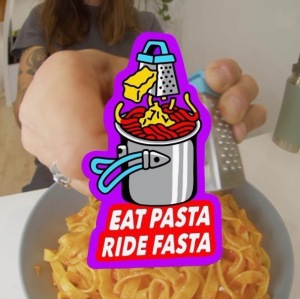
Feature image by Nick Cusseneers / ‘Eat pasta, ride fasta’ film by Jean-Baptiste Delorme / All other photography credited individually

samisauri.com / The W Collective / YT Industries

Sergio Villalba / A simple life

Photographer Sergio Villalba is describing a memory from childhood. Growing up by the sea, he conjures up images of a young boy – maybe five or six – playing in the surf near his family home on the island of Tenerife. A relationship with the outdoors – and the sea in particular – that he would later express through an obsessive desire to capture all those precious moments experienced out on the water.

“I was 14 years old and decided photography was the way to do this. But when I think about it now, I still find that a little strange. My parents had a Pentax point-and-shoot they used for snaps of Christmas and family holidays but that was it. I didn’t grow up in a particularly artistic environment and I wasn’t trying to be creative with my first photographs. I just wanted to document the waves my friends and I were surfing.”

Purchasing a couple of Kodacolor rolls whenever funds allowed, Sergio now recognises that despite not showing the resultant images to anyone, the seeds for his future professional path were sown.

“But then, when I was 18, my parents got divorced and the situation for myself and my sister was unbearable. Longing to escape, I sat down with my mum and told her I was planning on moving to Barcelona. A few months later I left the island where I’d grown up.”


Suddenly thrown into an urban environment and knowing no one, Sergio started to reach out and build a new set of friends. One of these acquaintances was a graphic designer who worked with several music venues in the city including the jazz club Jamboree. Sergio’s interest in photography led to a job offer shooting cover images for the club flyers. With digital photography in its infancy, he had to quickly master the art of capturing fast moving subjects in low light and smoky conditions—Sergio relishing the creative freedom until the appeal of city life began to wane and a return to the island of his birth.

“The ocean was still my passion and I got it into my head to build a career through surfing photography—setting myself the goal of making a living from photography within a year of returning to Tenerife. It was around 2005 and luckily a golden era for surfing with budgets big enough to make a photographer’s wildest dreams come true.”

Over the next few years until the 2009 recession began to bite, Sergio founded a creative agency with another two photographers and travelled the world. With two bags permanently packed – one for cold weather and a second for warmer climes – each year saw eight or nine months on the road. An enviable position for any photographer seeking to build a reputation but eventually costing Sergio his relationship.

“My girlfriend ended up admitting she was used to being alone at home and felt uncomfortable when I was around. By that time, the recession was killing off surfing brands with consumers not willing to pay 40 euros for a tee when fast fashion enabled you to only pay five and get a new one every two months. The dream was over.”


With the hard reset of a recession, Sergio’s photographic style evolved to embrace a more varied range of brands—selling rather than storytelling now the main focus for his strong and visually appealing imagery.

“Even though you’re shooting a product range, you can still be playful and enjoy the process of creating beautiful images. And like everyone else, I love sunrise and sunset. Who doesn’t? But I must admit that the harsh midday light is also very appealing. If you know how to use it, you can deliver some great results and I especially love it for portraits of sweaty athletes or for playing with architecture and projected shadows. With a little bit of imagination you can get the best out of any situation.”

“What I plan is not always what I get and one thing’s for certain: you learn from everything—even from your mistakes. And I’ve gradually grown to understand that I get attached to certain images not because of the photograph itself but the process of making it—how difficult it was to get it or the risk I took to achieve it. But that’s a mistake, I know. Whoever’s viewing your work takes what they’re seeing at face value. So a photograph must speak for itself and – in the best case scenario – tell a story.”
With a self-declared obsession with what he describes as believable images, Sergio is cryptically referencing the professional period that followed his surfing days. Working on tourism campaigns and shoots for luxury hotels, Sergio explains why none of this content was ever posted on social media or displayed on his website.

“Was it good money? Yes. Did it help me through a commercially slow period of my life? Yes. But I got this weird feeling of doing something wrong after every shoot. So I promised myself I wouldn’t do this type of job anymore and that I’d put all my efforts into getting back to what I like the most. And for me, that means documenting a life lived outdoors.”


Describing himself as the quiet guy behind the camera, on a shoot Sergio is happy to let the models do their own thing—an approach he believes pays dividends in the resulting images.

“If you over direct someone you´ll drive him or her crazy and kill any naturalness in their actions. Other times there’s no choice—you have to make it happen so you can get the shot. But as soon as everything is working, I take a step back and become the quiet guy again. But that’s not to say I don’t enjoy the connection of working with other creatives. Photography can be a very lonely profession when you’re doing backups after the shoot and everyone else is drinking beers. So I enjoy working with my own team of trusty professionals who are first and foremost my friends. But it’s also good to maintain my freelance status. As we say in Spain, juntos pero no revueltos. Which in English translates as together but not in each other’s pocket.”

“Sometimes it’s a question of balance and work has been so intense in these post-Covid times that I need a rest from looking at everything through a viewfinder. I love documenting my own life but you need the freedom to touch more, see more, smell more. And though younger people may hate me for saying this, I think travelling is a little overrated nowadays. I’ve seen so many places go from having a stable, traditional life to being overdeveloped in a very short time span. People stop farming and fishing and try to get easier money from the tourists. And though we seek out places like modern day Robinson Crusoes, unless it’s completely frozen or full of malaria then it’s already swamped with digital nomads and content creators living their best life.”

Finding he now appreciates home more than ever and happy to travel less, Sergio recognises how the rise of mass tourism inevitably means it’s not the same place as where he grew up. A situation that prompts collaborations with organisations and individuals campaigning to protect the sensitive socioeconomic balance of the Canary Islands.

“I live a very simple life that I love. I’m the father of two boys and partner of the greatest woman I ever met. I have my gravel bike and live within walking distance of the sea. If you scroll through my Instagram feed you´ll recognize many places that I use over and over again. The little rocky harbour in my hometown, the waves that wrap around the shoreline where we surf, the Teide National Park. Together with my family, all these places are part of my daily life. I couldn’t be a fashion or architecture photographer because that’s not how I live. I have a peaceful, outdoorsy life and that’s what I try to project in my work.”

All photography with kind permission of Sergio Villalba / sergiovillalba.com

Sami Sauri / Hours in the day

From snow-capped mountains to desert sands, the past year has seen a plethora of professional projects for photographer and creative producer Sami Sauri. Based in Girona but rarely in repose, her full-gas approach to work and play brings with it a creative energy that enlivens each and every shoot. Open and honest in how she depicts the highs and lows of a life lived on the road, Sami’s innate sense of fun threads through a conversation that casts a humorous light on lost bikes, a rain soaked search for surf and her wishful desire for more hours in the day.

Sami
Sorry I’m late.

cyclespeak
No problem whatsoever.

Sami
I was getting a new bike fitted and it took longer than expected. And then I got home and the bike wouldn’t fit.

cyclespeak
Fit where?

Sami
In the elevator [laughs]. I had to take the front wheel off and then I couldn’t find my keys.

cyclespeak
What kind of bike is it?

Sami
A YT Industries. They’re my new sponsor.

cyclespeak
We all love a new bike day.

Sami
I’ve got a big trip coming up and don’t want to fuck up my body which is why I arranged the bike fit.


cyclespeak
Speaking of looking after yourself, did something happen yesterday when you were riding back to Girona from Andorra?

Sami
My bag flew off on the second big downhill section. Very strange because I’d checked the straps and I’ve used the same setup on some pretty gnarly stuff. And the funny thing is, I didn’t even realise. I kept going and it turns out there was this car behind me, trying to attract my attention by peeping their horn. But I had my music on and a buff over my ears. Luckily, I had to stop at a red light. The car pulled up and the guy driving explained what had happened. I was like, ‘What!’

cyclespeak
If it wasn’t for that stop light, who knows how far you would have ridden?

Sami
Exactly. And the bag was holding my computer and hard drives. But another car had stopped and they’d picked it up from where it had fallen. Luckily, on a previous trip I’d been working with a sponsor called Urban Armour Wear that makes protective cases for phones and laptops. So at least my stuff was super well protected [laughs].

cyclespeak
And you provided the perfect real-world test.

Sami
In Spanish, to be lucky, we say we have a flower in the ass.

cyclespeak
The past few days I’ve been busy working out what questions to ask you but there’s just so much to cover over the past year.

[Sami laughing]

cyclespeak
And I can’t start a call with four pages of questions. It’s ridiculous. So I’ve had to hone it down as you never sit still. 

Sami
So it’s the highlights?

cyclespeak
That’s right. So starting with the tail end of last year and you were premiering the first episode of Into the Atlantic Islands. Towing a surfboard behind your bike up those Madeira climbs looked hard work?

Sami
They were so steep and I did it wearing sneakers.

cyclespeak
How was the response to the film?

Sami
Looking back, maybe it was a mistake to split it up into little mini episodes rather than one full-length film. And I always find it difficult to edit myself. Hearing your own voice and seeing yourself on camera. And if you think about it in a marketing sense, we shot the film when it was sunny and warm but it had a wintertime release. So maybe a little out of context?

cyclespeak
And the audience response?

Sami
That was really good and we’re now taking those lessons learnt into our second chapter.


cyclespeak
Shortly after your Madeira trip, you went off to Saudi Arabia to film the Dakar Rally.

Sami
That was an experience which I would happily do again. But spending 20 back-to-back days filming in the desert, I did really miss my bike. Kind of my body asking what the fuck I was doing?

cyclespeak
But shortly afterwards, you posted from Fuerteventura where you were taking a well-earned rest.

Sami
It’s a special place for me. Somewhere I go to recharge and relax. I ride but usually spend more time surfing. They have waves all the time so why not [laughs].
cyclespeak
And then quite a contrast in landscape when you visited your friend Gaby in the Alps to help celebrate her birthday. Is there a particular emotional connection you have with mountains?

Sami
Ahhh. Now you’ve got me. Because I’m finding it more and more.

cyclespeak
The call of the mountains?

Sami
There was a time when I was seriously planning on moving to Fuerteventura. There’s endless gravel riding and of course the surfing. Two sports that merge really well and work all of my body. Surfing is so chill with no phones or anything and you get a sense of discovery with your bike.

cyclespeak
But you decided not to move?

Sami
It’s a pretty small island so I’m still happy to stay in Girona for the time being. But the mountains appeal in both a personal and professional way. So I’m not going to say when but I’m already considering a move there.

cyclespeak
Andorra maybe or the Alps?

Sami
No, definitely the Alps.

cyclespeak
I can imagine you in a little cottage on the side of a mountain.

Sami
It might not be a place, exactly. Maybe I’ll just get a car or van and move around. I’m in this limbo at the moment trying to sort stuff out.


cyclespeak
After saying goodbye to Gaby, you’d planned to ride home but the weather was pretty awful so you decided to take a bus. And what happened next was pretty incredible?

Sami
The rain was torrential so I stopped in this middle of nowhere town. There was a restaurant but it only had things with meat available. So I just sat down with a tea and watched the rain get even heavier. I asked them if there was a bus and they told me it was round the corner before helping me find an online timetable.

cyclespeak
That sounds a better option than riding in the pouring rain.

Sami
The bus was running late so I was waiting at the stop in the freezing cold, wearing every layer I was carrying. There was a girl driving and she helped me put my bike underneath in the luggage compartment. But when I came to pay I realised I’d left my wallet in my bags so, once more, out into the rain and cold.

cyclespeak
You paid your fare and found a seat?

Sami
15 or 20 minutes later, the driver suddenly braked and brought the bus to a stop. She was shouting that the door was open but I didn’t immediately realise she was referring to the luggage compartment. And then it suddenly hit me and I raced down the steps and outside – not wearing any rain jacket – to discover my bike was missing.

cyclespeak
That must have been devastating?

Sami
My bike, my clothes, my computer, two hard drives containing recent projects. All missing.

cyclespeak
I can only imagine how that feels.


Sami
And then this car pulls up and explains that they’d been flashing us after they saw something fall out of the bus. I asked them to take me back along the road which they kindly agreed to do. And they were saying it was here, or maybe along here, or actually a little bit further. And all the time I was thinking, where the fuck is my bike!!

cyclespeak
So you couldn’t find it?

Sami
While all this was happening, thankfully the bus was waiting because my wallet and phone were still resting on my seat. So I thanked the car driver for trying to help and climbed back onto the bus to shelter from the rain. I called my friend who was putting me up for the night and I’ve never been so upset in my whole life—breathless, hardly able to speak and sobbing down the phone.

cyclespeak
How do you explain to someone that your bike fell out of a moving vehicle?

Sami
She offered to come and pick me up but I decided to stay on the bus and she’d meet me when we arrived in her town. An hour or two later – after a few more calls of me crying – we pulled up at the bus station. My friend and I were still hugging when I got a notification on my phone to say I’d received an email. This, it turned out, had been sent from a local police station to let me know they had my bike in detention [laughs].

cyclespeak
They’d arrested your bike?

Sami
Yes! And when my friend drove us over, there it was.

cyclespeak
But how did they know it belonged to you?

Sami
They’d opened the bags, powered up my laptop and saw my name on the log-in screen. Searching on Instagram, they’d found my profile and had sent me messages. But checking my Instagram feed was the last thing on my mind as I was panicking about my lost bike so I’d missed them. But from the profile they did manage to find my email and that finally worked.

cyclespeak
That’s quite some detective work!

Sami
And the funny thing is, the boyfriend of the girl I was staying with has this labelling machine and he made me name labels for everything I was carrying and my bike [laughs]. 


cyclespeak
Not long afterwards, you spent some time in Paris shooting for Rose Bikes. How did you find working in an urban environment with its street culture undertones?

Sami
That’s possibly one of my favourite shoots of the year. I love working with El Flamingo Films—the best times ever. And they always seem to use beautifully edgy models and locations that are random, remote and crazy places.

cyclespeak
Random and remote in Paris?

Sami
We went to this neighbourhood that definitely matched that description [laughs]. And I liked how Rose wanted to tell a different kind of story compared to the usual editorial content. We even featured an actual taxi driver in some of the scenes.

cyclespeak
After a spell of surfing and skiing, you signed up for the Gravel Augusta; a 450km route from Barcelona to Valencia with 4000m of climbing. An enjoyable return to long distance racing?

Sami
Looking back, my decision to sign up was crazy [laughs].

cyclespeak
But you raced it nonstop—the first woman home. Pretty impressive.

Sami
I’d been on a ride with some friends and then had lots of wine at a restaurant so I was completely shitfaced when I agreed to do it.

cyclespeak
And then the reality sinks in the following morning.

Sami
In my head, I had the best day ever on the bike. I hadn’t trained so I wasn’t focusing on my speed or where the other riders were. And then during the night section, I’d stopped for dinner – for an hour and a half [laughs] – when another girl arrived. That’s when I realised I was leading and when she asked if there was food available, I pointed the way inside before jumping on my bike.

cyclespeak
And off you went.

Sami
I was riding with this group of men but unfortunately they were too slow. It was 3:00am in the morning and I was feeling good. So I pushed on alone until about 6:00am when I thought I was going to die. 

cyclespeak
Time to refuel?

Sami
A coffee and doughnut at a gas station. And that got me through to the end.


cyclespeak
Without any focused preparation – only the basic fitness of your regular riding – you cover 450km in one go. Good for you!

Sami
But people should not do this [laughs].

cyclespeak
It’s a big ask, certainly.

Sami
And I do know what riding long distances over gravel feels like. So I would suggest working up to an event like this.

cyclespeak
You raced Unbound in 2019 – that’s 200 miles of gravel – and returned this year to photograph the event. Were you tempted to pin on a number and ride it again or happy to stay behind the camera?

Sami
The day before the start, I was ready to race it again. I had my bike with me and rode some of the first sections. And whenever I’m not racing, it always feels like I’m missing something. But on the day of the race, I was sooo happy that I was there as a photographer.

cyclespeak
Was it the weather?

Sami
It was super nice in the morning but then it started to rain. So I was out on the course – wearing a poncho – and sheltering in the car when it got super heavy.

cyclespeak
And you got your picture taken by Dominique Powers.

Sami
Yes! My God, that girl is amazing.

cyclespeak
You had a muscle injury after returning from the US and decided to take a break from Instagram to avoid the temptation of endless scrolling while you were resting up. Did you miss it?

Sami
It can get to be a habit so it’s nice to have time away from the platform. But you also have obligations to your sponsors so I’m still searching for that balance. I do enjoy sharing my adventures and I’ve made some great connections and friendships that way. It’s become another tool for messaging and reaching out to people.


cyclespeak
Another photoshoot – this time for Pas Normal Studios – took you to Iceland. I thought your photographs were particularly beautiful. A landscape you found inspiring?

Sami
The first time I visited Iceland – back in 2019 – I came back with this amazing impression. And the more I work, the more I understand how the right location for a shoot is one of the most important aspects. For me, it works best when I first discover these places by bike, so some of the locations for the Pas Normal campaign were inspired by racing the Rift.

cyclespeak
You returned to Iceland later this year for the next in your Atlantic Islands series. The riding didn’t go exactly to plan which you referenced very openly in a social media post. Do you feel it’s important to be honest about life’s highs and lows?

Sami
I’m been thinking a lot about this since I came back. Because I do wonder whether there are people that assume I’m flying around the world, living my best life, and it’s all flowers and rainbows. But that’s definitely not always the case.

cyclespeak
Is anyone’s life that perfect?

Sami
Some people choose to only post about the good times but I’m working my ass off and sometimes things don’t go to plan. And going back to Iceland, it wasn’t the cycling aspect of the trip but the surfing. You depend so much on the weather, which you can’t control. I have a limited number of days and if you don’t have waves, you don’t surf. And that’s basically what happened. I pedalled for 270km towing a trailer with my surfboard. In the rain. And then there’s no waves. I was disappointed and upset and it’s like when you have a partner. You take these emotions out on them.

cyclespeak
I think that happens to us all.

Sami
Well, in Iceland it was two of my friends. And afterwards I was super sad because I didn’t handle it very well. So after thinking over how I’d behaved, I did post about it. Maybe I was being too honest? Too much drama? But when these things happen, that’s real life. The ups but also the downs.

cyclespeak
The way you come across, it’s not contrived. You say how you feel and I believe people appreciate your honesty. Because everything isn’t curated.


Sami
The photo that went with the post was taken after riding six hours in the rain, only to find no waves. And my expression says it all—what the hell am I doing here? [laughs]

cyclespeak
In another post you mention wanting more hours in the day. Do you find it difficult to fit everything in?

Sami
Every single day I think the same. When I’m out of the house – maybe it’s a shoot that starts at 5:00am – then you have a structure and things usually work out. But at home? Today I was an hour late for our call because there’s never enough time—I’m still wearing my kit from the bike fit. So I could definitely do with a few more hours each day [laughs].

cyclespeak
Can I take you back to the start of the year when you made a post that mentioned how you were facing some life difficulties but looking forward to new decisions and experiences. And it ended with you reaffirming the joy and strength you get from riding your bike. Can I ask whether you’re enjoying life at the moment?

Sami
I definitely feel it’s been a good year in the sense that I said yes to everything I wanted to do and had time for. So I went all in, again, and that’s after promising myself that I would ride more than work. But that didn’t happen [laughs].

cyclespeak
Because there’s always the next project?

Sami
Maybe now, I’m reaching the point where I don’t feel the need to say yes to everything? And there’s so many good memories from the rides I have done this year. We recently released the film of me and my friend Henna bikepacking above the Arctic Circle—such a fun trip. And I’m heading back to Iceland to pick up where we left off. This time, hopefully with some waves and a happy Sami [laughs].

Feature images by Dominique Powers

All other imagery with kind permission of Sami Sauri / samisauri.com

Into the Atlantic Islands

Sami Sauri / New adventures

Constantly on the move – camera in hand – from one project to the next, when photographer and filmmaker Sami Sauri decided to commit 100% to her own production company, little did she know what a whirlwind year she would enjoy.

Reflecting on this period of transition in her usual candid manner, Sami considers life’s simple pleasures, why storytelling underpins her way of working and how failure can be a mechanism for growth.


cyclespeak
You’re just back from shooting in Austria. It looked fantastic.

Sami
It was for next year’s Jack Wolfskin spring / summer range.

cyclespeak
But it was snowing.

Sami
I know [laughs]. They chose Austria for the location – which was very nice – but maybe next time we can go to the Canaries? Because the first day it just rained and nobody wanted to wear shorts [laughs].

cyclespeak
Did you expect to be above the snowline?

Sami
No. Not at all. I’d packed a rain jacket but I was wearing normal shoes. And the main story behind the women’s campaign was a hike to a hut at 2100 metres and then down the other side. We were going to spend the night at this altitude – the story was amazing – and the whole crew was female. I turned down two projects just so I could do this shoot.

cyclespeak
But the weather wasn’t helping?

Sami
We had a mountain guide with us and she advised us to postpone for a couple of days. But when we did finally start to climb, on the first ridge we had snow. But I wasn’t going to stop there—this story wouldn’t make sense if we hadn’t got to the hut [laughs].

cyclespeak
So it all worked out in the end?

Sami
For me, I had a wonderful experience—I love those kinds of adventures.


cyclespeak
The last time we caught up, you were listing all your various mishaps. Your foot had been in a plastic boot and you later tore some ligaments when you were out trail running. How’s the summer been in terms of staying in one piece?

Sami
I’ve probably done less this summer than for the last five years. Not because of my foot but I’ve had so much work that I couldn’t find the time for intense bike trips. But I have started running again and trying new sports like motocross.

cyclespeak
Your road to recovery after injuring your foot brought to mind the issues you had with knee pain during the Route 66 and Big Land films.

Sami
The knee pain comes from riding fixed gear. You can’t help falling and it always seems to be on the same side. And I find it interesting that you get used to sleeping in a position that’s comfortable for your hip and your knee—your body quickly adapts to what feels best.

cyclespeak
So it’s something that you can now manage?

Sami
I feel that everything comes for a reason and when I started physio, I discovered that I’d been riding all those years and not using my glutes. There was very little muscle and this was the main reason my knee was hurting. So I now realise that I need to exercise in different ways to help relieve the pain—using bands or a simple 20 minute yoga session every morning to activate my body.

cyclespeak
So that’s your morning routine sorted?

Sami
I’m somebody who finds it very difficult to have constant things in their life [laughs].

cyclespeak
That doesn’t fit well with your personality?

Sami
It’s more my lifestyle right now. So busy and always on the move.

cyclespeak
Is racing the fixed gear scene something you miss?

Sami
I definitely miss that sense of community. And I’ve realised that I’m quite competitive. Which is why I often ride alone because nobody is watching and I can go as fast or as slow as I like and really enjoy it. When I go out with friends, I find myself looking back and wondering where they are [laughs]. 


cyclespeak
I saw a recent post where you were riding near Girona and someone had a bloodied knee?

Sami
The mountain bike ride? When I put my friends through hell [laughs].

cyclespeak
That’s the one.

Sami
I felt so sorry for them. I convinced these two girls – one of them is my physio – that we should take out our mountain bikes and just do some easy, smooth trails. Well, oh my god, we had some proper gnarly downhill stuff [laughs].

cyclespeak
When you aren’t shredding local trails, you spend a fair proportion of your time on the road filming. What do you miss most about home when you’re away?

Sami
I do miss my own cooking. Every time I come back home, the first thing I do is make a plate of my pasta. Maybe this comes from my childhood but I need that plate of pasta.

cyclespeak
Do you have a particular recipe?

Sami
Parmesan, olive oil and salt. That’s it. I don’t need anything else to make me happy. And I might put on some vinyl and turn up the volume [smiles].

cyclespeak
Simple pleasures.

Sami
But after three days, I’m already looking forward to the next adventure [laughs].

cyclespeak
From the moment you receive a phone call or a message, how fast can you be packed and out of the door?

Sami
It doesn’t take me long. 30 minutes?


cyclespeak
Really?

Sami
I pretty much know what I want and what I need—and I don’t need much. But I do always take a pair of cycling shorts because no matter where you are, you might get a ride [laughs].

cyclespeak
You sound very organised?

Sami
Before, everything was super tight with the packing and arriving at the airport. Massive stress [laughs]. Now, I pack two days before I’m due to leave and arrive at the airport at least two hours before my flight—something I never used to do. And when I get to the airport, I’ve figured out a good spot for breakfast, where I can work. And it means I don’t arrive sweating [laughs].

cyclespeak
What would you tell someone just starting out taking photographs or trying their hand at film making?

Sami
I do get messages about that—people wanting to change their lives. For me, I was just handed a camera and told to shoot. And I said, ‘Shoot what [laughs]?’

cyclespeak
That sounds like good advice.

Sami
The first thing I always say to people is just go and do it. Do it, do it and keep on doing it. And fail and do it right and fail again and then see if you like it. You’ll never know when that will be – or whether you will or won’t – until you give it your all.

cyclespeak
And where do you see yourself on that journey?

Sami
I’ve still not completely figured out what’s my vibe. I didn’t think I’d like commercial photography but these last two shoots for big brands I’ve absolutely loved. They were wonderful clients in giving me free rein – I didn’t have a shot list – so it felt like they’d put their trust in me.

cyclespeak
You enjoy an open brief?

Sami
Yes. It’s like for a recent cycling collection I’ve just shot. Super commercial but I gave them this idea that we could rent a motorhome, go to the desert, camp out and ride bikes. Basically shooting on the go.


cyclespeak
Personally speaking, how much is a sense of storytelling and narrative an important element to these projects?

Sami
For me, it’s super important. For the brands, they don’t always ask for it but they all want it.

cyclespeak
I love that.

Sami
Right now, this storytelling style of shooting is mind blowing. Everybody’s doing it.

cyclespeak
Whenever you’re pictured outside – walking, riding, running – very often you have a brilliant smile that lights up your face. And this made me think about a post from earlier this year when you referenced much darker thoughts and feelings.

Sami
I’ve spent time on both sides. I’ve been the happiest person ever and the saddest. And I can think of certain people that wanted to drag me down the wrong path but I think that happens to a lot of people. And the only thing that got me through, was opening the door and going outside. Not necessarily to do sports but sometimes it was a matter of just being out in the fresh air. To find my true self, it’s never going to happen inside a house. I could stay inside – alone with my thoughts – and look at the same wall for a million hours and not feel any better. But if you go out and talk to somebody – your friend, your dog, your horse, even someone you don’t know – then this can make a real difference. It’s like a door that opens or stays closed.

cyclespeak
I guess an open door lets in light? Which brings me to your recent collaboration with Megamo bikes—a custom Sami Sauri paint job for one of their full-suspension mountain bikes with a theme of ‘sunset’.

Sami
I suddenly got this idea in my head about painting a sunset on a bike. To me, the best time of the day because I just love all that colour—not so much on me but definitely on a bike [laughs]. I’m good friends with Megamo and they’ve been super helpful over the past year. Just before I went to Egypt, one of the guys on the trip broke his frame in Barcelona by crashing when we were eating pizza. We got a bike from Megamo in under 12 hours so the trip could go ahead and all their generous help made me want to return the favour.


cyclespeak
So what is it about sunsets that you love so much?

Sami
I’d much rather ride in the evening. In the morning I’m very active mentally and in a creative mood and want to get things done. But when I finish for the day, I can go out and ride into the sunset – it sounds a little like a movie – and that acts as a reward or a pat on the back.

cyclespeak
You’re always on the go – always busy – so how do you unwind?

Sami
I’m not sure I do switch off [laughs]. Maybe when I sleep? And part of me thinks that if I stop, I might miss something [smiles].

cyclespeak
I think that’s a state of mind a lot of people would recognise.

Sami
But I have started reading again—time with no phone or screens. And that’s why I like going on holiday to somewhere simple that doesn’t take lots of decisions to enjoy. Somewhere I can surf or go hiking.

cyclespeak
So do you prefer a 5 day, 5 week or 5 month plan for living your life?

Sami
Hmmm. Fuck. It has to be 5 day because nothing ever goes to plan [laughs]. I can receive a call today and I’m leaving for somewhere else. It’s crazy!

cyclespeak
There’s a post from earlier in the year where you write, ‘Do what you love and love what you do.’ Is that a fair description of how you’re currently living your life?

Sami
It’s not like I’ve always known what path in life I will take. But then somebody handed me a camera to film, photograph and ride at the same time. So I’m grateful for those special people that I’ve known—the ones who after years still see you as you are.

[pause]

It’s not been easy – there were times when I was working three jobs just to eat and put a roof over my head – but I’ve made it this far and I want to live every moment as if it was the last one.


Sami

Photographs of Sami in Egypt with kind permission of Sonam Gotthilf

Jean-Baptiste Delorme / Easy riding

“A couple of years ago I was riding my track bike down the street from my house. I had my hands off the bars adjusting my helmet and my feet were locked in the toe-clips. All of a sudden the seat post broke in two and I cartwheeled off the bike. Landing on my ass, it took me a moment to realise what had happened before I dusted myself down and walked back home—the frame in one hand and the saddle in the other.”

For someone with such a relaxed approach to cycling, photographer and videographer Jean-Baptiste Delorme’s introduction to riding was anything but. After being presented with a new mountain bike at the age of 12, he was sent off to take lessons at a local cycling club. Already skateboarding and relishing the freedom of practising whenever he wanted, Jean-Baptiste (or JB as he’s more familiarly known) disliked the rigid routine of the bicycle training to such a degree that he stopped riding altogether.

“I hated it and still have bad memories of that time. But a few years later, my Uncle invited us for a week’s vacation in Morzine in the Alps. You could rent downhill bikes and this I loved!”

Having discovered how much fun cycling could be, JB took to riding the hills around Auvergne where he lived at that time. A year later saw a move to Montpellier to study architecture and a switch to riding a track bike following a chance encounter with another student from his school.


“I tried his bike, really enjoyed the feel of it and like everyone else was doing, I got my own road-bike conversion. And then one night I saw a group of young people out riding on the street. I mentioned this to my friend and he told me it was a crew called La Nuit Noire* that met up after work. Making contact, I started to ride with them and soon discovered how much I loved being part of a group of friends rather than a traditional cycling club. In a sense, it took me back to when I used to skate—just hanging out and pushing ourselves to see what we could do.”

*The Dark Night

Having previously studied photography before architecture school, JB lost motivation without a defined purpose for the imagery he was creating. But now, with his friends from La Nuit Noire, he discovered a newfound desire to document what they were doing as a crew.

“It was creating images for social media and to make some prints that pushed me to pick up my camera again. And then after graduation, I chose to work in photography and video. My Mum still asks me why I did the studies but never worked as an architect. But I tell her I regret nothing because there were aspects of the course that I’ve since found very useful. Studying architecture, you’re encouraged to ask yourself questions with regard to the process and the endpoint—if I do this, for this purpose, what will be the outcome? So maybe it’s provided me with a way of thinking that I still subconsciously make use of in my work?”


Mentioning the stereotypical cycling imagery of roadsides lined with fans and riders’ jerseys covered in the brand names of sponsors, JB conjures up this visualisation to illustrate why he instinctively prefers a simpler aesthetic and a more minimalistic approach to representing movement—a pureness in sport that he finds particularly beautiful.

“I grew up watching skate videos and they’ve always been a big influence on my work. You see things differently because they use the space in a certain way and there’s a rhythm to the movement. So I try to create a tension in my pictures—a graphic approach that’s pure and free. Much in the same way that a track bike is stripped back, it’s about removing what disturbs the eye from a composition and taking away any unnecessary noise.”

Working in both photography and film, JB believes that both mediums can be used to convey an emotion but expressing this in video is more challenging as it requires a bigger team of people to create a quality product. That unlike photography – where it’s easier to control all the different variables – with film it’s harder to get exactly what you want. An analysis of method that JB extends to how he shoots from two opposing perspectives.


“Static viewpoints are good for more composed images. When I have a specific idea and I say we’re going to do this and this and this. But I really like shooting from a bike because it feels more spontaneous. Like you’re floating with the other rider – a sense of a shared experience – and you can move around to see how the light works from a certain angle. And sometimes you get lost and the photos have an element of surprise. A combination of luck and locality that can add that magical ingredient.”

Preferring to shoot with a mirrorless camera, much of JB’s recent work was captured with a Sony A7iii—the tilt screen proving invaluable in allowing him to position the camera away from his eye when riding.

“What makes a huge difference when you’re shooting on the go – it can get a little sketchy – is knowing your camera is up to the job. It’s important to have really good autofocus but there’s still a certain amount of praying that the images turn out how you want. So if I’m shooting from the bike, I’ll move around from spot to spot, just following the rider wherever they decide to go. When I have the feeling that the light and the environment is interesting, then I’ll shoot hundreds of photos in a short period of time knowing that maybe only one or two will express what I want. Fixing in a fraction of a second a mix of light and attitude that gives context to the moment—a little like casting your fishing line in the hope that you’ll catch something interesting.”

Without my bikes, I wouldn’t get done half of what I do each day. I’d be stuck in traffic.

With an All City track bike for short rides around his home city of Montpellier – rides that JB says put a smile on his face – his main bike is a Bombtrack Hook EXT equipped with a frame bag and flat pedals that he uses for commuting, riding gravel or the bike packing trips he loves to take.

“For me, riding is a lot like skateboarding. A good excuse to create something, to have fun, to meet people and explore what’s around you. But even though my whole world has been built around cycling, it’s not an end in itself. I would rather have a 10km ride to reach a cool spot and the rest of the day hanging out with my friends, than spend the whole day riding but not talking to anyone.”

“It’s funny,” concludes JB, “that some French people watch the Tour de France just to see the countryside. What I want to do in my work, is to give people the inspiration and confidence to ride their bikes for all sorts of reasons and not just for sport. A bike is the perfect tool to live your life and I want to communicate that sense of opportunity and freedom.”

All photography by Jean-Baptiste Delorme

jb-delorme.com

Sami Sauri / Finding Myself

With worldwide concerns over mental health never more prevalent, producer and storyteller Sami Sauri’s first independent film production is a clarion call for the benefits of spending time outdoors. Catching up with Sami from her home in Girona, and with a conversation punctuated with bursts of laughter, we discuss the personal nature of this poignant and beautifully realised project, her own lessons from lockdown and how it feels to see yourself on screen. So sit back and enjoy a thrills (and some spills) tour through Sami’s past year.

cyclespeak
The last time we spoke over a call was way back in March when Spain was in full lockdown. And I was wondering, looking back over all this time, how was it for you?

Sami
Fucked [laughing]

cyclespeak
That bad?

Sami
I think maybe it’s been tough for most people? And in some aspects, I’ve been fortunate. Lockdown didn’t make that much of a difference because I was already working from home. I’ve since changed to having a co-working space so I can separate the professional and personal aspects to my life. But back when we were in the strict lockdown, I basically had to solve all my problems and had the time to think. To think about a lot of things [laughing].

cyclespeak
Possibly too much time?

Sami
That, for me, can be very difficult. Because if I have things on my mind, normally I would just throw myself into activities. But we couldn’t even go riding and I’d been training really well. I tried to keep the intensity going but I don’t really like to ride inside on a trainer. It’s not really my thing. So riding-wise I was a little bit down, but I still wanted to move my body, so a lot of yoga. And I suppose the biggest outcome of all of this, is that I really know how to be alone. Before, it was a hassle, but I’ve learnt how to be by myself, in my own space. And as I’ve been injured for the past four weeks, it’s fine. I can deal with it. Before, I would have freaked out by now [laughs].


cyclespeak
Over the past year, I’ve listened to a few podcasts featuring professional cyclists who tried to keep to their training blocks but on the smart trainer. And then two weeks became two months and they needed to alter their mindset when it came to their levels of fitness. They found they couldn’t maintain such a rigorous training regime without some defined goals.

Sami
Totally. There were some strong people that could do it, but not me [smiles].

cyclespeak
Even though the impact of the pandemic has been quite unprecedented, it did encourage people to be very creative in the way they approached cycling—ideas such as Dirty Kanzelled which had a massive impact. An event that you’d actually raced the previous year.

Sami
That was Laurens ten Dam. The cleverest outcome from a cancelled race you could imagine. It was insane how much reach he got. Super, super smart and maybe an approach we’ll need to take this year if things turn out the same?

cyclespeak
I was fortunate that, even during lockdown, I was allowed to do a solo ride once a day. But you couldn’t exercise outside at all. That must have been difficult?

Sami
52 days in total without outdoor sports. And then, when we could go outside, we had to stay within our own municipality.


cyclespeak
And I’ve seen your recent posts with you on crutches and wearing a big plastic boot. What’s been going on there?

Sami
As I said before, 2020 wasn’t exactly my best year [laughing]. Back in October, I was going out horse-riding and it was a young horse and he just took off with me on top of him. We were in a parking lot so he could get used to the noise of traffic, and something must have spooked him. His ears were back, which is never a good sign, and he was running towards the road so I tried to turn him and lost my balance and fell. But rather than just falling off, my foot was caught in the stirrup and it was just like a Western movie with me being dragged along [laughs].

cyclespeak
I guess it wasn’t so funny at the time?

Sami
It took a big hole out of my knee and the first time in my life that I’ve needed stitches. I had to wait 10 days to have them removed before I could ride again. But a few days later I was out on my bike and I was stupidly looking at my phone – swapping it between hands – and I crashed.

cyclespeak
So that’s injury number two.

Sami
I was booked on a flight to the Canaries a couple of days later but had to postpone the trip. When I did finally make it out there, I had 20 amazing days working on a new video project before flying home. But then my foot slipped when I was out trail-running and I broke some ligaments.

cyclespeak
Horse, bike, running. You’re kind of covering all bases?

Sami
That was my 2020. And it’s funny because I’ve just signed with Merrell as a partner for their running shoes. Super cool and we were working towards the release of the collaboration and the irony is that I’m on crutches [laughs].

cyclespeak
You mentioned a new video project. That sounds exciting.

Sami
Well, I’ve kind of got this history of working with video. Both in front and behind the camera. And somebody just suggested that I do something for myself. My first reaction was, naahh, there’s no way. But I kept coming back to the idea for six months until I thought that maybe I should. You always hate your look or your voice when you see yourself on a video but I decided to go for it.

cyclespeak
So what was the first step?

Sami
I contacted a photographer called Sergio Villalba in the Canaries. He does amazing surf shots, and I knew he was starting to do videos of cycling. So we got in touch and I explained that I wanted to do this inspirational film to empower people to engage in outdoor sports. He was immediately onboard with the idea and we decided to shoot the footage on Lanzarote. It took three days, and we’re now ready to release the film.

cyclespeak
You must feel so proud?

Sami
It’s really hard when the project is about you [laughs]. And to be honest, it’s been a bit of a rollercoaster. David Millar helped me by looking over the text but even as recently as yesterday I had a complete freak-out. Asking whether he thought it was correct? If the video even makes sense? Does my accent work, speaking in English?

cyclespeak
So you produced and directed the film. Did you script it too?

Sami
I wrote a long text with notes about my feelings. It was originally twice as long as the final version. But I decided it needed some gaps otherwise it’s basically just me chatting. And even though it’s still quite personal, there was a lot of insight into my life and it was like, oh shit, maybe that doesn’t need to be included [laughs].

cyclespeak
But you still took the decision to refer to your childhood in the narrative?

Sami
I feel like a lot of people can relate to this. And one of the most difficult things is not having regrets, right? So this all leads into the message of the project. That no matter what, the outdoors is a healthy way of recovering and filling you up with good energy.


cyclespeak
Did you write the script and then fit the shots? What was the process?

Sami
The basic idea of encouraging people to enjoy being outside came first. Then I wrote the script before sharing it with Sergio. From there, we worked on a list of shots, and he knew so many amazing locations as he’s from the Canaries. All these different aspects were then tied up to match the mood of the moment.

cyclespeak
The result is really beautiful.

Sami
We used an actual 8mm camera – that’s not a filtered effect – which looks really cool.

cyclespeak
How does it compare producing someone else’s film to your own?

Sami
Good question [laughs]. If it’s not your project, you’re not necessarily working with a style you want. On this project, I had the freedom to experiment and try out different approaches knowing that it was my own time.

cyclespeak
It’s quite a journey from first featuring in films to now working on your own projects. Does that feel satisfying?

Sami
Totally. The idea is that this project will lead to more adventures for me this year. So this film is the first but definitely not the last one [smiles].

Sami Sauri

Photography by Sergio Villalba and Rubén Plasencia (gallery)

Sami Sauri / Bali and beyond

As Komoot’s community manager for Spain, Sami Sauri has recently settled down to a comparatively 9-5 routine (if you count Sufferfest collaborations with Wahoo and making plans to ride with Specialized as everyday life). And finding she had some vacation time over winter but wanting a holiday rather than a new project, Indonesia was decided on as the destination. With no filming schedule or post-production commitments – Sami just taking a camera to capture her days on the road – this was to be a biking holiday with her friend Jack and an opportunity to soak up and experience an unfamiliar culture.

Now back in Girona but housebound due to the Coronavirus lockdown, Sami took time to reflect on her trip and chat candidly about the intense heat, her interactions with the local population and why it’s perhaps inadvisable to eat in low lit restaurants.


So, Indonesia?

Oh, man. I enjoyed every single moment of this trip. Well, nearly every minute [laughs]. It was my first time in the Far East and my first time riding in such a humid environment. And they drive on the other side of the road which also took a little getting used to. So everything was very different but also incredibly photogenic. I just wanted to stop everywhere to take a picture. Which can sometimes get a little tricky if you actually want to complete your journey [laughs].

But if you see something amazing, you kind of want to document it?

It’s a balance because we did have a plan. An A to B route with a flight to catch when we got to our final stop. So we couldn’t not get there.

Copy of Copy of 20191220-_DSC8163

How did the idea for the trip come about?

I’d talked to Jack [Thompson] about going somewhere over winter. He rides as a living so is fairly flexible and I was owed some vacation time so we just decided to go for it [laughs].

And why this particular destination?

Jack had a good contact in the Bali tourism office and we thought it would be fun to spend Christmas somewhere sunny. Not something I’ve ever done before. And because I had a few spare days we also planned to have time on the beach so that I could surf. So we had 10 days for riding and another 5 for Christmas and just chilling out.

You mentioned that Jack rides bikes for a living?

On Instagram he’s @jackultracyclist. He thinks up these crazy challenges like doing three Everestings over three days in three different countries. Or riding 1,200 km from Girona to Portugal in 56 hours non-stop.

Copy of Copy of 20191217-DSCF7306

With Route 66 you’ve done some pretty big rides yourself, so riding together on this trip, how did your personalities bounce off each other?

To be really honest it was interesting because all my other long trips have been with Gus [Morton] and we’d be filming and working on a project. Indonesia still had the element of photography but it was like starting from zero and learning about each other. And we did have one little meltdown.

Of course [smiles].

Yeah, of course [laughs]. It happened before when [Gus and I] were filming Thereabouts and I think it would still happen if it was just two friends. You’re a little tired and irritable and you need some space but that’s hard to do if you’re travelling together. So we had this one night and then in the morning it was fine again. And Jack’s a very easygoing person in general and he speaks Balinese – is that a language [smiles] – or is it Indonesian?

That must have come in handy.

He was speaking with the locals along the route which was really cool.

Copy of 20191223-_DSC9643

Your photographs show a variety of very different landscapes. Farmland and rainforest but also arid and rocky highlands.

Jack had this route figured out that linked together all these volcanoes. The first one we rode up is the most active volcano in Indonesia. Impressive because people are just living right below its ridge. All these little houses and places to eat jumbled together and the most recent eruption was only in 2011.

That’s quite recent?

Yeah, right [laughs]. And we rode right up to the top.

So you had this route planned out but what were your first impressions when you flew in?

It was 9:00pm at night, I wasn’t even moving and I’d started sweating. So I was, ‘Oh my God, I’m going to die.’ So hot that I was really concerned whether I’d be able to ride. But then we took a taxi and as we drove away from the airport you could see the people in the street and all this life going on outside. So energetic and vibrant that this sense of excitement took away any worries.

Copy of Copy of 20191221-_DSC8616

It’s very noticeable that many of your photographs feature the people you saw on the road or talked with in the towns and villages.

Thanks to Jack it was a little easier to communicate. And the first three days we were still in modern Indonesia. There’s a lot of tourism on Bali island so you get the recognisable restaurants and supermarkets. But then we took the boat across to Java. And suddenly, no tourists.

That must have been quite a contrast?

Indonesia has lots of different cultures and religions and in the fishing town where we were dropped off you could see evidence of this in the sights and sounds of everyday life. And then we pitched up and I’m wearing a t-shirt and shorts – it’s super hot – and girls would stop and ask to have their photograph taken with me as this was the first time they’d seen a woman with tattoos.

The centre of attention?

Absolutely. We’d be riding and people would pull over their car to take a photo. Some of them could speak a little English and everyone says hello. Wherever you ride in Bali and Java; hello, hello, hello [laughs].

F4B5B4C1-E4A3-414C-8600-4CE80550776A

The colours in your images are also incredibly vivid.

The landscape was super varied as we rode. A lush green that gradually changed to the oranges and browns of rock and sand the higher we climbed. A very sensory environment with woodsmoke and the smells of cooking from early in the morning.

Is travelling by bike a common sight?

There’s an established community of cyclists in the big cities. But in the more remote areas, sometimes they’d spot you and shout the whole family to come out and see.

And you were stopping off and eating on the road?

I’ll be honest. It was hard. For me, it was the first time I’d ever travelled to this part of the world. So I didn’t really know what to eat. Jack had more of an idea and he’d recommend this or that. And we ate a lot of ice cream to cool us down [laughs]. One evening we were in a restaurant on the beach and it was pretty dark. We’d ordered this plate of rice mixed with different types of vegetables. Everything is usually covered in chillies and I’d asked if they could keep them separate. But then what I mistook for a carrot…

Copy of Copy of 20191218-_DSC7583

I can see this coming.

…was this huge chilli. And I hate spicy things. I just can’t deal with it. And this blew my mouth wide open and next morning I woke up with a massive allergic reaction. My face was blown up like a balloon. And this was also the same day I had the meltdown with Jack [laughs]. But we had a flight booked so I had to keep riding and then we had this torrential rain so it really couldn’t get any worse. Rivers of water flowing down the streets; it was impossible to ride. So we just took a taxi and headed back to Bali where I enjoyed a few days of surfing. A nice way to end our holiday.
Looking back at the whole trip, what were the most memorable moments?

The friendliness of the people definitely stood out. As for the riding, we had some steep-ass climbs but then you’d get an awesome downhill section. An unbelievably beautiful landscape where we’d turn to look back and see a volcano rising up out of the rainforest below. The spicy food I’m not going to include in this list [laughs] but everything else was pretty amazing.
Images with kind permission of Sami Sauri

Photographs of Sami by Jack Thompson