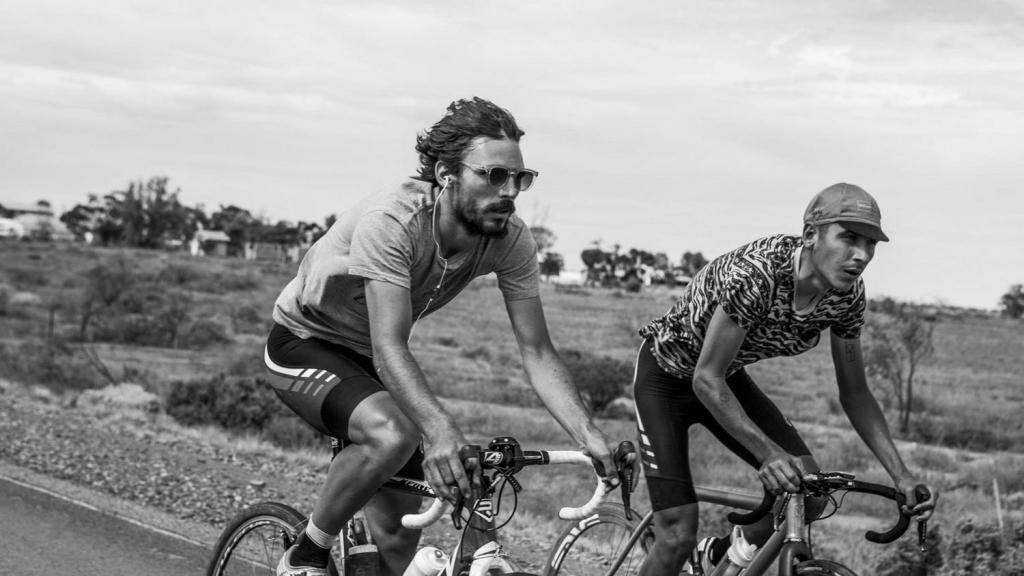
Taylor Phinney / And everything in between

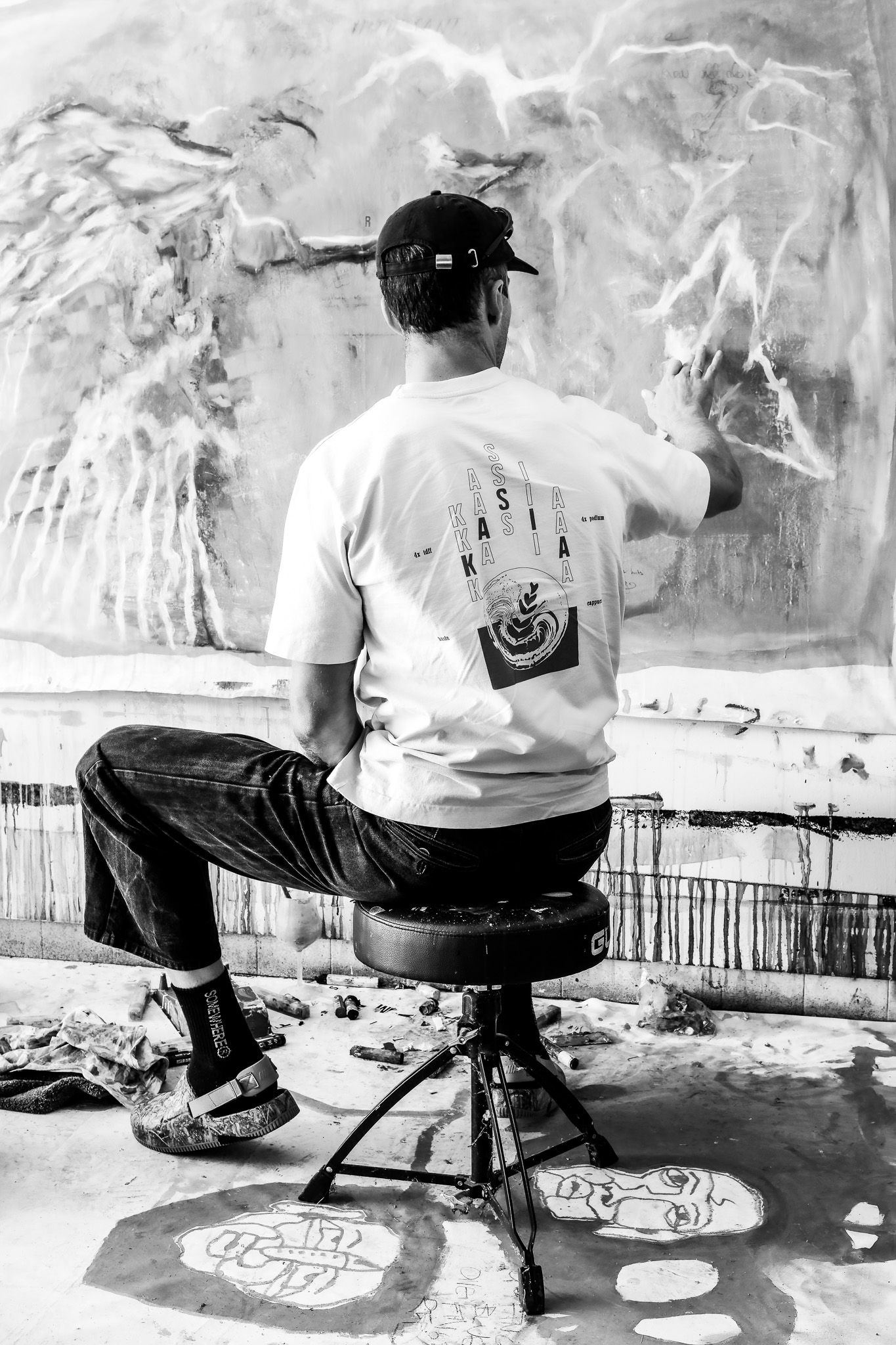
Taylor Phinney is waiting outside his studio that’s nestled in the semi-industrial suburbs of Girona. Immediately welcoming in a calm, quietly contained manner, he’s wearing his latest Sponsor Correct tee: the Kasia Cappuccino shirt that celebrates his wife’s successes at the Tour de France Femmes avec Zwift.

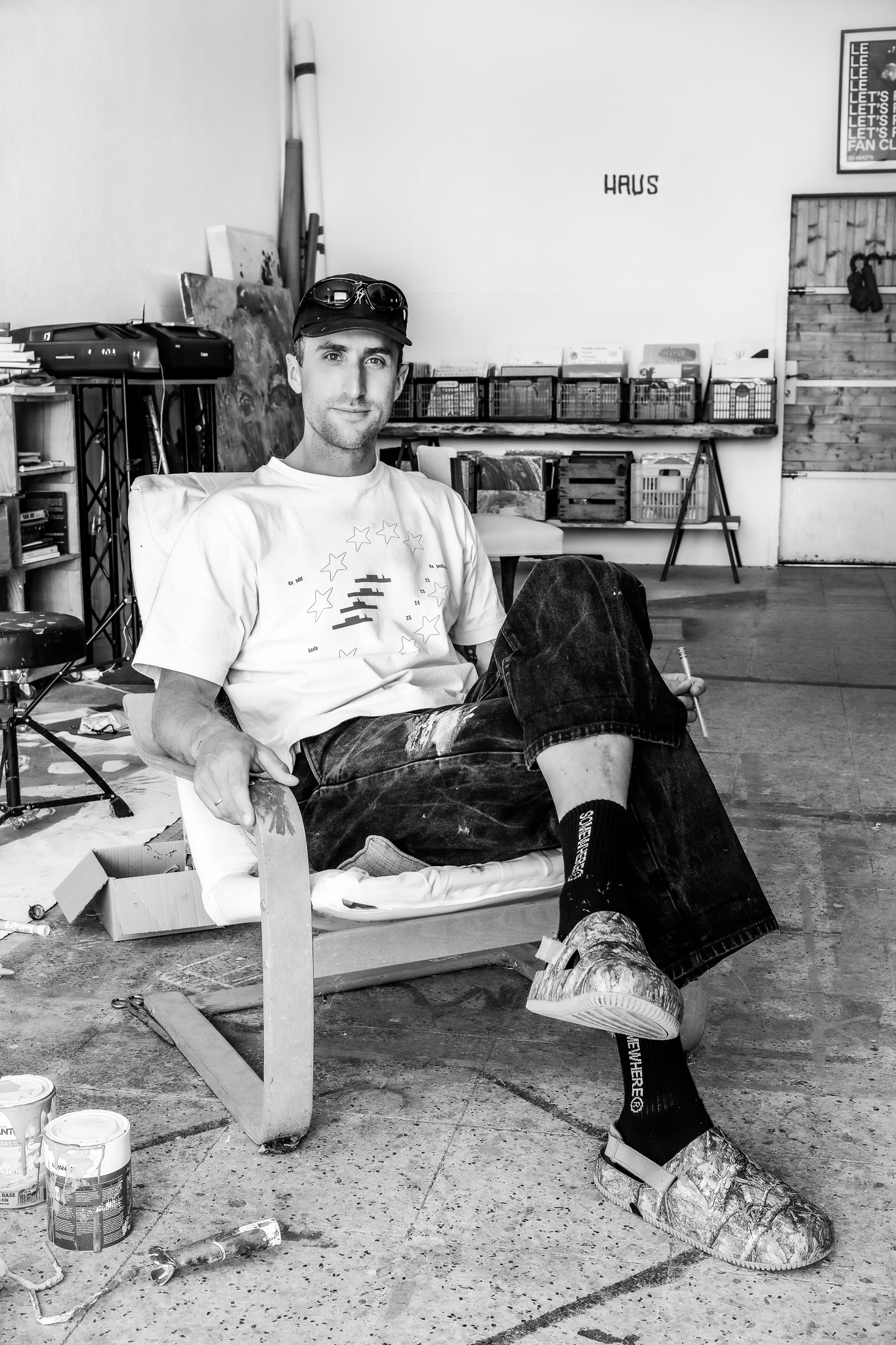
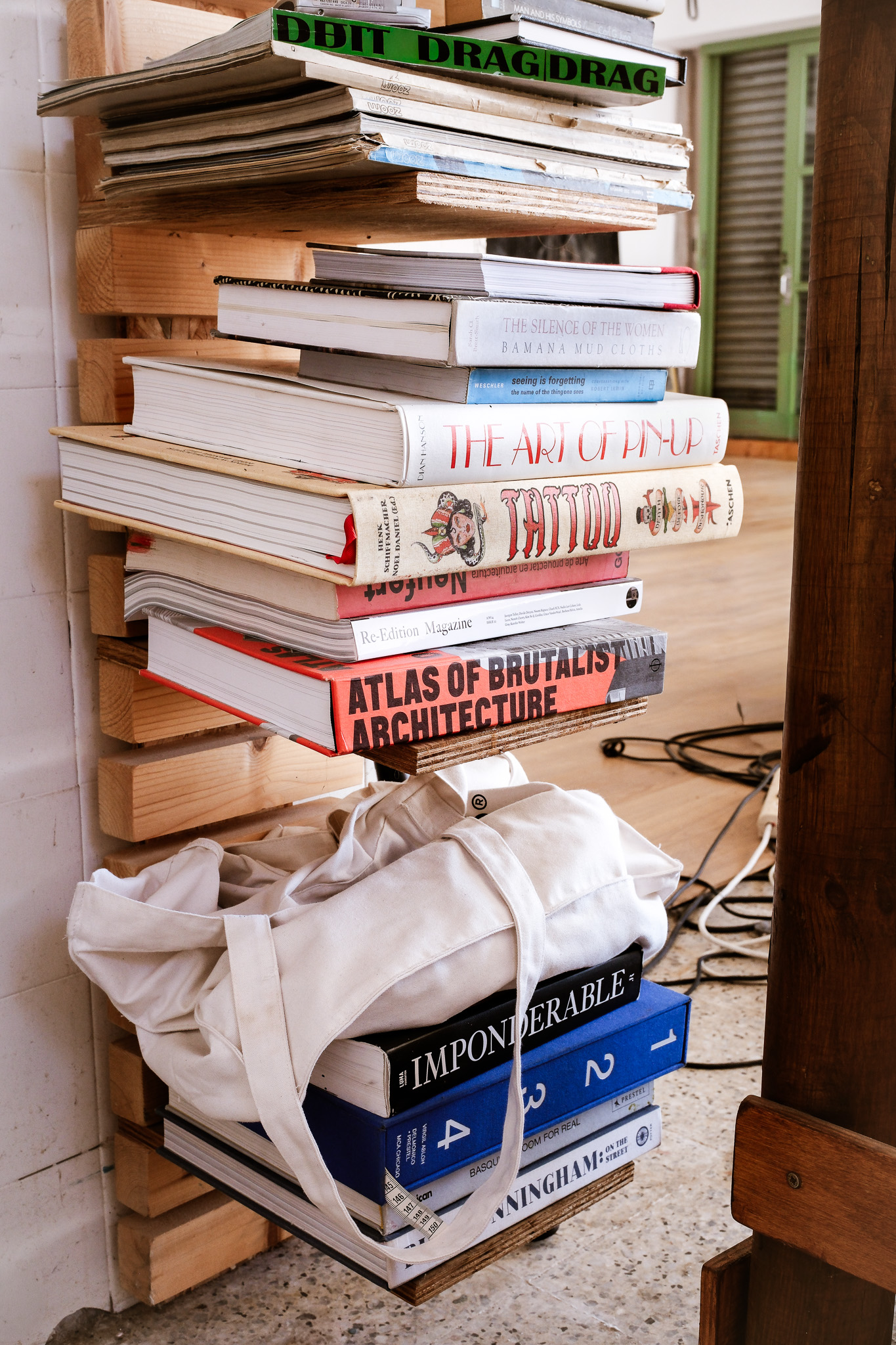
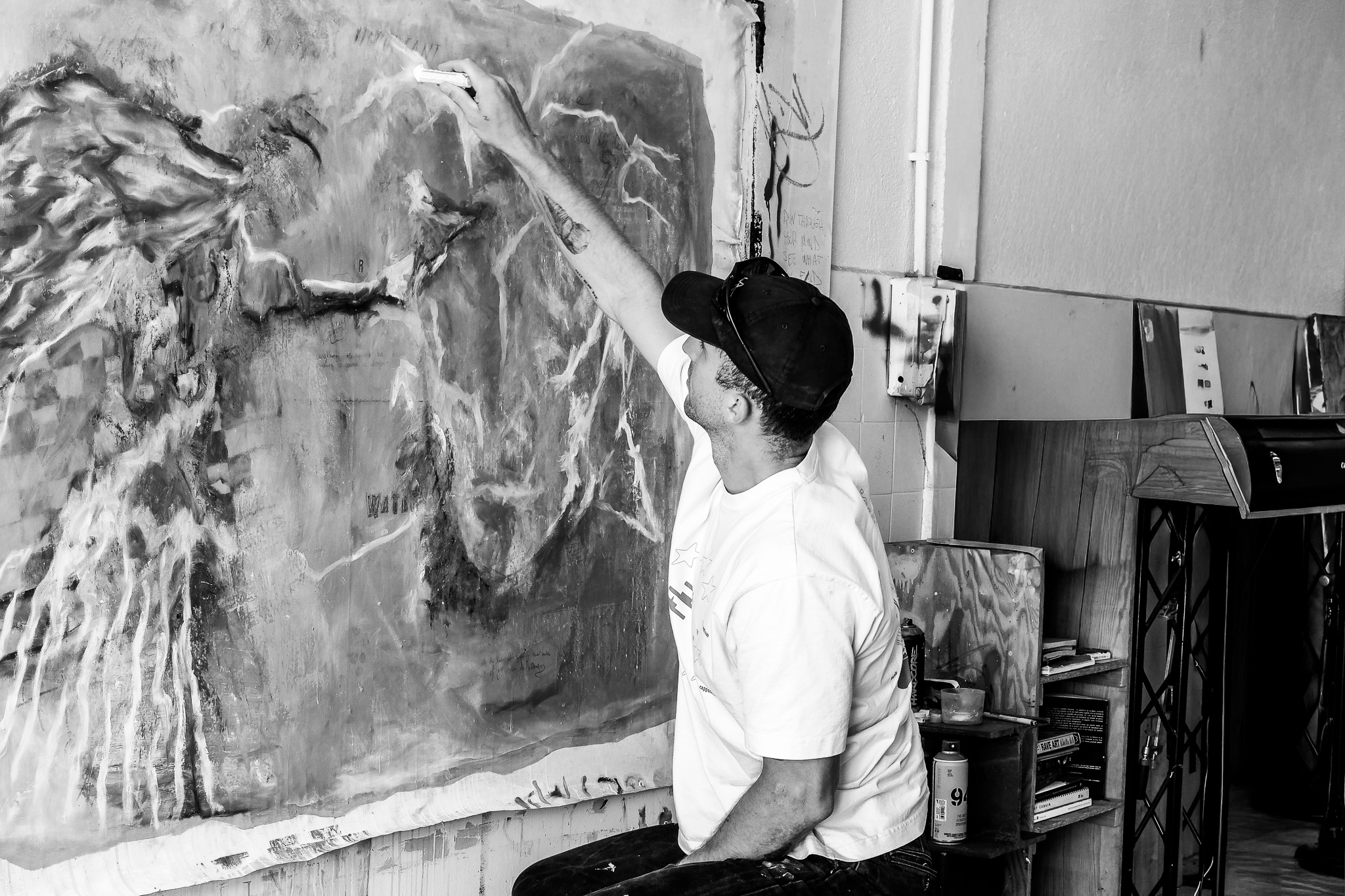
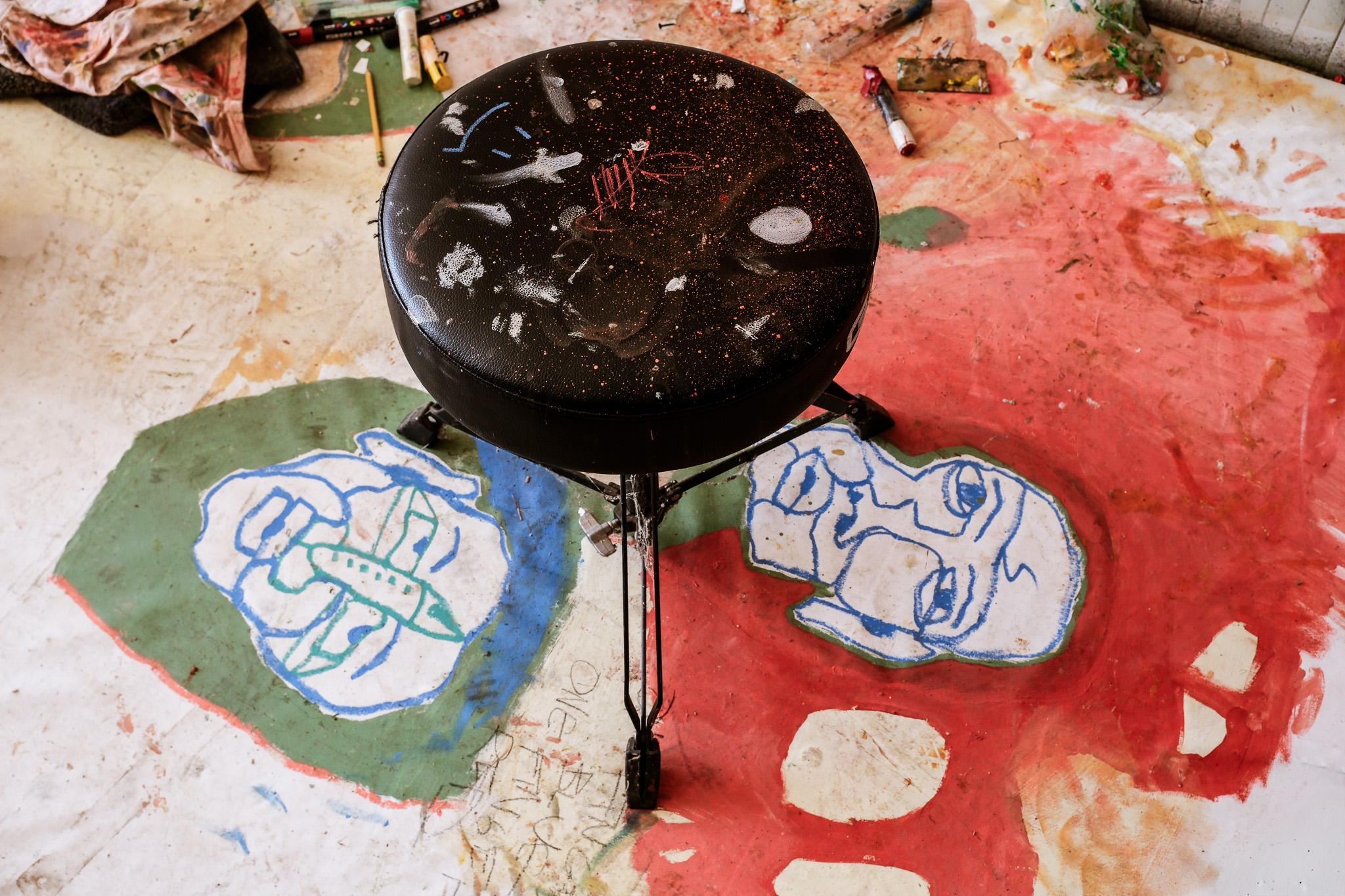
Entering the space he shares with two other artists, on one side serried ranks of canvases are mounted in neat, uniform rows. On the other side—Taylor’s side—the concrete floor is covered by a random assortment of paint and mark-making paraphernalia.

Dragging a couple of chairs over to the wide, sunlit doorway, Taylor apologises for not having any beverages to offer before we sit down and begin to chat. A meandering succession of subjects with Taylor carefully considering each and every response but with a playfulness and candour that draws you in and fixes the attention. A back and forth series of conversational tangents taking in bikes, art, and everything in between.


cyclespeak
I saw the post from last week of you interviewing five-time Tour de France winner Miguel Induráin. You must be pretty fluent in Spanish?

Taylor
Good enough I guess. I miss some of the grammar but I can get across most of what I want to say.

cyclespeak
I’m sure they appreciated you making the effort.

Taylor
I didn’t really have a choice…

cyclespeak
Because he doesn’t speak English?

Taylor
There is that. But what’s funny is they told me they were doing a podcast and I just assumed that they were talking to me. And then, at the last moment, they mentioned it was me talking to Miguel. Just having a chat [laughs].

cyclespeak
From one Tour de France winner to another, you were there when your wife Kasia Niewiadoma won the 2024 Tour de France Femmes avec Zwift with only a handful of seconds to spare.

Taylor
These things are often described as an emotional roller coaster and I was definitely doing some pacing, back and forth, on the mountain. So it was a super euphoric moment for all of us but what I felt most was relief.

cyclespeak
Because Kasia had previously placed so well but never quite got that top step of the podium?

Taylor
She’s always animating a race. And for someone who only seldomly did that, I know how rare it is. And she deserves it because she works super hard. In the same way that all those athletes work super hard. So with her Tour de France win, it was nice to see the chips all fall in her favour.


cyclespeak
As a former World Tour racer yourself, there’s the recognised route of retired professionals going into team management as a directeur sportif. So hypothetically speaking, what kind of DS do you imagine you’d make?

Taylor
I think I’d make a pretty good one. And I say that because I’m a sensitive and empathetic person, which didn’t particularly help me as an athlete but was a big help with the team dynamic. So I find it relatively easy to understand someone else’s perspective and where they’re coming from. And I recognise that I have this ability to bring a group together in an American Football coach sort of way. But, man, sitting in a car, six hours a day, for three weeks?

cyclespeak
Those must be some hard miles.

Taylor
It’s not a particularly healthy lifestyle and I really like to be active and creative and on my own programme. So I’d worry that I’d get back into that bike racer mindset of not really wanting to be there. And I enjoy not having to travel so much and, if I do, it’s pretty much on my own terms.

cyclespeak
So fast forward to the life and times of Taylor Phinney post racing. Can I start by asking whether there’s a routine to each day? A cup of coffee, some breakfast oats, a little workout and then off to the studio. Or would that feel too constraining?

Taylor
Actually, it would be pretty nice if I had more of a routine. But maybe I give in too much to my ADD?

cyclespeak
When you say give in, is that willingly?

Taylor
Probably half and half [smiles]. And a lot of the time I forget what I’m supposed to do. So I have to write it all down.

cyclespeak
So you’re a Post-it person?

Taylor
I have this app on my phone called MinimaList that makes things real easy and I am getting better with time management. But there’s something about the creative process; in that you’re actively trying to get lost. So I guess the trick is to differentiate that from everyday tasks without disappearing down a rabbit hole.

cyclespeak
But those creative tangents can be interesting?

Taylor
They are and I’m fortunate to have the flexibility to follow them. So I guess the only thing that really reminds me of time is my wife.

cyclespeak
And do you welcome that tap on the shoulder?

Taylor
Most of the time, yes [smiles].

cyclespeak
So how do you start your day?

Taylor
We wake up and I make coffee. I used to do meditation in the morning but I found it allowed me to fall into my ADD. As opposed to waking up and just doing something productive.

cyclespeak
Do you consciously decide when to focus on painting, designing for Sponsor Correct, clearing your local trails? Or do you wait until inspiration comes calling?

Taylor
With the trail building, it’s pretty weather dependent. It really has to rain quite a lot for the ground to become malleable. And that’s always a really exciting time for me as it’s probably my happiest place: outside, by myself, sculpting the earth. It’s creative and with this whole other reward process.

cyclespeak
The before and after?

Taylor
That’s part of it. But not only do I get to enjoy it in the days, weeks, months afterwards; you see the whole community returning too. Because the way the trails work is they get overgrown and dirty so people ride somewhere else. But after you work on a section and open it up, the next time you go there you see all these tracks on the ground. And that’s without me saying anything to anybody. This whole word-of-mouth thing that spreads organically.

cyclespeak
From your actions, there are ripples of reaction?

Taylor
Something I strive to be is a people mover: whether that’s through music, organising rides, or trail building. So even if I don’t say anything, I like to see if I can influence the movement of all these different people. But that doesn’t really answer your question about how I prioritise things.

cyclespeak
Which is?

Taylor
The trail building is seasonal. Painting is something I keep more for myself. I do sell some pieces but I’m not actively networking and seeking out galleries in an effort to get my work out there. There’s this whole brand identity side of that which I don’t like so much. And I find that if I start selling more paintings and doing commissions, then I stop thinking about what I want to paint and start thinking about what other people want to see. So, for me, painting is like this creative force that grounds everything else and I do design projects when I’m inspired. Which can often be when I’m travelling and have my computer with me—it’s just so easy to dive in.

cyclespeak
Design work that includes projects like Sponsor Correct?

Taylor
The Sponsor Correct stuff honestly started as a joke. Something I’d wanted to turn into a brand from back when I was racing because we heard it nonstop. Like, make sure you’re sponsor correct because you’re doing this photoshoot or interview. And that always pissed me off because it didn’t leave any room for being original.

cyclespeak
I’ve heard you reference these thoughts before. Kind of a cookie-cutter approach?

Taylor
Which makes sense because all of these brands are paying to have their riders represent them. And I just felt that the sponsor correct thing was so omnipresent within the culture, that anyone involved in bike racing and professional sport would recognise the phrase. A way of conforming and being rebellious at the same time.


cyclespeak
And your music?

Taylor
That’s a vibe. If I’m here in the studio and stuck on something, then I’ll just start playing some music. But that scene is also tied to identity and brand which I’m not searching out too much. And late nights in clubs? It can feel like I’m in some layer of hell at four in the morning. I don’t really party like that—I’m completely sober—and I want to wake up refreshed and ready to ride my bike outside.

cyclespeak
It sounds like you’ve got a lot going on?

Taylor
Sometimes it can feel that way but really, it’s about creating some kind of momentum.

cyclespeak
Without giving too much of yourself away?

Taylor
I’m okay with giving up my energy. It’s more about building this foundation that I can always recognise and get back to.

cyclespeak
So focusing for a moment on your painting, have you ever had any formal training or are you entirely self taught?

Taylor
Self-taught makes it sound like I was reading books [smiles]. But what it actually looked like was revisiting drawings that I’d made as a kid and being reintroduced to painters like early Basquiat. 

cyclespeak
I’ve seen Picasso exhibitions that show work from when he was a student and he’s copying the style of the grandmasters. Which is a natural process as you’re developing your own style?

Taylor
It’s totally natural. Like another of my favourite artists, the painter Wes Lang. He’s from LA and mixes this Native American imagery with a Basquiat type of composition and colour. And I was listening to a podcast where he was saying that he decided on these stylistic references because it was the conversation he wanted to have with that particular artist. And that made me feel more comfortable about my own visual journey. Because, when I first started painting, there were two people I was thinking about and if they would like my work or not. And they were the ghost of Basquiat and this friend of mine that first encouraged me to pick up a brush. So I do believe that it’s not only allowed but also a positive part of the process.

cyclespeak
This dialogue that goes back and forth?

Taylor
Even though it’s in your own head, it still feels like you’re having a conversation.

cyclespeak
In terms of your own visual inspiration, I don’t mean this in a negative way but is that a passive process or do you consciously seek to be inspired?

Taylor
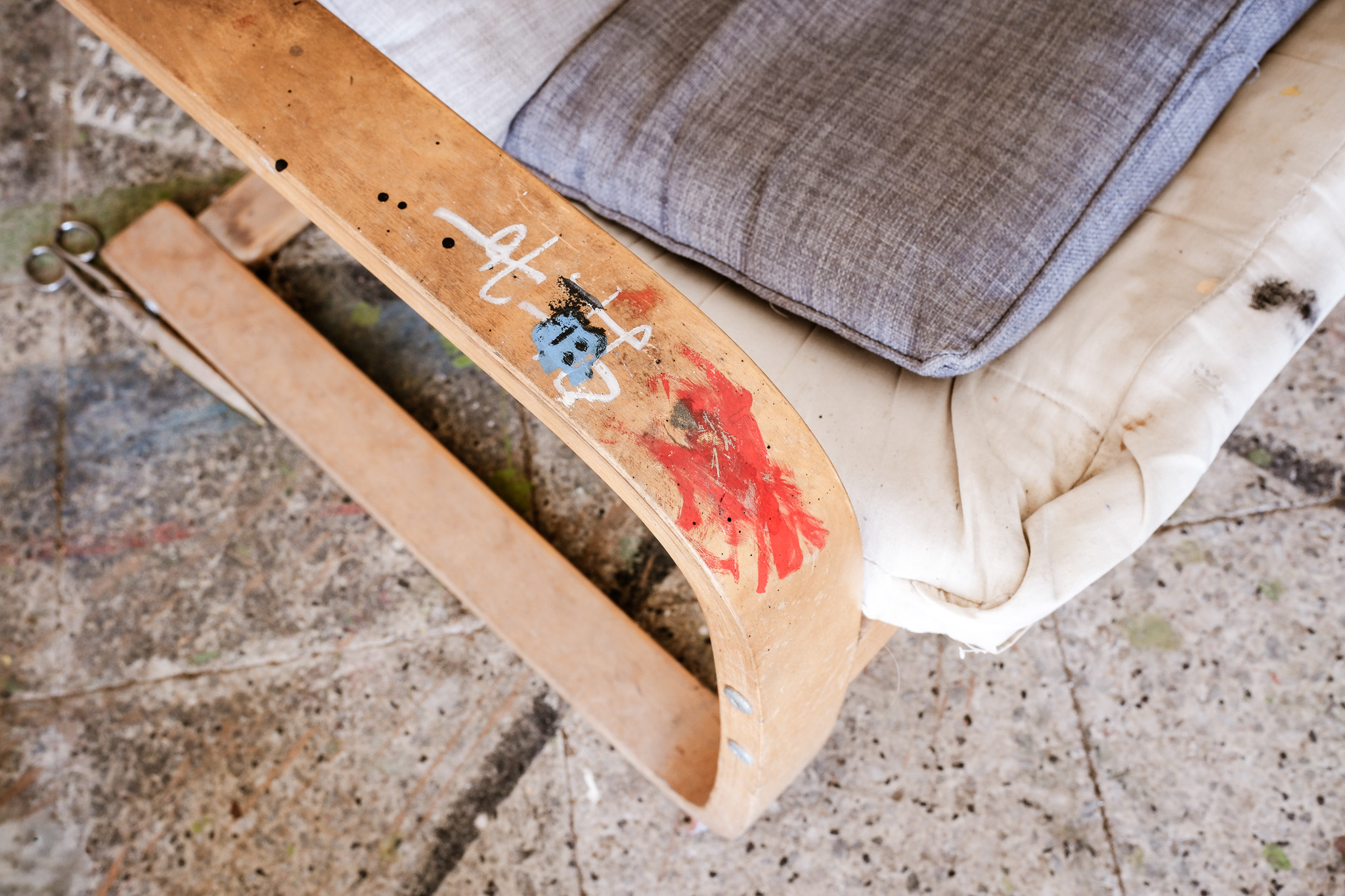
I probably look more actively now. But in the past it tended to follow a familiar pattern of visual diary pages, a lot of stream of consciousness, and improvising colour combinations. Thinking that maybe I shouldn’t do this but doing it anyway because it felt rebellious. Like I would use oil paint sticks and then paint acrylic over the top when the marks were still wet.

cyclespeak
So you were breaking rules?

Taylor
Rules that I never quite understood or mastered [laughs]. And a lot of my stuff kind of happened by accident.

cyclespeak
So does each canvas follow a systematic pattern?

Taylor
I definitely start by drawing or writing on a canvas; I like to have stories underneath the paint that you might not be able to see…

cyclespeak
But you know they’re there?

Taylor
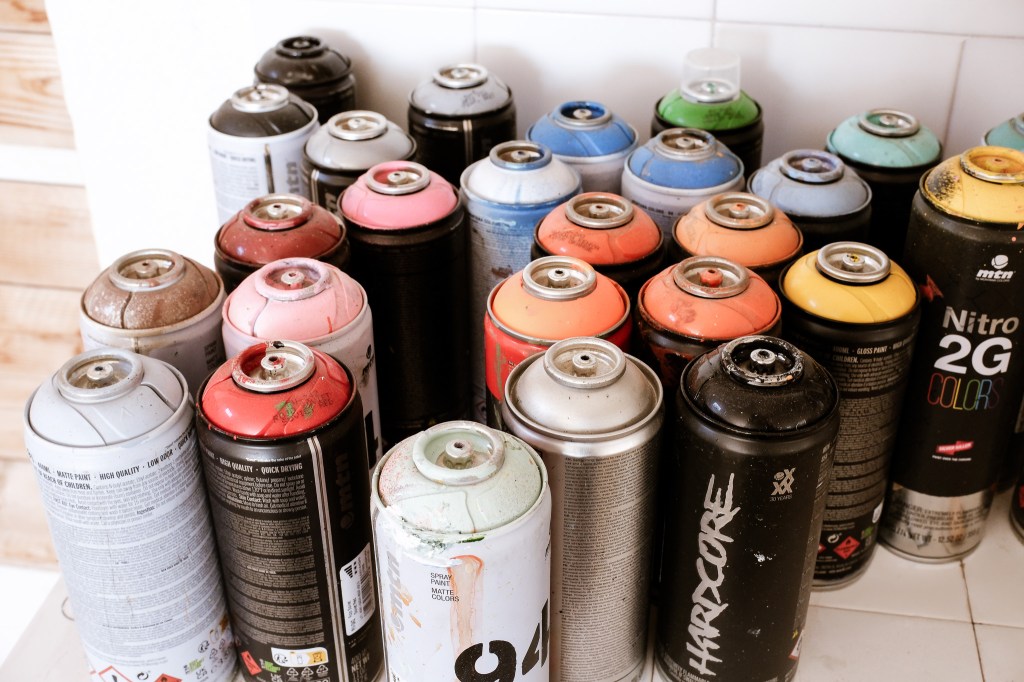
I guess that a blank canvas with one image on top doesn’t tell enough of a story for me. Which is why I like to use spray paint and graffiti markers to add all this texture. And then, when it all gets covered up, my friend David makes fun of me and says another layer [laughs].

cyclespeak
But the layers form the foundation of your work?

Taylor
And oftentimes I’ll strip them back with water or paint thinner—or even just scrubbing at the surface—which allows all this other stuff to come through from before. And if that surprises me, I’ll know that I did the right thing.

cyclespeak
How difficult is it to say enough and acknowledge a painting is finished? Or is there a temptation to keep going back?

Taylor
It’s never easy to know where that line is. Because I look at a lot of in-process pictures of a particular work and I’m like, dude, that would’ve been real sweet if you’d stopped right there. But it’s buried underneath layers of something else. So maybe I need to have 18 paintings up on the wall at any one time and then just bounce back and forth? But I don’t have enough space because they’re usually all quite big. Which is why the bike is a useful tool whenever I have a problem or I’m not sure what the next step will be.

cyclespeak
Is that because the physicality of each pedal stroke frees up the thought process?

Taylor
I’m not quite sure how to explain it but the number of ideas I had mid-race as a professional cyclist that I could never quite recall at the finish…


cyclespeak
Are they always your canvases, even if they’re sold?

Taylor
That’s what I mean about this foundation of feeling comfortable with what I’m creating and not needing to think about someone else’s opinion. Because I’m never going to paint a portrait of your dog as a commission. It’s much better if I do my own thing before seeing whether it adapts in some way.

cyclespeak
You mentioned how playing music can act as a welcome distraction from the creative process. And I was curious regarding the subtleties of reading the room when you’re playing a DJ set.

Taylor
Whether people are moving or not is an obvious sign and you can definitely feel if there’s a vibe. Which is a nice kind of puzzle when you go in this or that direction with your song choices.

cyclespeak
And it’s in real time; unlike painting a canvas where you can put down the brush and step back for a moment?

Taylor
It’s not that I feel rushed but there’s definitely a sense of flow. Which is what I really like about it; this layering of sounds—one after another—which is kind of like my paintings.

cyclespeak
Are you storytelling when you DJ?

Taylor
I’ve been thinking about that a lot recently. And it’s not storytelling as…

cyclespeak
A narrative?

Taylor
It’s more of an abstract way in the sense that you grab peoples’ attention—almost like foreplay—and that’s where you create tension. And then when people are locked in, you don’t immediately give them exactly what they want; this energy is building inside of them and you’re the one that helps them release it.

cyclespeak
That sounds like quite a powerful sensation?

Taylor
I guess that’s why a lot of DJs are perhaps a little egotistical?

cyclespeak
For someone growing up spending their Saturday mornings in record stores, can I ask whether vinyl is still important or is everything now digital?

Taylor
It’s relatively niche but that’s the way it all got started and you now get music labels that are releasing vinyl-only DJ records to be played in a club. There’s only one or two tracks on each side with a minute of kick drum which makes them easier to mix. And it’s a lot nicer to look through a crate of records as opposed to scrolling through a digital playlist.

cyclespeak
The physicality of the process?

Taylor
There’s no need for screens. Just the needle, the wax and the mixer.

cyclespeak
Returning once more to Sponsor Correct, I’m sure they were flattered—at least I hope they were—but did Pas Normal respond in any way when you dropped your Pan Normal shirt?

Taylor
The only feedback I’ve received has been positive. And I’ve been told that a few people at their head office have the shirt.

cyclespeak
They do say that imitation is the sincerest form of flattery.

Taylor
What I find funny is there are people who love PAS and only wear PAS. And there are people who hate PAS and everything associated with the brand. And the reason that Pan Normal works is that both groups, from either extreme, want to buy the shirt.

cyclespeak
So in that Venn diagram, where the two circles intersect, sits Taylor Phinney and Sponsor Correct?

Taylor
Yes [laughs]. And to be honest, you could argue that both of those groups are a little ridiculous.

cyclespeak
Does that viewpoint reflect your take on Pas Normal or because you don’t like extremes?

Taylor
I think there’s something cliquey about most worlds. And if you take cycling brands as an example, much of the high end apparel is made in the same factory. So if you’re an X guy and you’re hating on the Y product, oftentimes you’re wearing the exact same piece of kit. It’s just branded differently and that’s what you’re buying into. Which I find really fascinating.

cyclespeak
The emotional connection with brands that an individual favours?

Taylor
I had this friend who only wore MAAP and, for whatever reason, hated PAS. But he bought every single one of my Pan Normal shirts and then he posted this photoshoot on his Instagram feed—shot in a very PAS style—of him fully decked out in Pas Normal. So that got me thinking that I’m doing a pretty good job in marketing these guys. And that maybe, if you hate on something so much, you kinda want to be part of it but you’ve already declared you don’t like it. So I do question whether the stuff that I make bridges this gap and creates some magical space in between.

cyclespeak
I get the impression that you’re having fun with Sponsor Correct?

Taylor
Having fun and learning at the same time. Because in a similar way that we mentioned having a dialogue with the work of artists we admire, studying how brands communicate their own identity and message through their designs—placement, size, fonts—has really taught me a lot.

cyclespeak
Skills that you used to create your Kasia Cappuccino shirt?

Taylor
David was an industrial designer and he got me started with Illustrator. So yeah, I can now create my own designs but I probably don’t know 80% of what the program can do. Which is why I have my own work arounds to figure things out.

cyclespeak
I listened to a podcast recently where you started listing the bikes you own and then kept remembering another one and another…

Taylor
Yes [smiles]. I’m not particularly good at selling bikes but that being said, I really don’t need any more.

cyclespeak
So it’s now a case of one in, one out?

Taylor
There are some bikes that I’ll never part with, like the Raleigh over there. A 64 cm frame that I picked up in Belgium and built up with 10-spd Dura Ace and longer brake calipers to allow for some bigger tyres.

cyclespeak
So are you a bike tinkerer? In the same way you see pictures of Lachlan Morton’s garage and he’s working on all these weird and wonderful bike builds.

Taylor
That’s definitely me but I find it easier to tinker with older stuff. With the newer stuff, I can’t resist testing the boundaries of what a bike can do…

cyclespeak
Is that test or push?

Taylor
It’s probably both. And goes back to the cycling cliques—do you ride in PAS or MAAP—and the viewpoint that if you’re mountain biking you wear the same type of kit, ride similar bikes and talk about the same stuff. But if you ride gravel or road, then that’s another aesthetic you all share.

cyclespeak
And you?

Taylor
I grew up riding gravel on my road bike before gravel was even a thing. So I’ve always wanted to mash up as many things as possible; fusing different riding styles and confusing those looking on.

cyclespeak
Which is why—and I do mean this very respectfully—you rode Badlands on a spectacularly inappropriate bike?

Taylor
Yes. But I was comfortable.

cyclespeak
I imagine so. Up to the point you nearly ripped your toe off riding in sandals and had to cauterise the wound with your pocket knife.

Taylor
That was because I threw away my Vans [laughs]. I definitely took way too much stuff on that trip. And if I was going back, I’d probably ride what I call my gravel plus bike which is a drop bar mountain bike. And the reason for that is my ten thousand hours are in a drop bar position. Something I wouldn’t have admitted five years ago.

cyclespeak
But you’re now able to embrace?

Taylor
I like to play with things and I also like to play with peoples’ expectations and, in doing so, break some norms. Because everyone is so traditionally rooted in what they think they’re supposed to do within whatever clique speaks to them. So when you show up to a gravel ride and you’re riding on flat pedals wearing Vans, everyone is woah, man.

cyclespeak
And cycling is full to the brim of cliques and unspoken rules.

Taylor
But when you get to the coffee shop and people are walking around like ducks and I’m just like a normal person, which one of us is weird [laughs]?

cyclespeak
I remember when Gus Morton brought out his Outskirts films, it was like a lightbulb moment. That whole tee over bibs vibe.

Taylor
Those guys had a huge influence on me for sure.

cyclespeak
Which was also the case for the EF Gone Racing films that you, yourself, featured in.

Taylor
I’ve heard that from a few people recently. How watching those films totally changed how they rode a bike.

cyclespeak
Generally speaking—with maybe the exception of Unbound where you had countless flats—you all looked like you were having fun. And it wasn’t solely super serious with a focus on results alone.

Taylor
That’s about the size of it [smiles].

cyclespeak
You’ve talked about how the bike offers a means of escape. And you’ve also mentioned how you often get inspired when you’re out riding. So do you ever switch off?

Taylor laughs and thinks for a moment

Taylor
I would love to hear my wife answer that question.

cyclespeak
What do you think she would say?

Taylor
Maybe that I’m in a state of sleep-mode at all times? But no, I’m a creature of inspiration and curiosity. So whenever that strikes, I’m on. Mixed in with periods of feeling a little lost and overextended. Which is usually fixed by spending a couple of days on the couch.

cyclespeak
In this age of social media and from the outside looking in, it might appear that life and living is—not easy—but pretty good.

Taylor
I definitely live a very privileged lifestyle. In the sense that I get to come here and do what I want to do. And it’s fairly easy for me to connect with brands and make things happen. But saying that, I don’t think anybody’s life is like riding a rainbow.

cyclespeak
That’s something that Sami Sauri often mentions. That people think it’s all flowers and unicorns when it’s actually a lot of hard work.

Taylor
I can hear her saying that [laughs].

cyclespeak
I suppose for many people, a vast majority of their life decisions are made for them: a job that might not particularly inspire, mortgage payments to meet, a family to care for and nurture. Whereas on the flip side, always having to determine the next project or collaboration can also bring its own set of challenges?

Taylor
Personally, I prefer that to having a 9-5 to bang up against. But it’s been a learning process that I’m no means close to the end of. How to string a bunch of things together to pay rent and buy my wife presents.

cyclespeak
Buying your wife presents is nice though.

Taylor
It is. Being with Kasia makes me very happy and I get to come to the studio, do my thing here, and the trails are amazing whichever direction you go. And for me, that’s enough.

Taylor Phinney / Sponsor Correct

All photography by Chris Hargreaves

Angus Morton / Work in progress

Back in 2019 I sat down to chat with Angus ‘Gus’ Morton on a warm, sunny day in Girona. Maybe it was the forced period of inactivity – his US visa had temporarily been revoked – but an interview ostensibly focusing on his hugely influential Thereabouts and Outskirts films somehow drifted into a lengthy conversation that explored the bike as a tool for journeying, new directions in professional cycling and living a life of simple pleasures.

Fast forward a few years and Gus continues to make inspirational films that offer a unique vision for sport. But his own journey has seen him confront a decade long battle with addiction and a desire to step away from playing the leading man.

Catching up with Gus over a transatlantic call, talk of life in LA and city riding habits grounds our conversation in the new life he is piecing together: Gus offering a searingly honest account of his decision to quit drinking and how his search for sobriety is opening up a whole new perspective on health and happiness. 

Gus
G’day mate. Sorry for the slight delay but I was just dropping my dog off.

cyclespeak
How’s that going?

Gus
Yeah, it’s good. I’ve got this big Dobermann and it’s pretty full on. He’s bloody huge and needs a good amount of exercise. So he goes out to a friend’s ranch when I’m away on work trips.

cyclespeak
You’re living in LA?

Gus
I’m in Echo Park. Sort of north and east from Downtown.

cyclespeak
I guess everyone drives everywhere?
Gus
I mostly ride my motorcycle to get around. But with having the dog and shooting so much in the backcountry, I’ve also got a truck.

cyclespeak
Which I’m guessing is stereotypically big?

Gus
It’s fucking enormous. But only considered a small truck here. If you saw it you’d think I was taking the piss because it’s lifted and has these giant tyres. Totally over the top. 

cyclespeak
Is LA a workplace choice or somewhere you just feel at home?

Gus
That’s a good question. I’ve actually lived in LA before but this time around it was initially a work choice. A lot of the film production companies are based out here but right now it does feel increasingly like home.

cyclespeak
I was wondering what professional hat you’re wearing at the moment? Writer, director, producer?

Gus
I guess I’m a director from a skill set point of view. But working primarily in documentary filmmaking means that often I’m also producing, filming and doing the edit. And I’m quite particular so I do have this tendency to get involved in every aspect [laughs].


cyclespeak
Does that mean there’s no such thing as a typical day?

Gus
I do like to be very structured and organised. So I don’t necessarily have a typical work day but I’m usually up and working by 7:30 am in the morning.

cyclespeak
I’ve mentioned before that your Outskirts films had a profound influence on the way I now ride. Do you ever revisit them?

Gus
That all seems like a lifetime ago [smiles]. And I don’t know that I’ve watched any of them since they were first released.

cyclespeak
Always looking to the next project?

Gus
I guess I’m not particularly sentimental about my work. But I do often think about the experience I had in making those films because it was so life changing. So I have fond memories of the people and the places and that mode of travel. And having since done more extreme adventures, those times on the road filming Outskirts are still the pinnacle of what, for me, is enjoyment on the bike.

cyclespeak
When we chatted back in 2019, you mentioned that when you initially tried using a post-production company to edit the first Outskirts film, the shit they cut out was what you wanted to stay in. Now that you’re working in LA, are people still missing the true edit?

Gus
That’s an interesting question [laughs]. And going back to what I said before, it wasn’t that they did it wrong. It was more how they took a different point of view. And that happens all the time which is why I now like to show my work early, in an effort to bring my clients along on the journey with me.

cyclespeak
Outskirts had this wonderful cast of random characters you met on the road. And I was wondering whether you’re still striking up conversations with total strangers?

Gus
Actually not that often. And I have to admit that I don’t see myself as a very outgoing person. I tend to keep to myself, I have a small group of friends and I don’t do a lot of social stuff. Which is maybe a contrast to what you see in Outskirts but that was a huge effort for me. Which, in part, is why I stopped making them. Because the amount of nervous energy that it took to be that character was just exhausting.

cyclespeak
When we chatted previously about Dirty Kanza – Unbound as it’s now known – you totally called it on the alternative calendar and the subsequent shift in focus from cycling brands and professional teams. But now that gravel is firmly established, we seem to be seeing more arguments over tactics and equipment. In your view just teething troubles or the inevitable consequence of more sponsorship money?

Gus
It’s probably an inevitable consequence of human nature? As a group grows larger, you have more voices, more personalities and more points of view. Some people will feel protective of it – they liked it how it was – and some might have a sense of ownership. Maybe it was easier to win before it began to attract such a strong field? So if you take all of this into consideration, then it’s not unsurprising that we now have differences in opinion.

cyclespeak
Differences that can be resolved?

Gus
The test for the gravel scene is how they mitigate these points of view and for the community to still exist in some level of harmony. So maybe the idea of some sort of federation is perhaps inevitable. Personally, I hope it will be user led rather than one of the existing organisations like the UCI. Because without the athletes, none of this works. But, quite honestly, who gives a fuck what I think?


cyclespeak
Let’s bring things a little more closer to home then and talk about what your riding now looks like?

Gus
I tend to ride up to Griffith Park where you’ve got the Hollywood sign and all that shit. Maybe once or twice a week over lunch or into the evening after work. And that’s fun to me.

cyclespeak
Have you still got your Thereabouts Crust bike?

Gus
I do [laughs] but I’ve not ridden it for a while. And I should because there’s a lot of good gravel riding in LA actually.

cyclespeak
Speaking of bikes, I was watching the short I Am Here reel that switches between Iceland and Mexico. Riding a fat bike through an Icelandic winter looked the real deal?

Gus
It was. But unlike Outskirts there was nobody out there and the goal was to get to the finish rather than the journey in itself. And I find that I like this cold weather stuff because you really have to pay attention to the weather and the environment. Working with the elements rather than just bludgeoning through regardless—although it felt like that at times. Understanding when to move and when you need to stay safe and shelter. Definitely Type 2 fun [laughs].

cyclespeak
The film addresses your struggle with alcoholism. Can I ask how that journey is going for you?

Gus
It’s going well. I’ve come to realise that each person’s struggle with addiction is very unique. And there are other ways that addicts are nothing if not predictable. As for me, I’m coming up on three years since I first quit drinking. I had a couple of slip-ups in the first year so it’s now two years since I’ve been fully sober.

cyclespeak
How have things changed over that time?

Gus
In some ways I thought the most critical part would be quitting drinking and dealing with the physiological fallout of that. I’d checked into a rehab programme and that really opened my eyes to what the disease is. Something I thought about every hour of the day. But interestingly, for my type of personality, that gave me a focus. Kind of ticking off each day as a win. But I’d not be sober today if I hadn’t taken that first step and reached out for help.

cyclespeak
And when you came out of rehab?

Gus
Initially I was very anti group therapy but gradually I discovered the power in sharing experiences and talking over all the shit that’s so annoying. So AA defined my second year of sobriety and then this last year I discovered that I’m not thinking about drinking every hour of the day. This third year is really all about me growing up.

cyclespeak
In what sense?

Gus
I had a problem with drinking for 10 years. Basically my entire twenties. And there was a lot of growing up that I didn’t do and one reason was because I was so focused on being a professional athlete from such a young age. So this past year has seen a lot of emotional growth which has been pretty tough. Understanding how I behaved in the past and feeling a little like, fuck, why didn’t I see this coming sooner?


cyclespeak
I also stopped drinking about eight years ago as a way of simplifying my life. Removing a whole series of decisions that I don’t have to make anymore.

Gus
Absolutely. I fully understand that.

cyclespeak
And it takes a while but eventually that becomes a part of who you are now.

Gus
I guess I’m in that transition from when I used alcohol to mask everything. I’m no longer protecting myself from the world which can be a feature of those first steps in quitting drinking. When you’re not allowing yourself to be around a certain type of person for fear of a relapse.

cyclespeak
So what’s next?

Gus
I have ambitions for my life that need me to be more open and vulnerable. The world can be a big scary place but I need to take some risks. It can be very overwhelming when you open yourself up to that.

cyclespeak
Again, back in 2019, you stated that the only time you truly felt happy was on location shooting. Does that statement still stand? 

Gus
No, not at all [laughs]. That time in Girona I was super late for our meeting because I was hungover. And that was my vibe back then. There were lots of things I just wasn’t dealing with emotionally at that time. So being on the road was a place I could hide from all that. Where I could justify my existence by trying to share a point of view and be around people that didn’t know me.

cyclespeak
And now?

Gus
That’s been one of the big lessons learnt this year. The realisation that back then I just wasn’t happy with who I was and drinking was a way of escaping that. Going on the road was a way of escaping that. So one of the biggest things I’ve had to do is to find happiness and a love for myself. Which I absolutely understand sounds like hocus pocus bullshit [laughs].

cyclespeak
So this is an alternative to always seeking escape?

Gus
In loving yourself I’m not saying as the main character in your life or any degree of narcissism but a satisfaction and contentment with who you are and where you’re headed. So often we’re caught up in chasing something but not always able to define what that actually is. So there’s this cycle of getting the thing you thought you wanted but immediately feeling dissatisfied.

cyclespeak
I’m sure a lot of people would recognise that feeling.

Gus
I sometimes wonder what it was that I was actually chasing? Was it an Oscar, a fucking house, a pat on the back? And all of this noise meant I never really considered whether I liked myself. And for a long while the honest answer would’ve been no. But over the past 12 months I’ve grown to kind of like who I am.

[pause]

Not kind of, I do [laughs].


cyclespeak
I ended our conservation in Girona by asking what’s the best thing about being Gus Morton. Can I ask you the same question now?

Gus
What did I say back then? Because this is the first interview I’ve done since getting sober that has really referenced me when I was drinking.

cyclespeak
I’ll just read back to you what you said in 2019…

It has its moments [laughs]. But, yeah, I have a great life. I’m very privileged to do what I love and to have the freedom to do that. It’s not easy in the sense that things don’t just fall on your lap. To have the life that I lead you have to chase it hard. And with the films; you want them to be aspirational. For people to engage and feel the need to go on their own journeys. In a sense, that’s the whole idea.

Gus
Damn. That’s pretty good.

cyclespeak
It certainly is.

Gus
I wouldn’t say it’s drifted too far. I do have a great life and feel very fortunate to have found sobriety. And everything else in that statement still stands. Maybe the only thing that I would add is that the films I was making back then, I was quite honestly making at the expense of everything else in my life.

cyclespeak
Were you aware of that?

Gus
I honestly thought it was okay. But what I didn’t recognise was how the people in my direct orbit really suffered as a result of that type of behaviour. To some degree I thought that if we did the films right, then more people would benefit than be hurt by it. And to be honest, that’s really a fucked up way of approaching your relationships with people.

cyclespeak
So what’s changed?

Gus
The aspirations have remained the same. To get people to ride and have positive experiences through life by participating in sport. But the lengths to which I’ll now go to achieve them have shortened and I don’t feel the need to be the main character anymore.

cyclespeak
Is that an easy thing to let go of?

Gus
Sure, I still have a fucking big ego and that’s something I’m really trying to work on. Probably a work in progress forever [laughs].

cyclespeak
I feel it’s important to just say that your filmmaking and the work you’ve done with Thereabouts has inspired countless people to get outside and engage in sport.

Gus
That’s kind of you to say and I do appreciate it. But the thing that I really struggled with was separating my identity from that body of work. I always felt that in the public’s eyes, they just wanted me to inhabit this certain role. And I think it’s maybe time to move on from all that.

cyclespeak
Without the need for you to step back into that character.

Gus
Yes. Exactly.

[Gus pauses as he gathers his thoughts]

It would be nice for my work to be enjoyed not because I once wore a t-shirt and cracked open a beer. If people want to ride not because they see me in my work but because they see better versions of themselves in it. That, in my mind, would be a good way forward.

Angus Morton / thatisgus.com / thereabouts.co

Images with kind permission of Angus Morton and Isaac Karsen

Sami Sauri / New adventures

Constantly on the move – camera in hand – from one project to the next, when photographer and filmmaker Sami Sauri decided to commit 100% to her own production company, little did she know what a whirlwind year she would enjoy.

Reflecting on this period of transition in her usual candid manner, Sami considers life’s simple pleasures, why storytelling underpins her way of working and how failure can be a mechanism for growth.


cyclespeak
You’re just back from shooting in Austria. It looked fantastic.

Sami
It was for next year’s Jack Wolfskin spring / summer range.

cyclespeak
But it was snowing.

Sami
I know [laughs]. They chose Austria for the location – which was very nice – but maybe next time we can go to the Canaries? Because the first day it just rained and nobody wanted to wear shorts [laughs].

cyclespeak
Did you expect to be above the snowline?

Sami
No. Not at all. I’d packed a rain jacket but I was wearing normal shoes. And the main story behind the women’s campaign was a hike to a hut at 2100 metres and then down the other side. We were going to spend the night at this altitude – the story was amazing – and the whole crew was female. I turned down two projects just so I could do this shoot.

cyclespeak
But the weather wasn’t helping?

Sami
We had a mountain guide with us and she advised us to postpone for a couple of days. But when we did finally start to climb, on the first ridge we had snow. But I wasn’t going to stop there—this story wouldn’t make sense if we hadn’t got to the hut [laughs].

cyclespeak
So it all worked out in the end?

Sami
For me, I had a wonderful experience—I love those kinds of adventures.


cyclespeak
The last time we caught up, you were listing all your various mishaps. Your foot had been in a plastic boot and you later tore some ligaments when you were out trail running. How’s the summer been in terms of staying in one piece?

Sami
I’ve probably done less this summer than for the last five years. Not because of my foot but I’ve had so much work that I couldn’t find the time for intense bike trips. But I have started running again and trying new sports like motocross.

cyclespeak
Your road to recovery after injuring your foot brought to mind the issues you had with knee pain during the Route 66 and Big Land films.

Sami
The knee pain comes from riding fixed gear. You can’t help falling and it always seems to be on the same side. And I find it interesting that you get used to sleeping in a position that’s comfortable for your hip and your knee—your body quickly adapts to what feels best.

cyclespeak
So it’s something that you can now manage?

Sami
I feel that everything comes for a reason and when I started physio, I discovered that I’d been riding all those years and not using my glutes. There was very little muscle and this was the main reason my knee was hurting. So I now realise that I need to exercise in different ways to help relieve the pain—using bands or a simple 20 minute yoga session every morning to activate my body.

cyclespeak
So that’s your morning routine sorted?

Sami
I’m somebody who finds it very difficult to have constant things in their life [laughs].

cyclespeak
That doesn’t fit well with your personality?

Sami
It’s more my lifestyle right now. So busy and always on the move.

cyclespeak
Is racing the fixed gear scene something you miss?

Sami
I definitely miss that sense of community. And I’ve realised that I’m quite competitive. Which is why I often ride alone because nobody is watching and I can go as fast or as slow as I like and really enjoy it. When I go out with friends, I find myself looking back and wondering where they are [laughs]. 


cyclespeak
I saw a recent post where you were riding near Girona and someone had a bloodied knee?

Sami
The mountain bike ride? When I put my friends through hell [laughs].

cyclespeak
That’s the one.

Sami
I felt so sorry for them. I convinced these two girls – one of them is my physio – that we should take out our mountain bikes and just do some easy, smooth trails. Well, oh my god, we had some proper gnarly downhill stuff [laughs].

cyclespeak
When you aren’t shredding local trails, you spend a fair proportion of your time on the road filming. What do you miss most about home when you’re away?

Sami
I do miss my own cooking. Every time I come back home, the first thing I do is make a plate of my pasta. Maybe this comes from my childhood but I need that plate of pasta.

cyclespeak
Do you have a particular recipe?

Sami
Parmesan, olive oil and salt. That’s it. I don’t need anything else to make me happy. And I might put on some vinyl and turn up the volume [smiles].

cyclespeak
Simple pleasures.

Sami
But after three days, I’m already looking forward to the next adventure [laughs].

cyclespeak
From the moment you receive a phone call or a message, how fast can you be packed and out of the door?

Sami
It doesn’t take me long. 30 minutes?


cyclespeak
Really?

Sami
I pretty much know what I want and what I need—and I don’t need much. But I do always take a pair of cycling shorts because no matter where you are, you might get a ride [laughs].

cyclespeak
You sound very organised?

Sami
Before, everything was super tight with the packing and arriving at the airport. Massive stress [laughs]. Now, I pack two days before I’m due to leave and arrive at the airport at least two hours before my flight—something I never used to do. And when I get to the airport, I’ve figured out a good spot for breakfast, where I can work. And it means I don’t arrive sweating [laughs].

cyclespeak
What would you tell someone just starting out taking photographs or trying their hand at film making?

Sami
I do get messages about that—people wanting to change their lives. For me, I was just handed a camera and told to shoot. And I said, ‘Shoot what [laughs]?’

cyclespeak
That sounds like good advice.

Sami
The first thing I always say to people is just go and do it. Do it, do it and keep on doing it. And fail and do it right and fail again and then see if you like it. You’ll never know when that will be – or whether you will or won’t – until you give it your all.

cyclespeak
And where do you see yourself on that journey?

Sami
I’ve still not completely figured out what’s my vibe. I didn’t think I’d like commercial photography but these last two shoots for big brands I’ve absolutely loved. They were wonderful clients in giving me free rein – I didn’t have a shot list – so it felt like they’d put their trust in me.

cyclespeak
You enjoy an open brief?

Sami
Yes. It’s like for a recent cycling collection I’ve just shot. Super commercial but I gave them this idea that we could rent a motorhome, go to the desert, camp out and ride bikes. Basically shooting on the go.


cyclespeak
Personally speaking, how much is a sense of storytelling and narrative an important element to these projects?

Sami
For me, it’s super important. For the brands, they don’t always ask for it but they all want it.

cyclespeak
I love that.

Sami
Right now, this storytelling style of shooting is mind blowing. Everybody’s doing it.

cyclespeak
Whenever you’re pictured outside – walking, riding, running – very often you have a brilliant smile that lights up your face. And this made me think about a post from earlier this year when you referenced much darker thoughts and feelings.

Sami
I’ve spent time on both sides. I’ve been the happiest person ever and the saddest. And I can think of certain people that wanted to drag me down the wrong path but I think that happens to a lot of people. And the only thing that got me through, was opening the door and going outside. Not necessarily to do sports but sometimes it was a matter of just being out in the fresh air. To find my true self, it’s never going to happen inside a house. I could stay inside – alone with my thoughts – and look at the same wall for a million hours and not feel any better. But if you go out and talk to somebody – your friend, your dog, your horse, even someone you don’t know – then this can make a real difference. It’s like a door that opens or stays closed.

cyclespeak
I guess an open door lets in light? Which brings me to your recent collaboration with Megamo bikes—a custom Sami Sauri paint job for one of their full-suspension mountain bikes with a theme of ‘sunset’.

Sami
I suddenly got this idea in my head about painting a sunset on a bike. To me, the best time of the day because I just love all that colour—not so much on me but definitely on a bike [laughs]. I’m good friends with Megamo and they’ve been super helpful over the past year. Just before I went to Egypt, one of the guys on the trip broke his frame in Barcelona by crashing when we were eating pizza. We got a bike from Megamo in under 12 hours so the trip could go ahead and all their generous help made me want to return the favour.


cyclespeak
So what is it about sunsets that you love so much?

Sami
I’d much rather ride in the evening. In the morning I’m very active mentally and in a creative mood and want to get things done. But when I finish for the day, I can go out and ride into the sunset – it sounds a little like a movie – and that acts as a reward or a pat on the back.

cyclespeak
You’re always on the go – always busy – so how do you unwind?

Sami
I’m not sure I do switch off [laughs]. Maybe when I sleep? And part of me thinks that if I stop, I might miss something [smiles].

cyclespeak
I think that’s a state of mind a lot of people would recognise.

Sami
But I have started reading again—time with no phone or screens. And that’s why I like going on holiday to somewhere simple that doesn’t take lots of decisions to enjoy. Somewhere I can surf or go hiking.

cyclespeak
So do you prefer a 5 day, 5 week or 5 month plan for living your life?

Sami
Hmmm. Fuck. It has to be 5 day because nothing ever goes to plan [laughs]. I can receive a call today and I’m leaving for somewhere else. It’s crazy!

cyclespeak
There’s a post from earlier in the year where you write, ‘Do what you love and love what you do.’ Is that a fair description of how you’re currently living your life?

Sami
It’s not like I’ve always known what path in life I will take. But then somebody handed me a camera to film, photograph and ride at the same time. So I’m grateful for those special people that I’ve known—the ones who after years still see you as you are.

[pause]

It’s not been easy – there were times when I was working three jobs just to eat and put a roof over my head – but I’ve made it this far and I want to live every moment as if it was the last one.


Sami

Photographs of Sami in Egypt with kind permission of Sonam Gotthilf

Thereabouts / Crust Bikes

Part community, part production company, part creative partner. Ask Gus Morton and Isaac Karsen to define Thereabouts and you’re offered a number of varied responses. What is abundantly clear, however, is a passion for storytelling and the narrative of their collaboration with Crust Bikes is an exemplar of the Thereabouts vision. Rooted in the Australian Outback and culminating in a Utah desert testbed; a tale that encompasses talk of farm tractors, friendships forged on the trail and a belief in the bike as a tool for journeying.

cyclespeak
Looking back on the genesis of this bike build, where were you in terms of the riding you were doing? What was your mindset at that time?

Gus
I guess the idea has always been there ever since that very first Thereabouts ride to Uluru in 2013. Back then, your only option for endurance or rough-road riding was a cross bike. But they’re very upright and the bottom bracket’s quite high. They suit cross, they suit jumping over things, they suit those twitchy kinds of conditions. But there wasn’t really a bike with geometry that matched riding on gravel roads in the strictest sense.

cyclespeak
And this got you thinking along those lines?

Gus
On that trip we wanted to ride on different types of terrain. I just had a basic cross bike but Lachy* knew that his team issue Cervélo S5 wasn’t exactly capable of doing that [laughs]. So all credit to his foresight, he called up Mosaic and got them to build him a road geometry bike that could also handle gravel with an Enve fork that could fit a bigger tyre. He kind of created a road bike for dirt.

[*Gus’ brother, Lachlan Morton]

cyclespeak
And that got you both thinking?

Gus
After that first experience riding through the Outback, a whole bunch of product ideas came into our heads. And we’d already been playing around with the ways of riding a bike that weren’t being serviced. So after Uluru we were thinking how we’d go about making a bike and that it would look like this or this or this. And we’d talk about it and draw up designs. Eventually this led to a bike frame under the name Outlands. I think there’s ten of them floating around and I’ve still got a couple in my garage at home.

cyclespeak
But the process never went any further?

Gus
It takes a lot of time and experience to do original stuff – whether that’s a bike from scratch or even a piece of clothing. We’d been talking to some people in Hong Kong but it was like, fuck, we don’t know what we’re doing here. And this was back in 2015, 2016 when both Lachy and I were professional athletes and didn’t have a huge amount of time to dedicate to going over and spending a couple of months in Hong Kong.

cyclespeak
So what’s changed since then?

Gus
Those ideas were floating around from the very beginning of Thereabouts and people have always asked when we were going to make stuff. And then when Isaac and I got together, I guess the act of bringing in an outside perspective with all this other world experience kind of opened up our thoughts. That maybe we could do this in collaboration with smaller brands. And it was Isaac who created that impetus and had the technical know-how.

cyclespeak
You each come at things from your own perspective?

Gus
I’ve said this to you before, I’m very utility focused. I’ll just do whatever I can to make something work. I enjoy that but I’m really only using the tools that I have. Isaac is much more about the right tools for the job and acknowledging that there are people with the expertise to make this stuff. And so, with Isaac on board, we decided to make a bike. Yes, I had connections with people, but it was his knowledge of equipment and his perspective on riding that created the impetus for us to be like, well, who would we want to partner with? What do we want to make?

Ready for anything

cyclespeak
Thinking along those lines, Isaac, when you see a bike leaning against a wall or outside a coffee shop, what do you see as the potential in that collection of tubes and components?

Isaac
I’m not sure whether this will answer your question but in advertising, which is what my full-time job was before coming onboard with Thereabouts, you’re basically a commissioner. You make decisions on the director and the film editor, the visual FX and the music. You lead with your team – this collection of collaborators – and I guess my brain just works that way. So when Gus and I first got together and discussed all the possibilities for projects, we began by figuring out all the people Gus knew and had worked with.

cyclespeak
To build your team.

Isaac
And in a similar way to a collection of ideas and a collaboration of minds, bikes are so exciting because you personally get to choose all the parts. What wheels you want and what tyres will work with the riding you’ll be doing. And I guess I really enjoy figuring out how all these separate elements can come together. In a sense, working out the tone and the character. Which is just as true for a film as it is for a bike build. 

Gus
And that’s what’s interesting because we were only talking yesterday about what’s changed with Thereabouts since Isaac and I got together. I’m someone that if I see something, I’ll ask myself whether I can do that too. And if I can’t, I won’t do it. Or maybe I can see a way I can learn that skill and take on that task. But I’m not someone who reaches out for help.

cyclespeak
And Isaac?

Gus
He’s very much no, no, no. We’ve got to do this properly. Isaac’s more for finding the right person, reaching out to them, engaging with them and bringing them in. And the balance of those two outlooks has really launched Thereabouts massively forward. Whereas before, if it couldn’t just be done in-house then it wasn’t going to happen. And that’s where I was blocked.

cyclespeak
This sounds like quite a profound change in your way of thinking?

Gus
I wanted to do all these things but didn’t really know where to start. The bike, the film projects, the podcast. All these new facets of Thereabouts have come about because of Isaac’s whole other approach to thinking that balanced out my own in a really powerful way.

cyclespeak
So the idea for the bike has been there from the early days of Thereabouts and you’ve referenced before, Gus, that you see a bike as a tool for moving and for journeying. And Isaac, I know you share that viewpoint, but you also come at it from a form and function perspective. Do you both feel the project benefited from these different approaches in bringing the process to fruition?

Gus
To be honest, I was always onboard with making a bike but it was Isaac’s desire to see it done properly that proved the deciding factor. Left to my own devices, I would just ride what I had and stick a rack on it or tie a bag on. Often things that weren’t really meant to be used in that way but I would modify them to just make it work with the shit that I had. And from that regard, the equipment was always an afterthought. But having done that for a long time, all of a sudden someone comes in and tells you, no, there’s a product for that. Or the potential to create something to do that particular job. And the Crust bike is a perfect example. When I rode it for the first time I was like, oh shit, that’s what it feels like to ride something that’s meant to be ridden in those conditions. It’s so much easier and so much more enjoyable [laughs].

Utah testbed

cyclespeak
I love the idea that you don’t see the bike purely as a possession. It’s all about what you can do with it. Where it can take you.

Gus
Exactly. All of a sudden you’re like, holy shit, if we really wanted to, we could hang three gallons of water on this bike and survive in the desert for multiple days without re-supplying. And that’s straight where my mind goes. Riding the Crust, all of a sudden this whole new world opens up.

cyclespeak
Isaac, you mentioned the process and I was wondering whether there were other framebuilders in the mix or was it always going to be Crust?

Isaac
I was still living in Downtown LA at the time and I only had a road bike. Just riding in Griffith Park and wasn’t really able to get out any further from a time perspective. But I’d lusted after a Crust bike for ages. And especially the Bombora which was the frame we’ve used on our build. And we have to give massive credit to Cheech and Matt for what they’re doing with Crust because they’re building just the coolest bikes. Really owning that category of frames and doing it their own way.

cyclespeak
I like the idea that you’re a fan. How there’s an emotional element to your choice of collaborator. 

Isaac
So I mentioned to Gus that it would be cool to do a Crust and we should get in touch somehow. And he was like, oh, I know Matt. And I’m like, we should hit them up now. And Gus just sent him a message.

cyclespeak 
With all these different strands coming together, would you say there’s an element of Matt and Cheech in the Thereabouts build?

Gus
Absolutely and it’s funny you should say that as I was thinking about my relationship with Matt. Because when you’re riding a bike professionally, you get introduced to all the big names on the race circuit. Just by virtue of you simply being part of that world. But to be honest, for me, I’ve always been most at home with the dude at the bar that you meet when you’re out riding. That’s where my engagement lies and where my love of this sport is based. Whether that’s down to my inability to make it as a bike rider, I’m not exactly sure. But I’m definitely more comfortable with the more anonymous side of things.

cyclespeak
And you feel this relates to your friendship with Matt?

Gus
A while back, I was invited on a ride in California and Matt was also on it. He’s this little Aussie bloke – I immediately clocked the accent – but I didn’t know who the fuck he was. And he didn’t know me either. But we’re riding along and chatting and just through talking, all of a sudden, I realised that this is the guy that makes Crust bikes.

cyclespeak
And a connection was made.

Gus
Here’s this bloke who was a plumber, a surfer, a BMXer. And with Crust he just created his own niche within the cycling world. Really doing it his own way. And there’s no pretence with Matt; he’s super sarcastic and his sense of humour is really similar to mine. So just over the course of this five day ride, I got to know Matt after gravitating to him. The kind of person that doesn’t give a shit about the way that things are or the way things have been.

Desert campout

cyclespeak
That sounds a very grounded, down-to-earth approach to business?

Gus
Way back, Lachy and I had talked to 3T about the Exploro bike. That was originally going to be called the Thereabouts bike.

cyclespeak
No way.

Gus
Yeah, we worked with Gérard Vroomen. Discussions going to and fro about the design and the whole, fucking gigantic legal process of royalties. We both thought it would be sick to have our name on a bike but the project kind of stalled. And we then went through a similar process with a number of other companies. Sitting around the table with all these heads of brand and they’d be talking about incorporating what we were doing with Thereabouts into their shit.

cyclespeak
But nothing came of it?

Gus
I kinda thought that having a bike was impossible. You’ve got to jump through so many hoops and then at the eleventh hour the process reaches a point where it stalls. But with Matt, there was none of that [laughs]. We called him and asked about making a bike and he said, ‘Yeah, sure.’ And it was really that easy. One person, their own brand, doing their own thing and just interested in making stuff that excites them. And that’s like, very rare, I think. Just wanting to get it done.

cyclespeak
In the Thereabouts podcast episode that features Crust, Matt says he doesn’t care what the cycling industry thinks.

Gus
That’s right. He doesn’t [laughs].

cyclespeak
So I wondered where you sit? And whether your self-perception is one of outsiders?

Isaac
That’s an interesting topic [Gus laughing in background]. I think to a degree we’re outsiders but, in the same breath, we’re still kind of part of it all. And going back to my earlier point about collaboration, we still need wheels and a group set to complete the build. So, no matter what, you look to different people to help bring your vision to life. And we value and really care about our relationships with those individuals or brands that build bikes and I think it’s really inspiring what people like Matt and Cheech are doing at Crust.

cyclespeak
So, after deciding on Crust for the frames, I guess you had a free rein for the componentry?

Gus
Exactly. Isaac was like, let’s do this or use this. And that’s sort of how this all works. One of us will come in with an idea – for a film, podcast, whatever – and the other one will either be, that’s great, or no mate. There’s a sense of checks and balances but when it came to the  equipment it was very much what’s the sickest thing we could put on the bike. I suppose the best way I can frame it is to ask if you know that much about tractors?

cyclespeak
Tractors?

Gus
Well, Lamborghini started out making tractors. My Dad used to have a Lamborghini tractor on the farm. And I kind of picture the Crust in the same way. It’s got really fucking fast shit on it but it’s still a tractor [laughs]. You’re not going to race this in the World Tour but it’s specced out like it expects to be. So the thinking went, what’s the most do-anything robust frame? And that’s how we arrived at the Crust Bombora. And then we asked ourselves, what’s the most badass shit we can put on it so we can make this tractor go as fast as possible over any terrain.

Isaac riding the Thereabouts Crust

cyclespeak
It sounds like a fun process?

Gus
Just completely unorthodox. And going back to that question of whether we see ourselves as outsiders. From an ideological standpoint, then absolutely, we’re outsiders. We’re talking about using the bike in very different ways but, at the same time, we have to co-exist inside this industry and we’ve got really great relationships with brands like SRAM, Rapha and Specialized. It’s just that we tend to look at ways of using a bike that lie outside the regular realm of riding.

cyclespeak
In the film Sometime Thereafter, you explore the idea of a shared journey experienced through individual perspectives. So when the finished Crust was standing in front of you, how did you both feel seeing your name on the bike?

Gus
I guess I look at it this way. A bike is greater than the sum of its parts and we were lucky enough to know these people who make derailleurs, wheels, tyres. Who make bar tape and saddles. They’re all creating these elements and there’s all these personalities and characters behind those components. And Isaac was able to pull them all together into an epitome of what we are and what our view of the sport is. And as a result, we put our name on it because it’s a physical representation of where we currently see Thereabouts and what we want to use a bike for. That unquantifiable essence of a bike and how it moves you through space. That’s us, putting our name on it. Like putting an intention to your day [laughs].

Isaac
The parts arrived as Covid was happening so the bikes were built up during lockdown in Portland. I drove everything over and then, a few days later, you’ve got a fully-built bike. Which was crazy because they looked way different than I was expecting.

cyclespeak
And then you got to ride them.

Isaac
It was mine and Gus’ first escape from lockdown restrictions on a trip to Southern Utah. I loaded the bikes into my car and we drove all the way south.

cyclespeak
Was this Utah trip a case of ticking boxes – a testbed for the bikes – or more about asking questions?

Isaac
It was heavenly.

Gus
It was.

Isaac
The riding was pretty out there and our bikes were completely fucked up but they survived.

cyclespeak
Once again, returning to the theme of a tool for a purpose?

Gus
Exactly. In terms of putting your name on something, we’re storytellers and this build fits in a kind of abstract way to that end. A tool that will help us to tell a story and hopefully empower people to make their own journeys.

Gus and Isaac

cyclespeak
You mentioned how your Crust bikes were built up during the Covid lockdown. Has the pandemic influenced the direction you’re going with Thereabouts?

Gus
Looking back on the past year, having everything scratched gave us time to rethink our approach and strategise a bit.  Along the lines of what we want to do and how we’re going to do it. So we spent a lot of time reformatting the business plan. How we can make and tell these stories and get them to the widest audience in the most beautiful way. So we’ve got a lot of exciting things in development and a shitload of work to be done over the next six months. But we’re getting there [smiles].

cyclespeak
For many people, the pandemic has been life changing and not always in a positive way. But maybe adversity can sometimes push you to question and reassess how you’re living? To explore new directions and appreciate what we might have taken for granted?

Gus
At least from my personal point of view, I’ve always felt the urgency to do things and get them out. The last two years have really changed that for a number of reasons but as a result I feel we now have a more sound perspective which will hopefully help us make a bigger difference in the work that we do. At the heart of Thereabouts, it’s about telling stories that inspire people. We want to show the positive impact sport can have on society at whatever level you choose to engage. Sometimes it feels the way we go about this might not be the easiest way to do it. But, for us, it’s certainly the most rewarding.

Gus Morton / Isaac Karsen / hereorthereabouts

All images with kind permission of Thereabouts

Thereabouts Outspoken Ep011 – Crust Bikes

Crust Bikes

Sami Sauri / Finding Myself

With worldwide concerns over mental health never more prevalent, producer and storyteller Sami Sauri’s first independent film production is a clarion call for the benefits of spending time outdoors. Catching up with Sami from her home in Girona, and with a conversation punctuated with bursts of laughter, we discuss the personal nature of this poignant and beautifully realised project, her own lessons from lockdown and how it feels to see yourself on screen. So sit back and enjoy a thrills (and some spills) tour through Sami’s past year.

cyclespeak
The last time we spoke over a call was way back in March when Spain was in full lockdown. And I was wondering, looking back over all this time, how was it for you?

Sami
Fucked [laughing]

cyclespeak
That bad?

Sami
I think maybe it’s been tough for most people? And in some aspects, I’ve been fortunate. Lockdown didn’t make that much of a difference because I was already working from home. I’ve since changed to having a co-working space so I can separate the professional and personal aspects to my life. But back when we were in the strict lockdown, I basically had to solve all my problems and had the time to think. To think about a lot of things [laughing].

cyclespeak
Possibly too much time?

Sami
That, for me, can be very difficult. Because if I have things on my mind, normally I would just throw myself into activities. But we couldn’t even go riding and I’d been training really well. I tried to keep the intensity going but I don’t really like to ride inside on a trainer. It’s not really my thing. So riding-wise I was a little bit down, but I still wanted to move my body, so a lot of yoga. And I suppose the biggest outcome of all of this, is that I really know how to be alone. Before, it was a hassle, but I’ve learnt how to be by myself, in my own space. And as I’ve been injured for the past four weeks, it’s fine. I can deal with it. Before, I would have freaked out by now [laughs].


cyclespeak
Over the past year, I’ve listened to a few podcasts featuring professional cyclists who tried to keep to their training blocks but on the smart trainer. And then two weeks became two months and they needed to alter their mindset when it came to their levels of fitness. They found they couldn’t maintain such a rigorous training regime without some defined goals.

Sami
Totally. There were some strong people that could do it, but not me [smiles].

cyclespeak
Even though the impact of the pandemic has been quite unprecedented, it did encourage people to be very creative in the way they approached cycling—ideas such as Dirty Kanzelled which had a massive impact. An event that you’d actually raced the previous year.

Sami
That was Laurens ten Dam. The cleverest outcome from a cancelled race you could imagine. It was insane how much reach he got. Super, super smart and maybe an approach we’ll need to take this year if things turn out the same?

cyclespeak
I was fortunate that, even during lockdown, I was allowed to do a solo ride once a day. But you couldn’t exercise outside at all. That must have been difficult?

Sami
52 days in total without outdoor sports. And then, when we could go outside, we had to stay within our own municipality.


cyclespeak
And I’ve seen your recent posts with you on crutches and wearing a big plastic boot. What’s been going on there?

Sami
As I said before, 2020 wasn’t exactly my best year [laughing]. Back in October, I was going out horse-riding and it was a young horse and he just took off with me on top of him. We were in a parking lot so he could get used to the noise of traffic, and something must have spooked him. His ears were back, which is never a good sign, and he was running towards the road so I tried to turn him and lost my balance and fell. But rather than just falling off, my foot was caught in the stirrup and it was just like a Western movie with me being dragged along [laughs].

cyclespeak
I guess it wasn’t so funny at the time?

Sami
It took a big hole out of my knee and the first time in my life that I’ve needed stitches. I had to wait 10 days to have them removed before I could ride again. But a few days later I was out on my bike and I was stupidly looking at my phone – swapping it between hands – and I crashed.

cyclespeak
So that’s injury number two.

Sami
I was booked on a flight to the Canaries a couple of days later but had to postpone the trip. When I did finally make it out there, I had 20 amazing days working on a new video project before flying home. But then my foot slipped when I was out trail-running and I broke some ligaments.

cyclespeak
Horse, bike, running. You’re kind of covering all bases?

Sami
That was my 2020. And it’s funny because I’ve just signed with Merrell as a partner for their running shoes. Super cool and we were working towards the release of the collaboration and the irony is that I’m on crutches [laughs].

cyclespeak
You mentioned a new video project. That sounds exciting.

Sami
Well, I’ve kind of got this history of working with video. Both in front and behind the camera. And somebody just suggested that I do something for myself. My first reaction was, naahh, there’s no way. But I kept coming back to the idea for six months until I thought that maybe I should. You always hate your look or your voice when you see yourself on a video but I decided to go for it.

cyclespeak
So what was the first step?

Sami
I contacted a photographer called Sergio Villalba in the Canaries. He does amazing surf shots, and I knew he was starting to do videos of cycling. So we got in touch and I explained that I wanted to do this inspirational film to empower people to engage in outdoor sports. He was immediately onboard with the idea and we decided to shoot the footage on Lanzarote. It took three days, and we’re now ready to release the film.

cyclespeak
You must feel so proud?

Sami
It’s really hard when the project is about you [laughs]. And to be honest, it’s been a bit of a rollercoaster. David Millar helped me by looking over the text but even as recently as yesterday I had a complete freak-out. Asking whether he thought it was correct? If the video even makes sense? Does my accent work, speaking in English?

cyclespeak
So you produced and directed the film. Did you script it too?

Sami
I wrote a long text with notes about my feelings. It was originally twice as long as the final version. But I decided it needed some gaps otherwise it’s basically just me chatting. And even though it’s still quite personal, there was a lot of insight into my life and it was like, oh shit, maybe that doesn’t need to be included [laughs].

cyclespeak
But you still took the decision to refer to your childhood in the narrative?

Sami
I feel like a lot of people can relate to this. And one of the most difficult things is not having regrets, right? So this all leads into the message of the project. That no matter what, the outdoors is a healthy way of recovering and filling you up with good energy.


cyclespeak
Did you write the script and then fit the shots? What was the process?

Sami
The basic idea of encouraging people to enjoy being outside came first. Then I wrote the script before sharing it with Sergio. From there, we worked on a list of shots, and he knew so many amazing locations as he’s from the Canaries. All these different aspects were then tied up to match the mood of the moment.

cyclespeak
The result is really beautiful.

Sami
We used an actual 8mm camera – that’s not a filtered effect – which looks really cool.

cyclespeak
How does it compare producing someone else’s film to your own?

Sami
Good question [laughs]. If it’s not your project, you’re not necessarily working with a style you want. On this project, I had the freedom to experiment and try out different approaches knowing that it was my own time.

cyclespeak
It’s quite a journey from first featuring in films to now working on your own projects. Does that feel satisfying?

Sami
Totally. The idea is that this project will lead to more adventures for me this year. So this film is the first but definitely not the last one [smiles].

Sami Sauri

Photography by Sergio Villalba and Rubén Plasencia (gallery)

Gus Morton / Here Or Thereabouts Part 2

In this, the second part of our conversation, Angus ‘Gus’ Morton muses on the future of professional cycling, his striving for a life of simple pleasures and whether love is, indeed, all you need.

Looking back at the films you’ve been associated with, one of my personal favourites is Rapha’s short feature ‘Riding is the answer’. Did you direct that?

 I didn’t but that’s actually a funny story because I had no idea I was going to be in that. Or even the level it was on. I’d just shot the first Outskirts and was living out in LA and this guy from Rapha was explaining that they were in town on these dates and would I be available to be part of the shoot for a day. So I was like, sure, and didn’t think anything of it. A month goes by and I get this call from the executive producer at a creative agency and so I’m wondering what they’re doing getting involved because I’m only going to feature in this film for a second or two. Then I get a lady wanting to take some photographs and I have to go to wardrobe but I was super late because I rode there and when I finally arrive there’s 30 people waiting.

 I imagine not particularly happy?

 Oh, man. They were pissed [laughs]. And then they start talking about the days we’ll be shooting and I’m telling them that I won’t be in town that long. Apparently the shit hit the fan and there was this huge meltdown. I woke up in the morning and there’s 30 emails and millions of missed calls. Turns out I was the main character [laughs].

 That tiny detail kind of passed you by somehow?

 Man, it was a bit of a stitch up. And I honestly had no idea. I just thought it would be a van with a camera in the back but it was this huge production. They’d closed parts of Downtown LA and I was riding around on empty streets. No cars.

 Just the amount of work to get those permits.

 Yeah. It was insane. Comical. A proper LA shoot.

feel_whats_real_yellow

But, for me, the film was perfectly pitched. And thinking on from the tagline – about riding answering questions – looking back at your professional racing career I was wondering what kind of rider you were?

 Not a very good one [laughs].

 I’m sure that’s not the case.

 I was a worker. Just a team guy. That was my job riding for Jelly Belly. I was pretty good at cobbled stuff but never that good when it came to individual success. Though I must admit that the first time I was pro I had some decent results but most of the time I was sick with this parasite.

 They didn’t know what the problem was?

 No and my body was doing all this weird stuff like it stopped producing testosterone. It took a while to figure it all out and kind of plagued that first part of my professional career. And then when I’d finished racing for the first time and got into film, this guy asked me what I wanted to do and I told him I wanted to be a director. I was young, probably 22 at the time, and pretty bull-headed. And he looked at me and then told me to go away and do something else for 10 years.

 10 years?

 Just go out into the world and experience. Because what perspective do you have when you haven’t done shit? So I really took that to heart and it played a big part in me getting back into racing for a second time.

 From the outside, professional cycling can seem a very brutal career. All about performance?

 It is. Exactly right. And it’s kind of funny how you’re judged. Some riders do one good thing and somehow hang onto that. Others are consistently up there but without the recognition they actually deserve. And I don’t really think that cycling truly understands that it’s in control of its own destiny. Everyone’s racing to get first but what the fans also buy into are the characters and stories. Yet the professional sport almost wants to eliminate personality. And it blew me away that, year after year, Team Sky riders were literally getting piss thrown over them and yet they continued with the same MO. Was it successful? Yes. But what’s the point of it all?

 So what’s your take on Education First’s Alternative Calendar?

That’s where it’s going. We look back at bike riding and all we talk about are the epic stories. Because that’s what captures our hearts and the general audience doesn’t give two fucks for science and system. It’s all romantic; all emotional. And brands are already beginning to change their focus so ideally we’ll see the sport continue in this direction.

 So you think other professional cycling teams are watching?

 Dude, you look at Education First during the Giro when Dirty Kanza was building up. There was more media focus on a one-day 200 mile gravel race across the backroads of Kansas than a fucking 21 day grand tour.

 I can see your point. I’ve watched the Dirty Kanza film three times. The Giro once. So in terms of a business model?

 How much would it have cost the team to ride the Giro? Two, three hundred grand? By contrast, for EF to ride Dirty Kanza it would have cost them basically nothing. And there’s still this disconnect between directly spending money in sponsoring a team and whether you can accurately measure a return. But you know exactly how many views you’ve had on YouTube. And I’m like, if you create a character you’re guaranteed to get ‘x’ number of views per race on whatever content you build around it. People switch on Neighbours every night and watch it. No one wins. They watch it for the characters and the stories. Why don’t you create something like that in sport?

h118_location_brand-campaign_LA_60

I recently saw an Instagram post obilqely referring to a current female professional cyclist. Arguing that she hadn’t placed well in a race or her own national championships for a number of years and the only reason she was still a member of the race squad was down to her being pretty and having a huge following on social media.

 But what’s the problem there? This post is arguing that she doesn’t deserve a spot on the team but is the problem the rider or the entire sport. Doesn’t that just demonstrate that no one gives a fuck about results? That there’s limited value in that for the sponsor and this rider is bringing something extra to the table? I mean, I hate social media. I don’t use Instagram anymore aside from contacting people. I had my own troubles with that but not from any particular high ground. It just took up too much of my time. But this rider is being followed for a reason. Maybe because it offers an insight into her life as a professional cyclist. Or she’s followed because she has something to say that matters to people. Whether she can still ride her bike and place well? Obviously lower down the priority list of her followers but also her sponsors because she’s got a contract. And that’s what I’m trying to say. All these sponsors are investing money into the sport in the hope that they’ll win. Is that a reasonable allocation of funds? One team is putting in ten million, another team their ten million. But the most interesting thing about bike riding is how dedicated these riders are and how far they’re prepared to push themselves. So many characters from so many different backgrounds. It’s a potential gold mine [laughs].

 Again, I’m hearing from you this focus on stories?

 The thing with Dirty Kanza – the way it played out – I still don’t think they fully get it.

 In what sense?

 We can all see the race. We understand what that is. But what would it look like if we threw these guys completely fish out of water? OK, we’ve just finished the Tour of California and we’ve got ten days to Dirty Kanza. Let’s ride there; training on the road as we go. Let’s sleep in a van. Camp. We don’t need all this other shit. We’re approaching it exactly the same way other people racing are doing it.

 Thinking about Lachlan [Morton], Taylor [Phinney] and Alex [Howes] riding Dirty Kanza; all of them professional cyclists for EF Education First and I did wonder how their entry in the race would be viewed by the amateur racers. But, as it turned out, they didn’t win.

 Taylor said it was absolute hell. And it shows they’re human and that’s all we want. To see these guys be genuine; that they’re not robots or beyond our realm of thought.

 That they suffer; that they have their highs and lows?

 And then when an amateur cyclist beats them? Well, that opens up a whole other level of narrative.

TBTS-4457

This grassroots approach to riding your bike; is a life of simple pleasures important to you?

 I think that’s what I’m pursuing. What I’m exploring through these films. Spending all my time boiling things down to their absolute essence. What is satisfaction at its most basic, molecular level?

 Have you found the answer?

 No [laughs]. But the act of trying allows me the realisation that I don’t need much to be happy.

 And the understanding that enough is enough?

 Yeah. I’ve had problems with that [smiles]. Constantly asking myself what can we do next, how can we make it better? I’ve been staying with Taylor and we’ve been spending a lot of time thinking about that.

 With this mental and emotional exploration, I’m thinking of the Beatles’ song ‘All you need is love.’ Would you agree?

 I think love is an interesting one. It can be all consuming; whether you have it or are pursuing it. When you’re falling into it, then it is all you need. And then if it’s lost, it’s all you want. So maybe it’s about being comfortable with yourself first. For a number of years I’ve chased all these different things and in some ways they’ve offered a form of distraction. So what I’m trying to do now is to take stock and confront all these things that I’ve ignored.

 I found it interesting how you allowed references to your relationship with Sami [Sauri] to be included in the final edit of Big Land.

 I left them in there for a reason. Which is funny because we got a lot of backlash; people just didn’t get it. But my thinking was that something really interesting happens on these journeys. You go through all of these emotional states when you’re physically tired. So me including those scenes was all about highlighting how the dumbest, smallest, pettiest things can result in these ridiculous arguments. Which, from a distance, looks like a real hipster break-up but that’s the point of it.

 That it’s real?

 Absolutely. And it’s like in life, we sometimes need to take a step back and realise how the tiny, insignificant things that we’re focusing so intently on are, in fact, tiny and insignificant. But I’m not sure that this approach was totally understood when it came to the film. Which kind of backfired because Sami copped a lot of flak.

 Did people think it was contrived?

 I think they thought it was trivial. Which it was but that was the point [laughs]. And that highlights the fact that maybe a lot of our audience don’t watch the films in the way I thought they might. So that’s a learning curve that I also need to take on board. You put stuff out there but then you need to emotionally let go because you can’t dictate how people will choose to interpret your work.

 In the film you looked really pissed off. Are you the sort of person to make the first move?

 I’m quite fiery [smiles]. Very emotional in that regard and I can be a real prick sometimes. But I’m getting much better at being able to apologise. Because it’s not always about accepting blame. It can be saying sorry for how you’ve behaved and then moving forward. Not an easy lesson to learn and I’ve done a lot of dumb stuff in the past. But I’m trying to get better and that’s why it’s good to take a step back.

With Gus

There’s that lovely black & white picture of you and Sami on Route 66. What were you laughing at?

 That was literally as we were crossing from Oklahoma into Texas. We’d all had a really dark time for a number of reasons and it was just a very cathartic moment as we stood – howling and yelling – sipping a beer. The sort of moment that I’m still trying to articulate to an audience. Because, for me, those are the fundamental elements of a trip like that.

 The sense that emotions should be expressed. That it’s good to let things out?

 And riding helps. Because you can ruminate on things before deciding to talk them through. Lachy and mine’s relationship is built on those moments. We won’t see each other for months and then we’ll ride and talk about whatever’s nagging at us. And these journeys that we’ve filmed are all about those shared moments on the road.

 From the outside looking in, it looks quite fun to be Gus Morton?

 It has its moments [laughs]. But, yeah, I have a great life. I’m very privileged to do what I love and to have the freedom to do that. It’s not easy in the sense that things don’t just fall on your lap. To have the life that I lead you have to chase it hard. And with the films; you want them to be aspirational. For people to engage and feel the need to go on their own journeys. In a sense, that’s the whole idea.

Photography: Thereabouts

Riding is the answer

Outskirts

Rapha Outskirts Collection


Gus Morton / Here Or Thereabouts Part 1

It’s a hot summer’s day in Girona and ex-professional cyclist turned documentary filmmaker Angus ‘Gus’ Morton walks into the cafe with his wrist strapped up. Unable to ride, this enforced period of inactivity mirrors the break he’s taking from his hugely influential Thereabouts and Outskirts film series.

Depicting long-distance bike adventures, in this first part of our conversation Gus candidly discusses the origins of these films, how he decides which shots make the final cut and why it’s not particularly advisable to eat a 72 oz steak in a single sitting.

To quote the last message you sent me, you’re doing fuck all at the moment. How does that sit with you?

 It’s good to sometimes do nothing but I guess I’m in a slightly odd situation in that I live in Boulder but I was recently back in Australia for my sister’s wedding and had my visa revoked.

 Your US visa?

 Yeah, that’s right. I’ve been resident since 2015 and every few years you need to re-apply and I pay a lawyer to do that. They made a clerical error so basically I need to go through the whole process all over again. Which is a huge pain in the ass but also means that I can’t travel back home.

 I was wondering whether you’d done anything to upset the current political administration?

 You could speculate on that [laughs] but it turns out that the visa I’ve been happily using for the past three years was in fact the wrong type.

 So you’ve got a home in Boulder that you can’t go to?

 Fortunately I was living in LA before moving to Girona to finish off a bunch of projects so I don’t actually have a place that I’m renting but all my stuff is there.

 And it looks like you’ve also been in the wars. What’s happening with your wrist?

 I was mountain-biking on some local trails and it was getting late. About 9:30 at night and starting to go dark. We were getting to the bottom of a run and I just didn’t see a drop; max speed into a 3 metre ditch and I planted face first. Knocked off part of my front tooth.

 You can’t tell.

 Dude, if you need to get any dental work done, come to Spain [smiles].

 And the wrist?

 It’s not broken but I’ve done something to the tendons. Because immediately after the accident I had to go out to Vietnam for a week-long photoshoot so I was straight away back riding. And it hasn’t been right since.

Outskirts2

All this travel – you grew up in Australia, you’re currently in Girona but all your stuff’s in Boulder – how do you define home? Places, people, belongings?

 For me it’s people; family. My brother and parents all live in the US so at the moment that’s where I associate as home. I certainly don’t see Australia in the same way.

 But that’s where you were raised?

 I’ve not lived there in a long time. I still love visiting and potentially that’s where I’ll end up but right now I’m just where the people are.

 Applying this sense of movement you’re describing to your recent films, they appear to be very fluid in the way they were made. Was that an aesthetic decision or simply how you like to work?

 It was very much a certain feel that I was going for. When you look back at the original Thereabouts film, Lachy [Gus’ brother Lachlan Morton] was in the World Tour but wasn’t super happy with it. I was working in TV, had got to a point where I was directing shows and I guess like with everything you always have a boss and I suppose I wasn’t feeling that creatively satisfied. Constantly being hemmed in and pushed in certain directions; making a product for a certain audience and accountable to someone else’s plans. So I was looking for a way to have a creative outlet, Lachy wanted to do the same thing and we just decided to go on this trip.

 With the freedom that brings?

 It was born out of this idea that you should take the time to go out and do things the way you want to do them. And I’d been working for the past 18 months on this long-form documentary and when they were condensing it down I was frustrated by the demand from the network that everything had to be really well explained.

 Dumbed-down?

 Maybe forcing a story that wasn’t there. And the style that came out of Thereabouts was to tell it how it happened and not scrap a bit because it was out of focus or the audio was shit. That we’re actually going to embrace that. The rawness of it demonstrating an honesty that reflects our own experience. This was the way it happened – it wasn’t smooth, it wasn’t polished because life rarely is – and I guess that became a kind of house style.

 A working method that continued into Outskirts?

 I wanted to hone in on that even more. To be as minimal as possible in terms of impact. Removing the requirement for a large crew size; a storyline reduced to meeting people on the road with no real agenda. Just seeing what they talk about and in doing so, gaining an authentic understanding of place.

h118_outskirts-route66_usa_80

It made for a very immediate style of film-making and there’s a quality in those interactions that maybe you’d lose if they were scripted?

 The first Outskirts [Route 66] was truest to our original idea. The others had to be somewhat modified to suit a particular audience but, again, it comes down to who’s paying your bills. And in essence, we’re using cycling as a film-making tool. The characters we met, that’s the sort of stuff that happens. Especially in America [smiles].

 More so than other countries?

 In my experience the people are more willing, when they see a camera, to engage. And that’s, at a fundamental level, what people have always done. They’d look you in the eye and express their opinion without this layer of separation we now have with social media. And that forces you to try and find some element of common ground or to at least respect someone’s views even if they differ from your own because they’re standing right in front of you. And, increasingly, we don’t have that anymore.

 And the fact you’re travelling by bike helped?

 Absolutely. It was a really remarkable way of achieving this connection because you’re vulnerable and an outsider.

 Some of the people you met had quite challenging views.

 They’re the ones that made the film [laughs].

 So there were some you chose not to include?

 We’d ridden quite a long day and went to a bar and started talking to a group of guys. One of them was a classical pianist even though – and I say this with the deepest respect – he looked like someone who worked on the land. So he can play Beethoven and Bach but then all of a sudden it turns into a discussion on guns and the right to bear arms. It then moves on to the mass shootings that had recently happened in the US and he’s explaining to me how the weapons used were not the best way to kill large numbers of people. Five minutes ago this guy bought me a beer and now he’s telling me, in some detail, how he would shoot people more efficiently. Obviously very challenging as your views are totally irreconcilable.

 Did you set out to document or react? How far along that line can you go?

 It’s sometimes hard not to react but the Outskirts series is about conveying what actually happened. And if we do any more we’ll continue on that path.

 Does that mean you’ll be eating more steaks*?

 [*Gus successfully took on the Big Texan Challenge to eat a 72 oz steak, baked potato and shrimp in under 60 minutes]

 Dude, that was intense [laughs]. I guess I’m competitive – nowadays more so with myself than others – and I wanted to find out what would happen. Which I did. Projectile vomiting. My body just rejected it.

 But, crucially, after you’d beaten the timer and got the t-shirt?

 We’d just ridden 3,000 miles but you’d pull in for supplies at a gas-station in New Mexico and an old lady would spot that t-shirt from way over and that’s what would impress her. And even though the whole episode is laden with so many moral complications, there’s also something kind of  wonderful about everybody in the restaurant whooping and high-fiving when I’d finished. People were loving it and it brought them together.

h118_outskirts-route66_usa_91

But you’ve got to feel sorry for all these high-end manufacturers making cycling kit and Outskirts starts this fashion for simply wearing a t-shirt.

 It’s pretty funny, I guess [laughs]. It started with me and Lachy just doing it. A reaction to the team kit our sponsors would require us to wear. Kind of like our non-uniform day or dress-down Friday. You’re doing the same thing – in our case riding bikes – but your whole perspective is subtly changed. And then, with Outskirts, when we’d meet people on the road or stop off in a bar after a long day, we’d just fit right in.

 So what else is new and exciting you at the moment?

 When I finished off Shadow of the East I was in Australia – in exile [laughs] – living in this remote spot in one of the national parks. I couldn’t go back to America, I didn’t have a job and I’m not someone who likes to be idle. So I set out on paper a bunch of ideas that I’d had kicking around in my head and some of these projects are now slowly beginning to take shape. One of these, in particular, being pretty extreme and a big undertaking. Outside of that we have another serialised show tying into some adventure stuff.

 Is it important to have control over this process?

 Yes but it also helps if I have team members that can fit around my way of working. Handling communication with clients; telling me I’m a month late [laughs].

 Are you a natural delegator?

 Not naturally, no. With the first Outskirts we had a post-production company doing the edit after we’d shot over 70 hours of footage. The film’s structure was all in my head and the shit they decided to cut out is what we wanted to keep in. That’s our MO. So when we got the first edit back it was so far from what it was meant to be that I took it back off them and re-cut it.

 Because I generally find that with creative individuals, it’s often difficult for them to let go of something that they’ve invested emotionally in.

 Totally. But I am gradually realising that I need to do that [smiles]. And in terms of what’s next. Nothing but everything. Not being able to go home has put a lot of plans off because I’ve kind of been floating around. And, as I came to all of this from a directing background, I’m not really sure I want to be in front of the camera anymore.

 As your work is so influential and you now have a public persona, is the fact that you’re known and recognised ever a burden?

 I don’t think that many people are aware [laughs].

 Really?

 Maybe I don’t pay attention to all of it? And it’s interesting because the last three films that I’ve done, I’m not really happy with any of them. I’m thinking that it could of been better here or there.

h118_outskirts-route66_usa_860

Can you see yourself ever being happy?

 That’s the thing. No, I don’t think so. Maybe someday I’ll produce something that I’m legitimately happy with [smiles].

 I wouldn’t put money on it. I think that people working in creative industries; they’ll always be something.

 I kind of like that. And I just want to be always working. Working on something that I like.

 Is that when you’re happiest?

 The only time that I’m truly happy is when I’m on location shooting. When I’m looking through the lens of a camera and seeing something that’s beautiful or if I’m standing next to someone who’s telling me something that you could never have imagined. When you’re editing and a sequence just clicks and then you know people have watched it and got something from it; that’s kind of cool as well [smiles].

Photography: Thereabouts

Watch Outskirts

Rapha Outskirts Collection