Conversation: Andy Doyle

Many contemplate what Andy Doyle’s undertaken but few actually take the plunge and invest the time and financial outlay. After completing his framebuilding course with Bicycles by Design, Andy took the time to reflect on the experience before considering his next steps…

How do you define yourself as a cyclist?

I started with two other guys riding fixed gear. Going out around Manchester in the rain, in the middle of winter, in a pair of shorts. Sitting in a pub beer garden soaking wet and having a couple of pints before riding home. And I think where you ride influences your attitude towards cycling. The Peak District is my stomping ground so I guess I see myself as an all-weather cyclist. Not in the sense of sunshine and rain but gritty when it comes to how I ride.

And is there a why?

It’s my medicine. My headspace. I once toured with a punk band and one of the reasons I became more involved in cycling was that it was a healthier way to spend time around people. And it’s a good way of expressing yourself. Releasing all that pent up energy from the working week; the stresses of everyday life. Sometimes alone – head down and out in the Cheshire lanes for 4 or 5 hours – but also with Rapha and the friends I’ve made over the years.

You’ve recently had a bike built by Rourke Cycles?

I’ve wanted a custom bike for a very long time. I suppose in a way like many cyclists do. An opportunity arose that meant I could actually commission a build and I went with Rourke’s because I felt their attitude to frame building kind of fitted with mine. They have a very old school, straight forward approach to the way they fit and build bikes that just appeals to me.

And then you decided to build your own?

My Rourke’s built with Reynolds 853 and rides superbly. Stiff in all the right places and exactly to my measurements. It listens to me and you can’t ask for much more in a bike. But it’s one thing to ride and appreciate something a master craftsman has built. To attempt the build process yourself takes this to another level.

You enrolled on a course with Bicycles by Design.

I was taught by Pete Bird who has a perfectionist approach to fabrication that I really appreciate. And there’s all the insights into the trade that you get to learn although some were rather unexpected [laughs]. Pete mistakenly touched a part of the frame that was really hot and then immediately put his fingers to his earlobe to sooth the burn. Apparently it’s an old goldsmithing trick.

IMG_9589

What emotions were you feeling as the day approached?

I’ve been planning this for close to 5 years so I was naturally very excited but also incredibly anxious. Questions in my head about whether I’d be any good. Would I actually be able to build my own frame. And then there’s the hopes and dreams that this might eventually turn into a career. It’s not going to happen overnight but one day it would be nice if I can earn a living from building bikes for people. Creating something with my own hands that I’m proud to call my own.

What decisions did you have to make before the course started?

I wanted to do lugged construction as opposed to fillet brazing. My thinking being that this is how they first built frames as we know them. So I needed to consider the design of the frame I was going to build before choosing all the necessary components from a site called framebuilding.com. Rather old-fashioned but it’s got everything you need.

Then the day finally arrived.

We had a cup of coffee and a brief chat before cracking on with the fitting. From there it was just a matter of transferring all the measurements onto BikeCAD and leaving it to work its magic in terms of crunching the numbers. After a quick break for some lunch I was straight in the workshop trying my hand with the brazing torch. Quite an eye opener in terms of a learning curve [smiles].

And from there?

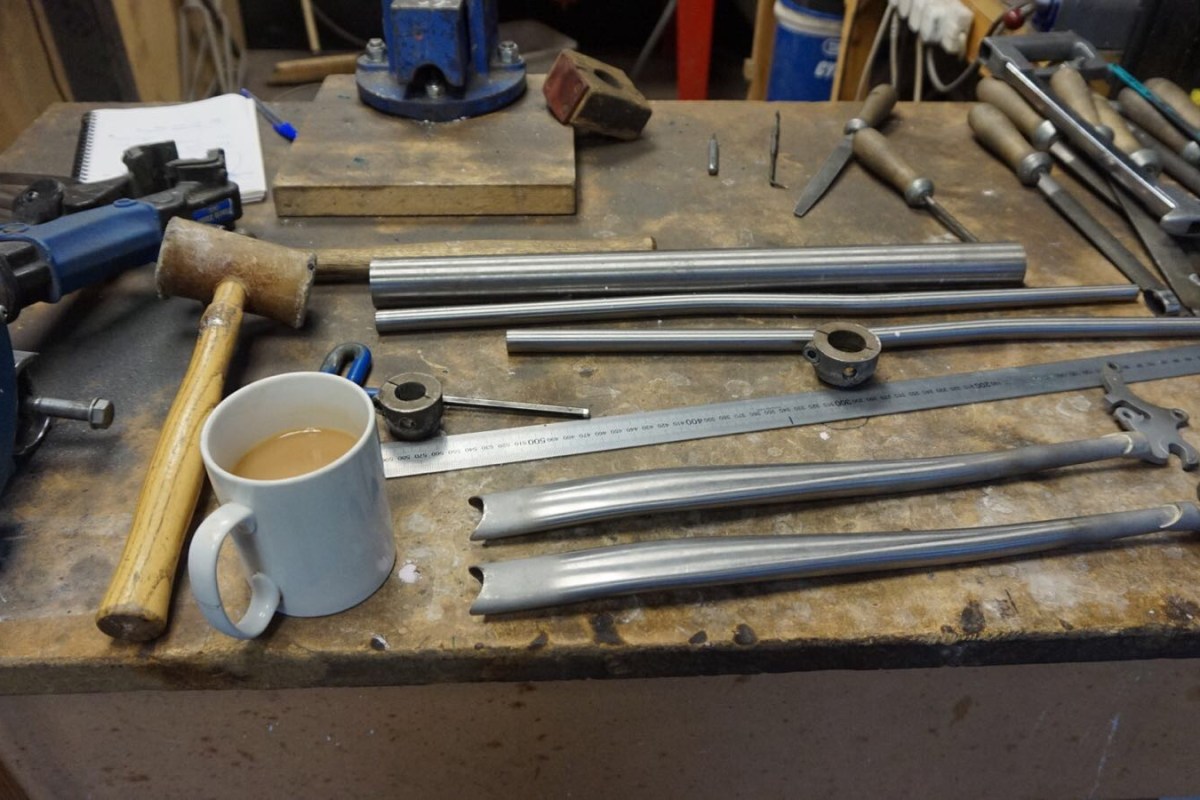
Surprisingly – at least for me – on the second day I was encouraged to do all the mitring by hand. Cutting down the tubes to size before using files and a bench grinder to create the shapes I needed. There are shortcuts – Pete explained that you can print out templates – but I was there to learn and my attitude is that you shouldn’t necessarily take the ‘easier’ option. I’ll be honest; it was frustrating. But it gave me a real understanding of the spatial relationships between the different tubes and how they work together.

So you had all your mitres.

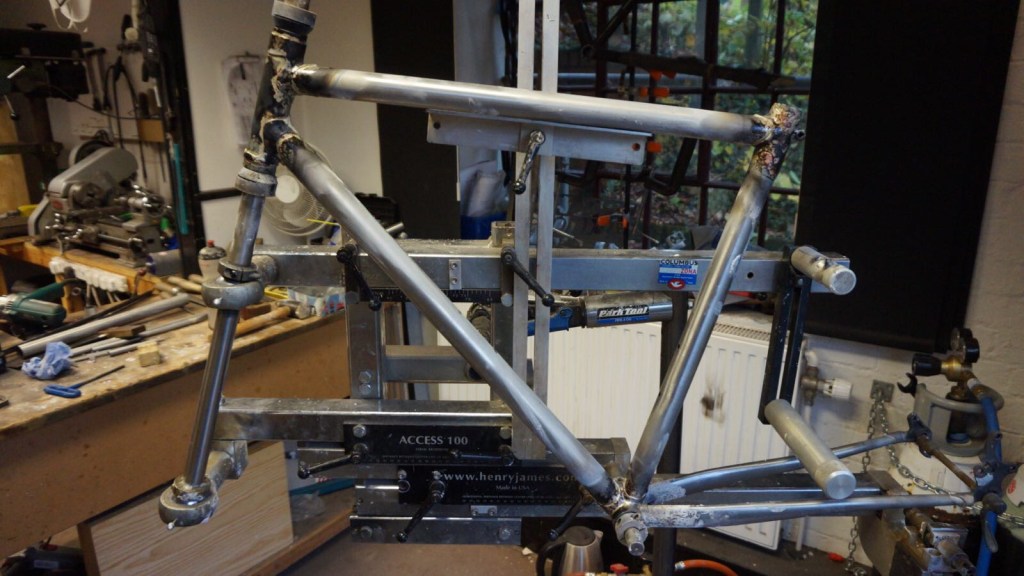
The third and fourth days I can best describe as the business end of the course; using a jig to set up the correct geometry before brazing the tubes. And it was particularly during this part of the process that I noticed some of the really idiosyncratic aspects of engineering; quickly moving from the precise measurements on the jig to banging out adjustments on your tacked frame with a lump of wood. I love that there’s a ‘get a hammer and whack it’ approach.

And the finishing touches?

The fifth day was all about the final small details. Brazing on the cable stops and the disc-brake mounts before all the filing and cleaning. Probably the hardest day as I was a little frustrated with the fabrication of my seatstay bridge and I was exhausted by that point. Physically and mentally. You’re so close to actually being finished but still have a way to go.

Did you learn anything about yourself?

It was quite a challenge to take on this build with the knowledge that I had absolutely no idea what I was doing. And I think, as you get older, that you tend to stick in your comfort zones. For me to continually have to ask if I was doing something in the right way wasn’t particularly easy. There was always that unspoken thought prior to the start of the course that I wouldn’t have the necessary skills or abilities to make my own frame. And I was surprised at the raft of emotions you feel when you’re doing something like this; the extreme highs and lows in terms of confidence that I experienced over my week-long course.

And now that you’ve finished the course?

I came away with a quality frame so there’s an immense amount of pride. And I had a whole week of one-to-one tuition which is priceless when you consider the things I’ve learnt. It’s given me a base level of knowledge and the confidence to do more.

So what’s next?

I’m under no illusions that if I want to continue with this, it’s going to be a long, hard road. There’s no shortcuts. You can’t be good at something like this overnight. Or even after a week-long intensive course [smiles]. You need to put in your 10,000 hours before you can truly call yourself a frame builder. This may only be a very small step into the world of frame building but it’s a step forward nonetheless.


For more information about Bicycles by Design.

Build images: @hellbentforlycra

Frame images with kind permission of Lucy Valentine.

Dov Tate / Parcours

‘I’ve had at least three or four people in the industry tell me my biggest problem is that the wheels are priced too low,’ explains Dov Tate when considering the challenges of bringing his brand to the market. ‘But I believe that we can deliver a quality product that’s at least as fast as our competition and at a price point where you don’t need to take out a second mortgage.’

Having launched Parcours during the summer of 2016, you’d need to turn the clock back a further 12 months to discover the original inspiration behind this venture. ‘I can tell you exactly where and why it happened,’ Tate comments with a smile. ‘I was racing a triathlon around Eton Dorney rowing lake on an old set of tubs and punctured for the second time. So, race over, I threw my toys out of the pram before deciding I needed some new wheels. But then, after going online that same evening, I discovered you could either go down the budget eBay carbon wheel option or pay thousands of pounds for the more recognisable brands. It struck me that there wasn’t really anything in between. A wheelset with a reasonable price point but supported with data and hard numbers to back up what you’re buying.’

Deciding to address this observation and having trained as an engineer with time spent working in the aerospace industry, Tate applied his understanding of aerodynamics and material science to some initial wheel designs before looking at what was available in open moulds and booking time in a wind tunnel.

2017-12-03-PHOTO-00000005

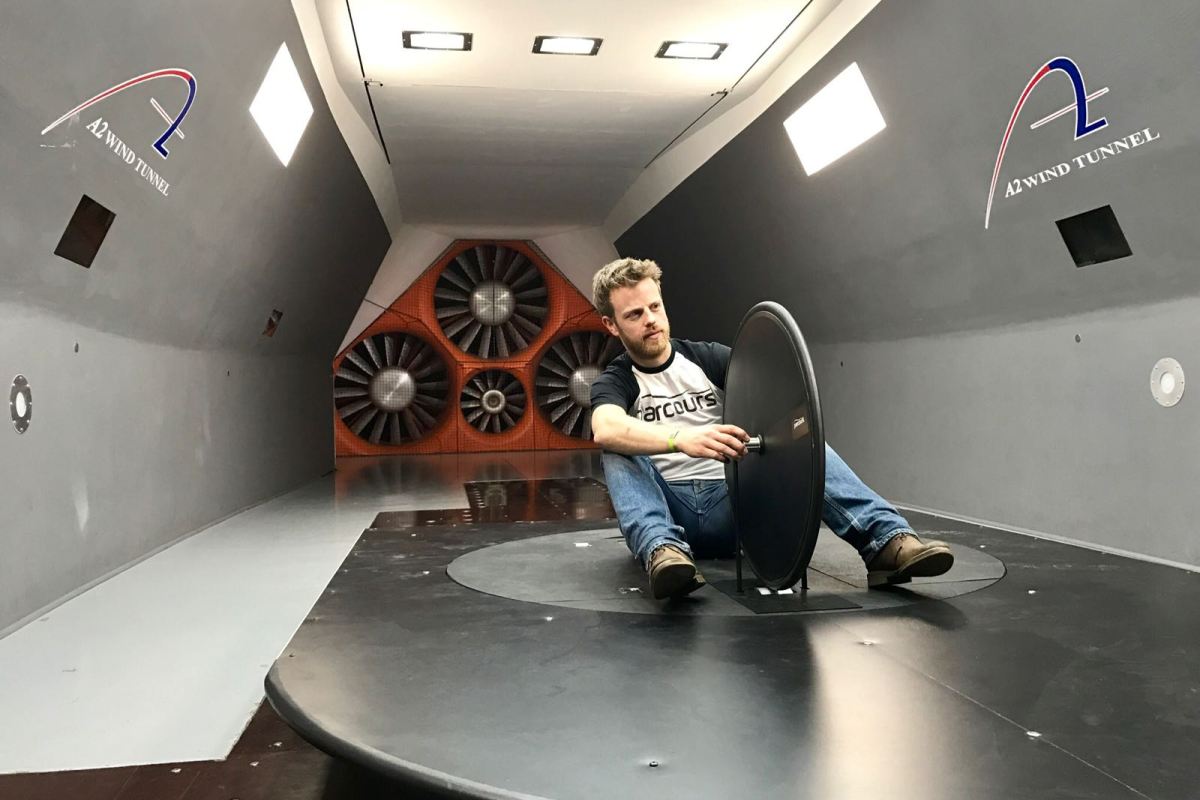
‘Originally I looked at testing in the UK but it’s actually more economical to fly over to the States and test there. We used the A2 facility in North Carolina as they have an excellent track record working with the cycling industry and we came away really happy that our wheel design was demonstrably fast. I then needed to focus on the actual manufacturing process; asking myself how to avoid some of the horror stories you hear associated with carbon wheels such as brake track delamination.’

Acknowledging this need for robust quality control systems and with his wheels manufactured and assembled in China, once they arrive in the UK they undergo a second round of testing and inspection prior to being sent out to customers as and when they’re ordered.

‘There’s far fewer Far East manufacturers than you’d imagine. If you go the direct route online, I would suggest that 90 – 95% of the people you come into contact with through eBay or Alibaba are agents. They work with the manufacturers but they’re just re-sellers. So you have to peel back that first layer in order to contact the manufacturers directly. The single most important aspect of starting my business was spending a couple of weeks out in China visiting factories and telling them what I wanted, how I wanted it and why. And the expertise is out there. It’s no secret why the vast majority of the bike industry manufactures over in the Far East. Controlling your costs is important but it’s the knowledge and skills they bring to the table that’s so very crucial.’

2017-12-03-PHOTO-00000007

In reference to the aesthetic of his brand – both the website and the wheels themselves have a markedly understated design – Tate acknowledges that the pared back approach of companies such as Rapha had a huge influence when he first created his brand’s look and feel. ‘I wanted to keep it simple,’ he suggests with a grin. ‘To focus on the wheel itself and the way it performs and rides. Of course it’s an absolute bloody nightmare in terms of getting prospective customers to easily recognise your products.’

So having secured his manufacturing supply lines and deciding on a direct-sales approach to distribution, Tate next needed to build his brand. ‘You have to take your product to every website, every magazine, journalist, podcaster, blogger. And as much as you want to let your product speak for itself; it’s down to you and the story that you tell.’

‘Naturally this all takes time,’ continues Tate. ‘When I first launched Parcours, I had this idea that I’d probably spend most of my time split between engineering and sales. In actual fact, it’s spent managing social media content and logistics. Depending on the time of day you catch me, Instagram can be either the best thing or the worst thing that happened to the world.’

2017-12-03-PHOTO-00000006

After spending the past months riding his latest prototype designs, Tate feels excited about the current launch of his disc brake wheel range. ‘Eighteen months ago,’ he comments, ‘Parcours didn’t exist. There was an idea in my head but no company, no website, no branding. Zero awareness. Fast forward to where we are now, I like to think we offer a credible alternative to people in the market for a set of wheels but without the need for an unrealistic outlay. And it’s great when someone takes the time to send you an email saying how much they enjoy riding on your wheels. That, for me, is where the real pleasure comes from.’

All images with kind permission of Parcours

Portrait: Dominique Gabellini

I’m told it’s downstairs in the basement showroom of the Condor bike shop. And sure enough, when I descend past the window that fronts onto the busy London thoroughfare of Gray’s Inn Road, I find a matte black bike with deep section tubular race wheels waiting its turn with the Condor mechanics. Apart from a pink stripe that paints a line down the centre of the saddle to reappear on the flattened profile of the aero bars, it looks fairly understated. Obviously built to go fast with brakes hidden away in the front forks and tricked out with an expensive groupset, what makes this bike particularly interesting is that it was designed to race at the Hillingdon Circuit by its owner; Dominique Gabellini. And that’s just Hillingdon.

Later in the morning, when we meet over coffee in the ground floor cafe at Rapha HQ, Dominique sets the design considerations of this particular bike in some context: ‘For Hillingdon, I knew I needed a very aerodynamic frame so I went to see Condor and said I wanted this, this and this and they spoke to the engineers in Milan and the discussions went back and forth from there.’

Perhaps unusual for an individual to have such easy access to a design team for what is, in effect, a one-off build? But this simply goes to illustrate the breadth of the relationships Dominique has built through an amateur racing career that began in the south of France as a teenager before a return to competition in and around London at the age of 45.
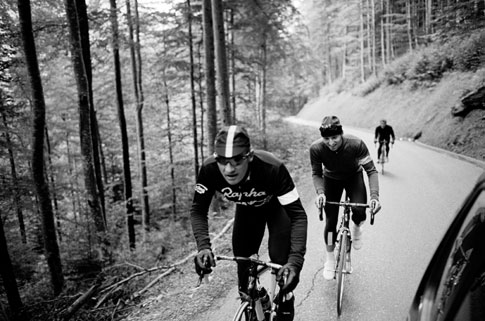
Although playing table tennis to a good standard in his early teens, Dominique grew bored and took up cycling; winning races by the time he’d turned 17 before signing with an amateur team. 3 years later he’d decided to quit and go to university; a decision he levels at the mental challenge of stepping up to an elite level of racing. ‘I’d been told when I was younger that I’d be very good and then, on the first day of my first stage race, I was dropped. There was an echelon and I didn’t have the experience, the understanding of what was happening. I was always at the back and then out of the door.’

‘And this was difficult,’ Dominique continues, ‘because I’d been winning races – winning quite easily – but when I moved up to stage racing it was beyond my standard. It was very hard and, mentally, I wasn’t prepared for it. I was too inexperienced and I’d started racing too late.’

Admitting that these are not particularly fond memories, the contrast to the time he spent racing prior to signing his amateur contract is all the more intriguing. ‘I was part of a group of riders that we called a mafia. We did all the one day races and made a good living from the prize money.’

Describing how he travelled by car between provincial French towns, his voice and gestures animate as he recollects contesting one race after another. ‘If it was a nocturne we’d usually start at eight in the evening before driving to the next town in the morning. And we made so much money. Enough that I could buy a car – a Fiat 127 – at the end of the season. And alongside the prize money you’d win a leg of lamb or a case of wine which we would sell to the hotel.’

‘But we had to work hard for the wins,’ he relates with a smile. ‘When you had two or three mafias turning up at the same race, it was a fight. The race was so fast. And it’s important to remember that for my team-mates – who were much older than me – it was their job. They cut wood in the winter and raced their bikes in the summer.’

Contrasting these obviously good times with his later experience of stage racing, with maturity Dominique has since placed this in some context. ‘I never, ever, finished in the peloton in any of the stage races I contested. And looking back, do you realise how depressing that must have been for a 19 year old? Sometimes I was finishing 20 minutes after the main field. The last rider to be massaged, the others had finished their dinner by the time I sat down. That was my life. And I was riding with guys in their late twenties, early thirties, who’d all left school at 14 because they went into cycling. But that hadn’t been my path. I had a baccalaureate and the conversations we did share were limited as we had so little in common.’

Needing time to reflect on future plans, Dominique attached a rack and panniers to his racing bike and set off for Italy to see his parents. On his return he rode and won one last race before climbing off his bike and informing his father that he was continuing his education and enrolling in university. He wouldn’t compete again for another 24 years.

After graduating with a degree in International Relations, Dominique moved to the UK to study English before settling in London and establishing his own language school. ‘I was working in excess of 50 hours a week – Saturdays and Sundays – but I enjoyed it because I was creating something that didn’t really exist at that time.’

Referring to a business model that had his employees teaching in their clients’ homes or offices, at the time this proved a groundbreaking innovation. ‘We didn’t have any spare money for premises,’ he adds rather ruefully. ‘Everyone does it now but back then it was a novelty.’

It was his cruciate ligament, injured whilst playing tennis, that led to his doctor suggesting he start riding a bike to help build the muscle. As his office was located 10 minutes from the Condor shop, he called in one morning to purchase a bike. ‘When I mentioned I used to race,’ he recalls, ‘I could tell from their reaction that they didn’t believe me.’ Nonetheless Dominique started to train; riding laps of Regent’s Park where he made some friends who encouraged him to consider a return to competition. ‘They took me to a race and I won. Two years later, when I was 47, I won 30 races before realising that when you reach a certain level and you race on your own it gets very hard. So I approached some other people and asked them to ride with me and this became the foundation for the first Condor team.’

Speaking over the phone to Grant Young, son of Condor’s founder Monty Young, it’s clear that the seeds for a close friendship were immediately sown when Dominique first walked in off the street to purchase a bike. ‘We bonded the first time we met,’ confirms Grant, ‘and from day one he was a very loyal customer. A relationship that became, over time, more of an ambassador role and led to us establishing a small race team. We were happy to offer our support as it worked really well and everyone wanted to race with him.’

And it was also around this time that Dominique first met Rapha’s founder and CEO Simon Mottram and learnt of his plan to set up a new company that would retail high quality, carefully considered cycling clothing. As Dominique recalls: ‘He was just starting the brand and asked me if I’d model for them. We went down to the south of France for the shoot and for the next four, five years I continued in that role. And, looking back, those images were seen as being quite iconic in the way they were art directed and subsequently used in marketing campaigns.’

With this relationship now firmly established, when the Rapha Cycling Club was founded in 2015 it was a natural step that Dominique take on the role of ride ambassador; leading groups of members on rides into Hertfordshire and the Chiltern Hills or seeking out lesser known trails and pathways on his cyclocross bike. A role that compliments his continued love of racing as it’s clear that Dominique still has the same passion for competition that first prompted him to take up the sport as a teenager. ‘I perform best in crits,’ he confirms. ‘I like the adrenalin, the speed.’

Excited by the current crop of cycling talent and encouraged that women’s cycling is gaining more media attention, at 61 years old Dominique recognises that the way he competes is, by necessity, different to his earlier racing style. ‘Now that I’m older I know I can’t make the break in an elite field. I stay in the peloton, making sure I’m in the first fifteen and, if there’s a sprint, I try my luck from there.’ With a trim figure honed from weekly 5 hour cyclocross sessions, he continues: ‘In a race you’re constantly weighing up the field. You know who to follow and who won’t have the legs. Sometimes you make the wrong decision – I often make the wrong decision – but that’s racing.’
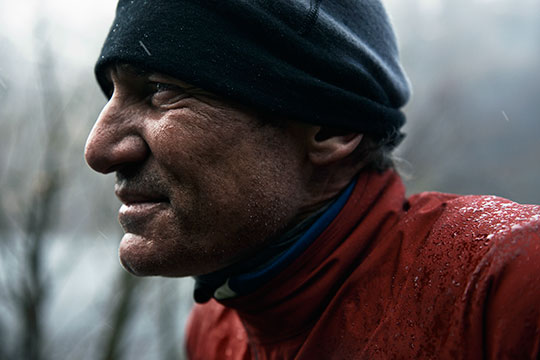
As our time together is drawing to a close – the cafe is beginning to fill as lunchtime approaches – I ask whether Dominique has any regrets in a life, appreciably in two distinct phases, spent racing? At this, he smiles before answering. ‘I enjoyed many good times but I don’t regret going to university. I saw the doping. Knew of the ‘understanding’ certain teams had with race organisers. And there were no miracles back then. You trained and worked hard. The people that were so far above us; they had something else.’

Still racing 2 or 3 times a week in London – riding to the circuit, competing and then riding home – perhaps rather typically he describes how his mood alters if he can’t get out on his bike. ‘I become unbearable. My whole life revolves around cycling and my roles with Rapha and Condor.’ A relationship that Simon Mottram is quick to acknowledge when reflecting on Dominique’s involvement since the launch of the brand in 2004. ‘Dominique has been central to the whole story of Rapha and our success to date. He’s been a model, product consultant, ambassador and connector for the brand. But more than that, he’s been a riding companion, friend and inspiration to me for thirteen years.’

And judging by the number of times our conversation has paused as friends stop by the table to greet Dominique and share a few words, it’s clear to the extent he’s held in such affection. ‘I know them all,’ he remarks as his gaze takes in the various groups of people sitting at neighbouring tables. ‘They are a family to me.’

All images by kind permission of Rapha
Andy Carr / Spoon Customs

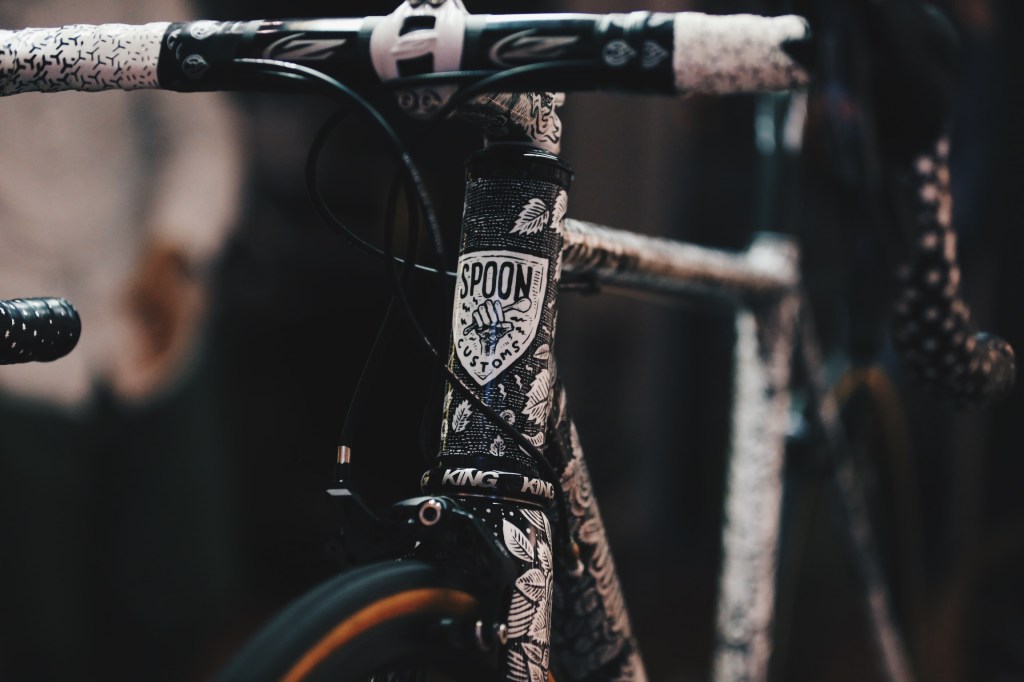
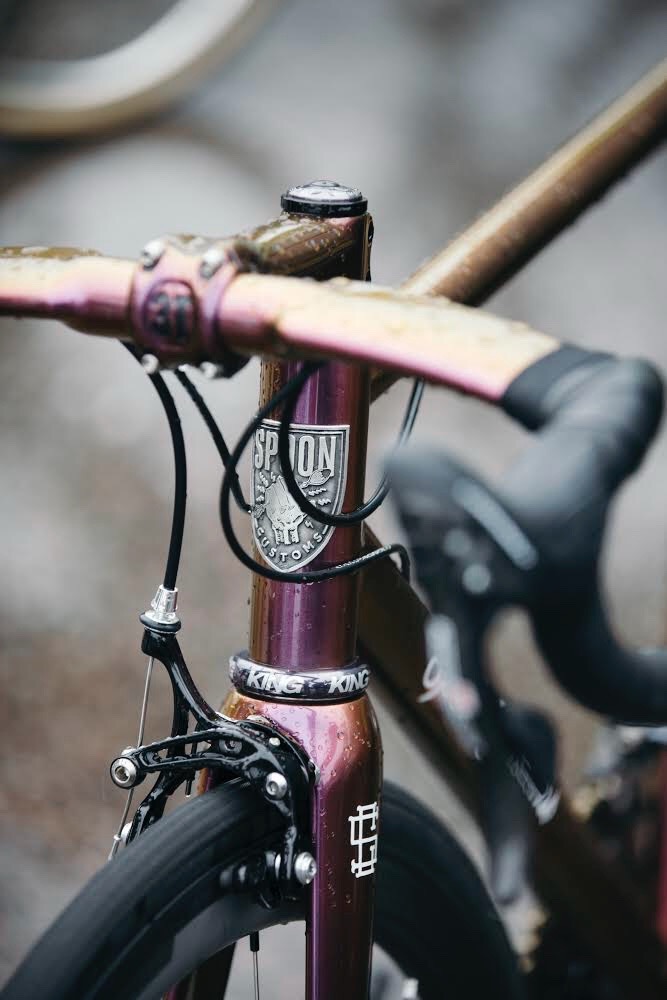
I’m sitting outside the Rapha Spitalfields clubhouse with Andy Carr of Spoon Customs. Next to our table – resplendent in its multi-hued ‘flip’ paint – is his Izoard Road Racer. ‘I’ve always wanted to build custom bikes,’ he explains. ‘In the way that you daydream or procrastinate about a particular idea. But you put it off and enter the world of work because people tell you that it’s too hard or you don’t know enough about it.’

Following art school, the work in question turned out to be graphic design before a move into marketing. But the nagging realisation that life wasn’t proving fulfilling led to a blagged trade pass to Eurobike along with the idea of opening a London-based bike shop.

‘But I came away with more questions than answers,’ Andy continues. ‘Principally because I’m not comfortable selling something that I don’t fully understand. And that simply buying a frame from a third-party manufacturer wouldn’t afford me enough control over its design and provenance.’

Returning to the UK a little deflated, Andy took some time to consider these crucial questions before enrolling on a frame making course with the Bicycle Academy. ‘I decided that, even if I chose not to continue making frames myself, it would nevertheless help to understand the engineering principles of the build process.’

Ten days later Andy had fabricated his first frame but with the realisation that he would still need to outsource manufacturing when the time came to launch his custom bike business. ‘I’ve got this slight tremor in one hand,’ he points out. ‘Nothing debilitating but a problem when it came to holding a brazing torch.’

With this prototype frame ‘tattooed’ with an intricate design by Sam Dunn, Andy could now begin his search for a manufacturer that would meet his exacting standards and finally fulfill his longheld dream of founding Spoon Customs; a name I suggest originates from metalwork design heritage?

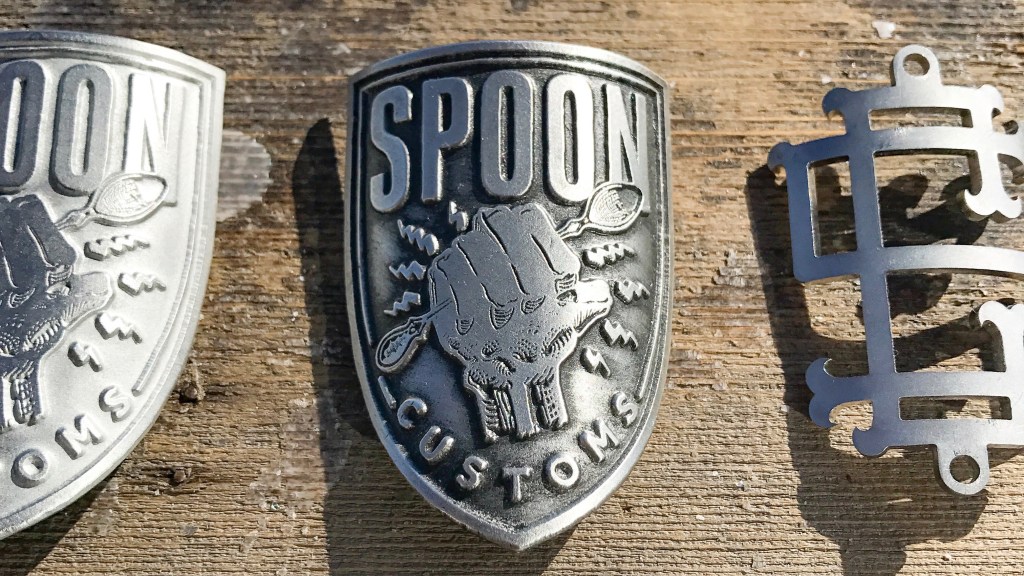
‘Most bike companies are eponymous,’ he states with a smile, ‘but, for me, that would mean something along the lines of Carr Bikes which I didn’t feel made a lot of sense. Spoon was my nickname at school and Customs is a nod to the American hot rod scene.’ A reference that becomes immediately apparent with the Izoard RR as Andy goes on to explain: ‘This model is kind of tricked out. Slightly retro but dialled in performance-wise. I like the notion of customising every single aspect of the build; even down to the details on the tyres. But it’s never been enough to simply make a bike that looks good. The Izoard is light and fast because we set out to make a really beautiful steel frame that would be just as relevant as the latest carbon bikes. It might have crazy colours and design cues but we’re not stuck in the past.’

His search for a manufacturer eventually led him to Northern Italy. ‘My builders are lovely people with a passion for fabricating frames and they simply ticked all the boxes. But that’s after knocking on a lot of doors and not always getting a very positive response. You have to remember that this was before the business was launched when I wasn’t a limited company and didn’t have a VAT number. But you keep on making enquires and visiting factories until you find what you’re looking for.’

‘People want a classic look,’ he adds. ‘Made with the same attention to detail that you’d see in a handmade pair of shoes or a bespoke suit from Savile Row. They’re interested in provenance but not only of the materials that go into their build. It’s increasingly important that they have a relationship with the individuals that work on the item they’re purchasing. And it’s these sort of people that seem drawn to the custom bike world. They want to know where it’s made, who by and even, to an extent, why.’

In terms of an aesthetic, customers are encouraged to provide a Pinterest ‘mood board’ with the Izoard RR as a starting point in terms of a build specification. With an eclectic range of components from companies such as 3T, Brooks, Campagnolo and Spin Industries, Andy is keen to stress that nothing is chosen in a tokenistic fashion. ‘We’re building bikes but we’re also building relationships. And Spoon Customs is a relatively small company so I needed a lot of faith from these suppliers; more yes’s than no’s. I’m chasing a dream and I can’t work with people that say something’s too difficult.’

‘Take 3T, for example. After every meeting we go for a ride. A lot more fun than my old job [laughs] and Brooks was an obvious choice for the contact points. We’re testing in the Alps and building in Italy, so specifying parts with such an undeniably traditional heritage is a nod to our British design roots.’

With a disc-brake equipped adventure bike already in development and plans to build a fixed wheel to race in the Red Hook Crit series, for the moment the Izoard RR is the reference point for where Andy is taking Spoon Customs. A brand identity that epitomises top-end performance in a beautiful package and driven by a need to deliver the highest levels of customer service.

‘Some of that comes back to the anxiety that Spoon Customs has to be as good, if not better, than everybody else because I haven’t actually got the brazing torch in my hand. It’s like when a friend asked me what I was doing and I started by explaining my vision of Spoon Customs and what we’re producing but she didn’t quite get my role. Because basically I can’t braze, can I? I’ve got a shaky hand. And she found that really refreshing. For an individual to admit they can’t do something. But we’re not trying to be something we’re not. We’re just making some really cool bikes.’

‘I can’t pretend that it’s been easy,’ Andy suggests as we finish our coffees. ‘But to make a bike that we’re proud to offer to our customers – to see it in paint for the first time – has been a whole load of pinch yourself moments.’

For more information on Spoon Customs

First published by Soigneur

‘Tattooed’ bike image by Sam Dunn

La Caleta: The story of a bike build

In an age where we increasingly demand goods at the click of an online button, it’s interesting when an individual chooses to embrace the wait for a planned purchase. Maybe the acceptance that quality takes time eases the passing weeks and helps build anticipation. But what becomes immediately clear, when discussing the build of Ian Walton’s new Clementina, is that commissioning a custom bicycle is as much an emotional investment as a purely financial outlay.

‘I wanted a gift for myself after turning 40 a couple of years ago,’ Ian explains in answer to what provided the initial inspiration for placing an order. ‘Something special that I would use. I love handmade things and like to ride whenever I can, so a classic steel frame seemed the perfect fit.’

Decision made, Ian didn’t hesitate in approaching Pau Tena; a good friend and founder of Clementina Bikes. Using Pau’s wealth of experience as a performance biomechanic, the pair worked together to distill Ian’s requirements down to a fully-realised design. ‘It was important to me that I was part of the process. I’d visited the workshop; seen the attention to detail and respect that’s paid to the traditional values of fabrication. And, as Pau’s a creative guy as well as being technically gifted, this background imbues his bikes with a little bit of soul.’

With fabrication based in Barcelona, following a bike fit with Pau an appropriate Clementina frame was chosen from the range of standard sizes. Although custom options are available if there’s a specific requirement, standard frame sizing helps achieve a competitive price point before paint is applied and the final build completed. ‘Even at this latter stage, the input of the individual client is still encouraged,’ Ian points out. ‘We found a Columbus fork that has this beautiful curve and can take 28s. The road doesn’t stop if it gets a little lumpy and, where I live, there’s miles and miles of vineyard roads to explore.’

2017-08-06-ClemDelivery_11

But it was perhaps the choice of paint that prompted the longest discussions and is arguably one of the key features that sets this bike apart from other handmade builds. ‘Pau considers this to be a Mediterranean bike,’ explains Ian. ‘Rooted in the soil and culture of this beautiful region. Each build embracing the southern European racing heritage in a bike designed to perform.’

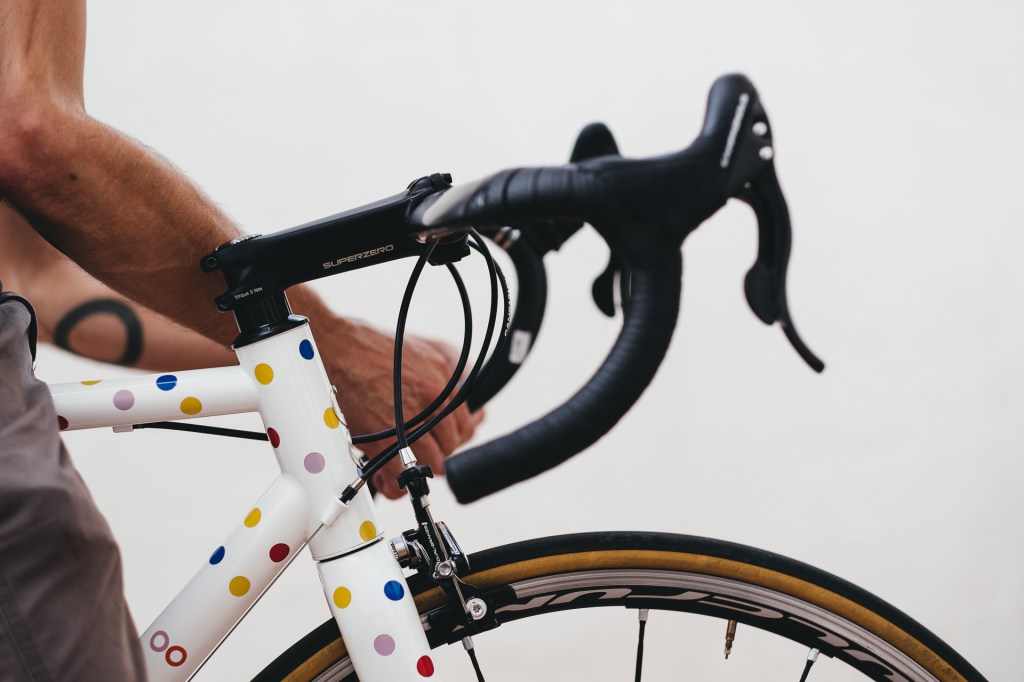
With Ian previously riding a Clementina painted in a deep claret that references the grapevines and gravel roads that thread the local landscape, it was Pau who suggested the white of this later build after listening to Ian describe the stone houses that dot the hillsides of Andalucia. ‘One of the places where I feel most at peace is a tiny worker’s cottage owned by my girlfriend’s parents. And my frame colour perfectly brings to mind the whitewashed stone walls. It’s on the coast and we stay there as often as we can. Phones are off and we escape from the world. So when Pau explained why he’d chosen the white I immediately agreed. It spoke to me on a very personal level.’

‘The frame is entirely chromed underneath the paint with one chainstay left bare,’ Ian continues. ‘Pau wanted the chrome to have a gold tint and, as he’s originally a painter and thinks along those lines, I was happy to be led somewhat. I’ll admit that I was apprehensive until I saw the finished bike but he was absolutely right. It adds to the design beautifully and nicely references the sun and the sand of the immediate locality.’

When it came to the contrasting colours, Pau’s initial suggestion resonated with Ian. ‘It was almost as if we worked towards the same design decisions but from very different starting points. I wanted something that paid homage to Futura 2000; one of my favourite graffiti artists. He was very influenced by a book called Futureshock that addresses the increasingly rapid rate of change we see in our times. And these ideas stuck with me as I instinctively feel the need to keep moving. Not only in a professional sense but even to the extent of where I choose to live. I’d spoken to Pau about these influences and he came back with the idea for the dots inspired by the native flowers that grow wild over the landscape where I ride. And this beautifully combines the sense of movement through a changing landscape with a timelessness that nature represents.’

2017-08-06-ClemDelivery_05

Finished with a Campagnolo groupset and with a head tube badge manufactured in silver by Roc Majoral, Ian acknowledges the sense of anticipation that was heightened by the length of the build process: ‘In the end, as there’s a degree of waiting when you commission a bike of this nature, this very much added to my emotional response. Prior to the call from Pau to say the bike was ready, I was already mentally planning my first ride.’

‘And without wanting to sound clichéd, it nails everything,’ he continues. ‘Pau designs Clementina bikes with race geometry. They’re built to perform and, in the simplest terms, when I put the power down it goes forward. There’s that immediacy to the way it reacts to your changes in tempo. It’s direct but not in a harsh way. Agile but rock solid. It’s like nothing I’ve ever ridden before.’

Naming the bike ‘La Caleta’ – the cove – marries the frame colour with the house that Ian uses as a retreat. ‘It’s a very special place and kind of closes the circle in terms of the reason I asked Pau to build me the bike.’ An interesting expression as it perfectly mirrors the twin circle logo that is found on each Clementina frame. Representing symbols of integrity, harmony and equilibrium, Ian is now at the start of a journey where the waiting is over and the riding has begun.

For more information on Clementina bikes or to place an order, contact Pau Tena: info@pautenaciclisme.com

clementinabicicleta

All images by kind permission of Ian S Walton


M2L

Departing at dawn on 3rd September 2017, I joined riders on the Manchester to London challenge as they headed south on a route that threaded its way through the heart of England before finishing at Ambitious about Autism’s TreeHouse school.

Described as ‘220 miles of hard British riding’, it’s almost inevitable that you focus inwards. The chatter ceasing as the pace line forms. Decisions reduced to your turn on the front before dropping back to recover. On the need to keep eating and drinking. To keep moving forward.

Later in the day – raw emotion etched across faces – it seemed fitting that, though each individual may have had their own starting point in terms of fitness and cycling experience, in riding together they all shared the same finish line.

IMG_8111

I knew it was going to be a tough day but everybody pulled each other through. And rather than be negative when things got difficult we chose to look at the positives. Each mile, every metre of climbing; a step nearer to our goal. Enough to keep you moving forward. At the finish, that’s the poorliest I’ve ever felt on the bike. Suffering with dehydration and hypothermia. One of the toughest things I’ve ever had to do but, as much as it was hard work and it hurt, it still didn’t break me. Sarah

I think it’s an amazing achievement that we finished. And it’s definitely a case of mind over matter. You can make yourself push past limits you never thought possible. I’m proud of my body and how far it went. Crying helps. As does swearing. But all of this was only possible because of the company on the road. Everyone looking out for each other. Karly

It was tough. Well over twice what I’d ever ridden before. And I had moments when I did wonder why I was doing it. But I came out of it releasing that I’ve completed something that I wasn’t absolutely sure was possible. With the knowledge that if you put your mind to a task, if you just keep going, then it’s surprising what you can achieve. David

Such a hard ride. A brutal headwind but we all worked well as a team. You learn how deep you can go and that, mentally, we’re all so strong. You just have to keep going and, when you cross the finish line, you realise it was worth the effort. Hannah

There’s a point where things start to get really hard. Hurting all over and weary from the long hours of riding, just sitting down in the warm community hall at the final feed stop was a welcome relief. But there was still the need to step out again into the dark and the rain; the grim reality of two more hours of effort. And that’s when companions come into their own. You’re not venturing out alone. We worked together, suffered together and finished together. This is what I’ll always remember. Adrian

Ambitious about Autism

Rapha M2L

Portrait: Dean Hill

Get to know Dean Hill, manager at Rapha Manchester, and it’s soon apparent that riding a bike acts as the thread that runs throughout his busy working week. ‘Typically, I head out on my cross bike through Drinkwater Park towards Bolton,’ he recounts. ‘It’s 3km from the clubhouse to the start of the cycleway and then you can ride the whole way in the woods. No traffic, no cars. It detaches me from the city and I can leave the work ‘me’ behind for a few hours.’

Living in and around London since childhood, with spells both north and south of the river, university followed sixth form before Dean quickly deciding this wasn’t the right path. Already having experience in retail, it was whilst working in the Westfield Shopping Centre that he was approached by Fred Perry; on reflection a brand Dean suggests was very similar to Rapha in the way the company was organised. ‘They had a relatively small head office,’ he explains, ‘with the same sense of ‘family’ that I now enjoy.’

Volunteering to run the Wednesday morning Regent’s Park ride had already established links with his future employer and it was over a coffee at the Brewer Street clubhouse that Dean first discussed opportunities to work with Rapha. Handing in a CV led to him joining the team as assistant manager before, 6 months later, a secondment took him up to Manchester.

IMG_7324

A little over 3 years later and happily settled, Dean is ideally placed to contrast the riding styles of the two cities. ‘In London,’ he reflects, ‘the riding can be very coffee shop based. Regent’s Park laps is a staple; no matter what time of the morning. Riding in Manchester, it’s all about getting out into the surrounding countryside. Cheshire lanes to one side and Peak District climbs on the other.’

Believing that the bike can mean different things to different people, Dean increasingly uses his time riding as a release. ‘Whether it’s a social loop with friends,’ he explains, ‘riding with my partner or racing cyclocross; it’s the one consistent aspect of my life. Something I can always fall back on, no matter what else is happening.’

And it’s a busy work life. The day to day aspects of managing the clubhouse are coupled with the constant planning necessitated by the campaigns his team deliver. But it’s clear this is a role Dean relishes and enjoys immensely. ‘There’s the community aspect; the clubhouse acting as a hub for our customers rather than simply a retail space. These doors are open to everyone. When a bike race that we’re showing on the screens is entering the final 5km, because we all share a love for cycling, everyone stops what they’re doing and we all watch the finish together.’

IMG_7321

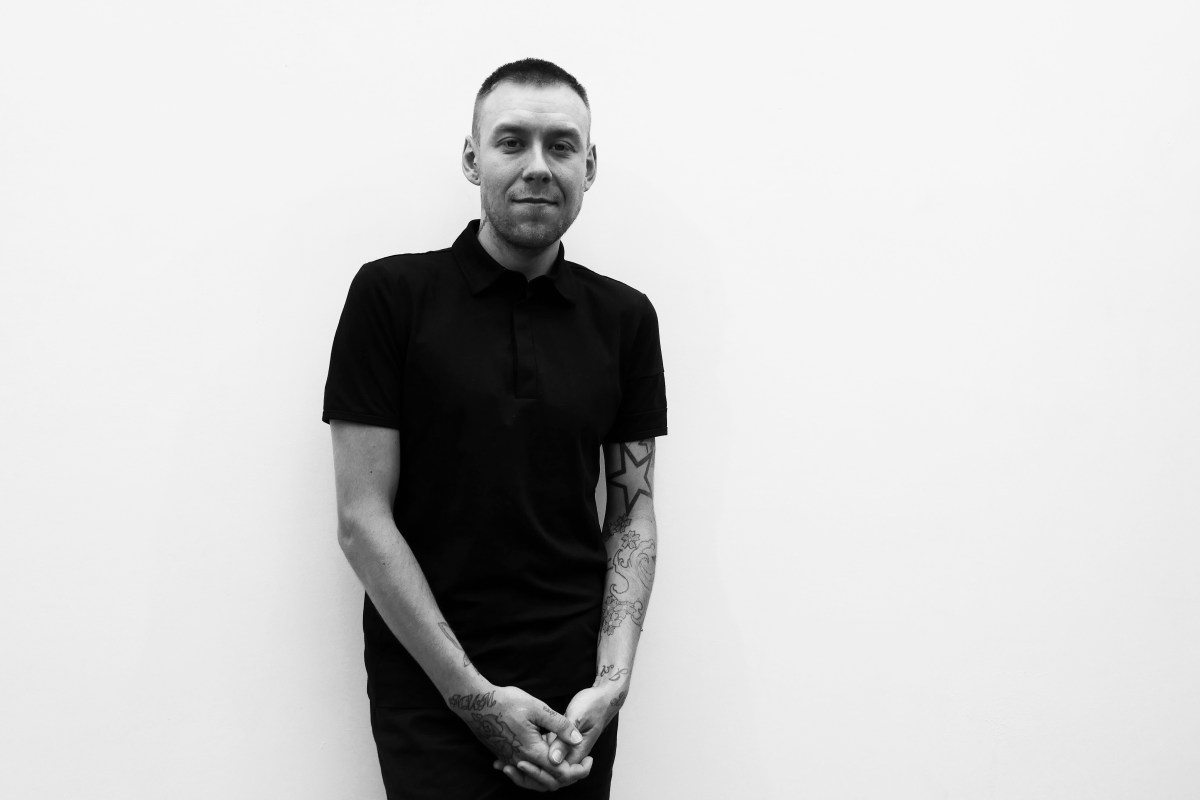
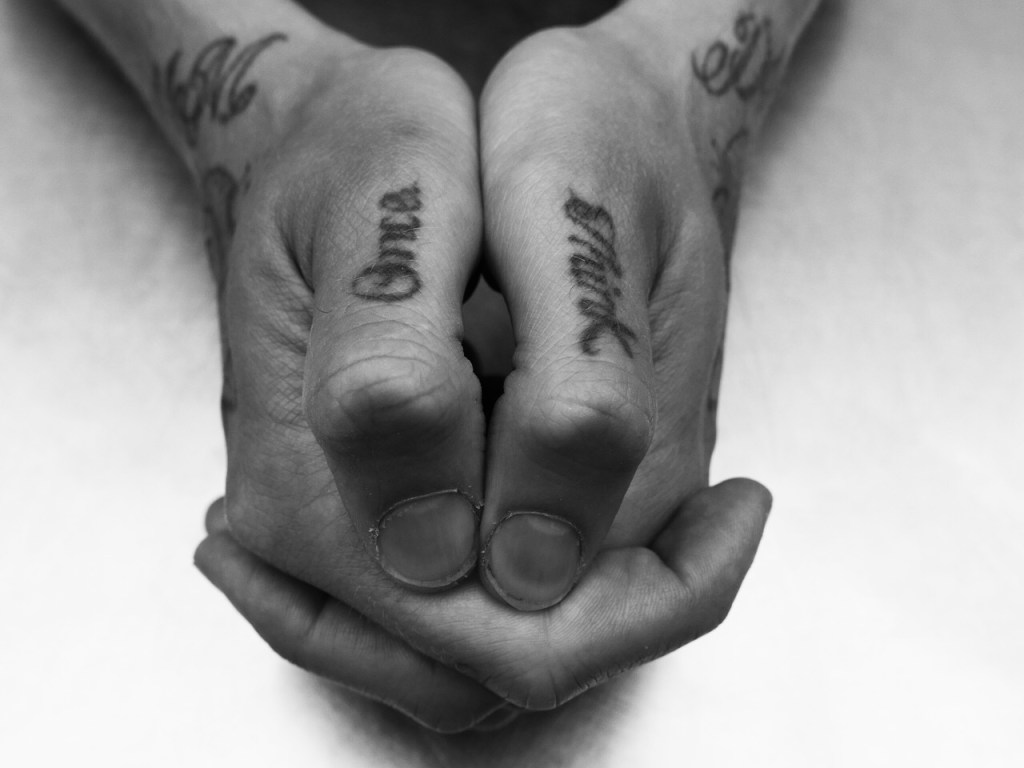
Considering his move to Manchester, having the script ‘Think Once’ tattooed across his thumbs is perhaps a clue that Dean doesn’t waste time second guessing decisions. ‘That’s my reaction to the way, throughout life, you have people telling you to think twice before you do something. Personally, I don’t believe that. We only get a certain set time-frame and I never want to look back and regret not doing something.’

An approach to life that extends to his riding. ‘There’s a collective feeling of camaraderie that you share when you ride as a group. A bond that’s built out on the road. A connection that’s deeper than the individual and is often forged on the hardest, longest days on the bike. And that’s why the clubhouse is here; for those moments when we sit over a coffee and reflect back on what we’ve achieved riding together.’

Rapha Rides Manchester, 7th – 10th September

Sarah Prince / W100

In March 2016, Sarah Prince was approached with the idea of leading a fortnightly women’s ride out of Rapha Manchester. Encouraged by her guidance and enthusiasm, word quickly spread with growing numbers of both experienced and individuals new to cycling meeting at the clubhouse for a pre-ride coffee. A little over a year later, city centre shoppers are now regularly treated to the sight of a neat peloton disappearing down Deansgate en-route to Cheshire lanes or Peak District climbs.

Part of the Rapha Ambassador team, it’s fair to say that Sarah has played a key role in encouraging more women to ride their bikes in and around the city with over 60 registrations for the Manchester rides of the Rapha Women’s 100 a clear indication that female participation has never been stronger.
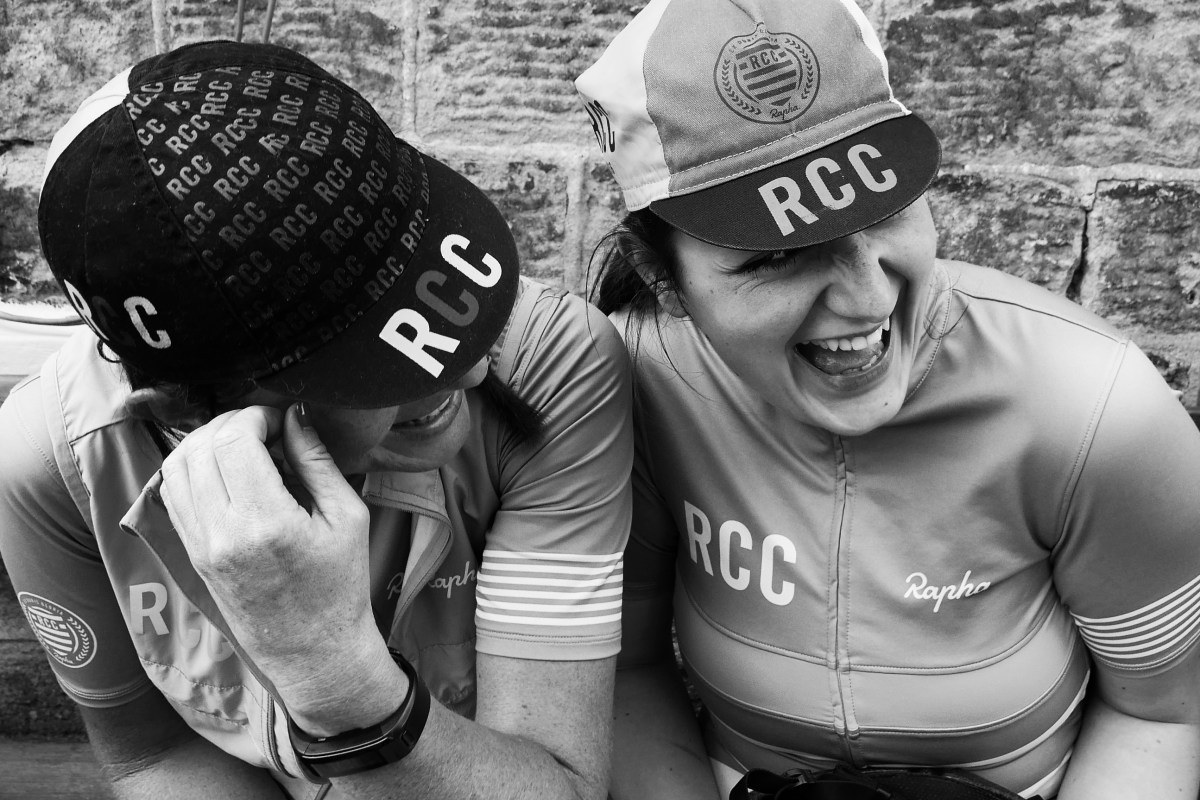
Returning to the clubhouse after leading the ‘hilly’ route out from the city centre towards Ramsbottom and the iconic 25% ramp of the Rake – a prize on offer for the day’s fastest Strava time – Sarah took a moment to explain what it means to encourage other women to get out on their bikes.

Why, on a personal level, do you ride?

It’s the sense of freedom; you, the bike and the road. The exhilaration of being outside in all weathers and knowing that you have the abilities and confidence to deal with whatever is thrown at you. And then you combine all that with the camaraderie and spirit of riding with other people. The smiles as we arrive back at the clubhouse; the feeling of, ‘We’re all in this together, let’s crack on.’

What’s it like cycling in and around Manchester?

Within the city centre it can be challenging but we address these issues and explain about positioning yourself properly when riding and that confidence is the key. Not letting the cars squeeze you into the curb. And once we’re out into the lanes, which doesn’t take long, then it’s just brilliant.

A favourite route?

I do like my hills so the Hayfield loop is a good example. There’s a few short, sharp climbs and a delightful little tearoom where we sit down after 25 or 30 miles and talk about what we’ve just achieved.

What do you find are the most common concerns for riders new to cycling?

I’d say coping with the traffic. But I find that once they understand how riding in a group gives them a presence on the road – a feeling of protection – then their confidence soon begins to build. And I always do a pre-ride briefing so everyone knows where we’re going, what to expect and to look out for each other. Riders that joined us in the New Year – some of them initially very nervous and apprehensive – are now passing on advice and encouragement.

What are your goals or ambitions for women’s cycling out of Manchester?

When I first took up this role it was simply to help more girls enjoy the sense of freedom that riding your bike can provide. It’s now grown to a point where they’re organising themselves through our group chat and planning their own rides. Our women’s Rapha Cycling Club (RCC) membership is also growing so we have more mixed rides on a Sunday which I personally feel is a healthy sign of the way we’re moving forward in encouraging female participation.

An important role that Rapha plays?

Events like Braver Than The Elements and the Women’s 100 really help in celebrating women’s cycling on a global scale. And the female specific kit that Rapha is designing in response to our feedback is so encouraging. For me, though, what really stands out is Rapha’s sponsorship of the Canyon-SRAM professional women’s cycling team. Days leading up to this year’s Tour de Yorkshire we had team members Hannah Barnes and Mieke Kröger visit the clubhouse before we took them out on a ride. So inspiring to share the road with such strong female cyclists.
It’s clear you feel very passionate about your role?

Sometimes, it can be the little things you notice. Someone turning up at the clubhouse on a Saturday morning wearing trainers – very apprehensive and nervous about that first ride – and then they show up two weeks later in a pair of cycling shoes with cleats. We’re all on a journey and to play some small part in helping to encourage another female rider; well, that’s a privilege that I value enormously.

To view the Rapha Manchester Women’s 100 ‘hilly’ route.

For more information on the Rapha Manchester Women’s Clubhouse Rides.


GLS and #tcrno5

Rolling out from Geraardsbergen in Belgium on Friday 28th July and with a finish line in Greece, the Transcontinental Race is a challenging event for even the most seasoned of long distance cyclists. First time entrant and Rapha Ambassador Grace Lambert-Smith took time out from her planning and preparation to discuss what’s inspired her to compete.

I’d like to take you back to the talk hosted by Rapha Manchester in November 2016 during which Emily Chappell reminisced about her experiences racing the Transcontinental.

The registrations had opened not long before and I’d got my hands on the race manual to take with me that evening. So I was already kind of interested but maybe sitting on the fence. After listening to Emily, hearing the enthusiasm in her voice, it very quickly snowballed into me submitting an application for a place.

What reactions do you get when people find out you’re racing the Transcontinental?

If you tell people you’re going bike touring across Europe you get a fairly standard, ‘Oh, that sounds fun.’ But when you add that it’s a race you get quite a different reaction. A colleague at work recently asked what I had planned for the weekend and I told her that I was riding from London to Copenhagen for a training ride. She looked at me like I had three heads. But equally, there are friends from Rapha Manchester where I ride that totally get why I’m doing it.

Is it particularly poignant that Mike Hall, founder and inspiration behind the Transcontinental, sadly lost his life competing in the Indian Pacific Wheel Race?

The news was really upsetting but, interestingly, made me want to ride my bike even more. And then, looking towards the Transcontinental, it was Mike’s race so it’s going to be a really special year to do it.

Your emotions when first hearing that you’d been given a place on the race?

I was obviously pleased but it seemed so far away that I almost didn’t have to immediately think about it. The reality of what I’d signed up for hadn’t really sunk in. And then I recently had another confirmation email from the Transcontinental team that prompted a little meltdown. Me worrying that I won’t be able to do it. But I feel I kind of needed that so that I could zero everything and decide what I’ve actually got to do.

Version 2

You’ve prepared for the Transcontinental by entering a series of long distance audax events and the Bryan Chapman Memorial ride during which you covered 600km in under 40 hours. What did you discover about yourself during these rides?

You have plenty of time for self-reflection on these types of events. Particularly during the Bryan Chapman when I discovered I’d forgotten to charge my Di2 [laughs]. But despite having no gears, the overnight rain and lack of sleep; I still finished it. That taught me I can be quite tough in difficult circumstances and that, mentally, I’m going to be alright. Even if I still need convincing on occasion.

How do you manage the more extreme aspects of this type of riding?

I’ve definitely had to train my body to survive on less sleep. Taking a little 10 minute power nap in a bus shelter during the overnight stretch on the Bryan Chapman was quite amusing. But it’s amazing what a difference it can make. You immediately fall into such a deep sleep that when you wake a few minutes later you feel ready to carry on. And I’ve been known to have a little cry here and there. But that’s just because my emotions are heightened due to tiredness. I’m not sad; quite the opposite. I’m happy to be out on the road. On the Copenhagen trip I found I could manage on 4 hours each night so, as training, I’ll take that to the Transcontinental.

This was the ride from London to Copenhagen in your role as a Rapha Ambassador. What goes through your mind spending such long days in the saddle?

It can depend on the route. One of the roads that skirted the North Sea was arrow straight and devoid of any interesting features apart from 28 wind turbines. I know that because I counted each one. Anything to break up the tedium. I ended up just plugging in my headphones and listening to music.

Have you considered what will be your biggest challenge?

Riding alone. All the audax events and the Copenhagen trip I’ve ridden with other people. But I’m happy with my own company and, when you break it down, it’s just a series of long rides. Only day after day without the usual gaps.

IMG_6673

Alongside the endurance training you’ve undertaken, how have you prepared your bike in terms of equipment?

I’m riding my Giant Propel which might be totally inappropriate but I love it. It’s lightweight –  designed to race crits – but it’s never going to do that with me [laughs]. I ordered some new wheels with a dynamo hub and a good spoke count. A bigger cassette with a 32 as I’ll be climbing with a fully-loaded bike and I’ve gone tubeless. They are the future [smiles]. I’ve done over 3,500km on these tyres and only had one puncture. All those tiny little cuts that you pick up from glass in the road; with a traditional clincher it’s an instant flat but I just get a little bit of sealant leaking, keep pedalling and I’m fine.

Has your preparation required any practical testing?

Lots of riding. Discovering what works and what doesn’t. It’s like the aerobars I’ll be using. They probably give a small aerodynamic gain but, really, they just give me another position on the bike and take the weight off my wrists. It’s all about managing these aspects of comfort over long distances.

And clothing?

Rapha brevet bib shorts – they’re amazing – and a classic jersey. It’s really comfortable and has lots of room in the pockets for what I’ll be carrying on the bike. And I’ll be wearing my RCC climbers. Super light and reflective so there’s an added safety benefit on the road.

How will you manage navigation on the ride?

I’ve broken it down to individual 200km sections that I can sync to my Wahoo Elemnt. I’ll have to add that to my ‘to do’ list [laughs]. Charge Di2 and upload routes.

Aside from four compulsory checkpoints on the Transcontinental, the route mapping is down to you. What’s informed these decisions?

I started with an atlas which might seem rather old-school but it provides a useful overview of the route before I focus on individual sections. Rather than constantly zooming in and out on the computer screen, I can get a general sense of the direction I’ll be taking. But then I realised that this particular atlas didn’t include Romania; a country I’ll be travelling through [laughs].

What are you most looking forward to experiencing?

Finishing. Having a beer on my 27th birthday as that coincides with the finishing party. I’d quite like to get there for that.

@thisisgrace_

#tcrno5


Pau Tena / Clementina Bicycles

We’ve all heard conversations where a change of direction or discipline is first voiced; the practicalities of work and family balanced against the excitement and opportunities of following a different path in life. Even after pursuing a particular career that has met with recognised success, it’s not unusual to dream of starting afresh with new goals. Whether these lifestyle ‘adventurers’ decide to apply previously hard won knowledge and experience or strike out in an altogether unrelated field is perhaps a choice dictated by individual passions. But I imagine Pau Tena would entirely understand the temptation of new challenges that many consider but few act upon.

Especially as, after accompanying the Spanish Paralympic Squad to the Rio Olympic Games in his role as a professional biomechanic, Tena has chosen to establish Clementina; a bike brand that aims to capture the spirit of the Mediterranean in a race-bred steel bike that is handmade in Barcelona. ‘I’ve always been a painter,’ he volunteers, ‘and wanted to marry this artistic background with my 20 years of experience working as a biomechanic. Clementina encompasses a mix of my culture and tradition with the latest technology. All in a bike where speed and beauty are the objective.’

2017-02-08_Clementina-Belle_179

Speaking about his brand’s identity, it becomes clear Tena wants the design of his bikes to represent – symbolically, conceptually and aesthetically – a return to a creative culture. ‘When I think of the Mediterranean,’ he explains, ‘I can see the grapes on the vine, the orange groves. I can feel the sun on my back, smell the sea air and hear the road under my tyres. All of these sensations I want to combine in a performance driven bike. Blending beauty and geography with my values and beliefs in the steel tubes that I use.’

Deciding to initially focus on a single choice of frame, the process starts with a conversation over coffee in Tena’s workshop. ‘Each frame is built to be agile,’ he comments. ‘Stiff enough that when you put power down you go forward but comfortable enough to ride all day.’

2017-02-08_Clementina-Belle_97

‘Unlike a bike, the body is rarely perfectly symmetrical. You need to understand the union of the two,’ Tena continues before explaining how he prefers to work intuitively and conduct a bike fit by ‘eye’ rather than video; taking a series of measurements that will translate into a finished build.

As Clementina frames are handmade in standard sizes, the cost for a frameset is kept to a competitive 1870 when compared to a full-custom build; a sales model increasingly favoured by a number of well known independent frame fabricators. ‘Offering standard sizes,’ Tena explains, ‘reduces the waiting time for the client. It’s still a handmade product but not everyone is happy to have a 9 month gap between ordering and their bike being ready.’

Clem_Spray_12

With a frame constructed from Columbus tubing with a mixture of chroming and paint, Tena supplies complete builds tailored to an individual’s riding needs with colour options that conjure up his Mediterranean surroundings. ‘My favourites are a deep maroon that suggests a glass of red wine and a white that references the stone of the buildings where I live in the Gràcia district of Barcelona.’

Viewing the process of collaboration between himself and each client as the start of a journey, Tena believes this offers a sense of shared loyalty that mirrors the investment, not only in terms of the financial outlay, but in the longevity of the relationship the customer will enjoy with their Clementina bike. ‘People can buy whatever they want from the established manufacturers but, with steel, there’s a sense of soul. Speed and performance but with a sweetness to the ride. And it’s the combination of the fabricator’s experience and passion for steel as a material that is then influenced by the client’s locality and the roads they themselves ride. A build doesn’t stop when they collect their bike. Each climb and descent, the miles that roll under the wheels; all these add to the story.’

For more information on Clementina bikes or to place an order, contact Pau Tena: info@pautenaciclisme.com

All images by kind permission of Ian S Walton; documentary photographer and soon to be Clementina owner.

Conversation: Cath Litherland

Ride ambassador for Rapha Manchester, British Cycling employee and daily commuter by bike; it’s perhaps not an overstatement to suggest that cycling looms large in Cath Litherland’s life. Back at the clubhouse after leading a Rapha Cycling Club (RCC) group out to the east of the city centre in search of hills to climb, Cath explains why see rides.

Today’s ride was called ‘Yorkshire Hills’. Two words important to you?

Absolutely. I grew up in Holmfirth and know a good few hills in that neck of the woods. So, naturally, if I’m leading out of Manchester my default setting is to head east as I like a lumpy ride. Good hills, good company and a beeline for a cafe. Always a winner.

What is it about challenging yourself on the bike that’s so important to you?

I like to know what my limits are before pushing them a little bit further. In the hills, as I came to cycling from running, I understand how to be patient on a big climb and manage my effort.

Your toughest ride to date?

Paris Roubaix. Unquestionably. There’s nothing quite like it. The cobbles are so hard to ride and it’s just relentless. Sector after sector; you try and recover before hitting the next one. It’s brilliant and, 100%, I’m going back next year.

IMG_6186

You regularly lead rides out of Manchester. Has joining the RCC changed how you ride?

My husband Ross and I both feel it’s made us stronger, better riders. We like the dynamic of a group that rides well together.

How would you respond if someone said they were nervous about joining the RCC?

I have been asked that. People I work with at British Cycling that cycle regularly but worry that the club will be too hardcore. And I had the same apprehensions. But I came down one Saturday and realised that it’s actually just a bunch of people that enjoy riding their bikes in a social setting. There’s a real mix of abilities and no one should worry about giving it a go.

As you’ve led rides such as Rapha’s Braver Than The Elements, what’s your take on the way women’s cycling is developing in the UK?

I know from my role at British Cycling that there’s continued interest from women new to the sport and I think this reflects the work that’s been done by the professional side of things in terms of supporting races, increased media coverage and equal prize money. And events such as Braver Than The Elements; they create opportunities for women to ride and provide a pathway for individuals, once they’ve got on a bike, to continue to grow and develop their skills in a supportive and social setting.

And riders that inspire you?

As I’ve ridden the spring classics quite recently, I respect anyone that can ride those races well. Those at the back of the race just as much as those taking the win. It’s an all round tough day in the saddle.

IMG_6187

What bike do you ride?

A steel Genesis that’s perfect for the daily commute and a couple of Specialized – my brand of choice – for the weekend. I’ve got one of the new Roubaix bikes that I rode on the cobbles but it’s just as good if the road’s a little rough. Such a good bike.

If you had to sum up quite simply why you ride?

To push myself, really. I very much enjoy the social side with the club but I also like it when a ride gets difficult. I suppose that’s why I enjoy climbing hills so much. They’re not always easy but I get a lot of satisfaction and self-confidence from giving them my best shot.

View Cath’s ‘RCCMCR Yorkshire Hills’ route here