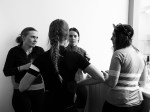
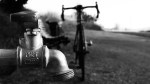
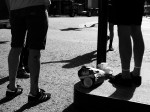
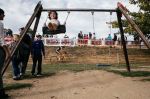
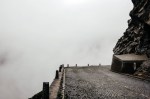
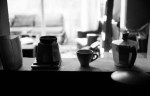
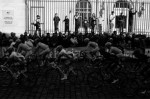
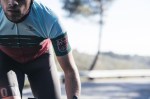
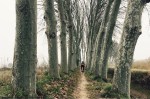
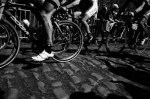
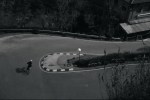
Jochen Hoops: A desire to document

Speaking in a quiet, calm manner from his home in Hamburg, creative producer Jochen Hoops is reflecting on the decision to leave for Paris after growing up in Germany’s second city. Initially signing up for French classes, enrolling on a photography course led to a job assisting a fashion photographer; subsequently helping him decide that he didn’t want to follow the same path.

‘I wanted to earn a living and to be a photographer in Paris you need to work for a couple of years for little if any pay. So I switched over to the commercial side as a representative; working for an agency connecting clients with photographers. Promoting their work, organising the shoot; all that kind of stuff.’

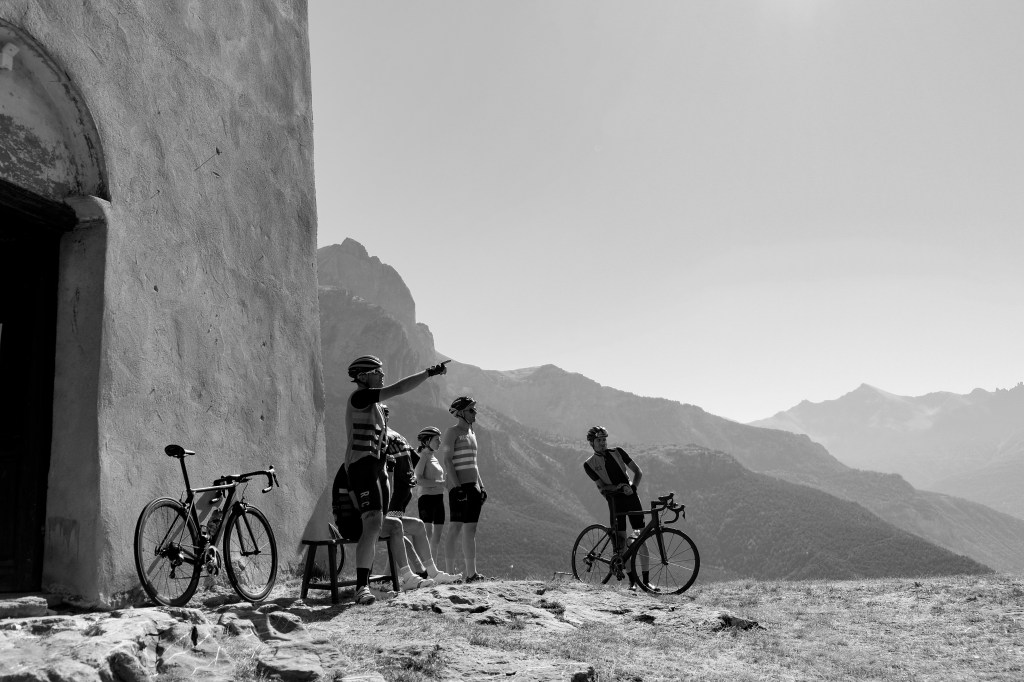
‘For 15 years,’ he continues, ‘I was working with individuals with backgrounds in fashion and advertising but not cycling related at all. And I came back to my own photography – after not touching a camera for years –  when I met some guys in Paris and started to document our rides. I like the idea that people can recognise themselves in the images; not literally but if it makes them want to be there, to want to ride, then that’s great.’
Jochen Hoops - @here_are_wings-2496

With cycling one of life’s constants, Jochen’s passion for this process of documentation is evident yet he feels somewhat uncomfortable calling himself a photographer. He accepts there’s a narrative to his work but when pressed is happy to leave it there. Maybe a question of semantics but this does place an interesting spotlight on the creative process and where the balance lies between commercially imposed restraints and photography as an art form.

‘Having the right gear doesn’t replace a good eye but in some sense photography is a craft because you have to learn how to get the results you want. And I also know many commercial photographers that have side projects that might be termed art but not if there’s a brief. You can have a certain style which is why clients book you in the first place but nowadays it can be difficult to express yourself with absolute freedom because you’re expected to stick to the editorial plan. And very often when you look at brand related content you’ll notice that it’s always sunny and everyone is smiling. Not my kind of work [laughs].’

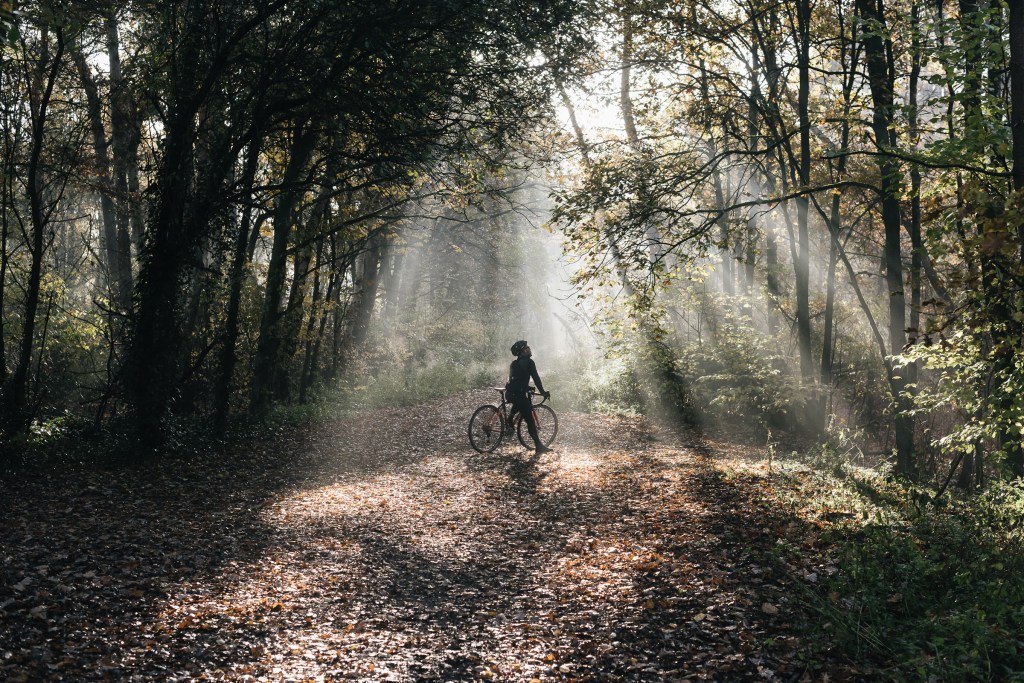
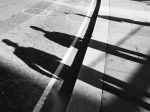
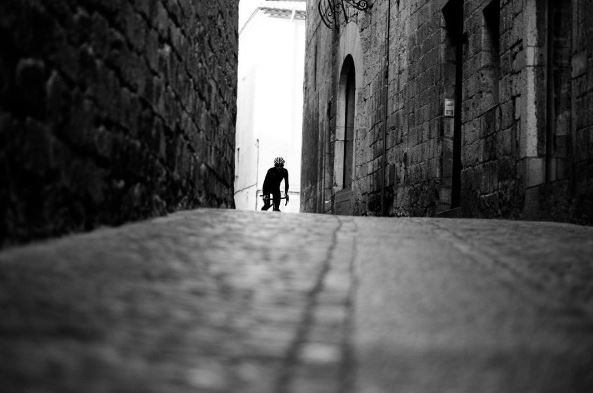
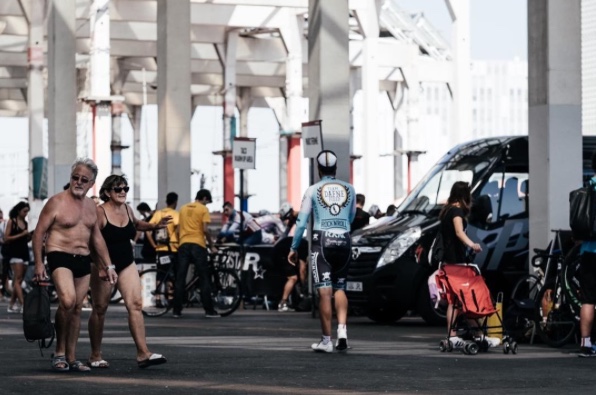
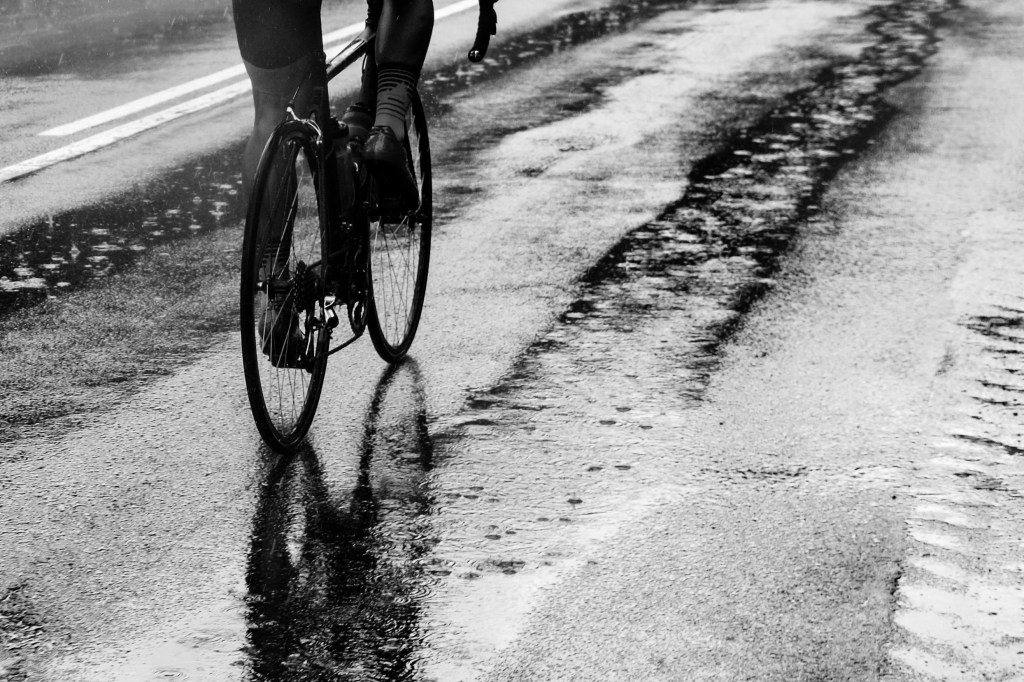
‘I like to take my pictures from the bike when out riding,’ Jochen goes on to explain. ‘And I really don’t mind if the person isn’t well lit. I can do that if it’s asked for but it’s not always interesting for me. What I do find interesting is quite instinctive; a constant evolution. Patterns of light and dark, buildings and tunnels; shooting someone descending at full speed. And because it’s important not to disturb the ride I have to capture the image in that moment. There’s no going back to do it again.’

Jochen Hoops - @here_are_wings-0429-2

An approach perhaps at odds with the world of commercial photography where models are directed according to a pre-planned brief; a process that Jochen knows all too well from his agency role representing photographers and organising their shoots.

‘I’d scout a location, book a stylist; basically everything right through to post-production. And keeping an eye on all these various aspects means you develop a lot of experience of working with clients and creative directors. For me it’s all about being effective and time sensitive which for them equates to saving money. So sometimes it’s important to keep control of the process; some people know what they’re doing whilst others need guidance. And this understanding of the advertising process enabled me to offer advice which ultimately led to Creative Hub Paris.’

As a network agency producing bespoke editorial content with a cycling and lifestyle focus, Jochen enjoyed working collaboratively and recognised the benefit from having an input of ideas from a range of different viewpoints. But even though he understands the initial temptation to accept every commission after first founding the business and acknowledges that he worked on some interesting projects, over time his attitude saw a subtle shift in direction.
Jochen Hoops - @here_are_wings-0455

‘I still think – with my expertise and professional background – that I can collaborate with brands as a creative consultant to produce great things for the cycling industries. But the joy of documenting rides myself means I don’t want to work solely in that way any longer. I did it for a while and I’m still involved from time to time but for now I’m re-structuring how this all fits together.’

A refocusing of priorities that led to a long break from Instagram and a reconnection with concert going and viewing exhibitions; a reaction to what Jochen terms fast living where pictures posted on a feed last only a few minutes before they’re gone.

‘I like it when I’m occasionally asked for a print of my work or an editorial story. In the sense that it’s a slower dimension and people have time to really look at things. An image on a screen is somewhat removed but with a print there’s a lasting sense of appreciation; a permanence to the work compared to how we consume the majority of our media.’

Jochen Hoops - @here_are_wings-3489

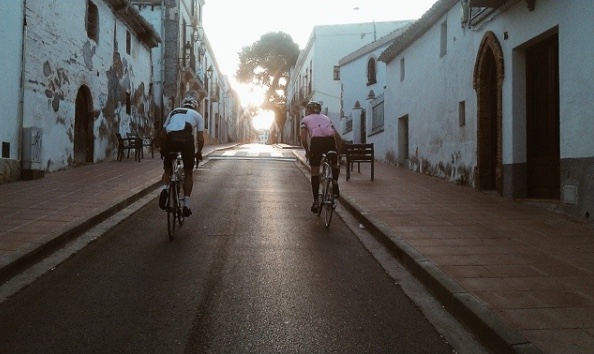
With Jochen still limiting the time he engages with Instagram to a brief look in the morning over coffee, he confirms that here_are_wings references a book find in a Parisian flea market and resonates with his feeling on the bike. The sense of freedom and wellbeing he achieves when out riding with friends; a way of life that he enjoyed in Paris and is currently rebuilding after relocating back to Hamburg.

‘It’s been 20 years but for both professional and family reasons it feels really good to be back. Good to be riding in and around the city with my girlfriend and rediscovering those once familiar roads all over again. Professionally I have some plans because if you don’t then nothing will happen. But that doesn’t mean you have to stick with them. I think of it as a bike ride; you might set off on a certain route but then bump into something great and decide to change direction. Taking another road that you really didn’t expect. What’s clear is that I want to continue documenting my rides. I really love doing this kind of photography but I don’t want a financial need to do that. I want to enjoy it.’

‘I’m kind of a quiet person,’ Jochen concludes. ‘I have my own opinions but I don’t feel the need to talk for the sake of it. I prefer to be more of an observer and if I can continue to inspire people to go riding and discover places; well, that would also be good.’
 

All images with kind permission of Jochen Hoops

A Safe Harbour / Rapha Copenhagen

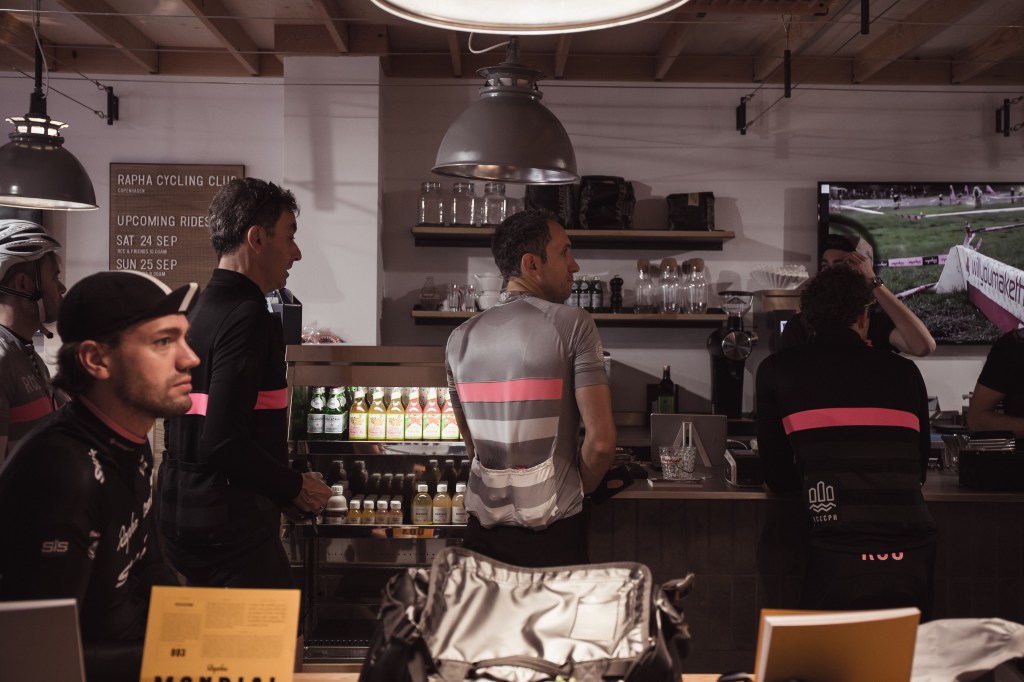
For many the summer of 2018 will be remembered for endless days of clear skies and soaring temperatures; cyclists living in Northern Europe enjoying the luxury of riding without recourse to a rain cape and overshoes. But seasons come and go with autumn giving way to the cold and grey of winter months. And as individuals return from a ride seeking shelter from the elements, the warm welcome offered by Rapha Copenhagen carries through to the clubhouse emblem having an historical allusion to a ‘safe harbour’; a reference that clubhouse associate Karl Owen understands all too well now that he’s experiencing his first Danish winter.

‘We’ve just enjoyed one of the best summers in living memory but when it does turn cold and wet then it’s important to have somewhere to go where you can get a cup of coffee and warm up.’ This comment best illustrated by his description of clubhouse light fittings regularly festooned with drying helmets and gloves when a wet ride returns. ‘The Danes,’ he continues, ‘are very, very good at gritting the roads because everyone is pretty hardy and still wants to ride even when there’s a deep frost or snow falling. All that salt and grit means bike maintenance costs can be high but you can ride year round.’

20160924_RaphaRCCride_3306

With the clubhouse located just off Strøget – one of Copenhagen’s busiest shopping streets – it’s conveniently situated as a refuge from the hustle and bustle of the city centre yet still only a 15 minute ride from the outskirts of the city. And as many members use the clubhouse on a regular basis, there’s grown a close-knit community of Danes bolstered by international members either based in Copenhagen for work or those visiting who want to take advantage of the bike hire scheme. ‘What’s nice,’ suggests Karl, ‘is how the clubhouse encourages all these individuals to meet and interact. The Danes have a reputation as being a little reserved – as do the Brits – and whereas inhibitions are often eased over a drink I like to think that a shared love of cycling replaces the alcohol in allowing people to get past any initial awkwardness [smiles].’

Originally based in Manchester, Karl got to know his future colleagues on regular visits to Copenhagen before finally taking the plunge and relocating. Having now experienced cycling in the Danish capital he’s come to realise how differently he rode back home in the UK; taking a primary position and almost behaving like a car. So much so that it took a while to transition into the Copenhagen way.

20160924_RaphaRCCride_3456

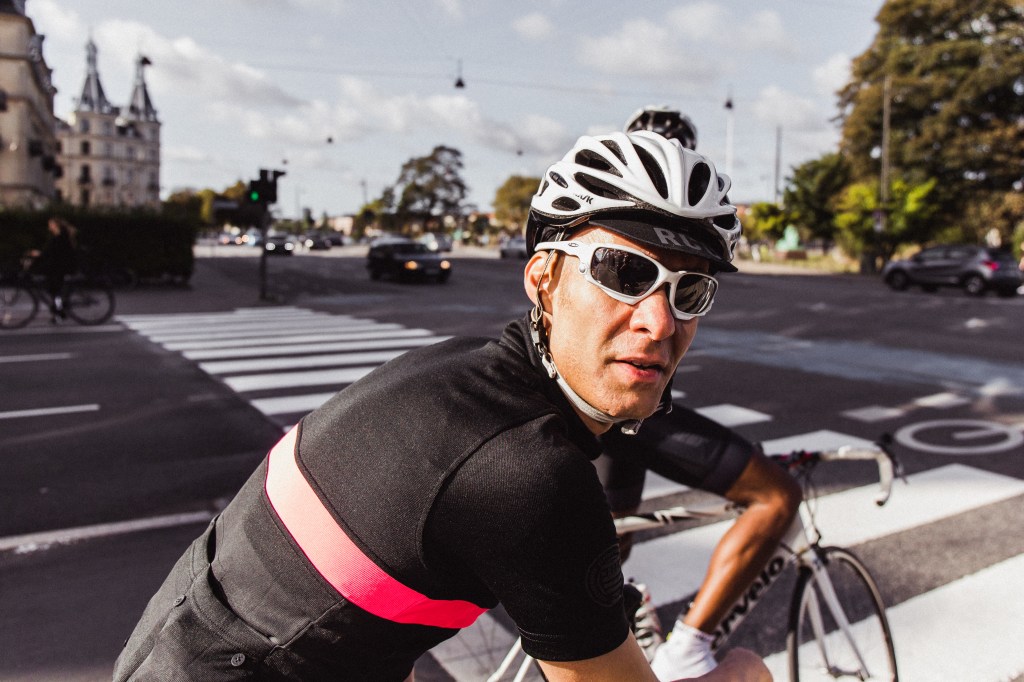
‘Very often you ride separately from the cars using the extensive network of bike lanes and there’s a very definite set of rules. You overtake on the left after looking behind and often there’s room for three cyclists abreast so it acts almost like a motorway. And it’s because there are so many cyclists that you’re expected to adhere to these nuanced set of rules. There’s not the free for all that you find in some other major cities. The pace is generally quite consistent and it can be really beautiful in the sense that the city simply flows.’

‘I feel there’s a worldwide understanding that the Copenhagen way works,’ he continues. ‘You can fit 10 bikes into the space taken by a single car so the result is a city centre that isn’t choked with traffic. The box turn takes a little getting used to but this avoids the need to cross the road in front of moving vehicles. Here you put your hand up as you approach a junction to indicate that you’re slowing before turning 90° and crossing with the lights.’

20160924_RaphaRCCride_3465

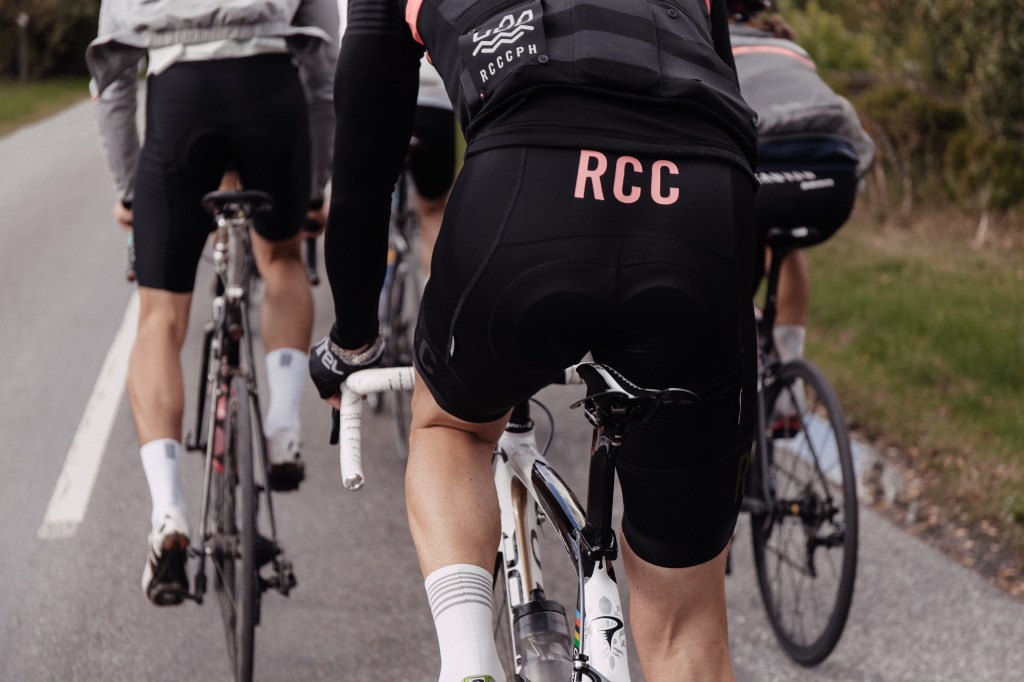
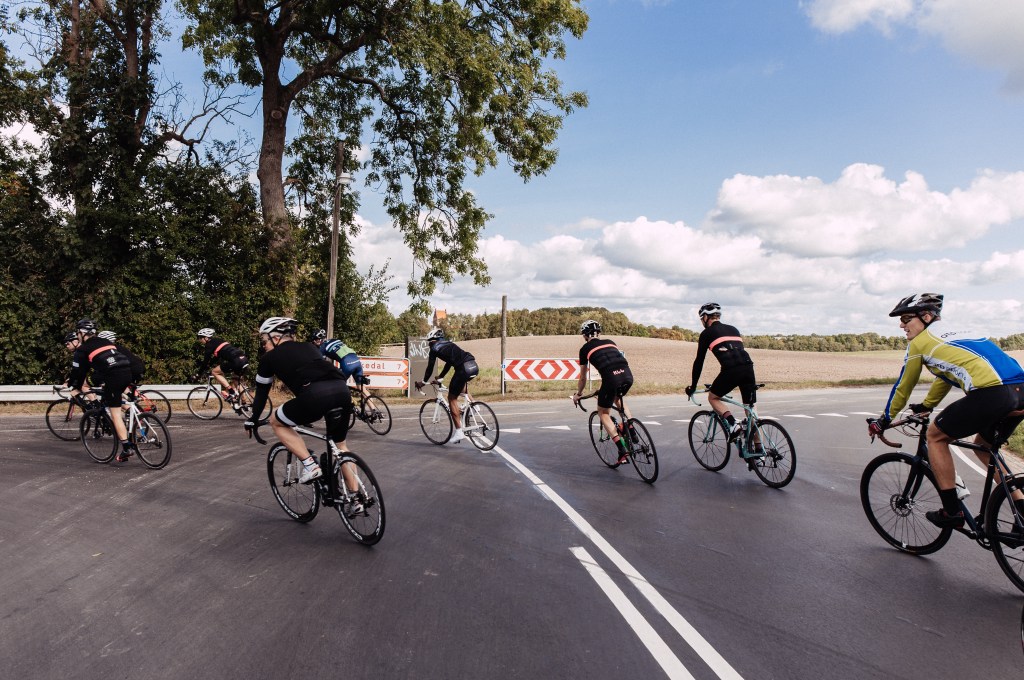
In terms of clubhouse riding, a typical route sees riders setting off north towards the lakes before heading up through Nørrebro to Mosehuset; a traditional meeting point if you’re not starting out in the city centre. ‘From there you can head out towards Gilleleje on the northern coast before turning towards Helsingør with the sea and Sweden on your left shoulder. On a good day very beautiful indeed,’ Karl confirms.

‘Saturday sees a couple of differently paced open rides heading out with a training ride on a Tuesday that includes intervals and is aimed at more advanced riders. Wednesday has two alternating rides. The ‘Look pro, go slow’ that sees riders wearing their best gear and riding out at a very social pace for a coffee or ice cream depending on the season. Or there’s the ‘Find it in 50’ which, as the name implies, involves a 50 km route ending at one of Copenhagen’s many craft beer bars. Both, perhaps unsurprisingly, very popular rides [smiles].’

20160924_RaphaRCCride_3975

The explosion of the gravel scene is also reflected in the number of rides now offered that include off-road tracks and trails with Hansens, a local ice-cream manufacturer, organising a 130 km gravel ride during the summer months with ice-cream at every feed stop. ‘One of my favourite day’s on the bike,’ Karl comments. ‘And during winter when the wind picks up and temperatures drop it’s nice get off the road and seek the shelter of woodland paths.’

With an active social scene complementing the clubhouse rides, in summer when evenings are drawn out it’s common for RCC rides to start with a loop before ending with the riders sitting out on a grassy corner with a couple of beers. According to Karl, very much a Danish way of doing things and another aspect of Copenhagen cycle culture that he’s learning to understand and appreciate.

20160924_RaphaRCCride_3878 crop

‘I’m still trying to work out some of the more idiosyncratic references. A couple of minutes turn on the front, for example, is described as ‘Swedish shifts’ and I love the fact that almost everyone – even if they’re riding a super expensive race bike – will have a bell. Very useful when you consider it’s quite acceptable to be travelling at 40 kph in a bike lane and there’s so many other users.’

This mention of the bikes his members ride prompts Karl to confirm that lightweight carbon bikes are extremely popular but with a move towards fatter tyres and a mindset of having a single bike that can cope with a variety of terrain and surface.

20160924_RaphaRCCride_3238

‘There’s this Scandinavian concept of Jantelagen which basically boils down to not showing off. And maybe this accounts for fewer individuals going down the custom steel route and why you’re far more likely to see one of our members riding an understated black bike. Even to some extent influencing what items sell well out of our clothing range. Our customers tend to favour monochrome kit so we rarely sell a Rapha-pink jersey [laughs].’

In terms of other clubhouse trends, a cortado or flat white are the most common coffee orders with spicy tuna or avocado a popular choice of sandwich. And out on the road, Karl is often tempted by a tebirkes; a pastry filled with sweet marzipan and covered with poppy seeds. ‘Not particularly easy to pronounce,’ he adds with a grin, ‘so even when I’m in a bakery and pointing with a finger at the same time as asking, the sales assistant will still look quizzically at me.’

20160924_RaphaRCCride_4328

‘What’s fun about riding out of Copenhagen is getting back to discover you’ve just done 200 km at a healthy average speed. It’s flat which helps but our cycling infrastructure means you don’t have to stop and start quite so much as you would in other countries. And then there’s the view across to Sweden from Strandvejen; a road that hugs the coastline north south out of Copenhagen. This proximity to the sea that, in the summer, let’s us finish a ride with an open water swim. And what’s not to like about that.’

All images with kind permission of Erik Jonsson

Rapha Copenhagen

Karl Owen


Vincent Engel / Lines on the landscape

Offering endless possibilities for capturing a moment, it’s perhaps fair to suggest that photography has the potential to tell a story in a single image. But what if this ability to frame and then reflect on the world we inhabit is used as a fulcrum for personal growth; a mechanism for change that involves doing what you like the most in a creative response to earning a living? Questions currently concerning Amsterdam-based Vincent Engel as he seeks to live life with a camera in one hand and the other on his handlebar.

_______________________________

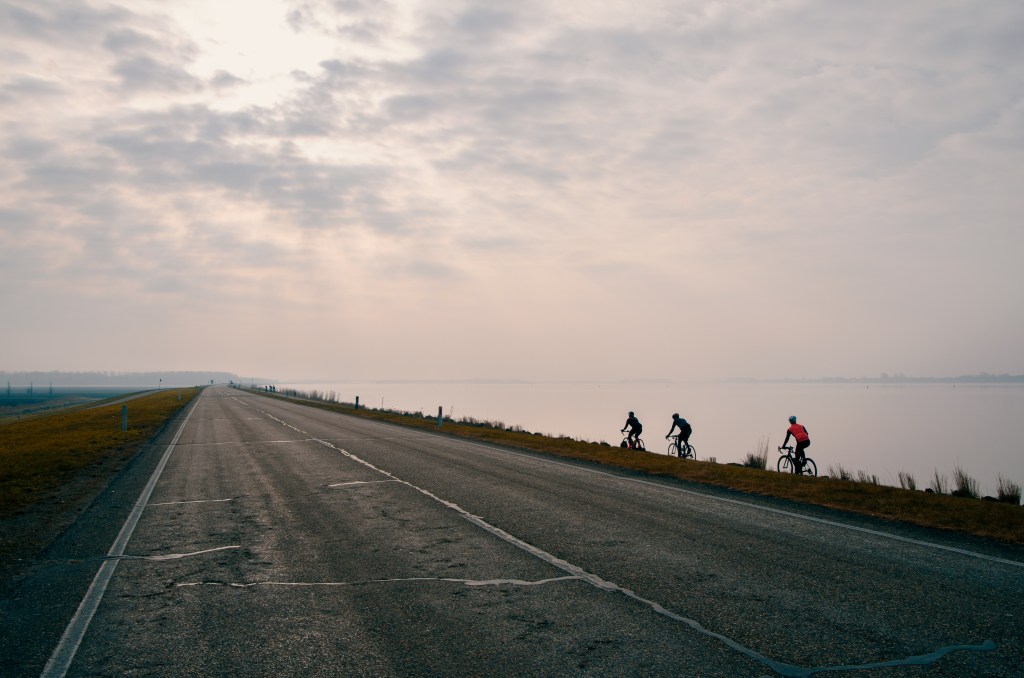
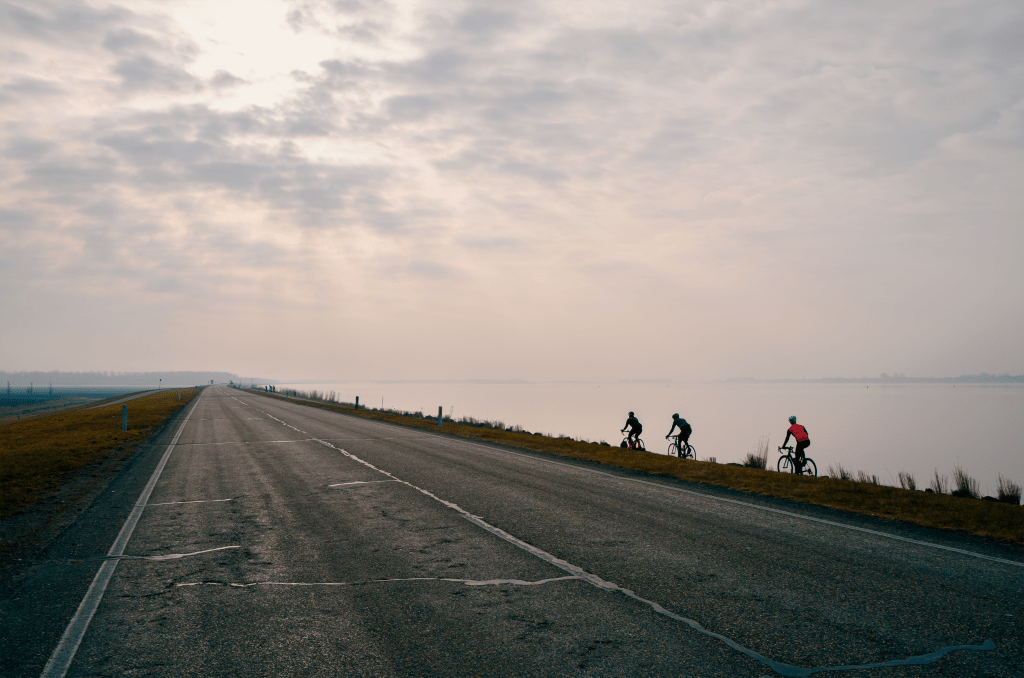
There’s a sense of boundless space that pervades Vincent’s images of his native Holland. In many ways a man-made landscape – architecturally graphic in the angles of the waterways, pathways and pylons – the painterly quality of his work references the rising mist and falling rain; the sun’s shadows and the light off the sea. Subtle layers that draw the eye to the details of the riders framed within.

‘I sometimes get good-natured teasing from my friends when they want to see more close-ups of themselves in my images,’ comments Vincent with a grin. ‘But I find it interesting to see the riders as an aspect of the landscape. To view this relationship in context to where they’ve been riding. To set them against a broad brushstroke of land, water and sky.’

DSC5394

Not that people don’t frequently feature in Vincent’s work; in part due to his involvement with Rapha Amsterdam since returning from a 10 year stint living and working in Saudi Arabia where he founded his design & build company Orange Identity.

‘My interest in photography originates from my background as a designer. I used to do 3D renderings to visualise architectural plans; taking the pictures of the textures I needed – wood, tiles, brickwork – to use in my computer-generated models. So I was pretty obsessed with my surroundings; how light is reflected and patterns are formed.’

‘The change from using the camera purely as a tool to one where I was making an emotional connection to the subject happened in Saudi Arabia. There was only me, my dog and my bike. And if I had some spare time I’d jump in my Jeep and head out into the desert and shoot landscapes. Capturing the solitude of the moment before I gradually began to combine these wide open spaces with a moving object.’

DSC1059

‘Interestingly I find photographing people far more difficult than those architectural images,’ Vincent explains. ‘My original pictures felt very mathematical but there’s an emotional element to shooting someone riding a bike that I find more challenging. Landscapes in a sense stand still and yesterday, for example, I went for a ride with a couple of friends and I shot over 100 images but they didn’t quite work. I suppose I’m too much of a perfectionist [smiles].’

After selling his company in 2015 and a subsequent return to the Netherlands, Vincent immediately fell into riding with Rapha Amsterdam; feeling such an instant connection with his fellow riders that he describes them in terms akin to a family.

‘For me, it just feels so comfortable. I came to cycling from a racing background but it’s not all about speed and we enjoy our coffee stops. There’s such a variety of routes that we have on offer. Out to the coast, local loops from the city centre or gravel adventures. Riding with a range of people from different backgrounds but there’s still a connection. We do the same rides – we suffer the same – and Rapha makes it possible for this to happen on a number of levels.’

DSC5464

As there’s no escaping the impact of water on the Dutch landscape, Vincent acknowledges that the weather too can bring its own challenges with winters that are cold, wet and windy. Conditions he argues that only make you feel more alive when out riding; to such an extent that he prefers to shoot in the rain rather than bright sunshine.

‘The weather has a significant part to play in the realisation of the images I create and I guess it’s about telling a story by contrasting all these individual elements. Which is why I rarely take a close-up image of someone on their bike because it’s the landscape that informs the narrative as it frames their movement.’

‘In the Netherlands,’ he continues, ‘I’m always looking for strong lines in an image and I thought before travelling out on a recent trip to Switzerland that I would, through necessity, be taking a different approach. But then I began to notice how the mountains overlap and bisect the horizon with strong diagonals in the foreground formed by the roads, trails and even the tracks we made in the snow. So I still had all kinds of lines that draw your attention to the detail in the image [smiles].’

DSC0142

Since returning to his homeland, Vincent now has the time to pursue photography on a more commercial basis and the past 6 months has seen him commissioned by a number of different clients all sharing the same admiration for his photographic style.

‘I’m still learning how to really direct people because I don’t naturally feel happy to be in the spotlight. By me telling someone what to do on a shoot I’m taking myself out of my comfort zone. But I enjoy working to a brief because it implies a certain level of trust from a client and I can take on-board their needs before going out and putting my own interpretation on the content. And I’m just as critical – more so – with my commissioned work as with my own. It’s kind of like my signature on an image so there’s more pressure to deliver. Pressure that I put on myself.’

‘It’s all about a happier life,’ Vincent concludes, ‘and that’s my biggest challenge at the moment. To find something that makes me happy that involves a creative response to cycling. In the past I’ve been fairly financially driven but money isn’t everything. Cycling has always been a constant in my life – since I was very young – so to combine that with photography was an obvious next step. They’re both great passions for me and it feels kind of like an exploration. Finding the new Vincent; making a bigger picture.’

11speed.nl

All images with kind permission of Vincent Engel

Hiroki Mitsui / Rapha Tokyo

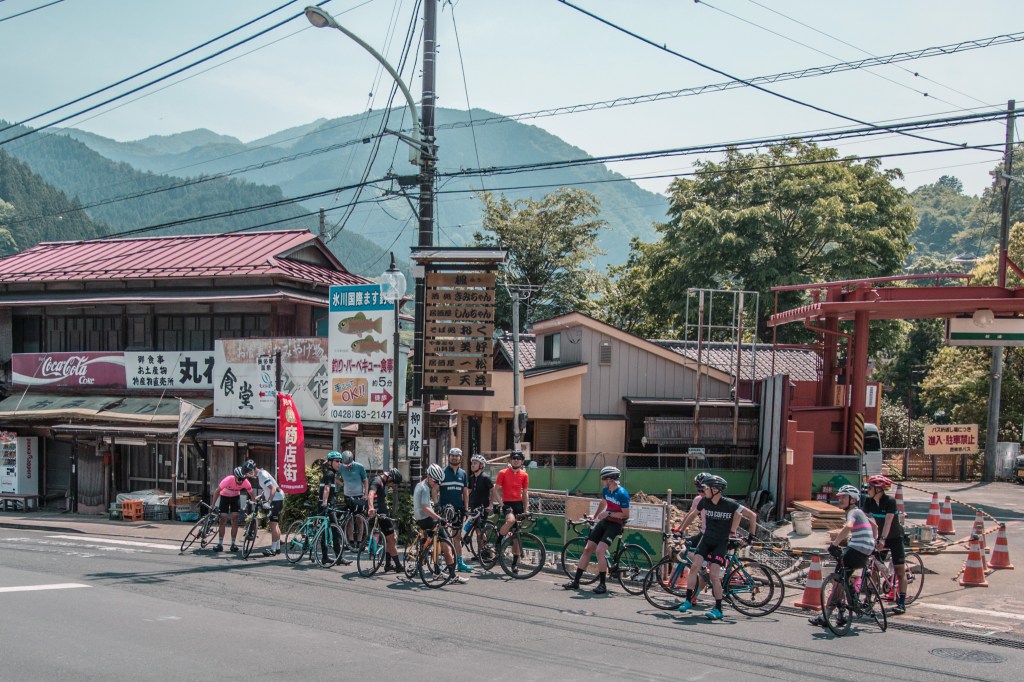
Visit any city for the first time and there’s a period of adjustment as you stand and take your bearings. Often at the exit to the airport terminal – leaving behind the recognisable architecture of the arrivals hall – you’re immediately faced with a multitude of sensory clues to your new environment. The sheer sense of scale when arriving in Tokyo – home to 13 million – might on face value make this process of acclimatisation more of a challenge but according to Hiroki Mitsui there’s a sense of order and calm to be discovered that balances the busy city streets.

In his role as Rapha Cycling Club (RCC) Chapter Coordinator and with a 35km commute by bike from his Funabashi home in the Chiba Prefecture, Hiroki is perfectly placed to understand the rewards of cycling in Japan’s capital.

TOKYO_386A4486_Gogo

‘When you’re living in Tokyo,’ he explains, ‘you can do everything by bike. It’s faster moving from point to point than by car. Even if you decide to take the train, you can reach your destination just as quickly by cycling. And when riding you get to enjoy all the interesting architecture and everyday Tokyo streetlife. Our Rapha clubhouse is located close to Harajuku; a district popular with young people due to its shops, cafés and karaoke bars. But there’s a hidden aspect to this area if you start to explore the narrow side streets where it’s very quiet and peaceful.’

Not that Hiroki and his RCC members eschew public transport altogether; finding trains useful if they’re planning a longer ride outside of the city centre.

386A0532_edit

‘We tend to travel for an hour or so out into the countryside before starting our route. We call this ‘rinko style’ in reference to the nylon bag that you need to cover your bike so the train carriages are kept clean and safe for other passengers. It’s a legal requirement but also shows good manners. We’ve been collaborating with Fairmean to produce a super lightweight version that’s easy to use and it’s surprising how stylish and beautiful a bike looks when it’s covered and sitting on the train platform [smiles].’

Although the suburbs and open countryside offer quieter roads, Rapha rides in Tokyo are not restricted to the city’s outskirts and Hiroki is viewing with interest the proliferation of new bike lanes in preparation for Japan hosting the 2020 Olympic Games.

386A3113_edit

‘You can take a train out to the Boso and Hannoh areas as these both offer routes with plenty of climbing and beautiful scenery. Or there’s the Arakawa river-side bike path that winds its way out from the heart of the city with car free cycling and even distant views of Mt. Fuji on a clear day. If you prefer to ride from the clubhouse there’s a night ride we do that passes through the Meiji Jingu Gaien Park before skirting the Imperial Palace and crossing the Kachidoki Bridge; colourfully illuminated with views of the river and the city skyline.’

‘The Imperial Palace along with neighbouring Akasaka Palace,’ Hiroki continues, ‘are also the locations for Wednesday night laps and there’s a strong racing scene with crits especially popular with our RCC members. Winter brings the cyclocross season which offers racing for all abilities and there’s a lot of interest in long distance cycling alongside our regular social rides.’

386A5642_edit-3

Like other Rapha clubhouses, Tokyo is open to all with customers calling in for a coffee or lunch; Hiroki hosting a popular monthly RCC social evening that gets an average of 40 members attending.

‘Our members are from a variety of backgrounds but all share a love of cycling. Mainly they ride on the road because they don’t want their beautiful bikes to get too dirty and the gravel in Japan is much rougher with a mixture of large rocks and stones so it’s not for everyone. In terms of the weather there’s a rainy season during June and the mid-summer temperatures require us to escape to the higher mountains where it’s cooler. But for the majority of the year we can ride really easily.’

386A3687_edit

The vending machines outside convenience stores are another aspect that characterise Rapha Tokyo rides; Hiroki including them in his routes so his members can easily replenish their ride supplies without the need for a long wait. ‘These vending machines are found everywhere; even in the remote countryside where you can get a can of hot coffee in mid-winter. But cafés are a popular feature on city loops,’ Hiroki comments with a smile. ‘Although our riders rarely order an espresso. We tend to want to stay for longer and chat over a latte or flat white.’

Cultural considerations that imbue any visit to Rapha Tokyo with a richness of experience in part deriving from the delicate balance the city holds between both contemporary and traditional values. A vibrant cityscape that embraces technological innovation yet still functions daily according to an unspoken set of social rules. A contradiction not lost on Hiroki as it even extends to the official cycling laws that are arguably ignored on a daily basis but stipulate a potential 20,000 Yen fine for riding two abreast.

386A1025_edit_2048

‘Our rides – especially on the busier city streets before we reach the suburbs – can seem quiet because officially we can’t ride side by side. You follow the person in front and when you stop at the traffic lights you catch up on your conversation. But you can see from what they post on their Instagram feeds that they enjoy the social aspect of riding with other members. We might be quiet in our pace line but there’s plenty of laughter and smiles when we stop.’

All images with kind permission of Lee Basford

Rapha Tokyo

Hiroki Mitsui


Alex Duffill / Never say like

I first met Alex Duffill during the 2017 London Nocturne. Midway through a degree in Editorial and Advertising Photography, he had a place on the Leica Camera workshop shadowing Marshall Kappel for the day. Fast forward a year since that first chance meeting and we caught up to discuss post-graduation plans and why he tries to avoid the word ‘like’.

When we speak Alex admits to finding the reality of three years of study finally coming to an end a little difficult to process. Reflecting back on the focus of his degree programme, it’s primarily the importance of narrative that he now considers when planning for a shoot. That it isn’t enough to just take pictures which are pleasing to the eye.

_27A3985

‘It’s an approach,’ suggests Alex, ‘that makes any body of work stronger and more likely to resonate with whoever is viewing it. A lot of it comes down to the pre-production that precedes any shoot; going in with a clear understanding of your client’s needs. But then, when the time comes, you need to work flexibly and react to what unfolds.’

‘Basically it’s down to someone’s opinion whether a particular image works,’ he continues. ‘As long as they don’t use the word ‘like’ [laughs]. It was drilled into us on my degree course that it’s too subjective and means nothing. But I’m pretty laid back when it comes to feedback. I feel it’s important to listen as I never want to feel that I’m standing still; that I’ve stopped questioning or trying to improve. And sometimes you can get too close to a body of work – too emotionally attached – so it’s useful to draw on another individual’s perspective before you divide the two. Identifying the images you feel really work but not being upset if someone asks you to try a different approach to the one you’ve taken. Not always an easy aspect of my job to balance but it’s just a photograph at the end of the day.’

Mike Cuming_An Post Ras Race

Favouring media subjects when considering his high school options, on reflection it was the 2014 Cyclocross World Cup coming to Milton Keynes that led Alex to consider a career in photography. The first time – covering an event – that he knowingly tried to offer a broader response to who was there and why rather than simply documenting what was happening.

‘A strong composition is always important but I think eye contact – particularly at the moment – is a massive thing. Portraits that reach out and grab your attention. There’s a shot I took of Mike Cuming at the Rás last year that’s a fair representation of my style. The sense of exhaustion in the way he’s standing immediately after finishing a race. Taken from only a metre away using a 24mm prime as I like to get in close without pissing anyone off [laughs]. The equipment I use isn’t small by any means so it can make people feel awkward. So building a rapport – being really open and honest, friendly and approachable – is very important.’

Vitus Training Camp

Creating video content as well as still imagery, Alex feels the switch between the two helps keep his approach fresh but describes a craving for the other after a certain amount of time working with a single medium.

‘The composition can be similar for both  – all my Instagram photographs are cropped to 16:9 –  but with video you also need to consider sound together with a load more complications that you wouldn’t necessarily have if you were taking a still image. It’s fun, though, and a little like solving a puzzle. You just have to solve it whilst someone’s in front of you.’

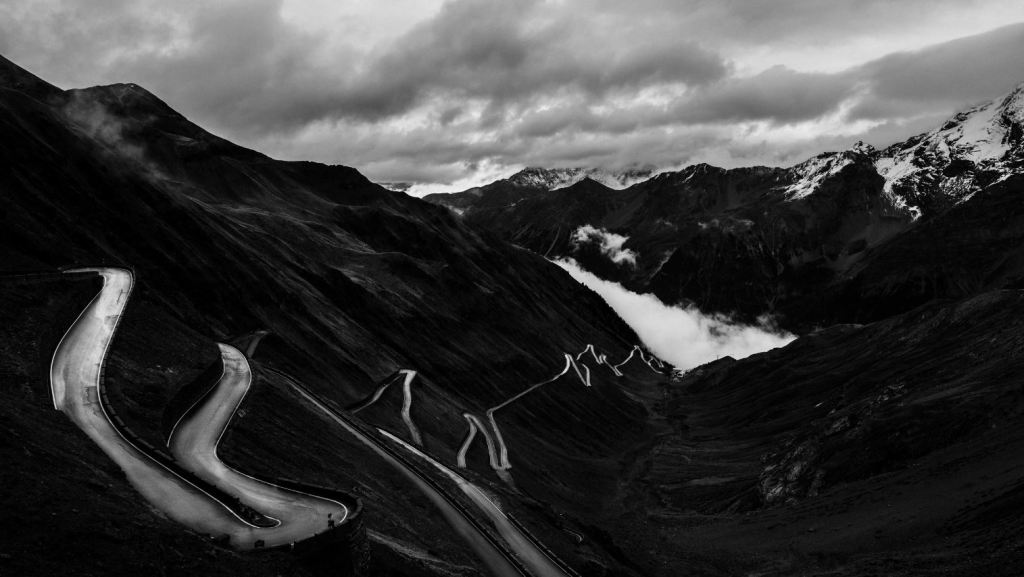
Stelvio

Alex understands that in developing a body of work – no matter how talented an individual – it can sometimes come down to being in the right place at the right time. A train of events that led to his first shoot for Rapha; a company he’d long admired for the quality of the content they produce.

‘It was a week before the Nocturne that I got an email from Jack Saunders and Harry Downey to invite me in for a meeting. I’d just woken up and was sitting reading their message and wondering whether it was real. But I went down, showed them some of my work and out of that I ended up at the National Championships on the Isle of Man shooting images of Rhys Howells riding for Team Wiggins. And from there it’s just been crazy.’

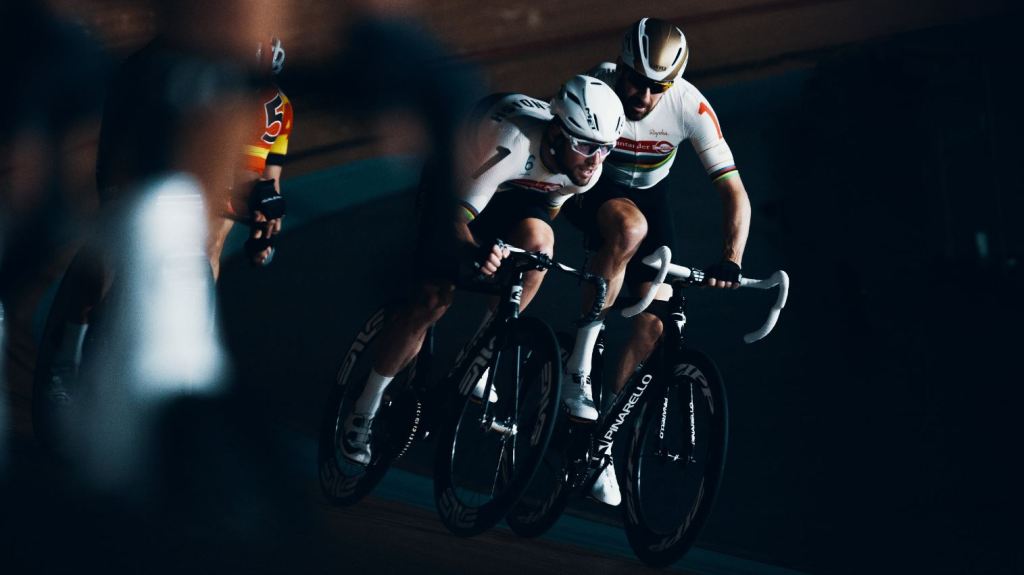
6 Days

Together with Marshall Kappel he lists Benedict Campbell, Jake Stangel, Emily Maye and Sean Hardy as contemporary photographers he admires; pointing to social media as the biggest current influence on the jobs he’s offered with 90% of his shoots commissioned purely for these platforms.

‘Brands clearly understand the advantages of strong media content,’ Alex suggests. ‘The big companies can get twenty, thirty, forty thousand likes in a day. And if that then translates into sales, you can see why there’s so much focus in terms of marketing.’

_27A4018

Commenting on his own use of social media and Instagram in particular, he admits that his feed is to a degree curated but adds that in his chosen profession it can act as an effective shop window. This aspect resulting in a certain caution when posting content and a tendency to take it all a little too seriously; a broad grin lighting up Alex’s face when he describes how much time he actually spends scrolling up and down on his phone.

‘I just like taking pictures. It’s still a passion of mine and it’s nice if people look at my work and want to be there. The day that I stop falling in love with it will be the day I find something else that I can do to earn a living. I’m always super excited to take on a project but when it starts to feel like a job then it’s time to move on.’

alexduffill.com

@alexduffill

All images with kind permission of Alex Duffill.


Wim Jan Petersen / Dutch Mountains

Sitting over a coffee in the Rapha Amsterdam clubhouse – tucked away in the ‘9 Streets’ canal district of the picturesque city centre – Wim Jan Petersen took the time to discuss his role as Rapha Cycling Club (RCC) Coordinator for the Benelux region, how his members ride and where you need to go in search of a hill to climb.

A typical Wednesday morning loop would see us riding south out of the city centre into the surrounding farmland. Canals and rivers; very green with open views. And then there’s the Ronde Hoep; probably the most popular route as it’s just under 40 km and really easy to get out and back in an hour or so. Super convenient and you get all levels of cyclist from beginners to high level racers.

We often head out towards the coast but as you’re fairly exposed to the elements – being so close to the sea – you have the wind to contend with. Dutch Mountains as we choose to call it. Pretty much the toughest it can get in this area and it can catch riders out. We have individuals from other countries joining our rides expecting it to be flat and easy and halfway into an 80 km loop they’re done. Completely cooked and it’s the wind that gets them every time.

The weather – especially over the winter months – can be challenging. The wet, the cold, the wind; it uses a lot of energy to keep your body warm so I often end up sharing my food with cyclists new to the area. And it’s always interesting to see the look of surprise on the faces of strong riders when they blow up. Welcome to the Netherlands [laughs].

Setting aside these weather considerations, you’re outside of the city in under 20 minutes and into a completely different world. In the centre it can appear chaotic – a lot of tourists, a lot of cyclists – but when you leave all that behind you it’s very empty and open. West towards the sea, open farmland to the south, interesting gravel tracks to the east or traditional Dutch landscapes to the north. We even have a climb called Het Kopje. Really just a big dune and not even that steep but we call it a climb as it’s the only one we have close to Amsterdam [smiles].

On a bigger loop we’ll make sure there’s a stop so we can fill our bidons, have a coffee and maybe a small lunch. Crossing the border always makes a ride feel special so sometimes we’ll drop down into Belgium but you need to remember to bring cash as a lot of the little establishments don’t take cards.

Because not everyone is always located within easy reach of the Amsterdam clubhouse we’ve developed a network of satellite cafes across the Benelux area offering access to rides and the same RCC experience. Cafes with a passion for cycling and links with their local cycling community and all providing our members with their free* cup of coffee, of course.

A typical RCC Amsterdam ride is very social and based on good camaraderie. We’ve come a long way in making cycling accessible at every level with WhatsApp groups being created so that rides can be planned and shared. That’s reflected in the members themselves; how they all respect each other and all have their own story. And because of that, they’re more keen to try new things.

I sometimes get the impression that a lot of people, when they think about cycling, picture someone on a race bike going as hard as they can but it’s so much more than just that. Maybe a casual coffee ride, a heritage tour through the city centre or a bikepacking adventure. And I feel that my role with Rapha is very much about embracing these different aspects and connecting with all cyclists rather than the few.

Rapha Amsterdam

Ride images with kind permission of Vincent Engel

*RCC members enjoy free coffee year round at Rapha Clubhouses


Yorit Kluitman / Ordering the landscape

Sitting down with Yorit Kluitman – graphic designer and self-styled cycling fanatic – there’s a number of keywords that keep cropping up during our conversation. Collecting. Organising. Rules. Verbal clues to the visual approach he takes in ordering his world. A world rich in experience with a deep connection to the natural environment that he’s spent 5 years recording for Bicycle Landscape; his beautifully realised book that documents each of the Netherlands’ 388 municipalities. Visually capturing the form and functionality of the Dutch landscape.

Born and raised in Eindhoven, Yorit returned after a spell studying editorial design at the Willem de Kooning Academy in Rotterdam. Appreciating the city’s cycling infrastructure he argues the political agenda for supporting bike friendly projects stems from memories of riding as a child. ‘It’s in their blood and DNA,’ Yorit suggests. ‘So even the politicians share this same understanding and feel the need to prioritise the bicycle as a form of everyday transport. In the sense that we’ve recently had a number of roads closed and replaced by cycle lanes. Super wide and linked to the city’s network of bike paths.’

Since founding his own graphic design studio, Yorit acknowledges that he works more hours now that he’s self-employed. ‘You find yourself doing administration late at night and clients are constantly wanting to contact you about a particular project. Occasionally you get some time between different jobs when you can ride a little more but usually everything’s happening at once.’

crossisboss

When he does get the time, Yorit tends to head south on quiet rural roads; regularly crossing the border into Belgium where he explains the sandwiches are not only cheaper but also more generous in size. A little further to the north is the Veluwe; his favourite area for riding and the only place in the Netherlands that he considers to have a true sense of wilderness. And it’s this distinction between ‘natural’ nature and evidence of man-made manipulation that brings us to the Bicycle Landscape project.

‘I remember feeling overworked so I decided to start cycling local loops over lunch. Later I bought a race bike and ventured further afield; taking pictures on my iPhone. At the time I was studying in Rotterdam and it just struck me how the landscape in the Netherlands is super graphic. A lot of horizontal lines and organised structure that I began reimagining as postcard views. And from there I drew up a set of rules for the photographs I was collecting. No people or buildings. A spartan image searching for straight paths that relate to the horizon or a vanishing point in the landscape.’

‘A friend of mine,’ Yorit continues, ‘suggested I do all the villages, towns and cities but I looked it up and there’s over 8,500. But I liked the idea so decided to focus on the municipalities as they’re pretty well categorised.’

hardennes

Reflecting on this 5 year undertaking now that the resultant Bicycle Landscape book has been published – 17,000 km over 153 rides with a final selection of 450 images whittled down from a little over 10,000 – I question whether Yorit views the Dutch landscape through the filter of his graphic design profession? If he considers his interpretation to be exaggerated?

‘There are people and signposts where I ride,’ he reflects with a smile. ‘Noise as I choose to call it. But I leave that all out deliberately. No cars, no people, no buildings. I suppose that’s the way I like my rides. Just me, the bike and my natural surroundings.’

With his home and business based in Eindhoven, his immediate urban environment offers an interesting contrast to the landscapes so meticulously recorded in his book. With a citywide infrastructure dominated by the industrial heritage of his parents’ previous employers – Yorit’s mother working at Philips and his father at DAF – he considers the city in some ways quite ugly but undergoing a gradual reimagining in the shape of the creative and technological sectors utilising the long empty warehouses and production lines. ‘The spaces are now being reworked as studios, offices and apartments,’ he observes, ‘but the skyline is still very Philips.’
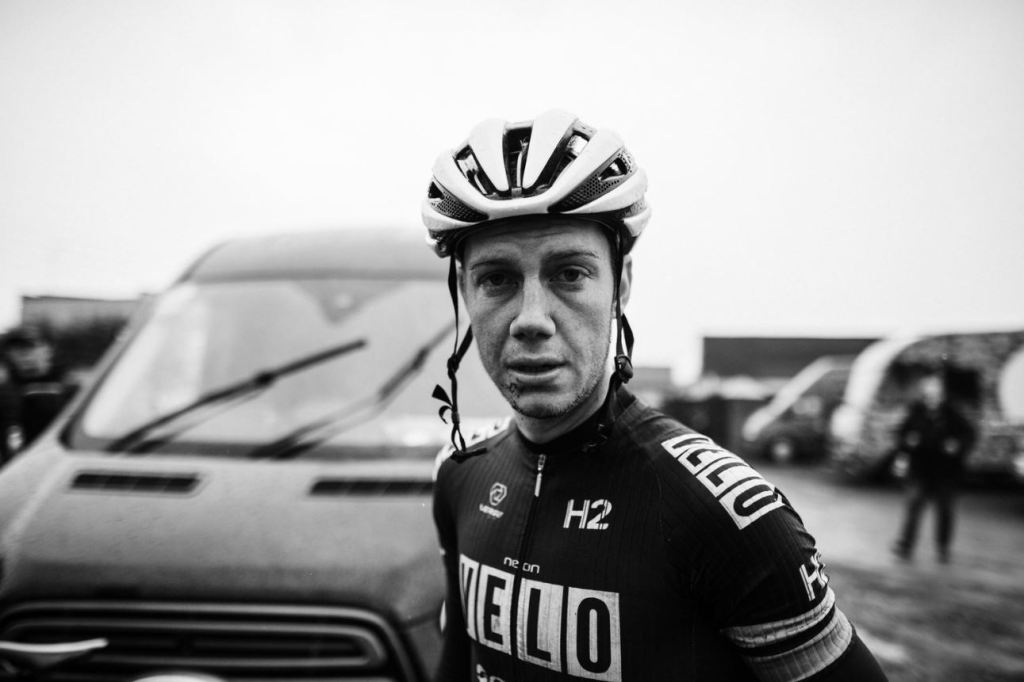
Escaping into the surrounding countryside whenever he can, Yorit has a number of bikes with each fulfilling a particular role. ‘I have a St Joris steel bike that was made specifically for the Bicycle Landscape project. Bright orange paint – the Dutch national colour – with a slightly more upright position that cruises well and allows you to look around.’

gravelchase

‘I don’t like ‘noisy’ rides,’ he continues when asked what sort of route he favours. ‘Not in the sense of sound but well planned and fluid in the turns and changes of direction. Almost like a well composed song that starts slowly before building up, a good ride needs to be focused and ordered. I like things to go as planned. Surprises in cycling have a tendency to be dangerous.’

In terms of riding culture, Yorit describes a typical Dutch ride as super social; groups riding routes along coastal roads or through exposed terrain having to work together as there’s always the wind to contend with. ‘There’s a metropolitan lifestyle aspect in cities such as Amsterdam where people tend to follow the latest trends. In the south it’s more a traditional, grassroots interest in cycling. All the towns have their own cycle race in the summer and the terrain is a little more playful with stretches of gravel and forest paths.’
Now that the Bicycle Landscape project is completed, I finish by asking if his relationship with cycling has since changed; prompting Yorit to smile before stating: ‘I ride to enjoy the social aspect. When we come together and head out of the city centre. Enjoying a conversation over a cup of coffee or even a beer. But I’d like to do another cycling project. It’s so much fun riding around with a camera and I still like to categorise. To place things in order.’

bicycle-landscape.com

@bicycle_landscape

All images with kind permission of Yorit Kluitman.

Rapha Manchester Women: A road shared

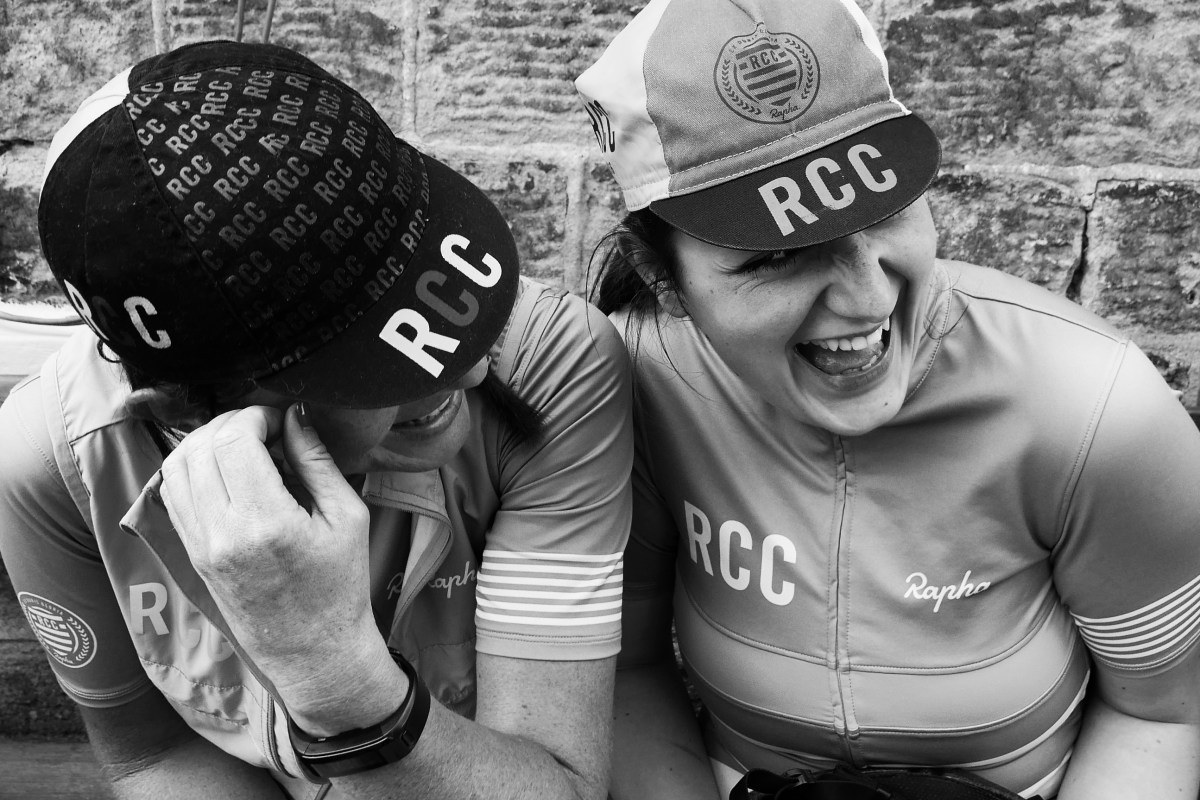
Every fortnight on a Saturday morning – all year, all weathers – the Rapha Manchester Women’s Ride meets at the clubhouse for coffee before rolling out in search of Peak District climbs or quiet Cheshire lanes.

Since these regular rides were first launched in March 2016 the group has seen significant growth with both experienced riders and individuals new to cycling. And as another year draws to a close, in their own words the members of this group tell a story of goals achieved, encouragement given and a road shared.

‘We’re all on a journey and to play some part in helping encourage another female rider; well, that’s a privilege I value enormously. And it’s an honour to lead and ride along with such an amazing group of cyclists. Our adventures never fail to make us smile no matter what the weather throws at us.’ Sarah (group leader and Rapha Ambassador)

‘So grateful to be welcomed by the Rapha Manchester ladies. Their support  and expertise encourages me so much! Great company and routes and I always look forward to the next time we get together. Cycling with friends that motivate each other makes all the difference and it’s been an amazing year.’ Belinda

Version 2
Miriam, the group’s ‘go to’ hand model.

‘Pym’s Chair can be a breaking point for some cyclists but, for me, a chance meeting with Sarah and Belinda on the climb opened up a whole new world of cycling. I was officially recruited into the Rapha Cycling Club! I had already met them briefly a few hours earlier at a feed stop where we exchanged compliments on our kit. And since then, the Saturday rides and RCC Sundays have opened up a world of amazing people, fabulous routes and a support network that has enriched my cycling life.

Riding with Rapha Manchester has transformed cycling from a fitness activity into an adventure. Exploring the countryside that surrounds the city centre has been so very enjoyable – it’s beautiful round here – together with a social life full of coffee, cake and laughter.

I have achieved things I never thought were possible; sharing the road with amazing women. An Olympian, crit and cross racers, experienced athletes and those new to the sport. Every ride provides more tips, advice and encouragement in a way that empowers me as a cyclist. I never believed I would ever manage to ride up the Rake, complete the hilly Women’s 100 route, blast round the Cappuccino 180 or sprint down the Tatton ‘wall’ at 29mph. And I know I wouldn’t have done any of these things without the support of this amazing group of people. Thanks for finding me on Pym’s Chair and thank you team RCC.’ Sue

Version 2
Riding out of Manchester, you always need one eye on the weather.

‘Though I love cycling, I very much doubt I’d be the cyclist I am today if it wasn’t for the Rapha Manchester ladies. The group rides have built my confidence on the road and are excellent motivation. All these elements build together and push me further. Two years ago if someone had suggested I’d be climbing the Rake or heading for 2,500 miles for the year I’d have thought they were crazy. The rides are very inclusive and a great laugh. Roll on 2018.’ Kelly

‘Our riding group is the motivation that gets me out of the door when the weather is inclement. Knowing that you’re going to have a great day with a group that is fun and supportive. Taking me into the Peak District and exploring Cheshire lanes that I wouldn’t otherwise venture through on my own. I’ve made many new cycling buddies and it’s challenged me too; making me a stronger rider.’ Shelley

Braver Than The Elements

‘I rode the Women’s 100 last summer and because everyone was so friendly I started going out on a Saturday with the Rapha Manchester ladies. I wanted more options; to ride in a mixed group with faster people so I could get stronger. And cycling means so much to me. It keeps me sane; makes me feel happy.’ Hannah

‘I feel so lucky to have discovered the Rapha Women’s rides this year. They’ve taught me the many values of riding with a club; that perfect combination of ambition and motivation whilst not taking yourself too seriously on the bike. I’ve learnt that the way to achieve goals is to laugh through the challenges. You can then guarantee you finish every ride with a smile on your face.’ Jen

‘This is my first year on a bike and it’s been an incredible journey with many highs and even the occasional low. But after a few false starts and fuelled by a multitude of flat whites, I’ve conquered my demons and achieved goals I never thought were possible. Making new friends in the group has given me the confidence and inspiration to keep going. Even when I’ve doubted myself.’ Miriam

For more information on the Rapha Manchester Women’s Clubhouse Rides.

#ccmcrwomen

All images @openautograph


Rapha Nocturne

As a medieval thoroughfare, Cheapside offered a conduit for farm produce to enter the city from Smithfield Market. Now superseded by digital ‘traffic’, this street in the shadow of St. Paul’s has nonetheless lost nothing of its commercial vigour. And on Saturday 10th June, the cowbells echoing off the shop and office frontages may have harboured a memory of Bow Bells but were calling the faithful to a more secular spectacle. The Rapha Nocturne was in town; bringing cycle racing to the very heart of the city.

Whilst the expectant crowds cheered the competitors under a cloudless blue sky – the running order drawing to a close with the floodlit elite men’s race – perhaps few would appreciate the 24 hour transformation set into motion after months of preparation and planning.

As the title sponsor, Rapha had a significant visual presence on the day. And as closing roads to traffic is understandably a time-sensitive task, the process of turning city streets into a race circuit began at dawn with the whole area once again cleared after the last competitor crossed the finish line.

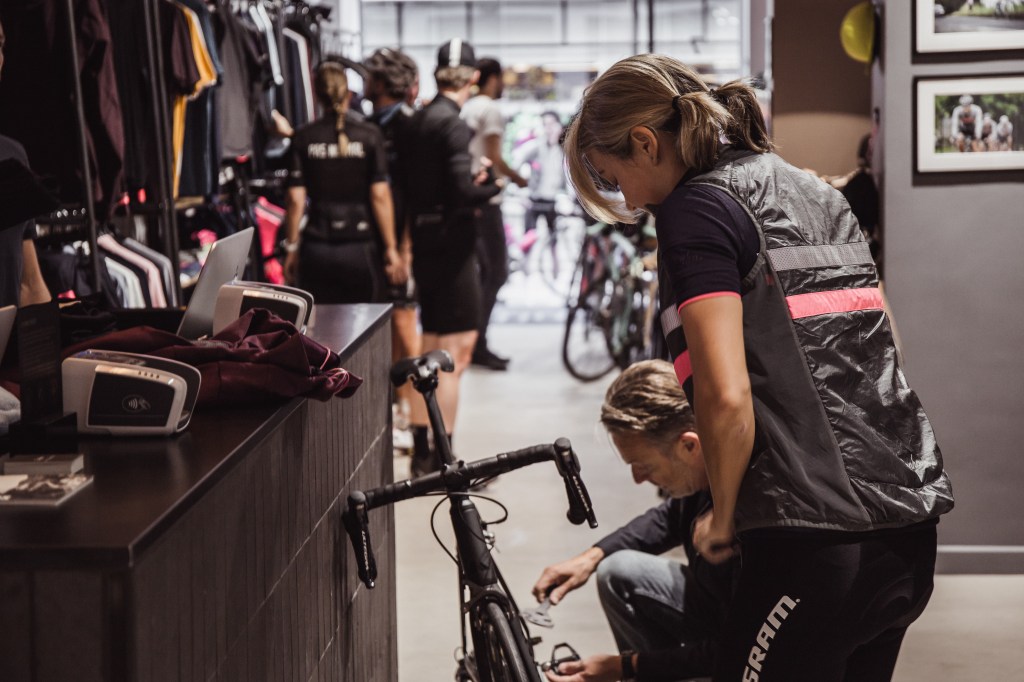
After waiting for the ‘all clear’ from the event contractors tasked with placing barriers and laying power cables – takeout coffee, breakfast rolls and bike games helping to pass the time – emerging from two carefully packed vans was all that was needed to construct a pop-up clubhouse adjacent to the finish straight. With boxes of stock, display rails and shop fittings; the Nocturne t-shirt clad Rapha team set to work and kept on working. Right through to the van doors closing a little after midnight and the day’s end.


Conversation: Ian Walton

Documentary photographer Ian Walton is the creative talent behind theMUSETTE. Enjoying a low-key lifestyle based to the south of Barcelona, sitting down over coffee in Girona our conversation takes in working for free, the perfect venue for an exhibition and his appetite for adventure.

Are you a cyclist that takes photographs or a photographer that cycles?

I suppose in terms of an income and creating something then I’m a photographer. And I started young when I was 5 taking pictures of my Dad running fell races up in Yorkshire. I was using his Olympus OM10 film camera and making lots and lots of mistakes but the beauty of film is that you can’t delete an image so I kind of learnt what not to do. And I kept on learning at Photography Studies College in Melbourne when I lived down there for a few years. The cycling is a passion which also happens to feature in a lot of my photographs.

On your website you encourage people to get in touch because you’re ‘really nice’. Do they?

Not as much as I’d like, no. But I kind of see that as the ‘internet world’. There doesn’t seem to be the same physical connect between people nowadays. You might get a horrible Twitter post or a comment on your Instagram but there’s a distance. And that’s why I personally try to disconnect as much as I can from the online stuff. Not always easy because it’s such an effective tool for promoting the work we do. But I genuinely mean it when I say it would be nice for people to get in touch so that we could talk over a coffee.

If you could choose any exhibition space for a show of your work?

There’s the Cartier-Bresson Foundation in Paris and, to be shown alongside his work, that would be the dream. Him, Robert Capa, Magnum; they’re the pinnacle for me. They’re what I dream of being because they all told stories and that’s the way I also like to work. Whether that’s a bike race, a product shoot or a wedding; it’s about putting the viewer into that moment. I want you to make an emotional response rather than just simply seeing a still image.

Weekend

So even though the image is, in a sense, static; the emotional response is not?

It’s very dynamic depending on your personal interpretation. Ideally, I’d like to do an exhibition with no titles. Just pictures on the wall with each person seeing it differently.

Is photography changing as a profession?

In terms of the business side I feel it’s been devalued because too many people are doing it for free. And too many people are expecting it to be done for free. Digital has helped immensely but it also hurts as nine times out of ten people don’t expect to pay you for your time. And I’ve done it; run it through my mind whether a particular job would give me a degree of exposure that would make it worth my while not to charge a fee. But if I did that, the more it hurts the next photographer. And even though everyone’s got a smartphone and a lot of people can take a lot of good photographs, what you get with a professional photographer is consistency. You know they’re going to deliver.

How did ‘theMUSETTE’ originate?

It came from me wanting a name that wasn’t ‘me’. I wanted it to focus on the work. Now it’s got to the stage where people come up to me and say, ‘Are you theMUSETTE?’ And it kind of represents how I place my work. You carry things in a musette and it’s my aim that my work represents more than just an image.

Vamos Esteban

Is it fair to say your work has a certain look?

I feel that, generally, my work is quite thoughtful. And I think that goes back to the emotion of the event. You go to a bike race, for example, and you see the riders for maybe 30 seconds but you see the crowd for 4 hours and that’s what I like to focus on. The race is almost a sideshow to what’s actually happening.

Is the process of capturing an image purely instinctive?

It can depend on the job. At a race I’m always conscious about shooting the crowd first. Then something happens and you just respond. And even though clients provide me with mood boards, for the majority of shoots they just let me get on with it. To do what I do. They’ve seen my work and that’s what they want.

Was there a tipping point when that became the case?

I guess that was around the time I was working with La Fabrica here in Girona. Christian and Amber [Meier] putting faith in me to just shoot. And that’s a relationship that grew through a process of collaboration. I feel that whole period a few years ago…it’s difficult to pinpoint…but it all kind of came together from there.

Stelvio

What do you shoot with?

A Fuji X Series although I still use a Canon 5D when I’m on the back of a motor. This has a zoom lens but, with the Fuji, I have primes [a lens of fixed focal length]. I prefer the quality of a prime and it slows me down which I feel can be a good thing. It might cause me to miss a shot but it’s about me considering what I’m trying to say with each image.

Are post-production editing tools a good thing? Have they changed how photographers work?

There is some work out there that’s been post-produced way beyond my personal taste but, back in the day, you could dodge and burn things out in the darkroom if you were skilled at it. Tools like Photoshop just speed up the process; make it easier.

And the influence of sites such as Instagram?

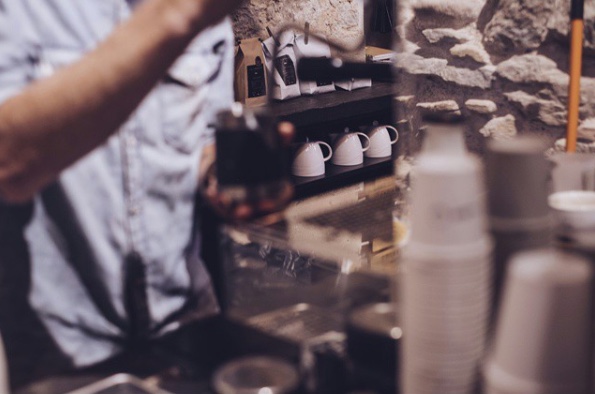
Personally, it’s been invaluable. I’ve got so much of my work through it. Christian contacted me through Instagram because he liked my work so you could say it’s a shop window. A free shop window. Do you lose some work because people pinch it? Maybe. Do I wish it wasn’t there? Sometimes. But that’s only because I go on it every day, wearing my thumb out.

Redhook Crit Barcelona

When, each day, do you first check?

First thing in the morning. When I feel like an addict, I try and make myself wait.

I’m surprised by how much some photographers actually post.

Photographers have a huge amount of content these days. You might think it’s a lot but it’s only a small fraction of their output.

Any idea how photography will develop over the next 10 years? Whether we’ll change how we view and consume it?

I’m a little old-fashioned so perhaps I’m not best placed to comment. If I get published online then that’s great but if it’s in print? I’m buzzing. And that’s nothing against online because you can share content so easily. There’s just something about print; the fact it’s so tactile. And that feeling will never get old.

La Fabrica

What bike do you ride?

A Look 586.

And the groupset?

Campag. Always.

Always?

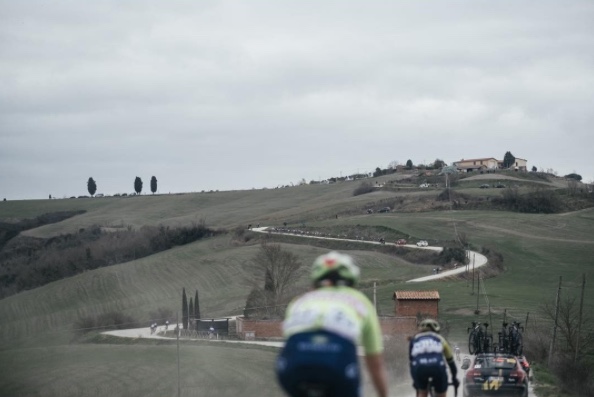
On a road bike? Yeah. And I’ve got a titanium bike that I first saw hanging on the wall of my girlfriend’s parents’ garage. I kind of had it on an extended loan that proved to be pretty permanent and I converted it into a gravel bike. It’s made out of bits and pieces the way I feel a gravel bike should be. My mate gave me a spare SRAM groupset; another mate an old set of Dura Ace wheels. It’s my ‘Frankenbike’, fits 40mm tyres and is just a blast to ride. I live south of Barcelona so there’s a lot of vineyard roads. It looks like Tuscany and there’s little traffic.

Strade Bianche

A favourite image?

I like the images I shoot that have plenty of space. That allow you to breathe. They also tend to be quite aggressively cropped. You can see something but you don’t always know what’s happening outside the frame. I like a shot that makes you stop and think. I like the viewer to have to work a bit and not for an image to be understood in an instant. Sometimes it’s what’s happening on the edge of the frame that I find particularly interesting.

If you weren’t a photographer?

I wouldn’t be a professional cyclist. It’s too much bloody hard work. So maybe some sort of adventurer. It’s a bit of a cliche but not just travelling. Doing epic shit. Something to push mind and body. Uncharacterised living.

All images with kind permission of Ian Walton