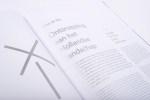
Vincent Engel / Lines on the landscape

Offering endless possibilities for capturing a moment, it’s perhaps fair to suggest that photography has the potential to tell a story in a single image. But what if this ability to frame and then reflect on the world we inhabit is used as a fulcrum for personal growth; a mechanism for change that involves doing what you like the most in a creative response to earning a living? Questions currently concerning Amsterdam-based Vincent Engel as he seeks to live life with a camera in one hand and the other on his handlebar.

_______________________________

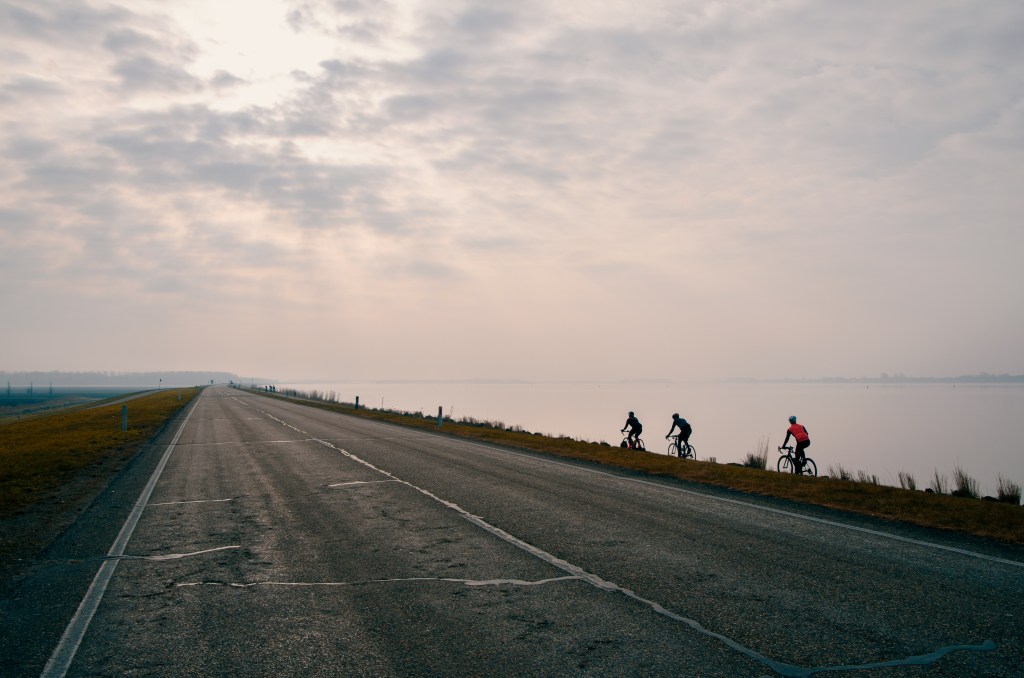
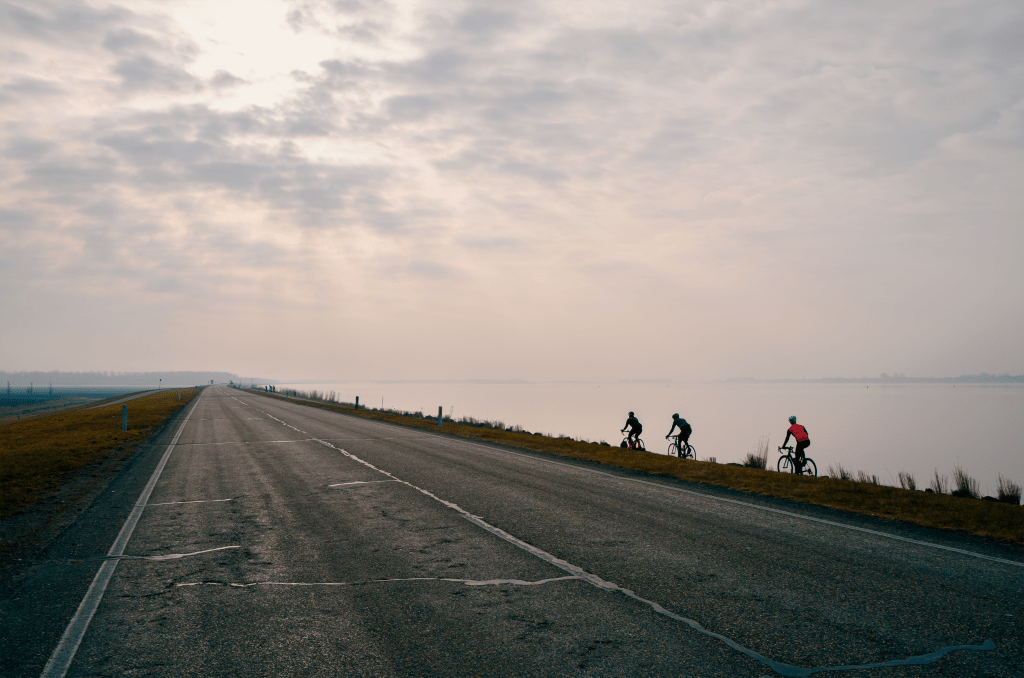
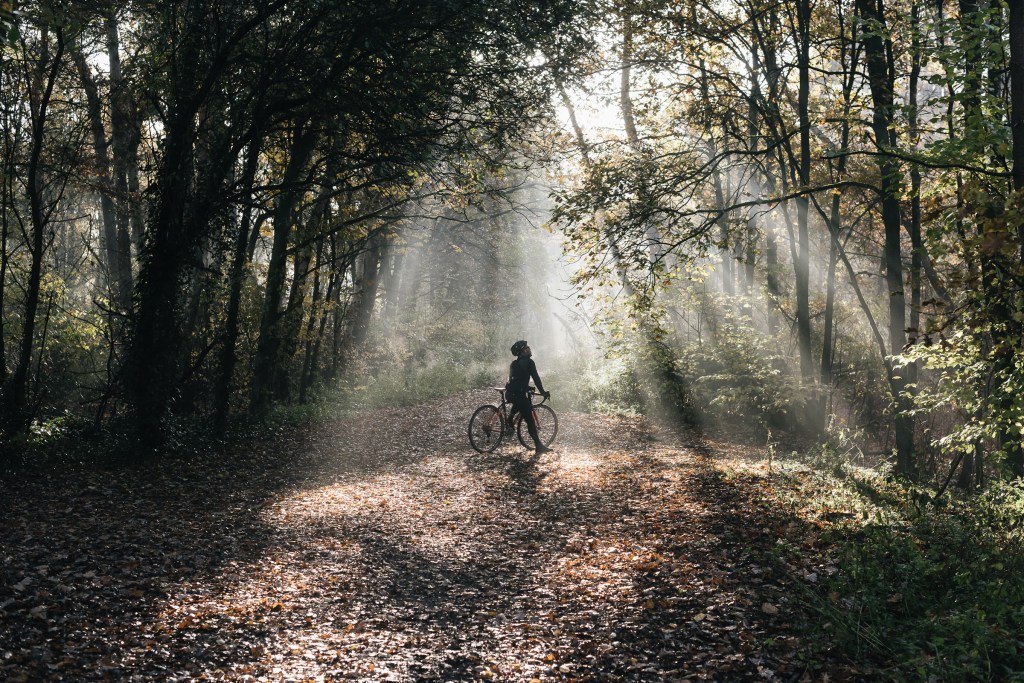
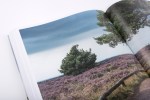
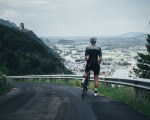
There’s a sense of boundless space that pervades Vincent’s images of his native Holland. In many ways a man-made landscape – architecturally graphic in the angles of the waterways, pathways and pylons – the painterly quality of his work references the rising mist and falling rain; the sun’s shadows and the light off the sea. Subtle layers that draw the eye to the details of the riders framed within.

‘I sometimes get good-natured teasing from my friends when they want to see more close-ups of themselves in my images,’ comments Vincent with a grin. ‘But I find it interesting to see the riders as an aspect of the landscape. To view this relationship in context to where they’ve been riding. To set them against a broad brushstroke of land, water and sky.’

DSC5394

Not that people don’t frequently feature in Vincent’s work; in part due to his involvement with Rapha Amsterdam since returning from a 10 year stint living and working in Saudi Arabia where he founded his design & build company Orange Identity.

‘My interest in photography originates from my background as a designer. I used to do 3D renderings to visualise architectural plans; taking the pictures of the textures I needed – wood, tiles, brickwork – to use in my computer-generated models. So I was pretty obsessed with my surroundings; how light is reflected and patterns are formed.’

‘The change from using the camera purely as a tool to one where I was making an emotional connection to the subject happened in Saudi Arabia. There was only me, my dog and my bike. And if I had some spare time I’d jump in my Jeep and head out into the desert and shoot landscapes. Capturing the solitude of the moment before I gradually began to combine these wide open spaces with a moving object.’

DSC1059

‘Interestingly I find photographing people far more difficult than those architectural images,’ Vincent explains. ‘My original pictures felt very mathematical but there’s an emotional element to shooting someone riding a bike that I find more challenging. Landscapes in a sense stand still and yesterday, for example, I went for a ride with a couple of friends and I shot over 100 images but they didn’t quite work. I suppose I’m too much of a perfectionist [smiles].’

After selling his company in 2015 and a subsequent return to the Netherlands, Vincent immediately fell into riding with Rapha Amsterdam; feeling such an instant connection with his fellow riders that he describes them in terms akin to a family.

‘For me, it just feels so comfortable. I came to cycling from a racing background but it’s not all about speed and we enjoy our coffee stops. There’s such a variety of routes that we have on offer. Out to the coast, local loops from the city centre or gravel adventures. Riding with a range of people from different backgrounds but there’s still a connection. We do the same rides – we suffer the same – and Rapha makes it possible for this to happen on a number of levels.’

DSC5464

As there’s no escaping the impact of water on the Dutch landscape, Vincent acknowledges that the weather too can bring its own challenges with winters that are cold, wet and windy. Conditions he argues that only make you feel more alive when out riding; to such an extent that he prefers to shoot in the rain rather than bright sunshine.

‘The weather has a significant part to play in the realisation of the images I create and I guess it’s about telling a story by contrasting all these individual elements. Which is why I rarely take a close-up image of someone on their bike because it’s the landscape that informs the narrative as it frames their movement.’

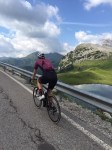
‘In the Netherlands,’ he continues, ‘I’m always looking for strong lines in an image and I thought before travelling out on a recent trip to Switzerland that I would, through necessity, be taking a different approach. But then I began to notice how the mountains overlap and bisect the horizon with strong diagonals in the foreground formed by the roads, trails and even the tracks we made in the snow. So I still had all kinds of lines that draw your attention to the detail in the image [smiles].’

DSC0142

Since returning to his homeland, Vincent now has the time to pursue photography on a more commercial basis and the past 6 months has seen him commissioned by a number of different clients all sharing the same admiration for his photographic style.

‘I’m still learning how to really direct people because I don’t naturally feel happy to be in the spotlight. By me telling someone what to do on a shoot I’m taking myself out of my comfort zone. But I enjoy working to a brief because it implies a certain level of trust from a client and I can take on-board their needs before going out and putting my own interpretation on the content. And I’m just as critical – more so – with my commissioned work as with my own. It’s kind of like my signature on an image so there’s more pressure to deliver. Pressure that I put on myself.’

‘It’s all about a happier life,’ Vincent concludes, ‘and that’s my biggest challenge at the moment. To find something that makes me happy that involves a creative response to cycling. In the past I’ve been fairly financially driven but money isn’t everything. Cycling has always been a constant in my life – since I was very young – so to combine that with photography was an obvious next step. They’re both great passions for me and it feels kind of like an exploration. Finding the new Vincent; making a bigger picture.’

11speed.nl

All images with kind permission of Vincent Engel

Hiroki Mitsui / Rapha Tokyo

Visit any city for the first time and there’s a period of adjustment as you stand and take your bearings. Often at the exit to the airport terminal – leaving behind the recognisable architecture of the arrivals hall – you’re immediately faced with a multitude of sensory clues to your new environment. The sheer sense of scale when arriving in Tokyo – home to 13 million – might on face value make this process of acclimatisation more of a challenge but according to Hiroki Mitsui there’s a sense of order and calm to be discovered that balances the busy city streets.

In his role as Rapha Cycling Club (RCC) Chapter Coordinator and with a 35km commute by bike from his Funabashi home in the Chiba Prefecture, Hiroki is perfectly placed to understand the rewards of cycling in Japan’s capital.

TOKYO_386A4486_Gogo

‘When you’re living in Tokyo,’ he explains, ‘you can do everything by bike. It’s faster moving from point to point than by car. Even if you decide to take the train, you can reach your destination just as quickly by cycling. And when riding you get to enjoy all the interesting architecture and everyday Tokyo streetlife. Our Rapha clubhouse is located close to Harajuku; a district popular with young people due to its shops, cafés and karaoke bars. But there’s a hidden aspect to this area if you start to explore the narrow side streets where it’s very quiet and peaceful.’

Not that Hiroki and his RCC members eschew public transport altogether; finding trains useful if they’re planning a longer ride outside of the city centre.

386A0532_edit

‘We tend to travel for an hour or so out into the countryside before starting our route. We call this ‘rinko style’ in reference to the nylon bag that you need to cover your bike so the train carriages are kept clean and safe for other passengers. It’s a legal requirement but also shows good manners. We’ve been collaborating with Fairmean to produce a super lightweight version that’s easy to use and it’s surprising how stylish and beautiful a bike looks when it’s covered and sitting on the train platform [smiles].’

Although the suburbs and open countryside offer quieter roads, Rapha rides in Tokyo are not restricted to the city’s outskirts and Hiroki is viewing with interest the proliferation of new bike lanes in preparation for Japan hosting the 2020 Olympic Games.

386A3113_edit

‘You can take a train out to the Boso and Hannoh areas as these both offer routes with plenty of climbing and beautiful scenery. Or there’s the Arakawa river-side bike path that winds its way out from the heart of the city with car free cycling and even distant views of Mt. Fuji on a clear day. If you prefer to ride from the clubhouse there’s a night ride we do that passes through the Meiji Jingu Gaien Park before skirting the Imperial Palace and crossing the Kachidoki Bridge; colourfully illuminated with views of the river and the city skyline.’

‘The Imperial Palace along with neighbouring Akasaka Palace,’ Hiroki continues, ‘are also the locations for Wednesday night laps and there’s a strong racing scene with crits especially popular with our RCC members. Winter brings the cyclocross season which offers racing for all abilities and there’s a lot of interest in long distance cycling alongside our regular social rides.’

386A5642_edit-3

Like other Rapha clubhouses, Tokyo is open to all with customers calling in for a coffee or lunch; Hiroki hosting a popular monthly RCC social evening that gets an average of 40 members attending.

‘Our members are from a variety of backgrounds but all share a love of cycling. Mainly they ride on the road because they don’t want their beautiful bikes to get too dirty and the gravel in Japan is much rougher with a mixture of large rocks and stones so it’s not for everyone. In terms of the weather there’s a rainy season during June and the mid-summer temperatures require us to escape to the higher mountains where it’s cooler. But for the majority of the year we can ride really easily.’

386A3687_edit

The vending machines outside convenience stores are another aspect that characterise Rapha Tokyo rides; Hiroki including them in his routes so his members can easily replenish their ride supplies without the need for a long wait. ‘These vending machines are found everywhere; even in the remote countryside where you can get a can of hot coffee in mid-winter. But cafés are a popular feature on city loops,’ Hiroki comments with a smile. ‘Although our riders rarely order an espresso. We tend to want to stay for longer and chat over a latte or flat white.’

Cultural considerations that imbue any visit to Rapha Tokyo with a richness of experience in part deriving from the delicate balance the city holds between both contemporary and traditional values. A vibrant cityscape that embraces technological innovation yet still functions daily according to an unspoken set of social rules. A contradiction not lost on Hiroki as it even extends to the official cycling laws that are arguably ignored on a daily basis but stipulate a potential 20,000 Yen fine for riding two abreast.

386A1025_edit_2048

‘Our rides – especially on the busier city streets before we reach the suburbs – can seem quiet because officially we can’t ride side by side. You follow the person in front and when you stop at the traffic lights you catch up on your conversation. But you can see from what they post on their Instagram feeds that they enjoy the social aspect of riding with other members. We might be quiet in our pace line but there’s plenty of laughter and smiles when we stop.’

All images with kind permission of Lee Basford

Rapha Tokyo

Hiroki Mitsui


Alex Duffill / Never say like

I first met Alex Duffill during the 2017 London Nocturne. Midway through a degree in Editorial and Advertising Photography, he had a place on the Leica Camera workshop shadowing Marshall Kappel for the day. Fast forward a year since that first chance meeting and we caught up to discuss post-graduation plans and why he tries to avoid the word ‘like’.

When we speak Alex admits to finding the reality of three years of study finally coming to an end a little difficult to process. Reflecting back on the focus of his degree programme, it’s primarily the importance of narrative that he now considers when planning for a shoot. That it isn’t enough to just take pictures which are pleasing to the eye.

_27A3985

‘It’s an approach,’ suggests Alex, ‘that makes any body of work stronger and more likely to resonate with whoever is viewing it. A lot of it comes down to the pre-production that precedes any shoot; going in with a clear understanding of your client’s needs. But then, when the time comes, you need to work flexibly and react to what unfolds.’

‘Basically it’s down to someone’s opinion whether a particular image works,’ he continues. ‘As long as they don’t use the word ‘like’ [laughs]. It was drilled into us on my degree course that it’s too subjective and means nothing. But I’m pretty laid back when it comes to feedback. I feel it’s important to listen as I never want to feel that I’m standing still; that I’ve stopped questioning or trying to improve. And sometimes you can get too close to a body of work – too emotionally attached – so it’s useful to draw on another individual’s perspective before you divide the two. Identifying the images you feel really work but not being upset if someone asks you to try a different approach to the one you’ve taken. Not always an easy aspect of my job to balance but it’s just a photograph at the end of the day.’

Mike Cuming_An Post Ras Race

Favouring media subjects when considering his high school options, on reflection it was the 2014 Cyclocross World Cup coming to Milton Keynes that led Alex to consider a career in photography. The first time – covering an event – that he knowingly tried to offer a broader response to who was there and why rather than simply documenting what was happening.

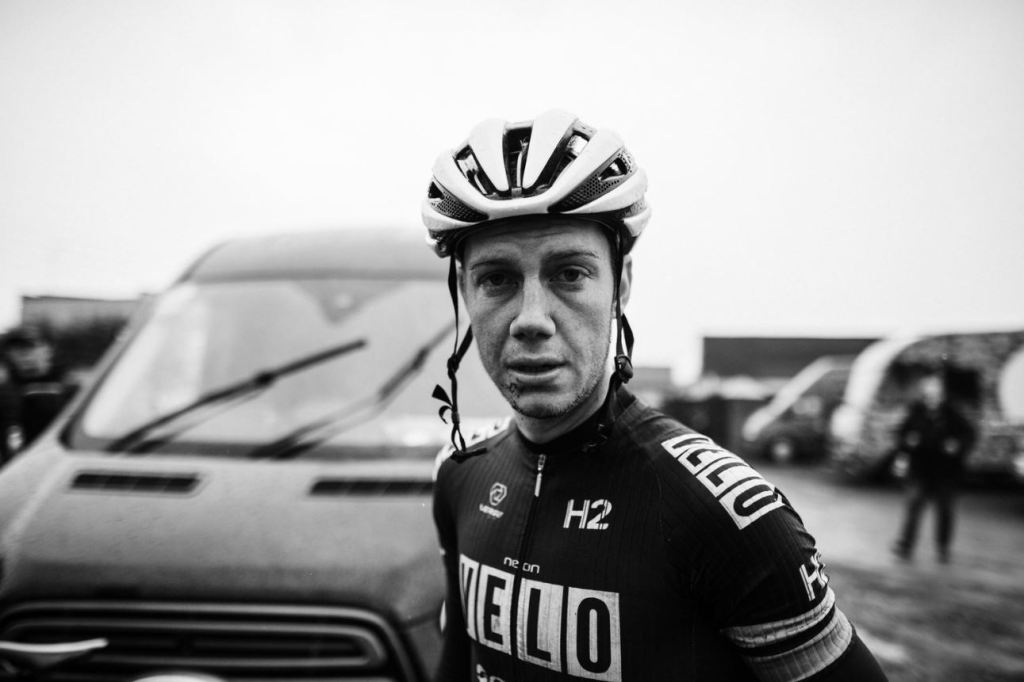
‘A strong composition is always important but I think eye contact – particularly at the moment – is a massive thing. Portraits that reach out and grab your attention. There’s a shot I took of Mike Cuming at the Rás last year that’s a fair representation of my style. The sense of exhaustion in the way he’s standing immediately after finishing a race. Taken from only a metre away using a 24mm prime as I like to get in close without pissing anyone off [laughs]. The equipment I use isn’t small by any means so it can make people feel awkward. So building a rapport – being really open and honest, friendly and approachable – is very important.’

Vitus Training Camp

Creating video content as well as still imagery, Alex feels the switch between the two helps keep his approach fresh but describes a craving for the other after a certain amount of time working with a single medium.

‘The composition can be similar for both  – all my Instagram photographs are cropped to 16:9 –  but with video you also need to consider sound together with a load more complications that you wouldn’t necessarily have if you were taking a still image. It’s fun, though, and a little like solving a puzzle. You just have to solve it whilst someone’s in front of you.’

Stelvio

Alex understands that in developing a body of work – no matter how talented an individual – it can sometimes come down to being in the right place at the right time. A train of events that led to his first shoot for Rapha; a company he’d long admired for the quality of the content they produce.

‘It was a week before the Nocturne that I got an email from Jack Saunders and Harry Downey to invite me in for a meeting. I’d just woken up and was sitting reading their message and wondering whether it was real. But I went down, showed them some of my work and out of that I ended up at the National Championships on the Isle of Man shooting images of Rhys Howells riding for Team Wiggins. And from there it’s just been crazy.’

6 Days

Together with Marshall Kappel he lists Benedict Campbell, Jake Stangel, Emily Maye and Sean Hardy as contemporary photographers he admires; pointing to social media as the biggest current influence on the jobs he’s offered with 90% of his shoots commissioned purely for these platforms.

‘Brands clearly understand the advantages of strong media content,’ Alex suggests. ‘The big companies can get twenty, thirty, forty thousand likes in a day. And if that then translates into sales, you can see why there’s so much focus in terms of marketing.’

_27A4018

Commenting on his own use of social media and Instagram in particular, he admits that his feed is to a degree curated but adds that in his chosen profession it can act as an effective shop window. This aspect resulting in a certain caution when posting content and a tendency to take it all a little too seriously; a broad grin lighting up Alex’s face when he describes how much time he actually spends scrolling up and down on his phone.

‘I just like taking pictures. It’s still a passion of mine and it’s nice if people look at my work and want to be there. The day that I stop falling in love with it will be the day I find something else that I can do to earn a living. I’m always super excited to take on a project but when it starts to feel like a job then it’s time to move on.’

alexduffill.com

@alexduffill

All images with kind permission of Alex Duffill.


Brian Canty / Eat Sleep Cycle

‘We were hosting our first Eat Sleep Cycle trip; in the very early days after we’d just launched. One rider had joined us at late notice so I’d given up my bed and there I was, sharing a slowly deflating blow up mattress with my business partners Lee and Louise – a month after they’d got married – on a kitchen floor next to a fridge that was making this irritating low pitched hum. And I remember that we just looked at each other and smiled.’

___________________________________________

Listening to Brian Canty reminisce – a youthful early thirties, he speaks quickly in a soft Irish accent – you soon gain a fascinating insight into the early days of the business he founded with Louise Laker and Lee Comerford in 2016. Fast forward a couple of years and from our mezzanine level vantage point in the stylish setting of the newly launched Eat Sleep Cycle Hub, it’s easily apparent that everyone’s super busy and an indication of the success the brand is enjoying.

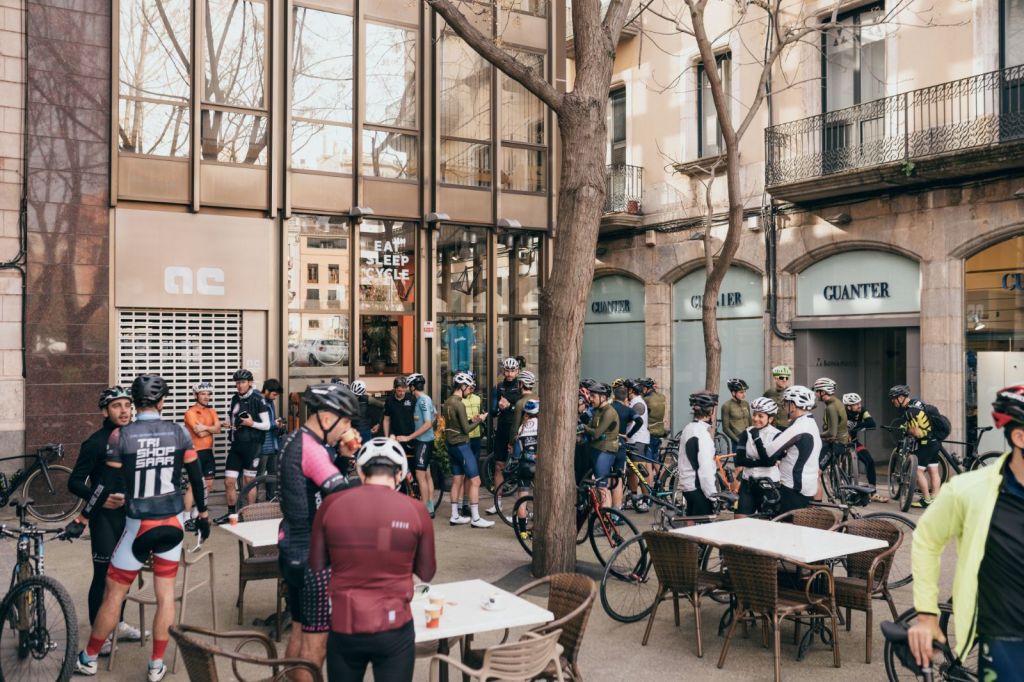
What was previously a fashion outlet, this light, airy space fronts onto a tree-lined square adjacent to Girona’s medieval heart; a stone’s throw from the Pont De Pedra Bridge where cyclists meet each morning before heading out into the surrounding countryside. A basement workshop links to the front desk by a set of wooden steps and bike ‘chute’ with the rest of the premises housing a carefully considered retail range together with washing and changing facilities. Everything beautifully finished and a stark contrast to their first premises; a 25m2  space they initially couldn’t afford to heat over winter.

‘Eat Sleep Cycle was started as a blog run by Lee and Louise,’ explains Brian. ‘Like me, they’d been living here in Girona but I didn’t know them. The first time I actually met Lee was at a race in April 2016 without realising that the musings on the blog that I’d been enjoying were his. I’d been running short on water and Lee kindly offered to share a bidon. He still suggests his placing would have been higher if he’d had more water [smiles] but we came away from that race with an instant connection.’

Boris, Mechanic by Sergi Mas de Xaxars

Both Girona-based cycle guides alongside Brian’s work as a journalist and Lee’s in engineering, they soon discovered they shared a similar outlook on life and, perhaps fortuitously, were both looking for a change in career. Two days later following a meeting between the pair and Lee’s fiancee Louise, the initial idea for a bike rental business was mapped out before they immediately went ahead and launched with seven bikes and a fairly basic website.

Still holding down full-time jobs alongside the hours spent staffing their first shop, demand for bike rentals was immediate and by necessity their hire fleet expanded to include the partners’ own bikes. Success that prompted the opening of a new shop in 2017 not far from their first and the addition of 20 Orbea bikes which were subsequently rented out for the whole season.

‘We soon realised during those early days,’ reflects Brian, ‘that there was only so much we could offer with 3 partners and a small fleet of rental bikes. So we decided to make 2018 a big year, took on more staff and began looking for new premises. We had this vision of an Eat Sleep Cycle Hub – a place in the centre of town that would tick all the boxes – and worked really hard over the winter ready for the launch party in February.’

‘I’m not afraid of hard work but I wouldn’t have been able to do this if I didn’t truly love cycling. I went out for a short ride earlier this morning and must have looked at my phone over 15 times. You come into a business like this with loads of energy and ideas but the challenge is to maintain your high standards. To ensure that you surpass whatever riders visiting Girona for the first time have previously experienced elsewhere. And that takes a lot of work and a constant focus on the details. The customer service industry is very labour intensive but if a client has a great experience we know they’ll come back.’

ESC team by Content Lab

Asked about people’s misconceptions of the life he leads in Girona, a wry grin immediately suggests the reality of running a bike rental and tour business is a matter of juggling a myriad of logistical aspects that his clients, perhaps understandably, never witness.

‘I’m still here when the lights are off and everyone’s gone home. The legal aspects required to keep our 3 vehicles, 8 staff and 80 bikes compliant with the local town hall are enormous. Tax, insurance, accounts. Are those airport transfers paid for? The hotel bookings made? What’s the weather like? And then people ask me why I don’t ride more [smiles].’

‘Delegating,’ Brian continues, ‘is the hardest thing. Giving your trust to someone else. Hard when it’s your own business that you’ve built from the ground up but necessary if you want the brand to grow over time.’

This mention of expansion leads me once again to the new cycling Hub and the added interest of the various product lines that Eat Sleep Cycle are now offering. Together with a recently brokered relationship with Ridley – the bike manufacturer tempering the huge financial investment necessary when purchasing a fleet of 80 bikes with flexible payment terms and a high level of componentry – Brian is excited by future collaborations and points to the rails of displayed products as an indication of the direction they’re taking in terms of merchandising.

WhatsApp Image 2018-03-10 at 20.57.06

‘You weigh up every decision you make as a business but very often it’s simply down to gut feeling. Take our bike supplier Ridley. As a brand they’re rooted in the Belgium heartland and are ridden in the Grand Tours. So, at a very basic level, it just felt right. Likewise MAAP approached us to ask if we could host a launch night and Tactic are a small local brand that can’t do enough for us.  When people want to work with us, we want to work with them.’

With the partners deciding from the outset that word of mouth recommendations would prove a more effective marketing strategy than taking out ads in magazines or newspapers and a goal of becoming one of the biggest bike tour operators in Europe, the stage is set for rolling out more Eat Sleep Cycle Hubs in addition to their Girona base.

‘If we continue growing as we have been doing,’ confirms Brian, ‘I see no reason why this isn’t achievable. For now, though, it’s about nailing Girona and becoming the best rental and tour operator in town. We want to give all our customers the same magical first impressions of riding in this region of Spain that we all experienced.’

‘Girona’s no longer the secret cycling destination known only to the few. There’s a huge market out there for what we offer but the people who’ll be successful will be the ones that love it because it’s not something you can fake. We’ve missed birthdays and weddings; I’m busy day and night. But it still doesn’t feel like work.’


___________________________________________

Feature image & workshop by Sergi Mas de Xaxars / ESC on the road by Content Lab

Maria Olsson / Determination by design

In the early summer of 2017, Maria Olsson sat across from her doctor following emergency abdominal surgery to remove an 8cm diameter cyst. After listening to a description of the procedure and the requirement for a biopsy to confirm the growth was benign, Maria began to ask whether an upcoming cycling challenge would affect her prognosis for recovery. The event in question was the Rapha Cent Cols – a brutal 10 day trip with an average daily elevation of 4000m – and the determination to even consider attempting the ride post-recovery indicative of an individual well-versed in pushing themselves to breaking point.

‘The doctor was looking at me like I was insane,’ reflects Maria. ‘Everyone else knew I had to pull out but I wasn’t prepared to accept the fact. I was totally in denial and just burst into tears. In a way not even considering my health concerns but worrying how I was going to tell my family and friends.’

_____________________________

We’ve arranged to meet in the exhibition space of the Rapha Manchester clubhouse where the previous evening Maria delivered a presentation on her role as the London-based brand’s Design Manager. Stylishly understated in dress, although her English is fluent Maria’s accent still reflects her Swedish roots with occasional hints of an Aussie twang that references the time she spent in Sydney studying a degree in fashion & textile design.

‘I grew up in a family where my mother and grandma were always knitting and cooking. We never had a lot so it was all about having the skills to complement our budget and we were very hands on. I do remember drawing a lot but at school I was always driven to focus on the sciences: biology, engineering and other technical subjects. I’d decided to go to university in Sydney and originally applied for a degree course in aero-engineering but there were problems with funding and I kind of fell into the fashion & textile thing. As it turned out – possibly rather fatefully – it was something I really enjoyed and was good at.’

After completing her degree course Maria returned to Sweden and a design role working on alpine and cross-country skiing ranges; an office visit from Fabian Cancellara and the Schleck brothers prompting her to consider the challenges of designing cycle-specific clothing and a change in focus that would eventually lead Maria to Rapha Racing. But not before she burnt out, took 6 months off to live in a cabin by a lake and occupied her time with freelance work until the next opportunity came along; a multi-faceted design position that Maria feels encouraged her to look at design problems from a range of perspectives.

‘And then I saw that Rapha were advertising for a designer. Instantly knowing I had to apply; that this was my dream job. So I sent in my portfolio, submitted an application and then, when they did offer me the position, it was a no brainer and I immediately accepted.’

That was back in 2015 and prompted a move to London where she enjoys a sometimes fractious relationship with the capital city: ‘London doesn’t feel like home but, when I’m at work, that kind of does. It’s the people that are around me that make me feel I belong. Much more so than feeling attached to a place.’

‘I love Sweden,’ Maria elaborates. ‘That’s where my heart is. And London can be fun and is full of inspiration. But I grew up in the countryside and the city’s quite a hard place. In a way it lacks empathy and it’s very easy, if you don’t have those people around you, to feel very lonely.’

Maria hands

The challenges of city living aside, it’s easily apparent from her frequent smiles that her design position is more than simply a job and is clearly influenced by her own riding. Describing how she arrives on many of the insights and ideas that inform her designs whilst riding her bike – problem solving determined by weather conditions or performance considerations –  interestingly it’s her background in the sciences and engineering in particular that play through in the approach she takes to her craft.

‘Sometimes it’s just an idea. I’m out riding and it hits me. But the way I work, it’s usually about the engineering and how we can apply this to solve problems. The fabrics we have available and how we design the cut and fit of a product. I don’t get super excited about fluffy fashion but I’ve always been really driven by technical aspects. Marrying form and function to make items that are not only beautiful but also user-friendly.’

A passionate approach to her professional life that proves difficult to balance as Maria admits – with a wry grin – that she’s always more or less on. ‘I have to force myself to switch off. Sometimes through cycling as it acts as a kind of therapy or sometimes by watching really stupid things on TV. I need that occasionally otherwise I’m worried my brain’s going to overload.’ This need to distract and unwind perhaps in part prompting the quote from T.S. Eliot* on her blog and the reason she decided to consider the Cent Cols Challenge in the first place?

*[Only those who risk going too far can possibly find out how far they can go. — T.S Eliot]

‘I’ve always felt quite different from everyone else in my family and I think, because we’ve had to overcome a lot of obstacles, this made me want to find my own path. I’m naturally quite independent and not afraid to push myself. Always super stubborn. And in everything I do, I commit to it. All or nothing.’

As it turned out, it was Maria’s own body that called time on the Cent Cols; the hurt of that decision still lingering on a year later and offering an insight into her younger years when she played football and danced.

‘I’ve always enjoyed feeling strong. I like the adrenaline and physicality of sport; the challenge of how far I can push myself, how good can I get. But I guess in the past I’ve been a little selfish in the way I’ve treated my body. Because I’m so determined – stupidly so – I’ve been guilty of pushing myself too far and all the issues I now have with my knees and feet are testament to that. I kept on going when my body was telling me to stop. And it gave me lots of warnings. But if my knee was completely fucked I’d still assume that the next day it would be better. I’ve done two Manchester to London rides like this where I literally couldn’t walk when I climbed off the bike. Believing that if you can just push through that barrier you’ll go into shock and the pain will lessen. But I feel that now, as I get older, I’m finally learning to be more respectful of my body.’

Maria email

Listening to Maria describe her attitude to pain and suffering – almost at odds with her slight build that still has a dancer’s poise – I wonder how this mental toughness translates into her everyday life? Whether it influences her interactions at work and how she negotiates?

‘I try to listen and I’m not one for pitching ideas if I haven’t really thought them through. I’ll have done my research before sketching it up and maybe getting a prototype made to actually see if it works. Sometimes it fails – probably 50:50 – but you never stop trying and you can always learn from these mistakes.’

As Maria’s designs are obviously influenced to a large extent by her own riding, working for a company that encourages its staff members to spend Wednesday mornings out on their bikes is just another aspect of her role with Rapha that she appreciates and feels is fundamental in delivering the company’s ethos; these midweek social spins balanced by weekend riding and the challenges of commuting by bike in the capital.

‘It’s not easy and the rare times that I don’t want to ride at a weekend is usually after I’ve commuted the full week by bike. You spend too much time concentrating on not getting killed for it to be an opportunity to unwind after a busy day at work and I suppose that’s why I come up to the Peak District so often to ride. I love Manchester. The people are really friendly and it’s so much easier to get out of the city and into the countryside.’

Happiest when riding her bike up a mountain with some good friends or visiting the very north of Sweden where she relishes the sense of emptiness – Maria suggests that it’s so quiet you can hear your own heart beat – these moments of blissful detachment are perhaps telling when considering the personal losses she suffered at a comparatively young age.

‘I was handed this big chunk of pain with the loss of my mum that has scarred me forever but doesn’t hurt every day forever. And I think I would have been a different person today without that sense of loss. It was a consistent period of hard times but it has helped me achieve a good perspective on life. That it’s not all shiny and sparkly. And I certainly don’t give a crap about the small issues that used to worry me.’

‘Material things mean very little. In my work, by necessity, I’m super organised but outside of that environment I’m very chilled about stuff and tend to go with the flow. That wasn’t always the case [laughs]. I remember when I was still at school and I had every waking hour planned. But now? Maybe we need to be with someone that’s the opposite to ourselves? If you’re a thinker – as I am – you need to pair up with a doer. It’s important for me to see solutions to problems rather than the problem being the endpoint. And people have a tendency to sweat the small stuff when, if you step back, you realise that on the scale of things it really isn’t that important. It’s like this obsession with Strava. I don’t record everything and if it’s not on Strava it still happened [smiles].’

As it’s time for Maria to head home – she fires off a final few emails before packing away her laptop ready to ride to Stretford where she’s based when visiting the city – I ask about her plans with Rapha and what her next career move might be.

‘I guess I have some kind of vision but I try not to plan too far ahead. I’m taking it as it comes because I love my job with Rapha and my life as it is now. So, we’ll see. Who knows what the future holds?’

@maria.t.olsson

Rapha UK

Images by @openautograph

Wim Jan Petersen / Dutch Mountains

Sitting over a coffee in the Rapha Amsterdam clubhouse – tucked away in the ‘9 Streets’ canal district of the picturesque city centre – Wim Jan Petersen took the time to discuss his role as Rapha Cycling Club (RCC) Coordinator for the Benelux region, how his members ride and where you need to go in search of a hill to climb.

A typical Wednesday morning loop would see us riding south out of the city centre into the surrounding farmland. Canals and rivers; very green with open views. And then there’s the Ronde Hoep; probably the most popular route as it’s just under 40 km and really easy to get out and back in an hour or so. Super convenient and you get all levels of cyclist from beginners to high level racers.

We often head out towards the coast but as you’re fairly exposed to the elements – being so close to the sea – you have the wind to contend with. Dutch Mountains as we choose to call it. Pretty much the toughest it can get in this area and it can catch riders out. We have individuals from other countries joining our rides expecting it to be flat and easy and halfway into an 80 km loop they’re done. Completely cooked and it’s the wind that gets them every time.

The weather – especially over the winter months – can be challenging. The wet, the cold, the wind; it uses a lot of energy to keep your body warm so I often end up sharing my food with cyclists new to the area. And it’s always interesting to see the look of surprise on the faces of strong riders when they blow up. Welcome to the Netherlands [laughs].

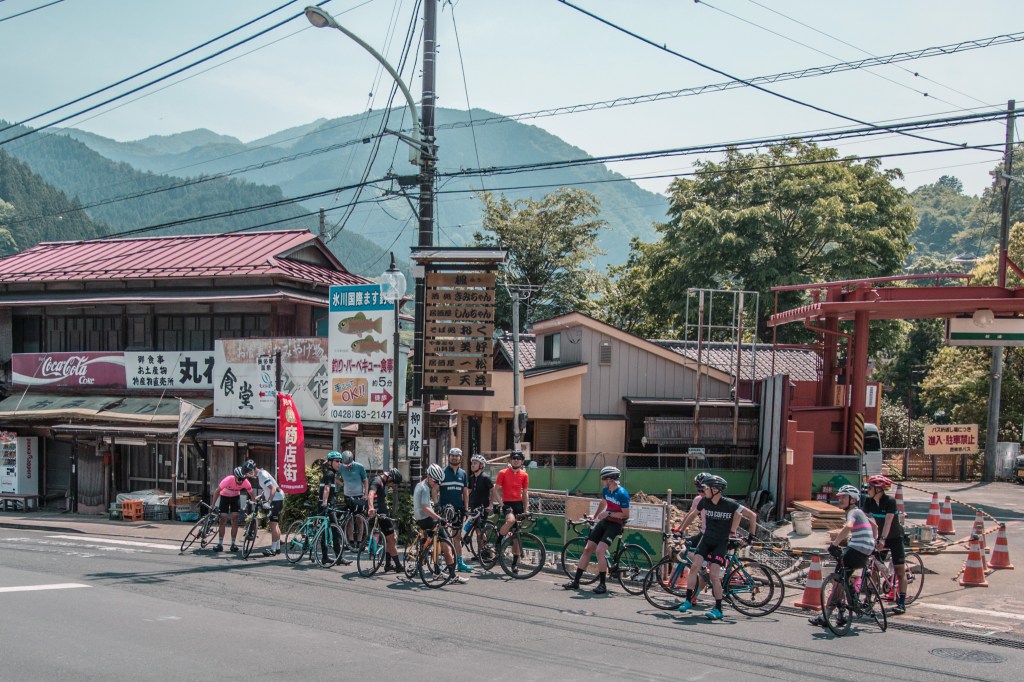
Setting aside these weather considerations, you’re outside of the city in under 20 minutes and into a completely different world. In the centre it can appear chaotic – a lot of tourists, a lot of cyclists – but when you leave all that behind you it’s very empty and open. West towards the sea, open farmland to the south, interesting gravel tracks to the east or traditional Dutch landscapes to the north. We even have a climb called Het Kopje. Really just a big dune and not even that steep but we call it a climb as it’s the only one we have close to Amsterdam [smiles].

On a bigger loop we’ll make sure there’s a stop so we can fill our bidons, have a coffee and maybe a small lunch. Crossing the border always makes a ride feel special so sometimes we’ll drop down into Belgium but you need to remember to bring cash as a lot of the little establishments don’t take cards.

Because not everyone is always located within easy reach of the Amsterdam clubhouse we’ve developed a network of satellite cafes across the Benelux area offering access to rides and the same RCC experience. Cafes with a passion for cycling and links with their local cycling community and all providing our members with their free* cup of coffee, of course.

A typical RCC Amsterdam ride is very social and based on good camaraderie. We’ve come a long way in making cycling accessible at every level with WhatsApp groups being created so that rides can be planned and shared. That’s reflected in the members themselves; how they all respect each other and all have their own story. And because of that, they’re more keen to try new things.

I sometimes get the impression that a lot of people, when they think about cycling, picture someone on a race bike going as hard as they can but it’s so much more than just that. Maybe a casual coffee ride, a heritage tour through the city centre or a bikepacking adventure. And I feel that my role with Rapha is very much about embracing these different aspects and connecting with all cyclists rather than the few.

Rapha Amsterdam

Ride images with kind permission of Vincent Engel

*RCC members enjoy free coffee year round at Rapha Clubhouses


Matt Mears / Temple Cycles

Spend time in the company of cyclists and it’s not unusual to hear individuals voice dreams that reference custom frame fabrication or artisanal coffee. Articulating a desire to swap the morning motorway commute and office desk for a fixie ride to the workshop and welding torch; the café and espresso machine. Earning a living inspired by a particular passion fuelled by Instagram.

That Matt Mears created his own role from the ground up – founding Temple Cycles in 2014 with £5000 scraped together from savings and the generous support of grandparents – perhaps offers proof that these dreams are at least possible. But listen to his story and you soon come to understand the level of commitment and hard work that any new business venture requires to succeed.

‘There’s all the hurdles, upsets and issues that you have to contend with,’ suggests Mears. ‘So much going on that finding the time to do even the simplest tasks can be difficult. And the problem with running your own company is that it’s too easy to take it all home because you love what you’re doing.’

I’ve arranged to meet Mears in his Bristol based retail unit situated on Wapping Wharf; a strip of land separating the tidal River Avon from the central floating harbour. The dockside cranes may be immobile but commodities are still traded on the waterfront with heritage packaged in the form of bars, restaurants and shops that occupy the original warehouses.

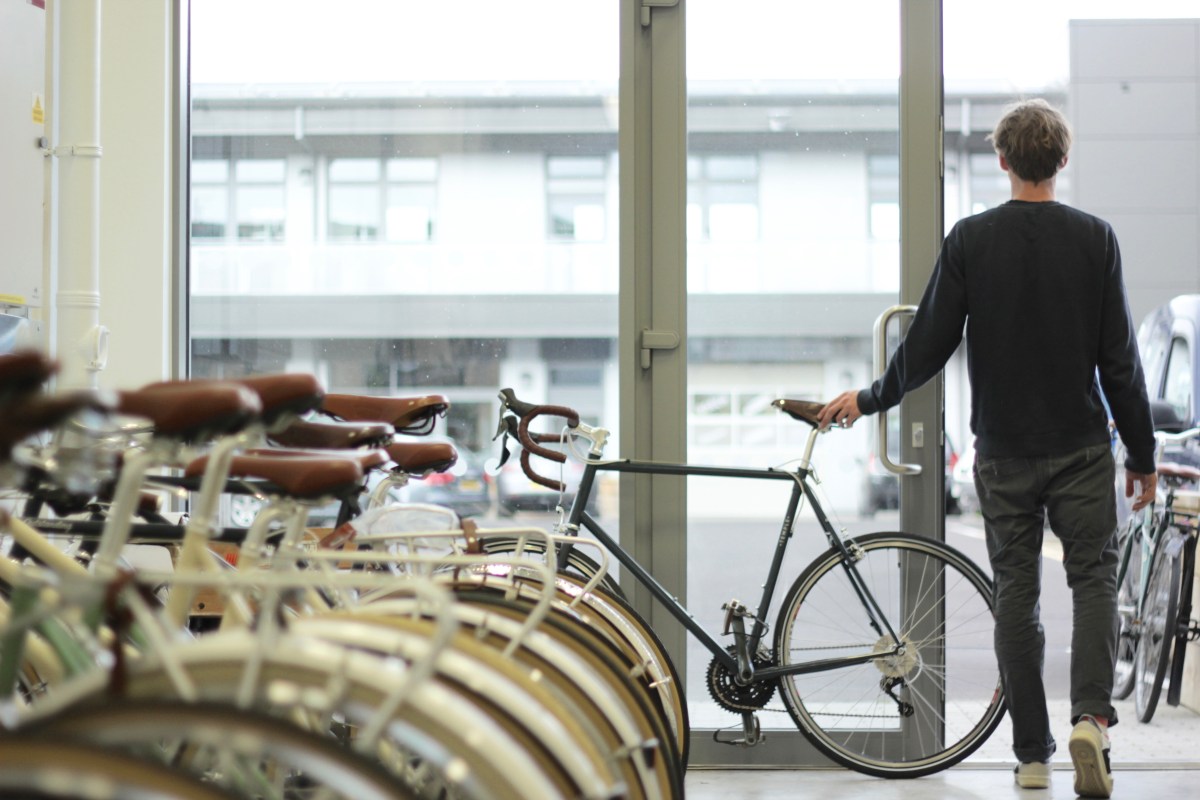
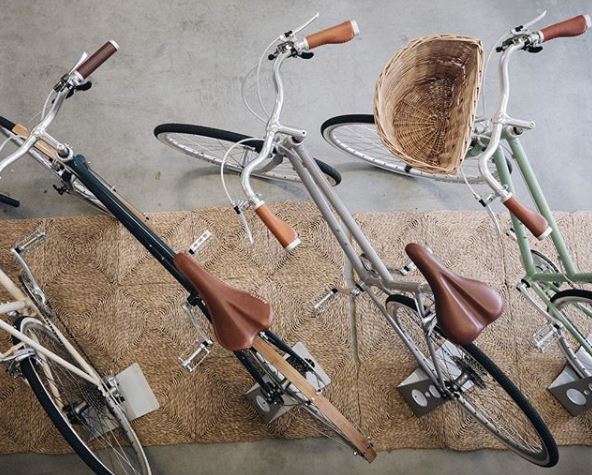
Step over the rail tracks that criss-cross the dockside and you’ll soon come upon a series of contemporary retail outlets with one particularly notable for the number of bicycles ranged just outside the entrance. All classically proportioned with a steel frame fabricated using traditional round tubes and finished with brown Brooks saddles and bar tape.

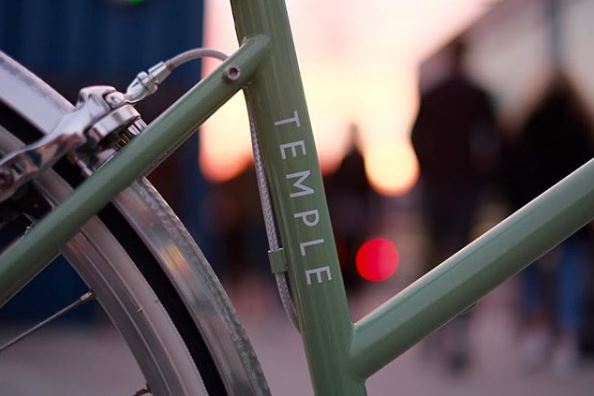
Inside there’s a similarly understated feel to the products on display. Shelves of bells, bags and bottle cages with, along the opposite wall, another collection of bikes. Like those outside, all bearing the same cast badge on the headtube – the word Temple superimposed on a Greek column motiff – and with a vintage styling that belies the fact that they’re all brand new.

Shop

With a trim frame and a shock of blonde hair, Mears talks animatedly and with evident enthusiasm about the vintage bike restoration business he ran out of his bedroom whilst studying mechanical engineering at Bristol University; this leading him to consider scaling up the venture and the eventual realisation that what he really wanted to do was start manufacturing bikes of his own design that referenced his passion for a classic ‘look’ but also addressed issues of consumer consumption.

‘The bike industry seems largely geared around bringing in new standards and technologies but this almost encourages a throw-away upgrade culture. I feel cycling should be about owning a beautiful machine that you love and care for. With parts that can be replaced when they wear out so the bike can give you 10 or 20 years of use.’

Launched with a core range of simple, classic-looking bikes and a brand name grounded in the Bristol locality, Temple Cycles has since enjoyed year-on-year growth; helped by a later crowdfunding bid that provided the necessary funds to expand the business and take on more staff.

‘The crowdfunding campaign was a very intense time. There’s such a long build-up – talking to investors, delivering presentations, networking – all in the hope that when you click ‘go’ the money starts to roll in. Luckily for us it kind of snowballed and it was all wrapped up in less than 2 days.’

With such a particular aesthetic, Mears believes the current trend for minimalist design helps drive sales and points to the customer experience as another significant factor. ‘We sell direct so nearly all our sales start with either a face-to-face conversation or a few email messages. An opportunity for you to discuss your needs before we actually start the build. Too often when an individual purchases from a bike retailer they then need to start replacing parts to make their bike work for them.’

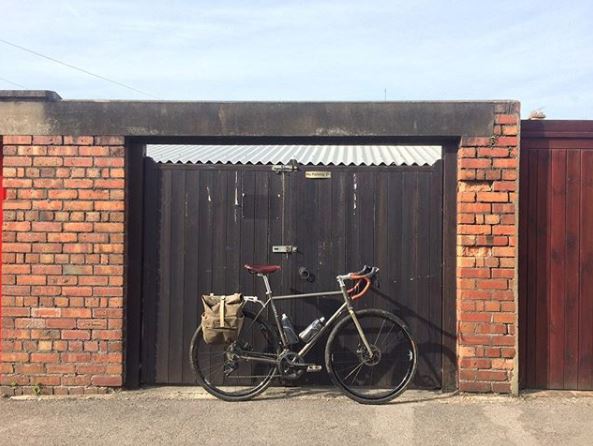
With an ethos that Temple Cycles manufactures bikes for life and that changes in design should be gradual refinements rather than an attempt to build-in a redundancy to model ranges, Mears thought long and hard before launching his latest design; the Adventure Disc. Perhaps in part because this model references many of his personal riding needs.

Disc

‘It’s as close to my idea of the perfect ‘all-rounder’ that I think we can get. A bike that you can really rely on. Taking rugged terrain in its stride before you swap out the tyres for some slicks and your local club ride. Load it up and off you go without having to worry about things which is why we purposefully didn’t spec hydraulic brakes. You need to have the capacity to fix a problem when you’re on the road travelling. I don’t particularly want to carry a hydraulic bleeding kit if I’m touring and, for the average home mechanic, it’s rather a dark art.’

Describing the design process, Mears begins by questioning how a bike will be used before considering tyre clearance and tubing profiles; believing it false economy to skimp on componentry or the quality of a build. ‘In some ways the bike industry encourages you to feel dissatisfied. That everyone needs performance, aero, super-lightweight carbon. To be like the pros and buy top-end. I hate all that because I want your bike to be serviceable for as long as possible. I don’t want component standards to make your new bike completely redundant and for this to drive consumption of goods and materials for no other reason than profit.’

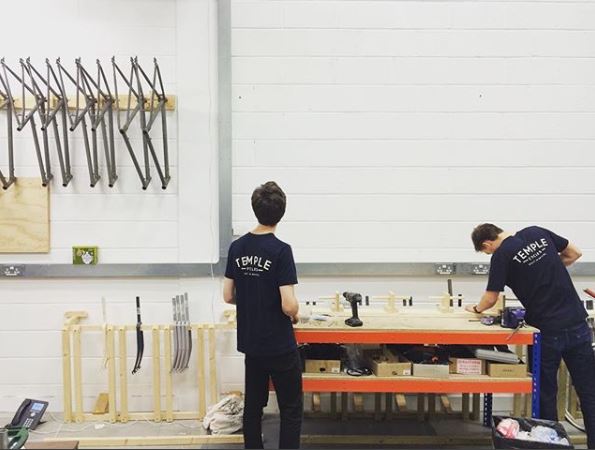
As all Temple frames are fabricated from steel – handmade by a Taiwanese manufacturer using Reynolds tubing – any environmental issues involving the transportation of finished frames back to the UK can be offset by the longevity of the material but, by necessity, accounts for lengthy lead times.

‘This aspect of the build process can be stressful. We’ve got a super relationship with our frame maker and they’re very professional. But if we could fabricate our frames locally it would allow us to operate far leaner in terms of the amount of stock we need to carry. But we need to balance this with the infrastructure costs, our business model and the price points we set. At present it simply isn’t cost effective.’

Mears is keen to point out, however, that it’s not all spreadsheets and warehouse inventories and he’s clearly enjoyed developing the visual identity of the website and branding: ‘It gives you an excuse on a sunny Monday morning to grab your camera and go out and ride your bike all day. And you can justify it to yourself because it’s for work.’
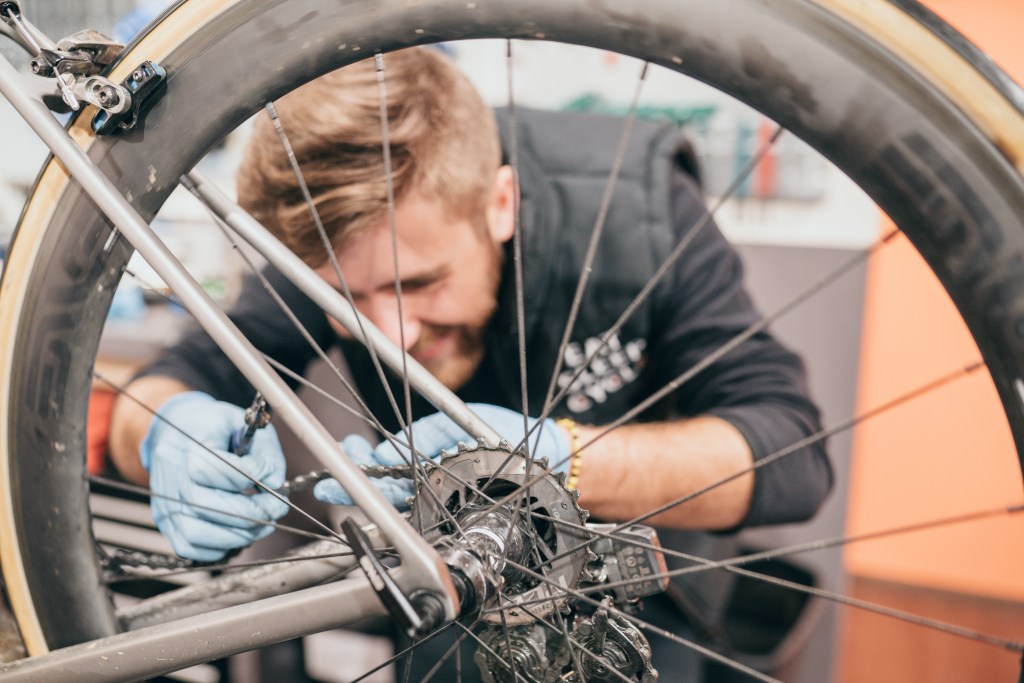
4 years since the company first launched and with a neighbouring workshop complementing this retail outlet on the central Bristol harbourside, sales that were first driven by passing trade have now broadened to embrace orders from across the UK and mainland Europe. In part prompting my final question whether it’s possible for Temple Cycles to get too big?

‘I want us to grow and we recognise that requires us to look beyond Bristol and the southwest market. But we can’t allow any expansion of the business to compromise the way we interact with our customers. And we’ll still continue with our harbourside shop so people can come in for a cup of tea, have a chat and take a bike out for a ride. To be honest, that’s the fun bit.’

For more information visit Temple Cycles

All images @templecycles


Dan Morris / Cycle Solutions

Spend time in Copenhagen and you begin to wonder whether the sign that greets you in the airport terminal proclaiming Denmark as the world’s happiest country in some part references the Danish love affair with the bike. As rush hour traffic largely comprises streams of individuals crisscrossing the city to work, school and even the nursery – toddlers sitting in large wooden boxes affixed to cargo bikes – cycling seems hardwired into the nation’s psyche. And it’s this question of whether the UK could ever see a similar mainstream adoption of the bike for everyday journeys that I’m keen to put to Dan Morris; ride leader, Rapha Ambassador and Senior Transportation Planner with Warwickshire County Council.

‘If you want to start cycling to work you’ve got quite a lot to consider. The kit you’ll need to cope with the UK climate, how long it will take you and whether you have facilities to change. Of course, if you’re riding for leisure, all of those things go out of the window. Which is why I always suggest you start riding a bike simply for fun.’

It’s easily apparent that Dan is a passionate advocate for all things cycling. From describing his professional role through to his favourite 30 mile local loop, his voice and animated hand movements punctuate the points he makes with a calm confidence. Ideal traits when communicating a message that cycling is a viable mode of transportation to organisations not always receptive to change.
Referring to the time he worked for Sustrans on a project to encourage more Birmingham based businesses to embrace cycling as a way for their employees to travel to work, he freely acknowledges the infrastructure at that time couldn’t deliver in terms of changing perceptions that cycling in the city centre wasn’t inherently dangerous. ‘I was trying my best to promote all the pluses that cycling ticks,’ Dan explains, ‘but it was a super-hard sell. Really frustrating because I understood the positive impact cycling could have on individuals and their families.’

IMG_3652

Things finally changed when Transport for West Midlands received a £48m pot of money to develop cycling infrastructure across the seven boroughs at the same time Dan took up a new position with the cycling development business BikeRight!.

‘After 18 months of cold-calling and knocking on doors – talking the talk but not being able to deliver in terms of persuading people that cycling was a practical and safe option – we had this joined up approach that I could sell to people as a viable means of using a bike as everyday transport. We even had fleets of bikes we could loan to businesses for a week at a time to encourage their employees to at least try riding to work.’

Finding that his role with BikeRight! involved liaising with the Transport Authority’s infrastructure team – consulting on the design of cycle routes and questioning whether they met the needs of their users – he already had close-working ties with the local authority when they advertised his current position of transport planner. Concerned that he didn’t have the usual engineering background, it was following the interview after he’d accepted the position that the panel’s requirements became apparent. ‘It turns out they already had an office full of engineers and what they really wanted was a public-facing individual to not only influence the design of local infrastructure but also engage with the public on cycle-related matters.’

Race

As he didn’t take his driving test until his mid-twenties, at the very least Dan is able to communicate this message with a degree of conviction and goes some way to explaining why cycling has been the commonality in a varied career that included a spell working in a nightclub.

‘I was finishing my shift at around three in the morning before getting on my bike and riding home. But I didn’t know anything else. I’d ride to work, to college, to see friends. And this probably accounts for why I do the job that I do. Cycling is such a massive escape for me. The headspace I need to switch off from work before focusing on home and family.’

Growing up in Leamington Spa, the West Midlands is where Dan returned following a couple of snowboarding seasons after he graduated with a Physiotherapy degree from Birmingham University. Initially starting out in the health and fitness industry led to him working within public health on a programme engaging with young people between 8 and 16 who were clinically obese. ‘Our aim was to get them active and eating well but the biggest barrier I encountered was their reluctance to take part in physical activity because of previous bullying or low self-esteem. As I loved cycling I felt this might be the perfect way to address this issue and enable them to factor in a degree of everyday activity into their lives.’

Now that he’s landed his dream job – a role in which he can marry the design and promotion of cycling infrastructure with the necessary encouragement for people to get out and use it – Dan can confidently get to grips with the key messages that sustainable cycling can address.

IMG_E0394

‘Very often, and especially in large urban areas, if you want to get from point A to point B in the shortest time then in many ways the bicycle is the obvious choice. And when people list all the potentially negative aspects of riding a bike often what I’ll simply suggest is for them to try it. Just once and see how they get on. I’m not expecting them to ride every day but if they can find their own need or reason to do it, then that can sow the seed for longer term engagement.’

Believing active travel in the UK is currently in a good place with more workplaces opening doors to enable bicycle commuting, Dan feels local authorities are striving to enable provision but there’s still a lack of consistency between areas. Cycle lanes varying in design and colour from city to city without a joined-up blueprint to make the UK a truly cycle-friendly country.

‘We need a top-down approach that is evident in countries such as the Netherlands,’ he suggests. ‘I was over there giving a presentation about UK cycling and one of the comments I made related to our perception that Dutch motorists are so much more respectful towards cyclists. But the simple truth of the matter is that their motorists are cyclists.’

‘We need people to feel confident riding their bikes,’ Dan continues. ‘The more journeys made by bike, the greater it encourages local authorities to see that cycling is a worthwhile investment. And in comparison to what’s been spent on roads and rail, cycling doesn’t really cost an awful lot to provide decent infrastructure. But there’s the catch. As local authorities are held accountable for the impact of their spending, often they don’t think they need to invest in infrastructure because no one’s riding their bikes. But if the provision was there you’d see a greater take up.’

Dan

‘If you put me on my soapbox I say we don’t need to learn from the Dutch or the Danes. We need to look to America and learn from Portland, New York and Chicago. Car-centric cities that have turned it round and increased cycling participation. Taking space back from their existing road networks to create interconnected routes that cross the city.’

But it’s the provision of cycle training together with usable infrastructure that Dan feels could have the biggest impact. Training available to all schools irrespective of postcodes and funding bids and encouraging a mindset that cycling is the norm. ‘If you can combine this with encouraging adults to cycle – bike share schemes in all of our cities and investing in the number of segregated cycleways – then I believe we can reach a tipping point where making a journey by bike becomes your preferred option and not solely for cycle fanatics like me.’

Now that he’s a father and time with the family is precious, Dan is happy to be selective about when or if he can ride or race. To such an extent that a lot of his miles are done on an indoor trainer. ‘I’m quite happy getting up at ‘silly’ o’clock in the morning to do a turbo session,’ he comments with a smile. ‘I still absolutely love getting out and riding with other people but just need to keep all these aspects of my life in balance. And I suppose it’s because cycling plays such a pivotal role in my life – both at work and in my spare time – that I really try not to be too evangelical about its benefits. But if anyone wants to argue the pros and cons, I’m that pain in the arse individual who has an answer for everything.’

@pistaboy

All images by Benedict Campbell


Yorit Kluitman / Ordering the landscape

Sitting down with Yorit Kluitman – graphic designer and self-styled cycling fanatic – there’s a number of keywords that keep cropping up during our conversation. Collecting. Organising. Rules. Verbal clues to the visual approach he takes in ordering his world. A world rich in experience with a deep connection to the natural environment that he’s spent 5 years recording for Bicycle Landscape; his beautifully realised book that documents each of the Netherlands’ 388 municipalities. Visually capturing the form and functionality of the Dutch landscape.

Born and raised in Eindhoven, Yorit returned after a spell studying editorial design at the Willem de Kooning Academy in Rotterdam. Appreciating the city’s cycling infrastructure he argues the political agenda for supporting bike friendly projects stems from memories of riding as a child. ‘It’s in their blood and DNA,’ Yorit suggests. ‘So even the politicians share this same understanding and feel the need to prioritise the bicycle as a form of everyday transport. In the sense that we’ve recently had a number of roads closed and replaced by cycle lanes. Super wide and linked to the city’s network of bike paths.’

Since founding his own graphic design studio, Yorit acknowledges that he works more hours now that he’s self-employed. ‘You find yourself doing administration late at night and clients are constantly wanting to contact you about a particular project. Occasionally you get some time between different jobs when you can ride a little more but usually everything’s happening at once.’

crossisboss

When he does get the time, Yorit tends to head south on quiet rural roads; regularly crossing the border into Belgium where he explains the sandwiches are not only cheaper but also more generous in size. A little further to the north is the Veluwe; his favourite area for riding and the only place in the Netherlands that he considers to have a true sense of wilderness. And it’s this distinction between ‘natural’ nature and evidence of man-made manipulation that brings us to the Bicycle Landscape project.

‘I remember feeling overworked so I decided to start cycling local loops over lunch. Later I bought a race bike and ventured further afield; taking pictures on my iPhone. At the time I was studying in Rotterdam and it just struck me how the landscape in the Netherlands is super graphic. A lot of horizontal lines and organised structure that I began reimagining as postcard views. And from there I drew up a set of rules for the photographs I was collecting. No people or buildings. A spartan image searching for straight paths that relate to the horizon or a vanishing point in the landscape.’

‘A friend of mine,’ Yorit continues, ‘suggested I do all the villages, towns and cities but I looked it up and there’s over 8,500. But I liked the idea so decided to focus on the municipalities as they’re pretty well categorised.’

hardennes

Reflecting on this 5 year undertaking now that the resultant Bicycle Landscape book has been published – 17,000 km over 153 rides with a final selection of 450 images whittled down from a little over 10,000 – I question whether Yorit views the Dutch landscape through the filter of his graphic design profession? If he considers his interpretation to be exaggerated?

‘There are people and signposts where I ride,’ he reflects with a smile. ‘Noise as I choose to call it. But I leave that all out deliberately. No cars, no people, no buildings. I suppose that’s the way I like my rides. Just me, the bike and my natural surroundings.’

With his home and business based in Eindhoven, his immediate urban environment offers an interesting contrast to the landscapes so meticulously recorded in his book. With a citywide infrastructure dominated by the industrial heritage of his parents’ previous employers – Yorit’s mother working at Philips and his father at DAF – he considers the city in some ways quite ugly but undergoing a gradual reimagining in the shape of the creative and technological sectors utilising the long empty warehouses and production lines. ‘The spaces are now being reworked as studios, offices and apartments,’ he observes, ‘but the skyline is still very Philips.’

Escaping into the surrounding countryside whenever he can, Yorit has a number of bikes with each fulfilling a particular role. ‘I have a St Joris steel bike that was made specifically for the Bicycle Landscape project. Bright orange paint – the Dutch national colour – with a slightly more upright position that cruises well and allows you to look around.’

gravelchase

‘I don’t like ‘noisy’ rides,’ he continues when asked what sort of route he favours. ‘Not in the sense of sound but well planned and fluid in the turns and changes of direction. Almost like a well composed song that starts slowly before building up, a good ride needs to be focused and ordered. I like things to go as planned. Surprises in cycling have a tendency to be dangerous.’

In terms of riding culture, Yorit describes a typical Dutch ride as super social; groups riding routes along coastal roads or through exposed terrain having to work together as there’s always the wind to contend with. ‘There’s a metropolitan lifestyle aspect in cities such as Amsterdam where people tend to follow the latest trends. In the south it’s more a traditional, grassroots interest in cycling. All the towns have their own cycle race in the summer and the terrain is a little more playful with stretches of gravel and forest paths.’

Now that the Bicycle Landscape project is completed, I finish by asking if his relationship with cycling has since changed; prompting Yorit to smile before stating: ‘I ride to enjoy the social aspect. When we come together and head out of the city centre. Enjoying a conversation over a cup of coffee or even a beer. But I’d like to do another cycling project. It’s so much fun riding around with a camera and I still like to categorise. To place things in order.’

bicycle-landscape.com

@bicycle_landscape

All images with kind permission of Yorit Kluitman.

Profile: Mimi Kathrein

Growing up near Lake Constance and now resident in Vienna, the city’s cycling culture has seen some significant changes since Mimi Kathrein first began riding in 2010. At the time a closed-off world of cycle clubs that beginners wanting to try the sport often found rather forbidding, recent years have seen the adoption of a more open approach to participation. ‘Looking back,’ Mimi explains, ‘I feel the scene was influenced by the States and the UK in the way people’s riding habits have changed and this encouraged me to start a regular women’s training ride.’

But it was riding with Kelli Samuelson during a trip to LA that proved particularly inspirational; sowing the seeds for the idea of creating her own place where women could support each other in their riding goals. ‘I was still fairly new to cycling,’ Mimi reflects, ‘and felt really intimidated by the thought of accompanying such a strong rider out into the mountains that skirt the Los Angeles urban sprawl. But listening to Kelli’s story of how she founded her women’s race team which later became LA Sweat made me determined to do something along those same lines back in Vienna.’

Having already joined the Rapha Ambassador programme, this decision was further strengthened after a trip to Amsterdam during which she first learnt about the women’s cycling group STRONGHER. Excited by the prospect of founding something similar, on her return to Vienna she immediately set about launching FASTHER; a platform for women to share their experiences and develop group riding skills.

‘In this way,’ Mimi explains, ‘you can always help riders that aren’t quite as strong. They can sit in the second or third row with the stronger riders in the front and at the rear. And it’s so satisfying when you see new members understand that by riding together you can go so much further and so much faster.’

For a group that prides itself on the support it provides to new riders, it’s perhaps surprising that there’s a ‘no complaining’ rule; a concept that Mimi is keen to clarify: ‘It’s about not giving in to your insecurities. About having faith and just trying something in the knowledge that the group will be there for you. You’re free to curse when you’re climbing a mountain but it’s important to own the moment. And in some ways it’s really very simple. Some people are faster and some people are slower but it’s hard for everyone.’

Having recently discovered the joys of bike packing – Mimi appreciating the distances you can travel unsupported on a bike and the enjoyment to be found from setting your own pace – she’s at her happiest riding in the mountains. ‘The second time I climbed Mt. Ventoux I was filming with Rapha. I was riding with Jonas from Norway and we were singing all day but they kept telling us to stop because we looked too happy [laughs].’

Using her fingers to count the number of bikes she owns – her ‘Dutch’ bike and city commuter sit in street level storage but the rest are kept in the house – a background in both design and curating contemporary art means Mimi’s ideally placed working for the Vienna Business Agency. Providing programme development for the architecture, design and fashion industries in and around the city, this focus on networking and knowledge transfer mirrors her plans to establish FASTHER groups in other cities.

‘It’s reassuring,’ Mimi adds as our conversation draws to a close, ‘that there’s so many women that started with FASTHER and now have the confidence to take on a leadership role themselves. And really rewarding when you see the smiles on happy faces when individuals accomplish something they never thought possible. It’s important to remember that we’re all part of the same journey but with our own unique stories to tell.’

@lrlmimi

fasther.net/

Picture credits:

Feature image / Sami Moreno / Gallery / 1. Caro Laska / 2. Philipp Doms / 3 Philipp Schoenauer / 4. welovecycling / 5. Peter Riegersperger / 6. Philipp Schoenauer


Rapha Manchester Women: A road shared

Every fortnight on a Saturday morning – all year, all weathers – the Rapha Manchester Women’s Ride meets at the clubhouse for coffee before rolling out in search of Peak District climbs or quiet Cheshire lanes.

Since these regular rides were first launched in March 2016 the group has seen significant growth with both experienced riders and individuals new to cycling. And as another year draws to a close, in their own words the members of this group tell a story of goals achieved, encouragement given and a road shared.

‘We’re all on a journey and to play some part in helping encourage another female rider; well, that’s a privilege I value enormously. And it’s an honour to lead and ride along with such an amazing group of cyclists. Our adventures never fail to make us smile no matter what the weather throws at us.’ Sarah (group leader and Rapha Ambassador)

‘So grateful to be welcomed by the Rapha Manchester ladies. Their support  and expertise encourages me so much! Great company and routes and I always look forward to the next time we get together. Cycling with friends that motivate each other makes all the difference and it’s been an amazing year.’ Belinda

Version 2
Miriam, the group’s ‘go to’ hand model.

‘Pym’s Chair can be a breaking point for some cyclists but, for me, a chance meeting with Sarah and Belinda on the climb opened up a whole new world of cycling. I was officially recruited into the Rapha Cycling Club! I had already met them briefly a few hours earlier at a feed stop where we exchanged compliments on our kit. And since then, the Saturday rides and RCC Sundays have opened up a world of amazing people, fabulous routes and a support network that has enriched my cycling life.

Riding with Rapha Manchester has transformed cycling from a fitness activity into an adventure. Exploring the countryside that surrounds the city centre has been so very enjoyable – it’s beautiful round here – together with a social life full of coffee, cake and laughter.

I have achieved things I never thought were possible; sharing the road with amazing women. An Olympian, crit and cross racers, experienced athletes and those new to the sport. Every ride provides more tips, advice and encouragement in a way that empowers me as a cyclist. I never believed I would ever manage to ride up the Rake, complete the hilly Women’s 100 route, blast round the Cappuccino 180 or sprint down the Tatton ‘wall’ at 29mph. And I know I wouldn’t have done any of these things without the support of this amazing group of people. Thanks for finding me on Pym’s Chair and thank you team RCC.’ Sue

Version 2
Riding out of Manchester, you always need one eye on the weather.

‘Though I love cycling, I very much doubt I’d be the cyclist I am today if it wasn’t for the Rapha Manchester ladies. The group rides have built my confidence on the road and are excellent motivation. All these elements build together and push me further. Two years ago if someone had suggested I’d be climbing the Rake or heading for 2,500 miles for the year I’d have thought they were crazy. The rides are very inclusive and a great laugh. Roll on 2018.’ Kelly

‘Our riding group is the motivation that gets me out of the door when the weather is inclement. Knowing that you’re going to have a great day with a group that is fun and supportive. Taking me into the Peak District and exploring Cheshire lanes that I wouldn’t otherwise venture through on my own. I’ve made many new cycling buddies and it’s challenged me too; making me a stronger rider.’ Shelley

Braver Than The Elements

‘I rode the Women’s 100 last summer and because everyone was so friendly I started going out on a Saturday with the Rapha Manchester ladies. I wanted more options; to ride in a mixed group with faster people so I could get stronger. And cycling means so much to me. It keeps me sane; makes me feel happy.’ Hannah

‘I feel so lucky to have discovered the Rapha Women’s rides this year. They’ve taught me the many values of riding with a club; that perfect combination of ambition and motivation whilst not taking yourself too seriously on the bike. I’ve learnt that the way to achieve goals is to laugh through the challenges. You can then guarantee you finish every ride with a smile on your face.’ Jen

‘This is my first year on a bike and it’s been an incredible journey with many highs and even the occasional low. But after a few false starts and fuelled by a multitude of flat whites, I’ve conquered my demons and achieved goals I never thought were possible. Making new friends in the group has given me the confidence and inspiration to keep going. Even when I’ve doubted myself.’ Miriam

For more information on the Rapha Manchester Women’s Clubhouse Rides.

#ccmcrwomen

All images @openautograph